Amsterdam natives Maarten Smeets and Lars Dales, aka Dam Swindle, unveil their third long-player with the release of a new track, the first to be shared from the upcoming album, ‘Open’ - out on 30 May 2025 via Heist Recordings.
The new album sees the acclaimed duo dive far beyond the deep sonic waters they’re most known for, exploring lower tempos, synthwave, hip-house, and ambient across fourteen tracks. With a gestation period that traces back several years, ‘Open’ is their most intimate and personal body of work thus far, birthed during a time of self-reflection away from touring and personal transformation as individuals.
“We felt the need to tell a very personal story through our music as a translation of our personal development in the past years. We also wanted to make music without a specific goal in mind; We simply wanted to create. By taking away the grid of dance music and any expectations of what a Dam Swindle song should sound like, the creativity started to flow naturally with songs in many different styles and tempos. The result is an album that feels refreshing and uplifting and still very much true to the heart and soul of our sound.” - Dam Swindle, January 2025.
While the trademark Dam Swindle four-to-the-floor beats are still ever-present on tracks like ‘The Present Is Always Perfect’, ‘I Need You’, and ‘Is This Love?’, it’s the gentle waves of synths on opener ‘Home’, the contemplative piano chords of ‘Bloom’ featuring Joep Beving, and the lo-fi ambience of ‘It’s Okay, I Can Wait’ that showcase a melancholic, ethereal sensibility previously uncharted by the duo. Collaborations with vocalists such as NYC’s Haile Supreme on ‘Not Enough’ and Neo-soul singer Faye Meana on ‘Girl’ expertly find room in between the dancefloor and home listening sessions, and a clear standout on the LP is the title cut where message-heavy rapped vocals from UK artist Samson ebb and flow amongst iridescent grooves.
Under the helm of Maarten and Lars’ adept A&R, their Heist imprint has become a beloved home for house heads of both schools old and new, platforming some of dance music’s biggest names from Cinthie to DJ Sneak as well as the musical dawnings of artists such as Kassian and Makèz. The Dam Swindle alias has achieved house music royalty-like status across a storied 15-year career that includes two critically lauded full-lengths, collaborations with the likes of Tom Misch and Kerri Chandler, and a globetrotting touring schedule. This album stands as their most profoundly personal work of art to date, and they can’t wait to share it with you.
Search:con natural
When SW. AKA, Stefan Wust, first established SUED in 2011, their compelling, cosmic and anonymous material struck a rare chord, emanating far beyond the freeform Berlin underground in which it was written. Unknowingly, Los Angelean Oliver Bristow had
established a parallel musical universe, founding the hyper-specific label Acid Test, inviting pioneering artists such as Donato Dozzy, Tin Man and Pepe Bradock to indulge in glorious interpretations of 303 control. Without compromise, these were records that quietly
reinvigorated electronic music.
Some years later, a new label, SWOB, unites Wust and Bristow in a very different landscape. And while it would be easy to transform the purity and integrity of this special alchemy into something like nostalgia, yearning for an alternative culture before
influencers and against algorithms, SWOB endeavours to find inspiration in arguably tougher truths.
“By the mid-90s, the techno scene had already reached a breaking point”, recalls Wust.
“Today, the scene is so highly professionalized that it barely resembles what was once called the "underground. But "underground" was never more than the simple reality that music circulated on cassettes among friends or that dubplates were played at illegal
parties... The consequence of today’s professionalization is the death of the original movement.”
Still, no one can kill an idea. Here, inspired by the “Outside Tekno” or “Outkast Techno” that emerged to subvert even back in the day, SWOB are proud to introduce the tekkNOthing trilogy, a new project from SW. beginning on cassette and culminating later
on vinyl. Some years in development, tekkNOthing first began to take shape during the 2020 global pandemic, when ‘the underground’ quickly began to mean something radically different once again.
“I noticed how everything was accelerating while simultaneously spinning in circles – existing in a kind of creative limbo on a global scale”, recalls Wust. “And that’s where true freedom lies: for artists – in any sense – to consciously engage with this necessity. In
other words, irrationality or nonsense can eventually generate meaning.” While hardly capitulating to the contemporary hammering of techno’s most recent developments, tekkNOthing’s first chapter quickly establishes a frenetic pace; tracks like ‘nuclearFALLoutX’ and ‘paslolESmess’ interlock and unfold at a tempo removed from that typically associated with SW. while ‘euroBSS’ and ‘viscousHEAT’ successfully experiment with a more guttural palette, veering far into a rejuvenating and previously uncharted leftfield.
A resolutely human endeavour, the music of SW. is nonetheless written and recorded in the looming shadow of AI, whose free-form adoption of pop culture, hip-hop and techno reminds Wust of “when photography emerged in the 19th century... painting was no
longer bound to naturalism. Similarly, music today is no longer bound to fixed standards – through AI, it can become truly free.”
If not in competition, than taking inspiration from this landscape of new opportunity, tekkNOthing diversifies further with eight unpredictable tracks across part II, taking in stuttering machine-funk on ‘crAMPDUNK’, a freeform organ jam via ‘sonicENdo’ and the
inexplicable piston-percussive, post-punk exotica heard on ‘poorTENOOR#a#01’ DJs with dual cassette decks skills might even find function in the more overtly floor-focused ‘DU ¨NEhowSE#1takeÄ’ or ‘lookLOOK’.
The times may have changed, but the promise remains simple; more music, more freedom.
2025 Repress
Jim Coles once again turns the tide towards a new horizon and travels further into the echo chamber. Leading on from the much-lauded ‘Secret Location’ mini-album with Seekersinternational, one-offs such as ‘Open Palms dub’ (Dub Stuy) and other teasings, ‘Acid Dub Studies’ is the fully-fledged result of the merging of the calligraphic expression of the 303 Acid bassline with the stern sway of Dub Reggae and the hazier edges of Dub Techno and Ambient music.
For those who have been paying close attention, this project will come as a welcome return to the vulnerability and playfulness of early Om Unit records such as his sub-radar single from 2010 ‘Lightgrids/Lavender’ (All City Records) or the unearthed chugging ambience of ‘Friend of Day’ (Idle Hands) and indeed in some sense draws from similar wellsprings as moments on 2013’s Bass classic ‘Threads’.
Whilst being perhaps an ‘interim project’ this is still a vital and important expression of exploration and playfulness. A study in the true sense and borne out of a subtle but pervasive frustration with the rigidity found in musical words he has up to now been cohabiting, Acid Dub Studies comes from the pressing need to break with perceived expectation and to explore an honest and natural space away from the genre labels and tags that had been often lazily applied to his sizeable catalogue of music.
With no desire to reinvent the wheel, rather to paint pictures in an honest framework, the LP was crafted using a medley of classic analogue mixing techniques inspired as much by the adventurous dubbing of Adrian Sherwood as by the inward-delving haze of Scott Monteith’s Deadbeat project. Created during a period of lonely introspective walks through his home town of Bristol, the cover art is a photograph of some of the iron kerbstones that are found almost exclusively in the characterful and hardy city which were installed in the late 1800’s to protect pavements from cart wheels. Something about the permanence of those iron slabs and cobblestones inspired a sense of comfort and determination.
Acid Dub Studies is due for release as yet another self-released label-free project leading on from recent EP titles ‘Violet’ and ‘Submerged’ both of which hinted at some of the shapes found in this full length album.
Once again Jim has shown a rare convincing adaptability that few electronic artists can embody. Another step on the journey of personal and creative curiosity that fans are sure to appreciate.
180 G. BLACK VINYL WITH LINER NOTES IN CREOLE, FRENCH, ENGLISH
Originally released in 1979, "Spiritual Sound" lives up to its name, a soaring, triumphant album, six tracks of spirit magic from Guadeloupe.
Telluric, intense, terribly alive, the gwoka drums of Guadeloupe carry the identity of a painful and fervent island. Marked forever by the crime of slavery, Guadeloupe's créolité cherishes the ka drums and their natural environment: the low-pitched boula drum with male goatskin, the high-pitched soloist makè drum with female goatskin, the chacha, ti bwa, triangle, calabash and other percussion instruments that surround them, and the voices - the fiery, proud, timbred, urgent voices of the gwoka.
This album is also a legend for its voices: in his then dazzling youth, singer Lukuber Séjor was one of the first gwoka artists to largely feminize the chorus of répondè, who converse with his text delivered in a straight and powerful voice.
And everything here sets new standards. In 1979, Mizik Filamonik - Spiritual Sound proclaimed a spiritual patriotism of ferocious intensity. The album by Lukuber Séjor - whose spelling alone is a battle - sets out to give Guadeloupe the intangible weapons of self-respect and self-knowledge, through a singular practice of traditional music.
The genesis of gwoka music is less straightforward than one might imagine... The drums performed the servile task of accompanying the work of slaves in the fields and during the “corvées” imposed by the administration, before being freely practiced by the common people after the abolition of 1848. At the heart of the conviviality of the Guadeloupeans furthest from the cities - geographically and socially - the gwoka drums come out for carnival, funeral wakes and neighborhood celebrations, but also during strikes, fits of anger and armed vigils of the riots and revolts that have punctuated the island's history. For generations, governors of the colony and then the prefects of the overseas department of Guadeloupe have been viewing the gwoka as a potential for turbulence and a threat to public order.
But as the Beatlesmania, “chanson engagée” and rock revolutions unfolded in Europe, young people turned to the drums of mizik a vié nèg (“bad negro music”, in Creole), which Guadeloupeans had learned to despise by following the “assimilation” process advocated by the school system and most of the political class. At the end of the sixties, in a Guadeloupe mourning the deadly repression of the May 1967 social movement, they played traditional music, refusing to wrap it up in tourist prettiness and madras folk costumes. Instinctively, they played a rough and contemporary gwoka, led by the incendiary Guy Konkèt. This was the era of decisive 45 rpm records such as Robert Loyson's Kann a la richès, which brought to light the fieriest words of union rallies.
At his home in Sainte-Anne, Lukuber Séjor played with flautist Olivier Vamur and his brother Claude Vamur, who cobbled together a drum kit from tin crockery and became, a few years later, the most influential drummer in Kassav'.
These were the years of the Bumidom program, when young Guadeloupeans were encouraged to emigrate to mainland France. At the age of twenty, Lukuber Séjor embarked on the liner Irpinia, disembarking at Le Havre and taking the train to the Gare Saint-Lazare - the route taken by thousands of young West Indians who went on to study or looked for work, all the while trying to maintain a link with their homeland. In this case, it's at the Antony university residence, where Lukuber played the drum and participated in a thousand gwoka updates and aggiornamentos, while exile reinforced the need for a spiritual link with the native land.
In 1978, Guy Konkèt played at the Salle Wagram, a historic event for West Indian music. After serving as répondè - i.e. backing vocalist - on one of his home-recorded albums, Lukuber joined his live band. Little by little, he became one of the key artists on a circuit parallel to French show business. At a student party in Caen, he met a young woman from Martinique who, at the time, was more motivated by her ambitions as a visual artist than by her vocation as a musician. Her name was Jocelyne Béroard and, a few years before she plunged into the Kassav' adventure and became the greatest West Indian singer of her generation, she designed the cover of Lukuber Séjor's LP.
This ambition was obvious and imposed its will. A more or less regular band was formed, with Roger Raspail, Rudy Mompière and Éric Danquin on ka drums, Claude Vamur on ti bwa, Olivier Vamur and Françoise Lancréot on flutes and Annick Noël on keyboards. Lukuber Séjor is set on wanting to extend the gwoka palette to other instruments, as the jazz-rock revolution opens a thousand new doors. Annick Noël will play a wide range of timbres and textures on electric piano and synthesizer. Another novelty: the répondè are two men and two women, Roger Raspail, Olivier Vamur, Françoise Lancréot and Maryann Mathéus ...
Mizik Filamonik - Spiritual Sound is a self-production in which the singer and leader sank all his savings, allowing him no more than a single day in the studio. The first side is more of a musical manifesto, with the first two tracks, Éritage and Penn é plézi, being instrumentals. The third, Son, forcefully celebrates the need for Guadeloupeans to connect with the gwoka. In fact, Jocelyne Béroard's cover shows a tambouyé in the shadow of a cloudy sky, against which a radiant sun is rising and whose light will soon flood the entire landscape. The silhouette and face of this man strongly evoke the immense Vélo, master of the ka, rejected at the time on the fringes of society.
The second side of the LP is surprising. Formally, three tracks are explicitly linked like the three parts of a triptych. Primyé voyaj evokes the appalling tribulation of Africans deported as slaves to Guadeloupe; dézyèm voyaj speaks of the Bumidom program and the economic, political and social forces driving young Guadeloupeans towards the mirage of prosperity in France; twazyèm voyaj closes the cycle with the emigrants' return from Europe after years away from their island...
This gwoka, obsessed with the need to save Guadeloupe spiritually, appeals far beyond the politicized audience. Mizik Filamonik - Spiritual Sound instantly became a classic, although Lukuber Séjor never really made a career for himself as a musician.
After all, the album was released in 1980, with no promotional resources in France or Guadeloupe - and therefore no concerts. The thirty-two-year-old author, composer and performer made his own third trip back to Guadeloupe. He set up a small woodworking business, which he lost in Hurricane Hugo in 1989. His other activity, teaching in a medical-educational institute, became the core of his professional life. He continued to be an active campaigner - a campaigner for the Creole language, a campaigner for the reawakening of identity, a campaigner for special education, a campaigner for a thousand causes that he ignited with his generous and perceptive enthusiasm, such as the defense of breadfruit fries...
The echoes of his 1979 album have not died down. Of course, the use of Penn é plézi as the theme tune for Radio Guadeloupe's funeral notices from 1980 to 1992 kept him in the collective memory, but he continues to sing and compose sporadically, as with his all-female
vocal group Vwapoulouéka... Still convinced that music is a means of liberating the spirit, he continues the journey of a young man eager to deploy the power of Creole music and language.
Bertrand Dicale
Venice Affaie seeks only to give humans a look into their own lives, history, suffering, and peace, all while providing a backbeat sprinkled with sexuality, romanticism, and especially entertainment. The concept of “Ascension” is much larger than a description of upward motion; it is the human description of our evolution from four to two, from caves to high rises, from child to elder, and from stardust to flesh. This collection of songs has been in the works since 2021 and meticulously arranged to provide the best possible lens into Venice Affair’s concept of human existence.
The track “Alive” seeks to display the contrast between the wholesomeness of romantic affection and the emotional torture of such affection falling through due to externalities. “Dead of Night” is an observation of emotions one may feel when the subject of their love is away without care, leaving in their path longing and unspecified vitriol. “The Web” is a natural progression of these emotions in the verses, a culmination of feelings that leads one to leave. Leaving a once bountiful love is compared through the analogy of nomadic people leaving a region which was once home, now depleted of resources, rain, and vegetation.
For Giammarco Orsini, music has always been about creating connections— between tracks, people, and moments in time. 'UNIT-Y 001' embodies this idea, with each track capturing a distinct moment in Giammarco Orsini’s life. The EP blends House, Electro, Progressive, and 80’s influences, while weaving together personal memories and experiences.
His long-awaited solo EP, 'UNITY-001,' will be released through the newly formed label UNIT-Y, created by the minds behind Partisan and Mood Waves. As a label, UNIT-Y celebrates friendship, collaboration, and the inspiration that emerges from shared artistic journeys. Giammarco Orsini’s longstanding friendship with both label’s founders made him the natural choice to be the first artist to debut on this new platform.
- A1: Mohs - Baïne
- A2: Allez Kiki Fermentation - Service 3000H
- A3: Louis Fontaine - Come Dire .. (Feat. Melissa Lesnie)
- A4: Opek - Bajes
- A5: Bombataz - My Face On Your Tv
- B1: Divorce From New York - Flutes Echoes (Feat Arturo Garcia Martin)
- B2: Kau - Sting Like A Bee
- B3: Ncy Milky Band - High Speed Clouds (Instrumental)
- B4: Namas - Ops
- B5: The Natural Yogurt Band - Balloons
After a highly acclaimed first volume featuring pioneers of the new Euro-Jazz movement such as ECHT!, Lander & Adriaan, Triorität, Ishkero, La Récré amongst others, we are proud to present the second volume of Groove Dingueries, our compilation series aiming to shine a light on the new hybrid and constantly evolving sound of jazz and groove. This time, we’ve expanded research further into western Europe with new bands and solo acts such as Divorce From New York, Louis Fontaine, Bombataz, Namas, Opek and many others. This selection of outsider grooves infused with rock, soul, electronica, hip-hop, dub, library and world music will please any groove head looking for something fresh and new.
With their debut album Channels on !K7 Records, Kassian (Joe Danvers-McCabe and Warren Cummings) have come full circle, focusing on the warmer, sample-based, and house-inspired sonics that brought them together. Kassian periodically revisited these initial pieces throughout the last five years until they felt able to journey deeper, using their rapidly developing craft and refined production techniques to build a debut album that momentarily steps away from some of their more club-focused excursions. “As we were writing, we realized that all the tracks had the unique potential to tell a story,” reflects Cummings, with Channels leading the listener through a series of different atmospheres and emotional terrains.
Essential to Channels is Kassian’s focus on time’s ability to reorient human perspective. Kassian worked on the album over an extended period, with instrumentation, field recordings, and percussion first constructed and then subsequently stripped away and refined.
Channels contains their early love of tube warm, sample based sounds and live instrumentation as the foundation for this album. The working process for these rippling pieces used both sequenced workflow and improvisational arrangement, live instrumentation inspired by an array of deeper emotional content. Both members of Kassian experienced great personal loss during the period of making this album, and a tenderness is felt throughout the record.
This record is an earthy thing, its naturalistic track names evoking recognisable and cyclically familiar moments, Kassian have provided a map for the listener at the forefronts of their minds. Channels features Ezra Collective’s Joe Armon-Jones on keys, and Timothy Kraemer on cello distilling this body of work into a deep stream between the organic and improvised, and the sequenced and planned.
The single release from Jimi Tenor's second thematic album on Timmion Records offers two very different moods. "Summer of Synesthesia" takes us back to those dreamy summer days, a natural overpour of sensations mixing together, sounds becoming colors before turning into flavors. Synthesizers grow into delicate layers over Cold Diamond & Mink's rhythm, and when your heart can hardly bear the beauty of it all, Tenor's soft lyric places the cherry on top. "Tsicroxe" on the flipside couldn't be more different, kicking into gear with a demonic organ arpeggio that sounds like you've just been dropped into a Dario Argento scene. Even though the familiar funk from Cold Diamond & Mink eases the dread a bit, when Tenor busts in with the eerie flute solo, the ritual closes in on its conclusion.
The contents of the backwards vocal bits at the end shall be saved for your turntable so make sure to rewind that track, selector! Also Available From Jimi Tenor & Cold Diamond & Mink: Is There Love In Outer Space? 7", Gaia Sunset 7", Is There Love In Outer Space? LP / CD. The single takes listeners on a sonic journey: “Summer of Synesthesia” flows with warm, dreamlike beauty, while “Tsicroxe” dives into intense, mysterious depths, showcasing Tenor’s dynamic range. Blending synth layers with Cold Diamond & Mink’s classic funk rhythms, both tracks bring elements of 70s soundtrack-style tension and ethereal soul, appealing to fans of both cosmic grooves and suspenseful soundscapes. Tenor’s layered synthesizers, haunting flute, and even backward vocal elements add a captivating texture, making “Summer of Synesthesia” b/w “Tsicroxe” a must-have for fans of genre-blending, atmospheric music.
The album’s title deftly gestures to the sheer vastness of astronomical dimensions, while simultaneously capturing the musical breadth within, where the eight planets are imagined as the eight notes of an octave. The work draws inspiration not only from earlier compositions —most notably Gustav Holst’s The Planets—but also from the rich astronomical and cultural contexts surrounding these celestial bodies. Here, the focus transcends direct citation of melodic motifs, instead embracing an intriguing conceptual approach on a meta level, unfolding in a series of vividly contrasting soundscapes. These contrasts shape a sweeping sonic journey, one that fully embraces the album format with both arms, inviting the listener to venture into realms both strange and wondrous, feeling the immensity of the interstellar space that lies between them. Contrast, after all, is the brushstroke that enriches our world.
Embarking on an auditory voyage, "Astral Guide" establishes the sonic framework that propels us into the boundless expanses of the cosmos. Its ethereal tones evoke the vastness of space, crafting a mood ripe for exploration within the realms of sci-fi. The subsequent tracks unfold like constellations, weaving a rich tapestry of sound that seamlessly marries cinematic soundscapes with pulsating, club-oriented rhythms. This album invites listeners to traverse its immersive landscapes, whether nestled in the comfort of home or dancing under the starlit sky, each note a guide through the transcendent experience of a nocturnal journey.
"Solar Flares" draws its inspiration from the awe-inspiring expanse of solar phenomena, capturing the majestic power of the sun as it reaches into the cosmos. This track resonates with the idea that energy, while vital, can also be a force of destruction when unleashed with overwhelming intensity. The composition beautifully mirrors the sun’s duality, where brilliance and devastation coexist, inviting listeners to reflect on the delicate balance between creation and annihilation. Through its rich textures and dynamic shifts, "Solar Flares" serves as both a homage to the celestial and a poignant reminder of nature's formidable power.
"Mercury – The Winged Messenger" embodies a meticulously crafted soundscape where artistry meets astronomy. The tempo of 173.6 BPM, derived from precise astronomical data, propels the composition into a vibrant realm that resonates with cosmic energy. Synthwave sound design intertwines seamlessly with the fluid rhythms of Drum’n’Bass, imbuing the piece with an uplifting dynamism that evokes the ethereal grace of Mercury itself. In this sonic exploration, listeners are invited to ascend on wings of sound, navigating the celestial tapestry of the universe with each invigorating beat.
"Venus, The Bringer of Peace" strikes a decidedly cozy note, presenting a poignant contrast to the more tempestuous themes often found in cosmic narratives. This composition evokes a nostalgic vision of an optimistic era, one in which humanity transcended borders and embraced the infinite possibilities of space exploration, where no destination felt too distant. The dense, languid atmosphere envelops the listener, creating a tangible sense of serenity that unfolds gradually, allowing for a meditative journey through sound. Each note serves as an invitation to linger in this tranquil embrace, reflecting on the harmonious potential of our collective aspirations and the beauty of connection in a vast universe.
The central theme of „Gaia, The Bringer of Life“ —originally not part of the planetary cycle— is the profound enabler of life on Earth. The arrangement delicately mirrors the slow, tentative unfolding of this potential, marked by an initially sparse orchestration that gradually builds in momentum. This progression crescendos, embodying the explosive dynamism of the Cambrian burst of life, ultimately culminating in a euphoric fanfare—a triumphant, celebratory flourish echoing life’s victorious emergence.
"Blue Moon" unfolds as a contemplative reverie on the tranquil clarity of a night sky, now seldom glimpsed in its natural purity, unclouded by the relentless haze of urban light. The listener is drawn into the vast embrace of the star-strewn firmament, a journey that sways between euphoric awe at nature’s sublime beauty and a profound melancholy for its fragile and imperiled state. Musically, this duality finds expression in the delicate interplay of modal mixtures, while an ever-shifting triplet groove, poised at the intersection of Outrun and melodic house, lends a pulse that is both nostalgic and forward-looking—echoing the beauty and transience of a world on the brink.
Rather than replicating the original composition of „Mars, The Bringer of War“, this interpretation seeks to evoke its profound, foreboding atmosphere. Cyberpunk emerges here as an ideal genre, channeling the dark, relentless march synonymous with Mars, the ancient god of war. The piece reverberates with intensity, as distorted vocalizations rise, embodying the anguish and visceral torment that shadow war’s violent crescendo. This auditory descent into conflict captures the relentless pulse of warfare, where sound itself becomes an embodiment of suffering and fury.
Majestically, "Jupiter, the Bringer of Jollity" emerges on the celestial stage, sweeping away the somber tones with its radiant vigor. Drawing inspiration from the triumphant strains of the original, and borrowing a melodic motif in the refrain, the piece expresses joy and buoyancy through a shift to a major key and the lilting sway of a danceable 12/8 meter. Spirited and exuberant, it leaps boldly from major to minor and back again, playfully shifting time signatures to capture a mood of unbridled festivity and jollity.
Here, a more conciliatory concept is chosen than in the original inspiration. „Saturn“ aligns with the number six, being the sixth planet from the Sun and bearing the iconic hexagonal pattern at its northern pole. What, then, could be more fitting than to render this piece in a 6/8 time signature? The arrangement unfolds with a multifaceted richness, mirroring the countless stones and ice fragments that form the foundations of Saturn’s majestic rings.
„Uranus“ adopts the theme of a light-footed, dancing instrumentation, giving the impression of perpetual motion, never quite settling. This musical choice harmonizes with the planet’s own orbit, as it spins with breathtaking velocity, teetering and swaying, seemingly unable to attain rest or stability.
The chill and vastness of the cosmos find expression in „Neptune, The Mystic“. At its core, an electronic soundscape envelops a classical arrangement, its unreachability intensified by an ethereal, otherworldly choir. Hovering at the outermost boundaries of the solar system, where warmth is but a distant memory, the composition lingers in a slow, contemplative tempo, evoking a realm where space for speculation stretches wide and silence reigns supreme.
Though Pluto may have lost its planetary status, and its companion Charon never achieved one, this shift in classification subtly aligns with the cosmic scale invoked here—one that mirrors the musical tradition of an eight-note sequence. Fittingly, the album closes with „Kuiper Belt“, a composition emblematic of the turbulence and vitality of countless smaller
celestial bodies that, though diminutive, find their rightful place within the vast architecture of the solar system.
They say nature is the greatest composer, shaping the universe with a symphony of chaos and order, beauty and danger. It is this duality that fuels the artistic vision of Edictum—a producer who, armed with a doctorate in chemistry, delves as deeply into the mysteries of molecules as he does into the depths of sound. In the tension between the vastness of the cosmos and the microscopic processes that dictate life’s rhythm, Edictum creates sonic landscapes that dissolve the boundaries between science and art.
His music is a story of contrasts—a sonic tale where the raw forces of nature clash with the intricate structures of human culture. Opposites intertwine to form a harmonious whole: the primal rhythms of the earth meet the celestial melodies of the cosmos, the rigid laws of physics blend with the boundless freedom of art. Edictum explores these polarities with meticulous devotion, each composition an expedition into uncharted soundscapes—a quest to give voice to the unfathomable.
With over 20 years immersed in the realms of electronic music, Edictum has honed a keen sense for rhythm and movement. His driving beats compel both body and mind into a hypnotic flow. Yet beyond the pulse of dance lies a complex framework of conceptual thought. Today, his creative focus revolves around holistic album projects—self-contained worlds with overarching narratives that embrace contrast and complexity. Each track stands alone as a fragment of the whole, but together, they weave a cohesive tapestry, much like the chapters of a novel that guide the listener on an emotional and sonic journey.
Edictum’s distinctive musical signature has earned him international recognition. With over 150 releases, many on prestigious platforms like the iconic *NewRetroWave* label, and collaborations with artists such as Jan Johnston, Azumi Inoue, Powernerd, and Turbo Knight, he has solidified his place in the global electronic music scene. His latest work, *A Cosmic Scale*, marks his seventh vinyl album and is released under his own label, *Echoes of Expanse*. The label’s name is no coincidence—it captures the essence of his art: echoes of infinity, the vibrations of the universe distilled into a singular sonic experience that carries the listener ever further into the boundless expanse of sound and space.
Dutch talent Hidde van Wee is back with his first recent release on HOMEGRXWN - A captivating EP titled ‘Journey’, showcasing his love for house music with influences spanning UK Garage and Electro. On the A Side ‘Channel 4’ has a hypnotic, high-energy beat which amplifies dancefloors. ‘5th Avenue’ has naturally become a club favourite for artists such as ROSSI. And Chris Stussy. On the B Side ‘Early Riser’ uses a finely curated mix of drums to hook the crowd for a captivating drop. Finishing the EP with ‘Far Out’ is a dynamic closer with contrasting synths, keeping the energy flowing on the dancefloor. The EP has wider support from Voigtmann, Enzo Siragusa and many more.
- A1: Bobby Womack - Across 110Th Street
- A2: Samuel L Jackson & Robert Deniro - Beaumont's Lament
- A3: Brothers Johnson - Strawberry Letter 23
- A4: Samuel L Jackson & Robert Deniro - Melanie, Simone And Sheronda
- A5: Bill Withers - Who Is He (And What Is He To You?)
- A6: Johnny Cash - Tennessee Stud
- A7: Bloodstone - Natural High
- A8: Pam Grier - Long Time Woman
- B1: No Artist - Council Gargle - Detroit 9000
- B2: Foxy Brown - (Holy Matrimony) Letter To The Firm
- B3: Randy Crawford - Street Life
- B4: The Delfonics - Didn't I Blow Your Mind This Time
- B5: The Grass Roots - Midnight Confessions
- B6: Minnie Riperton - Inside My Love
- B7: Samuel L Jackson, Robert Deniro* & Bridget Fonda - Just Ask Melanie Voice Actor - Bridget Fonda, Robert Deniro*, Samuel L. Jackson
- B8: Vampire Sound Inc - The Lions And The Cucumber
- B9: Elliot Easton's Tiki Gods - Monte Carlo Nights
The Birgan project is all about melding diverse musical words - ambient, techno and Afro-inspired polyrhythms - into something that is utterly unique. Many artists set out with this intention but few achieve it as successfully as this one, as this sensational EP shows. It is an immersive and escapist five-track work of stunning sound designs and inventive rhythm that feels both organic and natural yet synthetic and futuristic. The tracks explore deep, mysterious sonic landscapes that are both tranquil yet complex and make for an immersive, thought-provoking listen from the dubscapes of 'Beats Of The Congo Cosmos' to the more psychedelic realms of 'Subaquatic Sonic Voyage'.
Still sniffing out the gnarliest bassweight swerves on his rounds in the underground, Dogpatrol makes his way back to Sneaker Social Club for another four cuts of irreverent, misfit rave damage.
Hailing from Offenbach (DE) but with a sound more indebted to UK styles like breakbeat hardcore, dubstep and garage, DogPatrol has been a natural fit on Sneaker. The slanted approach he takes to his influences results in a mutant style that shuffles and slams in all the right places without sounding like anything else out there.
‘1200kcal’ rides jagged, dusty drums that come on like drunken UKG, offset by rubbery bass arps that add a cosmic lick to proceedings. ‘Baby Flame’ has a nastier outlook hinging on a bludgeoning synth splat that calls back to the Control Tower brand of warehouse electro from the early 00s. Making sure no-one is second guessing the scent Dogpatrol is tracking, ‘Ya Playin Yaself’ dips into a dubstep-minded half-step roller with naive keys run through a giddy signal chain. ‘Offgenbach HBF Riddim’ completes the set with a breakbeat cut n’ paste job which tracks back to the source with strong echoes of The Blapps Posse’s raw and funky approach.
The reference points are just slight hints of familiarity, but Dogpatrol comes across as inspired as ever digging up the bones of cult rave signifiers and chewing them into his own unique shapes.
Círculo Cerrado welcomes its first sub-label, E.T.D.G., where sound becomes a story.
Aniano invites you to an immersive auditory experience with Una Serie de Crímenes Sonoros. This first concept EP, weaving between fiction and reality, is predominantly driven by Techno, following the sonic direction previously explored in El Terror De Gáldar on Time To Panic. Naturally, it also features the hints of Electro and Minimal that have become hallmarks of Aniano’s music.
The record’s mysterious and spatial atmospheres draw heavily from 1980s sci-fi cinema and retro video game aesthetics. Rhythms from the iconic TR-909 and intricate synth work from the Nord Lead 2 crown this 12-inch release.
More than just a collection of tracks, Una Serie de Crímenes Sonoros is an exploration of human darkness through electronic soundscapes—a must-have for collectors of conceptual and boundary-pushing music.
Chapeau Music presents its second vinyl release, this time by Resonances (IT). "Signal" is a record that connects diverse shades of electronic music: from jazzy undertones to industrial techno, from punchy and intricate rhythms to straight and clean grooves. It's a collection of tracks that showcases the vision of the "man behind the Octatrack".
The title track "Signal" develops naturally, immersing the listener in its dynamic layers of piano stabs and synth elements with a fast-paced groove. The subtle distortion of the rhythmic elements injects raw energy without compromising the track's underlying elegance. It reimagines the genre's darker roots, offering a bold and innovative perspective.
Gene Richards Jr's remix of Signal intensifies the journey, delivering a high-impact, hard-groove edge that perfectly complements the EP.
"Please" concludes the A-side with a pulsating rhythm and a cadence that keeps the dancefloor in motion. Its energetic progression completes the A-side with an undeniable dancefloor weapon.
The flip side begins with "Randomizer", an exploration of atmospheric and industrial textures. The track builds around a solid kick drum and spatial synths, with scattered elements orbiting like satellites to create an extraterrestrial experience.
To close, "The Stand" merges classic influences with melodic, Detroit-inspired elements. Wide, reverberated synths fill the space, crafting a fusion of rhythm and melodies to deliver a standout closing track that feels timeless.
‘Subtle Bodies’ is the new album by US-based sound artist and composer Francis Morning, released on Ltd. cassette via Lo Recordings, which contemplates the concept of the non-physical, energetic layers of a person that exist alongside the physical body. Being the next installment of Lo Recordings' ongoing SPACIOUSNESS series, the album features 15 tracks that embrace the theme through hints of electric piano melodies buried under layers of tape hiss, meandering sine wave bass notes, and expansive ambient textures.
The compositions on ‘Subtle Bodies’ are meditations on impermanence, imperfection, and the natural process of decay, approached without judgment. They arise from moments of introspection, often inspired by the contemplation of inner channels, energies, mindfulness, breath, and other Tibetan Buddhist practices. Deliberately recorded using minimal equipment, each piece explores and pushes against the thresholds in an attempt to strike a balance of texture and noise. About Francis Morning:
Francis Morning is a US-based sound artist, musician, and composer known for crafting gently textured sonic environments using a simplified palette of musical hardware, including analog tapes and cassettes, field recordings, synths, pedals, pianos, and acoustic and electric guitars. His work embraces imperfection, human quality and touch, and the transient nature of life. The music began to take shape as simple, personal daybreak rituals with no audience or expectations. Each piece was recorded live in single takes, with the original elements eventually discarded or recorded over, as a statement and exercise in impermanence and letting go.
- A1: Jughead - Get Up And Fight
- A2: Dutch Man - Weh Yu Wah Mi Do Ballay
- A3: Frankie Paul - No I Wooden Mind
- A4: Little John - I'm Lonely Too
- A5: Little Chukie - Show You That I Love You
- B1: Prince Oret - Getto Youth
- B2: Lee Crystal - Give My Loving A Try
- B3: Early B - Come
- B4: Little John - Champion Lover
- B5: Baker B - Cowboy Mc
Little John is one of the most loved and prolific 80s dancehall artists. He started as a child artist in 1979 and by the mid 1980s had recorded for every major producer. In 1984 at age 14 he already knew the ropes of the business and started to produce 45s on his own Romantic label, which he continued sporadically releasing tunes on up until 1993. For us this is one of the coolest looking labels of the latter 1980s, and has a handful of hard to find killer 45s, mostly obscure and mostly slept on. So naturally we needed to corral these for another all killer no filler compilation. True to his own roots, Little John’s label mostly features fresh youthman artists, though a handful of veterans, like Frankie Paul and Early B who are both featured here, also recorded for him. The ten songs on this comp are our favorites from the label, featuring a selection of killer rhythms spanning the heavy mid 80s style, the proper late 80s digital style, and the more uptempo early 90s style. Hardcore DKR heads take note - this features three cuts on that most hallowed 1987 digi rhythm.
Limited Edition White Vinyl
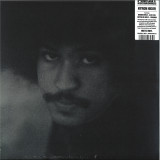
At the forefront of a rising wave of Brazilian artists captivating international audiences, Nyron Higor brings a quiet yet potent sense of wonder to his new self-titled album. Born in Maceió, Higor’s latest work is rooted in the traditions of Northeastern Brazilian music and golden-era MPB. Within the peaceful surroundings of his home, Higor weaves these roots together with global influences and contemporary production techniques, for a uniquely dreamlike vision of hope.
Following the success of his self-released debut Fio de Lâmina—an instrumental record of delicately balanced rhythmic and harmonic patterns, which earned support from tastemakers like Mr. Scruff, Gilles Peterson, and John Gomez—Higor’s new album is a move towards a more expansive, lyrical exploration of transcendence and triumph. As Higor explains, “This album is a test of resistance and a big event in my life as a young Black man from the Northeast and coming from a humble background, financially speaking, its context is political.”
Taking his demos and unfinished tracks to São Paulo, Higor worked alongside friends and collaborators from Brazil’s vibrant contemporary music scene—including fellow Maceioense artists Bruno Berle, Batata Boy, and New York-based Brazilian vocalist Alici Sol—assembling a rich musical landscape and a cutting edge development on the musical world from which he emerges.
For Higor, the process of recording and producing in close collaboration with Berle and Batata Boy allowed him to fully cultivate the emotive power of his compositions. Album opener "Ciranda" sets the tone with a slow frevo rhythm, as wistful trombone melodies and melancholic acoustic guitar harmonies create an atmosphere both intimate and grand. Lead single "São Só Palavras," featuring Alici Sol and Bruno Berle, captures both the lightness and depth of young love in an all too fleeting minute-and-a-half moment of soaring brilliance.
Building upon the instrumental sound of his debut, “Louro Cantador” with its playful organ, birdlike whistles and elegant acoustic guitar, emanates a kind of rare natural beauty, as each sound dances amidst the gentle pulse of Higor's bass—his main instrument.
Through ten carefully crafted tracks, Higor’s acuity for sound and silence draws listeners into a place that feels both deeply personal and universally resonant. “Above all, I value making music that brings me genuine satisfaction. I’m always looking for depth in the things I create.”
This album is a testament to the timeless themes that define Higor’s artistry, as well as his creative drive to overcome the obstacles he faces. Conveying his feelings of jubilance for his work, Higor notes, “This work is liberating, contemplative and victorious!” Each track invites the listener to experience the raw intimacy, the joy and longing, and the otherworldly ingenuity of Brazilian music, which seems to endlessly keep us coming back for more.
CREDITS
Ciranda (Nyron Higor)
Tico Lima: Trombone, Nyron Higor: Drums, Bass, Synthesizers, Electric Piano, Guitar, Molho de Jatobá, Ganzá, Caxixi, and Indigenous Whistle
Louro Cantador (Nyron Higor)
Nyron Higor: Drums, Bass, Keyboards, Guitar, Percussion, and Direct Sound
Demo Love (Nyron Higor)
Nyron Higor: Drums, Bass Synth, Keyboards, and Synthesizers
São Só Palavras feat. Alici, Bruno Berle (Nyron Higor, Batata Boy, Alici Sol, and Bruno Berle)
Alici Sol: Vocals, Bruno Berle: Vocals and Bass, Nyron Higor: Drums, Guitar, Keyboards, Synthesizers, and Whistles
Estou Pensando Em Você feat. Johanna (João Menezes, Rubens Adati)
Nyron Higor: Vocals, Johanna: Vocals. Bruno Berle: Vocals, Rubens Adati: Piano, Guitar, Programming, Stefan Costilhes: Bass, Batata Boy: Programming
Maravilhamento feat. Nathalia Grilo (Nyron Higor, Nathalia Grilo)
Nathalia Grilo: Vocals, Nyron Higor: Drums, Bass, Guitar, Keyboards, and Synthesizers
Som 24 (Nyron Higor)
Nyron Higor: Sampler, Keyboard, Bass Synth, Vocoder, and Steel Guitar
Pizzicato (Nyron Higor)
Nyron Higor: Double Bass and Keyboards
Eu Te Amo (João Menezes)
Nyron Higor: Vocals and Bass, João Menezes: Guitar, Batata Boy: Rhodes Piano, Bruno Berle: Xylophone
Me Vestir De Você feat. Johanna (Paulo Novaes and João Menezes)
Nyron Higor: Vocals, Johanna: Vocals, Bianca Godoi: Drums, Bruno Berle: Bass, Guitar, Percussion, and Rhodes Piano, Batata Boy: Rhodes Piano and Guitar
===================
Tracks 1, 2, 3, 4, 6, 7, and 8 were recorded by Nyron Higor in Maceió
Track 4: Bass and Synthesizers recorded by Ico dos Anjos. Vocals recorded by Batata Boy at Estúdio Rural
Track 5: Guitars, Bass, Programming, and Pianos recorded at Inhame Estúdio. Coproduced by Rubens Adati
Tracks 9 and 10 Recorded and Co produced by Ico dos Anjos
Mixed by Batata Boy, Ico dos Anjos, Bruno Berle, and Nyron Higor
Mastered by Batata Boy
Produced by Batata Boy, Bruno Berle, and Nyron Higor
Lacquer Cut by Caspar Sutton Jones @ Gearbox Records
Cover photo by Claudio Virginio
Vinyl centre label artwork by Tadáskía
Sleeve design by Alessandro Renaldin