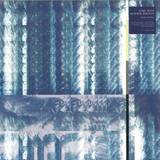
Longtime Figure main-player Markus Suckut continues his artistic development with this killer seven track, wide-reaching EP. Based on the concept of providing rich ambient textures for the start of the night or DJ set, and then heavy, minimalist techno tracks to satisfy driving, percussive club needs, Suckut gives us another masterclass in his art. Alongside the dense textures of for start #1-3 and their varying moods - from echoing steam-filled passges to off-world strings reaching for the skies - we are also treated to four heavyweight DJ tools stamped with Markus trademark elegant sound.
Search:concept
This EP was made during a period where my whole outlook on everything was transforming. The Voidloss project started as an investigation, I was conducting a lot of research and study on the mind, the occult, on different thought modes, and the Voidloss project represented this. The idea was about a leap in to the void. A leap of abandonment into the dark, with total acceptance, total commitment. The idea was to lose myself to the void. This was mainly a spiritual journey for me, and could be best explained by 3 things, the void of Miyamoto Musashi from Go Rin No Sho, The concept of the Tao from the writings of Lao Tzu, and the concept of the abyss from the works of Aleister Crowley. Part of this journey deep inside the self was frightening and horrific, the total loss of self, of all identity and ego, and part of it was beautiful and enlightening. I wanted the music to reflect this, and I wanted the music to change as I changed, as I went to and through all these interesting places. In essence this was about freedom. So fast forward some years and I felt I had sharpened my mind quite effectively, the music had twisted and changed and flowed with me. At the point I began making the music for this EP, I had grown quite angry with the amount of conformity I was perceiving in life. Politically, socially, musically, there was this drive of conformity in the world. I think part of it, and only a part, comes from the prevalence of social media, the need to belong and to be liked, the idea of judging yourself and your works through the perception of others. Musically I felt that within techno there was a tendency for the music to fit within a set of confines dictated by fashion and hype, and this was reducing the diversity of the music, it seemed also that the practices of commercial music were seeping in to techno as the music became more popular. Hype and business driven decisions, brand building and so on. I always felt techno was more about art, and I began to get frustrated. Equally I felt that politically there was less and less choice, as all decisions seemed to lead to the same outcomes. I became more interested in the concept of anarchism, of the idea that government was no longer needed. I have always in my life had a drive to question everything. I've always been 'naughty' and rebellious and done things my way, to my advantage or my disadvantage, I could never accept being anything other than myself all the way. If everyone walks in one direction, I will walk the other way, even if it takes me over the edge of a precipice, just to see what is there. All this stuff influences my music, and during the period of making this EP I was angry, kicking against the things I no longer liked or wanted, screaming dissent. There is a lot of anger and rage, and of course rebellion. I wanted the music to capture that unbridled fury you have when you are in your late teens, when you just start learning about yourself and you start rebelling and questioning things around the time the world is really pushing you to conform. I was soundtracking my own philosophical riot. Previous to this my Voidloss stuff had been more introverted, more pensive and melancholy, more self destructive, more cerebral. For this new music I wanted something more immediate but without being too obvious. In terms of the choices I made I still leaned more towards broken rhythms for beat structure. I find it very difficult to do anything interesting with 4x4 kicks any more, it's too rigid for me, it limits my freedom. I like the looseness you get from more 'drummer' like beats, I guess probably because I have been playing drums all my life. The challenge is to get the same rolling power from broken rhythms as you get from 4 to the floor. It's not easy, there is a ridiculous amount of trial and error and the rejection percentage is high. I also was trying to use less 'synthy' sounds. I wanted to try to take a more acousmatic approach to sound design. With the current modular synth revival in techno I was hearing a lot of 'old' synth sounds re-emerging, and this didn't seem like a progression to me. I wanted to make sounds that were hard to source for the listener, where they weren't sure if it was synth or real world sample, digital or analogue. This involved a lot of experimentation. My process involved a lot of field recording, especially with contact microphones, which open up a whole new world of interesting sounds. You are effectively recording sounds through objects in the environment, 'hearing' the world as these objects hear them, I was using guitars, feedback loops, handmade instruments as well. So I was combining this with different synthesis, granular synthesis, sample synthesis, physical modelling, FM synthesis and of course analogue. Everything was reprocessed and re-synthesised, I tried hard to obscure the source and make something new as much as possible. The stuff on this EP was part of my live PA for some time, so as I learned how the music worked live I could go back and make changes, sometimes the environment I was playing in transformed the sound as well, and so I would try to go back an incorporate this in to the music. For remixes I wanted to choose artists that I respected for their vision as well as for their output, so my list of people I wanted was extremely short. Inigo Kennedy has always been an artist I have respected greatly. His music has always been unique to himself, he remains outside of fashions and trends even though his name has become very big recently. He takes risks with his work, experimenting and exploring, yet remaining relevant to the club, and just tirelessly forging ahead, seemingly for the sake of art above all else. And he's just a really nice guy to deal with. His remix is everything I expected it to be in that it is the unexpected. Regis is another artist who forges his own path in music, you cant really even begin to discuss the avantgarde in techno without including his name, he is one of the foundation stones for artistry and the outsider mentality in techno. His music is always unique to his own vision, and along with it comes an interesting artistic philosophy taking in situationism, post punk and industrial ideology and a good dose of tricksterism ala PT Barnum, all of which comes out in his music and the way it is presented. The man is a truly singular force and it is an honour to have him on this record. Overall the concept here is that of rebellion and dissent. Of asking questions, following your own path, of maintaining some place in yourself that burns like a forest fire.
Whether or not I have succeeded I guess is down to the listener, I'm never happy with my music, I keep wanting to move forwards, or somewhere else, and am constantly trying and failing to capture some essence of perfection. But like Bukowski said
'It's the only good fight there is'
Since its conception three years ago, the Hamburg based label hafendisko has been patiently building its reputation with a diverse and varied artist roster. Alongside releases from emerging talent such as Deo & Z-Man and Brynjolfor, it forms parent label hfn music's outlet for club oriented music whether with full releases or remixes for artists such as Kasper Bjørke and Faded Ranger and just recently welcomed renowned remixers such as Michael Mayer, Charles Webster and Luke Solomon, to name a few. Now with the release of Nummer Eins, Hafendisko is taking the next step in its evolution, serving up the best of past and present releases together with a string of exclusive cuts that signal an undeniably bright future. It's machine music with real heart and soul as, time and again, the tracks locate that elusive sweet spot that unifies mind and body. The opening act replicates this highly collectable four track vinyl EP that precedes the digital release: Snacks' ‚Easy' provides an aptly titled intro, with sweet melodies, warm synth swells and looping vocal hooks evolving over a low slung, funk inflected groove. 'Purdie', the duo's debut last September instantly became a huge underground hit, while they are currently working on their debut album. Unkwon is Anders Dixon from Copenhagen and people will stop asking if it's a typo soon. Just off his stunning remix for Trentemøller's Deceive he takes it underground with the stuttering beats and melancholy phase of ‚Everything', building a cavernous yet claustrophobic soundscape that's designed to make your eyeballs sweat, before Ewan Pearson's NRG instrumental of Kasper Bjørke's ‚Apart' goes into dance floor overdrive, upping the ante again. Both the Michael Mayer and the Ewan Pearson mixes of Bjørke's final single off his newest album stirred a buzz.
Continuing the label's fast-paced release schedule, Raíz cooperate with social observer Permanent Hearbreak on the label's 4th vinyl release. The collaboration delves deep into human emotion over three movements, developing around the concept of personal absence. Side A1, With Out You, stretches a somber beat over 6 minutes with graceful overtones and powerful rhythm. Permanent Heartbreak speaks the message of With Out You over wet/dry percussion and heartsick chords. The energy and attitude turn up considerably on the flip side. With Me is a quick jaunt through semi-distorted clap and kick combinations of the jacking variety. Evolving analog style synth work builds the song until its climactic end. Wont Change Me takes cues from the darker Detroit / Kalamazoo sounds with Permanent Heartbreak's cold premonitions laid out over a driving sequence.
Objektivity is starting the year with launching the long-awaited vinyl-only sub-label called OBJ Analogue. As the name says, the concept behind this is that in order to make the record, it has to be totally hardware based: No plug-ins! Objektivity head-honcho Dennis Ferrer says: "The OBJ Analogue is a special project for me and is dear to my heart because I love analogue gear, vinyl, and hardware, so I keep that side of me happy."
The first OBJ Analogue release is coming by VIVa Music's Steve Lawler, who delivered a very rough two-track EP called - Inna State / Recuperate", produced with the Roland 808, 909 and 606 drum machines. The bass lines are recorded and played from Moog Voyager and the piano on - Recuperate" is coming from Emu Orchestra Rack Mount. Completely analogue!
Make sure you get your hands on the vinyl as there will be only a few limited copies out.
Producer CRISTIAN VOGEL, born in Chile and in raised in Bristol, England, represents an inner turmoil within the history of electronic music and techno. Like only a few other artists such as Aphex Twin, he personifies the second wave of techno during which authorship, previously pronounced dead, returned in full force. The former punk, who had completed studies in composition (20th century classical music in Sussex) conveyed a powerful force in his music, which now finds its place very naturally as electronic music; back then, it did more than just shake up the concepts of techno. Complex and intricate rhythms (Süddeutsche Zeitung) dig deep chasms in dark (listening) spaces.
In 1996, together with JAMIE LIDELL as SUPER_COLLIDER, he made a final attempt to breathe life into electronic music, which was still primarily seen as dance/rave/club music, and produced clustered break funk music that was so relevant to its time that many considered it more a music of the future: science fiction for the dance floor. Although the project was not a failure, it did not succeed even halfway in meeting the expectations of an artist who was rather perplexed by the lack of interest he perceived in others in music as art and research. Vogel believes that music has a will to unfold, like a jungle from the undergrowth of industrial cities where music is thought of as an attack and a defense.
Seemingly out of disappointment in the predictably declining hedonism of the scene, he moved to Barcelona and bound his explosive ideas to more accessible formats, founded labels, created networks (No Future, Sleep Debt) and, at the same time, revisited his early days by working more and more on formats such as music for ballet and similar concepts. He also sought freedom precisely in what was referred to as functional electronic music through conceptual and serious endeavors in the artistic sense.
Vogel went under for a time and lived in Vienna before arriving in Berlin nearly two years ago, where he made his first new and daring attempt to assimilate everything that electronic music represented to him on one album: 'The Inertials' on SHITKATAPULT. Shortly after that, his mystical, floating ambient work 'Eselsbrücke' was released, which already spoke the language of the new city.
He now presents a new album on SHITKATAPULT entitled 'POLYPHONIC BEINGS' - a true masterpiece in the inimitable Vogel style, as his fans will no doubt claim. 'POLYPHONIC BEINGS' begins, after two minutes of an irritating noise wave, with a surprisingly classic dub track and grows darker and more abstract from track to track, minute by minute. An eerie and unbelievable sound, with all as it should be: every reverb tail, every movement of the fader, every composed note takes the listener piece by piece into Vogel's own cosmos.
He foregoes interwoven elements for swaying towers of rhythm, powerful sound passages, spaces, roads, mirrors and pathways, leading to a stream of ideas that never wants to end. He aptly quotes Karl-Heinz Stockhausen in the liner notes: These are the "atomic layers of ourselves." And so it is. We are what we hear. This is the definitive CRISTIAN VOGEL.
The structure and the essence of this release, focuses on a current argument in which more and more people in this society are found to be the early protagonists, often without even realizing it.
The artist wants to tell and convey through his work, a point of view towards this theme.
As can be deduced from the title of the EP, the project is to express and represent a war of colors, which fight the monotony of everyday, always flat and dark.
The first track, "Daily March", wants to criticize this monotony through a full-bodied sound that recalls a real daily march, which many people are facing every day. All accompanied by a setting of hypnotic sounds that capturing the attention of the listener, carrying in a vicious circle in which one perceives the focus of the concept that the artist wants to communicate.
The second track, "Appearance Of Freedom" is the soundtrack for those who are trapped in slavery everyday life, believing to be free or at least trying to able to escape from the monotony, but then realizing that it is only an appearance. The sound of this second soundtrack fully embraces with the first, almost as if it were a single story that is going to evolve, arguing the rebellion that the artist wants to express in this state of being of the person in the present life.
To accompany the two original works of Kalos, there are two remixes by great artists, the first made by the Irish duo Lakker, which are able to communicate their idea of daily march through their strong version, being able to also expose them a very clear message.
The second remix is made by the Begian artist Yves De Mey, for the track "Apperance Of Freedom" where he captures in full the message of the track and re-edited, bringing attention to the full-bodied bass carefully distorted, creating a trip hypnotic evolving.
The third imprint on Dirty Session sprung from Luca Bear s idea with the intention of spreading a new concept of music.
No schemes, no compromises, the only prerogative is quality.
The love for the sounds of the past combined with new technologies: the key concept of the label is to propose a precise sound, characteristic, that evoke the early days of electronic music with an eye to the future. A journey into the unknown from the early 90s. House or techno It is not important! What matters is the sound.
Erlend Øye is a skinny nerd, but maybe that's what makes him a pop star. His huge thick spectacle-lenses act as an interface between his inner life and his numerous collaborators and fans. Erlend Øye is a travelling singer-songwriter, who has been making music in various constellations since the late nineties. He sang for Röyksopp, while his own bands are Kings of Convenience and The Whitest Boy Alive, who recently split up. A laid back, everyday vibe runs through Erlend Øye's music. Erlend is not larger than life, at the most his songs may be. The pop star from next-door doesn't make any drama, but leaves that to life itself. His relaxed, laid back sound opens your eyes and ears for places, situations and encounters. A certain mournfulness runs through the songs, although they deal with a longing for self-fulfilment. Erlend sings of loneliness, and in doing so, he creates a 'we'. Until now Erlend's projects have often been based on simple concepts - two guitars and two vocals with Kings of Convenience, and four instruments with The Whitest Boy Alive. With his new solo album he frees himself of these parameters; for the first time everything is possible, for the first time Erlend Øye stands alone. The songs on 'Legao' were arranged and recorded with the Icelandic reggae band Hjálmar.
The magic of 'Legao' lies in the fact that Erlend's vulnerable vocals and his sincere lyrics are supported by the elegance and consistency of the band. Today roughness is often used to counterbalance roughness, whereas on Legao a equilibrium is sought - and found. A simplicity, clarity and minimalism is created that is rarely found in pop music. Erlend Øye has grown up. He accomplishes nothing less than the step towards an independent, free-standing solo musician, who can perform in any constellation - with a band, orchestra or alone with a guitar.
This next release demonstrates exactly what can happen when you merge a formidable heavyweight with one of the genre's most promising talents. Jaguar Skills needs little introduction; he's infamous for his ninja-like DJing skills with years stacked behind the decks.
As a result, it was no surprise the artist tried his hands at production alongside Chord's impressive musicality. Already unstoppable from its conception, 'Lust' could only be released on an imprint known for its high quality. And RAM Records is proud to unleash this toe-tapping, catchy piece of sonic artwork on the dnb community...One that's already taken the radio airwaves by storm.
Opening with a rhythm that curls itself around your aural senses, prepare to be pulled into 'Lust' by its funky groove and well-chiselled hooks. The vocal delight of Matti Roots really brings light to the seasonal feel this track creates; an arpeggio of notes underpins each high-hitting voice crescendo. Bright but not without substance, Chords' production style is instantly recognisable. This debut from Jaguar Skills serves as a perfect platform for the high standards this mix-maker is about to set, as well as the benchmark which Chords has already carved.
On the flipside, Break holds onto the A-side's sunny disposition, yet throws down a riddim that hits as heavy as a freight train. The foundations laid by the producer are slightly different, as it rattles forward with clinking percussion, alluding to the kind of drop Break is renowned for. With his distinctive, boundary-pushing drum rolls and bouncy, booming and concise hits, there's no mistaking a sound which adds another dimension to the remixes' original.
You're also served up with another dish which is vastly different from house-guru Monstro. like the previous edit, the record's humanism winds up within the first thirty seconds, however the seismic impact of its drop rolls out into a house-bassline that thumps with every bar. A genre transition which doesn't fall short of the original's production prowess, prepare to hold onto your seats because this serves as the optimal way to wrap up two striking remixes of an already impressive track list.
Dominating playlists for years to come, this release from RAM is yet again taking the genre to another level. But considering the parties involved, there was no other direction for this record to take.
The Viennese duo, otherwise known as Tosca, confound expectations on their new album, 'Outta Here'. The sonic collages and smooth downbeat jams with which they made their name are replaced with a soul/jazz/blues confection that's closer to a band like Brand New Heavies than anything else. 'It's called 'Outta Here' for a reason,' explains Rupert Huber. 'The title stands for change, a change to the concept we've had so far. It refers to a change in energy and dynamic. We've been know for an almost ambient sounds. The new songs are much more beatoriented and direct. Basically, it's just a lot more energetic.' it certainly is that. See tracks such as 'Crazy Love' for evidence. Built on a muscular bassline, it sees Rob Gallagher (ex-Galliano) doing his slinky, soulful thing, while keyboards and muted sound effects flare in the background. The rare groove revival starts here. 'Swimswimswim' reworks the same elements, with the addition of Cath Coffey (Stereo MCs) into a irresistible pulse of feel good vibes. Meanwhile, the title track, 'Outta Here', sounds like a lost gem from the early '90s acid jazz era. 'It was a natural evolution,' says Richard Dorfmeister. 'In the past, we were very focussed internally because we were in a studio on our own, working slowly making sonic collages. This time, because we were working more with singers the process was naturally quicker and the results more instant and upbeat. In that sense the title 'Outta Here' literally means that we got out of our studio.'
Do Tosca think the new sound will wrong foot their fans 'It's not completely different. It's still our style and mood, it's just more direct,' says Richard Dorfmeister. 'People always have a picture of you and it can take a long time to change that. You stand for something and that's how they see you. I think people see us in that laid-back and chilled kind of way. Over the last 20 years we've been described as lounge, chill out, downbeat. We always ignored it because we felt it was more about the music. We've always seen ourselves more in terms of being an alternative to commercial music. That's still what we're doing, just in a different, more direct kind of way.'
- A1: Ngalopkha
- A2: Kaiowá
- A3: Rainfall
- B1: Zareba
- B2: Old Tupi
- B3: Yapeyú
My Panda Shall Fly AKA musician and visual artist Suren Seneviratne, is set to release 'Tropical' It's a brand new 6 track vinyl release.
A kaleidoscope of rainbow textures and rhythms disperse into the exotic soundscape of 'Tropical'. Electronics, real folk instruments and noise-making objects feature here generously on this six-track concept album, blending together a sonic palette influenced by a rich variety of music, people and places.
The material was initially written over the course of a few months during what Seneviratne called "a beautiful burst of inspiration". Working with veteran producer Asier Leatxe Ibanez d'Opakoa (Electric Lady Studios, NYC), Seneviratne then set about disassembling all the songs and re-working them meticulously, enriching the sounds by adding a huge range of live instrumentation, before processing the audio through vintage analogue studio gear.
Suren Seneviratne, born in Sri Lanka before settling in London in 1996, first caught the attention of the music world with a remix that featured on Pitchfork back in 2010. Since then he has released a plethora of diverse records, gaining support from the likes of Clash Magazine, The Fader, Mixmag and Dazed Digital, as well as regularly touring internationally. He has also remixed the likes of The Weeknd, Stay Positive & Little Boots as well as appearing at festivals like BBC Hackney Weekender, Outlook Croatia & Glade as well as performing at prestigious venues such as The Design Museum, Tate Modern & Barbican.
With the release of 'Tropical', My Panda Shall Fly has yet again set himself apart as one of the most unique contemporary electronic musicians around today.
Scuba Death is Ricardo Donoso's alter ego. With more of a focus on analog sound, percussion, sampling, and location recordings, there is an organic undercurrent on Scuba Death recordings that isn't as prevalent in his solo work. This music is rich in atmosphere while still tethered to the deeper ideas that Donoso often explores in his work. Treatises on fear and deathanxiety, the underlining thematic framework for the project, run rampant throughout these claustrophobic electronic passages, and teeter on the edge of being oppressive. Nitrogen Narcosis marks the first full length and strongest statement in the Scuba Death repertoire after the privately issued, ruthless 'Demon Seed' twelve inch back in 2011. The album alternates between surprising lethargic dance inflections all nestled between 75 & 100 bpm, the normal resting heart rate for adults, and the more conceptual, numbnessinducing pieces like '50-70 Meters' and 'Nociception.' Sequencing plays an integral role on Nitrogen Narcosis as the listener is suddenly thrust into the darkest reaches of the ocean after dark alley grooves are sucked into an aquatic abyss. For a project named after Donoso's neardrowning experience in the South Atlantic when he was younger, there's an impressive amount of reflection & vulnerability present - the field recordings that permeate throughout the album were captured at the same location the undertow caught hold of him that bright Summer day 20 years prior. An inner battle between paranoia and euphoria is played out in wellconceived, precision sonics on Nitrogen Narcosis as Donoso reminds us to look back, break through the surface and go deeper.
After a storied recording career that has so far taken in albums for Further, Mathematics and Danyy Wolfers Strange Life label, Spanish artist Vagon Brei added label boss to his CV earlier this year with launch of Mystic & Quantum. Record labels come and go but few arrive driven a real specific concept in a way that Mystic & Quantum are with each album length release conceived to show stories of "adventures, magic, science". Having launched in auspicious fashion with albums from DMX KREW and San Laurentino, Vagon Brei helms the third release with a nine track set entitled The Secret Of Swamp Castle. Seemingly taking influence from Giallo Horror, Brei's album comes across as a compelling collection of synth explorations that will have you returning again and again in order to uncover the Swamp Castle's secrets.
This 5th release consists of three tracks made by the twin duo Manic Brothers, one edited by Petter B. They have during their relativity short career proven themselves as worthy keepers of the Swedish techno heritage with big releases on Drumcode a.o. What they bring to Bond on this release is their signature big room sound but with a much more simplified approach than previously heard. On the a-side there are two great tool tracks with lots of space for creative interpretation for a DJ. On the flip there are a long and epic track with a massive vocal breakdown. Groove based but yet with a big and strong hook.
The label Bond is the brainchild of Swedish techno DJ and producer Petter B. The concept of the label is 'music by DJs for DJs'. The label focuses on releasing tracks that enable the DJ, rather than the producer, to be creative. It is based on that special bond which is created every time a DJ combines tracks, loops and sounds live into something new and unique.
Optimo Music is usually known as a 12" label, but occasionally something rare and dangerous comes our way that compels us to release a full length album...
It's not exactly a dance album, although there is music you can dance to on it. It's more filmic in nature, with gads of references to wonderful directors like Kubrick and Carpenter that will enthrall a film buff, particularly if they're interested in electronic and dance music. There's a sleazy and unsettling feel to much of the tracks ("Tina Weymouth" is a sleaze-floor monster groove...), but we hope it will intrigue and delight!
The film references are directly relevant as Felizol and The Boy are film directors Yiannis Veslemes and Alexandros Voulgaris, who live in Athens, Greece and have composed music for numerous feature films. They also perform live in house clubs, heavy metal dungeons and hippy-friendly festivals...
They have this to say about their release: "We had a loose concept for this album and we compiled tracks that we've recorded the last 3 years that have to do with the cannibalism. Literally but also as a metaphor for the blessing and the tyranny of paying homage and influenced from music and films (and directors and musicians).
So these are songs about the agony of creating something new and personal when so much information and influences are fused in them."
7 years after the last Zhark Vinyl Release, Heavyweight Techno Nihilist & Labelhead kareem opens up another
chapter of advanced technoid NOIZCORE with his 11th full length EP on Zhark.
After a few years of silence kareem had just reemerged with releases on Foundation Sonore (FS 01) ,
PORTO RONCO on Death of Rave or MESMER on Zhark Digital but is now threatening to inspire more
uncompromising percussive hostility. Let this just be the beginning:
Whereas Side A emphasis on a very distinguished DANCE FLOOR groove concept of Machine Funk embedded
in metal Layers Side B leaves room for a less formatted approach building up tension which is leading to a free
firezone of depravity.
While methodic differentiations can be discovered on each side, the listener is continously confrontated
with haunting sonic extremism.
Fatima Al Qadiri is a multidisciplinary artist and musician from Kuwait. In just a few years, she has quickly built a reputation as a conceptual artist, exploring themes informed both by her own background and global pop culture, through a number of highly acclaimed EPs, multimedia projects and writings. She is also a founding member of the production team Future Brown. Fatima's debut album is called 'Asiatisch', and as the track titles suggest, the record provides a simulated road trip through an imagined China. Musically, the album is an homage to that quietly influential sub-strain of grime, often loosely termed 'sinogrime' due to its preoccupation with Asian motifs and melodies, pioneered by the likes of Wiley and Jammer at the beginning of the 2000s in East London. 'Asiatisch' is a provocation which asks more questions than it answers. The title is the German word for Asian. Unlike its title, however, the music on 'Asiatisch' revolves around the fantasies of East Asia as refracted through pulpy Western pop culture, in particular Hollywood, literary fiction, music, cartoons and advertising. Fatima asks what is meant by the term 'Asian' in a digital age of viral interchange and the hi-speed trading of cultural bytes; the concept of 'shanzhai' proves pivotal, a term whose meaning stems from a wild, out of control zone of banditry, but which has come to be used to refer to the Chinese counterfeiting of Western brands and goods. While a number of producers have made takes on 'sinogrime' over the last few years, 'Asiatisch' is really the first record that attempts to articulate this weird complex of sonic interchanges between the West and China. With the exception of the opening track, 'Shanzhai', a haunting cover of 'Nothing Compares to You' with nonsensical Mandarin lyrics, and the shimmering 'Loading Beijing', 'Wudang' and 'Jade Stairs' which sample and distort classical Chinese poetry staging an epic confrontation between China's ancient soul and the onslaught of the industrial factory machine, most of the tracks blend mallets, bells, gongs, flutes, steel drums and choral atmospherics with the searing synth-brass and the skittering drums of grime, playing melodies that are inflected as much by classic R&B as to synthetic versions of traditional Chinese music. On "Dragon Tattoo" for example, stereotypical iconography of imagined China is slotted into a threatening, robotic R&B format. The carefree pirating of Western brands blurs into a soft-synth pirating of Chinese musical signs.'Asiatisch' is wrapped in pristine artwork by Babak Radboy from Shanzhai Biennial, and the music was given a 3D sheen by in demand mixer Lexxx. Proclaiming both its love of both ancient and imagined China, 'Asiatisch' is a rare album that is both icily beautiful and conceptually layered.
The last time Fennesz released an album on Austrian label Mego it was 2001 and the name of that release was 'Endless Summer'. Now, in 2014 Editions Mego is extremely proud to release the conceptual follow up that landmark of abstract pop. Eschewing the more drone orientated works of 'Black Sea', 'Bécs' returns to the more florid pop mechanisms as deployed on Endless Summer. ' Bécs is not just an album or a series of songs, it's a world to inhabit, a landscape ripe with sounds, songs and that esteemed Fennesz signature. A singular work by a singular artist.
The label Bond is the brainchild of Swedish techno DJ and producer Petter B. The concept of the label is 'music by DJs for DJs'. The label focuses on releasing tracks that enable the DJ, rather than the producer, to be creative. It is based on that special bond which is created every time a DJ combines tracks, loops and sounds live into something new and unique.
This third release is a special collab release. The first track Petter B has joined forces with two producers from his hometown Gothenburg. John H and M.E.E.O have been part of the Swedish underground scene since they learned how to spell 303 and are both addicted to hardware gear. With their skillful crafting of the melodic parts and Petters feel for drums and arrangement this track was born. It is a melodic monster with a simple yet
effective arrangement.On the flip side there are two tracks made by Stockholm based producer Kimono. A familiar name to those fond of that Stockholm sound. He has done releases on famous labels such as H-Productions, ISL and BEK Audio. These two tracks are best described as tooly and effective weapons to be used and abused by any DJ wanting to spice up the mix. The two tracks made it in to Petter Bs crate immediately as demos. From that point they went through the same refinement process as his own tracks usually experience. Tweaking the sound and doing some fine tuning after testing it in his sets, something that has become known as 'that bond treatment'.