The Heliocentrics are a group for which genres are meaningless and boundaries invisible. Since first appearing on DJ Shadow's 2006 album The Outsider the group have gone on to release a string of records that float through jazz, hip-hop, psych, krautrock, and musique concrete whilst collaborating with numerous genre heavyweights from Mulatu Astake to Gaslamp Killer and picking up prestigious fans along the way, such as Madlib and the recently departed David Axelrod.
The primarily instrumental group, who operate out of their vintage analogue studio in East London called the Quatermass Sound Lab, bring in a new singer on album number four - a young Slovakian singer called Barbora Patkova. The result is an album that takes the band, already solidified in ever-expanding grooves and rhythms into new previously unexplored dimensions.The group's deep-set ability to craft music intuitively and impulsively stems from a desire to avoid typical processes or generic structures. Since its conception, the band's music has mainly been created from live improvisation. This musical approach gives the band its own sound and identity -'for anything to happen it must be at that time from the people in the room, and on the spot'. A decade of such sonic adventures has resulted in a tightly knit bond that the group refer to as almost a form of telepathy' with musical changes that otherwise would be near impossible to write.
quête:concept
Indian born, UK artist Michael Diamond, co-founder of Vasuki Sound label and club night, announces new EP Placid Wakefulness, featuring single ‘Reverse Entropy’. available on all platforms 5th December via Vasuki Sound.
A uniquely multifaceted talent, Michael Diamond’s unforgettable ‘jazzed electronic’ sound is informed by a spectrum of influences, not least by intersection of the scientific and practical worlds of electronic music. From the music scholarship he won to read Medicine at Oxford where he quickly discovered new ways in which the two worlds can co-exist, his days were spent immersed in academic studies of music perception and cognition, while his nights were spent alongside the likes of Ben UFO, Batu & Ross From Friends, playing at one of UK’s most long-established nights ‘Simple’. A chance encounter there also led him to connect with musical collaborator Alex Wilson – the BBC Young Jazz Musician of the Year semi-finalist and then musical director of Oxford’s Jazz Orchestra – who appears frequently across Diamond’s compositions and on Placid Wakefulness.
No stranger to a concept piece, Diamond’s previous project, the highly personal and critically acclaimed exploration of culture and identity, Third Culture (album of the month/year acknowledgments from Stamp The Wax, Juno and Phonica Records, also earning him a DJ Mag ‘One To Watch’, a Youth Music Awards ‘Rising Star’ nomination and a Gilles Peterson’s ‘Future Bubbler’ accolade) explored the experience of being a ‘third culture kid’ born in Kerala, India and growing up in the UK with a sense of fractured identity.
On Placid Wakefulness, Diamond honours his academic research working alongside world-renowned musicologist Professor Eric Clarke. Specifically how music may affect our sleepfulness and wakefulness, how instinctively we are soothed by some sounds and energised by others - ‘what it is about dance music that makes people go hard all night long?’ and ‘what is it about ambient music that makes people feel the opposite way - to lull them into this sense of calmness or rest?’, mindful of the unconscious ways his findings were already manifesting in his work as an artist. And while his research provides a framework for some of the ideas within the piece, Placid Wakefulness can be viewed as more of an unintentional byproduct, or case-in-point of his findings, rather than a piece consciously constructed in their image.
Across Placid Wakefulness’s four tracks we find the artist unpacking a range of sonic ideas on this theme, from ambient calm to club-adjacent rhythms. The EP opens with hypnotic lullaby of ‘A Way of Listening’ complete with transcendent flutes provided by Alex Wilson, cello by George Lloyd-Own and a mellow groove. On the more energised ‘Reverse Entropy’, rhythmic ambiguity moves to rhythmic disambiguation with a four-to-the-floor beat as the track progresses, releasing tension and inviting an urge to dance as a jazz sax moment transmutes into glorious techno percussiveness.
On ‘Turning and Turning’ the bpm shifts down a gear, a sonic dreamstate where tough textural rhythms create a kind of liminal state tension. Closing out the EP we return to a sense of restfulness with the EP’s title track, where a gorgeous picked guitar loop interplays with vibrating ambient pads and a slow and steady beat. The Placid Wakefulness EP is a captivating testament to Diamond’s singular artistic talent and the fascinating interplay of neuroscience and how we experience and enjoy music.
It’s abundantly clear from the first bars of their 5th studio album Through Other Reflection, that this is, and could only ever be, The Soundcarriers. From the enchanting vocal duets of folk-bidden Chanteuses Leonore Wheatley and Dorian Conway; to the precise bass lines of Paul Isherwood and the limber, jazz-cool, Hal Blaine-esque drums of his his co-songwriter Adam Cann; from the fairy-like flutes, 60s-garage guitars and organ sounds pilfered from the archives of exotica - listening to the Soundcarriers resembles a rediscovery of all the most prized, esoteric corners of the 1960s, all bundled up, warped and refracted through the quartet’s astutely modern cultural lens. Channelling Tropicalia, Middle Eastern psychedelic Jazz/Funk, The French Library sounds of Nino Nardini, and a whole host of lavish obscurites beside, Through Other Reflection delivers another sonic adventure from one of the most unique and distinctive voices of British Psychedelia. After an 8 year wait for their album 4 - 2022’s Wilds - it thankfully didn’t take so long for the follow-up this time round. In many ways, this feels like a companion to Wilds; recording again at their Nottingham warehouse studio, Through Other Reflection retains that same organic glow, all the passions and imperfections of a tightly clipped unit jamming out these living, breathing pop-art nuggets as if straight onto the acetate.”We wanted to keep an air of spontaneity with this album and not get too bogged with the recording process”, explains Cann, “It was more a case of getting the songs as tightly written and arranged as possible first so we could get them down quickly in the studio. It always takes longer than you think” Less packed with strident pop hooks as its predecessor however, the music of Through… has been given extra licence to breathe, stretch out, and wander more uncharted terrains. While gleaming psych-pop of tracks like ‘The City Was’, or ‘Already Over’ confidently carry on from where they left off, from the album’s 2nd track ‘Always’, the trip becomes a little less predictable. Starting out as a smoky Procol Harum-meets-French-Psych organ ballad, the music drifts, as if of its own accord into an eerie, garage trance that lingers, cycles, and hypnotises, growing ever stranger, reaching ever-further away from its point of conception. And almost every track on Through Other Reflections holds that outer-body moment, where the band fix themselves on a limber, lysergic groove, lose all grip on time and reality, and melt themselves away into a liquid state of blind euphoria. There are sequences on this record that feel more like rituals than songs, built upon a single hypnotic rhythm which, like the centre of a vortex, pulling everything under its beatific command. Take the finale to ‘What We Found’ for instance, sounding like a ghostly march across the psychedelic moors, or ‘Feel The Way’, where a single athletic drum-loop rises and rises, growing ever more urgent and suspenseful underneath its frantic harpsichords and rasping flutes. Full of such rich stylisms as these, The Soundcarriers showcase themselves as abstract storytellers par excellence by virtue of their textures and arrangements alone. Resembling Romantic composer Maurice Ravel, but if he had just a four-piece rock band at his disposal, Through Other Reflects is rich with detail; there’s shakers, rattles, clarinets, booming drums; there’s synthesiser swarms, chiming xylophones, vintage organs and experimental Cluster & Eno-esque ambiences. Within all this nuance the music flows like some undisclosed narrative swathed in a magnetic secrecy. “It almost comes across like a story in some ways”, says Cann of the album, “the music is quite sectional with elements of exotica and cinematic type layers, it's a good balance of grooves, tunes and weirdness”. No more is this “epic cinematic feel” heard more proudly than on short instrumental ‘Sonya’s Lament” - its innate, hauntological atmospheres befitting a Peter Strickland soundtrack, or the classics of Lex Baxter, the so-called ‘Founder of Exotica’ himself. On the other hand, providing a greasier undercurrent to all these bucolic sounds is a leaning towards a more “direct” lyricism referencing more “external concerns. Laying down the first tracks for the album in the wintry gloom of pre-lockdown 2020, and drawing inspiration from time spent in Berlin, Through Other Reflections returns to some of the post-apocalyptic futurism explored in 2014’s Entropicalia - a loose concept album inspired by J.G Ballard’s The Drowned World. “The songs explore a disillusionment with the way things are going particularly after 40 years of neoliberalism”, says Cann, “They follow that folk-song tradition of wanting to escape to an imagined time, but here it’s more urban than pastoral. The first couple of ideas I came up with when doing some music in Berlin and had some time to wander aimlessly. And think the atmosphere seeped in, particularly on The City Was and Already Over. He continues, “One aspect of the title, ‘Through Other Reflections’ is about synthesis and layers of influence. How things can be filtered through other things and change the perspective. This is something you get in cities as well.” Though, as with everything The Soundcarriers make, “It can mean anything. It also just sounds kind of cool.”
- A1: Out To Get Me
- B1: Two Souls - Hell Is Revealed
The second of four 12" vinyls will be released on December 6th, anticipating the release of the new Death SS concept album: "The Entity
produced by Steve Sylvester with the magic touch of Tom Dalgety, a Grammy-winning english producer, already at work with Rammstein,
Ghost , Cult and others.
The second single “Out To Get Me” is a dark and orchestral ballad that underlines the moment of the concept of the work in which the main
character Jekyll becomes aware of the evil that his alter-ego has caused. After that he feel the reaction of people surronding him. Tormented
by doubts and remorse, his mental health degenerates and he become to feel himself persecuted by infernal creatures, that are actually the real
monsters of his conscience coming to life.
“Limited Deluxe” edition on transparent blue vinyl with a special shaped cover. The product contains the second part of the booklet with the
entire story behind the concept album together with two other songs taken from the album: “TWO SOULS and HELL IS REVEALED”,
available only in physical format.
"This is the time that we, who have benefitted from the Last Poets shouldbe able to say, 'it's the Last Poets. It's them we should be honouring, because we did not honour them for so many years_"
KRS One wasn't just addressing the hip hop fraternity when he uttered
those words by way of introducing the video for Invocation - a poem
written thirty years ago, around the time of the Last Poets' last significant comeback. He was speaking to everyone who's been affected by the word, sound and power issuing from the most revolutionary poetry ever witnessed, and that the Last Poets had introduced to the world outside of Harlem at the dawn of the seventies.
In 2018 the two remaining Last Poets, Abiodun Oyewole and Umar Bin
Hassan, embarked on another memorable return with an album -
Understand What Black Is - that earned favourable comparison with theirseminal works of the past, whilst showcasing their undimmed passion andlyrical brilliance in an entirely new setting - that of reggae music. Trackslike Rain Of Terror ("America is a terrorist") and How Many Bullets demonstrated that they'd lost none of their fire or anger, and their essential raison d'etre remained the same.
"The Last Poets' mission was to pull the people out of the rubble o f their lives," wrote their biographer Kim Green. "They knew, deep down that poetry could save the people - that if black people could see and hear themselves and their struggles through the spoken word, they would be moved to change."
Several years later and the follow-up is now with us. The project started when Tony Allen, the Nigerian master drummer whose unique polyrhythms had driven much of Fela Kuti's best work, dropped by Prince Fatty's Brighton studio and laid down a selection of drum patterns to die for. That was back in 2019, but then the pandemic struck. Once it had passed, the label booked a studio in Brooklyn, where the two Poets voiced four tracks apiece and breathed fresh energy, fire and outrage into some of the most enduring landmarks of their career. Abiodun, who was one of the original Last Poets who'd gathered in East Harlem's Mount Morris Park to celebrate Malcolm X's birthday in May 1968, chose four poems that first appeared on the group's 1970 debut album, called simply The Last Poets. He'd written When The Revolution Comes aged twenty, whilst living in Jamaica, Queens. "We were getting ready for a revolution," he told Green. "There wasn't any question about whether there was going to be one or not. The truth was many of us still saw ourselves as "niggers" and slaves. This was a mindset that had to change if there was ever to be Black Power." He and writer Amiri Baraka were deep in conversation one day when Baraka became distracted by a pretty girl walking by. "You're a gash man," Abiodun told him. The poem inspired by that incident, Gash Man, is revisited on the new album, and exposes the heartless nature of sexual acts shorn of intimacy or affection. "Instead of the vagina being the entrance to heaven," he says, "it too often becomes a gash, an injury, a wound_" Two Little Boys meanwhile, was inspired after seeing two young boys aged around 11 or 12 "stuffing chicken and cornbread down their tasteless mouths, trying to revive shrinking lungs and a wasted mind." They'd walked into Sylvia's soul food restaurant in Harlem, ordered big meals, then bolted them down and run out the door. No one chased after them, knowing that they probably hadn't eaten in days. Fifty years later and children are still going hungry in major cities across America and elsewhere. Abiodun's poem hasn't lost any relevance at all, and neither has New York, New York, The Big Apple. "Although this was written in 1968, New York hasn't changed a bit," he admits, except "today, people just mistake her sickness for fashion." Umar is originally from Akron, Ohio, but had arrived in Harlem in early 1969 after seeing Abiodun and the other Last Poets at a Black Arts Festival in Cleveland. That's where he first witnessed what Amiri Baraka once called "the rhythmic animation of word, poem, image as word- music" - a creative force that redefined the concept of performance poetry and stripped it bare until it became a howl of rage, hurt and anger, saved from destruction by mockery and love for humanity. When Umar's father, who was a musician, was jailed for armed robbery he took to the streets from an early age where he shined shoes and raised whatever money he could to help feed his eight brothers and sisters. By the time he saw the Last Poets he'd joined the Black United Front and was ready to join the struggle. Once in Harlem, Abiodun asked him what he'd learnt in the few weeks since he'd got there. "Niggers are scared of revolution," Umar replied. "Write it down" urged Abiodun. That poem still gives off searing heat more than fifty years later. In Umar's own words, "it became a prayer, a call to arms, a spiritual pond to bathe and cleanse in because niggers are not just vile and disgusting and shiftless. Niggers are human beings lost in someone else's system of values and morals." And there you have it. It's not just race or religion that hold us back, but an economic system that keeps millions in poverty and living in fear - a system born from political choice and that's now become so entrenched, so bloated on its own success that it's put mankind in mortal danger. It was many black people's acceptance of the status quo that inspired Just Because, which like Niggers Are Scared Of Revolution, was included on that seminal first album. Along with their revolutionary rhetoric, it was the Last Poets' use of the "n word" that proved so shocking, but it would be wrong to suggest that they reclaimed it, since it never belonged to black people in the first place. There's never any hiding place when it comes to the Last Poets. They use words like weapons, and that force all who listen to decide who they are and where they stand. Umar's two remaining tracks find him revisiting poems first unleashed on the Poets' second album This Is Madness! Abiodun had left for North Carolina by then where he became more deeply enmeshed in revolutionary activities and spent almost four years in jail for armed robbery after attempting to seize funds related to the Klu Klux Klan. Meanwhile, the 21 year old Umar was squatting in Brooklyn and had developed close ties with the Dar-ul Islam Movement. A longing for purity and time-honoured spiritual values underpins Related to What, whilst This Is Madness is a call for freedom "by any means necessary," and that paints a feverish landscape peopled by prominent black leaders but that quickly descends into chaos. "All my dreams have been turned into psychedelic nightmares," he wails, over a groove now powered by Tony Allen's ferocious drumming. Those sessions lasted just two days, and we can only imagine the atmosphere in that room as the hip hop godfathers exchanged the conga drums of Harlem for the explosive sounds of authentic Afrobeat. Once they'd finished, the recordings and momentum returned to Prince Fatty's studio, since relocated from Brighton to SE London. This was stage three of the project, and who better to fill out the rhythm tracks than two key musicians from Seun Anikulapo Kuti's band Egypt 80? Enter guitarist Akinola Adio Oyebola and bassist Kunle Justice, who upon hearing Allen's trademark grooves exclaimed, "oh, the Father_ we are home!" Such joy and enthusiasm resulted in the perfect fusion of Nigerian Afrobeat and revolutionary poetry, but the vision for the album wasn't yet complete. He wanted to create a new kind of soundscape - one that reunited the Poets with the progressive jazz movement they'd once shared with musicians like Sun Ra and Pharoah Sanders. It was at that point they recruited exciting jazz talents based in the UK like Joe Armon Jones from Mercury Prize winners Ezra Collective, also widely acclaimed producer/remixer and keyboard player Kaidi Tatham, who's been likened to Herbie Hancock, and British jazz legend Courtney Pine, whose genius on the saxophone and influence on the UK's now vibrant jazz scene is beyond question. The instrumental tracks on Africanism are in many ways as revelatory and exciting as the Last Poets' own. It's important to remember that the kaleidoscope of styles and influences we're presented with here aren't the result of sampling but were played "live" by musicians responding to sounds made by other musicians. That's where the magic comes from, aided by Prince Fatty's peerless mixing which allows us to hear everything with such clarity. Music fans today have grown accustomed to listening to all kinds of different genres. Their tastes have never been so broad or all- encompassing, and so the music on this new Last Poets' album is as groundbreaking as their lyrics, and perfectly suited to the era that we're now living in. John Masouri
- A1: Distorted Clamor 21 52
- B1: Sweet Elephant 08 43
- B2: The Horizon Did It 05 45
- B3: Electromagnetic Ride 09 58
- C1: Your Hand In My Peace 05 27
- C2: And The Volcano 07 18
- C3: Hat Lives In Me 04 54
- D1: Quiet Races 06 59
- D2: Reen Stones 04 09
- D3: Look For What Is In Me From The Earth 05 04
- D4: Memory Crusher 06 45
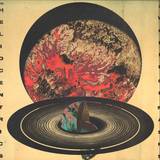
'Distorted Clamor', the latest full-length album from legendary Spanish ambient composer Suso Saiz. Marking his eighth release with our label, the album showcases Saiz at his spellbinding best, continuing a prolific creative phase in a career that spans over 40 years.
Building upon 'Resonant Bodies' and 'Nothing Is Objective', his most recent full length releases for Music From Memory, Saiz's dedication to experimentation and conceptual approach to sound lie at the centre of 'Distorted Clamor'.
Discussing his process and the concept behind the album, Saiz says: “Thousands of beings cry out for their lives, for the sustainability of their habitats, for their future. Their
clamouring together generates a distorted, deafening and incomprehensible noise. Trying to go deeper into that distortion and understand all the voices and discover the strength and beauty in all of them. This was the first image I had when I started composing Distorted Clamor. Can distortion and all those sounds (clicks, clips, ticks, tocs, pluks, crashes) that we normally discard, generate beauty? This question has also accompanied the entire whole project.”
The transit of sound through various materials is also central to the work, with Saiz using water, wood, and metals as filters and sound-transforming pedals. The album was created without the use of synthesizers, relying entirely on acoustic sounds that were transformed in an unnatural way to achieve something completely new.
Spanning eleven compositions, Saiz's mastery of timbre and ability to paint layers of sound with the subtlest of touches stand out unmistakably to the listener. As always, his radiant drones are a nest of hidden feelings; they glisten with complex emotions and textures, teasing out moods of vulnerability and hope.
Sleeve art and design by Michael Willis.
- A1: W V. - Diskoschleifen 2000 1
- A2: W V. - Diskoschleifen 2000 2
- A3: W V. - Diskoschleifen 2000 4
- A4: W V. - Diskoschleifen 2000 5
- B1: W V. - Babel
- B2: W V. - Babel (Quecksilber Mix)
- B3: W V. - Babel (Fsk 18 Mix)
- C1: W V. - Galoppmusik 1
- C2: W V. - Galoppmusik 2
- C3: W V. - Loikum 2
- D1: All - Tamastar (Alles Ist Mix)
- D2: All - Diskoschleifen 2000 (Alles Ist Mix)
- D3: All - Intoleratio (Alles Ist Mix)
Earquake 1991[22,48 €]
Earquake 1992[22,48 €]
Earquake 1993[22,48 €]
Earquake 1994[22,48 €]
Earquake 1995[22,48 €]
Earquake 1996[22,48 €]
Earquake 1997[22,48 €]
Earquake 1999[22,48 €]
So, people. The penultimate edition of the Earquake Vinyl series is coming up. 1998. A great year for experiments on the edge of techno-laws and far beyond. Whether he lets the Schaffel bass drum dance with “Galoppmusik” or explores the resilience of trance through exuberant cluster atonality with “Loikum” on the riot label Auftrieb. Wolfgang Voigt's musical 360 degree universe mutates in all directions and once again reaches for the stars. Of course, a finely chiseled pinch of All/M:I:5 should not be missing, as should a generous measure of “Diskoschleifen 2000”, an art-music concept that saves disco from itself through abstraction and deconstruction, right? You have to go through that now.
So, Leute. Die vorletzte Ausgabe der Earquake Vinyl Reihe steht an. 1998. Ein super Jahr für Experimente am Rande der Techno-Gesetze und weit darüber hinaus. Ob er nun mit „Galoppmusik“ die gerade Bassdrum Schaffel tanzen lässt, oder mit „Loikum“ auf dem Krawall-Label Auftrieb die Belastbarkeit von Trance durch überbordende Cluster-Atonalität auslotet. Wolfgang Voigts musikalisches 360 Grad Universum mutiert in alle Himmelsrichtungen und greift mal wieder nach den Sternen. Da darf natürlich ebenso wenig eine fein-ziselierte Prise All/M:I:5 fehlen, wie ein gerüttelt Maß „Diskoschleifen 2000“, Konzeptkunst-Musik die vermittels Abstraktion und Dekonstruktion Disko vor sich selbst rettet, oder? Da müsst ihr jetzt durch.
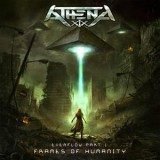
- 01: Frames Of Humanity
- 02: Legacy Of The World
- 03: The Day We Obscured The Sun
- 04: The Seed
- 05: I Wish (Feat. Roy Khan)
- 06: The Calm Before The Storm
- 07: What You Most Desire
- 08-: The Conscience Of Everything
- 09: – Where Innocence Disappears
- 10: Idle Mind
- 11: Synchrolife
- 12: Inception
- 13: The Departure
Fabio Lione has become a household name in the Metal scene over the last 25 years.
When ATHENA XIX first appeared, they released 3 critically accliamed and beloved albums before Lione had to focus his talent completely on Rhapsody and Angra. Now ATHENA XIX are back with "Everflow Part 1: Frames Of Humanity" and beckon you to follow them on a travel through the human subconcious. The album includes high ranking guests like ex-Kamelot and current Conception vocalist Roy Khan.
- A1: Skywaving
- A2: Life In The Wires, Pt 1
- A3: This House Of Winter
- A4: The Solid State Orchestra
- B1: Evaporator
- B2: Strange World
- B3: Idiot Box 04 58
- B4: Absent Friends
- C1: School (Introducing The All Seeing Eye)
- C2: Propergander
- C3: Sign Of Life
- D4: Moral And Consequence 08 13
- D1: Life In The Wires, Pt 2
- D2: Starting Fires
Red[35,71 €]
The album is Frost* at its most ambitious, offering nearly 90 minutes of music over 14 exquisite tracks. The album is the brainchild of Godfrey who was inspired to create the conceptual world for the album based on the group’s previous release Day and Age (2021).
Fans of the band’s masterful debut album Milliontown (2006) will enjoy the band revisiting the style that made that debut album one of the most successful prog rock albums of the last 20 years, a fact that was not lost on Godfrey as he was writing this new record. “With Day and Age, we made it a very specific point: we're not doing any solos, we'll do clever arrangements. And we enjoyed that discipline, but this time I thought it might be good to row back on that position a bit. Plus I wanted to have a little bit of a nod to Milliontown with this album, because it's been nearly 20 years since Milliontown came out and I’m still proud of it. The 15-minute title track has a few of those Milliontown moments in it which were great fun to do again.”
Mitwirkende
wird veröffentlicht am 18. Oktober 2024
Line-Up:
Jem Godfrey – Keyboards, guitar, vocals
Nathan King – Bass, vocals
John Mitchell – Guitars, vocals
Craig Blundell - drums
"Jede Prog-Band, die etwas auf sich hält, sollte eigentlich ein Doppelalbum machen, oder?", fragt Frost*-Frontmann Jem Godfrey. Das war eine der ersten Ideen, als der Songwriter/Keyboarder/Sänger der Band die Arbeit an Frost*s 5. Studioalbum "Life in the Wires" in Angriff nahm. Das Album ist Frost*s ehrgeizigstes Werk und bietet fast 90 Minuten Musik auf 14 exquisiten Tracks. Das Album ist das Geistesprodukt von Godfrey, der von der vorherigen Veröffentlichung "Day and Age" (2021) der Gruppe inspiriert wurde, die konzeptionelle Welt für das Album zu erschaffen. Fans des meisterhaften Debütalbums "Milliontown" (2006) werden sich freuen, dass die Band den Stil wieder aufgreift, der das Debütalbum zu einem der erfolgreichsten Prog-Rock-Alben der letzten 20 Jahre gemacht hat - eine Tatsache, die Godfrey nicht entgangen ist, als er das neue Album schrieb. "Bei Day and Age haben wir es sehr genau genommen: Wir machen keine Soli, wir machen clevere Arrangements. Und wir haben diese Disziplin genossen, aber dieses Mal dachte ich, es wäre gut, in dieser Position ein wenig zurückzurudern. Außerdem wollte ich mit diesem Album eine kleine Anspielung auf Milliontown machen, denn es ist schon fast 20 Jahre her, dass Milliontown herauskam, und ich bin immer noch stolz darauf. Der 15-minütige Titeltrack enthält ein paar dieser Milliontown-Momente, die zu wiederholen mir großen Spaß gemacht hat." "Life in the Wires" wird als limitierte 2CD Edition, als Gatefold 2LP und als Digitales Album erhältlich sein, mit atemberaubendem Artwork von Carl Glover (Steven Wilson).
Introspective, surrealist techno on 'Doctrine EP' by 393AD for the maiden release of Full Range Motion! Three playful, layered cuts that draw inspiration from minimal visual arts, DIY culture, and the repetitive grind of everyday life. Based on long hardware jams followed by extended in-the-box production methods, Amsterdam-based artist and co-owner of Full Range Motion 393AD creatively crafts slowly-evolving, locked-in-place techno. While all tracks vary in intensity, the concept for 'Doctrine EP' is a clear one: explorative dancefloor music with a hint of mystery and curiosity to keep you moving. Mastering by Temudo. Distribution by Clone.
- A1: Heaven, Or Paradise; And Hell (Ft Adrien Soleiman)
- A2: Our Dead Can’t Rest (Old Jugha Flute Dance)
- A3: Miracle
- A4: The Crane Has Lost Its Way Across The Heaven
- A5: Unraveling (Interlude)
- B1: Zephyr
- B2: Far From The Eye, Far From The Heart
- B3: What Solace Can I Give (Ft Adrien Soleiman)
- B4: …Nothing Matters More Than Touching You Although I Haven’t Touched You Yet
Lara Sarkissian’s long-awaited debut full-length, ‘Remnants’ is an ornate patchwork of ancient and modern sonic shapes that uses the vernacular of electronic music to reformulate Armenian traditions and memories. Taking digitally modeled instruments (such as the kanun, a large zither, and the duduk, an ancient double reed woodwind instrument), vocals, davul and dhol drums, tenor saxophone (from acclaimed Paris-based player Adrien Soleiman) and myriad electronic elements and techniques, Sarkissian tangles the old and the new, creating an immersive, narrative-driven experience that’s powered by history, mythology and her own familial connection to the West Asian landscape. It’s an album that’s best absorbed like a film; only multiple encounters can reveal its layered themes and references to industrial music, noise, various club styles, ambient and traditional folk.
Born and raised in San Francisco and currently based in Los Angeles, Sarkissian has developed her unique approach to composition over years of relentless experimentation across various disciplines. Her interest in music production initially stemmed from her filmmaking and video editing work, when she began to sculpt her own sound collages and scores to accompany the visuals. Since then, she’s constantly blurred the boundary between dance and experimental music, DJing around the world, producing AV installations and scoring film and video projects that have been exhibited in Berlin’s Gropius Bau, Montréal’s Musée d’art contemporain, the Music Center Los Angeles and other prestigious institutions, and releasing music with labels such as Tresor, Knekelhuis, All Centre, Silva Electronics and CLUB CHAI, the label and event series she co-founded. In recent years, she’s also been able to advance the theory behind her art, publishing a conversation with ethnomusicologist Sylvia Alajaji in the Journal of the Society of Armenian Studies in 2021, and unveiling her methodology in Norient’s ‘This Track Contains Politics – The Culture of Sampling in Experimental Electronica’ a year later.
‘Remnants’ is a new stage in Sarkissian’s evolution as an artist; not only is it her first proper album, but it’s the inaugural release on her new platform btwn Earth+Sky. She sees the label as a place to encourage collaborations between musicians and producers and prioritize sound in visual arts realms, and ‘Remnants’ is the ideal proof of concept. It opens with ‘Heaven, or Paradise; and Hell’, a track that’s inspired by the layout of the Armenian sharakan (or hymn) ‘Aravot Luso’. Sarkissian imagines the original piece’s harmonies and melodies as parts of a dreamy electronic opera, using digital kanun sounds to punctuate her woozy, evocative synths. Soleimen joins on tenor sax in the third act, while Sarkissian repeats the chant and Jace Akira adds ghostly traces of electric guitar and bass. And on the rousing ‘Our Dead Can’t Rest (Old Jugha Flute Dance)’, Sarkissian chops urgent davul and dhol drum rhythms with spine-chilling shvi woodwind sounds lifted from a documentary about Old Jugha. The title is a reference to the moving of graves by Armenian families; the area initially housed over 10,000 elaborately carved khachkars (cross stones), one of which is pictured on the album’s cover, provided by historian Argam Aivazian’s archive.
On ‘Miracle’, Sarkissian samples atmospheres from the post-Soviet Armenian comedy film ‘Կիսանդրի’ (Kisandri). She takes this opportunity to lighten the mood a little, powdering her smudged samples with tightly edited breaks and bass thumps. It’s not until the album’s middle section that the duduk, perhaps Armenia’s best-known instrument, makes its appearance. Its familiar reedy tones, popularized by Djivan Gasparyan on his many Hollywood soundtrack appearances, emerge on ‘Unraveling (Interlude)’, weaving through the acidic ‘Zephyr’ and ‘Far from the eye far from the Heart’, a post-punk inspired stomper. Sarkissian mutates the instrument almost beyond recognition, pitching and layering it into a voice-like wail that creeps between her woody, dancefloor-primed percussion on the former, and turning it into a gentle, ghostly moan on the latter. And she brings ‘Remnants’ to a close with two of her most cryptic tracks, marrying digital kanun strings with Soleiman’s resonant tenor hums on ‘What Solace Can I Give’, and looping the same saxophone sounds until they dissolve into the air on the beatless closer ‘…nothing matters more than touching you although i haven’t touched you yet’.
It’s an album that ties up Sarkissian’s various interests and experiences, finding a romantic, poetic glimmer of light in history’s darkness. But most of all, ‘Remnants’ is about the optimism of starting anew, and rebuilding a life from the pieces of everything that’s been left behind.
Cascading through kaleidoscopic stardust and forming in the outer reaches of the music universe, transcending time and distance, cosmonaut musicians Mo Morris & Zeben Jameson reconnect to write & record songs from opposite sides of their planet (Bali and London) written over the internet during the pandemic. Landing the much anticipated and eagerly awaited new A Mountain of One album "Stars planets dust me".
Welcome to the formative British psych electronic heroes A Mountain Of Ones 3rd studio album.
Mastered and reimagined and a full forthcoming album rework by electronic wizard, master selector & global superstar Ricardo Villalobos, featuring additional collaborations from 80s/90s Balearic legends "The Woodentops`s" front man "Rolo McGinty,”, Japan’s cult heroes ``Dip in the Pool" and "Unkle" and "Toy Drum`s" Pablo Clements.
UK Dub master "Dennis Bovell MBE" also makes an incredible appearance on the "Custards Last Stands" dub versions. Now available on a ltd Japanese 10". A beautiful artwork series generously loaded in by photography legend Dick Sweeney, and co-mixed by Dea Barandana in Indonesia. With its cosmic pop sound, soulful soaring, balearic sensibilities and feel good choruses it carries all the weight of a much needed revo- lution in psychedelic, conceptual ever popular music and sounds & feels like the infamous crossover album that promised to come from the heady days of the bands ascend last time round.
So here’s some back story, garnered from the hearsay, folk law, the myths and the legends, of 10 years ago, in case, like Mo & Zeb, if they'd remembered any of it, they probably weren’t there, after 2 much acclaimed albums and sellout shows vanishing in a cosmic cloud of dust the yin and yang brothers Mo Morris (ZSOU/Electric Stew) & Zeb Jameson (Oasis/Tricky/Pretenders) uncoupled and each em- barked on a pathfinder mission to equip themselves for their inevitable return... they just didn’t know it at the time... and as the global community ground to a halt 2 years ago they sought refuge from opposite sides of the planet in each other's company again.
The solace and rejuvenation it gave had them re-emerging as invigorated, inspired and wiser music creators, this has given rise to the evolution of their 3rd all important album‘s sound.
Zeb "our capacity as human beings is more phenomenal and limitless and way beyond the conventional thinking of society constructs but also in complete harmony with the intelligence and brilliance of advancing technologies".
Experiencing this energy together, as dedicated and devoted music pioneers, these great collaborative universal truths were revealed, imbed and steeped in their writing and recording experience as the music touched and resonated with all involved to create the fresh and fully formed A Mountain Of One 2.0.
Having worked silently in her sonic philosophy for almost a decade, vocalist, music producer and Dj Telva has launched her music label byt’, starting with the publication of her debut album. The album, ‘Revelation’, opens with an unusual and experimental offering, which sets the tone for the label's subsequent eclectic and unexpected releases. The compilation of 10 tracks, has been documented for 5 years through an experimental vocal, instrumental sonic journey, that is composed of Telva's life experiences during this period.
Telva is a vocalist, producer and only vinyl Dj based in Berlin. Defining her path through art in every sense of it by turning passion into a way of life, she has been playing and collecting records as main craft since 2016. Followed by uninterrupted hours in the studio, her creations and sonic philosophy, aka record label byt’, have been materialized by the wide range of influences she’s been absorbing along her way as an artist, where different cultures, scenes, and places have shaped and influenced her understanding and projection of her musical vision. Her love for the underground movement and the deep work in silence have made her music shows special and respected. For listeners and dancers, her well-chosen exposure is an unexpected experience. Her purpose is to offer quality music based on eclectic diversity, that surprises the audience with the love it spreads through sound, aiming to touch their hearts. ‘Music is a channel of transmission in where to materialize one’s lifetime vision’
Byt' (быть in Slavic meaning 'to be' / pronounced 'beat') is a music philosophy, also known as a record label, focusing on the connection between music and artist as a primary form of communication and source of expression. It represents 'the music of the being'.
The meaning and purpose are to comprehend the concept of musical interpretation through the artistic vision of the person behind it, by appreciating the significance of conveying a life experience through sound, making a recognition on what is behind the music we listen to. The label will be composed of solo releases, sonic cinematic experiences, collaborations and other archives, spanning an unlimited wide range of genres, yet rooted mainly in electronic music.
Roberto Cacciapaglia is an Italian composer and pianist who started out in the fertile Milan avant-garde scene of the 1970s, which included Franco Battiato, Giusto Pio, Lino Capra Vaccina, Francesco Messina, among others. After studying at the conservatory, he worked at RAI's Studio of Musical Phonology – an electronic music laboratory similar to NDR/WDR in Germany, GRM/IRCAM in France or BBC Radiophonic Workshop.
Originally released in 1979, Sei Note In Logica (Six Notes In Logic) is Cacciapaglia's second album. While his debut, Sonanze, offers a series of ambient mini-soundtracks, Sei Note presents a singular, sinuous piece. The composition is based on a finite set of musical notes, yet this limitation is the point of departure for a grand tour of possible combinations and enthralling timbres (marimbas, strings, reeds and human voice).
Like Steve Reich's Music For 18 Musicians, the joyous experiment of Sei Note is grounded in constant variation. Often doubled by multiple instruments, non-repeating patterns are exquisitely layered, while electro-acoustic signals transform and further refract through visceral effects. Within this conceptual framework, Cacciapaglia does not so much juxtapose rigid dichotomies – acoustic vs. electronic, melodic vs. dissonant, simple vs. complex – as fuse them into an expansive whole.
What started as an inspired study in Minimalism becomes a bold feat of 20th century music. Sei Note In Logica is deeply sincere and, at the same time, quite playful. With one foot firmly planted in the past and the other steeped in technology, Cacciapaglia's influence can be heard in the work of Jim O'Rourke, Fennesz and Ben Vida.
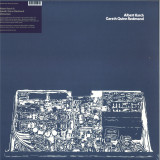
WRWTFWW Records is happy to announce a new collaborative album between Polish producer, multi-instrumentalist and sound engineer Albert Karch (notably known for his superb 2019 album Celestially Light featuring Ichiko Aoba) and Irish ambient master and label’s favorite Gareth Quinn Redmond (Ar Ais Arís, Laistigh Den Ghleo, Umcheol albums from the WR catalogue). The 6-track LP comes as a limited edition of 300 copies worldwide with an artwork by Dublin artist Barry Gibbons and liner notes. It is available in digital format as well.
Recorded in at Albert Karch’s studio in Warsaw in January 2023, Warszawa is conceptually rooted in the reason the two artists met in the first place: the work of Japanese composer Satoshi Ashikawa (Still Way - Wave Notation 2) who sought to compose a time that was stationary. Sparse in approach but sharp with intention, the 6 pieces of the collaborative album were sculpted with precise and floating use of piano, drums, synthesizers, and strings. The result is gentle but emotionally deep minimalistic ambient, reassuring environmental music with an indescribable Mark Hollis touch, also an artist whose worked influenced the recording sessions.
Gareth Quinn Redmond’s previous albums, Laistigh Den Ghleo, another ode to the work of Satoshi Ashikawa, Umcheol, mixing ambient with traditional Irish music instruments, and his tape loops wonder Ar Ais Arís are still available on WRWTFWW Records - complete the collection now!
Warszawa by Albert Karch and Gareth Quinn Redmond is dedicated to the memory of Satoshi Ashikawa.
After navigating the labyrinthine musical chambers of their 2023 modern exotica album 'Palace Of A Thousand Sounds', Reno. Nevada’s Whatitdo Archive Group has returned with their first-ever holiday offering—venturing into the darker side of Christmas folklore with their new ice-cold 45, 'Wild Man'. Drawing inspiration from a global archetypical myth of the same name, Whatitdo Archive Group examines the ancient story of the Wild Man—the hairy, half-human, half-beast that stalks the shadows of humanity’s shared primeval past. The myth of the Wild Man is a folktale that goes by many names: The Yeti of the Himalayas, the Bigfoot of North America, and, of course, Krampus of Eastern Europe—a yuletide beast with a reputation as a child-devouring "Anti-Claus" who now finds himself the subject of Whatitdo’s latest musical exploration.
‘Wild Man’ gives us a glimpse into the band’s newest sonic direction. With a heavy rhythm section carried by Alexander Korostinsky’s driving bass line, the sticky wah-guitar of Mark Sexton’s L-5, and the acrobatic lines of the Wurlitzer electric piano, “Wild Man” revels in the spiritual jazz flavors of Pharoah Sanders and grooves hard like the classic soul-jazz stylings of Ramsey Lewis. Much like the Krampus myth itself, 'Wild Man' is meant to weave an ominous spell over any Christmas cocktail party long after the kids have gone to bed. Hear the warning for yourself in the song’s haunting chant: "You better watch out for your life, when the Wild Man comes in the night".
But mythology isn’t abandoned on the B-side. The band takes the traditional English folk melody 'Greensleeves' and reimagines it through the musical lens of Ethio-jazz. Recorded live at the Archive Group Studios, the track exudes a dark, roomy atmosphere, drenched in unease and mystery courtesy of the wandering electric piano dancing above the hypnotic rhythm section and mesmeric groove of the distant Batá drums. This fresh reimagining taps into the ancient, cross-cultural lineage of the "Green Man" myth, a pagan symbol of rebirth and the power of the natural world, further blurring the lines between holiday cheer and the primal, elemental forces enshrined in our collective cultural memory.
After the band’s 'Palace Of A Thousand Sounds' was named 2023’s "Best Library Record" by PopMatters Magazine, their new 'Wild Man' 7” capitalizes on the same creative process that shaped their last record, while now exploring new conceptual territory. By drawing inspiration from archaic global folklore and again utilizing their peculiar recording techniques, W.A.G. has crafted a truly unique holiday offering that unearths the darker, more primal undercurrents of the Christmas tradition. The 'Wild Man' 7" is released as part of the Snowflakes Christmas Singles Club, pressed on snow-white bio-vinyl and limited to 300 copies.
- 01: Tall Black Guy - One To One
- 02: Tall Black Guy - Solar Coaster For The People
- 03: Tall Black Guy - Constantly Moving
- 04: Tall Black Guy - Super Heights
- 05: Eric Lau - Chop For Mr Thing
- 06: Eric Lau - Dedication A, B &Amp; C
- 07: Eric Lau - Ynwajp
- 08: Eric Lau - Lau Left The House
- 09: Kidkanevil - Loopin&Apos; Ill
- 10: Kidkanevil - Explorer Flip
- 11: Kidkanevil - A Love That&Apos;S Worth Sampling
- 12: Kidkanevil - Sun Gonna Shine
- 13: Mr Thing - Changes
- 14: Mr Thing - Carnival
- 15: Mr Thing - Higher
- 16: Mr Thing - Funky Coffee Thing
First Word Records is proud to present 'Nothing Leaves The House - The Anthology'. A vinyl-only album of 16 hip hop instrumentals from Mr Thing, kidkanevil, Tall Black Guy & Eric Lau. This is a collection of a long-out-of print series of beats from four of the most revered beat-makers in the underground scene.
This double-vinyl collection features four brand new tracks specially created for this 10 year anniversary release. The concept behind this project was originally birthed on Record Store Day 2012. First Word label founder Gilla explains "as we dipped in and out of London's Soho record shops, kidkanevil mentioned to me that he wanted to mine Mr Thing's vast record collection for samples. An idea formed to invite a couple of other beatmakers to join him and to press the resulting beats onto vinyl.
Mr Thing enthusiastically agreed to the idea with one stipulation: they could sample what they wanted, but the records had to stay within the walls of his flat. We quickly enlisted Eric Lauand Tall Black Guy to complete the quartet and 'Nothing Leaves The House' was born." The release came to fruition and was released a decade ago, for Record Store Day in April 2014. The quartet met up once again shortly after in another London record shop, to work on a follow up project.
For this one, Mr Thing brought one record for each producer from his collection for them to sample. They reciprocated by picking a record from the racks in the shop for him to use. 'Thing Leaves The House' was then released in 2015. Completing the trilogy of releases, the crew were invited to the legendary John Peel Archive to dig for samples there. After trawling the legendary Peel Acres collection, the producers individually selected sound snippets to create new beats from; this time under the stipulation that 'Nothing Leaves The Archive'. This double 7" release again landed on Record Store Day, 2016. Gilla says "10 years on from the release of the first record, and almost 9 years to the day since we were at Peel Acres, we are now releasing the 4th and final volume.
Whilst Mr Thing is still in England, the other three have travelled far and wide. Eric Lau is now in China, Tall Black Guy has returned to the US and kidkanevil has moved to Berlin. Our indie label budget didn't extend to uniting everyone from the different continents, so instead Mr Thing uploaded a folder of tracks for the trio to work from. With the previous volumes now long sold out, we've added the original beats to this anthology and have moved up from a double 7" to a double 12" LP. One side for each producer; four tracks made across 10 years." 'Nothing Leaves The House - The Anthology' is released on double vinyl, on Black Friday, November 29th 2024.
Producer, designer, publisher, filmmaker, all-round scene phenom - Lasse Marhaug returns with his first album since relocating from Oslo to the Arctic Circle, surveying his 35-year career for a set of grizzled, doom-pocked rhythms and foghorn drones pulled from the aether. Expansive and hard to categorise, it's a precision-tooled set of ice-cold tonal productions that heavily lean into Mika Vainio’s rhythm experiments, with extra levels of growling bass and curious noises to send us deep into the uncanny.
Lasse Marhaug has put his mark on literally hundreds of albums - working with artists like Jenny Hval, Merzbow, Jim O'Rourke, Kevin Drumm, Hilary Woods - so many others - yet he still regards himself as a primarily visual artist who got diverted into an occasionally different path. If his last album 'Context' was a kiss goodbye to decades of life in Oslo, 'Provoke' turns a new page, but one that draws heavily from memories of the distant past, reflecting on the way the topographies of Norway's frozen north helped shape his creative worldview. Weaving electronics into environmental recordings captured in the bleak Arctic winter, the album was mixed during the Polar night season, when, for two straight months, the sun never rose past the horizon. Somehow, even at its bleakest, Marhaug avoids the usual aesthetic signifiers for this kinda thing, finding elements of queered beauty in all the severity, juxtaposing elements that shine a bright light on all the odd spaces in-between.
A consideration of noise music's place in 2024, and whether it can still be a tool for subversion when its aesthetics have been so commodified, ‘Provoke’ also refernces an experimental '70s Japanese art magazine that attempted to define a new language for photography. Operating somewhere between these two guiding poles, Lasse feels his way through a subtly altered mode of expression, a new approach to familiar concepts. Album opener ‘Plates’, for example, gives it the full Ø treatment, like some exceptional ‘Oleva’-outtake, but , eventually, shards of interference start to exhale like horses blowing, creating uncanny sensations that hit through ambiguous feeling rather than sheer noise terror. Ritualistic, corporeal - hard to know what you’re listening to and why it makes you feel that certain way - so much more than just machine cycles optimised for their ultimately hollow brutalist aesthetic.
Marhaug paints vivid pictures from a carefully chosen palette, drawing us into a soundworld that's rich with contradictions and contrasts. Even the relatively deafening 'New Topographics' offsets its wall of distortion with a muffled, perforating kick drum, cutting into the noise like a knife through butter. And all of this preparation makes the album's lengthy centrepiece 'Monochrome Head' even more impactful; hinging on a Pan Sonic-like alloy of bass and drums, the track snowballs through tempered feedback and improv scrapes and whistles that pick up into an orchestral din. Marhaug accents the bluster with rhythmic hums that gather in momentum until they're almost oppressively heavy, as if everything's about to collapse.
A masterclass in quietly subversive world-building, 'Provoke' invites us to peer at an expansive sonic landscape and marvel at its intricacies, but this time around there's a Lovecraftian behemoth lurking somewhere beneath its icy surface.
Ben Klock & Fadi Mohem announce debut collaborative album featuring Coby Sey and Flowdan on new label LAYER
Ben Klock and Fadi Mohem present their first collaborative album on their new label LAYER. The ten-track full length project titled Layer One follows the hypnotic EP Klockworks 34 that set the stage in 2022. In a bold departure from the techno roots that have defined and nurtured their careers, Klock and Mohem are now pushing genre boundaries, exploring IDM, ambient and experimental electronic music while still retaining the brilliance that characterised their earlier work.
The conceptual direction of Layer One delves into a post-human world, where humans are close to extinction on Earth, leaving only imprints, traces, and relics behind—digital fossils and machine-generated images capturing fleeting moments of non-human photography, as Artificial Intelligence remains in a world that quietly thrives without us. We do not perceive this as a bleak apocalyptic dystopia, but more a sober and serene reflection of a world that continues to exist and flourish, indifferent to the absence of humanity. Despite this unremitting setting, through this journey we find survivors who signal a remembrance of the human sensibilities.
Elevating this project are two very human and dynamic collaborations featuring the charismatic Coby Sey and the legendary grime MC Flowdan. Sey, a prominent figure in the British music scene known for his work with artists like Tirzah and Mica Levi, injects his music with a mesmerizing emotional depth. Opening the album with the powerful track ‘Ultimately,’ Sey offers spoken-word musings on creativity and life over experimental landscapes meticulously crafted by Klock and Mohem. Nostalgia permeates this opening track, and track 7 ‘Clean Slate’ reinforces this sentiment with Sey’s stream-of-consciousness wordplay.
Flowdan, the gritty MC whose verses have become anthems of the UK grime movement, made headlines in 2023 with two songs that reached the top 20 of the UK singles chart. In 2024, he was awarded his first Grammy for the Skrillex and Fred Again collaboration Rumble, becoming the first grime artist to win in any category. On track ‘Our Sector,’ Flowdan unleashes his raw energy and dynamic flow, adding a thrilling vocal dimension to the album’s narrative. The fluid delivery of his lyrics and rhythmic timing are enhanced by the staccato beats and abstract synths. These collaborations are not mere features; they are pivotal moments that crystallize the album’s vision—an experimental re-imagining of electronic music’s possibilities.
Immediately offering an impressive entry to Klock and Mohem’s changing sonic universe ‘Escape Velocity’ shows the collaboration at its strongest. Deftly juggling between ambient chords and more densely intricate rhythmic moments. These tightly layered textures and intense clashing moments are continued through most of the album. On other tracks the duo are just as innovative ‘Rest Assured’ rips open the sound palette Klock and Mohem are known for, synths dart around flickering through into unexpected areas. Penultimate track ‘The Machine’ feels like the internal innards of a PC or synthesizer brought to life. Electricity flows through the track like an auditory exploration of the digital world's hidden mechanical and electrical processes. In contrast, final track ‘Melatonin’ does exactly what the name suggests; its soothing melodic ambience cradles the listener as the album draws to a close.
Alongside the album’s release, the duo will release two singles. This album represents the work of two artists at the peak of their creative powers, inviting listeners to step outside the familiar and explore a different musical perspective.
»Nuts of Ay«, the thirteenth album by the Berlin-based electronic pop duo Tarwater (Ronald Lippok and Bernd Jestram), is their first in a decade, since 2014’s »Adrift«. Beautifully poised and smartly dressed, it's an album that draws Tarwater’s various pasts into a high-definition present, while bringing the duo, yet again, into productive dialogue with all kinds of fellow travellers.
Tarwater’s music has always been marked by a hypnotic pop-ness, but that’s particularly evident on »Nuts of Ay«, where a song like »Hideous Kiss« weaves together jangling guitar, pastoral flute, and flittering electronics into a gem-like construction. While the lyrics of »Hideous Kiss« are written by the duo, »Nuts of Ay« also continues a longstanding Tarwater tradition of recasting the words of others in their own mould. This time, their remit is broad: poetry from Derek Jarman (»All Nuns«) and Millner Place (»Trapdoor Spider«); lyrics from Jean Kenbrovin (»I’m Forever Blowing Bubbles«), the late Shane MacGowan (»USA«) and, again, John Lennon (»Everybody Had a Hard Year«).
This cast of found and borrowed lyricists also finds collaborative echo in the guest musicians dotted throughout »Nuts of Ay«. Schneider TM turns up on the lovely, Felt-like »Spirit of Flux«, where guitars channel the tangled reveries of Vini Reilly and Maurice Deebank into lush pop. Carsten Nicolai joins, as Alva Noto, dappling »On Waves and Years« with intimate glitching textures; he also provides the album cover art. Elsewhere, Masha Qrella appears on »Down Comes the Goose«, and actor Lars Rudolph pitches in for »USA«.
It may have been ten years since the album's predecessor, but Lippok and Jestram have kept active with other projects. They’ve collaborated with Masha Qrella, Immersion, and Iggy Pop; worked on radio plays with Kai Grehn, some based on the writing of Nick Cave (»The Sick Bag Song«, featuring Tilda Swinton, Paula Beer and Alexander Fehling) and William S. Burroughs (»The Cat Inside«); and made music for several radio-tatorts (radio plays based on »Tatort«, a long-running German police TV series) by playwright Tom Peuckert.
Both voracious and committed in their creative energies, Jestram and Lippok report back from these experiments with »Nuts of Ay«, one of their most compelling, deeply lustrous, dreamlike albums yet. They say there was no concept for the album, which is surprising, perhaps, given its holistic mood, explaining it »grew together like a coral reef in the studio over a period of several years«. There’s something to be said for letting an album gather and mutate naturally, without an overarching framework in place, and »Nuts of Ay« certainly feels like an unforced collection of material that nonetheless inhabits a similar space, one where guitars twist like driftwood next to amorphous, aqueous electronics, Lippok’s droll yet completely convincing vocal delivery riding songs that pulse and plume with curious, unpredictable rhythms.
But you can also hear elements – submerged but still present – of other music that’s inspired the duo: they’ve drawn some connections for us with psychedelic folk, Bowie in Berlin, Burial, and the film music of Popol Vuh and Krzysztof Komeda. This music shares a strong sense of place – whether in the world, or the mind – and the twelve songs on »Nuts of Ay« have such similar presence; a shared mood, a shared world, a shared sense of the possibilities of what electronic pop music could, and should, be. A bold and brave pop experiment.
Artwork by Carsten Nicolai
Mastering by Bo Kondren, Calyx Berlin
»Trapdoor Spider«, »On Waves and Years« & »Breaking Day«: lyrics by Milner Place
»All Nuns«: lyrics by Derek Jarman
»USA«: lyrics by Shane MacGowan
»Down Comes the Goose«: lyrics from a traditional song
»Forever Blowing Bubbles«: lyrics by Jaan Kenbrovin
»Everybody Had a Hard Year«: lyrics by John Lennon