Ainu are a Genoese sludge/post Doom cinematic trio formed by Guitar / synth / samples (Dani) Bass (Jacco) and Drums (Gelso) and active since 2021.
The project takes shape from the passion for cinema and their close relationship with the sea, its stories and the creatures that inhabit it.
Their first album is a concept that moves between sound settings alternating power and emotional openings, at a slow pace between psychedelia and post metal.
An intense, dense and emotional experience that uses the descriptive foundations of sea men and the calls of huge animals to tell the connection between sound and the environment that composes it.
Search:concept
Malphino is a mysterious band from an imaginative tropical island of the same name that plays Cumbia and a heady mix of exotic sounds. The musicians of Malphino reinterpret the traditional banda, playing organ, accordion, tuba, and an array of percussion and rhythms from all corners of the world. Malphino has an unique style and is a gathering of nationalities, hailing from Japan, Malaysia, Colombia, France, UK and the Philippines. This central idea of multiculturalism is the foundation for Malphino’s conceptual music project.
After an early start in doo-wop fronting the Parliaments, George Clinton helmed Funkadelic and Parliament, related hard funk projects at the border of the form’s acceptability, employing crazed concepts, outrageous costumes, and drug-addled references to outer space. During the 80s and 90s, Clinton kept the fires burning with his P-Funk Allstars, a cosmic sloppy affair whose live shows continued to push the boundaries, as heard on this riotous live set delivered in Chicago, with extended jams on favourites such as ‘Mothership Connection (Star Child),’ ‘Give Up The Funk (Tear The Roof Off The Sucker)’ and ‘Make My Funk The P-Funk,’ as well as the bluesy lament of ‘Pepe The Pill Popper.’ Dynamite!
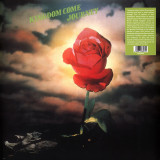
Theatrical rocker Arthur Brown gained notoriety and fame in equal measure through ‘Fire,’ an anthem to their pyrotechnic excess. When his backing musicians quit to form Atomic Rooster, Brown formed Kingdom Come to further explore the nexus of music and theatre and of the series of albums they cut for Polydor, Journey is the strangest and greatest. Stretching to the deepest reaches of space rock, Journey used the Bentley Rhythm Ace drum machine, and Victor Peraino’s synths, theremin and mellotron, to chart the astral records of history. This is Brown’s true masterpiece, an astounding record that was aeons ahead of its time.
The American psych pop quintet Paper Garden had established a solid reputation performing to university students in their native New York and in surrounding states in 1967-68 before being commissioned to cut a debut LP with British producer Geoff Turner for Musicor, the resultant sessions yielding a self-contained concept album of totally new work. With sitars and tabla on some songs trading places with baroque elements and orchestrated interludes, the breezy psych pop gets pulled in all manner of directions and often sounds closer to the British psychedelic sound than anything Stateside. A rare and rich listening experience!
SABÏRE has now returned in 2024 with a 15 track epic, self-styled "half-concept" album, "Jätt", 5 years in the making. SABÏRE began at the tail end of 2010 as an idea to have a band that played simply what came naturally on guitar to Scarlett Monastyrski with no set genre or category. Simply the natural music. Shortly thereafter, the concept grew to accompany that sound with a big show and distinctive stylisation. The biting and sharp sound production, along with their personal lyrics, birthed for them a label for their music: ACID METAL. Not to be confused with the mind altering substance, Acid Metal took its name from the concentrated corrosive fluid not unlike the blood of the Xenomorph in the Alien films. The instruments are awash with acidic modulation, "like a drop of acid in the dark." The lyrics all hold a tinge of biting realism that once realised by the listener, stings them like a droplet of acid resting upon their skin. To take their metaphor further, their distinctive production style let's stand apart from the rest of the "modern" sound that degrades the potentcy of many new bands. They call it "brick culture," because it all sounds the same. Concentrated acid burns all the way through anything solid leaving a hot trail behind it, like the band continues to do so with garnering the attention of the world of heavy music. Band leader Scarlett Monastyrski comments : " 'Jätt' is meant to be THE sound of SABÏRE. A monolith to what we stand for artistically. We wanted this album to be its own art piece rather than simply a collection of arbitrary songs, a really 'blue' coloured sound. The physical copies hold beautifully styled texts detailing the concept for those chosen songs, as well as small epistles to accompany each track," says . “ 'Jätt' is a “blue” sounding album; the colour. You may understand that more when listening to the album yourself. The cover of 'Jätt', “Dante and Virgil in the Ninth Circle of Hell” - Gustav Doré, 1861, could be seen through a symbolic lense in which the listener is symbolised as Dante, the artist as Virgil, and the bodies locked within the ice of frozen lake as the music surrounding them; we as the artist are shepherding the listener through the mire. This could be perceived like this, or you may just see it as an attractive album cover. “ "We put our heart and soul into this one and can't wait to give our Wild Ones and Acid Fiends what they've been so patiently waiting for
The new album from Lebanese-American musician Solpara, Melancholy Sabotage, marks his full length debut and return to Nicolas Jaar's Other People label. While it was recorded over Covid lockdowns, Jaar had been talking about wanting to back a Solpara full-length since he put out Swing. The album came to life while Solpara was living alone in a Brooklyn loft, collecting unemployment checks and viewing ample free time as the artist residency he'd dreamed of; he'd previously been forced to make music in odd windows between numerous jobs and the unmerciful pace of city life. Free from obligations, he would wake up early to take Arabic lessons online, read Tracey Thorn's autobiography, and skateboard the deserted streets, then come home and design sounds until he had a track that felt like it needed to be released. While this easy going lifestyle was peaceful in many ways, Solpara found more complex inspiration in the emotion that stemmed from participation in Black Lives Matter protests and the 2020 Beirut Port explosion, which rocked all of his extended family members in Lebanon.
Melancholy Sabotage explores the theme of sabotaging melancholy. Echoing sounds from the post-punk, trip-hop, and ambient genres, it is about sabotaging the cycle of melancholy and looking at this process without ignoring the sources that put it into motion. It may be compared to a rattling breaking free from retention, reaching states of dreamy euphoria while simultaneously acknowledging the sources of retention, viewed from above. The sources can be personal, political, or socio-economic. They are to be apprehended post-melancholy, after the sabotaging of the initial cycle of melancholy. In other words, it is about transcending melancholy and understanding where it came from with some distance. It may be beautiful and healthy to feel for a while, but how may one sabotage this cycle when it becomes paralyzing? Ultimately, this album is about feeling melancholy but also resisting it and naming the sources that initiated it.
"Time To Hold Better" points to neglect on both personal and group levels. "This Time Last Year" is a personal time capsule. "We Keep Us Safe" is about solidarity, autonomy, and care witnessed within protest groups. "Melancholy Sabotage" is a sonic exploration of the album concept illustrating anger and sadness, but finally, resistance and liberation from these feelings. "Measures" is a more fluid exploration of the latter after the initial storm has passed. "We Don't Owe" points to bigger bodies inflicting harm on populations that we owe nothing to. "Breaking Points" harkens the times that we may lose focus while pushing to transcend melancholy. "Eviction" is about being pushed out of a space unwillingly while simultaneously being forced to move forward.
Melancholy Sabotage pulls from a range of genres, uniting electronic sounds under the same post-punky glow. It pulls from complex, heavy themes including damage and injustice, presenting Solpara's most moving body of work to date. It highlights the poignance that has always been at the heart of his fluid sound, which caters to dancefloors and avant-garde spaces in equal measure. Working with a mix of dissonant guitars, distorted drum machines, and distant, reverb-washed vocals, Melancholy Sabotage is Solpara's uneasiest outing to date. The record pinpoints the duality at the heart of Solpara's sound, which is as plaintive as it is searing.
All Again. That's the title of the upcoming full-length record from Philadelphia's Queen of Jeans. The LP tracks an entire arc that, by the final hazy vibrato wash of "Do It All Again," bleeds back into the ambient first seconds of the record. "Thought I'd call tonight, hear how you're dealing," Miriam Devora sings to a distant lover on opener "All My Friends" in a neon-lit, melancholy tenor, the precise sound of lonesome love. The full band joins her in a beautiful night time sway, but it's still no use: "I got all my friends around, but I'm not home til I'm alone with you."The rest of the record follows this relationship as it tumbles through loneliness and longing, to elation and joy, to pain and anger, and finally to its foggy close, where Devora admits, "If I got to do it all again, I'd find you there like I did back then."Releasing on Memory Music, All Again is principally an enveloping, rich indie-rock record, changing dance partners between cheek-to-cheek '60s pop sweetness, '90s alt-rock dirt, spacious and pained emo, and the songcraft and melodicism of the sharpest acoustic singer-songwriter acts. Devora (vocals, guitar, keys) and Matheson Glass (lead guitar, piano) took extra care this time to create a Queen of Jeans full-length that reflected in sound and structure the emotional depths they were exploring.It's the first time since their 2015 debut, Dig Yourself, that they've had a full band, with drummer Patrick Wall and bassist Andrew Nitz, to build with. Where on releases like 2022's sparkling lockdown-pop Hiding In Place Devora and Glass had gone into producer and mix/master engineer Will Yip's Studio 4 with sketches and worked with Yip to arrange the songs in studio, this time, they went in with a complete vision for the record. That allowed them to use studio time to expand the record's sonic boundaries. "We had a lot more room to play with some of the ear candy we've always wanted to explore and get weirder in the studio," says Glass.Those elements lend a physicality and playfulness to the memory and emotions that unfurl through All Again. "We're trying to tell the story of when you look back at an important relationship," says Glass. "Years go by, and the more you reflect on it, it becomes more warped and the facts become a little bit more murky. We wanted to play with that and get surreal with the story." (Literally: listen for a "monster" voice in the already-released banger "Karaoke.") The record's artwork, conceptualized by Devora, renders this idea with devastating clarity.
Scoring the lives of small-time players, pimps, junkies, and prostitutes lurking around his simultaneously blessed and cursed existence, Wee mastermind Norman Whiteside lived in an entirely different Columbus than Capsoul's Bill Moss or Prix's Clem Price. Alternating between Stevie Wonder's dreamy soul and Sly Stone's druggy groove, You Can Fly On My Aeroplane bypasses Whiteside's everyday gritty street life reality, focusing instead on the airy sounds of fantasy and masquerade. Smooth, sexy, and synthy, You Can Fly On My Aeroplane is a peerless and sprawling psychedelic soul concept album and a sure'fire panty soaker to boot.
The Flenser is pleased to announce the release of Living Is Easy, the latest EP from ecstatic black metal band Agriculture. Ecstatic black metal from Los Angeles. Follows up 2023's critically acclaimed debut. A new EP plus first vinyl release of their first EP. Appearing prominently at the 2024 edition of Roadburn. US and European tour dates in the works through 2024. Video for title track featuring Flenser goons, Chat Pile. This new EP will be paired with the band's debut EP, The Circle Chant. For the first time, both EPs will be pressed together on a single 12-inch vinyl record as well as a cassette format Living Is Easy represents a significant new statement from the band. With their debut self-titled, Agriculture embarked on a journey to explore how heavy music can provide insights into the joys of life, both everyday and divine. Their extensive touring with this material led to a profound experience of ecstasy, surpassing expectations as they shared the intensity and joy of these songs with audiences worldwide. This experience was a catalyst for the band, inspiring them to delve even deeper into the realm of "ecstatic black metal" music. They believes that with this release they have pushed this concept to its limit, resulting in a transformative explosion of sound and meaning. The record delves into themes of community connection, holiness, violence, and the cycles of life. The title track is especially notable, featuring a retelling of a story from one of the Buddha's past lives. In this narrative, the Buddha encounters a starving family of tigers and sacrifices himself to save them, a tale of serenity and selflessness. This story resonates deeply with the band, reflecting the humility and inspiration they find in their collaboration and echoing the generosity and interconnection they strive to explore through their music. Touring holds a special place in the heart of Agriculture. It brings them immense joy to share their music, visit new places, and meet new people in cities around the world. This constant interaction with diverse audiences serves as a continuous source of inspiration for this work. Agriculture is eager and excited to share Living Is Easy as well as give new life to the first vinyl pressing of The Circle Chant. Black Vinyl!
"Although life is hyper-individualised, you rarely go about it alone. This rings especially for RADIOHOP, the 4-man band drawing in everything that derives from Jazz. Aptly titled, ‘All We Do’ sees the band culminating each member’s journey through life as a performer and music head, into one entity. It is a collection of various musical feelings; drawn from all of the widely diverse musical environments they are surrounded by. Their early explorations in Hip-Hop laid the foundation RADIOHOP jetted from. All We Do ventures into Soul, Funk, Jazz, Broken Beat, Brazilian harmony, Fusion and other genres that they see connections with. It engenders a journey through the peaks and troughs of a modern musical spectrum and is an undeniable act of successfully approaching a contemporary Jazz album.
Together, they drew on Jazz as a concept existing outside the walls of formality. In addition to sessions and gigs with like-minded musicians, they explored the Amsterdam nightlife and genre-bending concerts for inspiration. This 3.5-year exploration brought them unconventional writing, producing and performing experiences resulting in All We Do being as much a presentation of the people accompanying them on this exploration, as it is about the journey itself.
RADIOHOP are constantly surrounded by other musicians and creatives from all different genres, disciplines, and spaces. The album is a celebration of the creative, and the ecosystem they operate in. The band likes to root that in the philosophy of Hip-Hop: spoken word, rap, vocals, lyrics, flute solos, photography, digital art, graphic design, tagging and poetry all congregate on the limited vinyl, as they truly believe art should not see any material boundaries. All We Do appreciates the art and the artist's creative endeavour. RADIOHOP gladly shares that with others in a holistic creation that is this album."
Are you ready to FUNK OFF? … we give a funk because WE ARE FREAKADELIC! we consider ourselves not just as a band but a label concept, hitting hard and nasty on our debut 12*inch release! providing moogy synth and talkbox action – performed by ROBOTRON … along with sexy italo-disco*isch vocal cheesiness – delivered by songwriter and female vocalist ANNA. it’s time for FREAKADELIC! … comitting pure electro-funk*ed street sounds out of the FREAKTOWN! be fast on the first rush of our motherfunking FREAKADELIC 1989 seduction – limited to 222 sexy covered 12*inches on black and yellow marbled vinyl. MAY THE FUNK BE WITH YOU!
Released in 1999 on Taylor Deupree’s 12k label, »optimal.lp« was the debut album by Dan Abrams under his Shuttle358 moniker. For its 25th anniversary, Keplar presents it on vinyl for the first time with three previously unreleased tracks—the digital version also includes a alternative version of »Tank«—as well as a new artwork recreated by Daniel Castrejón and a remaster by Andreas LUPO Lubich based on the original pre-masters that were been restored and cleaned up for the reissue project by Abrams. »optimal.lp« was inspired by the rich tradition of ambient music and the rhythmic complexity of 1990s electronica while also sharing many traits with the then-emerging clicks’n’cuts movement, making it a true sui generis piece of work—both informed by tradition and visionary, idiosyncratic and seminal for many artists after him.
Abrams developed an interest in ambient music when he was still a child, scouring through cassette tapes of environmental sounds, new age music, and world percussion. Discovering Brian Eno’s »Thursday Afternoon« as a young teenager marked a turning point for him. »It gave me the idea that ambient music could be an intentional creative act, that tone itself is a legitimate form of expression,« he says today. During the 1990s, he increasingly immersed himself in the electronica scene and the output of labels such as Instinct, where Deupree worked as an Art Director and released his first records as Human Mesh Dance. Abrams found a home on 12k after sending Deupree a demo tape that would later evolve into »optimal.lp,« released as the label’s fifth catalogue number.
Abrams was still in college when he started experimenting with a sound module, his laptop and a mixer as well as a MIDI card and a small controller. »Each note was composed in MIDI and played back when I was ready to record,« he explains his working process at the time. »The tracks could be replayed, but the sound interactions with glitches and noise would be a little different each time. I decided to base the concept of the album on these interactions.« Each piece started with a single sound or tone that, as Abrams puts it, already contained the entire composition: »I let these interactions guide me, and tried to complement them as I added sounds. It’s a conversation of sorts with the medium.«
While refining this technique that he would go on to use on every album until 2004’s »Chessa,« reissued by Keplar in 2021, he also used the first-ever Native Instrument product, the Generator soft synth, to write the record’s title track—possibly making it the first album on which it was being used. »optimal.lp« is marked by this curious interplay of cutting-edge technology, the limitations with which every college student with a small budget is faced, and boundless creativity. »I’ve talked with other artists about how we feel about our early work,« Abrams says today. »We all agreed that there were elements that remain a part of us in a timeless way, despite our techniques—or lack thereof—at the time. ›optimal.lp‹ has a lot of things that will always be with me, that are me. I think I left some clues in there for my future self.«
This sense of timelessness remains tangible after a quarter of a century after the album’s original CD release and is even being expanded upon by the vinyl reissue, which is complemented by three pieces that were made while Abrams was working on the album. The digital release even features an entirely new take on the original album’s final piece, »Tank.« While Abrams let one of the masters go through his customised reverb unit when preparing the reissue, he started recording the results of this accidental dialogue between past and present. It’s a fitting tribute to an album whose delicate circular rhythms, rich textures, and ethereal melodies are precisely so exhilarating because their interplay seems to suspend the passing of time altogether.
2x12"[41,39 €]
“The place where I’m taking my inspiration from is a place of pure harmony and light. I’m just like everyone else – I’m very anxious, I have my issues and demons, but there is a place inside me which is much more in peace and harmony, so I took inspiration from this part of myself, rather than the dark part.”
As the world we live in grows darker and more bewildering with every passing day, the transformative power of music has never been more vital. Formed in the small French town of Bagnols-sur-Cèze at the dawn of the century, underground icons Alcest have always been clear about their desire to transport listeners to somewhere different, somewhere better. Led by founder and multi-instrumentalist Neige, the French artists have been one of the most consistently radical voices in all of heavy music, with a sound that eschews metal’s often myopic devotion to casting shadows, in favour of a sublime blend of darkness and blinding bright light.
The release of Alcest’s debut album Souvenirs d’un Autre Monde in 2007 blazed a unique trail through the underground metal world, eliciting high praise and feverish condemnation in equal amounts. Ostensibly a black metal project, Neige’s crew gifted an entirely new perspective to the black metal scene: wherein beauty, fragility, melody and positive vibrations co-exist with the fast, furious aesthetic of true extreme metal. Almost instantaneously influential, Alcest were able to steadily establish themselves as a unique force, both with a series of acclaimed albums and a sturdy reputation as a transcendent live act.
From the enlightened primitivism of 2010’s Écailles de Lune, and the definitive, holistic squall of Les Voyages De L’Âme (2012), to the magical, post-rock splendour of Shelter (2014) and the dark, dynamic Kodama (2016), Neige’s vision has been presented in the most vibrant and revelatory colours. Meanwhile, the legions of like-minded “blackgaze” bands that have followed in Alcest’s wake speak volumes about the Frenchmen’s profound and enduring influence.
Released in October 2019, Alcest’s sixth studio album marked another grand milestone in their story. Their first record for Nuclear Blast Records, Spiritual Instinct deftly sustained the conceptual and musical preoccupations of past achievements, while taking Neige and long-time drummer Winterhalter into new sonic realms, both grittier and more nuanced than ever before. Inevitably, plans to tour their new music were eventually scuppered by the global pandemic that broke out early in 2020. But Alcest’s creative journey continued regardless, and the results can be heard on the band’s latest album, Les Chants de L’Aurore.
Having redirected his artistic energies, Neige began work on the follow-up to Spiritual Instinct, newly inspired by the experiential essence that first led him to his band’s ground-breaking musical life. As with Souvenirs d’un Autre Mode, Les Chants de L’Aurore draws inspiration from the spiritual childhood experiences that have shaped Neige, both as a musician and a human being. A liberated nosedive into the very notion of consciousness and the layered mists of reality, the seventh Alcest album amounts to a euphoric homecoming.
picture LP[31,51 €]
“The place where I’m taking my inspiration from is a place of pure harmony and light. I’m just like everyone else – I’m very anxious, I have my issues and demons, but there is a place inside me which is much more in peace and harmony, so I took inspiration from this part of myself, rather than the dark part.”
As the world we live in grows darker and more bewildering with every passing day, the transformative power of music has never been more vital. Formed in the small French town of Bagnols-sur-Cèze at the dawn of the century, underground icons Alcest have always been clear about their desire to transport listeners to somewhere different, somewhere better. Led by founder and multi-instrumentalist Neige, the French artists have been one of the most consistently radical voices in all of heavy music, with a sound that eschews metal’s often myopic devotion to casting shadows, in favour of a sublime blend of darkness and blinding bright light.
The release of Alcest’s debut album Souvenirs d’un Autre Monde in 2007 blazed a unique trail through the underground metal world, eliciting high praise and feverish condemnation in equal amounts. Ostensibly a black metal project, Neige’s crew gifted an entirely new perspective to the black metal scene: wherein beauty, fragility, melody and positive vibrations co-exist with the fast, furious aesthetic of true extreme metal. Almost instantaneously influential, Alcest were able to steadily establish themselves as a unique force, both with a series of acclaimed albums and a sturdy reputation as a transcendent live act.
From the enlightened primitivism of 2010’s Écailles de Lune, and the definitive, holistic squall of Les Voyages De L’Âme (2012), to the magical, post-rock splendour of Shelter (2014) and the dark, dynamic Kodama (2016), Neige’s vision has been presented in the most vibrant and revelatory colours. Meanwhile, the legions of like-minded “blackgaze” bands that have followed in Alcest’s wake speak volumes about the Frenchmen’s profound and enduring influence.
Released in October 2019, Alcest’s sixth studio album marked another grand milestone in their story. Their first record for Nuclear Blast Records, Spiritual Instinct deftly sustained the conceptual and musical preoccupations of past achievements, while taking Neige and long-time drummer Winterhalter into new sonic realms, both grittier and more nuanced than ever before. Inevitably, plans to tour their new music were eventually scuppered by the global pandemic that broke out early in 2020. But Alcest’s creative journey continued regardless, and the results can be heard on the band’s latest album, Les Chants de L’Aurore.
Having redirected his artistic energies, Neige began work on the follow-up to Spiritual Instinct, newly inspired by the experiential essence that first led him to his band’s ground-breaking musical life. As with Souvenirs d’un Autre Mode, Les Chants de L’Aurore draws inspiration from the spiritual childhood experiences that have shaped Neige, both as a musician and a human being. A liberated nosedive into the very notion of consciousness and the layered mists of reality, the seventh Alcest album amounts to a euphoric homecoming.
On her sophomore album "Germ in a Population of Buildings", upsammy moves through her surroundings with the curiosity of a place-bending landscape architect. The album is rooted in her interest for ambiguous environments in constant shift, and the feeling of discovering strange patterns in different ecosystems. Often, the Amsterdam-based artist finds herself zooming in and out beyond a place's most recognizable surface features to inhabit the microscopic and gigantic. Gathering field recordings and evocative environmental sounds, she shapes this source material into vibrating electro-acoustic rhythms and unstable, psychedelic textures. upsammy's debut album, 2020's critically-acclaimed "Zoom", was praised for its careful reimagining of IDM, evolving vignettes that nodded towards the dancefloor without being shackled to its rigid set of rules. On "Germ in a Population of Buildings" her process has evolved considerably; the skeletal trace of IDM is still present but it's been trapped in amber, allowing her unique sonic landscape to develop organically. 'Being is a Stone' is a proof of concept in many ways, layering upsammy's contorted voice in rickety patterns beneath a lattice of fragile rhythms and faintly melancholy synths. It's never immediately obvious where the sounds are coming from - a hiccuping beat might be glass cracking underfoot, and larger pulses could be wet concrete, rusted iron or bent plastic. As the sounds develop they morph into each other, demolishing what came before and building on top of the ornamental wreckage. On the dynamic 'Constructing', upsammy's sound design fluxes through hyperactive bass music structures, abstracting expectations at every turn. Often her sounds are whisper quiet, rattling and vibrating until heavier masonry drops and disrupts the structure. And when discernible rhythms subside into the background, like on the album's eerie title track, they become almost illusory, morphing between the real world and the electronic. upsammy's processed voice works like a bridge between these realms, snaking between stark, whimsical melodies on 'Patterning', arching from AutoTuned detachment into cooing, dreamy intimacy. By considering the harmonies between each location she's visited, upsammy has been able to build a unique topology that's an uncanny digital amalgam of her lived experience. It's a thoughtful alternative in an era more concerned with flatting the landscape than crumpling it and examining its peaks and troughs.
180 Proof Records & BBE Music continue to bring new life to the Strata catalogue, this time with the short-lived label's swan song: Larry Nozero’s 1975 passion project, Time. The final album to be released on Strata Inc., Time is a dream- like mix of mood, an album full of range, tempo, and feeling; from the impulsive and airy rendition of the jazz standard “All The Things You Are” to the brooding melancholia of “Tony,” Nozero’s Time is destined to become known among aficionados as a classic of 1970s jazz. Like time itself, each song is open to individual interpretation - something Nozero himself confessed to on the album’s original liner notes, saying “It got so deep that we decided to call the group and our album after that concept of TIME, because it seemed to mean something to just about everyone.” A native of Detroit, Nozero spent time in Charles Moore’s Detroit Contemporary 5 (part of Strata Inc.) before being drafted into the military. While enlisted, Nozero capitalised on his time by honing his craft in the Army Band. By the time he returned to Detroit, Nozero had little trouble landing high-profile gigs. No stranger to success, Nozero’s previous credits and collaborators include Henry Mancini, Sergio Mendes, and playing Soprano sax on Marvin Gaye’s iconic 1971 album, What’s Going On. Working with his cousin and collaborator Dennis Tini, Time is unlike many albums of the era in that it truly feels like a work fuelled by freewheeling expressionism. The pieces are funky, soulful, strange and soothing all at once. Tini’s stand-out contribution to the album is “Tune for L.N.”, a funk-fuelled piece of rhythm-centric jazz. A distinguishing feature of the album is the use of wordless vocals. The scat work on part two of “Chronicle Of The Murdered House” adds a distinct counterpoint to Nozero’s reed work, while the high pitch bebop of “Baubles, Bangles and Beads” closes out the album with a carefree and buoyant groove. Time has been remastered by the Grammy nominated studio The Carvery, along with the artwork, which has been restored and includes never seen before photos.
Black Truffle is thrilled to present the first vinyl reissue of David Rosenboom’s unique Future Travel, originally released on the short-lived Detroit label Street Records in 1981 and here presented in an expanded edition with an additional LP of wild, previously unheard live and studio material from the same period.
Future Travel emerged from the confluence of two important streams in Rosenboom’s work at this time. First, his exploration of ‘propositional music’, defined as ‘complete cognitive models of music’ that start from the radical question, ‘What is music?’ In this case, the music belongs to the universe of Rosenboom’s In the Beginning (1978-1981), in which proportional relationships determine the material available to the composer in all musical parameters (harmonic relationships, melodic shapes, rhythmic subdivisions, dynamics, and so on). Second, the work documents a key moment in Rosenboom’s long collaboration with synthesizer pioneer Don Buchla. Having played a role in developing concepts for some of the modules of the Buchla 300 Series Electric Music Box (an innovative analogue modular system controlled by micro-processors), Rosenboom went on to write the software for Buchla’s hybrid analogue-digital keyboard synthesiser, the Touché, the instrument heard most prominently here.
In a way that no purely analogue synthesizer could, the 300 Series and Touché allowed Rosenboom to work with the In the Beginning algorithms in real time, the synthesizers becoming ‘intelligent instruments’ that actively collaborate with the performer. Developing the open structures of the electronic pieces from In the Beginning, Future Travel explored the possibilities of simply ‘playing the system’, recording live at Francis Ford Coppola’s Zoetrope studio in San Francisco. Working from loose sketches, Rosenboom added acoustic instruments to the electronic sounds and, on some pieces, the processed voice of Jacqueline Humbert. Like Rosenboom’s collaboration with Humbert on the abstracted synth-chanson of Daytime Viewing, this music set out deliberately to challenge the ‘stratified and illusorily coagulated identities in the musical culture of the time,’ refusing distinctions between ‘serious’ and popular music. But where Daytime Viewing achieves this in part through genre references, Future Travel is bracingly sui generis, existing in a unique universe where radical formalisation à la Xenakis spontaneously gives rise to expressive jazz harmonies and old-timey folk melodies.
The crystalline quality of many of the Touché sounds gives Future Travel a sparkling, immediately enticing surface, its layers of shifting ostinato patterns pulsating outside conventional meter, rippling like waves on the surface of water. On opener ‘Station Oaxaca’, ping-ponging synth arpeggios and hand percussion accompany a sentimental violin melody, abruptly overtaken by layered keyboard runs, before the entry of tinkling marimba-like sounds reframe the scene as sci-fi Martin Denny exotica. ‘Time Arroyo’ begins as an austere study in staccato synth sounds in multiple overlapping tempi, reminiscent of Ligeti’s famous ‘clock’ rhythmic effects. Before long, it opens up into a melodic passage with the gentle heroism of classic Roedelius, which proves to be only a brief interlude before the layers of rhythmically distinct synthesiser patterns begin to build and accelerate into an increasingly dense cacophony. The wildest twists and turns are saved for the epic closer ‘Nova Wind’, where the arrangement focuses on Rosenboom’s virtuoso piano playing, perfectly embodying the project’s radical disregard of stylistic orthodoxies as he moves from hyperactive pointillistic flurries to a kind of space-age gospel.
At several points throughout the record, the distinctive voice of Jacqueline Humbert is heard reading passages from the text component of In the Beginning, a dialogue between The Double (an embodiment of humanity’s timeless desire to replicate itself in spiritual and technological copies) and two Spirit Characters. Fittingly, as all are conceived as embodiments of a future form of techno-human collective consciousness, distinctions between the three characters are not immediately evident in Humbert’s delivery, just as the music blurs the boundaries between intelligent computing and human spontaneity. Adorned with a striking retro-futurist cover (and here accompanied by extensive new liner notes and archival images), Future Travel is a time capsule of radical imaginings at the birth of our digital age, reminding us of utopian possibilities of which our own present seems so often to fall short.
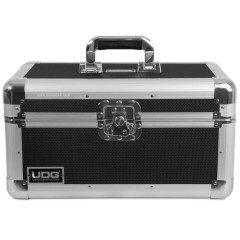
We, at UDG have further fined-tuned already a great design concept of our flight case into one specially for the most discerning DJ/ producer. Constructed from aluminum thus providing an extremely stable structure with lighter weight compared to traditional flight cases.
The UDG Ultimate Record Cases are designed to keep your vinyl protected from accidental damage when you transport it to and from gigs. They’re compact and lightweight yet tough enough to keep your valuable records safe.
EAN 8718969210447
Color Black/Silver
Weight 2,50 kg / 5.5 lbs
Outer Dimensions (W x H x D) 44.0 x 24.0 x 27.0 cm | 17.3 x 9.4 x 10.6 inch
Inner Dimensions (W x H x D) 41.8 x 20.6 x 25.2 cm | 16.4 x 8.1 x 9.9 inch
Material Aluminum
Protection Corrosion resistant aluminum profiles with strong rounded corners
Fully-lined with high density foam protective padding
Strong butterfly lock and solid metal hinges
Rubber feet at the bottom for support in standing position
Extra's Lighter weight than traditional flight cases
Black Diamond finishing surface
Ergonomic & sturdy carry handle
Fits Approximately up to 80 12"/LP vinyl records. Capacity will depend on the thickness of the records & their packaging.