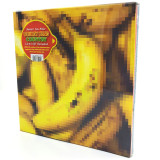
Beautiful Zambian Jazz/Rock LP. Huge Tip!
Sharp-Flat Records presents the long-awaited restoration of The Broadway Quintet's cult classic Amalume – a hypnotic concoction of traditional Zambian sounds and jazz-rock grooves with a twist of 1970s African psychedelia.
Emerging to serve the entertainment needs of Zambia's United National Independence Party (UNIP) in the early 1960s, The Broadway Quintet gathered seasoned talent from Lusaka's best hotel bands to fashion its esteemed lineup. Starting as a quartet and later evolving into a quintet, the group's career spanned over twenty years as favourites on the cabaret circuit and boasted a myriad of prestigious collaborations.
The Broadway Quintet's jazz sensibilities set them apart from the rock sound that dominated the music landscape of the 1970s. Yet the formula behind Zamrock, fusing indigenous Zambian sounds with Western pop, shaped their one and only 1976 long-player. Featuring modern arrangements of traditional songs, Amalume blended congas with sax sounds, folk lyrics with electric keyboard shenanigans and show business staples with jazz guitar noodling. With its psychedelic fever dream illustrated cover, it was an explosive package of "originality and electrifying beauty" as the album's liner notes rightly attested.
Released on the Zambezi label, Amalume joined an exceptional run of mid-1970s offerings alongside WITCH, Ricky Banda and Crossbones. Officially licensed, carefully restored and beautifully reproduced, Zambia's most requested reissue has finally returned for everybody to enjoy.
Cerca:conga fever
- 1
- A1: Theme
- A2: Simian Segue
- A3: Jungle Groove
- A4: Bonus Room Blitz
- A5: Cranky's Theme
- B1: Cave Dweller Concert
- B2: Aquatic Ambience
- B3: Funky's Fugue
- B4: Candy's Love Song
- B5: Bad Boss Boogie
- C1: Life In The Mines
- C2: Mine Cart Madness
- C3: Misty Menace
- C4: Voices Of The Temple
- C5: Treetop Rock
- D1: Forest Frenzy
- D2: Northern Hempisheres
- D3: Ice Cave Chant
- D4: Fear Factory
- D5: Gangplank Galleon
- D6: Game Over
- D7: The Credits Concerto
- A1: K.rool Returns
- A2: Steel Drum Rhumba
- A7: Cranky's Conga
- A8: Schoolhouse Harmony
- A9: Lockjaw's Saga
- A10: Swanky's Swing
- A11: Funky The Main Monkey
- A12: Boss Bossanova
- B1: Hot Head Bop
- B2: Mining Melancholy
- B3: Bayou Boogie
- B4: Snakey Chantey
- B5: Stickerbrush Symphony
- B6: Disco Train
- C1: Flight Of The Zinger
- C2: Run, Rambi! Run!
- C3: Forest Interlude
- C4: Haunted Chase
- C5: In A Snowbound Land
- D1: Krook's March
- D2: Bad Bird Rag
- D3: Crocodile Cacophony
- D4: Game Over
- D5: Lost World Anthem
- D6: Primal Rave
- D7: Dk Rescued
- A3: Welcome To Crocodile Isle
- A1: Dixie Beat
- A5: Token Tango
- A2: Crazy Calypso
- A3: Northern Kremisphere
- A4: Wrinkly's Save Cave
- A5: Hangin' At Funky's
- A6: Crystal Chasm
- A7: Submap Shuffle
- A8: Stilt Village
- A9: Bonus Time!
- A10: Mill Fever
- B1: Brothers Bear
- B2: Frosty Frolics
- B3: Swanky's Sideshow
- B4: Cranky's Showdown
- B5: Boss Boogie
- B6: Treetop Tumble
- B7: Wrinkly 64
- B8: Hot Pursuit
- B9: Enchanted Riverbank
- C1: Brothers Bear Blues
- C2: Water World
- C3: Cascade Capers
- C4: Get Fit Agogo
- C5: Nuts And Bolts
- C6: Pokey Pipes
- C7: Rockface Rumble
- A4: Klomp's Romp
- A6: Jib Jig
- C8: Cavern Caprice
- C9: Jungle Jitter
- D1: Big Boss Blues
- D2: Game Over
- D3: Baddies On Parade
- D4: Krematoa Koncerto
- D5: Rocket Run
- D6: Mama Bird
- D7: Chase
- D8: Jangle Bells
Musique Pour La Danse is proud to present the definitive edition of the highly acclaimed and globally beloved Donkey Kong Country soundtracks, meticulously recreated by composer and producer Jammin' Sam Miller. Released in 1994 for the Super Nintendo Entertainment System (SNES), Donkey Kong Country was celebrated not only for its groundbreaking quasi-3D graphics but also for its exceptional soundtrack.
The soundtrack featured a variety of compositions, and has been highly praised for its diverse and high-quality music, with tracks like "Aquatic Ambiance" and "Fear Factory" standing out as fan favorites. The influence of the Donkey Kong Country soundtrack extends beyond the gaming world, having inspired modern artists and changed the way video game music was perceived.
This limited edition boxset, limited to 500 copies, comes as a triple DLP set, containing Volumes 1, 2, and 3. Pressed on red, green, and blue marbled vinyl, it is housed in a hardboard slipcase featuring new and original artwork by Andrew Beltran.
Don't sleep on this ultimate release-the previous boxset edition has been sold out for a long time, and if you can find it, it's being sold for crazy money.
Using hex SPC data converted to MIDI, Jammin' Sam Miller painstakingly recreated the DKC soundtrack note by note, sourcing the original equipment used to create it. He then translated the MIDI into a modern studio context, incorporating keyboard samples, remixing the sounds with added effects, and mastering the tracks. To learn more about his process, watch the explanatory video here: cutt.ly/ulUHE6J.
Marc Moulin’s Top Secret is a mixed bag of downtempo jazz treats and sweet-sounding rhythmic forays into the dark of night. With this recording,
Marc Moulin craftily blends the sound of sexy vocals and collages them against the sounds of muted trumpets, congas, guitars, and drums.
This work comes alive with a jazz flavor, one that seems to have been used by a variety of performers and producers, but
one that is uniquely Marc Moulin. Top Secret is a journey through the kaleidoscopic sound world of 1960s bossa jazz with a taste of
Wes Montgomery, George Benson, and George Duke. Marc Moulin’s Top Secret seems to be half downtempo 1990s chill recording,
and half contemporary jazz, which makes for a compelling fusion. This recording certainly breathes new life into the genre of acid jazz, or downtempo music
This expanded edition of Top Secret - with no less than 5 bonus remix tracks- is available as a limited numbered edition of 750 copies on orange coloured vinyl
Top tier US house head Stefan Ringer has many different styles up his sleeve and many of them come to fore on this new dance floor heater on his FWM Entertainment. 'Fever' is built on fat, mid-tempo drums with rattling hits and congas peppering the beats next to snippets of vocal that bring a sense of sensuality and sexuality as pixelated synths also make their mark. On the flip, the remix by Ben Hixon has jazzy, live-sounding percussion and deft drum patterns that are organic and loose. Vamping chords build some energy while steamy vocal words layer in intimacy and emotional intensity. It's a brilliantly original sound packed with real heart.
Next up in the Mr Bongo Cuban Classics series is an outing by the mighty Juan Pablo Torres from 1978. Released on Cuba’s state-owned Areito imprint, Algo Nuevo showcases trombonist, bandleader, arranger and producer Juan Pablo Torres' unique scope of sound. A melting pot of an album that weaves together jazz-funk and traditional Afro-Cuban genres with tripped-out synth touches and dancefloor grooves.
The opener 'Pan Caliente' is a fiery celebration, combining a driving groove with Latin percussion, feverish horns and infectious “la-la-la” vocals. The wild, squelching cosmic synthlines give an otherworldly touch to proceedings that sit nicely on a modern dancefloor. 'Guajira 2001' is perhaps Juan's future-focussed take on the vibrant style of Cuban dance-led music called guajira. Blistering bongos, congas and claves moving together with trumpets, trombones and twanging acoustic guitars that you can’t help but bounce to.
Other highlights include, 'Cacao', a Cuban cosmic funk strutter that places the claves upfront, with a scatting vocal line and percussive climax reminiscent of George Kranz electronic disco anthem 'Din Daa Daa' from 1983. Elsewhere, 'Elvira' further showcases the psychedelic essence of many of the album’s tracks. A deep Latin workout where tasty percussive breaks and scorching keys blend with trippy vocals and rumbling synths.
A varied album encompassing a variety of Afro-Cuban genres and rhythms entwined with flashes of mind-bending cosmic influence. Algo Nuevo is a further jewel in Cuba’s musical crown of riches, with plenty of dancefloor treats and downtempo numbers held within
It’s a decidedly busy time at INVINC HQ at the moment with the 10-year anniversary looming in May.
The six months preceding this date are peppered with a flurry of releases every couple of months, which started with the Mondo Ritmo EP that came in October, the Gamma Knife LP in December and now this brand new album by Sordid Sound System, which lands early March before a rather promising sounding 2xLP compilation lands in May to mark the occasion.
It’s been a good few years since something by Sordid Sound System aka Stuart Evans has been released on the label and it’s a welcome return. In our opinion it's some of Evans’ best work and so it’s a pleasure to have him back on board the good ship Inc.
Remarkably, this music is even harder to pigeon-hole than usual...even for Stu, who’s known for his raw, analogue, live takes that veer between dub and post-kraut this is definitely quite "different": part surf acid, part dub, part psych-exotica, part motorik...and that's just the A-side. The B-side leans more towards ambience but of the oddball experimental soundtrack variety...a thoroughly enjoyable ride.
Enjoy the trip.
"This is the time that we, who have benefitted from the Last Poets shouldbe able to say, 'it's the Last Poets. It's them we should be honouring, because we did not honour them for so many years_"
KRS One wasn't just addressing the hip hop fraternity when he uttered
those words by way of introducing the video for Invocation - a poem
written thirty years ago, around the time of the Last Poets' last significant comeback. He was speaking to everyone who's been affected by the word, sound and power issuing from the most revolutionary poetry ever witnessed, and that the Last Poets had introduced to the world outside of Harlem at the dawn of the seventies.
In 2018 the two remaining Last Poets, Abiodun Oyewole and Umar Bin
Hassan, embarked on another memorable return with an album -
Understand What Black Is - that earned favourable comparison with theirseminal works of the past, whilst showcasing their undimmed passion andlyrical brilliance in an entirely new setting - that of reggae music. Trackslike Rain Of Terror ("America is a terrorist") and How Many Bullets demonstrated that they'd lost none of their fire or anger, and their essential raison d'etre remained the same.
"The Last Poets' mission was to pull the people out of the rubble o f their lives," wrote their biographer Kim Green. "They knew, deep down that poetry could save the people - that if black people could see and hear themselves and their struggles through the spoken word, they would be moved to change."
Several years later and the follow-up is now with us. The project started when Tony Allen, the Nigerian master drummer whose unique polyrhythms had driven much of Fela Kuti's best work, dropped by Prince Fatty's Brighton studio and laid down a selection of drum patterns to die for. That was back in 2019, but then the pandemic struck. Once it had passed, the label booked a studio in Brooklyn, where the two Poets voiced four tracks apiece and breathed fresh energy, fire and outrage into some of the most enduring landmarks of their career. Abiodun, who was one of the original Last Poets who'd gathered in East Harlem's Mount Morris Park to celebrate Malcolm X's birthday in May 1968, chose four poems that first appeared on the group's 1970 debut album, called simply The Last Poets. He'd written When The Revolution Comes aged twenty, whilst living in Jamaica, Queens. "We were getting ready for a revolution," he told Green. "There wasn't any question about whether there was going to be one or not. The truth was many of us still saw ourselves as "niggers" and slaves. This was a mindset that had to change if there was ever to be Black Power." He and writer Amiri Baraka were deep in conversation one day when Baraka became distracted by a pretty girl walking by. "You're a gash man," Abiodun told him. The poem inspired by that incident, Gash Man, is revisited on the new album, and exposes the heartless nature of sexual acts shorn of intimacy or affection. "Instead of the vagina being the entrance to heaven," he says, "it too often becomes a gash, an injury, a wound_" Two Little Boys meanwhile, was inspired after seeing two young boys aged around 11 or 12 "stuffing chicken and cornbread down their tasteless mouths, trying to revive shrinking lungs and a wasted mind." They'd walked into Sylvia's soul food restaurant in Harlem, ordered big meals, then bolted them down and run out the door. No one chased after them, knowing that they probably hadn't eaten in days. Fifty years later and children are still going hungry in major cities across America and elsewhere. Abiodun's poem hasn't lost any relevance at all, and neither has New York, New York, The Big Apple. "Although this was written in 1968, New York hasn't changed a bit," he admits, except "today, people just mistake her sickness for fashion." Umar is originally from Akron, Ohio, but had arrived in Harlem in early 1969 after seeing Abiodun and the other Last Poets at a Black Arts Festival in Cleveland. That's where he first witnessed what Amiri Baraka once called "the rhythmic animation of word, poem, image as word- music" - a creative force that redefined the concept of performance poetry and stripped it bare until it became a howl of rage, hurt and anger, saved from destruction by mockery and love for humanity. When Umar's father, who was a musician, was jailed for armed robbery he took to the streets from an early age where he shined shoes and raised whatever money he could to help feed his eight brothers and sisters. By the time he saw the Last Poets he'd joined the Black United Front and was ready to join the struggle. Once in Harlem, Abiodun asked him what he'd learnt in the few weeks since he'd got there. "Niggers are scared of revolution," Umar replied. "Write it down" urged Abiodun. That poem still gives off searing heat more than fifty years later. In Umar's own words, "it became a prayer, a call to arms, a spiritual pond to bathe and cleanse in because niggers are not just vile and disgusting and shiftless. Niggers are human beings lost in someone else's system of values and morals." And there you have it. It's not just race or religion that hold us back, but an economic system that keeps millions in poverty and living in fear - a system born from political choice and that's now become so entrenched, so bloated on its own success that it's put mankind in mortal danger. It was many black people's acceptance of the status quo that inspired Just Because, which like Niggers Are Scared Of Revolution, was included on that seminal first album. Along with their revolutionary rhetoric, it was the Last Poets' use of the "n word" that proved so shocking, but it would be wrong to suggest that they reclaimed it, since it never belonged to black people in the first place. There's never any hiding place when it comes to the Last Poets. They use words like weapons, and that force all who listen to decide who they are and where they stand. Umar's two remaining tracks find him revisiting poems first unleashed on the Poets' second album This Is Madness! Abiodun had left for North Carolina by then where he became more deeply enmeshed in revolutionary activities and spent almost four years in jail for armed robbery after attempting to seize funds related to the Klu Klux Klan. Meanwhile, the 21 year old Umar was squatting in Brooklyn and had developed close ties with the Dar-ul Islam Movement. A longing for purity and time-honoured spiritual values underpins Related to What, whilst This Is Madness is a call for freedom "by any means necessary," and that paints a feverish landscape peopled by prominent black leaders but that quickly descends into chaos. "All my dreams have been turned into psychedelic nightmares," he wails, over a groove now powered by Tony Allen's ferocious drumming. Those sessions lasted just two days, and we can only imagine the atmosphere in that room as the hip hop godfathers exchanged the conga drums of Harlem for the explosive sounds of authentic Afrobeat. Once they'd finished, the recordings and momentum returned to Prince Fatty's studio, since relocated from Brighton to SE London. This was stage three of the project, and who better to fill out the rhythm tracks than two key musicians from Seun Anikulapo Kuti's band Egypt 80? Enter guitarist Akinola Adio Oyebola and bassist Kunle Justice, who upon hearing Allen's trademark grooves exclaimed, "oh, the Father_ we are home!" Such joy and enthusiasm resulted in the perfect fusion of Nigerian Afrobeat and revolutionary poetry, but the vision for the album wasn't yet complete. He wanted to create a new kind of soundscape - one that reunited the Poets with the progressive jazz movement they'd once shared with musicians like Sun Ra and Pharoah Sanders. It was at that point they recruited exciting jazz talents based in the UK like Joe Armon Jones from Mercury Prize winners Ezra Collective, also widely acclaimed producer/remixer and keyboard player Kaidi Tatham, who's been likened to Herbie Hancock, and British jazz legend Courtney Pine, whose genius on the saxophone and influence on the UK's now vibrant jazz scene is beyond question. The instrumental tracks on Africanism are in many ways as revelatory and exciting as the Last Poets' own. It's important to remember that the kaleidoscope of styles and influences we're presented with here aren't the result of sampling but were played "live" by musicians responding to sounds made by other musicians. That's where the magic comes from, aided by Prince Fatty's peerless mixing which allows us to hear everything with such clarity. Music fans today have grown accustomed to listening to all kinds of different genres. Their tastes have never been so broad or all- encompassing, and so the music on this new Last Poets' album is as groundbreaking as their lyrics, and perfectly suited to the era that we're now living in. John Masouri
- A1: The Detectives (Long Version) 2 26
- A2: The Detectives (Short Version) 1 31
- A3: The Detectives (Link 1) 0 08
- A4: The Detectives (Link 2A) 0 06
- A5: The Detectives (Link 2B) 0 16
- A6: The Detectives (Link 2C) 0 16
- A7: The Detectives (Link 3) 0 10
- A8: The Detectives (Link 4A) 0 06
- A9: The Detectives (Link 4B) 0 15
- A10: The Detectives (Link 4C) 0 15
- A11: Helicop 2 54
- A12: The Big One (Prelude) 1 26
- A13: The Big One 4 05
- A14: Headlights 1 09
- A15: The Burn 1 05
- A16: Bust Up (A) 0 14
- A17: Bust Up (B) 0 13
- B1: The Detectives (Slow Version) 2 07
- B2: The Detectives (Interlude) 1 47
- B3: The Detectives (Link 5A) 0 12
- B4: The Detectives (Link 5B) 0 29
- B5: The Detectives (Link 6A) 0 11
- B6: The Detectives (Link 6B) 0 32
- B7: The Detectives (Link 7A) 0 19
- B10: Snout 1 04
- B11: The Prowler 2 02
- B8: The Detectives (Link 7B) 0 13
- B9: The Build Up 5 57
Part II[24,79 €]
It's the pair you've all been waiting for! FINALLY!
Alan Tew's driving jazz-rock, sleuth-funk masterpiece, Drama Suite Part I is finally reissued to sate your appetites for arguably the very best library two-parter in existence. If you don’t know, get to know. Originally released in 1976 but wonderfully timeless, Drama Suite Part I is at the top of every library funk collectors' list. It's easy to see why...
Racing out the gate, the gritty crime funk of "The Detectives" makes for a thrilling, wild ride. A dramatic action theme, it's packed with strident playing and bags of attitude. There follows 10 (ten!) drama-tinged, horn-heavy, wah-wah-laced, conga-enhanced, synth-riddled links for neat segues and maximum funk fever. "Helicop" is another fast paced and energetic dramatic action background with great breaks and horns. "The Big One (Prelude)" has an ace bassline and creeps along superbly to create expectation and contains an amazing rolling piano loop that just stops you dead in your tracks. It's all building to "The Big One", a driving, dramatic, full-band action with fantastic funk breaks, heavy horns and *that* piano refrain. It was sampled by Jay-Z, and you can't really blame him, can you? The brief, tense "Headlights" and (even briefer) burner "The Burn" add some - you guessed it - deep drama over insistent rhythms to close out Side A.
Flip over for "The Detectives (Slow Version)", a relaxed, thoughtful version featuring synths. You might recognise it as being sampled by Domo Genesis and Evidence for "Tallulah" from their brilliant collaboration a few years ago. "The Detectives (Interlude)" is another slow, pensive version featuring electric piano and a trombone solo in the centre section. There follows 6 further links, Detectives versions essentially, with guitars, electric pianos, flugelhorns - all very cool and relaxed rhythms. The strutting majesty of big-time highlight "The Build Up" is next. It's a medium-slow drama background with occasional light statements of The Detectives theme peppered throughout. Nice. The fantastically-titled "Snout" is a slow, tense background theme which features a repetitive guitar figure with alto flutes over the top. The tense, stabby funk of "The Prowler" rounds out proceedings, with nervous figures over a slow, insistent cymbal beat.
As with all of our KPM re-issues, the audio for Drama Suite Part I comes from the original analogue tapes and has been remastered for vinyl by Be With regular Simon Francis. And as usual, the sleeve reproduction duties were handed over to Richard Robinson, the current custodian of KPM’s brand identity. We're not quite sure what else to say about this landmark record, other than, GET IT!
French label Aldente presents their new soul tropical single. On flute, you'll find Jazzamar from the Brazilian Electronic Jazz Nu Tropic associated with french beatmaker Lord Funk under the name Tropical Combo.
The A side entitled "Jungle Fever" talks by himself, a warm time in the African forest we are between "An Elephant Called Slowly" and "The Chackachas".
The B side "Incredible Bongo Flute" is an uptempo track as a tribute to the classic "Apache" with hot bongos, congas & flute. Put the needle on the record and this soul tune will make you think about the pressure on a cypher with B.Boys. Join the battle and make a break!
DJ HELLFISH NULTIMATE ALBUM !!!
A Very 70's Rap/funk ressourced, with massive High Raw Kicks and bloody Cuts.
As usually the PUNK style stand before all, with unexpected ruptures and changes. All tune starts with some Skip Proof high time before running hordes of beats over the dancefloor...
A year of creation !
! 3xLP !
Casino Times? aka Nicholas Church and Joseph Spencer
from London have been betting against the house for
close to 10 years already, winning big with releases on
Wolf Music, Needwant, Omena and their own Casino
Edits label. The pair also hosts the radio Show “What’s
My Derivative?” on Bloop Radio.
Since Mireia Record’s big cheeses RSS Disco have been keen to gamble with the Time’s
music, routinely lighting up dancefloors with it, a loose connection and mutual admiration
formed over the years and eventually lead to this fine record here.
RUSH & KAWAI
Casino Times demonstrate their cunning yet natural and flowing sound with two originals:
“Rush” and “Kawai”. Both tracks are a proper trip of its own, psychedelic pinball machines
that’ll catapult you to the further edges of the known sphere.
An arpeggiated melody line leads the “Rush”, while a rock solid foundation of hard hitting
drums keep you steady. The melody filters into acidic fringes and a strange voice guides the
traveler to the core of this outer-body experience.
By intertwining a pulsating E-Bass with sharp percussions and a brazen guitar chords,
“Kawai” steers the travels even further out of world’s reach. A whole ensemble of sirens and
vocal fragments warn of imminent rapture. After this, it’ll be hard to return to the mundane.New Release Information
KAWAI (Conga Fever’s Belgian Fries Remix)
Leading the string of three remixes is Mireia’s Conga Fever. Known by now for impeccable
and inspired productions he might just have outdone himself again with this interpretation
of “Kawai”.
Taking cues from Belgian New Beat while sounding unconditionally modern at the same
time, Conga Fever has crafted a bona fide festival anthem. After confidently building up
tension and taking his time in the breakdown, the remix manages to release an incredible
amount of energy. We’ve seen people out of their minds and literally stage dive to this one.
KAWAI (Rigopolar Remix)
A new face and dream cast to the label: Rigopolar aka Menio Brown. The Brooklyn-based
producer and DJ has been on our radar for some years with a string of captivating releases
for Tom Tom Disco, Nazca Records and an upcoming EP on Duro. Especially “Sun Of
Lemuria’s” hypnotic brittleness turned our heads.
Adding a new high point to his repertoire, Rigopolar’s take on “Kawai” is an expansive, dark
journey into the void. Powerful lasers and strobe lights appear to lead the way, emergency
broadcast voices beckon the dancers to the floor. The clobbering bassline and twitching
melody help to reach previously unseen heights.
RUSH (Filburt Remix)
Working his signature slow-burn magic on his remix of “Rush” is Filburt. More than happy to
welcome him back to the label. The O*RS label head, DJ and producer is responsible for
some of our favorite material in the past and does not disappoint with this remix either.
Lush pad sounds oppose salient drumming, slowly tightening the atmosphere while a robotic
voice evokes a melancholic mood. The whole night’s rooted on this fervid bassline and it’ll
carry you into next Monday
The Chakachas are best remembered for their hit disco single 'Jungle Fever'. The album by the same name is a revelation of Latin funk, with horns playing against groovy rhythms and some fine vocal work. Exiting in every aspect it's a real tasty and nasty combination of sounds. The album is characterized by its versatile percussion, consisting of maracas, congas and drums, and funky guitar riffs and horns. There's a beautiful version of Earle Hagen's classic standard 'Harlem Nocturne', known for its groovy bassline and guitar breaks. Jungle Fever is a classic which should be included in every collection of funk and Latin music.
The Belgian based group of The Chakachas were a Latin soul studio musicians. They're also known as Les Chakachas or Los Chakachas. They started in the late 1950s, recording a playful mixture of Latin music, jazz, and European-style exotica.
- 1