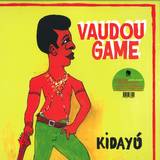
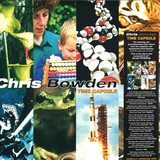
Wah Wah 45s make a welcome return to the world of re-issues. Having started out over two decades ago releasing dance floor funk from Benny Poole, Cheyenne Fowler and The Googie Rene Combo, and later re-releasing obscure Kompa-funk from Haitian pianist Henri Pierre Noel, they now turn their attention to an overlooked early 90s acoustic soul gem.
About thirty years ago, music teacher and budding producer Alex Boyesen found himself working as part of the Haringey Music Workshop - a community programme and outreach project funded by the local council in Haringey, North London (coincidentally the area in which the Wah Wah head office is now based!).
"Anyone could come and get lessons for free - ranging from piano, sax, guitar, drums, bass, singing and workshops including choral, jazz band and more." Alex Boyesen
It was during that time that Alex came across a young Sam Edwards.
"One day I went into one of the rehearsal rooms and there, by herself, was this girl playing a piano and singing. It was the most incredible voice I had ever heard."
Before long, the pair were playing all over London as a duo with Alex on guitar and Sam on vocals.
"Sam had never had professional training, she was simply an utter natural."
The Haringey Music workshop was connected with other projects in the borough, in particular a community project called the Selby Centre. Here they ran training programs for young people and one of these was a music business course. The idea was that they found an artist, recorded them and then promoted them. One way or the other they ended up picking Alex and Sam to be on their roster.
"My good friend Nixon Rosembert was brought in to oversee the recordings and they hired the Islington Music Workshop to do the recording. We got musicians from the Haringey Music Workshop to play on the sessions and spent a day recording two songs -American CarsandLife. The training workshop had created a label called Progression Music and out the record went."
Three decades later and out of the blue Alex started to get interest again in the record he'd almost forgotten about all those years ago. It had become something of a sought after gem on Discogs, and there seemed to be an interest in that 'acoustic soul' sound once again.
"I got three people asking if they could re-release it and finally here we are with Wah Wah 45s doing the business after all these years."
It was Hospital Records and Wah Wah 45s founder, Chris Goss, who first brought the idea of releasing this record to the table.
"This is a really special record for me, picked up 30 years ago, from a young James Lavelle at Honest Jon's in Ladbroke Grove. Sam Edwards would go on to perform and write songs with North London's Izit, the acid jazz collective fronted by Tony Colman - with whom I have built a music company, these past 25 years. Alex Boyeson worked with Tony at the Haringey Arts Project, who produced a one-off vinyl release of Alex's two compositions back in 1991. Thanks to Alex and Tony, we have been able to clean-up the original audio, uncover photos and lyric sheets to present, with real love and affection, these two lost gems from a bygone era." Chris Goss, Feb 2021.
The project was then expanded by Dom Servini, who got heavy disco legend Ashley Beedle and co-label owner and erstwhile producer Adam Scrimshire in to take on remix duties.
"When approached by Dom Servini to reworkAmerican CarsI had no idea about the history of the original song. After a good listen myself and studio partner Darren Morris set to work and all I can say that it was a lovely experience keeping the vibe of the original but giving it a spaced out feel in true Afrikanz On Marz fashion." Ashley Beedle, Feb 2021.
"Remixing without multi-tracks always brings a bunch of challenges, getting the balance between the bass and drums in the original and what you want to do with your own version. The song really dictates certain things to you.
But it was such a pleasure to explore that with this beautiful song and vocal performance. So many ways to approach it. I just wanted to draw out more of the melancholy in the original and make it an absorbing experience." Adam Scrimshire, Feb 2021.
Perhaps the last word should be given to Alex himself, who's very much enjoying the new lease of life that his music with Sam is getting.
"As I write this we are trying to locate her, she's somewhere singing something, that's all she ever did. Thanks for being part of my life Sam and I am so glad that this small bit of that time is being remembered." Alex Boyesen, Feb 2021.
Поиск:connected
Все
At first glance, Sarah Louise might seem an unlikely candidate
to credit technology as inspiration for her new album, Earth Bow.
After all, she has lived in rural Appalachia for the last decade,
foraging numerous species of wild mushroom, concocting
medicine from plants she gathers, and performing what she
terms “Earth Practices” to deepen her relationship with the
natural world. But it is precisely her ability to find connections
between false binaries that makes this album so novel and richly
immersive.
Louise conceived Earth Bow as an interconnected ecosystem,
meant to evolve, interact and grow. Known for her inventive
guitar playing, vocal harmonies and electronic experiments,
it was her use of the SP-404SX sampler that became a primary
inspiration for the album’s woven nature. “Improvising with the
404 during live shows allows me to collaborate with the music
as a living system, almost the way generative music works,” she
says. “I kept finding more and more samples that worked together
and realized I wanted to connect the entire record—and
that there were many ways it could be connected.”
Through this process, what began as eight core songs
blossomed into two sweeping suites. Samples—denizens of
her electronic forest—move around the record with changing
context like words in a sestina or phrases in the I Ching,
revealing new connections with each listen. Mesmeric sounds
abound on Earth Bow, from analog synth tones, to digitally
manipulated sonics that she stretches and layers with a painterly
touch. These electronic sounds inhabit the same environment as
field recordings, ceremonial percussion, guitars and empathic
vocals, weaving together her vast and borderless influences into
an enveloping world. “I want this record to take people on a
journey through the wonders of our incredible planet, to help
people feel held by the mysteries of nature,” she enthuses. “I
believe music can heal.” After a string of celebrated releases on
Thrill Jockey, Sarah Louise is self-releasing Earth Bow on her
new imprint of the same name.
After two UK #1 albums, 2 million album sales and an array of international acclaim, you might’ve thought you knew what to expect from Royal Blood. Those preconceptions were shattered when they released ‘Trouble’s Coming’ last summer. Hitting a melting pot of fiery rock riffs and danceable beats, they delivered something fresh, unexpected and yet entirely in tune with what they’d forged their reputation with.
The reaction was phenomenal, with highlights including 20 million streams, a premiere as Annie Mac’s Hottest Record and a run on Radio 1’s A-list and earned alternative radio support and media attention across the globe. In short, Royal Blood are primed to be bigger than ever before. That feat is set to be realised when they release their eagerly anticipated third album ‘Typhoons’ on April 30th via Warner Records.
When Mike Kerr and Ben Thatcher sat down to talk about making a new album, they knew what they wanted to achieve. It involved a conscious return to their roots, back when they had made music that was influenced by Daft Punk, Justice, and Philippe Zdar of Cassius. It also called for a similar back-to-basics approach to what had made their self-titled debut album so thrilling, visceral and original.
“We sort of stumbled on this sound, and it was immediately fun to play,” recalls Kerr. “That’s what sparked the creativity on the new album, the chasing of that feeling. It’s weird, though - if you think back to ‘Figure it Out’, it kind of contains the embryo of this album. We realised that we didn’t have to completely destroy what we’d created so far; we just had to shift it, change it. On paper, it’s a small reinvention. But when you hear it, it sounds so fresh.”
Those traits pulsate throughout the new single and title track. Kerr’s spiralling bass riff casts an hypnotic allure as it grows in intensity, while his vocals switch at will between a raw rock roar and a soulful falsetto. It’s underpinned by Thatcher’s thundering beats, his taut rhythms infused with groove-laden hi-hats.
After setting the tone with ‘Trouble’s Coming’, the album opens in breathless, take-no-prisoners style with the fierce metallic grooves of ‘Who Needs Friends’ hitting an early visceral peak. Royal Blood further reference their fresh array of influences by deploying vocodered vocals on ‘Million & One’ before dynamically switching between the biggest contrasts of their sound with ‘Limbo’. Already a fan favourite having been a regular during the duo’s 2019 shows, ‘Boilermaker’ lives up to its reputation and is more than matched by ‘Mad Visions’, which evokes a hyper-aggressive Prince. It ends with a final surprise in the shape of the stark piano ballad ‘All We Have Is Now’, a vulnerable and revealing reminder to live in the moment.
That song’s unguarded sentiments gives the album a redemptive finale. Whether directly or allusively, the album focuses on exploring the flipside of success that they’ve experienced. It comes from the realisation that success is much more complicated than it seems and that having the time to regain perspective is a precious commodity which becomes ever more elusive. The situation called for reflection and change, which Kerr addressed in Las Vegas. He downed an espresso martini and declared it to be his last drink, and soon discovered that his new-found sobriety would have a positive impact upon his creativity and life as a whole.
That new approach manifested itself in the duo’s decision to produce the majority of ‘Typhoons’ themselves. ‘Boilermaker’ was produced by Queens of the Stone Age frontman Josh Homme, the two bands having first connected when Royal Blood supported them on a huge North American tour. Meanwhile, the multiple Grammy Award winner Paul Epworth produced ‘Who Needs Friends’ and contributed additional production to ‘Trouble’s Coming’.
After two UK #1 albums, 2 million album sales and an array of international acclaim, you might’ve thought you knew what to expect from Royal Blood. Those preconceptions were shattered when they released ‘Trouble’s Coming’ last summer. Hitting a melting pot of fiery rock riffs and danceable beats, they delivered something fresh, unexpected and yet entirely in tune with what they’d forged their reputation with.
The reaction was phenomenal, with highlights including 20 million streams, a premiere as Annie Mac’s Hottest Record and a run on Radio 1’s A-list and earned alternative radio support and media attention across the globe. In short, Royal Blood are primed to be bigger than ever before. That feat is set to be realised when they release their eagerly anticipated third album ‘Typhoons’ on April 30th via Warner Records.
When Mike Kerr and Ben Thatcher sat down to talk about making a new album, they knew what they wanted to achieve. It involved a conscious return to their roots, back when they had made music that was influenced by Daft Punk, Justice, and Philippe Zdar of Cassius. It also called for a similar back-to-basics approach to what had made their self-titled debut album so thrilling, visceral and original.
“We sort of stumbled on this sound, and it was immediately fun to play,” recalls Kerr. “That’s what sparked the creativity on the new album, the chasing of that feeling. It’s weird, though - if you think back to ‘Figure it Out’, it kind of contains the embryo of this album. We realised that we didn’t have to completely destroy what we’d created so far; we just had to shift it, change it. On paper, it’s a small reinvention. But when you hear it, it sounds so fresh.”
Those traits pulsate throughout the new single and title track. Kerr’s spiralling bass riff casts an hypnotic allure as it grows in intensity, while his vocals switch at will between a raw rock roar and a soulful falsetto. It’s underpinned by Thatcher’s thundering beats, his taut rhythms infused with groove-laden hi-hats.
After setting the tone with ‘Trouble’s Coming’, the album opens in breathless, take-no-prisoners style with the fierce metallic grooves of ‘Who Needs Friends’ hitting an early visceral peak. Royal Blood further reference their fresh array of influences by deploying vocodered vocals on ‘Million & One’ before dynamically switching between the biggest contrasts of their sound with ‘Limbo’. Already a fan favourite having been a regular during the duo’s 2019 shows, ‘Boilermaker’ lives up to its reputation and is more than matched by ‘Mad Visions’, which evokes a hyper-aggressive Prince. It ends with a final surprise in the shape of the stark piano ballad ‘All We Have Is Now’, a vulnerable and revealing reminder to live in the moment.
That song’s unguarded sentiments gives the album a redemptive finale. Whether directly or allusively, the album focuses on exploring the flipside of success that they’ve experienced. It comes from the realisation that success is much more complicated than it seems and that having the time to regain perspective is a precious commodity which becomes ever more elusive. The situation called for reflection and change, which Kerr addressed in Las Vegas. He downed an espresso martini and declared it to be his last drink, and soon discovered that his new-found sobriety would have a positive impact upon his creativity and life as a whole.
That new approach manifested itself in the duo’s decision to produce the majority of ‘Typhoons’ themselves. ‘Boilermaker’ was produced by Queens of the Stone Age frontman Josh Homme, the two bands having first connected when Royal Blood supported them on a huge North American tour. Meanwhile, the multiple Grammy Award winner Paul Epworth produced ‘Who Needs Friends’ and contributed additional production to ‘Trouble’s Coming’.
Rich in musical associations yet utterly singular in its voice, joyous with an inner tranquility, the music of Natural Information Society is unlike any other being made today. Their sixth album in eleven years for eremite records, descension (Out of Our Constrictions) is the first to be recorded live, featuring a set from London’s Cafe OTO with veteran English free-improv great Evan Parker, & the first to feature just one extended composition. The 75-minute performance, inspired by the galvanizing presence of Parker, is a sustained bacchanalia of collective ecstasy. You could call it their party album.
This was the second time Parker played with NIS. Joshua Abrams: “Both times we played compositions with Evan in mind. I don’t tell Evan anything. He’s a free agent.”
The music is focused & malleable, energized & even-keeled, drawing on concepts of ensemble playing common to musics from many locations & eras without any one specific aesthetic realization completely defining it.
“The rhythms that Mikel plays are not an exact reference to Chicago house, but that’s in there,” Abrams says. “I like to take a cyclic view of music history, can we take that four-on-the-floor, & consider how it connects to swing-era music? Can we articulate a through line? I dee-jayed for years in Chicago & lessons I learned from playing records for dancing inform how I think about the group’s music. The listener can make connections to aspects of soul music, electronic music, minimalism, traditional folk musics, & other musics of the diaspora as well. It’s about these aspects coming together. I don’t need to mimic something, I need to embody it to get to the spirit, to get to the living thing.”
For jazz fans, the sound of Parker’s soprano & Jason Stein’s bass clarinet might evoke Coltrane & Dolphy, even though they didn’t necessarily set out to do that & they play with complete individuality. Abrams sees a bridge to the historical precedent, too. “Since we first met in the 1990s, one of the things that Evan and I connected on was Coltrane’s music,” he says. “I hoped that we would tap into that sound world intuitively. In this case, I think that level of evocation adds another layer of depth, versus a layer of reference.”
Indeed, this is a performance in which the connections among the ensemble & the creative tension between improvisation and composition build into a complex mesh of associations & interactions. While the band confines itself to the territory mapped out by Abrams’ composition, they are remarkably attentive & responsive, making adjustments to Parker’s improvisations. When Parker’s intricate patterns of notes interweave with the band, the parts reinforce one another & the music rockets upward. Sometimes, Parker’s lines are cradled by the group’s gentle pulse & an unearthly lyrical balance is struck.
Drummer Mikel Patrick Avery is locked-in, playing with hellacious long-form discipline, feel & responsiveness. Jason Stein’s animated, vocalized bass clarinet weaves in & out with Lisa Alvarado’s harmonium to state the piece’s thematic material; the pulsing tremolo on the harmonium brings a Spacemen 3 vibe to the party. Abrams ties together melody & rhythm on guimbri, a presence that leads without seeming to. Like his bandmates, he shifts modes of playing frequently, improvising & then returning to the composed structure.
“As specific as the composition is, the goal is to internalize it & mix it up,” Abrams says. “The idea is to get so comfortable that we can make spontaneous changes, find new routes of activity, stasis & byways every gig. It’s like a web we’re spinning. If someone makes a move, we all aim to be aware of it, make room for it. Experiencing & listening is what it’s about, & Evan supercharges that.”
& “supercharged” is the word for this album. With Parker further opening up their music, descension (Out of Our Constrictions) is the sound of Natural Information Society growing both more disciplined and freer, one of the great bands of its time on a deep run.
Aguirre edition: Mastered by Helge Sten, Audio Virus, Oslo. Lacquers by Dubplates & Mastering. Liner Notes by Theaster Gates. LPs pressed on premium audiophile-quality vinyl at Pallas Records. US 2xLP edition available thru Eremite records.
Shapes of Rhythm welcomes Emanative to the label for his first vinyl project following contributions to its Isolation Compilation and an Awkward Corners EP both earlier in 2020. Known for his love of collaboration, Emanative connected remotely with Bex Burch during the global lockdown. Disrupt #4 is the result of a meeting of two percussive minds in the midst of a pandemic, and like all good things it started with a groove. Nick initially provided Bex with a hazy, electrified afrobeat sketch. What followed was a musical dialogue which quickly gained momentum. A punk-esque vocal mantra was added, reflecting the here and now of 2020 to drive the track forward. Bex's trademark Ghanaian Gyil xylophone is the conversation with the groove throughout the track. Hector Plimmer also joins the collaboration, seasoning the mix with synthesizers and fx.
Following his stunning Dislocation Songs LP, the label drafted in Awkward Corners AKA Paradise Bangkok's Chris Menist for a remix on the flip that heads towards the club (remember clubs?). Adding 808s, his own conga recordings, synth lines, a sprinkle of acid and a warped vocal treatment, this is classic Awkward Corners: pumped with feeling and rhythm. If Andrew Weatherall was still with us today he'd be digging this take on the a-side.
- 1: Just Imagine (Remix) :06
- 2: On A Summer's Day (Remix) 05:58
- 3: Tick Tock (Remix) 04:21
- 4: Things Like This (A Little Bit Deeper) (Remix) 0:58
- 5: I Can See Light Bend (Remix) 0:12
- 6: Tawkin Tekno (Remix) 04:59
- 7: Almost Nothing Is Nearly Enough (Remix) 0:58
- 8: Make It About (The Way That You Live) (Remix) 06:51
neon candy vinyl incl. 24"x12" poster
To Sonic Boom’s Pete Kember, re-imagining the past can lead to ways forward on life’s natural, interconnected path. In April of 2020, he released his first album in over 20 years called All Things Being Equal, a lush and psychedelic record full of interwoven synthesizers and droning vocal melodies, concerned with the state of humanity and the natural world. An entire year later, Kember has re-imagined his last release and created an album of self-remixed tracks called Almost Nothing Is Nearly Enough, inspired by the spirit of late 70s, early 80s records by artists like Kraftwerk, Blondie and Eddy Grant. His new album is hypnotic and moody, holding onto the existential framework of the original, but exposes a fresh, beating realm of possibility.
In his last album, All Things Being Equal, Kember told regenerative stories backwards and forwards as he explored dichotomies zen and fearsome, reverential of his analog toolkit and protective of the plants and trees that support our lives. His work is always complex, both in its instrumentation built using modular synthesizers, and with his attempts to observe the many variables that exist in the universe that are intrinsically connected. Kember takes his existential and musical curiosity even further in Almost Nothing Is Nearly Enough, explaining “how we interact now is especially critical.” Written while the world endures many environmental and human crises, the album is both a balm and a reminder to nurture our own relationships, both natural and personal.
Almost Nothing Is Nearly Enough includes remixes of six tracks from All Things Being Equaland two tracks previously released exclusively in Japan. The album opens just like the original, with “Just Imagine”in its remixed form. The modular synthesizer at its foundation sounds familiar, but as the song progresses it branches out into various veins of sparkling embellishments and deep humming to truly expand the world that the song attempts to envision. On the albums’title track “Almost Nothing Is Nearly Enough,” Kember’s instrumentation mirrors the interactions he wishes to inspire; synthesizers responding and building on one another, a conversation of sorts that the human world currently seems to avoid.
Almost Nothing Is Nearly Enough sets itself up to be a grooving, night-time record, while carrying on Sonic Boom’s sense of urgency to assess our relationship with the world. As Sonic Boom revisits his last album, he exposes the arteries and bones of his past work and shares its raw, exciting potential. The result is a re-textured and re-colored new set of songs, emphasizing Sonic Boom’s ability to make a sonically expansive album feel distinctly impactful for anyone who listens closely.
· First release of the Jagjaguwar 25th anniversary celebration happening in 2021. · Features production and composition accompaniment from Bon Iver, Mary Lattimore, Angel Bat Dawid, Gia Margaret, and Sam Gendel. · Limited edition Opaque Green vinyl. Over the last 12 years, Ross Gay's poems have given us indelible images and phrases of radical empathy and unabated gratitude; about community, collaboration, connectedness and hard work. They have crept into our hearts and made a home of all of us. And so we are launching our 25th Anniversary celebration with `Dilate Your Heart', our first spoken word album since titan Robert Creeley's self-titled release twenty years ago. "Catalog of Unabashed Gratitude" is given a gorgeous, slowly creeping bed of vines by Bon Iver, as Gay's unadorned voices speaks a lifetimes of Thank You's. On "Burial," harpist and composer Mary Lattimore's lunar landscape follows Gay's voice into space, telling of our endless energy exchange with nature. Chicago's Angel Bat Dawid dances with the frenetic, joyous scene Gay leads us through on "To the Fig Tree on 9th and Christian," in which a group of Philadelphia strangers scramble together to harvest the fruit of the titular urban fig tree. Songwriter Gia Margaret provides a mystical, amniotic environment for Gay's "Poem To My Child If Ever You Shall Be," a love letter to an imagined future child, treating Gay's voice like a message in a bottle to a far off idea made only of love and potential. Sam Gendel, a secret weapon collaborator, affects Gay's voice on "Sorrow Is Not My Name" to something glassy and almost singsongy. Throughout, Gay recites his poems with bright aliveness, his voice as warm and easy when he speaks about death as when he speaks about mercy, or love.
PRIMAL FEAR's ferocious new record “Metal Commando” has been an undisputed highlight of 2020. The German power metal band's 13th full length detonated in the midst of a raging pandemic, leaving no stone unturned in its path. The whole world got stuck in, achieving the 6 piece some of their highest chart positions in their 20+ year career, which included; a top ten in Switzerland (6), Germany (7), Japan (7), Finland (9) and Sweden (9) next to multiple high entries in countries such as Austria, Spain, France and the USA.
PRIMAL FEAR are Germany’s metal band of the hour, again. Right now however, they want to show us something new, a different side to them - after releasing a string of heavy and hard-hitting singles from “Metal Commando”, mastermind Mat Sinner and vocal force Ralf Scheepers have something extraordinary up their sleeves; a 5-track single, built around an exclusive new rendition of their achingly beautiful ballad ‘I Will Be Gone’, re-recorded with none other than Finnish metal diva extraordinaire, Tarja Turunen.
“There were three famous vocalists on our final wish list,” Mat Sinner comments. “That it was Tarja who got involved in this song is a matter of pure joy for all of us. Working together on the song and video was totally relaxed and professional – a great experience also because Tarja’s and Ralf’s voices go together incredibly well. Now, we can expand the ‘Metal Commando’ saga with a unique chapter. We’re all really proud of this single.”
The Finnish icon can only agree: “I was very happy to receive the invitation to take part in PRIMAL FEAR’s beautiful song ‘I Will Be Gone’. We started our careers nearly at the same time many years ago, and finally got a chance to work together. I love the song and personally it helped me to stay connected and rock again, even if at the studio this time. I really hope that people will like this collaboration and that it will bring them joy especially during these difficult times we are living through at the moment.”
The song, fragile and touching, gets an altogether new and deeply melancholic vibe with Tarja’s unbelievably emotional performance, showcasing a different facet of PRIMAL FEAR. Yet, it’s not the only gift they deliver on this 5-track sensation - just take ‘Vote Of No Confidence’ for example, an all-new, previously unreleased beast of a song. Clocking in at over six minutes, this storming, furious anthem gives a brilliant glimpse of things to come. Previously only available as bonus tracks on the limited “Metal Commando” digipack, three more tracks complete this release; enchanting guitar instrumental ‘Rising Fear’, massive mid-tempo smasher ‘Leave Me Alone’, and heavy metal monument ‘Second To None’, making ‘I Will Be Gone’ so much more than just another off shoot of a successful album.
“Metal Commando” is so much more than just another album by a veteran band. The songs are too strong, the hooks too merciless, the refrains too huge, and their trademark phalanx of three guitars too indomitable for any meek kind of listener response. “We’re simply an awesome team,” Sinner laughs. The “we” he’s talking about are of course himself on bass guitar and vocals, fierce vocalist Ralf Scheepers, guitarists Tom Naumann, Alex Beyrodt and Magnus Karlsson as well as that brand-new whirlwind of a drummer, Michael Ehré.
After six albums “abroad”, “Metal Commando” saw the band return to their first home Nuclear Blast. Where some bands would give in under such pressure, changing labels for PRIMAL FEAR has unleashed a huge amount of sublime heavy metal energy. Heck, we bet this seismic shock was visible on the Richter scale! “We wrote and wrote and realised quite early on that we had a lot of good ideas going”. Good ideas? The songs are bangers as only PRIMAL FEAR anthems can be – a sound that’s long become a trademark just got new, shiny alloys.
New track ‘I Will Be Gone’ showcases PRIMAL FEAR’s mellow, bittersweet side – available on multi coloured vinyl, shaped vinyl, CD digipack or digitally. Let’s all take a deep breath now; soon enough it’ll get loud again on stages around the globe.
PRIMAL FEAR's ferocious new record “Metal Commando” has been an undisputed highlight of 2020. The German power metal band's 13th full length detonated in the midst of a raging pandemic, leaving no stone unturned in its path. The whole world got stuck in, achieving the 6 piece some of their highest chart positions in their 20+ year career, which included; a top ten in Switzerland (6), Germany (7), Japan (7), Finland (9) and Sweden (9) next to multiple high entries in countries such as Austria, Spain, France and the USA.
PRIMAL FEAR are Germany’s metal band of the hour, again. Right now however, they want to show us something new, a different side to them - after releasing a string of heavy and hard-hitting singles from “Metal Commando”, mastermind Mat Sinner and vocal force Ralf Scheepers have something extraordinary up their sleeves; a 5-track single, built around an exclusive new rendition of their achingly beautiful ballad ‘I Will Be Gone’, re-recorded with none other than Finnish metal diva extraordinaire, Tarja Turunen.
“There were three famous vocalists on our final wish list,” Mat Sinner comments. “That it was Tarja who got involved in this song is a matter of pure joy for all of us. Working together on the song and video was totally relaxed and professional – a great experience also because Tarja’s and Ralf’s voices go together incredibly well. Now, we can expand the ‘Metal Commando’ saga with a unique chapter. We’re all really proud of this single.”
The Finnish icon can only agree: “I was very happy to receive the invitation to take part in PRIMAL FEAR’s beautiful song ‘I Will Be Gone’. We started our careers nearly at the same time many years ago, and finally got a chance to work together. I love the song and personally it helped me to stay connected and rock again, even if at the studio this time. I really hope that people will like this collaboration and that it will bring them joy especially during these difficult times we are living through at the moment.”
The song, fragile and touching, gets an altogether new and deeply melancholic vibe with Tarja’s unbelievably emotional performance, showcasing a different facet of PRIMAL FEAR. Yet, it’s not the only gift they deliver on this 5-track sensation - just take ‘Vote Of No Confidence’ for example, an all-new, previously unreleased beast of a song. Clocking in at over six minutes, this storming, furious anthem gives a brilliant glimpse of things to come. Previously only available as bonus tracks on the limited “Metal Commando” digipack, three more tracks complete this release; enchanting guitar instrumental ‘Rising Fear’, massive mid-tempo smasher ‘Leave Me Alone’, and heavy metal monument ‘Second To None’, making ‘I Will Be Gone’ so much more than just another off shoot of a successful album.
“Metal Commando” is so much more than just another album by a veteran band. The songs are too strong, the hooks too merciless, the refrains too huge, and their trademark phalanx of three guitars too indomitable for any meek kind of listener response. “We’re simply an awesome team,” Sinner laughs. The “we” he’s talking about are of course himself on bass guitar and vocals, fierce vocalist Ralf Scheepers, guitarists Tom Naumann, Alex Beyrodt and Magnus Karlsson as well as that brand-new whirlwind of a drummer, Michael Ehré.
After six albums “abroad”, “Metal Commando” saw the band return to their first home Nuclear Blast. Where some bands would give in under such pressure, changing labels for PRIMAL FEAR has unleashed a huge amount of sublime heavy metal energy. Heck, we bet this seismic shock was visible on the Richter scale! “We wrote and wrote and realised quite early on that we had a lot of good ideas going”. Good ideas? The songs are bangers as only PRIMAL FEAR anthems can be – a sound that’s long become a trademark just got new, shiny alloys.
New track ‘I Will Be Gone’ showcases PRIMAL FEAR’s mellow, bittersweet side – available on multi coloured vinyl, shaped vinyl, CD digipack or digitally. Let’s all take a deep breath now; soon enough it’ll get loud again on stages around the globe.
There’s something new under the sun. If you look at it closely,
something new is only (and always) created at crossroads –
when different and signi¦cant traditions are connected and
combined. On their own, these traditions have often existed
for a while. However, in this new form they have never
appeared together. The latest manifestation of something
new can now be found on the album “No Future Dubs”, the
interpretations of “No Future Days” – the most recent album
by German band Messer – by Finnish producer and old
friend of the group Kimmo Saastamoinen aka Toto Belmont.
The intentional traditions that merge on this grand and
digni¦ed album are post-punk, dub and techno. A new
chapter in the culturally constant narrative of dub is written
here. Through their past and parallel activities in hardcore
and post-punk bands, Messer drummer Philipp Wulf met and
befriended Kimmo, originally a drummer too. In their
continuous dialogue discussing their musical journey, Philipp
and Kimmo over the years more and more immersed
themselves in the aesthetic possibilities of dub and reggae.
Indeed, lots of musicians do not listen to the type of music at
home that they write and play in their respective projects
(Take me as an example: House is the music that I produce
and put on as a DJ. On my own, I listen to various stuff,
music by Monk and Messer for example). The same applies
to the protagonists involved here. By discussing dub und
through Toto Belmont’s steadily increasing producingexpertise, the idea of creating dub versions of selected
Messer tracks was born. The Messer album “No Future
Days”, released in 2020, proved to contain the perfect raw
material as the songs on this album are already produced in
a much more transparent way than on previous LPs – and
are hence more suitable for dub. Still, it’s a giant leap from
the originals to the dubs. These add a third dimension to the
described character of the post-punk/dub amalgam: techno.
The result is a sound that hasn’t existed before, especially
not with German lyrics (which scarcely, however, carry
meaning or messages here. Hendrik Otremba’s voice is used
more like an instrument, as if he was the ghostly ¦gure which
he often sings about and which now §oats and screams
through the sound space). The history of mutual contact and
in§uence of (post-)punk and dub (reggae), which Messer
have kept on writing, is glorious and reaches back far in
musical history. Still, it has always been a rather marginal
chapter not only in punk but also in dub history. But already
in the beginnings of punk (the British version, less the
American one), the presence and in§uence of reggae was
obvious in many places as both are united in their resolute
attitude as rebel music. This is how the two genres
recognized each other – especially the punks regarded
reggae as rebellious. As is known, already Johnny Rotten
mainly listened to dub in private. By using the name John
Lydon, he then – together with bass player Jah Wobble –
established the group PiL as one of the most exemplary
bands at the crossroads of dub and punk. The Slits, Pop
Group, Killing Joke, The Ruts and last but not least The Clash
along with the Mick Jones offshoot Big Audio Dynamite –
the thriving British music scene in the early 80s was full of
dub-in§uenced acts. The echoes meandered everywhere. In
the USA, it took longer until the in§uence of dub became
noticeable and it has never been as distinctive as in the UK.
The history of US hardcore, however, cannot be told without
bands like Bad Brains from Washington D.C. who on their
albums occasionally inserted conscious reggae and dub
tracks between breakneck hardcore tracks. Another
important group is Blind Idiot God who similarly included
dub tracks on their LPs – the contrast between densely
droning rock tunes and widely breathing dub versions can be
experienced very vividly here. In the 90s, dub’s in§uence on
post-punk decreased while turning up even more distinctively
somewhere else: Techno was in many respects susceptible
to dub, to say nothing of the music from the so-called British
hardcore continuum (jungle, drum & bass etc.), which directlydeveloped from dub and reggae. But also “pure” techno –
meaning techno without breakbeats – discovered its a¨nity
for the possibilities of dub at an early stage, in England for
instance in projects like Left¦eld or The Orb. In addition, the
project Rhythm & Sound was established in Berlin with close
ties to the Hardwax record store. With regard to this project,
you can’t really say where dub ends and where techno begins
(or vice versa) because of the interconnection of the two
genres here – everything is based on the steppers pulse
which links the two styles like a common DNA. With dub
techno a new genre was created. Until the present day, there
are producers who don’t produce anything else and DJs who
don’t put on any other music. The Messer dubs are
characterized by a grand majestic manner and force that
presumably someone like Mad Professor is able to produce
and that is also inherent in many Scandinavian productions
of the last 15 years; a crystal-clear aesthetic which locates
itself far away from Kingston or Brixton, but features a pulse
referring clearly to Berlin and Helsinki. The songs appear in a
completely new and deconstructed form, the instruments are
exclusively used as particles and raw material, not as riffs;
merely glaring guitar textures ¦ll the wide dub space. There
are many new elements that were added by Toto Belmont,
especially synthesizer sounds and drums. The ¦nal result
creates an enormous aesthetic power and dignity, and an
atmosphere you don’t want to leave anymore. “No Future” is
a well-chosen title as a reference to the protagonists’ punk
association; as a main thrust of the album, however, a
comma between these two words is imaginable as well.
2023 Repress
it’s happening again: dj, producer and dial records co-owner lawrence produced his fourth album for mule musiq. and once more, another very special one. the berlin-based artist wrote nine new arrangements specifically for “studio mule”, the new audiophile listening bar that mule musiq's head-honcho toshiya kawasaki recently opened in shibuya, tokyo. it features an exquisite vintage hi-fi sound system, a small record shop, craft liquor and beer as well as an extensive natural wine collection. “toshiya's wine and listening bar was the inspiration for the project. i followed the idea of listening to music in this (for me imaginary) place on a magic vintage sound system, slightly drunk with an always special drink in my hand! the music is therefore also very eccentric and “tipsy”, improvised on acoustic instruments, synthesizers and computer, combined with recordings i did in berlin's central tiergarten park.” lawrence acknowledges the imaginative superstructure above his new album and his mode of operating during the recordings. the records is called “birds on the playground” and features deep pulsating music, that unfolds its true absorbing character when the auditor listens care-fully to the detailed storytelling of lawrence. like always his tunes got a special, radiant pulse, that somehow is a signature sign of most of his productions. playful cosmic grooves, light-hearted, crafted with love and yet freshly unset-tling in some moments. his arpeggiated melodies remind partly on the music of hans-joachim roedelius. in other sec-onds they display a jazzy spiritual character and drift into meditative areas, that sound to a degree like long forgotten japanese folk music spheres. as “birds on the playground” isn’t aimed straight for the dancefloor, the overall coating of the music is a relaxed, cautious one, that goes beyond the average definition of ambient music. each track builds up gracefully, in order to present a mesmerizing musical architecture, that offers new sound dimensions with any fresh listening turn. as the record is made for mule musiq`s latest public space enterprise, everyone who is close-ly connected to the label was involved.
mule musiq’s core artist kuniyuki was in charge for the mastering. and the labels visual draw-er stefan marx painted the cover artwork. “when i saw the record cover for the first time, i had to think a bit of an extremely funny new year's eve party from over 10 years ago, when stefan and i founded the imaginary band “the dead sea”. this record would have been a wonderful soundtrack to the bustle during that night.” lawrence reveals.
it must have been a party beyond hysteric spheres, where all guests dance and talk dearly at the bar, while the music slows down their body functions enough to hear a sound that takes everybody away to a place, that must have been home in that very moment.
Dream Violence, Michael Beach’s fourth full-length, is an epic album that explores the duality of the human condition. Or, as Beach himself puts it, the album is about “human futility, passion, desire, anger, frustration, and the struggle to maintain hope in a somewhat hopeless time.” Dream Violence, then, addresses the existential crisis of being an artist in 2020.
Known for his work touring with the Australian guitar pop band Thigh Master and the late, brilliantly eccentric Israeli guitarist Charlie Megira, currently the focus of a number of reissues by the Numero Group, Beach is the architect of a sound that is both well-built and ramshackle, straightforward and indeterminably complex, out of the norm yet familiar in all the best ways.
Dream Violence unfolds like a revelation, filled with sonic tumbleweeds that reference Neil Young’s On the Beach, Bruce Springsteen’s Nebraska, the Velvet Underground’s Loaded, and the Go Betweens’ Before Hollywood. Influences ranging from the enigmatic outlier Megira to Glenn Branca to the Oblivians are combined to create a new, exhilarating sound, part of the path that Beach has been on since 2008’s Blood Courses. A veteran of year-end indie rock round ups beginning with Golden Theft in 2013 and continuing with Gravity/Repulsion, released in 2017, Beach distills the best of those early albums and adds sharpened intent.
Dream Violence works beautifully as a start-to-finish album. There are magnificent stand-alone moments: “Spring,” a raggedly building ballad that perfectly captures the ennui attached to new beginnings; “De Facto Blues,” a born-to-lose anthem that, says Beach, “is the sound of people totally at their wits end;” “Curtain of Night,” a simultaneously derelict and bright tribute to the late Megira, which sounds like it could’ve been cut at Muscle Shoals Sound Studio after the Rolling Stones wrapped up sessions for Sticky Fingers; and the delicately vulnerable “You Found Me Out,” which evokes equal parts Lou Reed and Joni Mitchell. On the latter, the lyrics “You found me out, on a ship at sea, you pulled me in, made a wreck of me,” encapsulate “the aimless of a modern world view in a future without hope and the draw/dependence of love in those times,” Beach explains.
Through music, Beach strives to convey both passion and compassion, energy and action. “My hope is that something gets communicated that makes people think outside of themselves or their surroundings,” he says. “To ask questions, and consider the effects of their decisions. To communicate some essential part of the human spirit that understands intuitively how to feel connected to each other rather than divide, exploit, separate, ignore, and all the other heinous shit we have the ability to do with each other.”
Recorded on two continents, Dream Violence documents Beach’s move from Oakland, California to Melbourne, Australia as he navigated a new music scene, plenty of bureaucratic red tape, and, ultimately, citizenship. Parts of the album were recorded and mixed at Tiny Telephone Recording in Oakland, at the end of a 2019 tour with Kelley Stoltz producing. Other tracks were recorded at Beach’s new home in Melbourne, where he could be “relaxed and sloppy in all the right ways,” and partially remixed at Phaedra Studios.
At the Memphis-based Goner label, Beach joins an increasingly unique roster of international musicians that reaches far beyond garage or indie rock to encompass artists like gospel singer Rev. John Wilkins, Kentucky rockers Archaeas, New Orleans iconoclasts Quintron and Miss Pussycat, and no-wavers Optic Sink.
British artist Robin Rimbaud (Scanner) traverses the experimental terrain between sound and space connecting a bewilderingly diverse array of genres. Since 1991 he has been intensely active in sonic art, producing concerts, installations and recordings, the albums Mass Observation (1994), Delivery (1997), and The Garden is Full of Metal (1998) hailed by critics innovative and inspirational works of contemporary electronic music. Committed to working with cutting edge practitioners he has collaborated with Bryan Ferry, Wayne McGregor, Mike Kelley, Carsten Nicolai, Michael Nyman, Steve McQueen, Laurie Anderson and Hussein Chalayan, amongst many others.
Rimbaud first met Belgian artist Hans Op de Beeck at Le Fresnoy Studio national des Arts Contemporains when they were both Visiting Professors in 2012. Op de Beeck lives and works in Brussels, Belgium and creates sculpture, installations, video, photography, animated films, drawing, painting, and writing. His various works show the viewer non-existent, but identifiable places, moments and characters that appear to have been taken from everyday life.
The artists found an immediate creative connection, and a year after meeting Staging Silence (2) was completed. In 2019, they returned to the theme and created Staging Silence (3).
Each of the films is realised through the same principles, as two pairs of anonymous hands construct and deconstruct fictional interiors and landscapes on a mini film set of just three-square metres in size. The films take the viewer on a visual journey through depopulated, enigmatic and often melancholic, but nonetheless playful, small-scaled places, which are built up and taken down before the eye of the camera.
Ranging from hyper-realistic fictional land and cityscapes to absurd, almost surreal, dreamscapes, the various locations are connected by the sense of mystery and melancholy that pervades them. And at every moment Rimbaud's score is amplifying and illustrating these moments, from tragedy to nostalgia, witty to optimistic.
Introspective and lyrical, Staging Silence offers us a world of mystery and intrigue, held together by nature and time. This is a very humane works experienced at a time when many of us feel disconnected from the world around us. The peculiar silence that permeates this hauntingly beautiful work is very much an illustration of our times, anticipating a future in the past. Staging Silence is an exquisite study in dreamlike abstract ambience, a kaleidoscope of sounds and tones that engage the head and the heart.
The saga of composer Tim Story's 1982 debut is a case study in the shifting sands of the early progressive music industry. Recorded on a Tascam 4-track reel-to-reel in his basement bedroom in Whitehouse, Ohio using a ragtag array of equipment – salvaged vibraphone, pawn shop Les Paul, his mother's spinet piano, a PAiA synth kit assembled by his girlfriend's father, and a Yamaha CS-30 – Story optimistically dubbed six cassettes and sent them around the world. Following a polite rejection from Klaus Schulze, the French avant-garde label Atem (This Heat, Univers Zero, Art Zoyd) reached out with an offer to release Threads via their new instrumental electronic subdivision, Labyrinthes. After several letters confirming terms of the arrangement as well as multiple rounds of test pressings, correspondence suddenly ceased. Some months later the label folded, never having begun. Synchronistically, however, Schulze's copy ended up in the glovebox of an engineer associate, who happened to play it for a couple visiting journalists with contacts at a newish Norwegian imprint, Uniton Records (Popul Vuh, Harold Budd).
Impressed, they connected Story to the label head, but by then he'd already recorded a follow-up, the more neoclassical-leaning In Another Country, which became his inaugural release. Finally, 40 years later, Dais Records is rectifying history's error by properly issuing Threads on vinyl for the first time. It's a beautiful, beguiling work, exploratory but emotive, documenting, as Story puts it, “the path not taken... like the first chapter of a book that was set aside to begin another.” Despite only being in his early twenties at the time of its creation, Threads feels finessed and considered, weaving through a diverse spectrum of moods and minimalist melodies. From sunburst synthesizer devotionals (“Tethered By A Thread”) to shadowy cosmic drift (“Without Waves,” “Iso”) to fragile piano vignettes (“Burst,” “Scene And Artifact”), Story's compositional instincts skew subtle and sophisticated, carving gemstones of fluctuating radiance. He cites his discovery of tape loops as a central tool in the process, allowing him to generate recurring patterns of echoes and texture, decaying in volume and fidelity as desired: “A whole new and inspiring world opened up.” As both time capsule and discographical fountainhead, Threads vividly captures the threshold sensation of early 1980's electronic music: post-kosmische, prenew age, before ambient became codified, just as synthesizers began slipstreaming into the underground. It's an album of beginnings and forking paths, inner space voyaging towards limitless horizons, born of “youthful dedication to something one loves, in a world that feels uncertain.”
· First ever vinyl edition, originally set to be released in 1982 but due to original label's untimely demise, it was never issued until now.
· Collaborative releases with Hans-Joachim Roedelius and Dwight Ashley, with releases on notable labels Uniton, Windham Hill, and Hearts of Space.
· For fans of Harold Budd, Brian Eno, Roedelius, Nils Frahm, Klaus Schulze, Popol Vuh, Vangelis, Jean-Michel Jarre · The song "A Thousand Whispers" has been in regular rotation at Sirius XM.
· Tim Story is a Grammy nominated artist in 1988 for his "Legend of Sleepy Hollow" recording with Glenn Close.
Whitesnake celebrates the blues sound that helped inspire its multi-platinum career on a new collection that features remixed and remastered versions of the group’s best blues-rock songs. The Blues Album is the third and final release in the band’s Red, White and Blues Trilogy, a series of compilations organised by musical themes that began earlier in 2020 with Love Songs (red) and The Rock Album (white). The new compilation delivers a potent mix of hits and deep tracks that originally appeared between 1984 and 2011 on six Whitesnake studio albums and Coverdale’s solo album, Into the Light.
Whitesnake’s singer-songwriter David Coverdale says, the music reflects how blues artists like Muddy Waters, Howlin’ Wolf, and the three Kings (Albert, B.B. and Freddie) continue to inspire him. In the album’s liner notes, he writes: “It’s hard to find the words to show how profoundly they connected with my soul. But ‘blues’ to me is a beautiful word that describes emotional expression… feelings, be it feelings of sadness, loneliness, emptiness… but, also those that express great joy, celebration and dance, sexiness and love!!!”
The Blues Album showcases two of the band’s biggest songs: “Slow An’ Easy,” a big hit in 1984 from Whitesnake’s massive album Slide It In, and the smash “Give Me All Your Love” from the band’s 1987 self-titled globally successful album. Other choice tracks from Whitesnake are also featured: “Looking For Love” and “Crying In The Rain,” and “Steal Your Heart Away.” The collection also includes “If You Want Me,” a studio recording released in 2006 as a bonus track on the live album, Live…in the Shadows of the Blues. Coverdale also taps his 2000 solo album, Into the Light, for “The River Song.”
This is Vice Beats’ full-length tribute to legendary Jay Dee called “Dilla: The Timeless Tribute” where he is using Miguel Atwood-Fergusson’s Mochilla tribute “Suite For Ma Dukes” as the foundation. 14 tracks full of harmonies that are connected to one of the greatest. Features Greg Blackman, Audessey (of Soundsci), J-Dubble, Brotherman and many more. Tip!
For Rhye’s Michael Milosh, the home is the center of creativity and community. It transcends conventional understandings of walls, stairs and hardwood floors. A culmination of a wayfarer’s journey, the home is a balm for a restless spirit — a place to simply be.
For much of his life, the Canadian singer, songwriter and multi-instrumentalist has wandered, decamping in Toronto, Montreal, Thailand, the Netherlands, Germany and Los Angeles at varying times. Since the meteoric rise of Rhye’s 2013 debut Woman, he’s mostly lived on the road—playing between 50 and one hundred shows a year. But over the last couple of years something changed. On the heels of some major life changes, including a new relationship, Milosh yearned for a more permanent space. “It's this idea of creating a safe place that's not just conducive to creativity, but one that’s truly an anchor point from which to make art and be creative,” he says.
That longing was fulfilled in August of 2019 when Milosh and his partner Genevieve happened upon the perfect place in Topanga. It had been on and off the market for two years as the owner sought the perfect buyer, one who would carry on its creative tradition. “She did this ceremony somewhere on the property where she was trying to call in the right people, and apparently we came the next day,” Milosh explained. “The right kind of home presented itself to us, and we presented ourselves to it. It was like a union between us and the home.”
Written throughout 2019 and early 2020, recorded at Milosh’s home studio, United Recording Studios and Revival at The Complex, and mixed by Alan Moulder (Nine Inch Nails, Interpol, My Bloody Valentine, U2, The Killers), Home is familiar in its synthesis of propulsive beats, orchestral flourishes, piano ruminations and sultry, gender-nonconforming vocals, but never have they sounded more cohesive or alive.
“I'm always trying to always accomplish musical goals that are connected to the way I listened to and interact with music as a child,” Milosh says. The sentiment also underscores a broader, less obvious, but no less important theme echoed through his new record: No matter where life takes us, we can always go home.
"Over the years, I have had the absolute pleasure of meeting countless wonderful people in every corner of this beautiful planet, and a lot of times these music enthusiasts have expressed a very similar-sounding story. That our presence – whether it be via a studio recording or our ferocious show – is capable of transporting them to a better place and washing away all earthly worries. Doesn't this sound amazing – especially during these challenging times?"
This gentle voice belongs to the vocalist-guitarist Jonne Järvelä, who happens to be the creative force behind the unique Finnish ensemble KORPIKLAANI. Having experienced multiple triumphant years within the inner circle of folk-influenced heavy metal, Jonne now acknowledges his position as one of the most recognisable artists ever coming from the land of a hundred thousand lakes.
KORPIKLAANI – preceded by Jonne's own project SHAMAANI DUO (1993-1997) and the band SHAMAN (1997-2003) – was founded somewhere deep in the primeval northern forests in 2003. Ten celebrated studio albums, numerous world tours and hundreds of millions of digital streams alongside multiple other releases, have established KORPIKLAANI’s status as one of the leaders of innovative heavy music. For their diehard legion of fans, they are known as Folk Metal Superstars.
"I have always been fascinated by ancient Lappish/Samish culture and the infectious melodies of aged folk songs. However, that's only one side of the coin as I have loved rip-roaring metal since I was a frantic kid looking for some rebellious sounds. My butt was kicked by the likes of MOTÖRHEAD, IRON MAIDEN and JUDAS PRIEST", says Jonne.
"Since the early 2000s, KORPIKLAANI has combined these elements as we have tirelessly attempted to pump new life into the ancient tales of joy and heartbreak, and added the enormous energy of current heavy metal into that folk metal melting pot.We have always been on a mission to create something new and unprecedented."
Here and now, KORPIKLAANI’s fearless journey continues on – and this time, the journey is powered by rather serious subject matter. Their eleventh full-length studio record "Jylhä" (which has no direct translation but can be described as majestic, or wild and rugged in a beautiful way) brings all the well-known and essential ingredients to the table: heavy-duty guitar riffing, rhythmic folk melodies and more.
What about the tales of the wilderness then? The fascinating and miscellaneous tales have always been a crucial part of KORPIKLAANI’s journey within the realms of unspoiled Finnish nature, ancient Scandinavian myths, shamanistic voyages and beyond. "Did I already mention that "Jylhä" offers some new angles?", the singer/guitarist laughs. "Well, lyrically, there are definitely some previously unknown passages – such as fables connected to the infamous Lake Bodom murders in Southern Finland in early 1960s."
KORPIKLAANI’s long-time lyricist Tuomas Keskimäki – the renowned Finnish poet and author, comments: "When I am coming up with narratives, interesting wordplays and other ideas for KORPIKLAANI, I often feel like I am diving into some absorbing fantasy world. I would describe this state of mind as some kind of a deep trance", says Keskimäki.
"As a whole textual piece, "Jylhä" is rather widespread. For example, there are stories about the fragility of life, revealed by using nature metaphors. ‘Miero’ is one of these tales: after all, it's a fact that the lifetime of a human being is just one blink of an eye compared to the eternal aeons of the cosmos."
"On the darker side, there are several murder songs - I wasn't really planning these rather untraditional lyrics, they just happened... One of these is ‘Kiuru’, and that story is inspired by a famous Finnish double homicide case, which took place in the small village of Tulilahti in 1959. In these lyrics, the character called Kiuru – Skylark in English – acts as eyewitness and a prophet, but at the same time, this creature also functions as an allegory of many things... All in all, I am really happy with the lyrics and all these new themes!"
When asked about his current sentiment regarding the new KORPIKLAANI opus "Jylhä", the commander of the forest clan sighs and smiles. "Using "Jylhä" as our solid steppingstone, we are able to reach completely new heights. For me, it's crystal clear that KORPIKLANI has never been better."
It is a fitting album for our dark times, summed up well by the song ‘Huolettomat’ (The Careless). It talks about living in the present moment, alongside a story of joy and celebration. Today is today, tomorrow is uncertain.
Ralph Heidel is one of the young musicians that represent the spirit of Berlin’s new musical ecleticism better than others. He is part of the avantgarde circles that mix modern jazz and contemporary classical music with elements of new electronica and experimental ambient music. This is the vibe of Germany's next generation.
Heidel creates a sonic universe that is unique. He takes the listener into a deep, atmospheric travel that stimulates emotions and feelings on a different level. Heidel brings together two worlds: what he learned at Musikhochschule München, Germany’s leading academy for classical music where he studied saxophon and composition and the moods happening in Germany's new electronic circles.
On „Relief“ Heidel created six songs. Except one, all of them are instrumental music. Partly composed and often improvised these sounds take the listener into Heidel's specific sonic universe. Raw beat structures, emotive horn lines, strong harmonical tensions and dramatic build ups. Heidel’s signature sound.
In fact Heidel is a multiple influenced artist with a strong personality that absorbs whats around him, connects it with his own wide artistic knowledge and fullfills it into magical musical moments.
Relief is the next step in what could become a longtime artistic career.
After a (very composed) debut album for string quartet and rhythm section for Kryptox (Moments of Resonance 2019), it was important for Heidel, to process current feelings of daily life.
Not just his cultural learnings, but also emotions connected to the hard COVID times and a lot of personal experiences.
Relief are six abstract, distorted patterns. Long deep transitions that lead into euphoric parts of sonic greatness. Heidel's sense for sound design and the soft tone of his saxophone phrases, add a personal note that is somehow alone in the current music scenario. Sampling his saxophone (reeds, keys etc.) to create very organic beats is one of the many techniques to create that special „Heidel“ sound. Also his calm and wide harmonies over disquiet, rough drums are part of his unique ambivalent, disrupted moods.
Most of this EP has been played by Heidel alone. For a few parts he was joined by musicians from the local scene. In fact besides his albums on Kryptox Ralph Heidel is very connected in Berlin’s current cultural playground: He creates music for underground performance art happenings in Neukölln as well as for new German theater (Volksbühne, Berliner Ensemble). Also German rapper Tarek from K.I.Z heard about Heidels string debut album, so they collaborated for an album, where Heidel reworked his record for stringquartet, piano, drums and bass.
'Leone' is the first meeting of electric guitarists Loren Connors and Oren Ambarchi. It's somewhat surprising it's taken this long as these two are connected by ongoing collaborators, like Jim O'Rourke and Keiji Haino. Connors, for more than 40 years, developed an iconic sound tethered to radical permutations of the blues. Ambarchi's own multi-decade transfiguration of the guitar inhabits a rarefied realm of abstracted tones and dissonance pitched between improvisation and composition. This album, like its title, is a sum of parts: solo performances by Connors and Ambarchi bookend a duo. On 'Lorn,' Connors unravels an aggressive ternary form, with an opening section wrapped in distortion and extreme phasing that contrasts against ghostly, distant single notes. Ambarchi's 'Nor,' supplants a guitar performance with melodic, shifting organ-like tones that are swallowed into a fluttering, glitchy squall. On 'Ronnel,' the duo, each audio landscape created by the two slowly rotates and overlaps the other, as if each is drawing the others' portrait on opposite sides of a translucent sheet. Recorded November 2017 by Bob Bellerue at the Issue Project Room. Mixed and mastered by Joe Talia and cut by Carl Saff. Cover illustration by Marissa Huber. Edition of 500; includes download.
“The earth shall rise again...”
AMOR/LEMUR finds the Glasgow quartet AMOR in partnership with Norwegian improvising ensemble LEMUR to hopeful and ecstatic effect. Conceived before the onset of Covid 19 but finished during spring lockdown, their eponymous EP is the most loose, alive and elevated recording in AMOR’s catalog. AMOR/LEMUR takes the template of throbbing avant disco expanded upon on previous recordings for Night School and lifts it into new
territories, with new tonalities and unexpected turns on the journey. More than anything, the expanded, near- cinematic expression of human connectivity feels like a lightning new energy to grasp in the dark.
Following a revelatory concert in Glasgow in January 2020 wherein the two sets of musicians met and performed together for the first time, a recording session was arranged the following day, resulting in the most elevated permutation of AMOR’s art to date. Each track was built upon a rhythmic bedrock of percussion and drums performed by Paul Thomson and samples/synthesizer by Luke Fowler. Thomson used bamboo Javanese gamelan (most notably on For You) and scrap metal, as well as traditional percussion and drums while Fowler incorporated processed ambient field recordings recorded in enclosed acoustic spaces around Glasgow. Singer/pianist Richard Youngs contributes some of the most bright and mindful work of his career. Acoustic bass player Michael Francis Duch, whose lush playing as ever provides the elastic spine to each song, scored the string parts for LEMUR on piano at home in Norway. The addition of swelling strings and drones fills out the AMOR sound significantly, lending a sonorous tone to 8 minute, epic closer For You or an ascending melodic introduction to Stars Burst that feels like a new morning dawning on a world saved from certain death. With the circumstances of lockdown forcing the musicians to work differently, a thread of optimism and utopia grounded in the moment weaves through these tracks. Unravel reveals a spine tingling vocal from Youngs. It’s a song about the simultaneously grounding and ecstatic effect of love, feeling connected to others. It’s a simple message, “I’m finding myself in your smile, always unravels me” speaks of ego death, the dissipation of the material into a nirvana of pure energy, the power of surrender. This isn’t a quasi-religious message, this is the power of each other, a love song to connection in a temporary age of isolation. Stars Burst is a play on the inner and outer cosmos, with narrator Youngs exploring wonder to a pounding galloping rhythm and snake-charming synth. It’s an open dance, with the group locked in together for the wild ride. Fear is the centerpiece of the record, starting with drones and scraped overtones before swirling synth notes filter upwards to meet reverberating minor chords. Over 8 minutes of tight but loose playing, Youngs is the shaman instructing us to use Fear as a celebration of the moment, embrace it and jump into the unknown. The only way to overcome your fear is to feel it, use it as an energy. The use of the studio as an instrument throughout side 2 is particularly important, with the dubbing and mixing prowess of engineer Paul Savage (who mixed unattended due to lockdown restrictions) and tape manipulations performed by Jason Lescallet coming into play. For You closes out with a largely instrumental, evolving composition that uses many of the abstract and novel aspects of this permutation to aid the trance. It’s massive, an unfurling creature with unexpected tonalities and serious heft.
Terry Gross is an engrossing trio composed of guitarist Phil Manley (Trans Am), bassist Donny Newenhouse, and drummer Phil Becker. The trio are also connected as owners and engineers at Bay Area recording spot El Studio, where they began improvising together as a way to test the boundaries and gear of the studio. Their loose, organic chemistry burgeoned into a deep camaraderie and a sound both expansive and exacting. The three experienced musicians crafted their first fulllength album through the pure joy of playing together with no expectations. With the tapes rolling on their rehearsals, the band captures the exuberance of live performance and elevates those recordings through a deft use of the studio as their collective instrument. On their debut LP Soft Opening, Terry Gross channels their cosmic powers and considerable chops into a gleefully mesmerizing odyssey fit for an arena. Soft Opening took shape over the course of 2016-2019, with Terry Gross writing and refining their songs. "Space Voyage Mission" and "Worm Gear" parallel one another as sinuous jams that pulse with adamantine fervor. Each mountainous epic churns spellbinding repetition and simplicity into dizzying gallops that take hairpin turns into sinewy riffing and elysian vocal melodies. Phil Manley's guitar takes on a constellation of tones across "Space Voyage Mission" with drifting delays soaring over the Newenhouse and Becker's driving rhythm section which all succumb to frothing overdrives that spin the song into entirely new pastures. The hypnotic throb of "Worm Gear" grows all the more enchanting as Newenhouse and Becker add subtle shifts to the single-chord barrage. "Specificity (Or What Have You)" contrasts these two in its more traditionally pop-oriented structure while retaining its predecessors wide-eyed energy and delves further into the album's lightheartedyet-earnest take on sci-fi tropes from space and time travel to the singularity. As Terry Gross, Phil Manley, Donny Newenhouse, and Phil Becker are sonic scientists traversing the borderlands of rock. Soft Opening captures the simple joy of a no-holds-barred trio in stunning detail, transporting the listener into the splendor and freedom of rock.
Growing up in deindustrialized Providence, Rhode Island of the 1970s and 1980s provided NYC-based composer and interdisciplinary artist Gavilán Rayna Russom access to derelict subterranean spaces including the mile-long East Side Rail Tunnel. The tunnel's reverberant darkness would produce distinctive sensory effects and host Russom's formative experiences of interpersonal connectedness, liminality, transgender identity, anti-capitalist desire and state repression.
Secret Passage – an absorbing, memoiristic work by Russom, whose synthesis-based practice fuses information and expression into organic wholes – draws on memories of "unsupervised autonomous zones where I tasted the possibilities of a world without surveillance," as she writes in the liner notes. Inspired by "this beautifully neglected place," the music resounds with ghostlike echoes and raw pulsations.
Russom utilizes synthesizers, field recordings and voice to illustrate hallucinatory revelations of the city's lightless undercarriage. Each track of Secret Passage, originally released as a limited cassette on Voluminous Arts, is dedicated to a friend – entwining personal liberation with collective discovery. The East Side Rail Tunnel has been inaccessible since the 1990s, the result of urban development and gentrification.
WRWTFWW Records is feeling total bliss as it announces the full official reissue of two major works from the great Somei Satoh gathered into one LP: the mystic and meditative Emerald Tablet (1978) and Echoes (1981), sourced from original masters and available on vinyl with liner notes by passio-nate Japanese music connoisseur/collector/critic/dj Masaaki Hara.
Fall into the ambient vastness, let yourself go…
Originally released by highly respected label ALM, these pivotal pieces of late 70s / early 80s Ja-panese experimental music majestically showcase Satoh’s intuitive approach to composition and mastery of creating infinite worlds of sound from very, very little.
Emerald Tablet, recorded at the fabled NHK Studio of Electronic Music in 1978, is a spellbinding take on musique concrète meets tape music relying solely on sound harmonics from tubular bell, cymbals, and 'kin' (Buddhist standing bell) overdubbed endlessly, voyaging into vertiginous sonic depths.
Echoes was composed for the Mist, Sound, and Light Festival, a 10-day event organized by the hot spring tourist association of Kawaji, Tochigi Prefecture, held on May 20-29, 1981. It was played in the Kawaji hot spring's Ojika river valley, with 8 gigantic loudspeakers set up on hills surrounding the stream and connected to an octuple channel-tape system - thanks to a combined length of cables exceeding one kilometer - while artificial fog rose from a ravine and laser beams shot up on the mountains. Cinematic and resonating, this breathtaking piece from Somei Satoh is a transcending sonic experience.
Emerald Tablet / Echoes is reissued in conjunction with Somei Satoh’s Mandala Trilogy + 1 double LP, also available on WRWTFWW Records.
It gives us great pleasure to introduce the baddest new voice in the land, Napoleon Demps. A Flint Michigan native, he grew up listening to Soul luminaries OV Wright, Willie Hutch and Sam Cooke, whose influence led Demps down a path to becoming an accomplished Soul singer himself - scoring his first hit at the age of 24 in the still thriving Southern Chitlin Circuit of the early aughts. Demps, having been a long time Daptone fan, connected with the Dap-Kings at a soundcheck at a Detroit nightclub for an impromptu rendition of “A Change is Gonna Come.” Bosco Mann was floored by his voice and swore they would meet again. Last year, with that sweet soulful voice still ringing in his ears, Mann would reconnect with Demps and bring him out to Penrose Recorders in Riverside, California to finally cut his first Daptone side. "Norma Jean" is a funky soul groover that lands somewhere between the nuanced big city sounds Chicago and Detroit were pumping out in the late '60s: think the grit of Twinight's houseband Pieces of Peace, kissed by the sophisticated Motor City production of Dave Hamilton or The Brothers of Soul and you're getting warm. Napoleon's smooth, commanding voice injects a je ne sais quoi that's wholly fresh, bypassing the affected trappings that plague many of today's singers. In short... Napoleon Demps is a Soul singer's Soul singer. Take a listen and hear for yourself!
Kogarashi is a Japanese word that means “the wind preceding the onset of winter”, – thus Kogarashi Tales showcases itself as a collection of stories that are connected and carried by that cold, windy feeling with songs that share the personal, yet universal, stories about love, loss, loneliness, dependence, and inner strength. Thoroughly crafted lyrics poetically penetrate the psychology of the mind, human desires, and flaws.
Connected to the Occulto LP, this 7-inch single by Sorgini features two alternative versions of
'Telecinesi' (Telekinesis), a dark, nocturnal tune with a supernatural, macabre flavour, fuelled by solid drum breaks, percussions and restless synths harmonies.
On the flip side you've got a drums and synths only version, which sounds even more spectral and abstract than the original mix. Ideal for beatmakers looking for the perfect sample.
Pole is the project of ground-breaking electronic musician Stefan Betke. The new album ‘Fading’ is the first since 2015’s ‘Wald’. As with every new Pole record, it’s part of a continued forward trajectory but it also connects to a pre-existing sonic framework.
“Every Pole record connects to recordings that I’ve made before,” Betke says, “in order to stay in this kind of vertical development. The ideas from ‘1’, ‘2’, ‘3’ up to now are connected. I keep the interesting elements, languages and vocabulary that I designed and add new elements.”
‘Fading’ follows the physical released on Mute of remastered versions of his iconic albums ‘1’, ‘2’, ‘3’ to much acclaim.
Double vinyl in black gatefold sleeve and spot
gloss finish with digital download code.
- A1: Dear P
- A2: No Song Without You
- A3: Free Love
- A4: Iloveyoumorethanicansay
- A5: By My Side
- A6: La La La That's How It Goes
- A7: One Way To Tokyo
- B1: Can't Bear To Be Without You
- B2: Loving You Is So Easy
- B3: Social Distancing
- B4: Lines On Our Faces
- B5: Gone Gone Gone
- B6: Our Love Will Never Die
- B7: Smile More Smile More Smile More
London duo Andy Clutterbuck and James Hatcher – better known as HONNE – have cultivated a huge and fiercely dedicated global fan base since the release of their critically-acclaimed debut LP, ‘Warm on a Cold Night’, in 2016. Boasting over 150 sold-out shows outside of the UK, collaborations with everyone from Tom Misch to BTS and over 1.4 billion global streams, their music is deeply emotive; from the glistening, sugar-coated highs of international hit ‘Day 1’, to the heartache and angst played out on ‘Sometimes’ – both standout cuts from 2018’s sophomore record, ‘Love Me / Love Me Not’. Laying themselves bare in their songs, HONNE are hyper-connected with fans both in the UK and all over the world – in 2018 alone, they played a sold-out Brixton Academy for the first time, embarked on an extensive, 26-date US headline tour and saw ‘Warm on a Cold Night’ officially certified as 6x Platinum in South Korea.
Timeless periods of industrial rhythm: Diarmaid O Meara and Kucera collaborate to release ‘Shadowmen’ vinyl on Gobsmacked Records
Nightclubs around Europe are shut. Even in Berlin, the clubbing capital of the world, nightlife has been reduced to a simmer. “But that doesn’t mean we can’t have a good time and connect via timeless periods of electrifying and industrial rhythms”, said Irish producer and DJ Diarmaid O Meara. Together with long-time Gobsmacked techno stalwart Kucera, the two have dropped their latest vinyl ‘Shadowmen’.
The collaboration has derived from long sessions in the Gobsmacked cavern studios in Berlin. The result: A 12” that is laid out in the style of the perfect rave – with a breakbeat electronica entry that promotes procrastination, freakish, and intensely introverted thoughts created through pulsating rhythms and ghostly frequencies, industrial rave sounds for those moments of release.
Partying is a huge part of Berlin’s identity
By listening to the vinyl featuring a dark rhythm, it becomes obvious that the duo has been heavily influenced by underground techno nights in Berlin, and also regularly sharing the stage together at international events. With the pandemic-mandated closure of clubs stretching through the summer, however, playing gigs and festivals is no longer an option. Hence, illegal parties have sprung up to fill the gap and infuriated some public health officials and politicians, also in Berlin.
“Partying is still a huge part of the city’s identity”, continued Diarmaid O Meara who has been living in Berlin for over a decade and also organising parties all over the city. “Raves are a much-needed way to blow off steam after a period of isolation but we have to consider a more proactive approach, for instance district authorities making public spaces available to party organisers under conditions that ensure hygiene measures are maintained.”
Although there has been no shortage of digital music events either since the pandemic began, clubbing is more than just watching a DJ set. “Rather it’s about the unique space that’s created by artists and the crowd that are pulled together by music”, said Kucera who has been destroying dance floors across Europe with his live sets since 2004. “In times when people are still feeling more isolated than ever, our latest vinyl with the accompanying music video aims to bring a sense of connectedness and community during the lockdown.” The video imagery has been recorded live using Kuceras machine pattern triggering whilst performing the tracks live.
Unwavering dedication to the culture of counter-culture
The name ‘Shadowmen’ reflects the work both artists have contributed constantly and consistently to the scene over the past two decades with unwavering dedication to the culture of counter-culture. The artwork, in classic Gobsmacked style, comes with a tip of the cap to the global elite who have been successfully driving humanity off a cliff. “We’ve thrown a little apparent illuminati symbol in there for those who’ve been confined too long at home and on YouTube for the past 6 months”, said Diarmaid O Meara.
Both artists are working on a multitude of new tracks and events for the post-Covid era. Of particular interest is Kuceras live visual show for Gobsmacked, with visuals triggered from his machine live-set patterns. This is something he has been wanting to experiment with for a long time now and it started to take shape in the form of visual hallucinations of industrial areas and trains he had been filming while traveling across Europe before the world stopped functioning properly due to Covid-19. Diarmaid O Meara has quite a few tricks up his sleeve, including a new politically inspired alias, where both artists will take centre stage in some wacky antics.
Good Vids, Vile Times is the second album by Ant Antic. Its central themes are the never-ending flood of information and its effects on us. The Berlin-based singer and producer Tobias Koett wraps serious questions into radiant pop songs. What does constant bombardment of information do to us? What's lost along the way?
On his new album, Ant Antic observes the emotional power of media and information. The helplessness we feel in the face of predominantly bad news and the growing inability to take pleasure in good news. The way an overload of junk information leaves no mental capacity for real social connections. As a child of the first globally connected generation, he witnesses geographical boundaries dissolve and people consider humanity as one. At the same time, everyone seems to struggle to come to terms with a reality overflowing with possibilities. Slowly, we collectively turn into superficial nihilists.
"When I wrote my first album Wealth I looked inward to examine my own emotions, asking myself "How do I really feel?". For Good Vids, Vile Times I was focusing less on the how and more on the question of why. "Why do I feel that way?"", Tobias explains the creative writing process behind his second album as Ant Antic.
"I'm a bag of hot air / Push me up density / Feel like a millionaire / Don't bring me down gravity", he admits on the single Yellow Press. Referencing the album's cover artwork by Austrian photographer Erli Grünzweil, Tobias describes how it feels to advertise his own life to other people - when behind the meticulously crafted presentation, there's sometimes nothing left but emptiness and anxiety.
Good Vids, Vile Times is an album rich in variety, ranging from indie-pop to contemporary R&B. In stark contrast to the somber tone of the lyrics, the songs radiate a cheerful liveliness. Fueled by analog synthesizers and an electric guitar often not discernible as such, the record builds on Ant Antic's signature sound. It's all Tobias on Good Vids, Vile Times - writing songs, recording vocals, guitars and synths, all the way to production and mixing. Essential elements and ideas are put into focus by getting rid of everything else. At the same time, the new album sees singer and producer Tobias openly flirting with pop, exploring new sounds and aesthetics, and maturing musically and lyrically. No song is alike, each one tells an honest and relatable story - all held together by the magic glue that is Tobias' distinctive voice, which might stay with you forever.
Music From Memory hit it just right yet again- this time it's Richenel from the Netherlands who's lost tracks get the dusting off. 6 tracks of funkified lo fi bliss.. TIP!
MFM is proud to announce the first Dutch artist on Music From Memory and our first release of 2017. MFM017 will be a six track EP from Richenel. Richenel's first album 'La Diferencia' was released on the obscure Dutch cassette label Fetisj in 1982. Recorded amongst the turmoiled punk and squatter scene of Amsterdam by musicians who had all connected through the Rietveld art academy, the 'La Diferencia' sessions reflect a unique mix of punk aesthetics with a synthesized 'bedroom' funkiness. Following on from this obscure release, Richenel would go on to record a number of successful albums and hit singles in the Netherlands and beyond. The six track EP holds a selection of tracks from the original cassette as well as alternative versions and two previously unreleased songs. More Fetisj news to follow.
For years, Frente Cumbiero has served as the torchbearer of a new wave of experimental exploration in the diverse modern-day cumbia canvas. Led by Mario Galeano Toro, a Colombian native and accomplished veteran of Bogotá's rich music scene, the group first connected with listeners outside of South America via their head-exploding 2010 debut on Names You Can Trust. "Pitchito" would become a cult favourite, a catalyst for the Brooklyn-based label, and soon after a bonafide rarity. Those beginnings of Frente Cumbiero focused on an honorary recognition of the massive musical impact that the many formations of cumbia have had over the decades within Colombia. Subgenres such as gaita, porro, vallenato, and caracolito, to name just a handful, have all played their part within the evolution of the country's tropical music lineage. That deep-digging determination coupled with a truly unique and talented musicianship has informed Frente's music, some of the most forward-thinking and reverential examples of the current tropical scene. It has led to some incredible opportunities and collaborations in Europe, Asia and the States, including genre-defying recordings with London's Mad Professor and Japan's Minyo Crusaders.
Still, Galeano Toro's assemblies with Frente Cumbiero have been scarce amongst his other exploits, splitting time as player and producer in other ground breaking projects like Ondatropica and Los Pirañas over the recent years. After three 45 single releases together with NYCT, the time away has left everybody wanting for more. Now, reassembled and seasoned with years of touring and gigging in a multitude of projects, the group's current quartet of Galeano Toro (keys and synths), Pedro Ojeda (timbales and percussion), Marco Fajardo (tenor sax) and Sebastián Rozo (bombardino) is a stripped down powerhouse of unadulterated psico-tropi swing, a beautiful Colombian musical stew, incorporating a host of flavors from the melting pots of the Pacific, Caribbean and Atlantic pathways. The final result is of course quite unclassifiable, simply a new breed of good music and a dancefloor delight.
Faitiche presents a new album by Frank Bretschneider. abtasten_halten was made as part of the raster.labor installation first presented at CTM Festival in 2019. It is perhaps the most radical work in Bretschneider’s distinctive oeuvre: abtasten_halten is a self-generating composition for synthesizer modules whose sole sound source is the movement of two VU meter needles. The resulting percussive sounds coalesce into rhythmic combinations – all random, without repetition. The album resembles a meditation on infinite rhythmic variation. abtasten_halten is Frank Bretschneider’s first release on Faitiche.
One sound can give birth to thousands of tones through self-fertilization. Pierre Henry, 1982
Frank Bretschneider on abtasten_halten:
abtasten_halten (sample_hold) is a largely self-generating composition for a modular synthesizer system. Self-generating here means that as soon as a current flows, the various modules interact, but within limits set by the composer via the connections between the modules (patches): timing, tempo, timbres, dynamics. These conditions are kept variable to a certain extent or left to chance, so that the composition created is always similar but never the same. On the one hand, the use of random generators opens up possibilities that would not otherwise have been considered. On the other, it offers the fascination of the unfinished and the unique: totally unexpected musical events that you might hear only once.
abtasten_halten combines my preferences for percussive music in general and electronic music in particular. Largely avoiding repetitive structures, the piece is more like a free improvisation, quiet and diffuse, but also extremely dense, in ever-changing contrasts and transformations.
The tone generators are two modified VU meters whose needles, driven by trigger impulses, create a simple one-bar pattern by hitting against a metal spring that is connected to a piezo element (thanks to Gijs Gieskes / Gieskes.NL). The tempo is continuously varied over a period of about ten minutes by several mutually modulating LFOs, ranging from about 0.06 Hz up to the lower audio range of about 18Hz.
The percussive sounds thus obtained are then passed through low-pass filters with moderate resonance and random frequency modulation to additionally colour the sound. Further processing is then executed by an echo module whose tempo and repetitions are again determined by random parameters. Finally the audio signal is occasionally enriched with reverb to add more spaciousness to the sound.
The concept for the installation raster.labor was developed by Olaf Bender, Frank Bretschneider and David Letellier. Many thanks to raster - artistic platform.
On Frank Bretschneider:
Frank Bretschneider works as a musician, composer and video artist in Berlin, making mainly electronic work based on complex rhythmic structures and interlocking textures, whose many-layered sound is inspired by the experimental set-ups of modern physics, often supplemented by perfectly synchronized computer-generated visualizations. In 1986, he founded AG Geige, one of the most influential underground bands in East Germany. In 1996, he co-founded the label raster-noton and has since released many solo albums.
Having previously brought together world-renowned Theremin soloist Carolina Eyck and electronic producer Eversines for a specially commissioned collaborative mini album, yeyeh founder Pieter Jansen has now conjured up another unlikely but inspired joint album, this time featuring award-winning free-jazz vocalist Greetje Bijma and leftfield house, techno and ambient producer Oceanic.
The project has its roots in a chance meeting between Jansen and Bijma, a legendary figure on the Dutch jazz scene who in 1990 became the first woman to win the country’s top jazz accolade, the VPRO/Boy Edgar award. Apart from having previously worked with the likes of Anna Homler (aka Breadwoman), Jasper van ’t Hof, Han Bennink, Louis Andriessen and Willem Breuker and her own solo projects, she’s in a league of her own.
Jansen is a big fan of Bijma’s 1996 heavily electronic collaboration with Jasper van’t Hof and Pierre Favre, Freezing Screens, and was with the friend who first introduced him to it when he bumped into Bijma.
Excited to meet someone who had made one of his favourite records, Jansen took the opportunity to ask Bijma if she would be interested in working with young electronic music producers. To Jansen’s delight, Bijma quickly agreed.
Weeks later, Bijma stepped into the studio with Oceanic, a rising star of the Dutch electronic underground whose releases as Oceanic for Nous’klaer Audio and BAKK Plafond revolve around mechanical rhythms, opaque ambient textures, minimalist melodic movements and effervescent electronics. The pair quickly connected on an emotional and musical level, with Bijma taking her cues from Oceanic’s electronic sounds and rhythms, and Oceanic drawing inspiration from Bijma’s dexterous, mind- bending and otherworldly vocalizations.
After two hugely productive days, the cross-generational duo had completed a couple of mesmerizing songs – breathlessly haunting album opener “Swallow a Party” and chilly ambient closer “A Window Drifting” – and recorded several hours or improvisations that Oceanic later edited, layered-up and re-modelled.
The results are little less than spellbinding. The range and versatility of Bijma’s vocalizations is breathtaking, while Oceanic’s music – which cleverly incorporates the free-jazz singer’s vocal notes, tones and proclamations – swings between becalmed beauty and breathless intensity.
Some of the set’s most striking moments are those where Oceanic re-contextualizes Bijma’s varied vocal sounds with the dancefloor in mind. On the pulsating “Technicolour Memories”, up-tempo “Step Snakes” and hypnotic “Never Done”, Bijma’s scat outbursts not only ride Oceanic’s rhythms, but also form part of the densely layered percussion tracks beneath.
Like the release’s more downtempo and ethereal moments, these hybrid organic- synthetic compositions defy easy categorization, offering a unique brand of alien electronic/acoustic musical fusion that lingers long in the memory.
Following the release of Milton Nascimento’s Maria Maria, Far Out Recordings proudly presents Nascimento’s 1980 follow up. With the success of Maria Maria in 1976 behind them, Nascimento reunited with his writing partner Fernando Brant in 1980 to produce another ballet, ‘Ultimo Trem (Last train)’. This time, they chose to tackle a more contemporarily relevant subject, the impact of the closure of a train line that connected certain towns and cities in the North East of Minas Gerais to the coast. “The military government shut down the route and the whole region began to fade away,” explains Milton. “I love train rides” adds the composer, “But today there are almost no trains to Brazil. So when I go to the US and Europe, any time I can, I go by train. The longer the journey the better.”
Featuring much of the same all-star line-up as Maria Maria – including legendary Brazilian musicians Naná Vasconcelos, João Donato, Paulinho Jobim and members of Som Imaginário, amongst many others, like Maria Maria, the album holds what Milton himself considers to be the definitive versions of some of his most beloved tracks, including 'Saídas E Bandeiras' and 'Ponte de Areia'.
The title track, ‘Ultimo Trem’ – performed exquisitely by Zezé Mota with a choir and piano – is a mournful lament about the human consequences of the axed line. The ballet brought great media attention to the campaign against closure. “Most of Fernando’s lyrics have some political tone,” says Milton, “This one helped the area a lot because the politicians grew concerned about the subjects.”
Fernando’s and Milton’s shared passion for the sounds, smells and memories of trains, inspired the soundtrack for the production which premièred in 1980. ‘A Viagem (The trip)’, launched with a train’s steam whistle, sees Milton’s guitar moving to a train’s rhythm. In contrast to the usual lyricism, ‘Bicho Homen (Beastly man)’ and ‘Decreto (Degree)’ are atypically upbeat and funky, their vocals a mesh of wordless male voices resembling the then fashionable Swingles Singers’ renderings of Bach. ‘E Daí? (And so what?)’, and ‘Olho d’Agua (Water’s Eye)’ were both drawn from ‘Clube Da Esquina’. ‘Olho d’Agua’ is mellow and delicate and Milton’s homage to the great voices of Brazil whilst ‘E Daí? (And so what?)’ is a stunning mosaic of voices. The unusual ‘O Velho (The Old Man)’ conjures up an image of an old shaman singing alone into the wind against the cries of nature. Perhaps the most affecting songs are Nascimento’s ‘Itamarandiba’ and ‘Oração (Prayer)’. The latter is a cry for a change in the situation whilst ‘Itamarandiba’ ends with an upbeat, whirling Hammond organ and guitar timepiece. The closing track ‘Ponta de Areia (Sand Edge)’, was based on one of Fernando’s newspaper stories and became one of Milton’s most famous pieces, covered by musicians across the planet, including Wayne Shorter and Earth, Wind and Fire. It reappeared as a ghostly 45-seconds memory on the ‘Milton e Gil’ album, his millennial collaboration with Gilberto Gil.
After 27 years of being locked inside contracts and record company legalities, these sublime songs were finally released in 2003 as a double CD package, along with Maria Maria. Set for its first ever vinyl release for this year’s Record Store Day, on limited edition red vinyl, Ultimo Trem sounds as fresh and relevant now as when Brazilian music was still a South American secret.
The next release in the Phonica Special Edition series comes from Ukrainian duo Asyncronous who first came to our attention after hearing their critically acclaimed debut on Berlin label Slow Life, 'The Art of Fighting In A Dream'.
A Phonica favourite, it provided the soundtrack to many days in the shop throughout the year, culminating in its inclusion in our top ten Best Singles of 2019!
The Phonica Special Edition series is focused on one-off projects, special remixes or collaborations, highlighting music that is slightly left of the dance floor and pairing it with unique artwork.
This time featuring a beautiful piece by celebrated Ukrainian artist, Mykyta Storozhkov.
The pair initially joined forces in an effort to explore human imagination and life experiences through music, focussing on creating feelings and atmosphere rather than be constrained by genre limitations. The result on this EP is a hazy cosmic trip through their universe of synth swells, deep sub bass and meticulous percussion.
The journey begins on 'Padma Kirtanam' with a constant drone providing the backbone to a building tension scattered with drums. The tension releases and makes way for A2 'Shinkansen', a beautiful track with minimal drums and dubbed out synths which echo around the listener's ear. Closing the A side 'Volta' continues this aesthetic but adds a 4x4 kick drum upping the groove to a cosmic deep house jam.
'Avalanche' kicks off the B side of the record with a syncopated bass line and skitterish hi hats. The energy is at its highest level here and only stops to make way for the next track 'Blocks of Despair'. The tempo drops and drum hits reverberate above stretched out bass notes creating arguably the most heartfelt tune of the release.
The EP ends with 'Midnight Sun' an ambient excursion that invites you to drift off with Asyncronous into outer space.
Today we have many opportunities to discover the world and travel through it without leaving your own room. In the age of globalisation, with the help of knowledge, technology and imagination, you can instantly teleport yourself to mystical temples of India or see the sun above the polar desert at midnight. No more borders - we are connected like never before, as if we are not at different ends of the globe, but on a single and indivisible continent that is not mapped but exists in a plexus of global events, information flows and digital environment.
This is our common home. Our new Pangaea.
More Swiss jazz bliss! We Release Jazz (Ryo Fukui’s Scenery and Mellow Dream, Marc Moulin’s Placebo Live 1971…) is madly happy to unleash another reissue from Geneva’s very own Boillat Thérace Quintet. The My Greatest Love album features none other than bebop and hard-bop legend Benny Bailey and is available for the first time since 1975 on vinyl LP as well as digipack CD. Galvanized by the creation of the Montreux Jazz Festival in the late 60s and lively local scenes, jazz music was healthy and booming in Switzerland in the 1970s. One band that beautifully captured this energy was Jean-François Boillat and Raymond Thérace’s Boillat Thérace Quintet whose self-titled debut and impressive Montreux appearance set the tone for quality Helvetic jazz in 1974. Following this first excellent impression, the Boillat-Thérace ensemble connected with American trumpeter Benny Bailey and recorded the magnificent My Greatest Love in May and June of 1975. The modal, hard bop and soul-jazz gem includes first-class takes on Freddie Hubbard’s “Gibraltar”, Kenny Dorham’s “Blue Bossa”, and Jimmy Heath’s “Gemini”, plus deliciously funky originals from the Geneva crew, including the upbeat “Le Colin” and the swaying fan-favorite “Prompt” and its thrilling solos. Bailey is on trumpet and flugelhorn, Boillat on Fender Rhodes and piano, Thérace on saxophone and flute, Roger Vaucher on Fender bass, Eric Wespi on drums, and Rogelio Garcia on percussion and tenor saxophone…heavy sessions and deep vibes! This is reissued in conjunction with Boillat Thérace Quintet’s self-titled debut album (1974), also available via We Release Jazz.
Siegmar Fricke has made a name for himself in the tape culture since 1981 - with a mixture of Musique-Concrète and Post-Industrial. As a former label owner of "Bestattungsinstitut" he released numerous works that went beyond EBM, Electro, Techno and Ambient. In the heyday of the netlabels he focused mainly on his own productions, which he then made available as free downloads. Since 2002 Siegmar has been active with clinical sound experiments under the pseudonym "Pharmakustik". In 2005 he started his collaboration with Maurizio Bianchi from Milan, who has dedicated himself to "industrial decomposition" since 1979. For his Time Compression EP on Infoline, Siegmar Fricke has unearthed compositions from the period 1992-1994 and curated them anew. A phase in which he listened to the radio day and night and connected his sampler to the stereo to record material around the clock. He listened to many radio shows from England or Holland, which often broadcasted techno, trance and acid. At that time those sounds were new territory for him. He recorded inspiring sequences at first go, edited them and then let them flow into his own productions. The result was "future-pop collages mixed with sequencer-controlled trance and sampled voices", to put it in the words of Siegmar Fricke.
Apron new signing “Quaid”
From South London to Outer Space.
~ Dreem Static: residual signal from machines in standby mode ~
Having conjured up a virtual paradise in his last release ‘The Technological Afterlife’ Quaid’s third long player ‘Dreem Static’ takes us on a machine-funk odyssey to inner space:
“Every good story has a dream sequence. Where the narrative gets deep & surreal. This is mine. I made all the music through this lens. I wanted the tracks to be connected thematically in mood - so there’s a thread if you listen all the way through. Hope u feel it. Sweet dreems.”
• Quaid 2020
Recorded & Produced by J.Quaid at ‘The Odyssey’ London / Metropolis. Additional synths from Alex M. Mastered by Jason at Transition.
2x12"
It’s taken Yotam Avni a little while to get to his debut album; almost a decade, really, since his debut 12”, “That’s What The World Needs”, on California’s Seasons Limited imprint. During that time, the Tel-Aviv based producer has refined his productions, tightening the groove and paring everything back to bare essentials; the power in an Avni cut is its combination of piston-pulse propulsion and a deep, but gently applied, musicality. This combination gives his techno productions added heft on the dance floor, but also a lyrical sensibility that places him squarely in a tradition of techno legends who somehow manage to make the four-to-the-floor a space of poetic intensity, of rigorous joy.
Avni’s been on Kompakt’s radar for a while, first appearing on the label last year, with his Speicher contribution, “Mañana Mañana”. (“Track For Agoria”, from that EP, also appeared on Total 19.) The connection immediately made sense – dance music that managed to feel both lush and streamlined across the same great gasp of late-night energy. But with Yotam Avni Was Here, he’s taken a huge leap. After a brief intro, Avni sets his stall with “Beyond The Dance”, which features slow-moving vocal melisma over sculptural, melting tonalities, a tintinnabulating, harpsichord-like two-note phrase pacing out the track. Then “It Was What It Was” comes into view, its strip-light textures suddenly placed into sharp relief by a muted trumpet figure that hangs in the air, melancholy and pensive.
It’s no surprise, at this point, to discover that Avni’s inspirations for Was Here took in the histories of both techno and jazz. “I wanted to try something more around Detroit Techno meets ECM,” he reflects, when explaining the motivating forces behind the album. “Carl Craig’s Just Another Day EP and Kenny Larkin’s Keys, Strings, Tambourines came out during my high school years and had huge impact on me.” Avni’s also appeared on Transmat compilations, and remixed artists like the Midwest’s Titonton Duvanté, and Orlando Voorn – the latter particularly important for the way he connected the Detroit and Amsterdam techno scenes – his career path is marked by ongoing connections, direct and indirect, to Detroit’s storied history.
“I always wanted to go back to those hi-tek soul roots on a full album,” he continues, and he’s definitely exploring that terrain here, with the sky-strafing brass on “Free Darius Now”, morse-code keys on “Vortex” and glitchy, microhouse tickles of “Know Hope” all contributing to an oblique narrative that seems to arc across Was Here – one fleshed out by guest musicians, who include dop and Gerog Levin on vocals, and trumpets by Greg Paulus (of Beirut and No Regular Play). The cover art makes the jazz connection explicit, riffing on the text-based, minimal design of The Modern Jazz Quartet’s 1955 album for Prestige, Concorde. But the way Avni has gathered around him both inspiring musicians and intriguing reference points makes me think of his broader career as well, the collectivism behind his AVADON nights in Tel-Aviv, his many and wide-ranging releases on labels like Innervisions, Hotflush and Stroboscopic Artefacts, and the openness of his productions, which seem to be all about the multiple, the possibilities of cross-pollination, of fusing this with that, of adding and subtracting, all under the pulsating thumbprint of techno.
Good things, after all, are worth waiting for.
Reconnected is compiled from Harold Lucious’ addictive 1990 release Connections, a visionary mix of soulful house, New Jack Swing and RnB, an American predecessor of street soul.
Deeply connected to music from an early age, Harold started his music career in the early 70s at the age of 16. He sang in his first group, The Final Seconds, who pressed a 7” single in New York City in 1973. The group would go on to record a full album called Neo Cosmic Blues, but never had the chance to press it. They would continue to perform and write together throughout the 70’s and searched in vain for a label to work with.
During that time, Harold landed a guest spot on the legendary Brother Ahh record Move Ever Onward, set up by his manager who was Brother Ahh’s sibling. Harold is listed as having played koto, but really he provided background vocals. Throughout the 80’s, Harold worked at WBI radio programming talk shows. On air, he would act out modified scripts to Richard Wright novels like “The Outsider”.
Connections was his effort to finally release a record after years of recording and playing music. Experimenting with dance music he came up with an album that was inspired by his love of house music and RnB. He sold the record out of his backpack, ending up with boxes of copies that were eventually destroyed when he had to move from his long-time apartment in Brooklyn. Few of the original LP remain, and it has become almost impossible to find.
Reconnected is a remastered redux with four songs taken from the original LP, and pressed onto a loud 45rpm 12” for maximum dance-floor potential. Mixed Signals is honoured to introduce Harold’s music to a contemporary audience around the world.
During a karaoke-fuelled haze in the seedy parts of Oslo, Legs 11 was formed based on a shared love of synth pop, post-punk, new wave and house music. Drawing on these influences, the band has created a diverse musical universe, ranging from dark repetitive guitar driven tracks, via infectious pop gems, to deep yet melodic dancefloor-orientated grooves. After exploring the indie-dance themes on their debut album "Another Wave" (2017), it's now time to dive into the world of (electro) pop!
Legs 11 have drawn on many different influences throughout their 15 year history. Still, at the heart of the band's musical universe, there has always been a deep love for pop-music! On their new ten-track album "The Colour Of My Heart", Legs 11 show us ten shades of their brightly pop-coloured heart.
"NOON" One of the most prominent and widely acclaimed polish producers, returns after a two-year break with the new album called "Nobody Nothing Nowhere".
The fifth solo work of NOON was released by his own label called "Nowe Nagrania". The idea of "Nobody Nothing Nowhere" is connected to the various places in Poland and Europe: from the first sketches recorded in Gdynia, through Warsaw and London, to the final recordings in Łódź. Alan Kamiński is responsible for the graphic design of the album, based on NOON's own photos.
The atmosphere of working on "Nobody Nothing Nowhere" is similar to the aura of "Gry Studyjne" LP - NOON's sophomore album. However, this time NOON puts emphasis on much greater advancement, devoting himself to work alone with one analog beat making machine called Elektron Rytm Mk2.
Mikołaj Bugajak on "Nobody Nothing Nowhere" is accompanied by excellent musicians and also his regular concert partners - drummer Marcin Awierianow, bassist Piotr Połoz (both from polish post-punk band Psychocukier) and violinist Tomasz Mreńca. It is worth mentioning that NOON's part's contained on "Nobody Nothing Nowhere" were programmed on the machine in the shape of live performances, which gave the LP additional element of dynamism and life.
"Album called "Nobody Nothing Nowhere" is an album about escape, which turns out to be impossible. All these struggles and attempts to change destiny resemble a spiral journey. The albums consists of three parts, and is summarized by the song called "Spektrum".
My fifth album is released less than two years after "Algorytm" premiere in terms of experiences that I wanted to share with the audience." (NOON)
Noraj Cue returns home to Happy Camper Records to introduce his latest musical adventure ‘Inner Glitch’, a fantastic full length album series. It comes as an emblematic sampler on vinyl followed by a trilogy of digital releases.
This Dutch artist likes organic sounds filled with real world dust and compelling grooves. He explores every corner of the house realm and always makes musical stories that keep you locked. Constantly tinkering with drum and synth, Noraj Cue has applied his unique talent for experimentation to one studio and one album.
And in a career that spans 15 years, his creative touch has impacted the EP's of Tale and Tone, Katermukke and Connaisseur Recordings.
Noraj Cue offers up a musical thesis with Inner Glitch. He explores what he posits is the three aspects that comprise the being of human beings. He suggests that in life we are either presenting our outer self (polished, camouflaged, rehearsed), our inner self (vulnerable, protective, emotional) or our core self (connected to life itself and fundamental to the fulfillment of our self-expression).
His music explores the amorphous space of each self and the indistinct places they meet. "Your feelings and perceptions, is that you? Or are these them?” The exploration of which has taken this courageous artist on a musical epic. And now, simply by closing your eyes after hitting play, so can you. Things kick off with the lush deep house synth-scapes of 'This Won't Last' and take in wonky melodic grooves.
Three years after their critically acclaimed and sold out Abrada LP the great and joyful Japanese afro groovers Ajate are back with their much awaited brand new album Alo!
Ajate is a Japanese band who plays a unique blend of afro-groove dance music mixed with Japanese traditional festival music called "Ohayashi". Formed in 2011 by the band-leader John Imaeda, Ajate consists of 10 Japanese musicians.
Another unique feature of the band is the use of hand-made bamboo instruments as well as traditional Japanese percussion. The "Jahte" is a bamboo-made xylophone or balafon with a piezo pick-up mic attached to each key, connected to a pre-amplifier to obtain a loud sound and to add some touch of dirty distortion to its warm and natural acoustic sonority.
The "Piechiku" is also a bamboo-made string instrument inspired by the west-African "Ngoni" or Moroccan "Guembri" instruments. The Piechiku uses strings of the Japanese traditional "Shamisen". This instrument is also played through a pre-amplifier and John sometimes adds some wah-wah effect to it. All these bamboo instruments are designed, made and named by John Imaeda himself.
On Alo you will also be amazed by the exceptional sound of the Japanese Shinofue flute, which was not on the previous Abrada LP. Now, add to this unique sound some well-crafted Japanese female and male singing and you get a killer mix of Afro-Funk flavored grooves with traditional Japanese music!
Since the release in 2017 of their Abrada LP on the 180g label Ajate has toured Europe twice and has played a memorable concert at the world famous Trans Musicales festival in France in 2018, which has been followed by another great KEXP Live session.
Here is some music you will not be able to hear anywhere else, by one of the most joyful Japanese band to hear on record and to listen live!
We're delighted to kick off our 10th anniversary celebrations with a release from an artist we've long admired, Dusseldorf's Harmonious Thelonious. His explorations into minimalism and polyrhythms have been staples in our sets since we were first connected via the Salon des Amateurs, and we couldn't be happier to welcome him into the Highlife fold with one of his brightest sounding records yet - documenting his musical adventures in Uganda.
- A1: Spooky - Frankie Greer Quartette
- A2: Early In The Morning - Bill Beau Trio
- A3: String Around My Heart - Eunice Haze
- A4: My Man - Phylis Hendricks
- A5: Kitchen Cookin - Eddie Buster Band
- B1: Coming Home Baby - Ronny Pellers Satin Sound
- B2: Under The Covers - The Kats
- B3: The Mustang (Pt 1&2) - The New Philadelphians
- B4: Evil Ways - The Lido
- B5: El Mexicano - Brazada
- C1: Title Town - Herb Crawford Jazz Ensemble
- C2: Louisville Assembly Plant - The Runningboards
- C3: Little Sister (Pt 1&2) - The Headliners
- C4: Body Wave - Victoria
- D1: Radiation Funk - Maxwell
- D2: Oh Linda - Starfoxx
- D3: Come On - Johnny Spinosa
- D4: Monkey Time - Johnny Spinosa
+ Bonus 7" 400 ltd!
Christina Aguilera, Donny Hathaway, and Gregory Porter. If you are curious to learn how these three names are connected with Movements Vol.10 then all you got to do is to keep on reading.
Those of you who have been enjoying Tramp Records' Movements series from the very beginning know that this series is not just about funk. It actually covers a wide spectrum of genres: early Rhythm & Blues, Soul-Jazz, Latin-Soul, heavy James Brown-style Funk, and mid-70's pre-Disco. The track listing is, as on all previous volumes, selected in chronological order.
For this, our 10th jubilee album, we go back in time more than 60 years. The Frankie Greer Quartet opens the set with their beautiful composition "Spooky". Just as sweet is "Early in the Morning" by the Bill Beau Trio which was recorded in 1958. What Eunice Haze, Phylis Hendricks and the Eddie Buster Band have in common is the fact that each of them has recorded only one 45rpm single in their musical career.
Johnny Spinosa's "Come On" is a fierce Rhythm 'n Blues monster of the highest order. The same goes for The New Philadelphians. No one would question if "The Mustang" was announced as an unreleased Blue Note recording by Lou Donaldson from 1968. Cleveland Eaton, who became one of the most versatile and best jazz bassists in 1970s, started out with his band The Kats in the late 1960s. "Under the Covers" was arranged by none other than Donny Hathaway (of "The Ghetto" fame) with who he has worked closely together in his early days.
Probably one of the finest and most sought after versions of "Coming Home Baby" out there has been recorded by a german dude and bis band, Ronny Pellers Satin Sound. Another excellent cover version is delivered by The Lido which should leave any latin-jazz fan speechless. "El Mexicano" is an inconspicuous little groover while the next two tunes by Herb Crawford's Jazz Ensemble and The Runningboards are more in the soul-jazz vein. Listen to the dummer on "Louisville Assembly Plant" who goes nuts!
- A1: Overpowered By Vega Radiations
- A2: Three Suns On Proxima Centauri
- A3: Koi500 System Spacewalk
- B1: Convective Heat Transfer
- B2: Gravity Darkening
- B3: Li-Fi Connected With Rigel B
- C1: Gravity Stirs The Depths Of Insomnia
- C2: Planetary Romance
- C3: Intergalactic Sniper
- D1: Losing Wits On Infnite Moons
- D2: Dark Physical Cosmology
2x12" 180 grams / white vinyl
"The universe,
purity, simplicity and deceits,
profundity, solitude and hardness.
A brilliant yet dark setting.
A place of fleeting ephemeral encounters, real and intense nonetheless, where the forces sustaining it all are neither dark matter nor dark energy, but rather the outcome of the explosion of infinite ancestral love between the creation and its creator, in an era where one was still everything.
Gravity Darkening is an astronomic phenomenon, in which the light emanating from a star is distorted to the eyes of the beholder. A bridge of playful mirrors between reality and its perception in a binary code world, where man can dream unconditionally when reflecting himself in the absence of light.
This album is an expression of the allegorical essence of my lived experience and its resulting analysis, projected into another timeline, parallel to ours".
- Specialivery
Melodies International are glad to step forward with their latest reissue and 19th release, exploring the sounds of London locals Synchrojack: Daylight and 900th Lifetime, two slabs of mid 90s UK house at its best. MEL019 will be available in January in vinyl 12-inch format.
Melodies International is a reissues record label based in London founded by Floating Points in 2015, dedicated to unearthing, restoring, contextualizing and offering new leases of life to the best of scarcer and lesser known soul, disco, jazz, house and beyond.
Originally from Portsmouth in the UK, Synchrojack is a London based production duo formed by Dean Slydell and Greg Wheeler in the mid 90s. Both deeply into records and production gear, they connected through figuring out how to set up a shared studio in Dean's parents' home and starting to produce electronic music in their late teens.
They were completely taken over by the sounds of Detroit and Chicago that were getting imported at the time. Starting out trying to emulate those sounds they loved, tracks by Model 500, Glenn Underground, Lil Louis, Steve Poindexter and Mike Dunn among many others, what came of Dean and Greg's sessions wasn't a carbon copy but their own distinctive sound.
They began releasing on Russ Gabriel's mythical UK label Ferox records in 1995 and would go on to release a string of releases throughout the 90s, using the moniker Downlink as well. MEL019 presents two tracks by Synchrojack, one from each of their two first EPs released on Ferox, both in 1995.
Above anything, what's clear listening to Synchrojack is their deep love, knowledge and appreciation for music and their talent as producers, channeling their many influences into their own sound. Daylight is a bouncy, stripped back drum heavy banger that just steams ahead with percussive synth patterns and a hypnotic deep bassline whilst 900th Lifetime brings a dramatic sci-fi vibe reminisent of some of the best out of Detroit.
Andras’Joyful is a cornucopic vision rooted in the decay of dance music from one of Australia’s most distinct yet understated voices. Cutting a path through an overgrowth of nostalgia around 70's acid folk and 90's acid house, Joyful is an invitation to till a n old garden in a glistening new light.
A thirteen year old Andrew Wilson sits in the back of his parents’ sedan, driving down the coast from Melbourne. Headphones covering his awkwardly aged ears and connected to a jam-packed mp3 player, he experiences an intense synchronicity when the car careens over a mountain crest in the Otway Ranges right as the track in his ears peaks. A momentary vision of a “first rave rush,” in which Australia’s lauded party history dances tellingly with this dreamer’s destiny.
Not so much later but perhaps more worldly and certainly more aware, Wilson returns home from touring, now a “veteran” of the dance world, to realize a different synchronicity in his record collection. Finding Ian Van Dahl nestled next to John Fahey, William Orbit spine-to-spine with Shira Small, the harmony between folk music of the early 70's and dance music from the 90s becomes perfectly audible in unimaginable ways.
Through an afterglow from both summers of love seeped in shared sonic soil, on Joyful, Wilson cultivates melodic drama and tenderness, memorable hooks and rapturous arpeggios; sentimental strings summon both joyful aspirations and the shadows of faded dreams. Using folk songs as fodder—lyrics, samples, note progressions—each entry of Wilson’s debut album under his Andras moniker is a return to a different springtime of the mind.
Many artists working in Australia can relate to the feeling of “not quite being there,” as Wilson describes it. Always a couple years behind trend. Turning up at the party as it’s winding down. Fearing that in many ways the culture is looking backwards, confirming the narrow outlook of a parochialism that many have worked tirelessly to disprove. Using this disconnect as an invitation to dream another dream, Joyful becomes the soundtrack of early teen Andrew’s fantasy of Utopic parties past, specifically the late discovery of a bygone warehouse rave scene, as well as a return to a guileless chapter of personal history as heard through plain, sane, and simple folk melodies. Joyful is a homecoming, a testament to the evolving euphoria of a flower garden rooted in earth’s tender rot, of birds and bees flying free but not without a changing landscape in sight.
Andras’Joyful is available on LP and digital formats on January 31, 2020 via Beats In Space. On behalf of Andras, a portion of proceeds from this release will benefit the Invasive Species Council on the recommendation of Tim Low, author of the book Feral Future and Where Song Began.
- A1: Kiddus I - If You Love Me
- A2: Winston Mcanuff - Malcolm X
- A3: Cedric Myton - Row Fisherman
- A4: Ken Boothe - Everything I Own
- B1: The Viceroys - Ya Ho
- B2: Horace Andy - Ain't No Sunshine
- B3: Judy Mowatt &Jah9 - Black Woman
- C1: Kiddus I - Survive
- C2: Cedric Myton - Rebellion In Heaven
- C3: Var, Derajah & Winston Mcanuff - Be Careful
- D1: Derajah - Tribute To My Sista
- D2: Ken Boothe - Speak Softly Love
- D3: Var - Live Good
Stripped down to the roots, these 13 contemporary new versions of classic Jamaican recordings, originally from the likes of the Trojan and Studio One studios, are triumphantly fresh and channel Jamaica’s rebel music history.
With Rastafari sewn into its sonic seams, Inna De Yard remind us of Jamaica’s vast contribution to popular music around the globe with a cast of golden-generation roots artists whilst introducing a new class of roots-enthused artists from the island.
Following the release of the album is a feature-length Inna De Yard documentary-film directed by Peter Webber (3 Oscar nominations for Girl with a Pearl Earring), set for its UK and international cinema release alongside European tour and summer festival dates including a special beach performance at the music industry Midem Festival in Cannes.
After a sell-out debut tour in France in 2017, the trailblazing quartet of Ken Boothe, Cedric “The Congos” Myton, Kiddus I and Winston McAnuff join forces to front a cross-generational super-group of roots-reggae visionaries, featuring Jamaican vocal trio The Viceroys and Bob Marley backing vocalist and artist Judy Mowatt, as well as Jah9, Var and Derajah, three of Jamaica’s most stirring and spiritually-connected artists on the scene today.
With EXHIBITION's second performance, RICO PUESTEL proudly presents the new series-within-the-series "SOLLING", conceptually fulfilling the "triad of A" throughout the canvas of this record: Acid, analogicity and anachronisms.
After recently telling a vast and mesmerizing story on Adana Twins' TAU label, RICO PUESTEL now immerses into his defining habitat roots and creates the long-planned first soundtrack chapter of SOLLING: A central German uplands area in Lower Saxony, spreading into the North of Hesse, shaped by mixed forests, its rural imprinting, a widespread range of regionally varyiing cultural idiosyncrasies and a century-extending history, including the shattering throughout the welters of the Thirty Years' War.
Being the first of several planned chapters, pre-production mostly takes place there while the music is traversed by sound recorded in that area, leading to an existence irreversibly connected to its birthplace.
The impetuous opener "Tilly", characterizing the essence of Johann T'Serclaes von Tilly who commanded the Catholic League's forces in the Thirty Years' War, overrunning the SOLLING throughout 1624 and 1625, culminates in one retro-futuristic affair, building into a overwhelming storm of percussion tapestry and intertwining layers of acid.
The A2 follow-up "Clava" takes the initial impetus to a superior level, overriding itself with an unpredictable enigma-melody after laying the foundation of a high-density groove architecture - all of this representing the almost intangible chasms of a unicum street and its geographical expanse, filled with Rico's far-reaching primordial retrospections, seemingly connecting several contingent coordinates of mysterious happenings over two decades while anticipating the future.
Ultimately, the AA-flipside delivers the groundbreaking SOLLING composition "Pro Foreste Sulgo", presenting an ancient-like struggle of dark and light as told by the principles of nature with two melodic themes, circling around themselves, bound to collide and meld like atoms - all placed within the treetops, shaken by the wind, overlooking a future that might already has been...
- A1: Red Earth
- A2: Raw Gold
- A3: Citrine Sun
- A4: Cadmium Vert
- A5: Cerulean Blue
- A6: Indigo Dore
- A7: Magenta Rose
- A8: Omega Prism
- B1: Red Earth (Instrumental)
- B2: Raw Gold (Instrumental)
- B3: Citrine Sun (Instrumental)
- B4: Cadmium Vert (Instrumental)
- B5: Cerulean Blue (Instrumental)
- B6: Indigo Dore (Instrumental)
- B7: Magenta Rose (Instrumental)
- B8: Omega Prism (Instrumental)
Sound is a potent force that can awaken your purpose and re-balance your spirit. It has the power to relax, as well as inspire you, through the positive therapy of sound vibrations. Elemental Resonance is a trailblazing meditation album where vibrational sound practitioner, Tracie Storey, combines the energy waves made by music, with positive words of love and harmony to produce inner peace, deep relaxation and a higher spiritual connection.
Storey explains “The idea for this album came to me 2 years ago when I was living in Montreal, Canada. I’d been learning to form shapes, textures and colour with sound and going deep within the architecture of my own inner space. These powerful compositions have really helped me on my journey. Creating transformative tools are now part of my life’s work, using the medium of vibrational sound which transcends all boundaries”.
Storey guides you through a series of mindful meditations - each connected to the seven energy chakras - and each supported by sound vibrations, colours to visualise, and positive affirmations to re-balance your entire being and bring you waves of calmness, strength, warmth and joy.
Released on Celestial Being, label boss Felix Buxton (Basement Jaxx), says “I’m thrilled to support this project, everywhere I look people are discovering more about Vibration and how it affects them.
Tracie is leading the way forward for new generations, uncovering more of our potential as humans. This is a great way to switch off the world and switch on to your deeper self.”
Storey has been active as a vibrational sound practitioner, for the past 5 years. Previous to six years training under Master Fabien Maman, who’s one of the world's leading experts on vibrational sound therapy, founder of the Tama-Do Academy.
She also travelled the globe as a DJ on the international dance scene (releasing on Ministry of Sound and producing mixes for the likes of Kiss FM).
When acclaimed South African musician Guy Buttery first sought out Dr. Kanada Narahari in late 2016, it was as his patient.
“It was a dark time.” Buttery recalls, “I had been bedridden for months and had been suffering from debilitating bouts of fatigue which no diagnosis or medication could help me get to the bottom of. When I first met Kanada, I was at the stage where even picking up my guitar to make music had become a joyless and taxing exercise.”
As Buttery’s searched for a cure, a family member recommended he see Kanada an Ayurvedic doctor who had relocated to South Africa from India and set up a practice in Durban. It was during this consultation, that the musician first experienced how Narahari infused the healing properties of Indian Classical music into his practice. Rather than treating him with a smorgasbord of pharmaceuticals, Narahari played his sitar and set Buttery on a strict daily diet of Raga’s to fast track his recovery.
Buttery was not only struck by his doctor’s musical talents but by the powerful healing properties inherent in his sitar compositions. When he left Narahari’s doctors room that afternoon, he asserts he was feeling decidedly clearer, lighter and stronger.
“Diving into Kanada’s music was definitely one of the reasons I'm still here today.” he admits. “The consistent tonal centre at the heart of Indian Classical Music, literally became my support pillar over this period. A central core of sorts in which to fall back on, strengthen and discover.”
Narahari as it turned out, was not only a prominent music therapist (and one of the only Ayurvedic doctors practicing in South Africa) but like Buttery, a highly accomplished musician with a devoted following back in his homeland.
Born in a small village along the Western Ghats in Karnataka, India, Narahari, at the age of nine, had enrolled to study Carnatic classical vocal and developed an interest in Hindustani Classical music with a particular passion for the sitar. While Buttery had secured his reputation as one of South Africa’s musical treasures, a multi-instrumentalist who commands sold-out performances both locally and internationally and more recently had been awarded the prestigious 2018 Standard Bank Young Artist for Music.
From this consultation, a friendship developed between the two musicians with Buttery soon inviting Narahari to join him in his studio. But it wasn’t all plain sailing in the beginning. While Buttery and Narahari’s sensibilities were very much aligned, there were a range of cultural and musical influences, nuances and inflections that first needed to be navigated and understood.
“I suppose we had to find a common ground.” Buttery says, before adding, “Which in the end turned out to be pretty "uncommon ground" for the both of us.”
It was after a few intensive sessions together that something exhilarating began to emerge. What began as a few idle improvisations soon evolved into feverish and lengthier jams. Whenever time permitted, the musicians would meet, descending deeper into the emerging sounds, while reimagining the realms that existed between their African and Indian heritages.
Over the next few months, the duo would rack up over fifteen hours of recordings in studio, and it was up to Buttery to shape the material into an album which they collectively titled Nāḍī, which Narahari translates from the Sanskrit as "The Channel" or "An Internal River".
During this period, Narahari bestowed upon Buttery, the moniker Guruji while Guy would refer to him, in affectionate return, as Panditji. Each time the musicians would meet, the studio space would be cleared by an impromptu ritual, with Guruji burning African Imphepho while Panditji would chant a Sanskrit mantra dusting Indian Agarbatti clouds over their instruments.
Once the room had been made hazy with this aromatic alchemy (with the ancestors welcomed in) the musicians would pick up their instruments and plunge into shimmering tides of sound. Reflecting on these sessions, Narahari recalls the immense creative freedom he felt throughout: “Guy and I tried to wander as much as possible, without any speculative, preoccupied ideologies or limitations. Love remained at the forefront of our journey together.”
“Those evenings we spent together in the studio” adds Buttery, “felt incredibly rich with purpose and a profound sense of freedom. While improvising, anything could happen and mostly did.”
On a first listen, the tracks on Nāḍī emerge as salty, humid invocations to the inscrutable depths and misty myths of the Indian ocean-- that vast body of water that stretches between, and laps the shorelines, of the artists’ respective homelands.
When asked to describe the sound him and Narahari refined, Buttery prefers to relay a series of evocative images.
“For me” he explains, “Nāḍī is a lighthouse, a beacon that resides at the bottom of the ocean.” As Buttery envisions it, “what once offered light to guide ships to safety, has been submerged and re-purposed by marine life as a coral-reef temple. Similarly, this sunken lighthouse exists as a concealed cenotaph, memorializing the ancient sea-routes and passages that once connected the two distant lands.”
On paper this may sound obscure but listening to the songs, it serves as an apt metaphor.
Across each meditative movement, listeners are able to relive the journey, immersing themselves in a series of incantations, replete with high dynamics, delicate African-Indian inflections and virtuoso string playing of an entirely new order. Further complimenting the fusion of musical dialects are a range of guest artists including Shane Cooper on bass, Thandi Ntuli on vocals, Chris Letcher on organ, Ronan Skillen on tabla and percussion and Julian Redpath on guitar, synth and backing vocals.
Now like the submerged lighthouse, the recordings stand as a monument, a marker and snapshot of this fortuitous meeting, a tribute to the healing gifts of Guruji and Panditji in performance. It’s a process that already, both musicians look back on with reverence and nostalgia.
Buttery ruminates in closing, that when he first met Kanada his illness correlated with the biggest drought South Africa had experienced in many years “…for whatever reason, whenever we would connect and make music together, the sky would tend to open. Even if it was just a few drops. This went on for months, until finally the drought dissipated and my health had been restored.”
By the time the heavens did open across the East Coast, a deep friendship had been forged and with it abundant musical offerings poured down. A treasured sample of which we able to share in every time we press play and immerse ourselves in the sacrosanct musical universe that is Nāḍī.
I remember the first time I read W.E.B. DuBois eclectic masterpiece The Souls of Black Folk. The way in which this Weberian scholar flowed from personal account to prose to sociological analysis to music and even political intervention has had a lasting impact on my own work as a cultural anthropologist. It made me understand that as scholars we must use different means in order to give expression to the totality of the lived experience: There is only so much in an academic text.
The experience of alienation has always been at the heart of my scholarly and artistic practice. I have used academic writing, lecturing, theatre performance and electronic improvisation to understand and represent it as a theoretical concept, postcolonial condition and lived experience. I believe, some issues need to be told like a story, some analyzed in most abstract terms and others need to be sung like a gospel. The medium changes the message.
In this sense, I guess, I’m a singing cultural anthropologist.
For some time now I have been engaged in the use of dystopian themes and sounds to paint a sonic picture of structural racism and whiteness of our present. But recently I have grown weary of this Ballardian idea of Future Now and the resulting phantasmagorian aesthetics myself and others have been invested in. The widespread availability of Digital Audio Workstations, sequencers, loopers and delay pedals has lead us into a futuristic cul de sac best described by Mark Fisher as the very absence of future.
Likewise, I am most skeptical of the “naturalist” countermovement, the return of folk. Especially in Germany, I am convinced there is no such thing as an innocent or progressive folk musical expression as it is always connected to the idea of the homeland (“Heimat”) which in turn produces the colony. It seems to me, the current zeitgeist is stuck between a “museum of a dystopian future” and a “museum of an idealized past”, but I wanted to sing about the present.
So, I involuntarily returned to pop music in its two-folded meaning of something popular and addressing not an essentialist notion of “Volk” or its woke cousin “communities”, but society as a whole.
I entered the studio just with a few lo-fi sounding melodies and rhythms from my circuit bent CASIO synthesizer. I had no clue what the finished product would sound like. But as soon as Markus started drumming, in a way strangely reminding me of CAN’s Ethnographic Forgery Series, my uptight sounds were suddenly embedded within a warmer global sound spectrum. The alien at home and abroad and the strange overlapped: We were seeing one and the same sound differently but were gently held together by Tobias’ producing.
Making music is about building coalitions. It’s about suggesting an articulation of styles, sounds and people, that hasn’t materialized, yet, but may help us in the current crisis: I wanted Amon Düül II to send their drug induced archangel thunderbird to rescue the refugees, that had tried to escape the police by climbing up a tree in Munich in 2016. I wanted Sun Ra to taunt far-right protesters in Chemnitz in 2018. And I wanted to mourn the loss of a former kebab shop cum discotheque that served as proof that there is such a thing as a minoritarian universalism.
SCHLAND IS THE PLACE FOR ME is a pop album featuring songs of alienation, not only as a tragic experience, but as a pop-cultural promise. Maybe Bill Callahan sung it best, “I am Star Wars today, I am no longer English grey”. I want those who suffer from alienation to stand in alliance with those who seek alienation, and vice-versa. A coalition, that tolerates the possibility that we are moved by the same groove for contrary reasons.
Fehler Kuti
Munich, Autumn 2019
Music by Julian Warner, Markus Acher & Tobias Siegert
Saxophone on RINDERMARKT by Franz Brunner
Trombone on RINDERMARKT and IL by Matthias Götz
Recorded and mixed by Tobias Siegert in Munich.
SONTAGSFAVORIT mixed by Dario Albiez in Dusseldorf.
Mastered by Duphonic in Augsburg.
Artwork by Atelier Grande, Munich.
Edition of 100 copies only.
Side A: 'Vodou'. Head priest: Gran Sèvitè Jean-Daniel Lafontant. Vodou priests: Oungan Eddy Saint-Jean and Anperè Jean Céus. Vodou priestesses: Manbo Françoise Célestin, Manbo Christine Lamour, Manbo Marie-Marthe Similien and Manbo Jacqueline Thélus. Other participants: Ounsi and members of Sosyete Na-Ri-VéH. Percussionists: Ountògi and the drummers of The Sacred Temple Na-Ri-VéH 777. Side B: 'Rara'. All-female rara band: Forever Rara Fanm of Belair.
Grand Rue recordings made by AMé in front of the Atis Rezistans, Port-au-Prince on 21 December 2015, 4:54pm to 5:18pm. Vodou ceremony and all-female rara band recorded by AMé at Temple Na-Ri-VéH 777 in Port-au-Prince, 16 December 2015, 9pm to 1am. Edited by Philip Marshall with AMé in Cologne, 16 May 2016. Mastered by Zachary James Watkins at Stank House, 3 August 2016. Artwork by Stefan Fähler. AD&D by Don Wyrm.
With thanks to: Ghetto Biennale, Leah Gordon, Atis Rezistans, Gabriel Toso, the priests and priestesses, the members of the all-female rara band, the percussionists, Clocktower Radio and all the Haitian People.
An introduction to Vodou music and Rara, by Gabriel Toso:
"Tanbou prete pa janm fè bon dans" ("A borrowed drum never makes good dancing")
"Music is to Vodou what water is to our bodies or fire to our hearts: all embracing, all inflaming. The spirits of Vodou are called upon and energised by the inexhaustible rhythms of Africa. Brought by the slaves to the New World, and merged with indigenous and European traditions, their magical power is the soundtrack of Vodou itself, its life-force.
Dancing, singing, praying are all fundamental aspects of Vodou; but above all it is the drumming that plays a major role during the ceremonies, an invitation to the lwas (gods) to join and partake in the rituals. Like the heartbeat of an infant in its mother's womb or the vibrations of our planet, the percussions of the tanbou (drum) are at once instrument and creator. Different batteries of drums correspond to different rites, countless rhythms to a multitude of nations of laws. The drum is not only a musical instrument but a sacred object, an expression of the divine. Its sound guides the initiates to their appointment with the spirit world.
Rara festivals are yearly celebrations that begin following Carnival during the Catholic Lent season, when the activity of the Vodou temples is at its quietest. During those six weeks Rara bands parade for miles playing music, dancing, and performing rituals for Afro-Haitian laws, while wearing specific costumes and using a variety of musical instruments. Probably originated in Haiti during the colonial period, Rara bands and their vast repertoire of songs are both politically and socially engaging while keeping an amusing, irreverent, and at times risqué personality. Traditionally connected with a Vodou temple, Rara bands leave the ceremonial spaces to interact in the public sphere through parading, thus reminding both participants and spectators of the physical presence of the lwas." – Gabriel Toso, London, 3 November.
15 years ago in a basement in the Bronx, I attended a bunch of sessions with my long time collaborator and friend, Ray West. Ray is a lifelong DJ and home producer, and only in 2012 did he begin to release music via his well-respected underground label, Red Apples 45. He had a main studio but also this much smaller room in the back which I dubbed “Studio B” in the tradition of any multi-room recording facility who would have a second “B” or third “C” room, and the name stuck. Despite the much lower-level quality equipment in that room, like a Yamaha MiniDisc board burning mixes realtime to CD-R, there was a certain vibe to it that inspired creativity, and a simplicity that encouraged faster working methods. One of the groups that worked there was called Results. Their philosophy was whatever happened in the moment was meant to be on tape and they didn’t spend hours perfecting it. This is rather opposite to how I work in the studio and especially on my own material, of which I can be thorough to the point of finishing less than I’d like. Through working there I realized the potential of having a smaller, simpler second setup, one that was not related to my work as an engineer, or my artist career as a performing electronic musician and techno producer.
Fast forward to 2016 and I would have both a professional studio outside of the home and enough spare gear to make a smaller studio based around a 4-track cassette recorder in my living room. This was a place where I could make whatever I wanted, whenever I wanted, without the disturbances of clients, the chaos of 30th St., or any genre restrictions that I might place on myself in the big studio. I spent some time tracking down a functioning Akai MG614, the holy grail of 4-track recorders. It’s a large machine, making even the MPC3000 look small on the table next to it. With no computer, things were focused. I went through a couple of variations of the setup in my living room beginning with an MPC1000, DSI Evolver, Sonic Potions LXR, Bastl Microgranny, and a variety of classic effects that I didn’t keep in the rack at Butcha Sound like the Yamaha SPX90 and Ensoniq DP-4, plus a bunch of pedals and eventually a Korg Karma keyboard. Then I had the good sense to bring home the Emu SP1200 I was borrowing from The Martinez Brothers. Eventually I brought home the MPC3000 as well. Another thing I kept connected was a Zoom field recorder that captured sirens, street noises, and me playing the upright piano in my apartment live to tape. Results. These recordings were made in Hell’s Kitchen from July 2016 - May 2017 with the window open and the sounds of my Manhattan block inspiring the takes. — Phil Moffa 2019
"Portico Quartet stake claims to territory occupied by Radiohead, Cinematic Orchestra and Efterklang". The Guardian *****
Portico Quartet return with Memory Streams, their fifth studio album and one that continues the journey that first started with 2008's Mercury nominated debut Knee Deep in the North Sea. It's a creative path that has seen the band embrace new technology and explore ambient and electronic influences alongside minimalism, jazz and beyond. It is a process that has encouraged change. Each album has seen the band expand its palate or explore new trajectories. From the gentle charm of their breakthrough's inimitable mix of jazz, world and minimalist influences, to the tight-knit brilliance of Isla, the electronic infused eponymous Portico Quartet to 2016's return Art in the Age of Automation (the band's most electronic statement to date) they have never been a band to look backwards. Each record has been its own world, its own statement and offered its own meaning. It's the mark of a band that has always both stood apart from any scene and been prepared to challenge its self and find new things to say and to push the limits of what they could do.
It is an approach that has encouraged the band to plough their own furrow. Drummer Duncan Bellamy notes that "For better or worse I think we have always been quite an isolated band. Perhaps that comes from never feeling like we really belonged to or fit in to a scene when we first started making music" While for saxophonist Jack Wyllie " I feel more connected to other musicians these days and those relationships influence the sound we have in some way. But I wouldn't say we feel a part of scene, it still feels quite out on its own, which is cool, because it helps the music feel unique".
Rolf Hansen, who as a guitarist is originally rooted in jazz, has been one of the most in-demand studio and session musician in the Danish rock, pop, and folk scene. Between 2010 and 2017, he toured under the name Il Tempo Gigante as a solo artist and released two albums: »Lost Something Good« (Speed of Sound, 2010) and »Watch It Watch« (Resonans, 2014). With subsequent tours throughout Europe, he made a name for himself in the alternative folk scene.
After a phase of reorientation, he now releases his first purely instrumental record under his real name through the Berlin-based Karaoke Kalk label in September. On his third album »Elektrisk Guitar«, the many different influences Hansen has gathered as a composer, solo performer, session musician and producer shine through.
The concept of limitation - an album composed for and played with solo guitar - is being mirrored in the conception of the album itself. Not only does Hansen resolutely constrain himself to a sole instrument, he also eschews traditional composition techniques and follows an experimental approach.
»Elektrisk Guitar« is an album that enters into a dialogue with its conscious and attentive listener. Pieces whose melancholy is carefully weighed meet complex musical structures that again and again provide new challenges. In just 43 minutes, »Elektrisk Guitar« offers a plethora of ideas, impressions, details, and inspiration. And even more so, it opens up a room for its listeners to explore, precisely because its minimalistic compositions create a lot of space in which to get accommodated in.
Apart from his solo projects, Rolf Hansen has for several years been connected to Donna Regina as well as Anders Mathiasen (formerly Murder, now Vessel, DK) and Henriette Sennenvaldt (formerly Under Byen, DK) through close collaborations.
An outstanding artist since his earliest productions, Pablo Mateo now fully joins the ranks of Figure for his first album. On this versatile LP finally expands his complete creative vision of what techno music truly means to him.
Weird Reflections Beyond The Sky is an album that is accessible to all audiences. When engaged with actively, it holds narratives deeply connected to personal experience, going beyond what words or even images can describe. Confronting the listener with their own complexity and emotions is both its feat and feature. A beautiful use of technology and synthetic sounds as a means to journey far within.
An open invitation to drop all expectations and simply let the mind wander, creating an immersive soundtrack for each individual to explore.
This record contains: filters, singing, Polish railways samples, the right touch of big beat and melodies & it can help you clean the air of the club.
Solpara is an agile performer, both in sense of the nature of his live acts, background and tour schedule. Brutaż is also about nimbleness and acrobatics so it was only logical for their paths to cross. Both are connected with record dealing (Record Loft, Berlin and Halcyon, NY, respectively) and both are emotional and undergoing changes.
Contrary to his previous endeavours (incl. on Nicolas Jaar's Other People), Solpara's release does not quite want you to relax, it's fast and slow, it's emotional and rackety, it's fire and water. This Lebanese-American raconteur seem to have a similar goal to Polish complainers of Brutaż - records are not meant to wreak havoc, their purpose is to refresh the perimeter. Woda różana stands for "rose water" - it's about scent, touch & flavour.
After releasing the single “Čista ljubav” back in 2012, Marinada
and producer Qwerty continued to synthesize the band’s rich
catalogue. This collaboration album features eight songs
where Qwerty utilizes his playful approach to dance music
strongly tying together Marinada’s truthful voice and sensitive
instrumentation. The two sides bring in a wide range of
influences into the mix: from retro techno-pop and new wave
to contemporary braindance and acid house. The electronic
sounds are wrapped around simple and repetitive lyrics that
are simultaneously clearly relatable (if you speak Croatian)
and fully mystifying. Marinada has been a truly productive
phenomenon on the Croatian music scene, putting out more
than 20 albums woven from lo-fi electronica, acoustic
minimalism and art rock. Besides the hometown, the band is
connected to Qwerty via the family tree: the brothers have
been making IDMy techno sounds since the late 1990s and
releasing music on labels such as Phthalo and Breakin’
Records.
Cochemea Gastelum is coming home to connect with his roots. After nearly 15 years of touring the world with Sharon Jones and The Dap-Kings, the saxophonist offers a deeply personal album of jazz and indigenous-influenced rhythms. All My Relations¸ out February 22 on Daptone Records, is 10 tracks of mesmerizing and spiritually ascendant instrumentation. The first single 'All My Relations' is available now.
'All My Relations is a way for me to explore my roots through music. Some of it is a memory that is imagined from a time and place I've never been ('Sonora') or a musical impression of ritual ('Mitote'),' Cochemea says. 'I felt compelled to add the way I feel when I go to ceremony, when I feel connected with my ancestors, to the musical narrative.'
A California native with Yaqui and Mescalero Apache Indian ancestry, Cochemea grew up surrounded by music but without knowing much about his heritage. Both his parents were musicians, and they gave their son a heavy name meaning 'they were all killed asleep.' Cochemea has spent much of his diverse musical career - as a soloist, musical director, composer and ensemble player - exploring and iterating on roots music, and All My Relations is a capstone meditation on his own ancestry.
Originally conceived during Sharon Jones and The Dap-Kings' final year of touring, Cochemea and Daptone's Gabe Roth cast a varied but familial set of New York musicians to bring All My Relations to life. A large portion of the album was created through improvisation and collective writing, where its 10 musicians created a melodic, percussive conversation. 'It was a beautiful experience - people would start playing and we'd work up these arrangements on the spot, then record it.'
'In a sense, this record is a prayer for unity, love and the recognition that we are all part of a web, and everything we do effects everything else,' Cochemea says. 'These days there's so many lines being drawn, I wanted to focus on what unites us.'
Cochemea has a long history of uniting multiple genres with his powerful polyrhythmic sensibilities. His roots in jazz, Latin, funk and rock led to multiple tours with funk-jazz organist Robert Walter's 20th Congress, and connected him with Sharon Jones & the Dap-Kings for their 2005 Naturally tour. Cochemea also played tenor sax with The Budos Band and Antibalas, and Baritone sax on the Amy Winehouse sessions, before becoming a full-time Dap-King in 2009.
In between marathon tours, Cochemea recorded a critically acclaimed solo album of soul, funk, and afro-Latin jazz, The Electric Sound of Johnny Arrow, all while doing session work for the likes of Mark Ronson, Rick Rubin and Quincy Jones. He's performed alongside Archie Shepp, Beck, David Byrne, Public Enemy and The Roots. Cochemea was also a featured soloist in the award-winning Broadway play Fela!, which led to historic performances in Lagos, Nigeria.
We are not alone. Through the centuries we have created theories, heard stories, made films, and of course, music that is deeply inspired by the idea of the unknown, and the cosmos. We went far and deep into this cosmic void to gather 4 visionairs to help us present a new series on the label. "Visitations - Chapter 1", touches down through sonic dimensions with Damon Wild, Ben Sims, Steve Bicknell and Tadeo. These artists are amongst the few key figures who established the foundations of Techno music and continue to do so decades later.... Their influences are also undeniable to the aesthetics and sound of "Chronicle" and so we are more then honored to present each one of them on our new series. Their contribution to this compilation is of extraordinary measure, connected both in vision and purpose they provide us with extraterrestrial sounds that challenges the listener both intellectually and emotionally with each track standing strongly on its own while functioning in a cohesive way bringing the vision of Chronicle Records into focus.
New York's indie disco freaks Phenomenal Handclap Band is back with a second single on Toy Tonics: Jail. With remixes by Detroit's Waajeed and Marcel Vogel of Lumberjacks in Hell. Including a club edit by Toy Tonics head honcho Kapote. The band was responsible for one of Toy Tonics' biggest tracks in 2018: Judge Not: The Ray Mang version became a hit on open minded dancefloors around the globe: with support from DJ's like DJ Harvey, Cassius and Gilles Peterson (who put it int his - best track of the year' list) but also more house DJ's like Berlin's Keine Musik Crew, Soundstream or Superpitcher. The band's members are kind of heroes to many connoisseurs of the funk/ disco scene. The band leader Daniel Collas was playing keys in Amy Winehouse legendary backing band. Other members are connected to Mark Ronson's crew or San Francisco's Stones Throw universe.. just to give u the bigger picture. With The Phenomenal Handclap Band they blend the unique vibe of 1970ies Power-Soul in the traditon of Charles Stepney and Rotary Connection with today's new disco vibe. Parcels, Toro Y Moi, Roosevelt are not that far. Important fact: All played live, no samples. Mixed by the champs at DFA. The band is part of Toy Tonics's masterplan to expand their dancevibes into more live played scenarios.. stepping out of the strict DJ context. Fun fact Paul McCartney wrote the band a letter saying how much he loved their music when he first heard the band on BBC Radio 1.
We Are Mattimatti. Two Mattis Living In Different Countries - Sweden (malmö) And Germany (berlin). We Travel Around The World Playing Music While Asking Ourselves, 'who Are We'. The Answer Seems To Change Just As Our Surroundings Do. But The Music Stays With Us And So Does The Friendship. It Is Cliché That It's Hard To Put A Label On Music. And To Say It Has Almost Become A Cliche Itself. But Whole Meaning Of Music Is To Listen To It And Create Your Own World By It. To Create One's Own World One Needs Space. Space That Is Not Interrupted By Either Style Or Defining Categories. Mattimatti Is An Attempt To Step Into That Space Creating Music That Is Solely Built On Improvisation. Our Music Is An Invitation To Places Not Yet Known, Where Rhythmic, Suggestive And Meditative Soundscapes Meet The Present Moment. Music Represents Many Things For Us. First Of All, It Is In-sync With Our Friendship, When The Relationship Is Stuck So Is Our Music. Our Music Is Therapy. We Need To Be Authentic With The Music In Order To Have A Real Friendship And The Other Way Around. As Friends And Musicians We Welcome The Unexpected. This Has Lead Us To Places Where We Never Would Have Ended Up In If It Weren't For The Music. In That Way, Music And Life Walk Hand In Hand. If We Dare To Be Real About It. We Are Living In A World Full Of Confusion When It Comes To Identity. It's Easy To Loose Yourself. All Of A Sudden You Are Standing There Playing Music But Missing The Music At The Same Time, Or Hanging Out With Your Best Friend While Missing The Friendship. We Are Trying To Stay Connected. It Is A Constant Task. We Lose It But Then We Find It Again, Just Like Everybody Else. Sometimes It Ends Up In Music For The Moment. Sometimes It Ends Up In The Shape Of A Record. We Met On The Streets Of Berlin In Spring 2013 While One Of Us Was Playing On The Streets. After We Played The First Time Together, There Was No Question That We Would Travel A Musical Journey Together From That Day. Mattimatti Was Initiated. On Our Quest We Began Playing Improvised Tunes On Sitar And Hang On The Street While Travelling Through Sweden And Germany. This Lead Us To Be Invited To Numerous Festivals All Over Europe While Constantly Developing Our Music And Sound. Since Then Our Set Has Added New Instruments Such As A Drum Kit With Hang, African Harps, Sitar, Guitar, Harmonica, Clarinet, Hank Drum And Vocals On Top Of It Extending The Sound With A Space Echo. The Long, Intimate Tunes That We Are Creating Have An Original Structure And Sound. There Is A Certain Present Resting In The Music Which Is Hard To Describe But Easy To Experience If You Listen To It. Our Live Concerts Have Been Dubbed Mythical, Hypnotic, Magic And Epic. Traveling Is Our Biggest Influence On Music. Mattimatti Are Now Both Based In Berlin & Malmoe And Work Together With The Contemporary Circus, Dance And Music Group - kollektiv Knaster .
Caetano Veloso's seminal first '68 Tropicalia monster in MONO, must have or what...
First Authorized North American Vinyl Issue of Caetano Veloso Courtesy of Third Man Records!
IN VERY RARE MONO VERSION
Caetano Veloso's self-titled debut solo album is one of the most important and influential Brazilian (and, dare we say, South American) albums of all time. With the release of this seminal album, Veloso would become the leading voice of Tropicália. The songs on this album immediately connected with people. "Alegria, Algeria" was his breakout hit that gained traction as a hymn for liberty advocates, juxtaposing images of Coca Cola, guerrilla groups, bombs and Brigitte Bardot as part of the everyday experience. The album's first song "Tropicália" was an anthem for the whole movement; it's a fragmented allegory, a structure borrowed from friends in the concrete poetry scene, touching on divergent cultural symbols, events, allusions and idioms, nimbly representing and critiquing the many contradictions in the new Brazilian dictatorship.
"Superbacana" (translated as "Supergroovy") follows a hyperbolic superhero's use of technology to fight a gang of cowboys led by the money-hungry Uncle Scrooge, serving as allusions to American imperialism and greed felt in their country, all in the rapid-fire structure of a comic book. The subtext in all these songs, which the dictatorship would not immediately catch, were that these repressed but glaring contradictions, not the bountiful sunny paradise that the military regime was pushing, were the true national identity. Unfortunately, these cleverly veiled jabs in Veloso and his contemporaries' bodies of work gained greater and greater exposure as the movement became more and more popular, leading to the arrest, imprisonment and forced exile of Veloso and many of his cohort. Despite these difficulties, the Tropicalists continued creating in exile, strongly influencing artists both at home and abroad.
This is the first authorized North American vinyl issue of Caetano Veloso. Whether you're a longtime fan or first-time listener, Third Man Records could not be more proud to spread the compelling story of this album, this artist and the Tropicália movement.
This EP focuses on the group's prescient dance-floor DIN-sync workouts which share sensibilities with contemporaneous early Detroit experiments by Juan Atkin's Cybotron, Ron Hardy's visionary Kikrokos tape edit, Shoc Corridor's extended 808
exercises, and 90s Techno Pop by Haruomi Hosono. Rounding off the EP is the existential electronic soul ballad Words. Remastered from the original reels, 45rpm DMM pressing.
Kansas City, 1983: a band formed, wires connected and synapses fired. Three friends, tired of guitar/bass/drums rock started jamming with newly acquired synths and Roland TR 808. They called themselves Short-Term Memory. Thanks to the vanguard technology of the time, these electronic instruments spoke to each other, and Jim Skeel, John Paul & Robert Duckworth could program their instruments, riding the DIN-sync wave. Weekly jams became more ambitious, and in 1983 they released their first album Every Head Needs Cleaning on their own Silly Poodle Music label. Over the 80s members drifted in and out of the group, and they released two cassettes, an LP and a 7' EP. By the 90s Jim Skeel was at the helm, the only original member, and joined by Tim Higgins he continued to record in MIDI mode for a few years before pulling the plug, leaving recordings and memories that resisted the great fadeout of time, and today sound vibrant and more visionary than ever.
Domestic Exile are proud to present the devastatingly deplorable and malevolent recordings (that are sure to corrode yet electrify your ears) by Glasgow's very own KLEFT.
KLEFT aka Vickie McDonald is rooted in and has actively propagated the underground DIY radical queer punk and feminist movement here in Glasgow. Their projects have included the skull crushing sludge doom of Cartilage, the unflinching and infamous multi- membered hard core stars that were DIVORCE and the sacrificial, druid drone glitch of MOURN. Alongside these projects they have uncompromisingly disrupted, motivated and facilitated collective endeavors to take down the capital power structure of the dominant system of patriarchal club venues and abhorrent fuckers in this town.
For this record 'H+ Sexualis', KLEFT explores the neo-modern space where flesh is left behind. Negotiating, analyzing and tearing to shreds the relationship and balance between flesh and technology. KLEFT's expansive and palpable sonic offerings delve into themes of transhumanism and body hacking and seep into our collective skin begging the question; can flesh ever be created digitally. Does a lack of physicality alienate human experience in a post transhumanism society Are we all destined to be skinless yet digitally connected Will the body become superfluous Toward "the utopian dream of the hope for a monstrous world without gender," as stated on Donna Haraway's essay ''A Cyborg Manifesto.'
From the opening track 'Ossein' the listener grasps a foreboding lethargic build up, lurking out of the spatial ritualistic shadows into a sea of suffocating nothingness. A void where there is no gravity. Skeletal and brittle shattering rhythms which echo DMZ / Skull Disco dubstep alongside the more frozen, glacial ominous explorations of grime are often felt proving KLEFT is an artist whose inspirations run deep and wide and generally exist in the darkest recesses of our subconscious. These fearful, disjointed rhythms are set against weightless atmospheric oscillated synths, as if roaming through bleakly opaque, claustrophobic narrow corridors on a first person survival horror video game such as Resident Evil.
Moving through to 'CMBR', KLEFT's dissonant, degrading soundscape ferociously ascends. The resilient kick drum is propulsive and pulverizing akin to 'ardcore tekno - or intense gabba if you have the guts to adjust the tempo up to +8 - aesthetics that overwhelm and agitate finally revealing it's grotesque biological / amorphous bio structure. Elevating the repetitive 4/4 kick to a destructive, distorted banger of a track as layers of converging atonal noise and sound design simultaneously further enhances the sense of imminent radioactive contamination.
Next is 'Writhe, Squirm, Broken' continuing the convulsive, nauseating permutations of the prior track but reconfigured like a mangled, gruesome Cronenberg-esque parasite that has infiltrated an open wound, excruciatingly feeding off of the inner anatomy of it's hosts body from within. Repulsively reformulating the shape and dimension. The intro is akin to a panic stricken bouncy ball contracting and expanding, the spring reverb building momentum and traveling further away in distance and speed.
'Hackfleisch Deluxe' is a muuurrderous stomper and is one of the more grime / bass orientated tracks that deconstructs and disrupts the tempo familiar to sub-low producers on Black Ops / Jon E Cash / DJ Dread D. The crawling, plummeting frequency of the synth is a nauseating rush of coagulating blood to the heed; a deep throbbing sensory depravation in sharp, paradoxical contrast with the driving harmony layered on top which proves to be infectiously addictive. Furthermore are splintering programmed vocal samples that gives a sense of artificial disorientation, mind over matter, a possible hint at our evolving sentient cognition within a nightmarish simulated, augmented reality
Second to last we have 'Keratin' which is filled with the near fatal dissolving thud of Djax-Up acid that gives the impression that you're a biologist peering through a microscope into a petrie dish and witnessing the rapid and furious genetic cellular replication of bacterial and viral organisms.
Culminating in 'Bruised and Bleeding Hands' where the squashed density of a deflated and depressurized helium filled balloon and elastic umbilical cords, barbed wire and copper wires grind n' coil around the lens of a zooming camera. Taking no prisoners, this is a punishing grime weapon. A phat, surgical kick drum bulldozes its way thru causing carnage, syncopated punching snares after every rave stab and dizzying third beat. It won't be long until ye hear this on Silver Drizzle's youtube channel in the near future.
This record transports us to the hyperkinetic mutation scene on the cult cyberpunk film Tetsuo The Iron Man where the organic flesh / mechanical rust of the Iron Man metamorphoses with the Metal Fetishist during the rebirth sequence and we say 'LONG LIVE THE NEW FLESH!''.
Photonz is the alias of Marco Rodrigues a DJ, producer and driving force of Lisbon's underground scene. For little over a decade now, he's been crafting his own deeply personal style of Portuguese house and techno for labels such as Créme Organization, 20:20 Vision, Don't Be Afraid, Skylax, Unknown To The Unknown and his own One Eyed Jacks. As a DJ, Photonz grew a reputation for deep crates and intensely euphoric sets and in 2017, together with Violet (co-founder at his Radio Quantica) and Lisbon's own Rabbit Hole collective, he started the now infamous Mina parties - a monthly, sex-positive, queer and intersectional-feminist techno party aimed at using the dissociative potential of intense raving to create a temporary space of suspension away from patriarchal expectations.
Etheric Body Music is Photonz's debut 6-track EP for Dark Entries and a simultaneous reference to hermeticism and EBM (Electronic Body Music). Marco loves that 'aesthetic when 80s industrial and EBM bands split up and start to make trance in the early 90s and all the ritual magick pushes them to zen stuff and they do ecstasy.' There's this concept in theosophy and hermetic philosophy of the Etheric Body, which is an energy body superimposed and connected to the physical body, similar to the acupuncture idea of an energetic body. That idea manifests itself as six primal club cuts, which also channel early techno, Drexciyan rhythms, balearic & old school jack. Raw arpeggiated synth lines and bass blast jut against metallic stabs and highly percussive shakedowns to create mournful atmospheric warped house. All songs have been mastered by George Horn at Fantasy Studios in Berkeley. The vinyl comes housed in a psychedelic jacket with snakey green and purple velvet in an electric acid spewing weird biological alien energy form designed by Eloise Leigh.
SVET(Light in Russian) was established to release dubby-influenced music from a vast pool of artists, with whom MAYAK has connected during past four years. Our first release is a various artist compilation from unique musicians across the globe.
While the A-side(from veterans) is quite moody and not that straightforward, B-side (from newcomers) is ready to rock dancefloors without any concerns.
Bastard Jazz is proud to present the next installment of our long running Tempo Dreams compilation series. As with previous volumes of the compilation, we've tapped an established artist that we're big fans of to shine a light on their personal favorite producers, and compile an album up of all unreleased music from emerging & underrated young talent. And with Volume 5, we're happy to welcome in the Los Angeles based but globetrotting selection of Free The Robots.
Rooted in Santa Ana, CA, Chris Alfaro aka Free the Robots has spent over a decade taking his craft to audiences around the globe. Known as one of the pioneering artists to come out of LA's infamous beat movement, the energy and technical skill behind his live performances have landed him among the greats, sharing stages with Dj Shadow, Prefuse 73, Flying Lotus, to Afrika Bambaataa. Crafting stories to tell with his ever-evolving solo project Free the Robots, he has always had the ability to jump in and out of other worlds inspiring a unique signature sound that hints at jazz, psych, electronic, and hip hop, while remaining un-genre-fiable.
Staying almost permanently on the road, Chris has come across an array of artists and scenes around the world. Different tours and temporary living situations have landed him in the middle of both the DIY underground and more mainstream clubs and stages. Some artists he's connected with have either kept it proudly local or breached international borders. Underrated, unknown, or already on the brink; these are just a few of the people that have crossed paths with Free The Robots. He's chosen these songs as a representation of some of the vibes that inspire his music: Jazz, Psychedelia, Dirtwave, Beats, and a little bit of Future Funk make up Volume 5 of his Tempo Dreams series.
As with all previous volumes, the compiler has produced a track exclusively for the album, which Chris delivers in the bass heavy, South East Asian vibes of "Nasi Goreng" (also available on a limited edition 7" with another unreleased FTR track). Other producers included on the album include Mophono, Never Ending Echo, Kuromoji, RSI-MSK, The Breathing Effect, Cazal Organism, Lefto, Chubby Boss, Caliph8, TITLE, Nois IV, The Heavy Twelves, Mu. and Markey Funk.
As she continues to make UK chart history with her 7th #1 single 'I'll Be There', Jess Glynne announces her glittering new album 'Always In Between'.
It's been 3 years since the release of Jess Glynne's momentous debut album 'I Cry When I Laugh'. Selling over 2 million copies worldwide and including a mass of smash hit singles including 'Hold My Hand', 'Take My Home' and 'Don't Be So Hard On Yourself', it consolidated Jess as one of the most important British popstars and a formidable songwriter.
Celebrated for her intimate yet universally appealing themes, Jess has connected with millions of people across the globe - demonstrating her peerless ability to tell the truths young women want to hear; about the loves that build them up and let them down; the aspirations and dreams that might turn sour but you'll smile through them anyway. These themes are passionately continued in 'Always In Between'.
'Always In Between' finds Jess on a breath-taking journey of self-acceptance as she comes to terms with her new-found fame, heartbreak and the well-known pressure of writing a second album. The result is a triumph that captures the heart of what being a 28-year old woman in 2018 can feel like - trying to balance real life with everything that you want it to be. With a tone of joyful harmony and acceptance set by 'I'll Be There' already, Thursday (co-written with Ed Sheeran), explores our many insecurities and the idea that sometimes stripping everything back can make you feel most yourself, while 'All I Am' attempts to answer the niggling voice inside so many people's head asking if they are enough. There's no doubt that 'Always In Between' will capture many under its spell as Jess Glynne once again reaches out her hand, and offers love and friendship and unity to all that can hear her.
Following a first vinyl appearance on You And Your Hippie Friends' 'A Very Nice Combinado Volume Dos' (YAYHF 03) earlier this year, Mexican producer PAULOR aka Paulo Rodriguez gets ready for his first solo outing with Hippie Dance's sister label.
Curated by Rebolledo, the imprint has established an impressive talent pool within only three releases, including both veteran and upcoming talent such as Sebastien Bouchet, El Güero, Zombies In Miami, Beyou, Roman Flügel and more. It's a testament to the label's chiselled vision that an idiosyncratic and diverse group such as this is able to sustain individual approaches to electronic music while weaving a coherent sonic tapestry from all its ingredients, the whole quite organically being more than the sum of its parts.
Now, it's up to PAULOR to flesh out his own sound cosmos on You And Your Hippie Dance's latest 12' drop, presenting a concoction of salt-caked beats, riffing guitars and flexing bass that evokes a sense for space and untouched, psychedelic landscapes not unlike Rebolledo's very own desert funk vignettes. After 'La Race' (his contribution to 'A Very Nice Combinado Volume Dos') and the 'Discótico Desértico' remix for Rebolledo's 'Mondo Re-Alterado' (HIPPIE DANCE 10 LP) started making the rounds in tastemaker DJ sets, PAULOR caught a major moment of inspiration while performing at Monterrey's TOPAZDeluxe - which lead to the husky, hypnotic cut PAULOR'S BLUES, pièce de résistance and headstone in one, as it set the scene and also birthed enough follow-up tracks to naturally grow into a cohesive, full-blown EP.
From echo-drenched, beatless opener NEBLINA to the percussion-infused intrigue of DELIRIO EN CARRETERA, the athletic pop minimalism of AMIGOS or the slow burn of brooding mystery shuffle LUCES CALLING, PAULOR creates a unique, atmospheric sound panorama that excites minds and bodies alike. Adorned with a starry night sky, the record's cover artwork couldn't be more fitting - it's a dominant musical vista in PAULOR's work, whose vantage point is not necessarily a specific place (although all tracks were recorded in Xalapa), but a feeling of exquisite duality: the feeling of being lost between the stars, lonely and connected at the same time, a speck of dust and the center of the universe.
Violinist and refined studio engineer, music consultant and coordinator for a variety of recordings, concerts and venues. True Gentleman. Elliot Rosoff is simply a diamond in the music industry throughout the last four decades, playing a pivotal role in some of the hits of artists such as Deodato, Philipp Glass, Grover Washington Jr., Jan Akkerman, Jesse Green, Candi Staton, Peggy Lee, and so many others again. He has signed few of the early records in the stellar catalogue of West End, the most prominent label in the history of dance music, intimately connected to all the dancers and music lovers from the world over.
Since 2010, Buyepongo has led a steadily growing Los Angeles underground movement that combines the vast influence of traditional tropical sounds with the streetwise edges of the Latin American diaspora. Much like their name implies (translation: to cause a ruckus), their hybrid style is focused on the celebration, an infectious, energetic vibe that is universally and rhythmically connected. It'll get your feet moving, and much like many of the records from the golden age of cumbia, these two offerings demonstrate an updated and adapted reverence for the roots that is truly distinct to their own unique place and time.
For the group's latest single, that place, the sprawling Latinx scene east of Los Angeles, met head on with the east coast hot pot of Brooklyn. Recorded and produced in collaboration with Names You Can Trust during the band's serendipitous 2017 trip to NYC, this new release takes two of Buyepongo's most fan-favored and party-tested original songs, two that had yet to be recorded, and combines them with the NYCT forty-five ethos: a stripped-down, warm analog recording that perfectly captures Buye's live, bring-the-ruckus style in the room as it happened. "Por La Vida" romps over the A-side, a modern-day classic in the making whose lyrics (how beautiful is life, always full of surprises...) compliment a sunny, easy-going house party vibe, while "Miri" on the flip evolves from a loping, almost reggae groove into a transcendent journey through Caribbean feel-good sounds.
- A1: Natural Selection
- A2: Mother And Daughters Now Mothers
- A3: Forbidden Fruit
- B1: Epsilon Transmission
- B2: Epsilon
- B3: Love Lies Bleeding
- C1: Time Capsule
- C2: Mind And Matter
- C3: Retrospective
- C4: Solo
- C5: Extra Vehicular Activity (Eva)
- C6: Life Support
- D1: Telescopic One
- D2: Telescopic Two
- D3: Telescopic Three
- D4: Sane
- D5: Angel Falls
- D6: Mothers Too
- D7: Deaf Out
The Stunning And Ground-breaking Album From The Composer And Saxophonist Chris Bowden.
'this Is The Album That Connected It All.' Gilles Peterson 2018
Chris Bowden's Debut Album Time Capsule Was First Released On Soul Jazz Records In 1992 To Universal And Widespread Critical Acclaim. Now 20 Years On A New Wave Of Current Jazz Artists Led By The Likes Of Kamasi Washington In The Usa And A Host Of British Artists - Shabaka Hutchings /sons Of Kemet, The Ezra Collective, Moses Boyd, Nubya Garcia, Fourtet, Yussef Kamaal, Tenderlonious, Binker & Moses - Have Brought This Original Ground-breaking Album Into The Limelight Once More As A Pivotal Starting Point, Sharing Many Of The Aesthetics Of These Current Artists At Work Today.
Musically All Are Inspired By The Spiritual Jazz Of John Coltrane, Alice Coltrane, Pharoah Sanders, Archie Shepp, Don Cherry Et Al Paired With A Modern Electronic Music Sensibility. Chris Bowden's Time Capsule Has Stood The Test Of Time Like Few Other Albums (as The Title Of The Album Suggested), And Remains A Pivotal, Wholly-successful And Original Experimental Musical Collage, A Radical Inspiration And Forebearer To Many Of The Best Progressive Jazz And Electronic Artists Working Today.
The Album Has Been Fully Hi-spec Re-mastered And Is Available As A Limited-edition Heavyweight Double-vinyl Release With Gatefold Sleeve (+ Free Download Code), Slipcase Cd And Digital Album.
- A1: David Stout - The Seven Rays
- A2: Phyllyp Vernacular - The Clinging
- A3: Peter Thomas - Shimmer
- A4: Peter Kardas - Other Playgrounds
- B1: Kim Carter - Energy
- B2: Nathan Griffith - Great Moves
- B3: Joel Horwitz - Finale From A Walk Down Serenity Lane
- B4: Michael Chocholak - Skomorokhi
- C1: Derryl Parsons - Floating Landscape (Including Chase Scene)
- C2: Scott Blair - Dance Pacific
- C3: Heather Perkins - Burning Through
- C4: Carl Juarez - Self-Regulation (Ii)
- C5: Talvé - The Ride
- D1: Kevin Courcey - Fallout
- D2: Suse Millemann - Patterns
- D3: Peter Nothnagle - New Snow
Switched-on Eugene Documents The Eugene Electronic Music Collective And Some Of The Many Synthed-out Figures In And Around Oregon's Iconic Hippie Stronghold During The 1980s. Whether Connected By Membership, Geography, Or The Tape Trading Scene, The Artists In And Around The Eemc Shared Compelling Visions Of The Future We Now Inhabit, Vividly Captured On Home-recorded Tapes And Distributed Via Zines, Classifieds, And Local Radio. Switched-on Eugene Is A Deep Dive Into A Heretofore Forgotten Sonic Microcosm Unlike Any Other.
is it the best jazz record from japan, as the french-born english disc jockey, record label owner and music collector gilles peterson once assumed or is it maybe the best jazz record of all jazz records
well, everybody needs to decide by himself and has to listen to 'watabase', the second solo piano album of the japanese jazz pianist fumio itabashi, that was originally released in 1982.
tokyo based mule music unearth it, remastered the original recordings and brings it back to the global stores in order to seduce all music lovers that embrace notes who come straight from the heart and soul.
while diving deep into the seven compositions on 'watarese', any sensible listener finds out, that the instrumental piano pieces are somehow soulfully connected to what keith jarret plays on his legendary 'the köln concert' live album for the munich based ecm record company.
like jarret, itabashi does not play his notes academic. he let them fly, gives them some kind a life of their own, hits the piano keys deeply emotional and injects his compositions and interpretations some kind of nervous human soul.
in terms of style some call his 'watarase' recordings post-bop, others contemporary jazz. none of such definitions fit really, as all is just that kind of agitating jazz that melts spirituality with humanity. three tunes, the epic 'someday my prince will come' as well as 'msunduza' and 'i can't get started', are interpretations of compositions by the us-american movie score pioneer frank churchill, south african pianist dollar brand and russian-american composer and songwriter vernon duke.
all other four compositions been written and recorded by the 1949 born itabashi who started to play the piano when he was eight years old. while studying at the tokyo based kunitachi college of music, he fell in love with jazz.
his love was so deep, that he starts to work in the 1970's with such legendary japanese jazz musicians like trumpet player terumasa hino, drummer takeo moriyama and saxophonist sadao watanabe.
till today fumio itabashi is a vital part of the japanese jazz culture as a live performer and film score composer. those who want to see how he makes love with his piano should check the world wide web for the french documentary 'jazzed out', that captured his unique way of playing in one episode.
but as music is always firstly for the ears, and not for the eyes, this little letter in-front of you would rather like to recommend to play the 'watarase' recordings loud to get hooked by the highly infectious piano gems that have been recorded at nippon columbia 1st studio in tokyo on 12th and 13th of octo-ber 1981.
they will haunt you. they will come for good. and they will force you to be a good friend with the repeat button - whatever medium you chose to surrender to the piano jazz music of fumio itabashi.
"Uplifting boogie grooves to set your spirit free." (Paul Kane / Jordan Valley Records)
When The Unbelievable Two appeared on the scene in 2014, their pure underground, analogue boogie and disco sound mirrored what was going on in the vinyl infected bars and small cellar clubs in their hometown of Hamburg/Germany. "The Unbelievable Two" was inspired by the golden age of the genres, played live with skills and insight. Four years later, boogie and disco are all around us. So it is about time that these pioneers release their second album. Honest and authentic, "Power Plant" recalls late 1970s New York Disco and mid 1908s UK Boogie.
The Unbelievable Two still is Mzuzu and Mucka, who lead us through nine new songs of speedy disco, down low boogie and even some smokin' reggae. Recorded in late 2017 and through the spring of 2018, "Power Plant" tells stories beyond the surface level. "Even though our music is purely instrumental, it doesn't mean we haven't got anything to say," explains Mzuzu, a respected and well-travelled vinyl DJ on the Germany funk/disco scene. "Boogie and disco are a universal language. With the influence of Afro, Latin, Reggae, even European electronic music you do not need a lot of words to tell a story which gets everybody connected. These songs are about our friends, our everyday life, how we life and what we feel."
"Power Plant" is available as a limited edition vinyl LP (300 copies).
Warehouse Find!
Scottish producer Austin Ato has been making waves the last couple of years having had well received releases on Futureboogie and Phonica White and this year looks to be his best yet! Remixes for Folamour on Classic, Balako on Greco Roman and an EP for Man Power's label Me Me Me will be dropping in the coming weeks, paving the way for his Delusions Of Grandeur debut double A side; Ella / Putting It In My Way.
On Ella we see Austin deliver some pure, unadulterated, house pleasure over eight minutes (although for us it feels like it could go on for days!). A filtering disco loop, synth melody, string stabs, all reinforced by punchy drums and that all important vocal chop. A simple recipe for a track when cooked up in the right way with love, passion and experience.
Flipping over to the AA, Putting It In My Way drops in somewhat bipolar fashion, a barrage of percussive beats and rolling snares building to a drop where Austin Ato skilfully switches the vibe completely, bringing in deep pads, rolling bassline and his own inimitable vocals. A totally unique track which harks back to the good old days when house music had a soulful and musical touch which connected instantly with the dance floor. This feels to us like a producer marking his arrival as an artist to watch closely for, and whose talent extends way beyond the confines of your standard four on the floor fodder.
Closing the release we have an Instrumental Version of Putting It In My Way which may well be your choice for the deeper moments, letting the groove push to the fore and the lush chords shine through the haze of dubby stabs and twisting synth line.
Boredom, anxiety, pain killers and frustration make a heady mix for both reflection and action. For three weeks I stared out of the window of the tower block onto the tall brick towers of the old asylum chimneys. The past was a strange land suddenly out of reach, the present confusing and claustrophobic, the future something I could only visualise and idolise.
From the balmy Autumn day of my release a light was switched on, buzzing urgently like a neon street light on my path. Life took on new vigour and meaning. Pleasures starkly illuminated, annoyances inconsequential. Old work was re-examined and appreciated. Machines were treasured and connected. My basement filled with ever greater warmth and excitement.
The toy towns of our inner minds are constructed of a million tiny building blocks of experience. But there's a freedom that comes from realising what might have been. Peace in reflection, untethered from the everyday distraction and I take pleasure in the hum drum. Unhampered by trends, untethered to a scene, stripped back to essential carnal influences and desires. Who are we but the sum of our experience.
'Everything Is Quite Now' meanders through a reimagined landscape of personal history, releasing musical fragments to dri* amongst soaring treetops, hollowed lakes and labyrinthine concrete structures, liberated from genre and form - alive at last. In these great expanses, light and dark are presented not as polar opposites, but as a limitless, unified whole.
References to EBM and industrial techno manifest within the sporadic percussive framework whilst gauzy ambient backdrops form an entire world of their own, constructed from the gentle hiss of a looping tape, the booming caverns of a muffled kick, the vivid distortions of a crystalline synth. In the depths of a misty forest, warmth permeates, absorbing inside it all of the darkness, pain, romance and beauty from before.
Prequel Tapes is a work of deep synthesis. Fragments of melody and memory orchestrated into densely layered tapestries; a deeply emotional study on a life characterised by a shi*ing relationship to electronics. The pieces serve as a chronology of desire and reflection, reconciling a nascent passion for industrial music with a history in the club. Oscillating between utopian to claustrophobic, the evolving synth work, deep techno atmosphere and traces of clangorous energy of early European ambient and industrial tell a distinctly German tale, forged between the forest and the autobahn.
Everything is quite now. What else can it be.
The 8 track album features new collaborations with DJ Phil, Gantman, DJ Paypal, and Sirr Tmo, and a previously unreleased classic from 2013, co-written with DJ Rashad. WFM will be available in Vinyl and digital formats on September 7th 2018. Listening to WFM, the first thing that jumps out at you is Heavee's masterful use of synthesizers and sound design. You get the sense that these elements have been lovingly crafted during countless hours of sonic experimentation and invention in the studio. As Heavee explains, the primary focus on synths represents a departure from his usual creative process: 'Usually in my method of production, synths or sounds come somewhat close to last, likely after I find structure or rhythm. Basically, it's not something I particularly go for first, but this time around they became the building blocks'. Heavee has made a conscious decision to challenge himself, adopting a different approach to his past productions. In doing so, he moves away from the familiar sampling techniques which characterised his earlier work: 'I am a child of the last days of ghetto house culture as it shifted into juke/footwork. My parents, aunties, and uncles played house and ghetto house music at family functions, BBQs and house parties. That's my roots and where I came from. However, on this record, I chose to stray away from vocal samples, to give myself room to grow in different areas.' Heavee finds his voice in emphatic fashion on Cloud Ride feat. DJ Phil. His lyrical content and flow are on point as the track flips seamlessly from hip hop to footwork and back again. DJ Phil features on 3 tracks in total, a reflection of Heavee and Phil's close friendship and musical connection. As Heavee explains: 'Phil's studio is a safe space for me. Whether he is in the room or not, I don't feel weird about trying something that might be silly, taking it to the next level, or coming from a place of pure inspiration. Phil has historical, musical and cultural knowledge relevant to Chicago. He shares a lot of invaluable knowledge with me' WFM features It's Wack a classic collaboration with DJ Rashad that still sounds fresh today. Heavee remembers how Rashad would always stay connected, even during his relentless touring schedule: 'We'd get calls no matter where he was. We would talk about everything! He ALWAYS had new info; what new music was popping, scenes that were really accepting or supportive of what we were doing, blends that made the party go off, sites, adventures and just fuel us with support from him and give us living proof of the global support that was to come and the journey that was ahead of us.' Although Heavee makes music with the dancefloor firmly in mind, the sheer quality of his music transcends that space. So sit back and enjoy the next chapter in the Teklife story. All that remains is for Heavee to sign out with a message for the worldwide Teklife family: 'First, Thank you to everyone who supports what I do as an Individual, and Teklife Music as an entirety. You don't understand how much your support means to us, it literally keeps us moving. The takeover is far from over! Second, thank you to everyone involved in this project, I couldn't have made it without you. This process taught me so much about what it takes to become the person you want to be. It starts inside of you, and you have to really work for it, you can't wait and wonder. I feel beyond blessed to present this gift to the world, walking this journey of self -discovery through music with you!!!
Universalist is the first album by ACT! Baroque, kaleidoscope electronics; material sound for a disembodied world. The energy is optimistic and posi - even naive - a statement of unity in the age of psychic dislocation.
10 Tracks of phosphorus midi and brittle digi textures feel indebted in spirit to the masters of psychic jazz as much as the physical euphoria of the club. Above all, this album belongs to the catalogue of Halocline Trance, yet subtle references connect it to a larger lineage of free sound. The empty, divine heaviness of songs like Ecstatica / On Patrol invokes Yusef Lateef's Little Symphony, while the computerized spontaneity of Lava Valley feels somehow connected to Yasuaki Shimizu's Music for Commercials. Non-musical sounds and evocative melodies sit side-by-side - new psychedelia for love and life in the digital jetstream.
ACT! is a project from Toronto-based musician David Psutka. Building on a diverse body of releases as Egyptrixx, Ceramic TL, Anamai and various other collaborations, ACT! denotes a new chapter of creative output from Psutka and the Halocline Trance label. Universalist follows a prolific string of releases in 2017 with Anamai - What Mountain; Ceramic TL + Ipek Gorgun - Perfect Lung; and Egyptrixx - Pure, Beyond Reproach, and synthesizes recurring themes of materiality and the unifying potential of sound.
David Mayer's career and background is marked by a desire to keep moving and experiencing new perspectives. Having finally settled in Berlin, the German DJ and producer has built up an enviously diverse back catalogue on labels such as Connected Frontline, Objektivity, Gruuv, Audiomatique and Keinemusik. With his first release on Acid Pauli and Nico Stojan's Ouie label, Mayer brings his trademark groove to the fore once more.
'The Call' is a mid tempo chugger built around a kick, clap and 808 blip, before a more organic groove develops. The slowed down chants and wigged out synth line take the vibe into afro cosmic territory, without losing the original energy.
'Sooner' is a little more urgent - a crisp, forward leaning rhythm and a deep, subby bass lead the way, before another frazzled synthesiser takes us on a melodic walkabout.
Aussteiger is a Berlin based German DJ / Producer. He runs the Dub Disco label in Berlin and DJ's around the world. Zusammenkunft is his debut album released on Copenhagen's Music For Dreams. Once upon a time a golden boy came back from the shadows. Rumors were told that he once left the big city in a time where the music scene and clubs were dominated by cold music and average beats. He left behind civilisation, living withdrawn in the woody mountains of a covert place. From there on people talked about him as Aussteiger. Connected to the nature and deeply rooted in the harmonic essence, Aussteiger became a part of the great whole. In a full moon illuminated clear night while experimenting with various unique herbs he accidentally found a recipe to create warm and ravishing music. He firmly believes that music is his infinite source to gather strength and positive energy After years of strengthening himself and shaping vibrant sounds Aussteiger decided to share his delightful music with the world. He returned from his retreat in order to enchant the music lovers all over the world with his feel good approach and supernatural sounds. Coming back to the city, he also co-founded the awesome Dub Disco Label with his buddy Serj Nosé.
Tivoli Trax started as a Multiplex series paying tribute to local artists connected to Kong's Mantra night club, while it was based in Copenhagen's Tivoli Gardens. The first 1996 EP was followed in '97 by Vol. 2 and finally by a 12 track CD compilation in '98. In 2018 we are bringing back this iconic tribute to amazing Copenhagen based producers with Tivoli Trax vol. 3!
.
To bridge the twenty years gap, the first track is an original Hüebsch Originators production from '98. This deep techno track was released on the Tivoli Trax CD, and we are delighted to finally be able to present it on wax. The duo also released the Evanouir EP on Multiplex in '97. Secondly we have the beautiful Bodies by Vassdrag, a Norwegian word for a river system and the Multiplex alias of a well-known Copenhagen producer, who's been releasing on a quintessential techno imprint since 2010.
B From E aka. Frej Levin, a rising star on the Danish scene and known for releases on Copenhagen Underground Posse and Tartelet Records, delivers classic, atmospheric, deep house in the form of No Memory. The last track is Nightwave by Dennis Uprock, better known as dub-techno producer Resoe of Baum Records, Echocord and Pattern Repeat. A prolific producer of multiple genres. He has used his Uprock moniker when playing house music since the mid-90s.
Sfetsas formed GFO in 1976, in order to accomplish an ambition dating back to his 1960's Avant-garde period in Paris: to create a piece of work that would expand the boundaries of Greek traditional music. The result is a Progressive-Jazz Fusion masterpiece comprising complex and intriguing compositions, and performed by Athens' best musicians of the day.
.
Sfetsas grew up on the island of Lefkada where he studied classical music from an early age at the local conservatory. At the same
time he was genuinely connected to traditional music and especially to the sound of the clarinet, the lead instrument in the region's
folk music. From a young age Sfetsas would perform with Gypsy orchestras in local feasts. It was this experience that inspired him
to create the GFO after his return from Paris in 1975. Sfetsas founded the orchestra while working at the National Radio, an orchestra comprised mostly of members of the Variety Music Orchestra, who had a solid background in both classical and traditional music. In that way, he was able to realise his ambition. Something he could not do in Paris, since it was impossible to find musicians trained
in both musical cultures.
The recordings on this album, forming only a small part of his overall body of work with GFO, are previously unreleased. The music
was recorded Stereo on Reel Tape and with high standards for the time, with the current mastering process highlighting even more
the quality of the recordings. The result is a truly impressive and pure audiophile album.
Favorite Recordings proudly presents Combattant, first EP by Pat Kalla produced by Bruno Patchworks' Hovart (aka VOILAAA).
PAT KALLA is a musician, singer and storyteller. Patrice of his birth name, in tribute to the great Lumumba! Lover of words, French language, and music of course. Born in Lyon, from a Cameroonian father, musician and political activist, and a French and literary mother, he explores from his childhood the Soul, the Slam, the Funk ... and the art of telling stories, life being a great one...
After years of touring alongside many bands (Conte & Soul, Legend of Eboa King, Mento Cloub, Voilaaa Sound System), and several acclaimed titles on the two albums by Voilaaa, he comes back with this project to put a bit of primordial lightness in a rainy world: A tribute to the African culture in honor of a father with "Sawa" origins, the tribe from the people of Makossa.
Jojo Ngallé, Moni Bilé, Pain, Manu Dibango, Franco, Rochereau, Kabaselé, Fela, François Nkotti & The Black Style, all these legends' vinyls have turned on the family turntable and the collection has whetted the child's appetite. Through this new trip, he revisits styles that are sometimes little known to Western audiences, such as High-Life, Makossa, Angolan Music, Afrobeat, Afro-Disco and others. We could talk about Franc CFA', we could talk about Jacques Foccart, but we will rather dance, because "the dancer seems naive, but his feet must be connected with earth to understand history..."
Backed by the "Super Mojo Disco", a hyperactive band from Lyon with deep groove and positive energy, Pat Kalla offers us an anti-crisis project, where swaying and feel-good humor is mandatory! An album soon in the crates, beware « c'est médicament » (it's medicine)!!
Next Up On Out-er Is Inland, Aka Ed Davenport, An Artist Who Has Long Been A Friend Of The Label And Whose Powerful Techno Sound Is A Perfect Fit. His Three Originals Come With A Remix By Tresor And Tiercel Artist Bnjmn.
Inland Has Collaborated With Out-er For Some Time Now, Contributing As A Remixer And Was Involved In Their Events In Italy, Germany And Holland, From Label Showcases To Workshops And Panel Discussions. He's Released On The Likes Of Ostgut Ton, Nonplus+, And Runs His Own Counterchange Label, Which Recently Celebrated Its 10th Release. Up First Is The Perfectly Driving 'r-13', With A Concrete Bass-end Down Low And Celestial Synth Patterns Up Top. The Train-track Percussion Locks In The Momentum, While The Beautiful Waves Of Sine Wave Bleeps Keep Your Heart And Head Closely Connected.
Flipping The Vibe Completely Is 'eminent Domain', A Surging Old-school Indebted Ride, With Its Hypnotic Mutating Synths, Overdriven Percussion And Icy Hats. It's A Majestic Track Followed-up By 'planitia', A More Twisted Modernist Techno Cut With Turbulent Synths Wrought With Tension And Steel Plated Drums Hitting Hard. Glassy Harnonic Layers Add Colour Resulting In An Utterly Absorbing Trip.
Long Time Friend Bnjmn Has A Unique Take On Melody And Texture In His Work, Proven By A Series Of Excellent Lps And Eps On Labels Like Rush Hour, Tresor And His Own Tiercel Imprint. Here He Flips 'r-13' Into An Eerie, Loopy Dub With Slithering Synths And Distant Bell Drones Fluttering In And Out Of The Mix. The Layered Drums Add Real Dynamism To This Floating Yet Intense Interpretation That Closes Out An Ep Of Inventive Modern Techno.
The anonymous underground figure of Phoboz is associated with one colour - black. Not only is his online presence a mystery, with alternative stage names such as Doghead, Phaseliner, and Parseq. He is also connected to the well-respected Motorlab label, whose releases from the outset have been devoid of portraiture, biographic information, or textual support. Black covers, a few silver symbols of factory hardware, and nothing more.
Nonetheless, one Russian venue online has referred to Phoboz's earlier work as 'digital music for sentient people.' There's a vague connection between darkness, industry, and Russian feelings of late. Actuality is black.
These same emphases define the newest release by Phoboz on Resonance Records, entitled 'Flow' and overseen by Moscow's techno kingpin Nikita Zabelin. Forty minutes of resonant, insistent beats, straight from the gut of some abandoned factory. A heavy, even thunderous tradition fades to black, leaving the echo of prior decades to repeat itself, over and over. Even the titles of this release speak of something lost in the dark: 'Forgotten Planet' or 'Shifted Bias.' One tradition has evanesced; a future equivalent remains vague.
Phoboz gives voice to that shift from erstwhile desire to present-day drive, from industrial progress to post-industrial flow. The sounds of a forgotten culture.
The Works of John B. McLemore, the star of one of last years biggest podcasts, S-Town, which is coming out on Dais. The story behind this release is truly fascinating.. the music itself is ambient remixes of Tor Lundvall's best works, but with John's idiosyncratic slant on them, with some having been woven together using the horde of clocks he use to keep in his basement. This story is really worth a read if you get a chance."In September 2012, I received an e-mail from someone named John B. who said he had assembled a lengthy remix of my music, which also incorporated some of his own material. John asked if I'd mind if he posted this recording on YouTube, to which I agreed. He also mentioned that there was a second part to his mix that was "roughed out", but never completed. I was curious to hear both parts, so shortly afterwards, John mailed me two CDrs which I enjoyed very much. The recordings were hypnotic and haunting, evoking images of vast fields at twilight. I was especially fond of the second disc which had a darker atmosphere and featured more of John's original material, beginning with ghostly clock chimes and ending with a mysterious piece using dried seed pods and other cryptic sounds that slowly built-up into an intense, almost claustrophobic environment.
My correspondence with John lasted about two months. In one of his final e-mails, John said "I have to observe that your paintings seem to have a great deal of loneliness involved in them... even multiple characters seem to be together alone, so to speak... I really appreciate looking at your paintings as well as your music, I think I have connected with the spirit of them both as much as anyone can." He went on to discuss his struggles with depression, caring for his aging mom and his concerns about the future. I tried to encourage his music as a possible outlet, perhaps as a means to help transform his feelings of loneliness into a more content solitude. Always easy to say, but as I well know, not always easy to do.
In his last e-mail in late October 2012, John sent me a beautiful slideshow of his Fall flower beds and his dogs. I was touched and I told him how much watching his video had brightened my day. That was the last time I heard from him.
Last year, I visited John's YouTube channel to see if Part One of his mix was still posted, which it was, and still remains. I was shocked and saddened to read in the comments section that he had passed away. The comments also suggested that John had received some sort of national attention recently. This quickly led me to the S-Town podcast. Although I had mixed reactions after listening, I was thankful that S-Town shed more light on John and his remarkable life... but somehow, I just couldn't place the person in the podcast with the person I had corresponded with. Had I not listened to S-Town, I would have remembered John as a very private, somewhat dark and lonely person. He may have been these things, but there was obviously far more to him than that.
After finishing the final episode, I decided to play the second, unreleased CDr of John's recordings for the first time in years. Listening to his clock chimes ringing in the dark was an eerie and chilling moment. I was reminded of a line from my song "29" which says "I live with dreams and a lonely mind, my clock is set to a different time". I wondered what those lyrics might have meant to him.
John had mentioned that he wasn't satisfied with his final mix, but I felt his work was too special not to be heard. I hope that these recordings offer another glimpse into the creative mind of a unique, complex and gifted individual who tragically left this world all too early."
Tor Lundvall
January 17th, 2018
JOHN B.'s NOTES:
This is what was intended to be the second part of my Tor Lundvall Remix series. Unfortunately I am dissatisfied with it due to a few defects, and it is highly unlikely that I will ever be able to complete it. Still it serves as a testament to my interest in the work of Tor Lundvall that I made it this far. Defects are as follows: The first movement is too 'fussy', and the first section of the fifth movement seems a bit long and may bore the listener, but since it consisted of so many slow moving textures, I don't know how I could redo it and still achieve what I was wanting to accomplish. Additionally, this recording was done just days before my Father died, and there are many feelings of guilt associated with the time spent on it. If you are receiving this recording, either you are one of my better friends, or you are a great admirer of Tor Lundvall, and requested that I send it to you.
1st Part: Basically a track of me fiddling around with old clock bells, and air turbulence mixed with Tor Lundvall and Field Recordings of rain, birds, cicadas, frogs and such.
2nd Part: My interpretation of Lundvall's Dark Spring. This track was inspired by the music of Carl Michael von Hausswolff.
3rd Part: Very ambient Field Recordings inspired by the work of Francisco Lopez.
4th Part: A Very Quiet passage consisting of delicate Field Recordings.
5th Part: Music performed entirely by me inspired by the Darker paintings of Tor Lundvall. Most of the instruments on this piece consisted of dried seed pods from the plant; Showy Rattlebox (Crotolaria Spectabilis), that I had collected and dried the previous Fall. There are other sounds from my own environment as well.
This mix was assembled in the Late Fall of 2003. There are some very Quiet passages in this piece, so it requires a nearly Isolated listening environment... It should be heard After Midnight, in the Late Fall of the year, and, not surprisingly, a Very Long Attention span is a Prerequisite.
John B. McLemore
September 10, 2012
Welsh producer Odeko first appeared on Mr. Mitch's forward-looking Gobstopper imprint with the A.I. influenced EP "A History With Samus" in 2016 immediately snagging a "producer to watch" tag from Fact magazine and a premiere at SPIN. In early 2017, his second EP "Digital Botanics / Construct Conduct" arrived confirming his sound and setting the stage for him to start working on this - his debut album "Rose Tinted Vision Implant" that is set in a post-Ballard, post-Gibson, post-Miéville, alternate reality. "Rose Tinted Vision Implant" sees the Bath-based producer creating a cutting edge sonic world inspired by "speculative fiction, time/reality shifting stories and dystopian shit." The entire record is structured around, and expands upon his passion for the "future," underpinning the music via a underlining narrative. "Rose Tinted Vision Implant" starts with "The User" (aka the listener/ protagonist depending on your perspective) of the 'Optic.Rose' going through the process of getting an implant is made by a mega corporation, (think "whatever Elon Musk's legacy will be 200 years from now" says Odeko "not necessarily evil or good, just a world owning superpower."). And then we follow "The User" who has unfortunately received a bad egg through stages of that devices degradation. Sonically we're there to observe. We open ("Anomaly Detection") with a precursory scan and move onto installation ("OpticRose_0_1_Installation")
through to a battery change and a recalibration. From this point, the 'presence' begins to take over the implant and the tracks verge into a more cerebral range. Odeko notes "its a bit of a satire on corporate brands pushing these great products that everyone is obsessed but that are detrimental to both the world, and how we perceive reality. Our relationship with social media and tech could go down a dangerous path if we loose sight of things. I'm going quite far here for the sake of the concept, but things like VR, AR, the want for body tech, mixed with our desire to be connected, emotionally, digitally, physically, wirelessly could lead us to a world where everyone has implants, or some kind of tech built into them." Sonically its a record that explores a post-IDM, post-Grime, post-Ambient, post-Glitch, post-Retro-House, post-Instrumental Grime, take on electronic music, like Gobstopper's Mr. Mitch himself and his label mates Orlando, Lloyd SB, Tarquin, Clu, rAHHH and Loom, Odeko is making a kind of post-genre music. Yes it's a cerebral concept under the music but as popular shows like Black Mirror have shown - critiquing our new future can be fun, unusual and highly rewarding. Welcome to the world of Odeko.
It's the big 5! Berlin - Frankfurt based label House Is OK is celebrating its five-year long presence and has decided to mark that period with something special Label's story started with a sticker Homeboy printed in his former hometown, Zagreb, saying House Is OK'. Catchy, right It became an underground slogan of the local scene. It didn't take long for people to embrace the idea stating that it's OK to be into melodic, fresh, groovy yet, at times, a bit awkward dance music.
Just around the same time Homeboy's Frankfurt based bro's Oliver Achatz and Janis played with the idea of starting a record label. Guess what the logical choice for the name was
Ten records, dozens of original songs and remixes later House is OK continues to grow.
Literally. What was once a platform for the original three founders is now an international family affair supporting the talented artists from Frankfurt, Stockholm, Alexandria and Orlando. Nurturing the friendly approach this musical family continues to grow.
Looking back at the first five years, not only at the music that connected them all but at the bonds that deepened through the production process, House is OK crew wanted to take
create a proper reminder and thank the ones supporting them throughout the years. A double 12' pack titled Gemišt' seemed like a proper way to do that.
- Gemišt will be released as two separate EPs featuring the original music from Kornél Kovacs, Roman Flügel, Gavri & McQueen, TCB, House Of Life and the label makers themselves. Oliver and Janis deliver tracks under their known names, while Homeboy
introduces his new project with fellow Wilde Renate resident The Swift, called Longhair.
Croatian artist Ugruv Smek marks his yearlong collaboration with the label delivering yet another smashing artwork.
Mark the upcoming February when Gemišt part I' is to be released and while you're at it, move on to March just so you don't miss the Gemišt part II' release. And yeah, in case you're wondering - of course it's both 12' EP release and in digital format. House is OK's got you covered.
A multi-platform production that explores the overlap between the digital and the organic through field recordings of Inuit throat singing may sound, on surface level, to be something that is a rather niche. However, Zoe Mc Pherson's exploration of this world on String Figures is a deeply rhythmic, immersive and forward-thinking piece of electronic- leaning music that remains just as danceable as it does experimental.
The album is fundamentally one of duality, exploring the traditional and the contemporary, organic and electronic, audio and visual, history and the future. Rooted in this duality is also a core theme around string being one of the most ancient and playful art forms and the seemingly infinite possibilities it offers in terms of shapes, structures and figures lines up with this as a trans-global art project. One that over time will involve video art, choreography, 3D motion design, macro film, instrumental and electronic sound. Although for now is being presented through an AV performance, films and a record with Mc Pherson collaborating with director Alessandra Leone.!
Over the seven tracks (which are laid out as chapters) the record explores glitchy electronics, dub-tinged grooves, polyrhythms, and a huge array of instruments that takes in quiet blasts of atonal sax alongside wonky synths. This of course cross-pollinates with the throat singing and experimental field recordings to create an utterly inimitable sonic sphere. For Mc Pherson it's about mixing worlds, histories and timeframes and she uses a 1991 quote from Laurie Spiegel to hit home how she has elaborated upon this original thought of history and future overlapping. 'Folk music is considered anonymous common property in a culture and that's what a lot of computer music and other kinds of music data may end up becoming.' However, there's also a purer reason for the exploration of these worlds and colliding them together. 'Basically I thought that electronic music that is only digital is a bit boring and as I'm connected to jazz music for many reasons, I wanted it to sound organic: real instrumentation, field recordings.'
Following our first release with Opal, which aimed at the dance and the bodies, we wanted with this second EP to reach to people's mind. As a Geneva-based techno label, it was fundamental to work with our local hero: Opuswerk. He's already been working outside of the country with artists like Fran ois X and labels such as ARTS, Semantica or Dement3d. It was time we involved him in our project. Through this EP, Opuswerk clearly shows what he knows and does best. Much like his DJ Sets, he connects dots and layers in unexpected ways, like a rhizome connecting different multiplicities. Inspiration for the original tracks came from designing systems of independent yet connected sounds, where events are triggered, un-triggered and alter other events, each behaving on their own. As one of those elements, the artist acts as a guide, directing them from one place to the next acting as and with the machines. The "mot d'ordre" is about becoming one of the machines, blending techniques with vibes and catching them like ever escaping dreams. The result is two uniquely sounding spaces, either filled with raw energy like on Extensum or with subtle and serene ever-evolving bleeps on Spatium. Those two extremes are fitting to how we want present the multiple dimensions of our artist's works to the world. The same logic went into choosing the remixers, with whom Opuswerk had a human connection with. Inland and Antigone need no introductions, having both established their sound on labels like Countercharge or Token. Each brought their own re-interpretations of the original tracks bringing them closer to the dancefloors.
Restive Plaggona recently released a brand new studio effort - a full-length album featuring 10 original tracks and a
remix from Ancestral Voices, with a dark and melancholic twist, as the title of the project might imply. Connected by a commonality of despair, nostalgia and desolation, Restive Plaggona elevated these elements into its maturity. At its core, each track has a soul-stirring significance, and is embalmed by titles that fringes on a political dimension.
* Opening number 'Intimacy is Violence' does a remarkable job capturing the vibe of the album, serving as a great
introduction. The track has a very industrial tone, with a strong cinematic feel to it. The following track, 'Rote Zora,' follows suit with a more percussive and colorful arrangement, with a more substantial focus on rhythmic patterns.
* 'Cut Off From Modern Society' its combination of dark atmospheres, lush melodies, and glitchy beats. 'Sudden Burst of Safety' is another excellent track worth mentioning, due to its stadium-sized drums and saturated sounds, adding an
aggressive feel to the music. All in all, the album is a real sonic journey, begging to be enjoyed from start to finish!
* Set for release in both physical and digital formats on December 15th, Silently Hopelessly marks Restive Plaggona's first LP for Swiss-based record company Thrènes (which takes its name from the Greek word for funeral lament) and are a label dedicated to the release of tenebrous electronica and techno.
Text: Masscomm & Andrea Caccese
It's the big 5! Berlin - Frankfurt based label House Is OK is celebrating its five-year long presence and has decided to mark that period with something special Label's story started with a sticker Homeboy printed in his former hometown, Zagreb, saying 'House Is OK'. Catchy, right It became an underground slogan of the local scene. It didn't take long for people to embrace the idea stating that it's OK to be into melodic, fresh, groovy yet, at times, a bit awkward dance music. Just around the same time Homeboy's Frankfurt based bro's Oliver Achatz and Janis played with the idea of starting a record label. Guess what the logical choice for the name was Ten records, dozens of original songs and remixes later House is OK continues to grow. Literally. What was once a platform for the original three founders is now an international family affair supporting the talented artists from Frankfurt, Stockholm, Alexandria and Orlando. Nurturing the friendly approach this musical family continues to grow. Looking back at the first five years, not only at the music that connected them all but at the bonds that deepened through the production process, House is OK crew wanted to take create a proper reminder and thank the ones supporting them throughout the years. A double 12' pack titled 'Gemišt' seemed like a proper way to do that. - Gemišt' will be released as two separate EPs featuring the original music from Kornél Kovacs, Roman Flügel, Gavri & McQueen, TCB, House Of Life and the label makers themselves. Oliver and Janis deliver tracks under their known names, while Homeboy introduces his new project with fellow Wilde Renate resident The Swift, called Longhair. Croatian artist Ugruv Smek marks his yearlong collaboration with the label delivering yet another smashing artwork.
Aketi Ray are an all-acoustic dub-jazz group, playing original compositions grounded in the instrumental music of post-independence Jamaica -ska, rocksteady, reggae, rockers, dub -but drawing inspiration and influence from Ethiopian and US jazz, west African percussion traditions, all with the mind set of UK steppas. An outernational sound: Kingston to Chicago to Addis Ababa to Dakar to London.The sound of "From Ever Since" draws on the vibes and heritage of pre-electr(on)ic music, but gives that traditional sound new power through the use of dub techniques of reverb, delay and EQ manipulation.The Aketi Ray sound Band leader 'Mikus' Gorecki explains: At the time I was listening to a lot of tuff digital dub tunes, and much as I love that sound still, I thought there was a lack of dubwise music getting made that had that live feel of the 60s and 70s. At the same time I didn't want to just rehash the past - the best you can do is come close to replicating that sound, you definitely won't beat it. So I decided to try something different, and bring in other connected jazz and African influences to the mix. 'Sometimes when people fuse different music traditions it can sound a bit of a collage, the elements are all there but they don't actually fuse together. I think we have our own sound, and it's greater than the sum of its parts.The compositions are forward-looking, form-pushing, and although there are no vocals, they are message-driven, concerned with conditions of modern life, spirituality and politics. Mikus says The music definitely has a message. Each track has a very clear subject in mind when writing it, but it's down to the listener to tune in to that and take from that what they will. I find you can say more with the abstract language of music than you can in words.'
Southern Italian sociologist, DJ and electronic music producer Simone Gatto is about to release his second album, 'Heaven Inside Your Frequencies', in November 2017.
Gatto's second album represents a complete excursus of his personal and professional paths, into which he combines music, words, studies, researches and experiments. Along with the album, split in two parts and to be released on both his labels Out-ER and Pregnant Void, the artist is also releasing his first essay, named as the album; the latter offers a theoretical and practical analysis on the use of sounds and frequencies in diverse areas of interest, dedicating space to music therapy and primordial techniques as well as their application in the current digital and virtual era.
Both the album and the essay result from Gatto's personal experiences as well as his ten-year's artistic career: the love of his motherland and his parents, the first approach to clubs, the studies about the potentiality of frequencies, the electroacoustic experimentation and last but not least, the aesthetic sonorous research.
The the first part of the album showcases Gatto's experimental inclination for electronic and electroacoustic music; as such, the upcoming on his label Pregnant Void, has been created to enhance the sounds of the environment and personal panoramas by agglomerating artists, projects and publications. The second part definitely focusses on Gatto's dance personality and club vision, even so, it stays strongly connected to its first part as complementary for the artist's objective.
Ranging in between his favourite club niches, and collaborating with producers with whom he has shared embryonic projects, DJ booths or vinyl releases, Gatto prepares the audience for a complete journey into his idea of club music and grooves, featuring wide aesthetics and emotional resonance. It goes from the gentle tidiness of ambient and deep techno - 'No Te Olvides De Acordarte', 'Today Will Be Tomorrow ft. Kaelan', 'When I Was With You' and 'Limbo' to the intrinsic vitality of break beat, dub and funk tracks 'Caronte' and 'Holographic Drama' continuing with the dynamism of a typical Detroit techno brand of sound reinterpreted in a modern context, like in 'Forbidden Area' and 'Amazonia ft. Aubrey', and finishing with the joyful wildness of distorted sounds, in 'Jamming On The Couch ft. The Analogue Cops, OL047' in collaboration with long-time friends OL047 and The Analogue Cops; the last track, 'Il Canto Dell'Anima', is a partial excursion into the electroacoustic sound, articulated by ethereal soundscapes and piano arpeggios. The whole work is enriched by samples, field recordings and filtered vocals, sound elements which have been deeply explored in the first part of the album, confirming Gatto's aesthetical aptitude as for the club's universe as for the aesthetic sonorous research dimension.
'Heaven Inside Your Frequencies', recorded and produced between his motherland and other significant spaces and cities - the Ionian coast and natural parks of Lecce, his second home Berlin, the Whitney Museum in New York City and other significant places - 'Heaven Inside Your Frequencies' combines Gatto's theoretical background with personal and artistic maturity, achieved in the last decade. Simone Gatto's life, culture and emotions translate into a sonorous and written project, among sounds, frequencies and attempts to achieve empathetic communication with people. Specifically, the second part of the album in meant to increase the sensibility about potential interaction between performer and audience as for club contexts. The album listening and the essay reading are therefore complementary and equally functional to the achievement of the artist's goal: the empathetic communication through sounds.
'On Line': a collaborative album in parts, focused on themes of repetition, poly-metrics, transformation and abstraction. Volume 1 features contributions from Livity Sound protégé, Simo Cell, Berceuse Heroique regular, Don't DJ, and Wisdom Teeth label head, K-LONE. All of the tracks were written specifically for the project and in tandem, and all are connected by a constant pulse and communal headspace. The record opens with Simo Cell's 'Symmetry': a slow crescendo of whirring pads, melodic percs and dotted rhythms, all underpinned by thick slabs of sub-bass that, with each heavy hit, seem to collapse the track's atmosphere down and in on itself. Next, Don't DJ follows with the oblique, discordant chug of 'Übergang Zur Metrotram'. As with all of Florian's works, the track pulses with an organic, animal quality that completely belies its mechanical origins. Again, the track's space is filled with drifting pads and clanging chimes - but this time the atmosphere is close, discordant and chokingly dense. Last up, K-LONE clears the air with 'Woniso'. The track grows slowly out of a series of beautiful harmonic counterpoints - morphing patterns that come and go in the mix to reveal their individual colours and contours.
Juris Boiko (1954-2002) and Hardijs Ledinš (1955-2004) were the core members of the NSRD, which is best known as Latvian avant-garde, postmodern, experimental and underground music group active in 1980s. BIG TIP! STROOM BRINGING IT...! comes with download code.
.
Their activities were widely multidisciplinary and they can not be considered as purely musicians since none of them had a professional musical education. Their creativity was manifested through variety of media - music, performance and action art, visual arts, poetry, samizdat, the introduction video art in Latvia etc. NSRD also made a significant contribution to the explanation of the theoretical aspects of art in the interpretation of the postmodernist movement, and developed the independent concept of 'Approximate Art'. At the end of the 80s, NSRD got connected and performed with several artists and musicians living in West Germany, including Indulis Bilzens, Micky Remann and Maximilian Lenz aka Westbam and others.
"MODEM:39 is booted and connected. Main task: Linking components like friendship, art and communication. This sustainable mixture results in label artist Tommes' first release on solid 180g black gold. The A.R.L.T. EP represents a thoughtfully crafted selection of analog sounds, inspired by classic house music. Tommes, being a part of eastern Germany's underground scene since 20 years, demonstrates his unique style with four timeless tracks. His passion for dubby sounds and chords echoes through the whole EP - solid deepness incoming!
"McDrive" is a bass line driven tune, full of versatile, warm synthie-melodies and catchy percussions. Its length offers great mixing possibilites. Let's get smooth and dreamy on the - StendalSunsetBoulevard'. A beautiful piece for any occasion.
Side B features two more linear and straightforward tracks. "Deeples' hypnotic dub-groove creates a very profound depths. Club approved!
Cheerful house roller - Deemin Goes" glares with atmospheric pads and a punchy bassline - perfectly rounding off an honest Solo-EP. The EP is limited to 300 editions with a handcrafted cover artwork - 50 of them comes in a special black and white edition, 250 copies in decent black artwork."
3LP Album Move D, Jonah Sharp, Juju & Jordash build the new supergroup The Mulholland Free Clinic. Their self-titled debut LP release is the recording of their second ever improvised, allhardware live set which emphasizes the ongoing paradigm shift in live electronic music. Tracklist A Vital Signs B Boneset C Gone Camping D Ebb & Flow E The Dawgs Are Alright F1 Dr. Leary F2 Pillow Therapy Even though they've only played together on three occasions since 2013, The Mulholland Free Clinic has already been praised as one of the ultimate collaborations when it comes to underground and improvised electronic live music. Move D, Jonah Sharp, and Juju & Jordash build this so-called super-supergroup by combining their individual and mutual projects rEAGENZ and Magic Mountain High. Using an armada of analog hardware, The Mulholland Free Clinic's self-titled debut album is the product of a live set recorded at Berlin's emerging party series AWAY at ://about blank in August 2016. Consequently, the connected vinyl label Away Music is set to release its first long player following four 12-inches with appearances by Joe Claussell, Mr. Ties, Move D, Discrete Circuit, and its very own AWAY Soundsystem. Their three-hour long, totally improvised jam session was edited down to a little over
* Includes a DIN A2long poster inside the 12" sleeve with edition number and music download code
* Rogue Style 1 EP is an international homage to b-boy culture, where the worlds of breakbeat music and breakdance collide. Sinistarr (USA), Kiat (Singapore), Kabuki (Germany) and HomeSick (Canada) are connected in many ways, now they lay bare their hip-hop roots and give something back with a fresh take through the eyes of drum & bass and juke/footwork. Here is what they have to say:
Sinistarr: "As a teenager I grew up as a b-boy, dancing anywhere I could: schools, parks, festivals, you name it, my crew was there with cardboard and a speaker. I eventually got deeper into DJing and making music and learned to bring a sound that's not just for the crowds and the purists, but also for all the dancers!"
Kiat: "Hip Hop has taught me to keep evolving, to explore new forms in all my art. Progression is the key to evolution. -- I met Sinistarr online thru myspace and we had a musical connection which led to our first collaboration 'Black Diamonds' which is still one of my personal favourite tunes I've been fortunate to be part of it's creation. With Kabuki, i've always been a fan of his work since his 'Makai' alias on No U-Turn, despite meeting him only recently thru the label.I've always known him to be constantly progressing his ideas in his music which I respect alot."
Kabuki: "B-boy culture has always been a strong influence on how I pursued my art, mainly because of its DIY ethos and attitude of perfecting your craft. Incidentally these were also the aspects that drew me to Jungle when I first discovered it in the nineties. -- I'm happy to rub shoulders with Kiat, Sinistarr and HomeSick on this release, as I'm a fan of their music foremost, but also because we became friends through the music."
HomeSick: "I was only a child in the 90s and as a result I feel like my understanding of b-boy culture was experienced second hand thanks to 90s/early 2000s hip hop music. I appreciate the parallels I can see with footwork culture, particularly the similarities to the community mentality of break dancing. -- I know Sinistarr through booking him for our local party night in Alberta, Canada called Percolate. Our city must have left an impression on him because a year later he made the move here from Detroit. Had the pleasure of hosting him as a room mate for a little over half a year, the home was a very potent creative space during this time. Kabuki hit me up a few years ago and we very quickly got to sharing tracks and collaborating together. Mans a master of production and a super important part of the global scene."
The idea for a reminiscence of b-boy culture stem from label owner Booga:
"Why am I interested in this so much I grew up in East Germany and as the movie "Beat Street" premiered in 1985 over here I was age 13 and blown away by the energy, the music, the wit, the style - everything in this movie was better than everyday life in Leipzig. So I started saving for a cassette recorder and taped music shows from West German radio and prepared tapes for school disco gigs to the hope somebody would do the "robot" to Arthur Baker "Breaker's Revenge". Unfortunately that never worked out hahaha. But I was hooked since then and as the wall came down in 1989 I travelled to West Berlin just to buy the Beats, Breaks and Scratches 1-4 vinyl box by Simon Harris. The fascination for breakbeats never stopped and before I discovered Jungle around '94 I was down with the British cut up house thing from the likes of Marrs, Krush and Coldcut as another form of breakbeat music. The "do it yourself" spirit from hip hop culture inspired me to start a local website called breaks.org in 2000 to locally promote the drum and bass scene with emerging producers, djs and mcs for a wider audience and I threw in some interviews with Storm, Kabuki, Rob Playford, Klute and John B. That turnt into a multi author blog called itsyours.info in 2004 which still exists - that is where I had the pleasure to introduce Kiat and Ash in 2007. All these years I was listening and playing drum and bass tunes when the occasional "bboy tune" came up, some were obvious like Alex Reece "B-Boy Flavour", Lemon D "B Boyz", Commix "Change" and some were not so much self-explanatory like Digital & Spirits "Phantom Force" and the remixes by T-Power & Codeine or Fracture's Astrophonica Edit - but I felt the hidden force of breakdancing nevertheless. With the Rogue Style series I have the first class opportunity to ask established and new Defrostatica artists to present a current interpretation of b-boy culture. This is a dream coming true."
- A1: Notre Renaissance
- A2: Un Amour À La Serge Gainsbourg
- A3: Sans Bruit Et Sans Parler
- A4: Kalekoukou, Soleil De Boue
- B1: Parle Moi
- B2: Je Ferais Tout Pour Toi
- B3: Tu Cherches Quoi
- B4: Une Fin De Quelque Chose
- C1: C'est Bon C'est Bon
- C2: La Chatte
- C3: I Am The King Bee, My Baby
- C4: C'est La Guerre Des Langues
- C5: You Light Me On
- D1: Catastrophe À Ressort
- D2: Le Train
- D3: Europe
2 black LPs in gatefold sleeve with CD included T
A relentless vinyl collector and a fervent connoisseur of Anglo-American culture, the founding painter of the Figuration Libre movement (with Di Rosa, Blanchart and Boisrond) in the early 80's, Robert Combas has always connected his art with rock music. The two are always intertwined and fuel his inspiration. During his exhibition Sans Filet, Robert Combas made an essential encounter: the artist and video maker Lucas Mancione, also from the town of Sete, and decided to make the leap. Together, at the start of the decade, they created the band Les Sans Pattes. Notre Renaissance is a dazzling discharge, a geyser of cold and searing emotions, a conscious search for a unique and extreme experience. The tension in each track is palpable, as constant as it is pregnant. This band is full of character. Sometimes electronic, often a bit punk, always particularly rock'n'roll. Raw and physical tracks, compact and heady. Les Sans Pattes always lean towards psychedelics and repetition.
As a first follow up to his acclaimed 2012 J. R. Plankton release, Plankton teamed up with Robert Defcon and produced an astounding collage of european and afroamerican sounds, vocals and rhythms, both psychedelic and bass heavy. Licensed to groove, the 5 tracks on Oh Babe' merge the sonically improbable - highlighted by the artificial landscape of Armin Linke's cover photo and Max Dax' artwork.
When Krauts Rausch' (German for intoxication or noise) you know they're onto a winner: The fresh new release opens with a sizzling drone ascending the throne of psychedelic sequencer rock. The title tune Oh Babe' injects screwed, subtly lewd funk vocals into a slo-mo, yet ecstatic disco anthem, underscored by a pulsating filter funk bass, while Bass 'n' Hippies' and Get Up' fuse deep progrock killer grooves with raunchy vocoder rap and funky turntable scratching, which will have you on your feet for sure. After a night out dancing, the final track, Jealousy', evokes a scenery of solitary paranoia, both chilled out and chilling.
Defcon and Plankton are connected by years of friendship and a dedication to minimalistic grooves and collage techniques in the tradition of Stockhausen and Can and the turntable and sampling culture of early hip hop.
Translated from Spanish as 'The Shade', Chip Wickham's debut album La Sombra drops after a 25-year career touring, recording and experimenting across three decades of jazz, funk, soul, hip-hop, Latin and electronica. La Sombra is a monumental record for Chip as it symbolises the moment he stepped out into the light as a director of his creations with freedom to explore his roots, express and tell his version of jazz and pay testament to his heroes Roland Kirk, Yuseef Lateef & Harold McNair.
Now living in Dubai after an intense and productive six years in Madrid, it was Manchester where Chip studied in the late '80s and became enmeshed in the chaotic and thrilling music scenes emanating from one of the world's most culturally prominent cities of the time. Recording and generally 'keeping things real' with Manchester's hip-hop collective Grand Central Records, Rae & Christian, The Pharcyde, Fingathing, Nightmares on Wax, Graham Massey (808 State), Chip was in a city that was undergoing a music revolution with the Haçienda as its temple. Yet it was the headlights of the M62 motorway and not the strobe lights that were lighting Chip's path during his student years ('88-'92). The lure of the jazz and funk clubs of Leeds, where The New Mastersounds were breaking out and building the blocks that would lead them to UK funk royalty status, proved too strong.
In the 1990s Chip continued to refine his craft in the rainy city and the gigs booked were growing in stature. It wasn't long before he was on the road with Roy Ayers and Badly Drawn Boy. Around that time Chip met up with trumpeter Matthew Halsall that was the beginning of a friendship that lasts to this day. Chip was a recording artist on Matthew Halsall's breakout album Sending My Love and continues to work with him, with live dates confirmed in spring 2017. This close connection with Halsall gave rise to other collaborations, such as with Nat Birchall and Go Go Penguin's Rob Turner.
Three decades after his late night excursions to Leeds, Chip found himself recording with Eddie Roberts from The New Mastersounds in Madrid, as part of their new band, The Fire Eaters, which he'd formed soon after he moved to sunny Spain in 2007 - the same year he released the Fried Samba album under his moniker Malena, his electronic Latin band that became a hit at the turn of the century for Freestyle Records. During his time in Spain he connected with the local scene and brought together many of his musicians colleagues from the UK to Spain and it was for a local and well established label, Lovemonk, that he released two 45s blending raw funk and Latin. These new roads and musical leanings led to an invitation to play for the prestigious Craig Charles Fantasy Funk Band. Based on a poll from Craig Charles' top rated BBC6 radio show, Chip was chosen to play alongside the cream of the UK funk & soul scene: James Taylor (JTQ), Snowboy, The Haggis Horns (Mark Ronson), John Turrell (Smooth & Turrell), and Mick Talbot (The Style Council).
La Sombra takes an altogether more rooted direction than Chip's recent collaborative work, with the jazz of the late '60s and early '70s a dominating influence to the recordings. Comprising of seven tracks recorded in Madrid with musicians assembled by Chip from Madrid's jazz scene, it combines contemplative explorations akin to Yusef Lateef's early work on tracks like 'La Sombra' and 'Pushed Too Far'. There's a fiery cover of Camarón de la Isla's classic 'La Leyenda Del Tiempo' and tracks like 'Sling Shot' and 'Red Planet' are locked in a groove harking back to Freddie Hubbard's Blue Note era and Luv N Haight's Nathan Davis.
DJ and producer, co-founder of the legendary London club night Lost, Steve Bicknell returns to the fray with a brilliant new 12", 'Modes of Thought'. Comprising three full tracks and six locked grooves, the record represents the debut release on Bicknell's brand new label, 6dimensions. Art by Harumasa Kono.
Throughout his career, Steve Bicknell has retained a true groundedness, with everything he's stood behind being indelibly marked by a progressive and uncompromising attitude. Sticking firm to ideals and principles, he has remained connected to the roots of techno, eschewing the mainstream to follow an unswerving, singular vision, guided by a deep and enduring devotion to the music that inspires him and a desire to present it in the purest way possible.
Stepping out here with new material and a new venture, Bicknell's trademark raw, minimal aesthetics and conceptual underpinning have clearly been retained. He describes new release 'modes of thought' as being founded upon "the awareness of thought processes, understanding the connection between the heart and the brain through vibrations that are created via the blood-stream." Essential floor gear, 'modes of thought' introduces three tracks of taught, lean minimal techno before handing creativity over to the DJ with the inclusion of six locked groove loops.
Lean and precise, with a beautifully controlled pallette, wide dynamics and rich level of sonic detail, the record flies out of the blocks with the pumping 'harmonious balance', described by its creator as a "reflection on hatred and furthering an understanding of hate and how acceptance induces balance". Continuing to unpack the work, 'the moment I stopped' is described as "a realisation of the importance of self-preservation to balance yourself in order to take care of others close to you"; whilst on the flip, 'messenger molecules' depicts "the flow of blood and how it feeds the brain of feelings through coded information".
Passion for Jazz and Soul Music.
Reekee, a remarkable young and talented artist from Modena (Italy) not only plays the keys as an extention of his mind but his true and pure sound makes you feel warm and connected from first notes. A mixture of broken beats with soulful melodies & analog drummin' and reminds early Mr. Fingers tracks.
You often get a Nu-jazz feeling and can clearly hear the jazz influences between the funky House beats. Because it's so difficult to describe the feeling you get listening to his music, you should hear it yourse.
When faced with the decision to take a different direction at the risk of getting lost in a synthetic sound or to further explore the same musical path, Vaudou Game didn't need to consult the oracle for very long when putting together their new album. Since their first acclaimed album, Apiafo and its irresistible single "Pas Contente", these Lyon natives never turned down the heat on over 130 stages across Europe, Africa, America and Asia. Peter Solo has displayed his amulets, charisma and yellow pants around the globe.When time came for them to harness their Afro-Funk sound for the second time, they turned their attention once again to their analog strengths. Vintage material, instruments produced in the 70's and cassette tapes were the "grigris" (or lucky charms) which proved most effective to ward off digital corruption of their music and return them to a tight-knit group with a solid groove.This unbeatable trance rhythm, inherited from James Brown and Fela, icons of Funk and Afrobeat, becomes trident when joined by Mawu, the creative voodoo divinity hidden in each of the group's notes. This inspiration transcends their spirit of communion, plunges them deeply into Mother Earth and results in the telepathic trance which is directly connected to Togo Peter's native Togo.Each song then becomes a celebration where the listener becomes the group's voodoo doll, embraced by the rhythm, submitting itself to the mercilessly metronomic cutting of guitars, struck by the copper-colored flashes of lightning forged by the African voodoo deity Hevioso, pierced by the psychedelic visions generated by the organs and a six-string guitar, cheerful songs, and hypnotic incantations.KIDAYU means "sharing" in Kabye, the language spoken in northern Togo. Sharing, is the philosophy of Vaudou Game - both in their recorded music and on stage.Vintage African funk tinged with voodoo chanting: Togolese Peter Solo and his fellow musicians from Lyon electrify us in a frenzied ceremony" - Télérama
Detroit isn't just a place. Sure, it IS a place, and those who physically live there know its triumphs and its tragedies far better than anyone else. But Detroit is also a feeling, a sound, a philosophical home for those who connect with the futuristic, dystopian sounds of Detroit techno and electro on a deep level.
Those tendrils of connection reach far and wide, bringing people from all over the world into orbit with the people and sounds of the city, connecting through the snap of a snare, the wiggly groove winding its way through the beat, the beauty in the sound of strings, the anger in a bubbling bassline.
On this label collaboration between two modern purveyors of techno and electro, Detroit Underground and Detroit Techno Militia have brought their game face and also connected Detroit with producers from elsewhere who've long been tapped into the techno and electro zeitgeist.Activating legendary techno mystery collective Scan 7 for the leadoff title track Direct Effect, they take us on a high speed chase, a desperately frenetic percussion jam crunching its way through the bass bedrock for maximum damage. DTM's T.Linder then slams down the accelerator on a brutal remix, kicking up the stomp and reversing the bass for a subtle melodic turn, while the ride cymbals cut deep enough to draw blood. Romania's Andrew Red Hand, known for his fierce electro production, does not disappoint with his remix. He drops down into the classic low slung bass and snare rhythm, letting the metallic bass bubble up like a submariner surfacing with soundsystem intact.
Rounding out with a cave dwelling minimalist stomper are extant techno legends Teste. Originally from Hamilton, now based in Berlin, Teste bring their hypnotic sensibility to a hammer beat to end the remix lineup with a bang.
Packing much sonic variety into four tracks, Direct Effect shows that Detroit's heart is still beating strong, collecting people in the path of its sound, mapping out a line between techno soldiers far and wide. It's what made the city great, and why it remains the spiritual home of techno.
We are proud to present a new addition to our artist roster.
STÄRKER have crafted an AURA of Uniqness in their compositions, it is rare to find such denseness and well crafted sound design says Label head kareem.
STÄRKER's 2nd ep "Scorched" delivers raw, pulsating rhythmic
progressions all masterfully connected to deep ambient drones.
The Berlin-Montreal based duo of Frederic Arbour (Cyclic Law) and Martin Dumais (AUN) deliver haunting industrial rhythms and brooding atmospherics, drawing from an austere palette of abstract sonorities
SHMLSS consists of Bart and Michiel, two young Dutch guys who connected with each other through the Disco sound they both love. Always searching for those rare gems in dark, dusty old record stores, they often come home with the same records. Their dj sets are diverse and they have developed a particular sound. Resulting from the interesting mix of their personalities you can expect Disco cuts, Africa beats, Ambient stuff and industrial House grooves. Always carrying the latest (or oldest) vinyl's, they always find a way to surprise the audience and themselves with quality disco minded music for open minded music people.
Disco selectors at 22TRACKS Amsterdam , Releasing on Special Edition , Disco Deviance , To Rack & Ruin , Paper Disco , Because Music..
Apartment returns with a release exploring 3 facets of house music all inter-connected by the vocals of UK Soul & R'n'B singer, Greg Blackman (BBE Music). Steve Legget's (Four Hands, Claremont 56) original Believe Mix, the catalyst for the project, is an expansive 10 minute-plus journey through wistful dub lead by Blackman's soaring vocals. On the flip Mark Hand (Signals From The North) delivers a re-working; sculpting a beautiful, sun-kissed masterpiece featuring drums and percussion by Darren Moore alongside Hand's inspired playing on the Rhodes and Moog. To close out the release NCW finally makes a return to APT and subsequently gets lost in the DMZ pitching and twisting Blackman's vocals over a pulsating, bumping house banger.
On the back of an exciting debut album in 2012 that saw him perform live at Sonar festival and later with his band at Vienna's Volkstheatre, before disseminating music on Permanent Vacation, Suol and Connaisseur Recordings, enigmatic Basque Country producer El_Txef_A returns with his sophomore longplayer 'We Walked Home Together'.
El_Txef_A (pronounced 'Elchefa') has crafted a work that just like its journey-conjuring title, charts a shifting palette of sounds and moods, exemplifying its creator Aitor Etxebarria's breadth of skill.
Produced entirely in Aitor's homeland of the mountainous Basque Country, the album showcases the talents of not just its creator who producers, sings and plays piano on the record, but also some of the Spanish region's most outstanding musicians.
Local artist Biskonti is one contributor, whose vocals coat a brooding bed of rough-cut drums on the ice-cold slice of electronica 'I'm Going to Paint You', while Hannot lends his pipes to the moving 'You Left Us In This Physical World' that sweep over a delicately crafted brew of guitars and keys. Both Basque vocalists featured on El_Txef_A's debut 'Slow Dancing in a Burning Room'. Sublime title track 'We Walked Home Together' turns into a family affair, with Aitor's brother Hibai playing the grand piano.
A graduate at 2013's Red Bull Music Academy in Madrid, El_Txef_A has an impressive array of sonic strings to his bow and the Detroit techno inspired 'Claim of Planet Earth' deliciously rubs shoulders with the album's single, the alternative slice of pop 'The Love We Lost' featuring DFA's Woofly.
Elsewhere, Aitor paints a dream-like soundscape with the sublime shoegaze-inspired trip '0730' that seamlessly bleeds into 'Every Day Is Blue Monday', with its atmosphere-heavy swirl of subtle acid lines, floating synths and evocative vocals delivered by Suol records contributor Meggy.
An artist whose music is inextricably connected with his homeland, the album concludes with the stirring 'Mugarrirantz' sung in the native tongue of Euskera by country folk band Napora Iria. It's proof that El_Txef_A is equally adept at doffing his cap to tradition as moving a dancefloor with his inspired brand of electronica.
'You become responsible, forever, for what you've tamed", Antoine de Saint-Exupéry writes in his modern fairy tale 'The Little Prince', in which his protagonist travels through various worlds in search of friendship and benevolence. The quote is, no doubt, fitting for Niko Schwind, since the Berlin-based DJ and producer consistently demonstrates a deeply anchored love for and close bond to house music, the art form he himself has tamed. As a DJ, he travels the globe, having played in Europe, Australia, Thailand, Brazil, the US and Mexico, and in his sets he creates a feeling of connectedness between himself and others, as well as within the crowd. On Stil vor Talent, Niko Schwind now presents the fruit of his labour in the from of his third album: 'Grippin' World' captivates the listeners with its versatility and coherence, and kidnaps them to a world of sound, made up of elegantly reduced grooves, organic arrangements and accessible vocal-melodies. With 'Perfect Fit', the first single of the album, we are handed an absolute highlight, as Heartbeat's warm voice and a simple guitar-loop form a flawless musical symbiosis, accentuated by a synthetically creaking bass-line. Niko thus proofs he's more than capable of practicing restrained Minimalism with a pop-impact. 'Perfect Fit' then gets the floor treatment: while Niko turns in a reduced, tool-oriented club cut, the hitherto unknown Proud bursts onto the scene with a dreamy arrangement centred around atmospheric synths on his remix. Grippin'!
Back in stock!
Some friends think that Shihab the man owes the balance of his soul to his beautiful Danish wife. They may be right; for Eros is the very essence of what Shihab plays.Yet Eros is a god with many a face. A tale of tender mournings Shihab's flute is telling in MAUVE - a piece that translates its title into delicately changing colors of sound. In UMA FITA DE TRES CORES he has his instrument wooing with the proud self-reliance of Latin grandezza. Calmly, softly, almost blandishly Shihab blows the solo flute in the Jimmy Woode composition MY KINDA WORLD. Serene and somewhat playful his own title ANOTHER SAMBA comes along - a most uncommon composition by the way: lasting for sixty bars as if growing independent out of itself, with solos that appear to be additional spinnings rather than improvised choruses; and yet; a perfect, self sustaining melody no element of which is superfluous. In the last of the pieces for flute, in Klook Clarke's THE WILD MAN, which is based on a flourish of trumpets, Shihab for the first time reminds of the sombre, the demon-like face of God Eros. He contrasts flawlessly intoned passages with challenging phrases, phrases raucously sung into the flute - really, he is a 'wild man' who is playing like that. This raucous challenging sound prevails throughout the four baritone-titles ('Shihab never withholds long to caress', Campi says). Shihab blows the instrument the same way he speaks: without any delay, directly coming to the point. And he treats it like a voice, not aiming at an artificially homogeneous sound in all the registers, but at their different modes of expression. In the high pitches the horn gains a brilliant tenor-like quality - for instance in PETER'S WALTZ, dedicated to Shihab's son Peter, and in Kenny Clarke's simple drum fills comprising theme JAY-JAY. In the deep register Shihab produces snotty sounds filling lady's ears with horrors like Pan - thus in JAY-JAY and in the boppy blues SET UP . Shihab's sense of a scurrilous humor breaks through in SEEDS (which reminds of the West-African heritage of jazz with its multiple rhythms and its renunciation of harmonious development - only the eight bars of the bridge base on a progression of chords): not only does he omit the notorious bombastic chord by the ensemble after his own final cadenza, he even ends with a minor second above the keynote. Seems as if Shihab now unrestrictedly conveys to his music all the experiences and emotions he formerly did not deal with in a musical way. Shihab the man need not be disturbed so that Shihab the musician may improvise passionate choruses. It would be unjust, however, to forget the choruses of the four other musicians for those by the 'born leader'. Francy Boland, taciturn and always introverted: he plays an extrovert, a masculine piano. Even with spare single note lines he produces a piercing and ringing sound that hitherto nobody except him has discovered, a bluesy sound bespeaking the very element of frustration that lies within the title of the trio number WHO'LL BUY MY DREAM. The unfailing feeling for rhythm the musicians of the CBBB praise with the arranger Boland, becomes manifest in the piano solo on SET UP. Francy's improvisation is rhythmically styled in a Monk-like manner, and yet no accent could be set differently. Maybe this is the secret of the Shihab-Combo. 'Rhythm is our business', this credo of Jimmy Lunceford could be the one of the five musicians as well. Sadi hits his vibes as dryly as if wanting to bring its ancestors to memory, the wooden chimes of West Africa's coastal tribes. To reach the fullest poignancy possible, he intentionally calms down even the resonance in MY KINDA WORLD. In UMA FITA DE TRES CORES Jimmy Woode bears out the crispy jazz beat against Sadi's Bongos and Klook's Latin-American percussion all by himself. Moreover - and that, too, is connected with the school of the Duke who was the first in the history of jazz to discover the instrument's potential as a melody instrument - Woode rips a marvelous counterpoint to the inventions of the other melody instruments, take for example PETER'S WALTZ. And then there is Kenny Clarke. Klook. On the entire record he only uses his brushes. Means by which different drummers only know to bring forward impressionistically blending noises: He drums a vigorous beat with them, fanciful fills, a solo, melodious and at once skillfully playing with cross rhythms in JAY-JAY. The 'born leader', the 'outstanding baritone saxophonist of modern jazz' (Joachim-Ernst Berendt), he could not wish himself different sidemen for this record overdue since some years.
We know what you're thinking and you're probably wrong." tBd 2013 Being from and working in Sheffield you quickly learn not to worry what anyone else is thinking or doing and just get on with what you want to do, it's what artist's should do. That's not to say there isn't a community here, there is but it all works at a comfortable distance from each other, small pockets of talent all across the city, tiny satellites sending out their signal. It's always been about the bass! Starting the Electronic Supper Club with friends came out of nothing more than a vibe for the City, to create a canvas for us all to paint on in equal measure, it's from this work that this EP was born, it really connected us back into the City. It was and is our way to connect to past/present/future, while others may be dreaming of time travel and jet packs we accept that the future is much darker and more brutal. Welcome To SoYo
Quintessentials 32 or the 'B.D.D.K. EP' is a joint venture of up and coming Paskal & Urban Absolutes and House veterans Henry L & Ingo Sänger. All 4 producers are connected by their penchant for deep and raw house music, while living quite far apart in Berlin (B), Düsseldorf (D), Dortmund (D) and Köln (K). Paskal & Urban Absolutes recently released on the highly respected Sonar Kolletiv label among others, whereas Henry L and Ingo Sänger released on their own Farside label and have been playing House music all life long. The 2 original tracks plus the 2 remixes are all sexy swingers! Welcome to 2013!
PianoBatacaZoo provides us his most powerful set up ever: vibrations and Deep- House oriented strokes charged with baroque sensuality, decorating and presenting himself extra sensitive through solid percussion lines that come from UK-Funky, counteracting with elegant shines of real instruments. MNGC, a more minimal cut built from an explicit mutant bass line that works as the spine that receives new tools through the playing of the tune: dry falterings, bipolar personality that makes his own the mysticism of the original Dubstep or the synth motifs connected with the intensity of the Deep Techno. Jimmy Edgar adds a virtuous, erotic and visceral layers of manicure to PianoBatacaZoo, charging the record with positive electrons and amplifying his prole of inuential collage.