Svoboda label Introducing our upcoming musical venture featuring productions coming from Alexander Matchak. Prepare to immerse yourself in a sonic expedition as Alexander unveils his captivating EP titled "The Sonic" EP. Drawing inspiration from the cadence of Jazz and the essence of Deep House, this release assures a one-of-a-kind musical experience. Showcasing two original tracks with enticing rhythms, along with two vibey remixes by Legit Trip and a collaboration between JIZZ and Oscar Silva. This EP stands as a testament to Alexander's extraordinary skill and the distinctive atmosphere he contributes to the music scene.
Cerca:cont ext
Reverse board tip on with silver pantone print. The first ever reissue of Dorothy Carter's 1978 folk/psych/drone masterpiece. A truly unique album in Dorothy's catalog of otherwise traditional psaltery folk music, Waillee Waillee's essence sits in the confluence of Dorothy's mastery of the dulcimer; its shimmering notes fully enmeshed with the tremulous, cavernous drones of Bob Rutman's bowed steel cello. The core of this album, Dorothy's only with a full band, lies in the contradiction of traditional psych-folk idioms and the minimal avant-garde, referencing Henry Flynt and Laraaji as much as Karen Dalton. This LP version includes 12 page booklet with unpublished manuscripts, drawings, photographs, and songbooks of the songs from the album, as well as extended liner notes from friends and family of Dorothy Carter, including notable musicians such as Laraaji, Bob Rutman, and Alexander Hacke (of Einstürzende Neubauten). Drops soon - a joint release between Palto Flats & Putojefe Records.
Dorothy Carter was many things - a virtuoso player, storyteller, historian of Celtic and Appalachian folk music, avid lifelong busker, avant-garde musician, and itinerant troubadour, laying a framework for music that existed both within and outside of standard folk idioms - never better represented than on her 1978 masterwork, Waillee Waillee. Underscored by Bob Rutman’s cavernous bowing of the steel cello, the richness of Waillee Waillee’s sound produces an album unlike any other in her discography. In particular, its two side-ending pieces, “Summer Rhapsody” and “Tree of Life,’’ glide with the shimmering filigree of hammered dulcimer and Dorothy Carter’s ephemeral voice floating over Rutman’s droning buzz of the steel cello. The elements of these two tracks suggest something akin to a transcendental Appalachian raga or whirling cosmic folk music, an effortless combination that serves to add additional substance to the remaining tracks on the album.
The title track is one of her most enduring compositions, often performed in stripped down versions throughout her career, and one of her sole recordings featuring a full band, with the contrapuntal interplay of tremulous flute, vibrating steel cello, bass and drums. Lyrically and tonally, her voice would never sound as stirring and refi ned as on this, her most outwardly accessible song.
She counted musical colleagues as diverse as Constance Demby, Einstürzende Neubauten and Laraaji, as well as her lifelong artistic partner and friend Bob Rutman, whose imprint is felt throughout the grooves of this record. The master tapes for this recording were fortuitously discovered in Rutman’s Berlin studio, many, many years later. As recounted in Laraaji’s contribution to the liner notes, Dorothy was “someone who really influenced my early zither exploration and vocabulary and inspired my shift toward hammered zither performance and recording,” after encountering him busking on the sidewalk one day in the 1970s. Later, when living in Berlin in the early 1990s, Dorothy would begin work on manuscripts detailing the history of the dulcimer family and providing extensive sheet music, selected material of which is reproduced in the twelve page booklet included with this release. Dorothy would find later success touring and performing in the late 90s with the ensemble Mediæval Bæbes, which she led with British musician Katherine Blake, playing a prominent role on their first four albums.
microCastle's final offering of 2023 welcomes Colossio and Luke Garcia to the label for their debut EP. Colossio has been a rising force across the Indie Dance spectrum for the better part of a decade. Based in Mexico and taking inspiration from krautrock, psychedelia and the golden age of Mexican cinema, the Monterrey resident has continued to open up endless creative avenues and furthered his boundless appeal with releases via Borders of Light, Calypso Records, Duro and Exit Strategy. Meanwhile, Spanish artist Luke Garcia has enjoyed similar success across his decade-long career. The Madrid resident has been praised for his borderless approach to production, in turn landing standout projects for Diynamic, Innervisions, Sum Over Histories and TAU. As occasional studio partners since the beginning of 2023, Colossio and Luke made their collaborative debut via Engrave Ltd with ‘Let Go’, a release which would precede a recent contribution to Innervisions ‘Secret Weapons’ Part 16. Now, continuing to build on their creative partnership, Colossio and Luke end the year with their microCastle debut ‘Amen / Ryen’.
Played by Ame during the summer season, EP opener 'Amen' finds Colossio operating in solo capacity and taking square aim at the dancefloor. Full of rejuvenating energies, the Monterrey resident cleverly blends robust kick drums and electric grooves with swerving chord stabs and chanting vocals. Colossio’s creative attitude reveals itself further across the main break; with a hyperventilating build dropping out into a rush of main room alchemy, all laid out over a bed of percolating acid. Selection two ‘Ryen’ finds Luke Garcia crafting a feel-good indie-dance excursion that’s nicely suited for those uplifting club moments. Booming yet dreamy, its colourfully cruising hypnotism instantly commands your attention, through snatches of vocal fragments and siren-like synth flares, eventually culminating in a finale of rave-inspired euphoria.
The EP’s halfway point is marked by the behemoth sized vibes of ‘Situation’. Here, Luke and Colossio masterfully synthesize their talents while breaking down boundaries to serve up a melting pot of hard-edged dance. Its pneumatic energy turns over quickly, flowing through a brutalist maze of mutated vocal gates and fiery rhythmic fractures, before reaching a hyperspeed collision of sonics for the ultimate high-octane drop. Rounding out the release is ‘My Body’ which once again finds Colossio and Luke combining their extensive forces. The cross-continental duo drive each other forward beyond their individual comfort zones for a mature club-effective record; one where thunderous beats, weighted rhythms and looping vocals prelude a collection-closing melodic finale. Artwork: Mauricio Seidel.
Here's the first vinyl record release by Alien Rave. We still can't explain the strange circumstances surrounding this record, which came to our attention in a mysterious and unexpected way. A coded message through Ableton Live led us to a strange place where we found the recordings. The instructions were very clear - all we had to was follow them You'll find the results on this interstellar '94 electro-break track. Alien Rave sets out to get inside your head, introducing evocative and epic mental moments that give way to energetic tunnels built on a solid rhythmic foundation carefully designed to withstand elegant ultrasonic bass frequencies. For electro-break fans, this record could be seen as a journey which originated in the German-inspired Florida scene before eventually finding its way back to Spain. It's funny how Florida, home to some of the most robotic and extraterrestrial electro-break music, is also one of the hot spots of the global UFO phenomenon. Coincidence? Maybe, but we're looking forward to the next contact: we know it's coming.
Sound Metaphors Records continues to explore the Italian early 90's techno scene with another re-issue of D.A.T.A.'s precious catalogue. Already 3 decades ago, 4 Italians got together in northern Italy to elaborate this sound, and it's only fair to say it's still timelessly effective, possibly a mixture of pure naivety and/or premeditated distilled club essence, bold and minimal in its use of rhythmic patterns generated by drum machines and samplers of the time. To imagine this music was being made in a time where only petrol company CEO's had cell phones, emails weren't even a thing, let alone social media, a time capsule into a special epoch where "progressive" or "trance" weren't quite established keywords yet. Re-issued with a new remastered face and 2 new remixes from studio guru Anatolian Weapons beautifully adding to this powerful exploration of club oriented electronics.
Banoffee Pies Records Black Label Series continues with a very special solo EP from Ukraine born producer & DJ, Adelina. Now Berlin based, the Oracool party founder, and multi medium artist, who’s roots in Kyiv’s underground sound, and passion for music culture, shines through their already distinct sonic signature.
Following the mesmerising dusty cut single “Soft Moving” the full EP extends to combine this haunted 5 track collection via the 7th release on the BPR sub label. Adelina’s introspective approach strikes a magnetism on their surrounding environment using a precise and mature combination of broken structures, dreamy dub basslines and high bliss electronica.
Recently immersed into sound creation while exploring the most cryptic aspects in the connections between sonic spheres, BPBL07 offers a fluid introduction to the imprint while representing the new Ukrainian sound wave. Their choice selections and alluring charisma as an artist reflect their infinite certainty in the power of music as a universal key.
“Sainen Hildo” is an album based on Miguel’s original compositions, recomposed and rearranged for accordion and voice by the two composers. Using the natural resonance and harmonics of these two instruments to influence their introspective interactions, resulting in evolving drones and tones and puzzling percussive outbursts. Unusual and at times unsettling, they manage to create a calibrated, deep and complex exploratory universe of ambience and drone where listening becomes a ritual. Highest recommendation for fans of Pauline Oliveros, Eliane Radigue or Phill Niblock.
Garazi Navas (accordion + voice). Original compositions by Miguel A. García. Recomposed and rearranged by Garazi Navas & Miguel A. García. Recorded by Ibon Rg at Azkuna Zentroa (Contemporary Art Centre in Bilbao) in June 2022, as part of the associated artists program. Mixing and mastering by Juan Carlos Blancas. Compiled by Mikel Acosta.
Acrylic painting on heavyweight paper by Maite Mugerza Ronse. Limited edition of 300 black vinyl LP’s housed in a coloured matt laminated cover. Released by Hegoa Diskak.
Dopelganger is the project in collaboration between classically trained accordion player and singer Garazi Navas (Usansolo, Bizkaia-Biscay, 1995) and Miguel A. Garcia (Vitoria-Gasteiz), an artist living in Bilbao with an extensive career in the fields of experimental music and sound art.
Garazi Navas / Classically trained at Musikene School of Music in San Sebastian with a masters in traditional music, Garazi, is a restless accordionist who, despite her young age, has taken part in a multitude of projects in theater, poetry, ballet, art installations and even playing with the Bilbao Symphony Orchestra. Her works are a personal interpretation of the close relationship which she feels exists between cutting-edge and traditional music.
Miguel A. García / Has performed extensively in Europe, America and Asia, both as a solo artist, improvising and in multiple ensembles. He has collaborated with dozens of artists (Al Karpenter, Jean Luc Guionnet, Sébastien Branche...) in studio and live, and appeared in more than a hundred albums. At the same time, he is organizer and curator of events, being founder of Club Le Larraskito, director of Zarata Fest, and part of the coordination of the cycle Hotsetan at Azkuna Zentroa itself
After their debut 12" on Feel My Bicep and their contribution "Halluzinelle" to the Dots And Pearls 7 compilation, DeFeKT and Extrawelt are joining forces again.
In the act of remembering the true spirit of no-nonsense, raw, and direct techno, they created these two masterfully executed, original, and timeless cuts.
Each time they get together they come up with something truly unique, blending their styles effortlessly and seamlessly. Their expertise, knowledge, and recognition of our music's history just radiates out of this release. Both tracks immediately captured our souls here at Cocoon headquarters and we couldn't be more excited to put them out right away on this beautiful, limited, hand-stamped 10" vinyl.
Club U Nite Records is excited to announce the 4 Track EP "Deep Trax Volume 2"
Side A, Track 01: Blak N Orange - Feeling Real Good
Blak N Orange delivers a deep house masterpiece with "Feeling Real Good." This track features a mesmerizing baseline that harkens back to the old-school era of house music. The irresistible vocal example “Feelin’ real good” will make you feel really good on the dance floor!
Side A, Track 02: Black Chunes - Don't Hold Back!
"Don't Hold Back!" by Black Chunes is a house-stomper that combines minimalism with a powerful punch. Its dope and dirty beat is a secret weapon that will ignite dance floors, making it a standout track on this release.
Side B, Track 01: Black Chunes - Feel The Flow
Black Chunes returns with "Feel The Flow," a track that exudes a jazzy, soulful, and groovy vibe. It's a feel-good masterpiece that is sure to bring positive energy to any dance floor, setting the mood for a night of musical delight.
Side B, Track 02: DMA - That Crazy Thang
DMA's "That Crazy Thang" takes us on a journey through classic organ house territory. With a straight, deep, and kicking groove, this track is both timeless and contemporary. Jazzy vocal samples add an extra layer of dopeness to this minimal yet highly effective dance floor weapon.
"Deep Trax Volume 2" is a testament to the enduring appeal of classic house music. Club U Nite Records is proud to present these four tracks, each offering a distinct experience while paying homage to the roots of the genre.
NOT_MDK is not MDK. Like a human ship of theseus. Martin Wood-Mitrovski's 3rd album. 23 years since the 2nd. He lives at building number 23 in Skopje. MDKs ticket exploded. He can not return. This is NOT_MDK's first album. NOT_MDK is exploring ideas with depth, in depth. Every track is Grime and 140 BPM. Grime is a genre that covers a huge area of sound A fixed tempo is a gravitational well of coherence That is to say: Martin Wood-Mitrovski is a musical lifer - someone whose enthusiasm cannot be dimmed by time. The Coventry-raised polymath first came to public attention in the late 1990s as a keystone part of the Spymania crew, which also first showcased Squarepusher, Jamie Lidell and Cassette Boy. Even among such esteemed company, Martin's two albums, one EP and various collaborative contributions to the label stood out for their audacity and variety. Detroit techno, death metal, bleak ambient, golden age hip hop and dozens more sounds besides made implausible sense next to each other, and bleeding into one another. Now, though, relocated to the Balkans, returning to album making after over two decades of only sporadically slipping tracks out, Martin has taken an entirely opposite approach to genre. This album is entirely built around instrumental grime. But it's built with such finesse and a scholar's knowledge that there's still extraordinary variety within that. Subsets of OG 00s grime producton - Eski, Sino-grime, breakstep, sublow, and sounds with no name at all - are threaded together with the finessed modernist abstractions that came together around London's Boxed club in the 10s, and also with electronic predecessors. The ghosts of jungle, of bleep'n'bass, of warehouse techno, of various flavours of garage, leave traces through these tracks - or maybe he's waking those ghosts in the grime. It's a perfect fit for Belgium's W?M? Records. The label has always specialised in artists who get to the deep fundamentals of acid, electro and other pillars of electronica - and here, Martin has shown the wiring that were always there connecting those things into grime. It's a record where Timbaland and Terror Danjah, Nightmares On Wax and N.A.S.T.Y. Crew, Kraftwerk and Kromestar all operate on a plane of consistency. But it's no intellectual exercise or history lesson: the sounds and patterns here are there because they work - they sound spectacular coming out of big speakers. That's what it's always been about. Whether carving up genres in the Spymania days, or distilling them now, whether MDK or NOT_MDK, before all other considerations it's all about a joyful noise.
Seoul duo Salamanda arrive on Wisdom Teeth with their latest and most focused LP yet: 'In Parallel' - a vividly textural and immersive record that brings a new level of clarity to their typically psychedelic, expansive approach. Since arriving in 2019, the pair - comprised of friends Uman Therma (aka Sala) and Yetsuby (aka Manda) - have been fast at work mapping out their elaborate, dream-state sonic world - prolifically honing their sound across four albums and over a dozen singles to date. Across their already-extensive discography the pair have established a few key calling cards. Mallet instruments and tuned drums play out playful music-box melodies. Thick washes of gaseous ambience invoke otherworldly or ancient soundscapes. And buried fragments of found sound and manipulated vocal give their otherwise synthetic compositions a warm sense of first-person narrative. Ambient and Reich-school minimalism are the music’s most obvious sonic touchstones - yet the pulse of contemporary club and pop music have never been totally out of earshot. All of these themes come in to play here - but 'In Parallel' signals a step well beyond Salamanda’s work to date. Since 2022’s 'ashbalkum' (released on Wisdom Teeth alumni Tristan Arp’s label, Human Pitch), the duo have toured extensively: at classical institutions like London’s Kings Place as well as DIY club dens like Manchester’s White Hotel, all via a series of globally renowned festivals like Mutek, Nachti and Dekmantel. Their creative set-up has grown steadily alongside to incorporate a whole suite of new machines, processes and perspectives, taking their music in bold new directions in the process. The clearest development here is in the duo’s use of vocals - a shift that has been slowly taking place over their last few records, but that comes to a head on In Parallel. The album’s lead single 'Homemade Jam' is the closest the duo have come to writing an all-out pop track: its buoyant beat and autotuned vocals sounding like something SOPHIE and Charli XCX could have written after a particularly potent batch of mushroom tea. It’s a razor-sharp slice of alt-pop that offers a mouthwatering first look at what happens when Salamanda’s sprawling, unbridled creative energy is distilled right down into something concentrated and polished. At other points their sonic explorations lead them to embrace a more upfront approach to rhythm, skirting closer than ever before to the dancefloor in the process. The meandering drums and vocal chops on 'Paper Labyrinth' are underpinned by a firm 4x4 pulse, while the dembow groove of 'Tonal, Fluid' would feel right at home in a Nick León or DJ Plead set. 'In Parallel' is a record about connection, and the warmth and nostalgic simplicity of friendship is felt vividly throughout. Its title refers to the harmony the duo have found between them as friends and collaborators - and sonic parallels are traced throughout the record as testament to this. Motifs come and go before reappearing at later points: take, for example, the melody underpinning ‘Sun Tickles’, which returns in a different key and tempo on album closer ‘Mysterious Wedding’. Parallel lines are traced between each artist and through their music, linking back to their past and pointing ahead to the future. Only Salamanda know where these will take us next.
Things ephemeral, beyond perception.Blush Response' latest body of work, full length album DIMENSIONAL RESEARCH will be released on 24th of November 2023 on Kontaktor Records. The label is a further extension of Erica Synths showcasing boundary-pushing artists who fearlessly challenge the status quo of contemporary electronic music.
Ever amazed by the external world and its natural surroundings, Belgian producer Dijf Sanders has a habit of turning himself towards the unknown for inspiration. After praised albums based on field trips to Indonesia (Java, 2017) and Nepal (Puja, 2020) he found himself challenged by the traditional chants from Georgia. Diving deep into its sounds, people and heritage with open eyes and ears, he traveled to the Eurasian land in the South Caucasus in 2022. The field recordings and impressions of this journey make the blueprint for new, meticulously crafted compositions that ripened in his studio and transcend its original source material in time and space.
SUPRA offers nine diverse explorations ranging from spaced-out folk, ethereal trance, ambient with a melodic sense of drama and lush electronica channeling 90's IDM energy fields. Bound by dynamic depth in sound design, this is electronic music with a heavy heart - for all tracks share a primal sense of nostalgia in which traditional music from the Georgian motherland baths. From a pastoral love song about a buffalo (Mingrelian Song) or a ceremonial wedding hymn (What You Give Away Is Yours, What You Don't Is Lost) to a lullaby (Bird's Milk)... Georgia is a land of contemplative singing and its music scene today is still dominated by modal vocalists and harmonic choirs with pride.
With the help and recording equipment of the Folklore State Centre (Tbilisi) and in collaboration with Europalia Georgia festival, Dijf Sanders found contemporary choirs willing to lend their voices for this project. Next to these voice samples, the Georgian countryside and nature delivered source material for more samples and textures as well. The name of the record refers to the traditional Georgian feast where a large table filled with food, drinks and singing.
UK-based Natural Expressions latest 4 tracker offers pure primetime examples of dub and deep techno. 2 from beloved fixtures in the scene along with 2 that are on the rise. The universally recognized Gradient, gives us 'Flight Above the Fog' and like the title alludes to, it accomplishes. Known for his intricate and classic dub techno rhythms, this hypnotic standout builds the atmosphere to a goosebump crescendo. Collogne follows up with 'West District'. A mesmerizing chord anthem that hangs around in the sweet spot, never over-extending its' welcome.
The second side hosts the ever-talented veteran Merv and his wicked contribution titled 'Serpent'. This attention grabber is standout dub techno in the upmost. Elegant and tempered, it chooses the smoothest route, washing over the listener with absolute dream-like euphoria. Vapnik closes the 12" with a fantastic reinterpretation of the Marco Hessler track 'Spacewaves'. The scintillating chord work is an audible thrill while the subdued drop towards the middle is pure magic. Another strong artist who really brings the heat. NEXV002 is the ideal example of a 4 track EP that features no holes. All killer and no filler.
Established in 2016, Little Giant Records is the Brooklyn-born label founded by Anna Cavazos that specializes in the kind of deep house sounds that belong in the dark and sweaty basements of underground clubs. Anna is a DJ, producer, and vocalist who has played out across the globe for over 15 years mixing and blending the deep house sounds of Chicago, New York, and Berlin. . Her discography includes original compositions, remixes, and collaborations with the likes of Satoshi Tomiie and Eli Escobar.
The EP kicks off with the original of ‘Love Interlude’ - melancholic and piano-heavy with an ultra-deep baseline embellished with warm pads and soulful drums. Anna’s soulful vocal floats above the melody creating an emotional and moving interlude. Next up Matthias Vogt delivers a deep-house masterpiece adding extra keys, drum accents, and a well-placed baseline that is weaved neatly into the vocal hook while Vogt delivers the warm, jazz-flecked vibrations he is well known for.
Up next Rick Wade weighs in with some ever so classy house laced with flashes from the Motor City of Detroit. Warm electro piano, glowing synths, and vocal parts contrast with the deep sub baseline. Closing out this EP Rissa Garcia draws heavily on her New York house inspirations. Organ riffs and a funk-inspired bass line lead the charge dropping in and out between vocal harmonies and subtle synth work. Percussive accents bring it all home making this closing cut one dancefloor destroying, peak-time bomb.
- A1: Drift On
- A2: Piñata 02 50
- A3: Gunz
- A4: First Among Misfits (Ft The Narrator) 04 28
- B1: La Vacanza (Ft Kidä)
- B2: Sublime
- B3: Exit To Cisco
- B4: Lady (Ft Bbymutha) 03 44
- C1: O Vampiro
- C2: Bonehead Behavior
- C3: Vicious Chambers
- D1: Ultra Scuro
- D2: And There Goes The Challenger
- D3: Less Burners Bigger Hearts (Ft The Narrator, Azekel)
Multidisciplinary artist GAIKA returns with a new track titled “LADY” featuring bbymutha from his forthcoming album, Drift out on September 8th.
Thrashing drums and droned out guitars take immediate effect on “LADY” but it’s the two mavericks' electrifying chemistry that is the driving force of this track. Enlisting KIDÄ (Yves Tumor) on production with additional contributions from Azekel (Gorillaz) and Max Winter, alternative rock and audacious rap come crashing together as GAIKA and bbymutha flex their lyrical prowess, unapologetically expressing their devotion to their lovers on this twisted, feverish affair.
Newly signed to Big Dada Recordings, home to Roots Manuva, Yaya Bey, Kae Tempest, Brian Nasty and more, GAIKA jumps back into music with new invigoration after delving into work as a composer to unveil Drift - his most expansive work to date. The visionary invites listeners on a high-speed journey where love, pain, brutality and beauty collide to produce a vivid and provocative cinematic masterpiece. The sonic universe of Drift is the most stylistically accurate representation of GAIKA’s personal tastes to date, stitching musical influences past and present such as Prince, Wu Tang Clan, Massive Attack, John Coltrane, Pink Siifu and A$AP Rocky to land on a gritty, distorted sound pulsating with an unwavering, formidable energy that’s disruptive yet timeless.
Drift is 14 tracks of nostalgic escapism, a shape-shifting body of work with hip hop and club music cultures at its core, as those simply run through the veins of GAIKA. Analogue and retro in feeling, Drift’s psychedelic feel is formed by incorporating 90s grunge, dark wave, post-punk and alt-rock into its tapestry. It’s a representation of his heritage and environment, featuring calypso steel pans to gospel vocals, reverberating dub to frenetic rap and elements of sound design taken from recordings of the real world. GAIKA’s music transcends borders and his nomadic nature means he simultaneously belongs and doesn’t, his music cannot be confined to just one genre and this unique new record further cements him as one of the most progressive artists of our time, telling the tale of modern day renaissance man driving away from the economic hierarchy he doesn't believe in.
GAIKA endeavoured to create a waking dream by constant participation in communal art making, removing the separation between art and life, his imagination and community and breaking the boundary between real life and any spectacular representation of it. He set up a number of situational arts facilities in the heart of London including shows at ICA, 180 the Strand, Now Gallery and as the world reopened, created pop up galleries, studios, exhibitions and raves with the intention to enhance the experience of real life by dreaming. To achieve this coherently and authentically the process became akin to a form of psychological examination of memories made before music “mattered” to GAIKA - before becoming commodified, individualised and his name capitalised.
Drift became the term used to describe the creative happenings in these spaces and the name for the collective of people who made this record. GAIKA is the central writer and composer working closely with KIDÄ on production and a group of classically trained musicians with contributions from Azekel, Charlie Stacey, Brbko and The Narrator over an extended period of time where they recorded music late into the night, night after night.
Grupo Rebolu has been a mainstay in the extensive Colombian community of New York City for well over a decade, bringing the quintessential sounds of their home country to countless live shows and events throughout the five boroughs. Musically steeped in the folkloric traditions of the Afro-Caribbean discourse, the band has consistently combined first class musicianship with the echoes of their upbringing. Throughout their four self-produced albums, they have incorporated some of Colombia's most cherished traditions —gaita,cumbia, andbullerenguebeing just a few of the disciplines that Rebolu has infused with the modern songwriting and compositions of band leader Ronald Polo. As a natural step in the band's continued musical evolution, Rebolu has connected with Names You Can Trust for a one-off recording to deliver two original songs and productions that seamlessly fit the preferred format and the label's catalog, while further incorporating the group's sound into the wider NY musical spectrum. Whether it's champeta gone disco, or bullerengue gone reggae, this handy double-sided single packs a fresh take on the roots and traditions of Rebolu's musical lineage.
Titled “Vernacular", the debut album by Blake Reyes is set to release on Axis Records on Friday, October 27, 2023, in vinyl and digital formats. The album is personally overseen by Jeff Mills, and is part of the "Axis Jazz" collection.
This confirms the eclecticism and versatility of both Axis and Blake Reyes, through harmony and rhythm, cultural influences, and the right touch of fusion: characteristics that have always defined jazz.
The album was recorded in three different cities (Bologna, Milan, and Rome), with Jeff Mills present during all recording and mixing sessions. Particularly in Milan, work was done at the Officine Meccaniche studios, where Duke Ellington, Quincy Jones, and many others have recorded.
?Vernacular" is an album that draws from jazz, Detroit techno and funk. It evokes operatic work due to its aspiration to create strong emotional intensity. The album features a blend of acoustic instruments such as acoustic bass, acoustic and electronic guitars, and the Steinway & Sons Grand Piano - the same Duke Ellington played in 1963 when he recorded ?The Symphonic Ellington" album - alongside electronic instruments including drum machines and Roland synths.
?I titled the album ?Vernacular' because I focused solely on production and sound quality, drawing inspiration from vernacular art, as a self-taught and artisanal approach in the noblest sense of the term", Blake Reyes explains. ?The musical references can primarily be found in Jeff Mills and his Millsart project, and more broadly in the works of composers like Bruno Nicolai, Piero Umiliani, Piero Piccioni, Brian Bennett, John Cameron, and even Raymond Scott. For the lyrics of the track ?At Night,' the visual reference that inspired the lyrics can be traced back to certain paintings by Henri Rousseau, particularly ?The Dream,' ?The Snake Charmer,' and ?Sleeping Gypsy.' All of this was done in post-production, working alongside Jeff Mills: a wonderful experience, a continuous flow and exchange of ideas."
Producer, DJ, and sound designer Blake Reyes (born Luca Vertulli) divides his time between Milan and Ibiza. His productions consistently focus on the sounds and emotions derived from tapes, samplers, drum machines, and analog synthesizers. His mixes are broadcasted on stations such as Ibiza Global Radio, Ibiza Sonica, Radio Raheem, and Olà Radio. His DJ sets are distinguished by their elegance and quality, always bringing the dancefloor to the right temperature. He boasts releases on Trax Records and Rebirth Records, and in 2019, he founded Triton Records, his own record label.
Musicians: Dario Lutrino: piano, Stefano Brandoni: guitar, Niccolò "Bolla" Bonavita: bass, Anna Bassy: singer, Blake Reyes: drum machines and synthesizers.
Music composed, produced and directed by Blake Reyes. Lyrics written by Blake Reyes. Studio Engineer: Taketo Gohara, Mastering Engineer: Giovanni Versari, Producer: Jeff Mills.
Studios: Officine Meccaniche, Milan / Fonoprint, Bologna / Forum Studios, Rome
Youcef Debbihi continues to impress and surprise after already his 3rd volume as Sea of Disillusions. This 4 tracker extends what was already started and established in the previous volumes, expanding his studio excellence into more break beat oriented directions, either at high speed in the form of almost Drum'n'Bass with "K2" or slowed down as a more trip-hop tempo with "Break Whale".
B-side slows down to upper 90BPM range of driving rhythm under atmospheric dubby hints of humidity "5deF", and, finalizing with a beatless Ambient mix of "Loon River" which sounds like the slow motion intro to an epic trance anthem that never fully takes off, setting the stage for something heavy to be mixed in. Essential for any reasonable DJ record bag.
Sept duos pour guitar acoustique et piano préparé is the second duo recording from Stephen O'Malley and Anthony Pateras. Their first together, Rêve Noir (2018), took an electro-acoustic scalpel to a 2011 duo concert for electric guitar and piano, using Revox and digital treatments to twist and smear gig documentation into ghostly echoes and fractured drones. Here, in contrast, the music is entirely acoustic and presented as it was performed, without overdubs. Both players’ choices of instruments are notable: this is O'Malley’s most extensive recording on steel string acoustic guitar (playing an instrument whose previous owners include Marissa Nadler and Glenn Jones) and Pateras return to the prepared piano, which he has rarely employed in recent years, after spending much of the first decade of the 21st century exploring its possibilities.
Recorded during O'Malley’s residency at La Becque on Lake Geneva in the summer of 2021, from the first moments of the opening ‘déjà revé’ the music immediately establishes the distinctive landscape of chiming tones and hovering clouds of resonance explored throughout its one-hour running time. Pateras’ preparations create tolling bell-like tones alive with complex overtones, alongside which O'Malley’s open strings and natural harmonics add a sparkling clarity. While Pateras’ music often uses a densely chromatic harmonic language, these duos are remarkable for their modal simplicity. However, the interaction between the pure intervals of O'Malley’s just-intoned strings and the unstable harmonies created by the piano preparations suspends the music in an oneiric state of hazy ambiguity. Without obvious reference to tempo or meter, the music floats in what the composer Ernstalbrecht Stiebler has called a ‘bottomless sound space’, the temporal placement of events determined by bodily rhythms and the performers’ own listening to (and enjoyment of) the sounds being made.
Heard one way, this music can seem striking in its consistency, almost environmental. Attending more carefully, the listener hears the pitch sets and tunings changing throughout the album’s length. Each piece has its own character, subtly distinguished from the others through mood, pacing, and timbre. On ‘déjà voulu’, for instance, O'Malley makes prominent use of slide, the woozy, bending pitches weaving through a series of lush arpeggiated chords from the piano. ‘Déjà senti’, on the other hand, is particularly spare, the gestures spaced out to the extent that they often float in isolation against the background of fading resonance. Much of ‘déjà su’ is built around a slowly pulsing single prepared piano tone, creating an almost ominous tension, whereas the sparkling guitar harmonics and arpeggios of the closing ‘déjà raconté’ have a gently triumphal air. While the music’s calm, rippling surface is immediately entrancing, these seven duos – in the tradition of the best improvised music – also reward close listening, which reveals sonic details and focuses the listener’s attention on how the music unfolds spontaneously from decision to decision, from gesture to gesture.
Recorded during a period when O'Malley and Pateras were grieving the loss of recently departed friends and collaborators, these seven duos possess a reflective, at times almost mournful quality. More importantly, though, they are imbued with other qualities that can arise from personal loss: a clarity that allows one to clear away the inessential, to begin again, to renew one’s faith in friendship and music.
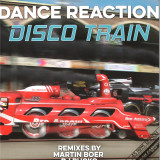
Undoubtedly one of the finest disco songs ever created, “Dance Reaction” emerged as a sensation from Holland, representing a true ‘one-hit wonder.’ The distinguished ‘Siamese’ label in the US and Carrere in Europe both recognized its potential and took it under their wings. This track, clearly inspired by dan Hartman’s “Vertigo”, swiftly climbed the charts across the continent in the spring of 1982.
On the A-Side, listeners are treated to the captivating and sensuous sounds of the Martin Boer version. This interpretation unequivocally showcases Martin’s innate connection with disco, evident in his captivating electro-disco masterpiece. Notably, Martin Boer holds the distinction of being a founding member of “2 Brothers on the 4th Floor,” a Eurodance phenomenon that dominated the 90s, amassing millions of record sales globally. Intriguingly, this release marks his return to remixing records, after a 15-year hiatus; incidentally, Martin embarked on his journey with High Fashion Music in 1990.
Flipping over to the AA-side, Croatian legendary DJ Pucko presents a remix that encapsulates the unique essence of the former Eastern bloc sound. This rendition exudes a raw and forceful energy, characteristic of that regional style. At the behest of High Fashion, the components of his mix were extracted and meticulously reworked and refined through the mastering process. The objective was to preserve the core while polishing the rough edges, culminating in an essential vinyl record that retro and disco DJs alike must acquire to elevate their dance floors.
The latest by New York-based producer Lamin Fofana further refines his cinematic dialect of fractured soundscapes, displaced rhythms, and tectonic unease. Unsettling scores aptly describes itself: grainy, bristling, and bruised, rippling with dread disguised as grandeur. The collection emerged from an extended reworking of his 2016 composition, “A Symbol of the Withdrawn God,” mining deeper into the piece’s “unvoiced fragments, shards, and utterances.” Other tracks were inspired by recent readings on climate emergency and its “specific implications for Black life, from hurricanes in the Caribbean to mudslides in West Africa.”
Fofana has spoken of his music as part of a “legacy of resistance,” spanning the roots of Detroit techno to the outer reaches of contemporary sound art as championed by his labels, Sci-Fi & Fantasy and Black Studies. His work here vividly embodies that spirit, seven hyper-textural transmissions of rumbling lament, shifting sands, and restless innovation, tracing jagged silhouettes of indeterminate futures: “The instability is worldwide.”
- A1: Mind Mapping
- A2: 030
- B1: Fügung (Feat Laura Merino)
- B2: Flow Dreaming
- C1: Structural Understanding
- C2: Quiet Reflection
- D1: Geruda Dub
- D2: Boiling Range
- E1: Interlude
- E2: Karl-Marx-Allee (Zentaskai & Jeremy Reinhard)
- F1: Dynamic System (Zentaskai Vs Palawan)
- F2: Apeiron (Zentaskai & Sebastian Klenk)
- F3: Parallel 30 (Zentaskai & Apoena Feat Yucuma)
ZentaSkai unveils stunning, high-concept house album on Mask Records.
ZentaSkai undertook a period of research into the underlying structure and organisation of the human brain before writing ‘The Architecture Of The Mind’. The Berlin-based artist then took what had been learned and kept it in mind when writing the music that marks Mask's first album release. It comes with extensive background notes on each track, and an operational manual of sorts - notes from the artists as to the effects each piece will have on those who hear them.
"The message conveyed by this album is that life itself is filled with music, but our egos often prevent us from being in harmony with this symphony. Inner chaos and silence can be challenging to bear, leading us to seek solace in external noise. We have constructed a barrier between our inner and outer worlds, causing us to lose touch with the rhythm of harmony. However, by embracing the illusion of separation and dancing to good music, we can rediscover harmony with ourselves and our environment. To fully experience the essence of the album, it should be played loudly on a proper sound system or high-quality headphones. By immersing themselves in the music, individuals can engage with its transformative power and potentially find a deeper connection with their own minds and surroundings." - ZentaSkai.
The gorgeous 'Mind Mapping' opens up with deep and dubby drums and lush harmonies that soothe you to your core, '030' then has more raw, heavy drums with many layers of glowing synths, glassy melodies and organic found sounds. 'Fügung' keeps the deep and introspective moods coming before the crisp tech of 'Flow Dreaming' ups the ante with more drive and layers of vocal whispers, hi-hats and smeared dub chords.
Elsewhere the likes of 'Quiet Reflection' lean into the groove with swirling pads and one-word vocal sounds drifting through the air over propulsive drum loops, and 'Boiling Range' suspends you in deft synth loops amongst the stars over a prickly house beat.
The superb synth craft and well-designed grooves continue through the dusty deep house of 'Karl-Marx-Allee' and minimal dub of 'Dynamic System' before the elegant melodic techno of 'Apeiron' and dreamy synthscapes of 'Parallel 30' close the album in a reflective fashion.
This is a deeply evocative album with a fully realised concept that is as thought-provoking as it is immersive.
Polish septet EABS apply an innovatve approach to jazz, distlling it
through the prism of hip-hop, blending it with elements of soul, funk and electronic music. ‘Slavic Spirits’ was 2 years in the making and contains 100% original material. They are joined by 22a head-honcho Tenderlonious who lends his exceptonal soprano saxophone and flute playing to all seven tracks.
Afer their very well-received 2017 debut album ‘Repettons (Leters to Krzysztof Komeda)’, focusing on the lesser-known works of the legendary Polish composer, the Wroclaw-based EABS decided to further expand this lead and released two more vinyl records, ‘Live At Jazz Club Hipnoza (Katowice)’ and ‘Kraksa / Svantetc’, the later recorded directly on tape and released via 22a, which crowned the “Kom eda triptych”. The astounding recepton of these releases built up loyal following outside of their natve Poland and whet listeners’ appette for completely new recordings.
For this LP the musicians turned to Slavic mythology and Polish demonology, while pondering upon the contemporary spiritual conditon of Poles. The enigmatc “Slavic melancholy” remains the main inspiraton, as the band tried to extract it from their own DNA. ‘Slavic Spirits’ is an endeavour to get in touch with the world of a long and brutally lost culture which, due to lack of sources, will never be thoroughly explored.
Personnel: Marek Pedziwiatr (piano, synths & vocal), Vojto Monteur (guitar), Pawel Stachowiak (bass), Jakub Kurek (trumpet), Olaf Wegier (tenor saxophone), Marcin Rak (drums), Spisek Jednego (samples, sound fx & percussion), special guest: Tenderlonious (soprano saxophone & flute)
Ouyayebu is back with the next release - "Ouyayebu Samazama I" - and it opens another extend in the label chapter. If someone asks how to explain the release in a few words, the answer would be “Weird as this World now”
Side A occupied by dOP together with LogdaM (Mad Dim and Kirill Golikov) in minimalistic collaboration which completely changes the picture after the first half.
Side B starts with the deep multi-dimensional collab track by Cesare VS Disorder together with Anushka and continues with the strong message from Weg and Francesco Carone focused on the music itself.
- A1: Posjet Iz Svemira (A Visit From Space) (1964)
- A2: Cudna Ptica (Strange Bird) (1969)
- A3: Astromati I (Astromutts I) (1963)
- A4: Astromati Ii (Astromutts Ii) (1963)
- A5: Surogat (Ersatz - The Substitute) (1961)
- A61: Klizi-Puzi (Twidle-Twidle) (1969)
- B1: Zacarani Princ (The Enchanted Prince) (1978)
- B2: Medvjedja Romansa (Grin And Bear It) (1978)
- B3: Zid (The Wall) (1965)
- B4: Dnevnik (Diary) (1974)
- B5: Gubecziana (The Serfs Uprising) (1974)
- C1: Plemeniti Soj (The Noble Strain) (1971)
- C2: Homo Augens (1972)
- C3: Idu Dani (Passing Days) (1969)
- C4: Opera Cordis (1968)
- D1: San (The Dream) (1982)
- D2: Kugina Kuca (The House Of The Plague) (1980)
- D3: Utopia (1973)
- D4: Dan Kad Sam Prestao Pusiti (The Day I Stopped Smoking) (1982)
A collection of unreleased themes and scores from 18 short animated films from the world famous Zagreb School Of Animated Film. Includes Oscar winning short cartoon Ersatz / Surogat by Dusan Vukotic (1961) and many other jazz, electronica and experimental scores by composer Tomislav Simovic. Coined by the famed film theorist Georges Sadoul at the 1959 Cannes Festival, The Zagreb School of Animated Film(s) or The Zagreb School of Animation, was defined as an artistic and philosophical world-view that set its mark on the history of animation in the 60's and 70's. The key feature of the Zagreb School (not educational facility in any kind), was commitment to stylization in contrast with the Disney-style canon of realistic animation. Among many composers that worked in Zagreb Film productions, the name of Tomislav Simovic (1931 - 2014) stands out. In his oeuvre of 300+ film scores (not counting compositions and arrangements for pop singers and jazz orchestras), many were made exclusively for Zagreb film documentaries, fiction shorts, features and animation. Simovic was particularly adept at writing music for cartoons. He skillfully synchronized movement and sound and mixed different musical genres, although, like his peers at the time, he leaned towards jazz. 'The Zagreb School of Animated Film (Original Soundtracks 1961-1982)' is compiled by Leri Ahel (Mutant Disco Radio Show) and Zeljko Luketic (Electronic Jugoton, Ex-Yu Electronica III). Master tapes were considered lost, now found and restored for this epic 2 x LP release celebrating Yugoslavia's animated art shorts. Double vinyl gatefold with extensive liner notes, photographs from the films and exclusive cover artwork by Dejan Krsic (NEP / Nova Evropa).
After picking up a camera in 2006 to shoot events at London superclub Fabric, Sarah Ginn started her journey of documenting the dance music scene. With exclusive, behind-the-scenes access at the likes of Fabric, Ultra Festival, Boomtown, Glastonbury, Outlook, Printworks, Creamfields and Hospitality, Sarah captured the sights of UK rave and
dance culture in the 2000s, 2010s and 2020s.
Super Sharp Shooter is a carefully curated selection of over 800 photographs from Sarah’s extensive archives, many never before seen. Spanning drum & bass, dubstep, house and techno, the book showcases festivals, clubs, press shots and record covers, providing an unsurpassed document of electronic music in a colourful celebration of beats and bass.
This deluxe book features artists like Andy C, Skream, Chase & Status, Shy FX, Carl Cox, Fatboy Slim, Goldie, Chemical Brothers, Jon Hopkins, Sub Focus, DJ Zinc, Ben UFO, Craig Richards, Erol Alkan, Miss Kitten, Dusky and many more. Also contained is Sarah’s essay,
The Feedback Loop Theory. A demonstration of how music affects time and energy and makes it a magic entity. Set in colour order to reflect the visible light spectrum, this gorgeous book is a must-have for all music and photography enthusiasts. It has 480 pages in full colour on heavyweight 150 gsm paper. It's available as a book only and as a bundle with an exclusive A2 poster.
“‘I’m looking forward to publishing this book because these actually are my only memories!Research shows that when you take photos it actually affects the way you remember things. So on that note, I hope you all enjoy my crazy spectral journey into sound, the many sights of the rave and everything in between.” - Sarah Ginn
Pauline Hogstrand's music – and Áhkká, in particular – is deeply inspired by both inner and outer influences, by the mystical as well as the rock-solid, by fictitious conversations and the queen mountain of Lappland (Áhkká).
Meaning "the old lady" in Lule Sámi, Áhkká is a barren, wild, exciting, beautiful, and sometimes grumpy mountain regardless of the season. Over the years, the mountain peaks, moss, birch forests, paths, streams, birds and people have shaped the surroundings, and the massif changed them in return - a reflection of a constantly ongoing development and emerging into greatness, surrounding and within. Speaking about why this mountain is so dear to her, the Denmark-based musician shares: "The nature there is harsh and raw and you can easily feel how it's so much bigger than you. Some people might feel overwhelmed or intimidated, but I feel that when acknowledging the greatness and the power nature consists, I can feel one with it. We come from the same source: I am a part of universe, and universe a part of me."
The music appearing on Áhkká (the album) simulates the dualities of ascent and descent, tension and release, inhale and exhale. Through implementing extended structures for analog and digital synthesis and processed acoustic instrumentations – strings, recorder, pipes and field recordings – Hogstrand expertly navigates these dual motions across two side-long pieces.
The opening "Herein" is slow, difficult, at times jagged and unwelcoming; just like climbing up a mountain early in the morning. Hogstrand shares that this piece is "about surrendering and letting go of control", especially during the last 10 minutes of the track which consist almost solely of an insistent and pulsating drone leading you to no man's land. "Magnitude" offers a release, glimpses of beauty, a softer, easier presence; descending, you're able to see beauty where previously you saw obstacles, perhaps the sun is up, breathtaking views in every direction... This piece is "about all that becomes available after letting go. Suddenly sight clears up in front of your eyes," shares the Swedish composer.
The magic ultimately lies in Hogstrand's perception and portrayal of contrasts – she does not view the two as opposites, but as one reality. "One greatness is not compromised by another greatness." In fact, the opposite is true – one without the other loses meaning, depth and context.
With one foot planted in jazz and the other in the township groove of Mbaqanga, saxophonist Sello Mmutung was a powerful crossover figure in the history of popular music in South Africa. Using the stage name Bra Sello, meaning “brother” and used as a term of affection and respect in the jazz community, he came up in the era of shellac 78s as an exponent of the 1960s sax jive sound that brought the swinging rhythm of kwela into the domain of South African jazz. Despite the injection of American rhythm and blues into South African pop in the late-1960s, Bra Sello’s first releases on vinyl on the CBS label saw him backed by the group Abafana Bentuthuko and holding down an unapologetic township sound.
Joining the independent Soweto label under producer Cambridge Matiwane in the mid-1970s, Bra Sello recorded two records in the hit-making bump jive style popularised by serious jazz musician Dollar Brand on the one hand and prolific studio group the Movers, operating in funk and soul territory, on the other. Blending modern American and traditional African elements into joyful hip-swinging rhythms, Butterfly (1975) and The Battle of Disco (1977) reflect the vivacity of urban life in South Africa and document an era when dance music was performed by bands as extended jams laced with jaw-dropping solos. With music trends shifting dramatically in the late-1970s, the title of The Battle of Disco was an ironic call to arms in response to the territory that group musicians were beginning to cede to synthesisers and DJs.
For enthusiasts of African music from the 1970s, a full appreciation of the continent’s output is incomplete without South Africa’s pop-jazz sound providing a regional counterpoint to the funk experimentation of West Africa. Reissued for the very first time, Bra Sello returns in 2023 with limited replica editions from Afrodelic using master tape sources from the As-Shams/The Sun collection. Afrodelic’s unique edition of Butterfly features a previously unreleased track on Side B.
With one foot planted in jazz and the other in the township groove of Mbaqanga, saxophonist Sello Mmutung was a powerful crossover figure in the history of popular music in South Africa. Using the stage name Bra Sello, meaning “brother” and used as a term of affection and respect in the jazz community, he came up in the era of shellac 78s as an exponent of the 1960s sax jive sound that brought the swinging rhythm of kwela into the domain of South African jazz. Despite the injection of American rhythm and blues into South African pop in the late-1960s, Bra Sello’s first releases on vinyl on the CBS label saw him backed by the group Abafana Bentuthuko and holding down an unapologetic township sound.
Joining the independent Soweto label under producer Cambridge Matiwane in the mid-1970s, Bra Sello recorded two records in the hit-making bump jive style popularised by serious jazz musician Dollar Brand on the one hand and prolific studio group the Movers, operating in funk and soul territory, on the other. Blending modern American and traditional African elements into joyful hip-swinging rhythms, Butterfly (1975) and The Battle of Disco (1977) reflect the vivacity of urban life in South Africa and document an era when dance music was performed by bands as extended jams laced with jaw-dropping solos. With music trends shifting dramatically in the late-1970s, the title of The Battle of Disco was an ironic call to arms in response to the territory that group musicians were beginning to cede to synthesisers and DJs.
For enthusiasts of African music from the 1970s, a full appreciation of the continent’s output is incomplete without South Africa’s pop-jazz sound providing a regional counterpoint to the funk experimentation of West Africa. Reissued for the very first time, Bra Sello returns in 2023 with limited replica editions from Afrodelic using master tape sources from the As-Shams/The Sun collection. Afrodelic’s unique edition of Butterfly features a previously unreleased track on Side B.
Red hot Italian DJ and production collective Aura Safari is back with a second full-length album, Island Dreams. It lands on Hell Yeah Recordings on September 15th and is another live and sun-kissed odyssey through balmy Mediterranean evenings, gorgeous sundown sessions and funky analogue grooves.
Andrea Moretti, Lorenzo Lavoratori, Daniele Melloni, Nicholas Iammatteo, Lorenzo Francioli, Ruggero Bonucci and Nicola Pitassio are Aura Safari, and between them they play drums, percussion, bass, keys, and guitar. They contributed to the first volume of the Buena Onda compilation in 2020 on this label, a year after serving up a debut album on London's Church Records. Since then they have become ever more entrenched in their local scene in Perugia, playing summer sets at the Umbria Jazz Festival, winter warmers at the legendary Red Zone Club and host their own Tropical Climax parties each month in the town centre.
Aura Safari are also deep-digging music collectors who have extensive and far-reaching tastes. When cooking up their sounds they draw on everything from Afro to Italo, house to disco, 80s boogie to world music, jazz and Balearic beats. This new album shows that once more across four sides of vinyl that sweep you up and transport you to somewhere idyllic.
The title track kicks off with steamy Mediterranean grooves embellished with lush Rhodes chords and sprinkles of cosmic magic. 'Sur Mon Balconnet' then slips into dubbed-out disco territory with 80s synths and leggy drums while 'Riserva Naturale' is a new-age jazz house sound with majestic lead synths and heart-melting chords that speak of a sunset dance on the beach. 'Onda' has squelchy boogie bass with hip-swinging drums, 'Wave Riding' is a lo-fi funk excursion with hints of West Coast Californian swagger and 'Magic Malbe' is loose-limbed Balearica with clear blue skies and blissed-out chords.
'Dancing in the Moonlight' feat. Zeke Manyika has all the vibrant feelings of bubblegum pop with Afro vocals and steel drum sounds next to rich xylophone sounds. There is plenty of heat and exotic charm to the proto-Afro house of 'Tropical Climax' and as well as dub versions of 'Sur Mon Balconnet' and 'Dancing in the Moonlight' come the scuffed-up Dam-Funk style beats and boogie of 'Disco Mantra' before closer 'Patagonia' shuts down with elastic drums and bass and playful synth leads that send you home wanting more.
Island Dreams is a tropical escape to a rich world of fusion sounds that look back to go forwards. It's a feel-good record to accompany hot nights and lazy afternoons, cocktails at dusk and dancing till dawn.
EXPANSION continues its series of 10' CLASSICS back to back with the coolest CONTEMPORARY takes of one awesome track. First off is the 70s masterpiece by master of the keyboards EDDIE RUSS, and a definitive jazz funk classic, never before released as a single, and originally from the rare 1976 LP 'See The Light', issued on CD by Soul Brother in 2008.
The newer version is by the UK's jazz funk and soul icons INCOGNITO. It's an especially recorded version that does not feature on any of their albums and has been extremely rare until this release on vinyl. Incognito have just celebrated 35 years in the business and are masters of the jazz funk vibe and this version keeps faithful to the original while being also the fresh and vibrant sound we love from the group.
Watch out for more releases in the 'back to back' 10' series which so far has featured classics are makes by Johnny Hammond and Norman Connors
- A1: Moskwa Tv - Generator 7/8 (Kalinan-Mix)
- A2: Mcl - New York (Razormaid Mix)
- A3: Bigod 20 - Body To Body (An Afternoon Of Aggression)
- A4: Two Of China - Telk Mee (Wild Version)
- B1: Hypnopedia - Hypnopedia (The Hypnotic Mix)
- B2: Westbam - Cold Stomper
- B3: Aircrash Bureau - Machine
- B4: Pluuto - Isn‘t It Crazy (Agsnoek Mix)
Wir setzen unsere Compilation-Serie “80s Techno Tracks” für alle Schallplattenliebhaber als Vinylausgabe fort.
Der Technosound der 1980er Jahre hat weiterhin viele Fans, die sich hier auf weitere Kultsongs aus den damals angesagten Clubs freuen dürfen.
Auf dieser Vinyl gibt es 8 handverlesene Techno-Klassiker in extra langen Versionen. MCL, Hypnopedia , Aircrash Bureau dürfen auf dieser Zusammenstellung nicht fehlen.
For all record lovers, we continue our compilation series „80s Techno Tracks“ in form of a vinyl edition.
1980s techno sound has more fans than ever, and they can look forward to a variety of cult tracks straight out of the hottest clubs of the glittering decade.
This vinyl features 8 expertly handpicked techno classics in
extra-long versions.
Get down to tracks by MCL, Hypnopedia , Aircrash Bureau and more!
More than a decade after the release of ´Land Lines', the mythical Humboldt County, California based duo of Brian Pyle and Merrick McKinlay reappears seemingly out of nowhere with 'Atheistsaregods'. With past releases on such cult-like labels as Root Strata, Weird Forest, Blackest Rainbow or Digitalis, Starving Weirdos were an indelible part of a sprawling and loose network of artists in Northern America whose DIY work ethic and extreme activity revolved around shoestring-budget constant touring, numerous limited editions on CDR, tape and vinyl and a relentless drive to push the boundaries of genre.
Out of that cauldron, Starving Weirdos stood out as one of the most persistent and visionary acts, developing a mind altering body of work that went from warm soundscapes through droney digressions, freeform improvisation and raucous noise summoned from a myriad of instrumentation and low budget processing - vocals, keyboards, violin, flute, percussion and an assortment of less identifiable sound sources. 10 years on their legacy remains a timeless and wildly under-appreciated one, but hopefully this new album will shine a light on their idiosyncratic approach. As time itself was never a constraint. This is music suspended outside of it.
Right from the start with the echoing percussion, dissonant keys and processed vocals of 'Haiku Nagasaki', 'Atheistsaregods' draws a continuous flux of psychedelic elevation that goes from the gloomy electronic motifs not unlike the early Cluster vibes of 'Invocation' into the dank percussive maze of the appropriately titled 'Barulho do Samba'. The self titled track induces a sense of post-apocalyptic vertigo via hallucinatory scraps of voice, suspended synth tones and reverberating field recordings, connecting into the droney mystics of 'Dudukahar (Reed Prayer)'. Coming full circle, 'For Vinny' brings back the echoing percussion amidst hypnotic cello lines until it drifts off into the unknown. With the same palpable sense of urgency, Starving Weirdos feel as vital as ever. And even if we didn't realize it we were in need of them. Welcome back.
Effortlessly dismantling the barriers between R&B, soul, funk, disco and jazz sounds, MF Robots present long player ‘Break The Wall’, on BBE Music. Astonishing musicianship, pristine production and top-tier songwriting, ‘Break The Wall’ immediately calls to mind those iconic American rhythm sections of the 70s and 80s. The music is energising, uplifting and the potent result of a highly accomplished musical partnership maturing, growing and hitting their stride together in lock-step. Jan Kincaid and Dawn Joseph met as members of one of the UK’s most successful Acid Jazz bands, which influenced Mark Ronson, D’Angelo, Jamiroquai, Erykah Badu and The Roots to name a few. Founding the Brand New Heavies was an important chapter for Jan, but once he and vocalist and songwriting partner Dawn began working together, the chemistry was instant and irresistible. It was time to turn the page, and soon MF Robots was born. “When we made our first album, we didn’t have a band as such. We basically made a lot of the record at home and called on other musicians as and when we needed them. Our sound was developing organically, and when we finally released the record to great critical acclaim, it was time to get out on the road,” says Jan. “We put together a band of like-minded young musicians, playing intimate gigs and big festivals all over Europe and beyond, growing tight as a unit, so that when it came time to think about making this, our second album, we knew we had an extra level of musicianship full of personality that could realise our vision.” Inviting band members Alex Montaque (keys), Naz Adamson (bass), Mark Beaney (guitar), Jack Birchwood (trumpet), Ben Treacher (sax) to improvise and contribute their own ideas over song-sketches laid out by Jan and Dawn gives ‘Break The Wall’ a special sense of off-the-cuff brilliance. Even on the polished final product you can detect a collaborative, fluid and unhurried approach to production that’s all-too rare these days. There’s guest performances from bassist Gail Ann Dorsey (‘The Love It Takes’, ‘Make Me Happy’) and guitarist Cory Wong ('Shine', 'Make Me Happy'), the former a top-flight session player who’s collaborated with Lenny Kravitz and David Bowie among others, the latter a member of the incredible Vulfpeck collective and an accomplished solo artist in his own right.
Originating with HoneyLuv, made in collaboration with Tuskegee co-founder Seth Troxler, and featuring portions of Paul Johnson’s classic 1998 track ‘So Much’, ’Sex & The City' is HoneyLuv’s homage to one of house music’s greats and an encapsulation of Tuskegee Music’s ethos of honouring the genre’s Black & Hispanic origins. Detroit house legend Marc Kinchen’s interpretations of the track imbues Sex & The City with all the beloved MK touches, from the inimitable drum patterns to the instant-earworm melody.
The release marks the return of the label founded by Seth Troxler & The Martinez Brothers in 2014. In addition to music from its label heads, Tuskegee Music featured artists including Omar-S, Jamal Moss, K' Alexi Shelby, D-Knox and William Djoko before going into hiatus in 2019. The label’s upcoming schedule will continue to focus on its remit of supporting BIPOC artists, through the elevation of new talent and collaborations with some of house & techno’s most important and influential figures.
- A1: Wrong (Album Version)
- A2: Wrong (Thin White Duke Remix)
- B1: Wrong (Trentemøller Club Remix)
- B2: Wrong (Caspa Remix)
- C1: Wrong (Magda's Scallop Funk Mix)
- C2: Wrong (D I.m. Vs Boys Noize Remix)
- D1: Wrong (Trentemøller Club Remix Dub)
- D2: Oh Well (Black Light Odyssey Remix)
- E1: Peace (Single Version)
- E2: Peace (Sixtoes Remix)
- E3: Come Back (Jonsi Remix)
- F1: Peace (Ben Klock Remix)
- F2: Peace (The Japanese Popstars Remix)
- G1: Peace (Sid Lerock Remix)
- G2: Peace (Justus Köhncke Extended Disco Club Vocal Remix)
- H1: Peace (The Exploding Plastic Inevitable Jk Disco Dub)
- H2: Peace (Pan/Tone Remix)
- I1: Fragile Tension (Stephan Bodzin Remix)
- I2: Fragile Tension (Kris Menace's Love On Laserdisc Remix)
- J1: Hole To Feed (Popof Vocal Mix)
- J2: Hole To Feed (Paul Woolford's Easyfun Ethereal Disco Mix)
- K1: Perfect (Roger Sanchez Club Mix)
- K2: Perfect (Ralphi Rosario Dub)
- L1: Peace (Hervé's 'Warehouse Frequencies' Remix)
- M4: Fragile Tension (Laidback Luke Remix)
- N1: Fragile Tension (Peter Bjorn And John Remix)
- N2: Hole To Feed (Joebot Remix)
- N3: Perfect (Ralphi & Craig Club Mix)
- N4: Fragile Tension (Solo Loves Panorama Remix)
- L2: Peace (Sander Van Doorn Remix)
- M1: Fragile Tension (Radio Mix)
- M2: Hole To Feed (Radio Mix)
- M3: Come Back (Sixtoes Remix)
Sounds Of The Universe | The 12" Singles, a deluxe collector's
edition box set, contains seven 12" vinyl discs presenting
singles--including Wrong, Peace, the double A-side Fragile
Tension/Hole To Feed--alongside B-sides, remixes, dub
versions and other recordings contemporaneous to Depeche
Mode's 12th studio album, Sounds Of The Universe, originally
released by Mute Records in April 2009.
Sounds Of The Universe | The 12" Singles offers a full range of
ear-grabbing mixes--radio, club, dub and more--of Depeche
Mode originals with three discs (Discs Two, Four and Seven)
newly compiled for this collection, bringing together B-sides
and mixes first released across CD and maxi-singles
contemporaneous to the album's release.
When it came time to record the Sounds Of The Universe
album, DM's classic core (Dave Gahan, Martin Gore, Andrew
Fletcher) returned to the studio to make their second album
with producer Ben Hillier, whose intuitive contributions to
their previous studio album, 2005's Playing The Angel, had
created new sonic possibilities for the band expanding
Depeche Mode's vision and repertoire while continuing their
tradition of issuing monumental 12“ singles.
As it celebrates its 50th anniversary, Bill Withers' Still Bill remains true to its title – and stands as the greatest male-fronted soul album not made by a singer named Marvin, Al, Sam, James, or Ray. Though the saying "keeping it real" did not exist in popular parlance when Withers released his sophomore effort on Sussex Records, no words better capture the music's approach, mindset, and value. Every facet of Still Bill radiates honesty, truth, and emotion.
These characteristics – along with Withers' strong singing, hybrid arrangements, and deceptively simple songwriting – have allowed the album to endure to the point where it sounds as fresh today as in 1972.
After rising into the Top 5 of the Billboard Album charts and attaining gold status within a year of release, Still Bill has long been evaluated not by sales – but according to its merit, spirit, and agelessness. Included by The Guardian on its "1,000 Albums to Hear Before You Die" list (2007) as well as in Tom Moon's 1,000 Recordings to Hear Before You Die book (2008), its contemporary standing as one of history's most venerated soul efforts eclipses the positive reception it enjoyed in the early ‘70s.
Still Bill walks the same hallowed ground as What's Going On, Call Me, Night Beat, and Genius + Soul = Jazz. Like those landmarks, Still Bill plays with a mix of consistency, effortlessness, and complexity that rewards repeat listening and transcends categorization.
In combining four of the era's predominant styles – Philly soul, sweaty funk, Southern-reared blues, acoustic-based folk – and melding them with standout production borrowed from both minimalist affairs and sophisticated singer-songwriter albums, Still Bill occupies a distinct universe.
Its rhythmic fare is equally laidback and invigorating; relaxing and rollicking; eloquent and muscular; soft and tough. Withers' calm, self-assured voice hovers above it all, doubling as a warm blanket that adds comfort and grace to lyrics steeped in maturity, perspective, and compassion.
Withers' balanced outlook on human desires, needs, and situations stem from his own existence as a former blue-collar employee who believed his time as a musician would soon end. That grounding forever separates Withers from other contemporary soul greats – and stamps Still Bill with a conversational nature and egoless approachability.
"I mean look, I'm really a factory worker," said Withers in 1972. "That's a real job." There's that word again: real. The songs on Still Bill are tethered to modesty and actuality, wedded to a belief in simplicity, and connected to universal truths that link us all – independent of our economic or social standing. No track better exemplifies those principles than "Lean on Me," a feel-good paean to brotherhood and community that hit No. 1 on the pop and R&B charts en route to becoming a mainstream staple.
Withers approaches the plainspoken insight on "Lonely Town, Lonely Street" and heartbreaking vulnerability of "I Don't Want You on My Mind" with similar sincerity and straightforwardness. His proclivity for authenticity extends to the record's other big hit: the sexual, funk-laden "Use Me," which reached No. 2 and reflects the singer's everyman persona. It's an identity couched in keeping it real, the very inclination that ultimately led Withers to retire in the mid-'80s rather than bend to industry pressures or risk credibility.
That commitment to truthfulness and realism helps make Still Bill feel as unaffected as the air we breathe. Looking back on "Lean on Me" years later, Withers said it seemed like "something that was there before I got here" – the kind of song that could be 100 or 10 years old, or one we encounter anew 10 years into the future. The same can be said for every note on Still Bill.
Names You Can Trust continues its years-long revival work with one of Panama's most gifted and legendary soul artists, Ralph Weeks, returning the singer to the studio for another brand new recording that highlights the now 80-year old's still silky vocals and masterful songwriting. Up for the challenge with their own studio savoir-faire is a most fitting and genuine purveyor of modern day soul themselves, Ben Pirani and The Means of Production, whose output on Palmetto Street Recording and Colemine Records has already achieved high praise and collectible status in just a few years. The mission, record two unreleased home studio demos that were penned and tracked in the early 1980's and recently excavated from Ralph's extensive archive of personal songs. These original compositions were faithfully given the full treatment and arrangement they never received, but always deserved. The A-Side, "Nobody Loves Me (Like You Do)", a quintessential Ralph testimonial of love, now shines alive and...
- A1: Hugh Godfrey - Mad World
- A2: Johnny Moore - Skavling Johnny
- A3: Bongo Man & The Skatalites - Marcus Garvey
- A4: The Clarendonians - Rudie Bam Bam
- A5: Jackie Opel - Old Rocking Chair
- B1: The Wailers - Climb The Ladder
- B2: Jackie Mittoo - Jump For Joy
- B3: Lee Perry - Gumma
- B4: Soul Brothers - Freedom Sounds
- C1: The Wailers - Climb The Ladder
- C2: Jackie Mittoo - Jump For Joy
- C3: Lee Perry - Gumma
- C4: Soul Brothers - Freedom Sounds
- D1: Joe Higgs & Roy Wilson - There's A Reward
- D2: The Skatalites - Timothy
- D3: The Ethiopians - Live Good
- D4: Don Drummond - Green Island
- D5: The Wailers - Mr Talkative
Repress!
A blistering collection of ska tunes from Clement 'Sir Coxsone' Dodd's legendary Studio One Records, Jamaica's foundation label of reggae music. Featuring classic cuts from the originators of Ska - The Skatalites, The Wailers, Lee Perry - alongside a heavy dose of superb rarities from the might vaults of 13 Brentford Road - pure Ska Fever !
Soul Jazz Records new Studio One Ska Fever returns back to the early 1960s when Ska was the soundtrack to Jamaica's Independence and Sir Coxsone ruled the land and The Skatalites and Studio One were creating history on a daily basis with an endless stream of blistering, scorching classic tunes.
This album includes an incredible line-up of only the finest artists in reggae music, including Roland Alphonso, The Gaylads, The Ethiopians, Don Drummond, Jackie Opel and many more. An all-star cast from Studio One, as Chris Blackwell famously noted, the 'University of Reggae'.
The accompanying booklet contains extensive sleeve-notes from Studio One historian Rob Chapman (author of Never Grow Old and Downbeat Special), with information on musicians, tracks, label scans and more. Soul Jazz Records' Studio One Ska Fever is released in
CD- jewel case, 24-page booklet with card slipcase, as well as a heavyweight double-vinyl edition in deluxe strong gatefold sleeve (with full sleeve notes).