More than 25 years after the start of collaboration with Acid Mothers Temple mastermind Makoto Kawabata (including the INUI series and the classic Kawabata/Youngs release) comes the first proper VHF LP by the prolific quintet. One of an occasional series of “minimalism” inspired LPs by the group, “In A Not C” is a not a barely changing drone, but a wild ride with the band in full flight, rushing along in a glorious swirl of psychedelic madness. Like the band’s well-known 2001 version of Terry Riley’s “In C,” the group uses a small cell of repeating sound as a jumping off point and then gradually revs up to maximum velocity. The current AMT lineup has produced a series of fun and unique variants on the band’s longstanding signatures, with the addition of vocalist/guitarist Jyonson Tsu and drummer Satoshima Nani providing a lightness and nimbleness of touch that resets the context of the band’s usual blazing electric guitar and burbling synth. Both sides here build to a multi-layered crescendo, with loops of Tsu’s gentle vocals competing with frenetic drums, whistling electronics, and guitar that alternates trebly feedback and soft arpeggios. Cut by Golden, pressed in Chicago at Smashed, first pressing on clear vinyl.
"Northern Electronics presents ’The Vanity Project’, the new LP by Vanity Productions.
Like a fractured reflection, images appear distorted and incomplete. A series of fragments revealing influences, methods, and decisions where life and work remain inseparable. Moving through the residual noise of contemporary media space, Christian Stadsgaard draws from social media remnants, dark web transmissions, and untreated human sound.
These elements are processed through noise electronics and tape manipulation, collapsing source and signal. ’The Vanity Project’ is constructed as a dense, uneven surface. A collage of found sound, environmental interference, and emotional residue. The result carries Vanity Productions’ characteristic melancholy, Nordic restraint, and accumulated debt, forming a quiet but insistent tale of romance and reflection from the source.”
Album credits:
All music recorded by Christian Stadsgaard in Copenhagen, Denmark 2025
Mixed by Christian Stadsgaard and Malthe Fischer
Mastered by Giuseppe Tillieci at EnissLab, Rome
Photos by Christian Stadsgaard
Collage by Anthony Linell
Sound contributions by Shredded Nerve, Jackson-Pratt, Ashley C, Hannes Norrvide, Malthe Fischer, Daniel Svanberg Bøtcher, Vagn Olsson, Yuri Umemoto, Lise Westzynthius, Qiuyao Ning, Peter Peter, Government Alpha and Merzbow – A big thank you to everyone involved.
“The Vanity Project” was kindly supported by KODA kultur, Copenhagen.
out of Stock
Last delivered 40 days ago available to reorder, subject to availability
“Ruins are the style of our future cities, future cities are themselves ruins.” - Izosaki Arata
A note from Lawrence English: Nostalgia is not an ideology, though in this moment, we could be mistaken for thinking it might be just that. Over the past years, the idea of nostalgia has been filtered through various political and technological lenses and has become a tool used for forgetting, rather than remembering. Instead of embracing histories’ complexities and inconsistencies, this version of nostalgia seeks only singular recollection. This contemporary phenomenon of nostalgia has become a methodology at best, and a weapon at worst, used to erode the past and project forward a collapsed and unimaginably sanitised version of things, places, and ways of being from former times. It’s this projection that sees it playing a mounting role in a social pathology associated with reducing the imagined possibilities of future.
The Rest Is My Ghost is a record that interrogates the manifestations of this reductive futuring and celebrates those that have tried (and failed), and those who continue to push back against decayed and revisionist positions. It’s a record that considers the weaponisation of nostalgia for the purposes of cloaking possible futures.
In recent times, I’ve proposed a term for this weaponised use of nostalgia, something I have called Acid Nostalgia. I offer it as a shorthand to describe the de-contouring of the future through a corrosive fixation on a flatten rendering of the preceding times. It is, in part, a certain type of lazy cultural scripting where tropes of the past are presented in the absolute, as empty pictorials; photocopies without any original from which to draw actual meaning, or useful detail.
Acid Nostalgia describes an increasingly common political projection of nostalgia that exists without any subjective connection to the memory surrounding and contained within it. Like acid poured onto a surface, this use of nostalgia seeks to erodes and smooth out the complexity and texture of lived connection and longing, which has until recently guided contemplations of nostalgia. Acid Nostalgia instead erases the texture of histories and de-contours the past, and in doing so dematerialises the horizon of possibility, which by its very nature marks the beginning point for any (and all) imaginable futures. Acid Nostalgia is a dreamless screen, where uncertainty, restlessness and aspiration are subjected to corrosion, breaking down and neutralising the wellspring of futures which are birthed from within the ambiguously charged, complex and at times chaotic atmospheres of the present.
The Rest Is My Ghost is not however some universal reading of these things and happenings. Rather it draws its breath from a very personal pathway carved through my own fraught experiences of nostalgia and framed through a disparate collage of chance encounters, situations, places and provocations. It takes oblique notes from civic and architectural references such as Japan’s Metabolist movement, Hong Kong’s ‘one line sky’ and Los Angeles’s vanished Sodium Vapour lights. It interpolates texts – factual and fictional – by authors such as Franco Berardi, Kate Crawford, JG Ballard, Katsuhiro Otomo, Mark Fisher and Alexei Yurchak who have each so wonderfully sought to rupture the familiarity of now, and push us towards other ways of imaging ourselves, our surroundings and our very ways of being in this world.
I also owe a debt of thanks to Adam Curtis in helping launch what has become this edition. It was his provocation, in a conversation we shared about an overwhelming and profound sense of uncertainty around being able to predict the immediate future and how to respond to that, which sparked the earliest inklings of this edition.
The Rest Is My Ghost is ultimately a record about the promise of constructions and connections to come, material, social and political. It's a record that accepts the fragility of failure as a source of ultimate potential, and a position from which the deepest freedom of imagination might be sought and summoned forth to conjure even the most unimaginable, (but) possible futures.
out of Stock
Last delivered 42 days ago available to reorder, subject to availability
When Leon Michels and El Michels Affair released their rst record, Sounding Out The City, in 2005, it was hard to guess what was next for Michels and his then-introduced, now-patented "cinematic soul" sound. Now, four EMA studio albums and scores of tribute and remix projects later - all while producing for some of the biggest names in the industry - Michels has trademarked his sound, with each project taking audiences somewhere new and pushing the boundaries of what he is known for. The man is a river, not a lake and this time he takes his golden touch into the realm of hip-hop laying down a musical bed for one of the greatest to ever rhyme into a microphone: Black Thought of The Roots crew. Releasing on Big Crown Records, the LP is called Glorious Game and it is a remarkable debut partnership in more ways than one. Michels provides his bottom-heavy, soul-tinged production for Black Thought who gives us some of the more personal and transparent verses we've ever heard from him. Michels and Black Thought have been in each other's orbit for a while now. The two first met in the 2000s when Thought was first getting familiar with the contemporary soul scene. "Out of that whole world, Menahan Street Band was probably my favorite," recalling the funk and soul group Michels was a founding member of back in 2007. Fast forward a few years and musicians from that collective - Dave Guy on trumpet and Ian Hendrickson-Smith on sax - are now full time players with The Roots. This connection eventually led Leon and Thought to doing a few fundraising events around NYC and Philly together. "Before long, Black Thought was coming around the studio and would jam with us from time to time," Michels explains. "Then, fast forward to 2020 and COVID lockdowns, he just hit me up out of the blue, wanting me to send him stuff to write to. We both were looking to stay busy" Being that Black Thought is the co-founder and emcee for, hands down, the best live-band group in hip-hop. Michels took a decidedly different approach to this project and instead of sending recorded tracks of live compositions, he pulled out the sampler and sampled himself and some records from his collection. "I'm a big fan of soul music," as if Michels has to remind us. "And part of hip-hop's appeal to me has always been the sample-based production" For Glorious Game, Michels would make wholly composed and recorded soul songs in his studio, sample himself, then chop and/or loop up his sounds and create instrumentals for Black Thought. On some tracks he took a more traditional hip-hop approach, starting from samples of other people's music but then adding live instrumentation on top. But for the most part, it's him reinterpreting his own compositions into something new. The result is an organic feel of loop-based tracks that breathe and uctuate enough for Black Thought to ex on. "What I write about is determined by the equation of the producer's energy and my energy," Black Thought says. "It's about where we meet." So armed with Michels sampled and re-sampled soul cinematics, Black Thought rhymes through personal memories.
out of Stock
Last delivered 42 days ago available to reorder, subject to availability
To celebrate the launch of the 4th and last DLC of Atomic Heart, Kid Katana Records teamed up with Mundfish to bring you this high quality album for the first time on an exclusive double vinyl.
With over 10 million players since its release, and a nomination at the 14th Hollywood Music in Media Awards, Atomic Heart has kept on bringing new content in the game, enriching the players’ experience with new Stories, Threats and Music to pursue the fight for freedom and progress.
The physical edition is a premium 2LP designed in close relationship with the game's creative team: Track selection handpicked by Atomic Heart team, including tracks from Mick Gordon, GeoffPlaysGuitar and Boogrov, and 1 new track (DLC #4 trailer exclusive) 2-colored vinyls with unique red and black “corona” effect: handmade vinyl effect melting red and black colors to shape a unique vinyl color on each product, mirroring the cover art.
Exclusive cover art with mat finishing and glossy effect on the Twin and motorcycle
out of Stock
Last delivered 5 days ago available to reorder, subject to availability
No Drama, the imprint founded and curated by Roy Rosenfeld, continues to expand its artistic vision with a sixth release valuing originality over convention. The label has steadily established a platform for forward-thinking electronic music, inviting artists to challenge familiar structures while remaining grounded in musical substance.
The latest release features two tracks by internationally recognized producer Yuvée, known for seamlessly blending live instrumentation with deep house, melodic elements, and organic percussion. While Yuvée appears solo on one track, the other is a collaboration with Omer Inbar, who performs under the name Oi.
The opening track, Lava Core, presents the sound that has earned Yuvée international recognition. Tribal influences unfold through carefully crafted percussion, while evolving textures occupy every part of the stereo field. Every section advances the narrative, allowing the arrangement to grow naturally while maintaining dancefloor impact from beginning to end.
The second piece, Blue, brings Yuvée together with Oi, an internationally acclaimed DJ, producer, and sound engineer whose work bridges psychedelic vibes and groove-driven electronic music. The collaboration introduces greater club energy. Tonal and atonal elements interact with shifting harmonies and evolving instrumental phrasing, creating constant movement without losing coherence.
Rather than relying on formulas, the duo demonstrates the value of artistic perspective in an era increasingly shaped by technological automation. The result is music that balances intellect with feeling, offering a listening experience that remains equally compelling on a festival sound system, in a club, or through focused listening at home.
With its sixth release, No Drama reinforces its commitment to artists who expand the language of contemporary electronic music through craftsmanship, authenticity, and creative ambition.
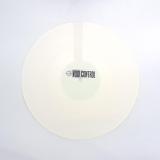
For this second EP, Void Control continues to explore the relationship between rhythm, space, and low-frequency energy. Each track is built around movement and atmosphere, combining organic percussion, spacious dub textures, and weighty sub frequencies.
Drawing influence from reggae sound system culture, tribal rhythms, dub techno, and contemporary bass music, the release exists at the intersection of multiple underground traditions. Rather than treating these influences as separate genres, Void Control allows them to interact naturally, creating a cross-pollination of sounds that feels both familiar and forward-thinking.
150 White coloured vinyl, hand stamped and stickered with inlay.
out of Stock
Last delivered 42 days ago available to reorder, subject to availability
BUCHLA MEETS ORCHESTRA IN QUADRAPHONIC SPACE ON CIANI/ORKEST
Suzanne Ciani, Metropole Orkest and Simon Dobson release historic immersive performance in multiple immersive formats including quad vinyl.
Silverlake, CA \\ June 4, 2026 – Electronic music pioneer and five-time Grammy nominee Suzanne Ciani joins the internationally acclaimed Metropole Orkest, conducted by Simon Dobson, for the release of CIANI/ORKEST, a landmark live album composed entirely of new work, created specifically for this unprecedented collaboration.
Recorded at Amsterdam Dance Event (ADE) before a rapt audience, CIANI/ORKEST is not a retrospective. It is a bold, immersive meeting of the Buchla electronic instrument and 50-piece orchestral sound. The result is a sweeping sonic landscape, at once intimate and monumental.
Under the direction of the Metropole Orkest, renowned for its genre-defying collaborations with artists from jazz to contemporary classical - strings shimmer, brass swells and woodwinds echo the organic, fluid qualities that have always defined Ciani’s sound. “This project feels like a homecoming,” says Ciani. “The Buchla was always orchestral to me, an instrument capable of infinite color. Hearing those colors unfold through the Metropole Orkest has been profoundly moving.”
At the heart of CIANI/ORKEST lies Ciani’s lifelong commitment to quadraphonic sound. From her early Buchla performances in the late 1960s to her 2018 release LIVE Quadraphonic, Ciani has treated space as a primary compositional parameter. Working alongside immersive producer KamranV, Ciani continues to explore immersive sound as both artistic and human gesture. Kamran’s decades of work in spatial formats, converge here in service of a singular goal: to let sound behave as it does in the physical world. “For both of us, quad is musical,” Kamran notes. “The way Suzanne works, quadraphonic is nested in — not the technology per se — but the intent you bring to the work.”
The recording stands as a meditation on legacy, evolution, and the enduring dialogue between technology and human expression. The live album captures the electricity of performance, the immediacy of touch plates under Ciani’s hands, the collective of musicians responding in real time, and the audience’s shared immersion in quadraphonic-inspired space.
CIANI/ORKEST is released by Atmospheric/AKP Recordings/CyKiK in multiple double-disc quadraphonic 12” Record packages designed by grammy-nominated designer Rebeka Arce. Each pressing is made regionally to minimize carbon emissions and also contributes to nature via Brian Eno's EarthPercent, the music industry's climate and nature foundation.
The release is encoded using the dublab Quadraphonic Universally Accessible Resource Kit (QUARK). QUARK enables binaural listening via standard 2-channel playback or 4-speaker playback via Involve Audio hardware decoders, vintage Regular Matrix quadraphonic receivers, Dolby Pro-Logic II/Dolby Surround Upmixer (DSU) receivers, or any multi-channel audio interface equipped computer. This album is immersive via all formats: digital download, streaming (Qobuz, Spotify, SoundCloud, Bandcamp), radio broadcast, vinyl and high-resolution Dolby Atmos (Apple Music, Tidal, Amazon HD, IIA), Sony 360RA (Nugs, Amazon HD) and Eclipsa Audio (YouTube).
About Suzanne Ciani
Suzanne Ciani is a composer, pianist, sound designer, and electronic music pioneer whose work spans experimental, new age, classical, and cinematic sound. A five-time Grammy nominee and recipient of the Moog Innovation Award, she continues to perform internationally, captivating audiences with immersive modular synthesis performances.
About Metropole Orkest
Based in the Netherlands, the Metropole Orkest is one of the world’s leading genre-crossing orchestras, known for collaborations with artists including Brian Eno, Herbie Hancock, Snarky Puppy, Jacob Collier, and within contemporary classical and electronic spheres.
Comes with liner notes and interview on the back of the sleeve.
Dennis & Christy Soares are a husband-and-wife duo whose prolific output - over 100 albums and nearly 2,000 songs recorded across CD, cassette, vinyl, and streaming - stands as one of the most quietly remarkable self-made catalogs in contemporary music. Based for two decades on the Big Island of Hawai'i before recently relocating to Centralia, Washington, the pair have been making music together since meeting at San Joaquin Delta College in 1986, channeling a DIY spirit rooted in sincerity, spirituality, and an unshakeable belief in the power of a song. Their work spans platforms most listeners have never heard of, distributed through sheer determination and an infectious enthusiasm for reaching new ears.
Free At Last is an 11-track anthology compiled by AGS founder Roger Bong, representing less than 1% of Dennis & Christy's total recorded output. Drawing from more than 600 songs considered over the course of 12 years, the collection makes no claim to being definitive - instead, it offers what Bong calls "simply an invitation": a way in for new listeners, and a distillation of the warmth and pure intention that runs through everything this duo creates. From their earliest recordings to the present day, Dennis & Christy have never stopped making music on their own terms. Free At Last is an introduction long in the making, and very much overdue.
In Walter Benjamin’s seminal essay “Art in the Age of Mechanical Reproduction”, he posits that the aura of art objects is destroyed by the ability to photographically reproduce them. When you had to make a pilgrimage to a work it remained elusive, charged, ever distant; but when you can easily see a reproduction, such aura dissipates. What Benjamin did not anticipate is that in the age of AI and the frictionless fount of digital content, we have imbued mechanical and analog means of media production with aura. Film cameras from the last 100 years are in high demand (the point and shoot Olympus Mju I featured in Wim Wenders film Perfect Days still sells for $200), vinyl sales continue to grow year by year, 35mm and 70mm film screenings have become aura-drenched events people travel across country for, and as to the world of vintage and analog synthesizers, when a friend asked for the price on the Yamaha CS-80 synth used on Toto’s “Africa”, the answer was a cool $60,000.
Despite the ability to simulate almost any synthesizer on a computer, the original physical units retain their mystique. Perhaps this lies in the physical process, many of these synths are temperamental and difficult to fully utilize, and the effort and ingenuity can be felt in ways that will always be absent from easy digital simulacra. Perhaps there is an aura in their imperfection, as Brian Eno wrote: “Whatever you now find weird, ugly, uncomfortable and nasty about a new medium will surely become its signature. CD distortion, the jitteriness of digital video, the crap sound of 8-bit - all of these will be cherished and emulated as soon as they can be avoided.” Some may call this nostalgia, but such sonic imperfections are the sounds of humans interacting with the physical world, and it is understandable to feel a pang of emotion and attachment in a time of exponential alienation.
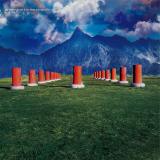
Marche 22 was recorded over a week at the Museo Del Synth Marchigiano in Macerata, Italy. The museum is filled with rare and obscure synths (especially CRB, GEM & Elka) as well as salvaged materials from a nearby shuttered Farfisa organ factory, including MARS, an unfinished realtime audio processing application developed by IRIS - similar to the now well known MAX/MSP. Kyle Dixon and Michael Stein play a suite of pieces that encompasses the last sixty years of synthesizer music—there are nods to Cluster, Tangerine Dream, Jean Michel Jarre, and Morton Subotnick. Dixon and Stein are like jazz masters playing the American songbook with their own riffs and quotations. What shines through in these varied works that are sometimes rhythmic, sometimes melancholic, and sometimes both, is a soul, a spirit, an emotion vibrating through the tones like the charge of coming rain or the thrum of a distant train on the tracks. - Neil Fauerso
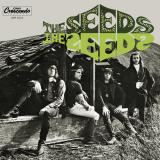
The Seeds stand tall amongst the handful of mid-60s American garage bands whose influence is palpable in rock to this day. Led by charismatic frontman Sky Saxon, the original Hollywood-based quartet’s unique and exciting brand of minimalist rock’n’roll still sounds contemporary and is perfectly encapsulated on this first album. If second album “A Web Of Sound” was pop-art flash, and 1967’s “Future” a florid take on psychedelia, then the July 1966 debut remains The Seeds’ grand statement; an all-original programme of rock and R&B-inflected garage punk that buzzed with a peculiar-yet-riveting energy that was the ensemble’s very own.
Whilst ”The Seeds” contains a pair of familiar classics in ‘Can’t Seem To Make You Mine’ and ‘Pushin’ Too Hard’,’ it is instructive to remember that it was recorded and released some time before either tune became a hit. Unlike so many albums of that era, the Seeds’ debut was not a quickie thrown to together to take advantage of singles chart success. Instead, the record constitutes a sharp definition of their unique and aberrant style, featuring several key items within their canon, be they the rough-hewn rockers ‘Girl I Want You’ and ‘No Escape’, the pot-boiling blues ‘Nobody Spoil My Fun’,’ or the lengthy and downright sinister ‘Evil Hoodoo’.’
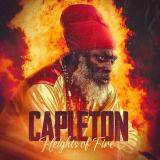
Heights Of Fire” by Capleton is being released as an LP via Diggers Factory and presents a brand-new album produced by Evidence Music. The release once again puts Capleton’s distinctive voice front and centre, while also speaking to collectors who value a high-quality pressing.
Musically, “Heights Of Fire” blends classic reggae foundations with modern production elements; weighty bass foundations, precise drums, and organic arrangements carry the messages. Guest appearances by Damian Marley and Stephen Marley, along with collaborations with Derrick Sound, Little Lion Sound, Eesah, Mista Savona, Mixing Finga, and L’Entourloop, provide sonic variety and international influences. Lyrically, the tracks revolve around spirituality, resistance, and personal reflection, which Capleton delivers with emphatic rhetoric.
Key characteristics of the LP include its distinct production signature and the collaboration with established reggae heavyweights, which give the album both depth and a contemporary freshness. The arrangements move between dense roots passages and airy choruses, making the record resonate with both traditional listeners and a younger audience. The release on Diggers Factory also underscores the clear collector focus of the physical rollout.
Mariá Portugal has been active in the music scenes of Brazil and Europe as a drummer, composer, singer, and music producer. After graduating in composition, she has focused her research on free improvisation and its possible intersections with popular song. This exploration resulted in her acclaimed album EROSÃO (2021) and in the formation of two groups: the EROSÃO Septet and the EROSÃO Percussion Trio, both based in Germany.
She is also a member of the group Quartabê and has toured and recorded around the world with various artists, moving between pop, free jazz, free improvisation, and Brazilian popular music. She has performed and recorded with artists such as Elza Soares, Anthony Braxton, Joe McPhee, Fred Frith, and Tomeka Reid. She is a member of Fire! Orchestra, Fire! Trio, Endless Breakfast and MONSTER.
In 2020, Portugal was the 13th Improviser in Residence at the Moers Festival. As a curator, she has participated in the Soundtrips-NRW in Duisburg and currently coordinates the concert series “TOMA CHOCOLATE!” in Berlin, besides being the guest curator for this year's unlimited Wels festival. She also composes music for dance, theater, and film, including the award-winning soundtrack for the film “1976”, which earned her the Chilean Film Academy Award in 2025. She was nominated for the 2025 and 2026 German Jazz Prize in the drums and percussion category.
Emilio Gordoa is a Mexican sound artist, percussionist, and composer whose work focuses on sound and performance as primary means of expresion. Based in Berlin since 2012, he has been an active contributor to the city’s Echtzeitmusik scene and is involved in the international avant-garde music community.
His projects include solo and ensemble performances, sound installations, and compositions for film, theater and dance. He has collaborated with a wide range of artists, including Jérôme Noetinger, Ingrid Schomliner, Yuko Kaseki, Burkhard Beins, Don Malfon, John Butcher and Sabiene Vogel. Gordoa’s approach combines experimental percussive techniques with electronic elements, leading to invitations to perform at events such as the Moers Festival, Meakusma Festival in Belgium, A’larme!, and Maerzmusik in Berlin.
He founded WildSonico, a platform for experimental music, and has been part of artist residencies at institutions like the Akademie der Künste and Kunststiftung NRW. He also worked as the Improviser in Residence for the Moers Festival. His discography includes albums such as Substantial Myths (2022), Balderi Variations (2019), and GRIFF (2021), which reflect his ongoing engagement with music. His work has been supported by organizations such as the Goethe-Institut, Musikfonds e.V., and INM - initiative neue musik berlin, and he has received recognition, including an Honorary Mention at the Prix Ars Electronica.
Burkhard Beins was born in 1964 in Lower Saxony and has been living in Berlin since 1995. He is considered a stylistically influential percussionist as a composer/performer, due to his individually developed playing techniques. Additionally, he works with analog synthesizers and live electronics, plays electric bass, and has created various sound installations.
He collaborates as a soloist, as well as with artists such as Chris Abrahams, Keith Rowe, Sven-Åke Johansson, Axel Dörner, Andrea Neumann, and many others. He is also a member of several ensembles including Sawt Out, Activity Center, Polwechsel, The Sealed Knot, Zone Null, Perlonex, Trio Sowari, Vertigo Transport, the NoWave/Krautrock band Slurge, and the Berlin Splitter Orchestra.
Since the late 1980s, he has performed concerts and participated in international festivals for experimental and contemporary music across Europe, America, Asia, and Australia. He has released more than 70 CDs and LPs in collaboration with various artists.
Burkhard Beins has been an Artist-In-Residence at the Künstlerhäuser Worpswede (2009), EMS Stockholm (2014), Muong Studios, Hoa Binh/Vietnam (2015), the Robert Rauschenberg Foundation, Captiva/Florida (2017), as well as at DAR, Drsukininkai/Lithuania (2018), and the Agosto Foundation, Prague (2019).
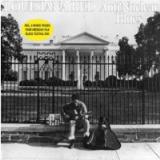
Louisiana Red's "Anti-Nuclear Blues" is considered a classic among acoustic blues albums and comes out on CD (w/bonus tracks) and LP in random coloured vinyl , limited to 500 copies worldwide - for fans of Buddy Guy, Junior Wells, Sonny Terry, Lightnin' Hopkins Louisiana Red was born in Alabama in March 1932 and died in Hanover almost exactly 80 years later. The early life of Iverson Minter, also known as Louisiana Red, was marked by suffering.
His mother died of pneumonia a week after he was born. When he was five years old, his father was executed by the Ku Klux Klan. After that, he lived in orphanages until he was able to spend the rest of his childhood with his grandmother. As a teenager, he was sentenced to hard labor for burglary and subsequently sent by Uncle Sam to the Korean War. Iverson had wanted to become a blues musician ever since he had met Muddy Waters. In the late 1950s, he played in John Lee Hooker's band. In the mid-1970s, he moved to Europe, where he gained recognition among a wider audience through appearances at the WDR Rockpalast and the Montreux Jazz Festival. In the 1980s, Fritz Rau signed Louisiana Red for his successful festival series, the "American Folk Blues Festival." In 1983, he released his acclaimed album "Anti- Nuclear Blues," whose content and message are more relevant today than ever. The original vinyl edition has since become a sought-after rarity. Now, the album is being released for the first time on CD, featuring six bonus tracks from the 1981 "American Folk Blues Festival," as well as a reissue on vinyl with a fresh sound.
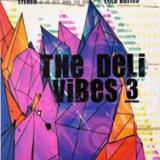
The album's centerpiece, the delightfully breezy "Flowers," has racked up 26 million Spotify plays on its own, with the full album cracking an astonishing 37 million and The Deli himself gaining 1.7 million monthly listeners. In The Deli's case, this success in the digital realm only whets an appetite for the physical. Now Cold Busted is remastering and repressing the out-of-print Vibes 3 LP on vinyl. And it's purple vinyl to boot. The album's 18 cuts serve up proper old school vibes, dropping beats that'll make one reminisce while also anticipating the new. In addition to "Flowers," the album contains other worthy contenders like the smooth "Luv Shxt," which grooves with gentle jazz guitar and a lonely horn under a snappy beat; "Rain" and its simple introspection; the lovely lazy ride of "4Tina;" and album opener "1B4W" which sets things properly on the smoky late-night-lounging tip.
John Tchicai (1936 – 2012) was one of the most important free improvising saxophonists of the 20th Century: an artist of rare vision and aptitude whose lines soared and stood out even in the most hallowed company, and whose body of work as a leader / composer is among the most singular and distinct within the entire canon of that music. But Tchicai’s importance doesn’t end there. Born in Copenhagen, Denmark, to a Danish mother and a Congolese father, his life and career represent a crucial bridge between the European and American traditions of free jazz. Initially trained on violin as a child, Tchicai shifted his focus to the clarinet and alto saxophone during his mid-teens, and began touring Europe as a professional musician by his early 20s, which landed him at a socialist youth festival in Helsinki, Finland, where he met the trumpeter Bill Dixon and saxophonist Archie Shepp. Impressed by what they heard, Dixon and Shepp encouraged the young saxophonist to move to New York, and in so doing changed the history of jazz forever.
Tchicai’s arrival in New York marks the rare occurrence of a European player joining the intimate circle that was first wave of American free jazz. Following his landing in the city in November of 1962, in addition to regularly sitting in with Don Cherry’s group, Tchicai began playing with Bill Dixon's band alongside Archie Shepp and Roswell Rudd, forming the nucleus of the foundation of the New York Contemporary Five - one of the most important groups of the era - which counted Tchicai, Shepp, Cherry, Don Moore, and J. C. Moses as its members. From the ashes of this group, Tchicai would go on to found the legendary ensemble, New York Art Quartet, with Roswell Rudd, Milford Graves, and Lewis Worrell, as well as working within Albert Ayler's band, recording “New York Eye and Ear Control”, Shepp’s band, recording “Four for Trane”, the ensemble that recorded John Coltrane's “Ascension”, and the Jazz Composer's “Orchestra”.
By the time he decided to return to Denmark in 1966, had Tchicai chosen to record little else, his legacy within the history of music would have been ensured. Incredibly ambitious, his arrival home marked the beginning of an incredible period of activity which saw him radically expanding his creative explorations, which by the end of the decade would include becoming a founding member of Amsterdam's Instant Composers Pool and helping to record John Lennon and Yoko Ono's “Unfinished Music No.2: Life with the Lions”. This, however, was proceeded the formation of a new orchestra, Cadentia Nova Danica, led by Tchicai, dedicated to radical cross-disciplinary exploration. Remaining together between 1966 and 1971, the group and its shifting membership regularly fell into collaboration with artists and composers, notably Musica Elettronica Viva, who existed beyond the realms of jazz, as well as participating within multi-media events that incorporated the visual realms.
Cadentia Nova Danica’s only two LPs - “Cadentia Nova Danica” (Polydor, 1968), and “Afrodisiaca” (MPS, 1969) - are effectively Tchicai recorded efforts as a leader, and are legendary. There’s little mystery, once heard, why the later landed on Thurston Moore’s iconic “Top Ten from the Free Jazz Underground”, published by Grand Royal in 1996. Sadly, despite playing extensively during their five year run, with exception of a CD documenting a performance at Jazzhus Montmartre, in 1966, until now there has been no other publicly available recordings that allow us to capture a glimpse of this astounding band at work. Alga Marghen / Formalibera’s vinyl pressing of a never before released body of recordings, made in Copenhagen between 1969 and 1970, changes that in the most exciting of ways.
Comprising three pieces - “Mc Gub Gub, (I–VIII)”; “Ode to Skt. John”; and “Pladepip” - the material on this stunning LP comes from two specific events. The first, which encompasses the first side, “Mc Gub Gub, (I–VIII)” was recorded by Cadentia Nova Danica - in this instance, Tchicai, Sune Weimar, Theo Rahbek, Christian Kyhl, Niels Holt, Jørgen Thorup, Michael Schou, Morgens Bollerup, Allan Gregersen, Ole Matthiessen, Pierre Dørge, Willy Jaegert, Anthony Barnett, and Jon Finsen - on May 29th, 1969, at the ABC-Theatre in Copenhagen. Penned by Tchicai, the piece is a sprawling, evolutionary composition at the outer reaches of free jazz, rooted in large blocks of colliding tonality and rhythm - a sound only accessible to larger ensembles - that push territories explored by Charles Mingus to previously unimagined heights, threaded by moments of hard blown fire. Writhing like a stormy sea - skronking and devilish - “Mc Gub Gub, (I–VIII)” is a work of profound complexity that singlehandedly illuminates not only Tchicai’s singular vision as a composer, but also the power and uniqueness of Cadentia Nova Danica during the band’s most vital period.
The two pieces - “Ode to Skt. John” and “Pladepip” - taking up the flip side, were recorded on February 21st, 1970, at the Danish Broadcasting Corporation’s Radio House, and are the outcome of Cadentia Nova Danica’s extended residency there between 1969 and 1970. In many ways, these two recordings offer some of the best insights into the broad collaborative approaches that defined the band, in this case encountering them working with Danish experimental composer, Svend Erik Werner, who was among the earliest in his country to embrace stylistic pluralism and the use historical forms within a modern context. “Ode to Skt. John” - based on aspects of Gregorian music - was penned by Werner, incorporating heady improvisation by the members of Cadentia Nova Danica, this time made up by Tchicai, Sune Weimar, Hugh Steinmetz, Theo Rahbek, Christian Kyhl, Michael Schou, Morgens Bollerup, Ole Kühl, Torben Enghoff, Mauritz Tchikai, Kjeld Ipsen, Willy Jaegert, Ole Matthiessen, Ole Thilo, Pierre Dørge, Steffen Andersen, Jon Finse, and Clause Bøje. The piece is a fascinating binary of the composed and improvised, utilising the band’s large scale to introduce a remarkable sound within its slow progressions and furious, driving free moments, in this incredible meeting of worlds.
The album’s final piece, “Pladepip”, is arguably its most historically significant: an entirely singular piece, unlike anything in Tchicai’s recorded canon as his foray into musique concréte. Drawing upon two recordings of full-band improvisations by Cadentia Nova Danica, for its creation Tchicai also gouged the surfaces of 78rpm records in his collection to skip and create repeated phrases and patterns, creating a stunning sound collage of hard angles and abrupt phrase, that creates a striking counterpoint to the band’s flowing improvisations that bookend those passages. The result is an engrossing listen and easily one of the most unique and culturally important gestures in the entire history of musique concréte.
Truly incredible, Alga Marghen / Formalibera’s vinyl pressing of this never before released body of recordings, made by John Tchicai’s Cadentia Nova Danica, in Copenhagen between 1969 and 1970, offers an unprecedented window into one of the most important groups working in Europe during that period, significantly expanding their rare and slim discography to date. Accompanied by extensive exploratory liner notes by veteran jazz writer, Ed Hazell, this is easily one of the most historically important archival releases of the year and is impossible to recommend enough. Absolutely essential on every count.
René ter Horst (DJ Zki) and Gaston Steenkist (Dobre), credited here as René et Gaston, are a DJ and music production duo from Haarlem, Netherlands. Their stage names include Chocolate Puma, Klatsch!, Jark Prongo, The Good Men, and Riva.
Their most notable productions are "Give It Up" (1993) credited to The Good Men, "I Wanna Be U" (2001) credited to Chocolate Puma, and "Who Do You Love Now?" (2001) credited to Riva, and featuring Dannii Minogue.
Vallée de L'Armes became a massive international club hit in 1993. Throughout the years, multiple remixes were released. The best remixes are now bundled on this exclusive 12".
Andre Zimmer reworks Vallée De L’Armes into a modern dance floor weapon. and receives support by Danny Howard,, Green Velvet, Peggy Gou and many more.
Andrew Dum created a swerve-inducing Afrohouse remix as well. The new rendition preserves the emotional depth that made the original resonate through the years, while giving it a fresh contemporary edge.
The 2026 Marco Lys remix transforms the original’s iconic melodic hook into a high-energy House production tailored for contemporary sets. The remix replaces the 90s-era breakbeat elements with a driving, tech-influenced rhythmic foundation, ensuring the emotional resonance of the original melody remains functional for peak-time modern dancefloors.
Vallée de l’Armes remains an essential house tune. This exclusive 12" features all the extended mixes and is available as a limited edition on orange vinyl.
The pioneers of acid jazz strike back! Galliano, the first artist ever released on Acid Jazz Records and one of the true originators of the genre, return with
their first new album in just two years—following their remarkable comeback after a 27-year hiatus.
After returning to the scene with Halfway Somewhere, their first album in approximately 27 years, Galliano waste no time in delivering their latest statement,
Acid Jazz Revenge. The album expands upon the previously sold-out Bandcamp LP Unreliable Memories of Contested Conversations, adding three brand-new
tracks and returning in a completely refreshed edition.
The title says it all: Acid Jazz Revenge is a bold declaration from one of the genre's original innovators. Packed with the sophisticated grooves, soulful rhythms,
jazz-inflected arrangements, and unmistakable attitude that defined acid jazz in the first place, the album proves that Galliano remain firmly at the forefront of
the movement they helped create.
The album also features a newly recorded version of "Jus Reach" originally released as a 12-inch single on Talkin' Loud in the 1990s. Reimagined with a
contemporary sense of style and groove, the track perfectly demonstrates Galliano's ability to revisit their own history while keeping their sound fresh and relevant.
The Japanese edition includes three previously unreleased tracks exclusively, making it an especially attractive edition for collectors and longtime fans.
Mit Sowas von Egal Vol. 3 setzt das Hamburger DJ-Kollektiv Damaged Goods seine gefeierte Compilation-Reihe auf Bureau B fort - und richtet den Fokus erneut auf die subversiven Untergrundszenen im deutschsprachigen Raum der frühen 1980er Jahre. Abseits der kommerziellen NDW entstand eine kreative Parallelwelt: Bands zwischen Post-Punk, New Wave, Synth-Pop und Avantgarde veröffentlichten ihre Musik in kleinsten Auflagen oder im DIY-Kontext - roh, kantig und radikal eigenständig. Die hier versammelten Tracks spiegeln eine Zeit zwischen Aufbruch und Unsicherheit wider, geprägt von "No Future"-Attitüde, politischem Druck und künstlerischer Freiheit. Tanzbar, direkt und oft überraschend eingängig: Sowas von Egal Vol. 3 macht vergessene Schätze wieder hörbar - und holt sie zurück auf den Dancefloor.
out of Stock
Last delivered 35 days ago available to reorder, subject to availability
Berlin’s Phil Berg, one of techno’s most distinctive rising names, debuts on Mutual Rytm with his ‘Dārin’ EP. First invited as the debut guest DJ for Mutual Rytm’s inaugural label night back in 2022, Berlin’s Phil Berg has maintained a close relationship with the imprint ever since. Known for his shadowy, immersive sound, Berg has carved out a singular position within the scene - equally respected for his high-impact DJ sets, his improvisational live performances, and a production style defined by clarity, tension, and a deeply recognisable sonic identity. While his live shows remain a vital part of his artistic DNA, often shaping the raw ideas that later evolve in the studio, his work extends far beyond the club floor, marking him out as a fully formed and increasingly essential voice in contemporary techno. That connection between stage and studio is fully realised on ‘Dārin’, where Berg delivers a darker, more driving statement for his Mutual Rytm debut, with the title track already becoming a standout in the sets of label founder SHDW. The title cut opens the EP with great urgency, as flaming drums and machine-gun synths are fired across the night sky, with sensuous whispers and sonar pulses adding the pull of the groove. Next, ‘Tempest’ brings big, banging hits, nailing down the kicks while rising tension appears through the backlit synths and distant bass rumbles. ‘Tanoo’ releases the pressure with a more luminous synth line that locks you in a trance as linear drums race on, while ‘Mephisto’ keeps you on edge with twitchy motifs and a burrowing bassline that drills down deep into a moody underworld. The EP closes with ‘Destiny Bond’, which rises with undulating, tactile lines, sleek synth smears, and a cosmic sense of travel. As digital bonus cuts, ‘Seiko’ and ‘Nyx’ bring anxiety and foreboding to the fore with two more muscular and physical deep techno hitters crafted for maximum impact.
out of Stock
Last delivered 13 days ago available to reorder, subject to availability
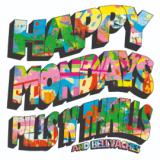
Originally released in 1990 by Happy Mondays, Pills ‘n’ Thrills and Bellyaches captured the chaotic, euphoric spirit of the Madchester movement, blending indie rock, acid house rhythms and funk grooves into a sound that helped reshape British alternative music. Featuring era-defining tracks such as “Step On” and “Kinky Afro,” the record became both a commercial breakthrough and a cultural snapshot of a generation fuelled by dance culture and Northern nightlife.
More than three decades later, its grooves, attitude and genre-blurring production still resonate strongly with contemporary audiences, influencing modern indie and electronic artists alike.
1LP Red Edition. All original audio remastered from Factory Records master tapes. Includes original album and brand new liner notes by James Brown.
5 x LP
60-page hardback book
Black vinyl
Printed labels
Printed inners
Slipcase
A2 poster
Slipmat
Originally released in 1990 by Happy Mondays, Pills ‘n’ Thrills and Bellyaches captured the chaotic, euphoric spirit of the Madchester movement, blending indie rock, acid house rhythms and funk grooves into a sound that helped reshape British alternative music. Featuring era-defining tracks such as “Step On” and “Kinky Afro,” the record became both a commercial breakthrough and a cultural snapshot of a generation fuelled by dance culture and Northern nightlife.
More than three decades later, its grooves, attitude and genre-blurring production still resonate strongly with contemporary audiences, influencing modern indie and electronic artists alike.
5LP Edition. All original audio remastered from Factory Records master tapes. Includes original album, Hallelujah + Madchester Rave On, Baby Big Head Bootleg Album (Live at Elland Road, 1991), classic and new remixes, 60-page hardback book with brand new essays from James Brown and Central Station designers, fold-out A2 tour poster and Madchester slipmat.
Hand Me My Flowers brings together one of underground hip-hop’s most relentless voices with one of the genre’s most revered producers. The result is a hard-hitting collaboration that bridges generations, uniting Flee Lord’s raw street narratives with Buckwild’s unmistakable golden-era production pedigree.
A cornerstone of the legendary Diggin’ In The Crates (D.I.T.C.) collective, Buckwild has spent decades shaping the sound of East Coast hip-hop, crafting classics for artists such as The Notorious B.I.G., O.C., Big L, Fat Joe, Nas, and countless others. On this project, he delivers a masterclass in gritty, soulful production—dusty samples, hard drums, and cinematic arrangements that provide the perfect backdrop for Flee Lord’s uncompromising lyricism.
Throughout the album, Flee Lord sounds right at home over Buckwild’s expertly crafted soundscapes, weaving vivid tales of survival, loyalty, sacrifice, and perseverance. His commanding delivery and relentless work ethic are matched by production that honors hip-hop’s foundations while remaining timeless and relevant.
More than a producer-and-emcee collaboration, this album represents a meeting of eras. Buckwild’s decades of experience and crate-digging mastery merge seamlessly with Flee Lord’s modern underground sensibilities, creating a project that feels both classic and contemporary. Every track reflects a shared commitment to authenticity, lyricism, and the enduring spirit of New York hip-hop.
For longtime fans of boom-bap and newcomers drawn to today’s thriving underground scene, this collaboration stands as a powerful reminder that real hip-hop never goes out of style.
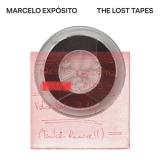
Geometrik Records is delighted to once again play a part in the exclusive recovery of Marcelo Expósito's previously unpublished work, which had been lost since its original creation in the 1980s. Marcelo Expósito is one of Spain's most internationally renowned contemporary artists, whose work is regularly exhibited across Europe and Latin America. He began his career at a very young age during the era of sound experimentation that flourished in the wake of so-called industrial culture, which found particularly fertile ground in Spain. As co-editor of legendary publications such as the fanzine Experiencias (1983) and, above all, the cassette-fanzine publisher Necronomicón (1983-1987), which operated on an international scale, Marcelo Expósito has, in recent years, been reconstructing those of his sound experiments that had been lost for decades. The album we are now presenting brings together material previously released on cassettes as EGK023 in a very limited edition. These tracks have now been remastered and expanded to complete this record, which noise musician Mattin has described as "secret recordings that constitute a gem from the rich Spanish underground of the 1980s". In the words of Luis Alvarado, editor of the Peruvian label Buh Records, this album allows us to appreciate how "Expósito developed a style of his own that understood sound as a malleable material open to chance. The recordings gathered on The Lost Tapes reveal an artist who moves as much through territories of unsettling textures and atmospheres as through zones of abstraction and radical noise". Influenced by the early work of figures such as Maurizio Bianchi, Nurse With Wound, and La Otra Cara de un Jardín, the release of this album provides a key piece in reconstructing the genealogical puzzle of Spanish experimental music. This carefully curated edition-in Spanish and English-includes a lengthy essay by Marcelo Expósito on the creative processes behind his work and the historical context of the industrial culture of the 1970s and 1980s, as well as extensive liner notes contributed by Vittore Baroni, editor of the legendary Italian label Trax; Francisco Felipe, co-founder of the Ars Sonora programme on Radio Clásica (Radio Nacional de España) and one of the most active names on the Spanish experimental scene of the 1980s; Mattin and Susana López (Susan Drone), key figures in the sound experimentation of the generation that emerged in the 2000s; as well as the aforementioned Luis Alvarado.
Sing Forever (Singing Is Free): Songs from 2021-2023 meets us as a foreword to A Profound Non-Event, Daily Toll's debut album from 2025. Offering an earlier chapter in the ever-growing songbook of the Sydney/Gadigal-based group, Sing Forever... is a collection in demo-form that maps their initial formative period as a duo, largely marked by Covid-era isolation, diabolical housemates, sonic experiments and copious amounts of wine sourced from Kata's job at the time. As bowerbirds of song, Kata and Jasper are making sounds from their own pocket - their world! - singing from nowhere to no-one from (in) a context of global upheaval, loss and mass confusion. Here we find the urge to sing forever, to share a morsel of spirit, and with it a mode of grounding one's humanity. The songs are loose, off-beat and textural, a period of "first thought, best thought" in boundless practice that finds inspiration from all over: a bracelet and a solo afternoon in Budapest; lyrics formed via a black-out poem scrawled across the page of a Neil Young biography; the scratch of paper daisies, toy drums, typewriters, and pots and pans all welcome melodies repeating and fumbling unto themselves until ultimately falling apart and into something else. These songs were never initially intended to find a physical release or to even be distributed further than the Bandcamp void, and yet here we arrive at a kind of essence of Daily Toll, or at least one iteration thereof, before the studio, before the additional band members, and before being known (perhaps, even loved) by more beyond. Sing Forever (Singing Is Free): Songs from 2021-2023 was initially released as a seven song cassette that came with early copies of A Profound Non-Event. Now with the addition of an extra song and a remastering by Mikey Young, it is now released as a limited 12" LP via Tough Love in a ww ltd edition of 275 copies.
Their follow up to the acclaimed ‘Anda Jaleo’. A document of Josephine Foster's magical partnership with Victor Herrero breathing new life into timeless traditional melodies, drawing from the Spanish-folk traditions of Castile, the Basque, Santander and the Costa Brava. ‘Perlas’ is debonair, contemporary and redolent of that old seductive charge.” The Wire. Elemental themes of love bind the collection together, with a melancholy joy that casts a shadow of desire and loss. “The alt-folk fixture returns to more traditional material.” Pitchfork.
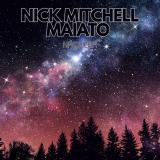
Coming in hazy and heady, an end-of-summer cosmic jammer from Nick Mitchell Maiato, full of big choruses, blazing guitars, country honk, and deep grooves—replete with funky horn section. It’s been four years since Poolside, the last release by One Eleven Heavy (Mitchell Maiato’s sometimes-band with James “Wooden Wand” Toth), and that time has clearly been used for some serious woodshedding on the auteur’s part. On Náquera, named after the Spanish pueblo in which he resides, Mitchell Maiato’s songwriting, vocals, and guitar playing all come into sharp focus as he mans the wheel on an ocean drive of interwoven electric guitar dueling, funky multi-movement jams, bittersweet odes to uncomplicatedness, and rolling rockers. Featuring an effortlessly graceful preface by Macon, GA piano prodigy Gavin Rushing, “Riki Rachtman” is a cosmic americana ballad examining the state of heavy metal in contemporary pop culture from the perspective of a disgruntled first-person narrator. “Critical Mass” is a soaring, two-chord ode to dropping out, with an opening organ salvo by Grateful Dead midi-tech Bob Bralove, a monster, key-changing guitar duel at its core, and a fat, snaking bass groove by Otto Wilberg (Mitchell Maiato’s former colleague in Desmadrados Soldados De Ventura).“Flamebait” is one of the record’s big surprises with its almost Lennon-esque rock-and soul slab of technocracy bashing, its woozy, three-part horn section, and its improvised, sun-scorched guitar solo slap-dab in the middle.And, on “The Angle,” we get an homage to rock-and-roll pool hustler narratives framed within an expansive country-funk jam that nods to Mitchell-Maiato’s love of Parliament and Grateful Dead in equal measure.
The fifth chapter of The Third Room's curator-led series is shaped by Alarico, one of the defining voices of a new generation pushing techno into faster, sharper and more rhythm-driven territory. Through his productions, DJ sets and close ties to a network of like-minded artists, he has helped shape a contemporary sound defined by tension, detail and forward momentum. For his curation, the focus lies on connection. Bringing together artists operating within a shared sonic language, the release reflects a generation where precision, movement and emotional depth exist in constant dialogue. The record opens with Connection, a first official collaboration between Yanamaste and Alarico. The track captures the intersection of both artists' approaches: Yanamaste's intricate and distinctive synth work meets Alarico's driving, forward momentum. Fast, pulsing and tightly controlled, it unfolds through cycles of tension and release, stripped back to its essential elements. On Crimson Leaf Minstre, Toru Ikemoto builds a detailed and contrasting sound palette. Bright, delicate elements interact with darker stabs that disrupt and reshape the rolling bassline, creating a sense of movement that feels continuous rather than moment-based. The track leans into depth and variation, balancing clarity with a more mysterious tone. Blue Lights by Lea Occhi & Amotik shifts into a more groove-led space. What begins with a functional framework gradually opens up - subtle chords and restrained vocal elements add texture and attitude without overtaking the structure, resulting in a track that feels both light and deep. Closing the record, IB1809 sees Alarico return with a defining statement. Reduced but highly present, the track builds around a strong rhythmic core, where chords, melody and vocal fragments interlock with precision. There is a sense of contrast at play - melancholic yet driven, vulnerable yet forceful - culminating in a moment that feels both functional and expansive. Across all four tracks, the release remains tightly focused - fast, dynamic and cohesive, with a strong emphasis on movement and detail. As the fifth entry in the series, it captures a distinctly modern strain of techno, where emotional nuance and rhythmic intensity are no longer in opposition, but fully aligned. A1 Written and Produced by Irakli Danelia & Alarico Zucchi | A2 Written and Produced by Toru Ikemoto | B1 Written and Produced by Lea Occhi & Anil Chawla | B2 Written and Produced by Alarico Zucchi Mastered by Ahmet Sisman (The Third Room Studios) Artwork by Charlotte Ernst Design by Daniel Bornmann (STUEDIO.XYZ) Distribution by Clone Pressing by Matter Of Fact
WRWTFWW Records is extremely excited to announce the first ever vinyl release for Pizza Hotline’s brilliant 2022 full-length Level Select, originally only released on cassette and digital. The liquid drum & bass meets Y2K era video gaming aesthetics monster is now available in a limited edition transparent vinyl double LP with a glorious 45rpm cut, packaged in a heavyweight 350gsm sleeve.
Entirely written and composed by UK producer Pizza Hotline (apart from "GLACIER ZONE", a collaboration between Pizza Hotline and DJ Total 90), the stellar 8-song album was initially released as a limited cassette in January 2022 and quickly gained cult status - making a full-on vinyl release quite the necessity. It’s here now with the the previously unreleased track "POLYGON DREAMSCAPE" (which sounds as magical as its title) and 45rpm cut for louder, bigger, deeper bass rumbling.
Spellbinding, atmospheric, and beautifully melodic, Level Select is a large scope dreamy adventure of liquid DnB filled with ambient escapades, ethereal jungle, high vibe breaks, and a heavy loving dose of late 90s / early 2000s video game influences. Hypnotic late night hype and pensive chill moods mesh with ease in a cinematic soundscape that re-contextualizes and gives a new life to a beloved music genre - LTJ Bukem, Peshay, the Wipeout OST or Soichi Terada's Ape Escape come to mind, and sounds and soundtracks from the Sony Playstation, the Nintendo 64, and the Sega Saturn resonate from the speakers. It’s all fresh with a subtle nostalgia and so much heart. An instant classic.
out of Stock
Last delivered 57 days ago available to reorder, subject to availability
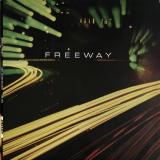
Freeway was a California outfit that first formed in 1979 and set about fusing jazz, soul and outreach-driven purpose into a sound that sat outside the norms of the contemporary Christian scene at the time. Their sole album, this self-title gem, was cut in 1981 for New Born Records has since become an underground rarity, often changing hands for upwards of £400. Now, 45 years on, Vinyl Kitchen brings Freeway back to vinyl for the first time ever, complete with new liner notes and rare photos. It's a glorious, life-affirming work of bright jazz sounds, celebratory energy, boogie grooves, funky horns and prog licks. Perfect for listening and dancing alike.
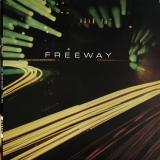
A serious private-press rarity gets its long-overdue reissue here for the first time ever. Formed in California in 1979, Freeway blended soulful grooves, jazz melodies and powerful horns into something that stood apart from the era's contemporary Christian scene. The cut just one self-released album in 1981 for New Born Records before disbanding. Originals now regularly fetch upwards of £400 on the resale market and this 45th Anniversary Edition marks a reissue that is going to fly off the shelves, complete with newly written liner notes and rare photographs telling the band's story. From funky jazz to boogie-inspired grooves, this is a previously hidden treasure now getting the light it deserves.
Few contemporary labels even come close to the output and influence of Lempuyang in terms of dub techno. Albums, 12"s and EPs come thick and fast and the latest is the first part of the fourth in the Pura Lempuyang series, which offers a glimpse at what they do best. Upwellings begins with Maurizio-style, smoky dub techno before Rothchord ups the drive with a more forceful kick. Paul Simmons's 'Burial (Natty Haffi Dread)' reflects the traditional roots of dub with a more 70s style cut, Another Channel slows to a crawl with an eerily empty arrangement and Inner Echo drives things home with a timeless fusion of molten dub chords and cuddly kicks.
out of Stock
Last delivered 22 days ago available to reorder, subject to availability
The neo-soul movement of the late 1990s, which fused classic soul sounds with contemporary elements, heralded the arrival of some of the greatest R&B recordings of the decade. Albums like Lauryn Hill's The Miseducation Of Lauryn Hill, D'Angelo's Brown Sugar, and Maxwell's Urban Hang Suite were all born of this trend, while artists such as Mos Def, The Roots, and Common whole-heartedly embraced the sound, creating some of their most timeless material in the process. These are some of neo-soul's great successes, but a slew of underground acts were what set the initial blueprint for their more pop-friendly acquaintances to follow. Acts such as R&B duo Groove Theory. The New York pair, consisting of singer/songwriter Amel Larrieux, and producer Bryce Wilson, (A veteran of the legendary 80s electronic group Mantronix) helped set the tone for neo-soul via their lone studio release, the self-titled Groove Theory. The nearly hour-long record features 14 tracks of Wilson's smooth soul arrangements and atmospherics merged with golden era boom-bap beats, and Larrieux's siren-quality vocals, inspired equally by a combination of Native Tongues, peak Marvin Gaye, Joan Armatrading, Soul II Soul, as well as elements of breakbeat, jazz fusion, and even trip hop. It's a definitive, but often overlooked classic of the 1990s, which helped expand contemporary R&B's sound, render Billboard hits out the tracks "Tell Me", "Keep Tryin'", and "Baby Luv", and even found the time for a Todd Rundgren cover. On the cusp of Groove Theory's 25th anniversary, Get On Down is proud to bring you this vinyl reissue of an underrated 90s gem. The original record has never been re-released on wax since its 1995 debut, but is now presented here with fully remastered audio, and bundled in a full-color insert sleeve with complete lyrics and liner notes.
BARAJA BENDITA out August 14, is Becky G fully unleashed - an artist with no ceiling and no apologies, in complete command of her sound and her story. Weaving between Spanish and English with effortless fluidity, this 17-track album channels a liberated, sensual energy that is both deeply rooted in her identity and entirely her own.
Becky G is a multi-platinum global superstar who has spent over a decade shaping the sound of contemporary pop across languages, cultures, and borders. A six-time Latin GRAMMY® nominee and Academy Award nominee, she has amassed more than 28 billion career streams worldwide and earned recognition from the American Music Awards, Billboard Music Awards, Latin AMAs, and TIME100 Next.
Kacper Krupa is one of the most distinctive saxophonists of the younger generation, a key collaborator of Skalpel and Łona x Konieczny x Krupa (whose album Taxi was certified Gold in Poland), and leader of Siema Ziemia, with whom he has performed at prestigious European festivals and concert venues such as the London Jazz Festival, Jazz Jamboree, Le Périscope, and Bimhuis.
SEKWA marks another important step in Kacper Krupa’s artistic journey. The album was created at the intersection of jazz, improvised music, contemporary chamber music, electronics, and ambient, forming a diverse yet coherent whole.
Great Television unfolds as a loose, emotionally driven narrative about navigating love, identity, and self-destruction against a backdrop of memory, movement, and Southern imagery. It begins with “Sunset Promenade,” where a deep, possibly lifelong bond offers comfort amid internal turmoil, establishing a desire for connection strong enough to withstand a restless mind. This sense of identity expands in “Girls of Atomic City,” where independence and womanhood are celebrated, though tinged with performance and uncertainty.
As the story progresses, songs like “Okeechobee Mud” introduce instability and intensity, portraying relationships that are passionate but corrosive, where love becomes inseparable from pain. “Thiokol Tripwire” honors the lives lost in the 1971 Thiokol Chemical Explosion and those affected in the south Georgia community of Woodbine. “Razorwire Wall” reinforces this devotion to chaotic love, suggesting loyalty even in destructive circumstances. A turning point arrives with “The Easy Kind,” where Cook reflects on attempts at self-repair, acknowledging her contradictions and rejecting simplicity in favor of a more fractured self-understanding. This awareness deepens in “Caldonia and The Love Convoy” and “In Your Veins,” where freedom blurs into recklessness and love takes on addictive qualities, revealing her complicity in cycles of harm. “19th Nervous Breakdown” provides crucial context, tracing her instability back to a turbulent upbringing marked by neglect and emotional disorder. “Feverfew,” leaves the narrative unresolved, as she recognizes her repeated attraction to destructive paths yet continues to follow them. In contrast, the closing track “Lightly” offers a rare glimpse of pure, protective sisterly love. Altogether, the album portrays a cyclical journey of longing, damage, and partial self-awareness, where clarity emerges but transformation remains uncertain.
15 pop songs about animals by 15 of the best indiepop bands in the world: Pets Sounds is as simple as that. Ranging from the playful (Sassyhiya, Gay Skeleton Club) to the heartbreaking (Caleb Nichols, Jetstream Pony) to the enigmatic (Railcard, Oh Hippo) to the satiric (The Magnetic Fields, Brian Bilston and The Catenary Wires), there's more diversity on this album than you can shake a stick at. Or throw a bone at. The LP comes with a full colour insert and the CD comes with a booklet featuring artwork by Elodie Ginsbourg. Musicians spend a lot of time working at home, with their pets for company. The pets sit around, happy in their own worlds, sublimely indifferent to their humans' endeavours. As familiar as family members, but as unknowable as aliens, pets are the perfect muse. They can be treated as objects of adoration - `Rufus' by Tugboat Captain is an expression of pure joy - or they can be treated as metaphors. More reliable than lovers but less dangerous than heroin, pets are a great vehicle for singing obliquely about something else. Swansea Sound's `I Don't Like Men In Uniform' is about an ageing, irascible terrier, but it's also about men striving to maintain their potency as territorial aggressors. The Magnetic Fields' `Fido, Your Leash Is too Long' is a libidinous and unreliable partner, as well as a dog that likes sniffing other dogs' private parts. For the most part, animals come off better than humans on this album. In `Kings Of The Animal Kingdom', The Burning Hell dramatise our indulgent love of pets in order to expose our cruelty to other human beings. In `Bo's New Haircut', The Cords express the injustice and unfairness of an innocent animal having to submit to human demands. In `Crayon Potato' by Sassyhiya, the magnificent Crayon contemptuously rejects the gifts offered by her besotted human owners. In `Lola', the opening track, Lande Hekt tries to put this enigmatic human-animal relationship into words. And concludes that however much we love our animals, and no matter how much we manage to communicate with them, we can never really know them. A melancholy conclusion maybe, but the music - as with all the songs on this album - is expressive of the wonderment and the joy that comes from sharing your life with a member of another species. The tracks by Brian Bilston and The Catenary Wires, Jetstream Pony and Railcard are previously unreleased. These three bands are also playing a launch show at The Water Rats, London, on 9th July 2026.
Their music draws from the rich traditions of classic guitar pop while maintaining a distinctly contemporary voice. Packed with sharp hooks, jangling guitars, and the melodic urgency that has long defined the band's sound, 'Box' delivers a fresh collection of songs that balance classic power pop craftsmanship with restless modern energy. Across the album's running time, The Jacks channel the spirit of late-70s radio gold and underground college rock while sounding unmistakably like themselves. Recorded with an ear for immediacy and emotional punch, 'Box' moves confidently between driving anthems, bittersweet harmonies, and punchy guitar-pop excursions. The result is an album that feels both timeless and alive -- a record built equally for longtime devotees of the genre and new listeners discovering The Jacks for the first time.
Defined by complex rhythms, low-tuned guitars, and an intense live energy, the band pushes the boundaries of contemporary heavy music. The band features Emilia Moncayo (vocals, synths), Amadeus Galiano (guitar, bass), and Carlos Sanchez (drums), each bringing a distinct musical background that merges extreme metal with progressive and electronic influences. Their combined technical precision and creative approach shape MINIPONY's intricate compositions and evolving sonic identity. MINIPONY has performed across Latin America and Europe, sharing the stage with iconic acts such as Meshuggah and touring alongside Fear Factory. They have also appeared at major international festivals including 70,000 Tons of Metal and Hell and Heaven Fest, Summer Breeze building a strong reputation for their powerful and immersive live performances.
Defined by complex rhythms, low-tuned guitars, and an intense live energy, the band pushes the boundaries of contemporary heavy music. The band features Emilia Moncayo (vocals, synths), Amadeus Galiano (guitar, bass), and Carlos Sanchez (drums), each bringing a distinct musical background that merges extreme metal with progressive and electronic influences. Their combined technical precision and creative approach shape MINIPONY's intricate compositions and evolving sonic identity. MINIPONY has performed across Latin America and Europe, sharing the stage with iconic acts such as Meshuggah and touring alongside Fear Factory. They have also appeared at major international festivals including 70,000 Tons of Metal and Hell and Heaven Fest, Summer Breeze building a strong reputation for their powerful and immersive live performances.