This is the debut release from Danish Qbasic as a solo artist, and its likely the strongest lo-fi record to emerge straight out of Copenhagen.
The A-side brings a cheerful, feel-good disco vibe, based on an old Detroit sample that loops endlessly, accompanied by repetitive, uplifting woodwind instrument.
Flip over to the B-side, and youll encounter a strong contrast: dark, mean heavy, and gritty cassette tape samples create a dreamy, solitary journey through an urban nightscape. As you walk through the dark night you discover shadows of new, sleepy buildings appear, drawing you in, yet leaving you torn between approaching or retreating. You dont want to go towards them, but neither do you want to leave.
Поиск:contras
Все
This is the debut release from Danish Qbasic as a solo artist, and its likely the strongest lo-fi record to emerge straight out of Copenhagen.
The A-side brings a cheerful, feel-good disco vibe, based on an old Detroit sample that loops endlessly, accompanied by repetitive, uplifting woodwind instrument.
Flip over to the B-side, and youll encounter a strong contrast: dark, mean heavy, and gritty cassette tape samples create a dreamy, solitary journey through an urban nightscape. As you walk through the dark night you discover shadows of new, sleepy buildings appear, drawing you in, yet leaving you torn between approaching or retreating. You dont want to go towards them, but neither do you want to leave.
Habibi Funk is excited to announce the release of Samh Almea'ad, a new 7" record by Libyan artist Cheb Bakr, hitting the shelves on December 6, 2024. Recorded in the early 2000s, Bakr’s music fuses the pulse of Libyan pop with R&B and hip-hop influences, bringing the energy of Benghazi to the dance floors of New York in the early 2000s. Cheb Bakr’s sound is a unique blend of styles that captures the essence of two worlds and includes production and vocals by Ahmed Ben Ali.
Our journey with Cheb Bakr’s music began when Yousef Alhoush, whose father Najib Alhoush led The Free Music from Libya, generously lent us boxes of cassettes to digitize. With the help of a journalist traveling from Tripoli to Cairo, we brought the tapes and a high-quality deck to Egypt. For three days in a hotel room on Zamalek island in Cairo, we sifted through nearly 100 tapes, finally landing on several from Cheb Bakr that dated back to the late 1990s and early 2000s. His albums stood out for their fresh, genre-defying sound—Bakr’s vocals flowed effortlessly over R&B and hip-hop beats with touches of jungle and drum and bass percussion, creating a fusion that crossed cultural and musical boundaries.
Returning to Berlin, we took a deeper dive into the digitized tapes, identifying bands, singers, and producers that excited us. In the process, we noticed familiar rap verses on a few of Bakr’s tracks—verses by none other than Ahmed Ben Ali, who was about to release an album with Habibi Funk. When we asked Ahmed about his connection with Bakr, he explained that they’d collaborated closely at Jamaica Studios in Benghazi, with Ahmed even producing some of Bakr’s songs.
Despite having lost touch for years, Ahmed helped us reconnect with Cheb Bakr through mutual friends. Their reunion took place in Bakr’s living room, where we joined them on a video call to discuss Bakr’s career and his influences. He explained how he sought to reinterpret eastern Libyan folk sounds for a new generation, blending them with contemporary genres.
This 45 marks the beginning of our work with Cheb Bakr, offering a glimpse into his unique musical style, with a full album to follow at a later date. The release includes two standout tracks that showcase Bakr’s dynamic range. Side A features “Samh Almea'ad,” a reinterpretation of a 2003 New York classic with Bakr’s signature spin. Since our first listen in that Cairo hotel room, it’s been played at every Habibi Funk set without exception. Side B, produced by Ahmed Ben Ali, features “Rjana Lamta,” a track that hints at American influences alongside a nod to Ahmed’s “Dameek Majeb.” Bakr’s artistry ties these contrasting elements into an original, dancefloor-ready track that remains as captivating today as it was two decades ago. As always, this 7" release comes with a booklet detailing some of the Cheb Bakr story. Samh Almea'ad will be out on vinyl December 6th.
Licensing info: These songs were licensed from Cheb Bakr. We pay the licensing partner 50% of the profits of this release. Only project related costs are deductible from the gross income, research and travel costs come out of our own share. Publishing was not included in our agreement (We feel it’s important to be transparent about these deals, therefore we will include these infos in all future releases).
Frontman Neige comments: "ALCEST's 6th album is called 'Spiritual Instinct' and will be released on Nuclear Blast. The recording of 'Spiritual Instinct' has been a long and challenging process, but we feel really proud of it and can't wait to share our new music with all of you. The artwork has been made by the Parisian duo Førtifem and represents a sphinx, as a reference to the symbolism art movement. The sphinx is the ultimate figure of the enigma, which embodies both the spiritual and feral sides inside us.“ Founded in 2000 by songwriter and multi-instrumentalist Neige and joined by drummer Winterhalter in 2009, ALCEST have become the pioneers of blackgaze, a unique and virtuosic mixture of post (black) metal and shoegaze. With a dreamy, otherworldly sound full of contrasts mixing rough darkness and soft melodies, the band forged five full length releases and went from black metal beginnings to the eerie pop on »Shelter« and further on to 2016’s »Kodama« inspired by the Japanese anime 'Princess Mononoke'. ALCEST’s fans always expect the unexpected from a duo that never ceased to explore new worlds, dive into their own imagination and create a truly magical universe through each played note.
Classic free jazz album reissued for the first time since the 70s. Old-style gatefold sleeve LP, with liner notes by Ed Hazell.
Noah Howard, an alto saxophonist and composer, was known for weaving intricate and innovative musical patterns, often likening his work to "sound paintings." His 1971 album Patterns, the first LP he self-produced on his Altsax label, stands as a testament to his experimental and spiritual approach to music. In interviews, Howard frequently used visual terms like "patterns" and "shapes" to describe his compositions, emphasizing the importance of melody and structure even in highly improvisational settings. For Howard, patterns and melodies were essential to guiding listeners through his explorations without alienating them, maintaining a balance between innovation and accessibility. Howard's quest for an original sound was deeply influenced by jazz greats like Charlie Parker, Ornette Coleman, and Jackie McLean. While he admired these legends, Howard avoided imitation, striving instead to develop his own distinct voice. His sound was unmistakably his own, and he felt a deep obligation to carry the jazz tradition forward through personal expression, not by mimicking others. His music was also rooted in spirituality, a legacy he traced to his upbringing in the Black Baptist Church. He believed jazz had always contained a spiritual essence, from Louis Armstrong to John Coltrane, and his work aimed to channel this cosmic, spiritual energy.
Patterns was recorded in the Netherlands during Howard's second stint in Europe, where he found a more open, less racially charged environment compared to the U.S. For the album, Howard collaborated with Dutch musicians such as Misha Mengelberg (piano), Han Bennink (drums), and Earl Freeman (bass). Despite the challenges faced by guitarist Jaap Schoonhoven, who felt out of place in the session, the album came together as a powerful mix of blues, jazz, and classical elements.
The music on Patterns is a high-energy fusion of American free jazz and Dutch improvisation. Howard's saxophone work alternates between leading with passionate, lyrical lines and blending into the collective improvisation. The album’s dynamic interplay, particularly between Mengelberg’s dissonant piano clusters and Bennink’s thunderous drumming, creates a vivid "sound painting" full of contrasting forms and colors. Patterns remains one of Howard’s most unique and celebrated recordings, showcasing his visionary approach to jazz.
- 1: Get Lost Feat. Vas Kallas (Hanzel Und Gretyl)
- 2: I’m So Sick Feat. Mea Fisher Aka Dj Mea (Lords Of Chaos)
- 3: If You Don’t Know Me, You Cannot Judge Me
- 4: Eden Feat. Gabriel Lennox
- 5: Push Feat. Raymond Watts (Pig), Erica Dilanjian (Lords Of Acid) & Gabriel Lennox
- 6: Wahrhaftige Täuschung
- 7: Wumms Feat. Raymond Watts (Pig)
- 8: Do It Feat. Hope Nicholls (Pigface)
- 9: Yum Yum Beauty & The Nasty Thief Feat. Guenter Schulz
- 10: Epic Feat. Mea Fisher Aka Dj Mea (Lords Of Acid)
- 11: The Sweetest Aggravation Feat. Gabriel Lennox & Erica Dilanjian (Lords Of Acid)
- 12: The Sweetest Aggravation Feat. Gabriel Lennox & Erica Dilanjian (Lords Of Acid)
- 13: World Of Deceit
En Esch's corrosive new album decimates both standards and dance floors alike.
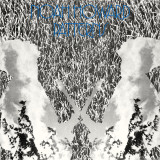
Anyone familiar with industrial luminary En Esch and his essential work in groups like KMFDM and PIG knows he is no stranger to political statements through his art. Now, on his first LP in eight years, Dance Hall Putsch, Esch decimates your standards and dance floors with vitriol. With carefully-sown and complimenting features from fellow KMFDM alumnus Raymond Watts, Guenter Schulz and Mark Durante, plus Vas Kallas (Hanzel und Gretyl), Mea Fisher and Erica Dilanjian (Lords of Acid), Hope Nicholls (Pigface) and more, Dance Hall Putsch delivers everything an industrial fan could want. From opener "Get Lost," with its categorically punishing industrial-metal riffs to the slicing EBM electronics of "Yum Yum Beauty & The Nasty Thief," it's all here and in no less than four languages throughout. En Esch's signature rasp is often contrasted by the sparkling vocals of his female counterparts, and the album is lush with brutal honesty, humor, and even a bonus En Esch-lullaby.
"I began work on Dance Hall Putsch in the early days of Covid-19. I was trying to create an upbeat, rather positive and very danceable album to leave the pandemic days behind us. Then it happened that a war began near where I live with tens of thousands of civilians killed and wounded so far. Everyone was caught by surprise and it influenced me, especially lyrically. "This current conflict is just 500 miles away from Berlin, and while that does not make it more horrific than other wars, it is very close to home. From living with this 'war next door,' the album turned out much more sinister than originally planned. It became a rather political album that reflects on the senselessness and nastiness of all the current wars around us. It's always the innocent and those who hold no power that suffer the most. Their fate isn't always death, but many times indescribable and long-term suffering. We must not forget them or turn a blind eye. "I’m very pleased that I had the opportunity to collaborate with different and interesting colleagues here. Thanx everybody for your interest in my musical works and for your love and support."
London based label Natural Selection present their forthcoming release in the form of a 4-track 12" EP, courtesy of Annie Hall, entitled "Atomic 20", ft. remixes from label affiliates Plant43 & Kodah. Mastered by Dadub Studios, Berlin and cut by Simon at The Exchange Vinyl.
Born in Madrid, Annie Hall has been heavily active on the Electronica, IDM and Detroit circuits since 2007 and has seen her music released by the most highly esteemed of Electro labels such as Central Processing Unit, Delsin Records, 20/20 Vision, Detroit Underground, Semantica & more. She returns to Natural Selection, after releasing on 3 previous occasions since the label's inaugural release in 2021. Her track 'Panax Ginseng' (NS001) gained support from some of the most respected DJ's and producers worldwide, inc. Dave Clarke, The Advent, NULLPTR & more.
Atomic 20 is a beautifully crafted Electro release that maintains venomous aggression, amidst breathtaking textures and ambience. Hypnotic pads spiral into the ether, contrasted alongside heavy kicks, deep bass and meticulously programmed percussion patterns. Annie's eclectic and uniquely experimental style is fully evident throughout, taking the listener on an unpredictable, emotional journey, whether at home or on the dance floor.
The B side of the release features 2 well-placed, club-focussed remixes of each original A side tracks; B1 courtesy of Electro legend Plant43, with his immaculate remix of 'Goji Berry'. B2 courtesy of Natural Selection label head Kodah, with his power driven remix of 'Atomic 20'.
Who is Isabelle Lewis, anyway?
What kind of music does she make? Is she an opera singer? Does she write pop songs? Does she compose ethereal ambient soundscapes? Does she play chamber music on the violin? Is she producing dark, electronic beats?
Well… yes. But Isabelle Lewis is not so much a person as a project. Isabelle’s debut album, Greetings, credits a trio of composer–performers at its heart: producer Valgeir Sigurðsson, vocalist Benjamin Abel Meirhaeghe, and violinist Elisabeth Klinck. The sound of the elusive Isabelle Lewis is heard most clearly in the push and pull between them, the three-way tension that gives the album its musical and emotional drive.
Each of the three brings more to the collaboration than those epithets might imply. Elisabeth’s solo performance practice incorporates composition, improvisation, live electronics, and a close command of bowing and fingering techniques that make her fiddle sing, whisper or whistle as required. Benjamin is a self-taught countertenor - keening, crooning, and swelling to a voluptuous sensuality—but also an interdisciplinary stage director and performer. Well known for his work as a producer and studio collaborator, and as a composer of scores for film and stage, Valgeir’s solo discography interweaves meticulously crafted electronics, drones, noise, and other digital elements with acoustic instruments and vocals recorded with naked, unflinching clarity.
But the extravagant theatricality Benjamin brings to the aptly titled “Drama”—also featuring a heroic violin solo from Elisabeth—grapples against the thudding bass of the implacable digital backdrop. On “Mother, Shelter Me” Valgeir’s austere and detailed production throws the hushed violin and vocals into stark relief. The result is an exquisitely uncanny juxtaposition of past and present, human and mechanical, like a Rococo treasure viewed under cold fluorescent lights, or an 18th-century automaton slowly opening its clockwork eyes.
Even the lyrics seem somehow out of time. On “O Solitude,” Benjamin goes so far as to quote an entire song by the first great English opera composer, Henry Purcell, verbatim. No stranger to Purcell’s music, which has made its way into Benjamin’s theatrical productions as well, here Isabelle Lewis removes Purcell’s melodies and harmonies and sets the text, Katherine Phillips’s 17th century translation of a poem by Antoine Girard de Saint-Amant, to new music whose heightened, archaic character nevertheless seems haunted by Baroque ghosts.
Throughout the album, the outsized emotions and timeless archetypes of Benjamin’s lyrics feel like relics from some half-forgotten past—from the neatly rhymed couplets of “Fisherman,” a seemingly straightforward (but still somewhat askew) character study, to the abstraction of “Moonshell,” whose words seem like the fragments of some ancient, lost lament. It is just another of many ways in which Isabelle Lewis carefully distorts the listener’s notions of time. On a more micro level, time can stop for a moment of weightless, drifting ambience, and then plunge forward as the cloud of harmonies suddenly lock into tempo with the drop of the bass or the change of a chord. Or else that weightless moment is allowed to be, as in the aptly named prologue and epilogue to these Greetings (“Voicemail”/“…and farewell”), or in the interstitial tracks that bind the album together, connecting its dramatic peaks with expanses of meditative stasis.
The album as a whole is elegantly shaped, swelling from an intimate, interpersonal statement into something deeper and more spacious. The first half of the album leans slightly towards self-contained pop songcraft and ticking beats, while side B jumps off from “O Solitude” into the almost symphonic grandeur of songs like “Moonshell” or the instrumental “Not the water, air, or the dirt.”
But as it progresses, the contrasts only grow more sublime: antique and postmodern, human and machinelike. The ominous weight of the droning sub-bass and trombone (guest player Helgi Hrafn Jónsson) only makes the interplay between vocals and violins (guest player Daniel Pioro joining Elisabeth) seem more delicate and vulnerable. The ethereal string tremolos of “Moonshell” seem to pull against the heavy, shuddering electronics and layers of crooning vocals.
And that, in short, is where you will find Isabelle Lewis. Like an ancient stone archway, or a delicate house of cards, the architecture of Greetings is held together by the tension between opposing forces. Not just in Elisabeth’s playing, Benjamin’s singing, or Valgeir’s arrangements and production but in the conflict and contrast that generates the synergy between them.
Oh—Isabelle says hi, by the way. She’s looking forward to meeting you.
- A1: It's Always October On Sunday 10 12
- A2: Sleeping In Church - Tape 1 On A Warm Day I Turned To Tell You Something But There Was Nothing There 7 31
- A3: Fish Can't Tie Their Shoelaces, Silly 3 28
- B1: We Put Her In A Box And Never Spoke Of It Again 7 22
- B2: There Is A Science To Days Like These (But I Am A Slow Learner) 7 20
- B3: 4 Is An Okay Number 6 14
- B4: Thanks For Coming 1 14
- C1: To Die In The Country 2 05
- C2: Objects Lost In Drawers (Found Again At The Most Inconvenient Times) 3 10
- C3: From Gardens In The City We Keep Alive 4 57
- C4: Everything Is Wrapped In Cling Film 3 36
- C5: Are These Your Hands, Would You Like Them Back? 5 15
- C6: It Is 5Pm And Nothing Bad Has Happened To Us (Yet) 2 15
- D1: Three Clementines On The Counter Of A Blue-Tiled Sun-Soaked Kitchen 8 21
- D2: I Liked It Better When We Lived On See-Saw Hill 2 37
- D3: Jumana 5 42
- D4: Come Back Later 3 54
'We are thrilled to be able to bring you Yara Asmar's first two cassette releases in a deluxe remastered double vinyl gatefold package featuring all new art and design from Yara herself.
Both albums were originally released on Hive Mind Records in 2022 and 2023 and received critical acclaim around the world':
“Melancholic drifts sound through the overcast skies of synth waltzes and accordion laments, infusing ageless melodies with a sense of falling backward through time. History is stitched through gilded aural silhouettes and elegiac drones. Asmar’s music is visceral. While electronics beckon beyond the sunrise stretched through a metallic shimmer, synth waltzes and accordion laments sticks with us while we remain lost in the hazy doldrums, always crawling forward tethered to our past lives. Highest recommendation.”
Brad Rose, Foxy Digitalis
"...these tracks are a cushion against reality. Asmar creates music that unfurls in evanescent bliss, an invitation to a safe space both isolated and welcoming."
Daryl Worthington, The Quietus
"...a set that transmutes the instrument’s droning tones into a sweep of introspective, breath-catching moments of beauty"
Eric Torres, Pitchfork Best Jazz & Experimental Albums of 2023
"The combination and contrast of highly familiar and highly alien elements give Asmar's music a quality not quite like anything else I can name. The way she channels found voices into her surreal mix of sounds is particularly striking."
Byron Coley, The Wire
- Buffalo
- Toothless
- Uglie
- Shelley
- Frankenstein
- Rip
Second EP from Bristol indie pop six-piece, Hamburger. ‘Beat Back The Ghouls’ sees the band take their sound in a more lush, subtle and layered direction, developing skilfully on the raw songwriting ability offered in their debut. On this record Hamburger create a more complex and sophisticated sound, flitting masterfully between driven guitar hooks, emotive lilting melodies, singalong angst-fuelled hits, and warm dreamy fuzz. ‘Beat Back The Ghouls’ is a record packed with songwriting craft. Each track is a finely-tuned pop song, with catchiness, beautiful melodic turns and delicate harmonic progressions at its heart. The soft, layered vocals add a wonderful contrast to the distorted, driven guitars, as they explore themes such as longing, want and alienation. If you’ve heard Hamburger before, ‘Beat Back the Ghouls’ will mark a new, more refined experience, a band finding itself fully-grown. If you haven’t heard them before, this record is an opportunity not to be missed. Limited to 300 copies on black vinyl.
Producer, designer, publisher, filmmaker, all-round scene phenom - Lasse Marhaug returns with his first album since relocating from Oslo to the Arctic Circle, surveying his 35-year career for a set of grizzled, doom-pocked rhythms and foghorn drones pulled from the aether. Expansive and hard to categorise, it's a precision-tooled set of ice-cold tonal productions that heavily lean into Mika Vainio’s rhythm experiments, with extra levels of growling bass and curious noises to send us deep into the uncanny.
Lasse Marhaug has put his mark on literally hundreds of albums - working with artists like Jenny Hval, Merzbow, Jim O'Rourke, Kevin Drumm, Hilary Woods - so many others - yet he still regards himself as a primarily visual artist who got diverted into an occasionally different path. If his last album 'Context' was a kiss goodbye to decades of life in Oslo, 'Provoke' turns a new page, but one that draws heavily from memories of the distant past, reflecting on the way the topographies of Norway's frozen north helped shape his creative worldview. Weaving electronics into environmental recordings captured in the bleak Arctic winter, the album was mixed during the Polar night season, when, for two straight months, the sun never rose past the horizon. Somehow, even at its bleakest, Marhaug avoids the usual aesthetic signifiers for this kinda thing, finding elements of queered beauty in all the severity, juxtaposing elements that shine a bright light on all the odd spaces in-between.
A consideration of noise music's place in 2024, and whether it can still be a tool for subversion when its aesthetics have been so commodified, ‘Provoke’ also refernces an experimental '70s Japanese art magazine that attempted to define a new language for photography. Operating somewhere between these two guiding poles, Lasse feels his way through a subtly altered mode of expression, a new approach to familiar concepts. Album opener ‘Plates’, for example, gives it the full Ø treatment, like some exceptional ‘Oleva’-outtake, but , eventually, shards of interference start to exhale like horses blowing, creating uncanny sensations that hit through ambiguous feeling rather than sheer noise terror. Ritualistic, corporeal - hard to know what you’re listening to and why it makes you feel that certain way - so much more than just machine cycles optimised for their ultimately hollow brutalist aesthetic.
Marhaug paints vivid pictures from a carefully chosen palette, drawing us into a soundworld that's rich with contradictions and contrasts. Even the relatively deafening 'New Topographics' offsets its wall of distortion with a muffled, perforating kick drum, cutting into the noise like a knife through butter. And all of this preparation makes the album's lengthy centrepiece 'Monochrome Head' even more impactful; hinging on a Pan Sonic-like alloy of bass and drums, the track snowballs through tempered feedback and improv scrapes and whistles that pick up into an orchestral din. Marhaug accents the bluster with rhythmic hums that gather in momentum until they're almost oppressively heavy, as if everything's about to collapse.
A masterclass in quietly subversive world-building, 'Provoke' invites us to peer at an expansive sonic landscape and marvel at its intricacies, but this time around there's a Lovecraftian behemoth lurking somewhere beneath its icy surface.
Ben Klock & Fadi Mohem announce debut collaborative album featuring Coby Sey and Flowdan on new label LAYER
Ben Klock and Fadi Mohem present their first collaborative album on their new label LAYER. The ten-track full length project titled Layer One follows the hypnotic EP Klockworks 34 that set the stage in 2022. In a bold departure from the techno roots that have defined and nurtured their careers, Klock and Mohem are now pushing genre boundaries, exploring IDM, ambient and experimental electronic music while still retaining the brilliance that characterised their earlier work.
The conceptual direction of Layer One delves into a post-human world, where humans are close to extinction on Earth, leaving only imprints, traces, and relics behind—digital fossils and machine-generated images capturing fleeting moments of non-human photography, as Artificial Intelligence remains in a world that quietly thrives without us. We do not perceive this as a bleak apocalyptic dystopia, but more a sober and serene reflection of a world that continues to exist and flourish, indifferent to the absence of humanity. Despite this unremitting setting, through this journey we find survivors who signal a remembrance of the human sensibilities.
Elevating this project are two very human and dynamic collaborations featuring the charismatic Coby Sey and the legendary grime MC Flowdan. Sey, a prominent figure in the British music scene known for his work with artists like Tirzah and Mica Levi, injects his music with a mesmerizing emotional depth. Opening the album with the powerful track ‘Ultimately,’ Sey offers spoken-word musings on creativity and life over experimental landscapes meticulously crafted by Klock and Mohem. Nostalgia permeates this opening track, and track 7 ‘Clean Slate’ reinforces this sentiment with Sey’s stream-of-consciousness wordplay.
Flowdan, the gritty MC whose verses have become anthems of the UK grime movement, made headlines in 2023 with two songs that reached the top 20 of the UK singles chart. In 2024, he was awarded his first Grammy for the Skrillex and Fred Again collaboration Rumble, becoming the first grime artist to win in any category. On track ‘Our Sector,’ Flowdan unleashes his raw energy and dynamic flow, adding a thrilling vocal dimension to the album’s narrative. The fluid delivery of his lyrics and rhythmic timing are enhanced by the staccato beats and abstract synths. These collaborations are not mere features; they are pivotal moments that crystallize the album’s vision—an experimental re-imagining of electronic music’s possibilities.
Immediately offering an impressive entry to Klock and Mohem’s changing sonic universe ‘Escape Velocity’ shows the collaboration at its strongest. Deftly juggling between ambient chords and more densely intricate rhythmic moments. These tightly layered textures and intense clashing moments are continued through most of the album. On other tracks the duo are just as innovative ‘Rest Assured’ rips open the sound palette Klock and Mohem are known for, synths dart around flickering through into unexpected areas. Penultimate track ‘The Machine’ feels like the internal innards of a PC or synthesizer brought to life. Electricity flows through the track like an auditory exploration of the digital world's hidden mechanical and electrical processes. In contrast, final track ‘Melatonin’ does exactly what the name suggests; its soothing melodic ambience cradles the listener as the album draws to a close.
Alongside the album’s release, the duo will release two singles. This album represents the work of two artists at the peak of their creative powers, inviting listeners to step outside the familiar and explore a different musical perspective.
Reissue of the debut full-length album by the leader of the Ukrainian band Edenian, Max Molodtsov, offers a 50-minutes long journey to the world of gloomy and hasteless, but atmospheric doom-death, where brutal elements are contrasted by melancholic interludes.The lyrics of the "Of Ruins..." album are based on the classical English poetry from the 19th century and the original author's verses. Mixed and mastered at Slow Burn Studio (When Nothing Remains, Crypt Of Silence).
The work of GMM carries the echo of folk wedding melodies inspired by Oskar Kolberg's collections, interpreted in modern arrangements with electrifying sound.The trio, consisting of Michał Górczyński, Michał Marecki and Patryk "TikTak" Matela, explores the roots of the Mazovian tradition, translating them into the language of contemporary music. Oskar Kolberg's descriptions and a collection of melodies specific to the Polish region of Mazovia give the GMM band a foundation for creative existence in this old world and transferring it to the modern world.The freshly recorded album opens the traditional wedding gates in an unexpected way, where folk nostalgia meets contemporary avant-garde. The contrabass clarinet weaves deep, warm sounds into the compositions, adding them mystery, while the spinet boldly carries a note of baroque sophistication, creating a pleasantly contrasting texture. The modernity of synthesizers and dynamic beatbox balancing between stillness and dense, dirty tones, gives the whole mix a modern touch.In this characteristic journey full of rhythmic complexity and harmonic discoveries, you will find depth, a cynical smile and plenty of room for your own reflections.Michał Górczyński - specializes in playing the double bass clarinet, in 2004 he graduated from the clarinet class at the Fryderyk Chopin University of Music in Warsaw. Composer, soloist and chamber musician. Co-founder of Kwartludium - a band specializing in performing contemporary music. Member of the band Bastarda. Author of music for theatre performances.Michał Marecki - instrumentalist, producer, composer. Collector of electronic and electroacoustic instruments. Associated with the bands Warsaw Village Band & Bassałyki, Mamadou & Sama Yoon, T.Love, Sidney Polak, among others. He is interested in creativity in artistic processes. Master of social sciences.Patryk TikTak Matela - beatboxer and beatbox activist. For over 20 years he has been giving concerts and teaching the art of vocal percussion. He conducts workshops for preschoolers, students, young people from orphanages and community centers. Author of the first book in Poland about beatbox (Human Beatbox -Personal Instrument!), organizer of the Polish Beatbox Championships, promoter and musician in film and theater. Creator of advertising and reportage films, megafan of Lego Technic.
Even as the obstacles to meaningful connection mount into an Everest-ian hurdle, artists nevertheless find ways to bend the technologies of our days to foster visceral human connection, rather than bereft isolation. Comprised of a West Coast bassist (Kristian Dunn of El Ten Eleven) and an Appalachia-adjacent drummer (Damon Che of Don Caballero), Yesness forges a friendship mediated through the language of collaboration, all formed through emailed song sketches and text exchanges of Van Halen demos. The odd couple of Kristian Dunn (El Ten Eleven) and Damon Che (Don Caballero) was the result of some clever musical matchmaking by Karl Hofstetter, founder and curator of Joyful Noise Recordings. Karl introduced Dunn and Che via email in April 2023 after Dunn's prolific output outgrew the resources and abilities of his instrumental duo El Ten Eleven. Less than a year later, after countless text messages and song sketches were exchanged, and one fateful meeting at a recording studio was organized, their nascent project's debut record, See You at the Solipsist Convention, was complete. "We were ships in the night of the musical variety until Karl found a way to merge our paths," Che said of his introduction to Dunn. "There are very few comparisons in the aesthetic approach to how we created the music. We worked remotely for eight months before physically meeting for the first time at the recording studio." Neck-deep in their own ambitions, Che and Dunn swapped musical ideas and quirky song titles throughout the summer, working at a breakneck pace. Star Wars references were intertwined with walloping bass lines ('If You Say So'); non-sequiturs were punctuated by Che's signature frenetic percussive jabs ('Horror Snuggle'). Scaffolded around eight-string bass, knotty percussion, and intricate syncopation, See You at the Solipsist Convention is a carnival of delights for fans of the post-everything persuasion—uncategorizable yet reverent to the altar of instrumental rock. Tearing through the record's evocative instrumentals is a delightful bolt of strangeness, felt as much as heard in the spontaneous chemistry between Che and Dunn. "Occasional Grape?" dances like a waltz played with a sledgehammer—delicate moments shattered by bursts of aggression, while still embedding a rhythmic earworm deep into your heart. 'Nice Walrus,' a string-studded panorama featuring Kishi Bashi, volleys between nervy hyperactivity and heartfelt grandeur. The album's closing track, "Non-incredible Visitor," contrasts Che's meticulous precision with Dunn's imaginative instrumentation, bonding bass and percussion like nesting dolls. Just as the track seems to settle, it drives off an uncharted auditory cliff—abruptly, without ceremony, leaving the listener grasping for meaning in the murk. Beyond all measure, Yesness stands as a testament to the powerful dividends of friendship and collaboration. We are nothing without each other – our partners, our local record store clerks, our neighbors. Music, too, thrives on our entanglements. With twelve tracks, an upcoming tour, and an unexpected friendship stemming from one email, Yesness underscores the brilliant machinery of human connection.
Oscar Smit (DJ Oscar) has been a fan and collector of, especially the latest, Christmas music
since the 1980s. As a connoisseur, he is invited almost annually by the national Dutch radio.
As a journalist, he writes for the Christmas blog Christmas A Go Go and music magazine
OOR.
“Nowadays, there are many young acts active in the Dutch underground scene that I find
original and good. I enjoy their concerts, which usually take place in small clubs. Being a
huge fan of Christmas music, I got the idea to ask a couple of my favorite young artists to
record a contemporary Christmas song. They could do this with complete freedom. Dutch
electro-garage duo De Delegatie chose to cover a song by Daniel Lohues (singer of Skik) and
Herman Finkers from 2009. The choice of the Haarlem electro-wave band Dorpsstraat 3
goes even further back. In 1976, Dutch ‘volks’singer Andre Hazes had his very first hit with
this Christmas song. The Amsterdam punky female trio Earwurms recorded a contemporary
and adapted version of ‘Jingle Bells’. Schlager punk trio Yodel Queen also includes two
women. They provide an impression of a flexitarian at the Christmas dinner. Both girl bands
are appearing on vinyl for the first time. XA4 is Xavier Boot. He has already released an
album on Philip Glass’s label and treats us here to minimal Christmas music. In contrast,
there is the maximal danceable dark-electro from the Amsterdammer Raderkraft. He has
already released a few records and is quite well-known abroad. On this record, Stippenlift,
a one-man project from Amsterdam, has the most experience with Christmas music. Every
year, he writes a new Dutch-language track, usually sad or melancholic in tone. This very
danceable song sounds optimistic for his standards. Truus de Groot is a category of her
own. She has been making music since the early eighties, in bands like Nasmak or Plus
Instruments. She is still active and proves that you can still make urgent music after such a
long time. She is an example for many young musicians. Her song is a variant of the music
from the timeless Charlie Brown Christmas film.” — Oscar Smit.
Oscar Smit (DJ Oscar) has been a fan and collector of, especially the latest, Christmas music
since the 1980s. As a connoisseur, he is invited almost annually by the national Dutch radio.
As a journalist, he writes for the Christmas blog Christmas A Go Go and music magazine
OOR.
“Nowadays, there are many young acts active in the Dutch underground scene that I find
original and good. I enjoy their concerts, which usually take place in small clubs. Being a
huge fan of Christmas music, I got the idea to ask a couple of my favorite young artists to
record a contemporary Christmas song. They could do this with complete freedom. Dutch
electro-garage duo De Delegatie chose to cover a song by Daniel Lohues (singer of Skik) and
Herman Finkers from 2009. The choice of the Haarlem electro-wave band Dorpsstraat 3
goes even further back. In 1976, Dutch ‘volks’singer Andre Hazes had his very first hit with
this Christmas song. The Amsterdam punky female trio Earwurms recorded a contemporary
and adapted version of ‘Jingle Bells’. Schlager punk trio Yodel Queen also includes two
women. They provide an impression of a flexitarian at the Christmas dinner. Both girl bands
are appearing on vinyl for the first time. XA4 is Xavier Boot. He has already released an
album on Philip Glass’s label and treats us here to minimal Christmas music. In contrast,
there is the maximal danceable dark-electro from the Amsterdammer Raderkraft. He has
already released a few records and is quite well-known abroad. On this record, Stippenlift,
a one-man project from Amsterdam, has the most experience with Christmas music. Every
year, he writes a new Dutch-language track, usually sad or melancholic in tone. This very
danceable song sounds optimistic for his standards. Truus de Groot is a category of her
own. She has been making music since the early eighties, in bands like Nasmak or Plus
Instruments. She is still active and proves that you can still make urgent music after such a
long time. She is an example for many young musicians. Her song is a variant of the music
from the timeless Charlie Brown Christmas film.” — Oscar Smit.
Two years after the release of the hard-hitting EP Act-U-All, Yesterdaze are ready to release their first
full-length album, Sentences. An unforgiving, raw album filled to the brim with energetic and
unapologetic rock. Sentences is an album built by contrasts. Emotionally deep messages are conveyed
through large melodic soundscapes, driven forward by playful guitar riffs, sweet bass lines and explosive
drums.
Oscar Smit (DJ Oscar) has been a fan and collector of, especially the latest, Christmas music
since the 1980s. As a connoisseur, he is invited almost annually by the national Dutch radio.
As a journalist, he writes for the Christmas blog Christmas A Go Go and music magazine
OOR.
“Nowadays, there are many young acts active in the Dutch underground scene that I find
original and good. I enjoy their concerts, which usually take place in small clubs. Being a
huge fan of Christmas music, I got the idea to ask a couple of my favorite young artists to
record a contemporary Christmas song. They could do this with complete freedom. Dutch
electro-garage duo De Delegatie chose to cover a song by Daniel Lohues (singer of Skik) and
Herman Finkers from 2009. The choice of the Haarlem electro-wave band Dorpsstraat 3
goes even further back. In 1976, Dutch ‘volks’singer Andre Hazes had his very first hit with
this Christmas song. The Amsterdam punky female trio Earwurms recorded a contemporary
and adapted version of ‘Jingle Bells’. Schlager punk trio Yodel Queen also includes two
women. They provide an impression of a flexitarian at the Christmas dinner. Both girl bands
are appearing on vinyl for the first time. XA4 is Xavier Boot. He has already released an
album on Philip Glass’s label and treats us here to minimal Christmas music. In contrast,
there is the maximal danceable dark-electro from the Amsterdammer Raderkraft. He has
already released a few records and is quite well-known abroad. On this record, Stippenlift,
a one-man project from Amsterdam, has the most experience with Christmas music. Every
year, he writes a new Dutch-language track, usually sad or melancholic in tone. This very
danceable song sounds optimistic for his standards. Truus de Groot is a category of her
own. She has been making music since the early eighties, in bands like Nasmak or Plus
Instruments. She is still active and proves that you can still make urgent music after such a
long time. She is an example for many young musicians. Her song is a variant of the music
from the timeless Charlie Brown Christmas film.” — Oscar Smit.
Maai proudly presents a split EP featuring two distinguished Barcelona based talents. On the A side, the Peruvian trio of JJ Beteta, Alonso Bauer and Stefan Cukic delivers a dynamic array of tracks. "Layers" kicks off with an energetic blend of dusty breaks, setting the vibe for the EP. Following this, "Go The Data" takes over with its driving acid bassline, strong rhythm, for a dark and hypnotic vibe. The trio wraps up their side with "Wonky Afthermath," a subtle yet funky combination of deep, groovy elements and breaks that keeps the energy flowing.
On the B side, Canarian artist Javier Carballo, performing under his Look Perry alias, offers a captivating contrast. "I Can't Love U" introduces a track enriched with otherworldly pads and synths, creating an immersive sonic environment. The EP concludes with "Stone Pilots", which takes listeners on a smooth journey through intricate breaks, providing a perfect counterpoint to the A side’s energetic flair. This split EP showcases a rich tapestry of local talent and diverse electronic sounds.