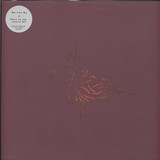
Left of centre experiments from the Dutch underground of yesteryear. Muziekkamer was the name of the home recording studio that gave birth to the twelve tracks on 'Popmuziek', an intriguing document of sketch arrangements and primitive, fairytale sampling wave cuts. This is music which excels due to its inherent naivety; the limitless ambition of 'Black Box' almost sounding like a precursor to the 90s ambient techno of Likemind or Stasis. On 'Being Home Tonight' we can hear an early form of what the likes of Tolouse Low Trax have been bringing to the forefront of contemporary club culture whilst the erratic art-rock of 'Walkman' mirrors what Leven Signs & co were doing over the pond. In trying to create something which represented 'intrusiveness' as a contrast to an earlier ambient tape the trio incidentally blurred the lines between various musical fashions to come. An amazing snapshot of time and place!
Поиск:contras
Все
After bursting onto the scene in late 2017, Hyperloop makes his Drumcode debut with Green Velvet in toe.His 'Mentalizm' EP is a classy example of his versatility, a trio of original works, accompanied by two DJ tools. Beginning on a menacing tip, 'In Your Mind (Reflections)' is a low-end brew of industrial stabs, eerie melodies and subterranean vocals.
'S-Sound' is his collaboration with Chicago legend Green Velvet and is a percussive masterstroke of loops and drum riffs which drive the eight-minute track with all the puffing ferocity of a steam train. 'Spring on the Battlefield' is the perfect contrasting accompaniment, as a warm rush of strings covers a bed of intricate analogue effects and stomping kicks.
Teste returns with The Box Man, a five-track EP that marks their first release of original material in 25 years. Formed during the early nineties in Hamilton, Ontario, they put out only three official records between 1992-1993 on Probe Records, most notably 'The Wipe,' which is regarded as a genre defining classic, while the follow-up 'Regions' also served as a template for the ensuing sonics of contemporary techno. With only a handful of live actions, the final chaotic show (public disturbance) occurred for Pure in Glasgow 1994. Afterwards, the original Teste lineup of juvenile delinquents disbanded but unwittingly ended up defining the hypnotic and drugged out strains of today's afterhours techno parties. The project vanished for decades until reactivating the chaos in 2014, promoting a slew of remixes 'The Rewipes,' by artists such as Rrose and Terence Fixmer, on the Edit Select imprint.
Since then, original member David Foster, still at large as //HUREN//, has been slugging it out in the fringes with influential output on the seminal Zhark Recordings Berlin and has collaborated as O/H with Rich Oddie of Orphx. First meeting on Mayday 2017 in Berlin, a new alliance with Martin Maischein aka Goner formed. Goner is likewise a veteran with essential output under various monikers on imprints such as Force Inc., Editions Mego, and Hospital Productions. From that pairing, The Box Man came into being for the second release on BITE, the Berlin techno label run by Hayden Payne and Florian Engerling.
The Box Man picks up where Teste last left us with their revolutionary vision of techno and continues to further their interdimensional manifestation of insanity and formation. Pure techno serving as a method of psychic expulsion and self-reckoning. From the opening, the eponymous track approaches full panoramic throttle as metallic synths creep 360 degrees around the listener, setting the tone for panic and loss of cognitive control. Teste then moves into the stealthier outpatient techno rhythms of 'The Long Term Care Facility' and 'Thieves Are Operating In This Area'. The EP contrasts its propulsion with different interpretations of its blueprint. 'Foaming At The Mouth' delves into Cabaret Voltaire-alike rhythm box violence until all is closed with the comedown melodies of 'Lyubov'. Through highly adept methods of sound design and neural interpretation, Teste once again cuts apart reality with their music, expressing nightmares and visions via new rituals and mind control techno.
Warm return once again... One of the most consistent and influential agencies to have operated in the 2000s, the collective continue to develop their original agency, events and record label, and things are heating up very nicely. Following soul-arresting releases from Elliot Lion and Face + Heel comes this four-track odyssey from Belfast's Lunar Orbit Rendezvous AKA LOR. Ready for take-off
Our mission is set with 'Mystery To The Viewer', but what is the main mystery Is it the gravity-defying thrust of our engines or the identity of the anonymous (yet well spoken) narrator Listen closely for clues amid the heavy pulsating chords as we break away from the earth orbit and plunge deeper into the stars.
'In This Detail' sees us hurtling further and further into the dark unknown. There's a deep chilling aesthetic at play here as LOR makes his 808s weep with the loneliness only a long-stay astronaut can sympathise with. In perfect contrast, the isolation is balanced by the direct and vital 'Oriole'. One of LOR's earliest projects, updated with all the skills and techniques he's learnt on labels such as Exit Strategy and Cin Cin, it's a vital composition that rises and rises as we engage hyperspeed through the cosmos.
Finally we land back on our home planet to the marching momentum of 'White Light'. Almost stately in its pace and rhythmic stride, things suddenly take a turn for the intense as a warping bass siren triggers a much darker direction and a series of spasmodic kicks and heavily shelved filters. Welcome home...
It's been over 10 years since the release of Gui Boratto's breakthrough full length debut 'Chromophobia'. As to what its title suggests, he shook up the techno game with a contrast of lushly coloured minimal grooves and melody, whilst many will recall that the album included the highlight single Beautiful Life' which became a dance floor anthem for that era. Four albums in and countless EPs and remixes under his belt, the Brazilian producer's unique savoir-faire in carving out a functional album out of diversely routed singles and features is back at it on his fifth studio LP, 'Pentagram'. Here Gui Boratto lays down a nuanced 12-track narrative that reinvigorates his signature sound into a refreshingly different perspective that feels all too familiar - including the return of Beautiful Life' vocalist (and Gui Boratto's wife) Luciana Villanova on the single "Overload".
Through his signature kaleidoscopic approach, Boratto delivers an album built as a far-reaching hub-and-spoke system, broadly inclusive as can be. From the opening cut, 'The Walker' - hot on the trail of Tears For Fears 'Elemental' (one of Boratto's "favourite 80's bands") - to the hi-NRG euphoria of 'Forgotten' and its pounding tech alter ego 'Forgive Me'. "I was going into 2 different directions", Boratto says, "the typical indie- electronic-rock' Boratto kind of production like It's Majik' or Like You' and a much more techno approach." He goes on, "I decided to split them into two twin sister songs. When I play live I always put these two songs together."
The Brazilian Producer further embraces the pop-friendly essence of his past work on tracks like 'The Phoenix', featuring vocalist Nathan Berger, and 'Overload', both melding acidulous synthlines with laser-precise breaks, vox hooks and drops calibrated for extended radio and club use, although sieved through his distinctive rainbow-hued musical prism. For the symbolists out there, the album's pared-down closer '618' duration accidentally happens to equate the proportions of the said pentagram. "Coincidence" Boratto questions, and capsulises, "not so ufanista and supporter of Brazilian neo-concretism, but I guess the brazilian sculptor Lygia Clark also inspired me a lot. Not the meaning of her sculptures, but the shape of the hinge of most of her work. I've wanted to transmit the scientific pentagram's point of view. It's not a religious kind of thing."
Whereas 'Spur' (a field-tested 808 and 909-heavy "purist track", "very, very old school" Boratto insists) and 'Alcazar' are sheer smooth-edged four-to- the-floor epics, the album also shares its lot of startling moments, such as with the John Barry'esque 'Scene 2' (with a hint of Amon Tobin, 'Easy Muffin' style, throw in) and its refined string-laden buildup, 100% fitted for a 007 opening credit sequence, or with 'Hallucination' (feat B.T.) and the further James Holden-ish title-track 'Pentagram' (think 'The Idiots Are Winning'), "one of those exercises I did when I got my Buchla modular synth" Boratto analyses, "I think I've used more then 30 different snares, with different delays and reverbs. The whole song is alive". And so is 'Pentagram' in its entirety: alive and definitely just as manifold and hopeful as its architectonics are the stuff of science and dreams all at once.
Es ist zehn Jahre her seit der Veröffentlichung von Gui Borattos bahnbrechendem Debütalbum - Chromophobia . So wie der Titel vermuten ließ, war das Album mit seinen kontrastreichen Minimalgrooves und den üppig gefärbten Melodien ein Schocker im besten Sinne. Ihr erinnert euch sicher noch an die Hit-Single - Beautiful Life , eine Dancefloor-Hymne aus dieser Zeit. Nach vier Alben und unzähligen EPs und Remixen ist das einmalige Savoir-faire des brasilianischen Produzenten, aus vielfältigen Singles und Features stimmige Alben zu schaffen, auch auf seinem fünften Studioalbum - Pentagram zu hören. Hier legt Gui Boratto ein Zwölf-Track-Narrativ vor, das seine Handschrift auf erquickende Weise wiederbelebt. Wiederbelebt wird auch die Stimme von - Beautiful Life (die der Frau Gui Borattos gehört) auf dem Stück - Overload .
Durch seinen charakteristisch kaleidoskopischen Ansatz liefert Boratto ein Album, das gebaut ist wie die Speichen deines Fahrrads, von dem Opener - The Walker - direkt auf der Spur von Tears For Fears - Elemental (einer von Borattos - favourite 80's bands ) - zur Hi-NRG-Euphorie von - Forgotten und seinem stampfenden Counterpart - Forgive Me . - Ich bin in zwei unterschiedlichen Richtungen gegangen , sagt Boratto: - den typischen ,Indie-Electronic-Rock'-Weg wie in - It's Majik oder - Like You und den Techno-Weg. Er fügt hinzu: - Ich hab mich entschieden jedem Track seinen Zwillings-Track an die Seite zu stellen. Immer wenn ich live spiele lege ich die zwei Stücke zusammen.
Der brasilianische Produzent erschließt weiter die Pop-Essenz seiner vergangenen Arbeit auf Tracks wie - The Phoenix (feat. Nathan Berger) und - Overload . Beide kombinieren zwitschernde Synthi-Melodien mit lasergenauen Breaks, Hooklines, Drops und sind wie gemacht für die Rotation und den Club. Und für die Symbolisten da draußen: die Länge des reduzierten Closers - 618 beträgt zufälliger Weise genau die Proportionen des besagten Pentagramms. - Fügung , fragt Boratto und fasst zusammen: - Ich bin kein Anhänger des brasilianische Neo-Konkretismus , aber ich glaube die brasilianische Künstlerin Lygia Clark hat mich sehr inspiriert. Nicht die Bedeutung ihre Skulpturen aber die Form der meisten ihrer Arbeiten. Ich wollte den wissenschaftlichen Blickwinkel auf das Pentagramm übersetzen. Nicht im religiösen Sinne oder so."
Während - Spur (ein erprobter - purist track auf der Basis von 808 und 909, - sehr, sehr old school , wie Boratto betont) und - Alcazar glatte Vierviertel-Epen sind, hält das Album auch Überraschungsmomente bereit. Z.B. das John Barryschen - Scene 2 (auch eine Spur von Amon Tobins - Easy Muffin ist darin zu hören) und seinem Streicher-Aufbau, der hundertprozentig geeignet wär für eine Eröffnungssequenz in einem Bond-Film. Auch - Hallucination (feat. B.T.) oder der James-Holden-hafte Titeltrack - Pentagram (wir denken da an - The Idiots Are Winning ) wäre da zu nennen. - Einer dieser Übungen, die ich gemacht habe, als ich meinen Buchla-Modular-Synthesizer bekommen habe, war , erinnert sich Boratto, - mehr als 30 verschiedene Snares, Delays und Reverbs zu verwenden. Der ganze Song sollte am Leben sein. Und so ist - Pentagram im Ganzen: lebendig und sicher genau so vielfältig wie sein Bauplan, der auch der Wissenschaft und den Träumen zugrundeliegt.
Shunter, the new album by the Berlin-based duo Driftmachine, is their most ambitious work to date. Although instantly recognizable, featuring their trademark Kosmische and Avant-garde sounds, it also presents a new journey into abstract and hallucinatory worlds. Filled with eerie textures, their electronic visions are darker and more vaporous than ever.
Driftmachine's fourth album (also the fourth one for Umor Rex) offers a new perspective on their ample sound spectrum and systemic narratives. Shunter overlaps and mutates their post-industrial-dub motives. It was conceived and produced in search of a very different kind of imagery, with sections of noise and field recordings intersecting with analogue sounds, a mixture of contrasted fragments, where the usual creative process of modular-synthesis leads Gerth and Zimmer to the discovery of a dark, hazy and diffused experience. There is a protean quality to the rhythmic elements, with tempos constantly contracting and expanding, a departure from the mono-beat-rhythms of "Nocturnes" and "Colliding Contours". The first half of Shunter is made of four pieces named "Shift", although individually separated, they are conceptually linked and can be understood as a sort of score. Imagine a late stage of the industrial revolution, with the interaction between heavy machinery and human beings. The second half of the album is not completely separated, but it has three other substantial melodic moments. Somewhere between the hauntological and the realms of archive-music, a huge range of subterranean beats and distinct patterns dotting the landscape of early electronic and post dub music.
All songs written & produced by Driftmachine (Andreas Gerth & Florian Zimmer), Berlin.
Mastered by Rafael Anton Irisarri. Design by Daniel Castrejón.
Prestige Music continues steadfast in 2018 with a fresh 12" from the likes of Bram Schrooyen, aka PHASE. Contributing remarkably to the catalog with 'Anything For You', featuring Astrid Destuyver; a beautifully warm piece rolling over classic key strokes, and coupled with sultry vocal overtones. In stark contrast, 'Diffusor' boasts relentless beats and breaks, pounding bass rhythms, and delivers shock to sound systems. A very special release for all the vinyl heads, and will find itself available worldwide by summer '18.
Here We Are Releasing The Second Album Of Cologne Born Producer Thyladomid Who Is Familiar To Many Through His Work On Hamburg Label Diynamic Which Has Lead Him To Perform Around The World, Together With Artists Such As: Adriatique, Solomun, Kollektiv Turmstraße, Hosh, David August, Stimming, And Many More. More Then 30 Minutes Playing Time, 6 Tracks And Artwork By Florian Kramer Offer A Lot To Discover. Thyladomid Is Famous For His Forward Thinking Deep Melodic Dance Music Which Earned Him Respect And Support From Many People Of The Scene And Evolved Also In Cooperations With Adriatique And The Singer Mahfoud. You Can Find Two Tracks Featuring Mahfoud On The Album. With His First Album "interstellar Destiny" In 2015 Thyladomid Has Already Changed Towards More Introspective Music And You Will Hear He Has Taken That A Step Further Here. In Comparison To His First Album, "places" Refers To Different Places Which Inspired Him To Write The Album And Offers A Higher Level Of Complexity In The Making Of Music Which Has Helped Thyladomid To Enhance The Moody Quality In A Dazzling Way Sometimes Even Spine Tingling When You Let Yourself Go To Explore The Abundance Of The Trax. As He Said In His Own Words: - the Albums Intention Was That Of An Organic Produced Album With Different Moods. Instruments Such As Piano And And Violin As Well As Field Recording Bring Alive A Special Quality. The Bouncing Of Stones On A Frozen Pond Recorded With Multiple Microphones Suggest For Example An Authentic Spacious Quality. The Self Recorded Percussion, Sometimes Quite Exotic Were Included In All Of The Tracks. The Combination Of Synthetic Sounds With Traditionally Instruments Was One Of The Big Challenges For Me. The Piano And Prophet 6 Und The Moog Sub37 Were The Main Instruments Used For The Album'. Thyladomid Started Working On The Album 2 1/2 Years Ago. His Classical Training On The Piano Helped To Quickly Come Up With A Musical Theme Which Is Based On Different Tonalities Which Were Then Linked To Each Other And Which Actually Helped To Structure The Whole Release. The Good Weather In Summer Was A Good Inspiration And Finally Led To The Idea To Dedicate Tracks To A Certain Place, A Place Which Means A Lot For Him. From That Idea The Title Of The Whole Album Derived: "places ". "a Little Church In Amsterdam" As He Says "is Such A Track Encouraged By The City Of Amsterdam I Love And Respects So Much And Actually Have Spend So Much Time In. It Is A Track I Played Outside In My Garden To Friends And Which Works Perfectly For Me.' "a Little Church In Amsterdam" Is A Track Where Melodies Bloom And Flourish. It Feels Like Zooming In On Nature Grasping A Time Lapse Symphony. "blossoming Limburg Ft Mahfoud" Was Born In The Capital Of Limburg Which Is Located In The South Of The Netherlands And Reflects The Summer Of 2017 And Was Recorded In A Warehouse. It Reflects The Intimacy And Synergetic Level Between Mahfoud And Thyladomid. The Fantastic Deep Vocal Track Is Spiced Up With Lots Of Acoustic Details Which All Happen In The Background But Effectively Surface To Pull The Listener Into His World. "night Owl" Is A Lyrical Dreamy Piano Piece With A Melancholic Note And An Ear For Details. Acoustic Finesse Presented On An Episodic Scale. We Guess The Track Was Influenced By The Works Of Four Tet Or Pantha Du Prince. "kollwitzplatz" Is A Small Park In Berlin's Prenzlauer Berg Which Was Thyladomid's Home For 2 Years . - the Cafes And Restaurants Laced By The Alleys Of The Kollwitz District Resemble A Piece Of Home For Me And Represents The Time Of My Stay In Berlin'. Musically "kollwitzplatz" Is Full Of Life. You Can Hear Children Talking While The Piano Attracts Sounds Like Moths Are Attracted To Light. The Track Offers This Richness Of Percussive Elements And Sound Sources Creating A Stunning Complexity Which Does Not Limiting Itself But Rather Creates This Free Flow Of Acoustic Signals. You Instantly Will Feel: There Is A Lot To Discover At "kollwitzplatz". "underwater Rhapsody", The Title Says It All: It Has That Episodic, Free-flowing Structure, Featuring A Range Of Highly Contrasted Moods, Color And Tonality. What It Actually Means To The Listener Is That Grande Chords Meet Dissonances Of Sound That Fly In Like Drones Cross The Big Time Melodies That Gain A Centrifugal Force At Times... And All This Leaves You Dizzy And Creates Another Big Listening Experience As The Whole Album Is Directed To Entertain You In A Smart And Distinguished Way.
[E b2 | Places Ft. Mahfoud
As with his previous release "Planted Seeds" on Inner Shift Music, Gene Hunt yet again delivers with the "Distant Lands" EP. Kayla Dream is aptly named as you are taken into a long atmospheric dream with a hard energetic Gene Hunt Chicago edge. Distant Voyage takes this journey into a more dynamic direction with even more energy and subtle unexpected twists. Last but certainly not least we have Open Up Your Eyes with contrasting abstract elements that you would never dream would work except, with Gene Hunt it does. As always he's ahead of curve with this three track EP being a prime example of his own unique underground style of dance music.
Tracks to get lost deep inside of: That's Elliott Lion's aim when he hits the studio solo... And that's the vibe we're definitely experiencing with this brand new EP for Warm.
A complementary contrast to Elliott's other musical life as a member of a very well-known UK rock band, this three-track follow up to last year's 'Pearl' and 'Athens' probes even deeper into Elliott's psychedelic psyche than ever before. Total departure tracks: Timeless technoid expressions with tightly coiled narratives that unfold with sudden surprises and twists, each construction is a condensed trip. Time to buckle up...
The "Perfect Illusion EP" opens up with "Never Can get Away", a steamy & dreamy cut that sucks you right in to it's lair of thick pads and trancy sequences, which are contrasted by a carefully programmed synth bassline and a stomping house beat.
Next the title track immediately evokes early Chicago warehouse jam feelings, with bass sequence, detuned chords and classic drum patterns all oozing of old analogue Roland machines.
"Running Number" starts as a no-nonsense house track, yet it transcends into 80s territory with the help of a deeply emotional chord progression that might just make you forget you're in a club.
Berlin Duo Longhair give "Running Number" the Luv-Remix treatment, really digging deep into that chord progression and building a melody and synth-bell infused Italo-house track around it that should make this year's festival crowd weep and rejoice alike.
Black To Comm's Marc Richter returns under his Jemh Circs guise for a 2nd album of sonic abstractions. In contrast to Black To Comm's analogue tape and vinyl based sound, in Jemh Circs he works with digital sources by primarily sampling modern Pop Music (and various other oddities) on YouTube (et al.) and sending chunks of it through a variety of arcane transformations and mutations.Using similar esoteric methods as on his 2016 debut album but with very different results the record deconstructs the hypermodern sound of Pop Music with a Post Punk attitude, energy and primitivism. Richter's combining disparate elements that shouldn't really work together but somehow all the chaos is making strange sense creating a collection of oddly diverging sonic vignettes with a surreal and anarchic spirit. This is music deeply rooted in the present but still difficult to pinpoint to a certain year or style."(untitled) Kingdom" converts a seemingly one-dimensional concept into a complex puzzle of ideas, sounds and narratives, completely assimilating the original sources and transforming them into novel entities with an unexpected melodic and rhythmic quality.Some press clips for previous releases:The overall effect is quite remarkable. Each track is like a hologram of pop music itself, a tiny part that reflects the whole. You almost feel that you could open them out and re-create entire popular music cultures. We'll be grateful for that when the next solar storm fries all of our hard drives. (Ian Sherred / The Sound Projector) In that way Jemh Circs is a record about process - not just how Richter loops and distorts and mutates his samples, but how the sounds of pop music create a particular sonic signature, one that gets more interesting the farther they're pulled from their original context. (Marc Masters / The Out Door) Recycling random audio off YouTube, Jemh Circs' process couldn't be less sentimental, but the results turn out to be sneakily emotive. (Philip Sherburne / Pitchfork)
The Finnish tropical troupe Maajo is back with a two-track EP. In contrast to the Afro-Balearic sound of their 2016 debut Tropic of Tulli, the new Defo / Mansaba EP is a step in a deeper and sometimes darker direction.
Defo kicks off the EP with a driving 5/4 rhythm. Reminiscent of Mark Ernestus' Ndagga sounds, it is a tribal tune with Maajo's signature ethereal disco elements.
Trevor Deep Jr.'s version straightens out the original's unconventional time signature and focuses on a four-to-four beat and plenty of Berliner dub. The remix is a solid dancefloor tool, traversing the original like a train making its way through a dark rainforest.
The B-side is entirely covered by Mansaba, a 14-minute long journey into inwards. This studio jam, recorded largely live, is a wild mixture of polyrhythmic sequences, krautrock guitar licks, equatorial forest percussion and violin synths. The trip starts slow and soothing, sneakily picks up pace and keeps grow and growing, eventually exploding into a full-on tribal dance.
Wave Stu might just be the Platonic ideal of icy, emotionally fraught synth-pop. On his debut release for Origin Peoples, Stockholm-based musician Michel Isorinne puts paragons of this style like Orchestral Manoeuvres In e Dark in his slipstream. Laced with spoken-word passages from films and television shows, Wave Stu weaves a loose tale about the nature of time, physics, and mortality that can be summarized by the key phrase, uttered by a woman scientist somewhere throughout the album, 'magic is in the molecules...'
Isorinne essentially creates introverted minimalist symphonies in which sprightly synth leads peacefully coexist with melancholy, drone-y undercurrents. Throughout the record, Isorinne's melodies bear a fruitful contrast between the morose and the jubilant. He repeatedly places exceptionally delicate and beautiful tunes amid subliminal waves of pensiveness. It truly is a masterly balancing act. e zenith of this approach is Side A's closing track, in which gorgeous countermelodies intertwine like lovers on a tropical beach while a pistoning rhythm pumps up the libido. It's instant paradisiacal bliss.
Side B contains Wave Stu 's most cheerful, uptempo track yet it never bursts into full-on euphoria. Elsewhere, Isorinne reverts back to more somber moods: an eerie, methodical chiller full of quiet wonderment and subdued sparkle reminiscent of Casino Versus Japan, Plone, and others of their gnomic ilk; a low-key anthem in which '70s Vangelis grandiosi meets the workmanlike bass-synth chug of Ulrich Schnauss; an elegiac piece that conjures an intimate majes ; a bass-heavy dirge festooned with forlorn wisps of melodiousness.
The complex, paradoxical happy/sad pendulum at the heart of Isorinne's music lends Wave Stu a tingly resonance that will reward repeat listens. Please welcome an extravagantly rich synth-pop classic.
The new release features 6 tracks and follows Julien's critically acclaimed debut album, Fallen. Released in 2016, the autobiographical LP was a bold new direction for Julien, and the first release under his birth name. Over the years, the Apron Records boss' bold, experimental electronics, jagged club cuts and outside-the-box collaborations have seen him carve out a lane all of his own making. His debut LP was divided into two musically contrasting sides, and told the tale of a fallen angel though jazz-fusion, chiming soundscapes and dark acid-tinged techno.
Since his album release, Julien has continued his creative streak by playing across the globe, from Tokyo, Seoul and Shanghai to Montreal and Melbourne, and further developing his label, which released a string of underground 12's in 2017 from the likes of Max Graef, Hanna, Molinaro and more.
On 'Bloodline', Steven continues the soundtrack style mood of 'Fallen' - channeling ominous analog techno, drifting synth-house masterpieces, warm soul and hints of new age. Both the title and artwork is a nod to the influence of Julien's family on his rich musical world and distinct nonconformist style, explaining how: 'the influence my family has given me growing up and my ancestors from Africa to native Indians from the Caribbean, has all played a big part in the music I create.'
Recorded in Apron Studios based in East London, each track on 'Bloodline' also features a tr808 or a piece of a 808, as a dedication to the iconic Japanese engineer Ikutaro Kakehashi, who passed away April 2017. The much-loved Roland founder and TR-808 creator revolutionised electronic music in the 1980s and 90s.
"The kind of melancholia I'm talking about, by contrast, consists not in giving up on desire, but in refusing to yield. It consists, that is to say, in a refusal to adjust to what current conditions call 'reality' - even if the cost of that refusal is that you feel like an outcast in your own time." (Mark Fisher, Ghosts Of My Life, Zero Books 2014, p. 24) In Ghosts of My Life: Writings on Depression, Hauntology and Lost Futures', the author Mark Fisher outlines - to put it in a big way - a resistant melancholy. This stands in contrast to leftist melancholy resignation', as well as something which Fisher does not talk about: its common masculine counterpart, habitual post-left cynicism - as in seen it all before'. Fisher calls this hauntological melancholy. Haunting, spooks, ghosts and apparitions are an almost constant presence on I Started Wearing Black', the second album by the Cologne-based artist Sonae (pronounced so-nah'). The term hauntology shares a fate with retro-futurism when it comes to inflationary overuse and abuse. It's a conceptual container that looks good and can hold a lot, indeed, too much. Furthermore, hauntology has its peak season behind it, a term on the threshold of its expiration date. Nevertheless, I would like to rehabilitate hauntology and use it properly to characterize I Started Wearing Black', because the term is rarely as compelling to describe music as is the case here. The most recent other example could be Asiatisch' by Fatma Al Qadiri, but with a completely different frame of reference. What are the ghosts of this music It rustles, crackles, ruffles, crunches, rattles, scrapes, sometimes a beat emerges from the constant noise, sometimes an obscure voice mumbles incomprehensibly, sometimes a melancholy piano figure is prevented by this noise from coming too much to the foreground. It definitely is eerie - to bring into play another term used by Fisher in the title of his latest book, The Weird and the Eerie'. In British pop-jargon, eerie first occurred to me more often when referring to particularly leftfield, spooky and... well... ghostly dub, a bass-heavy, echoing noise, from Augustus Pablo to Creation Rebel to Burial. Unlike the Wald & Wagner records by Wolfgang Voigt, Sonae is not a kind of neo-romantic veiling with a tendency for escapist nebula. It is more a noise of latency. The noise signals a latent - not necessarily acute - threat, a latent uneasiness about... yes... about what About a System Immanent Value Defect' That's the name of a track on I Started Wearing Black' where something that sounds like a French Horn (or a foghorn) battles for attention through or against the background noise. An email from Sonae: The piece 'System Immanent Value Defect' should actually be called 'I See Turkey'. I wrote it for my fellow student Elif - she is a pianist and Gezi Park activist from Istanbul. Through her I witnessed the inner conflict and agitation that political circumstances can create: her feelings of guilt when there was an attack, with her safe in Germany as a student, watching the events from afar. It was horrible. When her mother begged her not to come home because she feared for her safety, I felt a cold shiver run down my spine. I started with the piece from this mood, beginning with the piano, then the noise (modulated sinusoidal curves), which reminded me of waves and the then heatedly discussed Mediterranean sea: atmospheric, melancholy motifs. In contrast is the anger, the pressure, represented in corresponding sounds - hopefully audible! - During this time I started to think about world views as they can be found around the globe, in how far they held by societies and their political representation. I realized that I know of no political system that is actually about the people and what would do them good. It's always about positions, power, money. I thought that was a lot more frightening on a global scale than merely viewing Turkey in isolation. That's why the piece is called "System Immanent Value Defect", because our world suffers from precisely that. Everywhere, it's all about the wrong things.' Between the wrong things there are happy moments. In the title track, after 184 seconds of rattling and hissing, a beat is unleashed, like an arrow released from a spanned bow, a beatific relief, if there is such a thing. White Trash Rouge Noir' first meanders along spookily, then after 144 seconds it transforms itself into a distant cousin of Einstu¨rzende Neubauten's Yu¨ Gung', but there is no Big Male Ego to be fed here, and the black in the album title is a completely different type of black from that of the Neubauten. Furthermore, I Started Wearing Black' was finished long before the black dresses were worn at the Golden Globes as a sign of protest against sexual violence. Sonae writes that she herself started wearing black some time ago. Her reasons are so-called personal ones: ... resulting from an individual situation (lovesickness), I started to wear black (gaining weight and feeling ugly).' The political dimension of gaining weight, feeling ugly and therefore dressing in black in I Started Wearing Black' lurks within the noise and never becomes explicit and only rarely manifest - or a manifesto. Sonae writes about the track We Are Here': A piece for minorities... in this case, considering the current pop-feminist discourse, explicitly for women. Female artists have long been saying loud and clear that 'we are here' and 'electronic music is not a boys club!' But this pop-feminist moment should only be seen as one part of the dedication of the piece. It is for minorities, for the oppressed, who didn't belong enough.'
Klaus Walter
Hailing from sunny California, Subtle Mind have been making not so subtle waves in the US bass scene for quite some time. Their debut release on Subaltern Records brings in a different style to the imprint with a flavourful, melodic yet weighty selection.
Tracklist:
A: Ambitions feat. Ill Chill
Opening the EP, and featuring Bay Area artist, 'Universal Future MC' Ill Chill on the vocals, lounge vibes greet the listener before sinking into a bathe of bliss and bass. Words and synth lines transcending with low frequencies and space, 'Ambitions' is floating above clouds and diving in the deep ocean at the same time.
AA: Gelato
Subtle Mind are putting the classic 808 drum kit through its paces in 'Gelato'. Mellow pads disguise the heaviness at first, but once the ground shaking bass-line hits, there is no doubt that this one is a tactical weapon; it carries the dance easily while satisfying your melodic desires.
AA2: Standard Strain feat. Saule
With this high-grade collaboration we are welcoming the incredibly talented San Francisco-based Saule to the imprint. Carried by airy bells and soulful vocal hits, Standard Strain brings a jazzy twist to the table. Contrasted by dark synth shots and a bumping bass-line this track is an excellent showcase of the producers' musicality.
The second of Alma Negra's 12 Rhythms Series is dedicated to the Maloya sound from La Réunion, a tiny island where a
melting pot of cultures is reflected strongly in its music. Maloya's roots go back to the time of slavery, its quick tempo and raw
energy making it not only a popular dance music but also a powerful protest through movement.
On their Maloya EP, the Basel collective pay tribute to the hypnotic rhythms that were feared both by the Catholic Church and the French government for the musical form's subversive part in the rebellion against colonialism.
The release revolves around two contrasting Alma Negra re-workings of Lindigo's Tany Be. The first takes a classic call &
response structure in 12/8 and 6/8 rhythms, adding a driving bass line and guitar licks. A solid 909-kick locks things in step,
along with a sax flourish and FM synths. Their re-imagining of African and Tamil influences for modern dancers is a triumphant
manifestation of the music's origins.
With the main reworking focusing on a rolling dance floor groove, the Dub Mix concentrates on trance-inducing aspect of
Maloya. Using a modular set up to pick apart layers of percussion, it is a dense and heady trip into the spirit world.
The B side focuses on Christine Salem, one of today's stars of the Maloya scene. Without wanting to squeeze the soul from her
deep tones, Kabaré is slowed down a notch, with drums added sparingly. This sensitive treatment gives the track just enough
weight and tension to punch in on todays dance floors without losing the intent of the original.
The source material for this EP has been road tested from the very beginning of Alma Negra's journey. The collective have gone
to great lengths to ensure the original creators are on board with their treatment of their music and are honoured to be given the
chance to distil their own ethos into a record that is bubbling with today's dance floor drive. Their reverent treatment aims to
preserve the power and beauty of the source material, to bring uncovered gems to a new audience.
"Real name Takeshi Fukushima, Takecha has been a key figure within Japan's electronic music scene for decades and belongs to the same pioneering crew as Soichi Terada and Shinichiro Yokota. Now in his mid- fifties, 'Deep Soundscapes' is an album encompassing Fukushima's sound with every track written by the producer between 1990 and 2013. Intricate percussion and crystalline chords set the tone in 'Deep Drive' before a funky bassline joins serene synths in 'Midnight Things'. Appearing in Soichi Terada's mix for Resident Advisor (under its promo title 'Deep Loop C'), 'Gradual Atmosphere' is comprised of a galloping beat and saccharine chimes, 'Factory 141' sees Takecha demonstrate a murkier aesthetic, whilst 'Rhodes Detox' is a definitive example of Takecha's flair for expertly balancing elements within his productions. An homage to Shufflepuck Cafe´, an old Mac Plus video game Takecha would play on a black and white 9- inch monitor back in the day, 'Shufflepuck' blends ghostly melodies with clicks, whirrs and pops. 'Calm Imagination' is a poignant affair from start to finish with its hypnotising atmosphere, contrasting to the more up-tempo 'Warm Rondo' with its soulful keys and purring low-end. Tying it all together, 'Genuine Innocence' is a cut that Takecha made two versions of; one with a solo from a pianist and another with more emphasis on the beat, the latter of which appears on this album."
Next to the entire All is an astonishing work by Danish experimental sound quartet We like We, consisting of Katrine Grarup Elbo (violin), Josefine Opsahl (cello), Sara Nigard Rosendal (percussion) and Katinka Fogh Vindelev (voice).
Although classically trained, all four share a desire for exploring, experimenting and shaping a sound of their own, something which is truly present on this album. Both instrumentation and composition feel glued together with an abundant sense of playfulness and vision. The record starts with the beautiful I'm not for More which sets the tone for the 10 pieces, hurling you back and forth in a whirlwind of sound and musical intuitivity.
Genre bending as the record can be, it can be seen as somewhat of a contrasting work - as much of northern folk traditions as of an avant-classical work in the spirit of György Ligeti and Meredith Monk. Forest Sketches, as an example, starts with minimal woodblocks and percussive rattling while slow building violins, cello and vocals pull themselves in through the unknown before bursting into a Pagan sounding wormhole of screams and looped cellos. The piece ends with minimal vocal sound scapes fading away into almost pure silence. It could be mirrored with a merger of both the opening and closing scene of Kubrick's classic movie 2001 - creating the sense of beginning of humanity versus the far future, with abstractation and the unknown.
Next to the entire All is both a mind bending and grounded piece of work fitting naturally next to other Sonic Pieces releases such as Hauschka & Hildur Gudnadottir's Pan Tone or Christoph Berg's Conversations, while adding a northern minimalism. A record as hard to shake off as it is to describe.