Me And Ennui Are Friends, Baby is the latest full-length from New Zealand-born, Melbourne-based singer-songwriter, Sarah Mary Chadwick, whose brutally honest songwriting has cast her contrary to the gentleness of most current music. Comprised entirely of minimal solo piano arrangements, the album is despondently clear-eyed and smirkingly self-deprecating, completing a trilogy of records that started with The Queen Who Stole The Sky recorded on Melbourne Town Hall’s grand organ, and her only outing to date featuring a full band, Please Daddy. Each record has followed Chadwick’s internal processing after a traumatic event, with Chadwick’s zeal for psychoanalysis front and center. On Ennui, Chadwick presents an exacting intensity with her choice to pare back to piano and vocals. It’s in this stark setting that she focuses on the attempt she made on her life in 2019. The methods Chadwick employed here contrast those of her previous full-band record, which thrust her into a very different world of rehearsal, planning, restraint and control as a functional tool. The result, 2020’s critically acclaimed Please Daddy, was her most aching and engaging achievement to date: “a raw, often unnerving experience,” which “delivers compelling and uplifting catharsis” (Mojo). Recording Ennui shortly after those sessions, Chadwick concludes her trilogy by returning to the most immediate compositional process she can muster, doing it alone, with less between her and the microphone than ever before. Joined by long time production collaborators, Me And Ennui was mastered by David Walker at Stepford Audio and mixed and recorded by Geoff O’Connor at Vanity Lair—both expertly bringing scale, subtlety and intangible ascendence to this recording.
Cerca:control s
‘I envisioned the record as a journey through human expression over the course of one day,’ says Chicago composer and ONO member Jordan Reyes.
When planning the album, Reyes wanted to consider the trajectory of American music, drawing a throughline from the oral traditions enmeshed in blues, country, folk to contemporary underground music, splicing together acoustic instrumentation with an experimental, electronic sensibility. The album begins with human-constructed wind on opening song ‘The Pre-Dawn Light.’.
From there, Reyes adds acoustic guitar, electric guitar, lap-steel guitar, trombone, keyboards, and an electronic drum to the compositional mix.’I wanted to push myself compositionally,’ he says. ‘My first album Close was all eurorack synthesizer, a lot of which was automated by control voltage, but Sand Like Stardust has no modular synthesizers, seeking to channel the warmth, immediacy, and vulnerability of hand-played instruments and voice.’
In the 2000’s Chee Shimizu helmed an untouchable Tokyo DJ collective called Discossession alongside Dr Nishimura (House music buyer for Cisco Records at the time). Balancing out this unit were a young Scotsman-abroad named Jonny Nash (who’d later form Sombrero Galaxy ESP001 and Gaussian Curve as well as the Melody As Truth imprint), and the late guitar virtuoso and tattoo artist Zecky. Formidable DJs and multi-talents on the Tokyo scene, Discossession released two EPs on Kenji Takimi’s Crue-L imprint and various mixes individually on lovefingers, all holding well-deserved eternal cult status. Chee’s Denshi Meisou 2006 and Follow My Dream 2007 for Lovefingers as well as his legendary “listening sessions” at HiFi lounge SHeLTeR in the Tokyo suburb of Hachioji, laid foundation for what would become known to his followers as “Organic Music” or “Obscure Sound”, the former extending as the name of his record shop and the latter as the title of his 2013 book.
Obscure Sound chronicled his tastes in detail and has since become a sort of diggers bible for peers and younger generations. At the ESP Institute’s inception in 2009, Shimizu contributed two tracks to Lovefingers’ Concentration Vol 1 compilation as apéritifs to a later release. “Later” eventually became “forever” and the mythical piano track (appearing only as a demo on Golden Age and Dekmantel 061) is still, to this day, not ready for formal release. Skip a dozen years, musical interests and major life changes, and Chee has now unveiled something quite special in accordance with his Obscure Sound—rather than making new out of old rope, he presents a collaboration with Tokyo guitarist miku-mari a.k.a. Takahiro Matsumura. The artists frequently collaborate at the experimental audio/visual event, Sacrifice, held irregularly at Tokyo’s ForestLimit, and in 2018 when Chee was invited to DJ at Japan’s only Ambient festival Camp Off-Tone, he and miku-mari endeavored to expand these works into a 2-hour improvised performance. Chee collaged various percussion samples and personal field recordings utilizing four CDJs, supplementing with live windchimes and Andean chajchas, while miku-mari coupled a guitar-controlled synthesizer, Sound Tube software (developed by Japanese Ambient composer Hiroshi Yoshimura) and more live elements such as Tibetan bells and pyramid crystals. Rehearsals for this performance were held prior to the festival at ForestLimit, recorded as multi-tracks and edited into these two cerebral Reconstructions.
“You’re trouble” is an avant-garde electronic pop album about questioning and locating a sense of self in a disorienting, breaking environment of dissolving certainity which grows increasingly chaotic, about dysmorphic dissatisfaction, becoming disillusioned and alienated. It seeks to juxtapose beauty, serenity and vigour with instability, ugliness, chaos and crisis, expressing itself fluidly without genre or otherwise boundaries. A kind of sinister, anxious but still forward-pushing and at times positive and hot-blooded empowering energy can be felt that wants to urge the listener not to give up but to try and take courage and take control of the troubles and fears in their life. The tone is sometimes reflective, sometimes confronting. The album navigates fairly abstract musical territory, cathartic abrasiveness, heavy and unrelenting sounds of post-club music and noise fused with stretches of pop music, never settling down or resting for long, constantly breaking up and re-assembling itself. Between chaos and form, it’s finding relief in imperfection and the in-between. As such the music is ambivalent and is equal parts some kind of crisis club music as well as introspective reflection.
Downloads
Columbus, Ohio’s Rudolph Johnson drew comparisons to John Coltrane during his career; like the jazz legend in his later years, Johnson eschewed drugs or alcohol and spent his time every day either meditating and rehearsing on his horn. You can definitely hear
a little bit of Coltrane in Johnson’s playing on this, his 1971 debut release for the Black Jazz label, the first of two he recorded for the
imprint and the first he recorded as a leader after some sideman work (most notably for organist Jimmy McGriff); his ability to explore the upper registers and overtones of his tenor sax while retaining control is quite striking. Of course, this being a Black Jazz release, along with the bebop sounds of “Sylvia Ann” and the mid-‘60s Blue Note stylings of “Sylvia Ann,” there’s the soul jazz of “Diswa” and the groove funk of “Devon Jean,” all played by, as is typical on Black Jazz releases, by top-notch sidemen including drummer Raymond Pounds, who’s layed
with everybody from Stevie Wonder to Pharoah Sanders to Bob Dylan, and pianist John Barnes, whose work is very familiar to Motown fans (Supremes, Temptations, Marvin Gaye). Bassist Reggie Jackson, who appeared on the Walter Bishop, Jr. Coral Keys record we previously released, rounds out the quartet. First vinyl reissue of another stellar Black Jazz release!
Two years after the release of 'Kreise' Selm have once again peered out from the torture racked enclave they call a studio. Originally conceived as two separate EP's and later stacked into an all-consuming album over 44 minutes 'TiiiER / Post-Adrenaline' pushes Selm's agenda of black dwarf techno and physically exhausting industrial churning to new levels. The opening salvo of tracks that form the 'TiiiER' disc (tracks 1-5) posit a techno minimalism coated in the incredible, almost edible crust of controlled distortion and flaking edges garnered through masterful gain staging. Opener 'Sin' accrues greater density with each iteration and pass. 'Kreise' is classic DBX style beep ran into manic filters and weight gain classes.'Moger' is a truly sinister and clinical piece of industrial sound design raising blood pressure with its stainless steel poise. 'Laus' is a real percy, syncopated just the right side of falling over and baked into the toughest compression throbs. It closes the first 'disc' and perhaps what could be considered the more straight forward tracks of the album. 'Post-Adrenaline' the second disc of the set is where Selm's love of intensely textural sound design work can be best felt. 'Nineteen Voices' opens with its disembodied conversations utterly smothered by the roiling mass of bass synth which surrounds on all sides. 'Irr' terrifies the young with it's truly OTT undulance of seismic tone, as reverential to death industrial as it is to guitar music, the riff laid bare. 'Brett' is a damp, warm environment of intelligent growth. Fermenting itself again in a stew of gnashing bass heaviness now crowned with glowing bowed metal and tuned feedback. 'Sommeil' closes the second disc with not a single positive note played, it's a dreary escalation of all the albums previous incarnations, flickering noise shaped rhythm, serpentine bass formations and no rush to please or to entertain. At just under 6 minutes, it and the album are over. Selm do not hold up on this follow up to Kreise. While the albums share ideas they are refined to a point of punishment here. 'TiiiER / Post-Adrenaline' is hyper-modern music that sounds like it's made from air, stone and rust.
It’s about time that our partner in crime Lostsoundbytes joined us for a ride. Kept on the back burner for a while, the debut album by the Belgium-based producer and Vastechoses label honcho couldn’t have come out at a more convenient time. Keeping with the madness that we all have buried within ourselves, Degenerate Brain sounds like it’s been recorded and corrupted by some artificial intelligence in the grips of mental disorder and paranoia. Frantically exhibiting a wide stylistic palette by means of irradiated kicks laid out on top of distressed electronic modulations; worn out electro bangers and slo-mo keepsakes from imaginary performances to crooked minimal wave ramblings led by a man-machine flying off the handle. A seemingly meaningless stroll orchestrated by a mind that has lost control over some data dump coming in hot — which may fry your brain unless you manage to pull yourself out before it’s too late.
• 180 GRAM AUDIOPHILE VINYL
• BLACK VINYL
Mikey Dread started out as an engineer with the Jamaica Broadcasting Corporation when some of the most innovative reggae was being recorded in Jamaica. He convinced his bosses to give him his own radio program called Dread At The Controls and the rest is history. You can hear his radio announcements and shout outs before most tracks of his first record African Anthem Dubwise. It is one of the finest ‘80s era Reggae records as it features many styles.
“The Vale” is in immersive electronic album of dark soundtrack work. It’s the first of several Everyday Dust releases scheduled for Castles in Space in 2021.
Everyday Dust is RJ McConnell. Based in Scotland, RJ ditched piano lessons when he realised I had no interest in being an instrumentalist. Instead he wanted to create his own musical works from the ground up. He goes on, “I was much happier working my way through music theory books on my own and applying my learning to my own music. We had a little home studio when I was a child. My Dad was also a musician and was involved in local amateur theatre where he prepared and operated all the sound cues on reel to reel tape. So from an early age I was messing around with tape machines, making tape loops and recording music. For years I tried to make the most interesting tones I could from a Yamaha home keyboard by passing it through my Dad’s guitar pedals, or recording to tape and playing it back at different speeds etc. My first proper synth was the Roland SH101.” He went on to study music and sound for theatre and worked for many years as a theatre composer before branching into larger events and eventually film and documentary work.
The Vale story starts in 2018. RJ again, “I was brought in as composer for an independent horror short that was being filmed in Istanbul. The film was a vampire movie, very atmospheric and beautifully shot. I was aware of being a Scottish composer on a Turkish film and therefore didn’t want to attempt in any way to make anything that sounded traditionally Turkish. I wanted to represent the idea of these ancient beings who had existed in one of the oldest cities in the world for centuries. I wondered how I could imply this “ancient” world with the instruments I had to hand. I recorded various old metal whistles, which were slowed right down to become eerie arcane horn blasts that sounded like they had come from another time. I also recorded lots of melodica, which was again slowed down to sound like wheezing old harmonium drones. I spent another day recording inside an old piano, plucking individual strings and also hammering them percussively with wooden beaters. Using synthesizers and effects as the “glue” to bring these sounds together I started to work on the cues for the film. I had scored most of the film by the time I heard it was being cancelled. The concept and story had been taken over by a streaming site who wanted to make it into a series - with a drastically different tone and style.
“Later that same year I had worked on a project that incorporated the folklore of a celtic water sprite who kept the waterfalls and streams running smoothly so they could turn the mills of the local village. In return the villagers would bring the water sprite bannocks (Scottish flatbreads) each day. I started to daydream about a darker, Lovecraftian twist on this story. Some Ancient One dwelling in the forests and controlling the water - the very life essence of the village - in return for offerings of the soul. The concept was filed away in the back of my mind for some months.
“The following year I was on a flight to visit my friend in Bodrum. He had been the producer and editor on the original disbanded Vampire film, and I found myself thinking about the project again. I wondered if the sound cue files were still on my laptop, which they were. It had been a year since I’d even heard them. Hearing the eldritch folk-tinged sounds of the whistles and plucked strings my mind instantly returned to the idea of the Lovecraftian folk horror story. I started jotting down notes and musical ideas and by the time I landed in Bodrum I already had the album title - The Vale. Having the album concept and prototype ideas to work with was a huge head start in making the album. Although all of the original cues were so dramatically developed and transformed that they really just served as the initial clay on the wheel.
“I used a Doepfer A100 modular synth to create the animalistic yelps, conches and horns that were improvised over the original cues as a response to the arcane “folk” world of the acoustic instruments. This half-acoustic half-modular landscape was the sonic scene-setter I needed to move onto the composition and musical journey of the album. I composed and developed most of the musical parts on an Oberheim Matrix 6 synthesizer. However all the percussion, rhythmic sequences and ornamental synth sounds were created from improvised modular sessions multitrack recorded. A lot of editing later, the soundtrack to the movie in my mind was finally there.
OPAQUE GARAY VINYL
SUMAC (Aaron Turner on guitar and vocals, Nick Yacyshyn on drums, and Brian Cook on bass) invests in the recursive exercises of chaos and control, which manifest on the band's second album What One Becomes. The trio's debut The Deal (2015) revealed a new side of Turner's combustible songwriting and guitar work, further expanding on his efforts in Isis and Old Man Gloom. On the new album (recorded by the prolific engineer Kurt Ballou of Converge, who has also recorded High on Fire and Torche), the trio has elevated the songs' complexities with a greater entanglement of velocity, density, form, and function. The results are a testament to the tour-honed collective intuition and technical skills of drummer Yacyshyn (Baptists), bassist Cook (Russian Circles, These Arms Are Snakes, Botch) and Turner. The music of What One Becomes requires that each player be attuned to the dynamics and the tension within the multilateral structures.
Wretched Cuts is the new solo EP by gender-nonconforming techno artist, Projekt Gestalten. The release comes via the New York’s Mild Fantasy imprint run by DJ Elle Dee and features three original themes focusing on introspective techno plus a remix by veteran, The Lady Machine.
The project reflects an array of themes using as the starting point the story of Estamira and the Brazilian documentary of the same name, telling her life story. Estamira was an incredibly enlightened older woman who scattered one of the largest landfills of Rio de Janeiro for food. Not because she had to, but because she loved that place as she loved “her own children” and enjoyed making a living out of other people’s disposable goods. Simultaneously, while dealing with schizophrenia and abuse, she believed she was a superior spiritual being whose magical powers could control time, space, and other elements of nature.
The tracks are inspired by some of her most memorable quotes and moments that made an impact on Projekt Gestalten. “Wise People In Reverse” goes into a darker approach and samples Estamira’s voice talking in a mysterious unknown language with an unrevealed force, using only a broken piece of a telephone that she had just found it in the trash. “Morte Macaca” takes a rhythmic approach towards dub techno, and “Holographic Principle” gets trippier and hallucinogenic with Projekt Gestalten’s signature acid lines. The Lady Machine’s “Wise People In Reverse” remix takes the original theme to a driving, peak hour approach and transforms it into an effective DJ tool.
“There are no more innocent people on Earth, only wise people in reverse”.
The Tipping Scale is a gorgeously sung cycle of songs that mix deeply personal lyrics with universal themes; Kinlaw is a smart, conceptual writer, one not afraid to explore deep emotions like loss, regret, and confusion, alongside strength, identity, and change. She explains that The Tipping Scale is an ideal metaphor for the record, the idea of an ever-present slipping in and out of change, and an acceptance of this kind of change. On it, she unravels intimate memories and tries to learn from them. As you listen to her songs and decode her words, you realize she's not just building songs, she's also creating a home_where painful thoughts of the past can exist within the present_as well as an entirely new, unflinching universe. This universe she created is not metaphorical_it's, in fact, very real. Kinlaw, who often works with gesture and movement as a writing tool, found The Tipping Scale unifying her multidisciplinary practice. She found it by building a real world. As she wrote, with the goal of finding human entry points for storytelling that felt authentic and honest to her practice, she often saw the music relating to motion. "I would start with a gesture and let it build into something until a memory attached itself to it," She explains. "The memory would become a story and the story would reveal itself as something important that needed to be expressed in this album." This works, too, for the lyrical process, where harder and less smooth gestures would represent consonants, and smooth, flowing movements would become vowels. She found the same thing happening with melodic lines and key changes. This is a record that jolts between the corporeal and the psychological, drawn from a flailing body, anchored by inconvenient truths. RIYL: Choir Boy, Jenny Hval, Kate Bush, Boy Harsher, Caroline Polachek, Black marble, Julia Holter, Grouper
Danish indie rock duo The Raveonettes first met in Copenhagen in
2001, after which they quickly began recording their first EP Whip It On. Their first full album Chain Gang of Love followed in 2003, and it quickly gained recognition as lead single “That Great Love Sound” was featured on the soundtrack of FIFA 2004. Upon release, Pitchfork complimented the album for its high-quality production, tightly controlled melodies and called the album a glorious buzz. Mixing raw garage rock with catchy, sweet lyrics, Chain Gang of Love demonstrates The Raveonettes’ knack for crafting compelling songs.
Chain Gang of Love is available as a limited edition of 1500 individually numbered copies on translucent red vinyl.
fter a small digital break, here is new record from the Comic Sans' vaults. First world appearance for Low Khey with 10 tracks exploring the 90-100 bpm side of experimental bass music. Call it mutant dancehall, deconstructed dub or industrial riddims, it's difficult to describe precisely in which genre the release falls.
Let's just imagine that Vybz Cartels' beats met Adrian Sherwood's punk dub sound design and that the whole thing was supervised by the evil twin of DJ Python. The big space left to the drums and the precise use of robotic sound-effects give a hyper-mechanical aspect to the riddim tracks which are aired by several interludes made of weird FX making it sound like futuristic commercials for spaceships or intergalactic bitcoin exchange.
The whole project has hidden references to artificial intelligence and problems that human are facing regarding the technology. The world in wich Low Khey lives is dominated by machines, and mankind is having a rough time to say the least! But there is hope for our Homo Sapien friend... If only he kept in mind this simple advice : Never. Trust. A. Cyborg.
Early summer 2019, João Lobo started recording his compositions at les Ateliers Claus in Brussels, with guitarist Norberto Lobo, bassist Soet Kempeneer and recording engineer Christophe Albertijn. The recording sessions were planned over the course of one week, however the job was mostly done in just a few takes. With the addition of some overdubs, the whole process was finalised in a spontaneous wave. It is too simplistic to define Joao Lobo’s compositions with one term, and the association of the album “Simorgh” with this ingenious partnership’s new creations, is inevitable.
While the mix of genres and styles may be easy to distinguish, the focus centres on the result of the mixing: a highly grooving and an occasionally paused and introspective music that seems out of time and out of space. It is difficult to grasp or define a specific period in time or a geographic origin in this fusion of references, as what you listen to is a bold creation of original and surprising elements. Drummers – such as João Lobo – employ a multi-layered concept in their music, weaving the different tracks into a linear wash of sound. He plays the song with the drum set while the other members fly in and out of the compositions, always gathering around their phoenix in order to attain enlightenment.
What João Lobo and many of his contemporaries are up to, can be explained through simple terms as a future exploration of the emotionally expressive possibilities of sound. It breaks away from the conventional order providing space for the discovery of a new order. Simultaneously it allows a more profound and broader expression of what the current reality of music is and represents. It was instantly clear for me that we had to share his music with our audience and create this medium for happiness.
This release is the trio’s debut record, which is the impetus for their personal development in the realisation that features João as a mentor in the creation process. The featured compositions highlight the musicians’ unique physical aspect to control their instruments and their hidden techniques that underlying these tracks. The result is an ongoing aural interplay. It was love at first sound.
This album is a co-release between Les Albums Claus and Shhpuma.
- A1: Freya's Kiss
- A2: A Hunt In The Swamps
- A3: By The Light Of Baldr
- A4: A Song Of Axes And Shields
- A5: Mother Jörd
- A6: Rig's Journey Through The Dark
- A7: Undiscovered Lands
- B1: A Theatre Of Tragedy
- B2: Wherever We May Roam
- B3: Gjallarhorn's Wail
- B4: Highway To Ragnarök
- B5: To Tame A Wasteland
- B6: December Blizzard
- B7: Berserkir From Helheim
- B8: Angst Of The Unlighted
Northgard is a strategy game based on Norse mythology in which you control a clan of Vikings vying for the control of a mysterious newfound continent.
This is a limited and hand-numbered edition of the game's soundtrack (music by Camille Schoell).
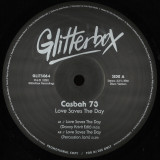
Casbah 73 makes his Glitterbox Recordings debut with an insatiably funky slice of disco soul ‘Love Saves The Day’. Driven by a soul-filled vocal hook from Angela Goode, this timeless jam’s authenticity lies in its rawness, sounding like it’s been ripped straight from a 1970s dancefloor while maintaining a freshness for today’s listeners. This special 12” delivery includes two stellar re-works, opening with master of the disco edit Danny Krivit’s funk-fuelled mix that smacks with New York City flare, bubbling keys and slap bass breakdowns to boot. The snapping Percussion Jam closes out the A-Side, before Chicago’s Rahaan takes control on the flip, taking the vintage sounding original and transforming it into a pumping, modern disco cut. Finally Casbah 73’s original rounds off the 12”, completing this package that is a must have for any discerning disco DJ.
- A1: (I Can't Get No) Satisfaction
- A2: Let's Spend The Night Together
- A3: Flip The Switch
- A4: Gimme Shelter
- B1: Anybody Seen My Baby?
- B2: Paint It Black
- B3: Saint Of Me
- B4: Out Of Control
- C1: Memory Motel
- C2: Miss You
- D1: Thief In The Night
- D2: Wanna Hold You
- D3: It's Only Rock'n' Roll (But I Like It)
- D4: You Got Me Rocking
- E1: Like A Rolling Stone
- E2: Sympathy For The Devil
- E3: Tumbling Dice
- E4: Honky Tonk Woman
- F1: Start Me Up
- F2: Jumpin' Jack Flash
- F3: You Can't Always Get What You Want
- F4: Brown Sugar
Bridges To Bremen is a full-length show performed by the Stones on the fifth and final leg of the Bridges To Babylon Tour. Filmed at the German city’s Weserstadion on September 2, 1998, the band had by then completed four legs in the stadiums and arenas of North America (twice), Asia and South America before finally landing in Europe early that summer. This concert film has been meticulously restored from the original masters, and the audio remixed and remastered from the live multitrack recordings. Four tracks from their Soldier Field performances in Chicago are included as bonus features. Eagle Vision’s SD Blu-ray range presents upscaled standard definition original material with uncompressed stereo and DTS-HD Master Audio surround sound for the best possible quality. Formats include a 3 x 180gm black vinyl release. DVD details Region: 0, Picture Format: NTSC, DVD Aspect Ratio: 4:3FF, DVD Audio: Dolby Digital Stereo, Dolby Digital 5.1 Surround Sound, DTS 5.1 Surround Sound, DVD Format: DVD-9. Blu Ray: Region: ABC (all) Picture Format: NTSC, BD Aspect Ratio: 16:9 (4:3PB, BD Audio: LPCM Stereo, DTS-HD 5.1 Master Audio, BD Format: BD-50
- 1: Maps Of Hyperspace – Theta
- 2: Maps Of Hyperspace – Beta
- 3: Sanderson Dear - A Place For Totems
- 4: Sanderson Dear - What Once Was
- 5: John Beltran - The Descendent
- 6: John Beltran - High On Rain
- 7: Louis Haiman - Breathing-In
- 8: Louis Haiman - Beachfront Watch
- 9: Diahgonal - Here I Am
- 10: Diahgonal - There U Are
- 11: Aural Imbalance - Flow Control
- 12: Aural Imbalance - Clean Slate
- 13: Off Land – Hypernova
- 14: Off Land – Collapsar
- 15: Glo Phase - Patina Sunset
- 16: Glo Phase - Fire Flies
- 17: Adriano Mirabile – Xingu
- 18: Adriano Mirabile – Cajú
- 19: Driftsystem - Five Rivers Surround Me
- 20: Driftsystem - Augminter