The Allergies are back with a new single A-side, 'Felony' – A storming soul-sensation, dripping with bittersweet emotion and driving, late-night grooves. It marks a return to that classic Allergies sound, full of dusty sampled beats, toughened up with punchy drums and re-worked lyrical loops. A dancefloor sure shot.
On the flip is Rile 'Em Up', a Latin funk bomb that showcases something of a new chapter for The Allergies. As the new album will testify, the duo have swelled their ranks to take in a full touring band, bringing in rapper Andy Cooper, soul diva Marietta Smith, and sax don Mr. Woodnote.
'Rile 'Em Up' represents some of that new live intensity, with its infectious boogaloo samples, party-starting chorus, and club-friendly breakdowns. It's sunshine in a single. And if it's a clue at the new direction The Allergies are taking us in, we like it.
On the flip is Rile 'Em Up', a Latin funk bomb that showcases something of a new chapter for The Allergies. As the new album will testify, the duo have swelled their ranks to take in a full touring band, bringing in rapper Andy Cooper, soul diva Marietta Smith, and sax don Mr. Woodnote.
'Rile 'Em Up' represents some of that new live intensity, with its infectious boogaloo samples, party-starting chorus, and club-friendly breakdowns. It's sunshine in a single. And if it's a clue at the new direction The Allergies are taking us in, we like it!
Cerca:cooper
In 1985, after five studio albums and two live albums with her band, Toyah decided to go solo, and signed to Sony’s Portrait label. Produced by Christopher Neil, “Minx” is Toyah's first true solo album and includes writing collaborations with her band members as well as with Simon Darlow (“Slave To The Rhythm”), and two UK hit singles in “Don’t Fall In Love (I Said)” and “Soul Passing Through Soul”, as well as covers of Alice Cooper’s “School’s Out” and Rare Bird’s Sympathy
Issued on vinyl for the first time since 1985, the album is pressed on 180 gram translucent red vinyl
The Venetians were formed in late 1982 as a studio concept band after Rik Swinn (lead vocalist) arrived in Sydney with master tapes of tracks he recorded in England with engineer/producer Vic Coopersmith-Heaven - It's Cat Stevens, The Rolling Stones, The Vapours & The Jam. - He also read a newspaper advert placed by two musicians who were looking for a lead singer.
Within weeks Swinn formed a touring band and enlisted David Skeet on guitar, bass guitar, synthesiser and vocals, and Peter Watson (ex-Scandal, Extractors) on guitar, bass guitar, synthesiser and vocals.
Drummer Tim Powles (ex-Ward 13) joined next and keyboardist Matthew Hughes (ex-Gotham City) completed the line up of the Venetians.
They released their first single, "Sound on Sound", in April 1983 - original copies of which go for upwards of £150 on Discogs.
This 12" includes the original plus remixes by Andrew Weatherall & Zatua (Music from Memory).
After their successful cooperation in the band Arbeit Adelt! Dani Klein and Willy Lambregt started Vaya Con Dios, together with contrabass player 'Dirk Schoufs'. All three musicians shared the same passion for jazz, opera & gypsy/Balkan music, a combination of music styles that was hardly known in Belgium at the time.
Vaya Con Dios (Spanish for Go with God!') stood out for its mixing of these styles, as well as the distinctive voice of lead singer Dani Klein. He's one of the most successful Belgian music acts ever, having sold more than 7 million albums and more than 3 million singles.
Night Owls is the second studio album by Vaya Con Dios, originally released in 1990. The album was certified platinum in several countries, including Germany, France, The Netherlands and Belgium.
The album spawned several international hit singles like Nah Neh
Nah', What's A Woman' and Night Owls'.
As part of the Brewed In Belgium campaign, Night Owls is available as a limited, numbered transparent vinyl edition.
... Medjool's story starts in 2010, at "Samar", it's a Kibbutz in the Arava valley in the far south of Israel, based on a unique, hippic and cooperative community. The band's four members met and lived there after their Military service. Being surrounded by musicians they started jamming together a lot, finding a joint creative language.
... In 2011, three of the band, – Ori, Nur & Aviram, moved to Tel-Aviv, trying their luck in the big city. 'Gilad' joined them in 2013 and the four friends became Medjool. The next three years were hectic with shows all over Israel, from small clubs to big festivals, gathering loyal crowd which followed the band everywhere. Nowadays, the band's members turned their energy to other musical projects, saying "we only took a short break which we're not sure when it'll end".
'Gbells' and 'Savana' are two energetic wild Afrobeat tunes.
The fact that the rhythm section comprises of a double base and percussion, grants 'Medjool' its unique highlife, groove color.
The guitar and saxophone travel through middle eastern to ethiopian melodies, suggesting the listeners the option either dancing or riding a camel in the desert, on your way to a flush oasis.
SOS: This two tracks on the 7", ... which were recorded in 2015, were the only music of 'Medjool', they had recorded professionally !!!!!
- A1: Cold Sweat (1 50)
- A2: Unease (2 41)
- A3: Aftermath (1 45)
- A4: Isolation (2 34)
- A5: The Unknown (2 42)
- A6: The Manipulator (3 12)
- A7: Space Probe (2 50)
- B1: Psychosis (2 54)
- B2: At Risk (2 53)
- B3: At Risk (Link) (0 26)
- B4: Manhunt (3 00)
- B5: Flying Squad (2 40)
- B6: Dead End (1 11)
- B7: Collision Course (1 47)
- B8: Voodoo (1 13)
They Say: “A selection of suspense underscores and drama blackcloths which vary in intensity and cover a wide range of suspense and drama situations”.
We say: A breaky, funky library great masquerading as a horror score. Oh, and the cover art is amazing.
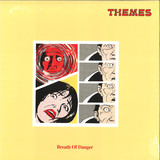
Breath Of Danger was originally released in 1974, and rounded up a killer ensemble cast of library legends including Alan Hawkshaw, Brian Bennett, Alan Parker, David Lindup, Kenny Salmon, Barry Morgan and Ray Cooper.
Lindup’s opener “Cold Sweat” sounds like hip-hop-friendly mode Axelrod and, indeed, was brilliantly sampled by Kool Keith for his Dr. Dooom project. Alan Hawkshaw and Brian Bennett’s “The Manipulator” sounds like it arrived straight out of the same sessions as their legendary Synthesizer & Percussion LP from the same year.
Over on the B-side Alan Parker’s “Psychosis” is a moving and beautifully restrained funk-guitar/cello/harp workout. Stunning. Kenny Salmon’s “Flying Squad” is a sleazy, flute-enhanced gem and the album closes with “Voodoo”, a seventy second riot of sound and colour from the dynamic drumming-percussion duo of Barry Morgan and Ray Cooper.
Sonically, there’s a widescreen vitality in all these tracks thanks to the driving rhythms, vibrant horn sections and blazing guitar work. It renders Breath Of Danger - 45 years old - truly ageless. The Themes series is known for having particularly striking sleeves, which was unusual for library records at the time, and Breath Of Danger’s scraps of comic-book crazy make for one of the most eye-catching.
As with all of our other Themes re-issues, the audio for Breath Of Danger comes from the original analogue tapes and has been remastered for vinyl by Be With regular Simon Francis. We’ve taken the same care with the sleeves, handing the reproduction duties over to Richard Robinson, the current custodian of KPM’s brand identity.
When acclaimed South African musician Guy Buttery first sought out Dr. Kanada Narahari in late 2016, it was as his patient.
“It was a dark time.” Buttery recalls, “I had been bedridden for months and had been suffering from debilitating bouts of fatigue which no diagnosis or medication could help me get to the bottom of. When I first met Kanada, I was at the stage where even picking up my guitar to make music had become a joyless and taxing exercise.”
As Buttery’s searched for a cure, a family member recommended he see Kanada an Ayurvedic doctor who had relocated to South Africa from India and set up a practice in Durban. It was during this consultation, that the musician first experienced how Narahari infused the healing properties of Indian Classical music into his practice. Rather than treating him with a smorgasbord of pharmaceuticals, Narahari played his sitar and set Buttery on a strict daily diet of Raga’s to fast track his recovery.
Buttery was not only struck by his doctor’s musical talents but by the powerful healing properties inherent in his sitar compositions. When he left Narahari’s doctors room that afternoon, he asserts he was feeling decidedly clearer, lighter and stronger.
“Diving into Kanada’s music was definitely one of the reasons I'm still here today.” he admits. “The consistent tonal centre at the heart of Indian Classical Music, literally became my support pillar over this period. A central core of sorts in which to fall back on, strengthen and discover.”
Narahari as it turned out, was not only a prominent music therapist (and one of the only Ayurvedic doctors practicing in South Africa) but like Buttery, a highly accomplished musician with a devoted following back in his homeland.
Born in a small village along the Western Ghats in Karnataka, India, Narahari, at the age of nine, had enrolled to study Carnatic classical vocal and developed an interest in Hindustani Classical music with a particular passion for the sitar. While Buttery had secured his reputation as one of South Africa’s musical treasures, a multi-instrumentalist who commands sold-out performances both locally and internationally and more recently had been awarded the prestigious 2018 Standard Bank Young Artist for Music.
From this consultation, a friendship developed between the two musicians with Buttery soon inviting Narahari to join him in his studio. But it wasn’t all plain sailing in the beginning. While Buttery and Narahari’s sensibilities were very much aligned, there were a range of cultural and musical influences, nuances and inflections that first needed to be navigated and understood.
“I suppose we had to find a common ground.” Buttery says, before adding, “Which in the end turned out to be pretty "uncommon ground" for the both of us.”
It was after a few intensive sessions together that something exhilarating began to emerge. What began as a few idle improvisations soon evolved into feverish and lengthier jams. Whenever time permitted, the musicians would meet, descending deeper into the emerging sounds, while reimagining the realms that existed between their African and Indian heritages.
Over the next few months, the duo would rack up over fifteen hours of recordings in studio, and it was up to Buttery to shape the material into an album which they collectively titled Nāḍī, which Narahari translates from the Sanskrit as "The Channel" or "An Internal River".
During this period, Narahari bestowed upon Buttery, the moniker Guruji while Guy would refer to him, in affectionate return, as Panditji. Each time the musicians would meet, the studio space would be cleared by an impromptu ritual, with Guruji burning African Imphepho while Panditji would chant a Sanskrit mantra dusting Indian Agarbatti clouds over their instruments.
Once the room had been made hazy with this aromatic alchemy (with the ancestors welcomed in) the musicians would pick up their instruments and plunge into shimmering tides of sound. Reflecting on these sessions, Narahari recalls the immense creative freedom he felt throughout: “Guy and I tried to wander as much as possible, without any speculative, preoccupied ideologies or limitations. Love remained at the forefront of our journey together.”
“Those evenings we spent together in the studio” adds Buttery, “felt incredibly rich with purpose and a profound sense of freedom. While improvising, anything could happen and mostly did.”
On a first listen, the tracks on Nāḍī emerge as salty, humid invocations to the inscrutable depths and misty myths of the Indian ocean-- that vast body of water that stretches between, and laps the shorelines, of the artists’ respective homelands.
When asked to describe the sound him and Narahari refined, Buttery prefers to relay a series of evocative images.
“For me” he explains, “Nāḍī is a lighthouse, a beacon that resides at the bottom of the ocean.” As Buttery envisions it, “what once offered light to guide ships to safety, has been submerged and re-purposed by marine life as a coral-reef temple. Similarly, this sunken lighthouse exists as a concealed cenotaph, memorializing the ancient sea-routes and passages that once connected the two distant lands.”
On paper this may sound obscure but listening to the songs, it serves as an apt metaphor.
Across each meditative movement, listeners are able to relive the journey, immersing themselves in a series of incantations, replete with high dynamics, delicate African-Indian inflections and virtuoso string playing of an entirely new order. Further complimenting the fusion of musical dialects are a range of guest artists including Shane Cooper on bass, Thandi Ntuli on vocals, Chris Letcher on organ, Ronan Skillen on tabla and percussion and Julian Redpath on guitar, synth and backing vocals.
Now like the submerged lighthouse, the recordings stand as a monument, a marker and snapshot of this fortuitous meeting, a tribute to the healing gifts of Guruji and Panditji in performance. It’s a process that already, both musicians look back on with reverence and nostalgia.
Buttery ruminates in closing, that when he first met Kanada his illness correlated with the biggest drought South Africa had experienced in many years “…for whatever reason, whenever we would connect and make music together, the sky would tend to open. Even if it was just a few drops. This went on for months, until finally the drought dissipated and my health had been restored.”
By the time the heavens did open across the East Coast, a deep friendship had been forged and with it abundant musical offerings poured down. A treasured sample of which we able to share in every time we press play and immerse ourselves in the sacrosanct musical universe that is Nāḍī.
Microdosing is a series of compilation 12”s selected by Julienne Dessagne aka Fantastic Twins, and designed in collaboration with French visual artist Geff Pellet. Microdosing is a collective experiment aimed at helping you fighting back your modern obsession with happiness. You may deserve a nice day but the day does not need a nice you, nothing should be forced, everything is permitted. Microdosing will provide you with sonic healing weapons on regular basis and at irregular dosage. Those doses will favour psychedelic social techniques against self help tyranny, creation over soma, provoking over numbing, our outer-selves over our inner-selves. Microdosing refuses the fatality of the pleasure principle. Life is a struggle, time to embrace it. —— “The cure 4 pain is in the pain” The Microdosing community is an endless Tibetan geometric tattoo on a thousand backs, a black well opening on infinite space. Let us embrace the void in our lives as it is fruitful. Cooper Saver hails from L.A, a city of fallen angels. “Phase 0” is a demonic weapon of choice, its beauty rising from urban ashes. Borusiade’s “Worlds” is an industrial mantra, tribal rhythms driving you through the seven circles of agony, the voyage being the destination itself. Zillas On Acid’s “S-Test” slowly pours acid into your retina, its groove showing you that the blind are the true see-ers. Scott Fraser’s “Deliria” concludes this chapter with the serenity only known to true martyrs. This is not a soothing piece, just the realisation that peace comes from eternal damnation. Microdosing is happy to lead you through the dances that know no threshold. To the chant of “the only cure for pain is in the pain”, you will travel further through an empty eternity. (Ivan Smagghe)
The first set of remixes of Calm’s By Your Side got plenty of props for sound quality as well as their ability to get people grooving. Now the label serves up some more remixes, this time from legendary figures Mark Barrott (International Feel) and My Friend Dario.
Up first is Barrott, the long time slow motion master whose downtempo, ambient, new age and electronic fusions very much set out the Balearic template way back in the nineties. ‘Space Is My Place’ (Mark’s Re Imagination to the Sacred Heart Center) is an enchanting and tropical reworking with exotic percussion and liquid drums that gentle sway to and fro like a raft at sea. It’s another escapist, transportive track from Barrott that takes you to the other side of the world.
My Friend Dario returns to Hell Yeah after his exquisite Calamari Fritti EP late last year with more of his worldly infused sounds. His Etna Vision of ‘Shadows and Lights’ is a glistening affair with loosely jumbled drums and romantic keys that ring out into a balmy night sky. It’s musical and blissful as always with this artist.
Once again here Hell Yeah have come through with your most essential summer sounds.
Supported by Leo Mas, Chris Coco, Pete Gooding, Bobby Beige, Soft Rocks, Calm, Balearic Gabba Sound System, Phat Phil Cooper…
With a third album, ‘Return To Telepathic Heights’, released this year on Gerd Janson’s Running Back label, techno outlaw A Sagittariun returns to themes of a space western nature with a closing epilogue, ‘A Fistful of Bitcoins’.
An extended player that traverses Tucumcari, Vietnam’s Black River, and the ultimate, and final leg, of the journey; to Devils Tower in Wyoming.
Vital Sales Points:
- full picture sleeve, designed by Jonny O (Rocket Recordings/Goat)
- global PR and marketing campaign from Hype Filter
- last A Sagittairun album for Gerd Janson’s Running Back label received excellent reviews in Mixmag, DJ Mag, The Wire & more…
Selected DJ feedback:
Robag Whrume – Good one!
Shanti Celeste – love this!
Nick Höppner – Sounding great
Brendon Moeller – Dope AF!
Johanna Knutsson – Beautiful stuff
Ed Davenport – Some heavy stuff here, Road To Devils Tower is a special cut!
Bruce (Livity Sound) – Real digging the slow bits, proper gear!
John Osborn – The Sacred Chao is heaven!
Interstellar Funk – Really like ‘A Fistful Of Bitcoins’
Neil Barnes (Leftfield) – very nice and imaginative EP
Fabrice Lig – Really nice EP, love it
DJ Octopus – Great one!
Vincent Neumann – Ooh, so nice!
Ell Weston (Banoffe Pies) – Superb selection
Cormac – Black River is super nice
Cooper Saver – wow, love these
Bill Brewster – lot’s of nice gear on here, good work
96 Back (CPU) – wonderfully bleepy and dubby
Tensnake – lovely release
Kirsti (Null & Void) – So consistent, another great release from A Sagittariun
2019 marks the 20th anniversary of ‘Low Birth Weight,’ the second album by Piano Magic, then a loose collective of musicians centred around founder songwriter, Glen Johnson. Though a year later, the collective would take shape as a bona fide internationally touring group, in 1999, Johnson had one foot in his native Nottingham and the other in his new home of London where, finding himself label manager at Rough Trade Records, also became highly prolific, releasing his own records across a myriad of micro-labels (Che, Wurtlitzer Jukebox, Darla, Rocket Girl, etc).
By his own admission, ‘Low Birth Weight,’ owes much to the East London experimental group, Disco Inferno who, embracing sampling technology, attempted to turn pop music inside out. By 1995, the Inferno had burnt out but Johnson remained inspired by their playful, subversive manifesto and thus, the album here, partly produced by “Nottingham’s own Martin Hannett,” Martin Cooper, is difficult to pigeonhole either at the end of the millennium or even now. Drum kit signals are fed through a tiny amp literally inside a cardboard box; breathing is employed for rhythms; kick drums are replaced with broken glass; there’s a ragbag of tablas, huge slap back delay and phase, theremin, shortwave radio, and more.
Aside from the DI benchmarks, ‘Low Birth Weight’ bears the marks of an infatuation with the dreampop of the time – the guitar saturated in delay and overdrive – inspired by the likes of AR Kane and Kitchens Of Distinction and not the more languid “shoegaze,” which has oft been levelled at LBW.
There’s a revolving door of guests on the album, including Pete Astor (The Loft/The Weather Prophets) on a cover of Disco Inferno’s ‘Waking Up’; Simon Rivers of The Bitter Springs supplies lyrics and voice to ‘Crown Estate’ and ‘Dark Secrets Look For Light’; Jen Adam, then an American art student on a year’s placement in London, writes and sings ‘The Fun Of The Century,’ a personal account of being pushed off a roof at a party by someone she thought a close friend.
‘Low Birth Weight’ is undoubtedly of its time, though undoubtedly more playful and literary than much of the music made during the late 90’s and a fascinating bridge between dream pop and experimental electronic music.
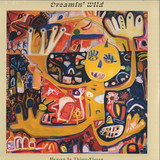
Dreamin' Wild's second album Heaven in Thirty Eleven owes a lot to Footscray. The inner-western suburb of Melbourne features not only in the album title (its postcode is 3011) but goes deeper to form a central part of the record's narrative and reflection.
For all six members - Chris Jennings (Swazi Gold, Sagamore, Sledgehammer), Sam Cooper (Crepes, Swazi Gold, Sagamore, Sledgehammer), Tim Karmouche (Crepes, Swazi Gold, The Murlocs), Sarah Quirk, Monty Hartnett (Sleep Decade, Miris, Sagamore) and James Guida (Laguna, Environments) - Footscray buoyed periods of music exploration and discovery. After more than six year of writing, rehearsing and recording in the suburb, there's no doubt that Footscray is home for the band.
Jennings adds that the album is, "a bit of a recap of the last three years for Dreamin' Wild," drawing attention to the change and growth many of the eight songs have undergone since creation.
"I Don't Disagree" is an album highlight; an almost seven-minute track that struts along calmly, taking life as it is. Quirk's soulful refrain soars atop Jennings' laconic vocals, carrying the song to its end. "Dynon Life" is another album gem, reminiscent of summer in the city, and happy seeking excess.
Heaven in Thirty Eleven is an ode to a Melbourne suburb brimming with culture and stories, made by artists who are proud to call it home.
Primarily based in Leeds, The Lewis Express is comprised of many of the musicians that have graced previous ATA releases: George Cooper, Piano (Abstract Orchestra) Neil Innes, Bass (The Sorcerers, The Magnificent Tape Band, Tony Burkill), Sam Hobbs, Drums (Dread Supreme, Tony Burkill, Matthew Bourne) and Pete Williams, Percussion (The Sorcerers, The Magnificent Tape Band, Tony Burkill).Recorded over an intense two-day session, 'Clap Your Hands' is heavily influenced by the classic soul jazz recordings of The Young Holt Trio / Young Holt Unlimited, and Ramsey Lewis, from who this group take their name. As with many of the classic Ramsey Lewis cuts this album was recorded live, capturing the rich inter-relationship between the players and leaving in some of that chunky room noise.
'Clap your hands' builds on the template set by their eponymous debut album and further explores the 60's soul-jazz of Ramsey lewis, Young-Holt and Ray Charles as well as the latin boogaloo of Eddie Cano and Pete Terrace. The band's intention was to produce an album of dancefloor friendly, uplifting, funky soul-jazz with a stripped back line up of Piano, Bass, Drums and Percussion. Ranging from the mod-jazz of 'Stomp Your Feet' (a Ramsey-esque groover that's just made-to-measure for dancers) and 'Out From The Rock' (Funky drums and plenty of blues-dipped soul from the Piano) to the driving boogaloo of title track 'Clap Your Hands' and the Ellignton-esque 'Moola Umemo' (Remeniscent of Ellington's 'Money Jungle'). Each track is, in it's own way, aimed squarley at the dancefloor and sure to go down well with both DJs and listeners alike.
"Clap Your Hands" is certainly a more contained album from The Lewis Express, whose debut moved around different camps. It's a tighter, more focussed record that wears it's inspiration proudly on it's sleeve.
Radio support expected from Gilles Peterson (BBC6 Music, Worldwide Fm), Craig Charles (BBC6 Music, Radio 2), Jamie Cullum (Radio 2) and Huey Morgan (BBC6 Music).
Primarily based in Leeds, The Lewis Express is comprised of many of the musicians that have graced previous ATA releases: George Cooper, Piano (Abstract Orchestra) Neil Innes, Bass (The Sorcerers, The Magnificent Tape Band, Tony Burkill), Sam Hobbs, Drums (Dread Supreme, Tony Burkill, Matthew Bourne) and Pete Williams, Percussion (The Sorcerers, The Magnificent Tape Band, Tony Burkill).Recorded over an intense two-day session, 'Clap Your Hands' is heavily influenced by the classic soul jazz recordings of The Young Holt Trio / Young Holt Unlimited, and Ramsey Lewis, from who this group take their name. As with many of the classic Ramsey Lewis cuts this album was recorded live, capturing the rich inter-relationship between the players and leaving in some of that chunky room noise.
Claps your hands/Stomp Your feet was recorded during the sessions for the upcoming Album 'Clap Your Hands'. building on the template set by their eponymous debut album these tracks further explore the 60's soul-jazz of Ramsey lewis and Young-Holt and the latin boogaloo of Eddie Cano and Pete terrace. A-side 'Clap your Hands' opens with cowbell, handclaps and bass before drums and electric piano enter to carry the track onto the dancefloor. This is one for the Djs and it'll do the business in the clubs for sure, but, also perfect for a late night, sweaty house party - shoes off and beer in the sink. B-side 'Stomp Your Feet' is much more in the classic mod-jazz frame with a faster pace and funkier drums, but still with handclaps and electric piano to the foreground. Drummer Hobbs opens up 'Stomp Your Feet' in fine style, and The Lewis Express start to swing with a Ramsey-esque groover that's just made-to-measure for dancers. Everything comes together here, with a mid-60s Cadet record feel throughout. Both tracks were recorded live to tape and were recorded and mastered for a tougher sound perfectly suited for djs to fill a dancefloor.
Dapayk & VARS show their full potential on their first album released on Ritter Butzke Studio.
For over two decades now „Dapayk“ is on of the driving forces of the international Techno- and Electronic scene. With projects like „Dapayk Solo“, „Dapyk&Padberg“ and cooperations with many well-known artists around the world the Berlin based producer always searches for new ways to express his creativity. Now in 2019 he is turning over a new leaf with „Dapayk & VARS“ where he creates a mixture of Deep House, Indie and Minimal Electro combined with the extravagant voice of VARS.
VARS as a young and aspiring artist who already had a lot of experience in Indie- Rock and other genres as a singer joins the group with his youth and uncompromising passion to take new paths regardless of what old habits dictate.
Together they create a distinctive sound that is bridging the gap between old and modern fashion, neglecting but still accepting genres and fuse what is different. Their album shows those concordances and discrepancies in a refreshing and thrilling way.
U Know Me Records proudly presents a special album showcasing Polish drumming scene - each track was produced by a different drummer - these are their portraits.
official video promo: https://youtu.be/qxuTYjMRUMM
In the 21st century drummers imperceptibly switched from the background to the front line, despite popular music not exactly pandering to them. In the early days of rock culture this joke made the rounds "What's the last thing a drummer says in a band?" "Perhaps we could play one of my songs…?"
In popular music the drummer became the first to compete with machines. They were the first band members that consequently began disappearing, however, as contemporary electronic music took hold, they were also the first to return. First they were incorporated into compositions but gradually - took centre stage. Thanks partly to the ubiquitous culture of Hip Hop recognising the drummer's role as key in any recording, alongside the eclecticism of new music, which demanded fluid transitions between musical forms, a drummer's adaptive skills – as a trained multi instrumentalist – became truly impressive. This new generation of drummers seen on Polish stages today are exceptional even against the backdrop of today's unusually creative and well-educated music scene which rejects narrow minded or genre-centric views.
This album exhibits portraits from the cream of today's Polish drummers. Kovalevo Tone Bank by Michał Bryndal tags the 1980's, the era which began stealing drummers' bread. Incidentally, the heavy groove laid down by the artist references a hit by Wham!, the same hit in which the group decided to cut the drummer's part because he was late and replace him with a LinnDrumm machine. Hubert Zemler in The Life and Death of Ben Bekele and Łukasz Moskal in Father Sparrow show they've found themselves perfectly in close cooperation with electronic instruments.
Multifaceted improvisors - Qba Janicki (Kabina projekcyjna) and Jan Młynarski (Roj) - transform their drums kits into multifunctional devices capable of delivering wildly diverse palettes of sound. Rafał Dutkiewicz (Displaced) showcases drums as the lead instrument on a club track. Marcin Rak (Alpaka) does the same, but with the conventions of Funk and Hip Hop, whereas Krzysztof Dziedzic (Vagabonde) gravitates towards the edges of jazz. Each of them here is a leader and… plays one of their songs.
Bartek Chaciński
(translation: Sean Palmer)
A world premiere of AI-generated symphonic music!
All three audio files are compiled from two live recordings with different microphone settings. The cover image is generated by algorithms trained with the following image searches: migration, mediterranean, boat, Libyan coast, EU. Different search engines were used. »Land der Musik« celebrated its world premiere on 7 October 2018 at steirischer herbst '18 - volksfronten in Graz, Austria. Commissioned and produced by steirischer herbst in cooperation with ORF Musikprotokoll.
A1. soundalikeStrauss (an audio reverse-engineering tool is used after the initial cross-fade) A2. AIstrauss (algorithms are trained with midi-files of Johann Strauss waltzes) B1. AImahler (algorithms trained with midi-files of Gustav Mahler symphonies) B2. (untitled)
A new standard of beauty. Artificial intelligence (AI) algorithms can now group photo pixels or audio waves into meaningful categories. This is similar to how our brain operates, yet the outcome seems distinctively non-human. At the same time it appears that the sphere of our appreciation and imagination may just have expanded. The question of whether we are still able to see and hear the difference between automated and so-called autonomous artifacts should be left to historians. On the other hand, producing this analog audio record with this image on the front cover really is an antagonism. A more appropriate medium might be a tracking chip of your online and offline activities generating customized results in real time—be it images, music, or whatever.
If AI is communist (to quote the libertarian Silicon Valley entrepreneur Peter Thiel), then this statistics-based technology might actually reinforce centralized monopoly capitalism and the coming crisis of inequality, just as it might accelerate into Deleuze's notion of the Society of Control. But it might also be seen and heard as a demo, a new standard of beauty, for the redistribution of wealth and for solidarity; in short as a utopia freed from exploitation, nationalism, and racism, liberating us from our own perception of this world. »Land der musik - The Graz AI Score« demonstrates how machine learning might help us to finally create the perfect Austrian national music identity. Yet in doing so, our ultimate aim is to get rid of the construction of national identities all together.
»God created man because he dreamed him. / But man forgot God and created the machine because he dreamed it. / At the end of the twentieth century, however, the machine has forgotten man. / Who could predict who or what she dreams of« (Friedrich Kittler)
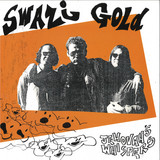
Swazi Gold have created a debut album that shimmers like the coast. There are six songs, two created by each member; through pure collaboration and participation. Swazi Gold are a true democracy.
Formed by the chief songwriters from Melbourne bands Crepes, Dreamin' Wild and Sagamore, this new band brings old friends together. Chris Jennings and Sam Cooper grew up in the Victorian coastal towns of Barwon Heads and Ocean Grove, while TimKarmouche was an inland man, hailing from Ballarat in the state's north-west
"We've been playing together for so long; in different mediums and in different bands. We've played our own key roles, but now we know what each other wants. Swazi Gold shows off our relationship from over the years, which is really cool," says guitarist and bassist Jennings.
Swazi Gold's other guitarist and bass player, Cooper, has a theory about the unifying power of their regional origins:
"It's this kind of small town thing where you strive to be different and creative. Because you're more isolated, you focus on your creativity and align yourself to similar people. I think growing up down the coast has meant I've continued to be drawn to people from other isolated places," he says.
It's this togetherness that's at the heart of Swazi Gold's debut album,Jehovah's Whispers.Recorded in a single weekend in 2017 at the Cooper's family home in Ocean Grove (affectionately termed the "Cooper Ranch")Jehovah's Whisperscaptures a musical intimacy and deep friendship between the three members.
"The bond with all the tracks on the album isn't necessarily lyrical, but it's 100% sonic. The simplicity of the instruments we use and the set-up we have is what's really rad," says Jennings.
"It's a fantasy of what we imagined Jehovah might be whispering in your ear," he adds, grinning.
Drawing from their collective love of African music, American funk, and quirky, melody-driven pop music, the album explores the space between conventional genres and styles of production.
"Using drum machines has made the song-writing process a lot quicker and opened up a whole new avenue stylistically.
* 180g Vinyl cut at D&M including CD and DOWNLOAD CODE! *
** played by Steve Barker, BBC Radio Lancashire, ON THE WIRE, 1.12.2018 **
*** interview and exclusive mix etc radio, WNUR FM, Chicago, 4.1.2019 ***
** interview & airplay of the whole album @ OE1, ORF - Zeitton Extended 3rd of february 2019 **
In his latest composition, DOLOMITE DUB, the Vienna-based South Tyrolean sound artist Ulrich Troyer presents his perceptions of a several-day high alpine hike across the Dolomites transformed into a soundscape.
The more than 40 minute track DOLOMITE DUB leads the listeners through this landscape of heights transgressing different moods - in which autobiographical memories flash up as well.
Subsequently to the experimental dub trilogySongs for Williamand the EPDeadlock Versions, a cooperation with Vin Gordon and Didi Kern, DOLOMITE DUB features besides Didi Kern on drums & percussion, Susanna Gartmayer on contra-alto clarinet and Juergen Berlakovich on bass, both long-time ensemble members of the joint project "The Vegetable Orchestra".
Die mit Hochspannung erwartete zweite Ausgabe der Dancer-Anthologie von Pauli Steinbach, Sascha Dive und Patrick Kunkel dreht sich rund um eines der vermutlich meist zitierten Vocal-Samples der Housegeschichte - eine mehr als würdige Hommage an Soul Train, Paradise Garage und andere Hotspots
aus den Frühzeiten elektronischer Tanzmusik zu Beginn der 1980er Jahre. Funky, flächenbetont und mit dem Dancer-typischen modernisierten Kinky-Verständnis tänzeln
Pauli und Sascha durch die glitzernden Pforten des Soul Train, eine entspannte Deep- Disco-Hymne, bei der sogar Saxophon-
Samples wie das Tüpfelchen aufs i passen.
Der von Pauli gemeinsam mit Patrick produzierte Remix auf der Flipside bewegt sich etwas weiter weg von den originalen
Songstrukturen und präsentiert sich dabei als kongeniale Handclaps-Orgie mit Aciddisco- Anleihen. "Come on spread yourself over me like peanut butter", aber sehr gerne doch.
The highly anticipated second issue of the Dancer anthology by Pauli Steinbach,
Sascha Dive and Patrick Kunkel centres on one of the most quoted vocal samples in the history of house music. It is a
homage to Soul Train, Paradise Garage and other hot spots from the initial period of electronic dance music in the early
80s. Pauli and Sascha dance through the glitzy portal of Soul Train, a relaxed deep disco hymn where even the saxophone
samples fit like the icing on the cake.
Pauli and Sascha do this in a funky way and with the modernized kinky understanding that is characteristic for Dancer.
The remix on the flip side produced by Pauli in cooperation with Patrick ventures a little further from the original sound structures. It presents itself as a kindred handclaps orgy with borrowings from
acid disco. "Come on, spread yourself over me like peanut butter", but of course -- with pleasure.