In an interview with Jazz Magazine in the early 1970s, Dharma, as a collective voice, outlined their method: 'we try to reach, within free jazz, the same sort of rhythmic cohesion as in Bop, a cohesion based not exactly on tempo, but something which feels like tempo. A kind of underlying pulse'. Evidence of these ideas can be heard immediately on listening to Mr Robinson, the first album by the Dharma Quintet, for whom community living seemed obvious, in order to add to the aforementioned cohesion. Through this, the group members played together on a daily basis, trying out things which were worked on day in, day out. They were also listening to a lot of records, with of course a preference for free jazz, but not forgetting Miles Davis in his electric period, notably for the keyboards of Keith Jarrett and Chick Corea. To which should be added esthetical-political concerns based on a refusal of hierarchy, and a desire to escape from a restrictive academic approach... It was within this framework that Jef Sicard and Gérard Coppéré (saxophones, flute, bass clarinet), Patricio Villarroel (electric and acoustic piano), Michel Gladieux (bass) and Jacques Mahieux (drums) formed the first version of a collective united by structured intentions. Because, within Dharma, individual improvisation cannot be envisaged outside of a clearly designated framework, even non-tempo. The result is a beneficial cohesion, and moments of great beauty born of a collective excitement and giving rise to ambiances which seemed almost possessed. The use of modes could seem to link Mr Robinson to the spiritual jazz of the past but that is without taking into account the fact that the benevolent spirit of Eric Dolphy seems to watch over this album. In France, a similar desire for cohesion could be found in the Cohelmec Ensemble, who had parallel preoccupations, to the point where their bassist, François Méchali, ended up by joining Dharma: there is unfortunately no recorded trace of this, just the memories. As a quintet, with however some personnel changes, Dharma recorded three albums (there is also one as a trio, under the name of Dharma Trio), which are all of fundamental importance (Dharma would also accompany, and to great effect, the songs of Jean-Marie Vivier and Colette Magny). Individually, the members would record with musicians passing through (notably Anthony Ortega, Dave Burrell) and participated in other key groups including Machi Oul and Full Moon Ensemble.
Cerca:coppe
Sumerian Fleet is a trio formed by Dutch producers Alden Tyrell and Mr Pauli, joined by Zarkoff after their 2010 debut EP. Their second EP came out in 2012 followed by their debut album 'Just Pressure' on Dark Entries in 2014. Sumerian Fleet have returned to release their sophomore LP 'Pendulum' of all new material as well as a remixed version of 'This Game Has No Name' from Zarkoff's other band, FFFC.
'Pendulum' contains 80's Dark Wave/EBM inspired tracks with an industrial tinge. The band cites inspiration from musical acts Fad Gadget, Front 242, Bauhaus and Sisters of Mercy. Literary references come from Poe's 'The Pit and the Pendulum', Pelevin's 'Generation P' and 'Life of Bugs', as well as classic Cyberpunk like Gibson's 'Sprawl' trilogy. Sumerian Fleet deliver 8 songs of vintage dark electro with a Gothic tinge and a touch of bass guitar. The album's been put together in a way that the listener can connect the dots, create a narrative, and become immersed in this attitude that the band's trying to convey, such as Vigny's idea of accepting despair: "A calm despair, without angry convulsions or reproaches directed at heaven, is the essence of wisdom."
All songs were initially recorded at Mr Pauli's studio in Den Haag, with overdubs and additional recordings at Zarkoff's Sensorium Studio in Croatia, and then final mix downs at Alden Tyrell's studio in Rotterdam. The album has been mixed by Alden Tyrell and mastered by George Horn at Fantasy Studios in Berkeley. Each LP is packaged in a copper foil stamped jacket designed by Eloise Leigh, with abstract squares in varied rhythmic repetitions to indicate motion, and included a double sided 10'x10' insert with lyrics and notes.
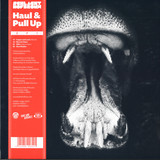
The DJ/production duo from Munich back with four tracks full of bass-heavy excursions into hybrid forms of club music close to Grime, Dancehall, Dub, Techno and the yet unnamed territory in between - their natural habitat. Lead single and first track of the EP is Copper And Lead, which features "London city warlord" Riko Dan of Roll Deep fame, spitting dangerous lyrics on a Bashment/Grimeriddim.Following this is Blurred Vision, low end monster named after their gigantic soundsystem event series, exploring the middle ground between Dub and the technoleaning 4x4 universe. Up next is Killer, a song with Warrior Queen from Jamaica, who prepares for a Dancehall dub war on a 808-heavy beat straight from Miami...err, Munich.Topping the EP off is Siren Riddim, an instrumental uptempo bomb for the apocalypse club gang and all the gunfinger crew. It's the first EP in a series of three, leading up to an Haul & Pull Up album in early 2017. With this, Schlachthofbronx will follow up their three previous original albums (2009s Schlachthofbronx, 2012s Dirty Dancing and 2014s Rave And Romance), completed by EPs for Labels like Mixpak, Monkeytown, Mad Decent, Disko B and Man Recordings as well as production work for artists like M.I.A., Snoop Dogg, Major Lazer or Bonde Do Role.
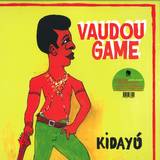
When faced with the decision to take a different direction at the risk of getting lost in a synthetic sound or to further explore the same musical path, Vaudou Game didn't need to consult the oracle for very long when putting together their new album. Since their first acclaimed album, Apiafo and its irresistible single "Pas Contente", these Lyon natives never turned down the heat on over 130 stages across Europe, Africa, America and Asia. Peter Solo has displayed his amulets, charisma and yellow pants around the globe.When time came for them to harness their Afro-Funk sound for the second time, they turned their attention once again to their analog strengths. Vintage material, instruments produced in the 70's and cassette tapes were the "grigris" (or lucky charms) which proved most effective to ward off digital corruption of their music and return them to a tight-knit group with a solid groove.This unbeatable trance rhythm, inherited from James Brown and Fela, icons of Funk and Afrobeat, becomes trident when joined by Mawu, the creative voodoo divinity hidden in each of the group's notes. This inspiration transcends their spirit of communion, plunges them deeply into Mother Earth and results in the telepathic trance which is directly connected to Togo Peter's native Togo.Each song then becomes a celebration where the listener becomes the group's voodoo doll, embraced by the rhythm, submitting itself to the mercilessly metronomic cutting of guitars, struck by the copper-colored flashes of lightning forged by the African voodoo deity Hevioso, pierced by the psychedelic visions generated by the organs and a six-string guitar, cheerful songs, and hypnotic incantations.KIDAYU means "sharing" in Kabye, the language spoken in northern Togo. Sharing, is the philosophy of Vaudou Game - both in their recorded music and on stage.Vintage African funk tinged with voodoo chanting: Togolese Peter Solo and his fellow musicians from Lyon electrify us in a frenzied ceremony" - Télérama