Blue Vinyl
2019 saw Firescope release a seminal album, The Lonely Machine by Britain’s John Shima. The world has become a very different place since then. The pandemic, economic turmoil and global crises prevail. It is amidst such uncertainty that Shima returns with a new collection to combat the savagery of our times, enter Empty Lands.
Dauby basslines and silken strings introduce “Component”, saturated snares giving ballast as Shima’s signature style immediately comes to the fore. A throbbing kick and orbiting notes are peppered with hi-hats for “Neglected”, a sonorous stratum synergising beautifully. Shima is a student of techno. His appreciation and knowledge of the sound is central to the album as he composes within the traditions of the UK and US canon while exploring new plains. The influence of “bleep” is woven into the tapestry of pieces like “Depart” and “Mettle” with the minimalism of the 90s genre reimagined through new textures. “Sayaka” flows with a different current. Rhythms are understated, lapping against undulating keys as dawn rises. Harmony and melody are cornerstones of record, the gentle ebbs and flows of key and drum merging. Inspiration arises from home as well. The steady pulse and metallic tang of “Projection” recalling the industry of Sheffield and the pioneering electronics that sprouted from that rust red earth.
Track titles, and the album name itself, suggest periods of challenge and difficulty. “Paralysis”, “Desolate”, “Empty Lands”. Words that conjure certain feelings and responses. Shima’s music is a counterbalance to these emotions. Positive compositions of subtle shifts, complementary percussion and welcoming warmth acting as a tonic to the negativity that swirls; the ten audio works on offer acting as a balm to soothe the soul in these troubled time
Suche:count bass d
2022 Repress
The Artist Concurrently Known As Jackmate has been already been indoctrinated into our cult since he signed onto he Pampa bookings roster awhile back. As SoulPhiction he is also co-founder of Philpot, the Stuttgart-based label, home to the majority of his releases over the past 10+ years. Anyway, we get the privilege of stamping the Turkey logo on SoulPhiction's first proper release of 2013, following his remixes for Murat Tepeli and Detroit Swindle. 'When Radio Was Boss' is a tribute to those magical electromagnetic waves that ruled yesteryear. With that prototypical Pampa percussion-rattling and clanking its way into the room-and a warm, round bassline bounce combined with some symphonic froth in the atmosphere, this track definitely demands airplay. On the dancefloor, at least! (And right in the middle of the track, catch the pleasantly jarring shout-out from WBAU, the call sign of the defunct New York radio station that counted members of Public Enemy and hosts of Yo! MTV Raps amongst its staff.) On the flip, the bpm gets cranked down just a bit for 'Maybachswagger"-If the A-side is a tribute to radio, the B has roller-skating on its mind. Starting out spooky with a sampled voice cooing over a slightly detuned bassline, the surprise comes in the final third, when a kawaii disco vibe drops in, seducing you onto the rink for a few laid-back laps.
Sky Blue Vinyl[35,25 €]
Ltd edition Double Sky Blue Vinyl, Gatefold sleeve w/ spot gloss, liner notes + DL card. Classic Double Black vinyl, Gatefold sleeve w/ spot gloss, liner notes + DL card. Bending scuzzy boundaries, ‘Good Bad Not Evil’ is a coming-of-age garage rock classic record. Full of hedonistic delinquent anthems, the fourth studio album from Atlanta punks Black Lips reaches it’s 15 year anniversary. This deluxe edition includes unearthed photos and new liner notes from Jared Swilley and King Khan. The second disc features B-sides and rarities including ‘Cruising’, ‘I Wanna Dance With You’ and ‘Leroy Faster’. ‘Good Bad Not Evil’ perfectly encapsulates the disillusionment of the mid-00s America, slammed between warehouse parties, DIY generator shows and scattered party pics, which was recorded in a little house in Atlanta that had been converted into a studio called the Living Room. Referencing Shangri-Las in the title, this is where their knack for garage gems met Motown; with bass heavy grooves (later remixed by Diplo), a certified country twang and unabashed bravado. Instant hits like ‘Veni Vidi Vici’, ‘Cold Hands’, ‘Bad Kids’ and ‘O Katrina!’ immediately became Black Lips staples. This was a band caught in the eye of the storm, the touring continued, the parties didn’t stop, this was a band bending the scuzzy boundaries of their chosen genre. The record was hailed by the likes of Pitchfork, who proclaimed, “Black Lips are a go-to band for vintage lo-fi freaks, and their raucous live shows have helped them cross over outside of crusty dive bars. ‘Good Bad Not Evil’, however, is the record where naysayers, disinterested friends and acquaintances, people on the street, and anyone else within earshot has to sit up, shut up, and listen.” …and, shut up and listen they did. “A perfect tapestry of sordid pleasure.” NME // “The same rapturous energy as the Sonics and the 13th Floor Elevators.” The Guardian // Track List: Disc One – Good Bad Not Evil. A1 I Saw A Ghost (Lean) A2 O Katrina! A3 Veni Vidi Vici A4 It Feels Alright A5 Navajo A6 Lock and Key A7 How Do You Tell a Child That Someone Has Died B1 Bad Kids B2 Step Right Up B3 Cold Hands B4 Off The Block B5 Slime and Oxygen B6 Transcendental Light… Disc Two - B-Sides & Rarities. C1 Cruising C2 Make It C3 I Wanna Dance With You D1 Best Napkin I Ever Had D2 My Trouble D3 Leroy Faster D4 Buried Alive
Black Vinyl[31,72 €]
Ltd edition Double Sky Blue Vinyl, Gatefold sleeve w/ spot gloss, liner notes + DL card. Classic Double Black vinyl, Gatefold sleeve w/ spot gloss, liner notes + DL card. Bending scuzzy boundaries, ‘Good Bad Not Evil’ is a coming-of-age garage rock classic record. Full of hedonistic delinquent anthems, the fourth studio album from Atlanta punks Black Lips reaches it’s 15 year anniversary. This deluxe edition includes unearthed photos and new liner notes from Jared Swilley and King Khan. The second disc features B-sides and rarities including ‘Cruising’, ‘I Wanna Dance With You’ and ‘Leroy Faster’. ‘Good Bad Not Evil’ perfectly encapsulates the disillusionment of the mid-00s America, slammed between warehouse parties, DIY generator shows and scattered party pics, which was recorded in a little house in Atlanta that had been converted into a studio called the Living Room. Referencing Shangri-Las in the title, this is where their knack for garage gems met Motown; with bass heavy grooves (later remixed by Diplo), a certified country twang and unabashed bravado. Instant hits like ‘Veni Vidi Vici’, ‘Cold Hands’, ‘Bad Kids’ and ‘O Katrina!’ immediately became Black Lips staples. This was a band caught in the eye of the storm, the touring continued, the parties didn’t stop, this was a band bending the scuzzy boundaries of their chosen genre. The record was hailed by the likes of Pitchfork, who proclaimed, “Black Lips are a go-to band for vintage lo-fi freaks, and their raucous live shows have helped them cross over outside of crusty dive bars. ‘Good Bad Not Evil’, however, is the record where naysayers, disinterested friends and acquaintances, people on the street, and anyone else within earshot has to sit up, shut up, and listen.” …and, shut up and listen they did. “A perfect tapestry of sordid pleasure.” NME // “The same rapturous energy as the Sonics and the 13th Floor Elevators.” The Guardian // Track List: Disc One – Good Bad Not Evil. A1 I Saw A Ghost (Lean) A2 O Katrina! A3 Veni Vidi Vici A4 It Feels Alright A5 Navajo A6 Lock and Key A7 How Do You Tell a Child That Someone Has Died B1 Bad Kids B2 Step Right Up B3 Cold Hands B4 Off The Block B5 Slime and Oxygen B6 Transcendental Light… Disc Two - B-Sides & Rarities. C1 Cruising C2 Make It C3 I Wanna Dance With You D1 Best Napkin I Ever Had D2 My Trouble D3 Leroy Faster D4 Buried Alive
In 1998 The Wave Pictures started carving out their own path in search of the lost essence of British Indie, since their acclaimed “Instant Coffee Baby” -nominated for The Guardian New Album Award and present in many lists of the best albums of the last 15 years– , until the most recent “When The Purple Emperor Spreads His Wings”, always giving their best in countless electrifying performances. Now The Wave Pictures are once again allied with Acuarela to release an exclusive double 7” with five songs (one, “French Cricket” included on their new album and the other four totally exclusive) and show that they are still an indie rock band without indie rock influences, a trio with its own style that doesn't want to be a blues group, but with blues –and soul, and country, and folk-, as the invisible core of everything they do. The Wave Pictures began their career in 1998. Since then the British trio hasn't stopped: at the frenetic pace of their concert schedule, they add a stakhanovist record production, which advances at the rate of almost one album per year. Example: “Great Big Flamingo Burning Moon”, which came out in February 2015, was already their thirteenth official LP (without forgetting that they have also released a large number of singles, EPs, rarities and unofficial material). But it is that in February 2016 the fourteenth album, “A Season In Hull” was released -which they recorded with a single microphone and only released on vinyl-, and in November of that same year its successor, “Bamboo Diner In The Rain” came out. In June 2018 they returned to the fray with another LP, “Brushes With Happiness”, and that November also dropped “Look Inside Your Heart”. The pandemic has made them slow down a little bit until May 2022 when they finally returned with "When The Purple Emperor Spreads His Wings". “When The Purple Emperor Spreads His Wings” is a double album dedicated to the cycle of life and in which each of its four sides (in the old fashioned way) is focused on one of the seasons of the year. The title refers to spring and its splendor. The result is pop in the style of The Wave Pictures, with all the essence of the band: those intense guitar solos by Dave, his acoustic plucking, the solid writing… in addition to the mandolin, the bluesy harmonica...you name it! All the band members, David Tattersall (vocals, guitar), Franic Rozycki (bass) and Jonny “Huddersfield” Helm (drums), are avid fans of rock'n'roll, classic country, 70s rock, soul and folk, and this album celebrates with joy all those musical loves of them, some rediscovered in recent times. Moreover, they have pointed out that Guided By Voices have also been a great source of inspiration on this recording, as well as re-listening to Sun Records’ rockabilly, African guitar records, the more country side of Neil Young, the crazy fun of The Who and some moments from The Yardbirds. The Wave Pictures are still playing what Modern Lovers did back in the day -and then Herman Dune or Hefner-, only they play it as if Rory Gallagher was their lead guitar. With the lo-fi pop-rock label as an amicable stigma, they never deny the maxim that places attitude before technique and they are always vaccinated against fashion. Years go by and they are still the same sly alley-cats, only sounding more and more classic. Tracklist: 1. French Cricket/ 2. From A Buick 6/ 3. Porcupines/ 4. Rufus Thomas/ 5. Cincinatti Flow Rag
Wah Wah 45s are proud to present a new set of remixes, as well as originals released on vinyl for the very first time, from Afrobeat supergroupEparapo. Having come togetherduring the unprecedented events of the pandemic and the Black Lives Matter movement, and despite being a project born from the privations of lockdown, their music is ultimately an expression of hope, resilience & resurgence.
The word "eparapo" means "join forces" in Yoruba, the language of Afrobeat. It's also the title of a track by the late, greatTony Allen- drummer for Afrobeat legendFela Kutiand lifelong friend and mentor of our very own "Afrobeat Ambassador",Dele Sosimi. Not only did Tony help to invent Afrobeat, he always looked for ways to push the boundaries, never content with recreating what had gone before but constantly expanding and developing the genre. This project hopes to pay homage to his legacy, and that of Fela Kuti himself. Its aim is to innovate, fuse and diversify while still retaining the essence of the music.
The force behind Eparapo is bassist, composer & producerSuman Joshi.He has been a member of Dele Sosimi's Afrobeat Orchestra for nearly a decade and has performed on stage with the likes of Tony Allen, Seun Kuti, Ginger Baker & Laura Mvula. He is also bassist with UK jazz ensemble Collocutor and fusion project Cubafrobeat.
Featured vocalist on both original tracks, and remixes, is the aforementioned Dele Sosimi - keyboard player and musical director for Fela's Egypt 80 as well as Wah Wah 45s recording artist on both his solo material and the recent collaboration with house music producer, Medlar.
The rest of the group comprises of bandleader ofAfrik Bawantuand percussionist for Ibibio Sound Machine and Keleketla,Afla Sackey; highly rated UK jazz vocalistSahra Gure; saxophonist, composer, producer and bandleader of the renowned forward thinking jazz outfit Collocutor,Tamar Obsorn; keyboard player, producer and front man for Lokkhi Terra and Cubafrobeat,Kishon Khan; one of the UK's finest and most in demand trumpeters,Graeme Flowers, who has played with Quincy Jones, Gregory Porter and many more; trombonist for Bellowhead and mainstay of Dele's Afrobeat Orchestra,Justin Thurgur; and finally drummer for Steamdown and Sons of Kemet, as well as the man behind the Nache project,Eddie Wakili Hick.
From London To Lagoswas inspired by a talk given by writerRoberto Savianoat the Hay Book Festival in 2016, just before the Brexit referendum. In it he described the UK as the "most corrupt country in the world". This was a reminder of how the leaders of so-called developed countries, conveniently suffering from colonial amnesia, still point disparagingly at the rest of the world and talk of "endemic corruption" and "Banana Republics". All the while the ill-gotten gains of organised crime syndicates, corrupt multinationals and military juntas across the globe are funnelled through financial centres such as London. Same trouble, different methods, greater scale. Of course the best way to divert the population from all this is to find distractions such as populist leaders who declare their countries "world beating" and scapegoats such as refugees, immigrants and other members of the underclasses. It has always been thus but it doesn't always have to be so.
This track was once more recorded remotely during lockdown and features an all star lineup of world class musicians from the UK Afrobeat and jazz scenes. Members of the Dele Sosimi Afrobeat Orchestra, Keleketla, Sons of Kemet and beyond have come together to create this powerhouse of a band. They encapsulate the meaning of "eparapo" and "join forces'' to fight a common enemy in the shape of corrupt and divisive ideologies.
Its remix comes fromWheelUP- the moniker of West London broken beat revivalist Danny Wheeler, who here delivers something of a smoother straight up Afro flavoured house workout that's sure to be heard across dance floors and festivals this summer. The Tru Thoughts signed artist adds gliding synths and tight drums that ride the original's hypnotic melody perfectly and make for a future club classic.
Black Lives Matterwas obviously inspired by the movement of the same name and was the first track to be released by Eparapo in late 2020. Dele's voice tell the story slave ships leaving West Africa in the fifteenth century, the brutal conditions that were experienced on board, and the continued suffering of the African diaspora today. As always, half of the artist's income for this song will be donated to the NAACP - a civil rights organisation in the United States, created for the advancement of black people by means of following judicial policies.
The remix here comes from Birmingham based producer signed to Jalapeno Records,Sam Redmore. Sam's love for breaks and beats comes into play well here, subtly chopping up the original to create a bass worrying version that still sends that very important message of justice and equality - Black Lives Matter!
a 01: From London to Lagos (WheelUP Remix) feat. Dele Sosimi
[c] 03: Black Lives Matter (Sam Redmore Remix) [feat. Dele Sosimi]
Outsider, alt, psych, power trio Jemma Freeman and The Cosmic Something are the aural equivalent of a distorted photograph capturing the hinterland found between emotions and actions. Emerging like joyous sci-fi warriors, the songs either overtly or indirectly demonstrate solidarity with anyone that’s ever identified feeling off kilter with the rest of the universe and needed an equally wonky soundtrack to back it. An introspective journey through psychedelic glam-rock nightmares, woozy flows of self discovery and beguiling lyrics delivered with subtlety and intensity. Jem, Samuel Nicholson (bass) and Jason Ribeiro (drums) are your astral guides in this strange country, illuminating a path, in reality they’re as lost as the listener. In this limbo, thoughts tumble on top of each other through twisted rhythmic guitar, bass and drum lines that interchange and play with each other in a frenzied cosmic dance. // “An onslaught of guitar...” – Popoptica // "lush guitar work and rapid fire energy.. part Kate Jackson part PJ Harvey.” - For The Rabbits // Tracklisting: 1. Big Bread 2. Easy Peeler 3. Nobody Ever 4. Huge 5. Lump 6. Maersky 7. Bugles 8. I Thought Too Much 9. Sicilian Mousse 10. Take Me
With Echo’s Reach Isla Craig presents a sophisticated set of compositions that perfectly wrap her Highland influenced melodies in an organic blanket of musical peat formed from a mix of jazz, R&B and psychedelic folk. Leading a band of Toronto’s finest including Ted Crosby (sax) Mike Smith (bass) and Evan Cartwright (drums), Isla showcases her affecting vocal presence that has made her an in-demand collaborator with artists such as Jennifer Castle and The Cosmic Range. An autumnal record influenced by the power of nature often found steps away from city streets, a diary of days spent within the valleys of Toronto, the moors of Scotland and the Irish countryside, Echo’s Reach is a tribute to the infinite and the resilence of those who forever seek to understand its meaning. Genre: Alternative / Folk / Singer-songwriter Listen: https://s.disco.ac/honhrdcdqjal Track list: 1. Song For Boots 2. Moon 3. Spider Owl 4. Spirit 5. Psyche (Valley, Girl) 6. I Went Looking 7. Weather 8. Young Woman 9. Psyche (Valley, Girl) reprise
Here lies a reissue of the first release from legendary long-running
Chicago group ONO, Kate Cincinnati
ONO originally self-released the music in an edition of 300 tapes, and it shares
several traits with the music of today's ONO. travis's singing moves effortlessly
between gospel, blues, opera and noise registers; Shannon Rose Riley plays a
maelstrom of music on her horn of choice, here saxophone; bandleader P.
Michael Grego quietly orchestrates bass, guitar and lap guitar, creating a musical
Jenga tower. If this is your first time with ONO, hop on board and see why Moor
Mother, Black Midi, Algiers and countless other acts love them so. If you're
already a fan: don't walk - run.
With I was born by the sea, Richie Culver brings to a close a period of intense introspection and emotional reckoning with a debut album that serves as both an optimistic statement of intent and a final glance back at the painful places it explores. Following recent work with Blackhaine and Pavel Milyakov, I was born by the sea picks up where Culver’s EP for Italian label Superpang, Post Traumatic Fantasy, leaves off, painting an unabashed portrait of contemporary malaise, detailing a life lived behind closed doors, pinned under the crushing weight of austerity, sapped of the strength to do anything other than gaze out to sea and all the grey possibilities it represents. Where Post Traumatic Fantasy saw Culver returning to his hometown of Hull after a period spent entangled in London’s relentless sprawl, his first full length project reaches further back to his formative years working in a caravan factory and going to raves in and among Hull’s outskirts. Unspooling like a fever dream, I was born by the sea is the anxious clutter of a racing mind spoken clearly, a stark reflection on how it feels to have too many ideas and too much time to act on them.
Though unquestionably a snapshot of a time of significant difficulty, Culver reflects on this period with tender empathy and pitch-black humour, stitching together unflinching observations from England’s neglected corners, ‘there’s more mobility scooter repair shops and bookies than there are bookshops,’ and devastating vignettes of everyday struggle, ‘tears on the tin foil’, with surreal depictions of industrial grit, ‘skimming stones in a small pond by the slaughterhouse’. His DIY approach to production stretches the rough sinew that connects these fragments of memory, a process he describes as using a paired back collection of synths and drum machines to the best of his ability, ‘but to the least of their capabilities,’ wringing out visceral sound with self-taught urgency. During the album’s most impressionistic passages it’s as though Culver has transposed past internal turmoil into powerfully resonant noise, the Sisyphean sonics of ‘Create A Lifestyle Around Your Problems’, which evokes in its concrète clatter and MRI machine barrage the sound of making the same mistake again and again, or the stuttered jumble of ‘Its Hard To Get To Know You,’ its garbled vocal modulation and frayed edges of distortion channeling the paranoia of somebody listening to muffled voices through thin plaster, climbing the walls of their bedroom with the curtains closed, a nervous breakdown in stereo.
In counterpoint to this glides the ever-present spirit of the dance floor, which haunts the record from the moment it is invoked in its first few seconds. Opening onto a sea wall of bright synthesis, the stuttering vocals and bass tone chops of ‘Nervous Energy’ dump us directly into post rave ecstasy, the echoing cry of a voice amplified by loudspeaker carrying the loose energy and surge of crowds moving in darkness. The incessant, dead phone line beep of ‘Pigeon Flesh’ builds to a pulse that suddenly swells into an anxious technoid surge, shapeshifting at lysergic speed into head shrinking audio hallucinations, a descent into the void of the present via machine music hypnosis. Even ‘Its Hard To Get To Know You’ summons the ego death drive of hardcore techno within its scorched textures, flickering indiscernibly between attritional noise and frazzled hardware stomp. Paying homage to both the parties of his youth and a countless succession of Sundays spent offering himself up within Berghain’s hallowed architecture, Culver’s experiments in addressing his formative relationship with rave provide an energetic glimpse at where he might take his sound next.
Between spikes of propulsive energy and grim mood pieces Culver returns to suspended passages of aching, glacial drift, the cold swell of the North Sea, accompanied by some of his heaviest testimonials. The gauzy ebb of ‘Daytime TV,’ its tumbling loops reminiscent of boats bobbing off a distant shore, sees the artist at his most checked out, slumped in front of his television, seven days a week. ‘I used to dream of doing something,’ he admits, ‘anything to get out of this town.’ ‘Love Like An Abscess’ pairs swirling currents of ambient shimmer with violent images of baseball bats lying next to beds and blood-stained mattresses, next to which Culver pleads in a desperate mumble, ‘let our love grow, like a broken abscess.’ Yet it’s with the album’s final word and title track that Culver reveals a glimmer of cautious optimism, a parting gesture of exposition and closure. ‘I knew I had to get away,’ he asserts, ‘so I did and I never looked back.’ What follows builds from a low throb, the flutter of a tiny heartbeat, to a resonant glow, embellished with unfurling synthetic burbles, oil rigs sparkling in the distance, golden light spilling across the sea. In reckoning with the place he had to escape, Richie Culver is now free to look towards the promise of something new, something hopeful.
Strut present the first ever compilation of Balka Sound, bringing together their influential 1980s recordings, Hailing from Congo-Brazzaville and led by revered vocalist and ngonfi player, Nkibi “Lusialala” Albert, Balka Sound created their own unique musical world, re-imagining traditional Congolese Balka rhythms with electric guitars, electric bass and drums, alongside the traditional 5-string ngonfi.
Nkibi Albert had risen to fame in 1972 with his solo hit ‘Ah Lusialala’ and Balka Sound was created to bring the sound of Balka, a folk style from the Beembe people, to modern life and an international audience. With its roots in slavery and colonialism rumba was dominating the music scene in Congo while the philosophy of Balka Sound was to find its inspiration directly in local country life, to associate the modern and the traditional and to revive folk traditions that were dying. Founder member Henri Nsika Nkaya explains, “it was intended to be an update, a unification and an internationalisation of Congolese cultures.”
In 1979, during a festival organised by the Centre Culturel Français, the band won a recording deal to release their first album: Le 1er son du Balka, Lusialala et ses amis, recorded in just one take. Their success led to a second LP, Tu Kine Balka, recorded in Kinshasa in 1982. A third album in 1984, Afro Musik Creation, featured a more modern studio production sound. Their songs drew from traditional folk tales and parables, life lessons and the damage caused by rural exodus to the cities. By 1985, Balka Sound were working full-time with residencies at Chez Tantine Clara in Brazzaville, a well-known tourist venue, and the Frantel Cosmos Hotel.
In 1991, political tensions were rising in the country; civil disobedience and threats of a military coup were followed by a civil war from 1993 to 1994. The band eventually regrouped and were invited to perform in 1996 at the Palais des Congrès for the Fête National. Unfortunately, on the first day of new fighting in 1997, Balka Sound’s studio was looted and the band were forced to finally disperse.
This first compilation of the band’s music is curated and annotated by Makila Nsika Nkaya in conjunction with Balka Sound and has been fully remastered by The Carvery.
Finnish metalheads have always been puzzled by the question of which is our country's first heavy metal band. Svart Records gives the answer. It's Hard Rock Sallinen, which was founded in 1974, and so far we haven't found an older Finnish metal band. If you have better information, you can contact the history and UFO department of our record company. In any case, the band's founder and bass singer Seppo Sallinen says he is looking into the band's background. -"Even though Hard Rock Sallinen was our country's first heavy band, it wasn't my first band. I already played with my nephew Juke Salline in various gigs in Ostrobothnia, covering Led Zeppelin, Cream and other contemporaries with the band Jew's Harp", When Hard Rock Sallinen was founded, the source of inspiration for the line-up moved to the heavier department, when Rainbow, Deep Purple, Uriah Heep, Mountain, Aerosmith and Cactus were selected as influences. The band started with the name Sallinen, but the words hard and rock were soon added to the name. This was simply due to the fact that the band was mistaken for a hit band based on the name at early gigs. After facing an aggressive and drunken crowd, the band changed into Hard Rock Sallis to make a clear difference to the music taste of the trampers. It took a long time before the band signed their first recording contract, when in the early 1980s the Finnish Zero Records signed the band. The debut album Heavy Metal Symphony began to take shape quickly and the album recorded at Esko "Suikki" Jääskä's Botnia Sound Studio still evokes emotions in its creators. -"Contemporary critics and the public liked the record, musically it is on point, but of course the overall sound is a product of its time. Of course, it's great that the album is being re-released after 40 years, because the original edition has become a valuable collector's rarity", Seppo Sallinen says about his feelings. Why then did Hard Rock Sallinen stop already in 1984? The background is a familiar story: the band worked excellently, but in Finland at that time there were no managers, proper gig sellers or really any infrastructure that could have pushed heavy rock forward. The result was only frustration and the band simply disappeared from the world map.
A rich musical journey comprising eleven songs, Madrid channels the chaotic charms of the Spanish capital where Nev has recently relocated.
"I love the way life works here. It's organised chaos. Walking
the neighbourhoods of Lavapiez and La Latina you begin to see how everything is perfectly balanced...how to eat, how to party and then how to relax! It's perfection. When it all gets too much I run away to
the English countryside"
Side A cut 'The Ring' calls to mind Cowboy In Sweden era Hazlewood while that Mustang bass, scratchy guitars and cool 60's drum fills invoke Serge and Vannier for ' Silver Screen' and title track 'Madrid'. Scott 4 is obviously a touchstone and Nev has never been one to hide his reverence for one of the greatest albums of all time. Seven minute wonder 'Under The Skin' channels Walker's
Unholy Black Metal from the Holy Land, drenched in Middle-Eastern tones and mystique! An invocation of thousands of years of Darkness! Hailing from the urban Israeli settlement called Ma’ale Adummim in Israel, Arallu is a five-piece Black/Death Metal act that has been around the metal underground for twenty-five years. The band got the name Arallu from the Mesopotamian mythology, as it is the name of the underworld kingdom ruled by the goddess Ereshkigal and the god Nergal, where the dead are judged. Arallu’s music revolves around the traditional ancient Middle Eastern melodies of fellow countrymen Melechesh, the high speed savagery of bands like Angelcorpse and Absu, and the atmospheric feel of legendary acts like before mentioned Melechesh and Absu. In 2019 the band had released the record called “En Olam”, and that opus has solidified Arralu’s already known talent to the underground extreme metal community. “Death Covenant” is the band’s seventh full-length studio offering and the album offers the listeners a very stunning infusion of occult Black Metal music with the ancient Sumerian and Middle Eastern sound. The riffs found in here will satisfy the listeners with its frenzy of melodic tremolo picked riffs that is intertwined with some eerie folk instrumentation. The elements in the guitar department, thrown in with a few folk instruments such as a saz and a darbuka, reveals how the band had successfully stripped metal down to its core and added a personal touch of their own special flair. them and it provides that extra punch and low-end heaviness to the overall outcome of Arallu’s music. It basically lies steadily beneath the guitars as it backs them up with some thick lines that give a more deep feel to the strings and dispenses an ominous atmosphere to the tracks. The drum section also catches the audience’s attention with a variety of destructive pummeling double bass blasting to some Middle Eastern tribal drumming that helps a lot in terms of keeping the atmosphere intact. The record is filled with high-pitched piercing shrieks and screams which create a dark and raw soundscape. These vicious shrieks are sometimes jacked up with some uncanny backing vocals that tie together the brutality of extreme death and Black Metal music to the ancient Middle Eastern scales of the material. “Death Covenant” also parades the band’s strongest production to date in their twenty-five years of existence. Arallu had created a menacing and atmospheric beast in this style of metal with their release of “Death Covenant”. These Israelis had put out a savage album that is hardly comparable to its predecessors.
Ethan James Startzman is a synesthete with chromesthesia, meaning his brain converts sounds to colours and shapes, and this album is an attempt into the use of sounds to “paint" a picture. Shamanic Verse is an audio journey through dark forests, cold lonely mountains, and bustling cities using Eurorack modular synthesis and the meditative technique of following the sounds to their next evolutionary destination to create a film score-like atmosphere. Ethan began as a dancer, working his way up to professional ballet dancer and later found music after an injury ended his career. Originally a bassist, who has played in every style of music from country to rock to salsa, he also works as a film composer in his native New York City. His film work is primarily orchestral and experimental electronic. Shamanic Verse will be released on 4th November, via digital platforms and limited edition pressed vinyl.
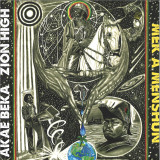
Akae Beka's inimitable style of rich, deep, multi-layered songwriting, uncompromising devotion to RasTafari and soulful healing melodies developed over decades performing with St. Croix based band Midnite and countless recordings. At the point of his untimely passing in 2019, he had released over 70LP's. He is without a doubt one of the most prolific reggae artists ever known.
The stellar production trinity that is Zion I Kings have been involved collectively and individually in creating some of the most highly regarded contributions to the vast Akae Beka catalogue. The timeless songs of 'Mek A Menshun' amply reward the listener who can penetrate into the mystical musical realms of Rastafari. Longtime fans of Midnite and Akae Beka will note that Vaughn Benjamin's singing on 'Mek a Menshun' reached new heights of melodic delivery and emotional intensity. Coupled with his always poetic and insightful lyrics, these 10 original songs rank among his best recordings to date. The title track 'Mek A Menshun' includes vocals by Protoje Grammy (R)-nominated artist.
Mek A Menshun features the stellar musicianship of the ZIK distinguished in typical fashion by the rock-solid drumming of Lloyd "Junior" Richards. On this album, his playing is complemented by Aston Barrett Jr. ("By Day", "Only Now") and Kirk Bennett ( "Kagm Mystory", "Mek A Menshun"). The signature stylings of the other core ZIK musicians are augmented by horns (Andrew "Drew Keys" Stoch -trombone, Donald "Jahbless" Toney -saxophone), flute- Sheldon "Attiba" Bernard, kette- Andrew "Bassie" Campbell, and the guitar of Chet Samuel. ZIK guitarist Andrew "Moon" Bain contributes a string arrangement on "Only Now". Throughout the album, Laurent "Tippy I" Alfred's spot-on organ shuffle bubbles the rhythm forward. Many of the 'Mek A Menshun' tracks were among the last recordings done by the veteran engineer Gary Woung.
Originally released digitally and on CD, this LP is now being released for the first time on as a 12" vinyl LP courtesy of Before Zero Records.
2022 limited edition of this Japanese no wave gem from 1982. With extended liner notes and interviews with band members about the recordings of the album, as well as unpublished photographs from 1981 by Jibiki Yuichi.
The Japanese punk rock movement known as Tokyo Rockers began in the summer of 1978. It incubated an independent music culture as well as a host of fascinating, individualistic musicians. One of the more striking units was the male-female duo Maria 023. NON played bass for them, and it was here that she first attracted attention. However, Maria 023 was short-lived, and NON would not reappear until the following year, August 1979, on stage at the legendary concert event "Drive to 80s". Her unbilled performance at the event consisted of several songs for solo bass and vocals, and her combination of intensity and a distinctly female emotionality made a striking impression. In the months that followed, NON continued to play solo and she became a pivotal presence among the female rockers on the scene at the time.
Finally she shifted from solo to group performance, and formed NON BAND. After several member changes, the line-up stabilized into a unique trio with Kinosuke Yamagishi on violin and clarinet, and Mitsuru Tamagaki on drums. It was with this line-up that the group reached a musical peak. At the same time, the Japanese punk and new wave rock scene was moving in a new direction, as a second generation of artists appeared and mushrooming independent labels began to play an increasingly important role. I myself started a label called Telegraph Records in 1981 and worked hard on record releases and building a distribution network.
Since starting the label, I had wanted to release a record by NON BAND. There were many vicissitudes before it could happen, but in February 1982 NON BAND's first album was released as a 10-inch LP on Telegraph Records, the label's fifth release. In the early Japanese indies scene, if a release sold 1000 copies it was counted as a significant success. The NON BAND album went through several repressing and sold 2000 copies. The album was a hit and the band's critical reception and popularity suddenly took off.
The shows that followed the release of the album were given a boost by the addition of two female rockers, the guitarist Kummy and keyboard player Mitsuwa. The group was reaching a real musical peak and everyone expected more great developments, but just six months after the release of the album the group would grind to a halt. Members quit the band one after another, and with no possible replacements to be found, NON herself faded away from the scene.
NON BAND's career in the early Japanese indies scene was thus short-lived. But their sole album was reissued twice on CD, and remained popular with listeners. However, the group's history was to have a second chapter.
NON ended up returning to her hometown, snowy Hirosaki in the far northern prefecture Aomori. There she raised two children and took over the running of the family business, an arts supplies store. Her thoughts turned once again towards music, and in 1999 she took up her bass again and began to sing. She invited two fabulous musicians, Keiji Haino and Tatsuya Yoshida, to Hirosaki, and performed together with them as well as solo. This marked the beginning of a new phase for her, and she played live in Tokyo and released a solo album, "ie". She got back in touch with Yamagishi and Tamagaki and reformed NON BAND. They added Emi Sasaki on accordion and began to play a handful of gigs each year, bringing a mature depth to their undiminished power and dazzling a new generation of fans. In 2012 the group released an album of recent live performances entitled " NON BAND Liven' 2009-2012". I released the album on the newly reanimated Telegraph Records.
NON still lives in the north, in Hirosaki. The city is famous for its summer Neputa festival. The first track on this album, "Duncan Dancin'" is almost a theme song for NON BAND, but its rhythm is taken from the ohayashi music that is performed in this festival, as large floats and troupes of dancers wind their way through the streets. The title refers to the legendary dancer, Isadora Duncan. The image perfectly represents NON herself: Isadora Duncan dancing to the earthy rhythms bubbling up out of the north land.
Nov 9, 2016 Jibiky Yuichi (Telegraph Factory)
In order to achieve a meticulous sound quality the reissue version is cut on 12" vinyl instead of the original 10" format. The original cover artwork has been reproduced and there are liner notes by Jibiky Yuichi with unpublished photos of NON BAND.
Repress expected. Date TBA
By 1980 when this was originally released Pharoah Sanders was solidly entrenched with his own voice on tenor. The passing of John Coltrane and Sanders's fruitful years of playing with the prolific saxophone genius resulted with an unmistakable influence on his sound and explorations of the instrument. Beginning with "Greetings to Idris" the structure of the music is one that follows tradition yet opens up for the musicians to improvise within the arrangements. "Greetings to Idris" is in reference to the featured drummer Idris Muhammad who also played with Coltrane during his late period. Naturally Sanders is featured as the main instrument and his horn can be bold and demanding of your full attention. Always interested in other instruments from other cultures, much like Trane, he incorporates the Japanese instrument the koto, a beautifully harmonic stringed instrument to counter his soft rich blowing on tenor with only wind chimes and a harmonium for a delicious peaceful bit of music on "Kazuko"(Peace Child) that has the qualities of a meditative offering. Most of the music, eight tracks, is composed and arranged by Sanders and demonstrates his leadership. There is one John Coltrane composition entitled "After The Rain" that gets the Tranesque treatment by Sanders that makes it hard for even the most discerning listener to distinguish between the original version and Sanders impression. It is a bluesy duet featuring only sax and piano and leaves you wanting to hear it over and over again because of it's simple and haunting melodies. Another song that Coltrane recorded entitled "Easy To Remember" has a gentle swing to it built around a classic quartet (drums, bass, piano, sax) like that employed by Coltrane that results in a superb standard. Sanders incorporates the use of another "foreign" instrument to jazz by working in a tabla and sitar on "Soledad " that takes center stage before Sanders joins in on the music. The result is a thing of genius as the East and West merge and interface for composition that is peaceful. Sanders music on this LP fluctuates between the tranquil sounds of his mellow horn to the outer limits where he left off with the explorations of Trane's late period. What separates this LP from others is that it is a group playing under his leadership where he gives all others close to equal billing. The uptempo, "You've Got To Have freedom" is one such song where Sanders gets out there on some of his solos but works within the group structure as the other musicians, most notably Eddie Henderson on flugelhorn, bring the music back home. There is a chorus sung much of the time throughout where the the proclamation "Ya gotta have peace and love, ya gotta have freedom" is presented in Manhattan Transfer style but with much more soul. The use of vocalists is done again on the track entitled "Think About The One." The chorus features vocalese specialist Bobby McFerrin. This LP shows the different sides of Pharoah Sanders, a man always willing to explore the music, explore his soul and share it with you. The closing track "Bedria" is a mellow exploration of the various ranges of the tenor. It is a ten minute song that displays all the grace of his being, a gentle giant who can manipulate the horn to do extraordinary things, reverberating out and back in undulating waves of harmonic bliss. Sanders on this LP is next to perfect. One of his best recording from his post Impulse career. It belongs in your jazz collection right next to John Coltrane.
We would like to present Paloma's seventh release: Tom feat. Rose - Lose Yourself EP
Throughout club music history, the combination of vocals and groove remains a vital element. Countless anthems have prompted singing on the floor, and have raised arms in the air. There might have been times where vocals mattered less, but right now they are probably more needed than ever.
Tom & Rose are well aware of all that, and they were willing to place themselves and their music in a tradition of dancefloor euphoria, universal messages and also a bit of bittersweetness.
Tom is a DJ, producer and mix engineer, and also a booker and resident at Paloma. Rose is an Irish singer and producer. Together they created these tunes, a testament to better times gone and ahead."How Wrong" is the sound of heartbreak, albeit locked in a UKG tinged sureshot that swings back and forth with ease between jubilant piano bliss and monolithic bass weight, and it kicks like a mule. "Lose Yourself" is both an ageless acid slam and a joyful paean dedicated to all nights that should never end. There is a pumping dub too,
equally designed to be the soundtrack to blowing a nocturnal kiss to everyday sorrows.
Also included: complementary remixes by Eluize and Massimiliano Pagliara that come up with a different take, but a similar vision.
Enjoy the music, and stay safe!
Wganda Kenya was ahead of its time, anticipating current contemporary Afro-Latin-funk trends in a prescient way that has inspired a legion of fans across the globe. As part of that legacy, "Africa 5.000" (1975) has a legendary reputation as one of Discos Fuentes' best hard-to-find Afro Caribbean funk records and is a highly prized collector's piece. This LP features several classic dance floor gems as well as some lesser-known nuggets and a non-album bonus cut, plus informative notes. "Africa 5.000" (1975) has a legendary reputation as one of Colombia's best hard-to-find Afro-funk records and is a highly prized collector's piece today. The epic 'La torta' ('The Cake') kicks things off with a lively Colombian interpretation of Haitian compas. The tune is still remembered as a big picó (amplified sound system) hit at the verbenas (outdoor dance parties). 'Fiebre de lepra' ('Leprosy Fever') was also released as a 45 single and is certainly one of Wganda Kenya's wilder tracks. Funky wah-wah guitar, makossa style bass, manic organ, and feverishly insane vocals (from Wilson "Saoko" Manyoma and Joe Arroyo) indicate that Fruko and his pals were having a ball goofing around in the studio. If for no other reason, "Africa 5.000" is sought after for being the album containing Fruko and Javier García's outrageously funky and off-kilter 'Tifit hayed', which has become a tropical dance floor favorite in recent years. Again the "kitchen sink" approach is employed, including massive Latin bass lines, tasty Farfisa organ stabs, a bluesy, jazzy piano solo, and plenty of humorous vocal sound effects (including animal noises and lip burbling). However, it's the stomping break beats and cowbell counterpoint that has kept dance floors busy. Side B leaps out of the speakers with the heavy, strutting 'El caterete', which was the flip side to the 'Fiebre de lepra' single and is based on the 1970 song 'Cateretê' by Brazilian singer/songwriter Marku Ribas. Like its sibling Fuentes studio band Afrosound, Wganda Kenya was ahead of its time, anticipating current contemporary Afro-Latin-funk trends in a prescient way that has inspired a legion of fans across the globe, and this reissue of "Africa 5.000" will only serve to further cement the band's growing reputation amongst today's diggers of tropical psychedelia. First time reissue.


![Eparapo - From London To Lagos (Remixes) [feat. Dele Sosimi]](https://www.deejay.de/images/l/1/5/1008215.jpg)