New year, new you, new crew! Another rising star from France, Marina Trench, joins the WOLF Music family, following up an inaugural EP on DJ Deep's highly acclaimed Deeply Rooted with this accomplished and diverse four tracker of house goodness.
Absorbed by house music from an early age Marina Trench is already proving herself to be a humble, yet highly talented, force to be reckoned with. Waterside EP is case in point. The title track is summertime ecstasy through and through. Undeniably catchy and packed with a club-ready punch, Trench sets off at pace, revolving the track around a pinging techy bassline as layers of percussion, echoing pads and delicate vocal refrains from Marina herself glide on through. Peak time, earworm business that bangs.
Get up, ‘Get In’. Moving through the downright ethereal to some tough, dancefloor darkness. Sweeping pads and glitching arps ease you in before the breakdown leads to an unleashing of brooding bass chords and reverberating top end counterparts that marry with a mean acid bassline. Tough, tactile and firmly focused on the club.
On the flip, ‘Train Call’ is a chopped jazzy deep house roller. Heavyweight piano stabs intertwine with deft twinkles as crisp hats dance around thumping kicks before ‘Straight’ eases you off into the depths of the night. A sumptuous little slice of deepness - meditative, trance-like calls from the ocean and pensive pianos provide a perfect soundtrack for the early hours.
quête:count bass d
- A1: Africa Negra - Mino Bô Bé Quacueda
- A2: Africa Negra - Zimbabwe
- A3: Sangazuza - Sun Malé
- A4: Os Úntuès - Chi Bô Sá Migu Di Védê
- A5: Sum Alvarinho - M'konvètá Dédo
- B1: Conjunto Equador - Mad?
- B2: Tiny Das Neves - Cladênço Padê Cluço
- B3: Conjunto Mindelo - Taji Océdo
- B4: Africa Negra - Aninha
- C1: Pedro Lima - Nga Ba Compensadora
- C2: Sangazuza - Cortição
- C3: Os Úntuès - Piquina Piquina
- C4: Conjunto Equador - Meu Di Plôc?
- D1: Sum Alvarinho - Tólá Muandgi
- D2: Pedro Lima E Conjunto Os Leonenses - Esatela Licu
- D3: Agrupamento Da Ilha - Bô Gosa So Txi
"The two Portuguese-speaking African islands of Sao Tomé & Principe, located in the Gulf of Guinea, created an unique music called Puxa : a refined mixture of various musical components from both sides of the Atlantic Ocean. A blend of Semba, Merengue, Kompas, Soukouss, Coladeira patterns, often pushing forward with a voodoo-like energy, solid bass lines, delicate melodies and backing harmonies of the rich Sao Tomean melodic traditions. Very first compilation focusing on the golden age of these island’s sounds, the 16 tracks selected will surely set fire on all dance floors !
Léve-Léve is the first ever compilation devoted to music from São Tome and Principe, two small islands situated off the coast of Gabon in central Africa. The album unravels a story of liberation where the music of Africa, Europe and the Americas unify with a carefree spirit personified by a phrase the islanders use all the time: “léve, léve” (“take it easy”). With echoes of Angolan semba and merengue, of Brazilian afoxê, of coladeira from Cape Verde and dance music from the Caribbean, it is a sound fiercely proud of its island heritage, sung in local dialects and using distinctive local rhythms.
On this record you can hear the cultural and social history of São Tome and Principe, and how live music represented its beating heart. Once known as the “Chocolate Islands” (remarkably, these two tiny islands were the largest cocoa producers in the world, though now this title acts as a reminder of its colonial past), through the years leading up to independence from Portugal, music would be a fundamental voice of liberation and conviviality. Os Úntués were one of the first groups to make an impression, releasing a couple of 7 inches in Angola – the litmus test of success for any of the islands’ groups. They united unique rhythms and dances like socopé, puita and dança-congo – borne from the islands’ largely slave-descendant population – with the sound of pop music beamed in on the radio from Europe, even adding in a little bit of soukous and Brazilian instrumentation. Their main rivals were Conjunto Mindelo, who fused São Toméan rhythms with rebita, an Angolan style, to create high energy puxa, a truly original island rhythm.
From the mid-1970s, coinciding with independence from Portugal in 1975, the islands’ groups featured an even stronger African influence and nowhere was that more apparent than with Africa Negra. They would listen to the latest records from Gabon, Zaire and Cameroon, taking inspiration and trying out phrasing from the greats of Central African guitar playing, developing a devoted fan base off the islands, as well as on. A score of other bands would follow a similar musical path, with a few getting their dues overseas in Angola, Cape Verde, Portugal and across Africa.
Os Leonenses (led by the iconic Pedro Lima), Conjunto Sangazuza, Sum Alvarinho and Conjunto Ecuador were just some of the other bands that formed a lively home-grown music scene that lit up the islands’ bars and open-air shows from the 1950s through to the mid-90s. Regardless of class or age, they were responsible for keeping the population entertained come the weekend, with Sunday matinee shows the highlight of the week, the music not stopping from midday until midnight.
As a Portuguese island colony that was for many years populated with slaves brought from Africa, São Tome and Principe has much in common with other Lusophone countries and boasts a richly complex and idiosyncratic musical DNA. Whilst the musical tapestries of Angola and Cape Verde are well known, São Tome and Principe’s secrets were assigned to the islanders themselves. Until now."
Exhilarating, previously unreleased recordings by Derek Bailey and his guests at Company Week in 1983: Jamie Muir, Evan Parker, Hugh Davies, Joëlle Léandre, John Corbett, Peter Brötzmann, Vinko Globokar, Ernst Reijseger and J.D. Parran.
What’s remarkable throughout this album is the respect and affection the musicians show for each other, exemplifying the dictionary definition of ‘company’ as ‘the fact or condition of being with another or others, especially in a way that provides friendship and enjoyment.’
It starts with Landslide, a brilliant, spiky, spluttering, twanging reunion of Music Improvisation Company members Evan Parker (tenor sax), Hugh Davies (electronics) and Jamie Muir (percussion). Next up, Seconde Choix, with Joëlle Léandre’s close-miked prepared bass and Bailey’s acoustic guitar seemingly heading in different directions before coming together miraculously in just four minutes.
The opening of First Choice, a duet between Bailey and Muir, is a revelation for those who moan that the guitarist plays too many notes. His patient and truly exquisite exploration of harmonics is beautifully counterpointed by Muir’s metallic percussion.
On Pile Ou Face (Heads Or Tails) Davies concentrates on his high register oscillators, carefully shadowed by Parker’s soprano until Léandre’s deft, springy pizzicato lures them into the playground. JD In Paradise is a surprisingly delicate wind quartet, with John Corbett’s trumpet, fragile and Don Cherry-like, punctuating the sinuous interplay between Peter Brötzmann and J.D. Parran (on sopranos, flutes and clarinet), while trombonist Vinko Globokar growls approvingly in the background.
Igor Stravinsky’s definition of music as the ‘jeu de notes’ comes to mind listening to Bailey’s duet with cellist Ernst Reijseger (executing fiendish double-stopped harmonics with staggering ease). Technical virtuosity has never sounded so effortless – it is, as its title Een Plezierig Stukje simply states, a fun piece.
On the closing La Horda, Bailey and Reijseger team up with the horns for what on paper looks like it could be rough and rowdy sextet but which turns out once more to be a thoughtful, spacious exchange of ideas, shapes and colours.
London-based folk-psych-country band The Hanging Stars return with their eclectic third studio album, A New Kind Of Sky, due out on 21 February 2019. Carrying on their exploration of transatlantic psychedelic folk and cosmic country, the new album blends twelve-string, harmony-laden lullabies with soft rock anthems to create a guilded box of bucolic folk-rock. As well as the band’s signature wistful pastoral escapism, there are lyrical concerns about the recent past; the systematic division of people, values, facts and humanity in The West in general - and the UK in particular. The band weave the same thread they have always woven but this time with a more unified vision, creating a kaleidoscopic poncho for these times.
The Hanging Stars comprise songwriter, singer and guitarist Richard Olson, Sam Ferman on bass, Paulie Cobra on drums, Patrick Ralla on guitars, keys and vocals, and renowned pedal steel player Joe Harvey-Whyte. Returning guest Collin Hegna from Brian Jonestown Massacre plays an instrument called a Marxophone on “Choir of Criers”. They also welcome Sean Read of The Rockingbirds and Dexy's Midnight Runners, who adds horns to “Three Rolling Hills” and “I Was A Stone”.
The main bulk of the recording for the new album was done live in the studio at Echozoo in Eastbourne with Dave Lynch. For the first time, the band decided to dive straight in to the recording studio following their German tour in 2018. Having lived in each other’s pockets and playing their new songs every night, the band were as tight and primed as they could possibly be. There ensued a few, very long, days of recording, capturing the essence of the band in their element.
The songwriting process was even more collaborative for this album, with the usual co-writes between Richard Olson, Sam Ferman and Patrick Ralla enhanced by Joe Harvey-White’s arrangements and Paulie Cobra’s harmonies. The biggest difference is that Sam Ferman sings lead on the first single “‘(I’ve Seen) The Summer in Her Eyes”, a song about lost love and self doubt channeled through two and a half minutes of garage pastoralism.
The album’s title track “A New Kind of Sky” tells a story from the point of view of somebody who idealises a past that never existed. The band go glam-rock on the stand-out track “I Will Please You”, a tale of a cult leader/world leader and his irresistible (for some) charm from the point-of-view of his most recent victim and “Heavy Blue” is a country music tale of drunken debauchery seen through the eyes of an inexperienced young man. The triumphant trumpet-driven song “These Rolling Hills” is a minor-key tale of a journey into the hills of Marin County, California undertaken by Paulie and Richard to visit friends Asteroid No. 4, with a most interesting outcome.
The Hanging Stars released their debut album Over the Silvery Lake in 2016, which received plaudits from broadsheets such as The Times, who described it as; "An album with enough of a hazy, sun-dappled charm to make the capital's dreariest weather bearable”, as well as The Guardian, who said; “Mersey-laced harmonies and just a whiff of the Gun Club.” They picked up a good amount of support at 6 Music and “The House on the Hill” scored a much-coveted 10/10 by John Robb on Steve Lamacq’s Roundtable.
Their second album Songs For Somewhere Else in 2017 received critical acclaim from the likes of Uncut (Revelations article), Shindig (several features and 4* review) as well as The Quietus and The Line Of Best Fit, plus radio support from Gideon Coe and Bob Harris (they performed an Under the Apple Tree Session for Bob Harris in January 2019).
Whilst playing their own successful sold-out headline dates, the band were invited to share the stage with Teenage Fanclub, The Clientele, Wolf People, The Long Ryders and GospelbeacH, as well as playing festivals such as Liverpool’s International Festival of Psychedelia, Red Rooster, Ramblin' Roots, UK Americana Festival and The Long Road.
Rarely does a record so perfectly encapsulate the essence of Hawai‘i.
During the 1970s and 1980s, Hawai‘i’s live music scene was at its peak. Countless clubs, lounges, and bars filled the islands. Musicians embraced and experimented with all manner of ideas.
Among them were Steve Ma‘i‘i and Teresa Bright, a harmonizing guitar-and-bass duo that floated somewhere between nostalgia and an unassuming island sound. They could fill a concert hall or bring the family together at a backyard kanikapila with their music.
Both singers share backgrounds rooted in native Hawaiian culture; Steve once the bassist for musician/ activist George Helm, and Teresa the daughter of hula dancer Carol Bright and musician Daniel Bright. Together, they crafted a refreshing approach to jazz standards, traditional Hawaiian tunes, and hapa-haole classics.
Steve and Teresa enchanted every listener they encountered, including engineer Rick Keefer, who convinced the pair to record at his Sea-West Studios in nearby Hau‘ula.
'All Human - No Conditions" is the first solo EP by the French producer Itako. The opener "The Country That Does Not Exist" is a slow burning and bass-driven tune in which hypnotic synth and acid lines merge with North African vocal pieces. Thereafter, Itako shows with "Freehands Desire" his darker side. A mid-tempo composition with massive drum patterns and forward-moving melodies. On the flip side, "Groove That Dust" is screwing the tempo back down. Six minutes based on a 90s Hip-Hop sample with an irresistible groove where we assume no one can stand still. The release is rounded off with a remix by MR TC. The Glasgow based musician stretched "The Country That Does Not Exist" into a tribal workout with breaks in which he lets the machines speak for themselves.
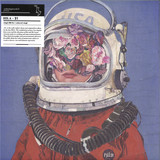
"21" is the well-crafted, sharp and original first album by the duo HILA, composed by American cellist Artyom Manukyan (who already worked with Kamasi Washington, Daedalus, Flying Lotus, Run DMC, Gretchen Parlato, Raphael Saadiq, Clive Lowe Mark...) and french producer Dawatile.
The combination of jazz, Los Angeles beat-scene and the vibrations of 80s and 90s Soviet Armenia make it a striking and unprecedented fusion. These kind of nostalgic and unconventional references forcefully shake the codes of mainstream culture to create a sincere, raw and intimate expression.
"HILA" was born from a spontaneous and intense creative impulse between Artyom Manukyan, a Los Angeles-based Armenian celloist and his partner in crime, David Kiledjian aka Dawatile, a French multi-instrumentist of Armenian descent. This project is proving to be a true master stroke given that it only took 21 days for the duo to make it a reality.
"HILA" was made in less a moon cycle but captivates and electrifies audiences upon its first outings. "H.I.L.A" colors the warmth of the Californian "High" with Armenian vibes. The artists chose this name for their creation since both have a close and valuable connection to these locales. This journey began in 2007, on the day Dawatile went to Yerevan, the capital of this small country in the Caucasus mountain to realize a first fusion project centered around local folkloric music genres.
There he was introduced to local musicians including the Armenian Navy Band, one of the country's foremost groups in which Artyom played the bass and cello. In this context, he also met many musicians such as Tigran Hamasyan and Norayr Kartashyan. This will be the beginning of connections between Lyon, Yerevan and Los Angeles. The following year, the two artists will be be seen performing next to Taylor Mc Ferrin at the Jazz à Vienne festival. More recently, they partnered up again when the cellist, who had freshly relocated in California, invited Dawatile to produce his album. As soon as the studio’s threshold was crossed, they decided to postpone this record and create a joint project: Hay (as the Armenians call themselves) / High In Los Angeles. HILA was born at the end of these 21 days of intense creation. The association of Artyom Manukyan and Dawatile is the combination of two visions, two versions of Armenia, two personalities, the reunion of the Eastern and Western blocs.
One grew up nurtured by the sounds of hip-hop and jazz in Europe and the other by art music and Russian-influenced 1980s Armenian folkloric music before moving to L. A., Ca. The cornerstone of it all, the glue that unites everything : Armenia and music. They generate a new identity synthesizing two perceptions, their complicity transcending these cultural discrepencies. To achieve this, they will scour through images of Artyom’s childhood, within the popular culture of Soviet Armenia. Together, they revisit this decidedly retro vibe, based on the work of Caucasian groups inspired by African American music. This background is rehashed and fused with ancestral Armenian sounds. The DNA of the album "21" is molded by these dear influences.
We can also hear the ancestral sounds of Armenia, a country at the edges of both Europe and Asia. The presence on two tracks of Armenian music Master Norayr Kartashyan, infuses the languor of past melodies and traditions. These purposeful anachronistic sounds offer a fantastic depth to this powerful opus. Listening to the album, one can appreciate the successful fusion of styles and influences. Those combinations, however, manage to preserve individual identities only to enhance the art through an adamant musical dialogue.
Being driven by the urge to transpose Armenian musical traditions into a unique universe, the daring artists, offer an innovative combination by blending, for the first time, these ancestral sounds with the world of Los Angeles beat-scene and jazz. An invention largely fueled by the magic strings of Artyom and maestro Miguel Atwood-Ferguson, a pillar of the genre in Los Angeles combined. These associations resonate with a triumphant equilibrium. HILA is musical uncharted territory in which Artyom's cello strings intertwine to ignite the harmonies of keyboards, the machines, the vocals and electronic layers Dawatile pieced together. HILA plays the soundtrack of an adventure set between Armenia around the end of the Soviet era and a mysterious near future.
Artyom Manukyan grew up in Armenia in the 90s. At the time, he studied Russian classical music while learning jazz with assistance by his father, a music journalist. Being an unconditional music lover, he went on to sharpen his skills at the prestigious Berkelee College of Music. Subsequently, he’s been lucky enough to travel the world touring with numerous acts and mainly with the Armenian Navy Band. The group has fostered alacritous success honored by a BBC Award as a crowning achievement. He moved on 10 years ago and made his way to L.A. with his cello on his back. In the City of Angels, he quickly became a popular figure of the jazz and hip-hop scenes thanks to his first album "Citizen". He’s accompanied prestigious musicians such as Kamasi Washington, Melody Gardot, Daedalus, Flying Lotus, Run DMC, Gretchen Parlato, Raphael Saadiq, Clive Lowe Mark, or Vulfpeck. He released his solo album on the cello, "Alone" in October 2019.
Dawatile is a bold producer and multi-instrumentist as well as a passionate and resolute musician molded by jazz. As a versatile artist, he handles and juggles the saxophone, the keys, the bass and composition. Simultaneously, Dawatile produces cross-over projects and soundtracks for the movie industry. He, as well, has had the opportunity to be a part of many tours, including with his electro hip-hop band, Fowatile and more recently with the "Future Kreyol" trio, Dowdelin. Being the ever workaholic, he has under his belt a string of prestigious collaborations with the likes of Talib Kweli, Foreign Beggars, Roy Ayers, Tigran Hamasyan, Mathieu Boogaerts, Voodoo Game and Piers Faccini. His taste for developing new musical recipes and his know-how in production make him a much sought-after album producer. In concert, the HILA duo offers a sober, precise and rhythmic performance. "21" is an aerial and lively album taking the audience on an at times joyous and sometimes melancholic dreamlike journey. The magic of "HILA" operates at the speed of light and positions it already as an avoidable group.
Wah Wah 45's are proud to present "Cages", the third album from southern soul boys The Milk. Having released "Favourite Worry", their critically acclaimed sophomore album and first for independent label Wah Wah 45's, in 2015, the band are able to trace the seeds of the latest LP back to their recording sessions with producer Paul Butler (Andrew Bird, Michael Kiwanuka, Nick Waterhouse) almost five years ago, blending elements of soul, funk and rock together to create their own unique sound, inspired by some of their favourite artists such as Bill Withers, Traffic and the Isley Brothers.
"I can't wait to hear you write songs that look outward" - these words from Paul subconsciously had a lasting impression on the band. To atone for more inward-looking sentiments on "Favourite Worry", there had to be a shift in perspective. During the formative stages of the new album The Milk started pursuing a Nichiren Buddhist practice. The values and principles they discovered during this have informed every aspect of the record.
"We wanted to write an album that looked outside of the walls, to people, society and the environment - embracing real freedom in musical expression by utilising more complex rhythmic structures, extended harmony and dissonance to paint an original and authentic-sounding record" explains If their debut, "Tales from the Thames Delta", was inspired by hedonism and "Favourite Worry" by introspection, "Cages" is an impassioned conversation with the world. Racism and division are all on the rise. British society is being pulled apart by forces that seek to divide us and rip the compassion and empathy from our minds and hearts. We have become distracted from the more urgent challenges of boundless consumerism, climate change, and the mental health emergency reeking havoc on our streets.
We are the birds in the cage, tied by cheap thrills and fake news to a limited world vision that is no longer fit for purpose. The good news? We can all choose to challenge this view. "Cages" is equal parts the dark black shadow of how far we've fallen and the blazing sunlight whose rays of hope can still change the world. Four life-long friends, Ricky Nunn (vocals), Mitch Ayling (drums) Luke Ayling (bass) and Dan Le Gresley (guitar) formed their first band when they were still at school in Essex, playing countless working men's clubs, and finally became The Milk.
The band have built up a following of dedicated fans around the UK, which has resulted in them selling out venues such as Scala, Koko and Shepherds Bush Empire. Keen to get back on the road where they feel most at home and where the guys really shine, the band offer up a compelling set of diverse styles, matched with an ability to effortlessly intertwine songs together, gives their music a continuous feel to it. Since signing to Wah Wah 45's, the band released their second album "Favourite Worry", which became one of BBC 6 Music's albums of the year, sold out London's Union Chapel, toured with the Fun Lovin' Criminals and completed a sell-out UK tour climaxing at London's KOKO in Camden town. ... More live dates coming very soon!
When was the last time EDMX served you what you expected? Maybe you drop the needle down in anticipation of some slick boogie-inflected synth pop and get walloped in the face with hellfire techno. Perhaps you were itching for body-popping electro and got cerebrally hijacked by pagan coldwave.
On this latest magnum opus, his first on Queen Nanny. Ed Upton is in the mood to get down low in every sense of the word. On the frequency range, this is a record dripping with lard-fed bass at every turn. The arrangements too are devilishly low in channel count – raw riddims with just a few key ingredients to do the necessary damage. Then there are the tempos, which predominantly set cruise control at 90 BPM and glide.
It’s not hard to tell where EDMX’s inspiration has sparked from on this album – in the spirit of celebrating the compatability of oddball sonics from all corners of the globe, he’s patched his sound into a specific vibe and struck gold with some of the most distinctive riddims you’re likely to hear all year.
Releasing his first ever vinyl release 'El Sunset' on James Holden's, Border Community back in 2007, Chilean producer Ricardo Tobar has since been held in high regard by the seminal UK producer. Intricately constructing his way around the parameters of emotionally-lead, highly atmospheric electronic music, Ricardo has brought his sound forward to grace the rosters of Jennifer Cardini's, Correspondant, ESP Institute and MUSAR Recordings. Continuing to extend his already significant discography, he now returns to MUSAR Recordings for a third time with the 'After The Movie' EP.
Ricardo's 'After The Movie' EP forms a selection of cuts that have been held in his locker for quite some time. Uncovered by MUSAR Recordings label head, David on a podcast from way back, it seemed only natural that this unreleased music from Ricardo would find its home on the Amsterdam-Tel-Aviv label.
"This EP is quite special to me because it reflects a long timeline in my work. The 'After The Movie' track had been in the vault for ages until David from MUSAR found it in an old podcast; it really takes me back to those first steps in recording music." Ricardo Tobar
Across his EP, Ricardo plays with varying textures and arrangements that in turn provide a cross-section of his sound that has expanded and developed over time. 'After The Movie' presents the experimental ambience synonymous with his early works, whilst 'Parques' brings an idyllic, cinematic feel with strictly crafted synth arrangements riding high, post-rock influences also show through. 'Regain Your Power' represents a change of course, whilst also channeling a political message punctuated by social unrest taking place in Ricardo's home country, Chile. He abandons experimentalism in favour of tougher 4x4 elements, allowing his machines to run riot.
"The mixture of ideas and feelings on this EP have a politically charged spirit, as electronic music always does. A few weeks after I finished 'Regain Your Power' the whole Chilean social explosion took place with the same ideals I had in mind when recording the track." Ricardo Tobar
Stepping up on the remix is a pair whose names are etched into the history of UK electronic music, Andy Turner and Ed Handley a.k.a. Plaid. Reworking title track 'After The Movie', they produce an emotive, soundscape complete with droning basslines and ex-terrestrial flourishes.
Ecke Records returns with its fourth release this November, the four-track ‘Grit’ EP coming courtesy of Xantrax with a remix from Addison Groove.
Taking the lead is ‘Tekline’, a murky, unfurling cut fuelled by off-kilter tribal drum work, bubbling bass delays and modulating synth flutters. Addison Groove steps up next on remix duties, reshaping ‘Tekline’ with choppy vocal cuts, dubbed out chord stabs and organic percussion floating atop the originals hypnotic groove.
‘Linetek’ opens the flip, as the name would suggest acting as a counterpart to the lead track, taking a 4/4 approach rhythmically while introducing a similar modulating bass line alongside chanting vocals.
‘0121’ then rounds out the package, an angsty, dynamically unfolding composition laid out over four and a half minutes with droplet synth delays, heady bass swells, spoken word vocals and crunchy broken drums.
Coming into orbit late November PS001.2 continues the dancefloor focussed explorations of one of Australia’s most loved new labels, Pure Space. Just in time for the Aussie summer the release highlights the sound of the new generation of electro and broken-beat producers emerging from the countries east coast.
On the A-side Point Guard returns to the label with his razor-sharp electro outing ‘Odyssey’. An emotional expedition that harnesses dancefloor euphoria with a powerfully burning bassline. Joining forces to complete the A side is Melbourne producer Disrute and label head Andy Garvey. Here an ever-evolving synthline propels you forward throughout the track that builds infinitely but pauses just to release Garvey’s mesmerising vocal, ‘NRG’.
Flip the axis and you will find swirling synths and scattered percussion that creates the murky club weapon that is emerging Sydney producer PMA’s ‘Hek’. Completing the release, Roy Mills brings you to a full rotation with ‘Aquatic Pressure’. His jittery breakbeat cut that slows to a half step mid way and returns with odd-ball synth mayhem.
Counterweight started at the end of 2015 as a party-series in Munich (Rote Sonne). It was about pushing the style of techno we stand for and which we couldn’t find easily in our city. During this journey we’ve learnt a lot about what somehow sadly has to be called a business and we met many artists and people involved in the Techno Scene. We even made friends throughout the years and that’s one of the nicest things after all.
The first V.A. release on Counterweight is an installment with some excellent artists we met during this time, we love their music as much as we love them as a person. Four years ago we couldn’t even imagine we would release a record with some of our favourites artists … Now, check this out. Heavy Kick-Drums, destructive basslines, distorted hi-hats, mesmerising melodies and…lots of passion.
When it comes to underground New York Disco, Donna McGhee's highly sought-after 1978 LP, "Make It Last Forever," ranks among the best in the genre, thanks to Donna’s singing and the production skills of legendary producers Greg Carmichael and Patrick Adams.
Featuring five songs penned by the producing pair, it's got their quintessential Disco sound of the late 70s topped by Donna McGhee's superb vocals. These have also blessed recordings by The Fatback Band, Phreek, Bumblebee Unlimited and The Universal Robot Band around the same time.
The album has been an elusive affair since it first came out in 1978 and this is one the first times in decades it is widely available in its original form with newly remastered audio. Donna McGhee has been one of the key female singers of the New York disco scene, gracing several cult albums with her superb singing. The Brooklyn native began her career singing Gospel in her grandmother's choir from an early age, honing her skills and making a name for herself locally as a talented singer.
Her first break in the industry came when she was spotted by bass player Johnny Flippin, who invited her to join his band.
The group was none other than The Fatback Band led by drummer Bill Curtis. This was 1975 and the album was "Raising Hell."
McGhee's vocals can be heard throughout the album including the dancefloor classic "(Are You Ready) Do The Bus Stop" and after this initial collaboration, she stayed with the group for a another few years recording “Night Fever” in 1976 and touring with them all around the country. Following an encounter with producer Greg Carmichael, Donna McGhee jumped ship and started working with the prolific producer and his partner Patrick Adams.
A string of collaborations followed with singles and albums that have become the stuff of legend over the years: Donna can indeed be heard singing with Bumblebee Unlimited, Universal robot Band and on Phreek's classic self-titled album from 1978, singing on the track "May My Love Be With You."
In 1978, After Greg Carmichael set up his own label, Red Greg Records, he and Adams decided to get McGhee in the recording studio and produce her first solo album. With the pair playing most of the instruments, they got five tracks out of the session. The result, "Make It Last Forever" is an all-time Adams/Carmichael classic: funky disco arrangements with a touch of synths over a pulsating groove magnified by McGhee's superb sexy singing.
All five tracks have become classics in their own right.
Skyf Connection (pronounced skAyf) was a short lived project by long time friends Anthony Mthembu and Enoch Nondala. At the time they were working for Annic Music, an independent label run by married couple Anne and Nic Blignaut. Although the label was known mostly for Zulu, Sotho, Tsonga and other traditional styles, they had a few Disco releases on the label including groups like Keith Hutchinson’s Focus and Enoch’s discovery Lena, who went on to have huge success under the name Ebony a few years later.
In 1984, when an artist didn’t show up for a booked session they decided to make use of the studio time and began working on a demo. At the time Anthony and Enoch had been playing for a year at a new club called Gamsho, located on a farm on the outskirts of Kliptown Soweto. Along with Blackie Sibisi, Sepate Mokoena and Elijah “chippa” Khumalo they made up the resident house band. Due to cultural boycotts and American artists refusing to perform in the country, locals took it upon themselves to fill the market with the American sound the crowds demanded. The demo they recorded at Blue Tree Studios was going to be their product they could use to promote their brand of the American sound. They then took the demo to Universal Studios where their friend and trusted engineer Jan “fast fingers” Smit was working. It would be here that they would polish their demo into something they could take to their bosses and have pressed. Equipped with a DX 7, Linn Drum and some Juno synthesizers they were on their way. Jan lived up to his name and programmed the drums, it is rumoured he could program in almost real time, a skill that translated to the local arcade where he held high scores on many machines. Enoch would be singing and playing guitar while Anthony would do all the Bass and Keyboards. The result was 4 funky party anthems with synth work like no other recording at the time. Their take on what they believed the crowd would want to hear at the beloved club they called home.
From start to finish the 4 tracks portray what would have been a standard night at the Gamshu. Although the club would open earlier and the standard hours of most clubs was 6 to 6 , the band would start playing at 10pm. With their standard set time and Anthony and Enoch unique view on what a Disco should be, they chose the motto Ten to Ten as the album title because those were the hours when they were the stars and Disco ruled the dance floor. To get to the club was a bit difficult, you needed to drive along an empty road where thieves waited for any patrons trying their luck walking after dark. Since there was no transport during the night, the safest way to get home was to wait till the next morning to walk home. Even though in the summer months of Johannesburg light begins to peek in just after 4am, crowds refused to leave and stayed enjoying good music and company until 10am. The lead off track “Let’s Freak Together” has powerful lyrics encouraging people to let go of their worries, put aside any differences and let the music bring everyone to freak and dance together. The whole album is about the joy we can all feel when we share the same moments and how music can bring people together in a unique way, a philosophy shared with the original nightclubs of 70s New York. This approach to music is where the name Skyf Connection comes from, translating from slang to mean the connection we create through sharing, in this case Music and good times.
Skyf Connection would go on to play at Gamsho till the club’s closure in 1986. In those years their popularity lead to being booked for private events like weddings and birthday parties, as well as gigs in some other venues like Mofolo Hall. They would share the stage with many artists through the years learning artist’s songs and providing support as a backing band. After the club closed Anthony would go on to join the house band at The Pelican, another famous club located in Orlando East, as well as dabbling with songwriting for artists like Phumi Maduna and helping Enoch on many projects through the years. Enoch would ditch live music altogether and immerse himself in studio work, starting full time as a house producer and A&R for the recently formed Ream Music. He would go on to produce hit albums for pop artists like Percy Kay and Makwerhu but made his mark discovering countless artists that would become stars in the traditional market. They would remain friends until Anthony’s passing in 2016 and although Anthony is no longer with us his spirit lives in the grooves he left on this one of a kind record. His wife Vinolia will be accepting his portion of the profits on his behalf.
A Unique EP of remixes from Kniteforce Head Honcho, Dj Luna-C. Each remix is firmly based in the vibes of the old skool, with the rolling basslines and touch of madness that is expected when Luna-C gets in the studio. The tracks were all chosen based on their ability to be folded into something both new and old, and then refashioned into something very different from the source material.
The result is a cohesive mess, an orderly panic, and a clash of harmony, and all the expected trademarks of a prime Kniteforce EP.
Club/DJ Support - Billy Bunter, the Fat Controller, Glowkid, Slipmatt, Dj Jedi, Dj Luna-C, Dj Brisk, Clayfighter, Jimni Cricket, Bustin, Sc@r, Doughboy, Saiyan, Dave Skywalker, Ponder ...and many others.
7"
Hamburg's long time standing Goth (Not Goth) / Rock (Not Rock) band outfit The Crystal Apes get a full on electronic remix treatment which has been dubplate tested and dancefloor proved by Intrauterin Recordings mastermind baze.djunkiii as a secret weapon on countless occasions over the past years, slowly and carefully building up towards a full vinyl release.
The A-side „I Can't Believe (baze.djunkiii meets The Crystal Apes 'Breakbeats Dream Of 92' Remix)“ hits dancefloors with an original Oldskool Rave / Breakbeat Hardcore vibe,
dramatic panorama strings and seductive vocals for the lighter and whistle crew.
Meanwhile the flipside „Broken End (baze.djunkiii meets The Crystal Apes 'When Time Decays There Is No Need For Architecture' Remix)“ brings forth a different flavor, fusing a blurred out, spatial, minimalist and heavily Dub-infused take on Bass Music / Post Dubstep with more dramatic dramatic string works and a surprisingly powerful Rock attitude for very
special moments on the dancefloor.
Initial pressing will be limited to 200 copies on black vinyl.
The two collaborators, known separately for contemporary electronic music & free clarinet experimentations team up to create the delirious trip, Footfalls.
Two scenes are presented here, seemingly taken from different sides of the same desolated seaside setting, loosly inspired by poet and novalist T.S Elliot and Samuel Becket. In Towards the Door, Gareth Davis´ bass clarinet breathes slow, wave-like tones that merge with the oft-rythmic electronic textures from his counterpart. A third of the way in, Robin Rimbaud´s synth erupts into a Blade Runner-esque epic harmonic section that disappears as suddenly as it arrives - leaving ripples of oscillation in its wake, slowly unfolding into the sound of waves, as it arrives back where it begun : as a full circle, drawn in echo´s of sound.
Smokefall begins with the words „Invisible choirs“, subtly spoken by a woman’s voice among a blurred distant conversation, as textural sound effects creep forwards to the point where a slow progressing but steady LFO rhythm enters. Water, metal & smoke are absorbed into a creeping tribal passage, acompanied by long clarinet tones. The piece expands further and further into a state of ecstatic harmonic noise that fulfills all parts of your body – if played loud. Both artists from here on move into full on crushing electronics, all while Rimbaud´s Kilpatrick Phenol synth drives the background with its pulses and repetative bassline. The piece has an ellipse like rotation that makes one feel a sort of blissful vertigo that reverberates in your mind after the piece has ended.
Footfalls is an euphoric trip from two artists that – although prolific - manages to arrive at the perfect meeting point to deliver two hard to shake pieces of dizzying electro-acoustic perfection.
Planning the imminent arrival of the 50th release on Touchin’ Bass, label boss Andrea Parker was digging through the warehouse during a stock take and it became apparent that there was something missing. There was a gap in the catalogue numbers. Where was TB036? Searching the archives it transpired that, for one reason or another (not least Parker’s inability to count), there actually wasn’t one.
So what better way to backfill this now documented gap than to welcome the multitalented guitarist and drummer, mathematician and multidisciplinary improviser Maria Gamboa Perez into the Touchin’ Bass fold with an updated focus for 2019.
Perez combines elements of rage, chaos, tension and anguish to form a visceral style. Her musical terrain and talent is shaped by dissonance and NO art. Under the moniker NonZero!, Perez brings Matrix Equation to the fore; a heavy 8 track EP with electro aesthetics from none other than Carl Finlow Scarletron/Silicon Scally/Voice Stealer.
Beginning her artistic career as a teenager playing as a bassist and guitarist in groups with influences from Noise, Avant Garde and the No-Wave, Perez was introduced into several areas of electronic music during the club culture years in Madrid and opted for styles such as Electro or Industrial, at which point she began to be interested in the introduction of rhythm boxes together with traditional drums.
Her passion for sound synthesis and musical exploration led Perez to introduce electronics into a solo project under the pseudonym NonZero!. Under this name she aims to make electronic music her field of sound research and for years has been continuously searching for existing relationships between sound and mathematics, focusing on the perceptual limit between music and noise.
Matrix Equation indulges in an evidential brooding angst, shifting between abstraction and the kind of elevated introspection carefully harvested over the years. With dramatic frontage in parts, blasts of boisterous energy and machine mayhem, its deployment of surprise, shifting focus and spontaneity operate in an assured statement.
Splintered beats and a foreboding sense of tension give way to a more DJ friendly logic of instinctive introductions and codas of gradual builds and breakdowns as Finlow further reworks the results to great effect.
Adapted Vinyl was a UK based techno label active in the late 90’s that picked up regular DJ support from taste makers of the time ranging from Jeff Mills to Mr C.
This, the label’s 7th record disappeared before a public release when the Integrale Muzique distribution company went out of business in 2008, but now gets its first official release date after years of very limited availability
Label founder Suade is the artist behind this release and these days he is best known as a highly-sought-after mastering engineer working for artists like Dense & Pika, Paranoid London, Jamie Jones and Vitalic.
Focusing his energies into family life and the fine tuning of other peoples music it’s rare to see Suade’s own music on a new release, but this hasn’t stopped him from collaborating on original tracks with the likes of Magda and Radioactive Man in recent years.
The EP has four contrasting tracks all with different moods and tempos all blended with Techno’s classic motoric drive.
With it’s absence from the usual music marketplaces creating something of a mystery this record ended up receiving a new, unofficial name on Discogs - The Citadel EP which is a title taken from the broken-beat second track on the B side of the record.
The Citadel is just one of the highlights on this eclectic EP, as it’s a Latronic Notron sequencer workout that patiently deploys layered synths in ever-shifting cross-rhythms for a languid 5 minutes before its deep, underpinning bass arrives evoking desert travel and arrival.
Baikal, named after the huge freshwater lake in Russia, is another stretched out meditation on tone and harmony acting as a foil to the delicate and vibrant Latin American percussion that filters in and out through a massive stereo Moog Modular system creating an energetic yet static, ritualistic atmosphere.
Trajan - the most driving track on the EP, gives a nod to the Probe era Richie Hawtin sound with a touch of Drexciyan melodics with shuffled percussion and bleeps over a snaking TB303 shaped bassline where the classic Acid box is given the role of control sequencer only commanding the thick, dirty oscillators of the big Moog.
A1 track Felix is a contrast yet again. A big room melodic Techno piece with another massive bassline and an almost orchestral level of layering, building to nine counter-melodies in total before letting rip with a classic TB303 acid line that builds from the heart of the track.