Gramrcy and John Loveless return to Phantasy with a double-A single, ‘Lucid / Feel So’. Three years on from their festival-rupturing hit ‘Highdive’, which found regular rotation in the sets of 2ManyDJs, Peggy Gou and Daniel Avery alongside soundtracking shows for Moschino and Hugo Boss, two new tracks expand the sound of the Berlin pair’s studio partnership.
‘Lucid’ features a unique vocal turn from Tony Morris, a former teacher, taxi driver and contemporary cult figure in Glasgow’s underground scene. Having begun DIY production only in his late sixties, he has since released on the city’s peerless Optimo Music and has been profiled by the BBC and NPR, alternately described by The Scottish Herald as “Scotland’s most unlikely pop sensation” and by himself as “a deviant cabaret artist”.
Morris’s hypnotic repetitions prove to be an earworming anchor for Gramrcy and Loveless’s pressure-cooker arrangement, a bubbling concoction that represents their most formative influences, combining the sheer bassweight of FWD-era UK dance with the ISDN-line scramble of the most out-there electroclash. Rich in rhythm and textural weirdness, ‘Lucid’ captures the sound of a deeply satisfying intersection of rave outsiders.
Eschewing the dreamy psychedelia of its counterpart, ‘Feel So’ instead tips the scales back toward the outright ecstatic. The influence of esoteric disco and post-punk percussion rides on a throbbing bassline that builds toward supreme dancefloor release, paying tribute to a legacy of hi-NRG, spanning Chicago to Rimini.
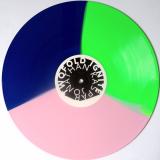
Gramrcy & John Loveless - ‘Lucid / Feel So’ will be available to download & stream on October the 10th via Phantasy There will also be a limited-edition run of just 200 hand-stamped 12” vinyl records, including the instrumental cut of ‘Lucid’, available to pre-order from Bandcamp and the Phantasy store.
Cerca:counterpart
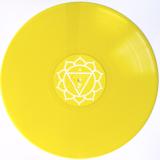
Utter presents Marshall Jefferson's previously unreleased meditation opus 'Yellow Meditation For The Dance Generation' alongside two remixes from French production maestro Joakim.
Marshall Jefferson: Chicago House music pioneer, creator of the anthemic ‘Move My Body’, an original collaborator of Adonis, Ce Ce Rogers and Roy Davis Jr., production mastermind of countless dancefloor classics such as Phuture’s ‘Acid Tracks’, Sterling Void’s ’It’s All Right’, Hercules’ ‘7 Ways’… and the soothing voice behind a 36 minute healing meditation guide. Yes, really.
But let’s rewind, slightly.
In 2017, Marshall was approached and encouraged by Ian ‘Snowy’ Snowball to write his autobiography and the pair set about putting Marshall’s account of the history of House music together. The book, ‘Marshall Jefferson: Diary of a DJ’ was published in 2019.
Following the book’s release, Ian and Marshall's collaboration continued and during the pandemic an outlandish idea arose to create a piece of music combining Ian's interest in meditation (he runs Club Chi specialising in Shibashi Qigong - a form of Tai Chi Qigong - which is a gentle form of movement therapy/exercise) and Marshall's willingness to experiment musically to see what might be possible.
The result is ‘Yellow Meditation For The Dance Generation’, where Marshall vocalises Ian’s lyrics in his instantly recognisable voice. The keen-eared out there may also recognise aspects of the music itself as a stripped back, lengthened and far mellower version of Marshall’s 1985 obscurity ‘Vibe’:
“I would take tapes to the Music Box and Ron Hardy would play my music. ‘Vibe’ was one of those tracks. I recorded ‘Vibe’ in 1985, but it became one of my tracks that I just forgot about until some guy on Facebook sent me a recording of it that was taken from a club. The only person who I ever gave a recording of ‘Vibe’ to was Ron Hardy. The other people I know who had copies of the track were Gene Hunt and Emanuel Pippin (DJ Spookie).
"The original version of ‘Vibe’ was made using a Roland 707, Roland JX-8P keyboard and a Roland 727 drum machine. I was still working at the Post Office at the time, and this was pre-‘Move Your Body (The House Music Anthem)’. ‘Vibe’ has the building blocks for ‘Move Your Body’ because it was using the instruments on the track that I discovered what I could do with the bass sound, to make a track like ‘Move Your Body’.”
Still, Ian’s initial intention for ‘Yellow Meditation’ was function and it was designed to be a ‘Sequential Relaxation Exercise’ focusing on the Solar Plexus. Bearing this in mind, Marshall took a bare-bones and hypnotic approach to this particular re-recording of ‘Vibe’ so that the voice takes centre stage and listeners (hopefully) find themselves on a meditative journey. In fact, this long-form track was always intended as a private tool purely for meditation at Club Chi rather than released to the public - after all, Marshall had also created and released a more drum heavy, ’traditional’ club-focused 'Vibe Three' instrumental version for that very purpose - but a chance airing of the full 36 minute version changed its path.
Much like those 1985 ‘Vibe’ cassettes, Marshall had sent the track to a few close contacts, one of whom was Kieran at Phonica Records who aired it over the shop’s basement soundsystem. Its unorthodox nature caught the ear of colleague Alex (of Utter) and the seeds of a physical release were planted.
Eventually, with the full-version carefully whittled down to a vinyl friendly length of 24 minutes, full track parts in hand and a b-side to fill, Alex sought out one of his favourite producers to take up the remix reigns: Joakim. The Tigersushi co-founder and Crowdspacer boss has a long history of boundary-pushing remixes that straddle both dancefloor functionality and experimentation. This time the original material resulted in Joakim coming up with a number of ideas and he finally delivered two versions - one club focused (‘Vertical’), the other more introspective and meditative (‘Horizontal’), both of which appear on the final 12”.
The limited edition 12” also includes a download code giving buyers access to all of the vinyl tracks plus an 18 minute extended version of Joakim’s ‘Horizontal’ remix, its instrumental counterpart (for those who can live without Marshall's voice) and full 12 minute acapella (for those who can't!)
Alex
a A1. Yellow Meditation For The Dance Generation (Edit) 24:00
b B1. Yellow Meditation For The Dance Generation (Joakim's Vertical Remix) 9:09
9:05
2025 Repress
For the second installment of its renewed imprint, Fuse's own in-house resident and one of Belgium's proudest exports Phara takes the reins for a deep dive into thick percussion and vibrant club landscapes. 'The Wall' puts current dance music under a microscope with a brush of truly vintage spontaneity, merging techno's confrontational nature with house's harmonic genuineness. This duality is reflected through Phara's own relationship with his home base Fuse and the complementary contrast between its two rooms.
The EP's title track serves as a hypnotic introduction for the A1, imposing a bass-heavy rhythm and a persistently oscillating synthline. A dense production full of energy, 'The Wall' inspires intrigue throughout its duration, revealing its true intentions through a capable sound system. Sharing the first side of the press is 'Blaes 208', a name that Fuse club goers will likely recognise, that guides the listener from effect into embrace. With lush keys echoing past a comforting drum sequence fit for a close-eyed dancefloor experience, Phara's impactful tendencies meet his affinity for the melodic through a blissful six minutes of crowd to selector connection. Switching sides, a return to a cold cold aesthetic is quickly apparent through 'Hush Now 206'. A pummeling, saturated bass competes with a kick of equal effect, rolling through a storm of metallic stabs. Mastering the message of urgency, Phara presents a lightshow of resonating percussive work, defining his space just to cut right through it. To close out with a lasting impression, the producer mutes the acoustics of his work through razor-sharp sound design dotting along playful snares, a duality reminiscent of the dynamism of Detroit electro. 'Motion Steps', referring to the stairs that ascend from Fuse's main room to its more left-field counterpart, captures the atmosphere of the almost shimmering music that can be expected to be played there; a place where Phara and many others have been known to explore the extremities of their music. He swiftly throws in melodic elements to recontextualize an otherwise pressing composition, and after three chapters of considerable weight, he concludes his record with infectious groove that flaunts technical ability.
Lucy Duncombe and Feronia Wennborg compose a modern symphony for virtual choir on 'Joy, Oh I Missed You', muddling sound poetry with Nuno Canavarro and ‘Systemische'-style machine-damaged surrealism. Like a mashup of Lee Gamble's 'Models', Akira Rabelais' 'Spellewauerynsherde' and Robert Ashley's timeless 'Automatic Writing’ screwed to perfection.
Duncombe and Wennborg have been chewing over ‘Joy, Oh I Missed You’ for four long years, working their process until they were "queasily intimate" with their arsenal of artificial voice tools. Tracing the history of the technology, from voice synthesisers and chatbots to AI voice analysis tools, the duo experiment relentlessly to develop a digital-age response to IRL extended vocal technique - think François Dufrêne, Yoko Ono or Phew. Less interested in replicating human sounds exactly, they instead test how various tools might cough up their own idiosyncratic tics as they stretch and stutter through attempts to mimic their "fleshware" counterparts.
Duncombe's got prior form here, most recently re-synthesising her voice on the brilliantly oily 'Sunset, She Exclaims' 45 for Modern Love, following a stunner for 12th Isle in 2021. Wennborg brings along experience from her tenure as one half of microsound duo soft tissue, whose 2022 LP 'hi leaves' (Students of Decay) was a haptic treasure. These approaches mesh remarkably well on their first collaborative full-length, with Duncombe's eerie bio-electronic incantations providing the ideal foil for Wennborg's carbonated hardware processes. It's not completely clear where the human voice ends and the zeroes and ones begin on 'Your Lips, Covering Your Teeth', as rolling cyborg syllables tumble over OS-startup womps and surprisingly svelte outcroppings of glassy, synthetic glitches. The music is surprisingly mannered, a sonic reflection of the cover, where a mouth is pixellated until only colour swatches remain. Duncombe and Wennborg trace the gradual erosion of their voices, leaning into the chaos as their various tools veer off into unique patterns of failure.
What sounds like a far-off, ghosted folk rendition (we're reminded of the Icelandic laments that Rabelais chewed up on 'Spellewauerynsherde') is offset by gnarled, bitcrushed machine faults and pneumatic lip smacks on the brilliant 'Residue', and on 'Brushed My Hair', the duo massage the voice until it sounds like a flute. Assembling stutters and barks and sighs into a celestial chorus alongside time-stretched moans, they create a levitational atmosphere on 'Smell It', freezing the energy from bizarre pitch steps to configure a zonked vocal ensemble.
'Joy, Oh I Missed You’ is an album that, like its source material, constantly morphs, testing the boundaries of its concept repeatedly without bubbling over into conceptual goo. In fact, it's remarkably euphonious, even at its most theoretically abrasive; Duncombe and Wennborg wring out uniquely angelic formations through a process of trial and error that packs a surprising, hefty emotional punch.
Repress!
For the upcoming release on KNTXT, label boss Charlotte de Witte announces a dual EP release. “The Selected EP and Pressure EP, to me, are the perfect reflection of the music I have been playing over the years.” says Charlotte de Witte. “On the Selected EP people will find the straightforward Techno sound with the Acid twist, that I love to bring to the floor when I’m touring.”
“It’s counterpart, the Pressure Ep, is an extension of the mixes that I assemble for my BBC Residency.
A more ambient approach, that’s rougher around the edges.”“Both releases can be seen as an ode to the techno I love and cherish.” concludes de Witte. On the subject of the dual release Charlotte says “For me this duality is essential to explore my interests both as a producer and DJ. Therefore it also made sense to me to release them simultaneously, as we also combine our label releases with events and our weekly radio show.”
Vinyl A Black Vinyl[12,56 €]
Vinyl B Black Vinyl[12,56 €]
Vinyl B Coloured Vinyl[20,59 €]
Known for his ability to create captivating, emotionally charged techno, Jonathan Kaspar eventually returns to Cocoon Recordings with his third contribution Twofold Split. One, yet simultaneously two releases that once again showcase his extraordinary talent through condensed techno with a pinch of trance, weaving together driving rhythms and atmospheric textures in a way that feels innovatively progressive.
Drifting hypnotically, this might be the most fitting way to describe what Jonathan Kaspar unfolds before us here. The rolling percussion grooves seamlessly intertwine with the siren's spectral tone, gradually blending into the alchemy of ‘Yah’ as it erupts into the mix. By the time the peak arrives, there’s a raw intensity in the air - the track seems to bend and stretch then drills and twists until it cracks, but never loses its sense of purpose and remainsanchored in its deep, pulsating groove. On the flip side, ‘Silver Lines’ stands as a counterpart, offering a contrast in both sound and atmosphere. With its minimalist arrangement, the track first nestles in gently, lulling the listener into its world—only to tighten its grip as a synth sequence gradually opens its cut-off filter, slicing through the calm, drilling into the mind, and shifting the mood from tranquil to tense.
Efficient Space honours trailblazing Australian imprint Volition Records with Volition Cuts Vol. 1. Evolving from Andrew Penhallow’s time at GAP Records, which smuggled Cabaret Voltaire, The Fall and the Factory catalogue into the region, Volition shifted focus to homegrown talent over imported sounds. Echoing its precursor’s blend of indie friction and electronic curiosity, the label wired itself into the pulse of club and rave culture, linking city scenes and amplifying them for the mainstream. With retina-scorching design, uncompromising packaging and top-tier remixes, Volition consistently bent the major label machine to its will.
No Volition retrospective would be complete without Sisters Underground’s intergenerational anthem ‘In the Neighbourhood’. Otara teenagers Brenda Makamoeafi and Hassanah Iroegbu brought their Pasifika perspective to Proud (An Urban-Pacific Streetsoul Compilation), a commercial success that platformed NZ rap and R&B with a clarity that outshone its overseas counterparts. The quiet architect of Volition’s sound, producer prodigy Robert Racic flipped the classic as a hip-house dub before his untimely passing in 1996.
Its A-side companion comes from Brisbane synth-pop unit Boxcar, who signed to Volition after frontman Dave Smith handed a cassette to Tom Ellard of Severed Heads during a school newspaper interview. That unlikely handoff led to their 1990 debut Vertigo. Here, their ritual-laced, body-jacking industrial is retooled by Miami freestyle maverick Tony Garcia.
Further cherry-picking from the VOLT vaults, Sexing The Cherry unleash a bleep-addled meltdown from Brisbane’s Edwin Morrow and Cherryn Lomas. ‘This Is A Dream’ was recorded exclusively for High (A Dance Compilation), the first all-Australian V/A to top the ARIA charts, propelling the local movement into national consciousness.
Closing the sampler, Sydney’s Single Gun Theory joined Volition as they moved from post-punk abstraction and electronic collage toward downtempo, sample-based mysticism. Their 1994 ambient-pop reverie ‘Fall’ is reimagined by Stuart Crichton and Apollo 440’s Norman Fisher-Jones as full-throttle Goa trance, a final surge that channels the label’s relentless push into new terrain.
Volition Cuts Vol. 1 is dedicated to the loving memory of Volition’s visionary founder Andrew Penhallow, and key contributors Robert Racic and Edwin Morrow.1
Efficient Space charts Ghost Riders’ North American roadmap, crashing into 1973 New York to ignite the unfiltered teen dreams of Dennis Harte.
In the late ’60s, 11-year-old prodigy Dennis Harte was handed a Sears-bought Silvertone 1448, its in-case amplifier primed for street-level incantations. Recruiting two neighbourhood friends, the trio hammered out raw rhythms, drawing in Brooklyn’s wandering bohemians, keen to glimpse a prepubescent Alex Chilton in the making.
Also jamming with his older brothers, Bart and John, a family friend introduced the siblings to budding music exec Carl Edelson, who had spent the better part of two decades hustling through a string of local labels. A father figure of sorts, Edelson backed them immediately, facilitating sessions at the famed A-1 Sound Studios and Sanders Recording Studio and pressing four 7”s on his newly minted Roundtable Records. To maximise his chances of courting major labels, he strategically assigned each release a different artist name - Dennis Harte, Pure Madness, Harte Brothers and the wryly titled Harte Attack.
Dennis’ emotional maturity and sheer talent bleed into the defining ‘Summer’s Over’, penned by Edelson and once recorded by mid-'60s New Jersey garage vocal group The Wouldsmen. Morphing into an unfathomably teenage, blue-eyed soul/psych lament, it aches for a season slipping away forever. Its Harte Attack edition counterpart - the candied ballad ‘Running Thru My Mind’ - delivers unison harmonies and kinetic guitar interplay with a streetwise punch, channeling the spirit of NYC-area icons The Rascals, The Lovin’ Spoonful, and The Youngbloods.
Roaring like the Spencer Davis Group, Pure Madness’ organ-driven bruiser ‘Freedom Rides’ screams of biker gangs, yet its true subject - ’60s civil rights activists the Freedom Riders - looms as another towering theme for an adolescent perspective. Meanwhile, the loose, bluesy ruckus ‘Treat Me Like a Man’ digs back into Edelson’s catalogue, covering the Beatles-inflected Levittown group The Shandels.
Though Dennis later found success touring with Wilson Pickett and now doubles as a piano tuner to the stars, these four snapshots frame ambition on its outer edge - a heartfelt homage to an unbreakable brotherhood.
- A1: Resist
- A2: Mainframe
- B1: Northern Safety Route
- B2: Continental Drift
- C1: Self Synchronise
- C2: Weather The Storm
- D1: Comms Down
- D2: Phase B
- E1: Underneath
- E2: After Effects
- E3: As A Glacier
- F1: Trust The Process
- F2: Simulation Cult
- G1: Simulation Cult (Alessandro Cortini Remix)
- G2: Self Synchronise (Lord Of The Isles Remix)
- H1: Resist (John Talabot Remix)
- H2: After Effects (Surgeons Girl Remix)
- H3: Mainframe (Kaitlyn Aurelia Smith Remix)
Electronic music visionary Pye Corner Audio, a master of blending nostalgia with forward-thinking production, has carved out a unique niche in the electronic music landscape. Drawing inspiration from 1970s and 80s synthesizer music, Detroit techno, and cinematic soundtracks, his work often evokes a sense of eerie futurism.
Lapsus Records is proud to present Where Things Are Hollow: No Tomorrow, a comprehensive box set revisiting and expanding his acclaimed Where Things Are Hollow series. This release includes the first two volumes—with Volume 2 featuring an unreleased track—and two additional chapters that further enrich the series’ narrative. Once again, Pye Corner Audio delivers innovative soundscapes, drawing inspiration from ambient techno, cinematic electronica, and experimental slow disco.
The third installment unveils a constellation of entirely new tracks, weaving the ambient, synthwave, and retro-futuristic textures that define Jenkins' work. Meanwhile, Where Things Are Hollow 4 amplifies this narrative, incorporating reinterpretations by some of today’s most visionary artists: Alessandro Cortini, Kaitlyn Aurelia Smith, Lord Of The Isles, and Surgeons Girl, alongside the popular 2020 John Talabot remix of "Resist".
As with previous entries, the visual identity of Where Things Are Hollow: No Tomorrow is a striking collaboration between Basora Studio and renowned illustrator Alex Trochut, offering a visual counterpart to the series' otherworldly audio.
With all tracks remastered for this release, Where Things Are Hollow: No Tomorrow is a testament to Jenkins' enduring influence and creative evolution, cementing Pye Corner Audio as a key figure in modern electronic music.
- A1: Intro
- A2: Schizophrenia
- A3: Tom Violence
- A4: White Kross
- A5: Kotton Krown
- B1: Stereo Sanctity
- B2: Brother James
- B3: Pipeline_Kill Time
- B4: (I Got A) Catholic Block
- C1: Tuff Gnarl
- C2: Death Valley '69
- C3: Beauty Lies In The Eye
- C4: Expressway To Yr Skull
- D1: Pacific Coast Highway
- D2: Loudmouth
- D3: I Don’t Wanna Walk Around With You
- D4: Today Your Love, Tomorrow The World
- D5: Beat On The Brat
In October 1987, four months after the release of their critically acclaimed Sister LP, Sonic Youth showcased their latest work in a blistering set at Cabaret Metro, Chicago. The concert was introduced by Big Black's Steve Albini (who at the time was banned from the venue) and subsequently released as a semi-official bootleg under the title Hold That Tiger on writer/provocateur Byron Coley's impishly Geffen-baiting label Goofin' (years later the band would use this nom de guerre for their own imprint).
Hold That Tiger's sterling reputation among the Sonic Youth faithful is well deserved. In fact, it isn't a stretch to suggest that the album is to the first handful of SY releases what It's Alive is to the first three Ramones LPs – a feral and liberatory public snapshot of a band's blossoming imperial phase. Indeed, HTT is the sound of a group at the peak of their powers, presenting new songs alongside a handful of older ones with the kind of wild, cathartic enthusiasm common to rock 'n' roll's most revered live albums.
Taking nothing away from Sister – inarguably one of indie rock's first true masterpieces – it is reasonable that many fans prefer the live versions heard on Hold That Tiger to their studio counterparts. On HTT, Sonic Youth is a spiky, pummeling and confident force, alternately mammoth and meditative. Sister and its predecessor EVOL notably added an airy, dreamlike reverie to the band's turbulent doom-lurch, a stylistic evolution that seems to crystallize on HTT. Throughout, Kim Gordon's sinewy, sumptuous bass and Steve Shelley's propulsive, tom-heavy percussion provide the bedrock groove for Thurston Moore and Lee Ranaldo's ferocious barrages of noise-guitar crunch.
By 1987, the band was confidently articulating their dual lexicon of punk-noir dissonance and supernal, psychedelic sonic calligraphy – bending their jagged, streetwise gnarl into balloon animals of dazzling and beautiful songs. This collision of splendor and chaos would become a hallmark of the group's singular alchemy as well as provide a blueprint for the post-SST American underground they would help invent and ultimately nurture.
Hold That Tiger's encore – four songs by the band's beloved Ramones, which Thurston would later astutely compare to "the perfect pudding after a hearty meal" – serves as a reminder that, like any true punks, Sonic Youth never could resist a good, rousing anthem to send the kids home with their ears ringing, their hearts hot-wired.
This first-time reissue with speed-corrected master comes in a gatefold tip-on jacket. Mastered by Bob Weston from the original tapes. Recorded by Aadam Jacobs. Audio repair/editing by Aaron Mullan.
Marbles is the legendary 1970 proto punk / dance classic from John McLaughlin’s US debut album 'De?otion', recorded at the time in which he played on Miles Davis' Bitches Brew and taped the Record Plant session with Jimi Hendrix.
Marbles didn't just deliver jazz rock's most danceable 4/4 beat, played by Band of Gypsies / Electric Flag drummer Buddy Miles. It is also centered with a once-in-ageneration bass line performed by Billy Rich. Larry Young's otherworldly Hammond textures predate a lot of what synthesizers were about to do much later, and the blowtorch energy emanating from John McLaughlin's cranked amp went beyond what most would had dared during the defining era of heavy rock guitar. An apex achievement at the intersection of jazz rock, guitar rock and dance music without parallel, before or since.
Background: John McLaughlin arrived in New York in 1969 to join Tony Williams' new group Lifetime which also featured Larry Young and eventually Jack Bruce (of Cream). On the second day in town he found himself in the studio with Miles Davis, recording 'In a Silent Way.' His playing would also take center stage in Bitches Brew, Jack Johnson, On The Corner and several other Davis key works of his much beloved first electric era. In between a busy schedule with Lifetime and Davis, McLaughlin also recorded two solo albums in 1970, 'De?otion' with an all-electric group and ‚'My Goa|’s B?y?nd' as its acoustic counterpart. By the time he formed his group Mahavishnu Orchestra in 1972, John McLaughlin was firmly established as the most important practitioner of his instrument of his generation within and well beyond the emerging jazz rock / fusion genre, and he has continued to evolve and surprise until today.
Here, a thorough remaster is supplemented by a new and throbbing techno version by Stefan Goldmann.
Bronze, Silver & Brass swing in horns blazing with their electrifying second 7" vinyl single on Timmion Records. "Renard's Groove" and "Brass In Motion" expand the musical range that can be distilled from a brass band mixed with guitar and funky drums. You are in for a cinematic ride through funk, soul, and jazz-inspired terrain. On the A-side, "Renard's Groove" delivers fast-paced, library soundtrack style funk. Driven by a tight guitar riff and solid breakbeat drums, this instrumental gem stages a high-speed chase though the grimy alleyways of a nameless 1970s metropolis. Flipping the record reveals the B-side, "Brass In Motion", a mellow mid-tempo instrumental that once again tips its hat towards the golden age of independent jazz funk. While maintaining the funky soundtrack mood, its lyrical chorus and unhurried pacing make "Brass In Motion" a perfect pairing for the frenetic energy of its counterpart. With their second release, Bronze, Silver & Brass continue offering fresh sounds for those who have an ear for uncomplicated funky instrumentals. The digital package of the group's singles comes with a digital only bonus track "Boondocks", that reveals another sweaty street funk workout for getting your dance on.
A1 Dharma
Opening the LP in lively fashion, JLM liberally flecks a detailed composition with exquisite breaks cymbals playing a key role in the evolving patterns as the track progresses while heavy layers of synth work forms a substantial atmosphere. Musical and resonant with micro melodies and sprinkles of FX, Dharma encapsulates JLMs everimpressive attention to detail throughout its seven minutes.
A2 Artha
Where to start with Artha Setting the scene immediately with an epic synth intro that whooshes through your mind to prepare you for what is to come, its immediately obvious JLM has crafted a modern day classic here. Crisp Hot Pants breaks drop before we are treated to inspiring, continually developing and rousing melodies with a tuneful 808 bassline playfully dancing below. One to drop any chance you get Artha deserves to be heard.
B1 Moksha
Delightfully clear, characterful percussion introduces Moksha, a dancefloor friendly piece which rolls along beautifully thanks to old school breakbeats seizing the initiative while fluid keys, filtered synths and waves of serene effects punctuate the production. The
kick-light breaks will stay long in the memory as perfect for both the headphones and the discerning dance floor, just as weve come to expect from JLM.
B2 Kama
Taking you back to the early Progression Sessions era with a modern scifi twist reminiscent of your favourite space operatics, Kama will sit effortlessly alongside tracks from those days and now with its simple yet memorable core wind melody, sprawled
across energetic breakbeats and wide layers of synths & pads to a typically appropriate bassline. Another fine example of the evolving diversity in JLMs production with Spatial.
C1 Boundary
Switching things up, JLM treats us to a notably laid back vibe as Boundary is introduced by understated, filtered synth work and explorative kicks before a mellow yet chunky break pattern provides energy to the track. Detailed as ever, a myriad of effects and
samples are introduced and dance around the mix with a wistful complexity, in a track destined to be in your playlist for some time to come.
C2 Hexis
Kicking things off with a filtered DJ friendly beat intro, Hexis soon drops with constant old school jungle synth work and periodical strings alongside rasping, striking breakbeats that drive the track forward with impressive energy. The breaks reverberate in and out of the mix at intervals as JLM toys with the listener at will, creating a tonally unique and vibrant composition very much worthy of our attention.
D1 Ideal Forms
Low pass breaks echo and jostle for position with FX free counterparts early doors in the finely crafted intro to Ideal Forms, slowly developing with a triumphant assortment of keys and synths before a third layer of breaks are added which underpin a detailed, yet never busy, breakbeat landscape. Occasional breakdowns offer respite in a glistening wilderness of comforting melodies and light ambience.
D2 Physis
JLM rounds the album off very much on form with Physis a suitably climactic piece that opens with a detailed array of percussion, synths and effects before superbly programmed breaks take over the mix. An occasional, all encompassing sci fi synth rush
permeates the atmosphere to almost cinematic levels, while a melodic bassline nestles below leaving you with a track (and an album) you will not forget.
Words by Chris Hayes (Spatial / Red Mist)
Damian Lazarus returns to Crosstown Rebels with new single ‘Sunrise Generation’, featuring Fink. Including a remix from Norwegian talent and up-and-coming Crosstown family member Meera, the single marks Lazarus’ first material on his iconic label in over a year.
Visionary DJ/producer and Crosstown Rebels founder, Damian Lazarus, makes his long-awaited return to the label with his new single ‘Sunrise Generation’, featuring the voice of acclaimed and celebrated singer-songwriter Fink. Set for release on 8th November 2024, the highly anticipated production marks Damian’s first material on Crosstown since his collaboration ‘Revolution’ with Dennis Cruz in October 2023, his Grammy-nominated single ‘Don’t Be Afraid’ with Diplo & Jungle, and his first solo release since his ‘Beijing Spring’ project on sub-label Secret Teachings in April 2022.
An emotive, captivating and uplifting track, ‘Sunrise Generation’ is not just a return to form but a heartfelt homage that celebrates the magical moment and euphoric energy of sunrise.
The release also features a return for Norway’s Meera, an exciting artist whose recent outing on Crosstown Rebels with her ‘Stikk’ EP made notable waves, building on her debut on sister label Rebellion last year in style. Her remix brings fresh energy, layering deep textures and rhythms over Fink’s haunting and heavily processed vocals to create a stirring counterpart to the original.
A sonic celebration of unity and renewal, ‘Sunrise Generation’ once again affirms Lazarus’ status as a true leader within the electronic scene. The single follows a series of high-profile remixes, including reinterpretations of tracks from Josh Wink, Jamie Jones, Bedouin, Totally Enormous Extinct Dinosaurs (TEED), and Made By Pete, along with his acclaimed collaboration ‘Don’t Be Afraid’ with Diplo and Jungle. As always, Lazarus’ ability to craft atmospheric, emotion-driven soundscapes shines through here as he continues to innovate and inspire with another cherished anthem crafted for special dancefloor moments.
Kniteforce Crew artist and council member Paul Bradley shows off this lighter counterpart to his epic Swamped EP! This killer slice of old skool rave has proper piano vibes, a summer feel and loops to die for. Heavy beats and uplifting vocals are the name of the game, and the game is being played at an expert level!
how do we live in times when nothing seems safe, how do we listen to music when rockets and bullets make the air scream, how do we produce music when the building with our studio is simply no longer there?
over the last 2 years, AMAS and KONSTANTIN KOST have been trying to produce a techno EP across the borders of the war in ukraine. KONSTANTIN KOST was never able to leave ukraine for this, while we were able to move freely through europe.
this ambivalence is part of this album, it is part of every note and every line of the poems that can be heard here. we all associate techno with bass-heavy and dancing through the night, but ODESSA is more, it is a journey without being able to travel, an experience without being able to experience, an escape without being able to escape and a life without really being able to live ...
neither AMAS was able to travel to odessa during this time, nor KONSTANTIN KOST to europe, neither was able to experience the other personally. however, the exchange of music and lyrics has built up a relationship to a country at war, as well as to its people, musicians, women and children.
while we were dealing with our everyday problems in germany, the situation in ODESSA became increasingly confusing. the constant fear of being drafted and producing videos and images for the album at the same time were extremely ambivalent moments.
how do you deal with your counterpart in such moments and what do you say to someone in a situation that we can hardly imagine? we often talked about friends simply disappearing and corrupt officials and soldiers embezzling money and in the next sentence it was straight back to the vinyl production. these conversations were very rational and at the same time extremely surreal.
this EP is not meant to be a political EP, it is meant to be a human album and to take away the feeling of powerlessness from the people who were and are involved. this production and its music is a triumph over the destructive and dark side of war, it is meant to show that art is boundless and that people are connected all over the world even in the darkest times.
in the first track RED GLOW our guest TANYA (musician and djane from Odessa) stoically repeats the words LOVE and FEAR, followed by the words: “i meet you with red glow, in your eyes i quickly dissolve!” the track is part of everyday life, everywhere you meet this red glow and yet everything has to flow on and yet people still live and dance ...
in NIGHTCALL we walk through the streets and follow the call of darkness. the words “through the night” are used here repetitively like a percussion. but the highs and lows also give us hope and the belief that we will wake up again tomorrow and start a new day. in the dark there is always light, which must be preserved and found.
OLD KINGS is also the title of the poem we have written, based on the poem OZYMANDIAS by percy bysshe shelley. OLD KINGS determine our times and our political systems, seemingly unteachable old men hold the world in a stranglehold and it seems as if there are an infinite number of them. yet we continue to fight against these people, we cannot and do not want to do otherwise ...
in TALK TO GOD, KONSTANTIN KOST reads from the well-known ukrainian poem “a cloud floating behind the sun” by TARAS SHEVCHENKO, a famous ukrainian poet and writer. he is considered the founder of modern ukrainian literature and, in part, of the ukrainian language. it is about red fields, the fog and its darkness, as well as the sea and the calmness of the heart in nature, the longing for peace and peace with god.
in addition to poetry and music, all photographs and videos are original recordings by KONSTANTIN KOST of his city ODESSA. although we cannot visit each other, we still share strong visual impressions of a city that, in all its beauty and resilience, will hopefully soon be open to the world again. the cover is therefore also a picture of the port of odessa, a place where people and goods from all parts oft he world will soon be able to sail in and out again.
Upon examining the eventful life of Can bassist Holger Czukay,
one might conclude that this intrepid musician was a loner. His
turbulent career exuded an enduring eccentricity governed by a
boundless free spirit. Yet Czukay, who passed away
unexpectedly last year at the age of 79, constantly emphasized
that his creativity was always contingent upon a musical
partner, whether that was a skin-and-bones counterpart or an
anonymous manifestation that interacted with him through
radio waves or, as happened later, the internet. Nonetheless,
most of his partners were of flesh and blood.
His oeuvre, which is in itself cinematic in nature, boasts a cast
worthy of a Martin Scorsese film. Only the most interesting
character actors were cast: Brian Eno, Phew, Rolf Dammers,
David Sylvian, Annie Lennox, Jah Wobble, his Can bandmates...
the list could go on and on.
Many of these masterpieces are now out of print, so Groenland
Records, who already released the highly acclaimed
retrospective 'CINEMA' to mark the occasion of Holger's 80th
birthday at the beginning of the year, has taken it upon
themselves to release reissues of Holger's music in order to
make it accessible once again.
Anonymous British funk studio outfit Ultrafunk was spearheaded by Blues & Soul magazine proprietor John Abbey, who ran a fashionable record shop and label called Contempo in London’s West End during the 1970s; he conceived of the group as the UK counterpart to US studio bands like Mfsb. Arranger Gerry Shury, who had worked with Barry White and Maurice Gibb of the Bee Gees, drafted guitarist Chris Rae and bassist Frank McDonald (who often composed library music together) and future Rubettes drummer John Richardson to form the group, in situ. A lack of band photos, suggestive song titles and a predilection for American cover tunes led many to believe the band was US-based. Their self-titled debut LP is where the myth all begins, with a number of truly atmospheric and cinematic hard funk instrumentals, given added textural depth through full orchestration, including covers of Bill Withers’ “Use Me” and Stevie Wonder’s “Living In The City.” Though not quite as compelling as the better-known follow-up set, Meat Heat, there is still plenty to savour on Ultrafunk, making this debut companion disc a must-have for all true funk aficionados.
Following his debut EP ‘En clair-obscur’ and a series of singles earlier this year cementing his place as a rising name in the world of cinematic soul & funk, Hamburg’s finest cinematic soul artist ‘The Offline’ announces his debut album 'La couleur de la mer'.
Reminiscent of film scores from the 60s and 70s, The Offline worked with co-producer Tim Liztenberger to channel the influence of film composers such as Francois de Roubaix and Brian Bennet, creating his own soundtrack on ‘La couleur de la mer’. Inducing images of manorial, fog-swept villas at the sea's edge, silhouetted sailing boats and cigar-chomping villains attempting to thwart the mission of an imaginary hero, the record is a masterfully composed sonic journey. Experimenting with themes and atypical song structures, the music moves from dramatic cues to fragile romanticism. It incorporates psychedelic spaciness, retro soul and hip-hop sensibilities informed by The Offline’s extensive record collection and crate-digger status.
“Ever since I was a child, I was fascinated by the soundtracks from the 60s and 70s, and I always wanted to make an album in the film score direction. I wrote about 30 demos, kicked half of it and stuck to the ones that felt right in the dramaturgical structure of the ‘movie'. Interestingly the main theme was set early on while writing the album, which made the writing process much easier.”
Aptly named, ‘Thème de la couleur de la mer’ opens proceedings, establishing the core motifs of the record. Haunting flutes and xylophones lead the way into Khruangbin-esque guitar lines, which sit against a hip-hop canvas that returns on boom-bap head boppers like ‘Quelque chose reste’. Retro soul revival takes precedence on deep cuts like ‘Un bout de chemin’, with wah-gated guitars interacting with emotive cello lines and symphonic string & horn sections.
The Offline came to life when composer and photographer Felix Müller travelled the Atlantic coastline in the south of France with his analogue camera, capturing beach life on film. After coming back to Hamburg, he started writing songs as the sonic counterpart to the analogue visuals. His Debut EP ‘En Clair-Obscur’ includes five tracks that capture the essence of his journey and the feeling of a cool summer soundtrack.
Repress.
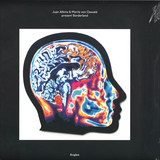
Juan Atkins and Moritz von Oswald - the two vital proponents of Detroit-Berlin axis, return to the mothership following their 2016 full length effort Transport.
Angles is the result of a new conversation between the founding father of electronic music and his German counterpart. The serene source of captivating musical ideas that is Borderland, keeps on flowing and vibrating with subtle energy.
Two versions form here a new set of studio-refined sequences. Both parts of Concave' are the ungraspable manifestation of the wild quietness in which the duo finds itself. Predicting at once, possible outcomes for the craft of electronic sound, while respecting their profound origins.