Rising Welsh producer // DJ Harrison BDP has been making some serious noise as of late, with a string of stand out releases on Phonica, Berg Audio & Lost Palms. This time making his debut on Shall Not Fade with some of his most weighty productions to date. ‘Sound Expansion Meditation’ takes the listener on a voyage of discovery with spacey synths, dusty drum sequences and floating bass riffs.
Поиск:country boy
Все
Wah Wah 45s are proud to present a unique collaboration between the U.K.'s very own Afrobeat Ambassador, Dele Sosimi, and a producer who's been at the forefront of the South London electronic music scene for a decade now, Medlar.
The pair first joined forces five years ago, when Medlar was asked by Dele's label to remix the title track from his last album,You No Fit Touch Am. The result was possibly one of the most popular and cherished remixes to appear on the imprint. The producer's respect for the history of Afrobeat shined through in the mix of course, but it was his ability to finely balance that with his house music instincts whilst adding an infectious groove and classic 80s analogue synths that really stood out.
The track was an instant classic, and it soon became clear that the Afrobeat Ambassador and Peckham producer needed to make some music together. Having never actually met during the remix process, the dating began, and luckily the two were clearly a perfect match.
After some weeks of pinging ideas back and forth, and spending time in the studio together, it became obvious that this project was also something they could take out live. As so it has been, from their modest debut performance in East London last spring, to playing festivals across the UK and beyond. Never the same show twice, their shows are based around a bank of rhythms on MPC which come alive when combined with Dele's vocals and improvisational keyboard explorations, all of which are dubbed out live by Medlar. Their musical journey is always unpredictable, vibrant and often quite surprising!
With this in mind, when picking tracks they'd developed on the road over the last year to take into the studio,Full Moonevolved into what might be best described as a bossa nova meets country & western lounge track, suitable for sipping cocktails to on a beach, or perhaps in your back garden in the current situation!
"This is really great this track. Really great!" Gilles Peterson
The original version of the song dropped earlier this summer and has been championed by both Gilles Peterson and Moses Boyd on BBC 6Music. When it came to remix duties, there was only one production outfit who fitted the bill, and one who the label had been trying to coax a remix out of for a couple of years.
Lars Dales and Maarten Smeets, otherwise known as Detroit Swindle, have been turning out musical, soulful, tropical and always party starting house music for almost a decade now. Wah Wah label boss Dom Servini hooked up with the pair at a European festival a couple of years ago, and ever since has been waiting for the right project to come along that would spark their imagination.
"When we heard the original of 'Full Moon' for the first time, we really felt the retro style with the cr78 drum, the dreamy pads and that almost overly simple synth flute. For us, that really defined the direction of the remix and we looked for a hook that could make those elements pop in a more energetic way. The vocal is also super laid back so we chopped it up a bit to give it some more spice. I think it was when we wrote the chords for our remix that the dubbed out 80's synth vibe really started to take form. It turned out to be a really nice remix for this time of year and hopefully it'll warm some hearts when people hear it." Detroit Swindle
The follow up single,Gúdú Gúdú Kan,in turn received support from Tom Ravenscroft and Gideon Coe on BBC 6Music. It's Dele and Medlar's own take on an Afro-disco stomper. The title refers to the role the snare drum plays and its relationship with Ìyá Ìlù kan, or the kick drum. It's a simple but very effective metaphor for this unique musical collaboration where once again the pair forged a sound that's all their own.
Taking things back to The Shrine by way of a little Bugz style bruk magic, Daz-I-Kue's remix ofGúdú Gúdú Kanrestructures the tune more in the style of a Fela classic, albeit with a broken flavour and layers upon layers of keys galore! In doing so, Daz creates what we think is a sure fire future club classic.
For the first time you can enjoy the full length versions of both of these top class remixes on a single slab of gorgeous wax!
Having previously brought together world-renowned Theremin soloist Carolina Eyck and electronic producer Eversines for a specially commissioned collaborative mini album, yeyeh founder Pieter Jansen has now conjured up another unlikely but inspired joint album, this time featuring award-winning free-jazz vocalist Greetje Bijma and leftfield house, techno and ambient producer Oceanic.
The project has its roots in a chance meeting between Jansen and Bijma, a legendary figure on the Dutch jazz scene who in 1990 became the first woman to win the country’s top jazz accolade, the VPRO/Boy Edgar award. Apart from having previously worked with the likes of Anna Homler (aka Breadwoman), Jasper van ’t Hof, Han Bennink, Louis Andriessen and Willem Breuker and her own solo projects, she’s in a league of her own.
Jansen is a big fan of Bijma’s 1996 heavily electronic collaboration with Jasper van’t Hof and Pierre Favre, Freezing Screens, and was with the friend who first introduced him to it when he bumped into Bijma.
Excited to meet someone who had made one of his favourite records, Jansen took the opportunity to ask Bijma if she would be interested in working with young electronic music producers. To Jansen’s delight, Bijma quickly agreed.
Weeks later, Bijma stepped into the studio with Oceanic, a rising star of the Dutch electronic underground whose releases as Oceanic for Nous’klaer Audio and BAKK Plafond revolve around mechanical rhythms, opaque ambient textures, minimalist melodic movements and effervescent electronics. The pair quickly connected on an emotional and musical level, with Bijma taking her cues from Oceanic’s electronic sounds and rhythms, and Oceanic drawing inspiration from Bijma’s dexterous, mind- bending and otherworldly vocalizations.
After two hugely productive days, the cross-generational duo had completed a couple of mesmerizing songs – breathlessly haunting album opener “Swallow a Party” and chilly ambient closer “A Window Drifting” – and recorded several hours or improvisations that Oceanic later edited, layered-up and re-modelled.
The results are little less than spellbinding. The range and versatility of Bijma’s vocalizations is breathtaking, while Oceanic’s music – which cleverly incorporates the free-jazz singer’s vocal notes, tones and proclamations – swings between becalmed beauty and breathless intensity.
Some of the set’s most striking moments are those where Oceanic re-contextualizes Bijma’s varied vocal sounds with the dancefloor in mind. On the pulsating “Technicolour Memories”, up-tempo “Step Snakes” and hypnotic “Never Done”, Bijma’s scat outbursts not only ride Oceanic’s rhythms, but also form part of the densely layered percussion tracks beneath.
Like the release’s more downtempo and ethereal moments, these hybrid organic- synthetic compositions defy easy categorization, offering a unique brand of alien electronic/acoustic musical fusion that lingers long in the memory.
A memorable name with an outstanding cover, Fuzzy Duck is a classic slice of underground London art rock and melodic psychedelia. Originally released on MAM in 1971, it’s truly a musical force of infectious riffs and fiery solos, sharp tempo changes, a tight rhythm section and heavy, Hammond-drenched grooves. With echoes of Spencer Davis Group, early Grand Funk and Vanilla Fudge, it comes on like a heavier Soft Machine or Caravan. No wonder Fuzzy Duck’s cult appeal has endured.
The album features Mick Hawksworth (Five Day Week Straw People, Andromeda) on bass, acoustic 12-string, electric cello and some of the vocal duties, and also Roy “Daze” Sharland (Crazy World of Arthur Brown, Spice) on organ and electric piano. Accompanying those two were Paul Francis on drums and percussion, and Grahame White on guitars and the rest of the vocals.
Originally released in an edition of 500, Fuzzy Duck became legendary all over the world through a holy trinity of scarcity, personnel and its sheer brilliance.
The album kicks off with a heavy, bass-fuelled, Hammond rocker titled “Time Will Be Your Doctor”. This is pure hard-edged blues rock, brilliantly played. Its drum break intro was sampled by DJ Premier for Gang Starr’s “Mostly Tha Voice” on 1994’s legendary Hard To Earn. And we can hear its personality all over Harvey and Thomas Bullock’s Map Of Africa.
Rollicking highlight “Mrs. Prout” follows. At nearly 7 minutes long, it incorporates more psych-leaning guitar and drawn-out keyboards à la Ray Manzarek with the band effortlessly switching from jazzy rhythm section to a progressive one. That magnificent instrumental jam that starts half-way and continues through to the end is a true wonder.
“Just Look Around You” is propulsive folk-rock with a soaring, proto power-pop chorus, backed by frenetic organ and heavy bass high in the rich, intoxicating mix. Back comes the heavy, strung-out psych to both close out side one with “Afternoon Out” and kick off side two with “More Than I Am”. Both tracks are improvisational winners that stylistically nod to the late sixties and “More Than I Am”’s guitar hook, catchy organ and memorable chorus would’ve surely made it a great single.
“Country Boy” quenches the thirst for rhythm and melody, only the lyrics and vibe are wonderfully creepy. The sudden cut of the groove and the drop into a more sinister tempo will make you stumble, before the band pick up speed and toss you back again into the opening jam, this time with a badass organ to ride you home. The final, fully fleshed out track is the majestic “In Our Time”, which oscillates between endless organ-driven boogie and heavenly, genuinely moving vocals. Just stunning.
Infamous instrumental cut “A Word from Big D” rounds out the album. Yes, that’s the band jamming with duck quack sound effects accompanying the music. “Ducking vocals” as the sleeve says. You know, just in case the whole “duck” theme had passed you by. It’s an appropriate closer for what sounds like an album that must have been *a lot* of fun to record. It’s definitely fun to listen to.
Mastered by Be With’s chief sound duck Simon Francis and cut with glee by the veteran Pete Norman, this reissue of Fuzzy Duck’s one-and-only LP sounds as mighty as it should. That unforgettable sleeve artwork has been carefully restored and the records pressed by the wonderful Record Industry in the Netherlands. Essential.
Lyrical King is the debut 1987 album from one of rap’s pioneers and innovators who was said by some to be the first artist recorded by Def Jam Records. T La Rock recorded this album for Sleeping Bag Records as the labels first rap act and show cased him at the
height of his career. An old school legend, MC and dancer who was sampled by Public Enemy and Nas, heavily influential on artists such as LL Cool J and the Def Jam sound and would walk out on stage with Run –D.M.C . Highlights include ‘Back to Burn’ and ‘This Beat Kicks’ where T La Rock teamed up with visionary producer Kurtis Mantronik.
Preceded by some of Bolan’s most fondly-remembered singles, “Children Of The Revolution”, “Solid Gold Easy Action” and the classic “20th Century Boy”, 1973’s Tanx was the first T. Rex album to make full use of the ever-expanding range of studio gadgets. And while the album represented a new musical departure, several tracks maintained a direct link to the old sound.
The album reached number 4 in the UK album charts and has gone on to influence numerous musicians from Suede to Depeche Mode’s Martin Gore. This edition includes the complete album remastered by producer Tony Visconti and Ted Jensen.
Mar & Sol presents the reissue of "Na Cambança" the first album of the big band from Guiné Bissau SUPER MAMA DJOMBO.
The band was formed in the mid-1960s, at a Boy Scout camp, when the members were only children (the youngest was six years old)!
Djombo is the name of a spirit that many fighters appealed to for protection during Guinea-Bissau's War of Independence.
In 1974, the politically conscious band leader Adriano Atchutchi joined. The group became immensely popular in the young country, which had gained its independence on the same year. They would often play at President Luís Cabral's public speeches, and their concerts were broadcast live on radio.
In 1980, they went to Lisbon and recorded six hours of material. The first album "Na Cambança" was released in this same year, and the song "Pamparida" which was based on a children's song became a huge hit throughout West Africa, and an important historical masterpiece that finally see the lights again by the hands of our label.
Skyf Connection (pronounced skAyf) was a short lived project by long time friends Anthony Mthembu and Enoch Nondala. At the time they were working for Annic Music, an independent label run by married couple Anne and Nic Blignaut. Although the label was known mostly for Zulu, Sotho, Tsonga and other traditional styles, they had a few Disco releases on the label including groups like Keith Hutchinson’s Focus and Enoch’s discovery Lena, who went on to have huge success under the name Ebony a few years later.
In 1984, when an artist didn’t show up for a booked session they decided to make use of the studio time and began working on a demo. At the time Anthony and Enoch had been playing for a year at a new club called Gamsho, located on a farm on the outskirts of Kliptown Soweto. Along with Blackie Sibisi, Sepate Mokoena and Elijah “chippa” Khumalo they made up the resident house band. Due to cultural boycotts and American artists refusing to perform in the country, locals took it upon themselves to fill the market with the American sound the crowds demanded. The demo they recorded at Blue Tree Studios was going to be their product they could use to promote their brand of the American sound. They then took the demo to Universal Studios where their friend and trusted engineer Jan “fast fingers” Smit was working. It would be here that they would polish their demo into something they could take to their bosses and have pressed. Equipped with a DX 7, Linn Drum and some Juno synthesizers they were on their way. Jan lived up to his name and programmed the drums, it is rumoured he could program in almost real time, a skill that translated to the local arcade where he held high scores on many machines. Enoch would be singing and playing guitar while Anthony would do all the Bass and Keyboards. The result was 4 funky party anthems with synth work like no other recording at the time. Their take on what they believed the crowd would want to hear at the beloved club they called home.
From start to finish the 4 tracks portray what would have been a standard night at the Gamshu. Although the club would open earlier and the standard hours of most clubs was 6 to 6 , the band would start playing at 10pm. With their standard set time and Anthony and Enoch unique view on what a Disco should be, they chose the motto Ten to Ten as the album title because those were the hours when they were the stars and Disco ruled the dance floor. To get to the club was a bit difficult, you needed to drive along an empty road where thieves waited for any patrons trying their luck walking after dark. Since there was no transport during the night, the safest way to get home was to wait till the next morning to walk home. Even though in the summer months of Johannesburg light begins to peek in just after 4am, crowds refused to leave and stayed enjoying good music and company until 10am. The lead off track “Let’s Freak Together” has powerful lyrics encouraging people to let go of their worries, put aside any differences and let the music bring everyone to freak and dance together. The whole album is about the joy we can all feel when we share the same moments and how music can bring people together in a unique way, a philosophy shared with the original nightclubs of 70s New York. This approach to music is where the name Skyf Connection comes from, translating from slang to mean the connection we create through sharing, in this case Music and good times.
Skyf Connection would go on to play at Gamsho till the club’s closure in 1986. In those years their popularity lead to being booked for private events like weddings and birthday parties, as well as gigs in some other venues like Mofolo Hall. They would share the stage with many artists through the years learning artist’s songs and providing support as a backing band. After the club closed Anthony would go on to join the house band at The Pelican, another famous club located in Orlando East, as well as dabbling with songwriting for artists like Phumi Maduna and helping Enoch on many projects through the years. Enoch would ditch live music altogether and immerse himself in studio work, starting full time as a house producer and A&R for the recently formed Ream Music. He would go on to produce hit albums for pop artists like Percy Kay and Makwerhu but made his mark discovering countless artists that would become stars in the traditional market. They would remain friends until Anthony’s passing in 2016 and although Anthony is no longer with us his spirit lives in the grooves he left on this one of a kind record. His wife Vinolia will be accepting his portion of the profits on his behalf.
Yes, dear customers, your favourite instrumental-experimental-tropical quintet Satanique Samba Trio, known for its iconoclastic research on Brazilian traditional rhythms, is pushing the envelope on the low fidelity field once again! Friday September 13th 2019 will be remembered in Music History for the release of their new 10" vinyl Mais Bad, a conceptual sequel of the 2015 release Mó Bad. Mais Bad is a new collection of low fidelity bagatelles, forged into existence by Satanique Samba Trio's thirst for aesthetical deconstruction. All instruments in this 10-track vinyl have been recorded with the same cheap cell phone from the early 2000’s. It is meant to sound desperate, harsh and absolutely surreal. A little over the top, maybe? Yeah, but hey: that’s just how a country in crisis should look and sound like. Right? Greetings from Brasília, Brazil!
The boys from Satanique Samba Trio: Munha da 7 (electric bass and regency), Gustavo “Don Chavez” Elias (acoustic guitar), Jota Dale (cavaco), Lucas “Sombrio” Muniz (bass clarinet) and Lupa Marques (drums).
Unshrouded in mystery: what once started as an anonymous underground project with stamped white labels and a clever take on sampling, has since then unfolded to be one of the longest-running and most successful teams in current dance music. Nurtured by the sounds of the past and blessed with the techniques of today, the music of Tiger & Woods always kept evolving in and around the tropes of disco, house and boogie. Classic dance music, if you will.
Celebrating the 10th anniversary this year, Marco Passarani and Valerio Delphi managed to arrive at album number three. A.O.D. is a pun on A.O.R. (adult oriented rock) and a play on their own sound. Defying the restricting rules electronic music record shop crates, it's a departure and an arrival at the same time. Inspired by the faded buildings and images of discotheques on the Italian countryside, the romantic start and bittersweet endings of summer, beach life and the excitement of travelling through the landscape to get to aforementioned temples of dance and subsequently the morning after.
Except for the 100% sample-free 1:00 am, everything on A.O.D. is based on a quiver of cleared samples from the Roman institution that is Claudio Donato and his Full Time and Goodymusic emporium. In Tiger & Woods hometown Rome, the often very electronic and futuristic sound of Italo Disco had a different twist. Much more boogie-based and influenced by the song-writing styles of New York City's dance scene, it played in a league of its own. Tiger & Woods use these materials to take them apart, out of context and into contrasting areas. Molding something completely new, one gets fooled to recognize Sade songs that aren't, pop music instrumentals and a reprise of memories that never existed. A ride through ones brain in a convertible with an Italian FM radio station playing in the background. Or to use less stiff poetry: a chill out album you can dance to or a dance album you can chill out to. Adult Oriented Dance.
Nirosta Steel is a sometime alias of Steven Hall. Musician and survivor of the `80s NYC`s art melting pot. Everybody Sing dances like Steven`s long-term collaborator and lost-way-too-early friend, Arthur Russell. As he forced irresistible, idiosyncratic, Disco-Not-Disco, out of the Ingram Brothers. Riding low rumbling bass. Phased guitar, country picking, flickering in and out of the mix. Strings, choir boy falsetto, and blue yodel, cutting through its delay-drenched, dance floor delirium.
L.A.`s Cole Medina delivers two reworks. His Heavy Disco take is intro`d by cowbell and synth swirls. Cymbals crashing like sampled surf. With Stratocaster microtones, and echoes of the original, washing over an electronically, re-imagined B-line and trip-py sequences.
Cole`s Knuckles Tribute sets poignant piano and gated orchestral euphoria against a classic Def Mix groove. Revealing the song in epiphany. Clarifying the lyric`s call for unity. Where singing your troubles away is a analogy for strength in adversity. Everybody hurts sometimes. In that, we are united. Eventually heading towards its own disorientating climax. Comin` at ya from all sides.
Mind Fair`s version goes in for some tribal thumping. Stripping the track down, before building it back up. Its big kick blowing bins like a hyped heart pumping within a giant's chest. Chicken scratches dropping in between its colossal 'lub dub', and Coati Mundi-meets-Jah Wobble-like Punk Funk..
- Silent Night
- O Come O Come Emmanuel
- We're Goin' To The Country
- Lo How A Rose E'er Blooming
- It's Christmas! Let's Be Glad!
- Holy, Holy, Etc
- Amazing Grace
- Angels We Have Heard On High
- Put The Lights On The Tree
- Come Thou Font Of Every Blessing
- I Saw Three Ships
- Only At Christmas Time
- Once In David's Royal City
- Hark! The Herald Angels Sing!
- What Child Is This Anyway?
- Bring A Torch, Jeanette, Isabella
- O Come, O Come Emmanuel
- Come On! Let's Boogey To The Elf Dance!
- We Three Kings
- O Holy Night
- That Was The Worst Christmas Ever!
- Ding! Dong!
- All The King's Horns
- The Friendly Beasts
- The Little Drummer Boy
- Away In A Manger
- Hey Guys! It's Christmas Time!
- The First Noel
- Did I Make You Cry On Christmas Day? (Well You Deserved It!)
- The Incarnation
- Joy To The World
- Once In Royal David's City
- Get Behind Me, Santa!
- Jingle Bells
- Christmas In July
- Lo! How A Rose E'er Blooming
- Jupiter Winter
- Volume 5, Side B
- Sister Winter
- O Come, O Come Emmanuel
- Star Of Wonder
- Holy, Holy, Holy
- The Winter Solstice
For over a decade and almost every Christmas, Sufjan
Stevens recorded a Christmas album that he gifted to
friends and family. The recording process took place
every December, for one week, usually at home,
provoking collaborations with friends, roommates and
musical peers. In 2006, Stevens' label, Asthmatic Kitty
Records, released 'Songs For Christmas', a CD boxset
compiling the first five of these albums, Volumes I-V.
And in 2012, the label released 'Silver & Gold', a CD
and vinyl boxset compiling of Volumes VI-X. However,
the first five volumes have never been released to
vinyl.
This holiday season, Asthmatic Kitty Records are
finally releasing 'Songs for Christmas' (Volumes I-V) as
a 5xLP vinyl boxset. The boxset includes fan favourites
like 'Sister Winter', 'That Was The Worst Christmas
Ever', 'Only At Christmas Time' and 'Put The Lights On
The Tree'.
'Hardly a straight-ahead Christmas album, then...
Whatever, it's Sufjan Stevens. He's a modern wonder,
and now he's just made Christmas better as well!' -
BBC
'The season's most thrilling holiday release.' -
Entertainment Weekly
'There are moments of quirky holiday splendour -
moments akin to some of the best material on
'Greetings From Michigan And Illinois' - that make
plowing through the entire five-EP set a pleasure.' -
Allmusic
This is already our seventh Deep Love compilation and we dare to say our most complete yet in sound and flow. The ten pieces on this sampler blend in perfectly with that laid back 'late' summer mood. We are very pleased to welcome yet again some new acts to Dirt Crew with the likes of 'Jaxx Madicine', 'Ouer', 'Times are Ruff' and 'S3A'. We cross many borders not only in genres but also country wise. From the heavy Disco sampled jam by French producer 'S3A' to the Jazz and Funk laden epos of the Italian 3 piece 'Jaxx Madicine' over to the Dutch deep house boys 'Times Are Ruff' who are well known from their, same named, label and finally to the Berlin duo 'Ouer' who also run an own label and released with our good friends at 'Heist Recordings', delivering an ecstatic electronic floating tune here.
This is all completed by some excellence from long time Dirt Crew artists. '25 Places' have been with us for many years now and their two Ep's have gotten so much love from the deeper deep house community. Here they drop an epic almost IDM techno like tune that closes this great album in the best possible way. Our Icelandic stall wart 'Felix Leifur' drops a heavy hitter named 'Buster'. After his recent 'Bobby Donny' Ep earlier this year we are thrilled to have him back on Dirt Crew! 'Harry Wolfman' and 'Ponty Mython' need no introduction really, they are adding Electro/ Disco/ Electronica fuelled cuts that form a great middle part to this mix of tunes. Harry going in very smooth and relaxed, something else than his usual House workout which we really loved to present to you. 'Ponty Mython' drops an irresistible 'good times' indie acid track in his unique 'free' style.
Last, we must of course not forget 'Dan Only' and key wizzard 'Lorenz Rhode'! With another beautifully smooth cut 'Dan Only' follows up on his latest debut Ep with us. Again a smart cross over in Techno and House with a distinct relaxed groove and atmosphere to it. Lorenz is back 'On Top' here after his super successful first offering to the Deep Love series last year and his 'And I Said' EP which stormed many charts. In the middle of touring and working with Detroit Swindle on their 'High Life' album we are super happy that he found the time to make another gem with that raw n funky live feel to it... We couldn't have started this compilation off with a better joint than 'Marakuja'.
Enough words for now ... just put these vinyl on your decks or stream/play it on the go and don't forget to drop them at a sweaty club night. Deep Love is here to stay!
Very nice compilation on this artists work - on the ever excellent Born Bad imprint!
.
For many decades until quite recently, little was known about music from Burkina Faso (which was formerly known as the Upper Volta). It is still one of the lesser known forms of popular music from West Africa. A few years before the country changed its name to Burkina Faso, thanks to Thomas Sankara's dream of a new society, Voltaic music emerged as some kind of true cultural revolution in the wake of the country's independence in 1960. Remote, poor and isolated, Upper Volta musicians coveted the orchestras and artists from abroad while creating a music of their own, based on rich cultural traditions
Popular music that sprung up from Burkina Faso owed much to the music from neighboring countries like Mali, Ghana, Ivory Coast or Benin, and to the longing for cultural authenticity' conveyed through Guinean music. In capital city Ouagadougou, as well as in Bobo-Dioulasso (Burkina's cultural capital until the 1980s), the first two decades of independence saw the upcoming of such orchestras and artists as Amadou Balaké, Georges Ouedraogo, Volta Jazz, l'Harmonie Voltaïque, Les Imbattables Léopards, Abdoulaye Cissé, Tidiane Coulibaly or Pierre Sandwidi.
Nicknamed the troubadour from the bush', Pierre Sandwidi stands as one of the finest Voltaic artists from the 1970s. He belonged to an unsung elite of Francophone artists such as Francis Bebey, G.G. Vickey, Amédée Pierre, André-Marie Tala, Pierre Tchana or Mamo Lagbema. His entire released output consists of less than ten 7 inches, two LPs and a bunch of cassettes. A man from the provinces, he always favored social engagement and carefully crafted lyrics over instant fame. His words and music challenged General Lamizana's dreary presidency, which ruled the country from 1966 to 1980.
Record Kicks Is Extremely Proud To Present You A New Outfit That Will Take The Soul Scene By Storm: The Faithful Brothers. Coming Straight From The Brainchild Of Tel Aviv Soul Club, The Faithful Brothers Is Man Of North Country's (acid Jazz Records) Side -project And Its Leaded By Singer "soul Boy" Yashiv Cohen. Monc Teamed Up With Record Diggers The Neeman Brothers To Form This New Eight-piece Deep Soul Combo. Their Official Debut On Record Kicks Is Expected With 2 Brand New Singles That Will Be Available On Digital Download And Limited Edition 45 Next 15 Of June.
On The A Side "crossroads Of Love" Is A Northern Soul / R&b Stormer That Will Set All The Dancefloor On Fire. On The Flip Side The Stunning Crossover Soul Single "one More Time" Penned To Be An Instant Classic On All Rare Soul Dancefloors Across The World.
Don't Sleep Though, This 45 Will Be Limited To 500 Copies, So First Come First Served...watch Out!
Truly nuts and really kind of essential... the Starship Commander had his whole approach to the Synthesiser Voice technique. B-Boys/Girls delight. Check the instrumental cut, Mastership - a head nod synth voyage of the highest order. Limited copies. TIP!
.
'How are you doing, Earthling' That's how Omer Coleman, Jr. addressed his public in the 80s, driving around Kansas City, Missouri in the electric space-car built especially for his alter ego Starship Commander Wooooo Wooooo.
Left Ear Records went back to Coleman's original master tapes for their vinyl reissue of the Commander's 1981 private press album Mastership, a lost electronic funk classic. Coleman performs in an alien voice that comes not from electronic filtering but from his own natural vocal distortions. This visitor from Mars wants people to be happy and, like his song goes, 'Laugh and Dance.' It's an endearing and very personal space-age funk that blends George Clinton and Kraftwerk in a vision of a better and happier world.
Born and raised in Kansas City, Coleman was musically inclined from an early age. His parents couldn't afford to buy him a real drum for orchestra, so he took up electrical wiring and wood shop instead, which fed his muse in a different direction. Omer built enormous speaker cabinets. In the late '70s he was a DJ, and ran a Mobile Disco business that took him across the country, hosting parties. After a trip to California, he came back to Kansas City inspired to dress up as Commander Wooooo Wooooo.
The future commander began working at the Armco Steel Mill in Kansas City when he was 18. He was inspired by older machinists who demanded perfection in their work and in their character. It was while he was working at the steel mill that Coleman came up with Starship Commander Wooooo Wooooo. One day coworker John Manley came up to Coleman with a vision of an electric car, and built it. His coworkers built all of his equipment, from lighting and fog machines to big steel eyeglasses. Coleman's sister, a seamstress, created his outfits.
Coleman started his own label in 1985 but took some time off from music to raise his children, and when they came of age his son recorded with Coleman as a gospel vocalist. When his son was killed in an auto accident in 2004, it took something out of him, and he stopped making music. But he's starting to get the feeling again.
Now 62, he's currently enjoying his retirement from a long stint with the IRS. The former Commander is in the middle of a house project where he's using metal ceiling tiles to line his walls. It's starting to look like a spaceship. Coleman promises, 'There is a real good possibility that we have not seen the last of Starship Commander Wooooo Wooooo!
Pat Padua'
Bergen is the next, and natural step in the expanding career of Dutch producer Tom Trago. The acclaimed producer behind Voyage Direct will release his fourth LP, with the label and crew he's built a close relationship with over the past ten years - Dekmantel. With a new studio and approach to music, Bergen is Trago sounding at his very finest, returning to his roots with a focussed, and dedicated production ethos.
.
'If you change your environment, your music will also change with you,' Trago reflects on the new album. A staple in the Amsterdam club scene, Tom Trago has been a familiar face at the Dekmantel events for over ten years. 'I was even playing Dekmantel parties, before they were even called Dekmantel,' he states. Tom Trago's collaboration with Dekmantel has allowed him the space to grow and finish his most accomplished, and honest album to date. Bergen is an LP that connects his legacy, family, and commitment to dance music in one resplendent package.
Having relocated from Amsterdam, Tom Trago set up his new studio in the coastal town of Bergen, located in the northern Netherlands. Recorded in his family house, with the sea at one side, and the countryside to the other, the resultant record is a craftful piece of art, full of space, and the classic machine-driven, house music aesthetic that has come to represent Trago's sound. Bergen was made with the aim of re-creating a global-music sound, along with the music that has influenced him throughout his life, with a new approach influenced by Trago's immediate natural environment. 'I would take long walks in-between tracks,' explains Tom about the music making process, "and the creative ideas would happen in the forest."
The spacey-passively-paced LP intro 'Bergen' was the first to be picked up by Dekmantel's Casper Tielrooij, who upon hearing the track stated - 'now we are talking album business'. Yet it was the electro- orientated 'Zeeweg' that became the template for the rest of the record. 'The LP was built around this track,' Trago states. The b-boy electro vibe, with its melodramatic synth melody was influenced by the road that leads to his scenic retreat - with slow, steady curves, and a gentle, upward trajectory, Zeeweg and its album namesake, twist and turn in fluid synchronicity. 'The Creation of Lalibela' plays on this world music vibe, with ethereal and fun key patterns, influenced by the work of Mulatu Astatke. 'Always be with you' is one of the LP's standout tracks, epitomising the new album's country settings, and featuring his girlfriend on vocals; it swings at a steady, up-beat pace, rich with harmony, colour and melody. Elsewhere on the album, Trago sticks to his dance floor roots, 'Faith Belongs to Us' is moulded in a Chicago-to- Amsterdam house style, while album closer 'Working Machines' plays with resonance and atmospherics, creating a moody, pulsing yet stylish rhythm.
Having been raised in a musically-driven, and open-spirited household in which the producer grew up learning the piano, it didn't take long for Tom Trago to be indoctrinated into the new school of Amsterdam producers. Studying at a private jazz school while still a teenager, Trago would eventually come to cross paths with the hip-hop loving Dutch duo Rednose Distrikt, who left a permanent imprint on his approach to music. 'They showed me a world of music making using the MPC,' Trago says. 15 years later, the Dutch producer still sticks to this template. Looking to recreate this production approach that influenced him from the very beginning, Trago stripped down his studio to a simple setup with just a few, key 'weapons of choice'. Removing the computer from the setup, the MPC 2000 XL once again became the heart of the music making process. Bergen's analogue tools lend to its organic sound, one honed and crafted by its natural surroundings, and matured approach by one of the Netherland's most accomplished producers.
LP+DL
To those familiar with the output of Cologne-based imprint Firm from back in the early '00s, the name of Geiger, alias Nass, shall undoubtedly ring a bell. Herald of an hedonistic melange of funk- soaked electro pop and guitar-riddled synth music, sitting somewhere close to acts like Ween and Junior Boys, Alexander Geiger is about to break a eight-year hiatus with the drop of his debut album under the newly-founded moniker of Fahrland. A release that both encompasses a healthy dose of the discoid tropes from the Firm era but also aspires to split with a segment of it, geared towards exploring further undisclosed fringes of his shape-shifting sound universe, 'Mixtape Vol.1' is the fruit of a decisive move from the sleepless Berlin to the peaceful countryside landscapes of Fahrland - a lushly forested area near Potsdam which you'll have understood played an essential role in Geiger's longed-for return. Versatile and inclusive, the album sweeps a polyamorous gamut of styles and tempos like an answer to the virtual prisons that inhibit us on a daily basis, straying away from normative standards and classic full-length calibration as a result. Instead weaving a singular narrative course, clear from all type of shackles and chains, Geiger navigates on sight, reflecting on notions as wide and universal as freedom, friendship and love across a multiversal patchwork of sounds and feels. From the languid sexy vibe of 'Beggin', 'Plastic People' and 'Yesterday' - all three featuring the sensual whispers of multi-talented vocalist and artist MZ Sunday Luv, through the heavily vocodized, chip- implemented groove of I AM ROBOT - reminiscent of Telex and Space Art, balearic jazz & rap shine of 'Sky So High', smokey lounge ambience of 'L AND H' onto broader ambient-friendly spans such as 'Suspension', 'Windshield Gently Wipers' and the smooth, sun-basking closer 'Get Down', each track holds a fragile cocooned world at its heart.
Bei denjenigen, die mit dem Output vom Kölner Label Firm aus den frühen Nullerjahren vertraut sind, sollte der Name Geiger alias Nass zweifellos die Glocken klingeln lassen. Als der Herold einer hedonistischen Melange aus Funk durchdrungenem Elektro-Pop und Gitarren durchzogener Synthie-Musik irgendwo zwischen Ween und den Junior Boys, bricht Alexander Geiger seine achtjährige Schaffenspause mit der Veröffentlichung seines Debüt-Albums unter neuen Pseudonym: Fahrland.
Ein Release, das sowohl die diskoiden Tropen der Firm-Ära affirmiert, als auch danach strebt ein bestimmtes Segment davon zu spalten. Aufgenommen um ungeahnte Interferenzen seines gestaltverändernden Sounduniversums zu entdecken, ist 'Mixtape Vol.1' das Resultat eines bewussten Umzugs aus dem schlaflosen Berlin in die friedliche Landschaft von Fahrland - einem üppigen Waldgebiet in der Nähe von Potsdam, das eine entscheidende Rolle in Geigers ersehnter Rückkehr zur Musik gespielt hat.
Vielfältig und offen erforscht das Album polyamorös eine Skala von Stilen und Tempi als Antwort auf die virtuellen Ketten, die uns tagtäglich hemmen. Bewusst vergessen werden dabei normative Standards und klassische Langspieler-Kategorien. Geiger webt stattdessen ein einzigartiges Narrativ, frei von jeglichen Fesseln und Ketten und führt uns auf seinem multiversalen Flickenteppich aus Sounds und Gefühle mit Sichtkontakt an so allgemeingültige und universelle Begriffe wie Freiheit, Freundschaft und Liebe.
Vom nochalanten Vibe von 'Beggin', 'Plastic People' und'Yesterday' (alle drei mit der sinnlich wispernden und vielseitigen Sängerin MZ Sunday Luv), bis zu dem durch den Vocoder gejagten und computergenerierten Groove von I AM ROBOT; Reminiszenzen an Telex und Space Art, balearischen Jazz und Rap erklingen in 'Sky So High', rauchiges Loungeambiente auf 'L AND H' bis zu völliger Ambient-Anschlussfähigkeit in 'Suspension', 'Windshield Gently Wipers' und dem sanften, Sonne anbetenden Schlusslied 'Get Down' - jeder Track hält eine Welt für sich in seinem Herzen.
LP+DL+MC Limited
To those familiar with the output of Cologne-based imprint Firm from back in the early '00s, the name of Geiger, alias Nass, shall undoubtedly ring a bell. Herald of an hedonistic melange of funk- soaked electro pop and guitar-riddled synth music, sitting somewhere close to acts like Ween and Junior Boys, Alexander Geiger is about to break a eight-year hiatus with the drop of his debut album under the newly-founded moniker of Fahrland. A release that both encompasses a healthy dose of the discoid tropes from the Firm era but also aspires to split with a segment of it, geared towards exploring further undisclosed fringes of his shape-shifting sound universe, 'Mixtape Vol.1' is the fruit of a decisive move from the sleepless Berlin to the peaceful countryside landscapes of Fahrland - a lushly forested area near Potsdam which you'll have understood played an essential role in Geiger's longed-for return. Versatile and inclusive, the album sweeps a polyamorous gamut of styles and tempos like an answer to the virtual prisons that inhibit us on a daily basis, straying away from normative standards and classic full-length calibration as a result. Instead weaving a singular narrative course, clear from all type of shackles and chains, Geiger navigates on sight, reflecting on notions as wide and universal as freedom, friendship and love across a multiversal patchwork of sounds and feels. From the languid sexy vibe of 'Beggin', 'Plastic People' and 'Yesterday' - all three featuring the sensual whispers of multi-talented vocalist and artist MZ Sunday Luv, through the heavily vocodized, chip- implemented groove of I AM ROBOT - reminiscent of Telex and Space Art, balearic jazz & rap shine of 'Sky So High', smokey lounge ambience of 'L AND H' onto broader ambient-friendly spans such as 'Suspension', 'Windshield Gently Wipers' and the smooth, sun-basking closer 'Get Down', each track holds a fragile cocooned world at its heart.
Bei denjenigen, die mit dem Output vom Kölner Label Firm aus den frühen Nullerjahren vertraut sind, sollte der Name Geiger alias Nass zweifellos die Glocken klingeln lassen. Als der Herold einer hedonistischen Melange aus Funk durchdrungenem Elektro-Pop und Gitarren durchzogener Synthie-Musik irgendwo zwischen Ween und den Junior Boys, bricht Alexander Geiger seine achtjährige Schaffenspause mit der Veröffentlichung seines Debüt-Albums unter neuen Pseudonym: Fahrland.
Ein Release, das sowohl die diskoiden Tropen der Firm-Ära affirmiert, als auch danach strebt ein bestimmtes Segment davon zu spalten. Aufgenommen um ungeahnte Interferenzen seines gestaltverändernden Sounduniversums zu entdecken, ist 'Mixtape Vol.1' das Resultat eines bewussten Umzugs aus dem schlaflosen Berlin in die friedliche Landschaft von Fahrland - einem üppigen Waldgebiet in der Nähe von Potsdam, das eine entscheidende Rolle in Geigers ersehnter Rückkehr zur Musik gespielt hat.
Vielfältig und offen erforscht das Album polyamorös eine Skala von Stilen und Tempi als Antwort auf die virtuellen Ketten, die uns tagtäglich hemmen. Bewusst vergessen werden dabei normative Standards und klassische Langspieler-Kategorien. Geiger webt stattdessen ein einzigartiges Narrativ, frei von jeglichen Fesseln und Ketten und führt uns auf seinem multiversalen Flickenteppich aus Sounds und Gefühle mit Sichtkontakt an so allgemeingültige und universelle Begriffe wie Freiheit, Freundschaft und Liebe.
Vom nochalanten Vibe von 'Beggin', 'Plastic People' und'Yesterday' (alle drei mit der sinnlich wispernden und vielseitigen Sängerin MZ Sunday Luv), bis zu dem durch den Vocoder gejagten und computergenerierten Groove von I AM ROBOT; Reminiszenzen an Telex und Space Art, balearischen Jazz und Rap erklingen in 'Sky So High', rauchiges Loungeambiente auf 'L AND H' bis zu völliger Ambient-Anschlussfähigkeit in 'Suspension', 'Windshield Gently Wipers' und dem sanften, Sonne anbetenden Schlusslied 'Get Down' - jeder Track hält eine Welt für sich in seinem Herzen.
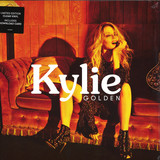
Limited Edition Clear Vinyl
Includes 12' Vinyl and Deluxe CD album, 30 page hard back book
Now that I've been to Nashville,' Kylie Minogue says with audible affection, I understand. It's like some sort of musical ley-line...'
Golden, Kylie's fourteenth studio album, is the result of an intensive working trip to the home of Country music, a city whose influence lingered on long after the pop legend and her team returned to London to finish the record: We definitely brought a bit of Nashville back with us,' she states. The album is a vibrant hybrid, blending Kylie's familiar pop-dance sound with an unmistakeable Tennessee twang. It was Jamie Nelson, Kylie's long-serving A&R man, who first came up with the concept of incorporating a Country element' into Kylie's tried-and-trusted style. That idea sat there for a little while, with Minogue and her team initially unsure about how to bring it to life. Then, when Grammy-winning songwriter Amy Wadge's publisher suggested Kylie should come over to collaborate in Nashville, a city Kylie had previously never visited, something clicked. You know when you're so excited about something,' she recalls, that you repeat it an octave higher and double the decibels I was like that. 'Nashville! Yes! Of course I would!'. I hoped it would help the album to reveal itself. I thought 'If I don't get it in Nashville, I'm not going to get it anywhere.''
Kylie's Nashville trip involved working alongside two key writers, both with homes in the city. One was British-born songwriter Steve McEwan (whose credits include huge Country hits for Keith Urban, Kenny Chesney and Carrie Underwood), and the other was the aforementioned Amy Wadge, another Brit (best known for her mega-selling work with Ed Sheeran). It was then a truly international project: Golden was mainly created with African-German producer Sky Adams and a list of contributors including Jesse Frasure, Eg White, Jon Green, Biff Stannard, Samuel Dixon, Danny Shah and Lindsay Rimes, and there's a duet with English singer Jack Savoretti.
However, the album's agenda-setting lead single Dancing was, significantly, first demoed with Nathan Chapman, the man who guided Taylor Swift's transition from Country starlet to Pop megastar. If anyone knows how to mix those two genres, Chapman does. Nathan was the only actual Nashvillean I worked with. He's got a huge studio in his house, which is probably due to his success with Taylor... there's plenty of platinum discs of her, and others on his walls.' There's something of the spirit of Peggy Lee's Is That All There Is, of Dylan Thomas' Do Not Go Gentle Into That Good Night, even of Liza Minnelli's Cabaret about Dancing, a song which not only opens the album but sets out its stall, providing a microcosm of what is to come. You've got the lyrical edge, that Country feel, mixed with some sampling of the voice and electronic elements, so it does what it says on the label. And I love that it's called 'Dancing', it's immediately accessible and seemingly so obvious, but there's depth within the song.'
The experience of simply being in Nashville was an overwhelming one, before Kylie had even arrived. Once I knew I was going to Nashville, people talked about the place with such enthusiasm. They said without doubt I would love it and, I would come back with songs. They were sending lists of restaurants, coffee shops and bars. It really was a beautiful and genuine response and it felt like I was about to have a life changing experience and in a way, I did.' The reality came as something of a surprise, when she found a far more modern metropolis than the vintage one she'd envisaged. I thought it would be like New Orleans: little houses and bars, with music spilling out onto the street. It reminded me more of Melbourne: apartment blocks going up everywhere! The main strip, Broadway, where the honky tonk bars are, that's where the street was filled with music and it was just amazing.' Mainly, Minogue remembers the heat and humidity. It was 100 degrees. It was like it was raining with no rain.' She also relished the chance to wander around unrecognised, visit a few venerable music bars and soak in the atmosphere. I didn't get to the Grand Ole Opry or the music museums but I managed to go to a couple of the institutions there like The Bluebird Cafe and The Listening Room, and just by being there, through some kind of osmosis, you get this rejuvenated respect for The Song, and the writing of The Song. There's no hoo-hah around it. There's a singer-songwriter there, talking about the song and singing the song, to an audience who are there to listen. Although, I have to confess I was guilty of starting to clap too soon during a long pause at the end of one of the songs. The guy made a bit of a joke out of it and got a laugh from it, but I thought 'Of all people in the audience, no...''
It's probably no coincidence, therefore, that every track on Golden is a Kylie co-write, making it arguably her most personal album to date. The end of 2016 was not a good time for me,' she says, referring to well-documented personal upheavals, so when I started working on the album in 2017, it was, in many ways, a great escape. Making this album was a kind of saviour. I'd been through some turmoil and was quite fragile when I started work on it, but being able to express myself in the studio made quick work of regaining my sense of self. Writing about various aspects of my life, the highs and lows, with a real sense of knowing and of truth. And irony. And joy!'
The songwriting process allowed Kylie to get a few things out of her system. Initially, she admits, it was cathartic, but it also wasn't very good. I think I was writing too literally. But I reached a point where I was writing about the bigger-picture, and that was a breakthrough. It made way for songs like Stop Me From Falling and One Last Kiss. It also meant I had enough distance to write an autobiographical song, like A Lifetime To Repair, with a certain amount of humour. The countdown in that song: 'Six-five-four-three, too many times...'. I don't know if that will be a single, but I can just imagine a girl with framed pictures of past boyfriends, and kind of going 'Oh god, when am I going to get this right'' When she listens back to Golden, Kylie can vividly hear the Nashville in it. It is, she'll agree, probably the first time that a Kylie album has sounded like the place it was made. You wouldn't normally relate my songs to the cities. Can't Get You Out Of My Head sounds more like Outer Space than London. But Shelby '68, for example, was written in London but it was done with Nashville in mind. It's about my Dad's car, and my brother recorded Dad driving it! I don't think I'd have written a number of the songs, including Shelby '68 and Radio On without having had that Nashville experience.'
The latter, she says, is about music being the one to save you.' Throwing herself into the making of the record, she says, crystallised that idea. If there's one love that will always be there for you, it's music. Well, it is for me, anyway.' That song, in particular, carries nostalgic echoes of the golden age of Country, as heard through Medium Wave transistors and tinny home stereos in the distant past. Like any child of the Seventies, Kylie had a basic grounding in Country music, mainly absorbed from older family members. My Step-Grandfather was born in Kentucky and though he lived most of his adult life in Australia, he never stopped listening to his beloved Country artists.' If there's any classic Country singer whose imprint can be heard on Golden, it's Dolly Parton.
Kylie saw Dolly live for the first time at the end of 2016, at the Hollywood Bowl. It was like seeing the light,' she beams. It was incredible. Everyone, whether they know it or not, is a Dolly Parton fan. When I was in Nashville, I did pick up a T-shirt that said 'What Would Dolly Do' Maybe that should be my mantra.' And, whether consciously or otherwise, there's a timbre and trill to Kylie's vocals on Radio On that is distinctly Parton-esque. My delivery is quite different on this album,' she says. A lot of things are 'sung' less. The first time I did that was with Where The Wild Roses Grow. On the day I met Nick Cave, when I recorded my vocals, he said 'Just sing it less. Talk it through, tell the story.' This album wasn't quite to that extreme, but a lot of the songs were done in fewer takes, to just capture the moment and keep imperfections that add to the song. I remember on my last album, a lot of producers were trying to take out literally every vibrato they heard. And that's not natural to my voice. I mean, I can make myself sound like a robot, but it's nice to sound like a human!' Working within the Country genre also gave Kylie permission to write in the Nashville vernacular. Because we were going there, I wasn't afraid to have lines like 'When he's fallen off the wagon we'd still dance to our favourite slow song', 'Ten sheets to the wind, I was all confused', 'I'll take the ride if it's your rodeo'. The challenge of bringing a Country element to the album made the process feel very fresh to me, kind of like starting over. I started to look at writing a different way, singing a different way.'
If ever Kylie lost confidence in the Country-Pop concept, and found herself pondering This is great, but back in the real world - my real world - how will this work', Jamie Nelson was there to badger her into sticking to the path. We found a way to make it a hybrid with what we'll call my 'usual' sound. It had to stay 'pop' enough to stay authentic to me, but country enough to be a new sound for this album. The closer we zoomed in, and the more we honed it, I knew Jamie was right. We sacrificed good songs that weren't right for this album, because we wanted it to be as cohesive as possible. The songs that were hitting the mark were these ones, so we decided to be strong, and that's how we wrapped up the album. What he said, that stuck with me, was that 'I'd hate to get to the end of this and really wish we'd gone for it.'' Having worked with Kylie for so long, Nelson was able to put this latest shift of direction into perspective. He said 'You've traditionally done it throughout your career. You had your PWL time, then you did a complete turn when you went to deConstruction, then another complete turn with Spinning Around, and R&B dance-pop, and then another turn with Can't Get You Out Of My Head, icy synth-pop, and this is another one.' He was right. It felt like the right time to have a change sonically. New label, new stories to tell, and a new decade almost upon me.'
Kylie Minogue will, it's scarcely believable, turn 50 this year. This looming milestone is partly behind the album's title, and title track. I had this line that I wanted to use: 'We're not young, we're not old, we're golden' because I'm asked so often about being my age in this industry. This year, I'll be 50. And I get it, I get the interest, but I don't know how to answer it. And that line, for my personal satisfaction, says it as succinctly as possible. We can't be anyone else, we can't be younger or older than we are, we can only be ourselves. We're golden. And the album title, Golden, reflects all of this. I liked the idea of everyone being golden, shining in their own way. The sun shines in daylight, the moon shines in darkness. Wherever we are in life, we are still golden.' One of the album's shiniest moments is Raining Glitter, an exuberant banger which ventures closest to Kylie's traditional dance-pop comfort zone. Eg White, who is one of the producers and writers and a great character, was talking about disco one day. I said 'I love disco, but you know the brief.' We needed to be going down the Country lane, so to speak. But we managed to bring them both together. When I wrote it, I was thinking about the Jacksons video for Can You Feel It where they're sprinkling glitter over everyone. And I think there's a Donna Summer record that's got that feel to it. I think that's my job: I basically leave a trail of glitter after every show I do anyway.'
Kylie is looking forward to the challenge of incorporating the Golden material into her live shows. Mixing these songs in with my existing catalogue is going to be fun. And it could be fun to do some of those songs with just a guitar. It'll make my acoustic set interesting...'Her incredibly loyal fans - to whom one Golden song, Sincerely Yours, is intended as a love letter' - will, she believes, have no problem with her latest stylistic shift. My audience have been with me on the journey, so I shouldn't be afraid that they won't come with me on this part. I've had fun with it, and I'm sure they will too.'
The time spent making Golden has, Kylie says, been a time of creative and personal renewal. I've met some amazing people, truly inspiring writers and musicians. My passion for music has never gone away, but it's got bigger and stronger.' And if there's an overriding theme to the record, it is one of acceptance. We're all human and it's OK to make mistakes, get it wrong, to want to run, to want to belong, to love, to dream. To be ourselves.'
I was able to both lose and find myself whilst making this album.'