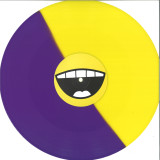
Trailblazing instrumental synth pop experiments created to soundtrack Japan’s booming 1980s cartoon and comic industries. The brightly futuristic instrumentals on this collection reflect the mindset of composers and musicians who believed in a technological future where everything was possible.
In the late 1980s Japan experienced a brief but heady period where societal changes combined with new-found wealth to open up a world of possibilities. A huge influx of cash - artificially created by slashed interest rates after an agreement with the US to weaken the dollar relative to the yen - resulted in the inflation of real estate and stock market at a rapid pace. While the economic bubble it created was unprecedented and impossible to sustain, for a while money was in plentiful supply.
The musical genre City Pop reflected the aspirations of the country’s booming leisure class. Video games flourished with Nintendo's 1983 launch of their Family Computer (or FamiCom). Studio Ghibli was founded 1985 to later became one of the most famous and respected animation studios in the world, and Anime and Manga were established as major forms of entertainment for all generations of the Japanese public.
Music was no mere footnote to the anime and manga boom: the two forms of media often went hand in hand, and not simply through the presence of background melodies. With generous budgets available, even two-dimensional static manga comics could be released with an accompanying soundtrack of original music known as an ‘Image Album’.
Composer and arranger Kazuhiko Izu was one such beneficiary of this open budget approach. Written to accompany artist Katsuhiro Otomo’s manga comic Domu, the composer and arranger took advantage of the world-leading (and wallet-busting) Japanese synthesiser technology available at King Records’ fully equipped studio. Featured on this compilation, A3: Act 2 Scene 26 reflected the story’s sci fi themes with a blazingly futuristic yet warmly funky slice of synth pop that presents a joyful celebration of synthesisers and their seemingly endless possibilities.
Kan Ogasawara was another composer who made early mastery of the litany of synthesisers, drum machines and sequencers that had become available. Two tracks written to accompany the 1985 period manga Yume No Ishibumi are featured here; Honowo’s experimental electronic textures add spice to a jaunty electro pop melody that recalls the Rah band’s 1983 hit Messages From Stars; the jazz-tinged Utage rounds out Ogasawara’s shimmering synth textures with beautifully crafted backing from legendary musicians Yuji Toriyama (guitar), Pecker (percussion) and Jun Fukamachi (piano).
Before becoming one of the pioneers of Japanese Kankyo Ongaku (Ambient Music), Takashi Kokubo worked on the proto techno track Kiki (Jungle At Night). It was put together for the 1984 anime film Shonen Keniya (Kenya Boy) using some of the most expensive music technologies available at the time. This Africa-Inspired dance track offers a contemporary parallel to the early techno music that young Detroit based producers were then creating using cheap Japanese Roland drum machines and synthesisers.
This is the first compilation of Japanese anime and manga soundtracks curated by Kay Suzuki and Rintaro Sekizuka from Vinyl Delivery Service (a Tokyo based online record shop which also operates in East London's renowned wine and hifi shop Idle Moments). With a cover by artist Kazuki Takakura and two pages of liner notes, this vinyl only compilation of music never before released outside of Japan, captures a vital aural snapshot of an era whose forward-thinking sounds went hand in hand with cutting edge technology.
Search:country boy
Hank Wangford, pioneer and Godfather of British alternative Country
music and Americana, joins forces with Noel Dashwood, Britain's premier
dobro player for a unique duo album of original songs A fresh take on
classic Country and Americana it is Studio recorded live with Hank on
guitar and ukulele and Noel on bass ukulele and dobro and harmonica
Dobro is a guitar played horizontally with a slide bar in the Hawaiian style, a
foretaste of the classic Country sound of pedal steel and lap steel guitar. They
sing spine tingling harmonies together on Hank's songs and the one non-original
Image of Me, Conway Twitty's first Country hit which Hank learned from his
mentor and inspiration the late Gram Parsons.
With Noel's lyrical dobro they celebrate the much-ignored influence of Hawaiian
music on American popular music and most especially Country music. Noel tips
his hat to the dobro of Pete Kirby - Bashful Brother Oswald of Roy Acuff's seminal
Smoky Mountain Boys - in much of his playing. Two sides to this album - first
Toetappers is up- tempo with songs about Oil and the current fossil fuel crisis,
Jump In A River about lockdowns, spiritual and societal and Simple Pleasures,
something we all crave. The second side Heartbreakers is sadder ballads about
cheating, lies, lost love, jilted wedding, drinking and broken Promises Promises.
And Something In The Air asks is there a god?
The whole album is a heartfelt tribute to the classic roots of Country that Hank
was pulled into by his friend Gram.
Welcome to Masters Series - for people who understand that some things just can't be tamed. (Read: these are scratchy, poppy, and rough recordings from busted acetates. Click the listen tab to preview quality. These are cleaned up as best we can get them - if that's not going to work for you, don't order!)
For this limited edition Masters Series release, we enlisted the help of two of the world's heaviest collectors and djs, and champions of the Preservation Project from day one, Supreme la Rock on Side-A, and Skeme Richards on the B-Side.
Both gentlemen tackled reworking and re-editing funky previously unreleased psych songs. Both songs, "Sad Country Boy" on Side A and "Your Mind" on Side B, are by unknown groups and both feature drum breaks intros - perfect for you to cut up, so you're gonna need two copies. We won't be mad at you if you feed the breaks and chop them up either. This one is for the heads.
The story behind The Masters Series
In our hunt for unreleased soul, we occasionally find some incredible gems that are just a bit too beaten to restore to the ears of the general public. Rather than return them to the moldy basements from whence they came, we press them up to share with those who love to share.
- 1: Big Tiny Kennedy And His Orchestra - Country Boy
- 1: 2Sugar Boy Williams - Little Girl
- 1: 3Lightnin' Slim - Too Close Blues
- 1: 4Little Walter - I Don't Play
- 1: 5Howlin Wolf - Wang-Dang-Doodle
- 1: 6Little Sonny - I'll Love You Baby (Until The Day I Die)
- 1: 7Lightnin Hopkins - Let's Move
- 1: 8Sonny Terry - Ride And Roll
- 1: 9Billy Gayles - Sad As A Man Can Be
- 1: 0Jimmy Dotson - Looking For My Baby
- 1: Otis Rush - Keep On Loving Me, Baby
- 1: 2The Poor Boys - (I'm Gonna) Spend My Money
- 1: 3Margo - Everyday
- 1: 4Pearl Woods - Sippin Sorrow
- 1: 5Judy Clay - Do You Think That's Right
- 1: 6Bethea And The Cap-Tans - Crazy About A Woman
Der wahre Blues ist lange keine Neuigkeit mehr. Hier finden sich nun 16 elektrifizierte Post-War Kracher, aufgenommen zwischen Chicago und New Orleans, die oft nur ein kurzes Leben als 7"-Single fristeten und heute begehrte Sammlerobjekte sind. Diese Musik wurde in verschwitzten Clubs und bei House Rent Parties der 50er und frühen 60er Jahre gespielt bzw. aufgelegt. Und noch heute kann man exzellent dazu tanzen, denn alle Tunes sind schnell, rauh und dafür gemacht, die Meute in Bewegung zu bringen. Volle fünf Sterne für die fünfte Veröffentlichung der Rockinitis-Reihe! Diese Zusammenstellungen zeigen die rauen und wilden Klänge des rockigen Electric Blues aus den 1950er und frühen 1960er Jahren. Auf der A-Seite ist R-Man, Chef des Stag-O-Lee-Labels, mit weiteren acht Dirty-Blues-Dancetracks zurück, zu denen die Tailfeather zwingend geshaket werden muss. Jeweils zwei Tunes von Killerlabels wie Excello, Groove, Herald und Chess/Checker. In diversen Clubs auf Tauglichkeit getestet. Die Rückseite bestreitet Donna Driscoll, langjährige Kennerin und Sammlerin zwischen Northern Soul und R&B aus London. Donna legt regelmäßig in Blues- und Soul-Clubs sowie bei Mod-Events im Vereinigten Königreich und im Ausland auf. Egal in welcher Stimmung man ist, ihre Auswahl wird jeden in Bewegung und zum Grooven bringen. Hear me now!
- I'm A Ramblin' Man
- Rainy Day Woman
- America
- I May Be Used (But Baby I Ain't Used Up)
- Amanda
- Me And Bobby Mcgee
- Trouble Man
- Mamas Don't Let Your Babies Grow Up To Be Cowboys
- Good Ol' Boys (Theme From Dukes Of Hazard)
- Bob Willis Is Still The King
- Are You Sure Hank Done It This Way
- Suspicious Minds
- Honky Tonk Angels
- Good Hearted Woman
- I've Always Been Crazy
- Luckenbach, Texas (Back To The Basics Of Love)
- I Ain't Living Long Like This
This performance by Waylon Jennings was no April Fool's joke. This was the "new" Waylon, both personally and professionally. He had kicked a 20-year drug habit, split with RCA and signed a new deal with MCA Records. He discovered a passion for songwriting, teamed with legendary producer Jimmy Bowen, and produced some of the best work of his 30-year-plus career. He credited his wife and soul mate, Jessie Colter, for much of his inspiration. This was Waylon's second trip to the ACL stage, but the one that best captures the raw edge and driving urgency that pushed country music way past its Nashville boundaries starting in the mid-1970's. He was described as the leader of the country "Outlaw" movement, which he often dismissed as just another marketing scam, but there's no denying that he turned the music on its head and took it way beyond its rural southern roots. This West Texas boy who worked as a DJ and started his own band at 14, then later played with Buddy Holly, left an indelible mark on the music he loved. He was a class act, this man called Hoss. -Terry Lickona (Producer Austin City Limits®)
Orbiting Human Circus' new album is called Quartet Plus Two. What is Orbiting Human Circus? It is the continuing evolution of Julian Koster (Neutral Milk Hotel, The Music Tapes), whose music and storytelling under this moniker have encompassed immersive theater and a Night Vale Presents podcast, as well as more traditional albums. Central to the album are the "two" referenced in the title: North and Romika, the singing saws, whom Koster doesn't "play" so much as encourage. "I think saws sing like angels," says Koster. "I always have. Since I was a little boy. When you encourage them to sing, they do so earnestly and beautifully. It's an honest and real sound." The origins of Quartet Plus Two are as magical and seemingly unlikely as everything else in Koster's career. While walking through New York's Central Park, he stumbled upon Gauvain Gamon and Kolja Gjoni_a standup bass player and drummer, respectively_playing Gershwin and Mingus, and a musical partnership was born. Pianist Benji Miller rounds out the titular quartet, with Koster's longtime collaborators Robbie Cucchiaro (horns) and Thomas Hughes (orchestral arranging and chimes) of The Music Tapes also contributing to the record. The music they make together is at once familiar and unrecognizable, as Koster and Orbiting Human Circus interpret jazz compositions by Irving Berlin, Duke Jordan, George and Ira Gershwin, and others, alongside Koster's three originals. The use of the term "composition" is intentional and speaks to Koster's relationship with the music of Quartet Plus Two in far more evocative terms than "cover" or "standard." "To me it was always magical that there were these people called `composers' who created symphonies and popular songs for other people to breathe into life and existence all over the world and throughout time," he explains. "They traveled into our homes as sheet music, endless recorded interpretations, or were passed from hand to hand, village to village, like folk tales, changed by every hand that touched them. That music was something that came to life in our own living rooms and lives, songs that our grandmothers might have sung in a choir that we might sing just as earnestly. I just think it's nice, and I would love to share that feeling in any way we can."
- I Walk The Line
- Get Rhythm
- Ey Porter
- 4: So Doggone Lonesome
- Hey, Good Lookin
- Sugartime
- Frankie's Man Johnny
- Bonanza!
- Delia's Gone
- I Still Miss Someone
- Folsom Prison Blues
- Don't Take Your Guns To Town
- I Got Stripes
- Transfusion Blues
- Chain Gang
- Born To Lose
- In The Jailhouse Now
- Country Boy
- All Over Again
- Cry, Cry, Cry
- Big River
- Oh Lonesome Me
- It Was Jesus
- Girl In Saskatoon
- Mean Eyed Cat
- Luther Played The Boogie
- Five Feet High And Rising
- Guess Things Happen That Way
- I Love You Because
- Katy Too
- I Forgot To Remember To Forget
- Want To Go Home
- Leave That Junk Alone
- I Got Shoes
- Honky Tonk Girl
- Thanks A Lot
- What Do I Care
- Locomotive Man
- Clementine
Even as a little boy, Johnny Cash has a feeling he was going to be famous one day. It wasn’t the kind of premonition he could go about telling people. They’d have thought dreams of fame and riches pretty far removed from the Cash’s barely-productive 40-acre cotton farm in Arkansas. Especially since Johnny had no idea how he was going to make his mark.
Johnny left the farm to go into the Air Force — and in his travels he acquired first, a wife — and secondly, a guitar. Assigned to Germany and forced to leave his wife behind, Johnny found a faithful companion in his guitar. The boys in his barracks seem to like his “pickin’ and singin'” and gradually the plan for a career began to take shape. He would be a singer — a country singer.
When he got back from service, Johnny was not so modest about his plans for the future. He let his Memphis friends know he was going to be a singer — a good singer, a famous singer — a singer who would revolutionize country music. No matter how long it took — he was determined!
As it happened, Lady Luck inclined her face toward Johnny almost immediately. His releases on the Sun label were instantly acclaimed, and in 1956, one year after Johnny Cash launched his recording career, he was named the most promising country and western artist of the year in four separate polls.
After the success of “I Walk the Line” as a simultaneous C & W and popular hit, it was indicated the course Johnny’s career should take. Though always identifying himself as a singer for the country fans — a favorite entertainer on the Grand Ole Opry — Johnny Cash with “Ballad of a Teen-Age Queen” came to be a top selling artist in the pop recording field.
Almost reluctantly, Johnny evolved a pop-county style in arrangement and instrumentation, evident in such hits as “Guess Things Happen That Way” and “The Ways of a Woman in Love” to supply the demand for Cash records by fans of both types of music. It is ironic that Johnny Cash caused more of a revolution in pop music than in country music, as was his aim, by being one of the first C & W artists exposed on national “general entertainment” TV shows; and the first C & W artist to capture the LP market with one great release (Sun 1220).
Johnny Cash — in his voice, looks and demeanor — carries a certain aura of “specialness.” He is a very dramatic figure — tall, muscular, with blue-black hair. He looks the part of a folk singer — a 20th century wandering minstrel. And his fatalistic style, both in composing and singing, has a quality of monotone, but of “emotional monotone” that defies analysis, but which is genuinely powerful.
Johnny Cash is one of those persons endowed with an exceptional talent which has to express itself. And being expressed, his talent has been uniquely recognized and applauded by many loyal fans, who will enjoy this reminiscent album of the songs which to date are landmarks in the career of the one and only Johnny Cash.
Lucky number 17? You better believe it. We here at Brown Acid have been scouring the highways and byways of America for even more hidden stashes of psych/garage/proto-punk madness from the so-called Aquarian Age. There’s no flower power here, though—just acid casualties, rock stompers and major freakouts. As always, the songs have been officially licensed, and all the artists get paid. Kicking off this trip, Grapple’s “Ethereal Genesis” is a heavy psych gem from 1969 written by J. Bruce Svoboda, a.k.a. Jay Bruce, formerly of The Hangmen and The Five Canadians (who were actually the same San Antonio band). The latter’s 1966 garage favorite “Writing on the Wall” has been endlessly covered, but Grapple were never heard from again. With a guitar riff that blatantly rips off Sabbath’s “Black Sabbath,” Image’s mostly instrumental lysergic obscurity “Witchcraft ’71” (originally unveiled that very year) also boasts a horror-movie organ intro, a voodoo drum break and some championship chanting. Private press heads might recall late Image drummer John Beke from his ’80s reemergence with country rockers Crossfyre. Stone Hedge were a seven-piece rock band out of Michigan with a penchant for Creedence and anthropomorphism. “Smokey Bear” is their 1972 tribute to the official mascot of the U.S. Forest Services—not to mention the A side of their sole single—and it recalls the kind of organ-drenched swamp jam that soundtracked many a Burt Reynolds flick back in the day. If you think being a Southern rock band from Milwaukee doesn’t make much sense, that’s probably why Crossfire changed their sound along with their name—to Bad Boy—after signing with United Artists. Bad Boy’s severely underappreciated second album, Back To Back, is a 1978 hard rock jewel, but you can hear their boogie-woogie roots on this rare 1975 single. With a band name like Primevil and song title like “Too Dead To Live,” you probably expect some gnarly proto-metal riffage. Instead, you a get a harmonica-drenched, soul-infused rock rave-up from 1972. Primevil would release their sole LP two years later: Entitled Smokin’ Bats at Campton’s, it’s a reference to their trusty singer, harp player (and bat smoker?), Dave Campton. Brown Acid regulars already know Pegasus from their appearance with “The Sorcerer” on our Seventh Trip. “Ready to Rave” is the flipside to that 1972 single, in which they explain how they like their whiskey cold and their women hot. It’s another killer glimpse of what might have been if these one-and-done Baltimore hard rockers had been able to keep it together. One of two obscure singles released by Texas musician Bobby Mabe in 1969 (the other appears under the name The Outcasts), “I’m Lonely” delivers a heavy dose of vocal soul to the otherwise psych-garage presentation. Fans of fellow Houstonians the Moving Sidewalks—whom Bobby and his Outcasts may well have gigged with—will especially dig this one. Cedar Rapids, Iowa, may not be known as a cultural mecca, but they did give us Truth & Janey. This deadly hard rock trio delivered their holy grail full-length, No Rest for the Wicked, back in 1976. “Around and Around” is a Chuck Berry cover that originally appeared on a 1973 single the band released under the earlier name Truth. Originally released in 1973, “High School Letter” is the debut single from San Diego rock squad Glory. This infectious bonehead cruncher features future Beat Farmer Jerry Raney and the original rhythm section of Iron Butterfly in bassist Greg Willis and drummer Jack Pinney. Glory is what they got up to after their former bandmates left for L.A.’s garden of Eden. “Jack the Ripper” is a mercilessly bootlegged Cleveland classic from 1978 with a serrated punk edge and vocals that recall Mick Blood of Aussie savages the Lime Spiders. Or maybe it’s the other way around—the Lime Spiders formed the year after Strychnine carved off this lethal paean to the infamous Whitechapel slasher of olde.
- A1: Beers & Sunshine
- A2: In This Together
- A3: Never Been Over
- A4: Fire's Don't Start Themselves
- A5: Ol’ Church Hymn (Feat Chapel Hart)
- A6: 7 Days
- A7: Same Beer Different Problem
- A8: Sara
- A9: Have A Good Time
- A10: Sure Would Have Loved Her
- A11: Southern Comfort
- A12: 3 Am In Carolina
- A13: Lift Me Up
- A14: Stargazing
Darius Rucker veröffentlicht sein mit Spannung erwartetes Studioalbum „Carolyn’s Boy“, welches sein erstes Solo-Album innerhalb der letzten 6 Jahre ist. Der mit zahlreichen Gold-, Platin- und Diamantauszeichnungen geehrte Country-Künstler gewann bereits 3 Grammy-Awards. Sein Album „Cracked Rear View“, gemeinsam mit seiner Band Hootie & the Blowfish platzierte sich in der Top 10 der bestverkauftesten Alben aller Zeiten. Mit der Veröffentlichung seiner erfolgreichen Single „Fires Don’t Start Themselves“ liefert Darius einen Vorgeschmack auf „Carolyn’s Boy“. Das Album ist für Darius eine Hommage and seine verstorbene Mutter sowie der Abschluss seiner Suche nach seinem Platz in der Country-Musik.
The most potent memories I have of music are from my early childhood listening to the oldie's station, riding in the back of my Pops' 1975 Cadillac Seville to work alongside him moving plants in Sacramento at the now long gone Capitol Nursery during white hot summer afternoons, and then the drives back home in the purple twilights and oily blue-oranged nights. I'm talkin' The Temptations, War, Earth Wind and Fire, Al Green, Sly and the Family Stone, The Delfonics, Stevie Wonder, Chaka Khan...soul music. I loved the melodrama of it all. The world outside refracted and transmuted through the crackling speakers past Pops' thumping thumb and my tiny whirring mind and left whatever road behind us fundamentally changed in our wake. Through the years other sounds too left its imprint well before I picked up a guitar. Rap, Punk, hardcore, dub, R&B--and a little later in middle school, blues, folk and country. But those early Cadillac memories always remained the bedrock. With folk and blues music, I fell in love with the immediacy of it and found the acoustic guitar economical for all the solitary roaming of my early 20's. All the while I knew that one day, when I had something I felt like I could add, I wanted to incorporate the sound of those early Cadillac memories. But only after I felt established as a songwriter in its most simple form, banging on a wooden guitar and yodeling up some melody did I feel comfortable exploring other sounds and only recently did I find the time and space to do that. The pandemic trapped all the world in their rooms. While recording my last record in the height of it and at the behest of my friend and You, Yeah, You producer Brad Cook and his friend Justin Vernon, I bought my first keyboard. A Roland Juno DS. I started tinkering on it throughout the past couple of years and as I became more stationary started writing songs on different instruments that I accumulated. Layering sounds on garageband in my apartment writing bass and horn parts, making drum loops, adding synth... I became pretty obsessive with the endless possibilities it brought and got quicker and quicker at making songs that way. It was just so fun and limitless.
- A1: The Orielles - Beam/S (Space Afrika Remix)
- A2: Amber Arcades - Turning Light (Justin Robertson’s Deadstock 33’S Meditation)
- A3: Unloved - Number In My Phone (Black Science Orchestra Dub)
- B1: Confidence Man - Toy Boy (Raw Silk Instrumental Remix)
- B2: David Holmes & Raven Violet - It’s Over If We Run Out Of Love (Lovefingers & Heidi Lawden Low Tide Mix)
- B3: Baxter Dury - Miami (Pilooski Instrumental Dub)
- C1: Out Cold - Loving Arms (Hardway Brothers Remix)
- C2: Working Men’s Club - Cut (Mella Dee Spangled On The Terrace Dub)
- D1: Eyes Of Others - Safehouse (Decius Remix)
- D2: Katy J Pearson - Howl (Umlauts Remix)
- D3: Fran Lobo - All I Want (Tone Remix)
Heavenly Recordings release the next two volumes in their series of remixed classics and unreleased versions. ‘Heavenly Remixes 7 & 8’ sees the label going back into the archive, as well as picking off some more recent remixes, and both albums primarily feature either previously unreleased versions or re-workings available for the first time on vinyl and CD.
Heavenly have always seen immense value in the remix, a value way beyond what it might bring commercially. Since their first release in 1990 (where Andrew Weatherall overhauled a one-off single by club kids Sly and Lovechild) Heavenly remixes have been carefully curated and treated as a key part of the A&R process. It’s an opportunity to view an artist through a different prism, to play out a musical ‘what if’ scenario. It’s the kind of exploration that’s happened consistently through the thirty plus years the label has released music.
The ‘Heavenly remixes’ series continues to showcase the very best remixes, versions, meditations, re-rubs and dubs from all around the world of artists right across the roster of the country’s most exciting record label. In most cases, the albums offer the first physical release for a remix, elevating them from streaming playlists to their rightful, spiritual home on super heavy vinyl (or shiny, super-packed compact disc).
Heavenly remixes 7’ heads to Belfast, where David Holmes - a producer who first appeared on Heavenly in 1994 amping up the acid on Saint Etienne’s ‘Like A Motorway’ - appears as solo artist and as one third of Unloved, who get a lift right to the heart of a Vauxhall sweatbox by Horse Meat Disco. It draws a line between Amsterdam and Frankfurt as Ludwig A.F. amps up the electronics on Pip Blom’s ‘Keep It Together’. It stops off in a south London studio where super producer Dan Carey plays the desk with Toy, then relocates LA psych rock band Fever The Ghost to an Ibizan shoreline as the sun sets on the horizon. It cements Sheffield’s reputation as the home of modern British techno with the return of true originators Forgemasters. And it pitches up in front of a renegade soundsystem late night at Glastonbury as Erol Alkan’s mighty rework of Con Man gets its third rewind of the night.
‘Heavenly remixes 8’ opens with Space Afrika’s lush, ambient reimagining of the Orielles’ ‘BEAM/S’ before Justin Robertson stretches Amber Arcades’ ‘Turning Light’ into eight minutes of electronic dub. Elsewhere, Baxter Dury’s peerless ‘Miami’ becomes a string-laden electro skank in the hands of French producer Pilooski; Edinburgh’s bedroom techno genius Eyes of Others’ ‘Safehouse’ turns into an East End bathhouse courtesy of disco deviants Decius; Ashley Beedle’s Black Science Orchestra turns Unloved’s heartworn torch song into seven minutes of glimmering dreamlike percussive house and Katy J. Pearson’s freak flag is flown high thanks to The Umlauts’ throbbing filtered electro mix. It ends similarly to how it began as TONE takes
Fran Lobo’s ‘All I Want’ on a gorgeous slow motion spacewalk.
Everything becomes fluid when you can pass through time and space like a ghost, a story, a melody. Boy Golden manifests all three on For Jimmy. When listening to his music, it feels easy to dissolve into the ether. Everything flows. From classic country to psych-folk, Alternative to roadhouse pop to Appalaichan bluegrass, Boy Golden’s music is easy, breezy, warm and gritty. And don’t it just feel good to listen to it. Since releasing his debut album, Church of Better Daze, in 2021, he’s played every summer festival on your list, produced a number of albums with friends, released a dozen videos, curated and directed an art show and music video for “KD & Lunchmeat”, the Seth-Rogenesque hit single that charted to #1 on Alternative Radio, and toured with The Sheepdogs on their most recent North American tour. Introspective and vulnerable, traditional and queer, hard-headed and sensual, Boy Golden’s everyman-aesthetic can appeal to all of us. This ability lies in his songwriting: the songs your friends tell you about, the stories you hear from your neighbours, your community. He’s comfortable both in the spotlight and just outside it, sharing the moments with other artists, lifting others up along with him. He’s a genuine student of Townes Van Zandt and Willie Nelson as much as Dwight Yoakam and Stevie Ray Vaughan . Plus his C.O.B.D philosophy, “You can blaze and still get paid” might help us all to blur borders and old definitions of genres we thought we knew, like Steve Lacy or Justin Vernon do for Pop music. Boy Golden is able to maintain his own unique blend of Boy Golden using whatever frame of mind he’s in to fit us into this time. We’re here right now.
- A1: Introduction
- A2: Crashing High
- A3: The Chair
- A4: Devils
- B1: Hevioso
- B2: Don't Turn Your Back On Fear
- B3: Feel Berlin
- B4: Betty Blue
- B5: Christina Death
- C1: Gothic Girl
- C2: Framed In Blood
- C3: Wrap Your Troubles In Dreams
- C4: Lost Boys
- 5: Sister Of Charity
- D1: I Just Wanna Have Something To Do
- D2: Dance D'amour
- D3: Brandon Lee
- D4: Nothing On You
Red Vinyl[28,95 €]
40 years after The Doors' debut at Hollywood's legendary Whisky A Go Go, The Helsinki Vampires sold our their debut there and finished their first-ever US tour like the new kings of the Sunset Strip! Glam, Goth, Sleaze & Hollywood in 2006! The 69 Eyes is a "goth'n'roll" band from Helsinki, Finland. Founded in 1989, the band blends gothic rock, glam metal, and rock'n'roll together in their music. With thirteen revered albums, multiple tours around the world, and going platinum in their home country the band still maintains a strong tie to the graveyard shift of rock’n’roll.
- A1: Introduction
- A2: Crashing High
- A3: The Chair
- A4: Devils
- B1: Hevioso
- B2: Don't Turn Your Back On Fear
- B3: Feel Berlin
- B4: Betty Blue
- B5: Christina Death
- C1: Gothic Girl
- C2: Framed In Blood
- C3: Wrap Your Troubles In Dreams
- C4: Lost Boys
- 5: Sister Of Charity
- D1: I Just Wanna Have Something To Do
- D2: Dance D'amour
- D3: Brandon Lee
- D4: Nothing On You
Black Vinyl[27,94 €]
40 years after The Doors' debut at Hollywood's legendary Whisky A Go Go, The Helsinki Vampires sold our their debut there and finished their first-ever US tour like the new kings of the Sunset Strip! Glam, Goth, Sleaze & Hollywood in 2006! The 69 Eyes is a "goth'n'roll" band from Helsinki, Finland. Founded in 1989, the band blends gothic rock, glam metal, and rock'n'roll together in their music. With thirteen revered albums, multiple tours around the world, and going platinum in their home country the band still maintains a strong tie to the graveyard shift of rock’n’roll.
Cover versions of international songs have long thrived in South Africa’s music industry. Often unable to license the original tracks (until the early 90s the result of an international boycott of the country) labels instead hired producers and session artists to re-record them for the local market. Early house music in SA was no different.
When Ron ‘Robot’ Friedman, former bass player for local rockers Rabbitt, was winding down his label On Records in the early 90s, he reached out for new inspiration as the popularity of ‘bubblegum’ disco waned. For one of the label’s final releases he hired young DJ/producer Quentin Foster, obsessed with the new soulful house sound coming out of the US, to take the reins on a studio project dubbed Citi Express.
On Robot’s insistence it included a cover of Stevie Wonder’s ‘Living for the City’ (from 1973’s Innervisions) as the title track. Foster set to work in his home studio, dubbed Tone Def, selecting and re-working other US and UK tracks — ‘It’s Too Late’ (originally released in 1989 by Kelli Sae), ‘Love is the Message’ (influenced by the 70s soul anthem and credited to Gamble & Huff but bearing a closer resemblance to Better Days’ 1990 release written by Steve Proctor), ‘People of The World’ (recorded by Sorell Johnson in the UK in 1990) and ‘Victim of Your Love’ (released in 1990 by Gary Vonqwest as ‘Victim of Love’) — adding some signature South African touches in the process that foreshadow the imminent rise of kwaito. One original composition was added for good measure, ‘Open Invitation’.
The result offers a glimpse into those early days of house, a uniquely South African take on a global sound that still resonates today — reissued for the first time on Afrosynth Records.
DLMZ is HMS’s third full-length album, and is written from the perspective of a gang of wholesome country boys and girls who suddenly find themselves having to navigate a world of Dollar Lizards (obscene cult-leadery economic monsters) and Money Zombies (grey- skinned brain-dead consumers).
Dollar Lizard Money Zombie was recorded at Sail Loft studios, St Peter’s and The Unit, all in Cardiff, with the final track recorded live at Cadeirlan Llanelwy. It was engineered by Gareth Bodman, produced by Llion Robertson, and mastered by Charlie Francis.
Mango Vinyl. Leon Russell war einer der angesehensten Studiomusiker der Rockgeschichte. Er wirkte an einer überwältigenden Anzahl von Platten von Legenden wie Jerry Lee Lewis, Bobby Darin, Phil Spector, Frank Sinatra, den Byrds und den Beach Boys mit. Russells Solowerke profitierten von seinen erstaunlichen Seilschaften, Koryphäen wie George Harrison, Eric Clapton, Willie Nelson, verschiedene Rolling Stones und andere, verhalfen Russell im Laufe der Jahre seinen Alben den letzten Schliff zu geben. Als "Meister von Raum und Zeit" mischte Russell Südstaaten-Soul, Gospel, Country, Rock und den Piano Singer/Songwriter-Stil. "A Song For Leon" zelebriert Leons Leben und seine Karriere, ikonische Acts wie die Pixies, Orville Peck, Nathaniel Rateliff & the Night Sweats, U.S. Girls featuring Bootsy Collins, Durand Jones & The Indications und andere unglaubliche Künstler sind hier versammelt. "A Song For Leon" zeigt die Wirkung von Leon Russells Liedern in anderen, neuen Versionen seiner Musik.
- A1: You're Still The One
- A2: When
- A3: From This Moment On (Feat Bryan White)
- A4: Black Eyes, Blue Tears
- B1: I Won't Leave You Lonely
- B2: I'm Holdin' On To Love (To Save My Life) (To Save My Life)
- B3: Come On Over
- B4: You've Got A Way
- C1: Whatever You Do! Don't!
- C2: Man! I Feel Like A Woman!
- C3: Love Gets Me Every Time
- C4: Don't Be Stupid (You Know I Love You) (You Know I Love You)
- D1: That Don't Impress Me Much
- D2: Honey, I'm Home
- D3: If You Wanna Touch Her, Ask!
- D4: Rock This Country!
Shania Twain veröffentlicht eine Neuauflage ihres mit vielfach Platin ausgezeichneten ”Durchbruch” Albums „Come On Over“ als Diamond Edition. Mit der Neuauflage feiert die globale Ikone den 25. Jahrestages des Albums.
„Come On Over“ wurde bereits mehr als 40 Millionen Mal verkauft und featured auf der Diamond Edition herausragende Künstler*innen wie Elton John, Chris Martin (Coldplay) und die Backstreet Boys.
Zusätzlich ist das brandneue Live Medley „Holding On To Love (To Save My Life)” & “That Don’t Impress Me Much” sowie neue Remix-Versionen enthalten.“Come On Over” wurde als das meistverkaufte Country Album und als das meistverkaufte Album einer weiblichen Künstlerin aller Zeiten zertifiziert und manifestierte Twains Status als globaler Superstar.
Die Neuauflage von „Come On Over“ (Diamond Edition) ist als 2CD Deluxe, als Doppel-Vinyl & als 3CD Super Deluxe Version erhältlich.
- 1: Spectacular
- 2: Best Believe
- 3: Vibe Check (Ft. Cadence Weapon)
- 4: Baby Boy (Ft. Paul Wall)
- 5: Loosen Up (Ft. B.k. Habermehl)
- 6: Alexis (Ft. Harriet Brown)
- 7: We Still Here (Ft. Harriet Brown)
- 8: Opportunist Convention
- 9: Kickin’ In
- 10: Don’t Tap In / Contusion (Feat. B L A C K I E)
- 11: Boss Up
- 12: Make A Baby
- 13: Jasper, Tx
With I Will Make a Baby in this Damn Economy, Fat Tony embodies the kind of quixotic figure he would rap about; a singular entity who’s motivated, confident, and hungry; a perpetual-motion-machine locked in a staring contest with his country. It’s the latest album in his catalog produced entirely by L.A-based producer Taydex since 2020’s Wake Up. Later that same year Fat Tony released Exotica, and ever since he’s demonstrated he is in his own lane as a professional rapper with the mind of a magician, as quick to conjure an image as pull it out from under you, deftly manoeuvring through so many details and references a listener feels as if they have witnessed the work of an illusionist. He paints these canvases inside of songs that rarely spill past three minutes; they’re pocket-sized diaries replete with acute observations, character studies, microdoses of storytelling, and single-minded ruminations on a topic that bud, blossom, and fade before too long. Fat Tony & Taydex’s I Will Make a Baby in this Damn Economy cements Tony’s status as someone whose albums are not so much lyrically-lyrical as they are picaresque.
As with any Fat Tony project, the bars are tight as ever, but are so fluid for the 34-year-old it’s almost easy to take for granted the details, warmth, and humanity inside his free-associative tales of day-one friends who’ve passed, edgelord grifters who want to spit game, and nights on ketamine. Taydex’s production sprints through disparate yet simpatico styles, dipping its toes into Pi’erre Bourne-esque bass (see lead single “Spectacular”), house (“Loosen Up”), and even hyperpop. Meditations on loss and grief are woven throughout, but Tony throws a few curveballs as well: Consider “Alexis,” which sweetly reflects on a long-term platonic friendship. Taydex finds a Teddy Riley-indebted New Jack Swing groove just deep enough for the feeling to land and underlines the song’s sincere candor. This is the appeal of Fat Tony writ-large: his boisterous voice and genial personality invite you to the party, then you stick around to hear what he’s saying, which is frequently more introspective and complex than one assumes.
Written and recorded in Taydex’s new studio in North Hollywood, Tony says, “We had much more freedom and flexibility in making this album and you can hear it. It felt like a family project.” If the album is comfortable and loose, it is also dense and substantial. The album’s final two tracks contextualize the immediacy of what came before it—the mezcal with ices drank, Paul Wall swangin’ through to drop knowledge, the Polaris Prize-winning rapper Cadence Weapon providing a vibe check. “Make a Baby” accounts for Tony who’s seen everything, and knows he’s met the one to be a father with, and yet chooses to take his time to get it done. Taydex’s beat recalls turn-of-the-century R&B and the millennial promise of an endless good time. Sombre closer “Jasper, TX” is Tony coming to grips with the story of James Byrd, Jr., a Black man from East Texas dragged to his death by three white supremacists in 1998. These songs are not only trademarks of Tony’s fastidious rapping—they are deeply personal examples of his approach to artistry and life itself, where every decision is made in the shadow of history.
It’s here the mission statement of I Will Make a Baby in this Damn Economy comes into focus—you get the sense he means it, he’s ready for it, he’ll fight for it. He’s waiting to take the world at its word.
- Scottsboro
- Blue
- How Do You See Me
- Maureen
- Some Boy
- Traveler's Cross
- Soni Wolf
- Water Into Wine
- Meltdown Rodeo
- Wild Ones
- Loamlands
Kym Register + Meltdown Rodeo (formerly LOAMLANDS) is a
transgressive and distorted country music outfit based in North Carolina
that places queer storytelling at the forefront
Their music intimately grapples with identity, retribution, reconciliation and queer
existence in both modern- day and historical (inclusive of mostly all) southern
culture.
Register is also contributing a queer lens to the southern rock ethos. By way of
supporting cast, Sinclair Palmer (bass), Joe Westerlund (drums), and Matt
Phillips categorically deliver. Check out the title track for a perfect example of the
band's ability to travel between gritty
responsiveness and tendern reflection at Register's lyrical instruction. Whether
grappling with the constrictions of gender expressions on dating apps ("How Do
You See Me"), evoking the semi-autobiographical loneliness of Dorothy Allison's
Carolina bastards ("Maureen"), or daring white folks to "get right with their history
of compliance in racial capitalism" ("Loamlands"), Register affirms that
songwriting, at its best, is a gross but necessary confrontation.
Ultimately Register and Meltdown Rodeo (both the newly named band and
album) have achieved in eleven songs something the south has only halfheartedly attempted - undoing generational curses by retiring "bless your heart"
lip service.
The debut album, "Won’t Die This Way," from Cleveland-bred singer/songwriter/guitarist Erin Viancourt brings her lived-in storytelling to a gritty but gorgeously detailed batch of songs, encompassing everything from Americana to Western swing to classic outlaw country. Rooted in the warm and radiant vocal presence she’s shown onstage in touring arenas with Cody Jinks (who recently made Viancourt the first signing to his Late August Records), Won’t Die This Way ultimately reveals her rare capacity to soothe the soul and leave the listener newly empowered to live each day to the absolute fullest.
Indonesian City Sound: Panbers’ Psychedelic Rock and Funk 1971-1974
The Pandjaitan Brothers or Panbers came from the North Sumatra minority Christian group, the Bataks, whose ancestry traces back to an island at the center of Lake Toba. As a minority group within Indonesia's Muslim-dominated society, this ethnic minority has produced top military generals, celebrity lawyers, and a legion of pop and rock superstars.
Suffice to say, some of the biggest names in the country's pop history were Bataks. Panbers fit the bill perfectly.
The band's strong Christianity belief looms heavily in the music they produce. The prominent use of the Hammond organ in their early materials is evocative of church music the band members have been around in their whole life. Bandleader Benny Pandjaitan's fills his characteristic wail with existential dread, with many utterances of the word "mengapa" (why).
Guilt is another central theme Pandjaitan repeatedly comes back to in his lyrics. But they balance it with joy, on songs such as "Come on You Dance" "Let's Dance Together" or "Haai" (a play on the word high), where references to recreational substances are plentiful.
Although they modeled themselves after the era's rock bands Beatles and fellow countrymen Koes Plus, Panbers had a unique aversion to the electric guitar. In "Jakarta City Sound," a fiery three-note guitar solo is laid so far down in the mix that they are barely audible. In "Haai" they modify the guitar to sound like a jungle instrument playing traditional North Sumatran music. In "Rock and the Sea," arguably their most well-known song globally, they decided to ditch electric guitar altogether and replace it with a sitar.
In the absence of an electric guitar, Panbers had to rely on Doan's inventive bass playing and Asido's drum works to do the heavy lifting - and boy, do they deliver (Their 1971 debut "Volume 1" saw plenty of drum breaks). In this compilation, listeners will hear recordings from Panbers' fertile four-year period - a time that produced in some of the grooviest and hardest-sounding psychedelic music in Indonesia's rock history.
For those uninitiated on the glory Panbers, consider this compilation an introduction to some of earliest and heaviest rock sound to come out of Indonesia.
From Elvis in Memphis retains the distinction of being the most cohesive, passionate, mature, and emotionally invested record Elvis Presley ever made. Named one of the 500 Greatest Albums of All Time by Rolling Stone, the white-soul landmark features backing by "The "Memphis Boys" and teems with rhythm-heavy country, gospel, R&B, and blues. Lauded for its natural, open sonics, the 1969 set now comes across with remarkable clarity, presence, and warmth courtesy of a premium restoration befitting a king.
Mastered from the original master tapes, pressed on MoFi SuperVinyl at RTI, and strictly limited to 10,000 numbered copies, Mobile Fidelity's UltraDisc One-Step 180g 45RPM 2LP box set of From Elvis in Memphis unearths the ravishing inner detail, sticky rhythms, and brilliant arrangements of Chips Moman's inspired production. In short, this unparalleled reissue unlocks the spirit and gestalt of the recording and takes you inside American Sound Studio. It also brings you up close and personal with Presley's singing – widely considered by many to represent the finest of his career – located dead-centre amidst the instrumental hurricane. Equally impressive are the contributions of the aforementioned Boys, and how their Southern-brewed playing – a balance of leisure with swiftness, grandiosity with concision, freedom with control – dovetails with Presley's vernacular.
The lavish packaging and gorgeous presentation of the UD1S From Elvis in Memphis pressing befit its extremely select status. Housed in a deluxe box, it features special foil-stamped jackets and faithful-to-the-original graphics that illuminate the splendor of the recording. No expense has been spared. Aurally and visually, this UD1S reissue exists as a curatorial artifact meant to be preserved, pored over, touched, and examined. It is made for discerning listeners that prize sound quality and production, and who desire to fully immerse themselves in the art – and everything involved with the album, from the images to the finishes.
Sharing much in common with the full, rich, orchestrated Stax Records sound, From Elvis in Memphis oozes with choice nuances and distinctive flourishes that on this ultra-hi-fi edition not only arise with previously unheard transparency and sharpness, but complement and serve the whole. Take the specific tonalities and blending of violas, cellos, and horns that communicate mood and serve as counterpoints. Or lively performances of the backing quintet, and how the piano and Hammond organ trace the lines of the melodies and Presley's lead. Listen to the uplifting support provided by the cadre of backing vocalists (more than a dozen credited), unrivalled in Presley's canon and a precursor to the approach he'd soon adopt in Las Vegas.
Of course, From Elvis in Memphis precedes the icon's transition into his glitzy jumpsuit phase – and follows his merciful move away from the hoary soundtrack work that consumed nearly a decade of his creative life and prompted a rebirth that began in 1968. As the bridge between eras, the record seizes on Presley's rejuvenated attitude and commitment to quality, facets that drip from the fervency with which he delivers every word. For the same reasons, and for the fact it traces back to Presley's original roots and hip-shaking guise, the album further remains a cornerstone of American music history.
Writing about the work's 40th anniversary for Rolling Stone, James Hunter correctly observed: "From Elvis in Memphis represented the full-on immersion in the Memphis idea of Elvis Presley, the American singer second only to Frank Sinatra for the ability to conjure a particular sonic universe with his merest vocal utterance. And from the album's first song, in which a bluesy Elvis espies a woman 'Wearin' That Loved On Look,' to its last, in which a more straight-up-pop Elvis regrets the injustices of life 'In the Ghetto,' his fully engaged, newly energized voice finds its most logical album setting in years."
Incredibly, Presley and company completed more than two dozen cuts for From Elvis in Memphis. One, "Suspicious Minds," turned into the vocalist's final chart-topping single and lingers as one of his most beloved rock n' roll numbers. Even though it never formally appeared on the record, the non-album song is included here as a bonus track and attains newfound depth, energy, and swagger. Coupled with the other dozen tracks – including the sultry "Power of My Love," balladic take of Dallas Frazier's "True Love Travels on a Gravel Road," and driving cover of Hank Snow's I'm Moving On" – it makes for the finest Elvis listening experience available.
- A1: Uprocking Beats
- A2: Other Emcee's
- A3: B-Boys & Flygirls
- B1: Freestyler
- B2: Rocking, Just To Make Ya Move
- B3: Sky's The Limit (Feat Kartsy)
- C1: Stir Up The Bass
- C2: Fashion Styley (Feat Mr B From Bu Bu Man)
- C3: 1,2,3,4 (Feat Jak From The Cool Sheiks)
- C4: Rock, Rocking Tha Spot
- D1: In Stereo
- D2: Uprocking Beats (Js 16 Sound Design)
- D3: B-Boys & Flygirls (Dj Gismo Goes Funky Remix)
- D4: Spoken Word
In Stereo is the debut studio album by hip hop group Bomfunk MC's, released in 1999. The album reached No. 1 on that year's Finnish albums chart and remained in that chart for 69 consecutive weeks.
In the group's home country, Finland, the album received an Emma Award for Best New Band, Best Debut Album, Best Song ("Freestyler"), and Best Producer (JS16). In Stereo was certified double Platinum in 1999, with over 130 thousand copies sold; it is currently the 25th best-selling album of all time in Finland.
The album contains the hit singles "Uprocking Beats", "B-Boys & Flygirls" and "Freestyler", of which the latter became a chart-topping hit worldwide during the first half of 2000, reaching No. 1 in eleven countries.
In Stereo is available as a limited edition of 1000 individually numbered copies on translucent red & blue marbled vinyl, housed in a gatefold sleeve.
For MAN ON MAN, the duo of boyfriends Roddy Bottum (Imperial Teen, Faith No More) and Joey Holman (HOLMAN), 2021 was a monumental year. Without knowing exactly what they were making the year prior, the couple had recorded a batch of songs while traveling across the country to be with their ailing mothers during the pandemic, both of whom passed away in the span of just 6 months. The songs that came out during this time celebrated the love they have for each other while championing the queer scenes they surround themselves with. They are deeply intentional and their overall message is rooted in the Queer experience – songs about gay love, pride, acceptance, self-empowerment, and appropriation. The tracks would eventually appear on their self-
Johnny Cash, eine der schönsten Legenden des Rock'n'Roll. Eine Stimme, ernst, tief, für alle erkennbar. Ein Gesicht, mit einem harten, dunklen, manchmal tragischen Ausdruck. Diese einzigartige Silhouette des 'Man in Black', ganz in Schwarz, vom Stetson bis zu den Stiefeln. Es ist schließlich eine Legende, die um ihn rankte, deren Entwicklung er manchmal förderte und manchmal bekämpfte. Dieser illustrierte Bildband enthält 16 Klassiker seiner Frühphase auf Vinyl.
First-ever reissue of the 1988 album. Gatefold LP includes new and restored artwork and a chapbook, featuring forty-eight pages of lyrics, essays, photographs, and Gordon's extraordinary drawings for each song. The Choctaw, Assiniboine, and Texan poet, journalist, visual artist, American Indian Movement activist, and musician Roxy Gordon (First Coyote Boy) (1945-2000) was above all a storyteller, known primarily as a writer of inimitable style and unvarnished candor, whose wide-ranging work encompassed poetry, short fiction, essays, memoirs, journalism, and criticism. Over the course of his career he recorded six albums, wrote six books, and published hundreds of shorter texts in outlets ranging from Rolling Stone and The Village Voice to the Coleman Chronicle and Democrat-Voice, in addition to founding and operating, with his wife Judy Gordon, Wowapi Press and the underground country music journal Picking Up the Tempo. Along the way he cultivated close friendships with fellow Texan songwriters such as Lubbockites Terry Allen, Butch Hancock, and Tommy X. Hancock, as well as Ray Wylie Hubbard, Billy Joe Shaver, and, most famously, Townes Van Zandt, whom he called his brother. Although his work covered a vast array of topics exploring strata personal, local, global, and cosmic alike, Gordon's primary subject as a writer, musician, and visual artist was always American Indian culture, specifically the ways it collided and coexisted with European American culture in the South and West-and within the context of his own life and braided identity. The ten songs on Crazy Horse Never Died, his first officially released and distributed album, were recorded in Dallas in 1988. "Songs" is perhaps an imprecise taxonomy for what Roxy captured on this and his other albums, all of which remain out of print or were released in instantly obscure limited editions of homebrew cassettes and CD-R's. (Paradise of Bachelors plans to reissue remastered, expanded editions of his catalog; Crazy Horse is the first.) He only occasionally attempted to sing, and his musical recordings are primarily corollaries of, and vehicles for, his poems. His sharp West Texan drawl, tinged by formative years of reservation living in Montana and unmistakable once you hear it-high, lonesome, flat, and cold-blooded as a bare rusty blade-instead patiently unfurls in skewed sheets of anecdotal verse and discursive narrative rants. Although Gordon's music at times incorporated powwow style drumming, fiddling, or unaccompanied ballad singing, the majority of it hews to an idiosyncratic spoken word style, accompanied by atmospheric, sometimes synth-damaged country-rock that skirts ambient textures and postpunk deconstructions. His songs are essentially recitations over backing tracks of finger picked guitars, rubbery washtub bass, and buzzing, oscillating keyboards. On the stark yellow and red jacket of Crazy Horse, which he designed himself, Gordon describes these recordings as innately ambivalent in terms of form, content, and identity: These are poems and/or songs about the American West, white and Indian. My life has been Indian and/or white. Maybe there's not a lot of difference-maybe. I guess that's mostly according to which white person or which Indian you're talking about. That's probably what this album's about. Crazy Horse Never Died comprises songs that span the personal and political arcs of his writing practice and the poles of his native and white ancestries.
- A1: Up Song - Live At Bush Hall
- A2: The Boy - Live At Bush Hall
- A3: I Won’t Always Love You - Live At Bush Hall
- A4: Across The Pond Friend - Live At Bush Hall
- A5: Laughing Song - Live At Bush Hall
- B1: The Wrong Trousers - Live At Bush Hall
- B2: Turbines/Pigs - Live At Bush Hall
- B3: Dancers - Live At Bush Hall
- B4: Up Song (Reprise) - Live At Bush Hall
Nach der Veröffentlichung des von der Kritik hochgelobten Konzertfilms, „Live At Bush Hall“, haben Black Country, New Road heute das entsprechende Live-Album zum Konzert angekündigt, das das Set ihrer drei aufeinanderfolgenden, ausverkauften Shows in der historischen Bush Hall im Dezember 2022 enthält.
Anfang 2022 veröffentlichten Black Country, New Road ihr chartsstürmendes neues Album, „Ants From Up There“, das in Deutschland sensationell auf #10 der Albumcharts und in England sogar auf #3 (ihre zweites Top-5Album Veröffentlichung in UK innerhalb von 12 Monaten, nach ihrem für den Mercury Prize nominierten Debüt „For The First Time“), das von Fans und Kritiker:innen gleichermaßen gelobt wurde, zahlreiche 5-Sterne-Rezensionen erhielt und auf Jahresendlisten auf der ganzen Welt auftauchte, einschließlich der Wahl zur Nummer 1 durch Fans auf r/indieheads, Rate Your Music und Nummer 3 durch Pitchfork-Leser:innen. Und das, obwohl das Album nur wenige Tage nach der Bekanntgabe des Ausstiegs von Frontmann Isaac Wood aus der Band veröffentlicht wurde. Nach dem Erfolg von „Ants From Up There“ und mit einem vollen Tourneeplan im Jahr 2023 vor Augen, beschlossen die verbliebenen Mitglieder Lewis Evans, May Kershaw, Georgia Ellery, Luke Mark, Tyler Hyde und Charlie Wayne, die nun zu sechst sind, komplett neues Material zu schreiben und aufzuführen. Sie spielten auf Festivals vor großen Zuschauer:innenzahlen, darunter triumphale Auftritte auf dem Primavera, dem Green Man und dem Fuji Rock, und traten in eine neue musikalische Phase ein, in der sie Songs, die erst wenige Wochen alt waren, weiterentwickelten. Außerdem tourten sie mit Black Midi durch die USA und spielten zwei ausverkaufte Konzerte in New York. Die Band hat sich dafür entschieden, die Idee einer Frontperson komplett aufzugeben und teilt sich stattdessen die Gesangsaufgaben mit Tyler Hyde, die bei einer Reihe von Tracks den Gesang übernimmt, darunter „Up Song“, der die Freundschaft und den Erfolg der Band mit dem Text „Look at what we did together, BC,NR friends forever“ feiert. An anderer Stelle übernimmt May den Gesang bei „The Boy“ und „Turbines/ Pigs“, einem umgehenden Fan-Liebling und einem der verletzlichsten Stücke der Band bis heute. Lewis hingegen singt bei „Across The Pond Friend“ und „The Wrong Trousers“. Mit diesem Schritt hat sich der Sound der Band weiter verändert, so dass weitere Einflüsse und Vielfalt in ihr Songwriting einfließen konnten. Als sich die Songs während des stetigen Tourens weiterentwickelten, beschlossen sie, konventionelle nächste Schritte zu vermeiden. Die Leute, die auf neues Material warten, bekommen acht neue, hervorragende Songs zu hören, aber nicht so, wie sie es vielleicht erwartet hätten. „Wir wollten kein Studioalbum machen.“, sagt BC, NR-Pianistin May Kershaw. „Wir haben die neuen Stücke speziell für Live-Auftritte geschrieben und dachten, es wäre eine gute Idee, eine Performance zu veröffentlichen.“
Das Ergebnis ist eine gefilmte und aufgenommene Live-Performance, bei der Greg Barnes Regie führte und John Parish, ein langjähriger Kollaborateur von PJ Harvey, die Musik abmischte, die an drei Abenden in der Londoner Bush Hall stattfand. „Es geht darum, den Moment einzufangen.“, sagt der Saxophonist und jetzige Teilzeit-Sänger Lewis Evans. „Eine kleine Zeitkapsel dieser acht Monate, in denen wir diese Songs auf Tour gespielt haben.“
- A1: I Am A Dreamer
- A2: Younger Days
- A3: Gypsy Wedding
- A4: Are You Ready For The Country?
- A5: Hold On Boys
- B1: My My My (Poor Man) (Poor Man)
- B2: I'm Tore Down
- B3: Hey Now
- B4: Wide Eyed & Willing
- B5: Truckin' Man
- C1: Sail Away
- C2: Gone Dead Train
- C3: Silver Wings
- D1: Human Highway
- D2: Your Love
- D3: I'm Ready
- D4: Little Wing
- D5: Car Tune
- E1: Windward Passage
- E2: Leaving Us Now
- E3: Mr Soul
- F1: Two Riders
- F2: Honky Tonk Man
- F3: Sailor Man
- F4: Silver Wings
- A1: Sam And Delilah
- A2: But Not For Me
- A3: My One And Only
- A4: Let's Call The Whole Thing Off
- A5: (I've Got) Beginner's Luck
- B1: Oh, Lady Be Good!
- B2: Nice Work If You Can Get It
- B3: Things Are
- B4: Just Another Rhumba
- B5: How Long Has This Been Going On?
- C1: S'wonderful
- C2: The Man I Love
- C3: That Certain Feeling
- C4: By Strauss
- C5: Someone To Watch Over Me
- C6: The Real American Folk Song
- D1: Who Cares?
- D2: Looking For A Boy
- D3: They All Laughed
- D4: My Cousin In Milwaukee
- D5: Somebody From Somewhere
- E1: A Foggy Day
- E2: Clap Yo' Hands
- E3: For You, For Me, For Evermore
- E4: Stiff Upper Lip
- E5: Boy Wanted
- E6: Strike Up The Band
- F1: Soon
- F2: I've Got A Crush On You
- F3: Bidin' My Time
- F4: Aren't You Kind Of Glad We Did?
- F5: Of Thee I Sing (Baby)
- G1: The Half Of It, Dearie" Blues
- G2: I Was Doing All Right
- G3: He Loves And She Loves
- G4: Love Is Sweeping The Country
- G5: Treat Me Rough
- H1: Love Is Here To Stay
- H2: Slap That Bass
- H3: Isn't It A Pity?
- H4: Shall We Dance
- H5: Love Walked In
- H6: You've Got What Gets Me
- I1: They Can't Take That Away From Me
- I2: Embraceable You
- I3: I Can't Be Bothered Now
- I4: Boy! What Love Has Done To Me!
- I5: Fascinatin' Rhythm
- J1: Funny Face
- J2: Lorelei
- J3: Oh, So Nice
- J4: Let's Kiss And Make Up
- J5: I Got Rhythm
When Ella Fitzgerald began recording her series of albums devoted to the work of
America’s greatest song writers, she elevated the art of Jazz singing into a new
dimension while celebrating a unique musical heritage bequeathed to the world of
popular music. Norman Granz encouraged the bold decision to record five albums all
featuring the extraordinary output of songs composed by the brothers George and Ira
Gershwin during the Golden Age of popular song. Gershwin show tunes had long been
a staple diet for bandleaders, pop-vocalists and star-instrumentalists eager to perform
such exhilarating material as Strike Up The Band, Oh, Lady Be Good!, S’Wonderful and
I Got Rhythm. But there was also a gamut of ballads and romantic dance themes
needing to be interpreted with greater sensitivity. Ella was more than capable of
focusing on lyrics and caressing melodies of songs like Someone To Watch Over Me, A
Foggy Day and Embraceable You. They are among the 53 Gershwin classics she
recorded over an eight month period in 1959 and now featured in this superb collection.
- A1: Naomi Akimoto - Bewitched (Are You Leaving Soon) (Are You Leaving Soon)
- A2: Atsuko Nina - Tonkachi
- A3: Miho Fujiwara - Heartbeat
- A4: Miharu Koshi - Scandal Night
- B1: Chu Kosaka - Shirakechimauze
- B2: Teresa Noda - Tropical Love
- B3: Makoto Matsusa - Business Man (Part 1)
- B4: Susan - Ah! Soka
- C1: Yukako Hayase - Suiyoubi Madeni Shinitaino
- C2: Parachute - Kowloon Daily
- C3: Hiroyuki Namba - Tropical Exposition (Who Done It? Version)
- C4: Pizzicato Five - Boy Meets Girl
- D1: Mari Iijima - Love Sick
- D2: 1986 Omega Tribe - Cosmic Love
- D3: Osamu Shoji - Pub Casablanca
- D4: Chiemi Manabe - Untotooku
Light in the Attic’s Pacific Breeze series has supplied the world’s growing legions of Japanese music fans with an expertly curated selection of the most sought-after City Pop recordings—the mesmerizing and nebulous genre of Japanese bubble-era music of the ‘70s-’80s that encompasses AOR, R&B, jazz fusion, funk, boogie and disco. These familiar sounds are spun through the unique lens of optimistic, cosmopolitan fantasy colored by Japan’s affluence at the time. Much of the music has previously been nearly impossible to acquire outside of Japan and continues to captivate listeners with its unique blend of groove-laden escapism, even birthing wholly new genres such as Vaporwave.
Pacific Breeze 3: Japanese City Pop, AOR & Boogie 1975-1987 marks the latest chapter in the famed series and features holy grails plus under-the-radar rarities. The collection bursts at the seams to reveal some of the greatest Japanese tracks ever laid to tape, pushing towards the edge of City Pop to reveal glimmers of the next waves of styles to spring forth from the country’s creative minds. The appearance of Pizzicato Five hint at the emergence of Shibuya-kei while the influence of hip hop and electro as an emerging global trend are also evident here through the prevalence of heavier programmed drum beats on tracks such as “Heartbeat” by Miho Fujiwara.
This volume of Pacific Breeze, like its predecessors, is a female-forward offering with many tracks being voiced by women who would become household names in Japan as actresses and pop idols. Their songs here subvert the norm and brim with an innovative spirit that shatters gender roles in favor of sonic transcendence. Techno-pop classics from Susan, Miharu Koshi and Chiemi Manabe sit alongside sublime funk from Atsuko Nina and Naomi Akimoto while Teresa Noda slides into the mix with a sultry reggae jam. The genre span is stretched wider with hypnotic jazz fusion by Parachute and Hiroyuki Namba, a synthesizer fantasy from Osamu Shoji, and magnetic pop by Makoto Matsushita and Chu Kosaka.
Although not front and center, the visionary members of Yellow Magic Orchestra are still very present on Pacific Breeze 3, with Haruomi Hosono, Ryuichi Sakamoto, and Yukihiro Takahashi taking up producer and musician roles on many of these tracks. Pacific Breeze 3 serves up a captivating musical journey that adds an essential chapter to the iconic compilation series.
Tracklist:
Naomi Akimoto - Bewitched (Are You Leaving Soon), Atsuko Nina - Tonkachi, Miho Fujiwara - Heartbeat, Miharu Koshi - Scandal Night, Chu Kosaka - Shirakechimauze, Teresa Noda - Tropical Love, Makoto Matsushita - Business Man Pt. 1, Susan - Ah! Soka, Yukako Hayase - Suiyoubi Madeni Shinitaino, Parachute - Kowloon Daily, Hiroyuki Namba - Tropical Exposition (Who Done It? Version), Pizzicato Five - Boy Meets Girl, Mari Iijima - Love Sick, 1986 Omega Tribe - Cosmic Love, Osamu Shoji - Pub Casablanca, Chiemi Manabe - Untotooku
- A1: Welcome To Brexit Britain
- A2: Meanwhile In Wuhan
- A3: Astrazeneca
- A4: Herd Immunity
- A5: Care Homes Catastrophe
- A6: Why? Why? Why?
- A7: Why Are They Not Testing?
- A8: A Very Different Britain
- A9: 15,000 Discharged From Care Homes
- B1: No Morality
- B2: National Health Service
- B3: Test! Test! Test!
- B4: Another Break At Chequers
- B5: Jobs For The Boys
- B6: Forget About The Floods
- B7: Human Too Human
- B8: Failure Of Leadership
David Holmes' (Out of Sight, Oceans 11 trilogy, 71, Hunger, Killing Eve, Good Vibrations) new soundtrack to Sky limited series ‘This England’ is released via Stranger Than Paradise Records.
The show is co-written and directed by Michael Winterbottom (A Mighty Heart, The Road to Guantanamo) and stars Kenneth Branagh as Boris Johnson and Ophelia Lovibond as Carrie Symonds. The 6-part drama is based on Boris Johnson’s tumultuous first months as Prime Minister and traces the impact on the country of the first wave of the Coronavirus pandemic.
- A1: Same Old Blues (Don Nix)
- A2: Dust My Broom (Elmore James)
- A3: Worried Life Blues (Big Mayo)
- A4: Five Long Years (Eddie Boyd)
- A5: Key To The Highway (Bill Broonzy-Charles Segar)
- B1: Going Down (Don Nix)
- B2: Living On The Highway (Leon Russell-Don Nix)
- B3: Walking By Myself (Lane)
- B4: Tore Down (Sonny Thompson)
- B5: Palace Of The King (Leon Russell-Don Nix-Duck Dunn)
The first of for the tone for his work for the company: Leon Russell Freddie King ’s Shelter label set ’s three albums
superb electric blues with a prominent rock/ soul influence. The massive Texan and the longhaired Oklahoman got it right the first time
around with the aptly titled Getting Ready LP. Recorded at the legendary Chess studios in Chicago, it might well rank as Freddie King’s most creatively satisfying work.
An array of styles is assembled here, ranging from deep Texas Blues to touches of country church Gospel and hard sockin’ funk. Also, Freddie delved deep into blues history to give his spin on some classic pieces of the genre. Elmore James’ “Dust My Broom” is done acoustically, with just Freddie and his Spanish guitar. The production on Jimmy Rogers’ “Walking by Myself” is equally low-fi, adding Russell’s honky-tonk piano ramblings and a tambourine.
Willie Dixon’s “Worried Life Blues”, however, features King at his most powerfully expressive on this electric blues. The fast-paced stomper includes lightnin’-fast solos from King and he can be heard duelling with the studio guitarist Don Preston, as well.
- A1: Nobody Knows You When You're Down & Out
- A2: Golden Ring
- A3: Black Magic Woman
- A4: Man Of The World
- A5: Kerry
- B1: After Midnight
- B2: Bell Bottom Blues
- B3: Key To The Highway
- B4: River Of Tears
- C1: Rock Me Baby
- C2: Believe In Life
- C3: Going Down Slow
- C4: Layla
- D1: Tears In Heaven
- D2: Long Distance Call
- D3: Bad Boy
- D4: Got My Mojo Working
Gold Vinyl[48,32 €]
Das Warten hat ein Ende: Der legendäre Eric Clapton meldet sich mit einer bemerkenswerten neuen Veröffentlichung, ”The Lady In The Balcony: Lockdown Sessions” am 12. November zurück.
Auf den 17 Songs spielen Clapton und seine langjährigen Bandkollegen Nathan East (Bass und Gesang), Steve Gadd (Schlagzeug) und Chris Stainton (Keyboards) akustische Interpretationen von Claptons Klassikern und eine Auswahl anderer Nummern, die Blues, Country und seltene Eigenkompositionen umfassen.
Das Projekt wurde ins Leben gerufen, nachdem Eric Clapton seine für Mai 2021 geplanten Konzerte in der Royal Albert Hall absagen musste. Auf der Suche nach einer Alternative zog er sich mit seiner Band in die englische Landschaft zurück und inszenierte ein Konzert, bei dem nur die Teilnehmer selbst anwesend waren, während die Kameras liefen. Das Ergebnis ist weit mehr als nur eine Aneinanderreihung
der größten Hits. Vielmehr handelt es sich um eine der intimsten und authentischsten Darbietungen von Claptons gesamter Karriere, ein Angebot, das einen echten Einblick in die Zusammensetzung seines atemberaubenden Katalogs gewährt.
„The Lady In The Balcony: Lockdown Sessions” ist als CD, DVD, Blu-Ray und LP verfügbar .
- A1: Nobody Knows You When You're Down & Out
- A2: Golden Ring
- A3: Black Magic Woman
- A4: Man Of The World
- A5: Kerry
- B1: After Midnight
- B2: Bell Bottom Blues
- B3: Key To The Highway
- B4: River Of Tears
- C1: Rock Me Baby
- C2: Believe In Life
- C3: Going Down Slow
- C4: Layla
- D1: Tears In Heaven
- D2: Long Distance Call
- D3: Bad Boy
- D4: Got My Mojo Working
Creamy White Vinyl[44,12 €]
Das Warten hat ein Ende: Der legendäre Eric Clapton meldet sich mit einer bemerkenswerten neuen Veröffentlichung, ”The Lady In The Balcony: Lockdown Sessions” am 12. November zurück.
Auf den 17 Songs spielen Clapton und seine langjährigen Bandkollegen Nathan East (Bass und Gesang), Steve Gadd (Schlagzeug) und Chris Stainton (Keyboards) akustische Interpretationen von Claptons Klassikern und eine Auswahl anderer Nummern, die Blues, Country und seltene Eigenkompositionen umfassen.
Das Projekt wurde ins Leben gerufen, nachdem Eric Clapton seine für Mai 2021 geplanten Konzerte in der Royal Albert Hall absagen musste. Auf der Suche nach einer Alternative zog er sich mit seiner Band in die englische Landschaft zurück und inszenierte ein Konzert, bei dem nur die Teilnehmer selbst anwesend waren, während die Kameras liefen. Das Ergebnis ist weit mehr als nur eine Aneinanderreihung
der größten Hits. Vielmehr handelt es sich um eine der intimsten und authentischsten Darbietungen von Claptons gesamter Karriere, ein Angebot, das einen echten Einblick in die Zusammensetzung seines atemberaubenden Katalogs gewährt.
„The Lady In The Balcony: Lockdown Sessions” ist als CD, DVD, Blu-Ray und LP verfügbar .
Sniffany & The Nits are a deranged, genuinely troubling punk band
from London featuring members of Joanna Gruesome, Ex-Void and
The Tubs. Their debut album, ‘The Unscratchable Itch’, is released
via PRAH Recordings.
Drawing a through line between the British post-punk of The Fall and
the new wave of insolent hardcore typified by bands like Lumpy &
The Dumpers, The Nits have developed a knack for writing unhinged
punk earworms.
But it’s Sister Sniffany, and her singular lyrical and performance style,
who elevates the band beyond the sum of their influences. Her lyrics
inhabit the same world as her “macabre, visceral” (It’s Nice That)
cartoons - a world of hidden humiliations, girl abjection, crumpled
lager cans, clam chowder and lumpy, over-stuffed dollies.
Over the course of ‘The Unscratchable Itch’, Sniffany ventriloquises a
cast of pathetic, unbalanced characters: A secretarial administer tails
her Casanova husband to a suburban swingers party: “I can smell
him from here: a mix of Vaseline, foot cream and Stella beer.” A poor
old grandmother’s glasses fog up as she chastises her
granddaughter: “You self-entitled selfish little twat! / Left me to die in a popcorn-walled flat! / Spotty little smelly little prick! / Making your poor grandmother sick!”
But these characters aren’t detached, impersonal creations. As
Sniffany explains: “In Sniffany & The Nits I like to exorcise and exhibit
the deeply shameful parts of myself that I see as the toxic aspects of
my own femininity.” These are confessional songs about love
addiction, jealousy, possession, self-loathing and “egg smashingfury.” Though occasionally they are literally just about Sex & The City, red-pilled incels or grandmothers. O Williams (drums), Max ‘Wozza’ Warren (bass) and Matt Green
(guitar) have been entrenched in the UK DIY scene for years, having
played in the aforementio ned bands, as well as countless others.
Warren also runs the influential left-field label Gob Nation - a home
for ‘egg punks’ across the country. As such, the band veer between
atonal no-wave guitar assault, straight-up hardcore, goth/anarcho or
whatever takes their fancy, while remaining identifiably Nit-like.
Always grounded by a pounding, pogo-ing rhythm section, The Nits
provide the perfect backdrop for Sister Sniffany’s wild, relentless live
performances.