Who is Isabelle Lewis, anyway?
What kind of music does she make? Is she an opera singer? Does she write pop songs? Does she compose ethereal ambient soundscapes? Does she play chamber music on the violin? Is she producing dark, electronic beats?
Well… yes. But Isabelle Lewis is not so much a person as a project. Isabelle’s debut album, Greetings, credits a trio of composer–performers at its heart: producer Valgeir Sigurðsson, vocalist Benjamin Abel Meirhaeghe, and violinist Elisabeth Klinck. The sound of the elusive Isabelle Lewis is heard most clearly in the push and pull between them, the three-way tension that gives the album its musical and emotional drive.
Each of the three brings more to the collaboration than those epithets might imply. Elisabeth’s solo performance practice incorporates composition, improvisation, live electronics, and a close command of bowing and fingering techniques that make her fiddle sing, whisper or whistle as required. Benjamin is a self-taught countertenor - keening, crooning, and swelling to a voluptuous sensuality—but also an interdisciplinary stage director and performer. Well known for his work as a producer and studio collaborator, and as a composer of scores for film and stage, Valgeir’s solo discography interweaves meticulously crafted electronics, drones, noise, and other digital elements with acoustic instruments and vocals recorded with naked, unflinching clarity.
But the extravagant theatricality Benjamin brings to the aptly titled “Drama”—also featuring a heroic violin solo from Elisabeth—grapples against the thudding bass of the implacable digital backdrop. On “Mother, Shelter Me” Valgeir’s austere and detailed production throws the hushed violin and vocals into stark relief. The result is an exquisitely uncanny juxtaposition of past and present, human and mechanical, like a Rococo treasure viewed under cold fluorescent lights, or an 18th-century automaton slowly opening its clockwork eyes.
Even the lyrics seem somehow out of time. On “O Solitude,” Benjamin goes so far as to quote an entire song by the first great English opera composer, Henry Purcell, verbatim. No stranger to Purcell’s music, which has made its way into Benjamin’s theatrical productions as well, here Isabelle Lewis removes Purcell’s melodies and harmonies and sets the text, Katherine Phillips’s 17th century translation of a poem by Antoine Girard de Saint-Amant, to new music whose heightened, archaic character nevertheless seems haunted by Baroque ghosts.
Throughout the album, the outsized emotions and timeless archetypes of Benjamin’s lyrics feel like relics from some half-forgotten past—from the neatly rhymed couplets of “Fisherman,” a seemingly straightforward (but still somewhat askew) character study, to the abstraction of “Moonshell,” whose words seem like the fragments of some ancient, lost lament. It is just another of many ways in which Isabelle Lewis carefully distorts the listener’s notions of time. On a more micro level, time can stop for a moment of weightless, drifting ambience, and then plunge forward as the cloud of harmonies suddenly lock into tempo with the drop of the bass or the change of a chord. Or else that weightless moment is allowed to be, as in the aptly named prologue and epilogue to these Greetings (“Voicemail”/“…and farewell”), or in the interstitial tracks that bind the album together, connecting its dramatic peaks with expanses of meditative stasis.
The album as a whole is elegantly shaped, swelling from an intimate, interpersonal statement into something deeper and more spacious. The first half of the album leans slightly towards self-contained pop songcraft and ticking beats, while side B jumps off from “O Solitude” into the almost symphonic grandeur of songs like “Moonshell” or the instrumental “Not the water, air, or the dirt.”
But as it progresses, the contrasts only grow more sublime: antique and postmodern, human and machinelike. The ominous weight of the droning sub-bass and trombone (guest player Helgi Hrafn Jónsson) only makes the interplay between vocals and violins (guest player Daniel Pioro joining Elisabeth) seem more delicate and vulnerable. The ethereal string tremolos of “Moonshell” seem to pull against the heavy, shuddering electronics and layers of crooning vocals.
And that, in short, is where you will find Isabelle Lewis. Like an ancient stone archway, or a delicate house of cards, the architecture of Greetings is held together by the tension between opposing forces. Not just in Elisabeth’s playing, Benjamin’s singing, or Valgeir’s arrangements and production but in the conflict and contrast that generates the synergy between them.
Oh—Isabelle says hi, by the way. She’s looking forward to meeting you.
Cerca:couple looking
Emerging from the same circle of musicians that spawned Squirrel Bait and Slint, Rodan formed in 1992 out of a failed high school rap project. Guitarists Jason Noble and Jeff Mueller enlisted Tara Jane O’Neil on bass and a couple drummers before Kevin Coultas came aboard permanently. After a couple 7”s and self-released cassettes, Quarterstick Records released the band’s first and only full-length Rusty in 1994. The band broke up at the end of the year, aiding their growing cult following. Jason went on to form Rachel's, Jeff started June of 44, and Tara began a solo career after recording with Retsin, and The Sonora Pine. Jason and Jeff later reunited in The Shipping News. Rodan was Quarterstick’s indie rock super group that spawned numerous other intriguing projects. “(Thirty years ago) a Louisville band called Rodan released the only record they’d make in their two year tenure. Rusty would become one of those records that launched a thousand very f**king good bands in the 90’s, an historical moment in real need of poets and punks and beautiful freaks who could render some sense and beauty out of the cultural grey water”. Joe Manning // “Whatever scene or geographical associations Rodan dealt with by being from Louisville, KY, in the early '90s, setting those aside and looking at the music straight up reveals one key fact: this was an amazing band, one with clear roots but also one with a sense of its own strong fusion… this is an album to readily get lost in”.
REISSUED!!! Received an 8.1 rating from Pitchfork. "Sadly, many will hear Chris Corsano & Bill Orcutt's latest LP, Made Out of Sound, as 'not-jazz,' though it would be more aptly described as 'not-not-jazz.' In a better world, it would warrant above-the-fold reviews in Downbeat, or an appearance on David Sanborn's late-night show (if someone would only give it back to him). More likely, we can hope for a haiku review on Byron Coley's Twitter timeline to sufficiently connect the various improvised terrains trodden by this long-time duo—but if you've been able to listen past the overmodulated icepick fidelity of Harry Pussy, it should surprise you not an iota that Orcutt's style is rooted as much in the fractal melodies of Trane and Taylor as it is in Delta syrup or Tin Pan Alley glitz. As for Corsano, well, it may seem daft to call this particular record 'jazz' (because duh, it has a drummer), but to me Corsano is beyond jazz, almost beyond music, his ambidextrous, octopoid technique grappling many stylistic levers and spraying a torrent of light from every direction. Corsano's ferocity has elevated many 'mere' improv records to transcendence, but here he's crafted his polyrhythms within more narrative channels, bringing to mind his 'mannered' playing in the lamented Flower-Corsano duo. It's not 'groove' playing precisely, but it follows many grooves simultaneously, much like Orcutt's own melodic musings—which is why they're so naturally lock-in-key here. Which maybe makes it all the more surprising that Made Out of Sound was in fact recorded in different rooms on different coasts at different times, and stitched together by Orcutt on his desktop. Corsano recorded the drums in Ithaca, NY, and (as Orcutt states), 'I didn't edit them at all. I overdubbed two guitar tracks, panned left/right. I'd listen to the drums a couple times, pick a tuning, then improvise a part, thinking of the first track as backing and the second as the 'lead', though those are pretty fluid terms. I was watching the waveforms as I was recording, so I could see when a crescendo was coming or when to bring it down.' Fluidity ties the tracks together. With a little more groove and a little less around-the-beat maneuvering, one could almost hear the boiling harmonic layers as Miles-oid in 'Man Carrying Thing,' but with new-found Sharrockian modalities, Corsano accentuating the tumbling nature of the falling notes. The Sharrock vein continues with 'How to Cook a Wolf,' its Blind Willie-esque melodic simplicity and repetition extrapolated 360-style in a repetitive descending riff that falls into Cippolina-isms (by way of Verlaine ) until the end crashes upon the shore. Much like Orcutt's last solo album, Odds Against Tomorrow, there's a gentler, almost pastoral flow to some tracks ('Some Tennessee Jar,' 'A Port in Air,' 'Thirteen Ways of Looking') that calls to mind the mixolydian swamplands of Lonnie Liston Smith—but unlike Odds , other tracks ('The Thing Itself') smash that same lyricism into overdriven, multi-dimensional melodic clumps that push several vector envelopes at once in an Interstellar Space vein. With the help of Corsano, Orcutt has managed to slither even further out of the noise/improv pigeonhole lazy listeners/writers keep trying to shove him into. Looking at the back cover of Made Out of Sound , we should not see Orcutt hurling a guitar into the air with post-punk bravado, Corsano toiling behind him in the engine room—we should witness an instrument levitating from his hands, rising on invisible major-key tendrils of melody, fired by percussion, spiraling into an invisible event horizon..."—Tom Carter
The Petersons’ were a vocal trio from Waycross, GA, their performing name came from their founder, lead vocalist and drummer Kenneth Peterson, along with Keyboard player Salem Chatman and vocalist/bassist Johnny Members. The trio regularly performed shows along America’s East Coast, and it was while working in Philadelphia during early 1973 that the group answered an advertisement in Billboard Magazine quote “Masters Turned Down? We Are Looking for New Acts to Sign, Contact Omega Sound Productions, Philadelphia, PA”.
Omega Sound was a fledgling independent Recording Company formed by Frank Fioravanti a budding songwriter and former Encyclopedia Britannica Salesman for the initial purpose of find some extra work for the musicians of The Philadelphia Orchestra who were looking to earn some side money. As a result of answering the Billboard advertisement ‘The Petersons’ found themselves booked into Frank Virtue’s recording studio to record two Fioravanti and the late Alan Felder penned songs, the up-tempo “What’s It Gonna Be” backed by the melodic “Just What I’ve Been Looking For” Mel Omega (1833). With the release failing to make much noise, The Petersons returned to their native Georgia where they continuing to perform and record but under the group name of ‘Toll Darkness’. Fast forward circa 30 years and a couple of copies of this obscure Mel Omega 45 was introduced into the UK by Soul Bowl’s John Anderson where they gained belated recognition initially at the Soul Essence Weekenders through resident DJ Steve Guarnori with “Just What I’ve Been Looking For” being his chosen side. These initial copies had a paper sticker on them crediting the Artist as ‘Toll Darkness’ but the subsequent find of further copies with no sticker coverings, revealed the real artist to be ‘The Petersons’, intriguing? The reason behind the differing artist names is reputedly assumed to be that Ken Peterson took some copies of the Mel Omega 45 back to Georgia and pasted the ‘Toll Darkness’ group name stickers over the Petersons label credits to enable him to sell them at shows with his other ‘Toll Darkness’ 45 “Party/Love Makes Me Do Foolish Things on Alpha Records. The up-tempo backing track of The Peterson’s “What’s It Gonna Be” was a Frank Virtue arrangement that he had great faith in, hence it’s usage on plethora of other Philly artists recordings, i.e. Fred Mark, Liza Mae, Michael Christian, Cody Michaels etc over different record labels, Melomega, Concept, Fox Century Plaza and Merben.
Frank Fioravanti also founded the Sound Gems label which brought us the timeless classic “Your My Main Squeeze” recorded on the New Beford, MA group ‘Crystal Motion’. Omega Sound’s most notable achievement would be William DeVaughn’s 1974 hit “Be Thankful For What You Got”.
The learning process is just as much an act of healing as betterment. The enabling of solutions through sheer willpower and openness to discovery, or a noble mission, never completed. In that spirit, the latest album by Berlin-based Slovak duo Päfgens – comprising Jana Drábeková Kočišová and Filip Drábek – represents a pensive development for the project.
Drifting from their lo-fi shoegaze beginnings, Päfgens drone-infused soundscapes have become increasingly immersive and expressive “framed improvisations,” where spontaneous passages are captured, then revisited with fresh layers upon layers over the course of months, breathing and evolving naturally, mirroring the unpredictability of nature. Songforms have all but melted away, with ethereal guitars and bass nestling up against field-recorded sounds, synth beds, percussion, and singing bowl tones.
The framed improvisation on ‘Aspect of What’ explores love and loss, relishing both the joy and melancholy of paying tribute to Filip’s late ethnologist grandmother, Božena Filová (1926-2020). Her voice opens track 2, ‘Particles’, speaking of the humble desire to “help the people in the rural environment”, and the goal of “uplifting people to better living through education”. The album’s emotionally charged approach to improvisation is suitably uplifting and seemingly made without ego, the couple melting away into the flitting wall of rustling drones and heavenly fuzz. Even at their most serrated (the groaning guitar amp squall underpinning ‘Journey’) or when surrounded by chiming bells, clocks and bowls (‘Around the Clock’), Päfgens is ready to listen, rest, learn, and improve, extracting and nurturing hidden abstract emotion in every piece, plundering something universal and teachable from very personal depths.
True Acid Wizards of the 1980s/1990s Psychedelic Underground TreaTmenT performed at Stonehenge Free Festival and at squats and clubs all over London including the now legendary Alice In Wonderland, The Crypt and Club Dog where they assaulted the minds of those present with their unique and somewhat terrifying blend of '60s psychedelia and '70s space rock all liberally spiked with a questioning punk attitude. Performing with Dr & The Medics, Ozric Tentacles, The Magic Mushroom Band, Naz Nomad and The Nightmares and other luminaries of the neo-psychedelic space rock revival, TreaTmenT were an integral part of the scene and possibly the most psychedelic band of them all.
Hardcore to the max, the band insisted on performing in a psychedelicised state, looking like a cross between Arthur Brown's Kingdom Come and early Pink Floyd and often with a lightshow. Firmly fixated on taking their audience on the trip of a lifetime TreaTment consisted of Adam Blake (Jacket Xerxophon) on guitar and vocals, Gordon Leach (Gordon Zola) on further guitar and vocals, Clive Leach (Evil C. Live, Ron Number, Curtis Vile) on bass/trombone, Paul Ross (The Big Beat, Mr Raagh) on drums/percussion and Paul McWhinnie (Mutant) on keyboards, noises and vocals. They were without doubt a live phenomenon, and although they released a couple of singles, cassettes, a live album and a studio album - Cypher Caput - on the Delerium label (home to Porcupine Tree), they never really managed to commit their mind-blowing magic to vinyl. Now, nearly 20 years after it was recorded TreaTment are releasing a limited-edition double vinyl LP of their second studio album How Much is Enough? in memory of guitarist Gordon Leach who sadly passed away in 2021.
The album was intended to be released on Delerium in 2000 but never was and whilst one track 'Keep Ahead' appeared on the Cherry Red box set Last Daze of The Underground - Delerium Records Anthology in 2011 nothing else has seen the light of day until now. Fans of the band will note cornerstones of their live set such as the wondrously trippy 'What The Hell to do' the humorous swipe at the music press 'Hate The Band' the melodic keyboard swirling 'Restless', the frenetic guitar cross fire of 'No Understanding' and the nihilistic nightmare 'Blot Out'.
Housed in a gatefold sleeve packed with photos and memorabilia as well as for the first time the full history of the band and limited to only 300 on 180-gram vinyl How Much is Enough? will no doubt be seen in the future as one of the landmark releases of the '80s/90s Neo-Psychedelic revival.
The Telescopes Radio Sessions collects together the essence of three live session recordings in 3 different countries over a three year period between 2016-2019. This is the third in a series of radio session releases from Tapete Records that have so far included The Monochrome Set and Comet Gain. More session releases are being lined up for the rest of the year and beyond - enjoy the sonics and stay tuned. Over the years I have read a lot on people’s impressions of The Telescopes. Some folk think it’s a collective, others imagine it used to be a band and feel nostalgia towards what they consider to be the original line-up (even though many had come before, during and since) and some people refer to it as currently a solo career. In a way this is all true and none of it is. When faced with these kind of questions, along with questions about the style of music that The Telescopes make I often say The Telescopes house has many rooms, which explains things perfectly for me but for people on the outside looking in it only serves to increase their confusion. For me, confusion isn’t such a bad thing. Everything is born into confusion, the sense we try and make of that chaos is interesting and excites me. The universe often disorientates, it sends me a jumble of thoughts and impressions coupled with a feeling of something I need to express… if I could only decipher the encryption. This is how The Telescopes music comes to be and it is also how The Telescopes came to me. I regard The Telescopes as an entity of it’s own that introduced itself in my darkest hour and I was chosen as its vessel. From the second it arrived I was obsessed to the point where there was nothing else. A bit like having an imaginary friend. As the obsession grew it began to infect others, everybody loved my imaginary friend and wanted a piece of it. As its success grew however, so did the corruption, until one day the entity fell silent. The silence lasted for years, I tried everything to reconnect but it was having none of it. I had been a bad caretaker, I had let the house become infested and I had lost my way. This epiphany served to remind me of simpler times when anything felt possible with this entity by my side. It had trusted me with something so simplistically profound and I had let it down. The realisation of this was a eureka moment. I am not The Telescopes, I never was and never will be, I am the caretaker, the lighthouse keeper and if a job is worth doing it is worth doing well. With this dawning, I felt a crack open up in the cosmic egg and a familiar confusion in my head. The entity had returned. It was time to start untangling its tangled threads once more, to make sense of what it was saying, this time without corruption. It’s all about listening. I listen to what my cosmic friend sends me and channel this expression into what you hear through your speakers. It may take one person to achieve this, it may take more. There is no set line up or instrumentation that can hold The Telescopes. Whatever it takes to hit the zone, whatever is available, absolute focus is imperative. Sometimes it takes sabotage to keep that line of vision intact, there is no room for preconceptions or complacency in making the music. The Telescopes music is the now
incarnate and a state of total being is necessary to achieve. From the outside looking in... again, it’s all about listening. What comes through your speakers is the only thing that matters. The music either reaches you or it doesn’t. Everything else may seem interesting or confusing but ultimately it is corruption. So if you’ve bought the record, read the sleeve notes and bought a ticket to see a live show, don’t be surprised if the line-up is or isn’t the same as the recording. The only thing that is for sure is that The Telescopes as an entity is speaking to you in its own voice in every scenario.
Of course the difference between albums and live shows is that you can play the record over and over again to the point where you know every line and every note that was played. Whereas with live events you are left with an impression that can only be replayed in your mind. It can be frustrating at times. When you are touring with a great line-up and feel like something exciting is happening, you want everyone to hear it, not just the people at the shows but the people that couldn’t make it on the night as well. There is no guarantee that there will be the same line-up at a live show as there is on the album. This is why live sessions are important, they document a side of things that is often fleeting. Here we have three sessions, all different people transmitting The Telescopes sound on each. Some are regulars, some dip in and out and some were just passing through. In each case The Telescopes chose them as their vessel and as the lighthouse keeper I did everything I could to help them on that journey while trying to be a good caretaker to the house of many rooms. The Telescopes have been invited in for many sessions over the years, the first two were for John Peel on BBC Radio 1. We also recorded a session for Marc Riley and Mark Radcliffe before their
celebrity when they had a show on BBC Radio Manchester. We could have compiled this album from those sessions, it was certainly considered but Tapete and myself believe this selection gives an exciting glimpse into that fleeting side of The Telescopes in a constant state of flux that is left mostly to myth and imagination. For those who listen to the records but have never had the chance to take in the live experience, welcome to the other side. For those that follow us live, here’s a little reminder and a keepsake. Infinite suns. Stephen Lawrie February 2024.
Though their album was cut in two days over the course of 2 eight hour sessions their arrangements shine through what was a scattered recording session. "We really worked hard in the studio even though we didn't have enough time to do all the things we wanted to do with music," bassist Robb Murphy remembers. "We were pretty excited. We just had no experience with that sort of thing. We had heard things but never had any experience.
We were really babes in the woods. It was a terrific experience looking back on it. It was really a hell of a lot of fun, we loved the idea of being able to overdub even though we didn't get to do too much of that, it was still fun. That was pretty high tech in those days, being able to lay down a couple of tracks with your voice." guitarist Mike Barnes recalls.
Similar to the Bosstown sound (Orpheus, Ultimate Spinach), Tiffany Shade lean towards harmony-driven vocals that combine their clever pop sensibilities with a versatile showcase of keys, organ, and scintillescent guitars. After their album's release in '68, they had the opportunity to open for Big Brother & Holding Co., but because of poor sales (and like many Mainstream artists) the band didn't last and went their separate ways in '69.
Heavenly, crystalline psychedelic sounds, in our favored stereo mix! Jazzy, acoustic guitars and stacked Association-like harmonies showcase Tiffany Shade's gorgeous originals and a rendition of Love's "Softly To Me." Pressed on lavender vinyl! After a chance meeting in a record store, this Cleveland band got their start on Upbeat!, a local teen dance show similar to American Bandstand. Though their album was cut in two days over the course of 2 eight hour sessions, their arrangements shine through what was a scattered recording session. "We really worked hard in the studio even though we didn't have enough time to do all the things we wanted to do with music," bassist Robb Murphy remembers. "We were pretty excited. We just had no experience with that sort of thing. We had heard things but never had any experience. We were really babes in the woods. It was a terrific experience looking back on it. It was really a hell of a lot of fun, we loved the idea of being able to overdub even though we didn't get to do too much of that, it was still fun. That was pretty high tech in those days, being able to lay down a couple of tracks with your voice." guitarist Mike Barnes recalls. Similar to the Bosstown sound (Orpheus, Ultimate Spinach), Tiffany Shade lean towards harmony-driven vocals that combine their clever pop sensibilities with a versatile showcase of keys, organ, and scintillescent guitars. After their album's release in '68, they had the opportunity to open for Big Brother & Holding Co., but because of poor sales (and like many Mainstream artists) the band didn't last and went their separate ways in '69.
REISSUE OF THEE HEADCOATS' FINAL ALBUM IN THEIR ORIGINAL INCARNATION! Originally released by Friends Of The Buff Medway Fanciers Association Records in 2000! The final studio release by Thee Headcoats (until last year's Irregularis: The Great Hiatus) gets a long-awaited vinyl reissue! Includes eleven Billy Childish originals plus a cover of Bo Diddley's 'Great Grandfather'! Recorded at May Road & Red Studios. Engineered by Graham Semark. "Thee Headcoats, who put out their first album in 1989, have recorded raw, primordial romps that seem inspired by American Delta blues musicians like Sonny Boy Williamson or the Southern swamp rock of Hasil Adkins, while maintaining a decidedly English sound. They've recorded under a slew of monikers, and issued an amazing discography of full-lengths, EPs, 7"s, and what-have-you for virtually every cool indie label since they formed (including US-based labels like Sub Pop, Get Hip, Sympathy for the Record Industry, and K, among others). Whether he's covering songs with a Bo Diddley beat, garage rock chug, or playing one of his angry young man/dysfunctional family rantings ('The Day I Beat My Father Up', for example), Billy Childish has built up a solid and somewhat rabid fanbase by releasing songs that you wouldn't normally think would attract a huge audience to begin with. However, I Am the Object of Your Desire has the distinction of being the last album by this band, as their prolific leader Billy Childish moved on to a new band; they're called the Buff Medways, which is apparently an ancient and now extinct breed of chicken which had feathered legs. It's also the name of the UK imprint this record was released on. This collection kicks right off with the album-titled track reveling in pure Headcoats fashion: that warm, fuzzy vibrato guitar with Childish's fuzzy, electronically distorted voice (an effect repeated throughout the album); Johnny Johnson's soft, flowing bassline; and Bruce Brand's primeval drums. The group keeps this sort of mid-tempo riffage going for the next couple of tracks. Johnson plays a mean harp on 'Hurt Me (Slight Return)', but things don't really take off until 'In a Dead Man's Suit' and the swaggering, Texas blues 'Chatham Town Welcomes Desperate Men'. The band's punk roots show up in songs like 'An Image of You' and 'Your Crying Means Nothing to Me' while 'Come into My Mind' has a definite Kinks influence. All in all, an excellent album from this soon to be sadly missed band." - Review from 2000 by Bryan Thomas (All Music Guide)
One could be forgiven for getting that familiar feeling when listening to the music of Ghost Woman. And that's not just because songwriter & multi-instrumentalist Evan Uschenko is deeply steeped in classic guitar-led rock & pop songwriting (more on that later), it's that the music was, by design, intended to be evocative. But not evocative, however, of any one thing; what separates the music of Ghost Woman from a great many other bands working today is his openness to non-specificity. He's not trying to impart any sort of message to the listener; instead, the hope is that one will find themselves luxuriating in nuances of how the music is delivered, and the feelings it stirs up for each individual.
For the past couple of years Ghost Woman has been Evan Uschenko's outlet for his interest in songwriting and recording, which began after a number of years spent playing as a sideman in various Canadian indie ensembles, most notably in the Michael Rault band, a group that displays a similar affinity for perfectly dialed, partially yesteryear-looking guitar pop. Following 2022's self-titled
debut, issued by UK-based Full Time Hobby to great critical acclaim, Anne, If presents a slightly more expansive vision of what Ghost Woman can offer.
- A1: The Deadstock 33S - My Best Dub
- A2: Bottin - Red Onions
- A3: Munk - Violent Love (2024 Version)
- B1: Leroy Hanghofer - Das Pi
- B2: Headman - Whomadewho – Satisfaction
- B3: Mercury - Sweetness
- C1: In Flagranti - In The Silver White Box
- C2: Munk - Kick Out The Chairs (Whomadewho Remix)
- C3: Golden Bug - St Tropez
- D1: Cecile - Sweetness 86
- D2: Hiltmeyer Inc - Chefsong
- D3: Nancy Whang & Bonar Bradberry - Working The Midnight Shift (Disco Version)
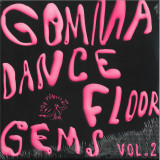
12 tracks originally released on the indie dance label GOMMA RECORDS between 2001 and 2010. (Gomma was the label Toy Tonics did before starting Toy Tonics.)
Along with DFA and Output records Gomma released a wild mix of electronic dance music, indie rock, undergound disco, post punk and new wave funk that was big in the 2000s. The Y2K sound!
Gomma released music by artists like Peaches, Whomadewho, The Rammellzee, James Murphy, LCD soundsystem and artists like Nick McCarthy of Franz Ferdinand.
Now it’s 2023 and its feels fresh to put a spotlight on some of these tracks again.
And so here comes a 2nd compilation part of Gomma tracks:
Nancy Whang the singer of LCD Soundsystem, WhoMadeWho (the band started their career on Gomma), Italian disco producer Bottin, UK Indie Disco hero The Deadstock 33s aka Justin Robertson, NY Disco hipsters In Flagranti, German producers Munk and many more on this compilation.
Gomma not only was a record label, but was also a home for cutting edge design, wild T-shirt styles, underground exhibitions with new artists from the Berlin scene and crazy poster and fanzine design.
Many graphic design trends of the last years were preceded by what the artists on Gomma were doing. And many record and street wear labels of today look a bit like Gomma was looking before ... copying the images that Gomma preceeded: ironic cartoons, trash aesthetics, greek symbols, ugly design ideas and lot of ironic things.
The Gomma visuals world was exposed in a couple of exhibitions around the world and at a big exhibition at #hausderkunst München before the label was closed in 2015. (when Toy Tonics took off...)
The official new edition from this rare and great Afrobeat & Soukous masterpiece from Nigeria !
"Vibro Success Intercontinental Orchestra was an extraordinary group from the Central African Republic, founded by the sax player Rodolphe 'Beckers' Bekpa, also known as Master Békers, in the late 60's. The band achieved surprising domestic success after Beckers introduced the first drums to the Congolese Rumba rhythm. His innovation proved to be wildly popular so they were hired as the resident band of “ciel d’Afrique au Km5”, a night club in Bangui. The club was renowned as the temple of the Olympic Réal football team's fans and that visibility propelled them into becoming the official national orchestra.
1970 marked beginning of the band's international fame . Their fame spread beyond national borders until they became so popular that invitations began to arrive from nearby countries like Cameroon and Chad, the former of which the band would then tour that same year. The success of their performances prompted a further tour in 1972. According to Rodolphe Bépka, the audience enthusiasm Vibro encountered was bewildering. "We filled the old military stadium in Yaoundé in 1970, in 1972 the new Amadou Haïdjo stadium ... We are running with great success in the cities.” Their popularity was also growing in Chad, where they would tour several times through the early and mid 70's.
Towards the end of 1976, Vibro Success decided to take their music global and introduce Central African music to listeners worldwide. It worked. The turning point came in Nigeria. There the group achieved extraordinary success, with live performances followed by contracts with local labels like Scottie and Ben/Clover resulting in hit releases. Most of their LP's were originally released on this later label, Ben Limited, owned by Ben Okonkwo.
Ben, also known as Clover Sounds, brought a great number of the biggest bands from the country to market, bands like The Apostles, Akwassa,The Doves, Aktion, The Visitors, Mansion, Folk 77 and many others. Nearly all those groups started their recording careers in the label's studios based in the commercial heart of Aba, Abia State, one of Southeastern Nigeria’s largest cities. Aba at that time was a flourishing city, an important crossroads of people and culture with an intensive and active and cutting edge live music and nightlife.
But after that golden era the group began to lose its popularity. In the 1980's they returned to Bangui and resumed their old-time gigs in dance halls there - only to realize that their music didn't have the appeal it used to. Making matters worse, the domestic economic downturn accelerated, forcing the orchestra to slowly end its activities . Vibro Succès Intercontinental Orchestra disappeared at the end of the 80s and most of its members died in the 90s.
We discovered this LP during our first trip to Nigeria in 2016. While traveling in the east to meet up with a musician, we stopped for a night in a village. As often happens in Nigeria, information has a way of traveling fast. The news that a couple of white guys looking for records had arrived in the village the day before spread like light. When we awoke, we found a couple of elderly music lovers in the hall of our hotel with a little pile of records for sale. The nice cover of the “Drunkard” album was right on top!
At first we thought it was just another really good soukous album made by Vibro Success but after we heard “Drunkard” - we knew we had stumbled onto something very special. That was the “easy” part. Soon after, we had the idea of reissuing this LP and that was a bit harder. There were no credits on the cover and not much information about Vibro Succès. We started to ask to our friends to ask around, see if somebody knew them or the producer. That's when sadly we discovered that Ben Okonkwo had passed. So with no leads to follow and seemingly without any possibility of making progress on the matter, we "gave up" and returned to Italy.
A couple years later, in the summer of 2019, we found ourselves again in Aba. This time we had the chance to meet Nnamdi Okonkwo, the eldest son of the late Ben Okonkwo. After Nnamdi's mother and family agreed, he was glad to cooperate with us for the re-release of this special album."
A blistering advancement of the knife-sharp hooks and urgently efficient post-punk structures that they’ve spent over a decade refining since their formation in 2011, the band’s fourth album – and second on Specialist Subject - emerges from a period of flux for the band’s chief songwriting partnership of Emma Wigham (drums/vocals) and Mark Jasper (guitar/vocals). First came a move north to Yorkshire from their native London. “We had decorated a tiny, rented house in Mytholmroyd” Jasper explains. “We setup a practice room in the top of a mill nearby and tried to write music, which we did amid stress about money, and a fear of having made the wrong decision. We had left our jobs, friends and a nice but absolutely tiny flat in London behind, and moved to a small village in West Yorkshire.” Although they found the location to be beautiful, the transition from city life to rural turned out to be an odd fit – too much so, it turned out. From this relatively short stay in West Yorkshire, however, came a more permanent change as the couple welcomed their first child Ivy into the family. Although, they’re hesitant to put too much of Streams and Waterways influence on the shoulders of their young daughter – she arrived a year and a half into the album’s conception – there’s no denying that its themes of loss, birth, and being part of this eternal, momentary life were brought into sharp focus following their new arrival. “Streams and Waterways is about the struggle of looking at the clock, realising it’s actually going pretty damn fast and knowing that really you have no control over anything” Jasper confirms. Perhaps that explains the way that opener The Valley doesn’t even introduce itself before careering into a full-throttled, three-minute scuzzy rager that would approach the descriptor anthemic had it not been kicked and scuffed along the way; it’s maybe why the wiry, ferocious Choice You Make feels like a charge into a storm despite the uncertainty of what you might find. It’s perhaps why even when Witching Waves allow themselves respite on the pared down Open A Hole, there’s a churning anxiety that lies below the acoustic guitar and harmonising vocals: in many ways musically and thematically Witching Waves are relinquishing the control that’s always been a fixture of their music – with all the thrilling and nervous fallout that comes from that. Although the pair have since returned south (having relocated to Exeter), Streams and Waterways also serves as a document of their foray northwards. The surviving artefact from Jasper’s never-to-be-finished studio that he’d began to build in Yorkshire – following the ending of his London-based Sound Savers studio – the record is also the first to feature current bassist Will Fitzpatrick, who joined initially live on their support tour with Australian punks Camp Cope. Fitzpatrick – a key component of Liverpool’s DIY scene for two decades – quickly became a key part of the writing process. Recording sessions were done during periods of lockdown that allowed congregation, Jasper recalling a still unborn Ivy kicking hard during an early mix playback of It’s A Shame’s layered noise rock assault. “The song was about my past, a much harder time. But my future was egging me on” he says. It’s a neat summation of Streams and Waterways and its representation of the discomfort of life amidst the compulsion to ride on its journey regardless. It’s a record that finds Witching Waves looking into the future more than ever before, but still bristles with the rush of being in the moment – because ultimately, despite what may have happened or may yet come, the band’s strongest trait remains being able to keep you feeling in the present.
- A1: Brandnewtrumpets & Macc - We Are The Tightrope Walkers 06 30
- A2: Arkaik, Dexta & Fearful - Old Skool (Feat Mc Gq) 05 32
- A3: Lakeway - Even Though 07 40
- A4: Dexta & Hyroglifics - Boxgroove (A Fruit Remix) 04 16
- A5: Amir De Bois & Fearful - 73 05 18
- A6: Itti - Rumbling 05 25
- A7: Cuelock - Pages Of Snow 05 31
- A8: Illexxandra & Tgrbass - Swampy Swami 02 55
- B1: Crypticz - Could Have Been (Eusebeia Remix) 04 15
- B2: Dexta - Se4 (Silent Dust Remix) 05 50
- B3: No Nation, Sheba Q & Bk Balance - Too Late 05 37
- B4: Gaunt - Firefloor (Pepsi Slammer Remix) 04 09
- B5: Cuelock - Departed (Mauoq Remix) 05 19
- B6: Dexta - Giraffes On Acid 06 50
- B7: Chills - Everyone's Mad (Spaja S.e. Remix) 06 10
- B8: Sense Mc Vs Dexta - Please Hang Up 02 13
- B9: Beezy X Mntx - Aftaparty 03 25
Diffrent Music roars back into action after an extended hiatus to raise a couple of young giraffes with the electrifying new compilation, ‘Revolution Of The Giraffe’ LP.
Launched in 2010 with the aim of bringing something new to a drum & bass scene that had become overly formulaic, the label has continuously pushed in new directions, often incubated tomorrow’s stars, and evolved beyond even that original grand ideal. ‘Revolution Of The Giraffe’ unleashes 17 tracks of bleeding-edge electronic music, proving that after 13 years, Diffrent still sounds like nothing else.
Core artists from the label’s distinguished history bring their expertise, such as drum & bass mainstay Arkaik and sound architect Fearful, who team up with label boss Dexta for the MC GQ-sampling ‘Old Skool’ — a new track with a classic Diffrent sound. And there are numerous debuts: A.Fruit reworks an all-time Diffrent classic, ‘Boxgroove’ by Dexta & Hyroglifics, into a glitchy halftime stomper; none60 bosses Silent Dust turn Dexta’s ‘SE4’ into a rebellious dancefloor juggernaut; and the mysterious Gaunt’s ‘Firefloor’ becomes locked ‘n’ loaded rave artillery in the hands of Pepsi Slammer.
Label stalwart Mauoq puts his signature psychedelic future dub spin on ‘Departed’ by Cuelock, who in turn delivers the ice-cold, grime-indebted ‘Pages Of Snow’. Lakeway conjures the epic ‘Even Though’, nearly eight minutes of ecstatic, spell-binding, hyper-rave wonder. Dexta goes solo with squelchy techno jungle stormer ‘Giraffes On Acid’. Even Sense MC makes an… appearance.
New-gen Diffrent acts are in fine form too. The inimitable BrandNewTrumpets opens the album alongside Macc; ‘We Are The Tightrope Walkers’ is a powerful spoken word piece that erupts into a hail of punishing breaks. No Nation, Sheba Q and BK Balance, meanwhile, turn out explosive, hi-tek junglism on ‘Too Late’. From Diffrent’s industrial-toned sister label Are We Really Alone? (A.W.R.A.), Amir De Bois joins forces with Fearful for the paranoid, jittering ‘73’; Tokyo’s Itti summons thunderous bass on the ritualistic ‘Rumbling’; and Croatian artist Spaj.A.S.E.’s competition-winning, mind-mashing remix of the first ever Diffrent release, ‘Everyones Mad’ by Chills, finally sees the light of day.
Always looking to the future, Diffrent also welcomes modern jungle visionary Eusebeia, who puts his ethereal touch to Crypticz’s ‘Could Have Been’, and Stateside up-and-comers Illexandra & TGRbass, who deliver the supercharged, elastic bounce of ‘Swampy Swami’.
Closing out with one from deep within the vaults, ‘Aftaparty’ is Beezy and MNTX’s ode to seeing where the night takes you. It’s a fitting note to end on, as a new era of Diffrent Music begins. Where will it take you? Join us on the ride and find out.
"I've loved every moment of the label so far: the fast-paced release schedules, the slow years, the podcasts, albums, singles, EPs, parties, etc. This compilation album signposts where we are at — a bunch of classic Diffrent artists, a load of new faces, and a few remixes thrown in for good measure. Each tune stands alone, but stands tall next to each of its siblings. I hope you all enjoy it as much as we have! The revolution is here, join the revolution!"
- Dexta
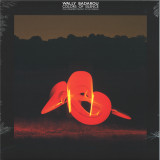
Synth pioneer and musical polymath, Wally Badarou is a genius. But you know that already. A vinyl version of his majestic Colors Of Silence has been craved by the Balearic cognoscenti ever since its low-key 2001 release. Indeed, when we first started work on Be With, we asked some pals with exquisite taste what their dream release would be. We asked Balearic legend Moonboots and, without hesitation, he said Colors Of Silence by Wally Badarou. We didn't know Wally had made this album. And most still don't. But that's about to change.
Colors Of Silence is ostensibly a new age album. As ever though, Wally's sophisticated synth textures and expressive keyboard runs are so full of character, so full of life, that this work of art transcends any easy genre categorisation. It's simply stunning, throughout. It sounds like A.r.t. Wilson or Suzanne Kraft, with traces of CFCF and Jonny Nash. But it was made a good decade earlier than the work of these modern giants. Sometimes, it doesn't seem far from some Larry Heard albums.
Island Records founder Chris Blackwell's friend Nathalie Delon asked Wally to provide music for the yoga DVD she was to release. Lack of time on both sides made them agree on using "quality demos" Wally had in his ideas bank. It's understandable why Colors Of Silence remains somewhat of a lost gem. As Wally explains: "Total lack of promotion made it an 'intimate' release, which was exactly what I was looking for: just a buzz-maker and time-buyer that would allow me to concentrate on the real thing as soon as I'd have time, which could also turn into a rare collecting item later, once the final versions made their way to success. You never know."
Over the years, Colors Of Silence has become a true cult record for the ambient/Balearic heads.
The beguiling but brief "Dance In The Dust" is the shuffling, hyper-percussive, hypnotic opener. It gives way to the deep serenity of "Amber Whispers". It's a gliding, divine, mini melodic masterpiece. It'll make you swoon in its extreme beauty. The bright and breezy "Where Were We" follows, a tropical, reggae-tinged bounce through the islands.
The uptempo groove is maintained on the keys-drizzled soca-funk of "The Lights Of Kinshasa" before Side A is rounded out with "Pictures Of You". It starts with stately, melancholic, unadorned piano and this alone would make for a beautiful song. But Wally always gives us that bit extra and he effortlessly introduces warm, dreamy pads and minimal, slo-mo percussion to augment a frankly stunning piece of work.
Ushering in Side B, Wally's mesmeric piano playing is to the fore again, in the intro to uber-chilled "Serendipity For Two". The playing becomes more mellifluous as the track progresses and adds warmth through exotic percussion, woodwind, sweeping synths and digi-drums. It has echoes of, er, Echoes. It segues seamlessly into the more propulsive, wavy "Smiles By The Millions". If you're not nodding and grinning along widely to the gently throbbing bassline underpinning this, we can't help you. The meditative "Higher Still" follows, cinematic in feel and ever so slightly sinister with the strings. It sounds particularly Badalamenti-esque, if you ask us.
That unmistakable, almost peculiar Badarou funk - so lyrical, so texturally rich and so rhythmically spacious - is all over "Oriental". Next up, "Days To Wonder" brings the serenity back, insistent yet melodic keys, as if played in a place of worship, coupled with birdsong, conjure a kind of instant nostalgia for halcyon days of youth. The contemplative "Dawn Of Europa" is a sombre, beatless, ambient journey whilst the glorious, too-brief "Crystal Falls" features soft percussion and sparkle before fully glistening with some gentle head-nod beats. Wally brings this incredible collection to a mellow, tender close with the graceful "Purple Lines".
There can be few artists more under-appreciated given their vast influence than Wally Badarou. His solo work practically defined the sound of the Balearic DJs of the 1980s, and thus the more sophisticated sound of dance culture thereafter. A synth specialist, Badarou was the long-time associate of Level 42. He was one of the Compass Point All Stars (with Sly and Robbie, Barry Reynolds, Mikey Chung and Uziah "Sticky" Thompson), the in-house recording team of Compass Point Studios responsible for a series of albums in the 1980s recorded by Grace Jones, Tom Tom Club, Mick Jagger, Black Uhuru, Gwen Guthrie, Jimmy Cliff and Gregory Isaacs. Badarou's keyboard playing could also be heard on albums by Robert Palmer, Marianne Faithfull, Herbie Hancock, M (Pop Muzik), Talking Heads, Manu Dibango and Miriam Makeba. He also produced Fela Kuti. Phew!
Meticulously remastered and cut by both Simon Francis and Cicely Balston respectively, it has been pressed to the highest possibly quality at Record Industry in Holland. Special thanks must go to Apiento from Test Pressing who first introduced us to Wally and facilitated all those early zoom meetings. It couldn't have happened without his help. Not least on pulling the art together, too, which features striking original photography by Mads Perch. Benji Roebuck of Roebuck Press did his thing brilliantly in art working the whole package to completion. All in all: essential.
100 only
AhGeeBe is the stage name of Welsh songwriter, pedal-steel player and general all-round multi- instrumentalist, Rhodri Gwyn Brooks. Through the past decade performing and recording with various artists (Melin Melyn, Gia Margaret, Novo Amor, Georgia Ruth & Ivan Moult to name a few), Rhodri has drawn on inspiration from artists such as George Harrison, Wilco and Neil Young, to produce his distinct brand of country Americana.
Through Bubblewrap, Rhodri has released lo-fi home
recordings and a couple of EP’s under his own name, as well as a Welsh Music Prize nominated album ‘Pontvane’, alongside Eugene Capper. Now, a decade in the making, AhGeeBe’s debut album ‘Chin Up, Chief‘ drops on November 3rd, through Bubblewrap Collective.
Rhodri shares some of his thoughts and processes...
Over the years I’ve come to realise that I much prefer playing for other artists, and collaborating with people, more than writing and releasing my own music with all the ffaff and headspace it takes up. But here we are.
The name of the record comes from a line in TV show Fargo, where police officer Molly tries to cheer up the police Chief. It stuck with me and seemed all too fitting a title for the songs as a whole.
Musically I wanted to make an album with all the sounds and feel I really love from artists like George Harrison, Wilco, Neil Young etc with piano and acoustic guitar, interupted by spikey electric guitars or mad fuzz solos with a solid slight funk to the rhythm section - my attempt to sound like a David Axelrod record. I got a pedal steel guitar around 3 years ago so there’s a veriety of bottleneck slide, lapsteel, and pedal steel guitar on the record. And then on the flip side, have moments of calm and sparsity, with room to woozily meander around.
Glasser, the elevated electronic project from Cameron
Mesirow, releases her anticipated third album, ‘crux’, via
One Little Independent Records.
‘crux’ takes Glasser’s entrancing blend of dreamy
experimental pop and layered electronics to explore
themes of personal identity, emotional vulnerability, and
the human experience. The album maps journeys of selfdiscovery as she unpacks intimate experiences with a
maturity and cathartic outlook. Specifically, the tracks on
‘crux’ discuss the death of an old friend, her meditations
on the fragility of life and the delicacy of relationships in
times of uncertainty.
More than anything it’s about the importance of creativity
and writing while healing, and on an individual level,
looking inward and the examination of one’s grief, anxiety,
and insecurities. Musically it searches outward, it includes
the use of traditional folk, Celtic to communicate her
Scottish roots, and Eastern-European styles, all introduced
to her lush, atmospheric production, intricate vocal
harmonies, and complex rhythms.
“Soaring vocals with free-flowing, rhythm-obsessed
eclecticism that make for a notably welcoming collection of
atmospheric, electronics-brushed pop” - Pitchfork
“It’s Glasser’s sonic constructions which holds our interest
first and foremost; a bolder and more up-front sound” -
The Line of Best Fit
“Potent, sexually charged and teeming with life. Make no
mistake, this isn’t sex as male-gaze-pandering titillation,
packaged in clichéd, chart-friendly couplets, but sex from a
singular female perspective: intimate, all-encompassing,
ecstatic. This is pop for consenting adults: music for awake
minds” - Dazed
Bristol's soul jazz kings The Jazz Defenders release a new vinyl 45 single this autumn as a taster for their third album, which is destined for release in spring 2024. Once again, they are bringing together their love of 1960's soul jazz and golden era 90's hip-hop, just as they did on a couple of tracks on their last album "King Phoenix" (Haggis Records 2022). This new single sees them reunited with London MC/rapper Doc Brown, who guested on the track "Perfectly Imperfect", and his flow sits so naturally over the Jazz Defenders' music and beats, you'd think he's a permanent band member.
The A-side "Rolling On A High" is a real old school boom bap style party hip-hop jam. Big beats, rolling bassline (acoustic double bass), Ramsey Lewis soul jazz piano vamps, funky Hammond organ and some punchy horn section business, all topped off with Doc Brown bouncing bars back and forth with that laid back vibe he always brings to the mic. A guaranteed dance-floor bomb, whether you're a breaker, a jazz dancer or simply a Saturday night disco shuffler. The B-side "Looking Back" takes the tempo right down. An 'end of the night' number when the lights in the club are low, the last drinks are being drained and you're thinking and reminiscing about times gone by. The good times and bad, successes and mistakes. And made even more poignant and reflective halfway through when the mellow strings come into the song (once again excellently arranged by pianist/bandleader George Cooper). If "Rolling On A High" is the fire then "Looking Back" is definitely the ice. Proof that the Jazz Defenders can rock the party and grab the dancers but also dig deep with emotive tunes that draw in the discerning listener.
The Jazz Defenders, led by keyboard maestro George Cooper from The Haggis Horns, have been building a reputation as a great musical unit since their debut Blue Note/hard bop-inspired album "Scheming" appeared on Haggis Records back in 2019, which received a huge amount of praise from critics, and subsequently went on to spend 5 weeks in the top ten of the American jazz charts In 2021, their double A-side vinyl single "The Big Man/Love's Vestige" got them the breakthrough they deserved. It garnered heavy support on radio from top folks like Craig Charles (BBC6 Music), Helen Mayhew (Jazz FM), Jamie Cullum (BBC Radio 2), and Worldwide FM resident DJ's Ashley Beedle and Colin Curtis. They further enhanced their reputation as a rocking band with album number two "King Phoenix" and by electrifying audiences at sold out live shows across the UK, including the legendary Ronnie Scott's Jazz Club in London.
Album number three is well on its way but for now, check out this tasty limited edition 45 single on Haggis Records. The JDs and Doc Brown...the perfect combination, still keeping that sweet jazz/hip-hop love affair alive today.
It’s been nearly eight years since the last Mondo Drag album came out. In that time, the Bay Area psych-prog band toured the US and Europe, performed at major festivals and—once again—reformed their rhythm section. But in the context of the band’s nearly two-decade existence, this period may have been the most fraught. Vocalist and keyboardist John Gamiño lost friends and family members. Meanwhile, humanity suffered the throes of a global pandemic. “It was a dark chapter,” he recalls. “I was going through a lot of stuff personally—there’s been a lot of death, loss of family members, and grief. Plus, the band was inactive. It felt like time was slipping away from me. I felt like I was wasting my opportunities. I felt like I wasn’t participating in my story as much as I could have.” This feeling of time slipping away is the prevailing theme on Mondo Drag’s new album, Through the Hourglass. “For me, Through the Hourglass really encompasses the quarantine/pandemic years,” Gamiño says. “But in a way that includes a couple of years before that for us, because the band was stagnant during that time. Living with that was really impactful on our daily lives. So, the album is reflective. It’s looking at time—past, present, future.” Luckily, Mondo Drag emerged from this dour period reborn. Freshly energized by bassist Conor Riley (formerly of San Diego psych squad Astra, currently of Birth), who joined in 2018, and drummer Jimmy Perez, who joined in 2022, Gamiño and guitarists Jake Sheley and Nolan Girard have triumphed over the seemingly inexorable pull of time’s passage. “Astra was the one contemporary band that we felt was on the same tip as us,” Gamiño says. “We saw the similarities and felt the same vibe. Conor moved to San Francisco in 2018 and heard we were looking for a bassist, so we got in touch. For us, it was like, ‘The synth player from Astra wants to play bass for us?’ We couldn’t think of anybody more perfect.” Perez, meanwhile, brings deep psych-prog knowledge and impeccable skill. “He’s an amazing drummer, and he allowed us to do what we’ve been trying to do,” Gamiño says. “Before he came along, it was like, ‘Where are the drummers who like psych and prog and can play dynamically?’ We ended up trying out metal drummers, but they couldn’t swing. Jimmy was the final piece of the puzzle.” The result is a dazzling and often plaintive rumination on the hours, days, and years—not to mention experiences—that comprise a lifetime. Two-part opener “Burning Daylight” smolders with melancholy, offering a whirl of multi-colored and hallucinatory imagery. “It’s about the California wildfires and a feeling of helplessness,” Gamiño explains. “There’s a juxtaposition between the dark lyricism and upbeat music which is meant to imply a sort of delusional state—and choosing our own delusion to overcome the crushing despair of reality.” Eleven-minute centerpiece “Passages” is a sprawling prog-rock adventure, festooned with lofty guitar melodies, sweeping organ flourishes and a delicately finger-picked outro. But the heaviest song, thematically speaking, might be the mournful and hypnotic “Death in Spring,” which borrows its title from the like-named Catalan novel. “In the novel, people are placed inside opened trees and their mouths filled with cement before they die to prevent their souls from escaping,” Gamiño explains. “The song is about three people I knew who lost their lives to gun violence, addiction, and mental health. It’s my way of cementing their souls in song form.” Mondo Drag fans might be surprised by this blend of hard reality with literary surrealism, but it’s a perfect example of how the last several years have impacted Mondo Drag—and Gamiño in particular. “On all of our previous albums, the lyrical content is more psychedelic and out there,” he acknowledges. “This is the most personal stuff I’ve ever done, so I’m definitely feeling vulnerable on this one.” The title Through the Hourglass comes from the opening of the long-running soap opera Days of Our Lives. It’s less inspired by a predilection for daytime TV than Gamiño’s connection with his late mother, who passed during the time since the last album. “I used to watch Days of Our Lives with her everyday growing up,” he explains. “The song is kind of a reinterpretation of the theme song, although it’s different enough that probably no one will catch it. Now that I’m getting older, I like to put these little Easter eggs in the songs for myself and for archival purposes—for memories.” Through the Hourglass was tracked at El Studio in San Francisco, with an additional ten days of recording at the band’s rehearsal space, which doubles as a hybrid analog-digital recording studio. The album was engineered and mixed by Phil Becker, drummer of space-punk mainstays Pins Of Light. “We’re still here,” Gamiño says. “We’ve been in the studio working on our craft and honing our skills. Now we’re re-emerging for the next stage of our life cycle.”