
High Roller Records, reissue 2021, black vinyl, ltd 250, 425gsm heavy cardboard cover, 4 page insert printed on uncoated paper, special sized poster, new mastering by Patrick W. Engel at Temple of Disharmony, new cutting
High Roller Records, reissue 2021, black vinyl, ltd 250, 425gsm heavy cardboard cover, 4 page insert printed on uncoated paper, special sized poster, new mastering by Patrick W. Engel at Temple of Disharmony, new cutting

High Roller Records, reissue 2022, 1st unreleased mix, transparent electric blue/ red splatter vinyl, ltd 250, 425gsm heavy cardboard cover, insert, mastered for vinyl by Patrick W. Engel at Temple of Disharmony.

Im Jahr 2022 änderten Paramore im Stillen das Cover ihres gleichnamigen Albums auf allen DSPs von einem Bandfoto zu einem Bild von Hayley mit ihrer "Grow Up"-Jeansjacke. Das Ergebnis: Die Fans forderten, dass wir (das Label) das Album mit dem neuen Cover auf Vinyl pressen. Am 5.
Januar werden die Fans ihren Wunsch erfüllen, denn wir bringen Self-Titled wieder auf den Markt - nicht nur in schwarzem Standard-Vinyl, sondern auch mit exklusiven, von Hayley Williams ausgewählten Farben. Die Farben sind Repliken der Farben, die Hayleys Haare während des Zyklus trugen. Paramore hat die Top-Ten- und Doppel-Platin-Singles "Still Into You" und "Ain't It Fun".
Paramore steht auf den Listen der besten Alben des Jahrzehnts von Kerrang!, Billboard und AllMusic. Es bescherte der Band ihre erste Nummer eins in den US Billboard 200 und war auch die Nummer eins im Vereinigten Königreich, Irland, Australien, Neuseeland, Brasilien, Argentinien und Mexiko. Derzeit ist das Album mit Platin in den USA, Großbritannien und Kanada sowie mit Gold in Australien ausgezeichnet.

The British progressive rock band Quatermass existed from 1969 until 1971, during those days they released one album, the self-titled Quatermass. The trio, which formed as a power trio with Hammond organ as the main instrument, consisted of bass player and vocalist John Gustafson, keyboardist J. Peter Robinson and Mick Underwood on drums. They keyboard-driven album gained a cult status during the years and received a lot of credits from both critics as prog rock fans. This overlooked masterpiece rocks every moment, sometimes in a funky way and other times in the strength of their heavy sound. The most rock-ish song here is “Black Sheep Of The Family”, later covered by Rainbow on their first album. Progressive parts of the album features surprising time shifts and unique sounds, which gives both lovers of rock as metal the thrills.

The British progressive rock band Quatermass existed from 1969 until 1971, during those days they released one album, the self-titled Quatermass. The trio, which formed as a power trio with Hammond organ as the main instrument, consisted of bass player and vocalist John Gustafson, keyboardist J. Peter Robinson and Mick Underwood on drums. They keyboard-driven album gained a cult status during the years and received a lot of credits from both critics as prog rock fans. This overlooked masterpiece rocks every moment, sometimes in a funky way and other times in the strength of their heavy sound. The most rock-ish song here is “Black Sheep Of The Family”, later covered by Rainbow on their first album. Progressive parts of the album features surprising time shifts and unique sounds, which gives both lovers of rock as metal the thrills.

Das Fieber-Mixtape auf Vinyl. 19 Anspielstationen inklusive Skits und mehreren Gästen. Gepresst auf schwarzem Vinyl, mit Lavendel-blauem Front- und Backcover. Erhabene Hochprägung auf dem Cover, alle Zähne und „Fieber“-Schriftzug in Silber. Schwarze „Schach“-Innentasche und „Schach“-Labels auf der Vinyl selber. Der Rücken der Vinyltasche ist um 5 mm verstärkt und mit einer „Abriss“-Lasche verschlossen. Entweder als Sammlerstück verschlossen halten oder aufreissen und das Fieber ausbrechen lassen! Für das totale Mixtape-Hörerlebnis ohne Kennrillen gepresst. Die Nadel läuft auf jeder Seite an einem Stück durch. Inklusive (gefaltetem) Poster (600x900mm) in der Vinyltasche. Limitiert auf 2000 Stück. Nur solange der Vorrat reicht.

Zwei Tapete Records Acts, die sich kennen und schätzen, veröffentlichen eine gemeinsame Split-7", auf welcher sie sich gegenseitig covern: Pete Astor und Die Liga der gewöhnlichen Gentlemen. Während Pete Astor aus dem Liga-Hit "Alle Ampeln auf Gelb" ein zu Herzen gehendes psychedelisches Moritat namens "Amber Lights" zaubert, verwandelt die Liga die Ballade "Like Frankie Lymon" von Astors ehemaliger Band The Weather Prophets in einen Modern Lovers-esken Uptempo-Song inkl. Saxophon-Solo ("Wie Frankie Lymon). Fun Fact: Pete Astor verbrachte die Sommerferien oft bei seiner Tante in Pinneberg bei Hamburg. Nur ein paar Kilometer entfernt hockte, vermutlich zeitgleich (!) einer von der Liga der gewöhnlichen Gentlemen in seinem Jugendzimmer und lauschte der Original-Version auf der Creation Records-Compilation "Purveyors Of Taste" und hatte natürlich keine Ahnung, dass der Interpret und Autor des The Weather Prophets-Songs, mithin ein waschechter britischer (Indie-)Pop-Star, quasi in der Nachbarschaft zur Sommerfrische weilte. Man kann also sagen, dass sich mit vorliegender Split-7" ein Kreis schließt.

Das Fieber-Mixtape auf Vinyl. 19 Anspielstationen inklusive Skits und mehreren Gästen. Gepresst auf schwarzem Gold, mit Inside-Out gedrucktem schwarzen Front- und Backcover. Erhabene Hochprägung auf dem Cover. Ein Zahn mit Heißfolienprägung in Silber. Giftgrüne „Schach“-Innentasche und „Schach“-Labels auf der Vinyl selbst. Der Rücken der Vinyltasche ist um 5 mm verstärkt und mit einer „Abriss“-Lasche verschlossen. Entweder als Sammlerstück verschlossen halten oder Aufreissen und das Fieber ausbrechen lassen! Für das totale Mixtape-Hörerlebnis ohne Kennrillen gepresst. Die Nadel läuft auf jeder Seite an einem Stück durch. Inklusive (gefaltetem) Poster (600x900mm) in der Vinyltasche.

Das Fieber-Mixtape auf Vinyl. 19 Anspielstationen inklusive Skits und mehreren Gästen. Gepresst auf schwarzem Vinyl, mit Bordeaux-rotem Front- und Backcover. Erhabene Hochprägung auf dem Cover, alle Zähne und „Fieber“-Schriftzug in Silber. Schwarze „Schach“-Innentasche und „Schach“-Labels auf der Vinyl selber. Der Rücken der Vinyltasche ist um 5 mm verstärkt und mit einer „Abriss“-Lasche verschlossen. Entweder als Sammlerstück verschlossen halten oder aufreissen und das Fieber ausbrechen lassen! Für das totale Mixtape-Hörerlebnis ohne Kennrillen gepresst. Die Nadel läuft auf jeder Seite an einem Stück durch. Inklusive (gefaltetem) Poster (600x900mm) in der Vinyltasche. Limitiert auf 2000 Stück. Nur solange der Vorrat reicht.

The official new edition from this rare and great Afrobeat & Soukous masterpiece from Nigeria !
"Vibro Success Intercontinental Orchestra was an extraordinary group from the Central African Republic, founded by the sax player Rodolphe 'Beckers' Bekpa, also known as Master Békers, in the late 60's. The band achieved surprising domestic success after Beckers introduced the first drums to the Congolese Rumba rhythm. His innovation proved to be wildly popular so they were hired as the resident band of “ciel d’Afrique au Km5”, a night club in Bangui. The club was renowned as the temple of the Olympic Réal football team's fans and that visibility propelled them into becoming the official national orchestra.
1970 marked beginning of the band's international fame . Their fame spread beyond national borders until they became so popular that invitations began to arrive from nearby countries like Cameroon and Chad, the former of which the band would then tour that same year. The success of their performances prompted a further tour in 1972. According to Rodolphe Bépka, the audience enthusiasm Vibro encountered was bewildering. "We filled the old military stadium in Yaoundé in 1970, in 1972 the new Amadou Haïdjo stadium ... We are running with great success in the cities.” Their popularity was also growing in Chad, where they would tour several times through the early and mid 70's.
Towards the end of 1976, Vibro Success decided to take their music global and introduce Central African music to listeners worldwide. It worked. The turning point came in Nigeria. There the group achieved extraordinary success, with live performances followed by contracts with local labels like Scottie and Ben/Clover resulting in hit releases. Most of their LP's were originally released on this later label, Ben Limited, owned by Ben Okonkwo.
Ben, also known as Clover Sounds, brought a great number of the biggest bands from the country to market, bands like The Apostles, Akwassa,The Doves, Aktion, The Visitors, Mansion, Folk 77 and many others. Nearly all those groups started their recording careers in the label's studios based in the commercial heart of Aba, Abia State, one of Southeastern Nigeria’s largest cities. Aba at that time was a flourishing city, an important crossroads of people and culture with an intensive and active and cutting edge live music and nightlife.
But after that golden era the group began to lose its popularity. In the 1980's they returned to Bangui and resumed their old-time gigs in dance halls there - only to realize that their music didn't have the appeal it used to. Making matters worse, the domestic economic downturn accelerated, forcing the orchestra to slowly end its activities . Vibro Succès Intercontinental Orchestra disappeared at the end of the 80s and most of its members died in the 90s.
We discovered this LP during our first trip to Nigeria in 2016. While traveling in the east to meet up with a musician, we stopped for a night in a village. As often happens in Nigeria, information has a way of traveling fast. The news that a couple of white guys looking for records had arrived in the village the day before spread like light. When we awoke, we found a couple of elderly music lovers in the hall of our hotel with a little pile of records for sale. The nice cover of the “Drunkard” album was right on top!
At first we thought it was just another really good soukous album made by Vibro Success but after we heard “Drunkard” - we knew we had stumbled onto something very special. That was the “easy” part. Soon after, we had the idea of reissuing this LP and that was a bit harder. There were no credits on the cover and not much information about Vibro Succès. We started to ask to our friends to ask around, see if somebody knew them or the producer. That's when sadly we discovered that Ben Okonkwo had passed. So with no leads to follow and seemingly without any possibility of making progress on the matter, we "gave up" and returned to Italy.
A couple years later, in the summer of 2019, we found ourselves again in Aba. This time we had the chance to meet Nnamdi Okonkwo, the eldest son of the late Ben Okonkwo. After Nnamdi's mother and family agreed, he was glad to cooperate with us for the re-release of this special album."

THE CULT 1992 DEBUT OF DOOM-TINGED DEATH METAL SAVAGERY -
PRESENTED ON CD FORMAT WITH ORIGINAL COVER ARTWORK & FULL
LYRICS
Formed in 1989 in Milwaukee, Wisconsin USA & among the group of earlier death
metal acts to grace the label roster, Accidental Suicide released their one, sole
album in 1992, originally through Peaceville's Deaf Records imprint, which was
the initial home of other notable acts such as 'At The Gates' & 'Morta Skuld'. Being
much more than a pure "blast" styled death metal outfit, Accidental Suicide
introduced & utilised a doomier presence also, even recalling other classic
pioneers of the genre such as 'Paradise Lost', to lend a twisted & at times sombre
dynamic to the tracks, with this effective diversity to the compositions through
the tempo variations & deranged melodic passages scattered throughout the
album. The tortured & sinister vocals of Ed Jackson narrate tales of morbid
brutality & murder behind a wall of punishing riffs, for what stands as a prime
example of classic early 90's death metal execution.
'Deceased' was engineered & mixed at Mauer Brothers Recording Studio in
Milwaukee, with production work handled by Eric "Griffy" Greif.
Cover artwork was created by Chris Drew, also responsible for other early
Peaceville artwork on Impaler's 'Charnel Deity' & Baphomet's 'The Dead Shall
Inherit'.
This edition of 'Deceased' marks 30 years since the original release & is
presented officially on CD for the first time since the original 1992 pressing,
including the original artwork & full lyrics.

James Ray kickstarted his career as a teenager in 1959 after he left Washington DC for New York, but debut single ‘Make Her Mine’ flopped. Two years later, songwriter Rudy Clark discovered Ray and got him signed to the Caprice label, the resultant ‘If You Gotta Make A Fool Of Somebody’ a top-30 hit that the Beatles covered in early live sets. Ray’s self-titled debut album had that hit and the equally appealing follow-up, ‘Itty Bitty Pieces,’ as well as ‘I’ve Got My Mind Set On You,’ later successfully covered by George Harrison. An overdose would tragically cut short Ray’s career, this sole LP a testament to his enduring talent.
Repress!
For those who know, Bambooman is one of the most sought-after, probing, and distinctive voices in UK electronic music right now.
The Yorkshire-born producer's catalogue builds into an aural mosaic, comprising everything from scrunched up hip-hop to techno deviance, all delivered with an impish sense of individuality.
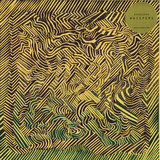
'Whispers' certainly resonates. It's a lengthy, bucolic work, an album of great breadth but also one of sustained mood – think those hazy summer evenings when shadows stretch out across the road, and autumn lingers around the corner.
This new album has a dusty, organic, and decidedly personal feel, much more at home with Jon Hassel's 'fourth world' aesthetic than the club.
The results are also imbued with an incredible sense of mystery, with Bambooman's productions frequently being shot through with a hallucinatory sense of the uncanny. Entirely self-composed, 'Whispers' utilises "lots of field recordings that I've collected over the last few years, while within the tracks you can find lots of the instruments, percussion, bells and whistles that have been gathered throughout my life."
In certain ways 'Whispers' is entirely autobiographical: Bambooman reaches back to his varied alter egos, to the ambient releases, art commissions, and soundtrack projects that litter his discography. The cover art was even pieced together by Oliver Pitt – of Glasgow group Golden Teacher – who was an early ally in the producer's sonic quest.
Stylistically 'Whispers' veers from avant hip-hop of Flying Lotus to the theoried composition of Terry Riley, from the future-forward percussive energy of Battles to the ever-evolving electronics of Mark Pritchard. It's a record marks by a fiercely independent spirit, but also by a close-knit cast of collaborators.
King Kashmere takes a starring turn, following the pair's collision on the recent 'SUPERGOD' EP.
Each vocal is recorded, chopped up and then spliced across the album, with Elsa Hewitt also making a number of appearances and re-appearances.
credits

Most southern soul fans will tell you that that the music produced in Memphis in 1967 and 1968 was the pinnacle of quality. So following on from our look at the River City’s soul output in 1967, we now turn our attention to an album covering the next year. As before, the singers here are a heady mixture of local Tennessee talent and welcome soulful guests who journeyed down south hoping that a little of the famous Memphis magic would rub off on their songs. There are soul genres to suit all tastes here – from the deepest ballads to upbeat tracks that will rock your socks off. Soul doesn’t get much better than the artists and their tunes on this LP!

Telephone Explosion proudly presents the self-titled debut LP from Toronto’s UH HUH, out physically and digitally on April 14, 2023. The album features eight tracks of dub-damaged art rock which conjure a potent vision of spaced-out 1980s post-punks feeding their angular rhythms and bass-heavy grooves through layer upon layer of grime-spattered spring reverb.
There is a palpable sense of discovery and exploration throughout UH HUH’s 37 heady minutes. Elastic basslines and serpentine guitar phrases throb and glide, cutting through dubwise reverberations like hands moving through an opaque cloud of reefer smoke.
Formerly known as Teenanger, the reconfigured (and reinvigorated) group’s newfound sense of sonic identity is put on display the moment the door kicks open. The percolating spaciousness of opener “Somewhere Beyond” is followed by the cyclical grooves of “Redemption Pause.” Vocalists Christopher Swimmings and Melissa Ball each take respective turns at lead vocal duties, showcasing their contrasting yet complimentary styles.
“Babylon”, a slab of overcast, loping funk features both singers on the same track, alternating between Swimmings’ stoned syncopation and Ball’s saccharine melancholy. This juxtaposition leans against a backdrop of reverb-soaked drums, watery guitar chords and rippling trumpet.
The slinking, fractured grooves of “Rain (In The Afternoon)” and “Citrus Song” call to mind the deranged minimal dub-wave of Naffi or Vivien Goldman. Both songs feature lyrical content heavily inspired by the Florida swamplands, although the aural landscape on these tracks is decidedly more brutalist than Boca Raton. Two of the songs included here are reworkings of previously released Teenanger numbers. “Blinds Drawn” is reduced to its core elements of bottom-heavy rhythm, spliced guitar shanks and Swimmings’ murmured ruminations. “Good, You”, on the other hand, is completely re-imagined as a blissed-out melt of opiated bossa nova.
After countless hours of experimentation during the album’s recording sessions at Toronto’s Studio Z, the band decided to send their drum machines, snare drums and percussion through an obscure 1960’s Japanese Guyatone guitar amp with a notoriously ecstatic spring reverb sound. The result was immediately inspiring.
The dank, busted and clanking tones produced by the Guyatone evoke a muggy, humid atmosphere that mimics the photo on UH HUH’s cover. The process of re-amping is literally the means through which UH HUH found the sound of this record. UH HUH is a record that asks more questions than it does provide answers. This is searching music that requires that the listener lean into it, the more time you spend in between the beats, bars, notes contained within, the more vivid the picture becomes.

Texan rhythm and blues icon Barbara Lynn made an incredible impact in 1962 with the chart-topping debut single, ‘You’ll Lose A Good Thing,’ which has since been covered by Aretha Franklin, Freddy Fender, and countless others. A southpaw guitarist who wrote her own material, debut LP You’ll Lose A Good Thing captured our heroine at her best, the soulful smoky voice a striking contrast to the blues base of her backing musicians (including Dr John on keyboards). Containing the follow-up hits ‘Second Fiddle Girl’ and ‘Letter To Mommy And Daddy’ as well as the cherished title track, it’s a winner from start to finish.

Trailblazing instrumental synth pop experiments created to soundtrack Japan’s booming 1980s cartoon and comic industries. The brightly futuristic instrumentals on this collection reflect the mindset of composers and musicians who believed in a technological future where everything was possible.
In the late 1980s Japan experienced a brief but heady period where societal changes combined with new-found wealth to open up a world of possibilities. A huge influx of cash - artificially created by slashed interest rates after an agreement with the US to weaken the dollar relative to the yen - resulted in the inflation of real estate and stock market at a rapid pace. While the economic bubble it created was unprecedented and impossible to sustain, for a while money was in plentiful supply.
The musical genre City Pop reflected the aspirations of the country’s booming leisure class. Video games flourished with Nintendo's 1983 launch of their Family Computer (or FamiCom). Studio Ghibli was founded 1985 to later became one of the most famous and respected animation studios in the world, and Anime and Manga were established as major forms of entertainment for all generations of the Japanese public.
Music was no mere footnote to the anime and manga boom: the two forms of media often went hand in hand, and not simply through the presence of background melodies. With generous budgets available, even two-dimensional static manga comics could be released with an accompanying soundtrack of original music known as an ‘Image Album’.
Composer and arranger Kazuhiko Izu was one such beneficiary of this open budget approach. Written to accompany artist Katsuhiro Otomo’s manga comic Domu, the composer and arranger took advantage of the world-leading (and wallet-busting) Japanese synthesiser technology available at King Records’ fully equipped studio. Featured on this compilation, A3: Act 2 Scene 26 reflected the story’s sci fi themes with a blazingly futuristic yet warmly funky slice of synth pop that presents a joyful celebration of synthesisers and their seemingly endless possibilities.
Kan Ogasawara was another composer who made early mastery of the litany of synthesisers, drum machines and sequencers that had become available. Two tracks written to accompany the 1985 period manga Yume No Ishibumi are featured here; Honowo’s experimental electronic textures add spice to a jaunty electro pop melody that recalls the Rah band’s 1983 hit Messages From Stars; the jazz-tinged Utage rounds out Ogasawara’s shimmering synth textures with beautifully crafted backing from legendary musicians Yuji Toriyama (guitar), Pecker (percussion) and Jun Fukamachi (piano).
Before becoming one of the pioneers of Japanese Kankyo Ongaku (Ambient Music), Takashi Kokubo worked on the proto techno track Kiki (Jungle At Night). It was put together for the 1984 anime film Shonen Keniya (Kenya Boy) using some of the most expensive music technologies available at the time. This Africa-Inspired dance track offers a contemporary parallel to the early techno music that young Detroit based producers were then creating using cheap Japanese Roland drum machines and synthesisers.
This is the first compilation of Japanese anime and manga soundtracks curated by Kay Suzuki and Rintaro Sekizuka from Vinyl Delivery Service (a Tokyo based online record shop which also operates in East London's renowned wine and hifi shop Idle Moments). With a cover by artist Kazuki Takakura and two pages of liner notes, this vinyl only compilation of music never before released outside of Japan, captures a vital aural snapshot of an era whose forward-thinking sounds went hand in hand with cutting edge technology.

Hot Apple Band’s long-awaited debut album, So Long, Noodle House is a collection of 11 tracks recorded between 2019-2022, mostly at Jack Kinder’s home studio in Strathfield, Sydney. Once the pandemic hit, Jack and Lewis Mosley had ample time to give birth to the songs, allowing for this body of work so it could become all that it deserved to be. The resulting album will no doubt please long-time fans, with a number of songs being staples from the band’s live repertoire. So Long, Noodle House is symbolic sign-off on the band’s past and an exciting peek into what’s to come. The record covers broad ground, from 70s imbued alt-country and catchy Beatles-era pop, through to emotive folk and soft rock. Coming-of-age themes run deep in the album, as Jack Kinder's lyrics touch on life changes, friendship, shitty jobs and of course, love. With Kinder's smooth vocals, clever arrangements and gorgeous vintage production, and Lewis Mosley’s unforgettable lead guitar, slide and keyboard performance, Hot Apple Band’s debut has the same charm of some of the best records from the early 1970s, radiating George Harrison, Crosby, Stills, Nash & Young, Harry Nilsson and Fanny in a similar style to modern counterparts such as Drugdealer, Weyes Blood, Daniel Romano and The Lemon Twigs.

A bona fide legend from the ghettos of western Kingston, Gregory Isaacs was a true reggae original whose voice is one of the greatest of the idiom. His ballads made him a favourite with the ladies, but Gregory addressed social issues with equal conviction, and tales of rude boy life were sung firsthand. Maximum Respect is a digital killer from the early 1990s, cut for the pioneering sound system owner Count Shelley, the durable rhythms provided by Steelie and Clevie and the Firehouse Crew. With love ballads, reality tunes and songs praising the dancehall, Gregory covers all the bases and more. This is a must for all true Gregory fans!

High Roller Records, black vinyl, ltd 400, 425gsm heavy cardboard cover with 5mm spine, 4 page insert, poster, 2 track black vinyl bonus 7" with p/s and insert, Original transfer by Marcus Mossmann (R.I.P.) at PHONOGRAPHIC ARTIFACTS in March 2021. Audio cleaning, restoration and mastering by Patrick W. Engel at TEMPLE OF DISHARMONY in April 2021. Cutting by SST Germany on Neumann machines for optimal quality on all levels... The ultimate audiophile edition of this eternal NWOBHM classic!
