A sonic portal to a parallel universe where neon-soaked dreamscapes transform the stark realities of a post-pandemic world. Music for a forgotten future, where echoes of the 80s cast long, enigmatic shadows through a rich tapestry of emotion that charts a journey from isolation and fear towards healing and hope. This is the journey of Season One and Season Two, the debut companion albums for the solo project of Italian composer Battaglia, both out this fall on Four Flies Records.
In 2020, as the world retreated onto itself due to the COVID-19 pandemic, Battaglia entered the recording studio. Driven by a desire for experimentation, she decided to focus on the classic synths that have made history to create a sonic and emotional alchemy that reimagines the 80s to resonate with our current experiences and sensibilities.
Drawing inspiration from the cinematic magic of iconic early-80s films, and especially the haunting soundtracks of Tangerine Dream and John Carpenter, she crafted a soundscape that goes beyond nostalgia to capture the spirit of a generation navigating uncertain times.
Season One and Season Two explore the complexities of a world grappling with lethal pandemics, climate catastrophes, and nuclear disasters through themes such as longing, fear, and hope, set against a scenario that blends elements of dystopian and post-apocalyptic science fiction and, at times, horror.
Season One delves deeper into the darker aspects of this new reality, evoking a sense of unease and uncertainty, occasionally interspersed with soothing flashes of light. In Season Two, while darkness still lingers, the sonic landscape is infused with a sense of optimism and determination, offering glimpses of a possible salvation.
With Battaglia's signature blend of dark wave, synth-pop, suspenseful electronica, and cinematic vibes, Season One and Season Two create a sonic world that is at once hauntingly familiar and utterly captivating -- the perfect soundtrack, one is tempted to say, for the countless sci-fi/horror-fantasy series that have been flooding streaming platforms in the last decade.
The covers of both albums were designed by Eric Adrian Lee, who conceived them as two sides of the same image, two versions of a world in crisis but whose ruins contain the potential for rebirth.
Battaglia's Season One and Season Two will be available on black vinyl LP starting from October 25th. Digital versions of both albums will also be released on the same date, featuring five bonus tracks (two on Season One and three on Season Two).
quête:cover
Barkley Bandon’s debut album “Love Machine” is a sexy concept album, perfect pop record and an experimental look at club music all in one.
Hard to pin down stylistically, it’s visiting multiple spaces on a colour spectrum, with hues of Sophie’s hyperpop, Hudson Mohawke’s cheek, the nostalgic shades of Oneohtrix Point Never, a nod to Dean Blunt’s DIY aesthetic and maybe flirting a little with the of Teaches of Peaches. But really, it’s carving out a sound all for itself that is like nothing else out there.
The mysterious London producer recently contributed a song on CASISDEAD’s chart topping, Brit Award winning debut album ‘Famous Last Words’ and has worked with London RnB vocalist Gloria on her release Metal, which came out on Gaika’s label The Spectacular Empire.
Working here, on in his own playpen, he shows off his pop production skills on tunes like ‘Green Light’ and ‘Nails’ (collaborations with rising artist Kaleab Samuel from Aurora, Colorado) and ‘You Decide’, a collab with pig$ - the incredible producer from LA who makes up the other half of their joint project Parking Big. Then he flips the approach, stuffs a bunch of percussion sounds in a box, shakes it and lets clanky club bangers like ‘Vertigo’ and ‘Eye Candy’ tumble out.
Fronting the cover we see Barkley’s real life wife as a teen dream - his ultimate Love Machine.
The album will be released on 25.10.2024 on his own label Laterhosen Records on digital and limited cassette tapes.
“That bass… absolutely filthy” Tom Ravenscroft, BBC Radio 6
An example of globalisation's ultra exoticisms: a Guinean hit that changed the perception of African music in European dance charts (selling over a million copies), covered by a Hongkongese pop star two years later, the perfect recipe for ensuring heavy frothing amongst diggers and collectors worldwide. Besides its aesthetic novelty, it's also highly effective on just about any dancefloor, a theme that sounds so familiar to many but then with the added unexpected surprised factor of the lyrics being sung in a female voice and in Cantonese -- a hard moment to forget on a well helmed club floor. Another generosity of this release amongst the other 3 tracks is a display of heavy Cantonese ballad prowess in the Adult Contemporary landscape, especially with a cover of Gamble & Huff's "When Will I See You Again", huge on the couples' slow dance scene, shameless drama.
Kashmere Stage Band was formed in the 1960s and was made up of students from Kashmere High School and group leader Conrad O. Johnson. Bumper-To-Bumper Soul is their second album, and it was recorded between 1969 and 1970. The record, which like all their others was only pressed in small quantities and sold locally in Houston, Texas, so is hard to find but much in demand, is an extension of the high school group's debut album, but with a high percentage of groovy jazz funk, covering well-known songs in their now fast funk style.
Trance Pandemic is back with new full cover EP - masterpiece of Dima Phase designer.
The musicians' solo sound is changing, they continue to search for themselves, thereby releasing without losing the atmosphere and drive in their music.
Komponente takes its rhythm from 707 drum machines and 80s synths, adds a TB 303 and wraps it in long pad melodies in Boston Dynamics.
In Acid Explorer, he builds electro-trance with the sound of a nuclear siren using Elektron machines and packs everything into his favorite voice presets from Korg. New and old music technologies are intertwined into one whole, giving birth to new sounds from the late 20th and early 21st centuries.
Kurilo continues to work with modern sound machines, drawing on the best and creating a smooth, even groove.
If you like trance synthesizers, mysterious melodies, then your choice is Eating Raoul, nothing more, a sound inspired by the New York night where Evgeniy currently lives.
Not From New York carries a different trip, but no less atmospheric, deep bass and acid accents - everything you need for a dense sound on your sound system, be it a club or rave party or a home sound system or headphones.
In general, although the release is different, it is united in one thing: atmosphere and melody.
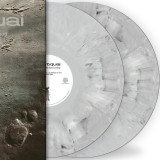
This October Jamiroquai celebrates the 30th anniversary of ‘The Return Of The Space Cowboy’. Their second album, it will be reissued as a double-LP set on 140g “moon grey” vinyl and includes Michael Gray’s Good Vibe Zone edit of ‘Space Cowboy’ - which has never been released on a physical product. The packaging has also been re-designed for this anniversary release including foil enhancement of the original cover design.
‘The Return Of The Space Cowboy’ is the follow up album to the band’s huge 1993 debut, ‘Emergency On Planet Earth’. Selling over 3 million copies globally, ‘Emergency On Planet Earth’ put the band on the map with their distinctive sound standing them apart from other popular acts of the time.
‘The Return Of The Space Cowboy’ was released just one year later and was met with great critical and public acclaim. Certified Platinum in the UK, Japan and France, it achieved chart success in multiple countries and spawned the single ‘Space Cowboy’ which remains one of their biggest tracks to date. Critically the album was lauded with Rolling Stone saying "Jamiroquai parlay jazzy soul pop so tight it crackles… Nowadays, when most funk comes out of cans, Jamiroquai's live spark glows", The Guardian said “... this second album sounds like vintage Stevie Wonder and Johnny 'Guitar' Watson, but Kay's vocals are as snappy and engaging as his extrovert persona" and Q magazine said it “combines intricate arrangements with several long, free-form workouts crammed with virtuoso performances".
For many, this album is defined by some of the most complex songwriting the band have ever produced and Jay Kay called it “one of our most creative and accomplished albums”. The process of making the album came with many challenges. Having to recruit a new drummer (after Nick Van Gelder failed to return from holiday), the band were met with second-album syndrome with Kay proclaiming since that lyrics weren’t coming "... because suddenly I wasn't homeless, I had everything I needed. So I found myself creating problems to write about." The songwriting process was complex for the band as Jay Kay was often dissatisfied with the results, leading songs to be scrapped or rewritten, but half-way through recording Kay wrote ‘Space Cowboy’, a song which reflects darker times during the recording session, and it became the catalyst of creative inspiration helping them finish the record. On this 30th anniversary edition of the album Space Cowboy gets a modern dance makeover courtesy of DJ Michael Gray, shedding new light on the track and emphasising it’s already infectious groove.
The album built on the success of ‘Emergency On Planet Earth’ and Jamiroquai have become one of the UK’s most pioneering and ground breaking bands of the past 30 years. Pushing boundaries and bringing jazz and funk to a mainstream audience, their sound is not only unique, but immediately recognisable.
- A1: Flore
- B1: John Iii
- B2: Us
- C1: Just-Test
- D1: We The Blessed
- E1: Mother Africa
- F1: Sweet Evil Miss" Kisianga
- F2: Virginia
- G1: C Marianne Alicia
- G2: Dr Oliver W. Lancaster
- H1: Palm Sunday
- H2: Prima - Mr A.a
- I1: Keno - Exactement
- I2: Providence Baptiste Church
- J1: Just Test
- J2: Work And Pray
- J3: Rib Crib I
- K1: Rib Crib Ii
- K2: Loving Kindness
- K3: Dogtown
- L1: Love Always
Souffle Continu records presents Byard Lancaster – The Complete Palm Recordings 1973-1974, the definitive package of Philadelphia-born jazz wizard Byard Lancaster including his 4 legendary albums released on Jef Gilson’s Palm Records in the 1970s, Us, Mother Africa, Exactement and Funny Funky Rib Crib, along with the first ever standalone edition of Love Always, a fifteen minute modal jazz beauty plus a 20 page booklet with rare photos and in-depth article about Byard Lancaster’s Parisian years by Pierre Crépon.
At the beginning of the 1960s, at the Berklee College of Music, Byard Lancaster met some feisty friends: Sonny Sharrock, Dave Burrell and Ted Daniel. It is easy to see why he rapidly became involved in free jazz. Once he was settled in New York, he appeared on Sunny Murray Quintet, recorded under the leadership of the drum crazy colleague of Albert Ayler.
In 1968, the saxophonist and flutist recorded his first album under his own name: It’s Not Up To Us. The following year he came to Paris in the wake of... Sunny Murray. He would come back to France in 1971 (again with Murray) and in 1973 (without Murray for a change). This is when he met Jef Gilson, the pianist and producer who encouraged him to record under his own name again. On Palm Records (Gilson’s label), he would release four albums: Us, Mother Africa, Exactement and Funny Funky Rib Crib.
“Us”, the first of the four records was recorded on November 24th, 1973 with Sylvin Marc on electric bass (a Fender... Lancaster?) and the evergreen Steve McCall on drums.
On the album, the trio works from the John Coltrane model; free jazz shook up by the timely contributions of the bassist, followed by a mesmerizing atmospheric music. Then, Lancaster delivers a sinuous solo path, which is a reminder of his unique tone. On the album’s companion single, the trio launches into great black music of a different genre which would lead the clairvoyant François Tusques to claim that Byard Lancaster is an “authentic representative of soul/free jazz”, to sum up this is Great Black Music! A few months after recording “Us”, Lancaster recorded “Mother Africa” along with Clint Jackson III, a trumpeter, partner of Khan Jamal or Noah Howard on other recordings.
On march 8th, 1974, Lancaster and Jackson headed up a group composed of Jean-François Catoire (electric and double bass), Keno Speller (percussion) and Jonathan Dickinson (drums). Together, they create an immediate impression. From the first seconds of “We The Blessed”, they develop a free jazz which rapidly abandons any virulence under the effect of blues and soul based interventions. When Gilson’s composition “Mother Africa” begins, listeners are transported into the studio, listening to the musicians setting up: chatting and joking... Then comes the melody: a dozen or so notes of a repeated theme which is accelerated and deformed according to their whims... The jazz played by the association Byard Lancaster / Clint Jackson III is rare: creative AND recreational. “We the blessed”, is apt listening to this again today!
The recording of “Exactement” required two sessions in the studio: February 1st and May 18th 1974 – in between the two dates, Lancaster recorded, alongside Clint Jackson, the excellent Mother Africa.
Two names appear on the cover of “Exactement”: Lancaster (Byard) and Speller (Keno). Byard Lancaster wanted to be precise, moving regularly from one instrument to another: first on piano, which was the first instrument he learned. On “Sweet Evil Miss Kisianga”, his inspiration is first and foremost Coltrane (even if leaning more towards Alice than John), this announces the storm to follow.
It is Lancaster’s horn-playing which really stands out: on alto (the sound of which is transformed by an octavoice on one track, "Dr. Oliver W. Lancaster") or soprano saxophones, as well as on flute or bass clarinet, the musician walks a tightrope making the most of all the risks he takes. Using the full register of his instruments, he has fun with the possibilities.
Then, Lancaster invokes or evokes Ornette Coleman, Eric Dolphy and even Prokofiev, before going into a danse alongside Keno Speller on percussion. Above all, he has a unique sound. Byard Lancaster, on whatever instrument he plays and by continually seeking, always ends up hitting the right note... ends up by playing exactement the note he had to play.
“Funny Funky Rib Crib” is an unforgettable recording (made up of several sessions dating from the middle of 1974) of creative jazz overwhelmed by funk and soul. If Lancaster had already made successful albums in the same genre – notably New Horizons, under the name Sounds Of Liberation which he co-led with Khan Jamal –, this one is an homage to James Brown and Sammy Davis enjoying the company of a host of guests including François Tusques (electric piano), Clint Jackson III (trumpet), François Nyombo (guitar), Joseph Traindl (trombone)...
Funny Funky Rib Crib’s cover is a three-quarter profile portrait of the saxophonist (who can also be heard on flute, piano and even vocals), however, on the record, it is the whole group, inspired and frenetic, that tests the melodies of “Just Test”, “Dogtown” or “Rib Crib” – the two versions of which display leader Lancaster’s art of nuance. On both sides of the album, the group also moves into a calmer groove, infused by blues and soul, “Work And Pray” and “Loving Kindness” are meditative tracks where listeners can lay back and relax before asking for more: Funny Funky Rib Crib!
The magnificent “Love Always” was originally released on the fourth (and last) volume of the Jef Gilson Anthology series released in 1975.
Recorded on 8th March 1974, it is a beautiful 15-minute-long modal jazz piece. Four notes from the bass (the relentless Jean-François Catoire, who makes up the rhythm section alongside drummer Jonathan Dickinson and percussionist Keno Speller), and the group is up and running!
On piano, Gilson shows the subtle tact of a sideman, leaving the lions’ share of the place to the horns. This allows us to hear the trumpet of Clint Jackson III and the alto (which sometimes sounds almost flute-like) of Byard Lancaster each staking their claim in a long hallucinatory march which moves from moments of direct exaltation to profoundly sensitive collective playing. And if further proof was required of the confidence that Byard Lancaster and Jef Gilson inspire, “Love Always” provides it on this one sided release exclusive to the box set.
Get your ass up and let’s get ill! Yep, that’s right it’s Krash Slaughta and Phill – more accurately, it’s Phill and Krash because it’s that way round on what you get for your cash. Actually, face it, you’ll pay by card, though you won’t be bothered as these rhymes go hard. And you know it ain’t just them fat rhymes either, KS got the beats to give you a fever. That’s Side One, Definition Of Ill, but you know there’s another on the other side still. I Ain’t Playin’ With Y’All is what that’s called, more premium hip-hop to keep you enthralled. Phill says the music inspired the lyrics – apt because the finished tracks inspired this critic. Peace, I’m out! And if you don’t get your skates on, stores will be out too – of stock that is because while this one comes in two different cover & label versions, it’s strictly limited and there will be no re-press. Don’t sleep peeps!
Peelable mic sticker sleeve[20,13 €]
Get your ass up and let’s get ill! Yep, that’s right it’s Krash Slaughta and Phill – more accurately, it’s Phill and Krash because it’s that way round on what you get for your cash. Actually, face it, you’ll pay by card, though you won’t be bothered as these rhymes go hard. And you know it ain’t just them fat rhymes either, KS got the beats to give you a fever. That’s Side One, Definition Of Ill, but you know there’s another on the other side still. I Ain’t Playin’ With Y’All is what that’s called, more premium hip-hop to keep you enthralled. Phill says the music inspired the lyrics – apt because the finished tracks inspired this critic. Peace, I’m out! And if you don’t get your skates on, stores will be out too – of stock that is because while this one comes in two different cover & label versions, it’s strictly limited and there will be no re-press. Don’t sleep peeps!
Teranga Beat returns to its roots in West Africa and more precisely to Gambia, to present Galgi, the second album of Bai Janha’s groovy steamroller Karantamba on the label. The first album of Karantamba - Ndigal was a crucial one for the label as it was its third release, marking its identity: exploring cultural hybrids where traditional music is still present, in that specific region of West Africa in the beginning and later on to other parts of the continent and the Mediterranean.
Galgi was recorded 4 years after Ndigal in 1988 in Studio Wings in Dakar on reel tapes. An Afro-Mading jewel that remained unreleased until today and as an original ‘80s recording, guitars and synthesisers are thriving together with a killer groove throughout the entire album. The difference between Galgi and the previous recordings of Karantamba is not only the ’80s sound but also the female vocals of Ndey Nyang!
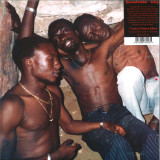
Galgi means “Slave ship” in Wolof, a track dedicated to the people who suffered during the Atlantic slave trade, and this is why the photo of the cover was shot in the emblematic House of Slaves in the Gorée island in Dakar. The song remains contemporary, as many people today take the risk of sailing through the maelstrom of the Atlantic Ocean towards unknown shores—a journey reminiscent of the historical immigration from the West Coast of Africa, where slave ships once set sail. This time though, it reflects an effort to escape the realities imposed on Africa by former colonisers since the continent gained independence.
This album was realised with the support of Eligo Audio Culture
"A Seamless Symphony of Harmonious Electronica" - Jazziz
Emerging from over a year of creative hibernation following their debut album, Stavroz's upcoming EP "Kick Up the Dust" jolts them back into action. The EP flows gently, yet the overall mood of the journey isn’t always easy to pinpoint. There’s a certain vagueness to Stavroz’ sound which allows for bizarre experiments to seep through without interrupting the course. “We like to keep it lightly twisted, like a wink with a frown,” says the band.
In the title track however, Stavroz boldly steers towards the heart of the dance floor: efficient, remorseless, powerful, intense and most of all... elegant. Guiding you harmoniously through the club is a delightful duet of trumpet and saxophone, timed perfectly to heal you where it hurts most.
"Her Eyes Were Red" does what it says on the cover. There's melancholy - without sadness. Power - without force. Love - without lust. Stavroz's music possesses a distinct power that feels both natural and organic, never resorting to brute force or aggression. In their own way, the Belgian quartet offers an astonishing journey of saxophone & duduk, supported by broken beats and chopped vocals.
In Dae-El, a track featuring the Brussels-based producer and sound designer Poltrock, ethereal-sounding synths and duduk are combined with ghostly high-pitch distortions. Despite a backbone of muffled beats, the tune has vaporous qualities, reverberations that wobble and tinkle into space – it’s an easy listening experience but in a trippy, spaced-out way. “We’re trying to go for the sweet spot between the couch and the club”.
Adding further depth to their EP, Stavroz collaborates with Brazilian singer and composer Castello Branco in "Valente." Here, intimate Sade-like vocals harmonize with rubbery scratches, acoustic guitar, and horn segments, crafting a lush lounge piece that seamlessly balances both relaxation and empowerment, transparency and provocation. It's a testament to Stavroz's versatility and their knack for creating music that defies easy definition, leaving listeners eagerly anticipating the next twist and turn in their captivating musical journey.
Balmat began our journey in 2021 with the release of Luke Sanger’s Languid Gongue. Now, three years later, we turn an important corner as the Norfolk musician rejoins us with Dew Point Harmonics, the first repeat appearance on the label. Sanger’s new album feels like a natural extension of his inaugural record for Balmat: It’s a bewitching collection of esoteric synth sketches that slips unpredictably between consonant repetition, poignant melodies, and gnarled bursts of noise that catch in the ear like burrs in hiking socks.
That natural metaphor is perhaps not accidental. Despite having been composed on Sanger’s diverse array of hardware and self-written software, many of the tracks were first conceived while Sanger was hiking in a particularly wild and isolated section of the Norfolk coast. The field recording that opens the album, on “6am Beach Walk,” was taken on one of his many early-morning walks there, in which he and his dog might go for miles without seeing another soul. The album’s title was inspired by the overnight condensation covering the long marram grass in the dunes, glistening in the early light (and drenching everything coming in contact with it) before evaporating in the morning sun. Indeed, the concept of dew point—the temperature at which water vapor condenses into a liquid—feels like the perfect metaphor for Sanger’s music, in which foggy ambience is distilled into glistening quicksilver orbs, transient spheres of perfection eventually absorbed back into the atmosphere.
A shapeshifting collection of richly detailed and deeply expressive electronic miniatures, Dew Point Harmonics is both a testament to the mysteries of transformation and an invitation to get lost in the wilderness of your own imagination.
- A1: India
- A2: Child Of Nature
- A3: Anna Was Mine (Demo Version)
- A4: Nature Boy (Mantovani Orchestra)
- A5: Land Of Love (Come My Love And Live With Me)
- A6: Hey Jacque (Hey Jacque)
- A7: Palm Springs (The Ray Anthony Orchestra)
- A8: Umgowah
- B1: Wild Boy ( With Mort Wise & The Wisemen And Rocky Holman)
- B2: Surfer John (Nature Boy & Friends)
- B3: Eden’s Island (Arthur Lyman)
- B4: Monterey (With John Harris And Paul Horn)
- B5: Overcomers Of The World (With John Harris)
- B6: The Clam Man
Black Vinyl[26,85 €]
“Wild Boy …” is a reissue of the well-known 2016 release curated by Brian Chidester, renowned researcher and biographer of Eden Ahbez. Especially for this album, Brian wrote an interesting text about Abi’s life, which definitely became the decoration of the release.
With the new 2020 re-release, we went a little further and kept what is commonly referred to as studio cuts. It’s a few more minutes in the studio with ahbez himself, full of emotion and life. In addition, to the delight of fans, the edition includes an additional composition Nature Boy (Mantovani Orchestra).
Especially, it is worth noting the outstanding mastering prepared from practically decomposed tapes by the Grammy-nominated Jessica Thompson, which guarantees the deepest and warmth possible sound. Jessica a huge ahbez fan and we’re highly appreciated for what she has done to save his music for the future.
Eden Ahbez is definitely at the origin of psychedelic music and this release can be taken as further proof. Over the past twenty years, the iconic figure of the world’s first hippie Eden ahbez has become famous primarily for his 1948 song “Nature Boy”, praising universal love, and his amazingly solo album from the 1960s called “Eden’s Island” – one from the first concept albums in the history of music and probably the first psychedelic music album. “Wild Boy: The Lost Songs Of Eden Ahbez” deepens understanding of the origins of the psychedelic movement in the 1950s.
The disc contains a musical selection of works by Eden ahbez himself, written by him in the period after Nature Boy. The inclusion of songs such as “Palm Springs” – Ray Anthony Orchestra and “Hey Jacques” by Erta Kitt gives the listener the chance to discover for the first time the little-known recordings of world-famous artists composed by Eden ahbez. Through “Wild Boy” and “Surfer John” you can hear the author’s handling of absurd rock and exotic experimentation, as well as sweet psychedelic pop like Monterey (with Paul Horn on flute). Overall, Wild Boy: The Lost Songs Of Eden Ahbez offers an overview of the lost works of 1949-1971 with seven unpublished recordings and eight rare singles.
If in 2020 you are missing the hallucinogenic content in Eden Ahbez, it amazingly makes up for that deficiency with simple chords, expansive arrangements, and lyrics about travel, relaxation, free love, and spirituality. Thus creating the standard of psychedelic music. Eden Ahbez’s songs weren’t only fantasy and his personal philosophy was the real thing that he lived.
reviews:
“This carefully and extensively researched compilation culls covers by top notch mainstream artists juxtaposed with unreleased Eden recordings. What might sound like a mixed bag is actually more like a chronological, musical non-fiction novel about Eden Ahbez. While Eden was writing hundreds of songs and performing live and making recordings in various styles, his songs were also being picked up by popular artists like Nat King Cole and Eartha Kitt who recorded with a more polished mainstream style. There are also some early rock n roll style recordings here. Eden’s professionally recordings often end up as Novelty Pop records such as “Child of Nature” and “The Clam Man” but if you read between the lines and listen to the lyrics it is pretty eye-opening that he is singing about Eastern-religion-style and pre-hippie philosophies about being at one with the planet Earth.
All of this is explained in the lengthy liner notes inside the lp along with a few choice photos that establish Eden as a founding father of Southern California mystic/psychedelic music.” – Tiki_News
“Eden Ahbez’s life philosophy was summed up in the lyrics of his most famous song, “Nature Boy,” a 1948 hit for Nat King Cole: the song describes a “strange enchanted boy” who wanders the world in search of truth. “The greatest thing you’ll ever learn,” he concludes, “is to love and be loved in return.” Ahbez was a pre-cursor of California’s beatniks and hippies, and an exalted icon of ex-otica via his rare 1960 album Eden’s Island. Beyond “Nature Boy” and Eden’s Island, though, there were nu-merous lesser-known Ahbez record-ings. Ahbez biographer Brian Chidester has been doing an exemplary job of archiving and documenting that catalog of work. The Exotic World of Eden Ahbez (reviewed in UT#38) appeared a few years ago, gathering together 14 Ahbez-related rarities” – Ugly Things
- A1: Black Cat
- A2: Luck & Strange
- A3: The Piper's Call
- A4: A Single Spark
- A5: Vita Brevis
- A6: Between Two Points (With Romany Gilmour)
- B1: Dark & Velvet Nights
- B2: Sings
- B3: Scattered
- C1: Yes, I Have Ghosts (With Romany Gilmour)
- C2: Luck & Strange
- D1: A Single Spark (Demo)
- D2: A Single Spark (Orchestral)
- D3: Scattered
Fünf Monate arbeitete David Gilmour in Brighton und London an »Luck And Strange«, dem ersten neuen Longplayer, den er seit neun Jahren veröffentlicht. Die LP wurde von David und Charlie Andrew produziert, den man für seine Zusammenarbeit mit ALT-J und Marika Hackman kennt. Der Großteil der Lyrics stammt von Gilmours Co-Autorin Polly Samson, mit der er schon seit 30 Jahren zusammenarbeitet. Auf dem Album sind acht neue Tracks zu hören, dazu kommt eine Coverversion von Between Two Points (Originalinterpreten: The Montgolfier Brothers), auf der Romany Gilmour Harfe spielt und singt. Auf anderen Songs der LP war Gilmours Tochter für die Backing-Vocals zuständig. Zu den Musikern, die an der Entstehung von »Luck And Strange« beteiligt waren, gehören: Guy Pratt & Tom Herbert am Bass, Adam Betts, Steve Gadd und Steve DiStanislao am Schlagzeug sowie Rob Gentry & Roger Eno an den Keyboards. Für die Streicher- und Chor-Arrangements war Will Gardner verantwortlich. Auf dem Titeltrack, der 2007 während eines Jams in David Gilmours Scheune entstand, ist der verstorbene Pink Floyd Keyboarder Richard Wright zu hören. Das Cover-Foto von Anton Corbijn wurde durch den Text von »Scattered«, dem letzten Song des Albums, inspiriert.
Second installment of the popular cover series. This time featuring exquisite covers of Bee Gees and Stevie Wonder!
Analog single cut from the compilation albums "Sweet Breeze" and "Sweet Breeze II" ('13), featuring lounge-style covers of classic hits from the 70's and 80's Western music!
The second installment of analog conversion presents the gem-like covers, adorned with the sweet and glamorous vocals of singer Mai Yamanaka, beloved daughter of the late Joe Yamanaka. You can't miss the delightful covers of Bee Gees's "Stayin' Alive", with its light rhythmic sense, and Stevie Wonder's "Isn't She Lovely", showcasing a bright, high-pitched, and melodious voice!
Prince Istari in the 2nd Grade of the Riddim Dub School dropping an original classic cover in rockers style on the first side, while on the flipside he comes down for some stepper and playing his melodica. Made on earth with love, for space exploration and bass. Limited to 300 copies and comes in stamped cardboard sleeves.
Making her return to the stage after 44 years, with tour dates across the US, Australia and Europe, as well as iconic performances at Glastonbury and We Out Here, Asha Puthli’s lifelong career as an inspirational trailblazer has taken on a magical new chapter. We can’t think of many artists that have had as distinctive and diverse a journey as Asha, nor who have been involved in as many different genres of music as her. A musical pioneer who forged a path through ‘60s psych, free-jazz, pop, rock, disco, and more. To mark this golden hour in her stellar career we have repressed her legendary album, ‘The Devil Is Loose', on gold vinyl. Maybe her most well-known record, the 1976 LP features the psychedelic disco-funk-classic 'Space Talk’, where Asha's soaring vocals take listeners on a journey that mirrors her eclectic career. Championed by a wide range of musical scenes and movements, over space and time it has been commandeered as their own. Casting a unique spell on its listeners, each track on the album showcases Asha’s majestic, celestial style and sumptuous vocal range. Backed by breathtaking orchestral-infused, disco-enhanced instrumentation, it’s cinematic and captivating throughout. From the infectious funk of ‘Flying Fish’, to the cosmic transcendence of ‘The Devil Is Loose’ and the choir-channeling ‘Say Yes’, this album is a true masterpiece. At Mr Bongo we are thrilled to be releasing records by such an iconic, musical maverick as Asha. She has blazed a trail so that others could follow. Whether you are buying this album as a replacement for your worn-out original copy or it's the first time you've heard of Asha Puthli and you're just intrigued and drawn in by the cover, we hope you enjoy this quintessential slice of Asha's world.
- A1: Where's The Revolution (Autolux Remix)
- A1: Where's The Revolution (Pearson Sound Remix)
- B1: Where's The Revolution (Algiers Click Farm Remix)
- B2: Where's The Revolution (Simian Mobile Disco Remix)
- B3: Where's The Revolution (Pearson Sound Beatless Remix)
- C1: Where's The Revolution (Simian Mobile Disco Dub)
- C2: Where's The Revolution (Terence Fixmer Spatial Mix)
- D1: Where's The Revolution (Patrice Bäumel Remix)
- D2: Where's The Revolution (Ewan Pearson Kompromat Dub)
- E1: Going Backwards (Chris Liebing Mix)
- F1: Going Backwards (Solomun Club Remix)
- F2: Going Backwards (The Belleville Three Deep Bass Dub)
- G1: Going Backwards (Chris Liebing Burn Slow Mix)
- G2: Going Backwards (Point Point Remix)
- H1: You Move (Latroit Remix)
- H2: Poison Heart (Soulsavers Re-Work)
- I1: Cover Me (Ellen Allien U F.o. Rmx)
- I2: Cover Me (I Hate Models Cold Lights Remix)
- J1: Cover Me (Nicole Moudaber Remix)
- J2: So Much Love (Kalli Remix)
- K1: Over Me (Erol Alkan White Light Rework)
- K2: Cover Me (Texas Gentlemen Remix)
- L1: Cover Me (Warpaint Steez Remix)
- L2: Cover Me (Josh T Pearson Choose Hellth Remix)
- M2: So Much Love (Highline Sessions Version) - Previously Unreleased
- M3: Poison Heart (Highline Sessions Version) - Previously Unreleased
- O1: The Worst Crime (Highline Sessions Version)
- O2: Heroes (Highline Sessions Version)
- M1: Going Backwards (Highline Sessions Version)