Rina Sawayama commemorates the one year anniversary of her critically acclaimed album 'Hold The Girl' with a physical repressing of the album featuring new artwork.
'Hold The Girl' sees Rina juxtapose intimate storytelling with arena-sized songs for an ambitious and original album that successfully excited fans and critics alike. Reflecting on all that the year has brought her, the physical re-issue and her redesigned tour for Hold The Girl: Reloaded demonstrates Rina's intent to provide a more intimate understanding of her creative process and unique point of view during the creation of the album.
Cerca:creative
"If you can imagine a love child between MAC DEMARCO and SPAR-KLEHORSE, then this would be what you're left with." - SO YOUNG MAGA-ZINE
Raised in North Queensland, Australia, Jarrod Mahon is not one to shy away from bold new endeavors. Once parting ways with his previous record label in 2019, Mahon chose to go fully independent, relocating to Berlin in 2019 (where he still resides), despite having no contacts at all in the country. What’s more, having recorded/performed under the pseudonym Emerson Snowe for over a decade - during which time he home-recorded five albums and 13 EP’s, toured with the likes of King Krule or Ariel Pink, played showcases SXSW and the Great Escape, the works - Mahon took that brave, most uncommercial decision to release under his own name and start almost totally anew.
“There was never really a concept to that name Emerson Snowe other than having some kind of separation from who I was as a person,” Mahon explains, “using a moniker gave me that confidence to push myself further mentally and to give myself some kind of a freedom”. And through the process of creating what would become his debut album, Mahon saw that he had outgrown the need for this protective persona. ‘Everything Has A Life’ was meant to be the debut Snowe album”, he admits, “but after I finished mixing it with Syd Kemp, co-producer I realized that I had actually grown a lot and was much more comfort-able with who I am and what my personal beliefs are.”
The choice of ‘Everything Has A Life’ as the album title, pulled from beauteous opening track ‘All I Know’, neatly summarizes this new outlook: moving on from ‘self-pity’ of the past-self by becoming present for the loved ones around you, improving understanding of one’s own self, via the wider world at large.
That track marks the first written during a lockdown stint in LA where Mahon wrote and recorded every day for 2 months, produced nigh on 250 demos and birthed the bulk of the record. It also brought Mahon back to his all-time favorite, Sufjan Stevens’ Ilinois and its blend of widescreen orchestral landscapes and more candid, naked acoustic-leaning variations - an important influence for the album's stylistic contrasts. Another key inspiration for the record too brought Mahon back to his roots - those full-bloom strains of his Mum’s Beloved Neil Diamond, an annual Christmas irritant to Mahon as a child, yet an artist he’s come to respect in adulthood. “Whatever the reason, with age I came to love the big show band sounds,” he says, “the idea of a performer on stage with a mas-sive orchestra with strings was amazing to me.”
With the help of producer Syd Kemp (Ulrika Spacek, Vanishing Twin), such grand designs could be met. - “When we first met, he asked me if I would like real strings on it. I said of course.” Enter Magda Mclean on violin (Caroline/the Umlauts), and Gamaliel Rendle Traynor on Cello (Sweat, Fat White Family), whose strings helped lift the record to romantic new heights.
He continues: “I said to Syd that the only thing I wanted to achieve with this rec-ord was that I wanted it to make me cry at one point. And we got there eventual-ly.” The final culmination of all these strands, ’Everything Has A Life’ is indeed a treasure trove of emotive riches. Locking into that bittersweet, quintessentially ‘pop’ combination of triumphant rhythms and confessional, stream-of-consciousness lyrics plucked straight from the heart, Mahon faces up to years of substance abuse with a series of gorgeous, blushing melodies: “I was using, I was drinking, I was lying to my friends, I was messing up again, I was hiding from myself”, he joyously chants on ‘The Growing’.
A banquet fit for an indie king, Everything Has A Life is loaded with psych-pop lusciousness (‘All I Know’) and anthemic glam fuzz (‘Death Of The Ladies Man’, ‘Deadstar’, or ‘Sonny is my Best Friend’); recalling that foundational Sufjan Ste-vens influence too with shambling flecks of country (‘Charly (Romantic Heart)’). There’s also those lo-fi crepitations of ‘My Man’ and ‘I can’t’ harking back home-recorded demos that lie at the core of Mahon’s creative process.
Wildly creative East Anglian musician Carl Brown is welcomed to the Love Love fold with great excitement. Carl has been consistently doing his own thing in music for quite a while and it’s high time some more people heard his sound. So many great ideas and lush feels are packed within. And while the sound palette is often electronic the tracks are positively human in nature, incorporating a wide variety of styles - playful, clever and eccentric, full of melodic shenanigans and top notch musicianship.
Upfront we get two rip-roaring braindance epics in the forms of title track ‘Koto アシッド’ and 2nd track ‘747 الرياض কলকাতা’, before ’S.E.T Ad '87’ changes the pace completely, cleansing the auditory palate ahead of the 2nd half of the EP with a spacey 80s dream. The pace settles out on the flip-side after the frazzling breakneck openers, slippery tones pirouetting atop a gracefully chugging bass line in ‘FWP’. Following this proceeds an unorthodox sequence of musical notes that somehow induces a series of highly concentrated fist-clenching emotions. ‘747 Red Eye Return’ slows its parent track down to a near still pace, its meditative tones bearing down like oppressive heat, before the final track provides a slice of brilliant musical escapism.
Surprising to the last second and brain-tingling throughout, this EP captures a colourful morsel of Carl’s work and should leave a lasting taste of what is yet to come from this sonic tinkerer.
As a band, Taryn and Austin’s journey happened both unexpectedly and fortuitously. At the start of the COVID pandemic, Austin and his wife moved back into his parents’ house, where Taryn was also living at the time. Faced with nothing but time, he got back to songwriting, regularly asking Taryn for input — or as the two playfully put it, “Gen Z quality control.” The immediate result of their musical partnership was the pop-punk/alternative anthem “Who’s Laughing Now,” which leads with wry, tongue-in-cheek lyrics about the futility of young adulthood in 2023. After posting an unfinished version of “Who’s Laughing Now” on TikTok, it swiftly took off, galvanizing thousands of viewers who shared their coming-of-age frustrations. Clearly, the song’s sentiments - which land somewhere between a shrug and a clenched fist - resonated with millions of listeners, and today Durry have recorded a fully fleshed-out version of “Who’s Laughing Now,” which is set to appear on their riveting, perfectly sardonic debut LP, Suburban Legend. Whether Suburban Legend is tackling romantic love, late-stage capitalism, mental health woes, or teen nostalgia, the thread tying it all together is its utter relatability. Regardless of where you are in life — city or suburbs, school or work, or pursuing a creative dream of your own — Durry will meet you there with a wink and a high five.
Ariel Posen's music occupies the space between genres. It's a rootsy sound that nods to his influences — heartland rock & roll, electrified Americana, blue-eyed soul, R&B, Beatles-inspired pop — while still moving forward, pushing Posen into territory that's uniquely his own. Posen seeks answers with new album, Reasons Why. The internationally known Canadian rocker wrote this new reflective album coming out of half a year of lockdown and was extremely inspired creatively, 30 songs turned into a batch of 10 tracks for the new album and were recorded in Winnipeg, Manitoba and Montreal, Quebec. Reasons Why shows once again that "best" is a high standard for Posen. The new songs represent another step forward in every aspect – lyricism, musicality, playing, sonics. The songs are nuanced but impactful, deeply resonant but universally accessible. Posen blends craftsman's care with the daring do of a seasoned live player, resulting in an immersive adventure that reveals fresh merits on every listen. On Reasons Why Posen determinedly defies any easy genre identification and refuses to be sealed in any sonic cubbyhole.
Perth-based artist hub 823, led by the extraordinary producer / creator Ta-ku joins forces with Berlin's Jakarta Records for the release of Godblesscomputers's fourth full-length LP, "Faded Views." The LP melds bright electronic flourishes with laidback synth-driven backdrops, weaving tapestries of mellow folktronica and groovy jazz harmony with continuous sonic intrigue that will keep you grooving into a tropical disposition. Paying homage to his musical moniker, the Bologna-based producer makes timely metallic interjections amidst lush, effortlessly groovy soundscapes. Explore a world of found, recycled, and synthesized sound on "Faded Views" out everywhere September 8.
Bologna-based producer, DJ, and sound collector Godblesscomputers (122k Spotify listeners) has returned with the release of his fourth full-length record, "Faded Views." Godblesscomputers's latest LP "The Island" (2020, La Tempesta Dischi) earned him placement on Spotify playlists like "Brain Flood" and "Coffee Club." Since then, his appearance on Willie Peyote's track "La colpa al vento" landed GBC on "Best of Indie Italia 2022." On "Faded Views," it was Godblesscomputers's creative project to explore the sonic potentials of his direct environment, picking up recordings and threads of inspiration from the most commonplace occurrences. A sonic scavenger, Godblesscomputers explored the expanses of his-both digital and physical-soundscapes. "Faded Views" does the work of crafting a unified, yet complex compilation of the noises that mark the experience of being digital natives in ever-expanding dimensions.
Godblesscomputers's use of musique concrète and found-sound composition melds curiously with his undeniable electronic and techno acumen. Superimposing metallic electronica onto esoteric sound bytes creates the occasion for complex sound collage. "Faded Views" marks a decade since the genesis of the Godblesscomputers project; the entire LP testifies to how time warps perception and sound. Godblesscomputers's music seems to decorate time, both commemorating the moments passed with mind-melting sonic collages and looking forward to the infinitudes of the future with frenetic electronic experimentation.
Themes of impermanence and transience-hence "Faded Views"-pervade the record. Godblesscomputers blurs time as each track seeps into the next in what feels like a seamless transition. He makes these swift passages in genre as well-the record opens on "Colors" with a rich horn section which frictionlessly becomes a lo-fi dance groove. It is this melding of the analog and the electronic that makes sense of his found approach to beat-making: Godblesscomputers marries the found and the synthesized; the creator and the created; the past and the future. The process of sonic dissection and recomposition that drives much of Godblesscomputers's creative process yields not only assertive breakdowns and animated dance tracks, but also complex tapestries of sound that keep the listener ever-intrigued-piano, saxophone, and modular synthesis all find a natural home on tracks like "Hello." In an apt description, the producer's work has been described as "sounding like wood, metal, and microchip."
Godblesscomputers's artistic objective lies in blurring definitive lines, constantly shifting perspectives, genres, and origins of inspiration. On "Faded Views," this design cultivates a folktronica record that truly evades definition.
Feelgood lead single "Mirrors" is out June 30th and features a rich meld of warbling layers, mixing upbeat dance music with complex instrumentation. Stream second single, "Above the Lake," for a mellow summer cut on July 21. Finally, the effortlessly groovy third single "You Feel Me" captures a genre-warping foray into folktronica. Listen to "You Feel Me" on August 11.
All LP artwork and stunning single visualizers were single-handedly put together by multi-disciplinary designer Michael Norman. "Faded Views" will be available everywhere physically and digitally on September 8, 2023. Be sure to listen for focus track "Hello" that captures the vast scope of Godblesscomputers's musical prowess. Find the LP, CD, and digital release on 823's and Jakarta Records's Bandcamp and local record stores.
AWEH is back to present Shukuma, the highly anticipated collaboration between label head Esa and South African Kwaito legend Kamazu from Soweto. This record, created between 2020 and 2022, is a testament to the power of musical synergy and South African cultural aweh-ness.
As part of Shukuma, the title track and the EP also lies the future Kwaito classic, Muntu. This dance floor banger not only showcases the creative prowess of Esa and Kamazu but also features a collaboration with Dirty Bungalow, adding a unique touch to the overall EP. Muntu has already been featured in the esteemed podcast series, The Invisible Hand.
To further enhance the experience, Esa has collaborated with talented artists Floating B_strd and Sanoy to create an exquisite art piece that perfectly captures the essence of Shukuma. The final artwork will be revealed on the official release day, adding an element of surprise and anticipation. This is a Kwaai Collab you don't want to miss.
Following nearly 20 years of working together as a trio, and numerous cross-collaborations in different configuration between them, Ideologic Organ presents Placelessness, the debut full-length by Chris Abrahams, Oren Ambarchi, and Robbie Avenaim, comprising two long-form works at juncture of ambient music, minimalism, rigorous experimentalism and improvisation, and machine music. Having carved distinct pathways across a diverse number of musical idioms for decades, Chris Abrahams, Oren Ambarchi, and Robbie Avenaim are each, respectively, among the most noteworthy and groundbreaking figures to have emerged from Australia's thriving experimental music scene. Ambarchi and Avenaim first encountered Abrahams when seeing the Necks - the project that has served as the primary vehicle for his singular approach to the piano since its founding in 1987 - together during the late 1980s, not long after having met in Sydney's underground music community. The pair's collaborations date back more than 35 years, criss-crossing Ambarchi's pioneering solo and ensemble work for guitar and Avenaim's visionary efforts for SARPS (Semi Automated Robotic Percussion System), robotic and kinetic extensions to his drum kit. In 2004, fate brought the three together in a trio performance at the What Is Music? Festival, the annual touring showcase of experimental music founded and run by Ambarchi and Avenaim between 1994-2012. For the nearly two decades since, Abrahams, Ambarchi, and Avenaim have intermittently reformed in exclusively live contexts, in Australia and abroad, cultivating and refining the fertile ground first tilled in that early meeting. Placelessness is the first album to present this remarkable trio's efforts in recorded form. Placelessness is the joining of three highly individualised streams, working in perfect harmony; the point at which friendship, mutual respect, and decades of creative exploration produce a singular spectrum of sound. Featuring Abrahams on piano, Ambarchi on guitar, and Avenaim on drums, the album's two sides draw on each artist's enduring dedication to long-form composition. Its two pieces, Placelessness I and Placelessness II, initially began as a single, 40 minute work, before being divided and reworked into distinct, complimentary gestures for the corresponding sides of the LP. Beginning with restrained clusters of reverberant piano tones, Placelessness I progresses at an almost glacial pace, with Abrahams' interventions increasing met by sparse responses, darting within vast ambiences, on guitar and percussion by Ambarchi and Avenaim. Remarkably conversational within its convergences of tonal, rhythmic, and textural abstraction, over the work's duration a progressive sense of tension unfurls and contracts, refusing release, as each of the ensemble's members contribute to an increasingly tangled sense of density at its resolve. While an entirely autonomous work, Placelessness II rapidly realises a distillation of the energy hinted at across the length of its predecessor. Following a luring passage of harmonious calm, Abrahams' launches into shimmering lines of repeating arpeggios, complimented at each escalation of tempo by Avenaim's machine gun fire percussion work and Ambarchi's masterful delivery of tonality and texture, as the trio collectively generate dense sheets of pointillistic ambience within which individual identity is almost lost, before slowly unspooling into unexpected abstractions and dissonances that deftly intervene with the work's inner logic and calm. What could easily be termed a maximalist take on Minimalism, Placelessness is a masterstroke of contemporary, real time composition, that blurs the boundaries between ambient music, experimentalism, free improvisation, and machine music. Drawing on Chris Abrahams, Oren Ambarchi, and Robbie Avenaim's decades of respective solo and collaborative practice, and the culmination of nearly twenty years of working together as a trio, it's two durational pieces - Placelessness I and Placelessness II - take form with a startling sense of effortlessness and grace, neither shying away from explicit beauty or rigorously tension within their forms.
- A1: Yantra
- B1: Tor 8
- B2: Temple
- C1: Black Jack
- C2: Astra
- D1: Gamma (Alternate Mix)
- E1: Sexuality (My Reality)
- E2: Space Cowboys I
- F1: Raum 422
- G1: Friedrichshain Funk
- G2: Solar
- I1: Hymn (In The Name Of Fantasy)
- I2: Gamma (The Other Side)
- J1: Don't Be Stupid Day (Extended Album Mix)
- K2: Waver
- L1: It's Time (To Move Your Body)
- M1: Shri Yantra
- M2: Make Me Scream
- N1: Liyah
- O1: Halide Part 1
- O2: Voices
- P1: Halide Part 2
- K1: Space Cowboys Ii
EACH COPY Personally SIGNED BY LEN FAKI
Len Faki has always been a defining character of the techno underground. His unique approach to DJing, the consistent work as a producer and the quality output of his label Figure has all shaped the current environment.
Starting out as a clubber in the 90's, his inspirations have always reached back to the first encounters with electronic music, when new worlds opened and everything seemed possible.
While these experiences have always influenced Faki's productions and used to be released under many different aliases back in the day, they have been waiting since to be made into a proper album under the Len Faki moniker.
After quickly climbing to the top of the international DJ circuit, busy touring schedules never quite allowed for it. Finally faced with the opportunity of a long overdue creative break, Faki decided tackle the life-time venture with the necessary dedication and focus.
Excited about the new project, he also took the time and energy needed to expand his production methods. Finding new techniques allowed him to truly bring all his different influences to the surface. The process was one of following his own heart, occasionally challenging and surprising himself. Naturally the result emerged as two parallel experiences, which are now presented across two discs. Both still carry all the signature features of Faki's style but with added layers of depth and detail. There's that special contrast of dark and heady grooves, paired with dreamy melodies that transport the listener to places beyond the mind. But we also see all strains of his previous work being incorporated, mixed and molded into something new altogether.
While the first disc focuses on the kind of techno, which Faki has been brought up by and given back to for so many years of his life, the second is more loose and experimental, with forays into house, ambient and broken beats - the sounds he has always kept very passionate about.
It creates two distinct experiences, showcasing the entire breadth of Faki's cosmos. Where some ideas stay straight and kick hard, like the neon bleep opener Tor 8 or joyfully booming Astra, others take the newfound freedom to inspire a wistful broken beat ballad such as Hymn (In the Name of Fantasy) or the soulfully subdued Drum & Bass closer Voices.
Many songs even exist as pairings, with their respective counterpart on the other disc. For example, the duo of Shri Yantra/Yantra, where similar soundscapes have been looked through different lenses, making for a more straight-laced or shuffled rhythm. Also noteworthy are Faki's appearance as a veritable house producer on Hymn (In the Name of Freedom) as well as the inclusion of two very personal pieces:
The Halide tracks were made in remembrance of Faki's late mother, who passed away during the final production stage of the EP. These delicate tracks capture the intense sadness Faki was feeling at the time and helped him to process his grief and eventually to finish off the album.
By doing so Faki has given us a complete artistic statement, one that proves him to be as curious and driven now as ever, taking his sound to all-new realms.
The Madlib Invazion Music Library Series Entry #3: Drummer and Producer J-Zone offers his take on The Ultimate Beats, Breaks and Funk. This is the next up in a series of music library releases, with future volumes produced by DJ Muggs, Karriem Riggins and more. The Madlib Invazion Music Library Series was created by Madlib and Egon to give their creative friends a chance to stretch out and indulge in whatever type of music they wanted. This music was created for easy, one-stop clearance in film and television synchronization usage and for sampling. You can also enjoy these albums in the way that many do with the best of the best vintage library catalogs – listen, ponder, repeat.
A long-in-the-works project of ours, here comes A Tribe Called Kotori's first foray into full-length territories, as the immensely talented Rampue takes us on a melancholy-riddled ride across his phantasmatic mindscapes. A true sound explorer, deftly steering his ship down the junction of electronica, abstract and balearic-infused prog house, the Berlin-based vibist has us transfixed and elevated throughout the twelve cuts that form the backbone to this lushly textured promenade in sound - at times understatedly euphoric, at others rivetingly exotic.
Of the creative process that lead to 'Bubblebath Trance', Rampue explains "It all started and ended in the same moment: my cherished feline companion, my laptop awash with an unintended bath, and alas, a dearth of backups. The resultant calamity, an echo of chaotic tranquility." Under the generous layer of irony lies some unaltered truth about Rampue's debut long-player for A Tribe Called Kotori: this sense of serenity that goes with stepping into this warm and bubbling primitive chaos of sorts infuses the listening experience far and wide. Distantly emulating the "euphonious strains" of iconic PS1 video games soundtracks from his youth days, the album has us surfing a constant paradox of emotions, wistful but not abandoning itself to sorrow, dynamic yet suspended in some sort of mind-expanding stasis. As if you were looking at the world beneath you in exploded view, conscious of all thing, slowly moving up the many layers of our atmosphere towards uncharted skies.
A paragon of Rampue's most poignant take on classic electronica tropes, 'Harmonie' blazes with a poetic fire that engulfs about everything in its wake. Just figure yourself riding a chocobo across the sand-covered expanse of North Corel (toasting to the FFVII nerds here) as this blasts out in the distance. From this trancey bubblebath emerge lots of musical shades and nuances, from the nicely dubbed-out, brass-heavy coastal jazz of 'Schattenschranz' to the choppy, trip-hop-adjacent future electronics of 'Inside', via the exuberantly joyous mess of faux-organic number 'Tripomatic' and cinematic charisma of 'Ich hasse Sonne' high-flying orchestrations.
Connecting the dots between that trance-indebted ebullience and further downtempo-friendly attraction, 'Verfahren' perhaps encompasses best what 'Bubblebath Trance' is about: gracefully walking the tightrope in-limbo nostalgia-soaked inner movements and a powerful outward thrust, burning to let the feelings ooze out from the shell that holds them.Clad in purely 90s-compatible breaksy motion, 'Salz' is another attempt to reconcile emotional and physical dissonance, like kneading all states - solid, liquid and vaporous - into an impossible mega-vibe of its own; malleable, strong and enveloping in equal measure. Borrowing from two-step and UK garage, 'Take Away' is a definite high in Rampue's master unfolding of musical twists and turns, summoning a Boarder Community-esque atmosphere and clashing it alongside floor-ready footwork motifs to fascinating effect.
An ode to his studio companion, 'Buchla Trip' finds Rampue's exploring his machinic friend's quirky yet soulful array of electronic potentialities - making it sound like a conversation you'd have with R2-D2 in the heart of a Sandcrawler, whereas 'Kajal' beams us up to a fragmented headspace, halfway altered PC-Pop and arps-loaded electronica on amphetamines. Effusive and transporting, the title-track 'Bubblebath Trance' could well figure as the album's no.1 medley in essence: a bountiful lucid dream of dancing forms, colours and sentiments to wrap your head around, confidently drifting from a liminal state of consciousness down the rapids of one's troubled inner workings.
Rounding off the package, the languid ambient finale of 'Die Leiden des hungrigen Fruehstuecks' rubber-stamps the feeling that 'Bubblebath Trance' belongs to that rare category of albums. The ones that mint their own alphabet aside from typical norms and expectations, teaching you the ropes of their new language as it unreels between your ears - real and unreal, elusive to any other meaning than the one your guts and brains will be inclined to give it to, in real time. A crystal-pure object if you will, that shall not reveal its secrets, even after a thousand listens and just as many wowing moments.
Reissue of Veik's `From Madness To Nomadness' EP out now. Limited to 300 copies on 10" black in clear vinyl. Originally released on cassette in 2016, `From Madness to Nomadness' is the debut EP from Caen, France-based group Veik and is now being reissued on vinyl for the first time, with a limited 10" release courtesy of Fuzz Club Records. Introducing listeners to the trio's motorik, synthesised post-punk, the EP is a compilation of four tracks taken from a two-day recording session in the summer of 2016, recorded and mixed by Hugo Lamy of fellow Caen experimental duo Glass. The cover and the title of the EP are openly inspired by the `Telepathic Music' works by the French conceptual artist Robert Filiou, outlining the band's multi-disciplinary approach to music from the off. At the time drummer/vocalist Boris Collet told a local media outlet that "we wish to assume links with other artistic disciplines like photography". Concerning the reference to Robert Filiou, he added: "It is not so much the visual aspect that is important as the philosophy and the vision of the economy that he develops. The result should not be pompous or falsely intellectualizing. It is just that it seems relevant to build bridges between different fields (artistic or not). Bringing a bit of philosophy, architecture, images, sociology or geography into music can't hurt. It's not pretending to be anything else than what it is, it's still music, but I think there is a gesture and an intention to assume, no matter how you qualify it (creative, political, reflective). You have to allow yourself to do it."
Kristin Hersh’s new album is a cinematic road trip; a series of personal vignettes from a fiercely independent auteur, sitting plush with layers of all-consuming strings and mellotron. It’s a watershed moment in a career overflowing with creative firsts and inspirational thinking; an elegant piece of personal reportage, a home movie caught in time. Previously, the juxtaposition of light and dark has been essential to the drama of Throwing Muses and 50FOOTWAVE, but this solo set is something of a departure; more inward looking, quieter but outspoken, underpinned by background noise for ambience and awkwardness. “Passion sounds less angry, more grateful, I think,” Kristin muses, “sweeter, sadder. And somehow, no less alive… over car engines and rain in New England and whistling ducks and wind chimes in New Orleans, it all sounds wistful to me.” ‘Clear Pond Road’ is a life-affirming statement, a further part of the jigsaw, a very personal memoir, from street signs to snapshots; a late blossoming and coming-of-age from a true icon of independence. The record is both intimate yet expansive, written largely within the confines of Hersh’s home, making the proceedings ever more personal. // “Few artists understand the intensity of living one’s art like Hersh” The Guardian // “A fearless rock innovator” New York Times
Super proud to introduce this special 12" by UK Liquid Funk pioneer HIDDEN AGENDA. I first heard their music on Fabio's February (1995) KissFM show, taping from Leighton Buzzard on my parents JVC tuner. I had it playing as my sound track non-stop on my Walkman for months - deep minimal Jungle had arrived! It was the legendary 'The Flute Tune'. I soon purchased a copy on the mighty METAL HEADZ that year with my giro cheque in Coventry from Bang-in Tunes. 'Get Carter' was my next purchase, it was however, 'The Sun' on Fabio's Creative Source (1996) that set me off like a roman candle (and still does to this date) - I consider this the first Liquid Funk track.
HIDDEN AGENDA next hit us super hard by surprise in the winter of 2003. I was DJing late night at a squat in East Finchley on London's Rude FM 88.2 back-to-back. DJ Haze played this 12" that sent me totally hyper and turned out to be Jason's 'Groove Me' on Eastside Recordings. So hyped was I, that DJ Haze gave me that very copy on the spot!
I went onto paint a huge epic 200x200cm oil / acrylic painting to be photographed for the HORRIFIC13 cover. Set in the South Bronx 1978 (which is the title of the Side AA.) - a train Rolls over RAE ST with a semi-wild style piece which reads HIDDEN AGENDA - GOLDEN SKY with a mini 1978 piece also sprayed on the bridge.
In 1972, a foursome of design students set out to make a record. This was, in many ways, a strictly creative endeavor. The quartet — composed of Dave Pescod, Alan Lewis, Phil Rawle, and Ted Rockley — were all trained, not as musicians, but as creatives. Art school heavyweights, the four were well-versed in the methodology of intentional experimentation, in the delicate balance of pushing the limits without completely unmooring oneself from a guiding creative intention. Emboldened by a high-brow familiarity with thoughtful experimentation and all the non-conviction of non-musicians, Bowes Road Band’s stint in the world of popular music yielded a record that is as much mind-melting as it is a direct product of its time. Their sprawling LP “Back in the HCA” embodies the exigence “art for art’s sake,” but it is for art’s sake that this record, however off the deep end it seems to travel (hear: “Doctor, Doctor”), remains a unified, and stunning, body of work. The LP’s do-ityourself garage rock noisemaking meets highfalutin creative processes. “Back in the HCA” is warbling psychedelic freakout (“Two Fingers,” “Doctor, Doctor”), Donovan-esque English countryside folk stylings (“Inside My Head,” “Goodbye to Rosie”), and avant-garde jazz improvisions (“Grass is Grass,” “Tomorrow’s Truth”) in one luminous release.
Originally an 9-track LP, Jakarta, Uno Loop, and Bowes Road Band decided to mine the six most cohesive tracks for the reissue, though the extras may be released somewhere down the line. Cohesion efforts aside, “Back in the HCA” stands alone in its singular conception of a genre-bending continuum — it evades definition. That said, the LP can easily be situated in the sonic environment in which it was conceived. By the end of the 60s, England was crawling with blues-based rock outfits that were starting to venture into prog rock territory. You can hear this popular dint cast over the folkier side of the LP. But Bowes Road Band was armed with their non-musicianship: they existed completely liberated from the motivating yet ultimately paralyzing lust for stardom. Enjoying this liberation, Bowes Road Band was utterly free to make noise. This freedom meant drawn out sax interludes amidst sweetly folk stylings (“Grass is Grass”) and Shaggs-like fuzzed-out freakouts that spiral into a void (Doctor, Doctor). This freedom also meant straight-forward tuneful cuts like “Goodbye Rosie” that conspicuously introduce heavily distorted auto-organ accompaniment mid-track amidst poignant lyricism. Bowes Road Band crafts a unified sound and then cracks it open.
With a completely off-the-radar status, Bowes Road Band could only press 50 copies of the record — 10 for each of them and 10 for the school. The band’s lifespan was to end there, or so they thought. “Back in the HCA” was the accidental fruit of a Berlin flea market treasure hunt by Jannis Stürtz, DJ and co-founder of Habibi Funk and Jakarta Records. After finding and sharing the LP with a few colleagues, Stürtz managed to get in touch with the band, get ahold of the master tapes collecting dust in Ted Rockley’s attic, and start the reissuing process. The record is still adorned with its original cover art designed by Alan Pescod, both reminiscent of bygone school days and the Zoom calls of yesterday — in short, reunion. Its re-discovery was happenstance and ought to be listened to as such. That is, “Back in the HCA” was not made to be listened to on a broad scale, or, at least, was not made with this goal in mind; it is neither in its time nor of its time. Of course, the group explicitly cites the folk tunes of the English countryside, the distorted rock groups that reigned during the record’s conception, and the fringes of psychedelic music that only the uber-underground might recognize (e.g., “Dreaming of Alice”). Yet still with these obvious influences, “Back in the HCA” always existed beyond the domain of both traditional musicianship and conventional commodification. Bowes Road Band’s DIY musicality beams through in technicolor across “Back in the HCA.” The vinyl includes an 8-page booklet detailing the albums creation and interviews with the band.
Lead single “Grass is Grass,” out July 14 along with album pre-order, encapsulates the record’s range: the track unfurls into a sprawling sax-driven trip following a sundrenched, Donovan-esque intro w/ lyrics “naively about parks and gardens, not marijuana!” The keyed-down folk cut “Goodbye to Rosie” is single 2 and elevates stripped-down acoustics with golden tinges, out August 4th. Focus track “Tomorrow’s Truth” constructs the fuzzed-out underbelly of acid folk. Listen for echoes of late Beatles, Mark Fry, and Donovan (if they were armed by an unshakabele willful naiveté). Like Sgt. Pepper’s on a shoestring budget—take a trip to the underground with LP “Back in the HCA,” available everywhere physically and digitally on September 1st via Jakarta Records and Uno Loop.
Besides online promotion from label profiles, the album will be further promoted by external agencies within the UK and US.
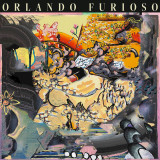
“Orlando Furioso is a haunting, one-of-a-kind statement, from an important new voice in improvised music.” - Steve Lehman
“…imagining instruments that haven’t been invented yet: space harps, cosmic gamelan, Venusian banjo. It’s the purest distillation of Atria’s musical language, simultaneously grounded and unearthly.” - Stewart Smith for The Wire (November 2022)
“Making liberal use of microtonal harmony and hypnotic, ostinato rhythms – as well as the occasional stylistic smash-cut, reminiscent of John Zorn – Orlando Furioso announced itself on Wednesday as a punchy, creative force on the New York scene. (…) Atria’s rhythms had a welcoming, social propulsion, and the microtonality of his writing for keyboard proposed an individual – even insular – language.” - Seth Colter Walls for The New York Times.
Early European composers felt that their work reflected in its structure the divine nature of the material world. Via tuning, form, and contrapuntal alchemy, these musicians sought to illuminate and edify the complex and perfect order of existence. The music recorded here also reflects the contours of an ordered world, but it is no place any of us has ever visited. By assembling far-flung building blocks from the detritus of a 21st-century musical vocabulary, Orlando Furioso brings the listener into a bizarre new cosmos. The result is deeply expressive music that speaks not with the voice of a narrator or memoirist, but with that of a cartographer.
Like a science-fiction Dante, the listener is taken on a tour of many diverse and colorful provinces of an alien world. Though each composition references its own set of real-world musical locales (from the Andes to Indonesia to Italy to New Orleans), they are bound by stylistic consistency into a coherent, continuous geography. Permeating this world is an uncompromising commitment to microtonal harmony, rhythmic intensity, and an ability to deploy the esoteric (Nicola Vicentino's notorious 31-tone temperament) and the head-smackingly obvious (a surprise djent breakdown) with equal conviction. Though Vicente's compositions are steering the ship, serious recognition is due to all the players on the record for their ability to meet these demands.
Our omnivorous musical diets offer real abundance. They enrich our craft by providing access to limitless approaches from which to choose - more masters to study, traditions to absorb, and techniques to hone than is possible in multiple lifetimes. They can also inflict heavy and often contradictory burdens of influence. When every corner of the map has been charted, it becomes difficult to find a new direction in which to travel. One solution I hope to see more often is the one pursued on this record: breaking down distinct musical worlds into component parts and reassembling them into a language. When completed with precision and with no stone left unturned, the seams between the pieces vanish and the listener is deposited somewhere beautiful and strange, left to assign their sensations meanings of their own. - Mat Muntz
Orlando Furioso is led by Vicente and features David Acevedo, David Leon, Andrew Boudreau, Alec Goldfarb, Daniel Hass, Simón Willson, and Niña Tormenta. Orlando Furioso celebrated its release at Roulette Intermedium in Brooklyn, NY, as a part of Wet Ink Ensemble's 24th Season opening concert, a performance which The New York Times heralded as "virtuosic", "punchy, creative" and "even revelatory."
Winner of the Deutscher Jazz Preis: Best International Debut Album 2023
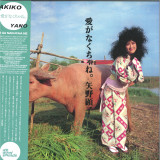
Wewantsounds continues its Akiko Yano series with the reissue of her cult classic 'Ai Ga Nakucha Ne' recorded in 1982 and co-produced by Ryuichi Sakamoto. Featuring Japan, the album includes additional recording in Tokyo with YMO and is mixed by Steve Nye and Shinichi Tanaka. It is the first time the album is released outside of Japan and the deluxe LP features the original artwork with gatefold sleeve and a lavish 24-page colour booklet with sessions photos by Pennie Smith (famous for The Clash's London Calling photo). The reissue also includes a new introduction by Mac DeMarco and a dual interview with Akiko Yano and Steve Jansen by journalist Paul Bowler. The audio remastered from the Original tapes by Mitsuo Koike.
'Ai Ga Nakucha Ne' ('there must be love' in Japanese) is Akiko Yano’s 6th studio album and follows 'Tadaima' in 1981. It continues exploring the electro-pop sound of its predecessor, hot on the heels of her touring with Yellow Magic Orchestra between 1979 and 1980. For this album, Akiko decided to try something new; she enrolled English fellow musicians Mick Karn, Steve Jansen and David Sylvian from Japan and booked the Air Studios in London under the supervision of engineer Steve Nye. Over a couple of weeks, the musicians created a fascinating soundscape full of catchy pop tunes, sung in both Japanese and English. Reminiscing about the studio sessions, Steve Jansen notes "Our music’s different but we maybe had a similar process of working. It was a great environment because the studio was a great place to work. It was very insular. There were four studios and there were always groups working in there 24/7."
The eleven tracks featured on "Ai Ga Nakucha Ne," mostly composed by Akiko - are a great collection of catchy tunes featuring her distinctive vocals and accompanied by the Japan musicians. As Akiko explains about the creative process, "I didn’t think to imitate or to make another Tin Drum. But I had Steve Jansen and Mick Karn, these excellent musicians. They were eager to understand the songs, then they put in everything they had. I knew the material was different from what they usually played in Japan. But it was a great experience working with them.
There are many highlights on the album, from the pop edge of "Aisuru Hito Yo" to the avant groove of "Another Wedding Song", each song is memorable and the album ends with the superb “Good Night” sung by Akiko and David Sylvian.
The original 1982 LP release included a 24 page booklet featuring many photos by Pennie Smith and Japanese photographer Bishin Jumonji. The booklet is reproduced in its entirety here and the album on top of contributions by Mac DeMarco, a longtime fan of the album, Akiko and Steve Jansen making this release of 'Ai Ga Nakucha Ne' a unique testament to Akiko Yano's greatness.
teely Dan's gold-selling third studio album Pretzel Logic, charted at No. 8 on the Billboard 200 and restored the group's radio presence with the single "Rikki Don't Lose That Number," which became the biggest pop hit of their career and peaked at No. 4 on the Billboard Hot 100. The 1974 album was produced by Gary Katz and was written primarily by Walter Becker (bass) and bandleader Donald Fagen (vocals, keyboards). The album marked the beginning of Becker and Fagen's roles as Steely Dan's principal members.
They enlisted prominent Los Angeles-based studio musicians to record Pretzel Logic, but used them only for occasional overdubs, except for drums, where founding drummer Jim Hodder was reduced to a backing singer, replaced by Jim Gordon and Jeff Porcaro on the drum kit for all of the songs on the album. Steely Dan's Jeff "Skunk" Baxter played pedal steel guitar and hand drums.
Pretzel Logic has shorter songs and fewer instrumental jams than the group's 1973 album Countdown to Ecstasy. Steely Dan considered it the band's attempt at complete musical statements within the three-minute pop-song format. The album's music is characterized by harmonies, counter-melodies, and bop phrasing. It also relies often on straightforward pop influences. The syncopated piano line that opens "Rikki Don't Lose That Number" develops into a pop melody, and the title track transitions from a blues song to a jazzy chorus.
Other standout tracks include "Any Major Dude Will Tell You," a reflective ballad with lush harmonies, and "Parker's Band," a playful ode to the jazz great Charlie Parker.
Lyrically, the album explores themes of nostalgia, lost love, and the struggles of the creative process. In "Barrytown," the band reflects on their early days as struggling musicians, while in "Through with Buzz," they offer a biting critique of the music industry and the pressure to conform to commercial expectations.
One of the defining characteristics of Pretzel Logic is its use of unusual chord progressions and unexpected musical twists and turns. The band's intricate arrangements and skilled musicianship are on full display throughout the album.
Rolling Stone praised the album, calling Steely Dan the "most improbable hit-singles band to emerge in ages."
"When the band doesn't undulate to samba rhythms (as it did on 'Do It Again,' its first Top Ten single), it pushes itself to a full gallop (as it did on 'Reelin' in the Years,' its second). These two rhythmic preferences persist and sometimes intermingle, as on 'Rikki Don't Lose That Number,' which jumps in mid-chorus from 'Hernando's Hideaway' into 'Honky Tonk Women.' Great transition." — the review said.
AllMusic gave the album 5 stars, with reviewer Stephen Thomas Erlewine noting that "instead of relying on easy hooks, Walter Becker and Donald Fagen assembled their most complex and cynical set of songs to date." Dense with harmonics, countermelodies, and bop phrasing, Pretzel Logic is vibrant with unpredictable musical juxtapositions and snide, but very funny, wordplay.
The album's cover photo featuring a New York pretzel vendor was taken by Raeanne Rubenstein, a photographer of musicians and Hollywood celebrities. She shot the photo on the west side of Fifth Avenue and 79th Street, just above the 79th Street Transverse (the road through Central Park), at the park entrance called "Miners' Gate."
After a brief battle with esophageal cancer, Walter Becker died on September 3, 2017 at the age of 67. Steely Dan has sold more than 40 million albums worldwide and were inducted into the Rock and Roll Hall of Fame in March 2001. VH1 ranked Steely Dan at No. 82 on their list of the 100 Greatest Musical Artists of All Time. Rolling Stone ranked them No. 15 on its list of the 20 Greatest Duos of All Time.
This stereo UHQR reissue will be limited to 20,000 copies, with gold foil individually numbered jackets, housed in a premium slipcase with a wooden dowel spine.
Overall, Pretzel Logic is a standout album in Steely Dan's discography. The album's blend of catchy hooks, complex arrangements, and thoughtful lyrics has made it a favorite among fans of classic rock and pop music.
- A1: Captain Parade 3 25
- A2: Mountain Echoes 4 09
- A3: Discowboy 2 42
- A4: Tombola Time 1 2 10
- A5: Tombola Time 2 2 08
- A6: Space Fiction 1 21
- A7: Mountain Trumpet 0 58
- A8: Tambours Parade 1 42
- B1: Deer Forest 4 32
- B2: Charly Guitare 3 01
- B3: Magic Lake 1 2 45
- B4: Magic Lake 2 2 45
- B5: Pop Fiction 1 43
- B6: Damnation Space 2 38
Pierre Dutour's infamous Top Fiction is the epitome of a 5-tracker. Coming to light in 1979 on Tele Music, its collection of environmental themes are *all astounding*. We're talking all-time heavy hitters, here. They come recommended as tracks you'd choose to elegantly elevate deep selector sets or mixes.
Skip the irritating whistle-laced marching-band funk of "Captain Parade" and head straight to the glistening synths and proud horns of beatless ambient wonder "Mountain Echoes". Arguably worth the price of admission alone. It's that good. The sci-fi atmospherics of "Space Fiction" are definitely sampleable whilst the proud horns of "Mountain Trumpet" definitely contain blasts that could be of creative use. "Tambours Parade" is more marching-band funk, only this time the drums go hard and there's a lot to like about this one.
Truly, it's all about the B-Side. A real B-Side for the ages, in fairness. It opens with the gorgeous "Deer Forest". It's one of the most beautiful songs you'll ever hear. Like something off Brian Bennett's Voyage, it rides dreamily melodic synths, and comes on, as one fan claimed "like something Angelo Badalamenti would have co-written with Final Fantasy composer, ???? Nobuo Uematsu". It's jaw-dropping. Be instantly beguiled by the deep eerie nostalgia and pretty delicate piano of "Magic Lake I" and the whistling-synth-augmented "Magic Lake II". The almost-title-track "Pop Fiction" is another hidden gem, containing dreamy, glistening arpeggios that are just begging to be sampled with a heavy knocking beat behind it. The set closes with "Damnation Space", 2 minutes of spooky Musique concrète.
So, 5 absolutely incredible tracks and 2-3 good ones. An excellent ratio for a library album, I think we can all agree. Trust us when we say that the heavy hitters are just absolute gold, rendering this one an essential, buy-on-sight purchase. Go listen and discover for yourselves...
The audio for Top Fiction has been remastered by Be With regular Simon Francis, ensuring this divisive release sounds better than ever. Cicely Balston's expert skills have made sure nothing is lost in the cut whilst the original space-age sleeve has been restored here at Be With HQ as the finishing touch to this long overdue re-issue.
- A1: No Traffic Feat. Dank
- A2: Doin' It
- A3: Off The Tap Feat. Zay Bcuz & Nicx *Rhett Cuts
- A4: Not Ever Feat. Harleighblu
- A5: Star Struck
- A6: Relapse
- A7: Shine Your Light Feat. Sam
- A8: Brag
- A9: Circus
- B1: Snaps
- B2: Funny
- B3: Plaques Feat. Maine Soul
- B4: Get Down Feat. Amp Fiddler
- B5: Og Funk
- B6: Boom Bap Feat. Frank Nitt
- B7: Mentions Feat. Serious & Joz B
- B8: Calvin Vm Interlude
- B9: Showin' Love Feat. Kid Gotti
- B10: Good Life
Enter the realm of Illa J, the musical force shaking the foundations of the industry. His latest offering, 'No Traffic', is a testament to his boundless talent and versatility, showcasing his singing, production and rapping abilities on 19 tracks written and produced entirely by Illa J himself. This album marks his debut on BBE Music and a new chapter in his musical journey. Meet Illa J: a musical prodigy raised in a family of talented musicians. With a jazz bassist father and a gifted singer mother, it's no surprise that Illa J was destined for greatness. He's best known as the younger brother of hip-hop legend J Dilla and has made a name for himself as a former member of Detroit's iconic hip-hop group, Slum Village. With a lifetime of exposure to quality music and top-tier musicians, Illa J is a force to be reckoned with. Created amidst the chaos of the pandemic, Illa J's 'No Traffic' serves as a beacon of hope, a roadmap for creatives seeking their path. He enlists the help of Detroit legends Amp Fiddler, Frank n Dank, British soul sensation Harleighblu, and introduces the rising stars of Detroit, Serious, Joz B, Maine Soul, and more, all matching Illa J's energy and passion on the tracks. The focus track of the album, "Star Struck", is a prime example of Illa J's signature style. The astral pentatonic soundscape and precise drum programming transport you to new heights, while Illa J's beats, melodies, and bars will leave you in awe. 'No Traffic' is a musical journey that takes you to a place where Illa J's playful and versatile sound reigns supreme. The album is expertly mastered by Grammy-award nominated The Carvery Studio and is a refreshing experience of a true artist reveling in their artistry. Don't miss out on this once-in-a-lifetime opportunity to delve into Illa J's musical realm."