The Golden Gate Quartett: Various Artists Compilation No.4
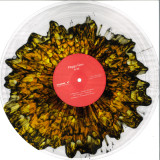
This release features four tracks that explore the diverse sounds of Minimal House, Tech House, and Deep House, showcasing distinct styles rooted in the underground scene.
Johnny D's "Dream System" combines soulful melodies with a rhythmic drive, creating a track that balances smooth grooves and steady energy. It’s music designed for those moments where sound takes you somewhere else.
Melina & Jakob Seidensticker present "Welcome to Japan", a playful journey through classic acid-inspired Tech House. Crisp beats and hypnotic acid lines make it a track that invites exploration and movement.
Edgar Peng’s "Synesthesia" offers a deep, immersive experience with lush textures and emotional layers. It’s a piece that holds its ground on the dance floor while inviting introspection.
Ali Demir & Skjærstad close the release with "Mud Pot", a groovy, stripped-back Minimal House track. Its subtle sophistication lies in its simplicity, offering a refined listening experience.
This compilation celebrates the creativity and range of the Golden Gate Club sound, delivering tracks that resonate both in the club and beyond.
Suche:cri
" What Are You Going to Do with Your Life?' is the eighth studio album by British post-punk legends Echo & The Bunnymen, released on April 16, 1999. The album saw the band continue a trajectory set with 1997's 'Evergreen', embracing more introspective themes and melodic approach to its arrangements.
" Featuring an inspired selection of collaborators including strings from the London Metropolitan Orchestra and two songs featuring the American rap rock band Fun Loving Criminals, 'What Are You Going to Do with Your Life?' featured two singles, the title track, and the atmospheric fan favourite 'Rust', which would mark the band's final Top 40 UK single.
" Celebrating 25 years of 'What Are You Going to Do with Your Life?', the album is issued on vinyl for the very first time, alongside expansive 34-track 2CD and digital editions (18 tracks previously unreleased!), which feature B-sides, alternative versions and previously unreleased live versions of both tracks from the album and classic Bunnymen tracks.
- A1: Summer Overture
- A2: Party
- A3: Coney Island Dreaming
- A4: Party
- A5: Chocolate Charms
- A6: Ghosts Of Things To Come
- A7: Dreams
- A8: Tense
- A9: Dr. Pill
- A10: High On Life
- A11: Ghosts
- A12: Crimin' & Dealin
- A13: Hope Overture
- A14: Tense
- A15: Bialy & Lox Conga
- B1: Cleaning Apartment
- B2: Ghosts-Falling
- B3: Dreams
- B4: Arnold
- B5: Marion Barfs
- B6: Supermarket Sweep
- B7: Dreams
- B8: Sara Goldfarb Has Left The Building
- B9: Bugs Got A Devilish Grin Conga
- C5: The Beginning Of The End
- C6: Ghosts Of A Future Lost
- C7: Meltdown
- C8: Lux Aeterna
- C9: Coney Island Low
- D1: Purple In The Morning, Blue In The Afternoon, Orange In The Evening, Green At Night
- D2: 30 Days To Revolutionize Your Life!!! 1-900-976-Juice
- C1: Winter Overture
- C2: Southern Hospitality
- C3: Fear
- C4: Full Tense
To coincide with its 20th anniversary, Clint Mansell's haunting score to Darren Aronofsky's 2000 film, Requiem for a Dream, performed by Kronos Quartet, returns to vinyl. This was Mansell’s second of several collaborations with Aronofsky, following 1997’s π, and features arrangements by David Lang of Bang on a Can. The film stars Academy Award-winner Ellen Burstyn, Jared Leto, Jennifer Connelly and Marlon Wayans, and was adapted from the 1978 novel by Hubert Selby, Jr. (Last Exit to Brooklyn), who also wrote the screenplay with Aronofsky. Set on the rusted mean streets of Coney Island, Brooklyn, Requiem for a Dream tells the parallel stories of four people pursuing their dreams of better lives. The reissue features the original soundtrack, plus two bonus tracks.
Clint Mansell, a musician, composer, and founding member of the band Pop Will Eat Itself, first worked with Darren Aronofsky on the score for his 1998 film π. Also released by Nonesuch are Mansell’s scores for Aronofsky's The Fountain (2006), nominated for a Golden Globe, and Noah (2014). His other scores include The Wrestler (2008), Moon (2009), Black Swan (2010), Filth (2013), Stoker (2013), High Rise (2016), for which he received an Ivor Novello nomination, and Loving Vincent (2017).
For more than 40 years, San Francisco’s Kronos Quartet – David Harrington (violin), John Sherba (violin), Hank Dutt (viola), and Sunny Yang (cello) – has combined a spirit of fearless exploration with a commitment to continually re-imagining the string quartet experience. In the process, Kronos has become one of the world’s most celebrated and influential ensembles, performing thousands of concerts, releasing more than 50 recordings, collaborating with many of the world’s most eclectic composers and performers, and commissioning over 850 works and arrangements for string quartet. A Grammy winner, Kronos is also the only recipient of both the Polar Music Prize and the Avery Fisher Prize. Most recently, in 2019, Nonesuch released Kronos’s ground-breaking collaboration with composer Terry Riley, Sun Rings, and, in 2017, Folk Songs, featuring Sam Amidon, Olivia Chaney, Rhiannon Giddens and Natalie Merchant.
Schlammpeiziger, who had previously only been known to us for his top hits and T-shirts, burst upon us like a wild boar in search of affection in the middle of the coronavirus lockdown. He nested in our fully vaccinated home, drank our Eversbusch, ate from our plates, slept in our bed (wait - wrong fairy tale) and repeatedly urged us to organise egg runs with his testicles (after some contortions, we gave up trying). Childish faecal humour, far-fetched obs(t)enities, juicing, a desire to dissolve, composting of thoughts. In excesses of lack of concentration, the chains of associations curled and meandered like Jo's famous curlicue drawings. Every evening, after we had forcibly levered him out of our flat, he would ‘walk’ home to put together very unique , dreamy pieces. In the blissful brainfog of those days, for example, ‘Handicapfalter’ was created, for which the congenial °Bär° made our flat into the corresponding video. Among other quirks of the little gut-breather, we were fascinated to observe his phobia of literature and books. Just hold a printed page in front of his face for a few seconds and he writhes on the floor crying. A level of phobia that only my own laughable disgust and fear of writing myself can compete with. Jo shudders at the thought of reading sentences that build on each other in a meaningful way, and I shudder at the thought of having to write them down because I have something ‘to say’. A certain affinity cannot be denied. We are much, much more pleased by snatched-up, misunderstood or misheard snippets, hollow but unforgettable phrases, the diamond stoner humour of our ancestors. ‘From one turn/ I stop/ to walk on/ in all directions’ (as it murmurs in “Selten Gesehenes”), describes the process quite nicely. After all, Jo is ahead of me in that he can simply break off every tedious sentence and let it fade into music. Back to the essentials. It's five to 12 for the Schlammpeitzger (scientifically Misgurnus). The shy goby is under threat from climate change, so perhaps this vinyl is the last expression of life of the specimen that we have been allowed to look after sporadically since the lockdown phase of the corona epidemic. And it's turned out pretty. Even the aesthetically gutted like me and my beloved husband can THINK about sex when they see these sublime, silvery fart bubbles! It's tender as a fart. Make love!!!!!
Schamlose Dubtöse: Do you have words. Do you have sounds. Impertinently harmless piano tinkling turns into tugging zounds of increasing severity. It is not dubbed (would be unethical) but dubbed. Sounds dubby, as you can imagine. (Instrumental)
Loch ohne Licht: Possibly vaguely misogynistic. Could also be that there was simply no light in the hole. The sparse snippet of lyrics (‘du biss mir och esu e Loch ohne Licht’) sounds like one of those stroppy Cologne replicas whose anti-charm is hard to resist. Buzzing and grooving.
Selten Gesehenes: Casual. Confident. Soft. Fragrant. Thoughtful but lively.
The Arabian Vietmanese (instrumental) is probably the food we trust in the case of the munchies we get when we watch other people smoking weed. Transcendental and psychedelic states casually permeate the humdrum of everyday life. Klar Knuspermarsch: Marches and floats at the same time. Klebt Runner: Soundtrack to the cult film of the same name. Tyrrell Corporation loosens up. Ungenutzte Sätze: Stinks somehow, because there is dangerous proximity to comprehensible and then also critical statements here. Instead, the sinister electronic cheapness of Carpenter soundtracks can be heard. Parzipan: Actually, the time of origin was not so roaringly funny and simple, but for Jo it was also a gruelling, slow letting go of his brother. Here he sends him off with a gentle nudge into the vastness of a hopefully happy beyond.
Clara Drechsler
Schlammpeiziger, der uns bislang nur durch seine Top-Hits und seine T-Shirts bekannt gewesen war, brach mitten im Corona-Lockdown über uns herein wie ein wilder Eber auf der Suche nach Zuwendung. Er nistete sich in unserem durchgeimpften Zuhause ein, trank unseren Eversbusch, aß von unseren Tellerchen, schlief in unserem Bettchen (Moment - falsches Märchen) drängte uns wiederholt dazu, mit seinen Hoden Eierlauf zu veranstalten (nach Verrenkungen gaben wir den Versuch auf). Kindischer Fäkalhumor, weit hergeholte Obs(t)zönitäten, Entsaftung, Auflösungswunsch, Gedankenkompostierung. In Exzessen der Konzentrationsschwäche ringelten, kringelten und schlängelten sich die Assoziationsketten wie bei Jos berühmten Kringel-Schlängel-Zeichnungen. Jeden Abend, nachdem wir ihn gewaltsam aus unserer Wohnung gehebelt hatten, „ging“ er dann heim, um dort sehr eigene, verträumte Stücke zusammenzubasteln. Im seligen Brainfog dieser Tage entstand z.B. „Handicapfalter“, für das der kongeniale °Bär° aus unserer Wohnung das entsprechende Video machte. Neben anderen Marotten des kleinen Darmatmers beobachteten wir fasziniert seine Literatur- bzw. Bücherphobie. Halt ihm nur sekundenlang eine bedruckte Seite vors Gesicht, und er windet sich weinend am Boden. Ein Grad an Phobizität, mit dem sich nur meine eigene lachhafte Abscheu und Angst vor dem Selberschreiben messen kann. Jo schaudert beim Gedanken, sinnvoll aufeinander aufbauende Sätze lesen, mir wiederum beim Gedanken, sie hinschreiben zu müssen, weil ich irgendetwas „zu sagen“ habe. Eine gewisse Verwandtschaft ist nicht zu leugnen. Viel, viel mehr freuen uns aufgeschnappte, falsch verstandene oder misshörte Fetzen, hohle, aber unvergessliche Phrasen, der diamantene Kifferhumor unserer Vorfahren. „Aus einer Drehung/bleibe ich stehen/ um in alle Richtungen/weiter zu gehen“ (wie es in „Selten Gesehenes“ raunt), beschreibt den Prozess schon ganz schön. Immerhin hat Jo mir voraus, dass er jeden leidigen Satz einfach abbrechen und in Musik ausplempern lassen darf. Zurück zum Wesentlichen. Es ist fünf vor 12 für den Schlammpeitziger (wissenschaftlich Misgurnus). Die scheue Grundel ist von Klimawandel bedroht, vielleicht haltet ihr mit diesem Vinyl also die letzte Lebensäußerung des Exemplars in Händen, das wir seit der Lockdownphase der Corona-Epidemie sporadisch betreuen durften. Und die ist hübsch geworden. Selbst aus ästhetischer Erwägungen Entdarmte wie ich und mein geliebter Mann, können bei diesen sublimen, silberhellen Pupsbläschen DENNOCH an Sex denken! It´s zart as a fart. Make love!!!!!
Schamlose Dubtöse: Hast du Worte. Hast du Töne. Impertinent harmloses Klavierplätschern geht über in ziepende Zounds von zunehmender Strenge. Es wird nicht domptiert (wäre unethisch) sondern dubtiert. Klingt dubtig, wie ihr euch vorstellen könnt. (Instrumental)
Loch ohne Licht. Möglicherweise vage misogyn. Könnte auch sein, dass im Loch einfach kein Licht war. Das sparsame Textfetzchen („du biss mir och esu e Loch ohne Licht“) klingt nach einer jener pampigen kölschen Repliken, deren Anticharme man sich schwer entziehen kann. Schwirrt und groovt.
Selten Gesehenes: Lässig. Souverän. Softig. Duftig. Nachdenklich aber beschwingt.
Beim Arabischen Vietmanesen (Instrumental) gibt es wahrscheinlich die Speise unseres Vertrauens im Falle der Munchies, die wir kriegen, wenn wir anderen Leuten beim Kiffen zusehen. Transzendentale und psychedelische Zustände durchziehen beiläufig den schnöden Alltag. Klar Knuspermarsch: Marschiert und schwebt zugleich.
Klebt Runner: Soundtrack zum gleichnamigen Kultfilm. Tyrrell Corporation macht sich locker. Ungenutzte Sätze: Stinks irgendwie, weil hier gefährliche Nähe zu nachvollziehbarer und dann auch noch kritischer Aussage gegeben ist. Dafür klingt die sinistre elektronische Billigkeit von Carpenter-Soundtracks an.
Parzipan: Eigentlich war die Entstehungszeit gar nicht so brüllend lustig und einfach, sondern für Jo auch ein zermürbendes, langsames Loslassen des Bruders. Hier schickt er ihn mit sanftem Schubs hinaus in die Weiten eines hoffentlich schönen Jenseits.
Clara Drechsler
Downloads
Roberto Musci, born in Milan in 1956, studied guitar, music and electronic instruments. From 1974 to 1985 he traveled the world studying African, Indian, Arabic and Oriental music, recording ethnic music “in the field,” studying and collecting ethnic musical instruments from all over the world. His self-produced debut album, “The Loa of Music,” is a seminal work of staggering originality and extraordinary beauty in which field recordings, musique concrète, electronics, synthesis and instrumentation are interwoven, drawing on the countless musics from around the world that he has recorded. The subsequent “Water messages on desert sand,” composed with Giovanni Venosta, was nominated for a Grammy in the UK in 1987. In the 1980s and 1990s he broadcast ethnic and electronic-experimental music from Rai and Radio Popolare radio stations. He has also composed and played music for videos, commercials, dance, poetry, theater, composed soundtracks and accompanied silent films live. From 1980 to the present, he has played with many Italian and European musicians: Giovanni Venosta, Claudio Gabbiani, Walter Prati, Giorgio Magnanensi, Massimo Cavallaro, Massimo Mariani, Moni Ovadia, Roberto Zorzi, Chris Cutler, Jon Rose David Moss, Steve Piccolo, Elliott Sharp, Keith Tippett and the Third Ear Band.
The theme of travel, ethnicities and mysticism are a pivotal point in this new album of his as well, demonstrating once again how music needs absolutely no sharp lines of demarcation. The music is one.
It goes from the search for deep meanings in a time spent in a Hindu monastery (Ashram) listening to mantras and studying Buddhist philosophy (The Principle Of Things) to space explorations and human settlements on the Moon or Mars wondering how man will live and what he will bring to the new worlds imagining that Sufism, an Islamic mystical religion, will accompany him in the discovery of new worlds (Derviches On Mars). In Goodbye Monsters, harmony and peace are sought. Memories Of A Piano Player is a tribute to Keith Tippett, a great pianist (King Crimson , Centipede, Mujician) with whom he played in several concerts and with whom I spent evenings talking about music, food and Italian wine. Quantum State focuses on how quantum mechanics is creating a revolution in the way of thinking and dividing reality into infinite Parallel Worlds. Panthalassa is the vast ocean that surrounded Pangea and blends South American marimba music and traditional Chinese music. Burn The Shadows is a tribute to the fascinating Indonesian shadow theater, from the stories told and the atmosphere created during the long plays told in the sacred Indian texts of Ramayana or Mahabharata. Shadows are also more or less pleasant memories to which one is attached, and to burn them is still to move on with one's life.
Torajan Funeral Chant: The Toraja are a people living in Sulawesi (Indonesia) who have a special worship of the dead. Funerals are festivals that last several days, the corpses are protected by Tau-Tau (small dolls that watch over cemeteries), and over the years, they exhume the corpses of their relatives and keep them in their homes with them for a time to remember them.
The experimentation goes all the way to modern Artificial Intelligence that 'interrogated' to create something new by inserting conflicting inputs joins them together but nonsensically creating interesting insights; hence A.I. In Confusion. Pangea, named after the continent that contained all the land that emerged between 540 and 200 million years ago, in the Paleozoic and Mesozoic periods, imagined as inhabited by man without divisions created by borders, wars, religions or ethnic groups, is also a tribute to Steve Reich, one of the fathers and a great musician of minimal music. Prophecies, a reading of sacred texts and religious songs from evangelical sects in the United States filtered into granular synthesis with percussion music from South India, closes.
The machinic rapture of Van Boom’s debut album, ‘Prosthetics’, firmly planted the Kuwaiti artist in the underground of critical producers that stoke grisly and inhuman themes. Set against the backdrop of the Gulf Region, these themes remain exceptionally nefarious. His latest release, the ‘NUBORNE’ EP, mounts wider explorations of the eviscerating sonic grounds that he began to depict with his first long-playing document.
Gestured with the EP’s title, ‘NUBORNE’ stakes its significance on regeneration and permutation, clearly relishing in the aftermath of ‘Prosthetics’. Across four tracks, Van Boom crafts precisely to forge a set of works that are attached to their live performance state. It’s here that the EP is at home, for this is where unknowns come into play, this is where distortion leads to novel structures. Featuring collaborations with whiterose, Safety Trance, and Evita Manji, ‘NUBORNE’ is rendered evermore atypical. Accompanying the shift in design, there’s an unnerving ambience that’s given free reign across the EP, too. Snapshots of solitude prick the focal points amongst rhythmic tics, as if these shards deform the tracks in real time. With sheer relentless momentum, Van Boom seizes a new path wielding his familiar forces.
We are proud to bring you part II of the CEP VA series, featuring six tracks that span a wide range of genres. Each track brings its own signature to this release, making it truly one of a kind.
Beta.V opens the A-side, fusing self-sung vocals with multiple synths that harmonize beautifully together to create a timeless track. This is followed by SWART's 'Eternal Raver', much akin to old-school trance thanks to hypnotic synths and dreamy textures creating a meditative state. A3 introduces ETERA’s 'Classic Shit', a dancefloor weapon with stomping beats and crisp, background drums signaling the signature sound of ETERA himself. On the B-side, SZG stands out with its gated synthline, pounding bass, and catchy vocals from Brazilian MC DDSV adding that unique energetic spin to this release. DJ HENNE’s 'Roboter' on B2 is a hard house slayer featuring a deep mid-track breakdown and self-sung vocals - a DJ HENNE classic. Wrapping up the release, Pōnky combines groovy, funky plucks with a smooth finish, closing the EP out on a playful note.
'Pursuit Of Change' drops via CEP Records on 29th November 2024.
DJ Support - Wehbba, Ilario Alicante, Marco Faraone, Paco Osuna, Cristian Varela, Mauro Picotto, Adam Beyer, Richie Hawtin, Luigi Madonna, Joseph Capriati, Eli Brown, Marco Carola and Charlotte de Witte.
Joseph & Indira's ‘Mantra’ is another testament to ARTCORE's ever-increasing weight in Techno and global electronic dance music and features a duo of racy cuts laden with signature sonics from both artists, kicking off with 'Ananda' and its potent classic Techno feel, with a prominent Capriati core of thumping kicks, crisp percussive drive and progressive energy shifts and playful twists, laced with Indira's hypnotic exotic vocal chops and gritty LFO shots.
'Mantra' rounds off the release with an inverted sound transition, leaning heavier into the 'Psy' sound that has seen Indira's notoriety skyrocket. Flooded with undulating low-end movement, creative off-beat flare, shifting rhythmic patterns and uplifting musicality, its immersive blend of darker sounds and spiritually utopian nuances makes for an undeniably unique statement track.
Whilst famed for his endless spree of unforgettable mainstage performances and international club shows, including standout residencies in Ibiza, Joseph Capriati's studio productions have been carefully selected and rare in recent years. With the emergence of their latest studio productions, Joseph and Indira's ‘Mantra’ release serves as a stamp of approval from one of Techno's most respected tastemakers and an insight into the potential of ARTCORE's indelible impact on global dance music.
- A1: Kölsch - An Amazing (4 55)
- A2: Whomadewho/Mano Le Tough - Oblivion (7 02)
- A3: Artbat, Dino Lenny - Keep Calm (6 24)
- B1: Scratch Massive - Secrets (Peter Dallas Remix) (5 24)
- B2: Eelke Kleijn - De Orde Van De Nacht (Part 2 - Raxon Extended Remix) (7 17)
- B3: Ede & Seth Troxler - Your Love (Seth Troxler Remix) (6 31)
- C1: Oliver Koletzki, Niko Schwind - Stay Until The Light Feat Talmirage (Gespona Remix) (6 52)
- C2: Mathias Kaden - Soulmakers (Feat Zoe Xenia - Pulshar Remix) (6 19)
- C3: Laherte - Gate (6 17)
- D1: Cagedbaby & Dorothys Fortress - Attention (Moscoman Remix) (7 01)
- D2: Victor Ruiz, Wehbba - Silo (6 33)
- D3: Tropics - Nothing Like This (1 50)
- D4: Cri - Chaos (2 54)
The original soundtrack to the ‘party after the party’ reaches a huge milestone with the landmark 10th edition, with over 40 tracks and remixes on the DJ mix from the likes of WhoMadeWho, Kölsch, Nina Kraviz, Scratch Massive, Oliver Koletzki, Cari Lekebusch & Joseph Capriati, ARTBAT & Dino Lenny. Full of ambient soundscapes, teutonic techno, sublime vocals, melodic breakbeats and progressive gems that all blend together for a delightfully twisted adventure.
DJ Support: Jimpster, Terry Farley (FAITH), Bill Brewster, Kruder & Dorfmeister, Laurent Garnier, Black Coffee, Jazzanova
Fred Everything’s latest album, 'Love, Care, Kindness & Hope', came out last May to critical acclaim, gaining support from various players such as Laurent Garnier, Kruder & Dorfmeister, Jimpster and Jazzanova to name but a few.
Not content with having an A-List cast of guests on the album (Stereo MC’s, Robert Owens, James Alexander Bright…) Fred also enlisted top Remixers for the singles. We decided to put 4 of the best ones on a Vinyl sampler for record lovers.
Osunlade leads the pack here with his Yoruba Soul remix of Never feat. Robert Owens, keeping things steady for the dancefloor with his signature sound. Waajeed takes the same track and flips it into a different territorry, both musically and sonically, with his Hi-Tech Jazz feel.
Next, we have the enigmatic Clive From Accounts, re-imagining Soul Love featuring Stereo MC’s, with his precise and soulful beats. And to close the EP, Rocco Rodamaal takes Breathe featuring James Alexander Bright and turns it into a solid floor burner.
We invite you to take a journey through the music of the Pacific and Caribbean coasts of Colombia, where traditional rhythms blend with contemporary sounds.
Mangle Rojo is a compilation album of 8 songs, released on vinyl of 12 inches, with some of the most popular rhythms of Colombian folklore, like Cumbia, Currulao, Bullerengue and, Puya, played by renowned artists like Nelda Piña, Inés Granja, Sixto Silgado Paíto, Emilsen Pacheco and Francisco Torres.
Side A consists of four songs from the Pacific Coast, and side B has four songs from the Caribbean region. In this record take part bands and also collaborations between independent musicians. Six of the songs were composed for the album.
Independent record label Bánfora Records produced Mangle Rojo, with support from the Ministry of Culture of Colombia
Parsley Sounds was the glorious debut album for Mo Wax by Parsley Sound. The album was one of the iconic label’s final releases before it closed in 2003 and locating a clean copy has been extremely tricky of late, unless you're flush enough to drop 150 notes on it. Mercifully, the Be With reissue, put together with invaluable assistance from the group, should remedy this situation. It's a lo-fi, bass-heavy, blunted beat treat, warped with heat haze and dreamy soft-psych and has been criminally under-heard for far too long.
As with most cult-like records, Parsley Sounds has many influential fans, far and wide. From Four Tet and Caribou to NTS's modern day breakfast hero Flo Dill, its reputation has only grown in stature. At the time, the notoriously hard-to-please Pitchfork garlanded it with a scarcely achievable 8.8 whilst, just recently, the Numero Group's Rob Sevier described it as a "visionary bit of proto-Salvia Palth (or Steve Lacy)" via a Ghostly International missive.
Parsley Sound comprised super-talented duo Preston Mead and Dan Sargassa. They released an early single (the perfect "Twilight Mushrooms", featured here) on Warp Records as Slum, before signing to Mo Wax. Hidden behind a wall of sound - fuzzy layers of beats, bleeps and symphonic synths - they were convinced they made mainstream pop music. And, in many respects, Parsley Sounds really is a beautiful pop album. It overflows with memorable, gorgeous melodies and inspired songcraft. As the contemporaneous Pitchfork review correctly had it: "Parsley Sounds is one of those rare records that manage to sound modest while frequently pushing the sonic envelope."
Killer opener "Ease Yourself And Glide" is a thing of aching, soft-psych, wonky beat-beauty. A melodic masterpiece, part Crosby, Stills & Nash, part proto-Koushik, it presents a melancholy falsetto, surging bass and blunted lead guitar. As it climaxes, gorgeous strings are ushered in to see us out. Sublime. "Twilight Mushrooms" is up next and it's an acid-drenched, strung-out acoustic-led campfire wonder. Amid layers of tape-hiss and beautiful, sun-dappled strings, its understated vocal track provides a haze of wistful innocence.
The breezy "Spring's Near" is a krautrock-inspired chiming instrumental of heavenly excellence, its warm, skipping, motorik groove and dreamy synths completely infectious. Another total highlight, the technicolour "Yo Yo" initially presents itself as a more abstract, bleepy offering but as it organically swells into ever more beautiful places, with the addition of a choppy insistent drum loop, flute bursts, horns and sweeping strings, it puts one in mind of early Manitoba and Four Tet releases. Shimmering, blissed-out greatness.
The celestial harmonies and glistening harps of the wonderfully beatless, serenely sullen "Ocean House" are very much in conversation with late-60s meditative psych whilst, closing out Side A, the jaw-dropping, lushly experimental effort "Find The Heat" comes on like Arthur Russell meets Brian Wilson. Yep, *that* good.
Side B opens with the warped, bleepy "Stevie", a brief but beautifully wonky, soulful and intricate instrumental. The more upfront vocals that propel the fuzzy "Platonic Rate" have a refreshing swagger to them, the heavy bass and neck-snapping in-the-red beats too much for any system to deal with whilst the guitars and strings have a sweeping, cinematic feel which just beguiles. The slow, urbane soul of "Candlemice" will stop you in your tracks, no matter what you're doing. It carries a delicate sadness, as does much of the album in that classic "down lifting" style we so love here at Be With.
The fuzzing, buzzing "Templechurchmansions" is a searing, soulful dubwise detonation. Heavily stoned with slow-burning jazzy snatches and a tense, moody atmosphere, it's a Tricky-adjacent gem. The album rounds out brilliantly with the ominous instrumental "Neon Breeze" before giving way to the propulsive, almost incongruous punk-funk / disco-dub of secret "untitled" track "Caution", a scratchy, smacked-out groove-fuelled workout with a female vocal dripping with 'tude. Just sensational.
Under the watchful eye - and attentive ears! - of Parsley Sound themselves, the audio for Parsley Sounds has been carefully mastered by Be With regular Simon Francis, with a few much needed tweaks here and there, according to the artist's wishes. Cicely Balston's expert skills have made sure nothing is lost in the cut whilst the records have been pressed to the highest possible standard at the always stellar Record Industry in Holland.
Preston and Dan always thought the colours on the first vinyl pressing looked a bit "washed out" vis-a-vis the original artwork which was way more vibrant. We feel we've got it popping back to the original intention with the restoration work here at Be With HQ. So with the audio and artwork now approaching completeness after 20 years, this long overdue re-issue could be considered its definitive vinyl release.
A1 Dharma
Opening the LP in lively fashion, JLM liberally flecks a detailed composition with exquisite breaks cymbals playing a key role in the evolving patterns as the track progresses while heavy layers of synth work forms a substantial atmosphere. Musical and resonant with micro melodies and sprinkles of FX, Dharma encapsulates JLMs everimpressive attention to detail throughout its seven minutes.
A2 Artha
Where to start with Artha Setting the scene immediately with an epic synth intro that whooshes through your mind to prepare you for what is to come, its immediately obvious JLM has crafted a modern day classic here. Crisp Hot Pants breaks drop before we are treated to inspiring, continually developing and rousing melodies with a tuneful 808 bassline playfully dancing below. One to drop any chance you get Artha deserves to be heard.
B1 Moksha
Delightfully clear, characterful percussion introduces Moksha, a dancefloor friendly piece which rolls along beautifully thanks to old school breakbeats seizing the initiative while fluid keys, filtered synths and waves of serene effects punctuate the production. The
kick-light breaks will stay long in the memory as perfect for both the headphones and the discerning dance floor, just as weve come to expect from JLM.
B2 Kama
Taking you back to the early Progression Sessions era with a modern scifi twist reminiscent of your favourite space operatics, Kama will sit effortlessly alongside tracks from those days and now with its simple yet memorable core wind melody, sprawled
across energetic breakbeats and wide layers of synths & pads to a typically appropriate bassline. Another fine example of the evolving diversity in JLMs production with Spatial.
C1 Boundary
Switching things up, JLM treats us to a notably laid back vibe as Boundary is introduced by understated, filtered synth work and explorative kicks before a mellow yet chunky break pattern provides energy to the track. Detailed as ever, a myriad of effects and
samples are introduced and dance around the mix with a wistful complexity, in a track destined to be in your playlist for some time to come.
C2 Hexis
Kicking things off with a filtered DJ friendly beat intro, Hexis soon drops with constant old school jungle synth work and periodical strings alongside rasping, striking breakbeats that drive the track forward with impressive energy. The breaks reverberate in and out of the mix at intervals as JLM toys with the listener at will, creating a tonally unique and vibrant composition very much worthy of our attention.
D1 Ideal Forms
Low pass breaks echo and jostle for position with FX free counterparts early doors in the finely crafted intro to Ideal Forms, slowly developing with a triumphant assortment of keys and synths before a third layer of breaks are added which underpin a detailed, yet never busy, breakbeat landscape. Occasional breakdowns offer respite in a glistening wilderness of comforting melodies and light ambience.
D2 Physis
JLM rounds the album off very much on form with Physis a suitably climactic piece that opens with a detailed array of percussion, synths and effects before superbly programmed breaks take over the mix. An occasional, all encompassing sci fi synth rush
permeates the atmosphere to almost cinematic levels, while a melodic bassline nestles below leaving you with a track (and an album) you will not forget.
Words by Chris Hayes (Spatial / Red Mist)
The third chapter in CLIKNO's MAT (Music / Art / Text) EDITIONS series features four extended deep Minimal Techno tracks by Dr.Nojoke, titled wrongwrongrightright.
This release is accompanied by Dana Widawski's SelfMade 1-4, a series of four fayence-style plates created using traditional techniques to convey unconventional, socio-critical themes, and a text, solo moral judgement, by Marianne Klausen—a manual for a performance on moral judgment that explores the meanings and values of concepts like good, bad, wrong, and right—fusing auditory and visual art with writing into a unified experience.
At the core of Dr.Nojoke's wrongwrongrightright lies a deep, hypnotic quality, woven through layers of rhythm, melody, and noise, creating a transcendental pulse for the dancefloor. Notone on the A-side takes a more straightforward, acidic approach, while Cornips on the flipside is a deep minimal groover with a funky interplay of sounds. The second record dives even deeper with two more obscure tracks, Volasuri and Jilimuz, appealing to fans of Voices From The Lake and similar artists.
CLIKNO … art for dancing
Mona Lee aka Lissa Callens and WPH label man Red D go a long way back. Red D always knew it was a matter of time before Mona Lee would come up with some music he could not refuse. A gig together and the first notes of ‘The Reason’ and that was that.
Classic house that would make Kerri Chandler proud is the order of the title track. A bright piano melody, a good vocal hook and rough and ready beats in a crisp production that will shake up any dancefloor. Red D himself delivers a dub that focuses on the hooks and makes them shine even more on top of a killer funky bass line. For good U.S. house measure Atlanta’s finest Stefan Ringer steps up to deliver his trademark dusty twist on things. As a bonus you get ‘Spaces & Places’, a delicate organic deep house beauty with Mona Lee scatting ever so subtly to make you go out of your home and out of your head.
It’s house, it’s good and it will make you dance and sing.
LP + insert with extended liner notes and download code including extra bonus track 'Movements of The Mind'.For his second album on the Belgian leftfield imprint Cortizona, Devin Brahja Waldman gathered a group of insanely gifted and talented musicians to start a new and highly moving musical chapter titled 'Nebulizer'.
From the first moment the pulsating tone of Devin's synth blends with the whispering voices of Earth, Wind and Choir and the menacing bells Naima Karlsson set in motion this record you just know and feel immediately 'Nebulizer' will be a soul-searching journey, soaking you deep into an unknown and very personal musical world.
Devin Brahja Waldman is a New York saxophonist, drummer, synthesizer player and composer who leads the group BRAHJA. He has performed with Patti Smith, William Parker, Nadah El Shazly, Malcolm Mooney, Thurston Moore, Godspeed! You Black Emperor, Charles Hayward, Luke Stewart and Yoshiko Chuma. Waldman is also a member of NYC's Heroes Are Gang Leaders (led by poet Thomas Sayers Ellis and saxophonist James Brandon Lewis), of Sam Shalabi's Land of Kush, and of the Norwegian hardcore group MoE.
In 2022 BRAHJA released the critically acclaimed album 'Watermelancholia' on the Belgian leftfield imprint Cortizona. For his second album on the same Cortizona label, Devin Brahja Waldman gathered a group of insanely gifted and talented musicians to start a new and highly moving musical chapter titled 'Nebulizer'.
Together with Adam Kinner, Georgia Wartel Collins, Earth, Wind and Choir, Luke Stewart, Kenichi Iwasa, Naima Karlsson, Alexis Mercelo, Janice Lowe, Watson and Damon Hankoff, Devin forms a slow-burning fireball unity.
A devotional séance channelling unknown powers proving music is a healing force of the universe.
Rejoicing the Holy Jazz Spirit.
Ready to nebulize the world and bring light out from the darkness. Head cleaning the world in 4 musical parts: Geological Drum, Nebulizer, Bushido and Movements of The Mind. Nebulizer is an elevating meditation on our estrangement of nature.
Interstellar sonic stardust from a mindblowing collective that will leave you flabbergasted.
Be prepared and hear it to believe it.
For fans of: Art Ensemble of Chicago, Archie Shepp, Pharoah Sanders, John & Alice Coltrane, Kamasi Washington, Shabaka Hutchings, SAULT, Ill Considered, Jamie Branche, Angel Bat Dawid, Mackaya Craven, Matana Roberts, Sun Ra and other good music.
Outcast Planet Compilation vol.1 is the first in a series of volumes by Outcast Torino and features two records and 9 tracks, one for each resident DJ: Alex Dima, Bakked, Cristian Sarde, Denaila, Emanuele Montalto, Lorenzo Aribone, Munir Nadir, Paolo Macri and Paul Lution.
The collective from Turin comes together for the first time in a V.A whose sounds range from house to techno, with deep and electro influences.
Coming soon from Outcast Planet straight to your turntables, get your copy now.
Spanish duo Los Suruba have done it all over the last 25 years, captivating dancers with their blend of House, Minimal, Electro, psychedelic, and deep vibes.
They have established their own network of record labels, with almost 250 releases, Nazca being the latest addition. They’ve also released music on labels like Crosstown Rebels, Diynamic, and Get Physical and have been remixed by international artists such as Solomun, Adriatique, Clarian, and Okain. They describe their music as "Memories of the Future," the motto of their brand Nazca.
As DJs, they’ve performed at the world’s best clubs and festivals, bringing their unique sound across the globe, holding residencies from Ibiza to London, and creating countless underground hits.
They are in top form once again with this latest journeying EP, where Los Suruba and their label Nazca return to vinyl releases, featuring two new remixers for this vinyl edition of the ‘+33 EP’.
Innovative opener 'Dial Banger' is a wonky house sound with wet claps and a gurgling bassline that gets ever more wild. It's a playful cut that teases and pleases in equal measure as the low-slung grooves, string stabs, and unhinged leads keep dancers locked.
'Elegancia La de Francia' is a more experimental house affair with eerie synth leads and freaky filtered vocals, making a dark and menacing atmosphere.
Warm melodies infuse the track with soul and make it perfect for the late-night hours.
First remixer Cristina Lazic launched her own label La Zic, earlier this year. It's a platform that looks to uplift and mentor exceptional female talents next to the Italian's own blend of minimal, deep and tech house sounds. Her fantastic take on 'Elegancia la de Francia' is stylish and stripped back with supple minimal drums and the muted synth sounds bubbling away over punchy kicks.
Romanian artist BRYZ has a refined minimal sound that has established him in the European scene over the last decade. He deals in intricate melodies, pulsating rhythms, and atmospheric textures on labels like Storytellers and Esente Records.
His version of 'Elegancia la de Francia' is silky and deft, with sustained pads locking you into a trance while gurgling bass and trippy melodic motifs add great detail to the rolling minimal house grooves.
LINKIN PARK—Mike Shinoda, Brad Delson, Phoenix, Joe Hahn, alongside new members Emily Armstrong of critically acclaimed band Dead Sara as co-vocalist and Colin Brittain songwriter/producer for G Flip, Illenium, One OK Rock as drummer—share their first brand new music in seven years.
The iconic band shared a new single “The Emptiness Machine,” which is also the herald for the arrival of LINKIN PARK’s first album since 2017, FROM ZERO, on November 15.
About the new era, Shinoda stated, “Before LINKIN PARK, our first band name was Xero. This album title refers to both this humble beginning and the journey we’re currently undertaking. Sonically and emotionally, it is about past, present, and future—embracing our signature sound, but new and full of life. It was made with a deep appreciation for our new and longtime bandmates, our friends, our family, and our fans. We are proud of what LINKIN PARK has become over the years, and excited about the journey ahead.”
Right out of the gate, “The Emptiness Machine” channels the DNA of LINKIN PARK, harnessing the band’s explosive energy and retaining the hallmarks of their instantly identifiable and inimitable sound. A chameleonic and catchy anthem, Shinoda’s hypnotic melodies hand off to Armstrong’s blistering chorus, over distorted riffs and head-nodding drums.
Ultimately, with FROM ZERO, the band is looking to harness the purest energy of their past, present, and future. The new era has officially begun.
This superb new EP from Dj Moon and Dj Hart shows off a gorgeous old skool style with modern production. All four tracks a crisp and clean, with deep warm vibes and carefully edited breakbeats.
Over the past several years, The Voidz, led by Julian Casablancas, have been releasing various singles and performing unique residencies in different cities, all to critical acclaim. Now, they are returning with their highly anticipated third album, "Like All Before You."
This new release marks a shift back to album mode, showcasing The Voidz's unique sound that blends different styles into an immersive experience. The band will be promoting it in fall 2024 and 2025
Part 1 marbled vinyl[11,72 €]
Part 2 black vinyl[11,72 €]
Part 2 Marbled vinyl[11,72 €]
Since its founding back in 2014, Blume has carved a unique place in cultural landscape, issuing free-standing works, spanning the historical and contemporary, that represent singular gestures of creativity within the field of experimental sound. Joining their broad efforts in building networks of context and understanding that already includes the works by Werner Durand, Sarah Hennies, Bruce Nauman, John Butcher, Jocy de Oliveira, Mary Jane Leach, Valentina Magaletti, Alvin Curran, Julius Eastman, Alvin Lucier, and others, Blume return with the first ever vinyl release to attend to James Tenney’s legendary “Postal Pieces”, Marking the first ever appearance of five of the suite’s works - “Maximusic, for Max Neuhaus” (1965), “Having Never Written a Note for Percussion, for John Bergamo” (1971), “FFor Percussion Perhaps, or... Night, for Harold Budd” (1971), “Cellogram, for Joel Krosnick” (1971), and “Beast, for Buell Neidlinger” (1971) - on vinyl, drawing upon recordings made in 2003, by the Amsterdam based ensemble, The Barton Workshop, under the direction of James Fulkerson. Among the most important and highly regarded efforts in Tenney’s canon of compositions, as well as within the history of 20th Century music, these five pieces represent a crucial bridge between Fluxus-oriented conceptualism, minimalism, and the microtonal complexities that would emerge in their wakes. Issued in a highly limited vinyl edition of 300 copies, it includes exact replicas of the original postcard graphic scores, and features newly commissioned liner notes by Bradford Bailey, Blume’s brand new edition takes great steps to centring Tenney at the eye the storm during some of experimental music’s most important years.
A student of composition under Carl Ruggles, John Cage, Harry Partch, and Edgard Varèse - remaining close to all of them, and later performing in both Cage and Partch’s ensembles - as well as acoustics, information theory, and tape music composition under Lejaren Hiller, James Tenney carved a wide path within the contexts of experimental and avant-garde music during the second half of the 20th Century. Not only was he a tangible bridge between the generations of composer’s who laid much of the groundwork and the later movements of Fluxus, Minimalism, and the broader practices of experimental music, but Tenney is credited as having contributed one of the earliest applications of gestalt theory and cognitive science to music in 1961, before helping to pioneer the field of computer music at Bell Labs, during the following years.
Over the course of his career, Tenney produced music of such complexity and sophistication - paying little mind to the seductions of taste or dominant tropes of its own moment - that his work and legacy have largely remained under-recognised by the broader publics that have attended to most of his peers. Perhaps more pertinently, the body of work he produced can be perceived as too varied and complex to fit neatly within standard creative histories or critical frameworks, comprising harmonically complex works for acoustic instrumentation, musique concrète, the groundbreaking 1961 “plunderphonic” composition, “Collage No.1 (Blue Suede) (for tape)” - sampling and manipulating a recording of Elvis Presley - as well as algorithmic and computer synthesized music. Even here, within this single decade, a clear image of Tenney’s endeavours remains elusive. In addition to penning important theoretical texts, he collaborated and / or played with Max Neuhaus, La Monte Young, Steve Reich, Philip Glass, Michael Snow, Terry Riley, and numerous others; was an active member of Fluxus; starred in and composed music for Stan Brackage’s films; regularly worked with the Judson Dance Theater; co-founded and played in the ensemble, Tone Roads, with Malcolm Goldstein and Philip Corner; was a vocal advocate of the works of Conlon Nancarrow and Charles Ives, playing a significant part in the revival of both of their legacies; and regularly collaborated as a composer, musician, and actor with his then-partner, the artist Carolee Schneemann, notably co-starring in her film, “Fuses” (1965) and her legendary 1964 performance, “Meat Joy”, as well as creating sound collages for her films “Viet Flakes” (1965) and “Snows” (1970). Curiously, for a relatively absent figure in the historical and critical narratives, Tenney seems to have been the thread that bound multiple generations and disciplines of avant-garde practice in New York during this period.
Tenney was deeply invested in the quality and perception of sound. By 1970, this led him back to composing exclusively for acoustic instrumentation (though sometimes processed with tape delay) - in most cases utilising non-well tempered tuning systems to explore harmonic perception - a practice that he would remain steadfast to for the remainder of his life. This development roughly corresponded with his relocation to California, at the outset of the 1970s, following an invitation to teach at the newly founded music department at California Institute of the Arts (CalArts) in Valencia. Finding himself in regular contact with the harpist Susan Allen and the artist Allison Knowles, as well as at a great distance from many of his friends, in 1971 he completed (with the assistance of Knowles and Marie McRoy) “The Postal Pieces”, a project he had begun in 1965.
A suite of eleven compositions, “The Postal Pieces”, stands among Tenney’s well known and celebrated compositions, and illuminates the dualities embraced by the composer, notably his use of sound to develop consciousness in and of others, and his willingness to draw on elements and observations of everyday life; citing his strong dislike of writing letters as being the primary inspiration for their inception. In lieu, he conceived to send his friends - John Bergamo, Allison Knowles, Pauline Oliveros, La Monte Young, Harold Budd, Philip Corner, Joel Krosnick, Buell Neidlinger, Susan Allen, Max Neuhaus, and Malcolm Goldstein - short scores on the back of postcards. The suite is composed around three themes: Tenney’s concept of swell form (utilizing repetition and progressing through a structurally symmetrical arch), intonation, and the desire to produce “meditative perceptual states”.
A hugely important addition to Blume’s ever expanding efforts in context building and networks of creative practice, James Tenney’s “Post Pieces” is issued in a highly limited vinyl edition of 300 copies, which includes a exact replicas of the original postcard graphic scores, and features newly commissioned liner notes by Bradford Bailey.
Digital Finesse proudly presents Dischetto I, the debut album from Blinkduus Dischetto. This is a cathartic exploration, a raw, unfiltered ride from childhood to grown-man status.
Dischetto blends French Touch, IDM, and experimental sounds like a master alchemist, turning chaos into art to express the pain, the joy, the discoveries, and loss of innocence that come with the journey. Whether he's deep into Legend of Foresia with Barry White on repeat or just shaking off life’s small distractions, Dischetto is always in his zone, breaking new ground. This album is his journey—a sonic mission to claim that dischetto d'oro, Pioneer 10 lost-in-space style.
Moodena’s London-based imprint Tropical Disco’s latest offering is a shimmering journey into the heart of the underground, blending nu-disco, classic house, and contemporary electronic funk in a way that feels both nostalgic and totally fresh. Featuring four standout tracks from Vagabundo Club Social, Scruscru, Da Lukas, and Fun Kool feat. vocals from Bcleo and Anna Dee Tee, — the EP is a testament to the evolving sound of the dancefloor, where groove meets grit, and melody flirts with sultry rhythm. This release channels the spirit of sweaty basement parties, neon-soaked nights, and a collective desire to get lost in the music.
Opening the record is Colombian duo Vagabundo Club Social, presenting Latin-soaked funk colliding with shimmering brass instrumentation, creating a deep, rolling pulse that invites movement from the first beat. 'Zumba Z' is a track that feels right at home in a DJ’s warm-up set or closing down an all-nighter, with a hypnotic flow and vocals that seep into your bones.
Scruscru’s story pushes things deeper into late-night, cosmic territory. 'Konyaalti' is a lush, sun-drenched production, utilising sublime sax, Scruscru delivers a cut that's both playful and distinctly driving.
Da Lukas adds a sophisticated touch, remixing Rosario Cristofaro, and taking you on a slick ride that leans into Italo-disco influences. Swooning synths and crisp percussion form the backbone while gliding melodies create a sense of elevation. It’s elegant yet laced with energy, ideal for a peak-time set where the vibe is euphoric but refined.
Rounding off the release is veteran DJ and producer Gerardo Cinquegrana, whose playful Fun Kool moniker belies the serious funk he delivers in his production. German-born, and now Italy-based, Fun Kool’s sharp, syncopated rhythms and sexy vocal lines from Anna Dee Tee bring an irresistible groove to the forefront, with the kind of bassline that takes over your entire body and mind.
Altogether, 'Tropical Disco Volume 28' encompasses a record that’s both familiar and exploratory—rooted in the timeless grooves of disco and house but pushing forward into new musical territory and picking up sonics from different continents along the way. Whether you’re looking for late-night celestial cosmosis, sophisticated Italo-inspired dubs, or straight-up, no-nonsense funk, this release has something for every dance floor.
- A1: World Is Dog
- A2: Cctv (Feat Creature)
- A3: Yottabyte
- A4: Bad Pollen (Feat Billy Woods)
- A5: Slum Of A Disregard
- A6: Rfid
- A7: Instant Transfer (Feat Billy Woods)
- A8: Ikebana
- B1: In The Shadow Of If
- B2: Skp
- B3: Hushpuppies
- B4: 14 4 (Feat. Skech185)
- B5: Voice 2 Skull
- B6: Xolo
- B7: Zigzagzig
Black Vinyl[35,08 €]
We’re teaming up with ELUCID and Fat Possum for a limited edition of 300 copies of a Rush Hour black ice coloured edition.
E L U C I D, one half of the illustrious duo Armand Hammer, is here with the full-length follow-up to 'I Told Bessie'. Further experiments in the sonic, expanding on the 'live' side of music paired with the embracing of chaos. Something you haven't heard, or not so for a very long time. E L U C I D is here to reveal the bleakness of reality.
---------------------------------------------------------------------------------
''There is never time in the future in which we will work out our salvation. The challenge is in the moment; the time is always now.''
James Baldwin
A raw, crackling urgency runs through rapper-producer ELUCID’s new album REVELATOR like an underground power line. There is no space here for sepia-toned reminiscences or indulgent self-mythologizing. Intellectual rabbit holes have been filled in with concrete and rebar ; there is nowhere to hide and no off ramp from the audio Autobahn that ELUCID has fashioned—a renegade Robert Moses with gold fronts, bulldozing the homes of the powerful and the complicit. REVELATOR brims with the energy of now, with a refusal to look away. Carpe diem in a murder one mask.
Born in Jamaica, Queens, ELUCID has been on the cutting edge of New York’s underground scene since the mid-2000s. From the beginning, he has defied both convention and expectation. He ran with Okayplayer darlings Tanya Morgan, but his own music eschewed their throwback charm for glitchy noise experiments and bass-swamped culture jamming. His 2016 debut studio project Save Yourself (re-released in a deluxe edition last year) announced him in earnest. But in recent years, his Armand Hammer releases with partner-in-crime billy woods have received significant attention and acclaim. Serving as a followup to his last solo album—2022’s comparatively balmy I Told Bessie—ELUCID hoped to “re-distinguish” himself with REVELATOR, setting himself apart amidst the increasing attention around the music he and his friends are making together.
For ELUCID, this meant setting bold new challenges for himself. One of these was diving further into live instrumentation than ever before—”getting my Quincy Jones on,” as he puts it. The testing ground for this approach was Armand Hammer’s most recent project, 2023’s We Buy Diabetic Test Strips’ Möbius strip soundscapes, warmed with instrumental flourishes and skin-shedding beat progressions. With REVELATOR, though, ELUCID strove to create an atmosphere of chaos, embracing experimental electronics and atonal sample bursts. He worked on much of the album with co-producer Jon Nellen, who comes from a background in avant-garde and Indian classical music. “I wanted to get as freaky as I could at this moment. I wanted people to hear things, maybe for the first time, or in a way they haven’t for a long while,” the rapper explains.
ELUCID arrived at the studio with a collection of noise sources: non-referential samples, glitches and noises. Together he, Nellen, and others created forms out of them and, as ELUCID recalls, “just started playing drums with it.” Their fried, distorted sound was directly inspired by Miles Davis at his most uncompromising—specifically, the tone-clustering funk track “Rated X” from his 1974 double LP Get Up With It. At times, the pairing of rap with avant-fusion sounds also brings Emergency! from The Tony Williams Lifetime to mind, perhaps in an alternate timeline where the late drummer was listening to Ice Cube’s AmeriKKKa’s Most Wanted.
“The World is Dog,” REVELATOR’s lead single, functions as the album’s aesthetic thesis statement. Like the Davis track, the textures are punishing, the tonality is in free-fall, and the driving breakbeat of a groove cuts in and out unceremoniously. Avant-jazz bassist Luke Stewart, who appears throughout the record, holds the whole thing together just long enough for ELUCID to tightwalk over the beat. This tension is exactly where REVELATOR sets itself apart; in a time of drumless loops, and safe soul samples, this is a high-wire act with no safety net. Similarly, the song announces the themes of the album within just a few phrases, evoking the way societies accept and adjust to new levels of debasement and brutality while suffocating under the weight of history: “Can’t clock the kill, all a mystery/Forced past will eating everyone eventually/The world is dog.”
Many of the songs on REVELATOR grapple obliquely with dissolution and disenfranchisement in America and across the world—the grim realities of our domestic sociopolitical climate and our involvement in foreign conflicts. “Much of my artistic and political sensibility comes from the Black arts movement here in New York,” ELUCID explains. “Recognizing the interconnected global struggles against oppression, artists and thinkers created works and actions in solidarity with freedom movements in South Africa and Palestine.” ELUCID cites intellectuals like Amiri Baraka, Kwame Nkrumah, Audre Lorde, Sonia Sanchez, and Nikki Giovanni among his heroes. (One track on the album is specifically inspired by Lorde’s work, “SKP,” citing the scholar’s paper “Uses of the Erotic: The Erotic As Power.”) Songs like REVELATOR’s insistent closer “ZIGZAGZIG,” find ELUCID applying up-to-the-minute messaging, making explicit reference to the conflict in Gaza: “Feed a war machine…from river to sea, in lieu of peace.”
Despite ELUCID’s preference for cacophonous system overload here, the rapper also provides moments of respite. Recorded at The Alchemist’s Los Angeles studio, the laid-back, wheezing “INSTANT TRANSFER” is a collaboration with billy woods, which crystallizes their shared sense of creative determination. “With much momentum behind us and even more on the horizon, I knew a purpose, and that every step was ordered to that purpose,” ELUCID said of the experience. Meanwhile, the jittery “HUSHPUPPIES” is a playful anomaly on the track list, providing a snapshot of ELUCID watching his grandparents in the kitchen while preparing for Friday night fish fry dinners.
“Love still rules over on this side,” ELUCID says. ”I’m raising a family. We are making meaning and finding joy in the midst of all the fucked up-ness of everything around us because the alternative is cowardice and slow death. We remain rooted. We celebrate our people and our wins. Struggle is necessary.”
“IKEBANA” is one of ELUCID’s strongest statements of purpose on the record, blending the record’s heaviest themes with its most hopeful sentiments. supported by a shoutalong refrain and an urgent prog-funk groove. Breaking away from images of dissolution and crumbling societal systems that populate REVELATOR, ELUCID notes that the only way to navigate life’s bleakest landscapes is to cling to love and believe in those around you—to look forward toward something better that may or may not be possible. For the rapper, one of the album’s most trenchant lines comes during a centerpiece of a beat drop: “Being alive/I must look up.”
“The lyric ‘being alive I must look up’ is important especially in the context of this album. Much of the album imagery is harsh and reflects the actual doom some of us experience. But still I/we exist,” ELUCID explains.
Every artist is, in one way or another, the product of their time, bound by life’s leaden gravity to operate within the space of that which is already known. But there are some who are able to shake free of these ties, to shape the culture as it unfolds, to make the present their own.
Revelation, as a concept, points to the scales falling from people’s eyes—something that has been hiding in plain sight becoming clear. “The revelator relates to things that have been talked about, things that have been forecasted,” ELUCID adds. “And now they’re really here, and everyone sees it. And there’s no escaping.” REVELATOR plays out with the unmitigated power of those storms, laying waste to any genre conventions in pursuit of a certain physicality. Here, ELUCID develops a wholly distinctive musical language to explore our fractured modernity.
REVELATOR's packaging was designed by longtime Armand Hammer / Backwoodz art director, Alexander Richter.
Michael Mayer albums don’t come round too often, which is one of many reasons why his fourth collection, The Floor Is Lava, is a genuine event. It’s been eight years since his last one, the collaborative & released on !K7; its predecessors, Mantasy (2012) and Touch (2004), took their sweet time, too. It’s no real surprise, given the many hats Mayer wears – globetrotting DJ, revered remixer, inveterate collaborator, and boss of both Kompakt and Imara – that his solo productions are relatively sparing. But this also speaks to their quality: Mayer’s name on a record sleeve is a sign of quality, of music that’s both looking to the future and calling back to the past, that balances the imperatives of the dancefloor and the loungeroom, that’s as exploratory as it is functional.
On The Floor Is Lava, Mayer seems to be taking the temperature of both the music that surrounds him (past and present), and the ides of the industry he works within. There’s that iconic album title, for a start. “The album’s mindset,” he says, reflecting on those four words together. For Mayer, it’s partly a critique of the way the industry boxes in both producer and listener, focuses them on genre, on market, on the next new thing: “Being a free minded spirit that transcends genres has become an uphill battle.” A battle worth fighting, though, and with The Floor Is Lava, the result is an album that’s varied, quixotic, idiosyncratic, charming, and deeply, addictively listenable.
Throughout, Mayer finds thrills in exploration and juxtaposition, allowing unexpected things to blossom and giving them their life, their platform, throwing the listener exciting curveballs: “It’s a DJ album by a DJ that’s easily bored.” Either easily bored, or endlessly curious, The Floor Is Lava is rich with ideas. It opens with “The Problem”, which looks back to look forward, embracing the rickety way early house productions threw samples together with gleeful abandon. Mayer mentions Pal Joey, and the scene around Rockers Hi-Fi and their Different Drummer imprint, as reference points, and you can hear that freewheeling spirit throughout.
It’s followed by “Vagus”, a slinky, sensual minimal house number that Mayer describes as his “musical catnip”. The flow of these two opening cuts defines the dynamic of The Floor Is Lava, defining the dialectical drive at its core: thesis and antithesis leads to synthesis, but with a welcome prickliness that means you’re always excited, always engaged. It’s also productive in the way it derives energy from rubbing genres and sounds against each other, in unexpected ways, for maximum musical frisson. There’s psychedelic techno on “Feuerstuhl”, more minimal techno with “Ardor” (Mayer mentions ‘Immer 1’ era 90s minimal as inspiration), slippery, Shepard-tone breakbeat through “Sycophant”, a lovely, lush vocal turn on the poppy “The Solution”.
The album closes with the melancholy “Süßer Schlaf”, where Mayer sets a poem by Goethe to one of his most haunted, moving pieces of music yet, in abstract tribute to a lost friend. It’s one of the most affecting moments on The Floor Is Lava. There’s also an update on 2020’s wild Brainwave Technology EP, with the surrealist glitter-stomp of “Brainwave 2.0” (check out those handclaps!),where Mayer’s thinking about the socio-political precipice of the now: “I’m reading with great interest about this whole complex of how humanity is about to cross so many lines and the implications that the resulting financial and educational inequality will bring.”
That’s The Floor Is Lava: then and now, brainwaves and nerve structures, problems and solutions, genres on fire; the real, the unreal, and the surreal. An album for the easily bored and the endlessly curious. Mayer has the last word, telling us all you need to know about the album’s spirit: “Burning for the cause, being zealous, being addicted to the heat of the night, the exuberant powers of music.”
Michael Mayer veröffentlicht nicht oft Alben, was einer von vielen Gründen ist, warum ‘The Floor Is Lava’ ein echtes Ereignis ist. Es sind acht Jahre vergangen seit seinem letzten Werk, dem Kollaborationsalbum &, das auf !K7 erschien; seine Vorgänger, Mantasy (2012) und Touch (2004), ließen ebenfalls auf sich warten. Es überrascht nicht wirklich, da Mayer viele Rollen gleichzeitig erfüllt – weltreisender DJ, vielbeschäftigter Remixer, unermüdlicher Kollaborateur und Chef von sowohl Kompakt als auch Imara – weshalb seine Solo-Produktionen eher sparsam ausfallen. Doch das spricht auch für deren Qualität: Ein Album mit Mayers Namen auf dem Cover steht für Qualität, für Musik, die sowohl in die Zukunft blickt als auch auf die Vergangenheit verweist, die das Gleichgewicht zwischen den Anforderungen des Dancefloors und des Wohnzimmers hält, die genauso erforschend wie funktional ist.
Auf The Floor Is Lava scheint Mayer sowohl die Musik um ihn herum (vergangen und gegenwärtig) als auch die Strömungen der Branche, in der er arbeitet, zu reflektieren. Da wäre zunächst der ikonische Albumtitel. „Die Grundhaltung des Albums“, sagt er, drückt sich in diesen vier Worte aus. Für Mayer ist es teilweise eine Kritik daran, wie die Industrie sowohl Produzenten als auch Hörer in Schubladen steckt, sie auf Genres, auf den Markt und auf das nächste große Ding fokussiert: „Ein freier Geist zu sein, der Genres überschreitet, ist zu einem steinigen Weg geworden.“ Ein Kampf, der sich jedoch lohnt, und mit The Floor Is Lava ist das Ergebnis ein Album, das vielfältig, eigenwillig, charmant und tiefsinnig, aber auch süchtig machend ist.
Im gesamten Album findet Mayer Freude an der Erforschung und Gegenüberstellung von Stilen, lässt unerwartete Dinge erblühen und gibt ihnen Raum, überrascht den Hörer mit spannenden Wendungen: „Es ist ein DJ-Album von einem DJ, der sich schnell langweilt.“ Entweder langweilt er sich schnell oder er ist unendlich neugierig – The Floor Is Lava ist reich an Ideen. Es beginnt mit „The Problem“, das in die Vergangenheit blickt, um nach vorne zu schauen, und die wilde Art, wie frühe House-Produktionen Samples mit fröhlicher Unbekümmertheit zusammenwarfen, aufgreift. Mayer nennt Pal Joey und die Szene um Rockers Hi-Fi und ihr Label Different Drummer als Referenzpunkte, und dieser freie Geist zieht sich durch das gesamte Album.
Es folgt „Vagus“, eine sinnliche Minimal-House-Nummer, die Mayer als seine „musikalische Katzenminze“ beschreibt. Der Fluss dieser beiden Eröffnungstracks definiert die Dynamik von The Floor Is Lava und den dialektischen Antrieb im Kern: These und Antithese führen zu einer Synthese, jedoch mit einer willkommenen Schärfe, die dafür sorgt, dass man immer aufgeregt und engagiert bleibt. Zudem gewinnt das Album Energie, indem es Genres und Klänge auf unerwartete Weise aneinanderreibt, um maximalen musikalischen Nervenkitzel zu erzeugen. Es gibt psychedelischen Techno in „Feuerstuhl“, mehr Minimal Techno mit „Ardor“ (Mayer erwähnt ‘Immer’ Ära Minimal als Bezugspunkt), gleitenden Shepard-Ton-Breakbeat in „Sycophant“ und einen lieblichen, üppigen Vocal-Auftritt im poppigen „The Solution“.
Das Album schließt mit dem melancholischen „Süßer Schlaf“, in dem Mayer ein Gedicht von Goethe vertont und eine seiner bisher eindringlichsten und bewegendsten musikalischen Kompositionen schafft, als abstrakten Tribut an eine verschiedene Freundin. Es ist einer der ergreifendsten Momente auf The Floor Is Lava. Ebenfalls gibt es ein Update der wilden Brainwave Technology-EP von 2020, mit dem surrealistischen Glitzer-Stampfer „Brainwave 2.0“ (hör dir diese Handclaps an!), in dem Mayer über den sozio-politischen Abgrund der Gegenwart nachdenkt: „Ich lese mit großem Interesse über diesen ganzen Komplex, wie die Menschheit dabei ist, so viele Grenzen zu überschreiten und welche Auswirkungen die daraus resultierende finanzielle und bildungstechnische Ungleichheit haben wird.“
Das ist The Floor Is Lava: Damals und heute, Gehirnwellen und Nervengeflechte, Probleme und Lösungen, brennende Genres; das Reale, das Unreale und das Surreale. Ein Album für die schnell Gelangweilten und die unendlich Neugierigen. Mayer hat das letzte Wort und sagt uns alles, was wir über den Geist des Albums wissen müssen: „Brennen für die Sache, leidenschaftlich sein, süchtig nach der Hitze der Nacht, den überschwänglichen Kräften der Musik.“
We welcome Habgud back on Warg Records after his release on our various artists compilation.
The rumbling and driving low end combined with the rhythmic hats in each of the tracks brings out a lively energy. Dominics use of stylistic and funky vocals is
distinctive, adding a sense of ambience to such a powerful style of production.
_NRV returns with a new EP from Miller. A regular at DC-10 Ibiza and Fabric in London, Miller continues to impress with his dynamic range and deep understanding of the dancefloor.
A1, "Liquid Realm," echoes the pulse of early 2000s Nubreaks with driving breakbeats and a modern twist, delivering a track that will resonate with nostalgic fans and new listeners alike.
B1, "Hydrate," shifts gears into a sleek, futuristic soundscape. Crisp percussion, deep ocean melodies, and a groove-driven bassline create an engaging play between tension and release, pulling the listener in deeper.
B2, "There Are Tribes Out There," transports us to a primal, rhythmic space. The subtle mix of organic influences and modern production distances the track from easy categorization.
Miller's ability to flow between styles and genres while pushing sonic boundaries is on full display.
On his latest full-length, Low End Activist swerves towards weightless grime and suspended hardcore miniatures to tell a very personal story. The UK-rooted producer continues his habit of zeroing in on a distinct approach for each release, leaving a logical breadcrumb trail of soundsystem science in his wake as he channels decades of bass absorption into 14 atmospheric cuts that prize patience and precision over obvious club functionality.
Municipal Dreams plays out as a semi-autobiographical tour through the Blackbird Leys estate that the Activist grew up on. It’s a lived reflection on inequality and the ripple effect it has in working class communities, using the sonic palette to set the mood and scattering pointed samples throughout to spell out the story.
In sampling the exhaust of a stolen Subaru Impreza, ‘TWOC’ looks back to the recreational car theft which was standard entertainment for the kids in his community. There’s an underlying idea that this ‘council estate sport’ wouldn’t have been so prevalent if there were public services and opportunities presented to the scores of disaffected youth looking for somewhere to direct their energy and frustration.
In ‘Just A Number (Institutionalised)’ LEA alludes to the shattered juvenile detention system, growing up seeing friends and family members locked up at ease with little to no support on being released back into society, just meant that the same cycles of behaviour would play out over and over.
‘Violence’ samples from a short film shot by the drama division of the Blackbird Leys Youth Club to evoke the physical threat which formed a background hum to life on the estate. The industrial mechanics of the local car factory, which served an integral role as a workplace for many in the community, gets sampled in ‘They Only Come Out At Night’ while the ‘Everyone I look up to are either junkies or criminals’ sample in ‘Broke’ looks to a lack of positive role models.
Municipal Dreams isn’t a one-note indictment of life on the estate, ‘Innocence’ captures the simplicity of a child at birth before their environment has time to shape them. The Hope interludes cut through the grim honesty of the longer tracks while a subtle thread of wry humour finds its way into some of the talking heads cutting through the signature LEA murk.
But honesty is the operative word here, and the message feels all the more meaningful at a time when the UK’s social divisions are laid bare in the wake of a devastating stretch of austerity. Returning to Blackbird Leys to shoot images for the photo-zine and album cover, the Activist found the local community centre being demolished. The local pub stands derelict, its faded Welcome sign a grimly ironic portent of the options facing children of the estate in the wider world.
Funnelling his memories, hopes and fears into a singular twist on the bass weight tradition, LEA captures evocative scenes that land somewhere between kitchen sink realism and rave futurism.
A sonic portal to a parallel universe where neon-soaked dreamscapes transform the stark realities of a post-pandemic world. Music for a forgotten future, where echoes of the 80s cast long, enigmatic shadows through a rich tapestry of emotion that charts a journey from isolation and fear towards healing and hope. This is the journey of Season One and Season Two, the debut companion albums for the solo project of Italian composer Battaglia, both out this fall on Four Flies Records.
In 2020, as the world retreated onto itself due to the COVID-19 pandemic, Battaglia entered the recording studio. Driven by a desire for experimentation, she decided to focus on the classic synths that have made history to create a sonic and emotional alchemy that reimagines the 80s to resonate with our current experiences and sensibilities.
Drawing inspiration from the cinematic magic of iconic early-80s films, and especially the haunting soundtracks of Tangerine Dream and John Carpenter, she crafted a soundscape that goes beyond nostalgia to capture the spirit of a generation navigating uncertain times.
Season One and Season Two explore the complexities of a world grappling with lethal pandemics, climate catastrophes, and nuclear disasters through themes such as longing, fear, and hope, set against a scenario that blends elements of dystopian and post-apocalyptic science fiction and, at times, horror.
Season One delves deeper into the darker aspects of this new reality, evoking a sense of unease and uncertainty, occasionally interspersed with soothing flashes of light. In Season Two, while darkness still lingers, the sonic landscape is infused with a sense of optimism and determination, offering glimpses of a possible salvation.
With Battaglia's signature blend of dark wave, synth-pop, suspenseful electronica, and cinematic vibes, Season One and Season Two create a sonic world that is at once hauntingly familiar and utterly captivating -- the perfect soundtrack, one is tempted to say, for the countless sci-fi/horror-fantasy series that have been flooding streaming platforms in the last decade.
The covers of both albums were designed by Eric Adrian Lee, who conceived them as two sides of the same image, two versions of a world in crisis but whose ruins contain the potential for rebirth.
Battaglia's Season One and Season Two will be available on black vinyl LP starting from October 25th. Digital versions of both albums will also be released on the same date, featuring five bonus tracks (two on Season One and three on Season Two).
A sonic portal to a parallel universe where neon-soaked dreamscapes transform the stark realities of a post-pandemic world. Music for a forgotten future, where echoes of the 80s cast long, enigmatic shadows through a rich tapestry of emotion that charts a journey from isolation and fear towards healing and hope. This is the journey of Season One and Season Two, the debut companion albums for the solo project of Italian composer Battaglia, both out this fall on Four Flies Records.
In 2020, as the world retreated onto itself due to the COVID-19 pandemic, Battaglia entered the recording studio. Driven by a desire for experimentation, she decided to focus on the classic synths that have made history to create a sonic and emotional alchemy that reimagines the 80s to resonate with our current experiences and sensibilities.
Drawing inspiration from the cinematic magic of iconic early-80s films, and especially the haunting soundtracks of Tangerine Dream and John Carpenter, she crafted a soundscape that goes beyond nostalgia to capture the spirit of a generation navigating uncertain times.
Season One and Season Two explore the complexities of a world grappling with lethal pandemics, climate catastrophes, and nuclear disasters through themes such as longing, fear, and hope, set against a scenario that blends elements of dystopian and post-apocalyptic science fiction and, at times, horror.
Season One delves deeper into the darker aspects of this new reality, evoking a sense of unease and uncertainty, occasionally interspersed with soothing flashes of light. In Season Two, while darkness still lingers, the sonic landscape is infused with a sense of optimism and determination, offering glimpses of a possible salvation.
With Battaglia's signature blend of dark wave, synth-pop, suspenseful electronica, and cinematic vibes, Season One and Season Two create a sonic world that is at once hauntingly familiar and utterly captivating -- the perfect soundtrack, one is tempted to say, for the countless sci-fi/horror-fantasy series that have been flooding streaming platforms in the last decade.
The covers of both albums were designed by Eric Adrian Lee, who conceived them as two sides of the same image, two versions of a world in crisis but whose ruins contain the potential for rebirth.
Battaglia's Season One and Season Two will be available on black vinyl LP starting from October 25th. Digital versions of both albums will also be released on the same date, featuring five bonus tracks (two on Season One and three on Season Two).
Enigmatic producer bullet tooth makes Crosstown Rebels debut with ‘IF I CAN’T BE YOURS’. UKG meets melodic house on the four-track EP, featuring remixes from Enamour and SICARIA.
If you haven’t heard of bullet tooth yet, you soon will. Brimming with UKG, rave, and rap influences made deviously dark with heavy low-end basslines, this faceless newcomer’s captivating sound has seen him enjoy a meteoric rise since emerging on the scene in 2023. Graduating from Soundcloud bootlegs, the elusive artist made his Parklife debut this summer alongside rapper Capo Lee, with whom he produced ‘Keep It Rolling’. Featuring in sets for the likes of Sammy Virji, Main Phase, and Interplanetary Criminal, the aforementioned collab proved an instant hit, gracing BBC Radio 1 and 1Xtra airwaves via Sarah Story, Jeremiah Asiamah, DJ Target and more. Add supporters such as Floating Points, Laurent Garnier and Bicep to the mix, and it’s easy to see why there’s so much hype and intrigue.
Concluding his summer with a bang, the UK artist joined Damian Lazarus for his Hï Ibiza residency alongside Black Coffee, and now the DJ/producer ventures into melodic landscapes via Lazarus’ Crosstown Rebels with ‘IF I CAN’T BE YOURS’. The four-track EP also features additional remixes from LA-based talent Enamour and London’s hotly sought-after Moroccan dubstep favourite SICARIA. Leading with the powerful, ‘IF I CAN’T BE YOURS’, bullet tooth takes his sound to the club, featuring nostalgic 90s-esque vocals over dubby bass that lean towards the dancefloor. Second up is the uniquely melancholic-euphoric ‘YOU THINK YOU CAN FIX ME’, where UKG-style rhythms journey deep into melodic realms with purpose and precision. On the b-side, California’s Enamour reworks ‘IF I CAN’T BE YOURS’, directing his energy into a high-energy remix destined for festival grounds. To close out the EP, SICARIA leans into breakbeats with a climbing rendition of her own, infusing the track with lingering afro-leaning flavours.
Four club cuts from the recent Cold Blow 5th anniversary CD compilation. Featuring Matti Turunen of the world famous electro outfit Morphology, a electro-funky collaboration by Qwerty & Ed DMX, a true minimal techno banger by the legendary Mono Junk, as well as an introduction to a mysterious new producer called Sleep Mathew.
Locked-In returns with its eighth vinyl release, showcasing the talents of DOTT in a four-track EP.
The A-side opens with "Shock FM", setting the EP's tone. DOTT's masterful sound design is fully displayed, building tension and release through intricate percussion. The track's progression is sure to captivate dancefloors and headphone listeners alike.
"The Helper Returns" follows, diving deeper into atmospheric territory. Swirling synths intertwine with a driving bassline, evoking vast, subaqueous landscapes. The track's subtle evolution reveals new sonic details with each listen.
Flipping to the B-side, "A Bit of Dis & Dat" presents a more stripped-back approach. Its minimalist structure allows each carefully placed element to shine, from crisp hi-hats to a rumbling low-end. This is DJ material to maintain energy while adding depth to their sets.
The EP closes with "Sine Bass Runs Deep." Here, undulating rhythms and shimmering top-end create a sense of constant motion, perfect for those early morning hours when the dancefloor is locked in a collective trance.
The REER collective breaks new ground with its debut 2x12" VA release featuring some of the best established and emerging names the industrial scene has to offer. The revolution starts here.
- A1: King Tulip
- A2: Bring Out Your Dead
- A3: Nicotine Patches
- A4: 000 Degrees
- A5: Days
- A6: Phantom Menace
- A7: Krewe Du Vieux (Comedy & Tragedy)
- B1: War Time All The Time
- B2: Coma
- B3: Long Gone (Save Me From This Hell)
- B4: Meet Mr Nice Guy
- B5: Carrollton
- B6: Fuck The Industry
- B7: I No Longer Fear The Razor Guarding My Heel (Iv)
I Want to Die in New Orleans is the debut studio album by American hip hop duo Suicideboys, which was released on September 7, 2018. The album chronicles semi-autobiographical stories of the duo's encounters with depression, drug addiction and suicidal ideation. Released to critical acclaim in the underground rap scene, the album debuted at number 9 on the US Billboard 200 with 49,000 album-equivalent units in its first week sales. The album also reached the top 10 in Australia and Finland.
'Brat and it’s the same but there’s three more songs so it’s not' is the deluxe album of Charli xcx groundbreaking album 'BRAT' The CD & Vinyl will be out 11th October and available for pre-order from 9th August with the full tracklist available.
‘BRAT’ is shortlisted for the Mercury Prize 2024 and has already reached Gold certified status in the UK with over 100k sales since June 7th. Charli has just landed her first lead #1 single in the UK with ‘Guess’, which features on the deluxe album.
Avant-pop and electronic superstar Charli xcx has become an iconic figure in the arts, having
helped expand the landscape of popular music over the last decade by seamlessly traversing the underground and mainstream with her artistic output. Over the course of a trailblazing career, the multi-hyphenate creative has earned critical acclaim for her innovative style and
entrepreneurial spirit and seen her forward-thinking approach reshape pop culture in the process.
Her lasting impact was cemented last year when Charli was honoured with the Visionary Award at the annual Ivor Novellos in London, while she also received the Powerhouse Award at Billboard’s Women In Music ceremony in Los Angeles in March.
Audrey Powne's eagerly anticipated debut album has been met with widespread acclaim from a host of tastemakers and musicians. Garnering over 500 plays on UK radio, her music has reached an audience exceeding 2 million listeners. Many have touted her work as a strong contender for Jazz Album of the Year—a remarkable achievement for a debut release. This exceptional remix pack features a soulful interpretation from the illustrious DJ and producer Joe Claussell, profoundly inspired by the album cut "Souled Out." Claussell unveils three exquisite and spiritual remixes, each highlighting unique elements of Audrey's original production. Joaquin's Deep Version is quintessential Claussell, merging the bassy textures of a vintage King Tubby dub with vibrant percussion and dance-inducing beats. The "Sacred Rhythm Mix" is an essential for the dancefloor, weaving a seamless progression of expertly crafted sonic layers that culminate in a boogie-style crescendo, destined to be a summer anthem for DJs. The Cosmic Arts Interpretation Mix completes the trinity expertly with an enchanting downtempo mix expertly seasoned with orchestral and percussive elements which breathes even more magic into Audrey’s incredible vocal display on this track. True to Claussell's renowned craftsmanship, these remixes speak for themselves—listen and be transported. Adding to the allure of this remix pack are the superb renditions of "Feed The Fire'' by the legendary deep house producer Atjazz and the dynamic New York duo musclecars. Both remixes have garnered critical acclaim, elevating this package to an unprecedented level of excellence. Available for the first time on vinyl, these mixes are presented by BBE Music in a double pack, ensuring unparalleled sound quality that is spread out for maximum audio fidelity—a must-have for discerning DJs and vinyl aficionados who prize top-tier music pressed on wax. This release is not just a collection of tracks but a treasure trove of sonic brilliance, making it indispensable for enthusiasts of high-quality, heartfelt music.