
pre-ordina ora29.08.2025
dovrebbe essere pubblicato su 29.08.2025
25,63 €
dovrebbe essere pubblicato su 29.08.2025

‘Platinum Rare 2’ contains extremely rare recordings by the four original SWEET members. The legendary glam/hard rock band continues to thrill fans all over the world to this day. Over the years, SWEET have sold more than 55 million records and reached 34 number 1 chart positions. The songs on ‘Platinum Rare 2’ come from the private archive of SWEET guitarist Andy Scott and were personally selected by him. Fans of the band will be thrilled with this collection of rare and alternative takes and mixes. Many of the songs on the album have never before seen the light of day on a regular SWEET release. ‘Platinum Rare 2’ is an absolute enrichment for every true fan of SWEET.
dovrebbe essere pubblicato su 08.08.2025

In 1979, Record Player privately pressed and issued a solitary 45 on their Gem City Records imprint in Dayton, Ohio. Though they had recorded a host of other songs, and were on the verge of signing to a major label, their trajectory stalled and the band splintered by the early 1980s. In the early 2000s, Record Player principle Charles Jackson surfaced with their unreleased songs. Todate, only two Record Player songs have been reissued, as part of Now-Again's long-running Soul Cal series. Now, the entirety of their oeuvre is presented here as Free Your Mind, and their story detailed in words by Bret Sjerven. This is a special release for us at Now-Again, and will be perfect for any fan of the deep disco scene that birthed the likes of Luther Davis, Edge of Daybreak, Tomorrow's People, Split Decision Band, and so many others issued by us, Numero Group, and other like minded labels.
dovrebbe essere pubblicato su 01.08.2025

The extroverted blend of attitude, energy, and ostentatiousness that spills from the New York Dolls’ self-titled debut can be seen in full view on the album cover. Depicting the quintet in its hallmark flash-and-trash apparel and in drag appearance, the 1973 album scared away a considerable amount of potential listeners while capturing the attention of a sizable audience that recognized the band for what it was: zeitgeist pioneers who helped develop the punk and glam rock movements.
Named by Rolling Stone the 301st Greatest Album of All Time and by Mojo the 49th greatest album of all time, New York Dolls receives long-overdue audiophile treatment on Mobile Fidelity’s numbered-edition 180g 45RPM 2LP set. Sourced from the original master tapes, pressed at Fidelity Record Pressing in California, and housed in a Stoughton gatefold jacket, this collectible version marks the first time the group’s career-making statement is available to be experienced in audiophile quality.
Far from harboring the crude elements that became associated with the punk scene, New York Dolls benefits from keen production overseen by none other than Todd Rundgren. Though more accustomed to working far higher-caliber musicians, Rundgren — taken by the New York Dolls’ charisma and cool, if not their instrumental approach — fully understood the ensemble’s aesthetic. He captured what went down at New York City’s Record Plant with an astute blend of live-on-the-floor feel, raw authenticity, and professional acumen.
On Mobile Fidelity’s definitive-sounding reissue, you can hear those facets as well as key details, dynamics, and textures with previously unimaginable insight. Rundgren preserved generous degrees of grit, grime, and grease while bestowing the raucous music with elevated levels of separation, solidity, and impact every landmark recording deserves. His vision extends to introducing choice accents — barroom piano notes, Moog synthesizer passages, Buddy Bowser’s honking saxophones — that add to the songs’ appeal without interfering with the primary architecture.
Afforded extra groove space on this pressing, the tenor, presentation, and attack of both vocalist David Johansen and now-iconic guitarists Johnny Thunders and Sylvain Sylvain come across with stunning vibrancy and vitality. The New York Dolls often seem headed off the rails and into the red, but somehow, the strut, swagger, and sloppiness — and the associated sleaze and scruff, scrape and snarl, frenzy and feverishness those characteristics entail — remain together as a whole that shakes its collective fist at the frustrations, isolation, disarray, and disillusionment of youth chaos and urban decay.
Kicking off its debut with “Personality Crisis,” cited by Rolling Stone as one of the 500 Greatest Songs of All Time, the band makes obvious its grasp of alienation, deviance, displacement, and suburban disaffection — as well as its capacity to play hanging-by-a-thread boogie, noisy rock ‘n’ roll, and Brill Building-inspired pop. The lipstick-kissed New York Dolls possesses traits many of its harsher predecessors would overlook: joyfulness and melody, topped with a knack for knowing how and where to take a song inside of three-and-a-half minutes.
Dive and dash with the belligerent “Looking for a Kiss”; stomp your feet and clap your hands to the big choruses of “Jet Boy”; surrender to the demands and provocations of the coded “Vietnamese Baby”; decide whether “Bad Girl” yearns to explode or implode. It’s one of several tunes here that allude to the world coming to end. Of course, that doesn’t mean there isn’t time for a fling before everything burns. “There’s no place I gotta go,” yowls Johansen. And he means it.
Adorned with tonal crunch, glitter, and gristle, New York Dolls takes pride in its brashness and brattiness. The rambunctious effort, which earned the band the distinction of being voted both “Best New Group of the Year” and “Worst New Group of the Year” in the pages of Creem, displays knowing reverence for the blues without calling attention to the style. The folk-laden “Lonely Planet Boy” is nothing if not a collision of heart-on-the-sleeve emotions and the desire in the face of challenges to maintain a tough-skinned exterior. An interpretation of Bo Diddley’s “Pills,” complete with shivering harmonica and clattering rhythms, announces there’s no cure for what infects this band. It’s that contagious. And how.
His deliveries gushing with campy fun, playful irreverence, and sheer decadence, Johansen doubles as the equivalent of an open fire hydrant that spouts at will. He’s at once tender and vicious, serious and tongue-in-cheek. On arguably his finest hour on the album, Johansen’s phrasing, passion, and lyrical ambiguity alone turn “Trash” into an insistent glam-rock gem whose echoing harmonies and girl-group references stamp it a pop classic.
Too much, too soon? Only for those averse to some of the finest rock ‘n’ roll ever put on tape.
dovrebbe essere pubblicato su 31.07.2025

Discos Fantástico presents: Los Shapis – The Electric Pulse of Peruvian Chicha In 1980s Peru, during a time of crisis and mass migration, chicha music emerged as a joyful, rebellious sound from the people. A fusion of Andean cumbia, huayno, and psychedelic rock, the genre found its most iconic expression in Los Shapis. With electric guitars, emotionally charged lyrics, and rainbow-colored outfits inspired by Incan symbolism, they reshaped Peru’s popular music landscape. Discos Fantástico proudly presents an exclusive compilation of their best singles—restored and remastered for vinyl. A vital tribute to one of the most colorful and revolutionary movements in Latin American music history.
dovrebbe essere pubblicato su 18.07.2025

"Three years ago, Jérôme Leclercq and I from Mediatoon Licensing came up with the idea of creating a cinema concert to celebrate the 20th anniversary of Naruto. Why a cinema concert? The music is part of the success of the licence and fans have a particular attachment to the credits and the original soundtracks. The originality of the music by Toshio Masuda, the composer of Naruto, comes from the clever mix of traditional Japanese instruments, such as the Shakuhachi or the Shamisen, with guitar and other pop/rock instruments. So we came up with the idea of bringing this music to the stage with a 50-strong orchestra, accompanied by an original montage of the best moments from the anime. This orchestra is made up of three parts: symphonic instruments, pop/rock instruments and traditional instruments.
To do this, we approached the ODINO orchestra and its conductor Sylvain Audinovski. The ODINO orchestra is one of those capable of mixing musical styles while maintaining a very high level of performance. We have also chosen traditional Japanese instrumentalists to complete the orchestra's core, especially for the show.
The arrangements and musical direction are the fruit of a collaboration between Quentin Benayoun, Sébastien Caviggia and myself. My two accomplices, with whom I formed the group P.U.S.S. in 2007, have a great mastery of rock and orchestral music writing. This mix is essential to keep the promise made to the fans of the series and required several months' work to select the music and write the scores for the whole orchestra.
How do you tell the story of Naruto to fans, but also to those who don't know the anime? That's the real challenge of this unique film-concert. How do you select the best moments in the story of this young ninja apprentice from the vastness of the first 220 episodes? Six months of selection and research enabled me to choose the key images in the narrative, while preserving certain dialectics to match the anime's incredible music.
This original film-concert, lasting almost 2? hours, is a real Rock-Symphonic show paying tribute to the work of Masashi Kashimoto and the music of Toshio Masuda."
Ordina ora e ordineremo l'articolo per te presso il nostro fornitore.

dovrebbe essere pubblicato su 04.07.2025

In Emptyverse, Biemsix crafts a sonic exploration through the infinite expanse of emptiness - a state where all meaning is stripped away, leaving only the raw potential for reinvention. The release captures the fragile yet powerful moment of self-discovery, as awareness emerges from the void. Each track embodies the tension between nothingness and creation, drawing listeners into a space where they can confront and redefine their own transformations. Both a mirror and a map, the record leads listeners through the profound depths of self-discovery. For Biemsix, this collection serves as a personal odyssey, reflecting an emotional state where emptiness is not an end but a canvas for creation and growth. ''What lies beyond meaning?'' w/p: Marco Bianchino remix contribution by: Felix Benedikt Contains insert with D/L Code and bonus track. design: Janu Krohm mastering: Giuseppe Tillieci a.k.a. Neel @ Enisslab, Rome distributed by: Clone
Ordina ora e ordineremo l'articolo per te presso il nostro fornitore.

Johnny and Robert began work on the album in the first weeks of the pandemic, wanting to make music that sang of those dangerous, disorienting spring days; when birdsong was brighter –– and the sense of bewilderment more powerful –– than any of us had known before. They drew inspiration in part from The Epic of Gilgamesh, the oldest surviving work of world literature; an epic poem from Ancient Mesopotamia that contains the earliest version of the Flood Myth. To Johnny and Robert, Gilgamesh resonated eerily with the present moment –– and it catalysed their song-writing. For Gilgamesh is a story of friendship, love, loss, grief, bad governance and good dreaming; of natural disaster and environmental crisis. It also contains the first recorded act of human destruction of the natural world: when Gilgamesh and Enkidu travel to the Sacred Cedar Wood, slay the guardian spirit of the forest, and cut down the trees with their axes, thereby bringing catastrophe upon themselves. Johnny and Robert wrote the album between March 2020 and February 2021, during a year in which we all wandered unsure of our path, lost in the cedar wood. The songs were composed in large part as a correspondence, through a back-and-forth of notebook pages, voice-recordings and WhatsApp-messages, at a time when lockdowns made meeting in person impossible. The first eight songs were recorded in an off-grid cottage deep in a Hampshire forest, with the sounds of chainsaws felling trees drifting in through the windows along with the birdsong. The result is an album at once urgent and ancient, which fuses poetry, landscape, myth and music into something unique. These are songs that ring with hope, love and sadness –– and one need not know anything about The Epic of Gilgamesh to be touched by them.
dovrebbe essere pubblicato su 13.06.2025

In May 1981 B-Movie and Soft Cell went into Advision Studios in London with the same producer, Mike Thorne (Wire, Bronski Beat, China Crisis, The Communards) to record singles for the label they were both signed to. Phonogram had really wanted to sign B-Movie but had also committed to Soft Cell, having been coerced into it by Stev0, who managed both artists and wouldn’t let them have one without the other. B-Movie commenced recording the dark moody anti-fame anthem ‘Marilyn Dreams’, whilst Soft Cell got underway on a cover of an obscure Northern Soul classic. When both songs were released in July 1981, ‘Tainted Love’ became a worldwide hit and shot Soft Cell to international fame, making them the biggest stars of 1981. B-Movie had formed in 1979, in Mansfield, a typical northern town in the middle of the Nottinghamshire coalfield. Originally a three piece featuring, vocal / bass, guitar and drums, they expanded by adding a keyboard player to broaden their initial post punk sound. Local Lincoln independent record label, Dead Good Records, firstly put them on the compilation LP ‘East’, followed by 7" inch EP and then a mini-album releases, which led to an appearance on the legendary Some Bizarre label (alongside the likes of Blancmange, Depeche Mode, Soft Cell and The The)
Major label interest followed, from which came the deal with Phonogram, B-Movie initially re-recording the track ‘Remembrance Day’, which reached No61 in the UK chart in early 1981 and, more importantly, was played by BBC Radio 1 DJ John Peel, and appearing in his Festive 50 for that year. All of the recordings the band made during their Phonogram period have been consigned to the Universal Music vault for several decades, with the band finally managing to have these returned in 2024. The various tapes have been digitised and restored, resulting in the creation of what would have been their 1982 debut LP ‘that never was’. Ten tracks including the three singles plus seven previously unreleased recordings. The CD version contains a further seven recordings including the 12” versions, single B-sides and the track “Moles’” from the Some Bizarre compilation.So “Hidden Treasures” from B-Movie, is only four decades late but still able to sit seamlessly alongside contemporaries like The Chameleons and The Sound. The LP is a darker, more brooding and psychedelic affair, more akin to the gothic elements of the Bunnymen or Joy Division, than the ‘pop sensations’ Phonogram wanted them to become. By both opening and closing this chapter of B-Movie, it puts them firmly in the same bracket as their new wave and post-punk contemporaries, which is the least they deserve, as one of the great ‘lost’ bands of the early 1980’s. "It’s nice to hear B-Movie are finally getting a chance to release their forgotten gems’” Matt Johnson (The The) Vinyl
dovrebbe essere pubblicato su 30.05.2025

"JUJU" drops on May 17th (WERF Records) and is programmed at Gent Jazz Festival (July 11th)
Juju continues the work done on the second album half, with the Terre Sol Four quartet: Willems' voice, drums, percussion objects, keyboards and field recordings accompanied by the saxes of Marc De Maeseneer, Vincent Brijs and John Snauwaert.Juju fits perfectly in Willems' output. Also: in the coherent oeuvre it has become, it is perhaps her most consistent release yet. It's infectious as hell, carefully crafted, packs a punch and more accessible than ever before.
Everything is connected. Not just in the grand scheme of things - politically, culturally, socially,... - but also in the colourful universe of Karen Willems. A lifelong quest for profound experiences through organizing sound led to the crucial Terre Sol-series, four tapes released in 2020. Out of that fertile well, Grichte (2022) was born. A double LP that presented Willems as an original explorer as well as a committed bandleader, it was her boldest statement to date.
While the first (solo) album halfalready received a follow-up in K A A P M I J (2023), another tape release that suggested there's still a lot of ground left to uncover, Juju continues the work done on the second album half, with the Terre Sol Four quartet: Willems' voice, drums, percussion objects, keyboards and field recordings accompanied by the saxes of Marc De Maeseneer, Vincent Brijs and John Snauwaert. It was already something to behold on Grichte, swerving from introspective exploration to expressionist riff rock and semi-Dadaist avant-garde.
On Juju, the four-piece digs even deeper and the results are utterly spellbinding. One of the many attractions of Willems' recent work is that it combines relentless artistic experimentation with a commitment to broader socio-political issues. In essence, the artist tries to set up a discussion with her surroundings, sending out musical invitations to connect and participate, reminding ourselves of responsibilities that are too easily forgotten in these hectic, self-centered times. The refugee crisis is one, ecology awareness another, and it's hard not to consider "Voor De Stranden Verdrinken" ("Before The Beaches Drown") a caustic warning. Things need to change.
As said earlier, the music on Juju remains as adventurous as before, but this time around, the playing feels even more confident, diverse and punchy. If the album opener accentuates its urgency with a throbbing pulse and reed sirens, "Tako Deli" continues with rich vocal arrangements, roaring saxes and sweeping melodies. What follows strikes with vigor and consistency: "Nuuki" is as dense as it is infectious, while "Fuzzy Williams" manages to combine Ellingtonian abundance with Swans-like preaching.
And there's more, much more. Eccentricity and playfulness ("The Woo Woo Room, Dance Back In Style", "In Open Veld") go hand in hand with smoldering exercises in tension and release ("Koortsdromen") and a ridiculously infectious call for connection in antisocial times ("Come Vai"). Guest contributions by Nabou Claerhout, Kapinga Gysel, Esther Lybeert and Filip Wauters enrich the band's sound considerably. By the time you reach album closer "When Daytime Lands", Willems takes you on a short trip through that eerie soundscape-land she previously explored.
In short: Juju fits perfectly in Willems' output. Also: in the coherent oeuvre it has become, it is perhaps her most consistent release yet. It's infectious as hell, carefully crafted, packs a punch and more accessible than ever before. It's the sound of an artist at the peak of her powers, not just expanding her range, but digging deeper with obvious glee. It's not just intriguing; it's inspiring to witness..
Ordina ora e ordineremo l'articolo per te presso il nostro fornitore.

On the outskirts of the Parisian sprawl, we drift through the evening hush, our steps tracing the edges of a world half-lit.
The air crackles—charged, restless. Somewhere, we hear the city hums, a distant, roaring tide.
And there is this stranger, curious, starry-eyed, looking at us.
We stop, tilt our heads together, a faint smile :
« I scream, you scream ! Everyday is a new *silence*
It was all paradoxical
Fullness in the crisis
Silence is priceless »
Official Tracktitles:
me & who ?
hot zone, regular day
Fame Gang
GHOST GUNS
INVINCIBL
Forever starts today
indivisibl
i know 3 45
Stalker Guardian Angel
Get rid of yourself
it’s going better
Capital Collectiv
feeling the sun, it’s lit !
missing flowers i think
Restless Lovers
Gore Lore
Ordina ora e ordineremo l'articolo per te presso il nostro fornitore.

Ordina ora e ordineremo l'articolo per te presso il nostro fornitore.

In the winter of 2022, Holy Wave had a week off after a short tour that ended with a show in Los Angeles. The band found particular glee in playing those shows at that time, as they weren't sure they'd ever be doing that again just a few months prior_this batch of songs results from hanging out with some very good friends at Studio 22. "The band have fashioned themselves into mainstays in the world of gauzy psychedelia, infusing dream pop soundscapes with colorful instrumentation, lush melodies, and weighty pathos." - Under the Radar Magazine"_narcotic neo-psych with synthed-out bedroom-pop undertones." - Shindig Magazine"_lush-yet-tempered instrumentation that's undeniably pleasant, if not downright attractive." - Flood Magazine"The sound of Austin's Holy Wave has been getting progressively dreamier with each successive release, their music lush and immaculately arranged." - Post-Trash"Wonderful aural tones, meandering genteelly." - Narc Magazine
dovrebbe essere pubblicato su 25.04.2025

Ennio Morricone composed and arranged scores for more than 500 film and television productions, making him one of the most influential and best-selling film composers since the late 50s. The Legend of 1900 (Italian: La leggenda del pianista sull'oceano) is a 1998 Italian drama film directed by Giuseppe Tornatore and starring Tim Roth, Pruitt Taylor Vince, and Mélanie Thierry. The film is inspired by Novecento, a monologue by Alessandro Baricco. The Legend Of 1900 was nominated for a variety of international awards, winning several for its soundtrack, including a Golden Globe for Best Original Score - Motion Picture. This release includes the song “Lost Boys Calling” featuring Roger Waters & Eddie van Halen. Throughout his career, Morricone received an unprecedented amount of awards, including Grammys, Golden Globes and BAFTAs. Ennio Morricone has influenced many artists including Danger Mouse, Dire Straits, Muse, Metallica, Radiohead, Hans Zimmer, and many more. The Legend of 1900 is available as a limited edition of 2500 numbered copies on green coloured vinyl and contains an insert and is housed in a deluxe sleeve with silver foil finish.
dovrebbe essere pubblicato su 04.04.2025

“On course towards future raucous, beer-soaked headline festival
sets.” - NME
“Screw-you power, relentless motorik rhythms and impressively large
choruses.” - The Guardian
“Unrelenting, gritty energy” - Daily Star
Sprints unearth their frenzied new EP, ‘Manifesto’, out via Nice Swan
Records.
Produced by Daniel Fox of Girl Band - Dublin’s answer to Steve Albini
- the four tracks make for a hard-hitting gloom-punk journey you
can’t miss. Like the Irish guitar acts who have paved the way for
them - Fontaines D.C., Silverbacks and Girl Band - Sprints sound
urgent and vital at every turn.
‘Swimming’ is a confluence of rabble-rousing stadium rock, sleazy
garage rock and Sonic Youth experimentation. Lyrically, there’s a lot
to hang on to too, which is unsurprising given how topical the band
are: ‘Drones’ took on imposter syndrome; ‘Manifesto’ tackled
homophobia.
‘Swimming’ scorns on the increasing lack of opportunity after
following prescribed paths to become society’s idea of a ‘success’.
Sprints singer Karla Chubb explains: “While the homeless crisis
worsens, the city is sinking in debt and everyone can barely keep
their heads above water, you see an article stating that a new €25
million white water rafting centre is being developed after approval
by Dublin City Council. Sometimes you’d just rather drown.”
Sprints have hit a nerve. The velocity of this argument comes from
personal anguish but will chime with a generation. And with such
honesty running through their core it’s no wonder The Guardian,
NME and BBC Radio 1 and 6Music have tipped them for big things.
Tourdates - October 7 Roisin Dubh Galway, 8 Kasbah Limerick, 9 The
Grand Social Dublin, 21 The Waiting Room London, 23 Heartbreakers
Southampton, 26 Sneaky Pete’s Edinburgh, 27 The Attic Glasgow, 28 The
Castle Manchester, 30 The Sunflower Lounge Birmingham, 31 Bootleg Social
Blackpool, November 2 Surf Cafe Newcastle, 3 Sidney & Matilda Sheffield, 6
Mutations Festival Brighton, 7 Festival of Voice Cardiff, 9 The Shipping
Forecast Liverpool, 10 Oporto Leeds.
dovrebbe essere pubblicato su 04.04.2025
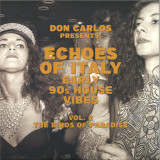
Vol 1[28,99 €]
Googling “paradise house”, the first results to pop up are an endless list of European b&b’s with whitewashed lime façades, all of them promising “…an unmatched travel experience a few steps from the sea”. Next, a little further down, are the institutional websites of a few select semi-luxury retirement homes (no photos shown, but lots of stock images of smiling nurses with reassuring looks). To find the “paradise house” we’re after, we have to scroll even further down. Much further down.
It feels like yesterday, and at the same time it seems like a million years ago. The Eighties had just ended, and it was still unclear what to expect from the Nineties. Mobile phones that were not the size of a briefcase and did not cost as much as a car? A frightening economic crisis? The guitar-rock revival?! Certainly, the best place to observe that moment of transition was the dancefloor. Truly epochal transformations were happening there. From America, within a short distance one from the other, two revolutionary new musical styles had arrived: the first one sounded a bit like an “on a budget” version of the best Seventies disco-music – Philly sound made with a set of piano-bar keyboards! – the other was even more sparse, futuristic and extraterrestrial. It was a music with a quite distinct “physical” component, which at the same time, to be fully grasped, seemed to call for the knotty theories of certain French post-modern philosophers: Gilles Deleuze, Félix Guattari, Paul Virilio... Both those genres – we would learn shortly after – were born in the black communities of Chicago and Detroit, although listening to those vinyl 12” (often wrapped in generic white covers, and with little indication in the label) you could not easily guess whether behind them there was a black boy from somewhere in the Usa, or a girl from Berlin, or a pale kid from a Cornish coastal town.
Quickly, similar sounds began to show up from all corners of Europe. A thousand variations of the same intuition: leaner, less lean, happier, slightly less intoxicated, more broken, slower, faster, much faster... Boom! From the dancefloors – the London ones at least, whose chronicles we eagerly read every month in the pages of The Face and i-D – came tales of a new generation of clubbers who had completely stopped “dressing up” to go dancing; of hot tempered hooligans bursting into tears and hugging everyone under the strobe lights as the notes of Strings of Life rose up through the fumes of dry ice (certain “smiling” pills were also involved, sure). At this point, however, we must move on to Switzerland.
In Switzerland, in the quiet and diligent town of Lugano, between the 1980s and 1990s there was a club called “Morandi”. Its hot night was on Wednesdays, when the audience also came from Milan, Como, Varese and Zurich. Legend goes that, one night, none less than Prince and Sheila E were spotted hiding among the sofas, on a day-off of the Italian dates of the Nude Tour… The Wednesday resident and superstar was an Italian dj with an exotic name: Don Carlos. The soundtrack he devised was a mixture of Chicago, Detroit, the most progressive R&B and certain forgotten classics of old disco music: practically, what the Paradise Garage in New York might have sounded like had it not closed in 1987. In between, Don Carlos also managed to squeeze in some tracks he had worked on in his studio on Lago Maggiore. One in particular: a track that was rather slow compared to the BPM in fashion at the time, but which was a perfect bridge between house and R&B. The title was Alone: Don Carlos would explain years later that it had to be intended both in the English meaning of “by itself” and like the Italian word meaning “halo”. That wasn’t the only double entendre about the song, anyway. Its own very deep nature was, indeed, double. On the one hand, Alone was built around an angelic keyboard pattern and a romantic piano riff that took you straight to heaven; on the other, it showcased enough electronic squelches (plus a sax part that sounded like it had been dissolved by acid rain) to pigeonhole the tune into the “junk modernity” section, aka the hallmark of all the most innovative sounds of the time: music that sounded like it was hand-crafted from the scraps of glittering overground pop.
No one knows who was the first to call it “paradise house”, nor when it happened. Alternative definitions on the same topic one happened to hear included “ambient house”, “dream house”, “Mediterranean progressive”… but of course none were as good (and alluring) as “paradise house”. What is certain is that such inclination for sounds that were in equal measure angelic and neurotic, romantic and unaffective, quickly became the trademark of the second generation of Italian house. Music that seemed shyly equidistant from all the rhythmic and electronic revolutions that had happened up to that moment (“Music perfectly adept at going nowhere slowly” as noted by English journalist Craig McLean in a legendary field report for Blah Blah Blah magazine). Music that to a inattentive ear might have sounded as anonymous as a snapshot of a random group of passers-by at 10AM in the centre of any major city, but perfectly described the (slow) awakening in the real world after the universal love binge of the so-called Second Summer of Love.
For a brief but unforgettable season, in Italy “paradise house” was the official soundtrack of interminable weekends spent inside the car, darting from one club to another, cutting the peninsula from North to centre, from East to West coast in pursuit of the latest after-hours disco, trading kilometres per hour with beats per minute: practically, a new New Year’s Eve every Friday and Saturday night. This too was no small transformation, as well as a shock for an adult Italy that was encountering for the first time – thanks to its sons and daughters – the wild side of industrial modernity. The clubbers of the so-called “fuoriorario” scene were the balls gone mad in the pinball machine most feared by newspapers, magazines and TV pundits. What they did each and every weekend, apart from going crazy to the sound of the current white labels, was linking distant geographical points and non-places (thank you Marc Augé!) – old dance halls, farmhouses and business centres – transformed for one night into house music heaven. As Marco D’Eramo wrote in his 1995 essay on Chicago, Il maiale e il grattacielo: “Four-wheeled capitalism distorts our age-old image of the city, it allows the suburbs to be connected to each other, whereas before they were connected only by the centre (…) It makes possible a metropolitan area without a metropolis, without a city centre, without downtown. The periphery is no longer a periphery of any centre, but is self-centred”.
“Paradise house” perfectly understood all of this and turned it into a sort of cyber-blues that didn’t even need words, and unexpectedly brought back a drop of melancholic (post?)-humanity within a world that by then – as we would wholly realise in the decades to come – was fully inhuman and heartless. A world where we were all alone, and surrounded by a sinister yellowish halo, like a neon at the end of its life cycle. But, for one night at least, happy."
Ordina ora e ordineremo l'articolo per te presso il nostro fornitore.

Color Vinyl[59,87 €]
Unverfälschter, kaputter Art-Punk aus San Diego's Gravity-Szene Mitte der 90er Jahre. Hier gibt es drei Alben von Clikatat Ikatowi - "Orchestrated And Conducted By...", "River Of Souls", und eine erstmalige Vinyl-Pressung ihres 1993er Demos, alle neu abgemischt und remastered von den analogen Originalbändern. Das 24-seitige Begleitbuch enthält Tony Rettmans farbenfrohen Essay mit Dutzenden von Fotos und Flugblättern aus dieser Zeit, die die Geschichte einer Stadt und einer Szene erzählen, die die spätere Form des kommenden Lärms definierte.
dovrebbe essere pubblicato su 21.03.2025

Black Vinyl[57,35 €]
Unverfälschter, kaputter Art-Punk aus San Diego's Gravity-Szene Mitte der 90er Jahre. Hier gibt es drei Alben von Clikatat Ikatowi - "Orchestrated And Conducted By...", "River Of Souls", und eine erstmalige Vinyl-Pressung ihres 1993er Demos, alle neu abgemischt und remastered von den analogen Originalbändern. Das 24-seitige Begleitbuch enthält Tony Rettmans farbenfrohen Essay mit Dutzenden von Fotos und Flugblättern aus dieser Zeit, die die Geschichte einer Stadt und einer Szene erzählen, die die spätere Form des kommenden Lärms definierte.
dovrebbe essere pubblicato su 21.03.2025

LP in printed inner sleeve. The Joy of Coincidences is the debut album from the intriguing Barcelona-born and raised musician and singer-songwriter of British and German descent. The songs are stories and related feelings that reflect upon mankind observed through our eyes in different circumstances. This reflection is told through intimate music coming from folk-inspired pop.
The Joy of Coincidences is the debut album from the intriguing Barcelona-born and raised musician and singer-songwriter of British and German descent. Within the midst of movement, noise and chaos of the city, Bianca Steck searched for calmness and silence in order to write these twelve songs. Whether in a bar, on a tram, under a tree in a park, on a bench or on the balcony of her little apartment in Brussels overlooking the square, there must always be room for curiosity regarding the world we live in. Hence, this album was born through her compelling need for a conscious observation of our society and surroundings.
The songs are stories and related feelings that reflect upon mankind observed through our eyes in different circumstances and the consequent understanding of ourselves along this process. This reflection is told through intimate music coming from folk-inspired pop. Rooted in classical tradition, Bianca Steck chooses instruments such as harp, cello, double bass, upright piano, and flugelhorn and blends these warm sounds with synths, omnichord, drums, electric bass... in a very delicate way in order to create a dreamy landscape of sound. This carefully chosen music together with lyrics that tell real down to earth stories seen through the eyes of her imaginary world are the realm of this work.
BiancaSteck sees coincidences as small and playful interruptions of our everyday concerns, of life. We live in extremely uncertain times where many worries reign over our minds and there needs to be some kind of lightheartedness to move forward, to survive. Within all this complex spiral of thoughts, in the Joy of Coincidences the essential seed of simplicity prevails over the existential crisis.
The album is produced together with Catalan pianist and composer Nil Ciuró and features guest appearance Hania Rani with whom Bianca Steck toured as a support act across London, Paris, Berlin, Utrecht, Antwerp and other European cities and venues.
All demos were recorded in her apartment in Brussels with very simple means and were later on recorded in a studio in the mountains of Catalunya.
dovrebbe essere pubblicato su 14.03.2025

The very first Grammy winning artist in Reggae history, MYKAL ROSE is the voice of the greatest days of Black Uhuru. He’s responsible for hit songs such as ’Guess Who’s Coming To Dinner’, ‘Sinsemilla’ or ‘Sponji Reggae’. Thanks to Sly & Robbie, Mykal Rose and Black Uhuru have been a turning point into Reggae history, giving to the four corners of world the raw and brutal sound of Jamaica early 80’s violent political crisis, far from Bob Marley refined and sophisticated music.
40 years after he left the group, Mykal Rose returns with ‘Rain And Blood’, a new single that could have been taken from another Sly & Robbie-produced Black Uhuru album. In a 1986 proto- digital reggae style, Swiss reggae powerhouse THE 18TH PARALLEL recorded an early dancehall-roots-reggae riddim with none other than the legendary Robbie Shakespeare himself on bass. Mixed by today’s finest sound engineer from Jamaica, Gregory Morris (Protoje, Lila Ike, Mortimer,...), ‘Rain And Blood’ combines the best of modern reggae sound with an impeccable groovy riddim inspired from back in the days. On top of this, the finest horns section of the new Jamaican music scene, TOPP BRASS, graces us with a timeless instrumental cut called ‘Red Sky’. This is heavyweight reggae at its best!
dovrebbe essere pubblicato su 07.03.2025

Kid Katana Records teamed up with SNK, Dotemu and Leikir Studio to release Metal Slug Tactics OST, a return of this iconic franchise renewed in a dynamic tactical RPG.
This edition includes:
→ 2x 12-inch orange vinyls featuring the 37 tracks in the game
→ exclusive gatefold designed with game-related graphics and glossy 90s finish
This OST was fully composed by Tee Lopes, the talent behind the music of TMNT: Shredder’s Revenge, Sonic Mania and Streets of Rage 4: Mr X’s Nightmare. He crafted a solid piece of music perfectly fitting the colorful and intense gameplay.
dovrebbe essere pubblicato su 21.02.2025

Ordina ora e ordineremo l'articolo per te presso il nostro fornitore.

Vol 2[28,99 €]
Volume 1 of this expertly curated project of 90s Italian House - put together by Don Carlos.
If Paradise was half as nice… by Fabio De Luca.
Googling “paradise house”, the first results to pop up are an endless list of European b&b’s with whitewashed lime façades, all of them promising “…an unmatched travel experience a few steps from the sea”. Next, a little further down, are the institutional websites of a few select semi-luxury retirement homes (no photos shown, but lots of stock images of smiling nurses with reassuring looks). To find the “paradise house” we’re after, we have to scroll even further down. Much further down.
It feels like yesterday, and at the same time it seems like a million years ago. The Eighties had just ended, and it was still unclear what to expect from the Nineties. Mobile phones that were not the size of a briefcase and did not cost as much as a car? A frightening economic crisis? The guitar-rock revival?! Certainly, the best place to observe that moment of transition was the dancefloor. Truly epochal transformations were happening there. From America, within a short distance one from the other, two revolutionary new musical styles had arrived: the first one sounded a bit like an “on a budget” version of the best Seventies disco-music – Philly sound made with a set of piano-bar keyboards! – the other was even more sparse, futuristic and extraterrestrial. It was a music with a quite distinct “physical” component, which at the same time, to be fully grasped, seemed to call for the knotty theories of certain French post-modern philosophers: Gilles Deleuze, Félix Guattari, Paul Virilio... Both those genres – we would learn shortly after – were born in the black communities of Chicago and Detroit, although listening to those vinyl 12” (often wrapped in generic white covers, and with little indication in the label) you could not easily guess whether behind them there was a black boy from somewhere in the Usa, or a girl from Berlin, or a pale kid from a Cornish coastal town.
Quickly, similar sounds began to show up from all corners of Europe. A thousand variations of the same intuition: leaner, less lean, happier, slightly less intoxicated, more broken, slower, faster, much faster... Boom! From the dancefloors – the London ones at least, whose chronicles we eagerly read every month in the pages of The Face and i-D – came tales of a new generation of clubbers who had completely stopped “dressing up” to go dancing; of hot tempered hooligans bursting into tears and hugging everyone under the strobe lights as the notes of Strings of Life rose up through the fumes of dry ice (certain “smiling” pills were also involved, sure). At this point, however, we must move on to Switzerland.
In Switzerland, in the quiet and diligent town of Lugano, between the 1980s and 1990s there was a club called “Morandi”. Its hot night was on Wednesdays, when the audience also came from Milan, Como, Varese and Zurich. Legend goes that, one night, none less than Prince and Sheila E were spotted hiding among the sofas, on a day-off of the Italian dates of the Nude Tour… The Wednesday resident and superstar was an Italian dj with an exotic name: Don Carlos. The soundtrack he devised was a mixture of Chicago, Detroit, the most progressive R&B and certain forgotten classics of old disco music: practically, what the Paradise Garage in New York might have sounded like had it not closed in 1987. In between, Don Carlos also managed to squeeze in some tracks he had worked on in his studio on Lago Maggiore. One in particular: a track that was rather slow compared to the BPM in fashion at the time, but which was a perfect bridge between house and R&B. The title was Alone: Don Carlos would explain years later that it had to be intended both in the English meaning of “by itself” and like the Italian word meaning “halo”. That wasn’t the only double entendre about the song, anyway. Its own very deep nature was, indeed, double. On the one hand, Alone was built around an angelic keyboard pattern and a romantic piano riff that took you straight to heaven; on the other, it showcased enough electronic squelches (plus a sax part that sounded like it had been dissolved by acid rain) to pigeonhole the tune into the “junk modernity” section, aka the hallmark of all the most innovative sounds of the time: music that sounded like it was hand-crafted from the scraps of glittering overground pop.
No one knows who was the first to call it “paradise house”, nor when it happened. Alternative definitions on the same topic one happened to hear included “ambient house”, “dream house”, “Mediterranean progressive”… but of course none were as good (and alluring) as “paradise house”. What is certain is that such inclination for sounds that were in equal measure angelic and neurotic, romantic and unaffective, quickly became the trademark of the second generation of Italian house. Music that seemed shyly equidistant from all the rhythmic and electronic revolutions that had happened up to that moment (“Music perfectly adept at going nowhere slowly” as noted by English journalist Craig McLean in a legendary field report for Blah Blah Blah magazine). Music that to a inattentive ear might have sounded as anonymous as a snapshot of a random group of passers-by at 10AM in the centre of any major city, but perfectly described the (slow) awakening in the real world after the universal love binge of the so-called Second Summer of Love.
For a brief but unforgettable season, in Italy “paradise house” was the official soundtrack of interminable weekends spent inside the car, darting from one club to another, cutting the peninsula from North to centre, from East to West coast in pursuit of the latest after-hours disco, trading kilometres per hour with beats per minute: practically, a new New Year’s Eve every Friday and Saturday night. This too was no small transformation, as well as a shock for an adult Italy that was encountering for the first time – thanks to its sons and daughters – the wild side of industrial modernity. The clubbers of the so-called “fuoriorario” scene were the balls gone mad in the pinball machine most feared by newspapers, magazines and TV pundits. What they did each and every weekend, apart from going crazy to the sound of the current white labels, was linking distant geographical points and non-places (thank you Marc Augé!) – old dance halls, farmhouses and business centres – transformed for one night into house music heaven. As Marco D’Eramo wrote in his 1995 essay on Chicago, Il maiale e il grattacielo: “Four-wheeled capitalism distorts our age-old image of the city, it allows the suburbs to be connected to each other, whereas before they were connected only by the centre (…) It makes possible a metropolitan area without a metropolis, without a city centre, without downtown. The periphery is no longer a periphery of any centre, but is self-centred”.
“Paradise house” perfectly understood all of this and turned it into a sort of cyber-blues that didn’t even need words, and unexpectedly brought back a drop of melancholic (post?)-humanity within a world that by then – as we would wholly realise in the decades to come – was fully inhuman and heartless. A world where we were all alone, and surrounded by a sinister yellowish halo, like a neon at the end of its life cycle. But, for one night at least, happy.
Ordina ora e ordineremo l'articolo per te presso il nostro fornitore.

The Durutti Column, Linda Perhacs, Penguin Cafe Orchestra, Judee Sill. Hello and welcome to Decide Which Way The Eyes Are Looking, the new record by Lina Tullgren. It is a deeply gorgeous intervention, a carefully ornamented dilemma, the most inviting crisis. Made with a host of Los Angeles musicians, Decide exposes Tullgren's daring and trust. Each song is a ring of curious sound: the skip of harp strings, the flutter of woodwinds, the ratchet of percussion, the euphonium's sigh. And at the center of each wreath, Tullgren sings, finding this space between Judee Sill and Sam Jayne. It's a tone that signals weariness, but a weariness hand-in-hand with tenacity. There's a clarity, a kind of immovability. Lina Tullgren's first record came in 2016, a homemade, under-the-skin set of laments. Subsequent LPs and constant touring cemented Tullgren's reputation as a composer of "wide-eyed wonder paired with a resonant despair." 2019's Free Cell showed Tullgren lingering in the margins of their songs, finding places both aloof and spare. Floodgates opened; Tullgren spent the subsequent years exploring deep listening, improvised music, and extended technique. They developed a patience and faith in cooperation that ranged at the far edge of song. Collaborations with Mayo Thompson and Claire Rousay furthered this development. This was not a break with the past for Tullgren, rather it was an opportunity to see how far a song could go. And from that distance, deep in a landscape of drone and tension, Tullgren returned to the bright vulnerability of a lyric and a hook. Weaving together the affective and the radical, Tullgren took the quiet isolation of a shoreline cabin to write the songs that would become Decide Which Way The Eyes Are Looking. For Tullgren, Decide is a culmination of all the work they've done throughout their life: the melodic, the dense, the confessional, the unknowable. It's also a tribute to collaboration. Describing the sessions as having "a lot of space and a lot of ease,"" Tullgren invited musicians from a vast field of songmaking to play on the recording: Leng Bian, Zach Burba, Luke Csehak, Corey Fogel, Jenny Hirons, Tara Milch, Tim Ramsey, Michael Sachs, Jude Tedaldi, Marta Tiesenga and Ben Varian. Jonny Kosmo's backhouse was offered as a cozy, easygoing space for the players to create their parts together, and the record was completed by Tullgren and Luke Csehak together at their Los Angeles home. In Tullgren's words: "I feel really strongly that this album is a portrait of the community I found in Los Angeles." Decide Which Way The Eyes Are Looking is a quiet masterpiece: a generous, memorable journey. It is the result of five years of labor, the product of abandoning the pop song entirely and starting over. Whatever wanderings or doubt fueled it, Decide is also entirely at ease: a record on which Tullgren sings "and I know/what to do now" and "I know exactly what to do" in subsequent songs, clear in the revelations this path has given the
dovrebbe essere pubblicato su 07.02.2025

The follow up release to last years Times & Places Volume 1, which sold out in super quick time has the same four artists, each bringing their own style of old skool rave goodness to the table.
Gridzone gets us off and running with beautiful pads and an oh so familiar soothing female vocal sample. But don’t let this fool you, the harsh amens are just round the corner and when they drop, you will know about it.
Midlife Crisis has similar energy levels in their offering, the breaks are more chopped and more in a jungle vein.
On the flip is the highlight of this EP. NewKiller drops a jungle-techno stormer. 4/4 kicks with high speed breaks, hoover sounds and horror film samples. Its like 1993 all over again. Finally the EP ends with a ragga tinged rudeboy of a stepper from Gold Soundz.
Ordina ora e ordineremo l'articolo per te presso il nostro fornitore.

*press Release From David Katz*
The Hardest Working Reggae Band In Southern England, Dubheart Is On A Mission To Spread Messages Of Peace, Love, Unity And Resistance Through A Heady Stew Of Contemporary Roots Reggae, Delivered On Live Instruments With A Hefty Dose Of Dub In The Mix. Cool Under Pressure, Their Latest Offering, Is The Band's Most Compelling Set To Date, A 'showcase'-style Album Where Every Vocal Track Is Followed By Its Dub Counterpart, And The Vital Contribution Of The Brassica Horns—from Rising London Ska Band Chainska Brassica—is Another Intriguing Element That Makes This Album Tougher Than The Rest.
Drawing On The Foundations Laid By Jamaican Stalwarts Such As Burning Spear, Dennis Brown And Culture, Dub Pioneers Like Scientist And Jah Shaka, Plus Newer Vanguards Such As Tarrus Riley, Grounation And Conscious Sounds, Dubheart Has Crafted A Distinctly Appealing Style That Is Very Much Their Own, Based On The Organic Presentation Of Their Musical Vision. Indeed, This Fully Self-contained Five-piece Is Firmly Engrained In The Neo-roots Movement Of The Present, With A Sound That Faces Ever Forwards.
The South Coast-based Band Was First Formed Back In 1999, And Slowly Built A Following Through Their Intense Live Performances, Which Always Harnessed A Live Dub Element. Their First Ep, the Solid Foundation Rhythm,' Issued On Their Own Karnatone Label In 2011 And Featuring Dub Mixes By Russ D Of The Disciples, Became A Regular Part Of Jah Shaka's Live Playlists. It Was Followed By The 7' 45, we Chant,' Featuring The Band's Charismatic Bristol-based Lead Singer, Tenja (who Originally Hails From France), The Track Becoming An Underground Anthem In Japan (via Rob Smith, Aka Rsd). Dubheart's First Album, Mental Slavery, Was Released In 2013, A Momentous Year That Also Saw The Band Win The European Reggae Contest Staged By Rototom Sunsplash, Leading To A European Tour With Festival Appearances At Summerjam (germany), Reggae Sun Ska (france), Overjam (slovenia), Sudoweste (portugal), United Islands (czech Republic) And The Sardinia Reggae Festival, As Well As Rototom In Spain. Then, In 2015, Karnatone Issued The Dub Companion To Mental Slavery, Mixed Down In A Heavy Dubwise Fashion By Drummer Gavin Sant, Otherwise Known As Fullness, The Band Was Then Invited To Participate In The Bbc Television Show, The Uk's Best Part-time Band, Leading To Their Ep Of Cover Tunes, 2016's full Time Pressure,' Again With Dub Versions From Fullness. part Of The Band's Appeal Lies In Its Tightness As A Recording And Performing Unit, When You See Them Live, You Understand That This Band Of Brothers Is On A Higher Mission, United In Their Wish To Use Music As A Means Of Upliftment. And That Sentiment Is Entirely Evident On Cool Under Pressure. The Melodic Bass Grooves Of Mark Shepherd Act As The Perfect Buffer To The Furious Rolls And Expressive Drum Patterns Of Fullness, David 'daddy U' Mountjoy Adds Scintillating Melodies On Keyboards, Including Some Delightful Wurlitzer Lines, And Richard Ramsey's Guitar Licks Tend Towards The Understated, Aside From The Occasional Solo Pyrotechnics, As Heard Here On rocky Road.' And On Songs Like can't Wait,' watcha Gonna Do' And The Title Track, The Brassica Horns Add Further Melodic Depth Through Fanfares Of Treble Brass Texture. with The Rhythms Laid Entirely Through Live Recording Sessions Cut At Fullness' Home Studio In Bournemouth (with Horn And Wurlitzer Overdubs Done Elsewhere), Cool Under Pressure Reveals Dubheart As A Band On The Rise, Heading For Unstoppable Heights.
The Dub Deconstructions On The Disc Allow The Listener To Hear The Exceptional Quality Of Their Playing, Emphasizing Each Member's Individual Talent, While The Lyrics Tackle Subjects We Can All Relate To, With watcha Gonna Do' Addressing Social Inequalities, can't Wait' Alluding To The Refugee Crisis, rocky Road' Imploring Everyone To Hold Strong In Trying Times, And rise Up' Calling For Direct Action Against The Unjust System That Rules Our Lands. Overall, The Outstanding Title Track cool Under Pressure' Really Sums Up The Band's Ethos: The System May Burden Us With The Stresses Of Censure And Control, But Our Obligation Is To Stay True To Ourselves And Resist. And The Music Can Help Us To Achieve This.
Ordina ora e ordineremo l'articolo per te presso il nostro fornitore.

TMNT: Shredder’s Revenge - Radical Remixes is a brand new take on Tee Lopes’ critically-acclaimed OST. This new soundtrack is included in the latest DLC from the multi million-seller game TMNT: Shredder’s Revenge. Several guests were invited to add their own touch: Anamanaguchi, Sean Bialo, Jake Kaufman, Button Masher, Keiji Yamagishi, Tomoya Tomita. Inspired by the 8-bit retro NES aesthetics, this album adds to the TMNT music legacy. Cowabunga!
dovrebbe essere pubblicato su 24.01.2025

Dark Entries has raided the bathhouse to bring us Deep Entries: Gay Electronic Excursions 1979-1985, 10 tracks of obscure queer synth bliss. One of Dark Entries' most important missions has been illuminating neglected facets of gay musical history, with crucial archival works by legends like Patrick Cowley, Sylvester, and Man Parrish. On Deep Entries, the label spans 6 years of gay electronics - from sultry to angsty to camp, these songs are overflowing with snappy 808 snares and sinewy analog synth leads. The '80s were a difficult period for many in the gay community as they grappled with the horrors of the HIV/AIDS crisis. The 10 tracks on Deep Entries, varied in genre and vibe, are united in their portraiture of 1980s gay life, and the hope for love or fleeting romance. Previously unreleased cruising soundtracks come courtesy of Patrick Cowley’s “Love Me Hot” featuring vocalist Paul Parker and Boytronic’s “Tonight (Alternate Mix)” set on Hamburg’s famous “Mile of Sin.” Brisbane-based Megamen deliver the proto-electroclash number “Designed for Living,” which prefigures Madonna’s Marlene Dietrich rap in “Vogue.” Trans vocalist Paula "Ula" Villagrá declares, “Everyone is gay!” on Muzak’s “Happy Song,” a skittering tecnopop anthem. Dereck Higgins' “This Was Something” rings like a lost Joy Division cut draped in bizarre effects, and Polar Praxis’ “(I Want) To Be Different” is a seething ode to alterity. Nightmoves’ “Nightdrive,” is best known as the brooding instrumental B-side to their epochal “Transdance.” Transistor Jet’s “Master Of The Universe (BW's f-w)”, Maxx Mann’s “Just Like a Razor” and Bachelor’s Anonymous’ “A Stranger’s Bed” are mood music for the pleasures of BDSM and one-night stands. The record comes housed in a retro bathhouse fantasy sleeve designed by Gwenaël Rattke and includes a double-sided poster with photographs and lyrics. Deep Entries arrives on December 1st in honor of World AIDS day, and proceeds will go to the San Francisco AIDS Foundation.

Yabby You aka Vivian Jackson, as singer, songwriter, and producer, has created some of the greatest roots reggae recordings of all time, many of which are rare and among the most sought-after records by serious reggae fans. Dread Prophecy Crucial Cuts is a killer collection of 10 magnificent Vivian Jackson productions featuring himself as Yabby You, his Prophets vocal group, and his discovery, Michael Prophet, including some extended mixes and dubs via King Tubby.
dovrebbe essere pubblicato su 06.12.2024

Tina Records presents Cargo Cult, six tracks from the Musci archives created using an extensive collection of traditional instruments combined with synthesisers and electronics, with remixes provided by Cut Hands and Nokuit.
Italian ethnomusicologist Roberto Musci, active since the mid 80s, has experienced a resurgence in interest since the 2016 Music From Memory compilation 'Tower of Silence', receiving endorsements from disparate influential figures. His music featured in a playlist Ryuichi Sakamoto curated for his favourite Japanese restaurant in New York, as well as in a 2019 Yung Lean playlist for The Opioid Crisis Lookbook.
Cut Hands is the alias of William Bennett, most well known as the originator of the Power Electronics genre with his project Whitehouse. Inspired by Haitian Vodou, under the Cut Hands moniker, Bennett has been exploring rhythm and percussive instrumentation since 2007 with releases on Blackest Ever Black and Downwards.
A film composer by day, Nokuit has developed a distinctive cosmology over a mutating series of releases on underground labels such as wannamarchi.club and NKT. He has performed internationally, including at Cafe OTO as part of a lineup curated by Flora Yin-Wong.
Ordina ora e ordineremo l'articolo per te presso il nostro fornitore.

dovrebbe essere pubblicato su 29.11.2024

NYC duo Straw Man Army return with their third LP, “Earthworks”, to complete a trilogy of records begun with 2020’s “Age of Exile,” and 2022’s “SOS”. Whereas “Age of Exile” dealt with the haunted landscapes of colonial history in the Americas, and “SOS” gave voice to a crisis of the present moment, like a prayer in bewildering times, 2024’s “Earthworks” signals the band’s attempt to close this trilogy by turning their gaze towards the future, where paradox, complexity and contradiction spiral in ascendance to an agonizing pitch. While continuing to develop their own style of anarcho-punk, “Earthworks” finds the band pulling once again from jazz and ambient influences, expanded Krautrock rhythms, and post-rock experiments, with a stronger emphasis on melodic vocals and varied song structures than on previous offerings. Taking cues from the wistful anti-war harmonies of The Byrds and the angry melodies of Zounds, tracks like “Turn the Wheel” and “Second Nature” mark new territory for a group whose messages and methods of experimentation have merged to form a singular sound equally at home on All the Madmen Records or in the spiritual legacy of ESP Disk. “Earthworks” is an album that holds and subverts many contradictions—juggling the weight of melancholy, grief, guilt, impunity, and the yearning for clarity against the backdrop of boiling wrath; the wrath of nature, the occupied, the dispossessed, and of the mind against itself. To quote the track “Spiral” — “Is this all that’s left for us these days? / Apathy and rage?”— Straw Man Army offers this record as a companion to our frustration, our sickness, our despair, and a lifeline for our fugitive attention in the struggle for peace.
dovrebbe essere pubblicato su 29.11.2024

If Katsuhiro Otomo’s Akira were a utopia instead of its opposite, this EP could be a possible sound track. Using the ingredients of classic house as a platform (pianos anyone?), Nick Nikolov‘s imagination as a producer for his new new NKLV project is far too vivid to stay on the beaten track.
The sound design and nerdy attention of IDM and ambient (Clusters) connects with the brazen boogie approach of the French touch, micro-sampling manifestos have to stand up to the weirder moments of signature sounds like Basement Jaxx or KiNK‘s musical side (Heartbeat). Not too far off from his peer‘s early approach, the Bulgarian‘s take is emotionally charged, play- and powerful.
For instance, Speak to Me and No More hit their respective topical nails on the head and the EPs title track Inbetween is sultry serotonin soul. If you are looking for plain and pure euphoria in between all the hardships, happiness is just around the bend.
Ordina ora e ordineremo l'articolo per te presso il nostro fornitore.

dovrebbe essere pubblicato su 22.11.2024
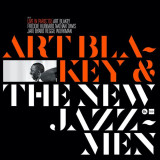
Re-mastered from the original Mono Master Tapes. Limited repress 1000 copies.
180 gr vinyl pressed by Pallas in Germany.
Deluxe high-gloss flipback album jacket.
Essay written by Brian Priestley.
Double insert using an original photo by JP Leloir from the concert.
Artwork by Jean-Louis Duralek.
Each record has been visually checked to prevent defects.
A never-before released Art Blakey 1965 live recordings.
First official release with the full permission and cooperation of the Art Blakey Estate & INA (Institut National de l’Audiovisuel).
Art Blakey, Live in ’65 boasts an exceptional one-hour concert from Paris in 1965. This performance showcases one of the few undocumented Blakey bands, the New Jazzmen, featuring Freddie Hubbard on trumpet, Jaki Byard on piano, Reggie Workman on bass, Nathan Davis on sax, and, of course, Blakey on drums.
Freddie Hubbard’s incendiary playing on “Blue Moon” and the blistering 24-minute version of his own “Crisis” shows that he was one of the most innovative trumpeters in jazz history.
On this live session, the audiences seem to have been enthusiastic and appreciative. “Everywhere we’d go people would say, This is the best Jazz Messengers we’ve heard!”, according to Davis. “And because of the way Jaki would play and Reggie would go, it was like a semi-freedom thing – with Messengers heads, you know, but when we got to soloing…! And Blakey was ridin’ and floatin’ the time…but he would always be loose enough to follow, to keep it going. He’s one helluva musician.”
Recorded at Palais de la Mutualité, Paris, France, November 3, 1965.
Freddie Hubbard (Trumpet)
Nathan Davis (Tenor saxophone)
Jacki Byard (Piano)
Reggie Workman (Bass)
Art Blakey (Drums)
dovrebbe essere pubblicato su 15.11.2024

2024 Repress
Re-mastered from the original Mono Master Tapes. Limited repress 1000 copies.
180 gr vinyl pressed by Pallas in Germany.
Deluxe high-gloss flipback album jacket.
Essay written by Brian Priestley.
Double insert using an original photo by JP Leloir from the concert.
Artwork by Jean-Louis Duralek.
Each record has been visually checked to prevent defects.
A never-before released Art Blakey 1965 live recordings.
First official release with the full permission and cooperation of the Art Blakey Estate & INA (Institut National de l’Audiovisuel).
Art Blakey, Live in ’65 boasts an exceptional one-hour concert from Paris in 1965. This performance showcases one of the few undocumented Blakey bands, the New Jazzmen, featuring Freddie Hubbard on trumpet, Jaki Byard on piano, Reggie Workman on bass, Nathan Davis on sax, and, of course, Blakey on drums.
Freddie Hubbard’s incendiary playing on “Blue Moon” and the blistering 24-minute version of his own “Crisis” shows that he was one of the most innovative trumpeters in jazz history.
On this live session, the audiences seem to have been enthusiastic and appreciative. “Everywhere we’d go people would say, This is the best Jazz Messengers we’ve heard!”, according to Davis. “And because of the way Jaki would play and Reggie would go, it was like a semi-freedom thing – with Messengers heads, you know, but when we got to soloing…! And Blakey was ridin’ and floatin’ the time…but he would always be loose enough to follow, to keep it going. He’s one helluva musician.”
Recorded at Palais de la Mutualité, Paris, France, November 3, 1965.
Freddie Hubbard (Trumpet)
Nathan Davis (Tenor saxophone)
Jacki Byard (Piano)
Reggie Workman (Bass)
Art Blakey (Drums)
dovrebbe essere pubblicato su 08.11.2024

The Wild Classical Music Ensemble is a Belgian experimental rock band formed in 2007 by artists with mental disability within the social-artistic non-profit organisation Wit.h in Kortrijk. Their unique sound is a blend of punk/rock riffs, fanatical rhythms and soaring flutes and fiery synths, over which gravitate multiple, multilingual voices that scratch harshly as much as they comfort. There's something very Belgian about this harshness and noisiness. We often think of compadre Arno, from the TC Matic era. During the Covid crisis, the disabled members of the Wild Classical Music Ensemble were undoubtedly subjected more than others to the harsh conditions of confinement, alone in their rooms. Damien Magnette was still able to visit them with sound equipment. This was one of their all-too-few windows onto the world. Forbidden to meet, let alone play together, the members of Wild were nevertheless able to compose songs in tandem with Damien. The tracks were then sent to musician friends - Fabrice Gilbert, Ava Carrère, Wim Opbrouck, Shht, Arthur Satàn, Nathan Roche and Julien ZLDR - who added their artistic touch. Jean Lamoot and Carl Roosens joined the adventure, one as mixer, the other as video director. It's a result of the conditions under which it was created, this is the band's most highly-produced album, and perhaps its most accessible: frankly rock, with a great deal of freedom in production, and sometimes with a certain pop allure. Jean Lamoot's contribution to the mix had a lot to do with it. In addition, the forced slowdown allowed us to devote much more time and attention to writing the lyrics. Leader Damien Magnette says: "For over a year, we were all confined. But what about when you're a mentally handicapped person? Well, it's very different from you and me... We have the right to choose, the luxury of deciding for ourselves what rules we want to follow or not. We have free will. They don't. This series of confined songs is dedicated to all the people who have gone through this crisis, deprived of their free will. We send them our thoughts, hugs and kisses full of true love! The songs respond to a deep desire to look out for each other in adversity (the so obvious "Comment ça va?" by Johan Geenens and Wim Opbrouck, or "Waarom ben je boos" by Sébastien Faidherbe with Wim Decoene, the latter full of empathy). A sense of loneliness is logically present on the album ("Dat is mijn verdriet" by Linh Pham, a very real, very concrete and particularly touching poem, or "Loneliness", whose text was improvised by Wim), if not an understandable rage ("Je ne veux pas" and "My Frustrations"). It worth noting that on "On reste heureux", Sébastien Faidherbe composed all the parts in one go, with an optimism that stands out from the anger expressed in his other songs. Let's make no mistake: none of this is really over. All these emotions, suffering, pain and hope, speak to us far beyond this grim story of covid.
dovrebbe essere pubblicato su 25.10.2024

One True Pairing, auch bekannt als Tom Fleming, ehemaliger Songwriter, Sänger und Multiinstrumentalist von Wild Beasts, veröffentlicht sein zweites Soloalbum 'Endless Rain' am 25. Oktober 2024 über Domino.
Aufgenommen in Dublin im Jahr 2022 mit Produzent John 'Spud' Murphy (Lankum, black midi, caroline) in den Hellfire Studios in Dublin, bekräftigt "Endless Rain" mutig Flemings künstlerische Vision - mit einem herbstlichen, suchenden und oft erhebenden Album, das von den Einflüssen traditioneller Musik, Klassik und Noise-Rock geprägt ist. Flemings langjähriger Kollaborateur Josh Taylor-Moon arrangierte, produzierte und spielte auf dem Album, ebenso wie Cormac MacDiamarda von Lankum und Eleanor Mylor von Percolator. Klanglich ist "Endless Rain" ein ehrgeiziges und weiträumiges Album, das sich deutlich von Flemings bisherigem Werk abhebt. Das Album enthält die bereits veröffentlichten und hochgelobten Singles "Frozen Food Centre", "Mid-Life Crisis" und "Be Strong".
Flemings Songs haben sich stets mit Ideen rund um Männlichkeit auseinandergesetzt - die traurige und verführerische Musik von Wild Beasts unterlief die akzeptierten Rollenbilder junger Männer aus dem Norden. Nun älter und weiser, nutzt "Endless Rain" diese Basis, um neues Terrain zu erkunden, tritt einen Schritt zurück, schaut tiefer und verwendet die neu gewonnenen Erfahrungen, um etwas völlig anderes zu erschaffen.
dovrebbe essere pubblicato su 25.10.2024

Frequent collaborators V Don & Ransom team up yet again to bring you their new album Chaos Is My Ladder 2 - this time tapping in with Griselda’s Conway The Machine. Ransom and Conway each bring their A-game, lacing each of the 10 tracks with their signature bars and flawless lyricism. V Don sets the scene with his gritty production that will leave you nodding your head to each beat. Lloyd Banks rounds out the new drop as the sole feature and does not disappoint. This album is already being heralded as an Album of the Year contender, and after one listen you will know why
dovrebbe essere pubblicato su 25.10.2024
