Suche:cross record

Styles
Alle
HONOUR - ALAAFIA LP

HONOUR

ALAAFIA LP

12inchPANLPC1121
PAN RECORDS
24.09.2025

Honour's debut album is a ligament stretching from Lagos to London and to New York, curling across the diaspora and brushing the darker hues of blues, hip-hop, free jazz, ambient, gospel with Christian mythology and Yoruba folklore. As cinematic as it is painterly, Alàáfíà is a meditation on themes of life, death and love that pulls inspiration from the unexpected poetic profundity of casual conversations, field recordings, literature, ephemera, or personal archives. The result is an impressionistic vision in Black and Blur that both exhausts and implicates language_substantiating a mythos proposed by Fred Moten that sublimates boundaries between everywhere and nowhere; history and the present; the individual and the universal. Alàáfíà delineates a gothic landscape cut by overdriven beats, swooping orchestral blasts, choral bursts and ear- splitting fuzz, where the fleshly and spiritual realms commune. Dedicated to Honour's late grandmother, the title track began to take form after their last embrace and remains steeped in her influence and spirit_a tape-saturated composition that starts in Lagos and ends in London's smoke-stained cityscape, the song's dream-like quality developed out of the artist's grief and PTSD coping with this loss. Beneath the stretched guitar drones and stuttering loops, their grandmother's shared faith bubbles to the surface. "When Angels Speak of Love," borrows its title from two works by Sun Ra and bell hooks, respectively. Sculpting echoes of praise music into disorienting spirals perforated with syrupy DJ Screw-inspired breaks and sharp splinters of melancholic guitar, "When Angels Speak of Love" engages a conceptual dialogue with the spirits of both late thinkers, folding them into Honour's pantheon of ancestral guides. The album's ninth track, "Giz Aard ($uckets)," is a dirge of regimented drums which anchor this somber melody as it whirls into a blizzard of heartache, uncertain if its consequence will be death or eternal joy. The album's sole lyrical offering, "Pistol Poem (Lead Belly)," begins with a darkly humorous bar, "He went thru hell and back/ came back/ 2 get the strap," that swells into a haunting allegory based on the life of Philip "Hot Sauce" Champion. A modern take on the Blues, Honour's lyrics reify the artist's status as a student of both literature and popular culture, crossbreeding the artist's clever wordplay with additional references to Richard Pryor, Robert Johnson, Kelly Rowland & Bryon Gysin. Setting core principles of hip-hop, R&B, jazz and gospel music to atemporal soundscapes and compositions, Honour crafts a record that marinates in its own knotty contradictions. The ghosts that sit on the artist's shoulders have never been more tangible than with this emotive debut.

nicht am Lager

Bestelle jetzt und wir bestellen den Artikel für dich beim Lieferanten.

27,52

Last In: vor 7 Monaten
D Stone - Time selection EP

D Stone debuts on Heist Recordings with a record that shows us why he's one of the hottest talents in house music right now

Chloe Caillet is in on it. Cinthie is in on it. SG lewis and Demi Riquísimo are in on it too. So are Folamour, Barry Can't Swim and, of course, Dam Swindle. In on what exactly?

In on the fact that D Stone might be the most exciting young producer and DJ you will find in the house scene right now. Oh, and he's also a great guy who says Heist was his dream label to release on. When we found out we were fans of on each other, it was only logical that we signed his 'Time Selection' EP; A 5-track record that shows us how cool and catchy underground house music can be if it's done well.

D Stone, born Daan Steenhuizen has had a meteoric rise in the scene in the past years and has only just finished his study at the Conservatory, where Lars was one of his mentors. His vinyl debut was on Cecille in 2023 with that absolute anthem 'Total unison'. He then released on Cinthie's 803 Crystal Grooves in 2024 and has a busy 2025 with releases on Chloe Caillet's label Smiile, Semi Delicious, a release planned for Barry Can't Swim's fresh label 'Earth's only paradise' and now, Heist. He's been touring relentlessly in between, already playing legendary places like Ibiza's Pikes, Amsterdam's Shelter and with big shows planned at Warehouse project and in Australia, you can just feel all the right things happening for him.

The 'Time Selection' EP kicks off with 'Yes I Am', an upbeat house track with plenty of hints of the old school, playful vocal chops and above all, some lovely piano work. It's stripped back, but full of energy, with driving 909 percussion, retro flutes and a rolling bass line. It's as much a pallet cleanser in a set as it is a teasing mid-set highlight.

'Move Over' features the vocals of ELY and sees D Stone dive deeper into vintage house territory, with a classic bassline and percussion that stays true to the core of the classic drum machines, hinting as much towards the electro-pop sound of New Order and the futurism of early Mr. Fingers releases. The vocal is daring and cute at the same time, and does a great job tapping into the nostalgia of the pop-house cross-over songs of the early 90s.

'Time Selection' is arguably the heaviest cut of the record, much in style of his breakthrough track 'Total Unison'. This track is built around a strong piano theme, supported by driving 909 drums, strings and cleverly placed disco bleeps to keep the track accessible and uplifting. Add to that a big breakdown, and you'll understand why we've been reaching for this track peak set for the past months.

On the flip, we've got 'One Thing', a subtle and introverted track built around a bumpy disco bassline with a hook that's silly on first listen but will end up being the one thing you'll keep humming for the rest of the day. In short, it's a banger in disguise.

The last track of the EP is 'Everything from the Organ', a track where D Stone is not afraid to show his love for throwback ravey elements. There's organ licks, horns and chopped vocals that propel you straight to the front-left of whichever dancefloor D Stone is reigning at that moment.

Don't sleep on the Heist debut of one of Amsterdam's biggest talents, cause this one will go like hot cakes! As always, enjoy the music and play it loud!

Yours, Maarten & Lars

nicht am Lager

Bestelle jetzt und wir bestellen den Artikel für dich beim Lieferanten.

11,72

Last In: vor 3 Monaten
RABBATH ELECTRIC ORCHESTRA - AMALL

François and Sylvain Rabbath have turned six years of touring into a joint album that patiently and intensely distills a variety of musical flavors gathered from around the world.

Since the early 1960s, François Rabbath's double bass has resonated through enough landmark recordings to fill several shelves in a record collection. As an arranger, composer, and musician, his imprint on music goes far beyond his collaborations with Barbara, Paco Ibáñez, Charles Aznavour, or Édith Piaf. Aspiring double bassists owe him a groundbreaking method for learning the instrument. Born into a lush musical universe that quickly became his own, his son Sylvain first accompanied him on his travels before settling at the piano and sharing stages around the world at his side.

Those years of accumulating visas in their passports were put to good use by father and son. The continents, countries, and cities they passed through became a rich source of inspiration for composing Amall, the album by the Rabbath Electric Orchestra.

Long hours spent in the air or on the road, watching passing landscapes that never stayed the same, were transformed into compositions imbued with the atmospheres of the places they crossed or visited. Inspiration sometimes struck with force, like a green oasis appearing in a desert of stone—unexpectedly, as glowing red rocks suddenly dominated an otherwise open landscape with an endless horizon, while the mind wandered into a state between meditation and introspection.
Born from these travels, the pieces took on their final colors once brought into the studio, refined, and finally arranged to welcome the guitars of Keziah Jones and Matthieu Chedid, the piano of Laurent de Wilde, the bass of Victor Wooten, the saxophone of Raphaël Imbert, and the percussion of Minino Garay. Enhanced by the scale of the jazz-soul orchestrations, by the richness of arrangements bursting from strings, brass, rhythms, or keyboards, the epic breath of vast plains became ingrained. The urban tension of funk, echoing their movements, found its place—alongside more electric expressions or the ambience of a darkened room.
Melancholic and melodious, expressive and edgy, the bowed double bass—played in the high register where few dare to go—emerged as the musical guide. One that draws a path between Seville and Minneapolis, connects François Rabbath's native Syria to France, and bridges South America to Europe. It sets the tone to follow—the emotion that will carry the piece, and if not filled with light, will carry it there nonetheless.
Musical visions packed in luggage, transported in cargo holds, or imprinted in their minds just long enough to cover the distances to the next stop—father and son deepened their bond, beyond family and art. And their hands have never held each other more tightly.

François et Sylvain Rabbath ont fait fructifier six ans de tournées pour un album commun distillant patiemment et intensément la variété de parfums musicaux récoltés autour du monde.
Depuis le début des 60’s, la contrebasse de François Rabbath résonne dans assez de références pour combler plusieurs étagères d’une collection de disques. Arrangeur, compositeur, musicien, l'empreinte laissée dans la musique va bien au-delà de ses collaborations avec Barbara, Paco Ibanez, Charles Aznavour, ou Edith Piaf. C’est à lui que les
apprentis contrebassistes doivent une méthode novatrice pour apprendre l’instrument.

Né dans un univers musical luxuriant qui est vite devenu aussi le sien, c’est d’abord dans ses voyages que son fils Sylvain l’a accompagné, avant de s’installer au piano, et parcourir les scènes du monde à ses côtés. Ces années où les visas se sont entassés sur leurs passeports, père et fils les ont mises à profit. Continents, pays, et villes qui se sont succédés sont devenues un gisement pour composer Amall, l’album du Rabbath Electric Orchestra.

Les longs moments passés dans les airs ou sur la route à contempler un paysage qui défile sans pour autant rester le même, se sont convertis en compositions habitées par les ambiances de ces endroits traversés ou visités. Là où l’inspiration s’est imposée parfois brutalement, sous
la forme d’un oasis de verdure surgissant au milieu d’un désert de pierres. Au hasard d’imposantes roches rougeoyantes s’invitant dans un paysage jusqu’alors dégagé sur un horizon sans fin, quand l’esprit se laisse aller à un mélange de méditation et d'introspection.

Nés de ces pérégrinations, les titres ont pris leurs couleurs définitives une fois ramenés en studio, peaufinés puis, enfin, pensés pour y inviter les guitares de Keziah Jones et de Matthieu Chedid, le piano de Laurent de Wilde, la basse de Victor Wooten, le saxophone de Raphaël Imbert, les percussions de Minino Garay. Sublimé par la dimension des orchestrations jazz-soul, par la richesse des arrangements jaillissant des cordes, des cuivres, des rythmiques ou des claviers, le souffle épique des plaines immenses s’est imprimé.
La nervosité citadine du funk rythmant les déplacements a trouvé sa place, non loin d’une expression plus électrique ou d’une atmosphère de salle obscure.

Mélancolique et mélodieuse, expressive et nerveuse, la contrebasse jouée à l’archet, dans les notes hautes du manche où peu s’aventurent, s’est érigée en guide musical. Celui qui trace le chemin entre Séville et Minneapolis, relie la Syrie natale de François Rabbath à la France,
réduit la distance entre l’Amérique du Sud et l’Europe. Donne la note à suivre, l’émotion qui traversera le morceau qui, s’il n’est pas habité par la lumière, le portera néanmoins jusque là.

Visions musicales mises dans le coffre, transportées en soute ou imprimées dans l’esprit le temps de couvrir les distances qui les mèneront aux prochaines, c’est côte à côte que père et fils ont prolongé leur lien par delà des seules limites familiales et artistiques. Et leurs mains ne se sont jamais serrées aussi fort.
credits

vorbestellen19.09.2025

erscheint voraussichtlich am 19.09.2025

20,59
Kyoto Jazz Massive - KJM EOANDO LP

In 2024, Kyoto Jazz Massive released their third album as a digital-only project, 30 years after their debut. It now receives the honor of a special vinyl edition, featuring brand-new exclusive mixes by Young Pulse—elevating these already great tracks to even greater heights, for both your ears and your feet.
This marks the first and exclusive collaboration between KJM and Echoes Of A New Dawn Orchestra (aka Jéroboam), the unique Parisian band that has been performing live with KJM across Europe for the past three years. On this occasion, KJM recorded four new tracks with EOANDO, including three original songs ("Power", "Love Wars", and "Impulsive Procession") and a new rendition of “Stand Up”, a previously released composition. To complete the album, you'll also find a stunning cover of KJM’s iconic track "Substream" by EOANDO, as well as their signature piece, “EOANDO's Theme”.
"Power" and "Stand Up" were recorded with Vanessa Freeman, while "Love Wars" features Bembe Segue. This London-based duo has been singing live with KJM since 2004.
"Power" is a crossover anthem, blending jazz-funk and French disco with a gospel touch. Vanessa Freeman’s uplifting lyrics call for collective awareness and energize audiences. "Love Wars" is a live-band interpretation of broken beat with a boogie spirit, enhanced by Bembe Segue’s sharp and spiritual vocals. “EOANDO’s Theme” was specially composed by Echoes Of A New Dawn Orchestra for KJM, capturing the Okino Brothers' love for boogie-funk jams with Brazilian and Balearic influences reminiscent of Azymuth.
“Impulsive Procession” fuses Afro, funk, jazz, fusion, soul, rock, house, and techno—drawing inspiration from several of KJM’s most respected musical heroes. A brand-new version of “Stand Up”, originally released in 2008, was re-recorded live in the studio with EOANDO and fresh vocals by Vanessa Freeman.
The album closes with a reimagined version of “Substream”, one of KJM’s most beloved tracks, covered by EOANDO for the official Tokyo Crossover/Jazz Festival 2023 compilation. This new version was recorded as an organic disco interpretation at Danilo Plessow’s studio in Paris.

nicht am Lager

Bestelle jetzt und wir bestellen den Artikel für dich beim Lieferanten.

18,91

Last In: vor 4 Monaten
Amtrac - Just (Remixes)

Crosstown Rebels reignites Amtrac’s ‘Just’ with fresh remix package, featuring Patrice Bäumel.
Landing 29th August 2025, the emotive 2019 track is reimagined with a powerful take from Bäumel plus a Club Mix from Amtrac himself.

Damian Lazarus welcomes Kentucky-born, Los Angeles-based artist Amtrac to Crosstown Rebels for a special revisit of his much-loved track ‘Just’, originally released in 2019 on his label OPENERS. The 2025 remix package brings fresh interpretations crafted for the dancefloor courtesy of acclaimed German-born, Lisbon-based producer Patrice Bäumel, alongside Amtrac’s own extended Club Mix.
Known for his fearless musical evolution, Amtrac, real name Caleb Cornett, has carved a reputation for bridging genres with emotion-led dance music that resonates both on and off the dancefloor. Revisiting ‘Just’ with Crosstown Rebels marks a new chapter in the track’s journey, opening it up to a new wave of club-ready reinterpretations.

As the original’s shimmering melodies meet fresh layers of rhythm and energy, the result is a record that resonates with both nostalgia and forward motion.
Leading the charge, Patrice Bäumel steps up with a stunning remix that transforms the original into a hypnotic, high-impact dancefloor weapon. Drawing on his storied history of creating euphoric moments on the world’s biggest stages with material on labels such as Kompakt and Cocoon, Patrice infuses his unmistakable, tension-building style, layering driving grooves with cinematic textures. Speaking on the remix,

Rounding out the package, Amtrac himself delivers his own Club Mix, reimagining ‘Just’ with extended energy and a refi ned arrangement built for peak-time sets, highlighting his ever-evolving approach to production and delivering his own vision for the record when transformed for dancefloors.

nicht am Lager

Bestelle jetzt und wir bestellen den Artikel für dich beim Lieferanten.

13,24

Last In: vor 4 Tagen
Harry Roesli - Remiks

Harry Roesli

Remiks

12inchLMR028
Lamunai Records
12.09.2025

Legendary Indonesian musicianHarry Roesligets a fresh dancefloor-ready tribute with a special"Remiks"EP on vinyl, featuring four tracks reinterpreted by four top-notch producers from two countries.

From Indonesia,KomodoandMidnight Runnersbring their signature grooves, while Japan'sKaoru InoueandChidaadd their own unique flavor to the mix. This limited edition release, out onAugust 25, 2025, is brought to you byLamunai RecordsandMondo.

This isn't just another remix/re-edit EP it's a cross-cultural celebration of Harry Roesli's wildly eclectic sound, reimagined for today's global dance floors. From cosmic disco, deep house to techno textures, each producer offers a personal yet respectful take on Harry's original works, introducing his genius to a new generation of listeners.

"We wanted to shine a light on Harry Roesli's music in a way that connects with DJs, collectors, fans, and crate diggers around the world," says a rep from Lamunai Records. "These remixes breathe new life into his legacy timeless melodies meet modern club energy."

TheEP will be available in limited-edition vinyl starting August 25, perfect for collectors, selectors, and anyone looking to add something truly special to their set.

Get ready for a rare fusion of Indonesian roots, Japanese electronic finesse, and serious dancefloor vibes. Let's celebrate the past by dancing into the future.

nicht am Lager

Bestelle jetzt und wir bestellen den Artikel für dich beim Lieferanten.

23,49

Last In: vor 7 Monaten
Tapper Zukie - M.P.L.A.

Tapper Zukie

M.P.L.A.

12inchKSLP042
Kingston Sounds
12.09.2025

If any album could conjure up the revolutionary spirit of Jamaica in the mid 1970’s, Tapper Zukie’s invincible M.P.L.A. set would surely be a fighting contender. The coming together of great rhythms and meaningful lyrics in a time of unrest in the country seemed to have made the album all the more urgent and relevant. As time would tell it would also prove to be a lasting success, not only with the hard core reggae fans but also their punk counterparts. Who embraced its militant themes and crossed the album over to a whole new audience. Tapper Zukie (b. David Sinclair, Kingston, Jamaica.) had already returned from a trip to London England by the mid 70’s .Initially sent with help from his parents, brother Blackbeard and producer Bunny ‘Striker’ Lee to remove the youth from his troublesome ways on the streets of Kingston, Jamaica. He had performed some live shows in London and made some recordings for Larry Lawrence, that produced his debut ‘Jump and Twist’. Alongside other recordings that would emerge as his ‘Man A Warrior’ set. But feeling homesick he had returned to Jamaica in 1974 to work with Bunny Lee. His work would consist of arranging sessions and collecting payments to bodyguard, the now very successful producer. His frustration of Bunny Lee’s reluctance to record him led him cutting ‘Judge I Oh Lord’ for producer Lloydie Slim. Bunny Lee’s then recording of Tapper’s ’Natty Dread Don’t Cry’ and its subsequent release aboard, led to an altercation between Tapper and producer. The police had to be called and an offer to provide the singer with a set of rhythms put this matter to rest. The eight rhythms and a further two from Jo Jo Hookim and Ossie Hibbert alongside some free studio time at King Tubby’s Studio would result in the M.P.L.A album.

The rhythm provided by Jo Jo Hookim was a Channel One studio cut by The Revolutionaires based on Little Richards ‘Freedom Blues’ and provided the backdrop to M.P.L.A. The Ossie Hibbert rhythm again cut at Channel One based on The Royals ‘Pick Up The Rockers’ would provide the backdrop to Tapper’s ‘Pick Up The Rockers’. These and the remaining Bunny Lee rhythms, were all cut in a one hour session, at King Tubby’s Studio. ’Don’t Get Crazy’ cut on a rhythm based on the Joe Frazier rhythm to Tony Brevett’s ‘Don’t Get Weary’. ‘Go De Natty’ cut on Cornell Campbell’s ‘Please Be True’, originally a cut to Alexander Henry’s ‘Please Be True’. ‘Stop The Gun Shooting’ runs over Horace Andy’s ‘Skylarking’.’Ital Pot’ cut on Johnny Clarke’s version of Burning Spear’s ‘Creation Rebel. ‘Marcus’ see’s Tapper professing over Johnny Clarke’s ‘Poor Marcus’ .’Chalice To Chalice’ pulls on Johnny Clarke’s ‘Give Me a Love’,’ Don’t Deal With Babylon’ answers Junior Ross and The Spears ‘Babylon Fall’ and ‘Freedom’ rides on the great rhythm of Junior Ross and The Spears ‘Liberty’. An outstanding album cut by one of Jamaica’s finest DJ’s and producers the mighty Tapper Zukie. We hope you enjoy this now timeless set.

nicht am Lager

Bestelle jetzt und wir bestellen den Artikel für dich beim Lieferanten.

13,03

Last In: vor 13 Jahren
Various - Convergence Chapter 2

The second in Void+1's "Convergence" vinyl-series, "Chapter 2", is a unique, must-have, mini-compilation with a variety of crossover-styles by Tensal, Scalameriya & Cam Lasky, Znzl, Liza Aikin & Monolog.
"Convergence Chapter 2" includes tracks from V+1020D, V+1021D, V+1022D & V+1023D.

nicht am Lager

Bestelle jetzt und wir bestellen den Artikel für dich beim Lieferanten.

11,72

Last In: vor 8 Monaten
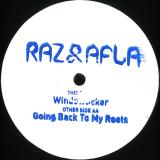
Raz & Afla - Windowlicker / Going Back To My Roots

Wah Wah 45s present two very special cover versions from our beloved Afro-electronic duo, Raz & Afla, available on 12" vinyl for the very first time! Having recently released their sophomore LP, Echoes Of Resistance, to great acclaim and support ranging from Nick Grimshaw on BBC 6 Music to Tash LC on BBC Radio 1, and the follow up remix project Remixes Of Resistance, the pair offer up their unique takes on two very different slices of club culture on twelve inches of wax.

First up, the pair tackle Aphex Twin's sleazy and sinister turn-of-the-century dance floor bomb Windowlicker and take it somewhere completely unexpected, as Raz explains:

"We wanted to go to a different place from our influences for this one. When we told people we will cover this tune everyone said 'but how?!' In Raz & Afla style. We had an idea of what elements to recreate from the original and how we can reference it within our spectrum of sounds. It was so much fun to do and really kicks off at our live shows."

It's a heavily percussive reinterpretation, replete with spooky wordless vocals, funky guitars and spine tingling synths that builds into something of a future Afro-house anthem, whilst respecting the genius of the original recording.

On the flip, Going Back To My Roots has become a mainstay in Raz & Afla's live sets, and means a lot to them personally, as Raz once again explains:

"We love this song. The lyrics resonate with us, talking about the meaning of connection to a land and its people. The history of this song is also fascinating, from Hugh Masekela and Orlando Julius through Odyssey and Richie Havens. We wanted to give it our own flavour. You can't choose your heritage and where you are born. It is always a part of you and we like to celebrate that."

Written and first recorded by Lamont Dozier in 1977, Going Back To My Roots was famously covered by Richie Havens in 1980 before becoming a huge crossover hit when interpreted by disco outfit Odyssey in 1981. Raz & Afla very much give their version their own unique dance floor feeling. It's one which has received much support on BBC 6 Music.

nicht am Lager

Bestelle jetzt und wir bestellen den Artikel für dich beim Lieferanten.

14,50

Last In: vor 6 Monaten
YS - BURN

YS

BURN

12inchPERF000
Perf
12.09.2025

Sticking a dirty thumb in the eye of fate, our third collaboration sees this marrow deep family malarky turn official as Pace Yourself teams up with YS’s own imprint ERF REC for a split release. As if our status as minor celebrities and footnotes of the underground could level off no further: the unification no one asked for is here. Sticking it to the man, handing your arse to ya on plate; cauterising infected suburban minds world over.

Burn is the second YS album and written as a direct follow-up album to Brutal Flowers. If their first album was an exercise in the incremental, a construction of poise and patience, Burn, should be taken way the fuck at it’s word: it quite literally finds catharsis in twisted reverse. Birthed out the malignant kick found in deconstruction and chaos. Evil twin, psychotic younger sibling, call it what the hell you like. It might take you a moment to get the lay of the land in this darkly mutated world. Like a bug eye’d native first confronted with a zippo, the hit is radical and instant: a new way for the world to go up in smoke.

Splice the Seattle slacker scene with the spliffhead soundsystem culture of the 90s Bristol trip-hop scene, then cross-breed that with the DIY optimism and glee in creation found in the cut-and-paste worlds of skate, graffiti and hiphop, now run that through the skitzo basement mind of John.T. Gast and you’re close to the kind of scorched earth and spiked suburbia that birthed Burn.

Dunno quite what YS have been ingesting of late but this massively twisted LP touches on a host of gloriously fucked totemic underground sources while not sounding much like any of them. It has the ballsy swagger and hard flipping of the script as Massive Attack’s seminal Blue Lines. Indeed, the eponymous album tracks sound similar - the opener ‘Burn’ is like a hard nosed jammed out redux of ‘Blue Lines’. Getting into a kind of slow-spinning overdubbed maximal euphoria ending with mumbled downer vocals, struggling to conceal their tongues in their cheeks there’s an air of paranoia and proto-conspiracy theory. It’ll leave you scratching your head, feeling like you’ve stepped into a New World Order governed by a cacophony of drop outs, dope fiends and apocalyptic stoners. A cracked out world somewhere between Richard Linklater’s movie Slacker (1990) and Marc Singer’s Dark Days (2001).

The rest of the album parts like a tongue on a wine glass: Smith and Mighty, Bandulu, ambient Luke Slater records, Wah Wah Wino, Nurse with Wound, Land of the Loops, Placid Angels, Adrian Sherwood, Urban Tribe and DJ Shadow can all be heard in momentary splatters - but Burn like other works by YS, is its own ritual beast. ‘Moth’, a track which has been knocking about the underground deejai circuit for many moons, is a real raw chopped and screwed slice of stoner erotica that reeks of obsession and unrequited desire. Elsewhere, on tracks like ‘Switch’, ‘Trying’ and ‘Drift’ the throughline from Brutal Flowers can be heard. Underneath the driving heavy gravity the trademark emotional intimacies of YS linger: eternal recurrence, ghosts of static and shortwave, worn memories of the playful and painful sort. The brief moments where flashes of orchestral ambience get out from underneath the swagger are so pure, personal and unguarded that for a moment they leave you completely lonesome. In the album’s closer ‘End’, you can hear the fleeting promise and DIY possibilities of an analogue world and embers of ash that flutter in its wake: where it seemed, for a brief moment, that collective of DJs, engineers, rappers, graffiti artists and skate crews were emerging from the streets, giving the middle fingers to the system, before just as quickly disappearing back to the doldrums of obscurity. ‘End’ is a bittersweet ode to early soundsystem culture, MCs and pirate radio - an out of step time where for a moment the underdogs and weirdos seemed to be kicking on the door of something bigger.

A veritable teenage doof suite dosed with desire, claustrophobia and deviance. Burn is a good old howl at the moon: lonely, raw, and out for blood; basement style exegesis at its best. A thump to the gut, a stud through your blood. A dubbed-to-death classic straight out of the annals of nowhere. A perfect post card from oblivion. A bleak, bold and personally ferocious vision of tomorrow and tomorrow and tomorrow.

This is everything that record collectors skip dates for. Fuck the scene and keep that shit underground. That’s what it is all about. Know what I mean, if you do? You’re in…

nicht am Lager

Bestelle jetzt und wir bestellen den Artikel für dich beim Lieferanten.

23,32

Last In: vor 6 Monaten
STEF KAMIL CARLENS - BO WHO YOU WANNA BE LP

STEF KAMIL CARLENS

BO WHO YOU WANNA BE LP

12inchSMR449
STARMAN Records
12.09.2025

The song sets the tone of this album. A simple structure, over which a web of rhythm is woven using an instrumentation of old drum machines in dialogue with live drums and percussion. Lots of sax, tenor and baritone! A pumping bass. A frisky pizzicato violin. And some classic keyboards: the Fender Rhodes, the Hohner Clavinette D6, the L-100 Hammond organ. And lots of analogue synthesisers: a rippling Juno-106 marks the path to follow, which is crossed with phrases from other museum pieces: Crumar's Stratus, Farfisa's Synthorchestra, Sequential's Prophet-10. Or still the Casio Club M-100, which is basically a toy, but has been subtly colouring SKC's songs for years!

SKC has often dived deep into the repertoire of artists he holds in high esteem, looking for pearls, forgotten or not, to work on. Likewise on this album with versions of songs by Prince, Dez Mona, Alain Bashung…

vorbestellen12.09.2025

erscheint voraussichtlich am 12.09.2025

23,95
Various - Dolores: Salsa & Guaracha From 70's French West Indies

In Guadeloupe, many people think that jazz and ka music are like a ring and a finger. To some extent, the same could be said about so called Latin music and the music played in the French West Indies.

Both aesthetics were born in the Caribbean and bear so many connections that they can easily be considered cousins. In constant dialogue, there are lots of examples of their fruitful alliance and have been for a while. The English country dance that used to be practiced in European lounges came to be called kadrille in Martinique and contradanza in Cuba. They both featured additional percussion instruments inherited from the transatlantic deportation. Drawing from shared feelings about the same traumatized identity – later to be creolized – it would be hard not to assume that they were meant to inspire each other. The golden age of the orchestras that graced the Pigalle nights during the interwar period further proves the point. As soon as the 1930s, Havana-born Don Barreto naturally mixed danzón and biguine music in a combo based at Melody's Bar. In the following decade, Félix Valvert, a conductor who was born and raised in Basse-Terre in Guadelupe, also worked wonders in Montparnasse with La Coupole, which was an orchestra made up of eclectic musicians. Afro- Caribbean performers of various origins were often hired on rhythm and brass sections in jazz bands, which used to enliven the typical French balls of the capital. In the 1930s and onwards, Rico’s Creole Band was one of them.


Martinican violinist-clarinettist Ernest Léardée, who would become the king of biguine music as well as the main figure of French Uncle Ben's TV commercials (a dark stigma of post-colonial stereotypes), had musicians from the whole Caribbean sphere play at his Bal Blomet – and they all enchanted "ces Zazous-là" (according the words of Léardée's biguine-calypso piece). In les Antilles (French for French West Indies), music history started to speed up in the 1950s, when trade expanded and radio stations grew bigger. The Guadelupean and Martiniquais youth tuned in their old galena radio sets to South American and Caribbean music. As for the women traders, les pacotilleuses, they bought and sold goods across different islands (the "passing of items through various hands" was thought to be most pleasurable) and brought back countless sounds in their luggage. Such was the case of Madame Balthazar, who once returned from Puerto Rico with the first 45rpm and 33rpm to ever enter Martinique.

Out of this adventure was created the famous Martinican label La Maison des Merengues, a music business she opened and undertook with her husband and which proved to be a major landmark. At the end of the 1950s, in Puerto Rico, Marius Cultier competed in the Piano International Contest playing a version of Monk's Round 'Midnight. He won the first prize and this distinction foreshadowed everything that was to come. Cultier, the heretic Monk of jazz, was quickly praised for writing superb melodies, always tinged with a twist that conferred a unique sound to his music. It didn't take long for the gifted self-taught musician to get to play with Los Cubanos, making a name for himself thanks to his impressive maestria on merengues.

The rest is history. Besides, in the late 1950s, Frantz Charles-Denis, born into the upper middle class in Saint-Pierre and better known by his first name Francisco, went back home after working at La Cabane Cubaine – a club located rue Fontaine where he had caught the Latin fever. Francisco's music was therefore heavily marked by his Cuban cousins' influence, which gave the combos he led a specific style and also led to renewal. Things were swinging hard in La Savane, located in the main square in Fort-de-France. He set up the Shango club close by and tested out the biguine lélé there, a new music formula spiced up with Latin rhythms. Soon afterwards, fate had him fly to Puerto Rico and Venezuela.

As for percussionist Henri Guédon (percussions were only a part of his many talents), he was born in Fort-de-France in May 22nd 1944, the day marking the celebration of the abolition of slavery. As an old man, he could remember that in " his father's Teppaz, a lot of hectic 6/8 music was constantly playing...". In the opening lines of his Lettre à Dizzy, a small illustrated collection of writings published by Del Arco, he highlighted the huge impact that cubop had on him as a teenage boy, around 1960. He eventually turned out to be the lider maximo in La Contesta, a big band steeped in Latin jazz. He was also the one who originated the word zouk to describe music which brought the sound of the New York barrio to Paris. It was the culmination of a journey that started in Sainte-Marie: "a mythical place for bélé, the equivalent of Cuban guaguancó". In the early 1960s, the tertiary economy developed to the detriment of agriculture. Yet rural life was where roots music emerged in Martinique and in Guadeloupe.

Record companies played a major part in the process of Latin versions sweeping across the islands – before reaching everywhere else. Producer Célini, boss of the great Aux Ondes label, and Marcel Mavounzy, both the head of Émeraude records - a firm which was founded in 1953 - as well as the brother of famous saxophonist Robert Mavounzy, were big names to bear in mind. Although there were many of them - all of whom are featured on this record - Henri Debs was definitely the major figure in the recording adventure. He proved to be so influential that he even got compared to Berry Gordy. In the mid 1950s, when he acquired his first Teppaz, he worked on his first compositions: a bolero and a chachacha. Then, he became the one man who made people discover Caribbean music, from calypso to merengue. He was among the first ones to rush out to San Juan, Puerto Rico, to buy records and distribute them through a store run by one of his brothers in Fort-de-France. He had members of the Fania All Star come and perform there, which he was madly proud about. He was also the first one to pay attention to Haitian music, such as compas direct and various other rhythms which would soon flood the market. As a result, many of the combos hitting his legendary studio would end up boosted by widespread "Afro-Latin" rhythms. However, he never denied his identity: gwo ka drums were given a major role, although they were instruments which had long been banned from the "official" music spheres. The present selection bears witness to such a creative swarming. Here are fourteen tracks of untimely yet unprecedented cross-fertilization: all types of music rooted in the Creole archipelago have found their way, whatsoever, to the tracklisting. Whether originating from the city or being more rural, they all go back to what Edouard Glissant, in an interview about the place of West Indian music in the Afro-American scope, called "the trace of singing, the one which got erased by slavery." "It is so in jazz, but also in reggae, calypso, biguine, salsa... This trace also manifests through the drums, whether Guadelupean, Dominican, Jamaican or Cuban... None of them being quite the same. They all point to the idea of a trace, seeking it out and connecting to each other through it. This is the hallmark of the African diaspora: its ability to create something new, in relation to itself, out of a trace. It may be the memory of a rhythm, the crafting of a drum, a means of expression which doesn't resort to an old language but to the modalities of it." The opening track features one of the emblematic orchestras of this aesthetic identity, criscrossing many music types from the archipelago. The 1974 Ray Barretto guajira – Ray Barretto was a major New York drummer influenced by Charlie Parker and Chano Pozzo – is magnificently performed by Malavoi, a legendary Fayolais group (i.e from Fort-de-France). Additionally, the compilation ends on a piece by Los Martiniqueños de Francisco. It symbolically closes the circle as it is a genuine potomitan of Martinique culture which also functions as a tireless campaigner for Afro-Caribbean music. Practicing the danmyé rounds (a kind of capoeiria) to the rhythm of the bèlè drum, it delivers a terrific Caterete, a kind of champeta of Afro- Colombian obedience which was originally composed by Colombian Fabián Ramón Veloz Fernández for the group Wgenda Kenya. The icing on the cake is Brazilian Marku Ribas, who found refuge in Martinique in the early 1970s, bringing his singing to the last trance-inducing track. These two "versions" convey the whole tone of a selection composed of rarities and classics of the tropicalized genre, swarming with tonic accents and convoluted rhythms. It is the sort of cocktail that the West Indians never failed to spice up with their own ingredients. For instance, the Los Caraïbes cover of Dónde, a famous Cuban theme composed by producer Ernesto Duarte Brito, has a typical violin and features renowned Martinique singer Joby Valente and his piquant voice.


The track used to be – or so we think – their only existing 45rpm. The meaningful Amor en chachachá by L'Ensemble Tropicana, a band which included Haitian musicians among whom was composer and leader Michel Desgrotte, also recalls how Latin music was pervasive in the tropics in the mid-1960s. They were the ones keeping people dancing at Le Cocoteraie in Guadelupe and La Bananeraie in Martinique. Around the same time, another "foreign" band, Congolese Freddy Mars N'Kounkou's Ryco Jazz, achieved some success on both islands by covering Latin jazz classics – such as their adaptation of Wachi Wara, a "soul sauce" by Dizzy Gillespie and Chano Pozo whose interweaving of strings and percussions can have anyone hit the dancefloor. How can you resist Dap Pinian indeed, a powerful guaguancó by Eugene Balthazar, performed by the Tropicana Orchestra and published by the Martinique-founded La Maison des Merengues? It also acts as a symbol of the maelstrom at work. Going by the name Paco et L'orchestre Cachunga, Roger Jaffory used to play guaguancó too: his Fania-inspired Oye mi consejo is one example of his style. Baila!!!!! Dancing was also one of the Kings' focus points. Oriza is a Puerto Rican bomba and a "classic" originally composed by Nuevayorquino trumpeter Ernie Agosto, which reserves major space for brasses, giving it a special sheen.

Emerging from the New York barrios crucible was also La Perfecta, a Martinique group originating from Trinidad, whose name directly references the totemic Eddie Palmieri figure as well as his own band, also called La Perfecta. Here they borrow Toumbadora from Colombian producer and composer Efraín Lancheros and interpret it by emphasizing percussions, which set fire to the track even more than the wind instruments. The same goes for Martinique's Super Jaguars, who use Tatalibaba – a composition by Cuban guitarist Florencio "Picolo" Santana which was made famous by Celia Cruz & La Sonora Matencera – as a pretext for sending their cadences into a frenzy. In a more typically salsa vein, the Super Combo, a famous Guadelupean orchestra from Pointe-Noire that was formed around the Desplan family and had Roger Plonquitte and Elie Bianay on board, adapt Serana, a theme by Roberto Angleró Pepín, a Puerto Rican composer, singer and musician also known for his song Soy Boricua. Here again, their vision comes close to surpassing the original. In the 1970s, L'Ensemble Abricot provided a handful of tracks of different syles, hence reaching the pinnacle of the art of achieving variety and giving pleasure. They played boleros, biguines, compas direct, guaguancó and even a good old boogaloo - the type they wanted to keep close to their hearts for ever, "pour toujours", as they sang along together in one of their songs. Léon Bertide's Martinican ensemble excelled at the boogaloo which had been composed by Puerto Rican saxophonist Hector Santos for the legendary El Gran Combo.


Three years later, in 1972, Henri Guédon, with the help of Paul Rosine on the vibraphone, tackled the Bilongo made famous by Eddie Palmieri. Such a classic!!!!! And so were the Aiglons, the band from Guadelupe: choosing to execute Pensando en tí, a composition by Dominican Aniceto Batista, on a cooler tempo than the original, they noticeably used a wonderfully (un)tuned keyboard in place of the accordion. On the high-value collectible single – the first one released by Les Aiglons under the Duli Disc label – there is a sticker classifying the track under the generic name "Afro". Now that is what we call a symbol. Jacques Denis


nicht am Lager

Bestelle jetzt und wir bestellen den Artikel für dich beim Lieferanten.

21,43

Last In: vor 55 Tagen
gab_i / GATELESS - glinted 01

glinted’s first release pairs Copenhagen based producer gab_i with Amsterdam newcomer GATELESS. Across 43 minutes of shimmering sound, glinted 01 puts into dialogue the rawness of illbient low-ends & electroacoustic experiments, with the precision of contemporary ambient electronics. Let it wash over you.
glinted 01 is for fans of 3XL, Sferic, Asphodel & Mille Plateaux.

Mixed & Mastered by Michael James Thomas at Studio Moonchord
Vinyl distribution by One Eye Witness
Artwork by James Crossley 


a A1: gab_i – June (unvoiced) [3:40]
[b] A2: gab_i – Amber1 [4:22]
[c] A3: gab_i – Missing Are My Two Hands [4:10]
[d] B1: GATELESS – GtoX [4:36]
[e] B2: GATELESS – Outer Rail [4:43]
[f] B3: GATELESS – In Light [4:20]

nicht am Lager

Bestelle jetzt und wir bestellen den Artikel für dich beim Lieferanten.

13,87

Last In: vor 4 Monaten
Buscrates - Blasting Off

Neo funk rising star Buscrates aims high with Blasting Off, his first full-length album. The Pittsburgh-based keyboard cosmonaut has been grabbing ears since his days hooking up beats with the hip hop crew East Liberty Quarters, but after slinging spicy one-offs to a slew of hot labels like Omega Supreme, Voyage Funktastique and Razor N Tape (as well as contributing production to Wiz Khalifa and Curren$y's 2009 project), the time has come for a full-length featuring his growing modern funk repertoire.

"I'm a '90s hip hop dude, but I grew up on that '80s funk stuff," Buscrates acknowledges. DJ gigs provided a working knowledge of the jams that moved a contemporary crowd, and as his collection of keyboards and drum machines grew he began blending the best of both decades with his personal futuristic edge. "I was nice on the MPC but I wanted to have a little more dynamic range with what I was doing," he notes. The self-described "certified synth geek" was soon branching into sounds that recalled '80s legend Kashif crossed with the hip hop bounce of DJ Spinna, and the modern funk community took notice.

For his first full-length, Buscrates has crewed up with an ace team of collaborators, featuring vocalist Sally Green on the bouncy lead single "Lost And Found" and "Eight Nine." Kate Moe Dee takes over mic duties for the second single, "How Ya Gonna Do It," a slinky groove that slides in place alongside groups like the Sunburst Band and Rene & Angela as an exemplar of sophisticated R&B. Adding to those credentials are the sultry vocals of Anda on "Believe," but of course, it wouldn't be a Buscrates set without some stank, neck-snapping instrumentals. "Five Days" and "Sure Shot," both collabos with the drum technician DJ Epik, will rattle speakers and have already been lighting up message boards on recent Buscrates DJ sets. Round things out with some easy gliding, jazzy funk ("Turn It Out" with Brothermartino on flute and "Evergreen" featuring Tony Ozier) and you've got all the ingredients for a high-flying cosmic ride with Buscrates at the controls.

nicht am Lager

Bestelle jetzt und wir bestellen den Artikel für dich beim Lieferanten.

23,57

Last In: vor 5 Monaten
New Math - Gardens (Remastered & Expanded Edition)
  • Disc 1
  • 1: The Flesh Element
  • 2: Pipes Of Pan
  • 3: Ominous Presence
  • 4: Living On Borrowed Time
  • 5: Love Under Will
  • 6: Power Of The Air
  • 7: Meets The Eye
  • 8: Break Up The Dance
  • 9: Wild Child
  • 10: Go Devils
  • 11: Double Cross
  • 12: Sometimes Good Guys Don't Wear White
  • 13: The Flesh Element
vorbestellen08.09.2025

erscheint voraussichtlich am 08.09.2025

30,88
Her Wild Love - Wake Up Before The Night Is Over LP
  • High Low Temple
  • Feu Sacré
  • Keep Chins Up
  • Lightly
  • Short Pain, Long Run
  • Nothing's Missing

As with The Limiñanas, rock is here an affair of the heart. Between new wave pleasures, psychedelic sensibilities and nods to the great sixties icons, Her Wild Love maintains the passion, without ever curbing the love of risk. Faithful to its intuitions, the duo refines the contours of a singular style. From Sarah's words to Rafael's notes, the pieces embroidered by Her Wild Love find their own balance. Crossed by cinematographic atmospheres and melancholic effluences, their music evokes the black magic of Mazzy Star, the incantations of PJ Harvey, but also the audacity of a band like Warpaint.

vorbestellen05.09.2025

erscheint voraussichtlich am 05.09.2025

26,01
DJ 3000 - Shotë

DJ 3000

Shotë

12inchMT177
Motech
01.09.2025

DJ 3000 Redefines the Fusion of Detroit Techno and Albanian Identity on New EP Shotë
With over two decades of pushing boundaries, DJ 3000 returns with Shotë — a striking new EP that reaffirms his place at the crossroads of Detroit techno and global rhythm. Out soon on Motech Records, Shotë is a four-track, limited-edition release pressed onto 12” vinyl with vibrant jacket artwork that reflects both his cultural heritage and sonic evolution.
Named after a traditional Albanian folk dance, the title track Shotë anchors the record in deep, ancestral roots while remaining forward-facing, raw, and emotionally resonant. Shotë balances past, present, and future in equal measure.
“I’ve been making records for over 20 years, but I still approach every release like it’s my first. With Shotë, I wanted to honor where I come from without the music sounding nostalgic or dated. The culture’s in there, but the sound is timeless and alive.” —DJ 3000
Each track on the EP tells its own story:
• Shotë – a reimagining of a traditional Albanian rhythm, layered with tough grooves and hypnotic builds.

• Laya – built on hypnotic motion and rolling percussion, its haunting vocal textures hint at deeper rhythmic traditions.

• Lumni – from the Albanian word for “blessed,” it carries a spiritual weight wrapped in rhythm and resolve.

• Qilim – inspired by handwoven Albanian rugs, its detailed arrangement plays like sonic embroidery.

This EP is a continuation of DJ 3000’s mission: to merge deep roots with futuristic form. Shotë represents raw, focused techno that respects the past while refusing to stand still.

nicht am Lager

Bestelle jetzt und wir bestellen den Artikel für dich beim Lieferanten.

13,74

Last In: vor 5 Monaten
Causa Sui - Euporie Tide LP 2x12"

Causa Sui

Euporie Tide LP 2x12"

2x12inchEPR013LP
El Paraiso
29.08.2025
  • 1: Homage 0:08
  • 2: The Juice 6:06
  • 3: Echo Springs 5:06
  • 4: Boozehound 5:20
  • 5: Mireille 7:13
  • 6: Fichelscher Sun 2:15
  • 7: Ju-Ju Blues 6:35
  • 8: Sota El Cel 1:40
  • 9: Euporie 10:54
  • 10: Eternal Flow 9:26

Finally back in print on vinyl and CD after having been unavailable for several years! First released in 2013, Euporie Tide has become the quintessential Causa Sui record over the years. For many fans this 2LP has served as the perfect entry point to the band's multi-faceted oeuvre. And with good reason – from the first notes of ”Homage” to the peaceful closer ”Eternal Flow” the listener is taken on a beatific ride. The band manages to condense an impressive range of influences into these ten tracks. Previous albums were largely centered around lengthy freeform jamming, but on Euporie Tide, this side of the band is carefully dosed to balance concise, almost proggy song structures. Everything fans of the band cherish so much is here in abundance: the fuzzy downtuned desert-rock riffs, the blissed-out, motoric krautrock, the dynamic builds, and the fragments of electric jazz and kosmische that are woven into the compositions.

Euporie Tide was created following collaborative albums with members of Sunburned Hand of the Man (Pewt'r Sessions) and Tortoise (released as Chicago Odense Ensemble), which certainly had a cross-pollinating effect on this set. Rarely does a band from the European stoner rock scene embrace such a wide range of stylistic influences, and twelve years after the album's initial release, Euporie Tide deservedly stands as Causa Sui's crowning achievement.

Deluxe black 2LP edition with heavy sleeve, wrap-around obi strip and pvc-lined inner sleeves.

vorbestellen29.08.2025

erscheint voraussichtlich am 29.08.2025

26,85
FUNKADELIC - FUNKADELIC

Funkadelic

FUNKADELIC

12inchORGMLP2326
ORG Music
29.08.2025
  • Mommy, What's A Funkadelic?
  • I Bet You
  • Music For My Mother
  • I Got A Thing, You Got A Thing, Everybody's Got A Thing
  • Qualify & Satisfy
  • What Is Soul
auch erhältlich

Cassette[14,08 €]

45 RPM EDITION, 2x12"[55,88 €]

TRANSPARENT PURPLE VINYL[31,05 €]


Das 1970 veröffentlichte, selbstbetitelte Debüt von Funkadelic war eine radikale Kollision von psychedelischem Rock, Gospel, Blues und Soul - ein chaotisches, genreübergreifendes Statement, das die Möglichkeiten der schwarzen Musik neu definierte. Wo Motown auf Hochglanz und Crossover-Appeal abzielte, stürzten sich Funkadelic kopfüber in Verzerrungen, Improvisationen und spirituelle Zweideutigkeiten, mit einem Sound, der so düster und unberechenbar war wie die Ära selbst. Unterstützt von einer wilden jungen Band, lehnte das Album Konventionen zugunsten von rohem Groove und existentiellem Lärm ab. Als Teil der Westbound Records Reissue Serie von Org Music stellt diese Ausgabe die volle Wirkung des Albums wieder her. Die Deluxe-Doppel-LP, die von Dave Gardner direkt vom analogen Band mit 45RPM neu gemastert wurde, bietet das bisher beeindruckendste Hörerlebnis dieses Klassikers. Gardner und die Restaurationsspezialistin Catherine Vericolli archivierten und restaurierten die Original-Masterbänder in den 54 Sound Studios in Ferndale, Michigan, mit Unterstützung des hauseigenen Ingenieurs Nick King. Neben CD, Kassette und digitalen Formaten ist auch eine einfache LP-Ausgabe erhältlich, die von hochauflösenden Bandüberspielungen geschnitten wurde. Funkadelic waren zu ihrer Zeit eine klangliche Revolution mit bleibendem Einfluss, ihr selbstbetiteltes Album ist ein bahnbrechendes Zeugnis für Musik ohne Regeln und Freiheit ohne Grenzen.

vorbestellen29.08.2025

erscheint voraussichtlich am 29.08.2025

29,83
Artikel pro Seite:
N/ABPM
Vinyl