Since first splashing on to the Southern California circuit in the mid-aughts, Geneva Jacuzzi (née Garvin) quickly cemented herself as the queen of the Los Angeles underground. Her immersive and unhinged multimedia performances are the stuff of legend, a psychotropic gallery of masks, costumes, confrontation, and massive art installations. Jacuzzi’s recordings are equally revered, catchy hooks and cryptic moods dusted in 4-track grit. The arrival of her third official full-length, and Dais Records debut, is cause for such celebration. Triple Fire vividly expands and crystallizes Jacuzzi’s signature fusion of midnight melody and mutant aerobics across a 12-track hit parade of wildcard synth-pop and sly post-apocalyptic camp. Her enthusiasm for the album is as bold as her body of work: “Halfway through, we started calling this the record of the prophecy, the record that’s going to save mankind.”
Opener “Laps of Luxury” sets the template – a strobe-lit dreamer’s delight of swaggering synth bass, Haçienda drum machinery, and sultry vocal spellcasting (“Tragic mysteries I’ve known for centuries / I burned all memories and turned to fantasy”). The collection burns through shades of sardonic strut (“Art Is Dangerous,” “Nu2U,” “Keep It Secret”), coldwave kiss off (“Speed Of Light,” co-produced by Andrew Clinco of Drab Majesty), retro-futurist body music (“Dry,” “Scene Ballerina,” “Bow Tie Eater”), and cheeky glitterball pop (“Take It Or Leave It,” “Heart Full Of Poison” co-produced by Roderick Edens and Andrew Briggs). She likens the eclectic spectrum of moods to the continuum of human emotions: “Funny, sexy, sad, scary, witty, hopeful, menacing. Eventually it deconstructs, turns into a party, and then ends sweet and soft.”
Taken as a whole, Triple Fire comes as close as any document yet to capturing Jacuzzi’s kaleidoscopic alchemy of pop sugar and chaos energy, flickering between icy and ironic, chic and surreal, hungry and heartsick. Hers is a muse as rare as it is regenerative, forever reborn at the precipice of the next chorus: “Someone said that Alcatraz had fallen into the sea / Almost sounded like an angel calling me in a dream / I felt an electric shock when I picked up the microphone.”
Buscar:crystal ball
After ""Down Two Then Left"" and ""Silk Degrees"", Boz Scaggs again worked with the members of Toto to create Middle Man; another amazing mix of soul, harder rock, slow ballads and catchy songs. The two singles Breakdown Dead Ahead and JoJo were two of his most successful, both reaching the Billboard Hot 100. The album itself reached the US album top 10 and went Platinum. Middle Man is available as a limited edition on crystal clear vinyl and includes an insert.
Vol 1[14,24 €]
Come Play With Me and Breed Media are excited to present Come Play With Breed, Vol. 2. Featuring D5, Graft, Hannah Rowe and Mica Sefia, the 10” compilation spotlights the Northern Hip Hop and Soul scenes respectively. On the A-side, D5’s upbeat UK Rap opener, “What’s That”, is followed by Graft’s reflective Jazz-influenced Hip Hop track “Vows To The Art.” Hannah Rowe opens the B-side with an addictive fusion ballad for old souls. Finally, Mica Sefia closes the release with a powerful narration on her experiences as a black woman.
Artist Bios:
D5
Hailing from Leeds, West Yorkshire, D5 draws influence from the likes of Drake, Skepta and Brent Faiyaz and his sound flits between moody R&B and upbeat Rap that oozes a calm confidence. Elements of genres such as Garage, UK Rap and US Hip-Hop intertwine neatly to create his signature style. A style that crystalised on his 2020 EP Channel 5. Consisting of 8 songs, all helmed by producer and close friend CSHARP, the project is D5 at his most personal and led to the video for lead single ‘Silence’ premiering on Link Up TV and garnering him his highest streams to date. However, before ‘Channel 5’ D5 had created the EP If Only We Could Go Outside during the height of the pandemic. The track ‘Movies’ received airplay from the esteemed BBC Radio 1 Presenter Melvoin Odoom. With backing from the likes of GRM Daily and DJ Target spinning 2022 single ‘What’s Up’ on BBC Introducing, D5’s star is surely set to rise as he continues to develop his artistry. In addition to this, he has opened up for the likes of Novelist and fellow hometown hero Graft, proving with every successive performance and release that he is worthy of being a headline act.
Graft
Graft, winner of MOBO Unsung and BBC Three's The Rap Game UK, has propelled himself to national recognition for his unwavering sense of self and musical talent. Hailing from the vibrant city of Leeds, Graft’s topical and poetic approach to songwriting takes inspiration from genres such as Hip Hop, Neo-Soul, Jazz and Alternative Rap. This fusion of inspiration has seen him grace the stage at the acclaimed Reading and Leeds Festival, and has collaborated with esteemed brands such as Adidas, Virgin Media, Boohoo and Leeds United. Now with this national acclaim, Graft prepares for the release of his highly anticipated EP, Golden Child.
Hannah Rowe
Hannah Rowe’s emotional range transcends generations; the young singer writes about experiences and shifts in life, offering all listeners a sense of reflection within her rich, authentic, jazz-infused sound. Hannah is backed by a group of highly accomplished musicians who happen to be her adored closest friends. After finding one another at university, Sam Hughes on guitar, Luke Harrison on bass, Owen Moriarty on keys and Charlie Tanner on drums intertwined their varied influences to paint their own alluring and soulful sound - one difficult to define, but has been said to resemble the likes of Raye, Lianne La Havas, Moonchild and Yebba.
Mica Sefia
Liverpool born, Leeds-based future-soul Queen Mica Sefia endorses the interpretive nature of music as an art to be studied and related to by the public. Mica’s own exploration of self-expression solidified her passion in the production of a timeless and authentic style of music. Preferring to keep her lyricisms and narrative open to interpretation, Mica relates to a balanced approach to songwriting, in which her music remains subjective, but retains its emotive sensitivity. Mica’s music leans into the genres of Alt Soul, Rock and Jazz intertwining them to create atmospheric sounds and textured layers.
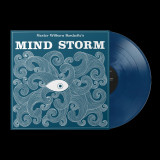
On 1977's Mind Storm, the final album made prior to his emphatic retirement, Burchette employed "pink sound," a phenomenon known in acoustical science to open the mind to thrilling psychic revelations, setting down two side-long pieces forming a reflecting crystal ball for squalls of deep br ain imagery.
- A1: James Clay - New Delhi
- A2: Werner-Rosengren Swedish Jazz Quartet - Bombastica
- A3: Sal Nistico Quintet - Ariscene
- B1: Frank Strozier - The Crystal Ball
- B2: Cannonball Adderley Sextet - Primitivo
- B3: Blue Mitchell - Turquoise
- C1: Sonny Red - The Mode
- C2: Clifford Jordan - Sunrise In Mexico
- C3: Lee Konitz Quintet - Thumb Under
- D1: Mccoy Tyner - Valley Of Life
- D2: Joe Henderson - Earth (Feat Alice Coltrane)
Vol.8 PT2[26,01 €]
Vol.9[22,14 €]
Vol.1[23,49 €]
Vol.13 PT2[23,40 €]
Vol.13 PT1[23,49 €]
Vol.15[26,47 €]
Since 2008 our Spiritual Jazz series has presented unlimited horizons. Each album celebrates the rich tradition of African-American songs based on the belief in a higher force than oneself and has also focused on geographical areas, such as Europe or Japan, thus recognizing that these territories have immense cultural riches. Religions, like Islam, whose musical traditions have vivid Arabic and North African resonances, have also been highlighted. The stylistic range of all the above is wide.
Yet historic record labels, from Blue Note and Impulse! to Prestige and Steeplechase, have also featured because their catalogues are musical treasure troves that could not be more relevant to Spiritual Jazz, even though they issued vast amounts of music between the late '30s and present day, that have not been confined to any one school.
Spiritual Jazz 16 is a focus on Riverside and its associated sister labels. Riverside itself was founded in 1953 by Orrin Keepnews and Bill Grauer, and became an important purveyor in that decade and beyond of what would be marketed as of modern jazz. That coinage was itself an amorphous, umbrella term that essentially created a demarcation from the vocabulary of pre-war classic jazz and inter-war big band swing, thus recognizing that improvising artists were breaking new creative ground that would subsequently give rise to a flurry of sub-genres, for example bebop, hard bop, cool, modal and Latin jazz. And it's from this multiplicity of sub-genres that we choose the deepest, most vibrant selections that the vast, pan-generational catalogue of Keepnews & Grauer has to offer
On a holy roll after the success of their stunning 2023 LP IV: Sacrament, Lancastrian heavy metal apostles Wytch Hazel here ally themselves with the underground pomp wizardry of Phantom Spell for an addictively flippable split seven-inch.). On the flipside, Phantom Spell explore more cryptic vistas with Palantíri, a song about Tolkien’s crystal balls, nailing the arcane, otherworldly vibe of those early
NWOBHM pioneers who used keyboards to project a heightened level of mystical drama.
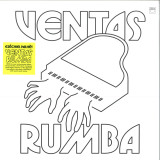
With his new instrumental album Ventas Rumba, the French composer (and singer) returns to his signature instrument, the piano, blending it with warm synth tones. This album represents a "return to his roots ", allowing Ezéchiel Pailhès to reinvent himself in a seamless way while still exploring ballads and ritornellos, halfway between light-heartedness and melancholy. Ezéchiel Pailhès has been meaning to write a solo piano album for as long as he can remember. Hardly surprising, of course, for this academically-trained pianist, brought up on classical music and then studied jazz. Yet, since his 2001 debut with the electro-pop duo Nôze, and his subsequent four albums, the artist had constantly postponed this project that was so close to his heart. Then in 2022, just as he was getting ready to start producing an album of new songs, this long-standing aim finally materialized.
The melodies he wrote seemed to stand on their own naturally, spurring him on to compose this series of fourteen tracks, recorded in sessions split between France and Latvia.
A new piano: the Una Corda
Ezéchiel wanted this project dedicated to the piano to begin a new narrative, to explore new instrumental terrain and new tones, something far removed from the familiar piano he has been playing all his life. He opted for the Una Corda piano, designed by David Klavins, a groundbreaking instrument builder renowned for his distinctive pianos with vertical shapes and frames.
The Una Corda, created in 2014, is an upright piano with a single string per note (unlike three strings on traditional pianos). Enticed by the "crystalline and unique" tones of this instrument, which is hard to find in France, Ezéchiel travelled to Kuldiga, Latvia (where David Klavins set up his workshops and studios), to record the first part of the album. Although the title of the album may initially conjure up images of a distant, sensual dance, the reality is quite different. Ventas Rumba indeed refers to the waterfall and rapids (in Latvian: rumba) of the river Ventas, which runs near this small village in the western part of the country. Ezéchiel chose to blur the lines, as the sound and musicality of the title likely evoke both his short stay in the Baltic country, and also a form of distant exotic imagery perfectly in tune with his own mischievous wit. Tracks as short stories
Back in France, Ezéchiel enhanced the first tracks recorded in Kuldiga with subtle synth tone layers, and added other tracks composed and recorded at his Montreuil studio. The album reflects a deliberate and sensitive orchestration of piano, synth keyboards and digital effects, as he puts it: "playing to erase the differences between the tones of the various instruments", as if each instrument's texture echoed the others. According to Ezéchiel, you can listen to Ventas Rumba as you would leaf through "a collection of short stories", through compositions that rarely exceed three minutes and evoke figures of movement, lightness, curves or modulation, such as "La ligne", "La valse des singes" or "Fly Finger". Others more seriously relate to a kind of spirituality, which quietly infuses such different tracks as "Ferveur", "Éclair" and "Louanges". Ezéchiel adds: “I’m by no means religious, but I like what God has managed to get musicians to achieve (laughs)". "Louanges", for instance, despite its electronic edge, "refers to Olivier Messiaen, a very devout composer who I greatly admire". Other tracks are directly inspired by the classical music he listens to on a daily basis. For example, Chopin's “8th Nocturne” formed the backdrop of “Pianovado”. Likewise, the harmonic structure of Beethoven's “Waldstein Sonata No. 21” inspired “Opus 53”. Aside from these multiple references and inspirations, which quickly recede behind a style that is uniquely his, Ezéchiel Pailhès keeps exploring ideas already found on his first solo albums, this time in an instrumental format, undoubtedly purer, fostering an imaginary world that evokes the shapes and themes of ballads, ritornellos, light-heartedness, passing time, reverie or a universal subdued melancholy.
Cathartic avant-rock, literate DIY folk & experimental composition exploring displacement, love, climate change, belonging & the places we call home - RIYL Jim O’Rourke, Richard Youngs, This Heat, Richard Dawson, Flying Nun. ‘Real Home’ is the new album by the Manchester-born, London-based artist Kiran Leonard. His sixth album proper (not including innumerable tour-only CD-Rs and short-run cassettes), since his precocious debut in 2013, ‘Real Home’ finds Leonard invigorated by inspiration and experience, making passionate, literate, and mercurial music that explores displacement, love, memory, climate change, connections to home and more. Encompassing songs recorded after moving to South London, ‘Real Home’ reflects on ideas of belonging and domesticity through folkloric, stream-of-consciousness songwriting. Across nine tracks, Leonard traces lived impressions of the household and the city, expressing sentiments of dislocation, alienation and stasis, but contentment too. Infusing the avant-rock effervescence, terraced dynamics and visionary lyricism of his music with what he defines as a greater sense of openness, Leonard is as versatile, fervent and imaginative as ever on ‘Real Home’, yet his music is somehow more intimate, affecting, and acutely expressive. Shaped by dual considerations of simplicity and formalism, ‘Real Home’ is by turns beautiful, allusive, and ruminative, an album on which Leonard considers what his songs have resembled in the past and what they mean now. In recent years, Leonard has crafted eloquent chamber music inspired by the likes of James Joyce and Clarice Lispector (‘Derevaun Seraun’), responded to contemporary politics and communication breakdown in the digital age (‘Western Culture’), and compiled solo works and ensemble recordings for a longform ode to Jonas Mekas and to one of Leonard’s enduring themes; home (‘Trespass On Foot’). On ‘Real Home’, Leonard reiterates this abiding thematic focus yet ascends to new, different heights, in music of cathartic delicacy and dissonance where all the myriad dimensions of his work to date seem to crystallize. There are sinuous songs about struggle and defying the pace of city life through drift and diversion (‘Pass Between Houses’), stirring songs of intense feeling and crescendo, described as a form of speculative detective fiction (‘Theatre for Change’). There are touching solo piano ballads (the title track), symbolic contentions with carbon capture and climate change (‘Utopia of Bog’), modes of experimental minimalism (‘Void Attentive’), and other profuse feats of compositional range, embroidered with wild tendrils of narrative and lyrical depth. A record to pore over, and get lost in. Exemplifying the vast aesthetic scope of Leonard’s music, lead single ‘My Love, Let’s Take The Stage Tonight’ is inspired by country lodestar Hank Williams, Russian poetry and a late period love poem by William Carlos Williams. Yet for Leonard, the song signals a sense of accessible materiality, and is the product of a more linear approach to writing songs: “My imitation of the great Hank Williams, in spirit if not in substance…This is one of the best efforts on Real Home at a song-as-object. Looking at it now I realise I was trying to write a song that made itself known as a song to the listener, and I wonder whether that’s crucial if you want a song to transcend its context. And that this is either accomplished through a total openness – by being inviting, by laying the tricks of the song out plain to see, as Williams and his many ghostwriters did so well – or by adopting a knowing aloofness, positioning oneself against the listener but letting it be known that that’s what it’s doing. In this song I try both, but mostly the former: as in, I wanted to write a song where every line follows on from the next.” Imbuing the endlessly elaborate and inventive qualities of his music with a newfound streak of candid, clear-cut melodicism, Leonard has reached a special place in his artistry, on a record that feels familial, and expresses closeness. Assembled with affiliates including Lauren Auder, Otto Willberg, Jasper Llewellyn (caroline), Tom Hardwick-Allan (Shovel Dance Collective), Magda McLean (caroline, The Umlauts), Alex Mckenzie (caroline, Shovel Dance Collective), Isabelle Thorn (Dear Laika) & more, the recording process had a significant influence on the subject matter of ‘Real Home’, in sessions defined by close-knit camaraderie and artistic eccentricity: “The theme of the home obviously recurs throughout the record; the album was mostly recorded in domestic spaces with friends, and the name of the album is Real Home. I like the qualifier ‘real’, like you’re getting past the cloak of the word and towards the thing-itself…also nearly all the percussion in this record was recorded on items from my dad’s shed (jam jars, sandpaper, blocks of wood, etc). Real home record!” ‘Real Home’, like anything by Kiran Leonard, is a record of dazzling multiplicity. Yet it’s a companionable prospect with a central premise; a collection of songs where listeners old and new can find a home. An album led by a scene; of Leonard standing at the threshold, ready to welcome you inside. “Exceptional songs that linger” - The Guardian // “An autodidact of amazing talent & energy” – Pitchfork // “A ridiculous amount of talent…confrontational, celebratory, provocative or perverse – he manages all of these emotions & more” - The Quietus /
Recorded in 1957, Paris.
Original LP issue: Guilde du Jazz J-1239.
When Miles Davis heard Barney Wilen for the first time during a jam session at the Club Saint-Germain in Paris, he exclaimed: “This is the best tenor saxophone I’ve heard in Europe, he plays tenor in an authentic way, much better than many current stars in the States.”
Barney Wilen’s mother was French, his father a successful American dentist-turned-inventor. He grew up mostly on the French Riviera; the family left during World War II but returned upon its conclusion. According to Wilen himself, he was convinced to become a musician by his mother’s friend, the poet Blaise Cendrars. As a teenager he started a youth jazz club in Nice, where he played often.
He moved to Paris in the mid-’50s and worked with such American musicians as Bud Powell, Benny Golson, Miles Davis, and J.J. Johnson at the Club St. Germain. His emerging reputation received a boost in 1957 when he played with Davis on the soundtrack to the Louis Malle film Lift to the Scaffold. Two years later, he performed with Art Blakey and Thelonious Monk on the soundtrack to Roger Vadim’s Les Liaisons Dangereuses (1960). He’s probably the first non-US musician to play at the Newport Jazz Festival – it was in 1959.
In 1957 he made his very first album as leader, The Barney Wilen Quintet for the US label Guilde du Jazz / Jazztone at the age of 20. Unfortunately, this record was not widely distributed in France because Barney was under contract with the French label Vogue. This album reflects joy and sadness on an emotional level by the subtletly of Wilen’s musical imagination and physical releasing the essential siprit of jazz swing. On this so rare record, Barney plays with : on alto Hubert Fol, who recorded couple of times with Django Reinhardt. On Piano Nico Buninck, born in Amsterdam, is considered one of the best Young pianist in his country. Lloyd Thompson is a Young talented bassist who played with Lester Young, Dizzy Gillespie and Kenny Clarke. On drums Al Levitt, 25, has already toured in the USA with Charles Mingus, Lennie Tristano, Stan Getz and Lee Konitz.
- Mar Vista - Visions Part 1 Her Eyes Are Closed
- Kennlisch - Kennlisch
- Crystal Eyes - Crystalzed
- Warlus - Girl Like You
- Gerard Alfonsi - Fana Stickle
- Geoffroy - Viking
- Amphyrite - Symphonie Pour 3 Oeufs Brouilles
- Eole - Friendship
- Capucine - Les Elephants
- Rictus - Flashes
- Inscir Transit Express
- Polaris - Polaris
- Joel Boutolleau - Force
- Spotch Forcey - Frustre
- Demon Wizard - Black Witch
- Temple Sun - Voyage Sans Retour
- Chantal Weber - Ballade Aux Chataignes Tombees
- Jean-Claude Zemour - X Kmh
- Rhodes Co - Baoum
- Guidon Edmond Et Clafoutis - Stormy Sunday
"For a long time, I'd come across these discs without really understanding what connected them, apart from a button and that famous logo designed by René Dessirier. Then, with a little more digging, I discovered the "self-production" link. For choirs, schools, folk singers, young pop groups, popular homes and even great composers who engraved unique copies of certain recording sessions...
The French equivalent of the English "Derby Service", the Kiosque d'Orphée, formerly at 7 Rue Grégoire de Tours in the 6th arrondissement, was taken over by Georges Batard in 1967 and moved to 20 Rue des Tournelles in the 4th arrondissement of Paris. The adventure lasted until 1991. Georges Batard was a sound engineer who used a Neumann tube engraver to engrave acetates from the tapes he received, before printing the precious vinyls in the press factories of the day, where he was able to produce very small runs of between 50 and 500 copies.
Of course, there were other structures for releasing his records, such as Voxigrave or, later, FLVM, but none of them had so many records in their catalog. Le Kiosque d'Orphée was neither a label nor a publisher, but a structure that allowed you to press your own vinyl, at a time when it was quite an adventure to get your first 45 rpm or 33 rpm album released!
Georges Batard was described as passionate and conscientious. His son, bassist Didier Batard, wrote of him:
"Georges was passionate about recording and reproducing the stereo sound of his great passion, music. He paid close attention to distortion rates, signal-to-noise ratios, response curves, rise times and other damping factors in audio equipment. He was looking for the exact reproduction of concert hall sound in his living room (with the same sound level, if possible...). In the late '50s/early '60s, he found other sound enthusiasts in AFDERS (Association Française pour le Développement de l'Enregistrement et de la Reproduction Sonores). He became its honorary president. Every Saturday afternoon, its members met to test au- dio equipment. Their opinions were published in the monthly Revue du Son.
All you had to do was send in your tapes and choose the number of record copies you'd like to take home with you, so you could finally share your creations and, in a way, exist. You could opt for a generic sleeve, available in several colors, directly customizable with your name and credits, or you could design your dream sleeve yourself in your living room or at a printer's.
This "Do It Yourself" temple gave birth to some superb pouches. Stencilled, hand-written, illustrated with paintings, drawings, illustrations by friends or girlfriends of the time, photo prints hastily stuck in the middle of a blank, white sleeve, on which the traces of time would leave their imprints, so that collectors and the curious would come and buy them decades later, with the promise of a musical discovery, unfortunately not always fulfilled...
What most of these records have in common is the youth of their songwriters, whether or not they've had a career. Stories of buddies, of getting by and dreams of glory made up this catalog. Most of them were amateur productions, both in terms of the level of the musicians and the quality of the recordings, made on a two-track or, the ultimate luxury, a 4-track in a teenager's bedroom or parents' living room.
It was the beginning of the home studio, thanks to the advent of the Revox portable tape recorder. A bit of a shaky DIY system, but, in return, the luxury of setting no limits: one-sided tracks, no outside censorship, no artistic director, no manager, no Barclay or EMI/Pathé Marconi logos...
When you finally had your own record, you could give it away or sell it to friends, family or after concerts. You could also drop it off at the nearest record shop, with undisguised pride.
It was also a calling card that could be sent to radio stations or music labels, in the hope of launching a career...
Many of the protagonists in this story tried to sign with labels, but in those days, bridges were not so easy to build between one's hometown, or even one's village, and the major or more specialized label that might have released these records. At the time, the advertisements published in the press by the Kiosque d'Orphée opened up the field of possibilities for provincial composers. It was now possible to make their own record, without having to go through the process of signing with a label.
Some of the composers who have gone on to make a career have used this channel to release their first record or parallel projects (Claude Engel, Dominique A, Andy Emler, Michel Deneuve, Claude Mairet, Mick Piellard, Tristan Mu- rail...) and sometimes even single or very limited pressings of work or promotional copies (Bernard Parmegiani, Jef Gilson...).
This album is the conclusion of a long investigation, begun six years ago. It took a long time to find the records, scattered all over the place, in the homes of collectors and sometimes the musicians themselves, and then to listen to them, sometimes painstakingly, to unearth these moments of grace.
From this work, 23 tracks remain, but there are dozens of others that could have been included, so we had to choose, and the choice had to be as universal as possible. This selection is obviously not objective, but I hope you'll like it.
Today's music is raw, touching and powerful. "
Jean-Baptiste Guillot - Born Bad Records
- Sandman's Song - 5:05
- Highlodge Hare - 2:15
- Fire And Wine (Steve Ashley) - 3:30
- Step Right Up (Henry Mccullough) - 3:10
- Ride, Ride - 3:20
- The Time Has Come - 2:35
- Clea Caught A Rabbit (Stan Ellison) - 1:50
- Tangled Man - 3:22
- Wishing Well (Anne Briggs, Bert Jansch) - 1:45
- Standing On The Shore - 4:33
- Tidewave - 3:23
- Everytime - 3:04
- Fine Horseman (Lal Knight) - 3:02
GREEN VINYL[27,31 €]
LP black vinyl repress, standard single sleeve printed inner but note no download card. The Time Has Come’ is an absolute master class on words and guitar twisting into one another - the poetry goes beyond simple observation into deeply personal and profound lore. A timeless document of sweet and haunting melodies. My favourite record of all time.’ Ryley Walker. // "I've never written songs, regularly, because I never considered myself a songwriter. I've only ever really considered myself a ballad singer, which is what is most important to me. The stories... the ancient nature of the situations and the human condition. And obviously, it's changed so much over the centuries that those songs have been sung, but it always retains that essence of something that's universal... to humanity, and I've always wanted to touch that. I think I wanted to understand people; I think I wanted to understand myself. It's a way of finding the truth. I felt I belonged to that music.” Anne Briggs // Offering some of her first original compositions, ‘The Time Has Come’ was a break from tradition in more ways than one for Anne Briggs. Where previous recordings displayed the unaccompanied melodies of her voice, this album - originally released by CBS in 1971 - brings additional instrumentation in the form of guitar and bouzouki. The result is that her vocals are not submerged but heightened - the plucked strings providing the perfect foil for her crystalline inflection. ‘The Time Has Come’ is a mix of Anne’s own songs alongside some notable covers (Lal Waterson, Steve Ashley, Stan Ellison, Henry McCulloch). All are graced with the quietly self-assured elegance of Anne’s playing, with sounds ranging from the breezy ‘Clea Caught A Rabbit’ to the terrible beauty of ‘Wishing Well’ - each song typifying the bouzouki or guitar style. To say that Anne was an accomplished picker is to do her something of an disservice - the intricacy of her finger-work rivals - and more often than not eclipses - any number of her contemporaries.
The long lost 1968 debut album by singer-songwriter, Scott Fagan, once tipped to be bigger than Elvis, is set for release on 9th February 2024 via Earth Recordings. 'South Atlantic Blues' will be reissued for the first time in its original artwork, with an iconic portrait of Fagan by famed rock photographer, Joel Brodsky, following a widely celebrated 2015 release. Revisiting his mystical, mythical, and deeply soulful masterpiece, this psych-folk gem doffs a Tropicalia hat direct from downtown New York. "His songs embrace a broad sonic fantasia, swirling in '60s New York R&B and '40s jazz, as well as the Caribbean rhythms of calypso, meringue and Pachanga." New York Times Scott Fagan's story is worthy of a movie in itself. A swinging hipster who landed in 60s Greenwich folk scene, escaping the abject poverty of his U.S. Virgin Islands upbringing, Fagan found himself mentored by the Brill Building's Doc Pomus and Mort Shuman, and feted as the next big thing. "Forget Rodriguez, forget Searching for Sugar Man," says Sharyn Felder, daughter of the late Doc Pomus, the legendary songwriter who signed Fagan to management in 1964. "Scott was so much more. He was cut from a different cloth." 'South Atlantic Blues' is the perfect soundtrack to this tale, an epic song cycle wrapped around an impassioned love story, driven by Fagan's dense, allusive lyrics, and production by Elmer Jared Gordon (Pearls Before Swine) and rich arrangements by Horace Ott (Nina Simone, Sam Cooke, The Shirelles). The Earth Recordings reissue coincides with a resurgence in activity for Fagan, with a new album in the works - the never-recorded soundtrack to 'Soon', the 1971 Broadway rock musical he co-wrote and starred in - and a documentary 'Soon: the Story of Scott Fagan' currently filming through Scissor Kick Films, from director Marah Strauch, writer Chris Campion (who rediscovered the singer-songwriter in 2015), and producer Eric Bruggeman. Classic Black Vinyl + DLC
ONO Records is proud to present a long awaited project from EDN, the recording project of Elena Nees. Hailing from Adelaide / Kaurna, Elena has crafted her sound in the form of sweet bedroom folk and pop, self releasing a number of tender EPs since 2020 along with releasing a fantastic six track cassette with the esteemed Naarm based cassette label Healthy Tapes under her Allume alias. Here, the EDN moniker takes these folk pop sensibilities and filters them through a love for electronic hardware production and music.
The record begins with the end-of-the-night dancefloor ballad ‘A Mirror’. Jittering and agitated drum programing makes way for EDN’s feather-weight vocals, cleverly manipulated over bubbling synths as the track melts into a bonafide braindance-pop anthem. ‘(Blue!) Flor’ keeps the tempo rising, breaking out into a funked drum machine jam allowing pearlescent pads to intermittently wash over. The thumping ‘Ummmm’ continues the jam ending the first side with an urgent techno-not-techno freak out.
Side B opens with the crystalline fourth world ambience of ‘Mess 1’ before EDN’s angelic antipodean twang takes the spotlight again on the gorgeous and introspective ‘2 Bored Angels’. Interluding briefly with the trip-hop induced breakbeat experiments of ‘Slo’, ‘Mirror Fuck’ bookends the record perfectly with glistening keys and EDN’s soulful vocals singing of longing and desire. An excellent closer.
EDN gives us a triumphant and utterly unique record that unveils itself more and more with each listen and highlights her immense and diverse talent. One we are proud to include in the ONO catalogue!
Written & Produced by Elena Nees
Artwork by Mathieu Larone & Grace Otto
Mastering by Marco Pellegrino
Sign Libra's third album Hidden Beauty is an intimate voyage through feminine nature, guided by the arts of subtext, musical collage, and mysterious allusions. Elegantly arranged, enigmatic, and mischievous, Hidden Beauty seeks to "release the invisible and bring fragility to the surface." From the rainforests of Closer to the Equator (Sounds of the Dawn, 2016 / Antinote, 2018) to the surreal lunar landscape of Sea to Sea (RVNG Intl., 2020), Agata Melnikova, the Latvian musician behind the Sign Libra symbol, has developed a signature blend of evocative composition with lyricless, ethereal vocalizing. Hidden Beauty attends to a closer space than her first two albums, a playfully layered pastiche of refined references, drawing musical inspiration from the assortment of Erik Satie, the early work of Mylène Farmer and Laurent Boutonnat, and 90s R&B. The first inklings of Hidden Beauty arrived in 2019, with the basic contours of the album sculpted in 2020 and early 2021. Like Sea to Sea, Hidden Beauty was invented as a solitary creative effort, but this time under uniquely hermetic impositions. Tethered to the world only by screen, the artist sought inspiration from an unlikely array of activities: new, unorthodox approaches at composing, learning French, a virtual pedagogical practice, and plenty of jubilant dancing in her flat, sunglasses on, to 90s dance music. Hidden Beauty moves inward from the distant spaciousness of Sea to Sea in favor of a "chamber-like" sound, reflecting the intimate environs of its creation. Balancing the New Age balletic resonance of Closer to the Equator and the cosmic-dancerly tracks of Sea to Sea, Hidden Beauty combines deft, postmodern arrangements with popular, contemporary suggestions. The reverb drenching her previous recordings is sponged up in the songs of Hidden Beauty, giving the exercises contained within a feeling of presence, and closeness. And always Agata's crystalline vocal furnishings, less a lead vocal than a first instrument, the ever-returning counterpoint in a beatific swirl. The other hidden elements of this work are plenty, and perhaps best left concealed for the listener's enjoyment. Or perhaps they are hidden in plain sight and sound, depending on what the puzzle pieces reveal to your imagination. Sign Libra's Hidden Beauty will be released in vinyl, Japanese import CD, and digital editions on November 3, 2023. A portion of the proceeds from this release will benefit Coral Guardian, a non-governmental organization working internationally and with local communities to protect coral ecosystems.
- A1: Brian Bennett – Image 4 29

- A2: Neil Richardson – The Little Orphan 2 27
- A3: David Gold / Gordon Rees – Paradise Island 2 19
- A4: David Gold / Gordon Rees – Forbidden Fruit 2 19
- A5: David Gold / Gordon Rees – The Enchantress 2 56
- A6: David Gold – Phenomena 2 41
- B1: John Scott – Infinite Expanse 1 46
- B2: John Scott – Static Objects 2 31
- B3: John Fiddy – Metamorphosis 2 37
- B4: Neil Richardson – Cubist Pictures 2 12
- B5: Neil Richardson – Analysis 2 04
- B6: Neil Richardson – Crystal Ball 2 38
- B7: Steve Gray – Gliding Through Clouds 2 55
Impossible to find in the wild, KPM's Image is exactly that; this record paints extraordinary, hyper-vivid scenes with music, in the way only the library greats can. Originally released in 1974, Image is an absolutely stunning listen from start to finish, and arguably the most wanted KPM grail that's still not been reissued - until now! Just too good…
Worth the price of admission alone, and likely the reason you're all already drooling about this release, the mellow, dramatic beat of "Image", Brian Bennett's opener and title track, is a Jaylib-sampled firecracker. A reflective, scenic underscore which grows to full orchestra and ends as it begins - it's just beautiful. Next up, swoon to "The Little Orphan" by Neil Richardson featuring strings and harp. It's a deeply emotive, sweeping orchestral piece. Just straight gorgeous. It's followed by "Paradise Island", a lush, horizontal Balearic gem courtesy of Gordon Rees and David Gold; it'll send you into a blissful reverie with its elegant strings and gentle drums. From the same pair, "Forbidden Fruit" is, again, string-drenched but the strings are more insistent, stabbing even, and, with drums and Blaxploitation guitars high up in the mix, it's definitely a funkier proposition. "The Enchantress", again a Rees-Gold special, is a slower, groovy, synthy wonder. Closing out the A-Side, "Phenomena" is a mysterious gem, a Gold solo effort set at a breezier tempo with propulsive percussion and head nod, fast-paced breaks with ace keys.
Flip over for "Infinite Expanse", John Scott's dramatic panorama adorned with proud, triumphant horns. Scott's "Static Objects" paints patient, pastoral scenes; there's a serenity and stillness to the proceedings. Next up, Be With favourite John Fiddy delivers shifting shapes and patterns with his wonderful "Metamorphosis", all wah wah, harps, dramatic percussion and strings. It's by turns billowy and blasting. "Cubist Pictures" follows, Neil Richardson's brilliant nebulous, fragmentary piece. Better yet, Richardson's gorgeous, beatless "Analysis" follows, and it's an orchestral beauty featuring cello, harps and woodwind. It's no exaggeration to describe this as transcendental. His "Crystal Ball" presents more static scenes with cello, twinkling percussion and strings, before Steve Gray's fantastically-titled softly-ace "Gliding Through Clouds" closes out this remarkable set.
As with all of our KPM re-issues, the audio for Image comes from the original analogue tapes and has been remastered for vinyl by Be With regular Simon Francis. And as usual, the sleeve reproduction duties were handed over to Richard Robinson, the current custodian of KPM’s brand identity.
Xavier Boyer, the lead singer of Tahiti 80 and one of the most distinctive voices in French indie pop, returns solo with a melodic and timeless new EP entitled "Soda Coda".
After "Tutu To Tango" (2007, under the name Axe Riverboy), "Some/Any/New" (2017), and not forgetting Tahiti 80's nine studio albums, Xavier Boyer has composed five songs navigating between soft rock, folk sounds and pop experimentation. "On previous albums, I'd done everything on my own, but this time I was looking for something more lively, more organic, more collective. I also wanted to exchange ideas with other musicians.
This mini-album (the vinyl version will include five alternative versions recorded on a 4-track cassette) was created with the help of three emblematic figures from the French music scene, Mehdi Zannad (Fugu, April March, A Girl Called Eddy) on keyboards, Laurent Blot (Le Superhomard) on drums and Stéphane Laporte (Domotic, Egyptology) on mix.
Recorded between tours and studio sessions with his main band, "Soda Coda" once again confirms his talent as a melodist and his appetite for sonic adventures. The power pop of "D Day" or the lyricism of "Children Of The Sun" would not be out of place on albums by Emitt Rhodes or Richard Swift (producer of Tahiti 80's "Ballroom" in 2014). "Oh Liza" is as smooth as an Elliott Smith novelty.
The singer assumes his influences: "My aim has always been to write timeless songs without pretending it's 1975, or 1998. I want my music to remain rooted in its time." "Read The Room" blends Jamaican music and avant-garde pop with its crystalline guitars and soaring synths, while "Soda Coda" brings a touch of Soul to the EP with its distorted piano and slap-back vocals.
More than a journey or a nostalgic trip, Soda Coda is a succession of luminous songs, and as Xavier Boyer sings on the eponymous track: "I'm singing something good, I can hear this tune lighting up my path".
“I hope you die by my side, the two of us at the exact same time, I hope we die not long from now, the two of us at the exact same time”
By the time Molly Nilsson released History, she had already established a fledgling cult status built on homemade YouTube videos and home-burnt Cdrs. Writing from a distance, it’s clear that History is the first classic album in her canon and arguably a classic of the 21st Century underground music panorama.While the methodology on History hadn’t changed from Nilsson’s previous 3 albums – it was recorded solo at The Lighthouse, Nilsson’s home studio based on a Berlin crossroads – on this record the songwriting reached a new peak and the emotional scythe cut deeper. Here, Nilsson managed to combine a cosmic, outward looking perspective with an intimate knowledge of the human condition and its place in these turbulent times. In truth, no other songwriter has excavated the modern psyche so clearly and perfectly.
The tracklist to Nilsson’s fourth album reads as an early greatest hits for Molly Nilsson followers and also serves as the perfect entry point to a whole world the artist has been building for the last 10 years. In Real Life crystalises the millenial obsession with relationships built online, with a generation paying for the baby boomer’s excesses with their anxiety towards the harshness of every day life. It’s a call to arms for a generation who fell in love on Skype. On I Hope You Die, one of Molly Nilsson’s most iconic songs, the songwriter flips the song title into a tale of doomed romance, a relationship based on discommunications and the thrill of the other. It’s also one of the most heartfelt songs full of pathos written by anyone, an ode to obsession. Doomed romance, life lived on the flipside of day and the role of the outsider in society are themes that crop up through-out History. On
Bottles Of Tomorrow, the narrator is sweeping up, in love with the night and examining the remains a society leaves behind.
On City Of Atlantis, Nilsson veers from the plaintive balladry she had begun to make her name with, embracing trance-like synth and dance music details to create an unlikely anthem using the mythological city as a means to comment on the patriarchal rendering of history by power. With by now trademark panache, she turns complicated subject matter into a glorious song that transforms into an ecstatic pop moment.
Hotel Home, another Nilsson classic, paints loneliness not as a debilitating anxiety, but as a powerful to that propels the artist forward through her travels. It’s a song that hints at an endearing self-awareness also; the writer is never at home, living life on the road, content that “the world will find me when the time is ripe.”
There’s never been a greater time.
Das zweite Album des irischen Folk-Ensembles The Mary Wallopers folgt auf ihr hochgelobtes, selbstbetiteltes Debüt aus 2022. Irish Rock N Roll ist ein Album, das es schafft, das Chaos, den Humor und die Aufregung der Live-Shows der Band perfekt einzufangen und gleichzeitig die unglaubliche Emotionalität der traditionellen Balladen, die sie spielen, offenzulegen - sowohl in Songs, die von früheren Generationen weitergegeben wurden, als auch ihren eigenen.
Classic black vinyl plus bonus 7"-single with two exclusive tracks! Babydoll is the fifth Rat Columns album and, following 2021's Pacific Kiss, the second to be released on Tough Love. The recordings took place in Perth, Western Australia, partially by engineer Jason Hayles in a 1960's office building that formerly housed the secretarial pool of a successful mattress company, and partially by DW in an industrial unit, and feature the ensemble cast of Taylah McLean, Chris Grunwaldt, Scott Payne, Richard Ingham, Cohen Bourgault and, of course, DW himself. It was then mixed and mastered in Melbourne by Mikey Young and Joseph Carra, respectively. Babydoll seems to mark a return to a murkier, dirgier Rat Columns format. Distortion is fetishized again and many small amplifiers were tortured in the album's production. Tempos have drifted down and the lyrical concerns move ever inward, in an inverse bloom. The mood is dour, introspective, circular, the songs long, and short attention spans are neglected. 'Cerulean Blue' churns through a crystalline memoryscape, homaging low-brow grunge auto-fiction and a partial history of mid-period rave. 'Life In The Jungle' is a fever dream of imperialist wartime fantasy projection. 'Heavenly Assault' attempts a crushing density amid visions of transcendent devotion. 'Virtual Sweden' takes us ever northwards into the frosted tip of Scandinavian détente. 'Babydoll', like 'Cerulean Blue', homages a primarily imagined low-cosmopolitan world of alt-lit digi-poets, bedroom fantasists, underwater prisons for gorgeous, gorgeous girls. 'Bees Make Honey' lets more sophisticated music machines into the conversation, and marks the first use of vocal tuning software on a Rat Columns album, albeit in an avant-amateurist fashion. 'Jane, I Live For You' enters the space-ballad race, dreaming of synthetic folk-rockers, leaning on sampler keybeds in the half-light. 'December' is yet another tribute to fallen Stars, mansions on the hill, winter skin in cashmere sweaters, truth in education, love, faith, (im)purity. In all these respects, it is a classic Rat Columns record. Because all Rat Columns records are classic records.
Where I Started is the third studio album by Canadian rock band Wide Mouth Mason. The album produced four successful singles, "Why", "Companion (Lay Me Down)", "Sugarcane", and "Half A Chance". The album won the award for "Outstanding Rock Recording" at the 1999 Prairie Music Awards. The album was certified Gold in Canada in December 2002
Since forming in 1999, Suishou No Fune (A Ship Of Crystal), the vehicle for long-term musical collaborators Pirako Kurenai (guitar, voice) and Kageo (guitar), have been one of the most compelling groups in the Japanese underground. Their long, languorous songs are devastating in their simplicity, as though the gently sung ballads of the Velvet Underground’s third album were re-scored by the legendary Japanese free-rock gang, Les Rallizes Denudes. Their new album, 風は春、空は虹、愛は波間に隠れている (The wind is spring -. There is a rainbow in the sky - Love is hiding in the waves.), documents a live performance from May 2021, at Silver Elephant, where the duo are joined by Matsuedo Hideo on bass, and Mark Anderson (Greymouth, Mysteries Of Love) on drums.
The duo of Pirako Kurenai and Kageo have come a long way since their early performances and self-released CD-Rs – in the intervening decades, they’ve released albums on P.S.F., Holy Mountain, Important, Archive, 8mm and Essence, amongst others, each album another manifestation of the duo’s ever-changing same. You can hear them patiently toiling over these beauteous songs, with their choral melodies and lush waves of tonology, Kageo’s guitar radiating bejewelled chimes and dense passages of texture, pulling the songs into a black hole of quietude and sadness. And as Kurenai once told journalist Phil Kaberry, “Suishou No Fune’s songs, sounds and words are often born from heartrending feelings like sadness and pain”.
The wind is spring. There is a rainbow in the sky. Love is hiding in the waves begins with the deep blues of “Cherry”, a drawn-out drift-song that pivots on a most elegant two-chord mantra, as Kurenai sings, siren-like, amidst the sheets of noise Kageo peels from six strings. There’s something painterly about the duo’s playing here, and indeed, Kageo was a painter and Kurenai was a doll maker and watercolour painter when they met in the late ‘90s. On the flip side, a spare, spaced-out improvisation, “A Rainbow Is Floating”, acts as a prelude to “Endless Descent”, one of Suishou No Fune’s most remarkable songs, where a mesmeric guitar line endlessly coils and twines around the flicker and toll of Kurenai’s hypnotic one-chord strum. It’s a bruised, quietly desperate ending to an album that has an achroamatic air, as though the songs were transmitting to a cabal of lost spirits.
Black vinyl, in 3 colour variations of silkscreened jacket with obi in black or kraft, with inserts and a postcard Liner notes by Jon Dale Printed by Alan Sherry
Together, they veer from pummelling odd time signatures and downtuned riffs into ascendant, widescreen climaxes that subvert tired black metal tropes.
Ballantyne is an in-demand performer, playing guitar for DEBBY FRIDAY's breakout album GOOD LUCK (Sub Pop), writing and performing electronic music as City, and performing endurance performance art with Chinese collective TRANCE. The result is an ideological and sonic crystallization that pushes Anti- God Hand's cosmic black metal into something still more emphatic, distinctive, dynamic.
- A1: Everybody's Changing
- A2: Somewhere Only We Know
- A3: Bend & Break
- A4: Bedshaped
- A5: This Is The Last Time
- A6: Atlantic
- B1: Is It Any Wonder?
- B2: Nothing In My Way
- B3: Hamburg Song
- B4: Crystal Ball
- B5: A Bad Dream
- B6: Try Again
- C1: Spiralling
- C2: Perfect Symmetry
- C3: My Shadow
- C4: Silenced By The Night
- D1: Disconnected
- D2: Sovereign Light Cafe
- D3: Higher Than The Sun
- D4: Won't Be Broken
Keane’s first official compilation album, The Best of Keane, pressed to 180g vinyl for the first time. Features their biggest tracks ‘Somewhere Only We Know’, ‘Everybody’s Changing’ & ‘This Is The Last Time’ as well as two new songs written during their 2012 Strangeland era, ‘Higher Than The Sun’ and ‘Won’t Be Broken’
- A1: Kaoru Inoue ‘Em Paz’
- A2: Gabby And Lopez ‘Drive From Miracles ‘ (Kaoru Inoue Remix)
- A3: Inner Science ‘Alight’
- B1: Aquarium ‘Rainy Night In Shibuya (外神田Deepspace Slow Down Mix)
- B2: Naohito Uchiyama ‘Shugetsu’
- B3: Keta Ra ‘Equals’
- C1: Yuu Udagawa ‘Infinite Possibility’
- C2: Noah ‘Gemini ― Mysterious Lot ‘
- C3: Sauce81 ‘Sign Of Secret Love’
- C4: Keita Sano ‘Tai + Dai’
- D1: Waltz ‘Folkesta’
- D2: Kuniyuki ‘ Free’
- D3: Ken Ishii Presents Metropolitan Harmonic Formulas
Vol. 2[29,20 €]
Still on and about after years of the most intense crate digging, gem mining, desperate head-scratching and avid schooling, thirsty as ever for the next musical thrill to wrap our ears and brains around, here comes the fruit of our life-long love story with Japanese electronics, Denshi Ongaku No Bigaku Vol. 1 and Vol.2. From the soul-fulfilling first crush felt upon hearing the iconic soundtrack of ‘Merry Christmas Mr. Lawrence’ by Ryuichi Sakamoto onto our release of Inner Science ‘Cosmo Tracks’, through the life-affirming sets of Laurent Garnier at Dijon’s seminal club, l’An-fer, which have at all times nurtured and expanded our taste for Easternmost delicacies, the influence of Japanese music on our vision and endeavours was paramount to the development of our catalogue, whether directly or indirectly.
This first volume gets the ball rolling with a fine assortment of mostly ambient, electronica and deep house-focussed joints. Draped in organic membranes and ASMR-like synth tapestries, K. Inoue’s nu-agey opener ‘Em Paz’ takes us on a ride across the most serene dreamscapes. Jazzing up these lush and oneiric coastal vibes, Gabby & Lopez ‘Drive form the Miracle’ merges a sense of Californian psychedelia with a straight out hard-bop swing. No stranger to our catalogue, Inner Science returns to serve up a crystalline slice of laid-back house on a mystique-imbued tip he holds the secret to. Flip it over and here comes Aquarium with the splendidly immersive ‘Rainy Night in Shibuya’, which very much feels like wandering amidst its neon-upholstered streets and swarming hallways in a bubble of your own.
Naohito Uchiyama treats us to a synth-drenched nocturnal ballad with the ‘80s-inflected vibes of ’Shugetsu’, whereas Keta Ra cuts a path of ethereal sublimation via the mischievously fun and bouncy balearic lounge of ‘equals’. Masterly crafted by Yuu Udagawa, ‘Infinite Possibility’ eases us in a realm where weightless pop and low-slung abstract hip-hop combine to further exhilarating effect. All in harp-driven brittleness and velveteen sub-bass stealth, Noah ‘Gemini - Mysterious Lot’ has us drifting to a lavishly orchestrated headspace, laying down an impressive work on textures and arrangements. All in on the sedated drip-tease flex, Sauce81 ’Sign of Secret Love’ is a blast of freaky hedonism, just as ready to cast its hypnotic spell down the sweatbox as it was upon its original release ten years ago.
Languid jacking house tune ’Tai+Dai’ from Keita Sano blows the winds of discoid luvin’ across the room with its impeccable balance of sharp, glimmering synthwork and driving bass onslaughts from the depths. An odd slice of reshuffled folk music, Waltz ‘Folkesta’ makes for some eerie invitation of sorts, enchanting and spookily haunting in equal measure. Back to a fevered, hip-swaying mindset, Kuniyuki hi-NRG jazz number ‘Free’ is an absolute wonder of piano and drums-driven boogie, cut from the same cloth as some of Blue Note’s finest Cuban jazz classics. Rounding off the package, Japanese legend Ken Ishii’s version of Larry Heard’s house Hall-of-Famer ‘Can You Feel It’ is pure bliss in a can, tailored to turn any crowd into a shapeless cloud of balmy euphoria and universal love, whatever the place or time.
- A1: Seiji Ono - Celebrate Your Life
- A2: Uyama Hiroto - Compass
- A3: J A.k.a.m - Pray
- B1: Yuu Udagawa - We Float
- B2: Jazztronik - Neon Forest (Vinyl Only)
- B3: Brisa - State Of Mind
- C1: Ryoma Takemasa - Deepn’(The Backwoods Remix)
- C2: The Backwoods - Cloud Nine
- D1: 909 State - Ratatatam (Hiroshi Watanabe Instrumental Remix)
- D2: Tomi Chair - Remorse (Satoshi Fumi Mix)
Vol. 1[28,53 €]
Still on and about after years of the most intense crate digging, gem mining, desperate head-scratching and avid schooling, thirsty as ever for the next musical thrill to wrap our ears and brains around, here comes the fruit of our life-long love story with Japanese electronics, Denshi Ongaku No Bigaku Vol. 1 and Vol.2. From the soul-fulfilling first crush felt upon hearing the iconic soundtrack of ‘Merry Christmas Mr. Lawrence’ by Ryuichi Sakamoto onto our release of Inner Science ‘Cosmo Tracks’, through the life-affirming sets of Laurent Garnier at Dijon’s seminal club, l’An-fer, which have at all times nurtured and expanded our taste for Easternmost delicacies, the influence of Japanese music on our vision and endeavours was paramount to the development of our catalogue, whether directly or indirectly.
This first volume gets the ball rolling with a fine assortment of mostly ambient, electronica and deep house-focussed joints. Draped in organic membranes and ASMR-like synth tapestries, K. Inoue’s nu-agey opener ‘Em Paz’ takes us on a ride across the most serene dreamscapes. Jazzing up these lush and oneiric coastal vibes, Gabby & Lopez ‘Drive form the Miracle’ merges a sense of Californian psychedelia with a straight out hard-bop swing. No stranger to our catalogue, Inner Science returns to serve up a crystalline slice of laid-back house on a mystique-imbued tip he holds the secret to. Flip it over and here comes Aquarium with the splendidly immersive ‘Rainy Night in Shibuya’, which very much feels like wandering amidst its neon-upholstered streets and swarming hallways in a bubble of your own.
Naohito Uchiyama treats us to a synth-drenched nocturnal ballad with the ‘80s-inflected vibes of ’Shugetsu’, whereas Keta Ra cuts a path of ethereal sublimation via the mischievously fun and bouncy balearic lounge of ‘equals’. Masterly crafted by Yuu Udagawa, ‘Infinite Possibility’ eases us in a realm where weightless pop and low-slung abstract hip-hop combine to further exhilarating effect. All in harp-driven brittleness and velveteen sub-bass stealth, Noah ‘Gemini - Mysterious Lot’ has us drifting to a lavishly orchestrated headspace, laying down an impressive work on textures and arrangements. All in on the sedated drip-tease flex, Sauce81 ’Sign of Secret Love’ is a blast of freaky hedonism, just as ready to cast its hypnotic spell down the sweatbox as it was upon its original release ten years ago.
Languid jacking house tune ’Tai+Dai’ from Keita Sano blows the winds of discoid luvin’ across the room with its impeccable balance of sharp, glimmering synthwork and driving bass onslaughts from the depths. An odd slice of reshuffled folk music, Waltz ‘Folkesta’ makes for some eerie invitation of sorts, enchanting and spookily haunting in equal measure. Back to a fevered, hip-swaying mindset, Kuniyuki hi-NRG jazz number ‘Free’ is an absolute wonder of piano and drums-driven boogie, cut from the same cloth as some of Blue Note’s finest Cuban jazz classics. Rounding off the package, Japanese legend Ken Ishii’s version of Larry Heard’s house Hall-of-Famer ‘Can You Feel It’ is pure bliss in a can, tailored to turn any crowd into a shapeless cloud of balmy euphoria and universal love, whatever the place or time.
- 1: Hello
- 2: A Love From Outer Space
- 3: Crack Up
- 4: Timewind
- 5: What's All This Then?
- 6: Snow Joke
- 7: Off Into Space
- 8: And I Say
- 9: Yeti
- 10: Conundrum
- 11: Honeysuckleswallow
- 12: Long Body
- 13: In A Circle
- 14: Fast Ka
- 15: Miles Apart
- 16: Pop
- 17: Mars
- 18: Spook
- 19: Sugarwings
- 20: Back Home
- 21: Down
- 22: Supervixens
- 23: Insect Love
- 24: Sorry
- 25: Catch My Drift
- 26: Challenge
A.R. Kive collates the three most astonishing works from that most miraculous of duos - A.R. Kane - comprising the ‘Up Home’ EP from 1988 that signified the band’s dawning realisation of their own powers and possibilities, their legendary debut LP ‘sixty nine’ (1988) and its kaleidoscopic, prophetic double-LP follow up ‘i’ (1989).
In founder-member Rudy Tambala’s new remastering, the music on these pivotal transmissions from the birth of dream pop, have been reinvigorated and re-infused with a new power, a new depth and intimacy, a new height and immensity. Vivid, timeless and yet always timely whenever they’re recalled, these records still force any listener to realise that despite the habits of retrospective myth-making and the
safe neutering effects of ‘genre’, thirty years have in no way dimmed how resistant and dissident to critical habits of categorisation A.R. Kane always were. Never quite ‘avant-pop’ or ‘shoegaze’ or ‘post-rock’ or any of those sobriquets designed to file and categorise, A.R. Kive is a reminder that those genres had to be coined, had to be invented precisely to contain the astonishing sound of A.R. Kane, because
previous formulations couldn’t come close to their sui generis sound and suggestiveness. This is music that pointed towards futures which a whole generation of artists and sonic explorers would map out. Now beautifully repackaged, remastered and fleshed out with extensive sleeve notes and accompanying materials, ‘A.R. Kive’ reveals that 35 years on it’s still a struggle to defuse the revolutionary and inspirational possibility of A.R. Kane’s music.
A.R. Kane were formed in 1986 by Rudy Tambala and Alex Ayuli, two second-generation immigrants who grew up together in Stratford, East London. From the off the pair were outsiders in the culturally mixed (cockney/Irish/West Indian/Asian) milieu of the East End, with Alex and Rudy’s folks first generation immigrants from Nigeria and Malawi, respectively. The two of them quickly developed and fostered an innate and near-telepathic mutual understanding forged in musical, literary and artistic exploration. Like a lot of second-generation immigrants, they were ferocious autodidacts in all kinds of areas, especially around music and literature. Diving deep into the music of afro-futurist luminaries such as Sun Ra, Miles Davis, Lee Perry and
Hendrix, as well as devouring the explorations of lysergic noise and feedback from contemporaries like Sonic Youth and Butthole Surfers, they also thoroughly immersed themselves in the alternate literary realities of sci-fi and ancient history (the fascination with the arcane that gave the band their name), all to feed their voracious cultural thirsts and intellectual curiosity.
It was seeing the Cocteau Twins performing on Channel 4 show the Tube that spurred A.R. Kane into being - “They had no drummer. They used tapes and technology and Liz Fraser looked completely otherworldly with those big eyes. And the noise coming out of Robin’s guitar! That was the ‘Fuck! We could do that! We could express ourselves like that!’ moment”, recalls Tambala - and through a mix of
confidence, chutzpah, ad hoc almost-mythical live shows and sheer innocent will the duo debuted with the astonishing ‘When You’re Sad’ single for One Little Indian in 1986. Immediately dubbed a ‘black Jesus & Mary Chain’ by a press unsure of WHERE to put a black band clearly immersed in feedback and noise, what was immediately apparent for listeners was just how much more was going on here - a
tapping of dub’s stealth and guile, a resonant umbilicus back to fusion and jazz, the music less a conjuration of past highs than a re-summoning of lost spirits.
The run of singles and EPs that followed picked up increasingly rapt reviews in the press, but it was the ‘Up Home EP’ released in 1988 on their new home, Rough Trade that really suggested something immense was about to break. Simon Reynolds noted the EP was: Their most concentrated slab of iridescent awesomeness and a true pinnacle of an era that abounded with astounding landmarks of guitar-reinvention, A.R. Kane at their most elixir-like.
If anything, the remastered ‘Up Home’ that forms the first part of ‘A.R. Kive’ is even more dazzling, even more startling than it was when it first emerged, and listening now you again wonder not just about how many bands christened ‘shoegaze’ tried to emulate it, but how all of them fell so far short of its lambent, pellucid wonder. This remains intrinsically experimental music but with none of the frowning orthodoxy those words imply. A.R. Kane, thanks to that second generation auto-didacticism were always supremely aware about the interstices of music and magic, but at the same time gloriously free in the way they explored that connection within their own sound, fascinated always with the creation of ‘perfect mistakes’ and the possibilities inherent in informed play.
‘sixty nine’ the group’s debut LP that emerged in 1988 had
critics and listeners struggling to fit language around A.R. Kane’s sound. As a title it was telling - the year of ‘Bitches Brew’, the year of ‘In A Silent Way’, the erotic möbius between two lovers - and as originally coined by the band themselves, ‘dream pop’ (before it became a free-floating signifier of vague import) was entirely apposite for the music A.R. Kane were making. Crafted in a dark small basement studio in which Tambala recalls the duo had “complete freedom - We wanted to go as far out as we could, and in doing so we discovered the point where it stops being music”. There was an irresistibly dreamy, somnambulant, sensual and almost surreal flow to ‘sixty nine’s sound, but also real darkness/dankness, the ruptures of the primordial and the reverberations of the subconscious, within the grooves of remarkable songs like ‘Dizzy’ and ‘Crazy Blue’. Alex’s plangent vocals floated and surged amidst exquisite peals of refracted feedback but crucially there was BASS here, lugubrious and funky and full of dread, sonic pleasure and sonic disturbance crushed together to make music with a center so deep it felt subcutaneous, music constructed from both the accidental and the deliberate, generous enough to dance with both serendipity and chaos. ‘sixty nine’ remains - especially in this remastered iteration - ravishing, revolutionary.
The final part of this ‘A.R. Kive’ contains 1989’s astonishing double-LP ‘i’ which followed up on ‘sixty nine’s promise and saw the duo fully unleash their experimental pop sensibilities over 26 tracks, plunging the A.R. Kane sound into a dazzlingly kaleidoscopic vision of pop experiment and play. Suffused with new digital technologies and combining searingly sweet and danceable pop with perhaps the duo’s strangest and boundary-pushing compositions, the album did exactly what a great double-set should do - indulge the artists sprawling pursuit of their own imaginations but always with a concision and an ear for those moments where pop both transcends and toys with the listeners expectations. Jason Ankeny has noted that “In retrospect, ‘i’ now seems like a crystal ball prophesying virtually every major musical development of the 1990s; from the shimmering techno of ‘A Love from Outer Space’ to the liquid dub of ‘What’s All This Then?’, from the alien drone-pop of ‘Conundrum’ to the sinister shoegazer miasma of ‘Supervixens’ — it’s all here, an underground road map for countless bands to follow.” Perhaps the most overwhelmingly all-encompassing transmission from A.R. Kane, ‘i’ bookended a three year period in which the duo had made some of the most prophetic and revelatory music of the entire decade.
After ‘i’ the duo’s output became more sporadic with Tambala and Ayuli moving in different directions both geographically and musically, with only 1994’s ‘New Clear Child’ a crystalline re-fraction of future and past echoes of jazz, folk and soul, before the duo went their separate ways. Since then, A.R. Kane’s music has endured, not thanks to the usual sepia’d false memories that seem to maintain interest in so much of the musical past, but because those who hear A.R. Kane music and are changed irrevocably, have to share that universe which A.R. Kane opened up, with anyone else who will listen. Far more than other lauded documents of the late 80s it still sounds astonishingly fresh, astonishingly livid and vivid and necessary and NOW.
Very special material found in the legacy archive of a Ukrainian rock'n'roll star from the '90s, the frontman of the Braty Hadiukiny band. After a long pause in his musical career and a life-changing period abroad, he unexpectedly switched to electronic music production.
He passed away in 2009 without releasing these tracks, and only a very limited number of people ever heard them in his studio. His productions include eclectic house, progressive trance, and downtempo tracks we discovered thanks to his former wife, who kept Serhii’s artistic heritage throughout the years.
- A1: Eye No (05:46)
- A2: Alphabet Street (05:39)
- A3: Glam Slam (05:08)
- A4: Anna Stesia (04:58)
- B1: Dance On (03:44)
- B2: Lovesexy (05:51)
- B3: When 2 R In Love (03:58)
- B4: I Wish U Heaven (02:47
- B5: Positivity (07:13)
Prince’s 1988 follow-up to his masterpiece double LP, Sign O’ The Times, saw him recycle some of the material that had originally been intended for the ill-fated Crystal Ball and Black Album albums, and repurposed here along with additional material. Features the smash hit single “Alphabet Street”.
Debütalbum der Stuttgarter Hard Rock/Metal Band Front Row Warriors. 2019 von Jay-G, (Drums/ Shining, Sharon), Elkie Gee (Gesang / Ampyre, Antares) und Sorin Badin, einem bekannten rumänischen Gitarristen (Cardinal, Samsara, Crystal Maze) gegründet. Hinzu kamen noch Richie Seibel (Keyboards/ Lanfear, Ivanhoe, Them) und Timo Michels (Bass / 5. Staffel, Pump) und Gitarrist Stef Binnig-Gollub (Septagon). Eine musikalische Reise durch die Ära des Hardrock und Metal der letzten 30 Jahre, mit herausragender Gitarren- und Keyboardarbeit und eingängigen Hooklines. Jedes Bandmitglied repräsentiert einen der verschiedenen Stile und Einflüsse, die den Sound der Front Row Warriors ausmachen. Die Band wurde 2021 vom Verband Deutscher Rock- und Popmusiker zum "Besten Hardrock-Act Deutschlands" gekürt. Die gelungene Mischung aus AOR, getriebenem 80er- und 90er-inspiriertem Hardrock und flotten Uptempo-Nummern sowie epischen Balladen findet sich nun auch dem mit Spannung erwarteten Debüt. Als Special Guest glänzt der US-amerikanische Sänger Todd Michael Hall (J. Starr's Burning Starr, Riot V) auf dem Song "Dystopian Times", für den Sängerin Elkie vom Deutschen Rock- und Popmusikerverband zur besten Hardrock-Sängerin des Jahres 2022 gewählt wurde.
«The Truth» gilt weithin als einer der am meisten unterschätzten verborgenen Juwelen von Prince. Das Album wurde ursprünglich als Begleitung zum Triple-Album «Crystal Ball» aus dem Jahr 1998 veröffentlicht, mit dem Prince zum ersten Mal ein Album völlig unabhängig herausbrachte. «The Truth» war auch das erste Prince-Album, das als "akustisch" bezeichnet wurde, obwohl es elektronische Instrumente und Elemente enthält, und es gab den Hörern eine noch nie dagewesene Möglichkeit, sein Songwriting und seine Stimme in einer reduzierten Form zu hören. Erhältlich auf schwarzem Vinyl als Einzel-LP
Super limited edition. 2LP comes with an alternative artwork and three bonus tracks! Gatefold, neon pink / black / blue striped vinyl. Limited to 250 copies.
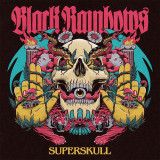
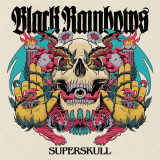
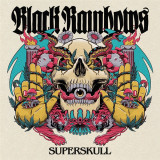
Alright! 2023, Black Rainbows are back with 12 fresh, brand new tunes! The new album sounds huge, with of a great deal of attention paid to the guitars in the recording, and it seems that the band has finally found the perfect balance and tone for their heavy super stoner sound!
This album gives you not only incredible heavy rock-stoner gems, but also: one space acoustic song, one super psychedelic suite and one melodic trippy ballad that adds a perfect mixture of what is sure to be the best album released by the band so far! "Superskull" has been recorded by Fabio Sforza (the same producer of the last two recordings), in May 2022, and after much work and effort by the band in mixing and mastering, the album will see the light of day one year later. The incredible artwork has been delivered by the brazilian artist Pedro Correa.
LP version[20,04 €]
2x12" colored vinyl version[34,66 €]
magenta vinyl version[24,16 €]
Super limited edition. 2LP comes with an alternative artwork and three bonus tracks! Gatefold, neon pink / black / blue striped vinyl. Limited to 250 copies.
Alright! 2023, Black Rainbows are back with 12 fresh, brand new tunes! The new album sounds huge, with of a great deal of attention paid to the guitars in the recording, and it seems that the band has finally found the perfect balance and tone for their heavy super stoner sound!
This album gives you not only incredible heavy rock-stoner gems, but also: one space acoustic song, one super psychedelic suite and one melodic trippy ballad that adds a perfect mixture of what is sure to be the best album released by the band so far! "Superskull" has been recorded by Fabio Sforza (the same producer of the last two recordings), in May 2022, and after much work and effort by the band in mixing and mastering, the album will see the light of day one year later. The incredible artwork has been delivered by the brazilian artist Pedro Correa.
LP version[20,04 €]
2x12" colored vinyl version[34,66 €]
cyan vinyl version[26,26 €]
Super limited edition. 2LP comes with an alternative artwork and three bonus tracks! Gatefold, neon pink / black / blue striped vinyl. Limited to 250 copies.
Alright! 2023, Black Rainbows are back with 12 fresh, brand new tunes! The new album sounds huge, with of a great deal of attention paid to the guitars in the recording, and it seems that the band has finally found the perfect balance and tone for their heavy super stoner sound!
This album gives you not only incredible heavy rock-stoner gems, but also: one space acoustic song, one super psychedelic suite and one melodic trippy ballad that adds a perfect mixture of what is sure to be the best album released by the band so far! "Superskull" has been recorded by Fabio Sforza (the same producer of the last two recordings), in May 2022, and after much work and effort by the band in mixing and mastering, the album will see the light of day one year later. The incredible artwork has been delivered by the brazilian artist Pedro Correa.
“Crystal Motion” were a vocal quartet of Cape Verdean descendancy from New Bedford Massachusetts. The group’s original members being lead vocalist “Kevin Gomes”, Kevin’ s cousin, Rodney “Skeeta” Santos, Daniel “Buddy” Monterio and John Paris, the man responsible for coining the group’s eventual performing name “Crystal Motion”.
Entering a local now defunct recording studio “Metcalf’s” the grouped recorded the Kevin Gomes penned demonstration song, the sweet soul ballad “There’ll Be Another”.
A copy of this song was eventually submitted to the recently formed Independent Recording Studio, “Omega Sound Productions” in Philadelphia, PA. The label was owned by Frank Fioravanti who having just hit paydirt with William DeVaughn’s smash hit “Be Thankful For What You Got” continued with his policy of supporting up and coming talent and upon hearing Crystal Motion’s demo decided to offer them a recording contract. Although deciding against using their submitted demonstration song (which was to remain unissued) Fioravanti chose to record the group on a song he had co-written with another Philly writer and recording artist Pal Rakes, the title of the song was “You’re My Main Squeeze (Part 1 & 2)” an exciting disco dance orientated song that Frank released on them in 1975 on his Sound Gems label imprint. The song became a minor hit in Boston MA, Providence RI and Philadelphia areas also receiving extensive airplay in Atlanta GA and Houston TX. John Paris was to leave the group being replaced by a longtime friend of the other group members Douglas “Dougie” Mendes. With attention coming from the producers of “American Band Stand” and “Soul Train” the group toured the East coast circuit throughout 1975 and 1976 in preparation for an upcoming album project which was never finished before lead singer Kevin Gomes left for unforeseen personal reasons and ultimately the group broke up. Little did “Crystal Motion” know at the time but their solitary 45 release was finding a new audience across the pond in the UK with “You’re My Main Squeeze” being championed by inspirational DJ Colin Curtis in the hallowed halls of Blackpool Mecca, a timeless classic that never fails to bring a smile to the listening audiences faces even to this day.
Returning to the groups unfinished Sounds Gems album project only one track was ever completed, the Fioravanti/Rakes composition “Million Dollar Baby” which along with “There’ll Be Another” has been licensed from their respective owners and paired together for a long overdue 45 release for your delectation. With ‘Crystal Motion’s’ “You’re My Main Squeeze” cult and anthemic status being forever assured with Northern/Modern Soul devotees we’d like to think the discovery and release of these two slightly differing Sweet Soul offerings will garner and enhance the group’s wider appeal with the growing aficionados of the Chicano, Group Harmony and Lowrider genres, Enjoy.
Southside sweethearts, the Dreamliners, first came into the scene as the Royaltones in 1961 when they were students at South San High School in San Antonio, TX. In 1963, label head Abie Epstein signed them to his Cobra & Jox labels producing 4 singles. On the way to a studio session, Ana (Ana) Wilburn coined "The Best Things in Life" on the dashboard of her car. Out popped a playful Farfisa and harmony-driven tune reminiscent of the Crystals or Ronettes. Ana also wrote and sang lead on the haunting ballad "Just Me & You." A song about longing and adolescent heartache that's perfect for any post-breakup kleenex session.
With Cruisin', their second album for Telephone Explosion, Toronto's Bernice distils their playful sense of composition resulting in the most affecting collection of their young career. Across fifteen tracks, a special kind of contemporary, jazz-inflected pop unfolds, miraculous for being both fun and musically adventurous, all in the name of emotional resonance. Each groove in the bassbin is matched by a little scratch at the listener's heartstrings. The album was recorded at home with Phil Melanson (Sam Gendel, Andy Shauf) and Thom Gill (Beverly Glenn-Copeland, Joseph Shabason), led by songwriter and vocalist Robin Dann (Martha Wainwright) and producer Matthew Pencer, with additional contributions from longtime members Dan Fortin and Felicity Williams (Bahamas) being captured remotely.
Throughout their eleven years as a group, working at the intersections of several scenes and spotlights (many of which begin and end at Toronto's beloved Tranzac Club), Bernice have developed an idiosyncratic musical language that feels immediately inviting and wonderfully refreshing. The group's two previous releases, Eau De Bonjourno (2021) and Puff: In The Air Without A Shape (2018) received generous nods from both Stereogum and Pitchfork, who described the music as "unusually mesmerizing". With the songcraft a little more crystalline and the vulnerability notched up, Cruisin' feels like the right record to open Bernice up to a much wider audience.
Development of the album began in Spring, 2021 during a writing retreat at the family farm in Bond Head, Ontario. Members of the band luxuriated in slow time, tinkering with lyrics and melodies, sharing meals, knitting. From this communal gathering, the concept of 'dedication' emerged as a guiding theme. Specifically, developing songs in an almost epistolary form; as love letters or check-ins for friends, community members, pets and other more elusive acquaintances (a longtime working title for the project was 'Songs For People').
Lead single 'Underneath My Toe', one of the first pieces developed under this theme, finds the group at their most graceful and direct. Beginning with songwriter/vocalist Robin Dann singing simply 'Hi / I miss you all the time', the composition proceeds to shift subtly between soft jazz balladry and low-bit funk, revelling in the intimate beauty of a long-time-no-see letter to a dear old friend.
Though being a band that so deeply values the art of fartin' around, Bernice couldn't settle on such a straightforward approach. During the creative process, a clarifying question arose: 'Can you cruise to it?'. This somewhat ambiguous aesthetic criteria became a guiding light for the album. 'Sure, it's a beautiful song about building trust with a new nonagenarian friend... but can you cruise to it?'.
Case in point, both follow up singles, 'No Effort To Exist' and 'Second Judy', fall into a more nebulous, bewildering category of song. Undoubtedly affecting, emotionally charged, existentially searching, yet also undeniably juicy. Drum patterns skitter into place while synth tones shift on a dime to meet thematic twists. There's errant whistling and curious overdubs. Then in come elegant backing vocals, elevating the narrative while an unlikely, left-field groove is established. Miraculously, the listener is not just moved, but Cruisin'.
Therein lies the marvel of Bernice: they remind us that the rec room funk of Mario Kart 64 need not exist in mutual exclusivity to a rich tapestry of human emotions. Even as we live through this most cursed timeline, we can look into the heart of things, dwell on the challenges we're called to witness, and find a little levity to carry us through; grab a lil' mushroom and cruise the existential soup.
For polymath artist Wesley Joseph, writing a song is like shooting a film - he sees in terms of scenes and colors, lighting the proper mood, drawing the right emotional arc. Music and filmmaking are Joseph’s two great loves. Film came first—he started making DIY videos at age 12 to entertain himself and his friends growing up in a small town in the UK. “There wasn’t really much happening,” he remembers, “and from a young age it created this mindset that doing everything myself was the only way to do it.”
But when he moved to London to study as a filmmaker, he discovered something in the freedom and independence of city life that demanded to be captured in song, and found a crew of collaborators—including A.K. Paul, Dave Okumu, Joy Orbison, Leon Vynehall, Lexxx, Loyle Carner and his childhood friend Jorja Smith—to help him do it. The result was his breakthrough single ‘Ghostin’’ and the 2021 debut ULTRAMARINE - released on his own imprint EEVILTWINN - a deeply textured collection of avant-R&B and soulful future-pop that stretched from psychedelic ballads to hard hip-hop bars (often in the span of a single track) and crystallized the mood of a young cohort trying to find love and live their dreams while the world is falling apart. Whilst his collaboration with Loyle Carner on single ‘Blood On My Nikes’ lead to him featuring on the artist’s critically acclaimed - and #3 charting album - earlier this year.
Now the nascent auteur returns with his Secretly Canadian debut GLOW, eight more songs of love, loss, anxiety, and joy about coming of age at a time of unprecedented change. Showcasing his range across songwriting, performing, and production—not to mention his flawless transitions between singing and rapping, between character studies and raw emotional honesty—it’s a stunningly beautiful work that makes it clear Joseph’s on the path to becoming a world-changing talent.
GLOW opens with the title track’s warm analog synths and cascading vocals that channel the harmonious Northern soul Joseph’s dad raised him on, a shimmering bed of clouds for the project’s opening credits. But like any good director, he quickly deepens the mood, drawing together disparate influences and emotions to build a unique sonic world spilling over with synchronicities and juxtapositions. “MONSOON” conjures nocturnal hedonism at the same time as it contemplates grief.
As on previous projects, Joseph is providing his own visual accompaniments for GLOW, creative directing its artwork and adding to his growing filmography as a director—he’s repped by the renowned production company Stink—with its first video. “COLD SUMMER” finds Joseph singing from a supervillain’s perspective over woozy film-score strings, and the concept bleeds over into its video accompaniment, a cryptic post-post-Tarantino film shot in Kazakhstan.
“I've never really seen them separately,” Joseph says of music and film. “They kind of just constantly drift into each other. And when they come together, it's like it was meant to be in my head the whole time.
It’s usually hyperbole to call an artist as young and new as Joseph “visionary,” but it’s undeniable that he has a vision, one that transcends old ideas of genre and medium, one that seems to get bigger and richer every time he steps into a studio or behind a camera. GLOW is one of the deepest and most satisfyingly cinematic listening experiences of the year—and Wesley Joseph is just getting started.