Cerca:cult

Generi
Tutto
As'teka Nahuatl, Lilū Nahūatl - Musicō'Teka

This Raven With A Crown 02 is a new fledgling label materializes in the Violent Cases universe. Corvus Corone - also known as the carrion crow - is stylistically dedicated to true Tribal sounds.This is not chipmunk tribal with laughing gas voices, this is serious stuff as you can expect from Violent Cases because evil forces are invading lala land and we need to gather the tribes. The roadmap for the project covers territory cultivated by the likes of Isotope, LBE and DSP just to name a few reference points.
First in flight is a full release by As’teka Nahuatl who just featured on MSTR 13.
Corvus Corone is styled by TDSiGNZ, whose design skills consistently lend the Violent Cases sub-labels a fresh, disciplined minimalist touch. As he previously created for “Endless Night”... More is forthcoming - because the Violent Ravens nest has another spawn in the breed. Keep an eye out for their upcoming signs!
Mastering by Stefan ZMK.
A1 – Musicō'teka
20k rig in the catacombs of the pyramid of the sun. Join the war dance. 160 beasts
A2 - Tekno Drops (feat. Lil’ Nahuatl)
Serious old school dancefloor vibes under the wings of crows circling above. 170 beasts
B1 – Shaman Children
Inducing a long trancy journey heeding the shaman’s call. 170 beasts

pre-ordina ora30.03.2026

dovrebbe essere pubblicato su 30.03.2026

21,43
SCATTERED PURGATORY - POST PURGATORY

Formed in Taipei in 2013, Scattered Purgatory (破地獄) has occupied a liminal space between drone, ambient, psychedelic folk and ritualistic kosmiche experimentation. Their early work, including ‘Lost Ethnography of the Miscanthus Ocean’ (2014) and ‘God of Silver Grass’ (2016), blended dense instrumental drones, improvisational guitar, and ambient textures rooted in the heat, humidity, and urban pulse of Taiwan. Over the years, the duo-turned-band has drawn on Krautrock, minimalist electronic music, and heavy drone traditions while remaining firmly grounded in Taiwanese geography and culture.

‘Post Purgatory’ emerges after a three-year hiatus following the pandemic, a period the band describes as pivotal to the album’s conception. “The feeling of loss and uncertainty has later become the inspiration of this record, and ‘time’ is the main theme – it can heal or it can destroy,” they explain. Musically and lyrically, the record traverses Taiwanese, traditional Chinese, and English, reflecting the multilingual fabric of Taipei life. While there isn’t a linear storyline, metaphor and poetry imbue the lyrics with reflections on love, loss, and the human experience, interlaced with influences of Hokkien and Mando pop and traces of trip-hop.

Recorded half in their home and half at the studio where they composed their first album, ‘Post Purgatory' integrates precision, clarity, and digital production techniques. Guest contributions—from White Wu’s dynamic drumming to Minyen Hsieh’s tenor saxophone and dotzio’s sci-fi-infused vocals—expand the band’s sonic palette, creating a doom metal record shaped by electronic sensibilities.

‘Post Purgatory’ is a statement of loss and re-empowerment, a bridge between their past and present. Through it, Scattered Purgatory reclaim their distinctive voice, presenting a sound that is at once rooted in Taiwan, informed by global musical traditions, and unflinchingly forward-looking.
credits

pre-ordina ora30.03.2026

dovrebbe essere pubblicato su 30.03.2026

27,69
Various - Cartulis Music 15th Anniversary Compilation Part 1

Record 1 of the Cartulis Music 15th Anniversary compilation, marking fifteen years of
independent activity across club culture, events, and releases.
Cartulis 15th Anniversary Compilation — 15 years of rhythm, risk, and reverie. Still
dancing, always forward.
Mastered by Alberto Pretto
Artwork by Samantha Millows

non in magazzino

Ordina ora e ordineremo l'articolo per te presso il nostro fornitore.

14,08

Last In: 54 days ago
Various - Cartulis Music 15th Anniversary Compilation Part 2

Record 2 of the Cartulis Music 15th Anniversary compilation, marking fifteen years of independent activity across club culture, events, and releases.

Cartulis 15th Anniversary Compilation — 15 years of rhythm, risk, and reverie. Still dancing, always forward.

non in magazzino

Ordina ora e ordineremo l'articolo per te presso il nostro fornitore.

14,08

Last In: 54 days ago
Various - Cartulis Music 15th Anniversary Compilation Part 3

Record 3 of the Cartulis Music 15th Anniversary compilation, marking fifteen years of independent activity across club culture, events, and releases.

Cartulis 15th Anniversary Compilation — 15 years of rhythm, risk, and reverie. Still dancing, always forward.

non in magazzino

Ordina ora e ordineremo l'articolo per te presso il nostro fornitore.

14,08

Last In: 54 days ago
Various - Cartulis Music 15th Anniversary Compilation Part 4

Record 3 of the Cartulis Music 15th Anniversary compilation, marking fifteen years of independent activity across club culture, events, and releases.

Cartulis 15th Anniversary Compilation — 15 years of rhythm, risk, and reverie. Still dancing, always forward.

non in magazzino

Ordina ora e ordineremo l'articolo per te presso il nostro fornitore.

14,08

Last In: 54 days ago
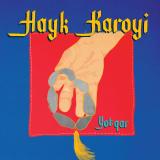
Hayk Karoyi - Yotqar

Hayk Karoyi

Yotqar

12inchDSC003
Discotchari
30.03.2026

In Hayk Karoyi’s music, the vibrant palette of the Mediterranean meets the deep layers of Armenian medieval culture. A composer, sound artist, producer, selector, and live performer, as well as a multi-instrumentalist specializing in Armenian woodwinds, Hayk channels his cultural identity intuitively, allowing memory, place, and subconscious expression to shape his sound. Coming from a mixed East Mediterranean and Armenian heritage, he has never aimed to define himself—or his music—within a single tradition.

Instead, his work exists as a continuous fusion: electronic music intertwined with ancient timbres, improvisation, and experimentation. His work has been presented in clubs, concert spaces, and international festivals across Italy, France, Spain, Germany, Armenia, Georgia, Uzbekistan, and Indonesia. He has appeared on festival lineups such as Terraforma Symposia (Italy), Stihia Festival (Uzbekistan), O3 Festival (Armenia), Nopa Sound Festival (Armenia), TKESHI FESTIVAL (GEORGIA) ,Urvakan Festival (Armenia), New East Festival (Barcelona, Spain), Suara Festival (Indonesia), and Un Week-end Festival (France).

“Yotqar” is a love letter to the artists and musicians who have shaped me; those whose music I’ve carried in my heart and those I’ve shared stages and moments with over the years. The album is deeply rooted in Armenian woodwind traditions, echoing voices of the masters I admire. Its soundscape stretches across a wide geography and draws inspiration from the mountains of Syunik to the streets of Anjar, weaving in local sounds, memories and emotions. Endless gratitude to my parents, and especially to my mother for the folklore melodies she sings while cooking, filling the house with warmth and history.” - Hayk Karoyi

non in magazzino

Ordina ora e ordineremo l'articolo per te presso il nostro fornitore.

23,95

Last In: 54 days ago
Various - You've Got To Have The Freedom (The Dance Culture Remixes)

Repress

Escola Records is very proud to present a refreshing reinterpretation of Uptown Funk Empire’s 2009 cover of Pharoah Sanders’ You’ve Got to Have Freedom. The release features four dancefloor-oriented versions crafted by legendary French DJ and producer Greg Gauthier, alongside talented musician, DJ, and producer Lucas Moinet (half of Groove Boys Project and Keraw). The A-side delivers the smooth and mellow “937” Vocal and Dub versions, where Greg and Lucas offer two uplifting, soul-infused reworks in a groove- heavy ride full of organic grooves and a beautiful xylophone solo, creating the perfect space/beat for some of the most hopeful vocals we could ever dream of. The B-side completes the package with the “Dance Culture” remixes, paying tribute to the legendary party Greg launched over 20 years ago at Paris’ iconic house music mecca, the Djoon club.

non in magazzino

Ordina ora e ordineremo l'articolo per te presso il nostro fornitore.

13,40

Last In: 57 days ago
Iivana Mišukka & Arja Kastinen - Iivana Mišukka (Tape)
  • 01: Maanitus &Amp; Tšiižik
  • 02: Markka
  • 03: Melkutus
  • 04: Letška
  • 05: Kuuen Parin Hoirola
  • 06: Brišatka
  • 07: Tšiižik
  • 08: Kirkonkellot
  • 09: Kirkonkellot Korkea
  • 10: Hoirola, 3 Parin
  • 11: Lippa
  • 12: Kyngäkiža
  • 13: Ristakondra
  • 14: Vanha Polkka
  • 15: Viistoista
  • 16: Vanha Valssi
  • 17: Kiberä
  • 18: Maanitus Kuokan Kanteleella
  • 19: Tuuti Lasta Nukkumahe
disponibile anche

Vinyl[22,65 €]


Death Is Not The End present a further volume of Arja Kastinen's eerie amalgamations of 110 year old wax cylinders with her own meticulously transcribed takes, this time focussing in on Armas Otto Väisänen's field recordings of kantele player Iivana Mišukka (b. 1861 d.1919).

"Ivana Mišukka (1861–1919) was one of the Karelian kantele players recorded by the folk music researcher Armas Otto Väisänen on wax cylinders in 1916 and 1917. In the early 20th century, the remote areas of Border Karelia were undergoing the final phase of a transformation in musical culture, with the ancient runo song tradition giving way to newer forms of music. This transition is reflected in Mišukka's repertoire and choice of instrument. The ancient small kantele, hollowed out of a single piece of wood, was already rare at the turn of the century. Mišukka's kantele was a new type of instrument with 26 strings, constructed of several parts, but he played it using the traditional plucking technique. Like other Border Karelian kantele players, his repertoire consisted of music rooted in runosong culture, as well as newer dances and songs from the east and west. Most of the recorded material falls into the latter category.

Ivan Bogdanov Mišukka was born out of wedlock in Suursara village, Suistamo, on 1 May 1861. He began playing the kantele at the age of five or six, quickly mastering the instrument. In adulthood, he was considered one of the area's best master players. Mišukka was landless for most of his life and lived in different parts of the Suistamo parish. His first wife, Tekla Markintytär, died in 1897 at the age of 40, and his second wife, Jevdokia Filipintytär Jeminen, died in 1907 at the age of 50. Seven children were born from the first marriage, two of whom died young. The third wife, Maria Ignatintytär Gurnan (Kuurnanen), was a well-known master of lamentations. Together with Maria, Iivana Mišukka worked as a tenant farmer in the village of Suursara. Mišukka suffered from rheumatism, which prevented him from participating in physical work like Maria. This was apparently partly the reason why Iivana Mišukka went to earn extra money by playing the kantele on gig trips. He often had other traditional artists from Suistamo as his travelling companions, such as the runosingers Konstantin Kuokka and Iivana Onoila. Iivana Mišukka died in Leppäsyrjä village, Suistamo, on 18 May 1919 at the age of 58, and his kantele was donated to Teppana Jänis.

Mišukka only used 14 of the 26 strings on his kantele, playing the same tunes either a fourth higher or lower. He tuned his kantele to the major scale using fifths, except for a low seventh scale degree on the upper strings, but not below the fundamental. Since he did not use the seventh note of the scale on the upper strings at all, he could use the major scale both lower and a fourth higher with this tuning. According to Mišukka, the sound of higher, or 'finer', strings is 'more beautiful', while that of lower ones is 'greater'. Among runosingers, the size of the thirds varied, ranging from major to minor to neutral. A similar phenomenon can be observed in kantele tunings, where the third, sixth and seventh scale degrees vary in a comparable way.

During a meeting, Väisänen suggested that Mišukka play the smaller kantele belonging to Konstantin Kuokka. The idea was to bring it closer to the horn to improve the recording quality. However, the kantele was completely out of tune, and now Mišukka tuned it to the Lydian scale (track 18).

Using the old plucking technique, Mišukka placed his right middle finger on the fundamental tone, his right index finger on the second scale degree, his left middle finger on the third scale degree and his left index finger on the fourth scale degree, and his right thumb on the fifth. The thumb also played the notes above the fifth note of the scale. As Mišukka remarked to Väisänen: 'Peigaloll' tuloo enemb ruadoa' (the thumb has to do more work). However, he did not use the seventh note of the scale on the upper strings at all. Below the fundamental note, he played the seventh and sixth notes of the scale with his right middle finger of and the fifth note of the scale with his right ring finger. This fifth scale degree below the fundamental is almost always used as a drone. Sometimes, when the melody required it, Mišukka, like other players, also varied the fingering. He would also occasionally strike the same string with the side of his fingernail after plucking it.

The wax cylinder recordings of Karelian kantele players are kept in the archives of the Finnish Literature Society in Helsinki, Finland. Copies were made of them onto reel-to-reel tapes in both the 1960s and 1980s. The 1960s copies are mono and the 1980s copies are stereo. However, not all kantele recordings from these decades have survived.

The sound of the kantele is difficult to hear in wax cylinder recordings due to its low volume, and it occasionally becomes completely obscured by noise. During the copying process, the cylinder sometimes rotates unevenly, resulting in breaks or jumps in the music. Additionally, the rotation speed of the cylinder in the copies does not correspond to the performance speed of the original music, which alters the pitch. However, since Väisänen's precise notes are available in the archive, it is possible to deduce the melodies, their speed, and the tuning level of the kantele in the recordings. Of the copies of the original recordings from the 1960s and 1980s, I have selected the one that best met the requirements of this publication and adjusted the speed of the recording to align with Väisänen's notes. To enhance the listening experience, I have replayed the songs, which now partly overlap the old recordings on this release."

— Arja Kastinen

pre-ordina ora27.03.2026

dovrebbe essere pubblicato su 27.03.2026

16,39
Iivana Mišukka & Arja Kastinen - Iivana Mišukka LP

Death Is Not The End present a further volume of Arja Kastinen's eerie amalgamations of 110 year old wax cylinders with her own meticulously transcribed takes, this time focussing in on Armas Otto Väisänen's field recordings of kantele player Iivana Mišukka (b. 1861 d.1919).

"Ivana Mišukka (1861–1919) was one of the Karelian kantele players recorded by the folk music researcher Armas Otto Väisänen on wax cylinders in 1916 and 1917. In the early 20th century, the remote areas of Border Karelia were undergoing the final phase of a transformation in musical culture, with the ancient runo song tradition giving way to newer forms of music. This transition is reflected in Mišukka's repertoire and choice of instrument. The ancient small kantele, hollowed out of a single piece of wood, was already rare at the turn of the century. Mišukka's kantele was a new type of instrument with 26 strings, constructed of several parts, but he played it using the traditional plucking technique. Like other Border Karelian kantele players, his repertoire consisted of music rooted in runosong culture, as well as newer dances and songs from the east and west. Most of the recorded material falls into the latter category.

Ivan Bogdanov Mišukka was born out of wedlock in Suursara village, Suistamo, on 1 May 1861. He began playing the kantele at the age of five or six, quickly mastering the instrument. In adulthood, he was considered one of the area's best master players. Mišukka was landless for most of his life and lived in different parts of the Suistamo parish. His first wife, Tekla Markintytär, died in 1897 at the age of 40, and his second wife, Jevdokia Filipintytär Jeminen, died in 1907 at the age of 50. Seven children were born from the first marriage, two of whom died young. The third wife, Maria Ignatintytär Gurnan (Kuurnanen), was a well-known master of lamentations. Together with Maria, Iivana Mišukka worked as a tenant farmer in the village of Suursara. Mišukka suffered from rheumatism, which prevented him from participating in physical work like Maria. This was apparently partly the reason why Iivana Mišukka went to earn extra money by playing the kantele on gig trips. He often had other traditional artists from Suistamo as his travelling companions, such as the runosingers Konstantin Kuokka and Iivana Onoila. Iivana Mišukka died in Leppäsyrjä village, Suistamo, on 18 May 1919 at the age of 58, and his kantele was donated to Teppana Jänis.

Mišukka only used 14 of the 26 strings on his kantele, playing the same tunes either a fourth higher or lower. He tuned his kantele to the major scale using fifths, except for a low seventh scale degree on the upper strings, but not below the fundamental. Since he did not use the seventh note of the scale on the upper strings at all, he could use the major scale both lower and a fourth higher with this tuning. According to Mišukka, the sound of higher, or 'finer', strings is 'more beautiful', while that of lower ones is 'greater'. Among runosingers, the size of the thirds varied, ranging from major to minor to neutral. A similar phenomenon can be observed in kantele tunings, where the third, sixth and seventh scale degrees vary in a comparable way.

During a meeting, Väisänen suggested that Mišukka play the smaller kantele belonging to Konstantin Kuokka. The idea was to bring it closer to the horn to improve the recording quality. However, the kantele was completely out of tune, and now Mišukka tuned it to the Lydian scale (track 18).

Using the old plucking technique, Mišukka placed his right middle finger on the fundamental tone, his right index finger on the second scale degree, his left middle finger on the third scale degree and his left index finger on the fourth scale degree, and his right thumb on the fifth. The thumb also played the notes above the fifth note of the scale. As Mišukka remarked to Väisänen: 'Peigaloll' tuloo enemb ruadoa' (the thumb has to do more work). However, he did not use the seventh note of the scale on the upper strings at all. Below the fundamental note, he played the seventh and sixth notes of the scale with his right middle finger of and the fifth note of the scale with his right ring finger. This fifth scale degree below the fundamental is almost always used as a drone. Sometimes, when the melody required it, Mišukka, like other players, also varied the fingering. He would also occasionally strike the same string with the side of his fingernail after plucking it.

The wax cylinder recordings of Karelian kantele players are kept in the archives of the Finnish Literature Society in Helsinki, Finland. Copies were made of them onto reel-to-reel tapes in both the 1960s and 1980s. The 1960s copies are mono and the 1980s copies are stereo. However, not all kantele recordings from these decades have survived.

The sound of the kantele is difficult to hear in wax cylinder recordings due to its low volume, and it occasionally becomes completely obscured by noise. During the copying process, the cylinder sometimes rotates unevenly, resulting in breaks or jumps in the music. Additionally, the rotation speed of the cylinder in the copies does not correspond to the performance speed of the original music, which alters the pitch. However, since Väisänen's precise notes are available in the archive, it is possible to deduce the melodies, their speed, and the tuning level of the kantele in the recordings. Of the copies of the original recordings from the 1960s and 1980s, I have selected the one that best met the requirements of this publication and adjusted the speed of the recording to align with Väisänen's notes. To enhance the listening experience, I have replayed the songs, which now partly overlap the old recordings on this release."

— Arja Kastinen

pre-ordina ora27.03.2026

dovrebbe essere pubblicato su 27.03.2026

22,65
THE FALL - FALL HEADS ROLL (2x12")

THE FALL

FALL HEADS ROLL (2x12")

2x12inchBRED2LP935
CHERRY RED
27.03.2026
  • A1: Ride Away
  • A2: Pacifying Joint
  • A3: What About Us?
  • B1: Midnight Aspen
  • B2: Assume
  • B3: Aspen Reprise
  • C1: Blindness
  • C2: I Can Hear The Grass Grow
  • C3: Bo Demmick
  • D1: Youwanner
  • D2: Clasp Hands
  • D3: Early Days Of Channel Führer
  • D4: Breaking The Rules
  • D5: Trust In Me

The Fall were an English post-punk band, formed in Manchester in 1976. The band existed in some form ever since, and was essentially built around its founder and only constant member Mark E. Smith. Initially associated with the punk movement of the late 1970s, the group's music went through several stylistic changes over the years, but is often characterised by an abrasive guitar-driven sound and frequent use of repetition, and was always underpinned by Smith's distinctive vocals and often cryptic lyrics. The band was noted for its prolific output: and released over 25 studio albums, and more than triple that counting live albums and other releases. They have never achieved widespread public success beyond a handful of minor hit singles in the late 1980s, but maintained a strong cult following. The band were long-associated with BBC disc jockey John Peel, who championed them from early on in their career and cited The Fall as his favourite band, famously explaining, "They are always different; they are always the same.

pre-ordina ora27.03.2026

dovrebbe essere pubblicato su 27.03.2026

35,50
Haiku Salut & Meg Morley - The Lost Score
  • A1: What About Tomorrow?
  • A2: Meine Beste Freundin
  • A3: Needle Drop
  • A4: Carousel
  • A5: Laugh And Cricket
  • B1: Faces
  • B2: Toxic
  • B3: What Happened Next
  • B4: You Made Sunday
  • B5: Going Home

Lo Recordings are very proud to announce the release of a beautiful collaborative project. A seamless sonic journey that guides us through the filmic landscape of a bygone era. Chiming in the past and resonating in the present.

Meg Morley and Haiku Salut combine their talents for the reimagining of a score for the 1930's silent film People on Sunday. Inspired by their live performance and screening of the classic at the Flatpack festival. The release was five years in the making as they set out to capture the compositions in the studio, blending Morley’s expressive piano with Haiku Salut’s textured electronics. The result has given rise to an album that belies its historic source with a fresh and clean sound and a complex ever moving series of compositions.. 'The Lost Score' is a vibrant contemporary album for our time.

Haiku Salut are an instrumental trio whose music blends electronica, neo-classical and folk into richly layered, cinematic soundscapes. Known for their enigmatic performances and live scores to silent films, they create immersive experiences that merge timeless visuals with modern experimental sound.

Meg Morley is a Melbourne-born London-based pianist, composer and improviser who pursues cross-cultural and interdisciplinary collaborations, focusing on storytelling. Her classically trained precision and jazz-inflected improvisations have brought her to prominence through her compositions for classical and jazz ensembles, accompaniment for dance companies (Pina Bausch, English National Ballet) and her internationally-acclaimed original scores for silent film.

pre-ordina ora27.03.2026

dovrebbe essere pubblicato su 27.03.2026

25,00
Various - MYRYRS3 LP 2x12"

Various

MYRYRS3 LP 2x12"

2x12inchMYRYRS3
Myryrs
27.03.2026

MYRYRS3 presents a calculated compilation of cuts pulled from a variety of styles and backgrounds for their third and largest release to date. Having been quiet on the release front since 2023, this collection sets a calibrated tone for a label in its growth stage. Comprising present, esoteric, and regional techno expressions. Remaining grounded in their cultivation of a space where dancefloors and artistic endeavours share conversation, this release opens the room to an array of talent who approach the idea from varying angles of the dancefloor.

A Pandora's box of modern and daring ideas awaits inside MYRYRS3.

pre-ordina ora27.03.2026

dovrebbe essere pubblicato su 27.03.2026

27,69
PARIAH - Blaze of Obscurity Re-Issue
  • 1: Missionary Of Mercy
  • 2: Puppet Regime
  • 3: Canary
  • 4: Blaze Of Obscurity
  • 5: Retaliate!
  • 6: Hypochondriac
  • 7: Enemy Within
  • 8: The Brotherhood

Pariah’s cult album re-issued! “Blaze of Obscurity” brings you pure Thrash Metal fury! Satan changed their name to Pariah in 1988-1989. There’s Heavy Metal, Power Metal, Thrash Metal, Death Metal, the list seems almost endless. Sub-genres are important in metal and bands are quickly classified and labeled. Pariah (the last re-incarnation of Satan) is one of few bands that are difficult if not impossible to classify. Is it Heavy metal? NWOBHM? Thrash Metal? Pariah did not make it easy to describe their sound. It might be too sophisticated to simply label it Heavy Metal, which in its infancy was a rather simple affair.

They don’t sound like any Metal band out there, perhaps discounting some of the more aggressive and technical ones, and then the signature NWOBHM sound is added. The guitar playing by Russ Tippins and Steve Ramsey is undeniably what defines Pariah as well as Satan in the past. Undeniably, Satan has gone a long way; from humble NWOBHM beginnings, to Experimental/Melodic Mettal (in Blind Fury) and something that could be described as a NWOBHM/Thrash Metal hybrid (“The Kindred”). It’s as if they’ve been experimenting trying to find their identity, and theyfinally found it. Stylistically, “Blaze of Obscurity” could be seen a step back to “Suspended Sentence”, but this time around they got everything right, down to the last note. Those who have heard Satan know what to expect: great guitar playing.

And sure enough, “Blaze of Obscurity” is a demonstration of guitar mastery and is overall a very guitar-driven album, with plenty of mind-boggling riffs and solos are all over the place, but more importantly, it’s a demonstration of some amazing songwriting as well. This is easily Pariah/Satan’s creative peak and one of the most consistent albums I’ve ever heard, featuring eight great and conceptually perfect songs with lyrics that come across as sophisticated and thought-provoking. It is not fair to put the entire spotlight on Tippins and Ramsey though since the drumming and bass work from Sean Taylor and Graham English really shines. The rhythm is fast and tight, keeping it focused, aggressive and intense till the end. Vocalist Michael Jackson (yes, that’s his name) has to be commended too as this is easily his careers best performance.

The verdict: “Blaze of Obscurity”: the level of musical genius expressed here, along with near flawless songwriting, is more than enough to skyrocket it to heights reserved only for classics. Probably not your choice for some light listening those quiet Sunday evenings, but those who take a more serious, intellectual approach when selecting their music will find very much to appreciate here.
Tracklisting

pre-ordina ora27.03.2026

dovrebbe essere pubblicato su 27.03.2026

28,99
Midryasi's Kult - Italian Dark Sound
  • 1: Taste For Damnation
  • 2: Italian Dark Sound
  • 3: Slaughter
  • 4: M.i.m. Mayhem
  • 5: Hypnopriest
  • 6: Cellar
  • 7: The Lost Son Of Sylvester Anfang
  • 8: Mountain Devil

DYING VICTIMS PRODUCTIONS is proud to present MIDYRASI’S KULT’s highly anticipated debut album, Italian Dark Sound, on CD and vinyl LP formats. MIDRYASI'S KULT are revolutionary and uncompromised. Featuring veterans from such Italian doom stalwarts as Doomsword, Midryasi, Agarthi, and Fiurach, their unique blend of elements from the NWOBHM, doom metal, and early black metal – all fused in their distinctive national dark-sound tradition, which includes such cult legends as Black Hole and Death SS – results in an obscure, hypnotic, and exciting formula. In March 2025, after just one week on Bandcamp, MIDYRASI’S KULT were intercepted by Caligari Records, who released on cassette their debut demo, Mountain Devil. Featuring three songs in a concise 15 minutes, this demo reaped international acclaim for its originality and attitude. But that was but a foretaste of darker delights to come. Witness the first full-length of MIDRYASI’S KULT, Italian Dark Sound.

Truly titled, Italian Dark Sound is an intoxicating spelunk into catacombs both idiosyncratic and indefinable. Totaling 32 time-/mind-expanding minutes, the eight primary tracks here – the outro is titled “The Lost Son of Sylvester Anfang,” which should offer an obvious clue to the black-metal-minded out there – each offer something different from the next, and yet all add up into a shadowy experience that’s both rocking and atmospheric. In fact, if one were to single out an aspect between the demo and album, it’s that MIDYRASI’S KULT exude more energy on this full-length without sacrificing any of their occult aura. But, just like that demo, Italian Dark Sound features supremely pro production – gritty, earthy, and yet kaleidoscopic in texture – under the guidance of Gabry "The Way" Strada, head of RDF Studio and who’s now collaborating on the upcoming Doomsword new album. In the vein of an open artistic project, all the artwork is made by vocalist / bassist Geilt himself, and up to 11 musicians have been involved in these recordings

pre-ordina ora27.03.2026

dovrebbe essere pubblicato su 27.03.2026

22,65
Aggressive Perfector - Come Creeping Fiends
  • 1: Dead Undead
  • 2: Strange Companion
  • 3: Fiend In You
  • 4: Like A Beast
  • 5: Obscene Cult
  • 6: Denied By The Reaper
  • 7: Harlot’s Spell
  • 8: Return Of The Axe
  • 9: Gallows

DYING VICTIMS PRODUCTIONS is proud to present AGGRESSIVE PERFECTOR’s highly anticipated second album, Come Creeping Fiends, on CD and vinyl LP formats. Released in 2019 via DYING VICTIMS, AGGRESSIVE PERFECTOR’s Havoc at the Midnight Hour debut album introduced this British power-trio with no small amount of sleazy, Satanic fanfare. While their background may jointly lie in black metal, the three un-gentlemen of AGGRESSIVE PERFECTOR held high heavy metal done the ancient way: classic Tank, early Raven, Warfare, and of course the almighty Venom as well as modern torchbearers like Midnight, Whipstriker, and Power From Hell. Unsurprisingly, the album garnered international acclaim. Eclipsing that feat is the band’s second album, Come Creeping Fiends.

Truly titled once again, Come Creeping Fiends comprises nine tracks of heavy metal for the insane, forged in the Manchester morgue. Raging like a ravenous beast, summoning ancient ones, and agonizing with morbid doom, AGGRESSIVE PERFECTOR cover a lot of ground here, but like the rotting undead that inspired it, this second album somehow holds together. The same black magic that made Havoc at the Midnight Hour a highlight six(-six-six) years ago is here again, only this time with a higher kill count and hit rate. Cleaner and crisper in execution but somehow darker and dirtier in its content, Come Creeping Fiends offers highlights at every crooked turn; tunes like “Strange Companion,” “Fiend in You,” and lead track “Dead Undead” will have all the witches dancing. Needless to say, fans of maniacal, EVIL heavy metal music and horror movies will find a lot to love. The wait for AGGRESSIVE PERFECTOR’s second album might have been long, but Come Creeping Fiends will prove to be worth it…

pre-ordina ora27.03.2026

dovrebbe essere pubblicato su 27.03.2026

22,65
Evildead - Annihilation Of Civilization
  • 1: F.c.i./ The Awakening
  • 2: Annihilation Of Civilization
  • 3: Living Good
  • 4: Future Shock
  • 5: Holy Trials
  • 6: Gone Shooting
  • 7: Parricide
  • 8: Unauthorized Exploitation
  • 9: B.o.h.i.c.a. (Bonus Track)
  • 10: Run Again (Bonus Track)
  • 11: Sloe-Death (Bonus Track)
  • 12: Rise Above (Bonus Track)

EvilDead fans, listen up: 27 March 2026 will see the re-release by the American thrash metal act of their cult album ‘Annihilation Of Civilization’ including a number of bonus tracks. The original recordings date back to 1989 and have been remastered by Bill Metoyer (Slayer, Armored Saint). Remastered, 4 Bonus Tracks

pre-ordina ora27.03.2026

dovrebbe essere pubblicato su 27.03.2026

25,84
Evildead - The Underworld

Evildead

The Underworld

12inch244511
Steamhammer
27.03.2026
  • 1: Intro (Comshell 5)
  • 2: Global Warming
  • 3: Branded
  • 4: Welcome To Kuwait
  • 5: Critic / Cynic
  • 6: The 'Hood
  • 7: The Underworld
  • 8: He's A Woman / She's A Man
  • 9: Process Elimination
  • 10: Labyrinth Of The Mind
  • 11: Reap What You Sow
  • 12: Darkness (Live)
  • 13: The 'Hood (Live)

EvilDead fans, listen up: 27 March 2026 will see the re-release by the American thrash metal act of their cult album The Underworld’ including a number of bonus tracks. The original recordings date back to 1991 and have been remastered by Bill Metoyer (Slayer, Armored Saint). Remastered

pre-ordina ora27.03.2026

dovrebbe essere pubblicato su 27.03.2026

25,84
Articoli per pagina:
N/ABPM
Vinyl