Gilles Peterson: "Fascinating… love this. Thoroughly recommended"
The Observer: "The focus is on great grooves and fine playing. A band to seek out."
The Guardian: "Delightfully quirky album of folk songs reimagined from Afrobeat to reggae"
The Times: "Minyo Crusaders sound like nothing else lurking on your Spotify playlist"
(PRESS FOR PREVIOUS ALBUM)
Minyo Crusaders return with theiir highly anticipated sophomore album TOUR OF JAPAN following on from their debut that has sold 4k on vinyl since release and their runaway single smash 'Cumbia Del Monte Fuji' that has almost hit 5million streams on Spotify.
Since the release of their debut in 2019 the band have toured Europe four times playing major European festivals such as Roskilde, Best Kept Secret, Green Man Festival, WOMAD, Fusion, Les Escales, Lowlands and many, many more, succesfully road-testing the songs from this album.
On this new album which has been mixed by Mario from Frente Cumbiero, Minyo have finessed their winning formula of adapting ancient Japanese folk somgs to global rhythms with influences this time from Ethiopia, boogaloo, salsa, West Africa and jazz. Says band-leader Katsumi: "The concept of this album is the sea with various expressions".
Search:cumbia
Gilles Peterson: "Fascinating… love this. Thoroughly recommended"
The Observer: "The focus is on great grooves and fine playing. A band to seek out."
The Guardian: "Delightfully quirky album of folk songs reimagined from Afrobeat to reggae"
The Times: "Minyo Crusaders sound like nothing else lurking on your Spotify playlist"
(PRESS FOR PREVIOUS ALBUM)
Minyo Crusaders return with theiir highly anticipated sophomore album TOUR OF JAPAN following on from their debut that has sold 4k on vinyl since release and their runaway single smash 'Cumbia Del Monte Fuji' that has almost hit 5million streams on Spotify.
Since the release of their debut in 2019 the band have toured Europe four times playing major European festivals such as Roskilde, Best Kept Secret, Green Man Festival, WOMAD, Fusion, Les Escales, Lowlands and many, many more, succesfully road-testing the songs from this album.
On this new album which has been mixed by Mario from Frente Cumbiero, Minyo have finessed their winning formula of adapting ancient Japanese folk somgs to global rhythms with influences this time from Ethiopia, boogaloo, salsa, West Africa and jazz. Says band-leader Katsumi: "The concept of this album is the sea with various expressions".
Limited edition 7" vinyl of "La Mujer Serpiente" on the A side and "Selam (Bass Mix)" on the B side.
La Mujer Serpiente/Cumbia Serpiente is the 1st single from Earthtones' upcoming LP on Wonderwheel. This collaboration with longtime friend & co-producer, Oliwa, features vocal delivery and heartbreakingly beautiful songwriting by Colombian Canadian artist/singer, Lido Pimienta. Behind the live cumbia rhythms, bass synths, analog keys, 808 drums & guitars, the vision of this track is one of upliftment of womxn and femmes everywhere.
Selam is a vision of peace. This collaboration between producer/DJ Earthtones and Ethiopian musician/vocalist Etsegenet Mekonnen features haunting vocals sung in Amharic.
Analog & semi-modular synths combine with 909 drums and afrobeats percussion by Earthtones, to weave grooves for Etsegenet's depth in songwriting, voice and soul. The main version has a dancehall bassline that calls one to movement, while the dub versions evoke mystery amidst long modulated leads + filtered pads.
Selam enezra ahunim (let us sow peace).
Today, Los Diablos Rojos are known around the world for a unique tropical sound that has transcended passing fashions and managed to hold its own in an era marked by transience and oblivion. Over the years, they have become the forerunners of a trend that has been developing for half a century and is gaining more and more praise and recognition. They have become a musical reference for other contemporary tropical music bands that have found in Los Diablos Rojos, above all, an example of creativity and resilience.
The Peruvian cumbia band Los Diablos Rojos was born within the quincha and adobe walls of Cañete Chico with a proposal very different from what all the musicians of the time were working on: an instrumental tropical music style of their own. Even Enrique Delgado (Los Destellos), Beto Cuesta (Los Ecos) and Berardo Hernandez (Manzanita y su Conjunto), who all found a source of income in música criolla, did not limit themselves to working for hire. They were all crossing the same bridge, the bridge of tropical music. Above all, the sense of renewal was the incentive for this bet. If they wanted to change the paradigm, they would not do it by copying styles they had already heard many times before.
- A1: Intro/Love (Feat Coco Maria)
- A2: Casa Loca (Feat Baldo Verdú)
- A3: The Cheeky One (Feat Coco Maria)
- A4: Cachetón
- A5: Sabrohito (Feat Coco Maria)
- A6: Gwely & Môr (Feat Elan Rhys)
- A7: Vamonos! (Feat Coco Maria)
- A8: El Cañon (Feat Baldo Verdú)
- A9: The Mountains Of The Mind (Feat Coco Maria)
- A10: Padre Tiempo (Feat Luzmira Zerpa)
- B1: El Konto (Feat Coco Maria)
- B2: Esa Tristeza (Feat Nina Miranda &Amp; Little Barrie)
- B3: Bom Dia! (Feat Coco Maria)
- B4: Oh Minha Querida (Feat +2`S)
- B5: A Secret Rendez-Vous (Feat Coco Maria)
- B6: Sempre Amor (Feat Elan Rhys)
- B7: For All The Side Chicos & Chicas (Feat Coco Maria)
- B8: Maybe Man (Feat Silvia Machete)
- B9: Hay Esperanza (Feat Coco Maria)
- B10: She`s In L A. (Feat. Young Gun Silver Fox)
- B11: Todo Chévere (Feat Baldo Verdú, Coco Maria & Don Leisure)
By it's very nature "Radio Chevére", the new album by Rio 18 and their host of guests cannot be categorized simply: at once both a Latin mixtape and a radio show, it's also an internationalist love letter, an offering to the goddess of Tropical Music and all that it encompasses. Ambitious, yes. Foolhardy, possibly. But sincere, committed and FUNKY? Definitely.
With the voice of guest DJ Coco Maria as our guide, "Radio Chévere" takes us on a journey through myriad musical styles and stories. Stopping off at Uruguay, Brazil, Venezuela, Colombia, Mexico, California, New York and countless other sonic destinations via Samba, Salsa, Funk, Cumbia, Joropo, Disco, Psychedelic and Electronic stylings, "Radio Chévere" is also a musical metaphor for migration - a journey from one continent, one life to another.
This album features songs in no less than four languages (Spanish, Portuguese, Welsh and English) and includes collaborations with Brazilian legends the +2's (Moreno Veloso, Kassin and Domenico Lancellotti) on the tender samba ballad, "Oh Minha Querida", transatlantic Yacht Rock gods Young Gun Silver Fox ("She's In LA"), "Sao Paulo's finest" Silvia Machete on the sweaty funk "Maybe Man" and Venezuelan Llanera and Joropo queen Luzmira Zerpa sings "Padre Tiempo", set to an incessant Afro-Venezuelan pulse. Why this torrent of eclectica now? Having recorded three albums in Welsh, predominantly inspired by Brazilian music, Rio 18 founder, Carwyn Ellis had a hard time following 2021's "Yn Rio": "We'd made a concept album with an orchestra. How do you follow that?" he says. "So I retreated to my laboratory, learned as much new music as I could, started learning Spanish too, and ended up writing tunes in a bunch of languages and styles, all of which reflected things I've learned or experienced over the last couple of years."
Since the group's inception in 2018, on the suggestion of Chrissie Hynde when he toured South America as a member of the Pretenders, Carwyn has been on a voyage of musical discovery through the styles of that continent. And in those five years he learnt a lot! But in a radical new move, Carwyn has stepped back from the mic, preferring to focus on writing and producing, handing over the vocal duties to band members Baldo Verdu (Venezuela) and Elan Rhys (Wales) plus a host of collaborators. "They can sing and express what I'm feeling so much better than I can, and both Elan and Baldo bring an authenticity and strength to our songs that surprise and elevate me. Collaborating with so many other inspiring artists on this album has helped us to grow and assimilate more styles - we're halfway through our next album already."
Rio 18 is an internationalist collective with Celtic and Latin roots and love at their core. With eye popping carnivalesque cover art by the brilliant Colombian graphic artist, Yoda, "Radio Chévere" is both timely and timeless.
It is with great pleasure that we announce Mitchum Yacoub's debut album Living High in the Brass Empire_ a showcase in unique stylings of tropical funk, afrobeat, cumbia, and soul; a musical patchwork threaded by a heavy, hypnotic rhythm section and powerfully vibrant horn lines. What sounds like a 12-piece ensemble was actually mostly recorded and performed by Yacoub at his home in San Diego, featuring a few close friends from local groups Sure Fire Soul Ensemble and Boostive. The horn section is comprised of Travis Klein, Bradley Nash, and Wesley Etienne (featuring Todd Simon on "Los Muñequitos"), each with distinguished performances that send the music to higher heights. Nuanced vocalist Divina Jasso lends humanity and introspection throughout the head-nodding soul sounds of "Never Knew", latin dance anthem "Cumbia Divina", and the syncopated funk of "Empire". You'll hear rhythms from Colombia, folkloric percussion of Cuba, interlocking grooves à la Fela Kuti, 70's r&b influence, and something in between it all. Drawing many inspirations into a refreshing and unified record, we think you'll enjoy Living High in the Brass Empire.
After Prince Istari finished the Dub Encounter with Erik Satie, he
immediately set to work on expelling the evil curse of artificial intelligence. While the encounter with Satie was guided by the original
compositions, this album delves deeper into dub science.
The opening track is "Curse Of Machine Learning," a grinding cumbia dub track that sucks you into the curse of machine learning. It's followed by "Artificial Neural Network," arguably the album's most nerve-wracking track, with wild snare rolls colliding with offbeat echoed riddim sections. "Large Language Models" offers a more relaxed, arabesque one-drop riddim with speech synthesis vocals. "Fake Image" closes the first side with a full trombone solo contributed by Eugene Rosebud.
Side B starts with the one-drop killer tune "Haunted By Delusion,"
featuring an organ solo by Prince Istari. Drum and bass in your face.
"Evil Forces," on the other hand, is a fusion of jazz and dub; after the
brass section breakdown, it rolls into a crazy synth solo. Then next „I
Want Your Data" pulls your data into the AI's guts with a vibraphone.
This is maybe the ambitious tune on the record speaking of chord
progressions. The final track sees Eugene Rosebud return with a double trombone solo in "Transhuman Feedback Rock" assisted by a saz cooling the blues pattern with a hookline. Here we have beautifull springreverb and harmonizer dub effects on the snare twirrling around the trombone solos.
All tunes composed, arranged, conducted and engineered by Prince Istari and played by his house band The Virtualistics. Trombone Solos by Eugene Rosebud. Packaged in a nice cover drawn by Markus Schäfer and frequency shift and cut by LXC.
Campo's debut album, released in 2012, was a milestone in the new South American music scene. The brainchild of Juan Campodónico - one of the creators of Bajofondo - combines sophisticated pop, electronica, and South American roots, uniting past and present in a unique way. Neo-cumbia, tango, and candombe shake hands with Britpop, soul, and trip-hop in a timeless album. A place where indie rock intersected with the great Latin bands of the 1950s, fringe genres like cumbia villera were transformed into sophisticated music, tango joined alternative pop, and track music became contemplative and landscaped. Juan Campodónico has a long artistic career (Peyote Asesino, Bajofondo) and extensive experience as an artistic producer on some fundamental records of Uruguayan and South American music (Jorge Drexler, Cuarteto de Nos, No te Va Gustar among others). In 'Campo' is a very heterogeneous group of composers, performers and instrumentalists from different genres and geographical locations (Jorge Drexler, Martín Rivero, Ellen Arkbro, Pablo Bonilla and Verónica Loza, among others). 'Campo' was based on the song format, jumping the limits of the Río de la Plata, immersing himself in rhythms, genres and forms of South American songs from the past and present, seeking the link with pop, rock and electronic music. The album -which received nominations for the American Grammys, the European MTV Awards and the Latin Grammys- broke schemes and prejudices. He brought together opposite worlds such as cumbia and britpop, songwriters and dance music, or bolero and electropop, finding beauty and sophistication in unexpected places.
La Sonora Mazuren is the latest addition to the already rich indie-tropical scene out of Bogotá, Colombia. Deeply rooted in the popular sounds and rhythms of South America, the group draws from cumbia, chicha, guaracha, champeta and other styles mostly from Ecuador, Colombia and Peru.
Far from being revivalists or folklorists, the group combines synthesizers and electric guitars with accordion and percussion to create a style indebted to early pioneers such as Polibio Mayorga or Bogota’s own Eblis Alvarez, of Meridian Brothers fame, who also produced their new album. The result is a psychedelic feast reminiscent of the golden years of tropicalia.
Comes with insert and download coupon.
Imagine a Latin remake of Back to the Future. The mad scientist is Arsenio Rodriguez (the godfather of salsa) and the young student who travels through time with him is Eblis Alvarez (Meridian Brothers). This album can only be described as the perfect soundtrack for that movie that never was.
After the massive buzz generated by his first solo album, Mentallogenic, Alex Figueira got back in the studio to work in a more collective fashion this time, carefully assembling the second album of his largest project to date, Conjunto Papa Upa; a team of 6 musicians, spanning 3 generations of some of the best talent in the Latin and avant-garde scenes.
In an era where tropical music is dominated by purely electronic and rhythmically uniform sounds, the ten songs encompassed in “Fruta Madura” (“Ripe Fruit”) wander through the most diverse tempos, rhythms, and motifs effortlessly. A real breath of fresh air that gracefully incorporates soul, funk, jazz, psychedelia, and electronics into a solid tropical, irresistibly polyrhythmic foundation, without ever succumbing to the many genre clichés.
The distinctive production and catchy songwriting of Figueira shine in a very distinctive light on this second full-length. Living up to his reputation (Miles Cleret, founder of Soundway Records, called him “one of the scene's truly authentic and eccentric producers”), he takes the opportunity to show he’s not afraid to keep walking his own path.
Taking the band for a wild ride through the traditions of Africa, America, and the Caribbean; contrasting them with a ridiculously wide plethora of vintage, contemporary, and futuristic sounds, and pivoting on the exuberant musicality displayed by his musicians; the result leaves no doubt: this album is destined to be considered a future classic of the exciting tropical psychedelic music of the 21st century.
Addressing the most diverse themes in this new collection of songs, things take on a much more mature tone, as the title clearly suggests.
The opening track “El segundo es más sabroso” (“The second one is tastier”) sets the tone in the most assertive way imaginable, with the band boldly declaring, through multiple metaphorical references (laid upon a crazy mix of Dominican merengue, Detroit techno, classic and free jazz, dub, and electro), that the bar will be set higher with this second album.
The remaining compositions touch upon the most diverse subjects, with a fair dose of humor, sarcasm, and postmodern “magic realism”. “El Algoritmo” (The Algorithm) is a parranda-cumbia hybrid (for lack of a specific term) about the omnipresence of technology in our lives. The sophisticated Latin soul of the titling track “Fruta Madura” makes a case for the beauty of the maturity process. Some key philosophical teachings of Marcus Aurelius (the role of causality, the impositions of “the logos” and the importance of self-control) get a twisted cumbia treatment on “Reos del Deseo” (Prisoners of Desire). “No le pongas Coca-Cola” (“Don’t put Coca Cola in it”) shows us the most satirical side of the band, accusing those who mix Coca Cola with Rum of committing "sacrilege", on a powerful base of Dem Bow (the grandfather of Reggaeton), intertwined with touches of soul, salsa, and Cuban comparsa.
"Háblame Claro" (“Talk to me clearly”) is a story of heartbreak that evokes in its first part the spirit of the erotic salsa of the 80s (a subgenre deeply despised by purists), and after an unexpected samba interlude, leads to the hardest salsa of the 70s (a subgenre adored by purists), to end up in the surprising form of pure Afro-Cuban ceremonial music.
“Tu mamá tenía razón” ("Your Mom Was Right") is an attempt to exalt the spirit of the Latin American soap opera in the key of “acid bachata”, to recount a real-life case, witnessed by the band on countless occasions: the partying woman who arrives at the show accompanied by her bitter husband, who obviously does not like to dance. A very cheeky song to talk about the very serious and pertinent topic of female empowerment.
“La misma vaina” (“The same thing”) with its indescribable blend of bantú, candomblé, and Mozambique rhythms with abstract synthesizers, is an ode to adventure in favor of the aversion to taking risks and seeking predictability.
“Amigas picadas” (“Salty friends”) is another humorous song recounting another real-life case witnessed by the band on countless occasions: a love encounter sabotaged by the girlfriend's friends, who all happen to fancy the same guy. A jazzy take on the ancient Dominican rhythm of pambiche (grandfather of merengue), with generous psychedelic touches, resembling the classy late 60s releases of Guadeloupe's legendary producer / label owner Henri Debs.
“Vinimos a hablar” (“We came to talk”) takes sarcasm to the highest level, to ridicule the absurdity (also experienced by the band firsthand) seen in live music venues where people pay a ticket to go and have conversations that could be carried out much better on any bar, where no band is playing. The music alternates between a delicate melody with loose, sparse percussion and a full-on, pumping Angolan semba, with a techno kick drum included; bringing things to an apotheotic grooving finale, where the peculiar swing of Venezuelan calypso from the Callao region is thrown on top of all the precedent elements; closing the album in the most uplifting, “end of the carnival parade” feel.
The artwork is a delicate and impactful oil painting by Colombian artist Kevin Simón Mancera, who has collaborated many times with the label before (“Maracas, tambourines and other hellish things” tape and the Lola’s Dice LP).
What the experts are saying:
“Alex (Figueira) dove into this work with a brutal cohesion between lyrics and synths. Timbre poetry, sound poetry (you name it). And that, superimposed on his always impeccable percussive base, confirms the title of “avant-garde visionary of our beautiful Latin music”".
EBLIS ALVAREZ (MERIDIAN BROTHERS)
“Papa Upa's infectious quirkiness is a balm against boredom. A mature album, but without an expiration date”.
GLADYS PALMERA
“Here there is a lot of strength, drum, cadence and psychedelia, lost dance rhythms, united in an intercontinental Latin/African/and Caribbean journey, a unique winning combination that we could consider the new “Ritmo Figueira”.
DISCODELIC
Conjunto Papa Upa are:
Alex Figueira - Timbales, percussion, vocals.
Gerardo Rosales - Congas, percussion, vocals.
Ramón Mendeville - Bongos, percussion, vocals.
Randy Winterdal - Bass.
Andrew Moreno - Guitar.
Nico Chientarolli - Organ, piano, synths.
All songs written by Alex Figueira.
Arranged and performed by Conjunto Papa Upa.
Recorded, produced, mixed and mastered by Alex Figueira at Heat Too Hot, Amsterdam.
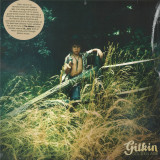
In anticipation of Gitkin's upcoming album in October, Wonderwheel drops a cheeky little 7" with two Latin covers from the man himself. The A-Side finds an instrumental Cumbia cover of the eternal 80s classic by The Human League. Leading with the guitar for the verses, the song chugs along nicely with a faithful interpretation of the original with Simon Moushabeck's accordion leading the chorus. On the flip, Gitkin covers Peru's infamous Grupo Celeste's 1975 classic "Mi Lamento" with friend and collaborator Gabe Case on vocals. Keeping with the Tropical Andean sound of the original, Gitkin's funky, wah wah guitars drive the track set over uptempo, cumbia inspired drums while Case's melodic vocals float on top. Two fun, happy tunes to light up dancefloors this summer!
Air is the central element in Antonina Nowacka's third solo album Sylphine Soporifera. The title names an imaginary species and the land they inhabit, inspired by the unreal desert landscape of Paracas and the undulating tree-less hills of the Outer Hebrides, and comes from the writings of Rudolf Steiner, who describes creatures called Sylphs as the spirits of the air, and the Latin word sopor which means deep sleep.
As with all her releases, Nowacka's other-worldly vocals coming as if from beyond the veil, at once haunting, alien and utterly entrancing. "The voice is the most beautiful and resonating instrument,” she says. “When I sing I feel I create a field in between myself and the air in front of me," she explains. "It is not just that I'm singing – something in the space in front of me is happening, and I merge with this sphere.”
She conjures and is inspired by open environments and infinite landscapes: places full of light and air, manifested here in the sound of ocarinas from Budrio in Italy, whistles from Mexico, simple bamboo flutes from Nepal, alongside tremulous zithers, synthetic Hawaiian sounds from a vintage organ and the uncanny wind instrument presets from a 90s synth.
Nowacka’s first album was informed by vocal sketches made in caves in Indonesia, later recorded at a fortress in Poland; she studied Hindustani music in India with vocalist Shashwati Mandal, fell in love with early Cumbia in Mexico and Peru, and has more recently found inspiration in the landscapes of Italy. Hers is a new New Age soundworld that finds its origins everywhere and nowhere. Sylphine Soporifera gathers these sounds, visions and experiences into an album permeated with a sense of hope and fulfilment, that feels like sitting in an enlivening white beam of afternoon sunlight, as dustmotes swirl in the stillness.
First time reissue of “Quiero…” by Peruvian-Cuban singer and composer Króffer Jiménez, leader of Poppy y sus Pirañas, one of the key figures in Peruvian tropical music.Recorded in 1969 but not released until 1972, this album comprises guarachas and cumbias that were ahead of their time, mostly original compositions. Unfortunately the album went almost unnoticed back in the day, becoming a sought-after collector’s item in recent times. Quintets such as Compay Quinto, Pedro Miguel y sus Maracaibos and Los Totos were the stars of the Peruvian tropical scene at that time, winning over listeners with their powerful rhythm section and fast-paced melodies. In contrast, the dozen guarachas and cumbias on "Quiero..." are slower and more relaxed, where the elegant intonation displays Króffer’s Cuban roots, with the Pirañas contributing during the more festive moments. The cumbia 'Mala mujer' and the guarachas 'Amar en el mar' and 'El sortilegio' were ahead of their time, as the singing style adopted would only become fashionable from 1971 onwards. 180g vinyl.
"To change your mood or mental state - change your Vibration" A fragment from the Kyballion has deeply resonated with the band in recent years. Everything is mental, as Above so Below. BALTHVS deeply believes in these tenets, and their manifestation is through music. Melodies that try to resonate deep within and generate a different type of Vibration.
From the psychedelic experience arises a more balanced lifestyle, and from arduous and uncertain times arises the desire to have inner peace of mind. Music is medicine for the soul and the trio plays this music to wind down, relax, and be more present. It's music from the 21st century, a time when the world has deeply connected to one another via the digital realm, cultures are now free from geographic boundaries, they influence, mesh, and collide with one another. Turkish melodies meet Latin rhythms, from instrumental tunes to Spanish and English lyrics.
The band freely takes from all corners of the world, and it reflects on the global audience they have slowly amassed in the past 4 years. Third Vibration is a celebration of life; a deep respect for the power of music.
"To change your mood or mental state - change your Vibration" A fragment from the Kyballion has deeply resonated with the band in recent years. Everything is mental, as Above so Below. BALTHVS deeply believes in these tenets, and their manifestation is through music. Melodies that try to resonate deep within and generate a different type of Vibration.
From the psychedelic experience arises a more balanced lifestyle, and from arduous and uncertain times arises the desire to have inner peace of mind. Music is medicine for the soul and the trio plays this music to wind down, relax, and be more present. It's music from the 21st century, a time when the world has deeply connected to one another via the digital realm, cultures are now free from geographic boundaries, they influence, mesh, and collide with one another. Turkish melodies meet Latin rhythms, from instrumental tunes to Spanish and English lyrics.
The band freely takes from all corners of the world, and it reflects on the global audience they have slowly amassed in the past 4 years. Third Vibration is a celebration of life; a deep respect for the power of music.
- A1: Deià Dream
- A2: Ọ̀sanyìn (Feat Maikel Alberto Salazar)
- A3: La Mujer Serpiente (Feat Lido Pimienta &Amp; Oliwa)
- A4: Quiero Que Mami (Feat Verito Asprilla)
- A5: Limones (Feat Oliwa, Numu &Amp; Semblanzas Del Rio Guapi)
- B1: Deià Dream Ii
- B2: Selam (Dub)
- B3: Salta La Cuerda (Feat Huaira)
- B4: Song Of The Wind
- B5: Selam (Feat Etsegenet Mekonnen)
- B6: Waves
"We Can Live Together is the first full LP by Earthtones on Wonderwheel. The title is a message, a prayer, and a vision for humanity. It is a reminder that we are in this life together, that love binds us all, and it is only the ideologies and social systems built to prohibit our ability to recognize how close we are that hold us back. We can live, together. The record is based in Folkloric Futurism, a movement that explores the convergence of global folk traditions with technology. Channeling the influence of proto House & Techno pioneers like Mr. Fingers, Kevin Saunderson and Inner City, Earthtones combines analog synthesizers & vintage drum machines with folkloric vocals and instrumentation in a way uniquely his own. It's a celebration of the intersection of past and future, here and there, ancestry and technology. It celebrates themes of spirituality, feminism, love, and most of all, peace. Highlights include "Ọ̀sanyìn", a prayer to the Orisha Ossain, with Maikel Alberto Salazar of rumba super-group Obbatuké on vocals. Recorded in Santiago De Cuba, the track is evocative of Mala's classic "Mala In Cuba" album that broke down barriers between electronic music & traditional music. "La Mujer Serpiente", having seen a sellout 7" last year features Polaris prize winning artist Lido Pimienta-behind the live cumbia rhythms, bass synths, analog keys, 808 drums & guitars, the vision of this track is one of uplifting womxn and femmes everywhere. Ancestral and contemporary Colombian voices are present on the mid-tempo dancefloor track that is the single "Limones" with Semblanzas Del Rio Guapi, Oliwa & the chugging analog rap soundscapes of "Quiero Que Mami" with Verito Asprilla . The album also touches into ambient moments ("Song of the Wind" , Waves") – inspired by friends Carlos Nino, Matthew David, Colloboh and the vibrant West Coast environmental sound movement. credits
g 07: Selam (Dub) [feat. Etsegenet Mekonnen]
Krautige Cumbia der Zukunft trifft auf unverzerrte Gitarre! Bewusstseinserweiternd! Der in Bogotá lebende kolumbianische Komponist Eblis Alvarez, bekannt als Meridian Brothers, kreiert seit 1998 eine einzigartige Mischung aus psychedelischen Klängen. Mit seinem neuesten Projekt "Mi Latinoamérica Sufre" erkundet Alvarez das ungenutzte Potenzial der E-Gitarre in einem tropischen Latin-Kontext. Inspiriert von afrikanischen Highlife- und Soukous-Traditionen schafft Alvarez ein furchtloses Klangexperiment voller Erfindungsreichtum, Verspieltheit und Emotionen. Im Gegensatz zu typischen tropischen Gitarrenalben verzichtet dieses Album auf Verzerrung und Klischees und setzt stattdessen auf einen reinen, sauberen Ansatz. Mit komplizierten Kompositionen, die Cumbia, Champeta, Soukous, brasilianische Tropicalia und psychedelischen Underground-Rock mischen, huldigt Alvarez der goldenen Ära der kongolesischen Rumba, des ghanaischen Highlife und des nigerianischen Afrobeat. "Mi Latinoamérica Sufre" ist ein Egotrip, der eine humorvolle und zugleich introspektive Reise der Selbstfindung und Identität darstellt. Die Hauptfigur, Junior Maximiliano der Dritte, navigiert mit Hilfe psychedelischer Substanzen, politischer Philosophie und Folklore durch die Komplexität der Selbstfindung. Während er sich mit Nostalgie, Paranoia und geteiltem Leid auseinandersetzt, stellt Alvarez sein stimmliches Können unter Beweis und schafft ein akustisches Theater des Geistes. Begleitet von visuellen Erzählungen des kolumbianischen Künstlers Mateo Rivano, porträtiert das Album verschiedene psychologische Zustände von Desorientierung, Selbstmitleid, Erleuchtung und Optimismus. "Mi Latinoamérica Sufre" entpuppt sich als würdige und innovative Ergänzung der Konzeptalbum-Tradition und bietet eine unverwechselbare Mischung aus bittersüßen Aromen, die von Latinoamérica inspiriert sind.
Never before had the lyrics of Peruvian cumbia been able to touch the reality of migrants from the countryside living in the capital. In 1974, Grupo Celeste, under the direction of Víctor Casahuamán Bendezú, recorded 'En el campo', a first single that not only broke sales records, but also brought thousands of people into contact with their homeland. The band not only wove the nets of that urgent, necessary reconnection, but also gave birth to one of the most relevant popular singers in the history of Peru: Lorenzo Palacios Quispe 'Chacalón'. The year was 1974. Until then, only Los Destellos had recorded a non-instrumental cumbia song, 'Elsa', in 1970. Víctor Casahuamán Bendezú, a musician, creator and the composer behind Grupo Celeste understood that in order to continue the legacy of Peruvian bands from the sixties like Los Demonios de Corocuchay, Los Yungas and Los Demonios del Mantaro, it was necessary to address in his lyrics a special and urgent topic: the feeling of displacement from the homeland and the vicissitudes of the migrant sector. The experiences of those who traveled from the provinces to the capital in search of opportunities they could not find in their towns of origin; the process of settling and adapting in a foreign city; the challenges derived from this change of environment; the recognition of a different culture and the creation of a space they understood as their own were the stories that had to be told in the songs. This is why Grupo Celeste was the backbone of cumbia in Peru: it established a common story that thousands of migrants would identify with. From this idea and impetus was born 'En el campo', the band's first single.
First career spanning compilation on vinyl, covering studio albums, singles and unreleased tracks (2009-2023) by the acclaimed Peruvian instro band, Los Protones. A collection of intense recordings - mostly originals - which combine surf music, psych, garage, and tropical & Andean flavors. DESCRIPTION The Protones began their strange journey in Lima, Peru, in early 2007. The band's roots were as a side project for several members of Manganzoides, a well-remembered Peruvian garage rock band, but they quickly consolidated their own instrumental style that, to this day, combines musical genres from the 60s such as psychedelia, surf music and garage rock, sometimes paying tribute to Peruvian rhythms such as chicha and Amazonian cumbia. They are surely the only band in the world that has shared stages with Los Shapis and the New York Dolls, although not on the same night... Over the course of two decades they have played countless concerts, including visits to Europe and other Latin American countries. The music on this compilation comes from their four, full-length studio albums: "Los Protones", "Hijas del Diablo", "Maravilla!" and "Misión: OA4", in addition to the previous CD compilation "20 Monstruos! 2007-2015" and "Double Feature", a split CD with the Brazilian band Os Brutus. The group's current lineup includes Gonzaleo (guitar), Tito (drums), Jimi (keyboards), Andrés (bass) and Lucía (violin). Dance floor oriented tropical music at its best!
Malphino is a mysterious band from an imaginative tropical island of the same name that plays Cumbia and a heady mix of exotic sounds. The musicians of Malphino reinterpret the traditional banda, playing organ, accordion, tuba, and an array of percussion and rhythms from all corners of the world. Malphino has an unique style and is a gathering of nationalities, hailing from Japan, Malaysia, Colombia, France, UK and the Philippines. This central idea of multiculturalism is the foundation for Malphino’s conceptual music project.
For the fourth time now Jaqee introduces herself to the World with her impressive voice and her unique attitude. Born in Kampala, the Capital of Uganda, she began her vagabond like life the moment she was born. During her childhood, she travelled the rural areas of her home country with her parents. This is where she collected her first impressions of the life as a nomad. From birth on, wandering the earth became a part of her destiny. In the early nineties she undertook a huge step and immigrated to Sweden. The City of Gothenburg would become her adopted home from where she was able to access all the different destinies and directions, which were on offer to her. Through all the borders Jaqee crossed, music has always been her steady companion whereas it never was a stereotype thing that let her get down with any special genre, than more like a special feeling. “To do what I want in a particular moment is my motivation. I like to express myself in all kind of sounds.” So above all, she became a true nomad in the world of music. After several successful co-operations with numerous artists, in 2005 Jaqee made an impact with her debut album “Blaqalixious”, which was mainly a Soul and R&B album. “That was my direct contact to the music that a rural community in the Diaspora plays” she explains. But it did not end up there because a nomad like Jaqee does not settle anywhere. After further creative and fruitful collaborations, Jaqee released her second long player “Nouvelle d´ amour” in 2007. This time, the sound was more of a rocking, bluesy vibe. It seemed to be the total opposite to her debut album but for Jaqee it was only the next step on her path in the circle of life. “Everything is possible as long as it is real. I never wonder about things like genre as long as the vibe fits.” One step further on, she encountered the songs of Billie Holiday, which lead to the album “A letter to Billie” recorded together with Bohuslänbigband, a lovely homage to the great American Jazz Singer. Both of her first two albums each received a Swedish Grammy nomination and several appearances in the Swedish national television increased her standing as a passionate and soulful Singer. So Teka, producer and creator of many successful riddims for his co-found German label, Rootdown Records considered her to be part of his new project “Koala Desperados“, which link Caribbean vibes like Cumbia to Reggae, and while working on it a totally new idea was born. Jaqee and Teka decided to combine both their talents into one album. The results of which you can now hear on “Kokoo Girl” a refreshing mix of Old School Reggae sounds from the seventies combined with up-to-date Beats, electronic twists and turns and of course the amazing voice of Jaqee. For her, this means that she has achieved some of her ambitions. “I grew up with African Gospel, in sad and turbulent environment, so for me, this means I grasp and totally understand the reggae and its non ending struggle for the common man.” No sooner said than done and “Kokoo Girl” will become Jaqee’s fourth and newest release. All the paths she followed, countries she crossed and influences she absorbed are a part of this album. She sings with the freedom of spirit of the travelling people. The word “Kokoo” is the only memory that remains everlasting. It is just a word but its impact is so huge that Jaqee does not really like to explain it. “It implies irony and seriousness as well as sarcasm and fun.” It is more than a gimmick. “Kokoo” is a very special feeling and a clear view of the world from an artist who has seen more of it than all the people that have settled down.
On their latest album, Sonido Cosmico, Hermanos Gutiérrez embark on a sonic exploration that defies the conventional boundaries of instrumental music. The collection is a richly textured tapestry, interwoven with the intricate threads of Latin rhythms and ephemeral atmospherics: each track a vignette, a carefully crafted narrative without words, where the brothers' transcendent guitars speak in a language all their own.
There is a subtle sophistication in the way Hermanos Gutiérrez fuses the elemental with the experimental. The album resonates with the echoes of their Latin musical heritage, yet it is undeniably contemporary in its execution, both nuanced and expansive.
Sonido Cosmico stands as a reflective mirror to the band's evolving artistry, united by music across age and geographical divides: a sound mosaic as celestial as its title, an expression of a band that has found its voice in the vast universe of modern instrumental music.
DJ Support: Don Letts (6 Music), Piet Blank Blank & Jones / Dj Ease Nightmares On Wax / Macca Nts Radio / Coyote / Mike Salta Music For Dreams / Pete Gooding / Layne Fox 40 Thieves / Chris Coco / Richard Dorfmeister Kruder & Dorfmeister / Bill Brewster / Simon Mills [Bent. Plus Loads More.
DJ Feedback:
Lovely laid-back vibes. Excellent! - Francois K [NYC, USA]
Ay what a beauty! Takes you away from the madness for a moment. - Macca (NTS)
Following on from Los Rayos Del Sol (2021) & the follow up Los Rayos In Dub (2022) NuNorthern Soul presents ‘Moonbeams’ by Ibiza based producer, per-cussionist and sunset selector, George Solar.
Inspired by nocturnal moods and illuminated by the moon in all its phases, this collection follows the vibrations of 'Los Rayos Del Sol.' It's a journey into night-time peace and harmony, embracing the moonlit atmosphere.
MEDIA LUNA (feat. Ken Fan)
Opening with angelic dubby downtempo, this track translated is 'Half Moon,' sets the tone for the night.
MOONBEAMS (feat. Ken Fan)
Featuring love poet JEN, 'Moonbeams' captures the rise of the moon and the message of love.
COUNTERMOON (feat. Ken Fan)
Originally a slower cumbia demo, this track evolved into a retro dance piece with a minimalistic touch. Reflecting the off-center vibe of lunar forces.
LUNATICOTINA (feat. Ken Fan)
A tribute to the global beats scene, this ritual tune incorporates grooves from all continents, dedicated to Ibiza's 'global beats' oasis LAYLAH venue.
O LUAR
Influenced by Samba vibes and the Brazilian approach to moonlight, this track combines Solar dub and cosmic stardust.
MOONBEAMS reprise (for KS)
A tribute to Klaus Schulze, a secret Solar Moon band member, this reprise is a spontaneous improvisation recorded in memory of the spiritual godfather.
Repress!
StarWax magazine celebrates its fifteenth year, it is in the extension of the anniversary event that the vinyl Wild Star Wax 15 Years Edition in Partnership with Overdrive is born!
Curated and Seòected by Dj Coshmar for the most famous STARWAX magazine a powerful dancefloor combo for djs, diggers and clubbing addicted.
Available in stores from September 2022, the tracklist contains six tracks of cumbia, disco, creole funk, bass music and hip-hop that are available exclusively in this vinyl format, at exception of "An Tèt Aw" the last title of side A already available on the Lp of DjeuhDjoah &
Lieutenant
- A1: La Marimba Del Monte - Ft Absalon & Afropacífico
- A2: Piel De Piedra
- A3: Pedacito De Coco - Ft La Perla
- A4: Negra Soy - Ft Mónica Castillo & Mary Grueso
- A5: Guajiralta
- B1: Recógela - Ft La Perla & Troy Berkley
- B2: Viche, Tumbacatre Y Arrechón (Version) - Ft Absalón & Afropacífico
- B3: La Gaita De Las Aves
- B4: El Mexicano
- B5: Mariposafro
LTD 260 copies pressed / printed sleeves / Sealed
Jungle master Krak In Dub’s new album Catleya is a vibrant hommage to Colombia and its incredibly diverse musical culture. Entirely recorded in Bogotá with the who’s who of today’s Colombian music scene, the album casts a brand new light on the fusion of beats and Latin-American traditional rhythms and instruments, blending reggae, hip-hop, breaks and house with cumbia , afrobeat, ska, and bullerengue.
Standing out on this sun-soaked yet heavy-on-the-beats-and-bass adventure is the appearance of female modern folk trio La Perla, the Afro-Colombian combo Absalon & Afropacifico, and Bermudian singer Troy Berkley.
VOL. 2[16,39 €]
More astonishing new music from Jason Boardman's BiD imprint.
KlangKollektor is a solo project by Lars Fischer (the drummer with the Psychedelic Cumbia band Trak Trak from Nurnberg.)
The clips here only tell half the story, these are meticulously evolving and utterly absorbing pieces.
A stellar collection of seven dubwise tracks over 4 sides with a Techno and Balearic influence.
- A1: Los Saicos– Demolición
- A2: Jean Paul 'El Troglodita'– Tema Del Troglodita
- A3: Gloria Travesí– Pobre Adan
- A4: Los Cuatro Brillantes– Vuelve A Mi Barquita
- A5: Claudio Fabbri– Fiesta De Verano
- A6: Los Saicos– Te Amo (Instrumental)
- A7: Golden Boys (11)– No Resisto Más
- B1: Los Peruvian Brass– Virgines Del Sol
- B2: Chano Scotty Y Su Combo Latino– Prende La Vela
- B3: Chano Scotty Y Su Combo Latino– Psicosis
- B4: Toño Y Sus Sicodelicos– Mr Boogaloo
- B5: Los Guajiros Del Ritmo– El Fresco
- B6: Alicia Estrada– Yolanda
- B7: Toño Y Sus Sicodelicos– El Guayacol
Disperú is the first independent record label in Peru and South America that was founded and run by a woman. In the space of five years Rebeca Llave turned not only Disperú into a successful company but also transformed it into an amplifier and showcase for unique Peruvian popular music projects including the raw, wild and visceral sound of Los Saicos, 60s punk pioneers. This compilation comprises 14 amazing tracks, ranging from cumbia or boogaloo to beat and garage, to celebrate the music legacy of this unique pioneer woman. Disperú was founded at a key moment for Peruvian popular music. In 1965 young Peruvians were gaining prominence in society and the entertainment industry. The hangover of the 'new wave', with its balladeers, persisted on the radio and television, but rock bands were also emerging, inspired by what was happening musically in Liverpool and on the beaches of California. Guided by her ability to spot talent and target what she perceived as commercial prospects, Rebeca signed up an impressive lineup of artists. Several of which would move on to bigger labels, after 'the girl with the charming smile' had set them on the recording road to fame. Besides gathering young rockers (Los Saicos, Jean Paul El Troglodita_) and new wave bands (Los 4 Brillantes, Golden Boys_) under its umbrella, Disperú also ventured into coastal and Andean music from Peru and tropical music (Chano Scotty y su Combo Latino, Toño y sus Sicodélicos_).
- A1: Honkaya - Boat Rowing Song
- A2: Etukuma Kara - Dance Practice On Ice
- A3: Uekap - Greeting Song
- A4: Cikap - Dance For The Crane
- A5: Sonkayno - Game Song
- A6: Haw Sa - King Of Round Singing
- A7: Hetono He Karakara - Sake Ritual
- A8: Yaykatekara - Wedding Song
- A9: Tacuro - Birds
- B1: Sikata Kuykuy - Snow Falling From A Tree
- B2: Horippa - Dance Song
- B3: Hunpe Yan Na - A Whale Ashore
- B4: Hunpe Pa Wa - From The Whale Head
- B5: Pon Repun Kamuy - Little Orca Sea God
- B6: Orouru Roahun - Lullaby
- B7: Kanerenren - Bear Ceremony Song
Marewrew (pronounced: Ma-leoo-leoo / mɑleːul̯ eːu)̯ is a female vocal group that sings traditional Ainu songs. The music of the long-suppressed people from northern Japan has been a particular focus of Pingipung's output in recent years, together with Oki Kano who recorded and produced many Ainu artists. Following various re-releases by Umeko Ando, the late grande dame of traditional Ainu music, the spotlight is now on the a cappella music of Marewrew, which by the way means ‘butterfly’ in Ainu. Attentive listeners will recognise the voices, as some of the band have already performed as backing singers on recordings by Umeko Ando. Their a cappella versions of traditional Ainu music shed a whole new light on the fascinating songs that have been passed down through generations exclusively through song. 'Ukouk' means 'round singing', which refers to the form in which Marewrew perform and record. Many of the songs are set as tightly interwoven canons: one starts, the others join in, but slightly out of phase: Almost like dub echoes, except that they are sung and not created in post-production. The short songs sometimes unfold into a wondrous trance ('Sikata Kuykuy', 'Honkaya') that seems to spin round and round - if singing can actually dance, then this is how. Nature sounds and woodpeckers can be heard ('Hawsa’), and there is a funny miniature in which the ladies imitate birdsong ('Takuro'). Things get hypnotic with an evocative song about stranded whales ('Hunpe Yan Na’) or an ode to the Orca as ‘Little Sea God’ (‘Pon Repun Kamuy’). The album culminates in unexpected pop ('Yaykatekara') or cumbia moments ('Kanerenren') with a band line-up including percussions and Oki Kano on the famous Tonkori harp. Marewrew are Rekpo, Hisae and Mayunkiki. Rim-Rim was a member of the group until 2022. Mayunkiki reflects on the ambivalence of performing traditional music as a contemporary band: "When we first started performing, we all thought we had to perform in an Ainu way. But over time we have become more and more open to new ways of singing. I think if our way of singing is seen as the only, correct way of our tradition, then it won't spread, it's not alive. We like it when it's traditional, but it changes, just like our voices have changed over time.” * 'Ukouk' is a selection of Marewrew's work from the last 13 years, compiled from CD releases by Pingipung's Andi Otto. Oki Kano has contributed unreleased material and added new versions of the songs which had only been released in Japan. The album has been remastered by Kassian Troyer and is now available on LP for the first time.
You may ask yourself what lies beyond the cumbia? What psychedelic permeations reveal themselves in the breaks of the modern day tropical wave? La Banda Chuska's debut single on Names You Can Trust provides a glimpse into the broad benchmarks of this new noise and language, channeling and surfing through a barrel of rip-roaring guitar licks to create something decidedly distinct and du jour at the same time. Just imagine if the B-52s got trapped in some sort of demented Pacific-Peruvian time warp and were forced to shred their way back into existence, bongos in tow. Come along for this excellent adventure and experience for yourself, the tropical waviness of La Banda Chuska's colorful crush.
Little Beat More is proud to present you a two-track EP by Turist, a Vienna based psychedelic Dembow project, founded to combine the energy of a live band with the tightness of an overdub session. ?Turist made it their mission to revive handmade music from the 60's and 70's aiming for the dancefloors of today!
The two tracks demonstrate how they interlace heavy basslines, colorfully echoing guitars and driving drums, drawing inspirations spanning from Ghanian highlife to Peruvian cumbia.
“Skeet”, on Side A, is the band’s manifesto with their special blend of Caribbean dance rhythms and Californian surf music psychedelia. Side B's "Ez Up" is a straightforward champeta song, the Afro-Colombian style that fuses sweet soukous guitar lines with uplifting soca rhythms, making you want to immediately look for the nearest Pico Soundsystem.
Set off on a rhythmic journey following Turist in their musical nomadism with us!
Little Beat More is proud to present you a two-track EP by Turist, a Vienna based psychedelic Dembow project, founded to combine the energy of a live band with the tightness of an overdub session. ?Turist made it their mission to revive handmade music from the 60's and 70's aiming for the dancefloors of today!
The two tracks demonstrate how they interlace heavy basslines, colorfully echoing guitars and driving drums, drawing inspirations spanning from Ghanian highlife to Peruvian cumbia.
“Skeet”, on Side A, is the band’s manifesto with their special blend of Caribbean dance rhythms and Californian surf music psychedelia. Side B's "Ez Up" is a straightforward champeta song, the Afro-Colombian style that fuses sweet soukous guitar lines with uplifting soca rhythms, making you want to immediately look for the nearest Pico Soundsystem.
Set off on a rhythmic journey following Turist in their musical nomadism with us!
Malegra, Reyna Tropical's long-anticipated debut full-length album, is at once a vibrant arrival and an electrifying bridge. The album is a contemporary celebration and continuation of wide-reaching cultural traditions - from Congolese, Peruvian, and cumbia rhythms to revolutionary artists like lesbian Mexican guitarist-singer Chavela Vargas - these influences meld and are remixed through the distinctive lens of trailblazing guitarist and songwriter Fabi Reyna. Traversing themes including queer love, feminine sensuality, and the transformative power of intentional relations to the earth, Malegría spotlights narratives often pushed to the margins and offers them a sonic homeland. The portmanteau, born from a 1998 Manu Chao song by the same name, is akin to bittersweet and blends the Spanish "mal" which means "bad" and "alegria" which means "happiness." Malegria marks Reyna Tropical's return to centering creative joy and movement through music. Whether enjoyed during listening parties or infectious live sets, the music will move listeners and irresistibly command a jump - into action in protection of the land, into the arms of a crush, into your own power and fearlessness, into steady body rolls along to the beat. Malegria offers us all a chance to witness history in the making.
Hit La Rosa are the heirs of the psychedelic cumbia of Los Mirlos and Los Destellos. The band explores the many facets of Peruvian cumbia music, infusing it with pop music, folklore, jazz and dancehall to produce its distinctive grooves and hooks. “Ceres Entrópicos” it’s a collage of the landscapes and rhythms of Peru, product of sound exploration and free composition. This special edition of the original album has some remarkable additions like ‘El Pongo’, their single with the legendary amazonian group Los Mirlos and the remixes of the outstanding Latin producers El Remolón (Ar) and Ballcap (Mx). The band's precise-yet-dreamlike music and punk sensibility all come together to make music that explores life's shadowy sides. They are one of the Peruvian bands with the biggest international growth and one of the few with a Tiny Desk Session. The band is inspired by the sound of Peruvian Cumbia roots and also explores the folklore of other cultures around the world. Their experimentation is wrapped with a contemporary sound and psychedelic vibe that blends into a particular and unique harmony. The band hit Lima's underground scene in 2014 and released their first studio album in 2017 called "Hit La Rosa y Su Gran Unidad Tropical". In 2021 they released “Ceres Entrópicos”, their secondstudio album (digital only). From the beginning until now they have been part of the biggest festivals in Peru, the rest of Latin America, USA and Europe. “Ceres Entrópicos” it’s a collage of the landscapes and rhythms of Peru, product of sound exploration and free composition. First time vinyl edition
Mesmerizing and exuberant Argentinian La Yegros, probably the most magnetic artist on the South American continent, is back with a new album!
The undisputed Queen of "Nu Cumbia" has not rested on her laurels. Surrounded by the same accomplices who have supported her for the last ten years, but eager to renew herself, she has set about recording her fourth album, which stands out from her discography. Although her personal folklore is still rooted in South American folklore, La Yegros is now absorbing contemporary, global music, while tackling intimate, often melancholy and even painful subjects, which she overcomes with the same resilience that drives her in concert. Nothing stands in the way of this Argentinian whirlwind, all the more fascinating for the fact that personal considerations are now surfacing beneath the veneer of the party atmosphere she sets alight.
La Yegros returned to the stage in 2022 to celebrate the 10th anniversary of Viene de Mí, her single hit from the self-titled album, released in 2012 in Argentina and then worldwide in 2013, which catapulted her to international fame. We then discovered a singer who had grown up in the traditions of her country. Her parents come from Misiones, a province bordering Brazil and Paraguay, where balls are filled with the sounds of chamamé (a mix of polka and Guaraní music), Carnavalito (Andean folklore) and Colombian Cumbia. But she herself is a native of Buenos Aires, whose nights are enlivened by the bass of Dancehall and electronic music.
These influences have merged in two further successful albums, Magnetismo (2016) and Suelta (2019), followed by high voltage tours during which La Yegros has been able to display her generous nature, inexhaustible energy, exuberant personality and infectious enthusiasm.
To record her new album entitled 'HAZ', La Yegros has put her faith in the same team that has worked with her since Viene de Mí. On one hand, producer Gaby Kerpel (also known as King Coya), a pioneer of synthetic experimentation applied to traditional music, who has remained her faithful accomplice for over twenty years. On the other hand, composer Daniel Martín, who knows how to come up with melodies to dream about and hymns to sing along to. Inseparable and complementary, the trio continues to concoct this mesmerizing mixture where acoustic instruments meet samples and the rolling of machines. But the new productions don't rely on a tried and tested formula. Generally co-produced between France and Argentina, they break away from over-defined genres. La Yegros knits together new rhythms and incorporates sounds that are unheard of in her country, derived from the latest urban trends, as well as echoes of reggae and funk. As for the lyrics, signed alternately by the trio, they are embodied by La Yegros whose charismatic voice questions a period of her life tossed by waves of love and lovelessness, joy and sorrow, euphoria and anguish, indulgence and resentment.
The album is open to a wealth of musical styles. You'll hear funk guitar and Andean flutes, melancholy accordion and rolling drums, Tuareg blues enhanced by brass, house and electro Cumbia loops, and the bassoons of a chamber orchestra. The folklore 2.0 of La Yegros, nourished by its colorful inspiration, at times tender or exalted, has been imagined as a hymn to love and the contradictory feelings that come with it. As always, it has also been conceived with the stage in mind. Hatching in a storm of overturned emotions, the album is all the more explosive for the strength of the live show that accompanies it. In addition to the usual line-up of guitar, accordion and percussion, a musician handles synthesizers and machines to boost the electronic turboshaft. In any case, you can count on the singer to assert her increasingly clear-cut character with each new project. And, above all, she won't give up. L.a Yegros is back and her batteries are fully charged.
- Pedro Laya - Navidad Negra
- Buddy Ace - Screaming Please
- Elena Madera Pu-Chun-Ga
- Muddy Waters - Ebony Boogie
- Tamps Red - Since Baby's Been Gone
- Noro Morales - Mississippi Mambo
- Sylvestre Mendes - Malambo
- Katherine Durham - Congo Moundong
- The Sultans - Toss In My Sleep
- Machito - Guajeo
- King Eric - Big Bamboo
- Lina De Lima - Cafe Cafe Cafeecito
- Billy Mure - Misirlou
- Joe Swift - That's Your Last Boogie
Voodoo Mambosis And Other Tropical Diseases ist der 2. Teil einer neuen Serie auf Stag-O-Lee. Vier Volumen sind geplant. Die Original Schallplatten stammen aus dem Fundus von unserem geschätzten Duke Jens-O-Matic, seit Jahrzehnten als Grafiker, international gefeierter DJ, Sammler und Jäger unterwegs. Schon damals, als wir Stag-O-Lee das erste Leben einhauchten, war Jens-O-Matic dabei und lieferte vier Volumen der wundervollen Jim Jam Gems 10" Serie ab. Jeweils stilistisch in sich geschlossen. Aktuell arbeitet er an weiteren Jim Jam Gems Volumen, tut sich aber mit den Linernotes schwer, weil, "man hat ja einen pädagogischen Auftrag!". Nun zu dem vorliegenden Tonträger: Was macht ein Freund der obskuren 7", wenn er schon alles im Bereich Rhythm & Blues usw. hat? Er sucht sich weitere Betätigungsfelder. Andere Länder, andere Musik, andere Einflüße. So auch unser Jens-O-Matic. Eine kleine Weltreise hat er für Voodoo Mambosis unternommen, seine neue Liebe den Cumbia einfließen lassen, eine Prise Voodoo drunter gemischt, einige alte Bluesheroen reaktiviert, dazu etwas Exotica - die schadet nie. Die große Kunst ist nun, diese auf Papier disparaten Elemente so zu verbinden, dass etwas einzigartiges, durchweg spannendes entsteht. Voodoo Mambosis And Other Tropical Diseases ist das beste Beispiel dafür! Das Cover, ebenfalls designt von Jens-O-Matic, ist eine Hommage an die wegweisende 84er Compilation Rockabilly Psychosis and the Garage Disease!
Original Son del Barrio, from Monterrey; presenting their first album Tropical Gueto. A trip through different neighbourhoods, with a collection of sounds ranging from Digital Cumbia and Hip-hop to Reggae and Tropical bass. Created as a collaboration between Mexico and Germany (featuring founding member and singer Angel Perez, and Dj and producer Andres Digital), this tropical experiment begins with a series of concerts in Rome, Amsterdam and Paris. Plans are laid for the co-production of Tropical Gueto in said tour; and the resulting efforts saw the participation of Indepe Roots, Bianca Ciocca, Moska Hernandez, Joyce Musicolor and Feo Feo Records; as well as Gran Om, on art duties. Tropical Gueto sets the bar high for Digital Cumbia, setting a clear benchmark for the genre. Angel Perez (aka Son del Barrio) lends his voice to the streets and the “barrio” culture of Monterrey, in the expressive language of his own lyrics and compositions; through the sensitivity and technical ingenuity of producer and Dj Andres Digital (aka Jaky Tuff).
Für Maria Raquel gibt es keine Angst, wenn es darum geht, ihrer Leidenschaft zu folgen. Ob sie nun von Kolumbien nach New York zieht, um ihrem Traum zu folgen, oder ob sie mit den Größen der lateinamerikanischen Musik auf der Bühne steht, Maria kennt keine Bedenken. Auf ihrem Debütalbum 'Mucha Mujer' taucht Maria kopfüber in die klassischen Klänge von Boleros und Cumbias ein und bringt ihre rauchige Altstimme inmitten eines 16-köpfigen Live-Orchesters aus Perkussion, Streichern, Bläsern, Bass und Gitarre zur Geltung. Das Album besteht ausschließlich aus Eigenkompositionen und wurde auf analogem Band aufgenommen. Es erinnert an klassische Aufnahmen von Künstlern wie Omara Portuondo, Celia Cruz und La Lupe, doch Maria Raquel haucht diesen klassischen Genres neues Leben ein - die eindringliche Sehnsucht der Boleros kontrastiert mit der pulsierenden Beharrlichkeit der Cumbia. Mit einigen der besten Latin-Musiker New Yorks wie Reuben Rodriguez (Tito Puente), Marcos Lopez (Marc Anthony) und Ivan Renta (Eddie Palmieri), arrangiert und produziert von Mike Eckroth (Orquesta Akokán) und Jacob Plasse (Los Hacheros), stellt Mucha Mujer der Welt ein fesselndes neues Talent vor.
Conjunto Media Luna invites Turbo Sonidero to remix one of their most recent songs: "Noches de Media Luna," which also serves as the title for the album it is a part of.
While it is also a Cumbia song, it originates from another contemporary branch of this genre: the tropicanibalistic sound of Bogota´. These two styles blend in a powerful Kumbiero track that is perfect for dance floors around the world where cumbia has established its unique hypnotic vibe.
Credits:
Prod. by Conjunto Media Luna
Remixed by Turbo Sonidero
Artwork by Michael Boulton
Mastered in 2023 by Simone Squillario
Made with by Little Beat More 2023
Conjunto Media Luna invites Turbo Sonidero to remix one of their most recent songs: "Noches de Media Luna," which also serves as the title for the album it is a part of.
While it is also a Cumbia song, it originates from another contemporary branch of this genre: the tropicanibalistic sound of Bogota´. These two styles blend in a powerful Kumbiero track that is perfect for dance floors around the world where cumbia has established its unique hypnotic vibe.
Credits:
Prod. by Conjunto Media Luna
Remixed by Turbo Sonidero
Artwork by Michael Boulton
Mastered in 2023 by Simone Squillario
Made with by Little Beat More 2023