This new anniversary edition from London's the Duke Spirit marks 20 years since their adrenaline-charged debut roared onto the UK indie scene. Originally released in 2005, it's now remastered and paired with a second LP of B-sides, demos and rarities, pressed on heavyweight yellow and red splatter vinyl. It's a suitably bold presentation for a record that remains as full-throttle and emotionally raw as ever. Built around the magnetic presence of vocalist Liela Moss and the jangling, distorted interplay between guitarists Luke Ford and Dan Higgins, this is a sound forged in post-punk grit and heavy rock swagger. Tracks like 'Lion Rip' and 'Love Is An Unfamiliar Name' still land with venom, but it's the depth and tension of songs like 'Fades The Sun' and 'Hello To The Floor' that show their full range. The bonus material only adds to the mythology i 'Boot Hill (demo)' and 'Scratching Around (demo)' offer glimpses of the band's early energy in the raw, while 'Souvenir' and 'Now Be Still' stand strong on their own. It's a beautiful document of a band at full force, and a reminder that sometimes the most exciting sounds are the ones that never tried to fit the moment.
Search:cut la roc
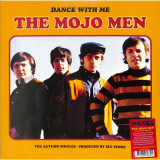
Celebrating the 60th anniversary of these iconic Mojo Men recordings, this fantastic collection now comes pressed on heavyweight colour vinyl with all new artwork and liners. Produced by none other than Sly Stone (from Sly & The Family Stone) during the group"s Autumn label era, these West Coast recordings include the breakout hit "Dance With Me" (1965) alongisde other rare cuts and rock and pop gems. Sly Stone, then a rising producer and arranger, helped shape the sound of many Bay area artists during the early-mid 60s. The partnership between Sly Stone and The Mojo Men was a key chapter in both of their stories.
Crack the coffers, Oh Sees have spawned another frothy album of head-destroying psych-epics to grok and rock out to. Notice the fresh dollop of organ and keyboard prowess courtesy of Memory Of A Cut Off Head-alum and noted key-stabber Tom Dolas, while the Paul Quattrone / Dan Rincon drum-corps polyrhythmic pulse continues to astound and pound in equal measure, buttressed by the nimble fingered bottom end of Sir Tim Hellman the Brave and the shred-heaven fret frying of John Dwyer, whilst Lady Brigid Dawson again graces the wax with her harmonic gifts. Aside from the familiar psych-scorch familiar to soggy pit denizens the world over, there’s a fresh heavy-prog vibe that fits like a worn-in jean jacket comfortably among hairpin metal turns and the familiar but no less horns-worthy guitar fireworks Dwyer’s made his calling card. Perhaps the most notable thing about Smote Reverser is the artistic restlessness underpinning its flights of fancy. Dwyer refuses to repeat himself and for someone with such a hectic release schedule, that stretching of aesthetic borders and omnivorous appetite seems all the more superhuman!
- A1: Theme
- A2: Simian Segue
- A3: Jungle Groove
- A4: Bonus Room Blitz
- A5: Cranky's Theme
- B1: Cave Dweller Concert
- B2: Aquatic Ambience
- B3: Funky's Fugue
- B4: Candy's Love Song
- B5: Bad Boss Boogie
- C1: Life In The Mines
- C2: Mine Cart Madness
- C3: Misty Menace
- C4: Voices Of The Temple
- C5: Treetop Rock
- D1: Forest Frenzy
- D2: Northern Hempisheres
- D3: Ice Cave Chant
- D4: Fear Factory
- D5: Gangplank Galleon
- D6: Game Over
- D7: The Credits Concerto
- A1: K.rool Returns
- A2: Steel Drum Rhumba
- A7: Cranky's Conga
- A8: Schoolhouse Harmony
- A9: Lockjaw's Saga
- A10: Swanky's Swing
- A11: Funky The Main Monkey
- A12: Boss Bossanova
- B1: Hot Head Bop
- B2: Mining Melancholy
- B3: Bayou Boogie
- B4: Snakey Chantey
- B5: Stickerbrush Symphony
- B6: Disco Train
- C1: Flight Of The Zinger
- C2: Run, Rambi! Run!
- C3: Forest Interlude
- C4: Haunted Chase
- C5: In A Snowbound Land
- D1: Krook's March
- D2: Bad Bird Rag
- D3: Crocodile Cacophony
- D4: Game Over
- D5: Lost World Anthem
- D6: Primal Rave
- D7: Dk Rescued
- A3: Welcome To Crocodile Isle
- A1: Dixie Beat
- A5: Token Tango
- A2: Crazy Calypso
- A3: Northern Kremisphere
- A4: Wrinkly's Save Cave
- A5: Hangin' At Funky's
- A6: Crystal Chasm
- A7: Submap Shuffle
- A8: Stilt Village
- A9: Bonus Time!
- A10: Mill Fever
- B1: Brothers Bear
- B2: Frosty Frolics
- B3: Swanky's Sideshow
- B4: Cranky's Showdown
- B5: Boss Boogie
- B6: Treetop Tumble
- B7: Wrinkly 64
- B8: Hot Pursuit
- B9: Enchanted Riverbank
- C1: Brothers Bear Blues
- C2: Water World
- C3: Cascade Capers
- C4: Get Fit Agogo
- C5: Nuts And Bolts
- C6: Pokey Pipes
- C7: Rockface Rumble
- A4: Klomp's Romp
- A6: Jib Jig
- C8: Cavern Caprice
- C9: Jungle Jitter
- D1: Big Boss Blues
- D2: Game Over
- D3: Baddies On Parade
- D4: Krematoa Koncerto
- D5: Rocket Run
- D6: Mama Bird
- D7: Chase
- D8: Jangle Bells
Musique Pour La Danse is proud to present the definitive edition of the highly acclaimed and globally beloved Donkey Kong Country soundtracks, meticulously recreated by composer and producer Jammin' Sam Miller. Released in 1994 for the Super Nintendo Entertainment System (SNES), Donkey Kong Country was celebrated not only for its groundbreaking quasi-3D graphics but also for its exceptional soundtrack.
The soundtrack featured a variety of compositions, and has been highly praised for its diverse and high-quality music, with tracks like "Aquatic Ambiance" and "Fear Factory" standing out as fan favorites. The influence of the Donkey Kong Country soundtrack extends beyond the gaming world, having inspired modern artists and changed the way video game music was perceived.
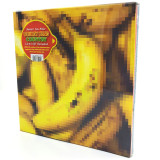
This limited edition boxset, limited to 500 copies, comes as a triple DLP set, containing Volumes 1, 2, and 3. Pressed on red, green, and blue marbled vinyl, it is housed in a hardboard slipcase featuring new and original artwork by Andrew Beltran.
Don't sleep on this ultimate release-the previous boxset edition has been sold out for a long time, and if you can find it, it's being sold for crazy money.
Using hex SPC data converted to MIDI, Jammin' Sam Miller painstakingly recreated the DKC soundtrack note by note, sourcing the original equipment used to create it. He then translated the MIDI into a modern studio context, incorporating keyboard samples, remixing the sounds with added effects, and mastering the tracks. To learn more about his process, watch the explanatory video here: cutt.ly/ulUHE6J.
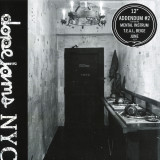
While continuing in the spirit of Dope Jams NYC Volume 1: 2005-2012, which compiled some of the shop’s most cherished tracks from its seven-year run in Brooklyn, here 10 years later we present the collection’s second addendum EP. It moves partially beyond the title’s timeframe – pulling together a couple of the store’s more recent favorites since its 2013 reopening upstate, along with two older gems from its Myrtle Ave days.
Kicking things off is a full-sided pressing of aptly titled techno stormer “Direct Contact.” Bursting forth with a no nonsense, party rockin’ swagger, Greek producer June’s blistering monster of a tune swiftly unleashes an arsenal of arpeggiated synths, jackin’ percussion and out-of-nowhere flourishes with the single-minded purpose of movin’ the crowd. Gracing the B-side are a trio of selections that occupy far moodier terrains. “Imprints,” the lead-off track from T.E.A.L.’s debut LP Cuttings, is a fine example of Dope Jams’ long-held but largely overlooked penchant for dark and dynamic ambient musics. Heavily textured with ripping distortion and space-enhancing tape delay, the piece offers up a brief yet haunting dispatch from a doomed and desolate mind-state. In a more upbeat vein, “Music on My Mind” looks back almost 25 years to the creative apex of Garden State garage royalty Smack. Operating under their Mental Instrum alias, the low-profile production unit crafts an elegant blend of feather-light chords and bumpin’ kicks to firmly underscore guest collaborator Storm’s sincere vocals. Fittingly capping the record is “Blast Knuckles,” the first completed – and hitherto unreleased – track by Dope Jams friends Beige. Rawly produced yet intricately layered, it sketches a fleeting picture of the unique style of lo-fi deep techno the duo developed over the course of their woefully brief partnership.
- A1: My Lowville (2025 Remaster) 10 54
- A2: Auto Show Day Of The Dead (2025 Remaster) 07 11
- A3: Fucking Milwaukee's Been Hesher Forever (Part 1) (2025 Remaster) 03 50
- B1: Fucking Milwaukee's Been Hesher Forever (Part2) (2025 Remaster) 05 34
- B2: Re We're Again Buried Under (2025 Remaster) 07:026
- B3: The Surge Is Working (2025 Remaster) 08 14
'the fun years', comprised of multi-instrumentalists Ben Recht and Isaac Sparks, have been making music together since the turn of the century, producing intriguing interrogations of ambient, drone, post-rock, and turntablism. Originally released in 2008 on the now-defunct Barge Recordings, 'baby it’s cold inside' is perhaps the high watermark of their discography. Equally concerned with microtonal nuance and harmonic intensity, it is both a product of its time and something well past it. The chief protagonist is surely the turntable, deployed to create woolly, evocative loops from unidentifiable source material that recall, at times, the work of Philip Jeck or Jan Jelinek—churning, roiling, hissing, atrophied textures further articulated with nuanced processing and buoyed by baritone guitar drones and anti-riffing.
The title of opener "my lowville" feels like a wink to the famed slowcore duo, with spare post-rock motifs hovering in a dusty ether, slowly consumed by distorted washes of rich, harmonic sound. One of the most satisfying aspects of the album is that despite the recumbent nature of most of their sound design choices and compositional proclivities, Recht and Sparks are loath to sit still. "auto show of the dead" is a serpentine piano/guitar exploration full of subtle detail, preceding the immaculately titled "fucking milwaukee’s been hesher forever," in which the tactile delights of clicks+cuts are liberated from the laboratory and allowed to slum it in the world of tape gunk and '90s plate reverb. Later, "re: we’re again buried under" presents an inky black ambience that feels truly expansive and almost overwhelming, and closer “The Surge is Working” tears apart an anthemic shoegaze dirge at the seams, leaving only billowing filtered noise and negative space in its wake.
Presented here with a brilliant remaster by LUPO, 'baby it’s cold Inside should be considered alongside records like Belong’s October Language and Polmo Polpo’s Like Hearts Swelling—an arresting early aughts ambient marvel that warrants ongoing investigation.
Claire Chicha aka Spill Tab is feeling more free than ever before. The LA-based, French-Korean songwriter and producer,has spent the past five years as spill tab honing a sound that is as raw-edged as it is refined, channelling low-slung guitar-strumming confessionals as well as the earworming melodic hooks of anthemic pop to produce a heady and distinctive mix.
Following the 2019 release of her intimate and infectious debut single “Decompose”, Spill Tab has evolved her spill tab project through three EPs: 2020’s synth-pop influenced Oatmilk, 2021’s playful, uptempo Bonnie, featuring Gus Dapperton and Tommy Genesis, and 2023’s co-produced, sonically-intricate Klepto, which gleefully meanders from the Hiatus Kaiyote-influenced jazz freakouts of “CRÈME BRÛLÉE!” to the guitar-chugging thump of “Splinter”. Live, meanwhile, Spill Tab has been tapped for her explosively energetic presence to open the North American leg of popstar Sabrina Carpenter’s tour, as well as touring through Australia with alt-rock trio Wallows.
With “PINK LEMONADE”, opening single from her forthcoming debut album “ANGIE” , spill tab’s freewheeling sound finds its fullest expression, harnessing this onstage experience and recorded experimentation with her bass-weight and pitched-up vocals. Here we find Chicha only ever chasing that “weird thing”, fizzing with an infectious enthusiasm and intricate musicianship. “The best songs come from writing the main idea in a day, as it’s so instinctual,” she says, such as “PINK LEMONADE” recorded “from a clip taken out of a 40-minute jam that we then chopped and spliced”.
Born to her French Algerian composer father and Korean pianist mother, Claire Chicha spent her early childhood in the mixing room of her parents’ LA post-production studio, bringing coffees to artists as they tracked scores for exciting new projects. “I hung out in that studio all the time until I was around 10 years old, absorbing jazz music my dad was into and classical music that my mom loved,” Chicha says. “My mom had a big hand in making me an adventurous kid, always trying new things from piano to harp and violin, forever soaking up new sounds.”
At 12, Chicha’s life was uprooted as she relocated to Thailand to live with her mother’s family following the collapse of her parents’ business after the 2008 recession. What followed was an unstable and formative few years of early teenagedom, navigating new cultures and life changes. In Thailand, Chicha began learning guitar to cover the Paramore and Green Day tracks she had grown to love while also becoming immersed in Thai traditional music. After a year, she moved once more to live with her aunt in Paris and there she was introduced to the classic sound of Serge Gainsbourg and Édith Piaf before ultimately returning to LA following the untimely death of her father.
“I had to become a real people person to fit in everywhere I was moving, and it immersed me into so many different styles of music,” she says. “I went from listening to the nasal singing of Thai traditional music at muay thai fights in Bangkok, to emotive classic French songs. It definitely informed the need to experiment with my sound as I became more interested in making music.”
At high school in LA, Chicha joined one of the country’s foremost show choirs and realised a natural aptitude for stagecraft and performance as she sang medleys in competitions throughout the US. Going on to study Music Business at NYU, Chicha found a love for the alternative soul and singer-songwriting of the likes of Moses Sumney and Bon Iver, as well as developing her own sound while spending summers interning as an A&R at Atlantic Records and being exposed to the gamut of New York’s live music scene.
“I was going to so many shows as an A&R intern and seeing just how much a lot of music sounded alike,” she says. “It made me realise I wanted my music to feel different, to cut through the noise but still make something that felt honest to me.”
Beginning to independently release tracks, Soill Tab gradually built a loyal fanbase with the release of wistful early numbers “Calvaire” and “Cotton Candy” and soon found herself signed to a major label. Yet, as her career progressed through the COVID pandemic the demands of a corporate major began to conflict with her own searching style. “My last two EPs were under contract and it felt like I was always chasing the carrot,” she says, “I felt a certain pressure to put out tracks quickly and find that ‘hit’. It wasn’t the right environment to truly make what I wanted.”
Ultimately parting ways with her label, Chicha began work on a new album, exploring new sounds and ideas with her LA-based community of collaborators like producer David Marinelli, Solomonophonic, Wyatt and Austin and John DeBold, without expectation. “It became this beautiful experience of only following ideas that I really believed in and exploring all the musical avenues I hadn’t before,” she says. “I’ve never been more excited about songs and I’ve never felt like a project is more mine.”
Writing and recording while touring with Sabrina Carpenter and Wallows, Chicha road-tested her new tracks to see what might land best with an audience who had likely never heard her music before. “You have to win people’s hearts as an opener and you can see what resonates and what doesn’t,” she says. “I would watch people fall in love or not and it’s usually always the song you’re having the most fun with that does the best. That’s what I put on the record.”
« Angie », Spill’s Tab debut album is relased on because Music and expected for May 16th release.
- 1: Salvage Title
- 2: Tree Of Heaven
- 3: Betty Ford
- 4: Free Association
- 5: Hollow Skulls
- 6: Artex
- 7: Love Vape
- 8: Wildwood In January
- 9: Resident Evil
- 10: All Over The World
- 11: Fantasia
An album for sleeping and waking, walking and driving, hunting and fishing, for loitering outside a roadhouse on the haunted tundra. Okay in elevators, not great for dinner. On Caveman Wakes Up, Friendship’s new album and second for Merge Records, the band’s historically capacious definition of country music grows wider still. Shambolic guitars are offset by flute pads, bleary poetry is set against a Motown rhythm section, a song about Jerry Garcia and First Lady Betty Ford fades out with a drum solo, like if Talk Talk came from a dingy Philadelphia basement and was fronted by James Tate. Songwriter Dan Wriggins’ ragged baritone cuts through eleven murky, swirling country-rock songs with profound lyrical substance and sincerity. Like an alarm clock incorporated into the edge of a dream, Caveman Wakes Up belongs equally to the conscious and subconscious mind, fraught with background, steeped in reference and experimentation, delivered casually and as a dire warning, dedicated, above all, to music’s creative soul. Over the years, dedication has paid off. Friendship has become a kind of reverse supergroup,
wherein the band itself and each individual member are located centrally in an increasingly prominent scene of young folk and country musicians and songwriters. Drummer Michael Cormier O’Leary leads the instrumental collective Hour and, along with bassist Jon Samuels, runs Dear Life Records, home to friends and peers who count Friendship as a major influence including MJ Lenderman, Florry, and Fust. (Samuels also plays lead guitar in MJ Lenderman and the Wind). Guitarist Peter Gill’s band 2nd Grade records prolifically. Wriggins began writing the songs of Caveman Wakes Up on a downtuned classical guitar of Lenderman’s and finished on a barely tuned piano in an apartment he shared with Sadurn’s G DeGroot.
In the summer of 2023, Wriggins had just left the Iowa Writers’ Workshop, where his love for poetry and mistrust for the academic poetry world grew in tandem. A relationship fell apart, and Wriggins crashed for several weeks at Lenderman and Wednesday’s Karly Hartzman’s home in North Carolina, where he recorded the first demos of “Resident Evil,” “All Over the World,” and “Love Vape.” Wriggins returned to Philadelphia, and the band got to work on new ideas, finally tracking the album in five days with engineer Jeff Ziegler (Mary Lattimore, War on Drugs). Wriggins recorded vocals with Love the Stranger engineer Bradford Kreiger, and organ, violin (Jason Calhoun), and flute (Adelyn Strei) were recorded by Lucas Knapp in a West Philadelphia church.
It's 2022. The world lockdown is finally over. Imagine a picturesque lake in Tuscany. Now imagine a floating state of the art studio on that lake with two maverick rock icons creating a wild, alchemical concept album: Hugo Race, frontman of Australian post-punk legends The Wreckery and guitarist for the Bad Seeds and leader of True Spirit and Fatalists, and Gianni 'Marok' Maroccolo, producer of Italian alternative music and film soundtracks since the 1980s Florence darkwave scene with Litfiba, CSI & CCCP. Together, they fuse an existential narrative made up of individual stories in the style of Boccaccio's Decameron with psychedelic soundscapes framed by experimental electronica, rock instrumentation and decades of experience as cutting edge musicians and studio producers to bring you an album that defies categorization - The Vigil… "We all knew the situation was inauspicious, the planets lined up overhead like a firing squad and this empty silence roaming around our town, cut off from the other mountain towns by an electrical blackout. Without power, there was no way of knowing what was happening anywhere else. Left alone with our thoughts until help came from outside, a group of us gathered around a blazing fire in the abandoned city hall, feeding it with documents and broken furniture. Scientific progress had long told us we were parcels of dumb atoms and that consciousness and the soul were merely human projections. Now science had failed itself..."
Previously unreleased; four track 12" with two different vocal takes, each w/ dub. Comes in Bond Export company sleeve.
Another cold case solved! One of DKR's early victories was finding a tape of the drum & bass cut of the legendary dubplate 'Rocks & Mountains.' Rumor had said the artist was the Mighty Travellers, but this didn't really add up chronologically or audibly. More astute listeners mostly agreed the artist was likely the Majesterians, a little recorded group who had made a couple other records for Taxi circa 1980. When we first issued the song on a 10" back in 2011, even Sly himself couldn't recall for sure who sang the tune. Like with other 'mystery' projects which we eventually came to realize, we never gave up digging on this one. There were two mysteries at work here - one, confirming the identity of the group, and two - finding the other cut of the tune, which features fuller instrumentation and a different vocal take. Both cuts were around on dubplate circa '80/'81, and the latter cut can be heard ever so briefly in the infamous UK "Sound Business" documentary film from '81. In the course of a mere 13 years, both questions came to be solved - we obtained a pretty clean plate cut of the fuller mix, and we confirmed the identity of the group. The Majesterians were a vocal trio consisting of Everton Dacres, Roderick Perkins and Paul Mitchell. While the latter two gentlemen don't seem to have done much otherwise, we are sure the roots heads and hopefully all DKR followers know Everton Dacres, who made some fine roots music in the 1970s prior to fronting the Majesterians. We spoke to Everton and he confirmed 'Rocks & Mountains' was their tune, cut in Channel 1 at a Taxi session featuring a host of other artists. Indeed, these were the heady days of 1980 with Channel 1 booked round the clock for locked-in sessions, with the Taxi Gang and the Roots Radics laying down future classic after future classic. All that said, we're happy to re-present this tune now with not only proper accreditation, but also both known mixes and the drum & bass mix in improved fidelity over its previous issue.
For us, this is a top five all time tune in the soul reggae canon and maybe Leroy Smart's best ever. An early one for Mr. Smart, this is the first cut of one of his most classic tunes, recorded in 1972 for producer Gussie Clarke and originally released on the early Tuff Gong label via Wailers' associate Alan 'Skill' Cole. If you're like me and you've listened to the original Tuff Gong 45 a million times, you may have noticed that the dub version was mixed from a different vocal take, with some lyrics not on the A side coming in to the dub mix. This alternate vocal take is also the one partially used for the 1979 remix cut on a heavily overdubbed rhythm. We had always desired to hear this other take in its original form, so naturally then we had to get the great Mr. Clarke to dig this one out of his archives to hear it as it should be. In comparison to the original released cut, it's a more spare take sans the opening harmonizing, and the lyrical changes give the tune a more pleading and less stubbornly declarative mood. For the B-side version we have an alternate mix again, which is actually the one Big Youth deejays over for his tune "Pride & Joy Rock." Consider this release a prime example of DKR's "never too much of a great thing" philosophy.
- Roundabout
- Shops!
- Lucky
- The Horse
- Challenger
- Deal
- Head & Shoulder
- Cuts
- Somers Town
- The Rotor
With an eccentric, poetic line in minimal rock, London bass & drums duo Most Things release their debut album Bigtime 23/05/25 on tastemaker label So Young Records. Marrying the compassionate observational wit of Richard Dawson with a sound somewhere between Minutemen and Television Personalities, the album’s ten songs explore family relationships, mental health and life in the city. The project of London-born bassist/vocalist Tom Phillips and New York-born drummer Malachy O’Neill, the pair met as students in London after being introduced by Phillips’ then housemate Sabrina Fuentes – singer in acclaimed punk band Pretty Sick. Bigtime is a London album. Chronicling Phillips’ experiences growing up in the city, as the only child to his single mother, it illustrates its shops, pubs and bustle with humour and warmth, but also considers its troubles: from violence to threadbare public services.
Contemporary Belgian techno powerhouses Charlotte de Witte and Amelie Lens come together on a groundbreaking new “One Mind” EP.
Between them, this pair have very much refined the sound of techno over the last few years. Both hail from Belgium, and both came up through the clubbing scene with their own unique interpretations of techno and its many different nuances.
Charlotte de Witte, a global techno icon and founder of the KNTXT label, has released numerous EPs with a focus on acid and techno, blending in trance and ambient into compelling club cuts. With millions of fans, she also has a history making presence in underground clubs, at electronic music festival main stages like Tomorrowland and Ultra, and crossover festivals with her recently completed production tour "Overdrive". She’s also been crowned DJ Magazine’s World’s Number 1 Techno DJ five years in a row. Through KNTXT, she innovates with ventures like the archival Époque label, immersive pop-ups and spontaneous street parties. Poised for a groundbreaking 2025, she remains at the forefront of revolutionizing the electronic music landscape.
Amelie Lens, the leading figure in modern techno, is known for her exceptional productions and performances. Beyond music, she is a proud mother, record label owner, and activist. She founded Exhale and LENSKE, two globally recognized labels and event platforms celebrated for their inclusivity and unique on-site experiences. Exhale focuses on nurturing fresh talent, signing its youngest artist at just 16 years old. Amelie made history as the first woman with a residency in Ibiza and is now collaborating with Vogue Collective, becoming the first techno artist to do so. Her strong relationships with top designers like Chanel further highlight her creative vision beyond music. From festival appearances at the biggest festivals in the world to performances at iconic venues like The Sphere in Las Vegas, Amelie consistently pushes boundaries, shaping the future of electronic music.
To enhance the unified concept of the EP, both Amelie and Charlotte’s voices are subtly layered into the tracks, together, as one.
The brilliant 'One Mind' kicks off with rock solid, earth rattling kicks and intimate vocal whispers that draw you in close. Flashy, strobe lit synths soon electrify the groove and ensure hands will go skywards as acid lines bring extra drama. 'Where Do We Go' is another fantastic, turbocharged and acid-laced trance-techno gem with high-speed drums and synths racing along under icy spoken words that bring spine tingling sensuality.
This is a super coming together of two of modern techno's most potent creative forces.
To celebrate the label's 10th & 11th release, Soul Quest Records have curated a family type affair that sees faces both new and old for the label. An encapsulation of the sound that the label has been pushing since its inception back in 2023, the VA contains a wide reaching spread of house orientated cuts that showcases the labels musical personality and depth - and is reflective of the supreme talents behind the music.
The A side opens proceedings with three emotive house numbers, with label co-founder Max Sinàl and King Crowney’s track ‘Intentions’ landing first. A smooth, soul-laden progression, with subtly placed muted trumpet throughout. From the ethereal vocal lines of Liv East through to the gentle breeze of thechords, this one is Soul Quest to its core. Co-founder SIxm Sol lands next with ’NYBB’, a percussive groover that once again demonstrates a deft level of subtle interplay within the melodic layers. Dreamy vocal lines hit all the right notes alongside a blend of atmospheric pads and tinkling jazzy notes. Wrapping up the A side, Hitch 93 presents ‘Uno, Dos, Tres, Four’, which features an ear worm of a chord progression weaves its way around a rock solid percussive foundation, as the vocals chime out through the middle that helps craft a deeply hypnotic atmosphere.
The B Side opens up with Rob Redford and his track ‘Garden Party’. This track focuses around an inspired ‘everybody loves the sunshine’ sample, and exudes big level, blue sky energy, with hands in the air feels throughout as the dance shifts with smiles all round.
Two prime house steppers land next, with ‘The Blues Kitchen’ by Soul Groove presenting a top quality drum pattern that entices whilst the vocal lines and engrossing melodic section wrapping the dance around its little finger; and finally, ‘Edith’ by Flying Moth may be short but its ever so sweet - skipping stepped grooves interlaced with a bass line that thuds to the rhythms of the heart, whilst the melodies atop stir the emotions ever so delicately.
Songs From The Harbour is the third studio album of original avant-rock and experimental ballads by the critically acclaimed World Sanguine Report (WSR) WSR’s new iteration, created collaboratively by celebrated musicians Andrew Plummer, Matthew Bourne, Ruth Goller, and Will Glaser, marks a significant milestone for WSR, and is due for release via revered label, God Unknown Records
There’s a quality about the album that echoes the likes of Tom Waits, Michael Gira, Nick Cave, and Captain Beefheart, hollerers and raspers, singing as if laid low by life, down and out. However, the sense of beat-up black and blues, of ramshackle rock, is deceptive. Songs From The Harbour was developed by vocalist/guitarist Andrew Plummer in close partnership with long-standing collaborators: versatile doyens of the jazz and Improv world, avant players par excellence, including Ruth Goller (bass, vocals), Matthew Bourne (harmonium), and Will Glaser (drums). On tracks like ‘She Is All', with it’s searing-hot guitars reminiscent of John Fahey’s Red Cross, they cut across each other, deceptively roughshod, but with subtle interplay, crashing,burning, bending and colliding with exquisite, geometrical correctness.
- Stone
- La Pelea Del Gobernador
- Pobre Gato
- Nunca Cambias
- Nada De Nada
- Algun Dia
- Swarlb
- Sookie Sookie
- Coge Mi Mano / Gimme Little Sign
- No Time
Discover the groundbreaking sound of Los Texao, a legendary Peruvian rock band that helped shape the music scene in the 1970s. Born in the culturally rich city of Arequipa, Los Texao's journey to stardom was paved with innovation, passion, and an undeniable connection to their roots. Their music fused the energy of psychedelic rock with Latin American influences, captivating audiences across their native Peru, Los Texao's psychedelic phase was marked by experimentation with new sounds and instruments. This release comprises their complete recordings, including all their singles and also covers of some of the most influential rock bands of the era, most of them previously unavailable on vinyl. Formed in 1969, the band took their name from Arequipa's emblematic flower, the nasturtium, and made an immediate impact with their debut at a local band contest. Soon after, they recorded their first 45 RPM single, which included covers of tracks by Chilean group Los Beat 4. But it was in the early 70s when Los Texao truly found their voice. With a dynamic lineup, including the talented Fernando "Feño" Humbser and Juan Núñez on guitar, Víctor Dibán on vocals and bass, and Edgar "Chito" Manrique on drums, their musical evolution began to take shape. The addition of Julio Torres, a keyboardist and guitarist from the iconic bands Los Beatniks and Los Dig It, further elevated their sound. Los Texao's psychedelic phase was marked by experimentation with new sounds and instruments. They embraced the emerging trend of playing rock in English, despite the language barrier, and incorporated cutting-edge gear. With the help of the legendary Peruvian jazz musician Jaime Delgado Aparicio, they created hypnotic tracks like 'Algún día' and 'Nunca cambias,' capturing the essence of 70s rock with swirling textures and atmospheric vibes. But it wasn't just the melodies that set them apart - their electrifying rhythms and powerful arrangements, like those heard in 'Stone' and 'La pelea del gobernador,' showcased their refined musicianship and intense dedication. Los Texao quickly became a sensation in Peru, performing in cities like Puno, Moquegua, and Arica (Chile), and sharing stages with iconic bands like Los Shain's, Traffic Sound, and Telegraph Avenue. Their infamous hit 'La pelea del gobernador' tells a tale of generational conflict and rebellious youth, captured in a live performance that still resonates with audiences today. The band's wild live shows became the stuff of legend, with fans packing into intimate venues to experience the raw energy of their loud, unapologetic rock. In addition to their 45s, Los Texao also recorded covers of some of the most influential rock bands of the era, including Cream, Steppenwolf, and The Guess Who, showcasing their versatility and love for classic rock. Unfortunately, this session remained lost for years and some of these covers have never been available on vinyl before. Despite their growing success, Los Texao eventually disbanded in 1975 due to personal and professional challenges. But their legacy never faded.
- あみめ / Amime 05:33
- 麻雀砂漠 / Majan Sabaku 05:09
- かくれんぼ / Kakurenbo 04:07
- 嘆きの亀 / Nageki No Kame 05:31
- クローゼット / Closet 04:23
- スロウな夢 / Slow Na Yume 04:37
- ペイズリー / Paisley 06:00
- 波紋 / Hamon 04:37
- 水 / Mizu 04:17
- 飛んでる / Tonderu 05:10
- さよなら / Sayonara 04:03
- 真夜中の音楽 / Mayonaka No Ongaku 05:35
- とらとらいおん / Tora To Lion 04:48
- 新しい場所 / New Season 06:02
- さらうかぜ / Saraukaze 03:42
- ストロボ / Storobe 03:53
- 交信 / Koshin 05:33
- 少女 / Shoujo 06:07
- ひまわり絶叫 / Himawari Zekkyo 03:36
- いつのまにかわたしたち / Itsunomanika Watashitachi 04:16
»Carpet Of Fallen Leaves« is an introduction to the folk-pop world of Eddie Marcon. It follows in the footsteps of other collections of Japanese artists on Morr Music, such as yumbo, Andersens, and the »Minna Miteru« compilations. »Carpet Of Fallen Leaves« draws together songs from Eddie Marcon’s twenty-two-year history, including fragile, yet rich in melody material, collected from a prodigious run of limited edition, self-released CD-Rs.
Eddie Marcon is the project of Eddie Corman and Jules Marcon, who met through their involvement in Japan’s underground music scene. Eddie was a member of noise-rock duo Coa, while both Eddie and Marcon were part of psych-rock collective LSD-March. Forming in 2001, Eddie Marcon’s sound is markedly different from these groups, though they do, at times, share a sense of psychedelic dislocation, through the gentle, limpid pace of their songs. But with Eddie Marcon, melody and gentleness is at the music’s core.
They’ve long marked out their own, unique territory within a worldwide community of psych-folk and folk-pop artists; sharing their music through a subterranean network of colleagues and friends, they count groups like The Pastels and The Notwist as their fans, and Eddie has collaborated with the likes of Shintaro Sakamoto, and Aki Tsuyuko (in Tondekebana, and with Marcon and Ippei Matsui in the quartet Wasurerogusa). Eddie Marcon have also recently worked with drummer Ikuro Takahashi, who’s played with groups such as Fushitsusha, Maher Shalal Hash Baz, and Nagisa Ni Te.
Across the songs on »Carpet Of Fallen Leaves«, Eddie Marcon’s songs are performed by Eddie on guitar, organ and vocals, and Marcon on bass; they’re variously joined by Takahashi, Yojiro Tatekawa (drums), Tomoko Kageyama (vibraphone), Yasuhisa Mizutani (flute), Madoka Asakura (vocals), and Ztom Motoyama (pedal steel). The arrangements are pared back to best serve the core of each song, and the playing is gorgeous – fluent but not showy; capable of great intricacy, but aware that simplicity is key to direct communication.
Songs like »Mayonaka No Ongaku« stretch their limbs languidly, the music shivering with beauty as guitar and cymbal drift across Eddie’s poised vocal delivery. »Tora To Lion« began as an improvisation, but it’s become a firm favourite of the group’s fans: as Eddie says, »it has become a very important song for us, to the extent that it can be said to be our representative song.«
Perhaps the most moving thing about »Carpet Of Fallen Leaves«, though, is the way it captures the subtle yet significant moments of everydayness that ask for our attention. »Shoujo«, a song for a beloved cat who passed away, possesses rare emotional resonance. »At the end of the song,« Eddie remembers, »I wanted to have her throat rumbling endlessly.« When the song was cut, a television voice appeared behind the purring, saying ›thank you‹. »For us, it felt like words from Poco-chan, and tears came to our eyes.«
- Pharaoh's Dance
- Bitches Brew
- Spanish Key
- John Mclaughlin
- Miles Runs The Voodoo Down
- Sanctuary
Listen to This.” As the original working title for Bitches Brew, the instruction and invitation remains to this day as the best way to approach a record that shattered conventions, altered music history, and, 55 years later, still sounds far ahead of its time. The template for jazz fusion, Bitches Brew is rightly ranked by virtually every significant outlet among the 100 greatest albums ever made. Sewn together with vibrant colors, voodoo textures, and ethereal moods, the 1970 landmark emerges with supreme detail and nonpareil feeling on Mobile Fidelity’s UltraDisc One-Step 180g 33RPM 2LP vinyl set.
Sourced from the original master tapes, strictly limited to 5,000 numbered copies, and pressed at Fidelity Record Pressing in California, this definitive-sounding 55th anniversary reissue enhances every element of a double album that established new possibilities for studio recording techniques. You’ll hear wide and deep soundstages, separation between instruments, and an extremely broad dynamic range. If ever a jazz album can be said to have gone to outer space and back, this is it.
Davis conceived Bitches Brew by having the musicians stand in a semi-circle. There, he pointed at them with vague directions for tempo, solos, and cues. The collective improvisation and interplay spawned a galaxy of melodies and grooves that were later spliced together by producer Ted Macero. Benefitting from the ultra-low noise floor and superb groove definition of this pressing, these distinct creations take shape with utmost realism. Compositions stretch across jet-black backgrounds and paint canvases laden with millions of colors and shades. Juxtaposed percussion, loose jams, and melodic segues explode with impressionistic verve.
Bitches Brew also boasts visionary artwork. By design, the lavish packaging and gorgeous presentation of the UD1S Bitches Brew set call attention to such matters. Housed in a deluxe slipcase, it features special foil-stamped jackets and faithful-to-the-original graphics that illuminate the splendor of the recording. It is made for discerning listeners who desire to fully immerse themselves in everything surrounding the album, from the images to the tones. And this is one effort where every last detail matters.
Gathering a Hall of Fame-worthy lineup of musicians and tweaking it according to his desires, Davis follows through on his idea to “put together the greatest rock and roll band you ever heard.” Central to his proposition is the presence of two (and sometimes three) drummers and two bassists, a tactical move that makes rhythms a central focus. Akin to the futuristic album cover art, the drum-driven suites head toward distant universes and uncharted territories. At once hypnotizing and grooving, they chart maverick adventures via quixotic rock, funk, and R&B elements.
A without-a-net experiment involving interchangeable double-quintet lineups, Bitches Brew explores the previously unimaginable with electrified instruments — Fender Rhodes piano, processed trumpet, dissonant guitars, and bass among them — and an emphasis on feeling over composition. Mesmerizing and soothing, jarring and smooth, overt and subtle: The music seemingly covers an entire map of emotions and sensations, and like no record before, ties together the groundbreaking creativity of the multiple disciplines that were changing popular culture at the end of the 1960s and dawn of a new decade.
Conceptually, Davis described Bitches Brew as “a novel without words” and “an incredible journey of pain, joy, sorrow, hate, passion, and love.” The vast psychedelic expanses of warped echoes, liquid reverb, and tape loops confirm such ambitious contrasts of light and dark, fear and hope. Yet the most absolute characteristic of the watershed effort lies in how it resists definitive interpretation and encourages free thought — the very principles Davis used to conceive Bitches Brew.
More About Mobile Fidelity UltraDisc One-Step and Why It Is Superior
Mobile Fidelity Sound Lab’s UltraDisc One-Step (UD1S) technique bypasses generational losses inherent to the traditional three-step plating process by removing two steps: the production of father and mother plates, which are created to yield numerous stampers from each lacquer that is cut. For UD1S plating, stampers (also called “converts”) are made directly from the lacquers. Since each lacquer yields only one stamper, multiple lacquers need to be cut. Mobile Fidelity's UD1S process produces a final LP with the lowest-possible noise floor. The removal of two steps of the plating process also reveals musical details and dynamics that would otherwise be lost due to the standard multi-step process. With UD1S, every aspect of vinyl production is optimized to produce the best-sounding vinyl album available today.
BLUE MARBLE VINYL[26,01 €]
CHERRY MARBLE VINYL[26,01 €]
CITRUS MARBLE VINYL[26,01 €]
CITRUS MARBLE VINYL[93,24 €]
Virginia Beach's Turnover has never been a band afraid of telling the truth. The emotional honesty poured out over a number of anthemic releases has been a proven formula of success for the band, but on their sophomore LP Peripheral Vision, the band treads into deeper water. Working again with Magnolia producer Will Yip (Title Fight, Circa Survive), Turnover's latest record shows a band maturing to create their best effort: an ethereal, reverb-drenched soundscape blending elements of hazy dream pop and the delicate emo rock of yesteryear. Songs like "Hello Euphoria" and "Like Slow Disappearing" highlight the new calmer, more subdued approach to songwriting, matched by Austin Getz's somber, confessional lyrics that echo throughout songs as if his words were haunting every measure. Peripheral Vision solidifies the idea that Turnover is a band with its finger on the pulse of its generation: growing and learning with every release, but never failing to provide a relatable, cathartic experience for anyone listening.
- Collection 001 - 001 A 23:46
- Collection 001 - 001 B 23:48
- Collection 002 - 002 A 18:12
- Collection 002 - 002 B 20:54
- Collection 003 - 003 A 22:14
- Collection 003 - 003 B1 09:33
- Collection 003 - 003 B2 05:25
- Collection 004 - 004 A 16:11
- Collection 004 - 004 B1 07:08
- Collection 004 - 004 B2 09:52
- Collection 005 - 005 A1 08:38
- Collection 005 - 005 A2 08:54
- Collection 005 - 005 B1 07:14
- Collection 005 - 005 B2 03:53
- Collection 005 - 005 B3 03:57
- Collection 005 - 005 B4 04:03
- Collection 006 - 006 A1 17:35
- Collection 006 - 006 A2 05:12
- Collection 006 - 006 B 23:12
- Collection 007 - Merzrock B1 + Dubbing 5 11:21
- Collection 007 - Merzrock A1 + Anemic Pop 1 02:00
- Collection 007 - Merzrock A1 + Anemic Pop 2 08:32
- Collection 007 - E-Study #3-1 + Merzsolo 1 15:49
- Collection 007 - E-Study #3-1 + Merzsolo 2 05:58
- Collection 008 - Concrete Tape Ph#1~ 05:19
- Collection 008 - E8 A1 + 006 A1 06:03
- Collection 008 - Merzsolo 10/6.81 A1 10:36
- Collection 008 - E8 B2/Concrete Tape Ph#1~ 06:28
- Collection 008 - Sans Titre Merz 1 + Tape Loops 04:54
- Collection 008 E6 A3 + Concrete Tape Ph#1~ 06:46
- Collection 008 - Merzsolo 10/6.81 A5 + Violin 03:21
- Collection 009 - N.a.m.4 + E-8 06:11
- Collection 009 - Telecom 1/3 + N.a.m.5 17:32
- Collection 009 - E-3-1-1 11:24
- Collection 009 - E-3-1-2 01:50
- Collection 009 - Tape Loop + Noise 1 (Concrete Tapes) 02:39
- Collection 009 - Tape Loop + Noise 2 (Concrete Tapes) 04:25
- Collection 010 - 007 B1 + Ah Corps 11:47
- Collection 010 - E3 B2 + Ah Corps 11:28
- Collection 010 - N.a.m.6 With Radio & Tapes 22:47
Carrying on their longstanding dedication to the seminal output of Merzbow, Urashima returns with what is unquestionably their most ambitious release to date: “Collection 001-010”, a deluxe, 10 LP vinyl box set limited to 299 copies, gathering together the entirety of the project’s first ten releases, originally released in 1981. Encountering the band in its early incarnation of the duo of Masami Akita and Kiyoshi Mizutani, raw, exposed and bristling with energy, foreshadowing numerous trajectories they would follow over the coming years, these astounding full lengths - the majority of which have never been released on vinyl - come housed in a beautifully produced, deluxe wooden box, with each LP in its own individual sleeve reproducing the original artwork, and a LP-sized 32-page book containing reproductions of artworls and collages by Masami Akita, an interview conducted by Jim O'Rourke, and liner notes penned by Lasse Marhaug, Thurston Moore, and Akita himself, amounting to what is unquestionably one of the most historically significant releases we’re likely to encounter in 2025.
Deluxe Edition of 299 copies, remastered from the original analog tapes by Masami Akita, each LP comes in its individual sleeve reproducing the original artwork, also includes a LP-sized 32-page book. ** Since its founding during the late 2000s, the Italian imprint, Urashima, has become a definitive voice in the landscape of noise. Bringing forth beautiful limited edition releases, they’ve sculpted a singular vision of one of the most vibrant and revolutionary bodies of experimental sound to have graced the globe. Among the many projects that they have supported over the decades, there has been an undeniable dedication to the output of the seminal Japanese noise outfit, Merzbow, making a significant amount of the project’s out of print back catalog available across a range of formats. Now they return with what is arguably their most stunning and ambitious release dedicated to the project to date: “Collection 001-010”, gathering the entirety of Merzbow’s first ten releases, largely privately released by the band on cassette across 1981, in a deluxe, 10 LP vinyl box set. Representing what is effectively ground zero in Japanese noise and collectively amounting to some of the most sought after releases ever produced within that movement, Urashima’s truly beautiful collection comes fully remastered by Masami Akita himself from the original tapes, presenting all but a small number in their first ever vinyl pressings, with each LP housed in its own individual sleeve reproducing the original artwork, alongside a LP-sized 32-page book containing reproductions of artworks and collages by Masami Akita, an interview conducted by Jim O'Rourke, and liner notes penned by Lasse Marhaug, Thurston Moore and Akita himself. Towering with energy and groundbreaking creative vision, within the realms of noise and experimental music, releases don’t get more monumental or historically important than this!
Merzbow came roaring onto the Tokyo scene in 1979, and remains, to this day, one of the most prolific and aggressively forward-thinking projects in experimental music. Eventually becoming the solo vehicle for the efforts of Masami Akita, in its earliest incarnation the project was the duo of Akita and Kiyoshi Mizutani, taking their name from German artist Kurt Schwitters' pre-war architectural assemblage, The Cathedral of Erotic Misery or Merzbau, and quickly set out to challenge entrenched notions of what music could be. Embracing technology and the machine, even in its earliest iterations, Merzbow pushed toward new territories of the extreme, arriving at a space of pure, unadulterated sonic onslaught that has continued, for over 40 years, to set the pace for the entire genre of noise, and has remained one of the movement’s most important, definitive voices, continuously laying the groundwork for countless artists who have followed in its wake.
When dealing with historical gestures, there’s an invertible aura surrounding original line-ups and early statements, and rightfully so. It is often within a band’s debut that we catch the purest glimpse of the raw energy and creative ferment that made them what they are. This is certainly the case when regarding the coveted early releases of Merzbow, capturing the emergence of the project in its form as the duo of Masami Akita and Kiyoshi Mizutani as they helped set the blue print from the then emerging movement of Japanese noise. Over the course of its nearly five decades of activity, Merzbow has always been noted for how prolific and ambitious the project is. This was no less the case in the very beginning. While they were active for roughly two years prior, in 1981 alone they issued ten self-released cassettes numerically titled “Collection 001-010”, albums which have both individually and collectively become holy grails in the realms of noise, with only two - “Collection 007” and “Collection 009” - ever receiving vinyl reissues prior to now.
As Lasse Marhaug deftly articulates in the newly commissioned liner notes for “Collection 001-010”, despite having been recorded in different location across a span of time, the sum total of Merzbow’s first ten releases might be best regarded as a single release to be listened to in the same, durational sitting, with the material standing well apart from what most came to expect from Merzbow, while foreshadowing numerous trajectories the project would take over the coming years. Not only do these recordings feature a vast array of instrumentation - tapes, acoustic and electric guitar, violin, drums, voice, recorder, organ, found sounds, clarinet, homemade and prepared instruments, a vast arsenal of effects and electronics, and piano, to only begin to scratch the surface - the majority of which would disappear from the project’s active sources of sound generation over the subsequent years, but there is a slow pacing and raw sense of openness and exposure that reveals strong connections to the avant-garde improvisations of groups like AMM, Musica Elettronica Viva, and Gruppo di Improvvisazione Nuova Consonanza, the psychedelia of groups like Taj Mahal Travellers and Flower Traveling band (both of whom Akita mentions having seen in youth within his interview with Jim O’Rourke), and rock in general - albeit in fully abstracted forms - unspooling as brittle, pointillistic, textural, raw and abrasive forms, that occasionally flirts with unexpected tonal sensibilities. As Marhaug describes it in his excellent liner notes: «Sonically, “Collection” sounds more sparse and stripped. It’s dry sounding, up-front, no reverb, and there’s less heavy low-end grime and thin on the signature frequency sweeps. Viewed in a 1981 context, musically, it’s more akin to what the LAFMS (Los Angeles Free Music Society) pool of artists were doing at that time than what was happening in industrial music... There’s a strong playfulness throughout, like the sound objects are being explored for the first time, without neither restraint nor hurry. Events are allowed to be fully examined before the music moves on, or simply cuts off. To a large degree, the music on “Collection” feels acoustic in nature, although a Electro-Harmonix ring-modulator features prominently throughout.»
Easily described as a rarely encountered revelation into the original and earlier documented studio sound of Merzbow, “Collection 001-010” collectively amounts to an engrossing sonic journey in its own right, while also allowing for important, often overlooked connections drawn from numerous other creative wellsprings, notably free jazz, underground rock, the output of European and Japanese avant-garde music, as well as Dada, Fluxus, and Mail Art, much of which, beyond the illumination made possible by the sounds, Jim O’Rourke’s fantastic interview with Akita, published in the booklet, further explores, offering great insights into the origins of Merzbow and the thinking behind the project, as well as aspects of the earliest days of Japanese noise.