Tyler Pope's latest EP is an absolute belter, and the primary concern these four tracks are asking of you is right up front: Pay Attention to the Bass. And, honestly, with a sense low-end like what's on display here, how could you not? This new release from Pope-a dance veteran who's also known as a full-time member of LCD Soundsystem as well as a collaborator with artists like Hercules & Love Affair and Pantha Du Prince-arrives on his always eclectic Interference Pattern label, an imprint that has previously spanned left-field electronic sounds, noise rock, and avant-R&B. As such, Pay Attention to the Bass is anything but straightforward, with ricocheting rhythms and alluring textures that are as easy to get lost in as they are to move your body to.
Listeners familiar with last year's Make Each Other Happy EP, which embraced dark disco grooves and crisp percussion, will be delighted at the new curveballs on display here: "Why Must I" euphorically merges the propulsive charge of UK funky with delicious piano-house stabs, while "OKay" anchors itself around a rubbery bass line like a lost cut from the Remain In Light sessions. The flip side gets dark and dank with it, as "Close the Door" echoes with spooky clatter and dubby wobbles before sprightly vibes break through-and the closing cut "Where r they Hiding" goes full-on tunnel techno with it, conjuring a mood that recalls the haunted house music of Sandwell District as well as the cold-sweat futuristic visions of jungle. With Pay Attention to the Bass, Pope expands his sound wider than ever, and it just so happens that it's an absolute blast to listen to as well.
quête:cut la roc
This is The Wreckery album that never was but always should have been!
At the crest of the Australian post punk era, The Wreckery played atmospheric rock with film-noir swagger and renegade attitude, carving a loyal following. Critics quickly positioned them as successors to a darkly exciting avant-garde Melbourne tradition previously marked out by The Birthday Party.
Early recordings for Rampant Records (1985-87) showcased The Wreckery's fusion of swamp blues and noir-jazz, delivered with a deadpan, reckless, and romantic cut (check out the 'Ruling Energy' video!). Creative tensions saw the band implode as they were reaching their peak with the Laying Down Law album (Citadel Records, 1988). Yet another great and dangerous rock 'n' roll band who became a danger to themselves.
35 years later, the new album Fake is Forever delivers on unfulfilled promises, revealing The Wreckery on fire like never before. The DNA is still there – the signature sound of Charles Todd's baritone sax; the scathing lyrics and vocals of Hugo Race; the distorted angular guitars of Clayton-Jones; the eclecticism of multi-instrumentalist Robin Casinader; Nick Barker and former Plays With Marionettes drummer Frank Trobbiani fuse as the solid engine room of this iconic group. All the original edge with a new maturity and control.
The songs still emanate from the deep, dark end of the musical gene pool. The sarcastic, provocative lyrics of 'Smack Me Down', 'Get A Name' and 'Young People'; the musical fury of 'Stole it from Alpha Ray' and 'Evil Eye', the romantic melodrama of 'The Devil in You' and 'Whistle Clean', the deranged rock of 'Dragonfly' and 'Garbage Juice' – The Wreckery's range is as vast as it is ferocious. Whereas the band in the 80's were brash and angry this record finds the band conjuring quiet menace, sensual, intoxicating.
Hugo Race – vocals, guitars, keys
Ed Clayton-Jones - guitar, piano, synth, Mellotron, slide guitar , Solina string synth
Nick Barker – bass guitar and backing vocals
Charles Todd - the saxophones
Robin Casinader - Hammond organ, mellotron, mandolin and violin
Frank Trobbiani - the drums and percussion
Recorded by Andrew 'Idge' Hehir at Soundpark Studios, Melbourne
Mixed by Hugo Race at Helixed
Mastered by Toto Strapporava at 3Faders Studio, Buenos Aires
Published by Peermusic
This is The Wreckery album that never was but always should have been!
At the crest of the Australian post punk era, The Wreckery played atmospheric rock with film-noir swagger and renegade attitude, carving a loyal following. Critics quickly positioned them as successors to a darkly exciting avant-garde Melbourne tradition previously marked out by The Birthday Party.
Early recordings for Rampant Records (1985-87) showcased The Wreckery's fusion of swamp blues and noir-jazz, delivered with a deadpan, reckless, and romantic cut (check out the 'Ruling Energy' video!). Creative tensions saw the band implode as they were reaching their peak with the Laying Down Law album (Citadel Records, 1988). Yet another great and dangerous rock 'n' roll band who became a danger to themselves.
35 years later, the new album Fake is Forever delivers on unfulfilled promises, revealing The Wreckery on fire like never before. The DNA is still there – the signature sound of Charles Todd's baritone sax; the scathing lyrics and vocals of Hugo Race; the distorted angular guitars of Clayton-Jones; the eclecticism of multi-instrumentalist Robin Casinader; Nick Barker and former Plays With Marionettes drummer Frank Trobbiani fuse as the solid engine room of this iconic group. All the original edge with a new maturity and control.
The songs still emanate from the deep, dark end of the musical gene pool. The sarcastic, provocative lyrics of 'Smack Me Down', 'Get A Name' and 'Young People'; the musical fury of 'Stole it from Alpha Ray' and 'Evil Eye', the romantic melodrama of 'The Devil in You' and 'Whistle Clean', the deranged rock of 'Dragonfly' and 'Garbage Juice' – The Wreckery's range is as vast as it is ferocious. Whereas the band in the 80's were brash and angry this record finds the band conjuring quiet menace, sensual, intoxicating.
Hugo Race – vocals, guitars, keys
Ed Clayton-Jones - guitar, piano, synth, Mellotron, slide guitar , Solina string synth
Nick Barker – bass guitar and backing vocals
Charles Todd - the saxophones
Robin Casinader - Hammond organ, mellotron, mandolin and violin
Frank Trobbiani - the drums and percussion
Recorded by Andrew 'Idge' Hehir at Soundpark Studios, Melbourne
Mixed by Hugo Race at Helixed
Mastered by Toto Strapporava at 3Faders Studio, Buenos Aires
Published by Peermusic
400 copies purple wax! Fold Out Poster, remastered & remixed by Eroc Welcome to the definitive Vortex. The LP you're holding has been on a journey, and no, not just shipping. Mouth's second after 2009's Rhizome, Vortex was mostly recorded in 2011 and 2012 over five sessions in a small space where the band rehearsed. Material was pieced together intermittently over a period of 11 months with Chris Koller handling guitar, keys and bass and Nick Mavridis on drums. That's where it started. Two construction projects: the studio and a recording that would help define the course of the band in classic and melodic progressive rock, happening almost simultaneously in a creative meta-narrative that could easily stand as analog for the depth of pieces like "Into the Light" or the sprawling "Vortex" itself, which opens the record (new and old editions) in an encompassing display of impulse and fluidity Through experiments in atmosphere like "March of the Cyclopes" and toward the finish of "Epilogue," Mouth married sounds that in other contexts would come up disparate, like finding a hidden magnetism between two north poles. Most of the Vortex songs were created on the spot in the studio.There would be no way to know it at the time, but this process would result in a collection of songs with a broad range, within as well as between the component tracks. "Parade" taps Sly Stone on the shoulder and asks if he wants to party (he does), while the penultimate "Soon After_" resonates with its smoky, mellow-jazz vibe. "Vortex" itself happens over six movements and was put together across different sessions, while "Epilogue" happened in a day. Dissatisfaction with the original mix - and when an album has as much put into its arrangements as Vortex, that balance matters - would lead Mouth to offer Out of the Vortex in 2020 as a collection of alternate versions of pieces like "Mountain" and "Parade," as well as the unreleased "Ready" and "Homagotago's Paddle Boat Trip," the latter an apparent successor to a cut from Floating. But sometimes a thing nestles itself into the back of your head and just won't leave, and Mouth's pursuit of a finished Vortex would lead them into the studio again. Koller handled the remix himself in Oct. 2023, and in addition to helming the new master, krautrock legend Eroc (who drummed in Grobschnitt) brought a gong to mark the beginning of "March of the Cyclopes." Like a lot of the finer touches on this Vortex, be it a hashed-out stretch in the title-track built on a drum/bass jam or just pulling the vocals and Hammond down a bit in "Epilogue," the result is a stylistic flourishing that was there all along throughout the journey and now can finally shine as the band intended. - JJ Koczan / Dec. 2023
The tom-tom heavy tribal rhythm of “Wela Wela” is one of the rawest, hardest cuts from the band Black Blood, a conglomeration of musicians from the central part of the African continent who were based in Belgium. The group had a breakout single in 1974 with the exotica-leaning “A.I.E. (A Mwana)” but never were able to quite capture the excitement that single generated with their follow up records. We can only guess that songs like “Wela Wela” were simply way too heavy for the pop tastes of the day, since the groove is a beast! — an acid rock tangent of the “Soul Makossa” riff that radiates pure energy. Mr. K aserts “It’s an incredible song to dance to, but was not very DJ friendly, and I never seem to hear other DJs play it... or even talk about it.” Originally debuted on his Grass Roots album, Mr. K's new rearrangement should change that, especially now that it's been made available on this hard hitting, portable 7-inch format.
Originally released the same year as Black Blood’s debut, “Komi Ke Kenam (Fish & Funjee)” was discovered and distributed by a small independent Brooklyn label that featured many other incredible African bands of the 70's. The song opens with a tough breakbeat (subtly extended by Mr. K on our release), and rumbles over a funky bassline and slicing wah-wah guitar before bursting out with a sax-led climax, a gritty get-down jam if there ever was one.
Both cuts have been remastered expressly for DJ play and are loud and clubworthy, in new extended edits that tease every last bit of funk from the originals.
Mr Lee Perry who in no uncertain terms defines the words musical genius, recorded some of the most inspiring, soulful, funny and weird / wild reggae music ever put down on tape. Working through all the manifestations of reggae from Ska to Roots and Dub, where his ground breaking 1973 ‘Blackboard Jungle’ LP, set the standards, he was an innovator. If this was not enough his recordings of THE WAILERS, many believe to be their finest work. Born Rainford Hugh Perry, 28 March 1936, Hanover, Jamaica. He began his career at the grand age of 16, working for Clement ‘Coxone’ Dodd’s sound system, rising quickly to the position of record scout and organising recording sessions during his 3 year period 1963-1966. Restlessness and unsatisfied with credit he felt due to him he moved on to work with Producers J.J. Johnson and Clancy Eccles, the later of which would help him set up his ‘Upsetter’ label in 1968,which would see his first of many recordings telling the injustices done to him by previous employees. ‘The Upsetter’ track itself pointed at Mr Dodd but reflected back to Perry when he inherited it as a nick name along side many others during the coarse of his career, including ‘Scratch’, again taken from one of his recordings ‘Chicken Scratch’ recorded in 1965/1966. Perry’s work in 1968 with producer Joe Gibbs was fruitful and resulted in many successfulreleases, but again lack of credit and itchy feet, it was time to move on. But not without leaving his trademark recording summing up his feelings at the time ‘People Funny Boy’ this time aimed at Mr Gibbs. Still not having a studio of his own, Perry recorded at the various Kingston establishments of the time, Randy’s Studio 17 on North Parade, Dynamics on Bell Road and Harry J’s on Roosevelt Avenue where the bulk of the aforementioned recordings with The Wailers were carried out. During this time and the years that followed Perry has built up a vast catalogue of backing tracks / instrumentals, he had cut over a 100 releases on his ‘Upsetter’ label alone. A library of music that he has an uncanny knack of reutilising to work into something new when put against a new song / singer. This collection of rare and unreleased dubs stems from his 1971-1974 period. We can here on tracks like ‘Perry’s Jump Up’ Ska-ish up tempo chopping guitar cuts leading through to organ laden tracks like ‘Roots Rock Dub’. The sound moving to a slowed down rhythm on ‘Perry in Dub’ which would predominate his sound, when in mid 1974 he’d open his own studio at his home in the Washington Gardens district of Kingston. We hope this selection of lost treasures will add to the jigsaw that makes Mr Perry’s output now spanning over 5 decades so remarkable.
RESPECT.... JAH FLOYD.
Repress!
Presenting a collection of deep spatial gems mined from the ever impressive TK Disco vaults for your playback listening pleasure!
The TK Disco music empire has blessed our ears and minds with an endless stream of music since it's late 1960's inception. Countless soul and funk sides were produced, cut and released by label founder Henry Stone and his associates, in turn changing the face of contemporary black music in the USA and across the world forever. It is true that the TK story originated on America's 'Space Coast', the modern frontier of lunar exploration and galactic travel, the home of NASA and countless missions beyond the stars nestled on the East Coast of the United States.
'Moon Ride' - The compilation you hold in your hands, is merely one strand of the incredible music that was beamed out of Hialeah, FL over the decades. The focus on this collection is the idea of the 'cosmic' from the Disco era. These are records that emit a spacey vibe, either from their lyrical content or equally from their sonic qualities, imbibing synths and electronics to create otherworldly grooves. These records were big hits on underground music scenes such as Daniele Baldelli's cosmic movement in the 70's and 80's in Lake Garda, they were vehicles of escapism and hedonism on the discerning dancefloors of NYC in the hands of progressive DJs like David Mancuso and Nicky Siano and they were also essential building blocks in the creation of House and Techno music in the Midwestern cities of Chicago and Detroit, inspiring legendary artists such as Mr Fingers and Jeff Mills and countless others. An essential collection of music for listening, dancing, loving and travelling!
TK Disco's influence is still felt today and this carefully curated selection of tracks showcases some absolute classics, overlooked nuggets and rarities from the label's huge output. Mastered with love by Optimum Mastering, Bristol UK. Brought to you by TK Disco / Henry Stone Music & Above Board Distribution 2021.
Most audiophiles know Alan Parsons Project's I Robot by heart. Engineered by Parsons after he performed the same duties on Pink Floyd's Dark Side of the Moon, the 1977 record reigns as a disc whose taut bass, crisp highs, clean production, and seemingly limitless dynamic range are matched only by the sensational prog-rock fare helmed by the keyboardist and his creative partner, Eric Woolfson. Not surprisingly, it's been issued myriad times. Can it be improved? Relish Mobile Fidelity's stupendous UltraDisc One-Step 180g 33RPM box set and the question becomes moot.
Mastered from the original master tapes and pressed at RTI on MoFi SuperVinyl, I Robot comes to life with reference-setting realism on this numbered, limited-edition reissue. Boasting immaculate highs and lows, generous spaciousness, and see-through transparency that takes you into the studio with Parsons and Woolfson at Abbey Road, this definitive edition is designed to demonstrate the full-range capabilities of the world's best stereo systems while offering listeners the convenience of having all the music on one LP.
Featuring a nearly inaudible noise floor, this transcendent UD1S edition functions as a repeat invitation to savor reference-grade soundstages, immersive smoothness, sought-after instrumental separation, three-dimensional imaging, and consummate tonal balances. Able to be played back at high volumes without compromise or fatigue, it is a demonstration record for the ages – the likes of which are no longer being made. This is the very reason you own and invest in high-end audio gear.
The special characteristics of this UD1S version extend to the premium packaging. Housed in an elegant slipcase, the reissue features special foil-stamped jackets and faithful-to-the-original graphics. Aurally and visually, it is made for discerning listeners who prize sound quality and production, and who desire to fully immerse themselves in everything about this conceptual landmark. The Alan Parsons Project's most famous record deserves nothing less.
Inspired by and loosely based around the Isaac Asimov stories of the same name, I Robot delves into themes of artificial intelligence and technological dominance that make the record extremely relevant in the 21st century. Indeed, Parsons and Woolfson's pinnacle creation dovetailed with the ascendency of Star Wars, which itself is experiencing a rebirth in an age of self-driving cars, smart devices, and mindless automation. Lyrically, songs such as "The Voice" call into question human behavior – and their relationship to increasing robotic supremacy – in everyday life. Parsons and Woolfson reflect the associated paranoia, dichotomy, and transformation via shifting sci-fi arrangements steeped in drama and moodiness.
The absorbing tunes on I Robot also continue to fascinate due to their perfectionism and innovation. Borrowing from Pink Floyd's strategies, Parsons and Woolfson utilize a looped sequence on the title track to create new downbeats. "Some Other Time" employs two different lead vocalists and yet gives the illusion that only one is involved. Captivating strings, a piccolo trumpet, and bona fide pipe organ grace "Don't Let It Show." The origins of "Nucleus" stem from a unique analog keyboard concoction dubbed "the Projectron," devised by Parsons and electronic engineer Keith Johnson. Andrew Powell's orchestral and choral arrangements top it all off, with "Total Eclipse" arriving as a frightening track that presages the climactic "Genesis Ch. 1 V. 32."
Does man or machine win in the end? Decide as you get lost in Mobile Fidelity's UltraDisc 180g 33RPM LP pressing. Secure your numbered copy today!
More About Mobile Fidelity UltraDisc One-Step and Why It Is Superior
Mobile Fidelity Sound Lab's UltraDisc One-Step (UD1S) technique bypasses generational losses inherent to the traditional three-step plating process by removing two steps: the production of father and mother plates, which are created to yield numerous stampers from each lacquer that is cut. For UD1S plating, stampers (also called "converts") are made directly from the lacquers. Since each lacquer yields only one stamper, multiple lacquers need to be cut. Mobile Fidelity's UD1S process produces a final LP with the lowest-possible noise floor. The removal of two steps of the plating process also reveals musical details and dynamics that would otherwise be lost due to the standard multi-step process. With UD1S, every aspect of vinyl production is optimized to produce the best-sounding vinyl album available today.
MoFi SuperVinyl
Developed by NEOTECH and RTI, MoFi SuperVinyl is the most exacting-to-specification vinyl compound ever devised. Analogue lovers have never seen (or heard) anything like it. Extraordinarily expensive and extremely painstaking to produce, the special proprietary compound addresses two specific areas of improvement: noise floor reduction and enhanced groove definition. The vinyl composition features a new carbonless dye (hold the disc up to the light and see) and produces the world's quietest surfaces. This high-definition formula also allows for the creation of cleaner grooves that are indistinguishable from the original lacquer. MoFi SuperVinyl provides the closest approximation of what the label's engineers hear in the mastering lab.
Of the countless accolades and analyses that surround Blue, no point is more significant than the fact that the 1971 Joni Mitchell album continues to become more popular, revered, referenced, and relevant with each passing day. Such vitality is not only extremely singular; it is the ultimate measure of great art and, in the context of Blue, indisputable proof of the record's accessibility, integrity, and timelessness. If the most brilliant and everlasting music seeks to find truths shared by all of humanity, Blue can be said to be universal doctrine.
Sourced from the original analogue master tapes, pressed on MoFi SuperVinyl, and strictly limited to 12,000 numbered copies, Mobile Fidelity's UltraDisc One-Step 180g 45RPM 2LP box set presents the landmark album with reference-grade detail, tonality, and directness. Marking the first time the beloved LP has received audiophile-quality treatment, it's one of six iconic 1970s Mitchell records Mobile Fidelity is reissuing on definitive-sounding vinyl and SACD sets.
Everything about Blue sounds more intimate, involving, and inescapable on this transparent pressing, which benefits from a virtually non-existent noise floor and superior groove definition. Mitchell's voice, positioned front and center, and primarily accompanied by minimalist acoustic guitar, piano, and dulcimer playing, comes across clearly and prominently. Suspended notes and radiant chords double as question marks, commas, and phrases. The in-the-room presence and spatial dimensionality make absolute the full-range spectrum of introspective emotions — hurt and distress, self-awareness and joy, difficulty and uncertainty, warmth and desire — Mitchell navigates, queries, and contemplates throughout the record. The defencelessness the singer once spoke about is laid bare here like never before.
The packaging of the Blue UD1S set complements its distinguished status. Housed in a deluxe box, both LPs come in special foil-stamped jackets with faithful-to-the-original graphics that illuminate the splendor of the recording. This UD1S reissue exists as a curatorial artifact for listeners who prize sound quality and production, and who desire to engage themselves in everything involved with the album, including the unforgettable cover photograph of a ruminative Mitchell shot by Tim Considine.
Deemed the third Greatest Album of All Time by Rolling Stone; universally celebrated by critics, fans, artists, and educators; and defined by a spell of disarmingly vulnerable songs that are at once confessional, intense, spare, honest, painful, hopeful, and exquisite, Blue charts love, spiritualism, independence, and loss like no record before or since. Widely considered the album that established the singer-songwriter template, the largely autobiographical LP changed everything shortly after its original release in June 1971. Amazingly, it continues to do so more than five decades later.
An incalculable influence on generations of artists, it stands as the through-line from Carole King, Elton John, James Taylor, Joan Armatrading, and Leonard Cohen to Patti Smith, Carly Simon, Emmylou Harris, and Rosanne Cash to 21st century contemporaries like Brandi Carlile, Taylor Swift, Sharon Van Etten, and Courtney Barnett. Teetering between agony and optimism, it is — to borrow a phrase from Mitchell's eternal "A Case of You" — a bottomless "box of paints."
The beauty of the stripped-down arrangements, intoxicating melodies, and Mitchell's wisdom on Blue didn't go unnoticed. Critical acclaim, coupled with the depth of the material and Mitchell's reputation, propelled the album into the Top 20 in the U.S. and Top 10 in the U.K. Yet while so much pop music diminishes with age, Blue has defied norms and headed in the opposite direction. Its 50th anniversary year witnessed an outpouring of tributes, reflections, and testimonials that helped frame the record's escalating importance and symbolism — apt in an age in which women have become the prominent trailblazers in rock, R&B, and hip-hop.
Perhaps most succinctly, in a 2021 article celebrating the LP, the Los Angeles Times declared: "In 1971, nothing sounded like Joni Mitchell's Blue. 50 years later, it's still a miracle." Nothing, indeed. Yet "miracle" suggests Blue partially owes to a divine agent or inexplicable circumstance. And though Mitchell's bracing conviction and forthright sincerity can appear otherworldly, her musical approach and lyrical storytelling is nothing if not personal and human. What we hear is pure truth — no matter how aching, complicated, or stark.
Much has been written about the circumstances that inspired the songs on Blue: Mitchell's romances; her time overseas; her disdain for celebrity; her lingering sense of loss at having given up her daughter for adoption; her treatment by the very same industry that her music made uncomfortable; her prolonged search for resolution. These situations and experiences pushed Mitchell to question everything — especially big-picture concepts that have always obsessed mankind: fulfilment, autonomy, love, honesty, being.
"I wanna make you feel free," Mitchell sings on the record-opening "All I Want." Mission accomplished. Blue is liberation — and the start of a freedom that continues to impact music, culture, and identity today.
More About Mobile Fidelity UltraDisc One-Step and Why It Is Superior
Mobile Fidelity Sound Lab's UltraDisc One-Step (UD1S) technique bypasses generational losses inherent to the traditional three-step plating process by removing two steps: the production of father and mother plates, which are created to yield numerous stampers from each lacquer that is cut. For UD1S plating, stampers (also called "converts") are made directly from the lacquers. Since each lacquer yields only one stamper, multiple lacquers need to be cut. Mobile Fidelity's UD1S process produces a final LP with the lowest-possible noise floor. The removal of two steps of the plating process also reveals musical details and dynamics that would otherwise be lost due to the standard multi-step process. With UD1S, every aspect of vinyl production is optimized to produce the best-sounding vinyl album available today.
Dire Straits never made a big to-do about its final run. In classic understated British fashion, the band simply let its music speak for itself. And how. Originally released in September 1991, On Every Street became the group's swan song – a lasting testament to the influence, musicianship, and integrity of an ensemble whose merit has never been tainted by cash-grab reunions or farewell treks. It remains an essential part of the Dire Straits catalog and a blueprint of the distinctive U.K. roots rock the collective played for its 15-year career.
Sourced from the original master tapes, housed in gatefold packaging, and pressed at RTI, Mobile Fidelity's 180g 45RPM 2LP set of On Every Street presents the album like it has always been meant to be experienced: in reference-grade audiophile sound. Recorded at AIR Studios in London and produced by Dire Straits leader Mark Knopfler, it features all of the band's sonic hallmarks – wide instrumental separation, visceral textures, seemingly limitless air, broad soundstages, atmospherics that you can almost reach out and feel. Each element is made more vibrant, physical, and lifelike on this collectible reissue, which marks the first time this 60-minute work has been available at 45RPM speed.
Afforded generous groove space and black backgrounds, the songs from On Every Street burst with nuanced details and vibrant colors. Dire Straits' playing appears to float, their intricate performances organized amid hypnotic, fluid, three-dimensional arrangements. Mobile Fidelity's definitive-sounding set also brings into transparent view Knopfler's finely sculpted guitar lines, expressive tones, and laid-back vocals – as well as the balanced accompaniment from his band mates. Here's a record on which you can hear the full blossom and decay of individual notes, and imagine the size and shape of the studio. It is in every regard a demonstration disc. And it happens to be filled with timeless fare.
Remarkably, On Every Street almost never came to light. Dire Straits initially dissolved in September 1988 after touring behind its blockbuster Brothers in Arms and suffering the departure of two members. At the time, Knopfler professed his desire to work on solo material; bassist John Illsley also explored side projects. But Knopfler's decision in 1989 to form the country-leaning Notting Hillbillies reignited a spark to reconvene his primary band and craft a fresh batch of songs. Six years removed from Brothers in Arms, Knopfler, Illsley, keyboardist Alan Clark, and keyboardist Guy Fletcher teamed with A-list session pros – steel guitarist Paul Franklin, percussionist Danny Cummings, saxophonist Chris White, guitarist Phil Palmer included – to create what still stands as an unforgettable farewell.
The platinum record brings the band full circle in that it returns Dire Straits to a quartet formation; finds the group refreshingly out of step with the era's prevailing trends; and sees Knopfler and Co. knocking out song after song with the deceptive ease of a punter tossing back a pint at a pub. That subtle cool, clever poise, and innate control – signature traits that no other band ever matched – dominate On Every Street. Knopfler's clean, virtuosic six-string escapades unfurl with dizzying melodicism and economical efficiency. Led by his winding fills and focused solos, Dire Straits traverse a hybrid landscape of rock, jazz, country, boogie, blues, and pop strains with near-faultless prowess.
More than any other entry in the group's oeuvre, On Every Street welcomes quick detours down back alleys and into the depths of human souls. What makes it more brilliant is its staunch refusal to cater to commercial expectations or take advantage of prior successes; every passage feels true, every measure echoed in the service of song. It's evident in the humorous satire of "Heavy Fuel," closeted desperation of the witty "Calling Elvis," and shake-and-bake bounce of "The Bug." It pours from the album's darker corners, as on the high-and-lonesome melancholy of the title track and bruised emotionalism of "When It Comes to You."
Hinting at the open-minded approaches and boundless curiosity he'd embrace as a solo artist, Knopfler doesn't limit himself when it comes to style or subject matter. Look no further than "You and Your Friend," a shuffle whose all-inclusive lyrics encourage an array of interpretative meanings. Another of the album's deep cuts, "Iron Hand," comes on as one of the band's most memorable moments – the narrative addressing the abuses of power at the 1984 Battle of Orgreave during the U.K. miners' strike. Given cinematic heft by the expert production, the true-fiction account puts into perspective the richness, poetry, and depth of On Every Street.
"Every victory has a taste that's bittersweet," sings Knopfler on the title track. At least that bittersweetness seldom sounded so damn good on record.
- A1: The Deadstock 33S - My Best Dub
- A2: Bottin - Red Onions
- A3: Munk - Violent Love (2024 Version)
- B1: Leroy Hanghofer - Das Pi
- B2: Headman - Whomadewho – Satisfaction
- B3: Mercury - Sweetness
- C1: In Flagranti - In The Silver White Box
- C2: Munk - Kick Out The Chairs (Whomadewho Remix)
- C3: Golden Bug - St Tropez
- D1: Cecile - Sweetness 86
- D2: Hiltmeyer Inc - Chefsong
- D3: Nancy Whang & Bonar Bradberry - Working The Midnight Shift (Disco Version)
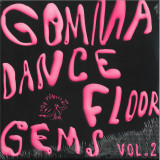
12 tracks originally released on the indie dance label GOMMA RECORDS between 2001 and 2010. (Gomma was the label Toy Tonics did before starting Toy Tonics.)
Along with DFA and Output records Gomma released a wild mix of electronic dance music, indie rock, undergound disco, post punk and new wave funk that was big in the 2000s. The Y2K sound!
Gomma released music by artists like Peaches, Whomadewho, The Rammellzee, James Murphy, LCD soundsystem and artists like Nick McCarthy of Franz Ferdinand.
Now it’s 2023 and its feels fresh to put a spotlight on some of these tracks again.
And so here comes a 2nd compilation part of Gomma tracks:
Nancy Whang the singer of LCD Soundsystem, WhoMadeWho (the band started their career on Gomma), Italian disco producer Bottin, UK Indie Disco hero The Deadstock 33s aka Justin Robertson, NY Disco hipsters In Flagranti, German producers Munk and many more on this compilation.
Gomma not only was a record label, but was also a home for cutting edge design, wild T-shirt styles, underground exhibitions with new artists from the Berlin scene and crazy poster and fanzine design.
Many graphic design trends of the last years were preceded by what the artists on Gomma were doing. And many record and street wear labels of today look a bit like Gomma was looking before ... copying the images that Gomma preceeded: ironic cartoons, trash aesthetics, greek symbols, ugly design ideas and lot of ironic things.
The Gomma visuals world was exposed in a couple of exhibitions around the world and at a big exhibition at #hausderkunst München before the label was closed in 2015. (when Toy Tonics took off...)
"Two Steps from the Move is the fifth studio album by the Finnish rock band Hanoi Rocks, released in 198This is their last album to feature the late drummer Razzle. Before this album, all of Hanoi Rocks' albums were released on Lick Records and Johanna Kustannus, but this was the band's first album on a major label. Originally the album was supposed to be called Silver Missiles and Nightingales, but the name was changed at the last minute. The album's producer, Bob Ezrin had previously worked with big-name artists like Pink Floyd, Kiss and Alice Cooper, which was one of the main reasons Hanoi Rocks wanted him to produce the album. Ezrin wanted the album to have a heavier atmosphere and darker guitar playing than the band's previous efforts, while still keeping it melodic and punky, and he also worked on the writing of almost every song on the album. Two Steps from the Move was Hanoi Rocks' biggest hit when it was released, reaching #28 on the UK Album Charts, along with the singles ""Up Around the Bend"" and ""Don't You Ever Leave Me"". The album also gave Hanoi Rocks their first gold record in Finland, but not until 1986 after the group had already disbanded. Two Steps from the Move is often considered as a glam rock/hard rock classic. The album is available on black vinyl and includes an insert."
Two Steps From The Move by Hanoi Rocks, released 8 March 2024, includes the following tracks: "Underwater World", "Million Miles Away", "Boiler (Me Boiler 'N' Me)", "Cutting Corners" and more.
This version of Two Steps From The Move comes as a 1xLP. This release comes with (a) Insert(s).
Sydney rock outfit The Blamers are a modern band—two modern men, two modern women—with a revolutionary bent. Utilizing the latest cutting-edge stereophonic technology, the group—fuelled by an obsession with early garage greats—are at the fore of a sonic campaign to simplify rock back to its basic proto-punk form. With hooky riffs and a healthy dose of tambourine, the group are preparing to release their debut album early-2024 after a string of singles. The Blamers have shared the stage with Aussie heavy hitters The Chats, Bad Dreems, Pist idiots and blistered clubs around Australia with their no bullshit, beer-soaked sound. It’s a wonder that a band like The Blamers hasn’t come earlier! If you like the hard ass style of 60s punk with the wit of The B52’s, here it is.
Repress!
Jurassic 5 flexed serious old-to-the-new muscles in the '90s, beginning with their independently released single Unified Rebelution' in 1994, and book-ending with their stellar debut full-length: 2000's Quality Control. They walked a tightrope between underground and mainstream hip-hop, and toured alongside rap peers as well as punk rockers on the Vans Warped Tour. With double the pleasure of your average hip-hop group - two DJs and producers (Cut Chemist and DJ Nu-Mark), and four MCs (Chali 2na, Akil, Marc 7 and Zaakir aka Soup) - they brought the late 1970s unison MC' style of pioneering groups like the Fantastic 5 and the Force MCs to a new generation. Even more surprisingly, they did so out of Los Angeles, whose hip-hop flavors generally leaned towards Gangsta, G-Funk or Electro lines. Musically inventive and lyrically forward-thinking, each song on Quality Control is a new adventure, exploring engaging territory, delivered via one of the best live hip-hop shows fans had seen in years. From singles like the strutting groove of the title track to the throwback doo-wop samples on The Influence' and the catchy, keyboard groove-driven World of Entertainment (WOE Is Me),' to deeper album tracks like the lyrical gymnastics of Jurass Finish First' and the thought-provoking Lausd,' Jurassic 5 consistently stepped to the plate and their fans responded in kind, nearly pushing the album to Gold status. Add the innovative DJ-and-sample workout which closes out the album, Swing Set,' and you have one of the 2000s' most unique and solid full-length platters.
- A1: Jiving Juniors Sweet As An Angel
- A2: Alton & Eddie My Heaven
- A3: Higgs & Wilson When You Tell Me Baby
- A4: Lloyd Adams I Wish Your Picture Was You
- A5: The Moonlighters Don't You Know
- A6: Ricketts & Rowe Dream Girl
- A7: Annette & Shenley The First Time We Met
- B1: Belltones I'll Always Call Your Name
- B2: Ruddy & Sketto Little Schoolgirl
- B3: Derrick & Patsy Crying In The Chapel
- B4: The Blues Busters I've Done You Wrong
- B5: Jiving Juniors My Sweet Angel
- B6: Higgs & Wilson Change Of Mind
- B7: Wilfred Jackie Edwards Never Go Away
Repress
A third and final volume of Jamaican doo wop & R&B records taken from the late 50s and early 60s.
These records represent a period in which sound-systems were beginning to dominate the island, with Duke Reid and Sir Coxsone Dodd stepping up their rivalry by beginning to make and release their own records rather than rely on US imports for use in their dances. Many of these records are definitely more-or-less imitations of the American records, as the uniquely Jamaican ska sound was yet to take hold - however many of the future stars of ska, rocksteady and reggae were beginning to cut their teeth in the industry on these records, incl. Alton Ellis, Derrick Morgan, Derrick Harriott and more, and provide a unique view into the fledgling independent record industry culture in Jamaica that would prove to be unbelievably prolific and unparalleled for an island of it's size.
Hot wiring dancefloors with their immersive orchestration of uplifting sonic waves, Soft Crash sets out to soundtrack the unified, euphoric heartbeat of the crowds they foster with their mechanical yet fantastical, Italo Body Music. Presenting their highly anticipated EP ‘NRG’, the Berlin-based collaborative project of Berghain resident and BITE label head Hayden Payne (aka Phase Fatale) and French prolific producer Pablo Bozzi works to forge Soft Crash’s unique vocabulary of post-humanist production with the harmonic grandeur of their rhythmic, machine-made anthems.
Fresh off the back of their 2022 debut album ‘Your Last Everything’, Soft Crash present their latest 4 track EP ‘NRG’, chronicling their synonymous surrealist visuals infused with the contagious punch of Italo and Synth-wave. Geared towards the dancefloor from a fresh perspective, Bozzi and Payne pull from their respective wheelhouses to curate a sound additionally influenced by Wave-Pop, Acid House and Post-Punk sensibilities.
Procuring their cerebral yet zealous indentation of dance music, the EP features sanguine vocals from Kyiv-based singer and musician Ready in LED on the first single ‘Free Yourself’. She comments about the track “I became captivated instantly with the idea of the track that Hayden and Pablo sent me. At that moment, I was a bit tired of carefree disco and wanted to reveal my dark side in music. The demo sounded very daring. This track demands attention to itself from the first seconds. My sources of inspiration were glam rock and grunge. I had a blast in the studio, and I hope the people on the dance floors will feel that energy too.”
While full throttle vitality and booming grooves on the title track ‘NRG’ showcase Soft Crash’s take on 90’s sample-filled techno. Closing the extended play with an updated cut of the bewitching ‘Your Last Everything’, featuring Canadian musician and producer Marie Davidson, Soft Crash breathe a new life into the namesake track from their preceding album, concluding with an additional remix of the track by cult favourite producer Alen Skanner. The intrinsic dance floor vigour emulated in NRG further fleshes-out the pair’s recognisable DNA of nurturing a revitalised techno sound, cementing them as pioneers of the Italo Body genre.
Written and produced by Hayden Payne & Pablo Bozzi
Mastered by Conor Dalton at Glowcast Mastering
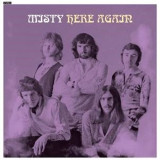
First ever vinyl release of the album recorded in 1969/70 by UK prog-psych band Misty. Including their terrific mod-psych “Hot Cinnamon” 45.
A dazzling fusion of classically-inspired progressive rock and song-based psychedelic pop with an organ-based sound, in the vein of Procol Harum and The Nice.
“In October 1969, King Crimson released their debut, In The Court Of The Crimson King, Pink Floyd unleashed Ummagumma and Led Zeppelin put out their second LP. At the same time, Misty were in London’s Regent Sound Studios recording what turned out to be the only album of their career with producer, Adrian Ibbetson, who had cut his teeth as an engineer working with everyone from the Beatles to the Equals.
After only a handful of gigs, Misty signed a deal with Parlophone and began to gather momentum with the release of Hot Cinnamon. Although they received a lot of airplay, the single failed to chart and the band’s hopes of releasing their debut album were dashed. Reluctantly, Misty went their separate ways and the Here Again master tapes sat gathering dust on a shelf until Gelardi came across the original acetate and decided it was time for the album to finally see the light of day.
Bridging late psych and early prog, songs like Life Has Just Begun, Witness For The Resurrection and the title track were played with a perfect mix of high-flying experimentation and virtuosic musicianship. Blurring the fine lines between rock, jazz, classical and chamber pop, Here Again is a transcendent kaleidoscope of colour that is beyond definition.
Maybe you can tell an album is truly timeless when it takes half a century for it to be properly appreciated. Misty were a rare bird, a brilliant, truly original band who should have left an indelible mark instead of joining what now seems like the never-ending line of half-remembered and long-forgotten flotsam and jetsam of the psychedelic era.
Both the first and the final statement from a group who never really got their chance to be heard, Here Again is a slice of pristine psychedelic pop that so embodies the dizzying energy and the progressive spirit of the time, it’s astonishing that it stays afloat under the weight of its own intentions. But float it does, like mist in the air - a half-forgotten diaphanous dream slowly coming back to you after 50 years of silence.” – Jonathan Wingate
For decades, any sound system worth their salt headed to the dub cutters to get a piece of the “Late Night Blues” riddim. Acetate after acetate of the riddim rumbled through speakers from Brixton to the Bronx, making it a certified sound system classic. Now, Pressure Sounds comes with four exclusive cuts of the Late Night Blues rhythm. The first 2 cuts combine Diggory Kenrick’s always-in-demand flute with the legendary Matic Horns on Side A. The flipside takes the riddim into deep, dubbed-out territory with two dangerous cuts, one laden with dreamy chimes, the other snatches of vocal.
A welcome addition to the Late Night cult!
Several unique features set the debut studio album by folk rock supergroup Crosby, Stills & Nash, released in 1969 by Atlantic Records, apart. It's the only album by the band before adding Neil Young to their lineup. The album spawned two Top 40 singles, "Marrakesh Express" and "Suite: Judy Blue Eyes," which peaked respectively at No. 28 during the week of August 23, 1969, and at No. 21 during the week of December 6, 1969, on the U.S. Billboard Hot 100. The album itself peaked at No. 6 on the U.S. Billboard Top Pop Albums chart. It has been certified four times platinum by the RIAA for sales in excess of 4 million copies.
Instantly lifting the group to stardom, along with the Byrds' Sweetheart of the Rodeo and the Band's Music from Big Pink, the previous year, the album is cited by music reviewers for initiating sweeping changes in popular music. In 2021 the album held the rank of No. 161 on Rolling Stone's 500 Greatest Albums of All Time list.
Crosby, Stills & Nash was "the perfect blend of David Crosby's social conscience, Stephen Stills's virtuoso musicianship and Graham Nash's ability to craft the perfect pop melody for radio," writes Rolling Stone, in its review.
The band was brought together after Crosby was fired from The Byrds, Stills's band, Buffalo Springfield had broken up (a band which also featured later member, Neil Young) and Nash's departure from The Hollies. The three decided to form a band after an informal jam led them to discover how well their voices harmonized. Released in May 1969, the band would perform nine of the album's 10 songs at Woodstock, which was the second time they ever did, in August of the same year.
The album features some of CSN's most well known and iconic songs; "Suite: Judy Blue Eyes," "Marrakesh Express," "Guinnevere," "Wooden Ships," "Helplessly Hoping" and "Long Time Gone." This album saw a shift in sound to what was popular at the time — blues based rock, opting for a more folk rock, and sometimes jazz-based sound. It would lay the foundations for the California Sound that would be popularised out of Laurel Canyon in the ‘70s. Artists such as The Eagles, Jackson Browne and Fleetwood Mac would take inspiration from the sound of this record.
All the hallmarks of a top-notch Analogue Productions reissue are here for you to savor: Mastered directly from the original master tape by Bernie Grundman and cut at 45 RPM. Pressed on 180-gram vinyl at Quality Record Pressings, and housed in tip-on old style gatefold double pocket jackets with film lamination by Stoughton Printing.