GRAMMY award-winning, multi-platinum rock band Kings of Leon are coming back big with their 9th full-length studio album, Can We Please Have Fun. As the title suggests, it’s a document of one of this era’s great rock & roll bands cutting loose, trying new things, and, yes, having some fun. Recorded at Dark Horse studio and produced with new collaborator Kid Harpoon (Harry Styles, Florence + the Machine) the album sees a new side of Kings of Leon. On the new album, the band harkens back to their gritty origins while simultaneously finding new gears. It’s the sound of a band unified in vision and purpose, freed from any expectations, and the album the band says they’ve always wanted to make.
Cerca:cut loose
- A1: Sharkey - Someone Like Me
- A2: Lynne Ann Kingan - If You Love Me - Hate Me
- A3: James Thornbury - So Tan
- A4: Jim Huxley - Only A Song
- A5: Charlie Webster - Snodland
- B1: The Bob Hughes Band - You Broke My Heart
- B2: Goldrust - Going Yesterday
- B3: Jim Kennedy - You Are The Reason
- B4: Jon Betmead - Marie Elene
- C1: Charles Murphy - The Foot That's Holding Me Down
- C2: Remnant - I Will Set You Free
- C3: Fred Potts - Following Rainbows
- C4: The Superwomen - Lowlands
- D1: Robison Kaplan Ltd - Don't Say Goodbye
- D2: Gary Ramey - You Are His
- D3: John Agostino - Loss Of Love
- D4: Ritchie Tierney - Please Stop Breaking Me Down
A humanity-reminding suite of miracle moments, Someone Like Me unites a geographically unbound cast of real people in pursuit of a meaningful connection. Taping their lived experience in economic studios in quiet English counties, Pacific Northwest woodland retreats and the big city bustle of Sydney and Los Angeles, these kindred spirits rendered sheer beauty in the process. Custom pressed folk songs of love, loss and the lord saviour.
Illuminating minor works from seasoned players such as former Syndicate Of Sound chart-topper Sharkey and late-era Canned Heat lynchpin James Thornbury, the collection simultaneously honours the fleeting amateurism of hobby musicians. With their one shot at tangible vinyl, freshman Lynne Ann Kingan realised her loose bubblegum rocker on campus time, while U.S. Navy recruit Fred Potts cut his unconditionally serene ballad remotely stationed on a Spanish naval base. Spartan production continues to reign with Jon Betmead’s hair-raising gospel, howling into infinite space, and Goldrust’s stripped back garden hymn.
Throughout the hour-long reflection, faith has an intermittent yet revelatory presence, most overtly with the divine choral soul of Seventh-day Adventist quartet Remnant. More subtly, Gary Ramey and Jim Kennedy both turned to song in their spiritual quests, offering their all to a universal power. An irrefutable compilation cornerstone, the National Office For Black Catholics showcased Charles Murphy’s lionhearted account of the Black experience at a 1971 concert. Five years earlier, high school seniors The Superwomen would use their hauntingly angelic harmonies to address racial inequity with a breathless take on ‘Lowlands’.
Reaching the furthest corners, Someone Like Me secures the inaugural licence of three homespun masterpieces. Discovered by fluke in the digital haystacks of Youtube and Soundcloud, Jim Huxley’s bedroom pop earworm melds peacefully into Charlie Webster’s synthesized reverie. Meanwhile, Hollywood’s John Agostino introduces us to the bizarre world of tax scam records, with the artist only now learning that his tender psych-folk demos were leaked via a 1977 bootleg.
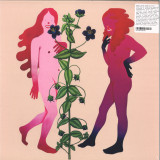
Compiled and lovingly restored by armchair digger Mikey Young (Eddy Current Suppression Ring/The Green Child), Someone Like Me pays due service to seventeen rarefied journals of truth and devotion. Adorned with visual artist Chris Fallon’s figure and flora dream extractions, the uniting songbook is further detailed by expansive track-by-track liner notes and a forward from San Franciscan poet Rod Roland.
The second in our Mr Bongo series opening the vault on classic recordings from the fabled Groove Merchant Records catalogue. This time the spotlight turns to the Hammond B3 organ maestro Lonnie Smith, as we proudly present a reissue of his cosmic jazz-funk journey, ‘Afro-Desia’.
Originally released in 1975, this much-loved album was produced by Groove Merchant label owner Sonny Lester and features the mysterious 'Compliments Of A Friend' on guitar. Considering Smith was part of George Benson’s quartet in the ‘60s, that not so discreet veil appears to have been lifted on who this ‘friend’ might be. However, presumably due to contractual reasons, Benson had to remain covert for this recording. The lineup doesn’t stop there though, with the likes of legendary bassist Ron Carter and Grammy award winning saxophonist Joe Lavano joining the outfit.
An album of two parts, the first side sees Lonnie Smith in a spaced-out, cosmic jazz funk setting. The opener 'Afrodesia' is a funk flexing, steamy groover. Greg Hopkins and Lavano trading off on trumpet and sax respectively, as that bassline walks its way over fluttering jazz percussion and off-kilter electronics. 'Spirits Free' is an epic 15-minute free-wheeling jazz-funk workout. A mind melting trip that rises and falls, in parts spacey and serene, with Smith’s organ playing complimented by stretched out horns. Before long it opens out into unconstrained fluid sections that do its title proud. Pure ‘70s jazz-funk at its most stellar.
Side B takes a more classic soul-jazz flavour, with touches of Latin spice. 'Straight To The Point' kicks off with a carnival zing, full-frontal horn and organ lines providing a fiery party punch. It’s a swinging jazz cut that used to receive spins by DJs at Russ Dewbury's Jazz Room's sessions in Brighton in the ‘90s.
Finally, 'Favors' and 'The Awakening' close out the release. Two sure shot, quintessential Lonnie Smith firing Hammond grooves. Each conjuring up images of packed out, smokey jazz bar jams, every player letting loose with masterful improv sections to whip the crowd up into a frenzy.
A truly wonderful album, and an archetypal release showcasing the height of jazz musician excellence from this era.
Don't judge a book by its cover. Judge a record by its cover.
And, perhaps, its title.
Cedar Walton's Mobius is as outrageously, disorientatingly brilliant as the stunning jacket design, featuring the legendary jazz pianist morphing into a mobius strip, set against a beautiful sky filled with cumulus clouds. A proper jazz-funk fusion slapfest, Mobius is a stellar electric set from - essentially - one *hell* of a SUPERBAND.
Yes, in addition to Walton's Fender Rhodes wizardry, Mobius is elevated by Ryo Kawasaki's stinging electric guitar, pristinely clear vocals by Adrienne Albert and Lani Groves, rootsy percussion by Ray Mantilla and Omar Clay, alto and baritone from Charles Davis, trumpet from Roy Burrowes, Gordon Edwards on bass and Frank Foster's tenor sax. Oh and did we mention STEVE GADD ON DRUMS?!?!
Gem after gem of looping, bliss-inducing gold, it's an incredibly revelatory album. It presents a thrilling synthesis of R&B, funk, blues and hard bop (with a hint of rock), all driven by an idiosyncratic electronic keyboard. Walton, a giant in the jazz world, got quite the workout every time he played, from piano to arp synthesizer to clarinet to electric piano to mini-moog and back again.
Mobius was Cedar Walton's debut for RCA in 1975. The versatile artist confirmed his abilities as a player, composer, interpreter and arranger with this stunning record, and his own bright compositions offered a springboard for the improvisations of the different soloists. Coltrane's "Blue Trane" is the first classic to be given the funkafied Mobius treatment, Ryo Kawasaki let loose all over neck-snapping Gadd-drum gold before the horns take a fiery turn and subsequently give way to Cedar's virtuosity. A sparkling b-boy break version of Thelonious Monk's "Off Minor" (featuring an absolutely *fire* solo from Walton) really sets proceedings alight. Of the three original pieces, the shuffling, percussive power of "Soho" is just absolutely mind bending Latin-influenced jazzy soul whilst the mellow vibes of "The Maestro" bring elegant, sumptuous soul. And then there's the effortlessly funky "Road Island Red". Just too, too good.
Cedar Walton was born in Dallas, Texas, on January 17, 1934 and began his professional career in 1959 when he began touring for several years with the J.J. Johnson Quintet. He later joined the Art Farmer-Benny Golson Jazztet and then Art Blakey's Jazz Messengers. Pretty solid credentials, right? While based in New York City, Cedar played with such luminaries as Donald Byrd, Eddie Harris, Blue Mitchell, Kenny Dorham, Lee Morgan, Freddie Hubbard, Jimmy Heath and Milt Jackson. Without question, he was one of the most complete and gifted musicians of his time and Mobius provides proof of that. The fresh, danceable tracks, all firmly rooted in the living tradition of blues and gospel, are skilfully presented by a master who enjoyed keeping abreast of contemporary tastes and was always keen to renew his language.
As the album notes state: “Mobius, which is the theoretical shape of the infinite universe, makes use of the most modern recording techniques and synthesizers. We mastered and mixed so that it’s hotter than the competition, which should help radio play and in-store demonstration.” Indeed. Mobius is really gorgeous mid-70s fusion, ranging from the funky to the ecstatic. It's an absolute MONSTER that will completely blow you away; and, yes, it's as wild and hypnotic as the cover. The audio for Mobius has been carefully remastered by Be With regular Simon Francis, ensuring it sounds better than ever. Cicely Balston's expert skills have made sure nothing is lost in the cut whilst the records have been pressed to the highest possible standard at Record Industry in Holland. The original, iconic sleeve has been restored here at Be With HQ as the finishing touch to this long overdue re-issue.
Reissue of early Japanese house outing by Junichi Soma, Shuji Wada and Katsuya Sayo. Comes with insert with liner notes.
All musical movements require a spark to set them alight; in the case of Japanese house music, that spark was provided by the forward-thinking resident DJs of The Bank in Roppongi, Tokyo. In 1989, to celebrate the ground-breaking club’s first birthday, the venue released a 12” EP featuring first-time productions from three of its DJs, Junichi Soma, Shuji Wada and Strong Katsuya AKS Katsuya Sayo.
Widely considered to be one of the first ever EP of house music produced in Japan, 1st Unit was never officially released. Instead, 500 of the 1000 copies pressed were given away at The Bank’s first birthday party, with the rest initially being sold not in local record stores, but rather the venue’s own in-house shop. Three decades on, the 12” is finally set to get its first worldwide release via Rush Hour’s Store JPN Series.
The record has its roots in The Bank’s willingness to give its ever-changing roster of DJs a free hand to play what they liked – at the time a rarity in Tokyo nightclubs, whose musical offerings usually revolved around strictly defined playlists. At The Bank in 1989, it was not only common to hear European body music and the kind of post-disco New York productions associated with Larry Levan’s sets at the Paradise Garage, but also acid house – something not offered at the time by other clubs in the city.
This cutting-edge blend of sounds, combined with the venue’s unique decor (it was modeled on the inside of a London bank, complete with a cashier’s window to take entrance fees), made The Bank a go-to spot for young party-goers, celebrities and forward-thinking Japanese musicians (Ryuichi Sakamoto was reportedly a weekly visitor).
When it came to celebrating the club’s birthday by cutting a unique record, it made sense for The Bank’s owners to turn to three of their most exciting resident DJs, who were assisted by Heigo Tani and Jun Ebi. The collective name, 1st Unit, was chosen to reflect the fact that all three resident DJs were debutants with no previous studio experience.
As this reissue proves, the music remains timeless, magical, and authentic to the sound of American house productions of the period – albeit with occasional twists,. Katsuya Sano’s EP opener, ‘I Need Love’, sounds like a twist on Larry Heard productions of the period – all jacking TR-909 drums, undulating analogue bass, dreamy JUNO synthesizer chords and evocative vocal samples.
The influence of Chicago acid house is also evident on Junichi Souma’s ‘Ubnormal Life’, whose unusual title contains what he says was an intentional misspelling. Driven forwards by restless drum machine handclaps, sweet chords and rising and falling melodic motifs, the track is an energetic and uplifting treat.
Perhaps the most influential of the three tracks at the time – within Japan at least – was Shuji Wada’s similarly misspelled ‘Endless Load’. Deeper and more melodic with a more expansive arrangement, the track’s combination of marimba-style lead lines, tribal drum patterns, dreamy chords and jazz-funk influenced bass offered a loose blueprint for the more successful and better-known Japanese deep house tracks that followed.
Canadian performer and composer Sarah Belle Reid’s 2021 acclaimed album, first time on vinyl, expanded with two new incredible songs, remastered featuring new artwork. From distant ocean song to the clang and howl of a murky forgotten memory, MASS is a dreamlike collage of shrill shrieks, gasps, corroded brass choirs, and melting modular synth soundscapes, all heard through a mist of hiss and noise. Fused with equal parts spastic improvisation, shrouded ritual, and meticulous arrangement, it presents a sonic topography at once tongue-in-cheek, sensitive, and nightmarish. With discordant chorales and angular trumpet improvisations churning in an ever-evolving wash of whispers and howls, MASS is a collection of three hazy, harsh, and frightful sound worlds. With tracks meandering between aggressive rhythms, eerie ambiances, and abrasive cut-up electronic textures, MASS draws inspiration from early tape music, horror film soundtracks, and grindcore. It was assembled between listening to extended doses of Else Marie Pade, Daphne Oram, Eliane Radigue, the Locust, Edgard Varèse, Maryanne Amacher, Dick Raaijmakers, Naked City, Mr. Bungle, and Thomas Ankersmit, bringing a little bit of all of them along with it. MASS was recorded and mixed over the course of three weeks in January–February 2021 while in the midst of a cross-country move. Recorded entirely in short-term housing away from her studio (and most of her instruments), Reid relied exclusively on her voice, trumpet, flugelhorn, household objects, and Make Noise's Strega semi-modular synthesizer for all sound materials. Original sound materials were recorded loosely and independently with little to no overdubbing, instead relying on meticulous editing and processing in the manner of classic tape music.
Most audiophiles know Alan Parsons Project's I Robot by heart. Engineered by Parsons after he performed the same duties on Pink Floyd's Dark Side of the Moon, the 1977 record reigns as a disc whose taut bass, crisp highs, clean production, and seemingly limitless dynamic range are matched only by the sensational prog-rock fare helmed by the keyboardist and his creative partner, Eric Woolfson. Not surprisingly, it's been issued myriad times. Can it be improved? Relish Mobile Fidelity's stupendous UltraDisc One-Step 180g 33RPM box set and the question becomes moot.
Mastered from the original master tapes and pressed at RTI on MoFi SuperVinyl, I Robot comes to life with reference-setting realism on this numbered, limited-edition reissue. Boasting immaculate highs and lows, generous spaciousness, and see-through transparency that takes you into the studio with Parsons and Woolfson at Abbey Road, this definitive edition is designed to demonstrate the full-range capabilities of the world's best stereo systems while offering listeners the convenience of having all the music on one LP.
Featuring a nearly inaudible noise floor, this transcendent UD1S edition functions as a repeat invitation to savor reference-grade soundstages, immersive smoothness, sought-after instrumental separation, three-dimensional imaging, and consummate tonal balances. Able to be played back at high volumes without compromise or fatigue, it is a demonstration record for the ages – the likes of which are no longer being made. This is the very reason you own and invest in high-end audio gear.
The special characteristics of this UD1S version extend to the premium packaging. Housed in an elegant slipcase, the reissue features special foil-stamped jackets and faithful-to-the-original graphics. Aurally and visually, it is made for discerning listeners who prize sound quality and production, and who desire to fully immerse themselves in everything about this conceptual landmark. The Alan Parsons Project's most famous record deserves nothing less.
Inspired by and loosely based around the Isaac Asimov stories of the same name, I Robot delves into themes of artificial intelligence and technological dominance that make the record extremely relevant in the 21st century. Indeed, Parsons and Woolfson's pinnacle creation dovetailed with the ascendency of Star Wars, which itself is experiencing a rebirth in an age of self-driving cars, smart devices, and mindless automation. Lyrically, songs such as "The Voice" call into question human behavior – and their relationship to increasing robotic supremacy – in everyday life. Parsons and Woolfson reflect the associated paranoia, dichotomy, and transformation via shifting sci-fi arrangements steeped in drama and moodiness.
The absorbing tunes on I Robot also continue to fascinate due to their perfectionism and innovation. Borrowing from Pink Floyd's strategies, Parsons and Woolfson utilize a looped sequence on the title track to create new downbeats. "Some Other Time" employs two different lead vocalists and yet gives the illusion that only one is involved. Captivating strings, a piccolo trumpet, and bona fide pipe organ grace "Don't Let It Show." The origins of "Nucleus" stem from a unique analog keyboard concoction dubbed "the Projectron," devised by Parsons and electronic engineer Keith Johnson. Andrew Powell's orchestral and choral arrangements top it all off, with "Total Eclipse" arriving as a frightening track that presages the climactic "Genesis Ch. 1 V. 32."
Does man or machine win in the end? Decide as you get lost in Mobile Fidelity's UltraDisc 180g 33RPM LP pressing. Secure your numbered copy today!
More About Mobile Fidelity UltraDisc One-Step and Why It Is Superior
Mobile Fidelity Sound Lab's UltraDisc One-Step (UD1S) technique bypasses generational losses inherent to the traditional three-step plating process by removing two steps: the production of father and mother plates, which are created to yield numerous stampers from each lacquer that is cut. For UD1S plating, stampers (also called "converts") are made directly from the lacquers. Since each lacquer yields only one stamper, multiple lacquers need to be cut. Mobile Fidelity's UD1S process produces a final LP with the lowest-possible noise floor. The removal of two steps of the plating process also reveals musical details and dynamics that would otherwise be lost due to the standard multi-step process. With UD1S, every aspect of vinyl production is optimized to produce the best-sounding vinyl album available today.
MoFi SuperVinyl
Developed by NEOTECH and RTI, MoFi SuperVinyl is the most exacting-to-specification vinyl compound ever devised. Analogue lovers have never seen (or heard) anything like it. Extraordinarily expensive and extremely painstaking to produce, the special proprietary compound addresses two specific areas of improvement: noise floor reduction and enhanced groove definition. The vinyl composition features a new carbonless dye (hold the disc up to the light and see) and produces the world's quietest surfaces. This high-definition formula also allows for the creation of cleaner grooves that are indistinguishable from the original lacquer. MoFi SuperVinyl provides the closest approximation of what the label's engineers hear in the mastering lab.
- Little Pink Mack
- Roll Out The Red Carpet
- Let The Good Times Roll
- Silver Threads And Golden Needles
- Terrible Tangled Web
- Anymore
- Rocks In My Heart
- I Let A Stranger Buy The Wine
- Bottle Baby
- Get Out Of My Heart
- Big Mack
- A Devil Like Me (Needs An Angel Like You)
- Number One Heel
- Old Heart Get Ready
- Six Days A'waiting
- Down, Down, Down
- Loose Talk
- You Don't Have Very Far To Go
- Honky Tonk Heartache
- Be Nice To Everybody
- She Didn't Color Daddy
- Walk The Floor
- Toy Heart
Highway Heroine Bakersfield Twang backed by the Buckaroos! - Got your ears on? This album collects Kay Adams' live studio cuts from the Buck Owens Ranch Show - Along with Tammy, Patsy and Loretta, Kay was one of country's first female artists who elevated women in the genre - Gritty and country-to-the-bone, let this one spin & cut a rug! Includes 3 bonus tracks!
- A1: Wear Your Love Like Heaven
- A2: Mad John's Escape
- A3: Skip-A-Long Sam
- A4: Sun
- A5: There Was A Time
- B1: Oh Gosh
- B2: Little Boy In Corduroy
- B3: Under The Greenwood Tree" (Words By William Shakespeare, Music By Leitch)
- B4: The Land Of Doesn't Have To Be
- B5: Someone Singing
- C1: The Enchanted Gypsy
- C2: Voyage Into The Golden Screen
- C3: Isle Of Islay
- C4: The Mandolin Man And His Secret
- C5: Lay Of The Last Tinker
- D1: The Tinker And The Crab
- D2: Widow With A Shawl (A Portrait)
- D3: The Lullaby Of Spring
- D4: The Magpie
- D5: Starfish-On-The-Toast
- D6: Epistle To Derrol
Donovan’s Original
A Gift From a Flower to a Garden made for a few firsts: the first double LP of Donovan’s
career, one of the first box sets in pop and, most importantly for Donovan himself; the first
pop album for the children of tomorrow.
He resolved to make A Gift From a Flower to a Garden an album of two halves. The first,
Wear Your Love Like Heaven, was intended for his own generation as they started to think
about the kind of world they wanted to leave behind. The second, For Little Ones, was for
the children they had or would have in the years to come. The result was a kaleidoscopic
folk-jazz suite on the power of love, imbued with all the romance and mystery of an Arthur
Rackham illustration for an ancient English fairy tale. The songs, remarkably adventurous
given Donovan was a globally famous singer at his commercial height, combined the
influences he had amassed so far.
There is something about A Gift From a Flower to a Garden that could never be repeated,
though. It is such an innocent evocation of the childlike imagination, so redolent of its time,
yet set apart from it too. All these years later, the peaceful qualities of this pioneering,
enchanting, deeply unusual album feel more valuable than ever.
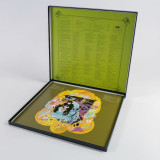
The state51 Box Set
With authenticity core to the project, The state51 Conspiracy engaged one of the UK’s
leading experts in box set design, Daniel Mason at Something Else, to painstakingly recreate
the box, records and accompanying ephemera. The first challenge was to find the deep blue
leatherette paper the original box set was covered in; a problem since it was no longer in
production. “I knew people who had stacks of it, gathering dust on top shelves, so I bought it
up wherever I could find it,” says Mason. Then came the reproduction of 12 loose leaf lyric
sheets on fine art watercolour paper, each of them featuring a watermark and a fairytale-like
illustration by Donovan’s artist friends Sheena McCall and Mick Taylor. Where, though, to
find the same paper stock? “I found out that it was made at a paper mill in North Wales
called Abbey Mills. Unfortunately the mill dissolved in the early 70s and very little of the
paper remained. However enough paper remained to allow us to produce the numbered
certificate also signed by Donovan that sits within the box.”
Then to the iconic cover image. Donovan and Jimi Hendrix’s personal photographer Karl
Ferris, used infra-red film to achieve the psychedelic effect on the cover, but the original
negatives couldn’t be found. Mason then used digital technology to ramp up the colour levels
on a reproduction from an original copy of the album while allowing it to remain a little bit
faded, as it would be after half a century. The same labour of love and care has gone into
producing all elements of the box; from the rebuilding of the famous front cover font to the
hand-numbered and signed certificate; letterpress printed on the original paper stock of the
1968 UK release lyric sheets.
To cap it all off the original mono master tapes were waiting safely in the EMI Donovan
Archive and transferred from tape to digital by Abbey Road Studios where new lacquers
were cut, ensuring Donovan's favoured mono version of the album would be presented both
physically (and digitally for the very first time) in striking audiophile quality. The final touch to
B2 Recordings hits release number 13 with DJ Rocca and Lex combing on a trio of fresh house cuts that blend elements of disco, Latin and soul. Up first is the glorious 'Solid Street' which has loose and percussive disco-house grooves overlaid with big synth energy and steamy vocals. 'Solar System' is slower and deeper, with a more rugged bassline and low slung sense of funk that never lets up. 'Last of all, 'Rose Tree' is a ramshackle house arrangement with whistles, Rhodes keys, tin-pot percussion, florid flutes and plenty of sunny energy all making it a real standout. A timeless EP packed with musicality.
We have been really liking what we've heard from the Dolphin label out if the US of late. Now we get a taster of an upcoming album from Blaque Dynamite with a second single from it. Beka Gochiashvili features on keyboards and synthesizers throughout the cut. The Stefan Ringer remix is a wet and funky mix of jazz, house and experimental sound. It has a sleazy sense of vocal naughtiness to it with shuffling broken beats and rich layers of percussion. The original is an organic and loose-limbed deep house vibe and Ben Hixon brings a little more edgy tech to the drums.
Will Long is an American artist. He curates and manages the label Two Acorns, as well as producing music since 2005, in various forms under his own name for Terre Thaemiltz's Comatonse Recordings, and as Celer for his own label and many others.
Here he joins the perfectly aligned Scissor and Thread label of Francis Harris and Anthony Collins for the Too Much EP.
"Too Much" is a deep cut from the same grooves as the Long Trax series," says Will Long, "a further entry for the downtrodden, the overwhelmed, and those that think change has come. A midnight meditation of intentional simplicity, strained, and on that night train."
The title track is lush, loose deep jam that combines wistful, warm pads with an insistent groove and choice samples.
Francis Harris steps up to provide one of his signature reforms, adding a little more percussion and drive to the track, while DJ Aakmael (Greg Stewart) offers up another version that takes the track somehow even deeper, adding some additional instrumentation and raw sounds.
Repress!
On 22nd October, the Nottingham-raised and highly-praised musician/DJ/producer Matt Cutler, AKA Lone, presents his 8th album – and first in 5 years – ‘Always Inside Your Head’. It marks two major changes, with both a new label and new approach – featuring vocalists for the first time.
This deeply textural and ethereal artwork is situated high above the clouds, amidst the heavens, occupying a stratospheric state where swathes of synthesized vapour and azure rays sound like a literal breath of fresh air.
A varied selection of music influenced the record, but two main influences were Cocteau Twins and My Bloody Valentine. “I wanted to approach a range of different styles, but attack them from their angle in a way, so for example on 'Inlove2' I tried to imagine what a Balearic / acid house tune might sound like if it were produced by Kevin Shields”, comments Lone.
Another key example of Cutler’s strange but successful combination of elements is the halcyon bliss of ‘Echo Paths’, where his trademark fat drums and love for hip hop meet double-time pan pipes, dub effects and dream pop, mixed into a wonderfully lysergic concoction.
This rarefied auditory stratus was previously evident in tracks like ‘Alpha Wheel 4 (Ambient Mix)’ from ‘DJ Kicks’, ‘Under Cherry Blossoms (Minds Eye Reprise)’ from ‘Ambivert Tools, Vol. 2’, ‘Pulsar’ (from ‘Ambivert 4’), and ‘How Can You Tell’ (from ‘Abraxas’), but is now more fully-fledged, broader in scope and even more celestial.
In addition to the above, the LP exists somewhere between trip hop on Mo' Wax, 90s Warp, intelligent drum & bass and ambient house. There are heavier forays too, like ‘Mouth Of God’, where darker clouds emerge, but are pierced like acid lightning with fierce, tearing tech-step bass.
Although still firmly rooted in club culture – here Lone shows a definite leaning towards a song-based sound, with several tracks edging towards the same crossover space as the nineties hits which also inspired him – particularly William Orbit’s production on Madonna's 'Frozen', and Olive's 'You're Not Alone'. This is especially evident on the bright, spacious brilliance of 'Hidden By Horizons', where vocals and synths swirl around one another, with crisp breakbeats and reggae rolls pushing purposefully through the ether.
Despite initially seeming almost entirely sunny of disposition, upon deeper immersion there’s lot more beneath the album’s surface, both in its deep pools of immiscible layered elements, and also thematically. When recording Cutler kept in mind a loose narrative based on birth, death, and our existence in-between.
He then extended this idea to reach what may happen after death, which is reflected in the sequencing: By penultimate track ‘Undaunted’ the life reflected in this longplayer has come to an end, which is then followed by 'Coming In To Being And Passing Away' – an afterlife epilogue, which evokes a transition from this world to the next.
LP reissue of Collective Calls, the first duo LP from Evan Parker and percussionist Paul Lytton. Mythically alluded to as ‘An Improvised Urban Psychodrama In Eight Parts”, Collective Calls utilises electronics, pre-records and homemade instruments to wryly in/act self investigation. Having just recorded the cliff jumping Music Improvisation Company with Derek Bailey, Christine Jeffrey, Hugh Davies and Jamie Muir, Parker was at the point where he was thinking, ‘what’s the next thing?’ On Collective Calls, only the 5th release to appear on the newly minted Incus label, percussionist Paul Lytton arrives with an arsenal of sound making sources to push Parker into ever new territory. Recorded in the loft of The Standard Essenco Co on Southwark Street by Bob Woolford (Topography of the Lungs, AMM The Crypt), Collective Calls has more in common with noise or music concrete than with jazz; sitting comfortably alongside Italian messrs Gruppo di Improvvisazione Nuova Consonanza or the husband-wife duo of Anima Sound. According to Martin Davidson, it was a Folkways record that Lytton was obsessed with around the time of this release - Sounds of the Junkyard - its track titles like “Steel Saw Cutting Channel Iron in Two Places” working to give you a good idea of the atmosphere of Collective Calls. Paul Lytton had encountered the use of electronics in music in 1968 when he was invited to play drums on the recording of An Electric Storm by White Noise (along with David Vorhaus, Delia Derbyshire and Brian Hodgson). He had seen Hugh Davies using contact mics in the Music Improvisation Company, and soon set about assembling a Dexion frame akin to drummer John Stevens’, except that his own was armed with several single-coil electric guitar pickups, long wires and strings with connected foot-pedals to modulate pitch. Influenced as much by Stockhausen, Cage and David Tudor as he was by Max Roach and Milford Graves, Lytton’s percussion is abstract, expressionist and at times totally mutant. Sometimes rolling extremely fast, then screeching almost backwards over feedback, Lytton gives Parker room to play some of his weirdest work. Parker is listed as performing both saxophones, but also his own home made assemblages, including one dubbed the ‘Dopplerphone’ - a length of soft rubber tubing (activated by a saxophone mouthpiece and manipulated to alter the rate of airflow) attached to a longer length of clear plastic tubing (whirled around the head whilst being played) ending in a plastic funnel. Thickening the brew even more, Parker would also add a cassette recorder, on which he would play back collected sounds and previous recordings of the duo. Imagining the set up in a 70s loft, it’s an assemblage more akin to what today's free ears might see at a Sholto Dobie show, spread out on the floor of the Hundred Years Gallery, the shadow of Penultimate Press lurking in the corner. It’s a testament to Parker’s shape shifting sound - the ever present link to birdsong being at its most warped here - terrifically free and unfussy, wild and loose from any of the dogma that might come in later Brit-prov years
Lucy Railton trusts in the nuance of her own creative instincts on an intensely modern, quietly radical new album, her second for Modern Love.
Following her 2018 solo debut »Paradise 94’« and countless collaborations in the time since, Railton’s diverse musical circles here bleed into each other, creating an insoluble testament to a lifelong pursuit of sound. The multi-instrumentalist further articulates her own tonal register, embracing her solo strengths and trusting the process to reveal vulnerable and compelling emotional facets through a fluid mix of composition, and pure expression.
On the simplest level, »Corner Dancer« is a record that revels in the momentum of creation. Through a range of approaches, Railton gradually loosens her grip and allows her identities to expose themselves; cut to the bone, sinew and spirit of music making. Reaching outside tried and tested zones, she lands at a charged space characterised by unmetered pacing and an embrace of imperfection, using cello, viella (a medieval cello), Buchla, 808, a fan, synths, horse hair whips, a hand held harp and her own voice, across 8 tracks that arc from an opening sequence of ruptured asymmetries, to something bordering the sublime on »Blush Study’« the album’s masterful closing flourish.
In between, Railton invokes psychoacoustic, heady spins and repetitions, while also allowing space for live performance, a mode to which she feels most attuned, and here captured best on »Held in Paradise« (her violin debut) and »Rib Cage«.
Collapsing boundaries, Railton harnesses a lifetime of formal training in order to patiently trace more ambiguous, intimate and sometimes deviant shapes, operating to a fuzzed logic that loops back to themes with an ingenious underlying dramaturgy of energies, dismantling the form from the inside out, in a way that bends through feeling, rather than design.
On Side A, smile your way through two songs by The Teacher Haters — in fact, we challenge you to get through these tracks without smiling. Even the name of the band invokes a chuckle as it suggests what these guys are about — and that’s the P-A-R-T-Y. Straight out of the 60s comes a group that could have been played with Sam The Sham & The Pharaohs back in the day. These whimsical works are deceptively deep as they take us to a time when garage punk fused with R&B.
Big Pig Alley is uncomplicated, and that’s what makes it great — it sounds like a bunch of college guys having a good time, writing lyrics on the spot: “If you’re lookin’ for romance, take a train, take a plane...or a raft to France.” The guys have something other than romance on their minds as they chug along on acoustic guitar and trash can drums (and possibly other things). What really makes the track, though, is the witchy background voice — the performance is loose enough, while the witch is doing his own thing entirely.
The witch returns on the second track on Side 1 in the up-tempo, dance-ready Cut Loose. No obscure artistry here — these guys tell you exactly what the song is for in the title. In fact, just in case you missed it, they state their thesis in the opening lines: “I wanna shake all night, I wanna do it right, I wanna dance, dance, dance with you…” All of their collegiate effort is put toward getting you to move your hips in this groovy, rockabilly-flavored mix.
Let's talk about Side B...
We Got A Thing is up first — a crossover soul dancer that invites you to sing along with an infectious, call-and-response chorus. It pairs nicely with The Teacher Haters as fun, simple party music from the 60s — though this time from a female perspective.
Things go deeper with Guys Today. As the name suggests, the content is about the enduring tension between the sexes and the heartbreak it can lead to. It’s a deep soul beat ballad in the vein of Betty Wright or Helene Smith. A grand opening is followed by a clear, crisp female vocal that brings the singer’s lament into focus. The band is tight, and it all comes together to portray a woman who has made up her mind and is offering a warning about guys today: I know you love your man, but I know they will hurt you in every way they can.
At first glance, these artists seem to share only a few things in common — party-themed music conceived in the 60s with an R&B flavor. But between sides A and B, it feels like these groups are talking to each other — perhaps different perspectives of the same party. Perhaps the party itself and then the fallout. The result is a balanced EP release that feels whole and satisfying. We hope you feel the same as we proudly present these found recordings as an exclusive 12” on 180 gram vinyl. Please enjoy.
Get ready for psych funk and a cover from far left field. PP12005 has all the makings of an instant classic.
Enter the dark opium den — a release reminiscent of those pioneers of funk, early Parliament and Funkadelic. These found tracks by Bruce Marshall and Bill Thomas were likely recorded around the time of “Osmium” and “Maggot Brain” — in fact, the artists featured here may have been directly influenced by the movement as it was happening, making these discoveries remarkable entries into the history of psych funk.
Where to begin with Bruce Marshall’s Gimme My Wife on the A side? Try to imagine a psychedelic football game, with driving wah wah funk as the halftime show. The frenetic instrumentation is guided by an infectious guitar hook, coupled with a loose chorus of voices and whistle blows. They all come together at the end to chant what sounds like “parrrr-tay,” a foreshadowing of that refrain the Beastie Boys would popularize.
For our EP-exclusive track on the A side, we present to you a haunting cover of the Ides of March song, Vehicle. Bruce Marshall’s version is much more sparse — a psychedelic dirge that’s almost unrecognizable compared to the original. Dark, simmering and sensual, it explodes into a soul-splitting vocal wail as the track reaches its end.
Things get a little more solemn on side B with an instant classic by Bill Thomas, Ease My Mind Pt. 1. A surprising dirge of fuzzy guitar leads into a chorus that sings, like a mantra, “I have seen much trouble...ease my mind.” Things morph into tight horns backed by some prominent organ — in fact, this is one of the tightest horn sections on any of our releases to date.
For the exclusive EP B-side, Bill Thomas and band pick up right where they left off with Ease My Mind Pt. 2 — an extended instrumental of “Ease My Mind Pt. 1.” It kicks off with a drum solo, then throws you into some horn-driven funk, with guitars holding down the background. Sax and organ take turns on the lead in this hot and delicious track that’s ready for your enjoyment.
Funk is alive and well on our fifth release — adding a new dimension to the amazing body of psych funk that’s already out there. Who knows what could have happened had these cuts reached ears during the 70s — but the time for the Marshall-Thomas ship to land is now. Put this on to get your next party going, and it’ll do most of the work for you.
Enter the dark opium den that is PP005 — a release reminiscent of those pioneers of funk, Parliament and Funkadelic. These found tracks by Bruce Marshall and Bill Thomas were likely recorded around the time of “Osmium” and “Maggot Brain” — in fact, the artists featured here may have been directly influenced by the movement as it was happening, making these discoveries remarkable entries into the history of psych funk.
Where to begin with Bruce Marshall’s Gimme My Wife on the A side? Try to imagine a psychedelic football game, with driving wah wah funk as the halftime show. The frenetic instrumentation is guided by an infectious guitar hook, coupled with a loose chorus of voices and whistle blows. They all come together at the end to chant what sounds like “parrrr-tay,” a foreshadowing of that refrain the Beastie Boys would popularize.
Things get a little more solemn on side B with an instant classic by Bill Thomas, Ease My Mind Pt. 1. A surprising dirge of fuzzy guitar leads into a chorus that sings, like a mantra, “I have seen much trouble...ease my mind.” Things morph into tight horns backed by some prominent organ — in fact, this is one of the tightest horn sections on any of our releases to date.
Funk is alive and well on our fifth release — adding a new dimension to the amazing body of psych funk that’s already out there. Who knows what could have happened had these cuts reached ears during the 70s — but the time for the Marshall-Thomas ship to land is now. Put this on to get your next party going, and it’ll do most of the work for you. Get this special, split 7” on limited-run vinyl while you can.
Vecchio's Afro-Rock is one big horn-heavy, bass-blasting, Latin groove funk-rock party. Only now, you're all invited because this, ladies and gentleman, is officially...a grail no more. With copies currently starting at 400 Euros for an original, this beautifully presented reissue, part of Be With's fresh campaign with Music De Wolfe, is well overdue. A magnificent and somewhat obscure library set that's just a total, cohesive joy from start to finish, this here is the soundtrack to all your smokin' summer BBQs and communal cookouts.
Afro-Rock is the debut album by Argentine keyboardist Luis Vecchio. Recorded for the sound library label De Wolfe, the album is frequently mentioned in hushed reverence among the beat digger DJ collecting crowd. It features fiery brass charts, funky bass lines, fluttering flute, choppy organ and additional hand tribal percussion. The band let loose too and jam hard; yet there's a certain thread of solidity that runs throughout, the tracks just belong together, not disparate sound and rhythm experiments like some library records; this is just straight up, no messin', consistent funk-rock FIRE! Hips will sway, heads will nod to the steady vibes. It's insanely good.
The humid, building funk of the appropriately titled "Megaton" is a dramatic explosion of swirling, dazzling organ lines, ferocious beats and heavy horns throughout. It just don't stop. The tempo slows slightly for the deep and deeply addictive "Renegade". It's all heavy jazz horn refrains, always triumphant, coupled with devastating percussive breakdowns and killer guitar riffing. It's an insistent organ-led juggernaut. The frenetic "Facade", up next, is no less driving, horns high up in the mix over rattling percussion and brilliant organs lines. Just sensational. The bright "Chabati" is another glorious extension of the optimistic Vecchio sound, the organs wilder than ever before. The moody "Green Hell" is a real highlight and closes out the A-Side with some outrageously funky refrains - be it horns, organ or guitars - and is complimented by gorgeous flute work that galvanises the piece, elevating it to downright heavenly status.
Knowing full well that he's on to a surefire thing, Vecchio opens the flipside in much the same vein. Indeed, "Boss" is yet another uptempo highlight, a sensual orgy of proud horns, hand percussion and melodic flute playing over driving organ and guitars. It's followed by "Nsambei", which is rightly adored for its briefly open drum break, fantastically propulsive percussion breakdowns throughout and the jazzy, loose organ and guitar shreds. The bright "Waboco" ups the tempo and the pressure, hanging on one hell of a guitar hook and infectious horn refrain. Perhaps foreseeing how this album would come to be viewed, the aptly-titled "Cult" is possibly the finest song on the record. Which is saying something, because this record is insanely good. Riding a steady, confident organ groove straight out the gate, the kinda melancholic flute line over the top serves as a beautiful counterpoint which the horns often come in and imitate/riff off. Goddamn this is so so good, it needs to be played everywhere. The overwhelmingly mighty 7-minute jam "Ngoma-ku" rounds out this quite staggering record brilliantly in its heavy, mid-tempo blues with countless extended solos.
The audio for Afro Rock has been meticulously remastered by Be With regular Simon Francis, ensuring this release sounds better than ever. Cicely Balston's expert skills have made sure nothing is lost in the cut whilst the records have been pressed to the highest possible standard at Record Industry in Holland. The original, iconic sleeve has been restored here at Be With HQ as the finishing touch to this long overdue re-issue.