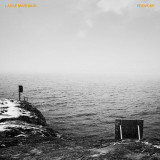
As one of the brightest and most prolific new songwriters to emerge from the Birmingham music scene over the past few years, Will Stewart has made a name for himself as both an imaginative storyteller and six string gunslinger whose detailed accounts of life around the Deep South seem to capture the essence of not just the humid, kudzu-covered environs they come out of, but also the creative cultural milieu that makes such narratives possible in the first place. Taking cues from everyone from Big Star and R.E.M., to Phosphorescent and the Drive-By Truckers, and even classic Southern literary figures like Eudora Welty and Barry Hannah, Stewart has managed to carve out a place for himself as a conjurer of time, place and characters— and the stories that swirl around them— in a way that’s simultaneously reflective, empathetic and unapologetic in their presentation.
Now on his fourth solo LP, over his past three studio efforts Stewart has shown a deft touch for not just engaging character arcs and succinct studies in the human condition, but also a range of musical modes that span everything from quiet dissertations on love and loss, to brash rockers and moody explorations of the complicated nature of modern Southern living. As someone who also wears the hat of a highly sought after sideman who lends his talents to friends and fellow travelers like Birmingham locals The Blips, Terry Ohms and Sarah Lee Langford, there are few sonic spaces that Stewart’s hands haven’t touched in some way.
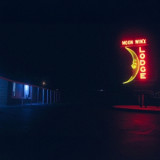
Stewart’s newest offering sees him poised to deliver his most ambitious project yet, with a 10-track song cycle centered around the iconic, and now defunct, Moon Winx Lodge in Tuscaloosa, AL, and some of the characters and scenarios that have played themselves out there over the years.
Search:cycle one
- A1: Progetto Tribale - The Sweep
- A2: Onirico - Echo Giomini
- A3: Open Spaces - Artist In Wonderland
- B1: Alex Neri – The Wizard (Hot Funky Version)
- B2: M C.j. Feat. Sima - To Yourself Be Free - Instrumental Mix Energy Prod
- B3: Mato Grosso - Titanic Expande
- C1: Dreamatic - I Can Feel It (Part 1)
- C2: Carol Bailey - Understand Me Free Your Mind (Dream Piano Remix)
- C3: The True Underground Sound Of Rome - Secret Doctrine
- D1: Don Carlos - Boy
- D2: Lazy Bird – Jazzy Doll (Odyssey Dub)
Vol 2[28,99 €]
Volume 1 of this expertly curated project of 90s Italian House - put together by Don Carlos.
If Paradise was half as nice… by Fabio De Luca.
Googling “paradise house”, the first results to pop up are an endless list of European b&b’s with whitewashed lime façades, all of them promising “…an unmatched travel experience a few steps from the sea”. Next, a little further down, are the institutional websites of a few select semi-luxury retirement homes (no photos shown, but lots of stock images of smiling nurses with reassuring looks). To find the “paradise house” we’re after, we have to scroll even further down. Much further down.
It feels like yesterday, and at the same time it seems like a million years ago. The Eighties had just ended, and it was still unclear what to expect from the Nineties. Mobile phones that were not the size of a briefcase and did not cost as much as a car? A frightening economic crisis? The guitar-rock revival?! Certainly, the best place to observe that moment of transition was the dancefloor. Truly epochal transformations were happening there. From America, within a short distance one from the other, two revolutionary new musical styles had arrived: the first one sounded a bit like an “on a budget” version of the best Seventies disco-music – Philly sound made with a set of piano-bar keyboards! – the other was even more sparse, futuristic and extraterrestrial. It was a music with a quite distinct “physical” component, which at the same time, to be fully grasped, seemed to call for the knotty theories of certain French post-modern philosophers: Gilles Deleuze, Félix Guattari, Paul Virilio... Both those genres – we would learn shortly after – were born in the black communities of Chicago and Detroit, although listening to those vinyl 12” (often wrapped in generic white covers, and with little indication in the label) you could not easily guess whether behind them there was a black boy from somewhere in the Usa, or a girl from Berlin, or a pale kid from a Cornish coastal town.
Quickly, similar sounds began to show up from all corners of Europe. A thousand variations of the same intuition: leaner, less lean, happier, slightly less intoxicated, more broken, slower, faster, much faster... Boom! From the dancefloors – the London ones at least, whose chronicles we eagerly read every month in the pages of The Face and i-D – came tales of a new generation of clubbers who had completely stopped “dressing up” to go dancing; of hot tempered hooligans bursting into tears and hugging everyone under the strobe lights as the notes of Strings of Life rose up through the fumes of dry ice (certain “smiling” pills were also involved, sure). At this point, however, we must move on to Switzerland.
In Switzerland, in the quiet and diligent town of Lugano, between the 1980s and 1990s there was a club called “Morandi”. Its hot night was on Wednesdays, when the audience also came from Milan, Como, Varese and Zurich. Legend goes that, one night, none less than Prince and Sheila E were spotted hiding among the sofas, on a day-off of the Italian dates of the Nude Tour… The Wednesday resident and superstar was an Italian dj with an exotic name: Don Carlos. The soundtrack he devised was a mixture of Chicago, Detroit, the most progressive R&B and certain forgotten classics of old disco music: practically, what the Paradise Garage in New York might have sounded like had it not closed in 1987. In between, Don Carlos also managed to squeeze in some tracks he had worked on in his studio on Lago Maggiore. One in particular: a track that was rather slow compared to the BPM in fashion at the time, but which was a perfect bridge between house and R&B. The title was Alone: Don Carlos would explain years later that it had to be intended both in the English meaning of “by itself” and like the Italian word meaning “halo”. That wasn’t the only double entendre about the song, anyway. Its own very deep nature was, indeed, double. On the one hand, Alone was built around an angelic keyboard pattern and a romantic piano riff that took you straight to heaven; on the other, it showcased enough electronic squelches (plus a sax part that sounded like it had been dissolved by acid rain) to pigeonhole the tune into the “junk modernity” section, aka the hallmark of all the most innovative sounds of the time: music that sounded like it was hand-crafted from the scraps of glittering overground pop.
No one knows who was the first to call it “paradise house”, nor when it happened. Alternative definitions on the same topic one happened to hear included “ambient house”, “dream house”, “Mediterranean progressive”… but of course none were as good (and alluring) as “paradise house”. What is certain is that such inclination for sounds that were in equal measure angelic and neurotic, romantic and unaffective, quickly became the trademark of the second generation of Italian house. Music that seemed shyly equidistant from all the rhythmic and electronic revolutions that had happened up to that moment (“Music perfectly adept at going nowhere slowly” as noted by English journalist Craig McLean in a legendary field report for Blah Blah Blah magazine). Music that to a inattentive ear might have sounded as anonymous as a snapshot of a random group of passers-by at 10AM in the centre of any major city, but perfectly described the (slow) awakening in the real world after the universal love binge of the so-called Second Summer of Love.
For a brief but unforgettable season, in Italy “paradise house” was the official soundtrack of interminable weekends spent inside the car, darting from one club to another, cutting the peninsula from North to centre, from East to West coast in pursuit of the latest after-hours disco, trading kilometres per hour with beats per minute: practically, a new New Year’s Eve every Friday and Saturday night. This too was no small transformation, as well as a shock for an adult Italy that was encountering for the first time – thanks to its sons and daughters – the wild side of industrial modernity. The clubbers of the so-called “fuoriorario” scene were the balls gone mad in the pinball machine most feared by newspapers, magazines and TV pundits. What they did each and every weekend, apart from going crazy to the sound of the current white labels, was linking distant geographical points and non-places (thank you Marc Augé!) – old dance halls, farmhouses and business centres – transformed for one night into house music heaven. As Marco D’Eramo wrote in his 1995 essay on Chicago, Il maiale e il grattacielo: “Four-wheeled capitalism distorts our age-old image of the city, it allows the suburbs to be connected to each other, whereas before they were connected only by the centre (…) It makes possible a metropolitan area without a metropolis, without a city centre, without downtown. The periphery is no longer a periphery of any centre, but is self-centred”.
“Paradise house” perfectly understood all of this and turned it into a sort of cyber-blues that didn’t even need words, and unexpectedly brought back a drop of melancholic (post?)-humanity within a world that by then – as we would wholly realise in the decades to come – was fully inhuman and heartless. A world where we were all alone, and surrounded by a sinister yellowish halo, like a neon at the end of its life cycle. But, for one night at least, happy.
- A1: Plaza
- A2: He’s A Liquid
- A3: Underpass
- A4: Metal Beat
- A5: No-One Driving
- B1: A New Kind Of Man
- B2: Blurred Girl
- B3: 030
- B4: Tidal Wave
- B5: Touch And Go
Recorded 1979 at Pathway studios, an eight-track studio in Islington, North London, this is an album of inventive, timeless electro-pop. Mastered from the original analogue tapes, the album still sounds incredible thanks to Foxx’s minimalist approach, which was partly inspired by his experience of watching Lee “Scratch" Perry produce records at Island Records’ studios in the 1970s. Engineer Gareth Jones - who later worked on some of Depeche Mode’s finest recordings - also proved to be a fantastic collaborator and innovator on this record.
John Foxx:
"I was in retreat from bands, touring, etc, mightily convinced that electronics were the future, and reading too much J.G. Ballard. I lived alone in Finsbury Park, spent my spare time walking the disused train lines, cycled to the studio every day and wobbled back at dawn, imagining I was the Marcel Duchamp of electropop. Metamatic was the result. It was the first British electronic pop album. It was minimal, primitive technopunk. Carcrash music tailored by Burtons.”
“My introduction to “noise” came from a record shop in Lake Worth, Florida ran by a musician named Kenny 5. Kenny had left Detroit sometime in the mid nineties and had begun selling used records and CD’s from the downtown strip of this tiny southern Florida city in a humble shop sandwiched between a deli and a dog grooming business. Kenny previously was on labels like Amphetamine Reptile and timeSTEREO, and the records and videotapes that would be on repeat at his shop were a vast sonic expanse that spoke to the eclecticism of his experience as a touring musician participating and adjacent to American noise culture through the early to late 90’s. In 1998, I was eleven years old and I would order a pizza with him and watch VHS tapes of Japanese noise and deathmatch bootlegs, as well as any other sonic and subcultural rarities that far outstripped my age to comprehend (notably the RRR “Journey Into Pain” compilation and various Vanilla Tapes videos). This widecast net of information formed an introduction to a reality that did not fall deaf on me, but it took many years later for me to reorient the specific freedoms of what this dense and cathartic sound culture had imparted on my life and would continue onward to.
What does this have to do with this selection of choice recordings from the Secret Boyfriend catalog for the enmossed label? For the uninitiated, Secret Boyfriend is the long running moniker of Ryan Martin, North Carolina musician and label proprietor of the Hot Releases imprint. For over a decade from this writing I have watched Secret Boyfriend, and Hot Releases by extension as a curatorial and archival effort, embodying the multiplanal capacity that noise loosely functions from as an umbrella ideology and formalist avenue for sound creation. For anecdotal purposes, from (before) 2006 until roughly 2023 the East Coast of the United States showcased a vibrant network of eclectic regional festivals that saw wide swaths of artists addressing and negotiating the notion of what qualified “noise” from a conceptual and ideological perspective. Some festivals honed in on particularities in aesthetics and tropes, and others had a kind of “catch-all” implementation that allowed for a salvation of the sort of alienated and singular artistry that was amassing throughout these territories. While clear guidelines had been set from regional predecessors as to how noise with a capital “N” should maneuver, Secret Boyfriend is emblematic in the spirit of fluidity that was either implicitly coupled to the notion of the genre, or grew to evolve towards or devolve from.
Within Secret Boyfriend performances, I have seen and admired a mirroring from a ravenous appreciator of this culture at large back towards itself. Typical of a Secret Boyfriend set is an interchangeable narrative arc wherein blistering feedback laden scrap metal improvisations are forayed into naive ambient or “pop” songs, or skipping CDs, or mixer feedback play, or delayed Roland 707 drum workouts all at once and in a unique hegemony. Secret Boyfriend's stylistic mastery of each endeavor is at once an homage to a history of loving listening and enacting, while a brave step into the realm of actualizing the unique fluidity of his own practice. In performance and the action of network engagement, Secret Boyfriend operates a survey of that which he sought to hear and that which he cultivates around his work. His operations are mirrors, and the project (alongside his other peers) is a reflection on the ethos of his time.
Conversely his recording practice narrows in on these moments and allows for a different kind of intimacy or alienation for the non live listener. This record of selected “pop songs” (let's call them that) is particularly poignant at a time when the culture Martin mirrors is at a strange crossroads with itself. The aforementioned festival networks necessarily change and shift. The onlookers become the artists, the artists find new horizons, and the spaces for these cycles fade into locales of a distant memory. It seems, from my perspective, that audiences currently yearn for a more bottlenecked experience, searching for some ontologically vetted manifestation of an idea, of a sound and less for an experience that functions in opposition to our collective banalities. This makes sense in the face of general global catastrophism that plagues us. We need certainty of what something is somewhere, don’t we? Noise as an idea has expanded and contracted to so many iterations of itself it is hard to tell what it even is, and it is particularly difficult to identify in the absence of solid network activations a moment to reflect on its own complexities and nuances. In the face of so much change, I argue that the language of noise culture at large has on one hand become increasingly didactic and predictable, and laughably inclusive and non linear on the other. Probably has always been this way, but now we are in the midst of a moment of extreme access and indexicality, which somehow cauterizes expansion and naivety and chance.
This record highlights the Secret Boyfriend that obscures didacticism by highlighting output that opens up for more challenging catharsis and emotive signal processing. It provides an entry to the materialism of a cultural field full of ecstatic complexity and beautiful inconsistency. In these muted moments Secret Boyfriend has given us over his career we have an argument for evolving languages that further challenge our notions of what is supposed to happen and how it is supposed to be presented. In his more song oriented expansiveness, we can punctuate the ability to think in new modalities. Listening to these recordings reminds me of the polarity of sitting in the record store as a kid and understanding that His Name Is Alive is on 4AD and (gasp!) timeSTEREO. This trite early impression that nothing is really as different as our imaginations might want them to be, and that we can do whatever we want mostly within the creative realms we work through is an important filter to look through Secret Boyfriend as a project and a vessel. If we can achieve abandon and vulnerability through our artistic endeavors, then we have a sound model for, maybe, new potentialities. If that’s too much projection, or just complete liberal bullshit, I am fine with that. Secret Boyfriend's oeuvre at best offers us moments of reprieve to ponder these complexities, or at least a moment to zone out on a drive through North Carolina Highway 54.
You have one pocket of life that you must do whatever you want to inside of. Secret Boyfriend does it affectionately, in a variety of forms, and always with deep sentimentality. These recordings are a wonderful set of songs to begin further investigation from. Thank you Ryan for allowing as many avenues as possible to continue a broad cultural exchange and conversation that intersect and refract while being the kind of artist that is brave enough to not phone in the effort.”
- Nick Klein , May 2024
- A1: Silent Night (3:39)
- A2: All I Want For Christmas Is You (4:01)
- A3: O Holy Night (4:27)
- A4: Christmas (Baby Please Come Home) (2:33)
- A5: Miss You Most (At Christmas Time) (4:32)
- B1: Joy To The World (4:18)
- B2: Jesus Born On This Day (3:41)
- B3: Santa Claus Is Comin' To Town (3:24)
- B4: Hark! The Herald Angels Sing/Gloria (In Excelsis Deo) (2:59)
- B5: Jesus Oh What A Wonderful Child (4:26)
- B6: God Rest Ye Merry Gentlemen (1:18)
LP 2x12"[46,18 €]
LP[26,68 €]
LP[26,68 €]
7" single[15,92 €]
12" single[15,92 €]
12" single[17,61 €]
LP[19,75 €]
2LP[90,34 €]
The Holiday Album That Turned Mariah Carey into the Queen of Christmas: Featuring the Standard “All I Want for Christmas Is You,” the Singer’s Blockbuster Merry Christmas Exudes Joy, Spirituality, and Conviction
Sourced from the Original Master Tapes, Presented in Audiophile Sound for the First Time, and Strictly Limited to 3,000 Numbered Copies:
Mobile Fidelity’s UltraDisc One-Step 180g 33RPM LP Set Plays with Superb Detail, Openness, and Definition
1/2" / 30 IPS / Dolby SR analogue master to DSD 256 to analogue console to lathe
Mariah Carey didn’t become the Queen of Christmas just because of her fervent love of the holiday. Or as the result of a brilliant marketing plan. The iconic singer earned her title by way of her blockbuster Merry Christmas, a 1994 album that quickly joined the likes of Bing Crosby’s White Christmas, A Jolly Christmas from Frank Sinatra, and Nat King Cole’s The Christmas Song as an all-time holiday vocal classic. Featuring a balanced mix of inspired originals and well-chosen covers, Carey’s fourth studio record has only grown in stature as new generations discover its magic. Mobile Fidelity’s 30th anniversary edition reissue of Merry Christmas makes her spellbinding performances and upper-tier register come alive like never before.
Sourced from the original master tapes, pressed at Fidelity Record Pressing, and strictly limited to 3,000 numbered copies, the pioneering label’s UltraDisc One-Step 180g 33RPM LP set of Merry Christmas plays with superb detail, depth, and dimensionality. Available in audiophile quality for the first time since its original release three decades ago, and featuring the bonus track “God Rest Ye Merry, Gentlemen,” the nine-times-platinum set breathes with a newfound openness and transparency that enhance the spirituality, passion, and festive tenor of Carey’s singing.
Benefitting from superb groove definition, a nearly inaudible noise floor, and dead-quiet vinyl surfaces, the music takes on a heightened energy and anticipatory emotion synonymous with the holiday season. Carey’s signature vocals explode with liveliness and dynamics, the full scope of her acrobatic range presented in clear, transparent sound that practically places her on a small stage in your listening room. This collectible version also breathes with the kind of warmth, intimacy, and coziness you want from a landmark vocal album.
Recorded when Carey helped put “diva” back into everyone’s vocabulary, Merry Christmas gave the New York native another smash right out of the box. What nobody knew at the time was the degree of the album’s staying power — and how, many years removed from its initial promotion cycle, its legend would still grow and even spark a 2010 sequel. Having re-entered the Top 200 charts every year since 2019, Merry Christmas ranks as one of the three most commercially successful holiday LPs ever made and, in due time, will likely earn the top distinction in that class. A global blockbuster, it seamlessly ties together Christian, gospel, and secular threads and speaks to a boundless audience, independent of denomination.
Most obviously, the record remains inescapably connected to “All I Want for Christmas Is You,” an uptempo anthem that towers as a holiday standard and one of the biggest-selling singles in history. Punctuated with celesta chimes, sleigh bells, springy keyboards, and joyous beats, the song echoes the simple albeit engaging melodies and doo-wop style of beloved holiday classics of yore — and blends such elements with contagious dance-pop rhythms to create an atmosphere rich in joy, wonder, and excitement. Radiant with golden soulfulness and sincere conviction, Carey’s exuberant singing and on-point phrasing put it all over the top. And how.
The song stands as the only effort in Billboard history to top the Hot 100 chart during at least three separate runs. Carey’s blockbuster has already hit No. 1 during five runs, spanning every year between 2019 and 2024. That’s just one of the many records the singer holds — and only one of the multiple highlights from Merry Christmas, which includes two other Carey-penned originals, “Miss You Most (At Christmas Time)” and “Jesus Born on This Day.”
Though slightly lesser known, Carey’s remarkable rendition of Darlene Love’s “Christmas (Baby Please Come Home)” further links her album with the big, lush, Wall of Sound heritage that helped inspire its production. Carey’s heartfelt take and transformation of the traditional “Santa Claus Is Coming to Town” into an animated tune that even adults can believe, as well as her clairon reading of “Joy to the World” — cleverly augmented with bits of Three Dog Night’s 1971 hit of the same name — further reinforce her status as Queen of Christmas.
At the peak of her powers, Carey finds equivalent success when tapping more spiritual veins. Witness the reverence she brings to the timeless carol “Silent Night,” the piousness she invests in “Jesus Oh What a Wonderful Child,” and the sacred feeling she conveys throughout “O Holy Night.” You’ll also never think of “Hark! The Herald Angels Sing” and “Gloria (In Excelsis Deo)” the same way again after hearing Mimi pour her heart and soul into them, and pair the songs together.
Indeed, it’s Carey’s pliable voice, melismatic technique, and five-octave range — on display here in definitive fashion — coupled with her undeniable love for Christmas and understanding of the religious significance of the season that make Merry Christmas a must-have holiday staple. And on Mobile Fidelity’s LP, something you better add to your wish list.
- Chant
- Fiori Strappati
- Petto Rotto
- Benu
- Cielo Azul
- Nido
- Cielo Fermo
- Alba
- Luna D’autunno
- Come Fan Le Stelle
- Ali Di Cotone
- Ali Di Fuoco
- L’ultimo Giorno
- Sogno Diurno
- Ocre
Limited edition pressing - 50 copies come with one page insert. Download code included.
The album Sonic Mystics for Poems (of Life and Death of a Phoenix) by Andrea Burelli is a work that masterfully blends traditional musical languages with the formal and conceptual sensibilities of contemporary music. It offers a profound reflection on the life-death-life cycle, centered on poetic texts that oscillate between human-sensitive experience and the mythical journey of a phoenix, a metaphor of this circular and infinite reality.
The work, which includes a collaboration with musicians from the renowned Solistenensemble Kaleidoskop, stands out for its clear influence from classical Western music and modal traditions, as well as experimental electronics. Composed for voices, strings, synthesizers, and drum machines, this music features a minimalist tapestry of polyphonies, enhanced by sophisticated electronic elements and a diverse array of rhythmic articulations.
Field Notes describes Andrea Burelli as a versatile artist capable of embodying a multitude of roles, from poet to composer, musician, and singer, emphasizing how her work reflects this versatility by ¨combining elements of art song, contemporary music, pop, and electronic sounds.¨ According to Groove Magazine, this LP evokes neoclassical chamber music and an imagined Italian folklore, aligning with contemporary explorations of modern vocal abstractions, similar to the work of artists like Marina Herlop, stating that: “This is how the new and the good emerge.”
Furthermore, the music has received positive feedback from internationally acclaimed artists such as Rashad Becker, who, in addition to being the mastering engineer of the project, describes it as "pure and honest"; James Young of Darkstar calls it "bold and innovative"; while Eartheater (PAN), Rabih Beaini, and Gigi Masin have praised it as "beautiful."
It’s abundantly clear from the first bars of their 5th studio album Through Other Reflection, that this is, and could only ever be, The Soundcarriers. From the enchanting vocal duets of folk-bidden Chanteuses Leonore Wheatley and Dorian Conway; to the precise bass lines of Paul Isherwood and the limber, jazz-cool, Hal Blaine-esque drums of his his co-songwriter Adam Cann; from the fairy-like flutes, 60s-garage guitars and organ sounds pilfered from the archives of exotica - listening to the Soundcarriers resembles a rediscovery of all the most prized, esoteric corners of the 1960s, all bundled up, warped and refracted through the quartet’s astutely modern cultural lens. Channelling Tropicalia, Middle Eastern psychedelic Jazz/Funk, The French Library sounds of Nino Nardini, and a whole host of lavish obscurites beside, Through Other Reflection delivers another sonic adventure from one of the most unique and distinctive voices of British Psychedelia. After an 8 year wait for their album 4 - 2022’s Wilds - it thankfully didn’t take so long for the follow-up this time round. In many ways, this feels like a companion to Wilds; recording again at their Nottingham warehouse studio, Through Other Reflection retains that same organic glow, all the passions and imperfections of a tightly clipped unit jamming out these living, breathing pop-art nuggets as if straight onto the acetate.”We wanted to keep an air of spontaneity with this album and not get too bogged with the recording process”, explains Cann, “It was more a case of getting the songs as tightly written and arranged as possible first so we could get them down quickly in the studio. It always takes longer than you think” Less packed with strident pop hooks as its predecessor however, the music of Through… has been given extra licence to breathe, stretch out, and wander more uncharted terrains. While gleaming psych-pop of tracks like ‘The City Was’, or ‘Already Over’ confidently carry on from where they left off, from the album’s 2nd track ‘Always’, the trip becomes a little less predictable. Starting out as a smoky Procol Harum-meets-French-Psych organ ballad, the music drifts, as if of its own accord into an eerie, garage trance that lingers, cycles, and hypnotises, growing ever stranger, reaching ever-further away from its point of conception. And almost every track on Through Other Reflections holds that outer-body moment, where the band fix themselves on a limber, lysergic groove, lose all grip on time and reality, and melt themselves away into a liquid state of blind euphoria. There are sequences on this record that feel more like rituals than songs, built upon a single hypnotic rhythm which, like the centre of a vortex, pulling everything under its beatific command. Take the finale to ‘What We Found’ for instance, sounding like a ghostly march across the psychedelic moors, or ‘Feel The Way’, where a single athletic drum-loop rises and rises, growing ever more urgent and suspenseful underneath its frantic harpsichords and rasping flutes. Full of such rich stylisms as these, The Soundcarriers showcase themselves as abstract storytellers par excellence by virtue of their textures and arrangements alone. Resembling Romantic composer Maurice Ravel, but if he had just a four-piece rock band at his disposal, Through Other Reflects is rich with detail; there’s shakers, rattles, clarinets, booming drums; there’s synthesiser swarms, chiming xylophones, vintage organs and experimental Cluster & Eno-esque ambiences. Within all this nuance the music flows like some undisclosed narrative swathed in a magnetic secrecy. “It almost comes across like a story in some ways”, says Cann of the album, “the music is quite sectional with elements of exotica and cinematic type layers, it's a good balance of grooves, tunes and weirdness”. No more is this “epic cinematic feel” heard more proudly than on short instrumental ‘Sonya’s Lament” - its innate, hauntological atmospheres befitting a Peter Strickland soundtrack, or the classics of Lex Baxter, the so-called ‘Founder of Exotica’ himself. On the other hand, providing a greasier undercurrent to all these bucolic sounds is a leaning towards a more “direct” lyricism referencing more “external concerns. Laying down the first tracks for the album in the wintry gloom of pre-lockdown 2020, and drawing inspiration from time spent in Berlin, Through Other Reflections returns to some of the post-apocalyptic futurism explored in 2014’s Entropicalia - a loose concept album inspired by J.G Ballard’s The Drowned World. “The songs explore a disillusionment with the way things are going particularly after 40 years of neoliberalism”, says Cann, “They follow that folk-song tradition of wanting to escape to an imagined time, but here it’s more urban than pastoral. The first couple of ideas I came up with when doing some music in Berlin and had some time to wander aimlessly. And think the atmosphere seeped in, particularly on The City Was and Already Over. He continues, “One aspect of the title, ‘Through Other Reflections’ is about synthesis and layers of influence. How things can be filtered through other things and change the perspective. This is something you get in cities as well.” Though, as with everything The Soundcarriers make, “It can mean anything. It also just sounds kind of cool.”
Earquake 1991[22,48 €]
Earquake 1992[22,48 €]
Earquake 1993[22,48 €]
Earquake 1994[22,48 €]
Earquake 1995[22,48 €]
Earquake 1997[22,48 €]
Earquake 1998[22,48 €]
Earquake 1999[22,48 €]
Earquake 1996 is the 6th part of the nineties cycle by Wolfgang Voigt, released as a double vinyl series on Profan. Besides the Mike Ink remix of one of his biggest techno hits Love Inc. R.E.S.P.E.C.T., Wolfgang Voigt dedicates this edition mainly to his most dust-dry, stoic, abstract-grooving minimal designs of that time. These are pieces with such sonorous, idiosyncratic names as Logorrhoee and Intoleratio, which enchant us back into a minimal techno cosmos of a very special kind.
It may be collected
Earquake 1996 ist der 6te Teil, des als Doppelvinyl Reihe auf Profan erscheinden Neunziger Jahre Zyklus von Wolfgang Voigt. Neben dem Mike Ink Remix eines seiner grössten Technohits Love Inc. R.E.S.P.E.C.T., widmet sich Wolfgang Voigt auf der vorliegenden Ausgabe vor allem seinen staubtrockensten, stoisch, abstrakt-groovenden Minimalentwürfen jener Zeit. Es sind Stücke mit so klangvoll-eigenwilligen Namen wie Logorrhoee und Intoleratio, die uns zurückverzaubern in einen Minimaltechno-Kosmos der ganz besonderen Art.
Es darf gesammelt werden
Although never released until recently, Jazz Sabbath's music has been finding its way to millions for over 50 years. Through a vicious cycle of personal tragedy and plagiarism the songs intended to change the jazz world ended up giving birth to a much darker sound. Now a third recording from the Sixties has resurfaced, perhaps their most important one.
In 1968 Jazz Sabbath were an instant hit on the UK jazz scene. It wasn’t long until they were offered a record deal. They spent weeks in the studio recording the tracks that got the heaviest reactions at their shows until they captured their live energy on tape. Unfortunately, the label manager told them the album was far too experimental and there was no hit potential. Ordered to play some of their ‘easier’ tracks instead, they reluctantly gave in.
The 2 albums that followed still are classics in their own right, but they were not mistaken in thinking they had recorded their best work in 1968. Like the tracks from their 2 albums, these tracks were also blatantly presented as 'original songs' by that band from Birmingham a few years later. Whether they copied them from live bootlegs or if they got their hands on the mix, it doesn’t really matter. Their lasting popularity, even in the crude way they were covered, only proves just how monumental these songs were and how record labels are often wrong.
With the truth now finally out there and that Birmingham band exposed as the musical charlatans they are, Jazz Sabbath have finally mastered the 1968 tapes to present their best work to the public.
Producer, designer, publisher, filmmaker, all-round scene phenom - Lasse Marhaug returns with his first album since relocating from Oslo to the Arctic Circle, surveying his 35-year career for a set of grizzled, doom-pocked rhythms and foghorn drones pulled from the aether. Expansive and hard to categorise, it's a precision-tooled set of ice-cold tonal productions that heavily lean into Mika Vainio’s rhythm experiments, with extra levels of growling bass and curious noises to send us deep into the uncanny.
Lasse Marhaug has put his mark on literally hundreds of albums - working with artists like Jenny Hval, Merzbow, Jim O'Rourke, Kevin Drumm, Hilary Woods - so many others - yet he still regards himself as a primarily visual artist who got diverted into an occasionally different path. If his last album 'Context' was a kiss goodbye to decades of life in Oslo, 'Provoke' turns a new page, but one that draws heavily from memories of the distant past, reflecting on the way the topographies of Norway's frozen north helped shape his creative worldview. Weaving electronics into environmental recordings captured in the bleak Arctic winter, the album was mixed during the Polar night season, when, for two straight months, the sun never rose past the horizon. Somehow, even at its bleakest, Marhaug avoids the usual aesthetic signifiers for this kinda thing, finding elements of queered beauty in all the severity, juxtaposing elements that shine a bright light on all the odd spaces in-between.
A consideration of noise music's place in 2024, and whether it can still be a tool for subversion when its aesthetics have been so commodified, ‘Provoke’ also refernces an experimental '70s Japanese art magazine that attempted to define a new language for photography. Operating somewhere between these two guiding poles, Lasse feels his way through a subtly altered mode of expression, a new approach to familiar concepts. Album opener ‘Plates’, for example, gives it the full Ø treatment, like some exceptional ‘Oleva’-outtake, but , eventually, shards of interference start to exhale like horses blowing, creating uncanny sensations that hit through ambiguous feeling rather than sheer noise terror. Ritualistic, corporeal - hard to know what you’re listening to and why it makes you feel that certain way - so much more than just machine cycles optimised for their ultimately hollow brutalist aesthetic.
Marhaug paints vivid pictures from a carefully chosen palette, drawing us into a soundworld that's rich with contradictions and contrasts. Even the relatively deafening 'New Topographics' offsets its wall of distortion with a muffled, perforating kick drum, cutting into the noise like a knife through butter. And all of this preparation makes the album's lengthy centrepiece 'Monochrome Head' even more impactful; hinging on a Pan Sonic-like alloy of bass and drums, the track snowballs through tempered feedback and improv scrapes and whistles that pick up into an orchestral din. Marhaug accents the bluster with rhythmic hums that gather in momentum until they're almost oppressively heavy, as if everything's about to collapse.
A masterclass in quietly subversive world-building, 'Provoke' invites us to peer at an expansive sonic landscape and marvel at its intricacies, but this time around there's a Lovecraftian behemoth lurking somewhere beneath its icy surface.
- A1: Be There - Dj Marky, Pola & Bryson, Iyamah
- A2: Break The Cycle - Monrroe, Duskee, Emily Makis
- B1: Jungle Diva Ft Pola & Bryson, Goddard. -, Lens, Sarah Ikumu
- B2: Lights Go Down- Document One, Dynamite Mc
- B3: Soundguy - Sustance, Glxy
- C1: What If - Duskee, Particle
- C2: Falling - Javeon
- D1: Bangin’ - Emperor, Levela
- D2: What We Talk About… - Saint Harmony, Note
- D3: Never Let You Down - Shogun Audio
- E1: Never Too Old (Friction Remix) - Monrroe, Emily Makis
- E2: ? | Tell You What I Did (Halogenix Remix) - Pola & Bryson, Zitah
- F1: Dreadnaught (Break Remix) - Icicle, Sp Mc, Break
- F2: ? | Always (Flava D Remix) - Spectrasoul
- F3: Looking For Diversion (Lenzman & Duskee Remix) - Lucy Kitchen Technimatic
- G1: Gangsta (Watch The Ride Remix) - Total Science, S P.y
- G2: ? | Poetry (Makoto Remix) - Dj Marky, Solah
- H1: Ten Ton (Particle Remix) - Sustance, Flowdan
- H2: She Sings For Me (Workforce Remix) - Glxy, Drs
- H3: Think (Gest Remix) - Subwave
The ‘20 Years Of Shogun Audio’ LP consists of 10 remixes of Shogun’s most legendary tracks and 10 groundbreaking new cuts from a selection of drum and bass’ most exciting talent. Featuring new music from Friction, DJ Marky, Break, Pola & Bryson, Monrroe, Emily Makis, Technimatic, Icicle, S.P.Y, Lens, GLXY, Sustance, Duskee, Javeon, Flowdan, SP:MC, Document One, Deadline, GEST, Watch The Ride, Total Science, Lenzman, Particle, Levela, Emperor, Subwave, Dynamite MC, IYAMAH, Note and many more, this is the ultimate collector's piece for any drum and bass fan.
For any Shogun Audio fan, this is the ultimate collector's piece, featuring our ‘20 Years Of Shogun Audio’ LP across 4LP vinyl, as well as our ‘20 Years Of Shogun Audio’ coffee table book beautifully housed in a bespoke presentation box embossed with gold foil and a magnetic clasp.
The perfect-bound 80-page coffee table book delves into our two decades of history through in-depth interviews with our founders Friction & K-Tee, as well as a range of artists past and present. Accompanied by beautiful full-colour photography from the archives throughout, this book is an essential for Shogun fans and D&B enthusiasts worldwide.
On his latest full-length, Low End Activist swerves towards weightless grime and suspended hardcore miniatures to tell a very personal story. The UK-rooted producer continues his habit of zeroing in on a distinct approach for each release, leaving a logical breadcrumb trail of soundsystem science in his wake as he channels decades of bass absorption into 14 atmospheric cuts that prize patience and precision over obvious club functionality.
Municipal Dreams plays out as a semi-autobiographical tour through the Blackbird Leys estate that the Activist grew up on. It’s a lived reflection on inequality and the ripple effect it has in working class communities, using the sonic palette to set the mood and scattering pointed samples throughout to spell out the story.
In sampling the exhaust of a stolen Subaru Impreza, ‘TWOC’ looks back to the recreational car theft which was standard entertainment for the kids in his community. There’s an underlying idea that this ‘council estate sport’ wouldn’t have been so prevalent if there were public services and opportunities presented to the scores of disaffected youth looking for somewhere to direct their energy and frustration.
In ‘Just A Number (Institutionalised)’ LEA alludes to the shattered juvenile detention system, growing up seeing friends and family members locked up at ease with little to no support on being released back into society, just meant that the same cycles of behaviour would play out over and over.
‘Violence’ samples from a short film shot by the drama division of the Blackbird Leys Youth Club to evoke the physical threat which formed a background hum to life on the estate. The industrial mechanics of the local car factory, which served an integral role as a workplace for many in the community, gets sampled in ‘They Only Come Out At Night’ while the ‘Everyone I look up to are either junkies or criminals’ sample in ‘Broke’ looks to a lack of positive role models.
Municipal Dreams isn’t a one-note indictment of life on the estate, ‘Innocence’ captures the simplicity of a child at birth before their environment has time to shape them. The Hope interludes cut through the grim honesty of the longer tracks while a subtle thread of wry humour finds its way into some of the talking heads cutting through the signature LEA murk.
But honesty is the operative word here, and the message feels all the more meaningful at a time when the UK’s social divisions are laid bare in the wake of a devastating stretch of austerity. Returning to Blackbird Leys to shoot images for the photo-zine and album cover, the Activist found the local community centre being demolished. The local pub stands derelict, its faded Welcome sign a grimly ironic portent of the options facing children of the estate in the wider world.
Funnelling his memories, hopes and fears into a singular twist on the bass weight tradition, LEA captures evocative scenes that land somewhere between kitchen sink realism and rave futurism.
The Leeds jazz scene is the gift that keeps on giving. From the dub-leaning ambience of Submotion Orchestra through to the afro-jazz fusion of Nubiyan Twist and TC & The Groove Family, a multi-generational lineage has emerged. Adding yet another page to the eclectic story of jazz from the city, emerging punk-jazz upstarts Plantfood announce the imminent arrival of their debut album ‘Carnivores’ on Friday 4th October via Bridge The Gap.
Consisting of JJ Petrie (percussion), Ruben Maric (keyboards), Joe van der Meulen (tenor saxophone), Woolley (baritone saxophone), Finn Hamilton (drums) and Woody Hayden (bass), Plantfood began in the throes of lockdown, during which all the members lived together. The group spent day after day sharing their eclectic music tastes, ranging from the electronic punk of The Prodigy and art-rock of Black Country New Road, through to the jazz dance of Steam Down and The Comet Is Coming. Taking these influences, they crafted their own sound, but without live shows, their only audience was the plants in their rehearsal room:
“We called the band Plantfood because we were writing and rehearsing in one of our bedrooms which was full of house plants. The plants kind of became our only audience, so it was like the music was food for the plants.”
The band’s debut album ‘Carnivores’, plays on this theme, referring to the plants as carnivores for consuming the bands music, whilst also reflecting the apocalyptic palette of sounds and chaos found within the record. However, mirroring the dynamism of a Plantfood live show, the album is anything but one-dimensional. The group expertly balance moments of serenity and vulnerability with cataclysmic urgency, all brought together under the guidance of producer David Haynes (TC & The Groove Family, Nubiyan Twist). The group share:
“The album’s moments of vulnerability and hope are intended as the depiction of a return-to- earth theme (circle of life, growth and decay), reflecting that the cycle of nature is not simply destructive.”
The project’s lead single ‘Y.U.S.’ drew praise from tastemakers including Jamz Supernova on BBC Radio 6, with the track featuring the talents of UK-Palestinian MC Yung Yusuf, a serial collaborator who also appears on album closer ‘Monstera’. Both tracks channel Plantfood’s explosive live energy into a blend of afro-latin rhythms and broken grooves, with the distinctive blend of tenor and baritone saxophone weaving in and out of grime-leaning, poetic exchanges with Yusuf.
Elsewhere, the second single from the project ‘Birdgang Pt. II’ is a fresh take on the band’s contemporary jazz sound, blending jazz, Balkan folk and Moroccan rhythms with a punk edge. The album’s title track resets the balance, soothing the soul through a swirling approach to spiritual jazz that wouldn’t be amiss amongst the Gondwana Records catalogue.
- 01: Burgundy Dotted Black Cow
- 02: Kreisler`s Prealudium
- 03: Introvert
- 04: Victorsson
- 05: J. K. Lasocki
- 06: Nail File
- 07: Self Grown
- 08: Little Wing
- 09: Artus
- 10: My Space
- 11: Jazz Madness
- 12: The Envelope
- 13: More Gigs!
- 14: Crossing
- 15: Christiansgade
- 16: The First Bike
- 17: Roux
- 18: Tiu Droppar
- 19: Trash Nylon
- 20: Koshaolin
- 21: Crates
- 22: Collective
- 23: Onesemble
- 24: Mellomaniac
- 25: Beat The Road
- 26: Freedum
- 27: Artsty Fartsy
- 28: Full Cycle (Enough)
Burgundy[33,57 €]
The 180g vinyl is available in two colors: Classic Black and a Limited Burgundy Edition, with the outer cover hand-colored and numbered (100 copies) by Moo Latte himself.
Mellomaniac, the seventh full-length album by Moo Latte, is different. These 28 compositions, written and recorded in 2021/22, were initially created for Moo's personal use, serving as a life soundtrack during many weeks and months spent away from home while touring with the band. Most of the tracks were recorded in hotel rooms and even backstage areas, fully embracing the lo-fi mindset and philsophy. Comparing to his previous works, this one holds a special significance and it's the most personal of them all.
What's Mellomaniac? The wordplay combines "melomania"—defined as an excessive and abnormal attraction to music—with the "mello" vibe that reflects both Moo Latte's personality and the nature of the music itself. The album leans toward a mellow sound, designed more for an intimate, individual listening experience where each spin of the record leads to new discoveries.
Why is this album different? Each of these pieces was created without any predetermined goal, which is why the tracklist is so eclectic—much like Moo Latte's palette of inspirations. These influences stretch back to when he was just four years old, singing in front of others for the first time or listening to his sister practice the violin. These early memories and instincts are blended with more deliberate musical choices, refined over two decades of music education. Each song is dedicated to a person, place, or situation that shaped him both as a musician and as an individual, reflecting the journey he has been on so far.
After six previous albums rooted in beat-making culture, this is the first one that is 95% drumless and free from sampling of any kind. Although the stories in these songs are told without words, Moo Latte incorporates his voice alongside a wide array of instruments, using it more expressively than ever before. The album's sonic quality is both raw and lush. The grit comes from the way it was recorded, using gear and microphones that, while not top-tier, were simply what was available. Everything was mixed in Moo Latte's bedroom and mastered on analog tape, resulting in a personal, intimate, and dynamic listening experience.
- 01: Burgundy Dotted Black Cow
- 02: Kreisler`s Prealudium
- 03: Introvert
- 04: Victorsson
- 05: J. K. Lasocki
- 06: Nail File
- 07: Self Grown
- 08: Little Wing
- 09: Artus
- 10: My Space
- 11: Jazz Madness
- 12: The Envelope
- 13: More Gigs!
- 14: Crossing
- 15: Christiansgade
- 16: The First Bike
- 17: Roux
- 18: Tiu Droppar
- 19: Trash Nylon
- 20: Koshaolin
- 21: Crates
- 22: Collective
- 23: Onesemble
- 24: Mellomaniac
- 27: Artsty Fartsy
- 28: Full Cycle (Enough)
- 25: Beat The Road
- 26: Freedum
Black[27,31 €]
The 180g vinyl is available in two colors: Classic Black and a Limited Burgundy Edition, with the outer cover hand-colored and numbered (100 copies) by Moo Latte himself.
Mellomaniac, the seventh full-length album by Moo Latte, is different. These 28 compositions, written and recorded in 2021/22, were initially created for Moo's personal use, serving as a life soundtrack during many weeks and months spent away from home while touring with the band. Most of the tracks were recorded in hotel rooms and even backstage areas, fully embracing the lo-fi mindset and philsophy. Comparing to his previous works, this one holds a special significance and it's the most personal of them all.
What's Mellomaniac? The wordplay combines "melomania"—defined as an excessive and abnormal attraction to music—with the "mello" vibe that reflects both Moo Latte's personality and the nature of the music itself. The album leans toward a mellow sound, designed more for an intimate, individual listening experience where each spin of the record leads to new discoveries.
Why is this album different? Each of these pieces was created without any predetermined goal, which is why the tracklist is so eclectic—much like Moo Latte's palette of inspirations. These influences stretch back to when he was just four years old, singing in front of others for the first time or listening to his sister practice the violin. These early memories and instincts are blended with more deliberate musical choices, refined over two decades of music education. Each song is dedicated to a person, place, or situation that shaped him both as a musician and as an individual, reflecting the journey he has been on so far.
After six previous albums rooted in beat-making culture, this is the first one that is 95% drumless and free from sampling of any kind. Although the stories in these songs are told without words, Moo Latte incorporates his voice alongside a wide array of instruments, using it more expressively than ever before. The album's sonic quality is both raw and lush. The grit comes from the way it was recorded, using gear and microphones that, while not top-tier, were simply what was available. Everything was mixed in Moo Latte's bedroom and mastered on analog tape, resulting in a personal, intimate, and dynamic listening experience.
CECILIA is a nomadic soul. Like in an existentialist epic that traverses different ages on a phantom thread of love, spirituality, desire and rage. She inhabits different bodies, inserts herself in a whole array of different characters. Some are fictional, some are as real as the artists that inspired her, and whose influence appears in CHOEUR under the guise of tiny fragments, direct quotes, dedications and spectral presences. Cecilia channels the poetry of different lives that might have been her own or might have only existed in dreams, and does so within a collection of songs that twist the path of traditional French and Italian songwriting into the inmost recesses of electronic mysticism. The composition of CHOEUR took place mostly around January 2023, a pretty precarious time in the artist life, and happened in a spontaneous and ritualistic manner that could appear as somewhat odd in the realm of electronic music production. Birthing out of ego-free solo jams in hyphened states of consciousness and audience-less performances, these moments of do-or-die energy intake served to funnel the wilderness of her emotions into extremely tight arrangements, ultimately allowing a dramaturgy of fierce and beautiful songs into existence. Striving for the sublime, CECILIA trained her whole body for a paradoxical procedure of disconnection and reconnection. A crucial pin in Melissa Gagné’s system of 7-year creative cycles, CHOEUR marks her debut on Haunter Record as much as the first step towards the possibility of a new artistic identity. A labour of love if there ever was one. CHOEUR is made of Awe, Chants and Ravishment, of Pain until Vision. CHOEUR prays Earth, Water, Stars, Sea. CHOEUR feels Spirits, Lightning, Thunder, Dawn, Dusk, Blood, Flowers. CHOEUR invokes a Return, to Grace. CHOEUR loves Mud and longs to Play. CHOEUR lives in a Dream created by a Dream. CHOEUR lives in a Body created by Love. CHOEUR is about a broken heart, open and ecstatic, about the beauty and the sadness that all is not what could be, about wandering and wondering why were the stars made so beautiful?
- The Ostrich
- Cycle Annie
- I'm Gonna Fight
- Soul City
- Oh No Don't Do It
- Love Can Make You Cry
- Teardrop In The Sand
- You're Driving Me Insane
- Sneaky Pete
- Wild One
- Really - Really - Really - Really - Really - Really Love
- Soul City
- Ya Running But I'll Getcha
- We Got Trouble
- Why Don't You Smile
- Johnny Won't Surf No More
- Tell Mamma Not To Cry
- Maybe Tomorrow
- Flowers For The Lady
- This Rose
- Surfin
- Little Deuce Coupe
- Sad Lonely Orphan Boy
- I've Got A Tiger In My Tank
- What About Me
Black Vinyl[50,38 €]
Oxblood & Gold Vinyl. Light In The Attic präsentiert in Zusammenarbeit mit Laurie Anderson und dem Lou Reed Archive die erste offizielle Anthologie von Lou Reeds Arbeiten für Pickwick Records 1964-1965. "Why Don't You Smile Now: Lou Reed At Pickwick Records 1964-65"enthält Raritäten, Kultklassiker (The Primitives' "The Ostrich") und bisher unveröffentlichtes Material (The Beachnuts' "Sad, Lonely Orphan Boy") und ist eine Zusammenstellung von Popsongs aus Reeds Feder, die er Mitte der 60er Jahre als angestellter Songwriter für das längst untergegangene Label Pickwick Records schrieb. Die Zusammenstellung ist der neueste Teil der Lou Reed Archive Serie und folgt auf Lou Reeds "Words & Music, May 1965" (2022) und die Wiederveröffentlichung von "Hudson River Wind Meditations" (2023). Als eine der originellsten und innovativsten Persönlichkeiten der Musikgeschichte erlangte Reed (1942-2013) zunächst als Mitbegründer und Frontmann der einflussreichen Band Velvet Underground Anerkennung. Im Laufe seiner fünf Jahrzehnte währenden Karriere brachte der zweifache Rock & Roll Hall of Famer seine einzigartige Vision in eine eklektische Bandbreite musikalischer Unternehmungen ein, darunter epochale Alben wie "Transformer" (1972) und wild experimentelle Werke wie der avantgardistische Noise-Klassiker "Metal Machine Music" (1975). Doch bevor er sich als Sänger, Songschreiber, Musiker und Dichter etablierte, begann Reed als interner Songschreiber (und gelegentlicher Session-Gitarrist/Sänger) bei Pickwick Records, einem Label, das sich auf Sound-ähnliche Aufnahmen spezialisierte, die die großen Pop-Hits der damaligen Zeit nachahmten. Von Garage-Rock und Girl-Group-Pop bis hin zu Blue-Eyed-Soul und Teenie-Idol-Balladen bietet Reeds Schaffen für Pickwick einen faszinierenden frühen Einblick in sein sich ständig weiterentwickelndes und wahrhaft grenzenloses künstlerisches Schaffen, das vom GRAMMYr-nominierten Mastering-Ingenieur John Baldwin restauriert und remastered wurde. Sowohl die 2xLP- als auch die CD-Editionen enthalten ausführliche Booklets mit ungesehenen Fotos, Linernotes von Richie Unterberger (renommierter Musikjournalist und Autor von "White Light/White Heat: The Velvet Underground day-by-day") und ein Essay von Lenny Kaye (dem legendären Gitarristen, Mitbegründer der Patti Smith Group, Autor, Produzent und Kurator der bahnbrechenden Garage-Rock-Anthologie "Nuggets"). Die Doppel-LP-Verpackung wurde von dem mehrfach mit dem GRAMMYr ausgezeichneten Künstler Masaki Koike gestaltet. Eine spezielle farbige Vinyl-Edition wird auf "Oxblood"-Wachs (A/B-Seite) und "Gold"-Wachs (C/D-Seite) gepresst.
- The Ostrich
- Cycle Annie
- I'm Gonna Fight
- Soul City
- Oh No Don't Do It
- Love Can Make You Cry
- Teardrop In The Sand
- You're Driving Me Insane
- Sneaky Pete
- Wild One
- Really - Really - Really - Really - Really - Really Love
- Soul City
- Ya Running But I'll Getcha
- We Got Trouble
- Why Don't You Smile
- Johnny Won't Surf No More
- Tell Mamma Not To Cry
- Maybe Tomorrow
- Flowers For The Lady
- This Rose
- Surfin
- Little Deuce Coupe
- Sad Lonely Orphan Boy
- I've Got A Tiger In My Tank
- What About Me
Oxblood & Gold Vinyl[54,58 €]
Light In The Attic präsentiert in Zusammenarbeit mit Laurie Anderson und dem Lou Reed Archive die erste offizielle Anthologie von Lou Reeds Arbeiten für Pickwick Records 1964-1965. "Why Don't You Smile Now: Lou Reed At Pickwick Records 1964-65"enthält Raritäten, Kultklassiker (The Primitives' "The Ostrich") und bisher unveröffentlichtes Material (The Beachnuts' "Sad, Lonely Orphan Boy") und ist eine Zusammenstellung von Popsongs aus Reeds Feder, die er Mitte der 60er Jahre als angestellter Songwriter für das längst untergegangene Label Pickwick Records schrieb. Die Zusammenstellung ist der neueste Teil der Lou Reed Archive Serie und folgt auf Lou Reeds "Words & Music, May 1965" (2022) und die Wiederveröffentlichung von "Hudson River Wind Meditations" (2023). Als eine der originellsten und innovativsten Persönlichkeiten der Musikgeschichte erlangte Reed (1942-2013) zunächst als Mitbegründer und Frontmann der einflussreichen Band Velvet Underground Anerkennung. Im Laufe seiner fünf Jahrzehnte währenden Karriere brachte der zweifache Rock & Roll Hall of Famer seine einzigartige Vision in eine eklektische Bandbreite musikalischer Unternehmungen ein, darunter epochale Alben wie "Transformer" (1972) und wild experimentelle Werke wie der avantgardistische Noise-Klassiker "Metal Machine Music" (1975). Doch bevor er sich als Sänger, Songschreiber, Musiker und Dichter etablierte, begann Reed als interner Songschreiber (und gelegentlicher Session-Gitarrist/Sänger) bei Pickwick Records, einem Label, das sich auf Sound-ähnliche Aufnahmen spezialisierte, die die großen Pop-Hits der damaligen Zeit nachahmten. Von Garage-Rock und Girl-Group-Pop bis hin zu Blue-Eyed-Soul und Teenie-Idol-Balladen bietet Reeds Schaffen für Pickwick einen faszinierenden frühen Einblick in sein sich ständig weiterentwickelndes und wahrhaft grenzenloses künstlerisches Schaffen, das vom GRAMMYr-nominierten Mastering-Ingenieur John Baldwin restauriert und remastered wurde. Sowohl die 2xLP- als auch die CD-Editionen enthalten ausführliche Booklets mit ungesehenen Fotos, Linernotes von Richie Unterberger (renommierter Musikjournalist und Autor von "White Light/White Heat: The Velvet Underground day-by-day") und ein Essay von Lenny Kaye (dem legendären Gitarristen, Mitbegründer der Patti Smith Group, Autor, Produzent und Kurator der bahnbrechenden Garage-Rock-Anthologie "Nuggets"). Die Doppel-LP-Verpackung wurde von dem mehrfach mit dem GRAMMYr ausgezeichneten Künstler Masaki Koike gestaltet.
Jade Hairpins waste no time fulfilling their second album's titular demand. From its harmony-drenched opening note to its baroque-anthemic conclusion, Get Me the Good Stuff is positively loaded with musical ideas, an absurdist buffet of sound and aesthetic that comes with one hell of a floorshow as the Hairpins stack those ideas higher and higher, almost daring them to crash to the floor. Instead, those elements - punksploitation, power pop, baggy, funk, and Italo disco are just some touchstones - are not only held aloft, they defy gravity and convention. These pyrotechnics are, in true Jade Hairpins fashion, something of a sleight of hand. While the music swaggers and gallops, Get Me the Good Stuff grapples with anxiety and self-doubt, obfuscating pain and alienation with sparkling wit and some straight-up ravers. Get Me the Good Stuff opens with one of those, "Let It Be Me," in which Jonah Falco shouts lyrics about being alone with one's shortcomings against guitars, synths, and harmonized vocals that are on the verge of closing in. The song is just over 90 seconds long, hitting with the gnarled-barb ferocity of punk and the gleeful insanity of theatrical art rock. It is, in other words, overwhelming. Or it would be if Jade Hairpins - Jonah Falco and Mike Haliechuk - weren't remarkably nimble in their ability to bring unity to sounds by placing them in competition against each other. When those sounds are adjacent, like the glam and disco that saturate "Drifting Superstition," the thrill of those universes colliding in the heat of an absolutely filthy clavichord line turns its lyrics, about the habit of solving personal problems by ignoring them, into a winner's anthem on the order of Bowie or Hot Chocolate. Get Me the Good Stuff arcs towards unequivocal joy as Falco, Jade Hairpins' primary lyricist, breaks these cycles and attempts to run away with his dreams. The arc is roughly analogous to how the album came to fruition. Four years removed from Harmony Avenue, an album of material that proved too strong to be contained within the narrative universe of Fucked Up's Dose Your Dreams, Jade Hairpins have gelled as a live act - with Tamsin M. Leach and Jack Goldstein centering them on stage - and planted their flag in the UK punk scene in which Falco has embedded himself. Working out new material live, Falco noticed that crowds were digging into his unfinished lyrics, and the album tightened around the anxieties of being in the spotlight, of being worthy of attention. At times, those songs are eager to please, like the album's title track in which a winking self-deprecation rubs up against the self-congratulatory bombast of Freddie Mercury, Falco simultaneously turning heads as a shooting star and a burning car. Elsewhere, as in "Better Here Than in Love," Jade Hairpins pitch themselves towards creating gorgeous soundscapes that exist nowhere else, channeling postpunk through the glimmering haze of '80s Japanese electronic music. Theatrical and personal, absurd and true-to-life, playful and serious, Get Me the Good Stuff is album of tremendous personal and artistic growth that signposts towards dozens of potential futures to come. It's not only worth the attention, it continuously rewards it.
Jade Hairpins waste no time fulfilling their second album's titular demand. From its harmony-drenched opening note to its baroque-anthemic conclusion, Get Me the Good Stuff is positively loaded with musical ideas, an absurdist buffet of sound and aesthetic that comes with one hell of a floorshow as the Hairpins stack those ideas higher and higher, almost daring them to crash to the floor. Instead, those elements_punksploitation, power pop, baggy, funk, and Italo disco are just some touchstones_are not only held aloft, they defy gravity and convention. These pyrotechnics are, in true Jade Hairpins fashion, something of a sleight of hand. While the music swaggers and gallops, Get Me the Good Stuff grapples with anxiety and self-doubt, obfuscating pain and alienation with sparkling wit and some straight-up ravers. Get Me the Good Stuff opens with one of those, "Let It Be Me," in which Jonah Falco shouts lyrics about being alone with one's shortcomings against guitars, synths, and harmonized vocals that are on the verge of closing in. The song is just over 90 seconds long, hitting with the gnarled-barb ferocity of punk and the gleeful insanity of theatrical art rock. It is, in other words, overwhelming. Or it would be if Jade Hairpins_Jonah Falco and Mike Haliechuk_weren't remarkably nimble in their ability to bring unity to sounds by placing them in competition against each other. When those sounds are adjacent, like the glam and disco that saturate "Drifting Superstition," the thrill of those universes colliding in the heat of an absolutely filthy clavichord line turns its lyrics, about the habit of solving personal problems by ignoring them, into a winner's anthem on the order of Bowie or Hot Chocolate. Get Me the Good Stuff arcs towards unequivocal joy as Falco, Jade Hairpins' primary lyricist, breaks these cycles and attempts to run away with his dreams. The arc is roughly analogous to how the album came to fruition. Four years removed from Harmony Avenue, an album of material that proved too strong to be contained within the narrative universe of Fucked Up's Dose Your Dreams, Jade Hairpins have gelled as a live act_with Tamsin M. Leach and Jack Goldstein centering them on stage_and planted their flag in the UK punk scene in which Falco has embedded himself. Working out new material live, Falco noticed that crowds were digging into his unfinished lyrics, and the album tightened around the anxieties of being in the spotlight, of being worthy of attention. At times, those songs are eager to please, like the album's title track in which a winking self-deprecation rubs up against the self-congratulatory bombast of Freddie Mercury, Falco simultaneously turning heads as a shooting star and a burning car. Elsewhere, as in "Better Here Than in Love," Jade Hairpins pitch themselves towards creating gorgeous soundscapes that exist nowhere else, channeling postpunk through the glimmering haze of '80s Japanese electronic music. Theatrical and personal, absurd and true-to-life, playful and serious, Get Me the Good Stuff is album of tremendous personal and artistic growth that signposts towards dozens of potential futures to come. It's not only worth the attention, it continuously rewards it.