2024 Repress
After 7 years and countless requests, Sneaker Social Club finally deliver a repress of Dream Cycle - Part One.
After a chance meeting at Gottwood in 2016 a bond was established between Dream Cycle (Robin Clarke) and label owner Jamie Russell over a shared love of 2 Bad Mice and Moving Shadow. It wasn't long before Clarke began channeling elements of that influence to produce his Dream Cycle Part.1 EP. Unfolding over 4 steppy tracks and an ambient closer, Clarke melds sharp snares, summery motifs, dense atmospheres and thick subs whilst keeping things suffused with a distinctly UK quality that marries his work perfectly with the Sneaker catalogue.
DJ Support: Ryan Elliott, DJ Die, The Blessed Madonna, Octo Octa, Bwana, Altered Natives, Noodles (Groove Chronicles), Liem (Lehult), Deejay Astral, LA4A, 2 Bad Mice, Fred P, Matt Karmil, Flori, Marco Zenker, J.Rocc (lol at comment!), Ajukaja, Gnork, William Djoko, Till Von Sein, Fold, ASOK, Gene Farris, DJ bwin, Seven Davis Jr, TRP, DJ Octopus, DJ Normal 4, Gerd, Dean Man s Chest, Poté, Doc Scott, Violet, James Welsh (Kamera), Konx-om-Pax, Etch, Raresh, Hrdvsion, Michael Serafini (Gramaphone), Frazer Ray, DJ Guy, Mak & Pasteman, Shenoda, Urulu, Mark Archer & James Zabiela, Zinc, Lehult, Jackie House, Mosca, Noodles (Groove Chronicles) & DJ Die.
Suche:cycle one
Dark Entries and Honey Soundsystem Records have teamed up once more to release the final volume of gay porn soundtracks by San Francisco-based musician and producer, Patrick Cowley. One of the most revolutionary and influential figures in the canon of disco, Cowley created his own brand of Hi-NRG dance music, The San Francisco Sound.' Born in Buffalo, NY on October 19, 1950, Patrick moved to San Francisco in 1971 to study at the City College of San Francisco. He founded the Electronic Music Lab at the school, where he would make experimental soundtracks by blending various types of music and adapting them to the synthesizer.
By the mid-70's, Patrick's synthesis techniques landed him a job composing and producing songs for disco superstar Sylvester, including hits like You Make Me Feel (Mighty Real)', Dance Disco Heat' and Stars.' This helped Patrick obtain more work as a remixer and producer. His 18-minute long remix of Donna Summer's I Feel Love' and his production work with edgy New Wave band Indoor Life were both of particular note. By 1981, Patrick had released a string of dance 12 singles, like Menergy' and Megatron Man'. He also had founded Megatone Records, the label upon which he released his debut album, Menergy'. Around this time Patrick was hospitalized and diagnosed with an unknown illness: that which would later be called AIDS. Throughout 1982, he recorded two more Hi-NRG hits, Do You Wanna Funk' for Sylvester, and Right On Target' for Paul Parker, as well as a second solo album Mind Warp'. On November 12, 1982, he passed away.
In 1979 Patrick was contacted by John Coletti, owner of famed gay porn company Fox Studio in Los Angeles. Patrick jumped on this offer and sent reels of his college compositions from the 70s to John in LA. Coletti then used a variable speed oscillator to adjust the pitch and speed of Patrick's songs in-sync with the film scenes. The result was the VHS collections Muscle Up' and School Daze' released in 1979 and 1980. Afternooners' is the third collection of Cowley's instrumental songs, recorded in May 1982. These recordings were culled from two 23-minute reels in the Fox Studio vaults. All songs were originally untitled, so we've used the titles from Fox Studio's 8mm film loops. This compilation also includes three bonus tracks found in the archives of fellow Megatone Records recording artist Paul Parker and the attic of teenage friend Lily Bartels. Influenced by Tomita, Wendy Carlos, and Giorgio Moroder, Patrick crafted a singular sound from his collection of synthesizers, percussion, modified guitars, and hand-built equipment. The listener enters a world of forbidden vices, evocative of Patrick's time spent in the bathhouses of San Francisco. The songs on Afternooners' reflect the advances of the equipment available at the onset of the 1980s. Cowley's unadulterated electronic forms are stripped down and dubbed up. Lush electronic percussion, soaring synthesizer riffs and low slung funk grooves comingle on these magnificent soundscapes.
Featuring 70 minutes of music never before released on vinyl. All songs have been remastered by George Horn at Fantasy Studios in Berkeley, CA. The vinyl is housed in a gatefold jacket designed by Berlin-based artist Gwenael Rattke, featuring black and white photos of Patrick in his studio that opens to a full color array of x-rated scenes from the Fox Studio vaults. Included is a fold-out poster featuring a handmade collage using photography and xeroxed graphics of classic gay porn imagery and an essay from Drew Daniel of Matmos. For Patrick's 67th birthday, Dark Entries and Honey Soundsystem Records present a glimpse into the futuristic world of a young genius. These recordings shed a new light on the experimental side of a disco legend who was taken too soon.
From the inheritor of John Coltrane's mouthpiece a re-integration of deep South African jazz roots with the Black Atlantic spiritual jazz continuum.
Celebration's release trumpeted the emerging dawn of South Africa's epochal changes. Sainted and blessed, Bheki Mseleku appeared as the herald of a new era, a prophet of rebirth and reconnection. This is a work signalling transition and change, and a sign of a South African music that was properly reconnected with global currents - a music that could journey far beyond the stifling combination of exile and oppression in which it had been bound.
Recognising Bheki as a kindred spirit to her late husband, Alice gave him the saxophone mouthpiece that John Coltrane had used during the recording of A Love Supreme. Coltrane was a permanent touchstone for the pianist, one of the few who Bheki felt had the same esoteric and spiritual focus as himself: 'the only musicians I know of who were deeply into this were Coltrane, and Pharoah and Sun Ra', he told an interviewer in 1992.
While the idioms of post-Coltrane spirit jazz are certainly to the fore on Celebration, they are energised by a swift and original musical vision, quite specific to Bheki's music, in which whole musical systems - the marabi and mbhaqanga jazz of the townships, American jazz, European classical, and more - are seamlessly mended together by the pianist's quicksilver musical sensibility and legendary technical ability.
Celebration was originally released on compact disc and cassette in the middle of 1992 by World Circuit. It was Bheki's first statement under his own name, and the first recorded presentation of his personal musical vision. This vision had been tempered across two decades which had combined intense professional playing with profound personal trials in both the spiritual and earthly domains, all set against the greater backdrop of South African political turmoil and exile in Europe.
The band brought together musicians hailing from three signally important points within the interconnected, communicating spaces of the Black Atlantic continuum - North America, post-colonial Britain, and southern Africa. With them, Mseleku created the first major South African-led musical statement to be produced after the sufferance of exile was ended. The ultimate and most egregious remnant of the centuries-long colonial era, apartheid, was finally being dismantled as they played. At this critical point, Mseleku's musical spirit work, channelled from a higher source, spoke of a time to come where all divisions might be transcended by a greater unity.
Certain paths necessitate and call for one singular long sequence in order to arrive at a fully formed conversation or reasoning. Nothing seems to broadcast it more clearly than the trajectory Brussels based Italo-Vietnamese artist Nguyễn Zen Mỹ embarked on during the last decade as Radio Hito.
After a string of highly cherished and sought out tape releases, Radio Hito’s new album ‘L’uso e gli attributi del cuore’, co-released by Maple Death & Meakusma, unfolds with devastating
clarity, a profound balance of depth, minimalism and emotional grounding. A ten-sequence song cycle for voice and MIDI soundfonts adapted from the 2021 book by French poet Claude
Royet-Journoud.
Written and recorded between January 2023 and August 2025, the cycle evolved through nearly 80 live performances from Galicia to Kazakhstan before arriving at its recorded form. Set to an Italian libretto adapted from Royet-Journoud’s text ‘L'usage et les attributs du cœur’ (POL, 2021), the work revisits the tradition of the 19th-century Lied — art song built on existing poetry— transposed into a radically economical contemporary setting: voice and Casio CTK workstations.
"I was interested by this incompleteness CRJ mentions - by the ‘suspension’ of meaning questioning readability and intelligibility. I ‘resisted’ to CRJ’s texts since I met him and got to know his work. … It seems to me that when playing the songs, I submit an object to be completed by the audience."
Radio Hito’s distinctive approach to setting poetry to music — spare arrangements, strophic repetition, and a voice suspended between recital, fm transmission and canzone — creates a language of its own, reaching new heights on ‘L’uso e gli attributi del cuore’, songs that are formally rigorous, emotionally restrained, and shaped by the discipline of sustained live performance, interlocking into a coherent cycle.
Rather than illustrating the poem, Radio Hito approaches it as a space of suspension. Royet-Journoud described poetry as a “profession of ignorance” where meaning remains incomplete; these songs extend that trembling state, allowing repetition, digital timbre, and restraint to hold the text open.
Often misread as minimal synth or romantic chanson, Radio Hito’s practice is rooted instead in the lineage of the art song and song cycle: open structures, close attention to language, and a live performance economy that pushes the voice at the heart of the stage. The choice of accessible keyboard workstations — light, portable, and embedded in contemporary popular culture — replaces the historical piano.
Radio Hito creates fantastical, mirage-like songs, intimate yet elusive. Her music is forlorn chanson for the digital age; bringing her haunting and beautiful vocalisations into conversation with MIDI soundfonts and humble-yet-deep casio compositions. Music that strides for simplicity, yet lands miraculously within an entire new universe, a uniqueness achieved from like-minded spirits such as Ghedalia Tazartès, Savina Yannatou & Lena Platonos, Dorothy Carter, cycles that trickle down into estuaries.
“Radio Hito's set is superb. Sitting on the altar steps with a synth, her fabulously expressive vocals colour sparse, pensive compositions.” The Wire
For his new full-length on Second End Records, Lyon-based artist Jonnnah turns deeply inward. Conceived as a form of therapy, as much as a reflection and a testimony, the record retraces a process of introspection and confrontation with one’s own history, looking back at origins, DNA, and the invisible ties that connect us to our ancestors, while opening paths toward new connections.
The double-sided structure of the album makes this journey tangible. The first side lingers in uncertainty : opaque atmospheres, fragmented rhythms, and restless textures mirror the doubts, questions, and fragile states of self-analysis. The second side, in contrast, embraces clarity and resolution, dense yet luminous soundscapes where reconciliation and acceptance take shape, culminating in The Blue Comet, a piece charged with finality and revelation.
Opening with the multipart suite N-zero, symbolizing the beginning of therapy, and closing with O-one, evoking the soul’s original purity, the record traces a complete emotional and spiritual cycle. Between them, the third edition of Insomnia Never Ends once again portrays the struggle between sleep and the irresistible pull of musical distraction, a fragile tension that runs through the album as a whole.
The record condenses Jonnnah’s language into something rawer and more direct. Layers of dub and dub sonic resonate against ethereal ambient passages, while techno impulses maintain tension and forward motion. Each piece feels at once intimate and expansive, designed as much for solitary listening as for collective experience.
A new chapter in Jonnnah’s trajectory, the album is a document of transformation : from shadow to light, from questioning to acceptance.
- Sea Ceremony (With Karen Vogt)
- Coral And Bones (With Laryssa Kim)
- Heartsea (With Vargkvint)
- Naiade (With Mt Fog)
- Moon And Mirrors (With Elska)
- Daughter Of The Abyss (With Singer Mali)
- Serpentine (With Nightbird)
- Their Voices Rise Above The Waves (With Yellow Belly)
- For All The Sea-Girls (With Nadine Khouri)
- Ondine (With Astrid Williamson)
- Coda (With Camilla Battaglia)
Oceanine, Jolanda Moletta’s third album and her first for Beacon Sound, is a powerful and ethereal statement of artistic community. Expanding on her previous work, each track represents a collaboration with a different female vocalist, with the foundational elements being generated entirely by her own voice. By turns haunting, enchanting, and inspiring, you won’t want to come up for air once you’ve been pulled under. Representing a
musical practice that is distinctly feminist, this is an album with a longer view in mind, to an age when the altars were to goddesses and women were centered as powerful beings representing the earth’s cycles of regeneration and renewal. Oceanine then, in all its beauty, can be viewed as an album of survival. It is deeply transportive, accessing something that lies within all of us. As the late, great Lithuanian folklorist and archaeologist Marija Gimbutas noted, “We must refocus our collective memory. The necessity for this has never been greater as we discover that the path of 'progress' is extinguishing the very conditions for life on earth.”
Jolanda Moletta is a multimedia artist and one-woman electronic choir. She creates wordless compositions through extended vocal techniques, integrating wearable-controlled live processing, alongside symbolic visuals. Moletta considers her performances to be a collective ritual and creates her Sonic & Visual Spells following the cycles of nature and the moon. Jolanda's 2022 critically acclaimed album Nine Spells was released on the Ambientologist label, followed by Night Caves on Whitelabrecs in 2025. Moletta’s artistic practice is a radical and spiritual journey through sound art, ritual, and the symbolic archaeology of the feminine.
Oceanine is inspired by sirens, water nymphs, and the timeless call of the sea. At its core lies Jolanda’s deep, lifelong connection to the Mediterranean Sea and to the ancient and modern myths and folklore that have emerged from its waters. Growing up by the Mar Ligure, Jolanda was surrounded by stories carried by salt, wind, and waves: legends of sirens, echoes of ancient voices, and the sea as both origin and oracle. This intimate relationship with the Mediterranean is not merely a backdrop, but a living source that shapes Oceanine’s emotional, symbolic, and sonic world.
Each track features a different female vocalist, creating a rich tapestry of voices, styles, and perspectives. This artistic choice not only broadens the album’s sonic palette, but also deepens its narrative core: celebrating the power, beauty, and mystique of feminine energy through myth, history, and sound.
The entire album is built exclusively from the human voice, processed and layered, yet always remaining voice, and nothing else. For each piece, Jolanda invited every vocalist involved to contribute a raw stem: a short, unedited melodic fragment of just a few seconds, inspired by the album’s themes. These intimate vocal seeds became the foundation of each track: the guest artists’ voices appear as brief, melodic stems, while the entire surrounding “orchestral” fabric is created solely from Jolanda’s own layered and processed voice. In this way, Jolanda’s voice becomes the Ocean itself, embracing, absorbing, and carrying the sirens’ calls within a vast, immersive soundscape. Every song is a unique expression of the feminine experience, revealing its depth, complexity, and emotional range, echoing the call of the sea and the many faces of the siren archetype.
The figure of the siren has transformed across centuries. In myths of Ancient Greece and Rome, sirens were hybrid beings, part woman, part bird, whose irresistible songs lured sailors to their doom. During the Middle Ages, the image shifted toward the half-woman, half-fish figure, often associated with temptation and danger. Historically, the voice of women has often been feared. Sirens were considered harbingers of misfortune not simply because they seduced or destroyed, but because they were powerful liminal beings.
In Ancient Greek, sirens functioned as psychopomps: figures who existed between worlds and guided souls, especially between life and death. Their songs were believed to carry forbidden knowledge, including prophetic insight and the ability to reveal truths about fate and the future. The danger of the sirens lay in what they revealed: knowledge that humans were not meant, or ready, to hear.
Oceanine confronts this legacy head-on. The voices heard throughout the album are not merely beautiful: they are dark and luminous, wild and enchanting, magical, soothing, dreamy, and at times fractured or distorted. They whisper, lament, beckon, and enchant. Like sirens, they skim the surface of the water and sink into its depths, hovering on the edge between tenderness and danger, vulnerability and power. They rise toward the sky, dissolve into mist, and return as echoes charged with raw, elemental emotion: voices that seduce, warn, mourn, and remember. They refuse to be reduced to decoration.
Alongside the album’s release in May, Oceanine will also unfold as a visual and performative work through a short art film. The film includes a live session recorded inside a sea cave facing the Mar Ligure, the very coastline where Jolanda spent her childhood, dreaming of sirens and listening to the sea as if it were speaking directly to her. This site-specific performance reconnects the music to its place of origin, allowing the voice to resonate within stone, water, and air, and transforming the cave into both a sanctuary and a threshold between myth and reality.
What if the sirens’ songs were considered dangerous because they carried another truth, an ancient truth long forgotten?
Oceanine embraces the idea that we are still deeply woven into myth. Though we may see ourselves as rational and modern beings, our world is saturated with ancient symbols and archetypes, often distorted, simplified, or stripped of their original meaning. And if those symbols are allowed to shift, if the mirror once held by the siren becomes an invitation to look beyond appearances and into what has been obscured, then we may finally uncover a deeper truth and reclaim the voice that was always ours.
Oceanine is not just an album. It is a reclamation, a spell, and a call from the depths.
This is hypnotic music in the purest sense: elegant, fluid, and deeply immersive, built on patience, precision, and a rare understanding of tension. Rather than forcing impact, the EP unfolds with quiet authority, drawing the listener deeper with every cycle and every subtle shift. Romanian producer Barac has long been regarded as one of the key figures in the country’s minimal and microhouse continuum, known for his hypnotic, deeply detailed sound and for shaping a distinctive artistic identity around rhythm, space, and subtle emotional tension. What makes this release so special is its balance of restraint and depth. The grooves are understated but powerful, the atmospheres weightless yet emotionally charged, and the overall flow simply brilliant. It is exactly the kind of record that shows why Barac remains such an important name in contemporary minimal and deep club music: few artists can create this level of hypnosis with such finesse. Look at the cross is a genius release, sophisticated, timeless, and absolutely captivating from start to finish.
In the late 2000s a sprawling catalog of what is now genre-defining music was emanating from an unlikely place. Cleveland, Ohio has a broad reputation for many things, but in the aughts, psyche-expanding Kosmische wasn’t necessarily Cleveland’s calling card… until Emeralds. The trio of John Elliott, Steve Hauschildt, and Mark McGuire had released a profusion of limited-run cassettes, CD-Rs, and vinyl titles that had been passed around basement shows and then migrated to niche music communities online, creating a unique kind of murmur, even in the height of the DIY blog era. Three kids from the rust belt were crafting a distinctive and truly far-out strain of music on their own terms in the Midwest. They were flipping lids in wood-paneled basements and circulating around the underground with soaring sounds stylistically indebted to deep German electronic music pioneers and released with the ethos and twisted fervor of renegade Midwestern noise freaks. After several releases garnered a die-hard fandom in niche circles of internet/music culture, and then catching the attention of the late Peter Rehberg, the renowned artist and curator of the Editions Mego label, an expectation was set that the next Emeralds record was going to be a big one. And in 2010, Does it Look Like I’m Here? was it.
mp3s of this album; they can finally get a fresh copy on vinyl. Does It Look Like I’m Here? became a hallmark that would carve a path for an entire scene. Ghostly International is thrilled to reissue the album, remastered by Heba Kadry, including 7 bonus tracks exclusive to the digital album and CD. The limited edition 2xLP includes extensive liner notes by Chris Madak (Bee Mask).
- A1: Can I Live Feat. Precious Okoyomon 02:36
- A2: M32 Riddim 04:06
- A3: One Exists Or Agrees To Exist 05:00
- A4: Don't Panic Feat. Ms. Carrie Stacks 02:58
- B1: Duppy Know Who Fi Frighten 06:31
- B2: Helicopter Hovers Over My Crown Heights Apartment 05:19
- C1: Exorcise The Language Of Domination Feat. Juliana Huxtable 06:12
- C2: B2B Feat. Suutoo 05:32
- D1: Effects Of Resistance Feat. Khanyisile Mbongwa 06:12
- D2: Black Trans Masculine Experience (Instrumental) 08:55
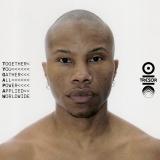
May 2026 marks the arrival of TYGAPAW (aka Dion McKenzie)’s first full-length album on Tresor Records, entitled Together You Gather All Power Applied Worldwide. An acronym of its creator’s name, TYGAPAW’s third studio album is a deeply personal collection of music building worlds where Black queer and trans siblings can thrive, while unifying dancefloors worldwide. A proposition that collective wisdom liberates us from the matrix of domination we live within. The album unfolds as the latest chapter in TYGAPAW’s ongoing techno opera opus, continuing to center the voices of Black women, which surface as layered incantations rather than lyrics - powerful, haunting, sensual, activating.
With the process of creating the album starting in 2023, as TYGAPAW (Dion McKenzie) was in the first year of their transition, the music reflects the intensity of that period, where they were experiencing deplatforming as a response to the shift in their physical appearance: Tracks like ‘M32 Riddim’ and ‘Helicopter hovers over my Crown Heights Apartment’ feature high-paced rhythms intersecting with intense siren-like synths to form demanding compositions echoing a heightened sense of alert. Yet throughout the album, relief comes in the form of TYGAPAW’s vocal features, co-conspirators, and chosen family, whose voices are treated with reverb and echo, a sonic fingerprint that leads back to the pioneers in the legendary studios of TYGAPAW’s native land, Jamaica, an important reminder that the past will always inform the future. It is an album for dancers first and foremost, where joy, defiance, and integration with the natural body coexist, and every drop feels less like a climax than a transformation. Expect a bass that permeates your soul and melodic synthesized sequenced phrases echoing the dancehall eras of TYGAPAW’s youth, reshaped into hypnotic melodies that glow over industrial kicks designed to command attention, reasserting Jamaica's pioneering yet often overlooked contribution to electronic music.
In the opening track, ‘Can I Live’, Precious Okoyomon’s words feel like the beginning of a ritual; setting the intentions for the rest of the proceedings. As McKenzie puts it, their “work is about regeneration, resetting, getting integrated into nature, and about rebirth. That’s the tone I wanted to set at the outset of the album.” Ms Carrie Stacks continues this thread of support in ‘Don’t Panic’ with heavily processed vocals on top of a beat that takes inspiration from another important ingredient in the antidote to the oppression of isolation: Ballroom culture. “ I feel like I found my queerness in Ballroom, that’s why this track is very important to me.”
Echoes of NYC Black queer nightlife scene also permeate in the energetic drums of ‘Exorcise the Language of Domination’, in which Julianna Huxtable’s spoken performance complements the various movements and tones of the music. “My producer brain thought this was the one that Juliana’s vocals would be best suited for. I hinted: ‘what do you think of this one?’ She just went into her notes and picked some passages to go with the first section of the track. From there, it was a year-long process of development. It required time and space for this thing to evolve, but I think it’s one of the most powerful tracks on the album.” London’s SUUTOO contributes the album’s only musical collaboration on ‘B2B’, a track that emerged from sessions in McKenzie’s New York studio where the real objective was to connect and have fun; a time out from the demands of life outside.
The album closes out with a double hit of emotion in the form of ‘Effects of Resistance and Black Trans Masculine Experience’. The former features South African scholar Khanyisile Mbongwa drawing connections that exist between Africa and the Black diaspora, whilst looking to the future and calling for a shared sense of community.
The latter piece, an instrumental version of the piece which featured on the IMMIGRANT E.P. of 2025 is a gentle and deeply affecting end to the record, a place of peace and acceptance. This end-of-cycle tone is mirrored in the sleeve photography, which also ties back to IMMIGRANT by finally revealing what was hidden: a portrait of the artist fully self-actualized; a step towards true inner liberation. TYGAPAW is sonically defiant across this album; bass frequencies feel tactile — less heard than inhabited — infectious lead synth melodies remain with you long after the track ends. An overall sound that leaves asserting an urgent need for connection. From Detroit to New York to Berlin to Jamaica, despite geographic distance, this album reminds us that we remain in solidarity, recognising that meaningful world-building requires collective input and action, both personal and communal, if we are to move toward liberation.
A label compilation can be the first sign of a new cycle. After years shaped by individual trajectories, it brings the focus back to what made scenes powerful in the first place: shared language, mutual influence and a sense of collective movement.
For a label built on deep rhythm, organic textures and emotional drive, this carries an even stronger meaning. These musical spaces hold connection, memory and exchange at their core.
In this light, a compilation becomes more than a format: it becomes a statement of identity, a meeting point where different voices contribute to one evolving vision.
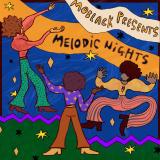
“MoBlack presents: MELODIC NIGHTS” marks the start of this new MoBlack path guided by careful curation and artistic exchange, blending percussive depth with a more melodic approach.
The result is a four-track selection navigating different shades of introspection and release, held together by a strong and recognizable sonic character.
Klement Bonelli – “It’s My Life” sets the tone with a bold, emotionally charged cut that balances melodic lift with a club-focused pulse. it’s jud, MR.FULLTIM€ – “Jackfruit” adds a distinctive twist to the journey, playful in texture yet precise in its impulse, widening the palette with character and movement. Jay’ (CH) – “Our Fire” leans into atmosphere and intensity, building momentum through evocative harmonies and a steady emotional current. Max Zotti, Blaxx – “Release Your Pain” closes the collection with a cathartic, rhythm-led energy, delivering what feels both intimate and dancefloor-ready. More than a one-off release, “MELODIC NIGHTS” introduces a collection designed to highlight converging sensibilities, where each track stands on its own while contributing to a wider narrative.
Artwork by Rachael D’Alessandro. Executive producer Mimmo Falcone. Distribution by Muting The Noise.
- 01: Two
- 02: Twelve
- 03: Nineteen
- 04: Nine
- 05: Fourteen
- 06: Thirteen
- 07: Twenty
- 08: Fifteen
- 09: Ten
- 10: Three
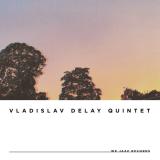
Vladislav Delay, primarily known as a highly regarded electronic music innovator, steps ahead with his acoustic jazz quintet. Echoing the forward-looking vd musical vision always ahead of the curve, the new album does not fit into any specific category, forging a path of its own across the 10 tracks. Recorded at Candybomber Studio in Berlin, the album brings vd together with Maria Bertel, Lucio Capece, Derek Shirley and Max Loderbauer. This is shape-shifting, elastic music that exists left of any given timeline.
Based in Hailuoto in Northern Finland, Vladislav Delay has never fit into any given mould as an artist. His prolific, at times mythical output has elevated him to a veritable legend status in all music cycles appreciating a unique artistic voice. Be it his forward-reaching recent releases as Vladislav Delay on his own Rajaton imprint, his Ripatti alias, or playing metallic percussion with the Moritz Von Oswald Trio, Vladislav Delay always has A SOUND. And that sound is ever-evolving, as his new jazz album shows. What "jazz" is this? There are certainly liquid elements there in the mix, not unlike the ones heard on previous vd productions. Then again, this is acoustic quintet music by and large, but not any specific kind we have ever heard before. Isn't that the whole point of "jazz"? Whatever came before is a springboard, not a limitation.
- 01: Arp Amp Chasm
- 02: Drift Vector
- 03: Modloop 138 Fragment
- 04: Foldsp4
- 05: Osc Hop (Slow Collapse)
- 06: Tweak 3 Driftmass
- 07: Blurform Dust
- 08: Wogglebug Remembered
- 09: Trippy135 Phase 0
- 10: Nachtgrain
- 11: Chronoroute Fank
- 12: Freeqwarp 2025 Redux
- 13 30: 3 Template Refract
- 14: Dln - Soft Ruin
- 15: Cr78 Mesh
- 16: Volca Signal 06
- 17: Ctrssalms (Cold Render)
- 18: Oceans Past And Present
- 19: Jt33Unstable Core
- 20: Modern Birds (Origin Edit)
Contemplating the role of the album format in an attention-deficient society, Speedy J presents Walkman -- a constantly shifting, 90-minute soundtrack to a journey of your choice. Jochem Paap's first solo album in over 20 years is a freewheeling, 20-track testament to his decades-deep studio skill and sonic versatility, running from skewed rhythmic rabbit holes to exploratory tonal abandon. For Paap, the traditional idea of the album had become obscured by listening habits and the non-stop information barrage of our digital lives. Having moved on from his breakthrough years releasing LPs and touring off the back of them, he was more inspired to develop his many-sided STOOR project and feed into a bigger artistic body of work than the temporary shelf-life of a single release. As is natural for any artist, his perspective shifted over time and he found himself drawn back to the idea of an album, realising he connected best with longer releases while he was on a walk, out for a run or generally in transit one way or another. With an endearing call back to the humble Walkman, he selected an hour and a half of material created during studio sessions at the beginning of 2025, perfectly sized to fit on two 45-minute sides of a cassette tape. As has long been the case for his studio practice, there were no fixed intentions when sitting down in the STOOR lab to start making noise -- just a wealth of experience and an expansive set of tools to start exploring with. From hours of jams Paap pulled together standout moments and moulded them into a mixtape-like narrative ranging from two-minute beat nuggets to full-tilt techno workouts and immersive ambient drops. Every sound is intentional, but the overall delivery is instinctive and curious, showing multiple new dimensions to Paap's sound and offering unpredictability at every turn. 'Arp Amp Chasm' opens the album up in a thick blanket of humming, harmonic waves with an electric emotional charge, while 'Ctrssalms17 (Cold Render)' journeys through evocative blooms of melancholic, gritty pads and rugged, half-submerged tech funk. 'Modern Birds (Origin Edit)' reaches skywards with grand sweeps of dynamic, brilliantly rendered synthesis. From the dexterous drum science of 'Drift Vector' to 'Osc Hop (Slow Collapse)'s lurching, beatless swamp of synths, on Walkman even the briefest snapshots leave an impression that lasts beyond the quick-scan cycle of the modern music experience. With his return to the album format, Paap's message is clear --put your headphones on, get outside and lose yourself in the sound of an artist constantly committed to moving forwards.
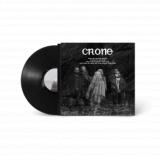
Irish drone-doom-folk act One Leg One Eye, the project of founding Lankum member Ian Lynch and veteran noise monger George Brennan, announce their new album, CRONE, out on 1 May on AD 93.
Today the group share the first track on the album, ‘Many are my Names Besides’, on which they are joined by the elemental force that is legendary actor, performer, writer and director Olwen Fouéré (Operating Theatre) contributing vocals.
Olwen Fouéré comments:
“When Ian and George first approached me to work with them, they were already creating the Crone album as a sonic invocation of the ‘sovereignty goddess’, who personifies the land and the legitimacy to rule it, in her darkest and most terrifying form. As we spoke, the triple goddess figure of the Morrigan entered my mind, reinforced by a marked presence of crows every time we met. The Morrigan is essentially a war goddess, frequently appearing as a crow in a battlefield, a death prophet, a guardian of sovereignty, and a very powerful figure in Irish Mythology.
So I invoked her energy as a starting point, using text extracts that Ian sent me from the Ulster Cycle and other sources. The voice recording was done in one day, improvising the source material while the already composed music occupied my psyche through headphones.
Listening back, at this time in our world, I can only wonder at how much blood and war the Crone/ Crow of sovereignty is preparing to unleash now. Watch out.”
CRONE is the second album from Lynch and Brennan, following on from 2022’s slowburn slab of ambient grit, …And Take The Black Worm With Me. Bewildering, psychedelic and ultimately transcendental, the four tracks of One Leg One Eye’s CRONE shapeshift and morph endlessly in a coarse miasma. Traditional song structures and vocal melody are eschewed, instead the trio directly channel energies from the rich seams of mythological significance submerged below the Irish psyche. The anger, rage and beauty of the sovereignty goddess burn a consistent and deliberate line through the album in the form of obscure incantations and dire pronouncements, the gnarled sinews that bind it all together.
Just as the subject matter of the tracks delve deeper into Irish myth and the remote past, the temporal reality of the album reaches back into the bands prehistory, with the majority of it the material being recorded by Lynch and Brennan in 2021 before One Leg One Eye was conceived of as an entity with Brennan working on the CRONE project while Lynch worked on …And Take The Black Worm With Me.
When they were there they saw a lone woman coming to the door of the Hostel, after sunset, and seeking to be let in. As long as a weaver’s beam was each of her two shins, and they were as dark as the back of a stag-beetle. A greyish, wooly mantle she wore. Her lower hair used to reach as far as her knee. Her lips were on one side of her head.
She came and put one of her shoulders against the door-post of the house, casting the evil eye on the king and the youths who surrounded him in the Hostel. He himself addressed her from within.
"Well, O woman," says Conaire, "if thou art a wizard, what seest thou for us?"
"Truly I see for thee," she answers, "that neither fell nor flesh of thine shall escape from the place into which thou hast come, save what birds will bear away in their claws."
"It was not an evil omen we foreboded, O woman," saith he: "it is not thou that always augurs for us. What is thy name, O woman?"
"Calib," she answers.
"That is not much of a name," says Conaire.
"Lo, many are my names besides."
"Which be they?" asks Conaire.
"Easy to say," quoth she. "Samon, Sinand, Seisclend, Sodb, Caill, Coll, Díchóem, Dichiúil, Díthím, Díchuimne, Dichruidne, Dairne, Dáríne, Déruaine, Egem, Agam, Ethamne, Gním, Cluiche, Cethardam, Níth, Némain, Nóennen, Badb, Blosc, Bloár, Huae, óe Aife la Sruth, Mache, Médé, Mod."
On one foot, and holding up one hand, and breathing one breath she sang all that to them from the door of the house.
- A1: Jungstötter Overturn 00:05:30
- A2: Jungstötter Sunk 00:04:10
- A3: Jungstötter That Noise 00:03:30
- A4: Jungstötter Possess 00:03:01
- A5: Jungstötter Tell This Lover 00:04:45
- B1: Jungstötter Loud Fingers 00:05:30
- B2: Jungstötter Seaweed 00:02:51
- B3: Jungstötter / Ronja Again 00:04:21
- B4: Jungstötter Consume Me 00:04:00
- B5: Jungstötter If Int 00:01:30
- B6: Jungstötter Elastic Avenue 00:03:55
‘Sustained’ is the new album by Jungstötter, the solo project of Berlin-based songwriter and musician Fabian Altstötter. With sparse, poignant arrangements of piano, strings, electronics, and noise, Jungstötter composes a tender, raw, and poetic song cycle of exquisite romanticism, featuring a cast of close collaborators including the Berlin-based artist Ronja (Roomer). Evoking the fervent vocal versatility of ANOHNI and Scott Walker, Jungstötter adopts the human breath as a central metaphor in a miraculously moving opus of intimacy, vulnerability, and communion.
Across ten tracks of experimental pop songcraft, notes oscillate, soft strings linger, piano ambles, noise billows up and sears back into itself – and all of it is bound by a distinct voice that roams from a remote, warped undertone to an immediate melodic intensity.
Distorting the soft edges of vocal melody with rattling tactile noise, ‘Sustained’ is a mercurial portrait of layered lyric and contracting sound. The third album by Jungstötter, ‘Sustained’ bends away from the more dense, knotted sounds of his last two solo albums, ‘Love Is’ (2019) and ‘One Star’ (2023), toward a particular rawness that reestablishes the strength of poetics, of vocal sound, and the softness of song when reduced, restrained, redirected.
Audaciously innovative sound designer/producer/live artist Enrico Sangiuliano reaches #0 in his countdown from ‘NINETOZERO’ on his eponymous ephemeral imprint, triggering its built-in autodestruct by the release of provocative 3-track EP ‘Absence’, out March 19th on vinyl & digital. The digital EP will also feature an Edit of ‘Step Into The End’.
The Italian tech maestro and artistic pioneer eschews populism, yet still storms charts & wins hearts – notably/recently in his unsettling, compelling manifesto x battle cry ‘The Techno Code’. Says Enrico of his label, ‘NINETOZERO is a cycle of listening, making, and letting go. Born from silence, shaped by space, directed by reflection, altered by change, revealed by glitch, unified through interconnection, lifted toward transcendence, refined by discipline, clarified by chaos, and finally returned to absence.’
On his ‘Absence’ EP: ‘With ‘Absence’ we come full circle, back to the womb of nothingness but charged with the echo of everything we have experienced. It is an ending, yes, but also an invitation. A new kind of silence is born, shaped by the memory of every frequency we unleashed.’ Enrico Sangiuliano can thrill listeners with his music, but dares to challenge, to trust them.
Main track ‘Step Into The End’: a full-on barrage of trustworthy techno danceability & energy, bookended by soulful violin, high horns & sirens, with spoken incantations as if summoning to a sacred rite. A ten-minute timeless dance track as ‘all we’ve learned converges into a single point where presence & silence merge.’
Title track ‘Absence’: The (Techno Code-esque) Voice speaks of sound, space, absence, trace... the track’s background noise is the almost- silence of his studio ‘through a magnifying glass’.. His breathing can just be heard in the recording. Melodic, beautiful, free-form chords in the middle section act like a breakdown in reverse. ‘A provocation, a track of silence, incidental noise. A tale of a story that just finished, but also a background for a story to be shaped. No one is intentionally performing for us. Here, the responsibility and work of listening is on you, to figure out what you can hear and what to make of it, to craft your own soundtrack based on the sounds that surround you, beyond the track. You can perform your own version yourself. Close your eyes and just listen. Engage with your environment. Be present. Expand your senses. Enjoy absence.’
‘The Aftermath’: a 40-second provocative coda. A snatch of stirring conversation signing off the EP and label alike. What will be launched post-zero by Enrico Sangiuliano? Watch this space, this absence.
Looking back in hindsight to the activity and accomplishments of Axis is with much pride - to witness the relationship between the music and listener evolving to this point.
The Director's Cut reissue project is about manicuring detail. It?s about a rare opportunity to enhance what we've done so that the relationship strengthens for the long term''
- Jeff Mills
'The Director's Cut' series by Jeff Mills
Following her debut album, I’ll Look for You in Others (Past Inside the Present), earlier this year, Patricia Wolf joins Spain’s Balmat label with See-Through, her second album. See Through finds the Portland, Oregon musician and field recordist continuing to develop her signature style of ambient, balancing radiant soundscaping with a carefully expressive sensibility. But the new album is also marked by an important difference. Where I’ll Look for You in Others was largely written in response to the death of a loved one, See-Through represents a kind of rebirth.
“After a long period of grief, I had been hoping to find my way to a place of lightness, peace, playfulness, curiosity, and sensuality again,” Wolf says. “What I was surprised and pleased to find is that for the most part, I had.”
She wrote and recorded many of the album’s songs quickly, in preparation for an August 2021 broadcast on the online radio platform 9128 Live. Excited for the opportunity to play live after more than a year of the pandemic, Wolf decided to write all new material for the event, working with a lean setup of Octatrack, Roland Synth Plus 10, Make Noise 0-Coast, and Novation Summit. (In fact, Wolf was the first sound designer invited to create patches for the Summit.) She also picked up an acoustic guitar that her brother had loaned her. “I decided to take the surrealist approach of ‘pure psychic automatism’ to see what poured out of me,” she recalls. “Woodland Encounter,” “Under a Glass Bell,” “The Grotto,” “The Mechanical Age,” “The Flaneur,” and “Psychic Sweeping” are all products of those sessions; the through line holding them together is their exploratory spirit and clarity
of vision.
Other songs, like “A Conversation With My Innocence,” “Recalibration,” and “Psychic Sweeping,” wrestle with the traumas of the preceding year. Though they may linger on the heaviness of loss, Wolf says, “What I discovered is that a stronger archetype had grown inside me to steer my emotions and thoughts to a better place.” Likewise, “Wistfulness” and “Upward Swimming Fish”—her first experiments with VST synthesizers—balance the bittersweet embrace of melancholy with the freedom to choose happiness.
“Pacific Coast Highway,” the album’s lone song with drums, might at first seem like an outlier. But it also signals Wolf’s interest in finding a fusion between the introspection of ambient and the togetherness of beat-oriented music. “Experiencing loss and isolation is what drove me into gentler territories of sound,” she says, “but I want to start making more beat-oriented music. After an extended period of loss and isolation, I’m ready to experience more joyous and social things.”
Listeners with keen ears might recognize the album’s closing song, “Springtime in Croatia”: A different mix of the song originally appeared on the 2021 digital compilation secondnature & friends Vol. II, from the Seattle label secondnature. This marks its first appearance on vinyl, however, and its spiritual home is undoubtedly here, at the close of See-Through. As the bookending answer to the opening “Woodland Encounter”—another song in which field recordings play a crucial role—it closes the circle of an album that is itself keyed to the steadily turning cycles of life.
Acid Nation is one of the defining releases from US techno and house icon K. Hand (Kelli Hand). First pressed in 1995 on Loriz Sound in collaboration with Acacia Records, the record captures the raw energy and forward-thinking spirit of the American underground scene of the era. Driven by gritty acid lines, powerful rhythms, and a fearless, machine-driven groove, Acid Nation showcases the full depth of K. Hand’s talent as a DJ and producer. Now seeing the light again on the Time To Impact imprint, the record returns in a remastered version, bringing its timeless acid power back to contemporary dancefloors.
Isa Gordon and Tony Morris were first brought together through their individual releases on Optimo Music, which established mutual respect within the label’s community. While they had not previously performed live together, they were invited to take part in a fundraiser hosted by Queen’s Park Arena in support of Glasgow NW Foodbank and later for JD Twitch’s end-of-life care. Tony asked Isa to contribute guitar and backing vocals to his set, including a track then called Last Night I Had a Dream. That performance became the seed for their collaboration.
The first phase of fleshing it out, recalls Tony: “Somebody said Isa sang like Shania Twain. That got me thinking about country music and call and response, prompting me to come up with alternative lyrics.” Isa remembers: “I cycled over to Tony’s house with my guitar, and we spoke about what the tune meant. It was about him being wrapped up in dreamland, luxuriating in his subconscious, while my character — impatient and trapped in her own routines — barely had time to remember her own dreams.” Tony continues: “Brilliantly I realised that I could never collaborate with anyone in situ and so I sat in the garden for two hours watching my wife tend to plants. Every now and again I would creep up the stairs and put my ear to the door. I could hear Isa warbling away and so would resume my garden watch. After two hours I went back upstairs to see how she was getting on, only to find that she had written one of the greatest songs I’d ever heard. I still think that.” Tony adds: “My overwhelming sentiment about Wake Up Baby is pride. I can honestly say that I’m more proud of it than anything else I have done. It ticks a whole load of boxes. Isa’s singing in various Scottish modes is unique. The way her electric guitar adorns the dance beat makes it a rock song as well as a dance and a C&W song — truly multi-genre.”
The B-side of the 12” release, Syringe Moustache, is a surreal, darkly playful counterpart to Wake Up Baby. The track was inspired by a dream Tony had: “I was in a shopping mall, in a two-level shoe shop, and my attention was taken by a little girl with a syringe taped beneath her nose like a moustache. She went about her business trying on shoes, confident and wise beyond her years. In the dream, I imagined her as the daughter of cultured, intelligent parents determined to raise her independently. I was struck by my own feelings of inadequacy — I knew I could never have coped with such a contraption myself.” Isa’s take on the meaning of this song somewhat differs: “Tony sent me the tune over Instagram months before I met him, and I was spooked — as far as I knew, he didn’t know anything about me, but the story felt like it was written about me as a little girl, growing up around heroin addiction. The syringe beneath the girl’s nose became a symbol of the inescapable constraints of that environment, literally written on her face, yet something you just have to carry on through. On a buzz from the serendipity, I added a full instrumental backing to this most bizarre of works.”
The result is absurd, unsettling, and strangely empowering, staking out its own surreal, cinematic space. The 12” dance single is a format Tony had long wanted to explore — a tangible artefact to leave for family, a medium that celebrates the physicality of sound and the ritual of listening. It allowed the artists to maximise the format’s potential: a strong, multi-genre A-side, a surreal B-side, and remixes that expanded the record’s sonic world. Glasgow music staples Auntie Flo and 100% Positive Feedback were invited to reinterpret the tracks, bringing their distinctive touch — Auntie Flo transforming the A-side into a luscious, dancefloor-ready meditation, and 100% Positive Feedback twisting Syringe Moustache into absurd, playful shapes with false-start drops and over-the-top vocal editing.
The cover photograph, taken at the University Café by Harrison Reid, captures Isa and Tony embodying the characters they brought to life in the songs — a visual reflection of the record’s narrative and emotional stakes. The Café also holds personal significance: it’s where all of Isa’s meetings with Keith McIvor took place, where she first remembers visiting Glasgow as a child, and a place Tony fondly likes to go to drip egg yolk down his tie and watch the world go by. Together, the 12” format, the remixes, and the artwork create a cohesive, tactile experience, amplifying the duality, theatricality, and emotional breadth of the collaboration.
Laseech, a Croatian producer and Cosada label owner with releases on BBE, Lumberjacks In Hell, Red Ember Records, and Forbidden Dance, is continuing a string of excellent releases with Rising Soul. Known for his dedication to house music, Laseech has built an international reputation through collaborations and remixes with some of the genre's most respected architects, including Ron Trent, Patrice Scott, Javonntte, and Dego. "Rising Soul is actually one of the first tracks I did back in 2017 while I was heavily into sampling. I was jamming with my MPC1000, and Rising Soul came up. I never thought that it would become such an effective song that works on the dancefloor every time." Laseech explains. Kez YM, a highly respected Japanese producer and DJ, has been a key figure in the global house music scene for almost two decades. Originally from Chiba and now based in Berlin, his unique approach to house music has led to releases on esteemed labels such as City Fly, Faces Records, Yore, and 4Lux. When describing his version of the track, Kez simply stated: "VIBES." Well, no one will argue with that. The last version comes from Cycle Records' founder Jan Kincl, a prominent Croatian music producer and DJ with releases on labels like BBE, Far Out, Sonar Kollektiv, and Get Physical. "I've been playing Andrej's original for years. He undoubtedly made some good stuff recently, but this one remains among my firm favourites from him. Kez delivered a beautiful version that took it further towards jazz territory, so I decided to make a version that would bridge those two." Jan explains. "I knew we could build a very good record around Rising Soul, with versions that would give DJs different options for different moments during the party. I guess we did a good job because some of the early supporters include DJs from all over the place - Laurent Garnier, Alex Barck from Jazzanova, Marcel Dettmann, Alex Nut (Eglo), Sasse, Chicago's K' Alexi Shelby, Lakuti, Ian Friday and Truncate, among others.