Pierre-Alain Dahan & Slim Pezin's Neo Rythmiques is an absolute KILLER Tele Music library classic from 1976. It's absolutely sensational throughout, all scorching, uptempo jazzy soul funk that Mr James Brown himself would've been envious of. This is serious business with breaks for days. French drummer, percussionist and composer Pierre-Alain Dahan was a key member of the legendary Arpadys, Disco & Co, Voyage, Tumblack (with Wally Badarou, Mallia et al!) and Jef Gilson Septet. With Neo Rhythmiques, he's joined by his eternal guitar colleague Slim Pezin (Voyage, Manu Dibango, Nino Ferrer), so you know this Be With reissue is fundamentally vital.
Opener "Soul Car" is a swaggering, horn-drenched jazz-funk beast whilst the slick JBs funk of "Happy Penalty" is just plain irresistible. Definitely influenced by American funk flavours, it stands alone on its own right as a brilliant piece of music, no question about that. The blazing "Kuzi-Kuza" is again horn-fuelled but has a more exotic, Latino feel, all loose grooves and bastard blues with funky organ and shredding guitars. The stomping, proto-disco of "Mercy Boa" is a guitar-sizzled Bohannon-esque hypno-groove for adventurous dance floors the world over. Outstanding. And if all that wasn't enough from one half of a 70s French library LP, the A side ends with the monumental, stratospheric "Slim Bertha"! I mean, what can you even say about this absolute monster?! Slo-motion, deep drama funk breaks with jazzy guitar and gleaming percussion. Just sensational.
Side B opens with "Country + Country", a rather forgettable slice of piano driven bluegrass funk (?!) Aaaaannyway, "Super Airship" follows and is a driving fuzz-guitar psych-rock workout of the highest order. We're back on track now. The brilliantly titled "Electronic Mutation" is a total highlight, the funk most definitely returning and, indeed, strong in this one with its deep clean breaks (with some particularly ace hi-hats), echoey effects and funky clavs. "Africa Semper" follows, all funky percussion, trippy echo and distorted, psychy guitar licks. To close out the set, "Neo Rythmiques 1 and 2" form a great salvo of top-tier, percussion-heavy synthy-funk-fusion. For our money, the bugged-out echoey space-soul of "N° 2" just about edges it.
One of the very best French drummers ever, Pierre-Alain Dahan began his career at the Blue Note in Paris with Sonny Stitt, Dexter Gordon and Daniel Humair. Some start, eh?! He also participated in the recording of Serge Gainsbourg's cult album 'La Ballade de Melody Nelson' before going on to make countless KILLER library funk records and be a key member - alongside his partner here, Slim Pezin - in the legendary Arpadys, Disco & Co and Voyage. Dahan also featured in Tumblack (with Wally Badarou, Sauveur Mallia et al) and Jef Gilson Septet (alongside Henri Texier), whilst the CCCP Pezin backed, among others, Manu Dibango and Nino Ferrer. Some pedigree.
The audio for Neo Rythmiques has been remastered by Be With regular Simon Francis, ensuring this release sounds better than ever. Cicely Balston's expert skills have made sure nothing is lost in the cut whilst the original, iconic Tele Music house sleeve has been restored here at Be With HQ as the finishing touch to this long overdue re-issue.
Buscar:d a v e the drumm
Considered by many to be his finest single album, the 1962 LP Coltrane finds John Coltrane displaying all of the exciting elements that sparked brilliance both on tenor and soprano saxophones, The album features his classic quartet, with bassist Jimmy Garrison, drummer Elvin Jones, and especially the stellar McCoy Tyner, all of whom by this time had already integrated their passionate dynamics into the inner whole of the group.
A pioneer of bebop, Max Roach went on to work on many other styles of music and is generally considered alongside the most important drummers in history having worked with such musicians as Coleman Hawkins, Dizzy Gillespie, Miles Davis, Duke Ellington, Charlie Parker, Stan Getz and more! A seminal set, stretching out towards the directions Max would explore fully on the Candid, Impulse, and Fantasy labels in the 60s. Group members include Booker Little on trumpet, George Coleman on tenor, Ray Draper on tuba, and Art Davis on bass – and the lack of a piano makes for a very exciting sound!
Kansas City born Hammond B3 organ dynamo Big John Patton made a stellar run of soul jazz albums for Blue Note thru the 1960s but Let ‘Em Roll stands among the finest with Patton adding vibraphonist Bobby Hutcherson to a standard organ trio line-up with guitarist Grant Green and drummer Otis Finch.
This stereo Tone Poet Vinyl Edition was produced by Joe Harley, mastered by Kevin Gray from the original analog master tapes, pressed on 180g vinyl at RTI, and packaged in a deluxe gatefold tip-on jacket.
FNUSSJEN is the brainchild of drummer / percussionist Nicolas Chkifi. In this band he brought together some extraordinary musicians in an unusual lineup: harpist Ann Eysermans, violinist Ananta Roosens, pianist Christian Mendoza and himself on drums. In their music, they drop the tempo, forcing the listener to immerse themselves completely in their delicate blend of contemporary classical, chamber music and jazz.
While stationed in Germany in the RAF during the late 1950s and early 1960s, York-born alto and soprano saxophonist Trevor Watts met the drummer John Stevens, with whom he would form the Spontaneous Music Ensemble upon returning to the UK in 1965, which became an important vehicle for British free improvisation. Watts’ spin-off project Amalgam came two years later with Stevens and bassist Jeff Clyne, previously in the Jazz Couriers with Ronnie Scott; their debut LP Prayer For Peace is jazz improv at its most melodic, an unpredictable album of varying shades, with three unique takes of the song ‘Judy’s Smile.’
In the beginning there was FAUVE, cult french rock band with unique on-fire spoken-word singing & epic concerts.
4 out of the 5 former Fauve members decided to resume creation and to change everything. They are back on a new name : MAGENTA & with a totally different global identity, up to the music: new foundations. No more rock, pure electronic music from classic french touch to new electro vibes. But still featuring lyrics & singing reminding their former roots. And electronic played live using a drummer & a guitarist on top of machines & keyboards.
Legendary drummer Kenny Clarke compared Jean-Luc Ponty to Dizzy Gillespie Fellow violinist Stuff Smith marveled, "He plays violin like Coltrane plays saxophone." Born in 1942, the French violinist Jean- Luc Ponty transported jazz violin playing into the world of modern jazz. On Frank Zappa's urging, Ponty moved to the States in 1970. Over the next years he toured with Zappa, the Mahavishnu Orchestra, and Chick Corea's "Return to Forever".In the early 1970s Ponty bought himself a sequencer and synthesizer and carried them around while traveling so he could record new ideas. By 1982 Ponty had a well- deserved reputation as a forerunner in jazz-rock and jazz fusion.
In a retrospective interview for this re- release of the 1983 album Individual Choice, JLP said:
"What I was recording in that new sequencer gave me the idea to go for a totally different concept, to use these recordings as rhythmic backgrounds, sometimes without drums or percussion. I planned to record a new album in which I would play all the background parts with my synthesizers and add my violin later on in the studio."
Ponty also invited a couple guests to contribute to the recording.
They were no less than George Duke (keys), Allan Holdsworth (guitar), Rayford Griffin (drums) and Randy Jackson (bass).
Individual Choice has been re- mastered by 2023 Grammy Nominee Christoph Stickeland includes new liner notes.
- A1: We Crossed The Atlantic
- A2: The Love You Bring
- A3: When I Was Howard Hughes
- A4: Failed Adventure
- B1: Stars (Twilight Mix)
- B2: Grand Central
- B3: International Exiles
- B4: Merry-Go-Round
- B5: Radios Appear
- C1: City Terminus
- C2: Min Min Light
- C3: Oregon Snow
- C4: Cherry Lake
- C5: Blackout
- D1: Please Don’t Say Goodbye
- D2: Museum Station
- D3: Blue Train
- D4: You Were There
- D5: Something Better Beginning
Selected Songs 1997-2003 compiles some of the finest moments in the recording history of Hydroplane, the Melbourne-based indie-pop three-piece that operated alongside The Cat’s Miaow through the second half of the nineties. It’s the third release in what feels, now, like a loosely planned series by World Of Echo, documenting the music made by this group of friends in Melbourne sharehouses (The Cat’s Miaow’s Songs ’94-’98, 2022), or in the case of The Shapiros (Gone By Fall, 2023), while traversing the International Pop Underground.
Hydroplane would be familiar to anyone already following these breadcrumb trails – Andrew Withycombe, Bart Cummings and Kerrie Bolton were the group’s core, all members of The Cat’s Miaow. With Cat’s Miaow drummer Cameron Smith itinerant, having moved to London, the trio used this opportunity to expand their music. It’s a subtle, but important shift. If The Cat’s Miaow was about the perfect, minimalist, two-minute pop song, Hydroplane’s music was far more open-ended, embracing the loops and drones, sampled house-y shuffle beats, the burbling of a Roland Jupiter-4 synth, all of which the trio joined, effortlessly, to their endless capacity for moving, elegant melodicism.
They may have only planned to release one seven-inch single, but the sound Hydroplane created was so bewitching, so compelling, that the project’s lifespan ran for around half a decade, and they ended up releasing three albums, including a self-titled debut recently reissued by Efficient Space, and seven singles. There are all kinds of compelling things happening in the music compiled here – the hazy repetition of the gentler side of Krautrock is in here, somewhere, which also suggests Stereolab at their most intimate and disarmed; the gently drifting guitars, gauzy and oneiric, set the songs adrift and floating, each one lost in its own imagined, distracted world. Songs like “The Love You Bring” set indistinct tonal floats across dance rhythms, in a way not quite heard since My Bloody Valentine’s “Instrumental” – but with the added gift of Bolton’s gorgeous voice.
This loose coalition with dance music, and the quiet experimentalism at the heart of Hydroplane, also gestures towards peers like Hood, Acetate Zero and Other People’s Children, and releases on renegade labels like Wurlitzer Jukebox and Enraptured. Like those groups and labels, The Cat’s Miaow were reconciling independent pop music’s past – sweet melody and melancholy, chiming and droning guitars – with the futures promised by DIY electronics and nascent digitalia, the interface of indie and IDM that led to some of the underground’s most blissful, texturally swoonsome music. All that is here, but also, the poise of the melodies is pure Cat’s Miaow, though, with Bolton’s voice sailing, pacifically, over some of the most pared-down, gorgeous music made during their decade.
It was a time, too, when such music could make waves – “We Crossed The Atlantic”, one of their early singles, was picked up by John Peel, who played it repeatedly on his legendary radio show, the song reaching #13 on his 1997 Festive 50. That the song itself was a cover of a tune by 1960s Australian beatnik-pop-poet Pip Proud felt even more perfect – a group of outsiders paying tribute to another outsider, played on the radio one of the few broadcasters brave and human enough to take a chance on this music. But it was a time where everything was up for grabs, and genres were flowing into each other: folk songs went drone; indie re-discovered noise; ambient pop floated, again, out onto the dancefloor. And while they may have been sequestered away in Melbourne, Australia, Hydroplane felt core to that scene, a quietly driving force.
Compiling material from across their brief but mercurial career, this double album perfectly captures the magic and mystery of Hydroplane’s dreamlike, perfect pop songs.
1979 Linda Williams gold from the Arista archives gets a much welcomed official, remastered reissue.
With an intro that does exactly as its title suggests, 'Elevate Our Minds' became a huge rare groove record in the mid to late '80s. Produced by the late, great Richard Evans who worked with the very best in the business, from Gene Chandler and Marlena Shaw, to Ramsey Lewis and Ahmad Jamal, it's supremely arranged, blending a Bossa Nova beat and trumpet trills with Linda's distinctly New York authenticity that comes through in the vocals. Like a trip to the blissful beaches of Rio whilst bringing a touch of the New York disco glam along for the ride. Exotic yet familiar, all in the same breath.
On the flip, 'City Living', a straight up New York disco killer - oozing with funk, dripping in brass blasts, off beat hats and spruced up synths, it's a primetime ode to the hustle and bustle of the city. Williams' glorious tones, assisted by a majestic troupe of backing singers, glisten alongside the classy drumming and polished bass badness that lays behind it.
2023 Repress
One Night In Hackney remixes.
At last, the long waited and anticipated remixes of acid techno's biggest anthem has finally arrived on vinyl. Featuring hard to the core remixes from Pet Duo, D.A.V.E. The Drummer, Chris Liberator & Sterling Moss. This a.must have release for the collection. Dedicated to all free.party members across the world.
2024 BLACK VINYL REPRESS.
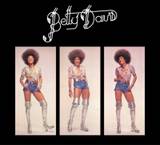
One can hardly imagine the genre-busting, culture-crossing musical magic of Outkast, Prince, Erykah Badu, Rick James, The Roots, or even the early Red Hot Chili Peppers without the influence of R&B pioneer Betty Davis. Her style of raw and revelatory punk-funk defies any notions that women can’t be visionaries in the worlds of rock and pop. In recent years, rappers from Ice Cube to Talib Kweli to Ludacris have rhymed over her intensely strong but sensual music.
There is one testimonial about Betty Davis that is universal: she was a woman ahead of her time. In our contemporary moment, this may not be as self-evident as it was thirty years ago – we live in an age that’s been profoundly changed by flamboyant flaunting of female sexuality: from Parlet to Madonna, Lil Kim to Kelis. Yet, back in 1973 when Betty Davis first showed up in her silver go-go boots, dazzling smile and towering Afro, who could you possibly have compared her to? Marva Whitney had the voice but not the independence. Labelle wouldn’t get sexy with their “Lady Marmalade” for another year while Millie Jackson wasn’t “Feelin’ Bitchy” until 1977. Even Tina Turner, the most obvious predecessor to Betty’s fierce style wasn’t completely out of Ike’s shadow until later in the decade.
Ms. Davis’s unique story, still sadly mostly unknown, is unlike any other in popular music. Betty wrote the song “Uptown” for the Chambers Brothers before marrying Miles Davis in the late ‘60s, influencing him with psychedelic rock, and introducing him to Jimi Hendrix — personally inspiring the classic album ’Bitches Brew.’
But her songwriting ability was way ahead of its time as well. Betty not only wrote every song she ever recorded and produced every album after her first, but the young woman penned the tunes that got The Commodores signed to Motown. The Detroit label soon came calling, pitching a Motown songwriting deal, which Betty turned down. Motown wanted to own everything. Heading to the UK, Marc Bolan of T. Rex urged the creative dynamo to start writing for herself. A common thread throughout Betty’s career would be her unbending Do-It-Yourself ethic, which made her quickly turn down anyone who didn’t fit with the vision. She would eventually say no to Eric Clapton as her album producer, seeing him as too banal.
In 1973, Davis would finally kick off her cosmic career with an amazingly progressive hard funk and sweet soul self-titled debut. Davis showcased her fiercely unique talent and features such gems as “If I’m In Luck I Might Get Picked Up” and “Game Is My Middle Name.” The album Betty Davis was recorded with Sly & The Family Stone’s rhythm section, sharply produced by Sly Stone drummer Greg Errico, and featured backing vocals from Sylvester and the Pointer Sisters.
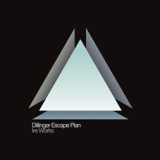
After Miss Machine, Dillinger Escape Plan fans were divided. Many of the folks who were attached to the screaming mathematical metal of Calculating Infinity bailed on the band, disapproving of the experimental musical direction and the meathead appearance of new singer/screamer Greg Puciato. Open-minded listeners were excited about the progressive journey they were taking and many critics hailed the group as a true innovator of metalcore. Ire Works succeeds in many of the same ways that their previous album did, while branching out creatively. They continue to toy with technical metal, blistering hardcore, jazz breaks, and post-punk, but here they evolve again by adding more twists and turns with additional electronic elements. While the merging of too many styles in hardcore can make for a convoluted result (see Avenged Sevenfold's self-titled release), the added instruments and genre changeups enhance the result rather than acting as ornamental distractions. Edgy Aphex Twin-style drill'n'bass drum breaks and stretched and squeezed electro blips feel strangely at home next to the psychotic time-signature changes and manic riffs, especially on the tracks "Sick on Sunday," "Dead as History," and "When Acting as a Wave." Violins, pianos, and trumpets sit nicely in the mix, and the group's willingness to take chances leads to stunning artistic endeavors rather than stale attempts at crossing genres just for the sake of being clever. Original vocalist Dimitri Minakakis makes an appearance, as does Mastodon guitarist Brent Hinds, but the most notable inclusion is drummer Gil Sharone, who proves himself an expert at picking up the slack after the departure of founding member Chris Pennie to play in Coheed and Cambria. Undoubtedly, this act added anger to fuel the fire of their heavier numbers. "82588," "Fix Your Face," and "Party Smasher" are as wicked and manic as their most difficult earlier stuff; conversely, the melodic hooks and falsetto of "Black Bubblegum" and the watery ambience of "Mouth of Ghosts" balance out the album nicely. It can be inaccessible and terrifying all at once, but in a genre overly saturated with formulaic groups, Ire Works is a true standout. If DEP aren't careful and continue down this innovative path, they could easily be labeled the Radiohead of metalcore
Lyon, France’s Meurtrières has not strayed far from their original goal of writing old-school, epic heavy metal with medieval overtones on their newest effort, Ronde De Nuit. If anything, the band (consisting of new vocalist Fiona, the guitar tandem of Flo Spector and Olivier, bassist Xavier and drummer Thomas) has taken what they started on their well-received 2020 self-titled EP and added new layers of complexity and depth. It is the natural transition for a band gaining more confidence in its songwriting abilities. Yet the noticeable change starts in the vocal spot. Out is the original frontwoman Fleur and in her place is Fiona. Meurtrières wasted little time introducing Fiona — the band started playing live shows and writing new material with her right after the release of the EP, thus, giving Meurtrières ample time to hone its new material. And Fiona fits the band’s hard-charging, gallant music like a glove, coming away with a stronghold of fiery, epic choruses — all sung in the Meurtrières’ native tongue. The lyrical subject matter on Ronde De Nuit still spans the medieval domain but with increased emphasis on paintings by Rembrandt (The Night Watch) and Johann Heinrich (Füssli). The band aimed to make the songs “pictorial,” reflecting imaginary portraits to draw in the listener. Except for “Aucun Homme, Aucun Dogme, Aucune Croix” (which is a known French medieval legend about a real woman), the songs on Ronde De Nuit are based on fantasy with a desired fate: All the depicted characters are doomed to tragedy, for in the world of Meurtrières, there is no such thing as crowned kings and queens and even glorious warriors. Artwork by Ivan Brun rounds out a package that perfectly ties in thematically with the desperate and dark themes of the lyrics. It is a fitting component to an album laced with stunning visuals and epic, old-school metal of the highest order!
Everybody loves a good comeback story. After releasing five genre-defining albums and building a fiercely loyal fanbase, Turnpike Troubadours — the Tahlequah, Oklahoma kings of Red Dirt music — all but fell apart in 2019, taking a three-year hiatus to find clarity amidst the noise of a red-hot career. But after the break, something remarkable and even unprecedented happened: the band returned more popular than ever. Not to mention stronger. The proof is in the group’s sixth studio album, A Cat in the Rain. Produced by three-time Grammy winner Shooter Jennings and recorded at the legendary FAME Recording Studios in Muscle Shoals, Alabama, and in Los Angeles, the 10-song album is a tale of reliability, rebirth, and redemption. It’s the story of brothers — frontman and chief songwriter Evan Felker, fiddler Kyle Nix, steel player Hank Early, guitarist Ryan Engleman, bassist RC Edwards, drummer Gabe Pearson — six musicians who ran the gauntlet of success, scrutiny, and even personal troubles, and would fight tooth and nail for one another. Turnpike Troubadours’ fans can feel this. That bond is in the band’s songs and in their live performances — they’ve racked up 1.5 billion streams globally and are selling out arenas and headlining festivals. Still, to some, they remain a mystery…the most popular band they’ve never heard of. But with A Cat in the Rain, that’s all about to change.
- 1: Offerings (The Swarm) Iv
- 2: Concordat (The Pact) I
- 3: Chalice (Vessel Consanguineous) Viii
- 4: Homunculus (Spirit Made Flesh) Ix
- 5: Invocation (Chthonic Merge) X
- 6: Megaron (Sunken Chamber) Vi
- 7: Convulse (Words Of Power) Iii
- 8: Altar (Unify In Carnage) V
- 9: Exile (Defy The False) Ii
- 10: Circle (Eye Of Ascension) Vii
Death Metal icons INCANTATION prepare the masses for their new album, Unholy Deification, via Relapse Records. Edified over three-plus decades of experience, Unholy Deification is the group's 13th full-length album. Validated by peers seasoned and new, INCANTATION are more vital than ever - the lineup, featuring founding guitarist/vocalist John McEntee, drummer Kyle Severn, bassist Chuck Sherwood, and guitarist Luke Shively, displays death metal know-how and the power of determination. "I'm not interested in playing it safe," McEntee asserts. "I think other people feel that there are limits to what we do. However, I don't see it that way. If it feels right, then it's Incantation. The songs we write are an honest expression of ourselves. 'Sect of Vile Divinities' was a stressful recording for me and the band. We felt fed up and were just happy to be done with it. When people hear the new album, I hope they think, 'Why are these guys so pissed off?!' Rage gives focus, which is why this album turned out the way it did." Lyrically, Unholy Deification originates with Sherwood. An avid reader and occult logician, the INCANTATION bassist wanted to capture a fully-realized concept of evolution through enlightenment. Expect thought-provoking, historically-derived intellection. That the mortal-to-deity narrative interacts with the merciless musical conflagration of hard-hitting tracks such as "Concordat (The Pact) I," "Homunculus (Spirit Made Flesh) IX," and "Invocation (Chthonic Merge) X". Make no mistake - the ferocious new album, featuring guests Jeff Beccera (Possessed), Henry Veggian (ex-Revenant), and Dan Vadim Von (Morbid Angel), is pure Death Metal. INCANTATION's sepulchral pandemonium is visually enhanced by award-winning artist and longstanding collaborator Eliran Kantor (Immolation, Bloodbath). The end result is an interpretation of Italian Renaissance masters, but thrust into INCANTATION's cauldron of chromatic malice.
- 1: Southern Rock
- 2: Inside The Majestic
- 3: Badhat Town
- 4: Intermission
- 5: Standing Water
- 6: Standing Sunday Morning
- 7: The Old Versailles
- 8: Dial Painters (Radium Girls)
- 9: The Tipping Point
- 10: High Seas (Won & Lost)
- 11: On The Move
- 12: Esplanade By Moonlight
- 13: They Come Free With Cornflakes
- 14: Zoom (Glittering In The Sun)
- 15: Drag Time
blue LP[27,10 €]
As Wreckless Eric he needs little introduction - he wrote and recorded the classic Whole Wide World and had a hit with it back in 1977. Since then it"s been a hit for countless other artists including The Monkees, Cage The Elephant and Billie Joe Armstrong of Green Day. Eric"s version featured in the 2022 Expedia / Superbowl / Ewan MacGregor travel ad, and the Cage The Elephant version is the new theme tune for the podcast Smartless. This new album, Leisureland, marks a return to his more ramshackle world of recording - guitars and temperamentally unpredictable analogue keyboards, beat-boxes and loops in conjunction with a real drummer, Sam Shepherd, who he met in a local coffee shop in Catskill, New York. He was delighted to find that Sam lived around the corner and could easily drop by to put drums on newly recorded tracks. The recording methodology may have been Contemporary American but the subject matter is almost entirely British. It also contains more instrumentals than any of his previous albums.
- 1: Southern Rock
- 2: Inside The Majestic
- 3: Badhat Town
- 4: Intermission
- 5: Standing Water
- 6: Standing Sunday Morning
- 7: The Old Versailles
- 8: Dial Painters (Radium Girls)
- 9: The Tipping Point
- 10: High Seas (Won & Lost)
- 11: On The Move
- 12: Esplanade By Moonlight
- 13: They Come Free With Cornflakes
- 14: Zoom (Glittering In The Sun)
- 15: Drag Time
black LP[26,01 €]
As Wreckless Eric he needs little introduction - he wrote and recorded the classic Whole Wide World and had a hit with it back in 1977. Since then it"s been a hit for countless other artists including The Monkees, Cage The Elephant and Billie Joe Armstrong of Green Day. Eric"s version featured in the 2022 Expedia / Superbowl / Ewan MacGregor travel ad, and the Cage The Elephant version is the new theme tune for the podcast Smartless. This new album, Leisureland, marks a return to his more ramshackle world of recording - guitars and temperamentally unpredictable analogue keyboards, beat-boxes and loops in conjunction with a real drummer, Sam Shepherd, who he met in a local coffee shop in Catskill, New York. He was delighted to find that Sam lived around the corner and could easily drop by to put drums on newly recorded tracks. The recording methodology may have been Contemporary American but the subject matter is almost entirely British. It also contains more instrumentals than any of his previous albums.
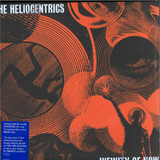
The UK’s cosmic, psychedelic-funk ensemble issue their first album on maverick producer Madlib’s label, Madlib Invazion. The Heliocentrics’ albums are all confounding pieces of work. Drawing equally from the funk universe of James Brown, the disorienting asymmetry of Sun Ra, the cinematic scope of Ennio Morricone, the sublime fusion of David Axelrod, Pierre Henry’s turned-on musique concrète, and Can’s beat-heavy Krautrock, they have – regardless of the label on which they’ve released their music - pointed the way towards a brand new kind of psychedelia, one that could only come from a band of accomplished musicians who were also obsessive music fans. Drummer Malcolm Catto and bassist Jake Ferguson are the Heliocentrics’ masterminds and producers, and they are obsessive weirdos in today’s musical climate, searching, progressive humans who are often out-of-time with current trends. They have been playing together for nearly two decades and their collective drive is to find an individual voice. The Heliocentrics search for it in an alternate galaxy where the orbits of funk, jazz, psychedelic, electronic, avant-garde and “ethnic” music all revolve around “The One.” With Madilb’s label Madlib Invazion for Infinity of Now, the Heliocentrics have returned to develop their epic vision of psychedelic funk, while exploring the possibilities created by their myriad influences, Latin, African, and more.