Note price increase and cat number change from last time around. In 1968, Don Cherry had already established himself as one of the leading voices of the avant-garde. Having pioneered free jazz as a member of Ornette Coleman's classic quartet, and with a high profile collaboration with John Coltrane under his belt, the globetrotting jazz trumpeter settled in Sweden with his partner Moki and her daughter Neneh. There, he assembled a group of Swedish musicians and led a series of weekly workshops at the ABF, or Workers' Educational Association, from February to April of 1968, with lessons on extended forms of improvisation including breathing, drones, Turkish rhythms, overtones, silence, natural voices, and Indian scales. That summer, saxophonist and recording engineer Göran Freese who later recorded Don's classic Organic Music Society and Eternal Now LPs invited Don, members of his two working bands, and a Turkish drummer to his summer house in Kummelnäs, just outside of Stockholm, for a series of rehearsals and jam sessions that put the prior months' workshops into practice. Long relegated to the status of a mysterious footnote in Don's sessionography, tapes from this session, as well as one professionally mixed tape intended for release, were recently found in the vaults of the Swedish Jazz Archive, and the lost Summer House Sessions are finally available over fifty years after they were recorded. On July 20, the musicians gathered at Freese's summer house included Bernt Rosengren (tenor saxophone, flutes, clarinet), Tommy Koverhult (tenor saxophone, flutes), Leif Wennerström (drums), and Torbjörn Hultcrantz (bass) from Don's Swedish group; Jacques Thollot (drums) and Kent Carter (bass) from his newly formed international band New York Total Music Company; Bülent Ates (hand drum, drums), who was visiting from Turkey; and Don (pocket trumpet, flutes, percussion) himself. Lacking a common language, the players used music as their common means of communication. In this way, these frenetic and freewheeling sessions anticipate Don's turn to more explicitly pan-ethnic expression, preceding his epochal Eternal Rhythm dates by four months. The octet, comprising musicians from America, France, Sweden, and Turkey, was a perfect vehicle for Don's budding pursuit of "collage music," a concept inspired in part by the shortwave radio on which Don listened to sounds from around the world. Using the collage metaphor, Don eliminated solos and the introduction of tunes, transforming a wealth of melodies, sounds, and rhythms into poetic suites of different moods and changing forms. The Summer House Sessions ensemble joyously layers manifold cultural idioms, traversing the airy peaks and serene valleys of Cherry's earthly vision. In the Swedish Jazz Archive quite a few other recordings from the same day were to be found. Some of the highlights are heard as bonus material on the CD edition of this album. The octet is augmented by producer and saxophone player Gunnar Lindqvist, who led the Swedish free jazz orchestra G.L. Unit on the album Orangutang, and drummer Sune Spångberg, who recorded with Albert Ayler in 1962. The bonus CD also includes a track without Cherry featuring Jacques Thollot joined by five Swedes including Lindqvist, Tommy Koverhult, Sune Spångberg, and others. With liner notes by Magnus Nygren and album art featuring a cover painting by Moki Cherry: Untitled, ca. 1967-68. Track list: 1. Summer House Sessions 2. Summer House Sessions.
Cerca:d a v e the drumm
With their album "B-3 Vol.1" the Hanoverian Lutz "Hammond"
Krajenski aka krajenski. on the B-3 organ, Ben Kraef from Berlin on
the saxophone and Peter Gall from southern Germany on the drums
break new ground even if the old path of the Hammond-infected Blue
Note refinement always remains in view.
An organist, a saxophonist and a drummer - the classic organ trio has been arousing special expectations to Jazz listeners since the glory days of Jimmy Smith, Groove Holmes and the McDuffs and McGriffs. The organist can spread out, the saxophonist can follow him and the drummer swings and provides the groove "in the pocket". With their album "B-3 Vol.1" the Hanoverian Lutz "Hammond" Krajenski aka krajenski. on the B-3 organ,
Ben Kraef from Berlin on the saxophone and Peter Gall from southern
Germany on the drums break new ground even if the old path of the
Hammond-infected Blue Note refinement always remains in view. KraefKrajenski-Gall do their thing and that very consistently. They play with the different readings of the format with reflections from Jimmy Smith to Larry Young. They play with expectations and play around clichés with sophisticated twists and tongue-clicking rhythmic and harmonic treasures.
It's an album to dig out the phrase "No fillers, all killers" for.
FIRST PRESSING ON WHITE VINYL*Regenerator is the fifth full-length from the Rochester, New York-based trio King Buffalo.
Written and recorded by the band with mixing and engineering by guitarist/vocalist Sean McVay and mastering by Bernie Matthews, the seven-song outing is the third in King Buffalo’s stated ‘pandemic trilogy,’ following 2021’s The Burden of Restlessness and
Acheron.
Both of those albums – like 2018’s Longing to Be the Mountain, 2016’s
debut, Orion, and the various EPs and other offerings they’ve made over the last eight years – made bold declarations about who King Buffalo are as a band, and Regenerator is no different. As McVay, bassist/synthesist Dan Reynolds and drummer Scott Donaldson continue to explore the outer reaches of modern psychedelic
music, melding progressive rhythms, drifting atmospheres and
accompanying surges of electricity, this new collection only further establishes them as one of the brightest lights shining in underground rock today.
As the third of three, Regenerator inherently ties together the previous two LPs, and as the band unfold the leadoff title-track across nine and halfminutes, it becomes clear just how truly they have marked out their own sonic presence.
The later melodic highlight “Mammoth” – with McVay’s most confident vocal performance yet – shimmers with hope that somehow doesn’t come across as desperate; on “Hours”, the group engages classic space rock, and the closing “Firmament” acts as a summary
for all three albums, marking the final installment of this trilogy as the
essential cornerstone of King Buffalo's work to date.
Regenerator is available on 180.gr white vinyl (including download) and CD.
Much of a million magnets sounds as if Möbius has left the music to its own devices. As if he has given it space instead of closing it in and channelising. Little seems to be organised, reflected or calculated. Rather it booms and pulses and chugs and swells.
In 2015 Möbius invited the drummer Andrea Belfi to record with him for his album Batagur Baska (Shitkatapult 2016). They spent a whole day in the studio at Funkhaus Nalepastraße, Berlin. Belfi implemented ideas from Möbius for various pieces and contributed his own ideas. Everything was recorded although in the end only one hi-hat track was used. All the other recordings were left to snooze and be forgotten in a folder on the computer. Years later Möbius discovered them again by chance during a train journey. He decided to answer Belfi’s powerful and concentrated drumming.
If sound recordings are used on specific tracks they start to lead a life of their own. Möbius mostly left Belfi’s recordings unedited. He took them as a trigger for the structure and character of new tracks. So we get the opening track Abayanga with its stoic pulse and airy cymbals. Or Schlucht with such restless drums, fluttering feedback and the mantra-like spoken-song of Yuko Matsuyama. The magical How To Never Make Up is almost a song: feverish percussion (Andrea Belfi on rimshots, Ansgar Wilken on the table top), a rich bass and the other worldly singing by Jana Plewa.
The accordion on Windjammer seems to blow in all directions at the same time, propelled by Belfi’s hounding cymbal playing. Side B starts with a reflection of Windjammer: Discrete Wiring. Guitar riffs in endlessly circling movement and Yuko Matsuyama’s voice and all that it conjures up. Feed Me Fog freely improvised with on drums and feedback is simply complete as a self-contained piece. The singing on Chayyam comes from the Cambodian Prak Chum, who’s voice can also be heard on the title track of Batagur Baska.
- 1: Black Moon
- 2: The Invocation Part Ii ”Jezebel”
- 3: The Invocation Part Iii ”Abyzou”
- 4: The Invocation Part I ”Lilith”
- 5: The Resurrection
- 6: Rise Of The Trinity
- 7: Enslaved
- 8: The End Of Times
- 9: In The Land Of Rain And Sorrow
- 10: Echoes From Fulda
- 11: I Nto The Mist Of Memories
- 12: Death Followed Like A Plague
Die dänische Melodic Death Metal Band DEFACING GOD steht mit ihrem Debütalbum The Resurrection of Lilith in den Startlöchern, das am 2. September 2022 über Napalm Records veröffentlicht wird. Die
2015 von Sängerin Sandie ”The Lilith” Gjørtz und Drummer Michael Olsson gegründete Band folgt mit ihrer harschen Musik skandinavischen Metal Traditionen und im Zentrum ihrer Texte steht der Mythos um den weiblichen Dämon Lilith, der Unabhängigkeit und unbeugsamen Widerstand symbolisiert. DEFACING GOD gelingt es mit ihren Erzählungen, ihrer Musik und der düsteren Ästhetik die Hörer in ein dunkles Universum von obskuren Mythen und uralten Geschichten zu locken. Gleichzeitig ziehen sie von diesen
Mythen subtile Verbindungen zu aktuellen gesellschaftlichen Themen, wie Unterdrückung oder auch inneren Dämonen. Auf klanglicher Ebene schließen DEFACING GOD an Bands wie Cradle of Filth, Carach Angren und Dimmu Borgir an und balancieren massive Melodien, die durch die grandiose Orchestrierung von Lars Vinther untermalt werden. Anstatt diese symphonischen Melodien mit Black Metal verschmelzen lassen, werden sie bei DEFACING GOD rohem Death Metal gegenübergestellt. Produziert wurde ihr Debüt The Resurrection Of Lilith von niemand geringerem als Jacob Hansen, der für seine Arbeit mit Fleshgod Apocalypse, Volbeat, Evergrey, Epica und unzähligen anderen bekannt ist.
Last Temptation with their 2nd album "Fuel For My Soul". Founded by guitarist Peter Scheithauer (Killing Machine, Belladonna, Temple of Brutality) and singer Butcho Vukovic (Watcha, Showtime), with bassist Julien Rimaire (Los Dissidentes Del Sucio Motel) and drummer Vince Brisach (Mitch Ryder), the band has a whole new rhythm section that supports them. Fuel for my Soul has a completely different production style than the band's debut album. The band had over 40 demos before finally narrowing them down to 11 hard-hitting tracks, all the rhythm tracks, bass, drums, and guitars were recorded live, and the songs are far more versatile than the previous release. While Last Temptation still maintain their Ozzy/Black Sabbath influences, they add a grungy twist, along with big choruses that add an 80s vibe. A big step forward for Last Temptation.
Compilation of singles recorded for Glass Records. Pressed on Yellow vinyl with orange & black splatter. Includes printed inner sleeve with posters and postcards
Religious Overdose formed in 1979 and alongside the likes of PIL, Joy Division and Bauhaus helped forge the sound that became to be known as post-punk. In just 2 years their experimental songs were pushing boundaries. From the hypnotizing drum machine led debut “25 minutes” and the krautrock influenced “I said go” to the synth infused new wave of “Blow The Back Off” and their final single. The sprawling 7 minute “The Girl With The Disappearing Head” This is a celebration of the much underrated and important Religious Overdose.
Formed in Barby (near Rugby) in 1979, original vocalist left, ALEX NOVAK joined in 1980, producing three singles for GLASS RECORDS. Initially used a rhythm generator then replaced by drummer PETE BROWNJOHN. Played with WHERES LISSE / FALL / EYELESS IN GAZA / TRANCE / MYSTERY GUESTS / BAUHAUS / DANCE CHAPTER / SKI PATROL /ENGLISH SUBTITLES / ATTRITION / THEATRE OF HATE... the last gig was in Northampton 1982, recorded and released as a tape by ADVENTURES IN REALITY label and fanzine from Coventry.
The Cast
ALEX NOVAK Vox before ISAWS after TEMPEST / ATTRITION now VENUS FLY TRAP , RICHARD FORMBY Guitar after JAZZ BUTCHER / IN EMBRACE / SPECTRUM, DAVE HYNES Keyboards, ADY TILLEY Bass before WHERES LISSE, PETE BROWNJOHN Drums before ISAWS , ALARIC NEVILLE Guitar, FILIPE FIGUERA Bass
U.S. pressed 7" flexi album sampler + foldout poster + full album (10 tracks) download code....
"As friends deep into the forest roamed,
they heard a low and wretched moan.
A pack of starkloons, savage and wild,
whooped and danced and drummed beguiled.
Til they faced each other, in dead of night:
a drum battle! To claim the right
Of soul and body to wander free,
beyond the clearing and the lands of tree."
Blood Red Cloud Vinyl[31,51 €]
Philadelphia's Sweet Pill write eruptive emo songs that embrace the
edges of pop and hardcore
The kind of band whose members are fully immersed in their local scene-through
a handful of notable side projects and the show- promoting Philly staple 4333
Collective- the quintet's sound takes wide- spectrum influence from its
environment. The result is an amalgam of complex song structures and
flourishes of technical acumen, wholly unconcerned with genre, yet evoking the
specific styles of touchstones such as Paramore and Circa Survive.
On their debut longplayer Where the Heart Is, Sweet Pill's unbound, raucous
energy presents through ten autobiographical tracks that hinge on singer Zayna
Youssef's elastic, enrapturing voice- at times belting and controlled, at others
textural and guttural. Supporting Youssef are guitarists Jayce Williams and Sean
McCall, bassist Ryan Cullen, and drummer Chris Kearney. Their blistering lead
single "Blood" sees Youssef exploring a deteriorated friendship over Williams and
McCall's trudging riffs and tactful counterpoint, with Cullen and Kearney rumbling
nimbly in the song's foundations.
Second single "High Hopes" counters with introspective, melodic punk that
reshapes anxiety rather than succumb to it. But third single "Diamond Eyes"
momentarily slows the pace, with McCall joining Youssef on vocals for a breakup
lament laden with acoustic sentimentalism and an emotive flurry from guest
flutist Jill Ryan. Such range is the central facet of Where the Heart Is, where
Sweet Pill's penchant for combining punkish tropes enlivened with the vibrance of
math- rock and the aggression of post- hardcore sweetened with pop sensibility
compound into something stylistically new yet still familiar. Pressed on 180-gram
Red color vinyl
Nine-piece West Africa-via-Melbourne ensemble Ausecuma Beats and improvised collective Zeitgeist Freedom Energy Exchange, also known as Z*F*E*X, reveal a new collaborative EP out August 19 via Music in Exile.
Call it a match made somewhere in musical heaven, the minds behind Ausecuma Beats, comprised of members from Senegal, Mali, Cuba and Guinea, found they melded easily with Z*F*E*X following weeks of recording and sharing material remotely together.
Z*F*E*X themselves, an ensemble comprised of drummer Zeke ‘Ziggy’ Zeitgeist, keyboardist and producer Lewis Moody, bassist Matthew Hayes, and a rotating cast of guests, are prolific musicians themselves with weighty credentials spread across their base locations of Australia, the United Kingdom, and Europe.
Thus, from a backyard shed in Dandenong North, Australia, some of West Africa’s finest would record simple percussive tracks, which then surfed the airwaves via studios in Melbourne, Berlin and London, to finally land back on listeners doorsteps as a forthcoming collaborative EP, Deep Heat/Tropical Storm.
Starring two guest vocalists who are some of the most invigorating in their respective scenes - Latin America via Berlin star Gotopo, and Melbourne’s own Rara Zulu - the EP’s beginnings in percussive exploration are transformed into a must-have record of all bangers.
Expect the duelling minds of two highly respected acts to reveal a combined EP of complex compositions that remain wholly accessible thanks to addictive harmonies and melodies. Emotionally thrilling, and easy to love, listen and dance to.
A1 - 45 rpm - “Magia Negra”
Mixing elements of afro-brazilian percussion and universal funk, Magia Negra is a homage to James Brown
and how his "black magic" influenced every danceable music in the world.
B1 - 45 rpm - “Cartoon Adults”
There is something about the adults speaking on the Peanuts cartoon always has made us think that we don't
really need word to understand certain messages especially if it's funky
Dj Elohim - Is a Brazilian Drummer/percussionist, DJ and an enthusiast of blending samples into the MIDI keyboard and recycling it into funking else.
Standout favorites of RidingEasy Records’ Brown Acid compilation series, White Lightning’s stellar discography of rare and under-appreciated heavy psych, proto-metal rock gets a vital revival for new generations to learn how swinging, swaggering and often blazingly fast rock’n’roll is done.White Lightning was formed in Minneapolis, MN in 1968 by guitarist Tom “Zippy” Caplan and bassist Woody Woodrich after leaving garage psych band The Litter (themselves popular standouts from the Nuggets and Pebbles series of garage rock rarities.) Originally a power trio, the band later expanded to a 5-piece in 1969 while shortening its name to Lightning. The quintet’s brilliant and rare 1970 self-titled album on Pickwick International’s P.I.P. imprint provides 6 of the 10 tracks on Thunderbolts of Fuzz.The original White Lightning trio only released one 45-rpm single “Of Paupers and Poets” during their existence (on local Hexagon label in 1968, later reissued by major label ATCO Records in 1969.) A long out-of-print posthumous album released in 1995 gathered unreleased recordings, 3 of which are found here. This rounds out this collection of recorded highlights from the band’s rocky history.
Taking their name from a particularly potent type of LSD, White Lightning laid out from the start that it was not cute and cuddly 70s rock. In fact, the band’s aggressive tempos are like punk rock way before punk. However, their dirty blues groove and musical prowess shows the band was more than unrefined ne’er-do-wells, they had true versatility.
Drummer/lead vocalist Mick Stanhope later relinquished his drum throne to take center stage as lead singer of the expanded lineup. Throughout its initial 1968-1974 run, the band had 10 different lineups, with Caplan, Woodrich and Stanhope the most consistent members — though the band points out that no one member has played in all 11 incarnations of the group. For more facts and information visit thelitter-lightning.
Album opener “Prelude to Opus IV” is a wailing rocker with blazing double-kick drum, sizzling melodic riffs and Jim Dandy howls jam packed into an epic 4 minutes that serves enough testament to the band’s greatness, nothing more need be heard or said. However, the would-be hits keep coming as the Led Zeppelin meets Black Oak Arkansas thwack of “Hideaway” and “Born Too Rich” come screaming out of the speakers. “When A Man Could Be Free” shows the band could also reign in the fury, at least a little bit, for a warm Southern rock style ballad. “Borrowed and Blue” echoes the stately poetry of Electric Ladyland-era Hendrix with a dash of The Who’s rollicking psychedelia. “1930” is, quite simply, insane. Searing twin guitars with incredible fuzz-drenched tone, a warm and buzzing bass line bounce atop drummer Bernie Pershey’s unrelenting bass drum triplets while Stanhope ravages his lungs with soulful abandon. The album closes with the aptly titled “Before My Time” a barnstorming boogie rock instrumental the proves the band vanished long before receiving their due.
Sometimes a band grows so exponentially from one record to the next, it’s almost jarring. Hell Fire has already established themselves as the preeminent masters of a new hybrid breed of Bay Area thrash and NWOBHM in just a few short years, but their fourth album Reckoning is the type of ascendance that truly sets a band apart.
Reckoning is their Master of Puppets, their Number of The Beast, their Defenders Of The Faith. From the very first notes of the album opening title track, you can feel a vital new energy and inspiration to their music. To say Hell Fire used the recent global downtime to dig within and fully refine their sound would be an understatement. It truly is a reckoning.
“This album is every aspect of our band amplified to its maximum potential,” says singer/guitarist Jake Nunn. “This is the record we've always wanted to make, and it feels like we're just getting started,” guitarist Tony Campos adds. “We wanted to push ourselves musically and capture some of our frustrations, anger, loneliness, and rage over being locked inside and dealing with life during a global pandemic in the days when no one really knew how to navigate,” says drummer Mike Smith.
With no touring on the horizon in 2020, the band hunkered down and recorded nearly a full album in preproduction home demos. “I set up a little studio in my garage to record guitar, bass, and vocal tracks,” Campos says. “While Mike bought an electronic drum set and we demoed every song so we were more prepared going into the studio.” Each of them found themselves practicing more on their own and ironing out every last detail and nuance before finally being able to once again play in a room together.
The band’s heightened professionalism also brings in guest bassist Matt Freeman (of Rancid and Operation Ivy fame) on the album after original bassist Herman Bandala departed the band amicably during the initial writing process. New bassist Kai Sun joined Hell Fire in Fall 2021. Reckoning was recorded and mixed at Atomic Studios in Oakland, CA with Chris Dugan.
The title track kicks things off with a slight nod to the layered melodies of acoustic and harmonized guitars of Metallica’s “Battery” before the band rips into its signature galloping guitar picks, soaring harmonies and blistering rhythms. It’s an anthem and a gauntlet thrown down with Nunn’s shimmering screams and guttural howls while dueling guitar solos and Smith’s relentless double bass drum shuffle bring home the point that Hell Fire is born anew. “Medieval Cowboys” hearkens to the epic attack of Iron Maiden’s Powerslave with glistening melodies and complexly interwoven musical shifts that showcase exactly how tight and precise the band has become. “Addicted To Violence” is blistering thrash and “Thrill Of The Chase” soars with rich harmonies while both songs lyrically reflect hard truths the band faced in isolation. The lush acoustic based ballad “A Dying Moon” shows the band effortlessly stretching out in new directions. “It Ends Tonight” is an epic anthem served as a mission statement to the band’s return wherein arpeggiated riffs, squealing pinch harmonics, group chant vocals and Smith’s octopus-armed beats will have legions raising their fists in the air in salute.
“It’s somehow the heaviest and most melodic work we’ve done, and I’m proud of the discipline it took,” Nunn says. “It’s a wild thing.”
Highlights: Limey and the Yanks' A-side 'Love Can't Be A One Way Deal' is a garage song with a sound pitched somewhere between the Beau Brummels and the Beach Boys. 'Guaranteed Love', on the flipside, is an outstanding bluesy number with a stinging fuzz guitar, a concise harp solo and a rousing Bo Diddley-fied groove that has made its way to various compilations since the early 80s and now gets reissued for the first time on a 7" single. This release includes notes by Mike Stax (Ugly Things Magazine) Details: In California in the mid-sixties, with the British Invasion raging, having an authentic Englishman as the lead singer of your band was an ace in the hole that gave you an edge over the competition. Such was the case with Limey & the Yanks a quintet from Buena Park in Southern California's Orange County. Limey was young Steve Cook, and his Yanks by 1965 were guitarists Gregg DeLorto and Tim Gunne, bass player Bob Batman and drummer Wes Hunsinger. With his blonde Keith Relf-style hair, Steve was a striking front man who fortunately also possessed a decent voice, and with his father managing the group they were soon making waves throughout the area. A victory at a Battle of the Bands at the Hollywood Palladium put them on the map in Los Angeles, attracting the attention of producer Gary Paxton. By this time Wally Downing had joined on lead guitar, replacing Gregg DeLorto who had defected to the Spats. Paxton produced their debut single in late 1965, and it was released in January of the following year on his Starburst label. Paxton's business partner in Starburst was Lloyd Johnson, and the single's A-side was written by Lloyd's son Ken, who also recorded for Starburst with his group Ken & the Forth sic Dimension. Paxton had already produced a version of 'Love Can't Be A One Way Deal,' a couple of years earlier with the Rev-Lons, a girl group from Bakersfield, but the version by Limey & the Yanks took a completely different approach, turning it into a lovelorn garage number with a sound pitched somewhere between the Beau Brummels and the Beach Boys, with bright harmonies, mournful harmonica and a melodic twangy guitar solo. Swinging on a guitar hook based on Bobby Parker's 'Watch Your Step,' 'Guaranteed Love,' took a bluesier approach with a confident Limey vocal, stinging fuzz guitar, a concise harp solo and a rousing Bo Diddley-fied groove. The single was not a hit, but it added heft to the group's growing reputation. A second single, 'Out of Sight, Out of Mind,' was released in October, but it would be the group's last, although they did continue, through several lineup changes, into 1967. Limey's legacy lives on_
Smokey Marbled Vinyl[29,62 €]
With their sophomore full-length "Gotta Light?", dark rock innovators CRONE are cruising in a high octane fuelled hotrod. Channelling their personal musical inspirations that range from ALICE IN CHAINS, via KILLING JOKE, NEW MODEL ARMY, and JOY DIVISION to PINK FLOYD among many others, the Germans leave their very own and personal mark on the genre that has been brought back to the forefront of interest by acts such as GHOST in recent years. While composer, guitarist, and singer Phil Jonas had felt tired, burned out, and empty, working on new songs for CRONE provided the spark that kindled the firestorm of fresh ideas and led to the creation of "Gotta Light?". The album title was inspired by the haunting eighth episode of David Lynch's masterpiece TV series "Twin Peaks". A corresponding element of the mysterious and surreal permeates all of the new songs that revolve around topics such as the hope of receiving signals from the afterlife ('Waiting for Ghosts'), shattered dreams ('Abyss Road'), and a guiding last will ('Gemini'). CRONE was conceived out of a musical collaboration between Phil "sG" Jonas and EMBEDDED drummer and guitarist Markus Renzenbrink. Both musicians wanted to explore musical horizons beyond the metal limits of their regular bands at the time. As a result the "Gehenna" EP was released in 2014 and sparked a first wave of interest. Critics labelled the first effort post-rock, post-punk, and even as shoegaze. The well-received debut full-length 'Godspeed' hit the streets in 2018 and its more focussed and consistent songs got often filed under "post-rock". With CRONE having been elevated to the main band of each protagonist, the band's renewed focus and urgency is clearly audible on "Gotta Light?". With Christian Schmidt a permanent keyboard player has been added to the line-up that now also features lead guitarist Kevin Olasz for added sparkle and sonic depth. From the ashes of SECRETS OF THE MOON a dark reborn phoenix is rising with CRONE and this bird of prey is ready to rock humanity's unstoppable descent into madness: "Gotta Light?"
Black Vinyl[28,36 €]
With their sophomore full-length "Gotta Light?", dark rock innovators CRONE are cruising in a high octane fuelled hotrod. Channelling their personal musical inspirations that range from ALICE IN CHAINS, via KILLING JOKE, NEW MODEL ARMY, and JOY DIVISION to PINK FLOYD among many others, the Germans leave their very own and personal mark on the genre that has been brought back to the forefront of interest by acts such as GHOST in recent years. While composer, guitarist, and singer Phil Jonas had felt tired, burned out, and empty, working on new songs for CRONE provided the spark that kindled the firestorm of fresh ideas and led to the creation of "Gotta Light?". The album title was inspired by the haunting eighth episode of David Lynch's masterpiece TV series "Twin Peaks". A corresponding element of the mysterious and surreal permeates all of the new songs that revolve around topics such as the hope of receiving signals from the afterlife ('Waiting for Ghosts'), shattered dreams ('Abyss Road'), and a guiding last will ('Gemini'). CRONE was conceived out of a musical collaboration between Phil "sG" Jonas and EMBEDDED drummer and guitarist Markus Renzenbrink. Both musicians wanted to explore musical horizons beyond the metal limits of their regular bands at the time. As a result the "Gehenna" EP was released in 2014 and sparked a first wave of interest. Critics labelled the first effort post-rock, post-punk, and even as shoegaze. The well-received debut full-length 'Godspeed' hit the streets in 2018 and its more focussed and consistent songs got often filed under "post-rock". With CRONE having been elevated to the main band of each protagonist, the band's renewed focus and urgency is clearly audible on "Gotta Light?". With Christian Schmidt a permanent keyboard player has been added to the line-up that now also features lead guitarist Kevin Olasz for added sparkle and sonic depth. From the ashes of SECRETS OF THE MOON a dark reborn phoenix is rising with CRONE and this bird of prey is ready to rock humanity's unstoppable descent into madness: "Gotta Light?"
Es gibt kein Entkommen vor der Motherlode - diesem ewigen Kontinuum aus hohem Drama und überhitzten Ampstacks, die geeignet sind, den Puls zu erhöhen und die Stimmung zu beleben. Es ist die unverwechselbare Bandchemie, die basischen harten Rock in Edelsteine verwandelt. Stockholms Lugnet beherrschen diese alchemistische Kunst. Dampfwalzende Grooves und grandiose Hymnen, gebaut auf einem 70er Jahre Felsen. Der Urstampf der frühen Deep Purple, die apokalyptische Predigt von Black Sabbath und die filmische Majestät von Rainbow können leicht im allmächtigen Sturm und Drang erkannt werden.Doch dieser Sound wird mit Charisma und eigenwilliger Energie bereichert, der mühelos frisches, lebendiges Leben in eine klassische Form bringt. Der Funke wurde 2009 entzündet, als Fredrik Jansson-Punkka (Drummer Angel Witch, Witchcraft, Abramis Brama und Count Raven) den Bassisten Lennart 'Z' Zethzon auf dem Sweden Rock Festival traf. Drei Jahre stießen die Gitarristen Bonden Jansson und Mackan Holten und der Sänger Roger Solander hinzu.Auf dem zweiten Album wurde Solander durch Johan Fahlberg ersetzt, der den verwegenen Charme der Dio/Coverdale-Tradition mit ganz eigenen Schnörkeln und Persönlichkeit verbindet, während Bonden Jansson dem Gitarristen Wunderkind Matti Norlin Platz machte. Nach dem Sweden Rock Festival 2018 kam Mackan Holten (Troubled Horse) als neuer Gitarrist noch hinzu und Lugnet hatte die ideale Form gefunden. Was auch immer die Zukunft für Lugnet bereithält, diese Maschine feuert aus allen Rohren, und Rocker aller Art wären gut beraten, an Bord zu gehen oder aus dem Weg zu gehen.
For Thee Sacred Souls, the first time is often the charm. The band’s first club dates led to a record deal with the revered Daptone label; their first singles racked up more than ten million streams in a year and garnered attention from Billboard, Rolling Stone, and KCRW; and their first fans included the likes of Gary Clark Jr., The Black Pumas, Princess Nokia, and Timbaland. Now, the breakout San Diego trio is ready to deliver yet another landmark first with the release of their self-titled debut on Daptone Records.
“Every step of the way has just been so organic,” says drummer Alex Garcia. “Things just seem to happen naturally when the three of us get together.”
Indeed, there’s something inevitable about the sound of Thee Sacred Souls, as if Garcia and his bandmates—bassist Sal Samano and singer Josh Lane—have been playing together for a lifetime already. Produced by Bosco Mann (aka Daptone co-founder Gabriel Roth), Thee Sacred Souls is a warm and textured record, mixing the easygoing grace of sweet ’60s soul with the grit and groove of early ’70s R&B, and the performances are utterly intoxicating, with Lane’s weightless vocals anchored by the rhythm section’s deep pocket and infectious chemistry.
Hints of Chicano, Philly, Chicago, Memphis, and even Panama soul turn up here, and while it’s tempting to toss around labels like “retro” with a deliberately analog collection like this, there’s also something distinctly modern about the band that defies easy categorization, a rawness and a sincerity that transcends time and place.
Fresh and zesty with subtle tropical flavours, this is a delightfully listenable debut from Matthieu Beck on Growing Bin. Inspired by the lilting rhythms, jazzy instrumentation and slow listening gems found on his Love In The Afternoon radio show, the Frenchman has crafted a gorgeous collection of laid back sophisti-pop, perfect for long summer days or seasonally affected escapism.
Any suggestion of sorrow in the album title is actually a mislead - this may be a solo LP, but Matthieu's surrounded himself with the musical friends he's made over the years, serving as composer and bandleader to a willing troop of collaborators. Longtime friend and former Metronomy bassist Gabriel Stebbing, Source Ensemble drummer Emmanuel Mario, and of course Laetitia Sadier herself, stepped in to lend their services and bring Matthieu's music to life, before Jérôme Caron (Blackjoy) expertly mixed it all down.
Though the tracklist may read like a travelogue, these nine tracks all began at home with Matthieu sat behind a Fender Rhodes with a drum machine by his side. Soon live bass, saxophone and flute strolled into his unhurried arrangements, retaining the simplicity of his demos while expanding the emotion. Weighty synth drones and bubbling bass balance the airy elements of tracks like "California" or the dream-pop romance of "Rooftop Rome", while the mellow "Malika" and joyful "Retour De Plage" showcase the Frenchman's relationship with jazz. Elsewhere there's hints of digi-dub ("Island" and "Suede"), coastal boogie ("Tokyo Montana"), stripped back city pop ("California") and downtown nostalgia ("Dora"), before Beck arrives at the poetic, progressive but peaceful finale "Piano Fin", which recalls Air at their prettiest, without stepping outside Matthieu's well defined sound.
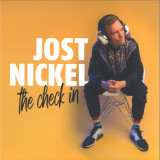
Along with Wolfgang Haffner, Jost Nickel is one of the very few top German tour and session drummers whose name also enjoys an excellent international reputation.
He succeeded as a drummer and musical director in the band of Mousse T and played with Sasha, Johannes Oerding, Marla Glen and SEEED, among others. Since 2006, Jost Nickel has been the drummer in Disko No.1, the band of German soul superstar Jan Delay. Involuntarily slowed down by the corona induced standstill of the cultural scene, Jost has used the time wisely and written and recorded his debut album ‘The Check In’, which has been eagerly awaited by many.
Besides the top German musicians Claus Fischer, Mark Smith (bass), Hanno Busch, Dirk Berger (guitar), Simon Oslender (keys), Lutz Krajenski (arrangements), and the colleagues of Disko No.1, international jazz stars like Jimmy Haslip (bass), Barry Finnerty
(guitar) and Jeff Lorber (keys) recorded the album.
Good things take time, as the saying goes, and Jost Nickel truly took his time writing and
realising his debut album. But the wait was worth it!