"Brainwashed is the twelfth studio album by George Harrison. It was released posthumously in November 2022, almost a year after his death at age 58. The album’s overdubs were completed by his son Dhani, session drummer Jim Keltner, and longtime friends and collaborator Jeff Lynne. The album instrumental “Marwa Blues” went on to receive the 2004 Grammy Award for Best Pop Instrumental Performance, while “Any Road” was nominated for Best Male Pop Vocal Performance. Available on 1LP 180g Black Vinyl"
quête:d a v e the drumm
- From Outside A Window Sill
- Side By Side
- The Bug
- Amama
- Genie
- Crushxd
- Nighlty News
- (Alone In) Brussels
- Sleep Talk
- Dust Bunny
- Swarmed
- Xxx
New York psych-pop band Crumb return with AMAMA, their most carefree and open-hearted album to date. A soundscape full of playful and patchwork experimentation _ glitchy pitch-shifted vocals, cell phone recordings, nautical blips, sax mouthpiece solos, blasted drum samples, and piano strings dampened with Silly Putty _ AMAMA continues to deepen the band's hypnotic sound in a cohesive line back through 2021's Ice Melt, 2019's Jinx, and breakout EPs Locket and Crumb. Without a doubt, AMAMA is Crumb _ singer and multi-instrumentalist Lila Ramani, keyboardist and saxophonist Bri Aronow, bassist Jesse Brotter, and drummer Jonathan Gilad _ at their most animated.AMAMA exists at the crossroads of psychedelia, pop, jazz, and rock, and cements Crumb as a band uniquely their own. Released independently on Crumb Records and produced alongside Johnscott Sanford and Jonathan Rado in Los Angeles, AMAMA is an incandescent statement about searching for solid ground, connection, and clarity in a life of nomadic upheaval.
Let us introduce you to the legendary drummer, producer, multi-instrumentalist, vocalist, and New England Hall of Famer Hirsh Gardner. In the late 70`s/early 80`s his band New England dazzled record buyers and audiences alike with their own innovative mix of supreme AOR/Melodic Rock. Supporting KISS on the1979Dynasty Tour, New England’s first release ‘Don`t Ever Wanna Lose Ya` broke into the Billboard Top 40. Paul Stanley and Mike Stone (Queen, Asia) produced their debut album.
Coloured[25,17 €]
Ben Lukas Boysen’s new album, Alta Ripa, signifies a seismic shift in his artistic journey. It revisits the foundational impulses of his youth, shaped amidst the serene beauty of rural Germany—a bucolic backdrop where his creative palette flourished. However, it was his move to Berlin in the early 2000s that electrified his sound, infusing it with the city’s pulsating energy and diverse cultural influences. Alta Ripa captures this transformative experience, blending the introspective melodies of his rural beginnings with the bold, experimental tones born from Berlin’s vibrant electronic music scene. This album is a testament to Boysen’s evolution, showcasing how geographical shifts can profoundly shape artistic expression.
Boysen’s fourth studio album under his own name, Alta Ripa is a nod to his beginnings as much as a hint to his future, and as a work, it’s almost contradictory in its boldness and humility. He invites the listener on a journey of self-discovery; both for himself and for them, describing the music as “something the 15-year-old in me would have liked to hear but only the grown-up version of myself can write.”
His last two albums involved working closely with other musicians, including cellist Anne Müller, flugelhorn player Steffen Zimmer, and drummer Achim Färber. However, inspired in part by a recent return to live performance, Alta Ripa sees Boysen circling back to his passion for pure computer music.
For Boysen, the return to his youthful musical language marks a major turning point in his career. It represents a departure from his roots in classical music – his mother was an opera singer and his father an actor with an appreciation for Wagner, Arvo Pärt, Keith Jarrett, and Stockhausen. Although these are still important influences, Alta Ripa encapsulates a new, exploratory interplay between Boysen’s careful craft and his ability to let go of some of the process.
The album’s title comes from the original Roman name of the town that Boysen grew up in, Altrip, where he lived until his early twenties. This formative period is central to the ideas behind this album, from Boysen’s parental ‘schooling’ in classical music through to his sonic journeys through drum and bass, Aphex Twin, and Autechre — all of which changed his idea of what music could be. The extreme energy of tracks like ‘Acperience 1’ by Hardfloor, ‘Tracks & Fragment’ by Cari Lekebusch, ‘Focus2 Implan’ by Jiri.Ceiver, and ‘Low On Ice’ by Alec Empire are also pivotal influences.
For Boysen, this time of his musical development also involved knocking down the pillars that he previously thought had carried his world. A key moment for Boysen was being given a precious (pre-internet) club cassette at school that featured artists like Source Direct, Photek and Goldie. Excited by this new discovery, he introduced his father to the song ‘Dred Bass’ by Dead Dred. After the song finished, Boysen Sr. turned off the tape and proclaimed it was “the end of all music”. This heated exchange sparked a new, and more mature dialogue between the two that involved them sharing and discussing music on a regular basis.
Boysen’s classical and jazz music upbringing might not be easily noticeable from the electronic palette that he uses. But it can be found in its bones; the structure of the tracks and their dynamic shifts. On Alta Ripa, he intentionally embraces a spirit of controlled chaos, churning out sonic ideas to see what sticks.
One of Brian Eno’s Oblique Strategy cards contains the phrase “gardening, not architecture”, and the trajectory of Boysen’s creative path reflects this metaphor. In much of his previous work he followed a sort of Brutalist architect’s approach; here, he was fully responsible for the tracks’ austere structures and planned them with deliberate care. But by sacrificing some of that control on Alta Ripa, he sets the right conditions for a dark and unpredictable, organic growth. It’s a push forward into a new world.
In addition to the unique musical proposals and the large body of work that they have developed separately, Amelia Cuni and Werner Durand have been performing together as a duo as well as in collaborations (Tonaliens, Born of Six) for more than 20 years. Fusing her Indian Raga singing in the Dhrupad style with his minimalist and experimental approach, they have expanded the reach of their soundworlds as well as proposed new paths for contemporary music.In this occasion, Uli Hohmann joins them in a range of hand drums from the Middle East and North Africa, plus a dulcimer-sounding hammered guitar. Durand's various self-made wind instruments, soprano sax, and blown kalimba shine along with Cuni's astounding vocals, which are sometimes sung through a mirliton (a medieval type of kazoo). Clearing is the trio's first published recording.
Seconds of Thirst, recorded in one session at Uli´s studio in Bavaria in early 2014, is truly a conjuring where distinctive balances come to gather. A deep drone unfolds patiently in a hypnotic manner, comprised by Werner's characteristic PVC clarinets, a hammered guitar played by Hohmann, and subtle electronic tones. Above all, Amelia's singing voice, filtered through the mirliton, drifts buzzing along the gradually shifting harmonic waves, meandering through serpentine melodic lines and microtonality.
In the middle pieces, vocals turn into an ethereal multi-layered chorus, an exotic and astonishing instrument pulsing delicate and vaporously, like a gliding silk sail without a mast to bind it. Misty ambiances linger on as the soft atmosphere disperses the weight of undelivered syllables. Just intonation aligns the pan-ney's winds with vocal navigation. Foe to scattering, hurry, and affectation, Clearing's pace has lifted a fog translucent enough to reveal treetops calmly appearing, efficiently condensing damp into definite drops that fall drumming, forecasting what's yonder.
With a condensing sound going from Buddhist morning chants down to Indian festive traditional music, the title track, which closes the album, is the most vibrant of all, permeating a bit of commotion through buzzing drones and galloping percussion. Without disorder, yet without measure. Clearing is therefore this shuttle into the distance, this space that weaves, unites, and tenses the different cords that we are made up of.
When the clouds advance silently, gray, until they become dark in a few minutes, it means that the monsoon is coming. It reaches us without apparent noise, but then resounds in its images, leaving behind lightness, freshness, clarity, and a tremendous luminosity that comes from so far away: from the Himalayas, from so ancient, from Sanskrit, from a sound where the darkness and the divine, where the concrete and the landscape, where the rock and the humidity leave a mark that brings together and ties a sky loaded with new clouds.
"This is the time that we, who have benefitted from the Last Poets shouldbe able to say, 'it's the Last Poets. It's them we should be honouring, because we did not honour them for so many years_"
KRS One wasn't just addressing the hip hop fraternity when he uttered
those words by way of introducing the video for Invocation - a poem
written thirty years ago, around the time of the Last Poets' last significant comeback. He was speaking to everyone who's been affected by the word, sound and power issuing from the most revolutionary poetry ever witnessed, and that the Last Poets had introduced to the world outside of Harlem at the dawn of the seventies.
In 2018 the two remaining Last Poets, Abiodun Oyewole and Umar Bin
Hassan, embarked on another memorable return with an album -
Understand What Black Is - that earned favourable comparison with theirseminal works of the past, whilst showcasing their undimmed passion andlyrical brilliance in an entirely new setting - that of reggae music. Trackslike Rain Of Terror ("America is a terrorist") and How Many Bullets demonstrated that they'd lost none of their fire or anger, and their essential raison d'etre remained the same.
"The Last Poets' mission was to pull the people out of the rubble o f their lives," wrote their biographer Kim Green. "They knew, deep down that poetry could save the people - that if black people could see and hear themselves and their struggles through the spoken word, they would be moved to change."
Several years later and the follow-up is now with us. The project started when Tony Allen, the Nigerian master drummer whose unique polyrhythms had driven much of Fela Kuti's best work, dropped by Prince Fatty's Brighton studio and laid down a selection of drum patterns to die for. That was back in 2019, but then the pandemic struck. Once it had passed, the label booked a studio in Brooklyn, where the two Poets voiced four tracks apiece and breathed fresh energy, fire and outrage into some of the most enduring landmarks of their career. Abiodun, who was one of the original Last Poets who'd gathered in East Harlem's Mount Morris Park to celebrate Malcolm X's birthday in May 1968, chose four poems that first appeared on the group's 1970 debut album, called simply The Last Poets. He'd written When The Revolution Comes aged twenty, whilst living in Jamaica, Queens. "We were getting ready for a revolution," he told Green. "There wasn't any question about whether there was going to be one or not. The truth was many of us still saw ourselves as "niggers" and slaves. This was a mindset that had to change if there was ever to be Black Power." He and writer Amiri Baraka were deep in conversation one day when Baraka became distracted by a pretty girl walking by. "You're a gash man," Abiodun told him. The poem inspired by that incident, Gash Man, is revisited on the new album, and exposes the heartless nature of sexual acts shorn of intimacy or affection. "Instead of the vagina being the entrance to heaven," he says, "it too often becomes a gash, an injury, a wound_" Two Little Boys meanwhile, was inspired after seeing two young boys aged around 11 or 12 "stuffing chicken and cornbread down their tasteless mouths, trying to revive shrinking lungs and a wasted mind." They'd walked into Sylvia's soul food restaurant in Harlem, ordered big meals, then bolted them down and run out the door. No one chased after them, knowing that they probably hadn't eaten in days. Fifty years later and children are still going hungry in major cities across America and elsewhere. Abiodun's poem hasn't lost any relevance at all, and neither has New York, New York, The Big Apple. "Although this was written in 1968, New York hasn't changed a bit," he admits, except "today, people just mistake her sickness for fashion." Umar is originally from Akron, Ohio, but had arrived in Harlem in early 1969 after seeing Abiodun and the other Last Poets at a Black Arts Festival in Cleveland. That's where he first witnessed what Amiri Baraka once called "the rhythmic animation of word, poem, image as word- music" - a creative force that redefined the concept of performance poetry and stripped it bare until it became a howl of rage, hurt and anger, saved from destruction by mockery and love for humanity. When Umar's father, who was a musician, was jailed for armed robbery he took to the streets from an early age where he shined shoes and raised whatever money he could to help feed his eight brothers and sisters. By the time he saw the Last Poets he'd joined the Black United Front and was ready to join the struggle. Once in Harlem, Abiodun asked him what he'd learnt in the few weeks since he'd got there. "Niggers are scared of revolution," Umar replied. "Write it down" urged Abiodun. That poem still gives off searing heat more than fifty years later. In Umar's own words, "it became a prayer, a call to arms, a spiritual pond to bathe and cleanse in because niggers are not just vile and disgusting and shiftless. Niggers are human beings lost in someone else's system of values and morals." And there you have it. It's not just race or religion that hold us back, but an economic system that keeps millions in poverty and living in fear - a system born from political choice and that's now become so entrenched, so bloated on its own success that it's put mankind in mortal danger. It was many black people's acceptance of the status quo that inspired Just Because, which like Niggers Are Scared Of Revolution, was included on that seminal first album. Along with their revolutionary rhetoric, it was the Last Poets' use of the "n word" that proved so shocking, but it would be wrong to suggest that they reclaimed it, since it never belonged to black people in the first place. There's never any hiding place when it comes to the Last Poets. They use words like weapons, and that force all who listen to decide who they are and where they stand. Umar's two remaining tracks find him revisiting poems first unleashed on the Poets' second album This Is Madness! Abiodun had left for North Carolina by then where he became more deeply enmeshed in revolutionary activities and spent almost four years in jail for armed robbery after attempting to seize funds related to the Klu Klux Klan. Meanwhile, the 21 year old Umar was squatting in Brooklyn and had developed close ties with the Dar-ul Islam Movement. A longing for purity and time-honoured spiritual values underpins Related to What, whilst This Is Madness is a call for freedom "by any means necessary," and that paints a feverish landscape peopled by prominent black leaders but that quickly descends into chaos. "All my dreams have been turned into psychedelic nightmares," he wails, over a groove now powered by Tony Allen's ferocious drumming. Those sessions lasted just two days, and we can only imagine the atmosphere in that room as the hip hop godfathers exchanged the conga drums of Harlem for the explosive sounds of authentic Afrobeat. Once they'd finished, the recordings and momentum returned to Prince Fatty's studio, since relocated from Brighton to SE London. This was stage three of the project, and who better to fill out the rhythm tracks than two key musicians from Seun Anikulapo Kuti's band Egypt 80? Enter guitarist Akinola Adio Oyebola and bassist Kunle Justice, who upon hearing Allen's trademark grooves exclaimed, "oh, the Father_ we are home!" Such joy and enthusiasm resulted in the perfect fusion of Nigerian Afrobeat and revolutionary poetry, but the vision for the album wasn't yet complete. He wanted to create a new kind of soundscape - one that reunited the Poets with the progressive jazz movement they'd once shared with musicians like Sun Ra and Pharoah Sanders. It was at that point they recruited exciting jazz talents based in the UK like Joe Armon Jones from Mercury Prize winners Ezra Collective, also widely acclaimed producer/remixer and keyboard player Kaidi Tatham, who's been likened to Herbie Hancock, and British jazz legend Courtney Pine, whose genius on the saxophone and influence on the UK's now vibrant jazz scene is beyond question. The instrumental tracks on Africanism are in many ways as revelatory and exciting as the Last Poets' own. It's important to remember that the kaleidoscope of styles and influences we're presented with here aren't the result of sampling but were played "live" by musicians responding to sounds made by other musicians. That's where the magic comes from, aided by Prince Fatty's peerless mixing which allows us to hear everything with such clarity. Music fans today have grown accustomed to listening to all kinds of different genres. Their tastes have never been so broad or all- encompassing, and so the music on this new Last Poets' album is as groundbreaking as their lyrics, and perfectly suited to the era that we're now living in. John Masouri
Ultimo Tango (Milan) & Glossy Mistakes (Madrid) are thrilled to announce the release of "Tribal Organic: Deep Dive into European Percussions 79-90", a compilation of otherworldly percussion-driven tracks, digging deep into this unknown realm of a past era.
Compiled by Luca Fiore and Glossy Mario, the album takes listeners on a rhythmic journey through the diverse sounds of Europe from 1979 to 1990. This collaboration between two like-minded labels highlights forgotten recordings from across Europe, including works by artists from France, Spain, Germany, Italy, Austria, the Netherlands...
Opening with the ethereal “Rainforest” by British female duo Ova, this collection weaves together nine tracks from artists who were deeply influenced by global percussion traditions. With hints of jazz, new age, gamelan, and West African rhythms, these tracks feature instruments like congas, tablas, and shekeres, and reflect a shared fascination with the organic beat of the drum.
From the industrial-meets-African grooves of Jean-Michel Bertrand’s “Engines”, to the hypnotic accordion and tribal chants of Cuco Pérez’s “Calabó Bambú”, the compilation offers a cross-cultural listening experience that is both meditative and invigorating. Despite creating these works in isolation during the last years of the Cold War, each artist was inspired by a borderless world of sound. The compilation pays homage to these nomadic musicians who respected the traditions they drew from, while contributing their own experimental takes on percussion-led music.
In Tribal Organic, Glossy Mario and Luca Fiore have unearthed a treasure trove of rhythm-driven tracks that blur the lines between nations, genres, and cultures. This compilation offers more than just music; it’s a listening experience that is both spiritual and grounded—bold, exploratory, and deeply rooted in the beat of the Earth
Ever wish you could travel back in time and be in the thick of the 1960s rock explosion? Well, until an actual TARDIS is perfected, this album is the next best thing. Recorded in the wee hours of May 26, 1966, A Session with the Remains is a no-holds barred romp through their club set, captured live-to-tape in Capitol Records' studios. Recorded as an audition for the label, the albums seethes and snarls, twists and shouts, rocks and rolls and generally embodies the force of nature that was the Remains. Performing a mix of originals and current hits, the band is in command at every step, rocking one minute and pausing to kibitz between songs the next.
In attempting to describe this album, reviewers have used words like "blazing," "explosive," "delirious" -- but honestly, none of these descriptions comes close to what is contained in the grooves. It's like trying to tell a stranger 'bout rock & roll, ya know? All you really need to do is listen. After all, one guitar lick is worth a thousand words.
This BLAZING, EXPLOSIVE, DELIRIOUS album was painstakingly sourced from the one-and-only original two-track analog mono master tape and wrestled onto high-quality vinyl and compact disc for your review. I'd like to thank you on behalf of the group and Sundazed for listening and I hope they pass YOUR audition!
"A religious totem of all that was manic and marvelous about mid-'60s pop." - Rolling Stone
"Blazing through a mix of originals and covers, the Remains explode in a torrent melody, searing guitar leads and furious drumming. This quartet's ability to play with such delirious abandon yet still nail the tunes' sharp hooks and abundant vocal harmonies marks it as one of rock's more talented and incendiary units. - Chicago Tribune -
Classic free jazz album reissued for the first time since the 70s. Old-style gatefold sleeve LP, with liner notes by Ed Hazell.
Noah Howard, an alto saxophonist and composer, was known for weaving intricate and innovative musical patterns, often likening his work to "sound paintings." His 1971 album Patterns, the first LP he self-produced on his Altsax label, stands as a testament to his experimental and spiritual approach to music. In interviews, Howard frequently used visual terms like "patterns" and "shapes" to describe his compositions, emphasizing the importance of melody and structure even in highly improvisational settings. For Howard, patterns and melodies were essential to guiding listeners through his explorations without alienating them, maintaining a balance between innovation and accessibility. Howard's quest for an original sound was deeply influenced by jazz greats like Charlie Parker, Ornette Coleman, and Jackie McLean. While he admired these legends, Howard avoided imitation, striving instead to develop his own distinct voice. His sound was unmistakably his own, and he felt a deep obligation to carry the jazz tradition forward through personal expression, not by mimicking others. His music was also rooted in spirituality, a legacy he traced to his upbringing in the Black Baptist Church. He believed jazz had always contained a spiritual essence, from Louis Armstrong to John Coltrane, and his work aimed to channel this cosmic, spiritual energy.
Patterns was recorded in the Netherlands during Howard's second stint in Europe, where he found a more open, less racially charged environment compared to the U.S. For the album, Howard collaborated with Dutch musicians such as Misha Mengelberg (piano), Han Bennink (drums), and Earl Freeman (bass). Despite the challenges faced by guitarist Jaap Schoonhoven, who felt out of place in the session, the album came together as a powerful mix of blues, jazz, and classical elements.
The music on Patterns is a high-energy fusion of American free jazz and Dutch improvisation. Howard's saxophone work alternates between leading with passionate, lyrical lines and blending into the collective improvisation. The album’s dynamic interplay, particularly between Mengelberg’s dissonant piano clusters and Bennink’s thunderous drumming, creates a vivid "sound painting" full of contrasting forms and colors. Patterns remains one of Howard’s most unique and celebrated recordings, showcasing his visionary approach to jazz.
- Angry
- Get Close
- Depending On You
- Bite My Head Off
- Whole Wide World
- Dreamy Skies
- Mess It Up
- Live By The Sword
- Driving Me Too Hard
- Tell Me Straight
- Sweet Sounds Of Heaven (Ft. Lady Gaga)
- Rolling Stone Blues
- Shattered
- Angry
- Whole Wide World
- Tumbling Dice
- Bite My Head Off
- Jumpin’ Jack Flash
- Sweet Sounds Of Heaven (Ft. Lady Gaga)
Hitting Number 1 in 19 countries on release, Hackney Diamonds marked the return of The Rolling Stones as their first original studio album since 2005’s A Bigger Bang.
The album includes the GRAMMY nominated lead single Angry alongside Sweet Sounds of Heaven featuring vocals from Lady Gaga and keys & piano from Stevie Wonder.
Late drummer Charlie Watts features on two tracks, ‘Mess It Up’ and ‘Live By The Sword’ alongside Bill Wyman. The album also includes collaborations with Paul McCartney & Elton John.
This special limited edition 1 year anniversary 2LP version of Hackney Diamonds includes Live at Racket NYC featuring the 7 tracks the band performed at the intimate launch event in New York on 19th October 2023 with debut live performances of Angry, Bite My Head Off, Whole Wide World and Sweet Sounds of Heaven with Lady Gaga. The 24 page booklet includes photos from the performance by Kevin Mazur.
Frontman Neige comments: "ALCEST's 6th album is called 'Spiritual Instinct' and will be released on Nuclear Blast. The recording of 'Spiritual Instinct' has been a long and challenging process, but we feel really proud of it and can't wait to share our new music with all of you. The artwork has been made by the Parisian duo Førtifem and represents a sphinx, as a reference to the symbolism art movement. The sphinx is the ultimate figure of the enigma, which embodies both the spiritual and feral sides inside us.“ Founded in 2000 by songwriter and multi-instrumentalist Neige and joined by drummer Winterhalter in 2009, ALCEST have become the pioneers of blackgaze, a unique and virtuosic mixture of post (black) metal and shoegaze. With a dreamy, otherworldly sound full of contrasts mixing rough darkness and soft melodies, the band forged five full length releases and went from black metal beginnings to the eerie pop on »Shelter« and further on to 2016’s »Kodama« inspired by the Japanese anime 'Princess Mononoke'. ALCEST’s fans always expect the unexpected from a duo that never ceased to explore new worlds, dive into their own imagination and create a truly magical universe through each played note.
- A – Desert Rose
- B- Tnt
On their debut 45 for Batov Records, Indonesia-based BABON deliver two irresistible jams, cooked from a recipe full of Indonesian flavours, Afro Latin funk, Morricone grooves, Bollywood breaks and blues, they call “Tropical Desert Music”. A must-hear for fans of Surprise Chef, Khruangbin, or Sababa 5.
Drummer Wahyudi T. Raupp and multi-instrumentalist Rayi Raditia, friends since high school in Jakarta, via university life in Melbourne, formed BABON in 2023 to address environmental issues through instrumental music, thus combining
two mutual passions.
Working in their home studio free of time restraints, Babon developed their “Tropical Desert Music’’ sound, mixing the energy and influences of Melbourne’s vibrant music scene, with traditional Indonesian forms, from the pulsating rhythms of dangdut, and gamelan, the ritualistic percussion ensemble music native to Java and Bali, to keroncong, a popular and melodic folk style; while addressing environmental concerns and societal complexities, such as the
impact of ruthless exploitation on tropical regions.
On the A-side, “Desert Rose” is a spaghetti blues dedicated to the widows marginalised and objectified by mine workers. Rayi’s electric guitar gently wails with the cinematic effect akin to a Tarantino soundtrack, over a hypnotic groove that never grows tired.
On the flip, “TNT” explores the moral dilemma faced by a miner torn between the destructive nature of his occupation and the dire financial needs of his family, leading to a downward spiral of alcohol abuse. Slowly raising tension levels,
BABON pit somber organ riffs over bass guitar fuzz and Indonesian-sounding guitar motifs, leading to a final explosion
of guitars and drums. BABON’s “Tropical Desert Music” perfectly complements Batov Records’ rich catalogue of Middle Eastern grooves and is an irresistible sound its own right with a poignant message.
Motion I is the debut album from Out Of/Into, the collective formerly known as The Blue Note Quintet, featuring pianist Gerald Clayton, alto saxophonist Immanuel Wilkins, vibraphonist Joel Ross, drummer Kendrick Scott, and bassist Matt Brewer. The band was formed in celebration of Blue Note Records’ 85th Anniversary and embarked on an extensive U.S. tour earlier this year during which they honed a distinctive, progressive sound that is the perfect embodiment of the Blue Note ethos. “Blue Note has been such a wonderful home for the community, for incredible musicians, for creativity, for all these years,” says Clayton. “You can’t help but think about all those masters, all those heroes that you’ve grown up listening to. To get a chance to pay tribute and try to carry some of that essence forward is truly just an honor.”
“Isis was one of the first bands we signed on our label, even before longtime Suburban
signing Peter Pan Speedrock! The band were really on the rise when we signed them,
touring with bands like Motorpsycho and The Gathering. Edgar's Hair received great
reviews, but due to circumstances things went down after that, with the tragic death of
drummer Mike van Oijen as the all time low.
Now, after almost 25 years the album will finally be released on vinyl. 2LP in gatefold sleeve
with printed innersleeves and inlay and several bonustracks! If there is an album which
deserves a vinyl release, it's Edgar's Hair!” -Ronald Drayer, Suburban Records
Brussels based pianist Giovanni Di Domenicowas born in Rome in 1977. Majoring in 'jazz piano' at music school - he further built on an encyclopaedic technique; rhythm, harmony and tone are informed by non-western traditions yet equally sensitive to Debussy's "Préludes", Luciano Berio's "Sequenzas", to the 'ambi-ideation' heard in Borah Bergman's Soul Note recordings, Cecil Taylor's polissemic density, Paul Bley's bruised transparency and of course, the most radical manifestations stemming from the underworld of pop music, invariably tied together by his own original praxis.
A distinction - one would call it generational - he shares with many of the musicians he has crossed paths with recently, of which we could enumerate Nate Wooley, Chris Corsano, ArveHenriksen, Jim O'Rourke, Alexandra Grimal, Tetuzi Akiyama, João Lobo or Toshimaru Nakamura.
At the request of W.E.R.F. Records, Giovanni created an entirely new repertoire, teaming up with saxophonist Alexandra Grimal and drummer Eric Thielemans. This collaboration resulted in Echolalia, a suite consisting of three parts: Aoede, Melete, and Mneme. The music is captivating, adventurous, and above all, fascinating.
- 1: Frevo
- 2: Pra Dizer Adeus
- 3: Trilhos Urbanos
- 4: Canta, Canta Mais
- 5: Casa Forte
- 6: Essa Mulher
- 7: Amor Até O Fim
- 8: Estórias Da Floresta
- 9: Caminhos Cruzados
Acclaimed pianist Renee Rosnes fell in love with the music of Brazil as a teenager, from the moment that she first heard the iconic Bossa Nova singer Elis Regina. With "Crossing Paths," her brilliant new album for Smoke Sessions Records, Rosnes brings to stunning reality a dream held for decades: to explore the intersection between Brazil's scintillating sounds with her own visionary approach to modern jazz. Due out on December 6, 2024, "Crossing Paths" reimagines compositions from master composers like Antonio Carlos Jobim, Milton Nascimento, Caetano Veloso, and others. The album brings together a remarkable band - saxophonist Chris Potter, trombonist Steve Davis, bassist John Patitucci, and drummer Adam Cruz - with contemporary Brazilian voices (percussionist Rogério Boccato and vocalist Maucha Adnet) and special guest appearances by legendary vocalist/composers Edu Lobo and Joyce Moreno.
Black[23,49 €]
Ben Lukas Boysen’s new album, Alta Ripa, signifies a seismic shift in his artistic journey. It revisits the foundational impulses of his youth, shaped amidst the serene beauty of rural Germany—a bucolic backdrop where his creative palette flourished. However, it was his move to Berlin in the early 2000s that electrified his sound, infusing it with the city’s pulsating energy and diverse cultural influences. Alta Ripa captures this transformative experience, blending the introspective melodies of his rural beginnings with the bold, experimental tones born from Berlin’s vibrant electronic music scene. This album is a testament to Boysen’s evolution, showcasing how geographical shifts can profoundly shape artistic expression.
Boysen’s fourth studio album under his own name, Alta Ripa is a nod to his beginnings as much as a hint to his future, and as a work, it’s almost contradictory in its boldness and humility. He invites the listener on a journey of self-discovery; both for himself and for them, describing the music as “something the 15-year-old in me would have liked to hear but only the grown-up version of myself can write.”
His last two albums involved working closely with other musicians, including cellist Anne Müller, flugelhorn player Steffen Zimmer, and drummer Achim Färber. However, inspired in part by a recent return to live performance, Alta Ripa sees Boysen circling back to his passion for pure computer music.
For Boysen, the return to his youthful musical language marks a major turning point in his career. It represents a departure from his roots in classical music – his mother was an opera singer and his father an actor with an appreciation for Wagner, Arvo Pärt, Keith Jarrett, and Stockhausen. Although these are still important influences, Alta Ripa encapsulates a new, exploratory interplay between Boysen’s careful craft and his ability to let go of some of the process.
The album’s title comes from the original Roman name of the town that Boysen grew up in, Altrip, where he lived until his early twenties. This formative period is central to the ideas behind this album, from Boysen’s parental ‘schooling’ in classical music through to his sonic journeys through drum and bass, Aphex Twin, and Autechre — all of which changed his idea of what music could be. The extreme energy of tracks like ‘Acperience 1’ by Hardfloor, ‘Tracks & Fragment’ by Cari Lekebusch, ‘Focus2 Implan’ by Jiri.Ceiver, and ‘Low On Ice’ by Alec Empire are also pivotal influences.
For Boysen, this time of his musical development also involved knocking down the pillars that he previously thought had carried his world. A key moment for Boysen was being given a precious (pre-internet) club cassette at school that featured artists like Source Direct, Photek and Goldie. Excited by this new discovery, he introduced his father to the song ‘Dred Bass’ by Dead Dred. After the song finished, Boysen Sr. turned off the tape and proclaimed it was “the end of all music”. This heated exchange sparked a new, and more mature dialogue between the two that involved them sharing and discussing music on a regular basis.
Boysen’s classical and jazz music upbringing might not be easily noticeable from the electronic palette that he uses. But it can be found in its bones; the structure of the tracks and their dynamic shifts. On Alta Ripa, he intentionally embraces a spirit of controlled chaos, churning out sonic ideas to see what sticks.
One of Brian Eno’s Oblique Strategy cards contains the phrase “gardening, not architecture”, and the trajectory of Boysen’s creative path reflects this metaphor. In much of his previous work he followed a sort of Brutalist architect’s approach; here, he was fully responsible for the tracks’ austere structures and planned them with deliberate care. But by sacrificing some of that control on Alta Ripa, he sets the right conditions for a dark and unpredictable, organic growth. It’s a push forward into a new world.
The last couple of years have seen a renaissance for West Coast singer-songwriters. LA-based youngsters such as Drugdealer and Sylvie have attracted considerable attention releasing warm and mellow records tonally reminiscent of the early 70s. Most fans of this new/old sound are unaware of Bart Davenport's early explorations in the same sonic territory. His now 20-year-old "Game Preserve"album should gain an appreciative new audience with its first ever vinyl release.
In the year 2000, Bay Area troubadour Bart Davenport and several other musicians were recruited by a major tech corporation in Seattle to work on an algorithm-based music matching/search engine. It was what looked like the beginning of a promising career. After a year, however, the project was shelved. Bart and his colleagues were laid off with a healthy severance package... on the 12th of September, 2001. Not only had the musician's life changed, so had the world. Rather than blow the money on a holiday or new car, Bart knew he had to make a record. A proper album that meant something.
Back in Oakland, he entered Wally Sound Studios with former Kinetics bandmate Jon Erickson at the controls, and a swathe of talented local musicians. "With Game Preserve," Bart explains, "Jon and I really wanted to knock it out of the park. I wanted to utilize people from my old bands like Loved Ones drummer John Kent. I also invited my newer indie-pop friends from Call & Response, and a young Nedelle Torrisi. Harmony singing by The Moore Brothers was an essential ingredient on Game Preserve as well."
Both Erickson and Davenport fondly recall growing up in households where the music of The Carpenters, Joni Mitchell and The Eagles soundtracked their young lives. By the early 00s they were ready to reconnect with what is often referred to as the "Laurel Canyon" sound. "I'd buy used tapes at garage sales and play them in the car. "Ladies Of The Canyon" by Joni and Jackson Browne's first album were both in heavy rotation. Jon Erickson was getting deeper into the Steely-Mac-Doobie yacht-rock sound in earnest. A certain amount of childhood nostalgia led a lot of us back to that part of the 70s. I'd flirted with classic soft-rock on my first album, but that record was pretty scattered esthetically. I wanted my next one to be more focused. Jon and I made some ground rules: no electric guitars (except on 'Bar-Code Trees'). No synths. Most importantly, all the songs have an air-tight, super dead, close mic'd drum sound. Putting these sorts of limitations on the sessions will give your record a specific quality. In the case of "Game Preserve"it's mostly about tight drums, acoustic instruments and analog production. We used a 24-track, two-inch tape machine for tracking, then ran the mixes through an analog board straight to a 1/4 inch master tape."
While the album's sonic palette may be firmly planted in 1970, Davenport's songwriting covers a sizable landscape of moods and reflections. From the quasi-flamenco intro of 'Sweetest Game' to the somber Wurlitzer of 'Nowhere Left To Go', to the 12-string shimmer of 'Intertwine', "Game Preserve" tells a story of young love, lost innocence and redemption, crossing borders and oceans along the way.
Released in 2003 on family-run Oakland label Antenna Farm, the ultra-analog sounding "Game Preserve" was only made available on digital formats, including CD. Copies were later pressed by labels in Germany and Spain; the latter being one country the album actually did well in, establishing Bart Davenport with a small but loyal fanbase he still enjoys today. Two European tours as support for Kings of Convenience also helped gain a foothold on the continent. Back in the US, however, Davenport and his sophomore album remained quite obscure.
Limited promotion meant it did little, but for the music lovers that heard it, the album undoubtedly remains a classic of the era, deserving far more. Twenty years on, it now finally receives its vinyl debut. "I personally think it holds up well," says Bart of the album two decades later. "The idea was to make something that could be an homage to late 60s/early 70s West Coast pop but hopefully timeless as well. Years on, I hear it as just that. It was a colorful and brief period of my life that felt at times like it could last forever. I discovered the joy of working in a proper studio with a perfect cast of characters. I'm still very close with all these people and still play music with many of them."
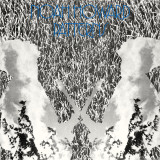
For the first time in their diverse second act, they allow themselves to be a rock band, freed of adornment and embellishment. As much as Carlson’s guitar has always been the focal point of EARTH’s music, it’s been surrounded by consistently diverse instrumentation. Here the dialog between Carlson and Davies drumming remains pivotal, underpinned by the sympathetic bass of Bill Herzog (Sunn O))), Joel RL Phelps, Jesse Sykes and the Sweet Hereafter) and thickened by additional layers of guitar from Brett Netson (Built To Spill, Caustic Resin) and Jodie Cox (Narrows). Perhaps the largest left turn on Primitive And Deadly, though, is the prominence of guest vocalists Mark Lanegan and Rabia Shaheen Qazi (Rose Windows) who transform the traditionally free ranging meditations of EARTH into something approaching traditional pop structures.
On “Rooks Across the Gates,” a song stylistically the closest to the folk inspired modality of Angels Of Darkness, Carlson stretches out into some of his most lyrical playing to date, creating an almost symbiotic relationship between his performance and the vocals of old friend Mark Lanegan. “From the Zodiacal Light,” meanwhile, takes the late 60s San Franciscan/freaked-out jazz-rock transcendence of The Bees Made Honey In The Lion’s Skull and quickly re-appropriates that sound into a musky torch song for the witching hour.
This contradictive tension between a band pushing itself ever-forward whilst surveying their history is reflected in the albums twin recording locales. The foundation of the record was laid in the mystic desert highlands of Joshua Tree, California where EARTH recorded hour after hour of meditations on each track's central theme at Rancho de la Luna. Upon returning to Seattle these were edited, arranged and expanded upon at Avast with the help of long-term collaborator Randall Dunn (who was previously at the helm for the Hex, The Bees Made Honey In The Lion's Skull and Hibernaculum sessions).
DJ Support: Kevin Reynolds, James Baron, Hot Toddy, Pablo Valentino, Colin Dale
Suite For Chick is a heartfelt Homage to the late Jazz Maestro Chick Corea.
This collection features reinterpretations of City Gate, Rumble, Time Track, and Hymn of the Heart from the Chick Corea Elektric Band, as well as Return to Forever’s classic Romantic Warrior. These vibrant renditions celebrate Corea's enduring legacy in the jazz world.
Chick Corea played a crucial role in shaping Miles Davis's electric fusion era and was a key member of his Lost Quintet. He was also a founding force behind Return to Forever and many other influential groups.
Bangkok-based Maarten Goetheer collaborates with top Thai drummer Pong Nakornchai, blending Wurlitzer chords, Moog basslines, ARP leads, and signature Rhodes phasings. Nakornchai, a Master’s graduate in Jazz Studies from Mahidol University, leads his own quartet and embodies the progressive spirit of modern jazz in Thailand.
Maarten's inspiration stems from his musical upbringing; his father, Gerard Goetheer, was a jazz pianist. This environment fostered his deep appreciation for music. A pivotal moment came when he heard Masters at Work remixing Tania Maria, igniting his vision to merge genres and create something new.
With Suite for Chick Maarten wanted to incorporate a wider range of Modern influences that he became infatuated with throughout his Musical career such as Techno, Italo, Cosmic Disco, Dub, Acid, Boogie, Proto-House & Ambient Music.
To Maarten bringing these genres together is his current and unique interpretation of the JAZZ FUSION moniker.
Radio Support: Kev Beadle Radio support, Colin Curtis Radio support, RINSE FM mini album mix & interview on Tim Garcia show, BBC6 RADIO New Music Fix 16th Oct 2024
DJ Feedback:
DJ Harvey - Very cool collection of reworks
Terry Farley - so fucking good - house heads will be lovin’ this
Laurent Garnier / FG Radio France: Whaouuuu. That’s brilliant. Great album!
Lars Behrenroth / Deeper Shades Of House: This is so cool. Love the dub of City Gate, too. Great music
Jimpster / Freerange: Great idea to work up some contemporary interpretations of Chick classics! Was always a fan of Time Track so nice to hear this one included. These tracks strike a really nice balance of electronic/sequenced elements and live recording. I’m into it!
Tim Garcia / Rinse FM: I think this whole release is excellent and inspired, nice to see a tribute to one of my favourites work so well.
a A1: City Gate Rumble Original
[b] A2: City Gate Rumble [Reprise Dub]
[c] A3: Romantic Warrior [Original]
[d] B1: Time Track [Original]
[e] B2: Time Track [Reprise]
[Original]