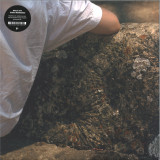
Jazz, funk, and bossa vibes kiss each other, all wrapped up in JLR's trademark cinematic feel. In his colourful Un Hombre de Buenos Aires, recorded in 1978, JLR puts the political outcry of his early 70s works aside and focuses on his love for the city of Buenos Aires.
Jorge López Ruiz gets far less credit than he deserves. His crucial role in shaping Argentina's jazz history should place him right next to Gato Barbieri and Lalo Schifrin, who found success abroad. It's an honour do dig deeper into his vast discography after having already reissued his masterpiece Viejas Raíces and his historical milestone album Bronca Buenos Aires.
As always, Jorge López Ruiz enroled for the recording of Un Hombre de Buenos Aires some of the best musicians in the country. The line-up includes Dino Saluzzi on bandoneon, Domingo Cura on percussion and his lifelong friend Pocho Lapouble on drums.
quête:d air
Brotherhood Of Peace (aka B.O.P.) brought the world some of the best breezy power pop, Southern rock and heavy boogie all packed into one brilliant album in 1976, the fittingly titled Cuttin’ Loose. The album is a free-flowing nine song collection of genre blending would-be hits suited for both ’70s AM gold and FM album rock that never received its proper due, until now. The album flows somewhat similar to the way Big Star combined heavy riffs with airy pop sweetness, but B.O.P. brought more of a blues rock groove to the proceedings, resulting in heavier undercurrents to songs with glowing three-part harmonies and impeccable power trio musicianship. By the mid-’70s, rock ’n’ roll was truly anything goes. Experimentation, excess and inventing new genres was all the rage, and the trio of spritely young men—guitarist / vocalist Dennis Tolbert, bassist / vocalist Mike Arrington and drummer / vocalist Ronnie Smith—gamely tackled whatever sound they pleased. Fortunately, the band captured it all on their lone album, released on the small independent label Avanti Records in March 1976. The Mount Airy, North Carolina trio got its start as teens in 1969 as the backing band to a large 20-50 person traveling church choir called the New Americans. By 1970, the band was ready to move on to performing on their own. First as a sextet, the band soon trimmed down to a three-piece, working the local club circuit like madmen, sometimes playing three shows a day. At the height of their live tightness, B.O.P. recorded the album with local musicians Don Dixon and Robert Kirkland of the band Arrogance who worked at Charlotte recording studio Reflection Sound in October 1975. The band laid out the highlights of their live set in the studio, which ran the range of influences from The Raspberries to Deep Purple, Doobie Brothers to Nazareth, Lynyrd Skynyrd and Grand Funk. The initial pressing of 1000 copies was released in March 1976, but without major label machinery for retail distribution, radio and press, the album never took off. The band mostly sold them at live shows, via consignment at local stores and in limited distribution in the Southeastern region. However, to date, the record still occasionally pops up for sale online worldwide at exorbitant collectors’ prices. Until now, finally getting a proper reissue via Riding Easy Records.
Repress!
1981 SYNTH CLASSIC BY JAPANESE KEYBOARD WIZARD AND YMO PROGRAMMER HIDEKI MATSUTAKE REISSUED OUTSIDE OF JAPAN FOR THE FIRST TIME IN 40 YEARS. REMASTERED FROM THE ORIGINAL TAPES WITH STRIKING ORIGINAL ARTWORK BY LEGENDARY ILLUSTRATOR PATER SATO INCLUDING ITS STUNNING FULLY ILLUSTRATED
8-PAGE BOOKLET
His name may not be instantly familiar, but Hideki Matsutake has had a huge influence over Electronic music. Starting his career as the assistant of Japanese Electronic Music master Isao Tomita in the early 70s, he went on to work with Ryuichi Sakamoto and then Yellow Magic Orchestra as their keyboard programmer and unofficial fourth member. In 1981 he started his own Logic System project recording "Venus" that year in Los Angeles with Don Grusin, Nathan East and Michael Boddicker, brilliantly mixing Synth Funk, Ambient and Boogie with a touch of Fusion Jazz predating Vaporwave by a mere 30 years. Wewantsounds is delighted to reissue this visionary album, which
comes remastered from the original tapes and features Pater Sato stunning artwork including the rare beautiful 8-page insert with an exclusive interview of Hideki Matsutake by Hashim Kotaro Bharoocha.
The early 80s were prolific for Hideki Matsutake. As the go-to keyboard programmer for the tokyo music scene, he worked on Akiko Yano's "Gohan Ga Dekitayo", YMO's "BGM", Ryuichi Sakamoto's "B-2 Unit", Mkwaju Ensemble's "Mkwaju" and found time to record two Logic System albums in 1981. While the first album, "Logic" had a harder techno feel, the second one "Venus" was different affair. Recorded in Los Angeles at the new state of the art Yamaha Studio, it was loosely themed on the Greek goddess Venus and had a funkier more organic sound. For the album Matsutake had asked a handful of American musicians to provide songs he would then add his synth magic touch to. Michael Boddicker, Don Grusin, Nathan East and Roger Powell duly complied and also played on the album.
The updated sound was achieved by switching from the Moog III to the E-mu modular System (which Matsutake brought over to LA) and other synths like the Prophet 5, the Roland MC-8 and TR 808 and the Yamaha GS-1, a forerunner of the DX7.
The result is an amazing futuristic mix of electronic music and early 80s funk, announcing many genres to come, from techno and house to French electro and Vaporwave. From the breezy ambient synth of "I Love You" to the city pop edge of "Be Yourself" (originally written by Nathan East for Debra Laws) and the vocoder-led Daft Punk-ish "Take A Chance", Venus is a fascinating album that both pushes the boundaries of electronic music and is yet strangely accessible and beautiful.
The other key elements of Venus is the artwork designed by Japanese legendary illustrator Pater Sato. Sato had started in Japan in the early 70s doing many album covers for Japanese artists including Tatsuro Yamashita's cult Spacy LP before moving to New York in 1979 to pursue a career in fashion and advertising. His airbrush style became hugely influential over the years and in 2018, Stella McCartney dedicated a whole Men’s collection based on his Venus. Star make up artist Pat McGrath also regularly posts his artwork to her 3 million fans on her instagram.
The original album came with a beautiful 8-panel insert illustrated by Sato which Wewantsounds has reproduced on this deluxe reissue also featuring remastered sound, OBI strip and a second insert featuring credits and line up plus liner notes by Hashim Bharoocha. The notes will feature an exclusive interview with Hideki Matsutake reminiscing about the making of this visionary album which Wewantsounds is delighted to reissue.
Antônio Carlos Jobim was a primary force behind the evolution of bossa nova and his 6th studio release Stone Flower is an absolute classic. The album is emblematic of 70’s bossa with it’s seductive samba beat fused with elements of modern jazz provided by a star-studded supporting cast of Ron Carter, Hubert Laws, Airto Moreira, and Joe Farrell. Stone Flower was recorded by Blue Note engineering virtuoso Rudy Van Gelder and arranged by fellow pianist and guitarist Eumir Deodato; the fidelity and musicality is so well cared for that it effortlessly carries listeners away.
- A1: Tibeauthetraveler– Cherry Tree
- A2: Tenno – The Guiding Wind
- A3: Raimu X Tophat Panda– Kaigan
- A4: Ambulo– Windmills
- A5: Jhove– Shibui
- B1: Purrple Cat– Mystic Mountain
- B2: Raimu X Danisogen– In Love With The Sky
- B3: Celestial Alignment– The View From The Monastery
- B4: Midnight Alpha X Nothingtosay– Winter Gardens
- B5: Sweet Medicine– Lushan Sun
- C1: Dryhope– Wander
- C2: Kanisan– Until Dawn
- C3: Yestalgia X Loafy Building– West Of Zhuhai
- C4: Bvg– The Path You Choose
- C5: Purrple Cat– Neon Tiger
- C6: Otaam X C4C– Tsuyu
- D1: Bvg X Møndberg– Waterfall
- D2: Phlocalyst X Living Room X Myríad– Koi
- D3: Living Room X Otaam– Fuji
- D4: Mondo Loops X Softy – Danso Lullaby
- D5: Jhove– High Sun
“Soothing Breeze” is a compilation of 21 carefully selected beats with oriental traditional instruments, soft drum loops and mystical appeal. The air is calm and pure - it’s time for absolute focus in this tranquil landscape.
- A1: The Ghosts Of Christmas Eve
- A2: Boughs Of Holly
- A3: The World That She Sees
- A4: The World That He Sees
- A5: Midnight Christmas Eve
- B1: The March Of The Kings/Hark The Herald Angel
- B2: The Three Kings And I (What Really Happened)
- B3: Christmas Canon
- B4: Joy/Angels We Have Heard On High
- C1: Find Our Way Home
- C2: Appalachian Snowfall
- C3: The Music Box
- C4: The Snow Came Down
- C5: Christmas In The Air
- D1: Dream Child (A Christmas Dream)
- D2: An Angel’s Share
- D3: Music Box Blues
- D4: Christmas Jam (Live)
clear 2x12"[58,19 €]
Released in 1998, THE CHRISTMAS ATTIC earned double-platinum certification and continues to captivate audiences with fan favorites like “Music Box Blues,” “Boughs Of Holly,” and “Ghosts Of Christmas Eve.” The album also introduced “Christmas Canon,” which has become one of the band’s most popular songs and a modern holiday classic. THE CHRISTMAS ATTIC tells the heartwarming tale of a little girl’s magical night spent in an attic filled with yuletide memories, accompanied by spellbinding guitar solos and soaring choral vocals set against a rock orchestral backdrop. The record serves as the second installment in TSO’s celebrated Christmas trilogy, which also includes Christmas Eve and Other Stories (1996) and The Lost Christmas Eve (2004).
TSO was conceived by the group’s late founder, composer, and lyricist Paul O’Neill. His ambitious vision was to create a progressive rock band that combined rock opera and classical rock with a dazzling live show that featured lights, lasers, and pyrotechnics. In the 1980s and 1990s, O’Neill produced several albums for the influential heavy metal band Savatage, which is how he connected with longtime collaborators Jon Oliva (vocals), Al Pitrelli (guitar), and Robert Kinkel (keyboards/producer).
With more than 10 million albums sold, TSO has inspired generations of fans to rediscover the multi-dimensional art form of rock opera. Since its touring debut in 1999, the band has emerged as one of the world’s top live acts, performing for over 10 million people across the globe, selling more than $280 million worth of tickets, and donating $11 million to charity.
- A1: The Ghosts Of Christmas Eve
- A2: Boughs Of Holly
- A3: The World That She Sees
- A4: The World That He Sees
- A5: Midnight Christmas Eve
- B1: The March Of The Kings/Hark The Herald Angel
- B2: The Three Kings And I (What Really Happened)
- B3: Christmas Canon
- B4: Joy/Angels We Have Heard On High
- C1: Find Our Way Home
- C2: Appalachian Snowfall
- C3: The Music Box
- C4: The Snow Came Down
- C5: Christmas In The Air
- D1: Dream Child (A Christmas Dream)
- D2: An Angel’s Share
- D3: Music Box Blues
- D4: Christmas Jam (Live)
black 2x12"[49,79 €]
Released in 1998, THE CHRISTMAS ATTIC earned double-platinum certification and continues to captivate audiences with fan favorites like “Music Box Blues,” “Boughs Of Holly,” and “Ghosts Of Christmas Eve.” The album also introduced “Christmas Canon,” which has become one of the band’s most popular songs and a modern holiday classic. THE CHRISTMAS ATTIC tells the heartwarming tale of a little girl’s magical night spent in an attic filled with yuletide memories, accompanied by spellbinding guitar solos and soaring choral vocals set against a rock orchestral backdrop. The record serves as the second installment in TSO’s celebrated Christmas trilogy, which also includes Christmas Eve and Other Stories (1996) and The Lost Christmas Eve (2004).
TSO was conceived by the group’s late founder, composer, and lyricist Paul O’Neill. His ambitious vision was to create a progressive rock band that combined rock opera and classical rock with a dazzling live show that featured lights, lasers, and pyrotechnics. In the 1980s and 1990s, O’Neill produced several albums for the influential heavy metal band Savatage, which is how he connected with longtime collaborators Jon Oliva (vocals), Al Pitrelli (guitar), and Robert Kinkel (keyboards/producer).
With more than 10 million albums sold, TSO has inspired generations of fans to rediscover the multi-dimensional art form of rock opera. Since its touring debut in 1999, the band has emerged as one of the world’s top live acts, performing for over 10 million people across the globe, selling more than $280 million worth of tickets, and donating $11 million to charity.
Paolo Mosca makes intricate, multi-layered electronic music. Inspired by the early club sound pushed by the pioneers from his home region Veneto, he fuses house, trance and ambient - and moves forward. The Metaphysics EP displays the artist's passion and ingenuity, unfolding technical skill that makes clear his studio clock is set to 2023 and not 1993. On "Luciddreams" a statically charged beat and organ bass work up a groove. Accompanied by a misty pad and a slow, pensive arpeggiator, it pulses towards the break: there an acid line emerges, finds its spot in the mix, and refuels the track. "Energia" draws from a bolder, more euphoric range. Hand drums, a glittering lead and airy yet restrained chords float soaked in reverb and delay. A lean bass sequence tightly keeps the rhythm as flanged claps and subtly positioned sweeps create extra movement. The second side's opener, "Under the sea" features a formant filter lead meandering within the sweaty framework of heavily gated choir pads and a frugal bassline that eventually gets layered with an M1. Modulated vocals and strokes of additional melody ensure the stereo field again gets used to its full capacity. "Acqua" is a fitting coda. Some familiar patches are deployed over a tumbling beat that takes charge of the pace from the get-go. The palette might seem bright and blissful, but as always, the track's latticework contains enough contrast for a slight feeling of melancholy to keep simmering beneath. Mosca cited his meditation routine, how it helps him materialize ideas and thoughts, as a main drive upon finishing this record. The Metaphysics EP is a ruminative work. Comprised of four explorations in deftly manipulating energy with due attention to balance and momentum, it easily flows between genres, details darting in and out, showing the artist's understanding of composition and dance music history. It is a deep-dive selection of club-oriented cuts we are excited to release on Altered Circuits.
Black Truffle is pleased to announce Tender Membranes, the label’s first release from Swedish-Finnish sound artist and electro-acoustic composer Marja Ahti. Active for a decade in the Finnish underground music scene, in recent years Ahti has developed a distinctive approach to patiently unfolding electro-acoustic constructions, documented on a string of solo releases and collaborative projects with Judith Hamann and her husband Niko-Matti Ahti. Working with concrete and instrumental sounds, field recordings, and electronics, Ahti favours neither disjunctive collage nor monolithic consistency; rather, her work is composed of organically unfolding sequences of details and textures, which, as she says, ‘can stretch out or cut fast as long as they have a sense of inner stillness’, a sense that she connects to moments of heightened attention in everyday life. Tender Membranes consists of four lengthy pieces, partly inspired by the image of the senses and mind as membranes allowing for the passage between inner and outer spaces, sensation and its causes, creating a world. Ahti’s unhurried pacing encourages this sense of listening as an opening or surrender to sound, which can often create the impression that the listener is moving through a space zooming in on details. The opening Shrine (Aether) exemplifies this aspect of Ahti’s approach: a bell clears the air with a single long tone, followed by the ambience of outdoor spaces, crackling electronics, an archival recording of a horsefly on a windowpane. Dozens of these moments, varying in length, density, and intensity, move past the listener’s attention, momentarily brought into focus then slipping away. Like those of the masters of the French musique concrète tradition, Ahti’s sounds are not often recognisable, though they might suggest proximity or distance, open environments or closed spaces, the urban or rural, day or night. In Ahti’s work, we do not encounter spectacular metamorphoses à la Parmegiani but rather a state of ambiguity where the listener is often unsure what is organic and what is inorganic, where the careful productions of the synthesizer might end and sounds discovered in the environment begin. What Ahti calls her ‘poetic way of experiencing and organising the familiar and the unfamiliar’ is sustained throughout Tender Membranes, but each piece has its own character. On Dust / Light, human presence is more overt, as what appear to be whispers, singing, and distant speech thread between high frequencies, untraceable drips and pops, and metallic shimmers. In all this there is a melody that you can sing and to which you may dance makes more prominent use of musical instruments, gaining a sombre beauty from half-buried piano chords and organ tones. On the closing Oh Fragrant Witness, a delicate cloud of subtly bending pitches is repeatedly disrupted by a resounding, almost ominous mass of low tones, at once a strange detour from much of what has gone before and an almost classical finale. Arriving in a sleeve reproducing contemporary Finnish photographer Sini Pelkki’s fragmented visions of the everyday, Tender Membranes is a balm to reawaken tired ears.
- A1: The Lepers Companion
- A2: Boats In A Sunken Ocean
- A3: The Finished River
- A4: Let's Share Wounds
- A5: Verdriet
- B1: Sand Fools The Shoreline
- B2: Let's Be On Our Own
- B3: The Ferris Wheels Of Winter
- B4: We Made It Rain
- B5: How Safe We Must Seem
- C1: Pillows In The Water
- C2: Matching Eyes & Hands
- C3: The Space Around Your Sleeping
- C4: Untitled Song
- D1: Love Gun
- D2: Stedelijk
- D3: Matching Eyes & Hands
- D4: How Safe We Must Seem
»This River Only Brings Poison« was released in 2002 as the sixth full-length album of Chris Hooson’s Dakota Suite project. This first-ever vinyl edition of the record includes four bonus pieces and makes it possible for fans to re-evaluate one of the most crucial Dakota Suite albums in the project’s vast discography while also providing new listeners with an entry point into its intricate musical cosmos. With contributions by artists as diverse as steel guitarist Bruce Kaphan and drummer Tim Mooney from American Music Club, Derald Daugherty, and Laura and Chris Donohue as well as long-time collaborators such as David Buxton, Colin Dunkley or Ed Collins, »This River Only Brings Poison« turned out as a sonically rich and stylistically versatile as it is emotionally multi-layered.
»Writing music for me has always been a cathartic exercise,« explains Hooson. While the instrumental pieces generally serve to express a raw sense of his internal struggles, his vocal-led songs communicate them more directly. »Those are the words I cannot say openly. It’s not that I cannot voice them in a conversation, it’s just that they only seem half-formed and not ›true‹ unless they are located within a song,« he says. What makes Dakota Suite unique is that throughout the project’s history, the music and lyrics have always had a single addressee: Hooson’s wife Johanna, whose photographs were used for the album artwork and who is featured on clarinet on »sand fools the shoreline.«
»The title of the record was something that I had said when Johanna and I first met to make her see that the journey she was considering taking would be full of love, but also come at a cost,« explains Hooson. »The songs were written at a time when I was really struggling to think I could be the person that she deserved.« In the end however, »This River Only Brings Poison« marked a turning point in Hooson’s oeuvre after highly productive time with Dakota Suite: it would take another five years until he returned with a new album. »The reason for that was that I needed to accept that she had made her choice to be with me and that was a big thing for me to get my head around,« he says.
Hooson’s highly personal approach to writing songs also has an impact on the ways in which he works with his collaborators when recording them. »The people with whom I play really need to understand how I perceive the world to be able to play what I need,« he says. »My instructions would always be things like, ›This is what the song means to me, this is what I am trying to communicate to Johanna when she hears it, so your cello, for example, needs to sound like you have noticed that the cloud is covering the sun, and the weight of the air on your skin is heavier and it has unsettled you.‹«
For this particular record, he reached out to Mooney and Kaphan as an admirer of their group American Music Club. Expecting to be rejected, he instead found himself on a flight to San Francisco together with multi-instrumentalist Buxton shortly thereafter, about to make what he today calls one of his most cherished recording experiences. After the four musicians finished the basic tracks, overdubs were added in Hooson and Buxton’s respective houses as well as Daugherty’s home studio while Hooson was visiting his old friend in Nashville.
Hooson emphasises that revisiting his older releases can be complicated. »I feel intense feelings, as every record is a diary of who I was in that period and what I was feeling. That is why having to play the songs live is always like having PTSD: I need to re-experience the event that caused me to write the song, and I do not enjoy that.« He remains, however, proud of »This River Only Brings Poison,« pointing especially to the opener »the lepers companion« as what might perhaps be his favourite song of his. »But overall I just hope that Johanna feels it spoke to her,« he says, adding that the two do not discuss his records. »For me it's enough that she is listening to the things I mean to communicate to her.«
Prika Amaral am Mikrofon und doppelte Riffpower - NERVOSA läuten mit Jailbreak ein neues Zeitalter der Bandgeschichte ein!
Die Thrash Metal Institution NERVOSA kehrt mit unaufhaltsamer Power, neuem Line-Up und ihrem neuen Studioalbum Jailbreak zurück, das am 29. September 2023 über Napalm Records erscheint.
Mit ihrem Vorgänger Perpetual Chaos (2,8 Mio. Plays auf Spotify) sicherten sich NERVOSA nicht nur ihre ersten Chartplatzierungen (#18 der offziellen Deutschen Albumcharts, #6 US Hard Music Albums, #9 US Top New Artist Albums Charts), sondern traten auch auf einigen der größten Festivals Europas auf, wie z.B. Copenhell, Resurrection, Metal Days, Summer Breeze, Wacken Open Air, und vielen mehr. Jailbreak steht mit seinen insgesamt 13 Tracks nicht nur für eine rasende Thrash Metal Attacke, sondern läutet auch ein neues Kapitel in der Geschichte der Band ein. Es ist die erste Veröffentlichung mit Gründungsmitglied Prika Amaral an den Vocals. Darüber hinaus geben NERVOSA mit der talentierten und erfahrenen Helena Kotina als zweite Gitarristin, Hel Pyre am Bass und Michaela Naydenova am Schlagzeug weitere spannende Neuerungen im Line-Up bekannt. Mit Jailbreak senden die vier Frauen die Botschaft, sich von allem und jedem zu befreien, das einen daran hindern könnte, den eigenen Weg und die eigenen Vorstellungen zu verfolgen und umzusetzen. Es geht darum, stolz auf sich selbst zu sein und auf die eigenen Stärken zu vertrauen.
- Hellhound On My Trail (Robert Johnson)
- Fly Away (Lenny Kravitz)
- Rockin' In The Free World (Neil Young)
- (You're The) Devil In Disguise (Elvis Presley)
- In The Air Tonight (Phil Collins)
- Nights In White Satin (The Moody Blues)
- Who Do You Love (Bo Diddley)
- Take What You Want (Post Malone)
- Ramblin' Man (The Allman Brothers)
- Bell Bottom Blues (Derek & The Dominoes)
- Crocodile Rock (Elton John)
Dan Auerbach’s debut solo album, Keep It Hid, returns to physical formats, with the seminal 2009 collection being reissued on vinyl and CD via Easy Eye Sound - the label that Keep It Hid first inspired him to create. The fourteen-song debut marked Auerbach’s first major work outside of The Black Keys, helping to establish his multifaceted career as a Grammy®-winning producer, mentor to emerging talent and founder of Easy Eye Sound, which is now Billboard’s reigning Blues Label Of The Year. Keep It Hid was originally recorded by Auerbach as he was building his first home studio in Akron, Ohio - a precursor to his Easy Eye Sound Studio in Nashville, where Auerbach now records and produces most of the label’s current releases. Inspired by trips to many of his all-time favorite rooms - from Suma Recording in Cleveland to Robin Hood in Texas to Toe Rag in London - Auerbach discovered a passion for studio work that remains at the center of his musical world nearly fifteen years on. Also tapping into his love of record-collecting and crate-digging more than ever before, Keep It Hid was inspired by forgotten 60s psych rock, obscure British power-pop, bluegrass family bands and even the lyricism of his own father, Chuck Auerbach (Dan would go onto produce Chuck’s debut album, Remember Me, in 2018). The album was hailed as “intimate and thrilling” by NPR’s Fresh Air upon its original release, with reviewer Ken Tucker adding it “sounds like a clearing of the throat and mind.”
It’s always exciting to hear collaborations from two familiar faces — especially when the results are completely unexpected. “Sinking” and “Cue The Rhythm” from VNSSA & Lenny Kiser are two of those collabs. The two artists got together to exchange some ideas, and we’re thrilled with the outcome.
Both moody and comforting, VNSSA’s vocals on the title track adds a deep undertone to keep it floating, while the other’s breakbeat sensibility gives off an air of old-school rave vibes.
- A1: Profesor Baltazar (Opening Credits From Professor Balthazar)
- A2: Maxol (Theme From Maxol)
- A3: Maestro Koko (Theme From Maestro Koko)
- A4: Horacijev Uspon I Pad (Theme From The Rise And Fall Of Horatio)
- A5: Tetke Pletke (Theme From Knitting Pretty)
- A6: Profesor Baltazar (Zagrebfilmijada Vocal Version)
- A7: O Misu I Satovima (Theme From Of Mouse And Ben)
- A8: Horacijev Uspon I Pad (Animal Choir From The Rise And Fall Of Horatio)
- B1: Stonozica Bosica (Theme From Tenderfeet Centipede)
- B2: Vjetrovita Prica (The Balthazar Machine From A Windy Story)
- B3: Lutke Bez Kose (Theme From Bald Is Beautiful)
- B4: Oblacno Sa Svadjavinama (Theme From Cloudy With Brawlstorms)
- B5: Krojac Silvestar (Bozica Sings From The Grave Little Tailor)
- B6: Peppino Cicerone (Theme From Peppino Cicerone)
- B7: Maxol (The Lullaby From Maxol)
Original soundtrack from the animated TV series 'Professor Balthazar' (1967 - 1978) by Tomislav Simovic.
Gatefold LP, cut from the original master tapes, liner notes by Zeljko Luketic and exclusive graphics by Boris Stapic.
Master tapes were considered lost; now found and restored for this unique release celebrating Yugoslavia's biggest cartoon export of the times.
Professor Balthazar was filmed from 1967 to 1978 in Zagreb. It was a huge international success: from large fan base in Scandinavia to broadcasting on USA television and countries like Germany, Italy, UK, France and even Iran. It's still aired on various TV programs and video platforms.
Animation style and content is widely praised for being one of the rare cartoons that does not feature any kind of violence or aggression. The character of Professor Balthazar solves problems in a peaceful way. He uses his inventions and science to help his friends. Distinctive visual influence is a crossover of bright, psychedelic colors, weird shapes and naive art, typical for Zagreb School of Animated Film. This soundtrack is mastered from original tapes, composed and conducted by Tomislav Simovic.
The music is busy, playful and mixes influences of jazz, modern classical and even electronica. Fox & His Friends Records, also the curators of the largest ever multimedia exhibition on Professor Balthazar series in Museum of Modern and Contemporary Art in Rijeka as a part of the European Capital of Culture program in 2020, present the masters without any interventions in sound. This album cut includes longer rare version of main credits, made exclusively for Zagrebfilmijada, an event of public screenings of Professor Balthazar and other cartoons in cinemas in 1970's Yugoslavia.
Black Vinyl[20,80 €]
The latest EP from Drab Majesty marks the start of a stirring new chapter in the band's majestic legacy. Written during a 2021 retreat to the remote coastal Oregon town of Yachats, Deb Demure leaned into the neo- psychedelic resonance of a uniquely bowl - shaped 12 -string Ovation acoustic/electric guitar. After early morning hikes in the rain, Deb would record ambient guitar experiments the rest of the day, tapping into "flow states," letting the sound lead the way. These sessions were then refined or recreated, and later elevated further with key collaborations by Rachel Goswell (Slowdive), Justin Meldal Johnson (Beck, M83, Air), and Ben Greenberg (Uniform, Circular Ruin Studio). An Object In Motion is true to its title, capturing the chrysalis moment of an artist evolving, reborn and untet hered, silhouetted against an open horizon. "Cape Perpetua" kicks off the collection's divergent palette: sparkling acoustic fingerpicking refracted through delay, equal parts raga and reverie. Melodies and moods congeal and dissipate, at the threshold of rustic American primitivism, brooding neo-folk, and pastoral melancholia. "The Skin And The Glove" deploys jangle to different effect baggy, soaring, grey skied kaleidoscopic pop in the spirit of Stone Roses, Primal Scream, and The Glove. Rachel Goswell lends her iconic freefall voice to The Cure - esque ballad, "Vanity," infusing poetic gravity to the doomed refrain: "If the valve breaks / then the earth quakes / and history finds a way / to put you in your place." "Yield To Force", the closing track of the EP, may be the most anomalous offering of the set. A 15 minute instrumental odyssey of cyclical strings, ominous slide guitar, and simmering synthesizer, the piece sways and spirals like a long zoom into distant storm clouds. Demure finesses the guitar with a restless but regal grandeur, unfolding a panorama of peaks, shadows, and plateaus. It's music both intuitive and prophetic, tracing the slow swing of pendulums across an endless plain. Taken as a whole, An Object In Motion presents a showcase of potential futures from Drab's evolving domain, their sound poised to bloom at the precipice of transformation.
Die japanische Band CHAI verzauberte die Welt 2017 mit ihrem Debütalbum PINK, einer Sammlung von Songs, die ihren einzigartigen, verspielten Pop vorstellten. Das enthusiastisch-feministische Nachfolgealbum PUNK wurde von der Musikpresse und anderen Künstlern hoch gelobt. Das führte zu WINK, das CHAI per Remote-Zoom-Sessions aufnahmen - eine Einschränkung, die sich als Stärke erwies, da MANA (Leadgesang und Tasten), KANA (Gitarre), YUNA (Schlagzeug) und YUUKI (Bass und Texte) mit Künstler*innen im Ausland zusammenarbeiten konnten, um ein Werk zu schaffen, das in ihrer internationalen Gemeinschaft Katharsis fand. Im Gegensatz zu WINK kehren CHAI auf ihrem neuen, selbstbetitelten Album zu ihren Wurzeln zurück und lassen sich von ihrem japanischen Erbe und der Musik, mit der sie aufgewachsen sind, inspirieren. "Alles, was sich in den Texten widerspiegelt, drückt unsere Erfahrungen als japanische Frauen aus", sagt MANA. CHAIs Ethos ist das der Inklusion, und die erste Ssingle "We The Female!" - die live aufgenommen wurde, um die krawalligen Auftritte der Band zu würdigen - lädt die Zuhörer zu dieser Mission ein. Während ihrer Tourneen nach der Pandemie, bei denen sie vor riesigen Menschenmengen in Städten wie Santiago, Buenos Aires und Sao Paulo auftraten, wurde CHAI klar, dass sie sich ein globales Publikum erschlossen hatten. CHAI schrieben das neue Album unterwegs und fanden zwischen den Auftritten im Stones Throw Studio in L.A., in der Ometusco Sound Machine in Mexico City und in der Grand Street in New York Zeit für die Aufnahmen. Als sie erkannten, dass ihre befreiende, ermächtigende Botschaft auch für Menschen außerhalb Japans gilt, überlegten CHAI, welche Facetten ihrer Erziehung beim Publikum außerhalb ihres Heimatlandes Anklang finden könnten. Auf CHAI schöpft die Band direkt aus dem City-Pop, einem in Tokio entstandenen Sound, der in den 70er und 80er Jahren populär war. City-Pop war eine japanische Interpretation westlicher Lounge-Musik, die Anleihen bei Jazz, Boogie, Funk und Yacht-Rock machte, um einen Sound zu kreieren, der sich zwischen zwei Kulturen bewegte. Während der City-Pop in letzter Zeit über TikTok und YouTube ein US-Publikum gefunden hat, sind CHAI mit diesem Genre aufgewachsen. Für die Produktion griffen sie auf ihren früheren Mitarbeiter Ryu Takahashi zurück, der ihre Vorliebe für City Pop, Eurobeat und die Melodien von J-Pop-Künstlern wie Maria Takeuchi teilte. "Sie wollten sich mit ihrer japanischen Identität auseinandersetzen, nicht im traditionellen Sinne, sondern auf diese gefilterte westliche Art", sagt Takahashi. Die Arbeit in gut ausgestatteten Studios ermöglichte es ihnen, mit einer Ästhetik zu experimentieren, die auf einem CHAI-Album noch nicht zu hören war.
Sara Dobbs and Jenny Shore used to work summer stock theater in St. Louis, Missouri. They'd do the hand jive with TV stars past and future; they'd get coldly corrected by the ancient, legendary choreographer Gemze de Lappe. Sara went on to Broadway, including a run as Anybodys in West Side Story. Jenny went on to choreograph in the independent dance scene of early 2000s Chicago. Julie Shore is Jenny's sister. She's always made music_playing Chopin, writing songs, making bands with her friends. She's had the archetypal Millennial journey of entering adulthood in the '08 financial crisis and figuring out what stupid series of jobs you have to take to pay rent while keeping an artistic life alive. Miles Francis grew up in New York City with Backstreet Boys posters covering their walls. An extraordinary drummer since youth, Miles thrives in collaboration_ whether producing artists in their West Village studio, performing with artists like Angelique Kidjo, or powering protests with a big marching drum. These four_Miles, Julie, Jenny, and Sara_are Sister Squares. What made them a musical unit was working with Grammy winner and Oscar nominee Will Butler. They've all just finished a new record together: Will Butler + Sister Squares. "After Generations, I considered making a weird solo record. Me alone in the basement, etc., etc. Mostly I realized that what I wanted was the opposite," says Will. He increasingly turned to the band for feedback on lyrics and song structures. He asked Miles if they'd produce the record. The band played a run of shows in August 2022, airing out studio ideas in live rooms. After coming home, the band regrouped at Figure 8 Studios in Brooklyn. "I had quit my band Arcade Fire very recently, after 20 years_maybe the most complex decision of my life. I had spent the preceding two years at home with my three children. I was 39 years old. I was waking up every morning and reading Emily Dickinson, until I had read every Emily Dickinson poem. I was listening to Morrissey, to Shostakovich, to the Spotify top 50. I had unformed questions with inchoate answers," says Will. "But, honestly, I was feeling great about the record." The album projects widescreen emotional landscapes. Lead-off single "Long Grass" is like a Harry Styles song with 20 more years of life behind it. Standout track "Saturday Night" has a beat, according to Miles, "with that robot-alien-dancing-at-a-haunted- dive-bar feeling that we were going for." The back half of the album is a danceable, weird choral record with harmonies both beautiful and dissonant. Closing song "The Window" is the comedown after the party_Julie playing a Chopin Nocturne on a three-years-out-of-tune piano, slowed to half-speed on tape with Will singing over it in a voice exactly as tired as he was. It's a record with a warm, humane soul.