Rocksteady and Reggae have long been a part of the rare soul scene, since its inception in the early Sixties. It’s easy to hear the influence of early American R&B in the development of ‘Ska’ and as ‘Soul’ music took over as “the sound of young America”, in the mid-Sixties, it too tinged the sound of Jamaica. No more so than our dance floor anthem “I Feel So Bad” by the legendary JACKIE EDWARDS.
Edwards was born Wilfred Gerald Edwards in Jamaica in 1938 and by the age of 22 had already scored a No.1 record on the island. He’d had four chart-topping hits before signing to Chris Blackwell’s new ‘Island’ imprint in 1962. He became an integral part of Island Records, as a prolific artist, songwriter, producer and general helper. He wrote “Keep On Running” and “Somebody Help Me” for the British R&B band The Spencer Davis Group, both of which went to No.1 on the U.K. pop charts.
“I Feel So Bad” was released on the distinctive ‘red and white’ Island logo in 1967 and was adopted by the burgeoning U.K. underground soul scene, most notably at the Twisted Wheel club in Manchester. It has been played on the ever evolving Northern Soul scene ever since and, a half-century on, commands a price tag of £700+ for a mint original. Fortunately our devastingly good-looking “official” reissue can be bought for a more modest sum.
Jackie Edwards is also responsible for our flip-side “Baby Don’t Wake Me” which he wrote and produced for reggae singer DEL DAVIS at the turn of the Seventies. The combination of Jackie’s well-honed soul-induced musicianship and Davis’ gravelly soulful vocals create the perfect Northern/Crossover dancer.
Two fabulous reasons to make this one of the top reissue 45s of 2020!
Поиск:d bo general
Все
- A1: Death Of A Princess (An Apology)
- A2: The Gorilla Interview
- A3: Confrontation Song
- A4: Airline Safety
- A5: National Wealth Beds
- A6: Simultaneous Translation
- A7: The General Synod’s “Life Of Python”
- A8: The Ayatollah Song
- A9: Closedown
- B1: Points Of View
- B2: Rowan’s Rant
- B3: Stout Life
- B4: Gob On You
- B5: Gay Christian
- B6: Final Demands
- B7: I Like Bouncing
- B8: Oh! Bosanquet!
- B9: I Believe
“Not The Nine O'Clock News gave the world alternative comedy and made the media scene we have today.” – Mark Lewisohn, Radio Times Guide to TV Comedy Celebrating over 40 years since the ground-breaking comedy series arrived on BBC TV, Demon Records proudly presents all three original LPs - Not The Nine O’Clock News, Hedgehog Sandwich and the double LP The Memory Kinda Lingers - lovingly mastered on heavyweight themed coloured vinyl.
Let the famous signature tune take you back to the heady days of 1979, when Labour gave way to the Conservatives, striking workers created the Winter of Discontent, and Not The Nine O’Clock News inherited the BBC2 time slot vacated by Fawlty Towers. It quickly became a trailblazing smash hit, running for four series and making stars of Rowan Atkinson, Mel Smith, Pamela Stephenson and Griff Rhys-Jones.
Among the many famous, and much-loved, sketches included on the LPs are David Bloody Attenborough (aka Gerald the Gorilla), Points of View, General Synod’s “Life of Python”, Constable Savage, University Challenge, Hi-Fi Shop, That’s Lies, Not The Parrot Sketch, Open
Marriage, Question Time, Game For A Laugh, Two Ninnies, McEnroe’s Breakfast, What A Load of Willies, The Pope’s Visit, Simon and Garfunkel and – yes – The Return of Constable Savage. Produced and devised by John Lloyd and Sean Hardie, Not The Nine O’Clock News won a Silver Rose at the Montreux Festival and a BAFTA for Best Light Entertainment Programme. Its large writing team included such future luminaries of TV comedy as Richard Curtis, David Renwick,
Andrew Marshall, Guy Jenkin, Laurie Rowley, John Lloyd and Andy Hamilton. Presented as a faithfully reproduced facsimile gatefolds, and remastered from the original tapes.
- A1: The Spy Who Came In The Cold
- A2: The News
- A3: (Sig Tune)
- A4: Budget
- A5: Question Time
- A6: Headbangers
- A7: Rock Interview
- A8: Game For A Laugh
- A9: Typical, Bloody Typical
- A10: Well, Mr. Glossop
- A11: Financial Times
- A12: Hey Bob
- A13: (Sig Tune)
- A14: New Glea
- A15: Holiday Habits
- A16: Pizza Moment
- A17: Failed In Wales
- A18: Rumbley’s Pies
- A19: Made From Whales
- A20: Brain Death
- A21: Swedish Chemists
- A22: Hey Wow
- A23: (Stop Whinging)
- A24: Nice Video, Shame About The Song
- B2: The News
- B3: Roland Davies
- B4: Two Ninnies
- B5: Two Ninnies Song
- B6: Aussie Pilot
- B7: Does God Exist?
- B8: Re-Altered Images
- B9: Mcenroe’s Breakfast
- B10: Ah, Come In Rawlinson!
- B11: Ask The Family
- B12: Polish Show
- B13: Ode To Poland
- B14: Aleebee
- B15: The Main Points Again
- B16: (Sig Tune)
- B17: What A Load Of Willies!
- B18: (The Memory) Kinda Lingers
- B19: Grow Up You Bastards
- C1: Confrontation Song
- C2: American Improv
- C3: Duke Of Kent
- C4: Alien
- C5: (Oh, Oh, Oh, Means) I Respect You
- C6: The Pope’s Visit (Introduction By The Dean / A Word From The Sponsors / Tasty Wafer Time / Address By His Holiness / Papal Tee-Shirt Offer / Miracle)
- C7: Laker
- D1: Simon And Garfunkel
- A25: Jackanory
- D2: Awards
- D3: S.a.s
- D4: Interruptions (Insulting The Audience / Main Sketch)
- D5: Rant #4
- D6: Prompt
- D7: (Because I’m) Wet And Lonely
- D8: The Return Of Constable Savage
- D9: Gob On You
- B1: Golf Trousers
“Not The Nine O'Clock News gave the world alternative comedy and made the media scene we have today.” – Mark Lewisohn, Radio Times Guide to TV Comedy Celebrating over 40 years since the ground-breaking comedy series arrived on BBC TV, Demon Records proudly presents The memory Kinda Lingers - lovingly mastered on 2 x 180g heavyweight Hedgehog Splatter vinyl.
Let the famous signature tune take you back to the heady days of 1979, when Labour gave way to the Conservatives, striking workers created the Winter of Discontent, and Not The Nine O’Clock News inherited the BBC2 time slot vacated by Fawlty Towers. It quickly became a trailblazing smash hit, running for four series and making stars of Rowan Atkinson, Mel Smith, Pamela Stephenson and Griff Rhys-Jones.
Among the many famous, and much-loved, sketches included on the LPs are David Bloody Attenborough (aka Gerald the Gorilla), Points of View, General Synod’s “Life of Python”, Constable Savage, University Challenge, Hi-Fi Shop, That’s Lies, Not The Parrot Sketch, Open Marriage, Question Time, Game For A Laugh, Two Ninnies, McEnroe’s Breakfast, What A Load of Willies, The Pope’s Visit, Simon and Garfunkel and – yes – The Return of Constable Savage.
Produced and devised by John Lloyd and Sean Hardie, Not The Nine O’Clock News won a Silver Rose at the Montreux Festival and a BAFTA for Best Light Entertainment Programme. Its large writing team included such future luminaries of TV comedy as Richard Curtis, David Renwick, Andrew Marshall, Guy Jenkin, Laurie Rowley, John Lloyd and Andy Hamilton. Presented as a faithfully reproduced facsimile gatefolds, and remastered from the original tapes
On August 21st rising DJ/producer Haider presents the ‘Endless Clouds’ EP on his own label Breaker Breaker, where pristine future electro meets high tech funk and raw, jacking house. This new release follows praise from a wide selection of world-class DJs and media for his past 12”s, not to mention achievements as label owner, party promoter, canny early spotter of talent and general proactive instigator. Now based in Berlin but originally from Sheffield via a stint in London, there’s a commonality throughout all of Haider Masroor’s music that links both thematically and geographically. His
productions recall both Steel City bleep and its distant younger cousin bassline, using only sparse elements, with beats and bass at the fore, to deadly effect. London is audible too via
the spiky energy of grime and the swinging shuffle of UK funky, and so is Berlin, evident in the sleek sheen and efficient precision.
On ‘Maracuja’ lush pads, pitched-up vocal snippets, bleeps and proper electro beats ride atop a deep, purring bassline that unfurls like giant waves, with sub bass punctuation adding further hefty depth.
The bouncy, punchy beats and pristine gleam of ‘I Came To Destroy’ are somewhere between celestial Miami bass and the aquatic grooves of Drexciya, again propelled by gigantic slo-mo bass tones.
A modern take on the cut-up samples of 90s house, on ‘Grove Street’ Haider mixes elements of classic French touch, Chicago rawness and low fi outsider grit, to create something very enticing indeed.
- A1: Chairmen Of The Board
- A2: Everything's Tuesday
- A3: Pay To The Piper
- A4: Twelfth Of Never
- A5: All We Need Is Understanding
- A6: Patches
- B1: It Was Almost Something
- B2: Bridge Over Troubled Water
- B3: Hanging On To A Memory
- B4: I Can't Find Myself
- B5: When Will She Tell Me She Needs Me
- B6: Children Of Today
1970s soul group established after the legendary producers and songwriters Holland, Dozier, Holland left Motown Records to start their own label group
1970’s Invictus Records album features the distinctive vocals of General Johnson and this is the last album with
the original quartet. Highlights include.
Album highlights include ‘Hanging onto a Memory’, ‘Patches’, ‘Everything’s Tuesday’
Reissued on 140g classic black vinyl with original artwork and printed inner sleeve
Luar Domatrix (Rudi Brito) is perhaps more recognizable as half of the artsy-duo Yong Yong that emerged in 2012. After a long season spent in Glasgow, and with editions by Naivety (Naive’s sublabel of Inês Coutinho aka Violet) , Sucata Tapes (Discrepant) and with a track inserted in a VA from 12th Isle, comes back to Lisbon (his hometown) clearly soaked by the sounds of the Scottish industrial center.
“Baía Stamina”, produced in Glasgow, is strongly inspired by the local club scene and evokes the utopia of a heavenly bay somewhere in Italy. Although always looking to bend the barriers of that “squarish” side of dance music, “Baía Stamina” is a dance record. It starts with “Bo Teias”, a track full of percussive elements and unusual sound effects that presents itself as a hymn of the “Baía Stamina” - pure boilling energy. “Take” is the least functional theme on the record. Metal percussion layers are overlapped over a string, creating a certain unrest and discomfort. A vocal incites consumption ("Take, Take, Take") to the point that a pad clears the way for liberation creating a more relaxing and dreamy ambience.
Closing the A side “Bo Teias” gets a remix from the Glasgow duo General Ludd, with whom Rudi used to live. In this version, and as the name implies, “Bo Teias (Gen Ludd Disco Problem Remix)” moves the focus away from the dance floor, ands transforms itself into a rhythmic exploration over the void, punctuated by some recognizable elements. “Outra Face” is a track made to blow up soundsystems! Anchored in distortion and in a broken beat led by the kick of the infamous TR-808 there is an almost epic vibe to it, that shows the confidence that Rudi Brito has acquired in his relaxed production style. “Heavven” closes the record in a completely British tone. The soulful vocal reminiscent of some garage tracks, echoes Bristol production and a time when dubstep producers decided to lower their bpms to something closer to the house. Without ever rushing the theme moves through different sonic landscapes and electronic glitches until a Portuguese voice announces “Acabou-se a brincadeira” (“Playtime is over”). This is peaktime; it's time to go dancing.
- A1: Thunder Mountain
- A2: Bible Dub 2
- A3: Bad Boy Dub
- A4: Health Strength And Dub
- A5: Melodica
- B1: Jah Know Dub
- B2: Falken Dub
- B3: Strings From Zion
- B4: Praying Mantis
- B5: Centry´s Revenge
* A welcome repress of an essential dub set from Centry, originally appearing on the Conscious Sounds label in 1993.
* Featuring 10 varied-in-style rootical dubs from Centry consisting of Nigel Lake, Chris Petter and Dougie Wardrop, with the set mixed by the latter.
* Features some blazing horns and vocal snippets (from Danny Red, King General & Barry Issac) dubbed and phased to the max.
* Limited to 500 copies only.
2x12"
Parisian label Another Moon are pleased to announce the imminent release of the second collaborative album by Scott Monteith aka Deadbeat and Paul St Hilaire aka Tikiman entitled 4 Quarters of Love and Modern Lash. When asked about about the album's motivations and production process, Monteith had the following to say: “I first heard Paul's voice back in 1996 when I stumbled upon the first Burial Mix 10 inch in a local shop, and it would be no exaggeration to say it has echoed in my mind ever since. We began working together in 2008, and it's fair to say the experience of performing and learning from him has left an indelible mark on my artistic process and my outlook on life in general. He is possessed of a truly electrifying spirit. I’ve had a folder on my hard drive called “For Tiki” for 14 years now, for those more often than not late night studio moments when I stumble upon a rhythmic or musical phrase and hear that unmistakable voice bubbling up in my mind. When that folder fills up with enough of those little magic moments I know it's time to call him, though strangely enough, he more often than not ends up calling me around those times. Such is his deep universal awareness.” “I wrote the initial sketches for what would eventually become this new album over the course of last year to a large extent as a way of trying to process what I perceived as a creeping darkness and sickness in both my own life and the world in general that desperately needed exorcising. When I received his initial responses I nearly fell off my chair. It goes without saying that Paul is a lyricist and poet second to none, and anyone familiar with his enormous body of work can attest to that. And yet, there was something in these latest pieces that hammered the proverbial nail clean through the wood. They perfectly captured this sense of rising tension, of a world that was getting almost psychedelically weirder and darker by the day, and both held a mirror up to this and offered some much needed release. Little did we know, nor could we possibly have imagined, that by the time the record actually hit the shelves, things would get exponentially weirder and darker still.” “It is my great hope that at some point in the coming months we will be able to get back on the road and share these new pieces with people in a live setting, as performing with Tiki is truly one of my greatest joys, and I think it’s where the fire in our work together truly burns brightest. In the meantime, it is my great hope that these 4 long form meditations might provide a little solace for people in their isolation, be it quietly, eyes closed lying on the coach, or cranked up, full on raving in their living rooms.”
With a hybrid jazz based on African grooves, Ethio-oriental melodies and psychedelic dub this Belgian five-piece creates an atmosphere where ancient and modern sounds fuse into a powerful, hypnotic and groovy sensation.
Receiving critical acclaim for their second album 'Artifacts' (2017), the Belgian quintet are pleased to announce the release of their much-anticipated third album entitled 'Future Flora', released 12th April via Sdban Ultra on vinyl / cd / digital.
Piloted by saxophonist/flutist/composer Nathan Daems (Ragini Trio, Dijf Sanders, Echoes of Zoo), the input of notorious musicians, drummer Simon Segers (MDC III, De Beren Gieren, Stadt), cornet player Jon Birdsong (dEUS, Beck, Calexico), keyboardist Wouter Haest (Voodoo Boogie) and bassist Filip Vandebril (Lady Linn, The Valerie Solanas) leads to the specific universe that only Black Flower is able to create.
Where debut album 'Abyssinia Afterlife' (2014) and 'Artifacts' (2017) bathed in an atmosphere of psychedelics, mythical figures, ancient sounds and modern cultures, new album 'Future Flora' refers to the power of plants and their importance for the future.
"'Future Flora' is a metaphor for the importance of feeding and watering powerful and revolutionary ideas and initiatives that can save our world. You can compare it with plants that fight between the paving stones of the city for their future. These "urban warriors" need water to survive and grow. Their future and ours depends entirely on how we look at the plant world", says Daems.
Black Flower's musical cross-pollination of sounds and rhythms remain on 'Future Flora', but there is still room for a more Western touch with Romanian and Maloya (Réunion) influences. Daems developed his own arrangements where Western, Oriental and Ethiopian scales and chords are fused together to create a real mix of traditional instrumentation and modern electrical vibrations.
The strong underlying groove is omnipresent, but the room for psychedelics, folklore and experimentation grows. Songs like new single 'Hora de Aksum' combine modern western rhythms with doses of Balkan eccentricities while 'Future Flora' takes you on a psyche-delicious 21th century Ethio-dub-jazz trip with echoes of Mulatu Astatke and Fela Kuti.
"The general feeling that dominates is that of strength and perseverance. The feeling that we have to fight for our future and that we have to do it now! The whole album is interspersed with this atmosphere and sounds swirling, haunting and ecstatic. For those who once saw Black Flower live at work, this energy will be extremely recognizable", he adds.
Interstellar digital dancehall with stunning synth, superb vocal by Robert Ffrench in extended mix & mad style by obscure DJ Shortie Ranks. Recorded at Creative Sound Studio (Kingston, JA) in 1985.
"On “I Am Wondering” – a lovers of sorts – Ffrench is Dennis Brown in the high notes, and Gregory Isaacs in the song`s playboy sentiments. A guitar gently wah-wahs, while the synths do a giddy glissando. Midway through this discomix the bass becomes boss – throwing everything else – chopped piano chords and all – into echo. Then it`s rewind for the DJ cut – a brag and boast toast from Shortie Ranks – recounting his triumphs at legendary Kingston reggae venue, Skateland”. (Ban Ban Ton Ton - April, 21 of 2020) Robert French grew up in central Kingston and attended Kingston College. He recorded his first singles in 1979, at the age of 17. He achieved success in 1984 with his performances at the Festival Song Contest and the Reggae Sunsplash festival. He had a combination hit with deejay Clement Irie with "Bun & Cheese", and his first two albums were released in 1985. He had another hit in 1989 with "Modern Girl", a collaboration with
Courtney Melody. In the mid-1990s he relocated to New York City, where he teamed up with rapper Heavy D, with whom he had a hit with "More Love", with an album following on Ras Records, featuring collaboration with several artists including Lady G and General Degree. He has since returned to Jamaica, where he runs the
Ffrench record label and distribution company. He released the album Yesterday and Today in 2001, collecting many of his earlier singles. After a period of inactivity as a recording artist, he returned in 2009 with the single "I Do". As a producer he has worked with artists such as Dennis Brown, Buju Banton (he produced Buju's first single
"Ruler" on Stamina riddim), Beres Hammond, George Nooks, Luciano, Jah Cure, Yami Bolo and Sizzla to name a few. Robert French was the cosin of the late great Pat Kelly. As a french label, big fan from Ffrench productions, i'm very proud and happy to start a collaboration with Robert Ffrench, the most french jamaican. Stay tuned for many many more.
As witnessed in the preceding decades of electronic music fragmentation, it is a bit of a phenomenon that entire threads of sound exist elusively between the tempos and syncopation of rhythm and percussion of each respective genre. just as dubstep was evolved into & somewhat stumbled upon it is somewhat certain that many more areas of illumination lurk in the echoes & shadows of sound.
As has been hinted on sonically with Surface Tension I, Clubroot's previous release & first foray into the second decade of the new millennium, the elusive aforementioned producer from St. Albans has managed to alloy a new sound with the swing and BPM of uk garage, space, air and atmosphere of true dubstep, and with all the unparalleled virtuosity and unmistakable aural DNA of Clubroot, which we dare say is rarely equaled. in doing so, clubroot illuminates the realm of uk garage and electronic music in general towards a currently unforeseen future.
Surface Tension: II further explores these discoveries and further reinvents them in the process. starting with the expansive 'Infatuated'; with its gradual, intensifying movements towards the ultimate reveal, and supported by the equally singular 'Explorer' and 'For You', Surface Tension: II is as much an additional high watermark in clubroot's overall discography as it is a companion piece to Surface Tension: I in both its genre-straddling style and overall ethos, with the vinyl release being pressed on one-time 'solar flare' color vinyl featuring moving original art which stylistically continues the narrative through the as of yet not fully revealed tetraptych.
Russia's Nocow refuses to mourn the failed experiment of human contact on his Turbo debut EP, delivering cathartic anthems alongside giant warehouse jams you are free to call "deep" and "cavernous" with full knowledge of the risks involved. ??
On lead track "Never Leave Me," the Saint Petersburg-based creator of "Cloud Techno" runs emotive vocals through a hazmat filter and into the emo-globin contained within your fluorescent-green blood cells. Meanwhile, after-hours love-weapons "Back On," "Avalon," and "Soder" each take different routes to activating the phantom arousal mechanisms of your soul. Finally, some people have been calling closer "Starfall" a "magical ticket to Vocal Sample Heaven" and "a timeless all-inclusive ravecation from the cares of this workaday world." While we would never choose to word it that way, we concede that both descriptions are generally pretty accurate.??
In these times of social isolation and uncertainty, we remind you that it's vital your Restless Heart Syndrome not turn into Reckless Heart Syndrome. Instead of frequenting illicit "Droplet Transmission Parties," why not peep the vast network of Landline Raves we've been hearing about via our vast network of peeper-drones? Also, please try to keep in mind that all of this is simply selection pressure forcing you to evolve new and viable ways of connecting with the hottest singles in your area. So stay inside for now and stay inside our hearts forever.
die ANGEL, the duo project of ILPO VÄISÄNEN (ex-PAN SONIC) & DIRK DRESSELHAUS aka SCHNEIDER TM, starts its 3rd decade of sonic explorations with the release of album #10 which bears the programmatic title "Utopien I".180g LP and DL on KARL.
die ANGEL (or just ANGEL in the early days) was born in 1999during a joint European tour of PAN SONIC and SCHNEIDER TM with the aim to use electronics, string instruments and effect loops to develop a sonic world that goes beyond fixed structures and clearly defined genres. Coming from different musical backgrounds proved quite an advantage for the duo as it meant that ILPO VÄISÄNEN (ex-PAN SONIC) & DIRK DRESSELHAUS (SCHNEIDER TM) had to find their particular modus operandi: communication through noise and action, instant composition, spirit.
Over the course of over 2 decades now, die ANGEL crafted a catalogue of 9 albums released on labels like EDITIONS MEGO or EDITION TELEMARK that were recordings of either the core duo or featured like-minded artists like cellist HILDUR GUDNASDOTTIR, OREN AMBARCHI, LUCIO CAPECE or BJ NILSEN. die ANGELdelve deep into the microcosms of tones, shaping nuanced layers of abstract sound that integrate elements of Musique Concrète, Minimal Music, Industrial, Noise, Blues and Psychedelia, and yet bear the unmistakable die ANGEL signature.
"Utopien I" is not only the duo's latest effort (feat. OREN AMBARCHI) but also a clear political call: in a world of a general decline, we need new ideas and approaches to design the future.
All tracks performed & recorded December 2015 - January 2016
by Ilpo Väisänen & Dirk Dresselhaus at ZONE, Berlin
Overdubs on 'Cargo Cult'by Oren Ambarchi (Milano, Italy) April – May 2016
Edited & mixed by Dirk Dresselhaus May 2016 at ZONE, Berlin
Mastered by Helmut Erler at D&M, Berlin, December 2019
Ilpo Väisänen : electronics & effects
Dirk Dresselhaus : electric guitar & effects
Oren Ambarchi : electric guitar & effects
Apollo are delighted to welcome Steve Legget & Mark Hand to the fold with their lush new single ‘If You Cannot Try’ featuring the dulcet vocals of Greg Blackman. Originally released as an uplifting bumping house track on Ramrock Records Blackman sent the stems of the release to longtime collaborator Steve Legget for a rework. Legget tore the original to pieces, deconstructing it into a much more ambiguous form. ”I’ve never been a fan of a chorus in a song,” Legget muses. "I like songs that are not direct that leave room for your imagination - Mark and I ended up building a new song around the texture of the original.”
Hand and Legget met in the early 90s at the Northern College of Art in Middlesbrough, and have collaborated at various times in the intervening years, through a shared love of Detroit techno, experimental electronic music, jazz and funk. Their creative process involves sending audio files back and forth - “The release was written in collaboration over the internet Greg in Colchester, Mark in Hartlepool, and me in St Albans."
Hand added spaced out textures and riffs from his collection of vintage Fender Rhodes and classic synths - taking the track into sunny space funk realms that comes on like a lost release from joe Claussell’s Spiritual Life label or Basic Channel jamming with Herbie Hancock.
Using their new version as the seed - Hand decided to try his own ’Teesside Techno’ version - "I wanted to give the track more of a 'machine funk' vibe with my rework” he explains. “I generally like to work by jamming with hardware - the bass line is generated by triggering the arp on my Juno 6..using triggers from a TR606 kick drum and hats replaced by a TR909.. the result being more of a jackin' electronic funk mutation!"
This continuing game of musical pass the parcel has indeed born some juicy fruit -
- A1: Episode One - Fit The Twenty
- B1: Episode Two - Fit The Twenty-Eighth
- C1: Episode Three - Fit The Twenty-Ninth
- D1: Episode Four - Fit The Thirtieth
- E1: Episode Five - Fit The Thirty-First
- F1: Episode Six - Fit The Thirty-Second
‘Oh, baby, this is where it gets good.’ - Zaphod
The last ever BBC radio series of The Hitchhiker’s Guide to the Galaxy makes its vinyl debut! Materialising in the lavish packaging style of the preceding five series (Primary Phase, Secondary Phase, Tertiary Phase, Quandary Phase and Quintessential Phase) the Hexagonal Phase will make its presence known to all humanity on heavyweight Neon Geen vinyl! First broadcast in 2018, the Hexagonal Phase is based on Eoin Colfer’s And Another Thing…, the first - and, to date, only – official sequel to Douglas Adams’s original book series. This is also the first ever publication of the original radio edits of the Hexagonal Phase, as heard on their original Radio 4 broadcast. Arthur Dent and friends are thrown back into the Whole General Mish Mash in a rattling adventure featuring Viking Gods and Irish confidence tricksters, taking in a rare glimpse of Eccenrica Gallumbits and a brief but memorable moment with The Ravenous Bugblatter Beast of Traal.
Starring John Lloyd as The Book, with Simon Jones as Arthur Dent, Geoff McGivern as Ford Prefect, Mark Wing-Davey as Zaphod, Sandra Dickinson as Trillian/Tricia McMillan, Samantha Béart as Random and Jim Broadbent as Marvin, with a guest cast including Jane Horrocks, Lenny Henry, Jon Culshaw, Mitch Benn, Ed Byrne, Toby Longworth, Professor Stephen Hawking and many more, with music by Philip Pope. Adapted, Directed and Co Produced by Dirk Maggs, based on the novel And Another Thing… by Eoin Colfer, with additional material by Douglas Adams.
Presented on 3 x 180g heavyweight neon green vinyl, and
presented in illustrated wallets inside a rigid, bound 20 page book,
including a perspective sleeve note by Geoff McGivern and a
concluding overview of the series’ development by Jem Roberts,
Adams’s official biograph
You’re home just in time for tea.’ - Fenchurch
180g - Vinyl Only
After messing about with vinyl, Ableton and music in general for more than 10 years, Dyzz from The Illuminated decided it's time to take 'matters' into his own hands:
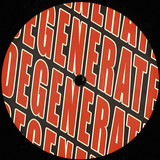
Introducing Degenerate Music - a label focused on bass heavy, chest rattlin', floor shaking & dub influenced soundsystem music - starting off 2020 with his inaugural and sharply curated 040 - 010 EP.
On "That Side" we can find 2 sought after VIP's from the duo Dyzz & Rebus, better known as The Illuminated. Both originals Scavenger & Eindhoviah have been released on New Moon Recordings, the deeper / techy sister label from the Moonshine camp and Underslung Audio (digi only). Scavenger got picked up early by the likes of Skream & Benga (BBC1 Extra radio premiere), Joe Nice (cut on dub), N-type & Walsh (Rinse.fm) and more. Eindhoviah became a warehouse dub for the gentlemen and close friends. The VIP's go way beyond the originals, fulfilling the gunfinger reload requests from the last few years.
On "This Side" we find another Scavenger version, this one fully locked on the triplets and loaded with some vocal samples from a galaxy far far away. Last but not least, Eindhoviah gets the young gun Hebbe treatment, this one's for the heads.
Now all the VIPS, versions & remix get the treatment they deserve, freshly cut on a 180 grams 12" heavyweight plate
Vermonische Melodien is a collection of compositions by DJ-producer M.RUX, made with old VERMONA machines from Eastern Germany. The nine Electronica tracks can’t conceal their influences from Exotica records of the 1960s as well as their fondness for vintage music technology. We hear voices singing lullabies (“Magische Time”), mumbling chopped up syllables (“Seelnatrax”) or reciting a Shakespeare quote (“Bakelit”) - are they real? Yes! But they are mostly generated by the world’s first speech synthesis hardware, the IBM 704 from 1954, and processed into off-key melodic beauty with vocoders. "I’ve always been curious about musical visions from the 1970s", says M.RUX about his inspiration for Vermonische Melodien. "Those nifty Vermona machines can today be seen as future machines from the 1970s. They seem almost mystical to me. Like relics from an epoch long ago… and I wanted to find out how music from that time could have sounded." On the album M.RUX uses, above all, equipment by Vermona, a brand from Eastern Germany manufacturing electronic musical instruments until 1990. The drum machine VERMONA ER-9 (1976) was the first instrument M.RUX ever possessed. It forms the rhythmical backbone of his studio on this record. The melodies on the other hand have mainly been played on a Vermona Formation-1, a suitcase synthesizer from 1980. Although these two machines are joined by countless other instruments and effect units, their particular soft sound is present in every single moment of this soothing album. "I also take a deep bow to the late Reinhard ‘Lacky’ Lakomy", M.RUX adds. "His releases were the first electronic instrumental records on the Amiga label which has been a huge influence for my work in general and this record in particular." M.RUX has appeared as a solo producer with his “In the Hold“ EP (2016) on his own YNFND imprint. Before that he had become famous for his edits which gently transform songs by Nina Simone, Townes Van Zandt, Tom Zé and many more into slow, dancefloor-ready gems. Pingipung is proud to present this first full-length album by M.RUX. He is not only a talented multiinstrumentalist and original producer but also a skillful remixer - as he has shown twice to the Pingipung audience in the last two years with his touches on Umeko Ando’s Ainu folklore songs
London-based folk-psych-country band The Hanging Stars return with their eclectic third studio album, A New Kind Of Sky, due out on 21 February 2019. Carrying on their exploration of transatlantic psychedelic folk and cosmic country, the new album blends twelve-string, harmony-laden lullabies with soft rock anthems to create a guilded box of bucolic folk-rock. As well as the band’s signature wistful pastoral escapism, there are lyrical concerns about the recent past; the systematic division of people, values, facts and humanity in The West in general - and the UK in particular. The band weave the same thread they have always woven but this time with a more unified vision, creating a kaleidoscopic poncho for these times.
The Hanging Stars comprise songwriter, singer and guitarist Richard Olson, Sam Ferman on bass, Paulie Cobra on drums, Patrick Ralla on guitars, keys and vocals, and renowned pedal steel player Joe Harvey-Whyte. Returning guest Collin Hegna from Brian Jonestown Massacre plays an instrument called a Marxophone on “Choir of Criers”. They also welcome Sean Read of The Rockingbirds and Dexy's Midnight Runners, who adds horns to “Three Rolling Hills” and “I Was A Stone”.
The main bulk of the recording for the new album was done live in the studio at Echozoo in Eastbourne with Dave Lynch. For the first time, the band decided to dive straight in to the recording studio following their German tour in 2018. Having lived in each other’s pockets and playing their new songs every night, the band were as tight and primed as they could possibly be. There ensued a few, very long, days of recording, capturing the essence of the band in their element.
The songwriting process was even more collaborative for this album, with the usual co-writes between Richard Olson, Sam Ferman and Patrick Ralla enhanced by Joe Harvey-White’s arrangements and Paulie Cobra’s harmonies. The biggest difference is that Sam Ferman sings lead on the first single “‘(I’ve Seen) The Summer in Her Eyes”, a song about lost love and self doubt channeled through two and a half minutes of garage pastoralism.
The album’s title track “A New Kind of Sky” tells a story from the point of view of somebody who idealises a past that never existed. The band go glam-rock on the stand-out track “I Will Please You”, a tale of a cult leader/world leader and his irresistible (for some) charm from the point-of-view of his most recent victim and “Heavy Blue” is a country music tale of drunken debauchery seen through the eyes of an inexperienced young man. The triumphant trumpet-driven song “These Rolling Hills” is a minor-key tale of a journey into the hills of Marin County, California undertaken by Paulie and Richard to visit friends Asteroid No. 4, with a most interesting outcome.
The Hanging Stars released their debut album Over the Silvery Lake in 2016, which received plaudits from broadsheets such as The Times, who described it as; "An album with enough of a hazy, sun-dappled charm to make the capital's dreariest weather bearable”, as well as The Guardian, who said; “Mersey-laced harmonies and just a whiff of the Gun Club.” They picked up a good amount of support at 6 Music and “The House on the Hill” scored a much-coveted 10/10 by John Robb on Steve Lamacq’s Roundtable.
Their second album Songs For Somewhere Else in 2017 received critical acclaim from the likes of Uncut (Revelations article), Shindig (several features and 4* review) as well as The Quietus and The Line Of Best Fit, plus radio support from Gideon Coe and Bob Harris (they performed an Under the Apple Tree Session for Bob Harris in January 2019).
Whilst playing their own successful sold-out headline dates, the band were invited to share the stage with Teenage Fanclub, The Clientele, Wolf People, The Long Ryders and GospelbeacH, as well as playing festivals such as Liverpool’s International Festival of Psychedelia, Red Rooster, Ramblin' Roots, UK Americana Festival and The Long Road.
A record to be enjoyed to its very last second AM Jazz is set to place this songwriter where he just might, finally, receive the recognition he deserves; from unsung hero to a truly worthy candidate for being called up to join the City of Manchester’s ranks of great musical icons. Whether you prefer to know him as Mr. Roberts or simply call him Al, it’s time to become acquainted with the real Jim Noir.
Tossing his bowler onto the hat stand and sliding on his slippers, AM Jazz sees ‘Jim’ putting his feet up whilst Alan Roberts takes the lead. A creative masterpiece for the record player and the mantlepiece, it’s a multi-layered album that features close friends including those dearly departed, and is his truest record to date, by a songwriter painting his own hypnotic Portrait of the Artist as a Young Man.
“I haven’t 'felt' like Jim Noir for a long time. I’m not sure I ever did; it was a construct of other people’s imaginations,” reveals Al. “AM Jazz is definitely the kind of music I make generally. It harks back to when I started making music years ago and didn’t worry about capturing a particular style. It will be nice to show people more of that.
It's the best album I've written; real hypnotic minimalism, the good stuff!” 15 years since he recorded the first ever 'Jim Noir' EP, AM
Jazz is the record all Noirheads won’t be surprised Al had inside him.
Letting the Beatlesesque stylings of his most recent album Finnish Line be (5 years ago no less), AM Jazz suits the Noir repertoire of his catalogue so far and is another homegrown offering which sees the Daveyhulme composer tinkering in his suburban Manchester studio once more, with the magic of his computer work sorcery, analog and tape recordings.
“For this I went back to the slightly more haphazard way I wrote my first album, Tower Of Love, wherein I’d use things in front of me, or a bit wrong like headphones for a microphone, to make the most Hi-Fi Lo-fi album ever.”
Whilst a brief disappearance of Jim’s online persona may have provoked bleak theories as to his whereabouts, Al had little time for digital distraction. Whilst writing and creating with friends, he has worked on electronic pet project, FAX with former Alfie guitarist, Ian Smith, and the vintage analogue house meets electro sound of his own solo EP Granada Personnel Recovery, as well as producing local band, Shaking Chainsor, and helping long-time musical colleague, Aidan Smith with his long-awaited 'The Planets' project; “I’ve been writing in dribs and drabs when I feel like it,” Al says. “I used to write all day everyday but it’s a lot harder now I’m (feeling) over 100 years old.” Never not sonically exploring or being inspired by the sounds around him, there was even a red-carpet moment when he appeared as a film premier guest after a couple of his songs were selected for the OST of director Jason Wingard’s film Eaten By Lions.
Performing all AM Jazz’s instrumental parts himself but also, at the right moment, bringing in present and past pals along the way, sexy lounge song, ‘Hexagons’ features 'Phil Anderson' and Mark Williamson singing and playing “legendary OTT guitar solo” respectively. Meanwhile the orchestration of ‘Peppergone’ waltzes like a beautifully romantic ode to Beethoven’s Moonlight Sonata – a tribute to dearly departed best friend 'Batfinks' who originally wrote the chords in his song 'Peppercorn.' “I hope he doesn’t think it’s shit,” Al jests. Listen closely and you may even find a few unsuspecting celebrity guest appearances as, perhaps, it could be the very first album to feature soundbites of podcasts sneaking onto the recordings. “I will have a podcast on if I’m recording; Adam Buxton, Athletico Mince, Frank Skinner or Richard Herring… I’m sure some mics will have picked them up, like in the old Tower of Love days,” he says referring to his breakout debut.
Culled from around 50 tunes AM Jazz moves like the time of the day, from dawn to night, stirring from the pop of ‘Good Mood’ and ‘Upside Down’s Beta Band groove. “As the album was playing, I imagined this smoky backstreet with all those neon signs outside clubs at about 4am,” Al says. Mellow ‘TOL Circle’ is like Percy Faith’s Theme From A Summer Place synthesized, capturing the style of TV library music or movie soundtrack obscurity that has always stirred Al’s curiosity, and the album plunges into a vast chasm of instrumental exploration with ‘Mystermoods,’ visiting Japan’s funky synth whiz duo Testpattern and Hakabashi Sakamoto. Darkening and deepening in intensity, ‘Eggshell’ is like an undiscovered gem from Angelo Badalamenti’s cutting room floor, the Panda Bear shimmer of ‘Lander’ is where blissful positivity and sadness meet, about another of his friends who left the world too young. “By the album’s close, its nearly time to let go and enter the ether,” he says of the album’s story. “Like one would do when they take their final sigh on this earth.”
Havazelet's story is both fascinating and mysterious. She was born in Aden, Yemen, in 1936 as Havazelet Damari, she immigrated to Israel when she was 8 years old and grew up in the disadvantaged Ezra neighborhood, in south Tel Aviv. Havazelet discovered her love for singing when she was a teen, when she would sing at feasts and family events. At one of these events she was discovered by an impresario who decided to take her under his wing.
He asked her to change her family name from Damari to Ron, as there was already a young singer called Shoshana Damari in Israel, who was becoming quite popular. In March 1960 Havazelet Ron's only Israeli album, "The Music of the Desert" was released, produced by the "Makolit" label, featuring Yemenite folk songs. Both songs on this 7" are from that album. The identity of the promoter, the album's recording date and location, and the identity of the musicians, could not be found.The album was ahead of it's time in that it introduced an innovative sound, comprised of drums, electric guitar and an organ, making it one of the first albums in Israel to record this type of composition.
... However, it confused the Israeli audience of the time: The vocals were in Yemeni-Arabic, preventing it from being played on the radio, which mainly played Hebrew music, moreover, it was too innovative and far from traditional music for the Yemenite scene. The album fell between the cracks and her big breakthrough to mainstream did not happen.
Following the album's failure, Havazelet left Israel in 1963 and went to Germany, where she performed in festivals, TV shows and recorded several more albums. All of this was made possible by her unique singing talent in five languages - Hebrew, Yemeni-Arabic, German, English and Yiddish, her impressive appearance and remarkable stage charisma. The European audience enjoyed the original music she produced and her Yemenite-style cover versions of Hebrew songs.
In 1968 Havazelet married and a year later retired from the music scene. In 1980 she returned to Israel but she left again four years later, this time to Los Angeles, where she worked as a kindergarten teacher. Havazelet Ron passed away in Los Angeles, in 2013, after a long battle with cancer. In Israel, her name is almost unknown among music lovers in general and among record collectors in particular.