Indian Summer of Love finds The Bongolian immersed in a new set of sounds and influences for a new Belle Epoch. It’s a musical landscape informed by the Sixties psychedelia of India via a Haight Ashbury happening.
It’s a kaleidoscopic vision that takes us from a 20th century Fin de Siècle and lands us in the here and now of the 21st Century. It’s for dancers, for seekers and is all underscored by The Bongolian’s trademark heavy rhythms and breaks. It’s another fine instalment of essential cuts for the dancefloor and for high fidelity listening, quality is guaranteed.
From the East to the West, welcome to the Indian Summer of Love. Nasser Bouzida performs drums, percussion, guitars and keys whilst the album features several new flavours to the Bongolian sound with the prominent instrumentation of sitars and bansuri, along with flute, trumpet, saxophone and trombone performances from several stellular international guest musicians.
Поиск:d bo
Все
Irish born, London based Tree Threes aka Jamie Meehan joins the Soul Quest family for their 8th release of 2025 with a dance floor ready 4 tracker that could only come from someone who has studied authentic Deep House. With releases on Nervous, Morris Audio, Kolour and most recently Special Grooves, Tree Threes once again flexes his production skills which were honed at Secret Sundaze school, combining disco, jazz and soul influences all under the Deep House umbrella.
This album is not just a homage — it’s a gentle act of remembrance. A way of tuning in to what Lucier showed us: that listening is an art in itself. A meditation on resonance, memory, and the quiet power of pure sound. Or to quote Alvin Lucier himself: “I guess I’m trying to help people hold shells up to their ears, and listen to the ocean again.”
The influence of Alvin Lucier’s work on acoustic phenomena and the interplay between sound and space is difficult to overstate. His legacy continues to echo through the work of countless composers and sound artists today. Lucier’s music is marked by a sense of childlike wonder and sonic simplicity - shifting our perception from what we hear to how we listen.
At the heart of his compositions lies the sine wave: the purest, most elemental form of sound. Clarinetist Dries Tack pays tribute to this master of minimalism with an album centered around two works Lucier composed as intimate ‘In Memoriams’ for friends. Both pieces explore a single, elegant idea: the interaction between an instrumental tone and a sine wave.
Out of that interaction, ‘beatings’ emerge — a pulsating rhythm that accelerates or decelerates as the waves draw nearer or drift apart. Though built on the same concept, the two works are like mirrored reflections of one another: In Memoriam Jon Higgins, the sine wave glides in a slow glissando while the clarinet holds steady tones. In Memoriam Stuart Marshall, it’s the clarinet that dances around a fixed sine wave.
Dries Tack is a clarinetist specializing in contemporary performance practices. He performs with ensembles such as Nadar Ensemble, Curious Chamber Players, and Ensemble Fractales. As co-artistic director of the GLoW Collective, he explores collaborative practices across artistic disciplines in the broadest sense. In addition to his ensemble work, Dries curates solo projects that offer fresh perspectives on existing repertoire or give rise to entirely new works at the intersection of composition and improvisation.
During this summer’s European tour with Junior Dell & The D-Lites, we were honoured to share the stage at This Is Ska Festival in Germany with none other than The Pioneers.
After the show, fate had me driving Jackie and George back to the hotel. On the way, we got to reminiscing about our last collaboration — Jump Up!, released on Original Gravity Records in December 2023. Mid-conversation, Jackie casually said: “Hey Neil, I’m in England all of July, we could record something.”
I dropped the guys off, said goodnight, but as soon as my head hit the pillow, an idea sparked: wouldn’t it be cool to have them record Jackie Edwards’ northern soul classic I Feel So Bad — but reimagined in an early reggae style?
So in July, we set up a session at Farm Factory Studios in Welwyn Garden City. George and Jackie came down, and it was nothing short of magical to hear these legends harmonising together once again in the booth. The result captures that late-60s moment when soul and reggae collided on dancefloors, raw and full of energy.
To add another dimension, we also created a version as if it had traveled from Kingston to London. The “Boss” version imagines the raw Jamaican master — while the A-side reflects how Trojan Records might have “sweetened it up” with horns and strings for the UK pop market.
Two sides, one timeless tune — a tribute to both the grit and the gloss of reggae’s golden era.
Detroit's MotorCity Wine offers a uniquely histaminergic POV on dance music, doubling as a one-stop wine shop, record label and vinyl store, and in so doing highlighting a real economic reality: music often really does sound best when paired with powerful, sense-boggling beverages. Here they welcome local Eddie Logix for a thematic chuggers' chaiiwala, from the laggard and slap-happy homebrew 'Moonshine Mandala' to the background noisy, bustling B-side blear, 'Brooklyn Street Sunrise', which works street sounds and knowing urban chant-murmurs into a serious post-Afro stew.
An’archives is proud to present Hanabi, a compilation of material from legendary Japanese folk singer, actor and writer, Kazuki Tomokawa. Hanabi draws from Tomokawa’s three most recent albums, Vengeance Bourbon (2014), Gleaming Crayon (2016) and Going To Buy Squid (2024), all released in Japan only on the Modest Launch imprint. Pulling together highlights from these three extraordinary albums, Hanabi collects ten songs of shattering intensity, with Tomokawa performing at an ecstatic peak, a mere six decades into his musical career.
Tomokawa’s life story is one of change, risk and dedication. He appeared on the Japanese folk music circuit in the early 1970s, performing at such significant events as the legendary 1971 Folk Music Jamboree. Over the second half of the decade, he released five stunning albums that cemented his reputation as an expansive, lyrical singer-songwriter and performer whose music jack-knifed between pensive melancholy and righteous fury. His recorded output slowed in the 1980s as he became immersed in theatre, acting and painting, but his connection with the sainted Japanese label P.S.F. led to a prodigious burst of albums across the 1990s and 2000s.
Some of those albums had Tomokawa playing alongside free jazz musicians, such as his long-standing collaborator Toshiaki Ishizuka (Brain Police, Vajra, Cinorama), and late double-bass improviser Motoharu Yoshizawa. Some of that spirit can be found amidst the songs on Hanabi, leavened by a more romantic sensibility on a song like “Night Play”, where Tomokawa’s impassioned vocals and guitar swim and bob amongst a drifting string arrangement. The ferocity of “To The Dead Man” is reinforced by a guest appearance, on saxophone, by upcoming free jazz player Harutaka Mochizuki; the two spar with each other while Hiromichi Sakamoto’s cello and electronics swarm under the surface.
For those who’ve missed the three albums that Tomokawa has released across the past fifteen years – understandably so, given the relative impossibility of finding them outside of Japan – Hanabi is a welcome re-introduction to one of Japan’s most significant, poetic and quixotic folk singers and songwriters. As Michel Henritzi notes in his typically perceptive liner notes, capturing the oneiric and unique spirit of Tomokawa’s song, he is nothing less than “a poet who cries out, opening the darkness and shadows with his song, throwing handfuls of ashes from lives that have fled into the wind, to us, his fellow human beings.”
Blazing onto ICONYC for its 21st release, Swiss sonic alchemist Shiffer makes a striking debut with the magnetic All I’ve Been EP. Celebrated for his emotional finesse and innate ability to connect with unexplored corners, Shiffer’s latest creation, including a lucious collaboration with Paul Brenning and capped off by Jonathan Kaspar’s trademark rework, is a tantalizing suite designed to echo in our timeless halls.
The journey begins with Shiffer & Paul Brenning’s opening manifesto, “All I’ve Been”, a track that unfurls with both confidence and caution, as if self-aware from its very first beat. Mechanical whirs and fractured frames give way to low-end swells that drive forward with an unrelenting undertow. Brenning’s unmistakable vocals start to break a warmer ground as they linger in the liminal space between today and tomorrow before slowly growing in gravitas. Suddenly, the piece begins to contort, drawing spellbinding figures as arresting arrangements and melodic flourishes allow for decompression. Imbued with a tantalizing breakdown that amplifies their exquisite use of negative space, “All I’ve Been” is a fascinating and intimate take that feels as expansive as it ever could.
The follow-up, “Urban Legends”, takes a bolder stance. Anchored by heavy drum programming that carves its place with deliberate force, the track is haunted by ghostlike vocal fragments that lend an unsettling, cinematic edge.. Out from the left field, Shiffer deploys undulating synthetics that intertwine with consummate ease as they glide under the spotlight. An alluring act that treads unhurried and unconcerned, “Urban Legends” operates at its own pace, far from the demands of a world lost in the metropolitan hustle, allowing us to bask in a lore of things that might or might never have happened.
Closing the release, ICONYC calls upon Cologne innovator Jonathan Kaspar, who delivers a singular reinterpretation of “All I’ve Been”. Immersed in iridescent textures, Kaspar layers lush, swelling pads over pulsing low frequencies, their ebb and flow punctured by flashes of distortion that spark like electric currents.. Reflective and equally immersive, Jonathan Kaspar’s take on “All I’ve Been” pushes the collaboration into a brash new terrain while retaining the spiritual ethos intact
Presenting a joyous double dose of Brazilian pífano magic by João do Pife, taken from his iconic Folclore Alagoano LP and pressed for the first time on 7” vinyl. The infectious, uplifting energy of the instrumental track 'Garoto Do Pife' has been a dancefloor weapon for revered selectors such as Gilles Peterson, Cliffy and the Mr Bongo DJs, and we are proud to be reissuing it for the first time.
The pífano, pifaro or pife, which creates the distinctive melodies in these tracks, is a simple seven-hole woodwind instrument from the Northeast region of Brazil. Often made out of bamboo or taquara wood, they are rich in folkloric music tradition and paired with percussion instruments to form the Bandas de Pífanos groups, which originated from the Northeastern states of the country. "Pifeiros” such as João do Pife, Edmilson do Pífano, and Carlos Malta brought the pífano into a wider public eye through their albums and vinyl recordings.
A part of pífano maestro João do Pife’s rich legacy, these two mesmerizing and timeless tracks originate from his sought-after 1975 LP Folclore Alagoano, released on the Tropicana label. Born João Alfredo Marques dos Santos in 1943, in Riacho das Almas, João do Pife became an ambassador of Northern Brazilian culture and folklore through his music, which placed the pífano centre stage.
For this 7" issue, we have curated two of our favourite tracks from the album, 'Garoto Do Pife' and 'Homenagem a Ludugero', that exude a driving and joyous dancefloor energy. With lively accordion and organ accompaniments that weave around João do Pife's sublime pífano playing, they channel a folk spirit that will resonate deep within your soul.
As inspiration for the picture sleeve, we have adapted the original cover photo art for this 7 inch issue. João do Pife’s music, which is housed within, will sweep you away to Northeastern Brazil in an instant.
Black vinyl[13,03 €]
By the time of their second album, 1989’s ‘Unfinished Business’, EPMD were firmly cemented in the rap stratosphere. With one certified classic album under their belts, they proved they were no one-hit wonders, with the sequel possibly even better. A concise 12 tracker once again produced by the artists themselves, it saw them adhering to the ‘if it ain’t broke, don’t fix it’ maxim, while going somewhat ‘bigger’.
In other words, guests started to appear – not just on the records, but in the videos – and marketing budgets were higher. None of which watered down their sound. In fact, this is the ultimate EPMD record: a beat that’s simple but perfect, and two top-of-their-game MC’s going back and forth. But the appearance of NWA in the video for ‘The Big Payback’ hints at their reputation at the time – and at the cordial relations between coasts before the deadly beef that was to come.
‘Payback’ takes both its title and core sample from James Brown’s ‘The Payback’ from 1973, and then weaves two more JB elements with it, including the addictive stabs from ‘Baby, Here I Come’. It’s a golden track from the golden age.
The B-side is another gem from the same album, and only released before on 7” in a very rare, limited pressing. ‘So Wat Cha Sayin’ was the album’s lead single, and shows EPMD’s wide sampling palette. There’s bits of BT Express, a whole lot of Funkadelic and, brilliantly, some drums lifted from Soul II Soul’s gem from just the year before, ‘Fairplay’. Lyrically, it’s just all about threats to sucker’s MC’s – what else do you want from EPMD?
• A certified Hip Hop classic.
• Samples James Brown’s ‘The Payback’ from 1973.
The Rhythm Vision — the Berlin-based trio of Francesco Passantino, Daniele Ricca, and Francesco Monaco — debuts on Tractorecords with Techno Ballad EP, a vibrant four-tracker blending analog depth with dancefloor functionality.
The A-side kicks off with "Techno Ballad", a hypnotic, emotional techno cut with deep pads and raw drums, followed by "Love Love", an uplifting jam that nods to the golden era of '90s club music while keeping it fresh and modern.
On A2, "Folleti" explores a groovy, warm house atmosphere, born from a spontaneous studio session with guest artist Dahbar — pure jam energy pressed to wax.
The B-side closes with "RADUNO", a bonus track from the now-classic Resilience Groove collective, offering deep rhythms and a rolling analog feel perfect for late-night transitions.
A versatile EP with character — bridging techno and house with soul, groove, and timeless analog aesthetics.
WEorUS has long been synonymous with forward-thinking electronic music, and their upcoming vinyl release further cements their reputation for sonic innovation. Featuring four distinct tracks from Anushka, Dragosh, Fabrizio Siano and Kaitaro, this record presents a nuanced exploration of groove, minimalism, and jazz-infused experimentation.
The release opens with Anushka’s “LVOE” a track that radiates warmth and rhythmic fluidity. Built upon a foundation of deep grooves and hypnotic layers, it embraces organic textures that evolve subtly throughout the arrangement. Expect an inviting bassline, shimmering synth work, and a rhythmic interplay that beckons dance floors into motion.
Dragosh delivers “Lampone” a groovy minimal cut that balances intricate percussive elements with a refined sense of space. There’s an air of elegance in the way this track unfolds—tight drum programming meets delicate sound design, resulting in an immersive experience that feels both intimate and expansive. A staple for selectors who appreciate understated yet compelling compositions.
Fabrizio Siano’s “What is Jazz” a contemporary minimal jazz experiment that defies conventional genre boundaries. Jazz-inflected chords weave through delicate electronic structures, resulting in a fusion that feels both nostalgic and futurist. A celebration of improvisation and groove, this track adds a sophisticated touch to the vinyl.
Dark, introspective, yet strangely hypnotic, Kaitaro’s “Nightmare” introduces a deep minimal aesthetic that veers toward atmospheric intensity. Layers build with eerie precision, each element strategically placed to create an evolving soundscape that feels cinematic yet firmly rooted in club dynamics. This is minimal at its finest—moody, unpredictable, and meticulously crafted.
A one-off 12” from New York’s early 80s boogie underground, Hustlin’ Time was the only single released under the name American Steel. Originally pressed in 1983 on the small but cult Silver Screen Records label, it’s become a rare find for collectors and a secret weapon for DJs in the know.
Built around a strutting bassline, tight drums, and soulful vocals, Hustlin’ Time captures the essence of the boogie sound at its peak, equal parts funk, disco and electro. The 12" delivers four distinct takes: the full vocal, a shorter edit, a stripped-back instrumental, and a Dub mix courtesy of Aldo Marin under his S.U.R.E. Shot alias. Marin would go on to become a fixture in NYC remix culture, and his early touch here brings a raw dancefloor edge.
A 140 gram pressing in 3mm spine black disco sleeve with labels and sticker designed by Bradley Pinkerton.
Fetter’s Body of Noise erupts at the threshold between ravey hypnosis and avant-pop experiment, slithering through the hinterlands of unconscious desire. Nine shape-shifting tracks conjure haunted landscapes where beauty refuses clarity and dancefloor logic warps underfoot. Vocals swoon, drift, and demand—stacking into fragments that multiply and weave through saturated pulses and shimmering, snarling synths.
Opening track "Like a Rose" traces a dreamer’s transition into the unstable physics of a perplexing but familiar dream world, where they gradually become lucid. “Beast” follows up humming with shadowed urgency, threading a path through self-sabotage and metamorphosis. “Spathiphyllums” drifts a while in a lush lostness, aching for something new before fracturing into wild, cathartic collapse. Side B’s “Do I Exist? (D.I.E)” and “The Longing” spiral into existential wonder, searching for a human origin story—both personal and collective—against a backdrop of uncertainty, while “Headache” thrusts forward as an absurd and insistent manifesto to stay the course and harness one’s own power within the madness.
Body of Noise is crafted not only for sweating bodies in motion, but for distorting time and opening psychic portals, where surrender becomes strategy and uncertainty transforms into ecstatic navigation. Rooted in all-hardware improvised production and shaped by Fetter’s years of boundary-blurring visual and performance art, their debut LP feels alive and in flux. Reminiscent of a spectral pop chorus trapped in a loop of broken machinery, or a lost broadcast from a dancefloor in a parallel realm, Body of Noise is a journey into chaos, transformation, and a bold refusal to be contained.
About Fetter:
Fetter makes clubby self-destructing noise pop to dance and weep to. Oscillating between ethereal and pounding, their all-hardware, largely improvised live sets take listeners through a foggy wilderness of saturated rhythms and menacing synth lines, a golden voice guiding the way through. Fetter is the stage moniker of multimedia artist Jess Tucker. Their performances take place in clubs as well as galleries, often incorporating video, installation, and interactive performance art elements to create other-worldly surrounds of mesmerizingly unhinged bodies and faces.
The occasion of possibility runs through Ben Bertrand's new album Relic Radiation. It is all backdrops and layers. Hints of the emotive and the distant. Confronting the classical with what is new, looking for an expressive space. Melancholy, not melancholy. Contemplation on a midnight blizzard. Dust motes in a sunbeam. Sand dunes and microwaves.
Ever since 2018 and the release of his first solo album, Ben Bertrand has been working up his own interpretation of the bass clarinet as an instrument of the avant-garde. Touching upon ambient and cosmic as well as earthy sceneries, his is a gentle musical paradox come to life. Let go of explicit pleasantries, Relic Radiation is the polymathic interpretation of a frozen intercom, of a subdued intent of contact. The music is competent and familiar, distant without being distant. There is no predefined form or context here. It is a different kind of colour.
As musical moments and modi become enormous, things break down into exploration. On the crystal shores of perception, Relic Radiation leaves a lot of space for interpretation. It is never loud, although it works loud. An at times almost sequenced feel to treated and overdubbed bass clarinet and clarinet notes adds to a feeling of paradox. Every voice, every gesture indicates a way in. The electron is now an immeasurable wave."
Barcelona-based DJ and producer Groenogen unveils a bold new EP that seamlessly blends house, electro, and deep house, delivering a collection as groovy as it is powerful. Opening with a razor-sharp DJ tool driven by punchy percussion and an electronic bassline, the release quickly expands into a colorful second track, nodding to the golden era of electro house, complete with a playful jazzy, cartoon-inspired break that flips the rhythm before surging back with full force. The third track turns up the intensity with a roaring bassline and a commanding female vocal designed to shake the dancefloor, while the EP closes on a deeper, more introspective note with Tom Cler’s remix, reimagining the energy of the original into a melancholic yet entrancing journey. Balancing groove, eccentricity, and raw dancefloor power, this release captures Groenogen’s forward-thinking yet nostalgic vision.
2025 repress.
There are certain albums which shake the world immediately upon release, and others which come from far underground and whose shocks and aftershocks rise to the surface gradually over the years, gaining momentum and power. "Ten Dubs That Shook The World" is of the latter type. Since its original vinyl release in 1988, the prescient impact of this Australian homemade dubwise solo massive byAnthony Maher aka Sheriff Lindoh as become ever-more apparent and influential. With its dual island combination of Jamaican dub and UK industrial and post-punk, and the twinning of spaced electronic drums and effects with some very fine, superbly rooted bass lines, the tectonic "Ten Dubs" has proven to be a durable, doubly-solid shaker. This 2025 repress is dedicated to the original producer John Blades, founder of the Endless Recordings label, who along with Maher and Richard Fielding constituted The Loop Orchestra. Available on LP vinyl or CD; the CD version features bonus tracks. EM Records is also pleased to announce that we are preparing Lindo's first release since "Ten Dubs" was launched 37 years ago. From deep underground in Australia, rising, reverberating and resonating across the globe, "Ten Dubs That Shook The World" vibrates on.
A bit of backstory behind this release, I first met Hilton (Jack Horner) at an event in 2012 that took place in a venue called Crucifix Lane (also known as Jack's, now defunct due to expansion of London Bridge station). He's good friends with Krome & Time who were performing that night and I remember chatting with him about jungle (I was still a very eager young lad that was in his first year of raving and very keen to talk about jungle/hardcore/d&b to anyone that would be willing to endure it!) and he mentioned that he used to make jungle in the 90s. I asked who he was and when he told me he was Jack Horner, I went mental because I was a big fan of the 2nd release on Spectrum Records (The Hoover & I Got This Feeling) and to actually meet the person behind those tunes was a really special situation for me to be in.
Unfortunately, I was too shy to get any contact details for him and I never saw him again or knew anyone that had a way of getting in touch with him. That was until very recently, when he had started attending Distant Planet events in London & I got the chance to meet him again, only to be shocked by him telling me that he had been following me & my music and was a fan of me & my label! This time, I made sure that I was able to get contact details for him, I was not going to make the same mistake as last time!
Last December, he messaged me asking if I would be up for doing a remix of The Hoover & I was quite unsure about doing it because of how much I really enjoy the original and feel like it does pretty much everything it needs to do with the sounds used. But, I thought it would be worth a try so I gave it a go and Hilton really liked the outcome (which was a huge relief ????), even though I was a bit too scared to change too much of it haha.
He then asked if I would be interested in releasing it on Future Retro London, which I'd never considered doing because I thought he would have had his own plans for it but I was willing to try & see if we could make a release out of this. I messaged Dwarde & Kid Lib to ask if they'd be up for doing remixes of the same tune (at the time, we only had access to the samples from The Hoover) and they both were and they did great work taking the original track in different directions, each in their own way.
Around the time of making The Hoover, Hilton made another tune with similar samples called After The Pain, which was never released, but he still had the tune. The problem is that he only had it in the form of a cassette recording, which wasn't very good quality and probably would not be easily cleaned up for release. So, I decided to remake the tune from scratch, using the samples I had from The Hoover, as well as sourcing & recreating other sounds used. I was able to remake the whole tune arrangement & then Kid Lib mixed it down to make it sound more sonically similar to how it would have sounded when it was originally made back in 94/95.
Anyway, story time over, big thanks to Hilton for his co-operation & assistance on making this release happen, to Dwarde & Kid Lib for their remix work & a special shout going out to Hughesee for going through Hilton's collection of floppy disks to find & record the samples for The Hoover.
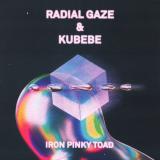
When Radial Gaze meets Nicola Kubebe, the result is Iron Pinky Toad — a title that sounds either like a secret kung-fu move or a lost cartoon book. But don’t be fooled — this one hits hard.
The long-awaited collab brings three original tracks — Phantom Limb, Lights of Phoenix and the title cut Iron Pinky Toad — that effortlessly bridge the gap between slow-burning tribal techno and the raw pulse of new beat nested into an early techno nutshell. Imagine dancing barefoot in a ritual under a disco eclipse — you’re getting close.
To seal the record, Playground Records boss Martin Noise steps in alongside rising sensation Anastasia Zems, pushing the release into full-blown dancefloor sorcery. The groove is deep, the bass is sweaty, and the toad… well, the toad is on fire !
Dropping Friday, July 18, 2025, via THISBE Recordings — available on vinyl and digital. Spin it, stream it, or whisper its name into the smoke at 3AM — either way, the dancefloor won’t know what hit it.
Let the amphibian groove begin.
Artwork by Christoffer Budtz
After countless hours in the studio, we are proud to present EZ PC, a sonic journey infused with elements of funk, jazz and abstract soundscapes.
The record features the legendary Samuel Appapoulay, whose versatile musicianship adds depth and character throughout the project. This release also marks one of the first projects to showcase the collaboration between David and the Mauritian-born pianist.
To complete the experience, Tripmastaz delivers a remix that holds its own alongside the original, an absolute masterpiece that lifts the EP to an entirely new level.
Buckle up and enjoy the ride!