
nicht am Lager
Bestelle jetzt und wir bestellen den Artikel für dich beim Lieferanten.
11,98 €
Last In: vor 14 Monaten
Bestelle jetzt und wir bestellen den Artikel für dich beim Lieferanten.

Eine brandneue Zusammenstellung, „Bridget Jones’s Diary: The Mixtape” bringt eine herausragende
Auswahl an Songs aus der Bridget Jones-Filmreihe zusammen. Die Veröffentlichung erfolgt in Zusammenarbeit mit Universal Pictures zum Start des vierten Films „Bridget Jones: Mad About The Boy”, der
am 14. Februar 2025 in die Kinos kommt.
Das Original-Soundtrack-Album, das 2001 von UMG nur auf CD und Kassette veröffentlicht wurde,
verkaufte sich in Großbritannien über 1 Million Mal und wurde mit 3fach-Platin ausgezeichnet. Es erreichte Platz 1 der offziellen Compilation-Charts in Großbritannien und wurde seit seiner Veröffentlichung
weltweit über 25 Millionen Mal gestreamt.
In enger Zusammenarbeit mit dem Executive Producer für die Soundtracks der Serie, Nick Angel, wurde
dieses „Best of“ Bridget Jones zusammengestellt, das eine Reihe von beliebten Tracks aus der berüchtigten
Welt von Bridget Jones enthält. Enthalten sind Hits aus den ersten drei Filmen, von denen die Soundtracks noch nie auf Vinyl veröffentlicht wurden, sowie eine Auswahl von Songs aus „Mad About The Boy”,
darunter ein brandneuer Song, der exklusiv für den Film von einem bekannten UMG-Künstler geschrieben
wurde. Das Album erscheint in limitierter Auflage als 2LP mit farbigem Klappcover und als 1CD im Handel.
Der Film wird am 29. Januar im Londoner Odeon Premiere feiern und ab 13. Februar in allen britischen Kinos zu sehen sein. Die CD ist ab dem 28. Februar und die 2LP ab dem 2. Mai erhältlich!
erscheint voraussichtlich am 28.02.2025

Carrying the torch of psychedelic cumbia, with a healthy dose
of surf guitar and Amazonian dancefloor flourishes from Peru
and Brazil alike, Fiesta en la Jungla by Los Dexter’s de Uchiza
is the first release from the newly formed London-label Ritmo
del Barrio. Originally released in 1982, it captures the finest
cumbia being made in Peru at the time, decked out with
frenetic surf-rock guitar riffs, rhythms floating on crisp
cumbia percussion and occasionally punctuated by carimbó
breakdowns native to the Pará region of north-eastern Brazil.
The album is filled with energy, a gem that was always
intended to animate any dancefloor. Peruvian cumbia came to national attention in the late 60s
through the recordings of Juaneco y su Combo, Los Destellos
and Los Wembler’s de Iquitos, but it’s had many revivals, and
Fiesta en la Jungla arrived when the style was going through a
major transition. In 1977, a passenger plane carrying most of
the members of Juaneco y su Combo crashed, killing everyone
on board. In 1980, Los Destellos retired, and Los Wembler’s
released their tenth and final record, they were ready for a
break. This left a big void in Peruvian music. Wasting no time,
Los Dexter’s Emerson Ruiz Mosquera took the opportunity and
gave his band new life, filling the band’s ranks with young and
energetic musicians who were hungry for success. He built the
new band around a solid base of dexterous guitars, a dynamite
rhythm section, and added oodles of percussion and an electric
organ, giving them a powerful psychedelic sound that called
back to the sounds of the original chichamasters, but added a
new sheen. Along with bands like Los Shapis and Los Walkers
de Huánuco, Peruvian cumbia was reborn as chicha in the
1980s, and was now the sound of Peru’s barrios up and down
the country.
Based in the city of Uchiza, on the edges of the Amazon basin,
Los Dexter’s were uniquely located in central Peru, closer to the
largest urban centres of the country than Amazonian outposts
like Pucallpa or Iquitos, and therefore better positioned to
travel to the furthest reaches of the country with ease. In a
sense, Los Dexter’s were a bridge between the Amazon and the
rest of Peru, a bridge over which the sounds of Amazonian
cumbia could travel to the rest of the country on their way to
becoming one of the most ubiquitous elements of Peru’s musical
identity. Fiesta en la Jungla represents Los Dexter’s in their third
iteration. Led by Emerson Ruiz Mosquera, who was just a
young boy in 1970 when his older brother founded the group
with four of his friends, the ensemble by the time of Fiesta en la
Jungla included Orlando Abad on the timbales and lead vocals,
Lucho Bendezú on lead guitar, Javier Quiroz as second
guitarist, Alejandro Almeira on bass, Rufino Bustamante on
keyboard, Ramon Siu on bongos and bells, Ivan Rios on conga,
and Emerson as musical director and composer. Remarkably,
most of the group’s members helped to write at least one
track, Los Dexter’s were a collective endeavour.
Reissued on vinyl for the first time by Ritmo del Barrio, this
record is essential for any collector of Peruvian cumbia.
Showcasing the unique sound of Los Dexter’s, it carries hits
like “Fuga en la Selva” and “El Shiringuero”, which are sure to
set any dancefloor on fire, combined with slower, carimbó-
infused cumbias like “Fiesta en la Jungla,”and “Agua de
Cachilde.” Its closing track, “Tragedia en Uchiza'', is a key
piece of local history and tells of the flooding of the
Chontayacu River in 1982, a mortal tragedy that affected
thousands of people. Despite the subject matter, the album
maintains a joyful vibe throughout, with high energy riffs and
irresistible rhythms, contrasted with terse love ballads, like “A
Jhenny.” It is both a piece of musical history, and a sure-fire
tool for the dance floor.
Los Dexter’s became a fixture of festivals and celebrations in
the provinces of San Martin and Huánuco, and from expanded
across the country, taking Amazonian cumbia from the
Peruvian Amazon, to the heights of the Peruvian sierra, the
coastal plains, and the capital city of Lima.
erscheint voraussichtlich am 28.02.2025

Chaz Bear (formerly Bundick) has been immersed in music from a young age, shaped by a household rich with sounds ranging from Michael Jackson and Elvis Costello to The Specials. Growing up biracial in South Carolina, these diverse influences contributed to the unique blend of styles Chaz weaves into his work. Nominated for Best Dance Recording at the 2020 Grammy Awards for his collaboration with Flume on “The Difference”, Chaz’s genre-defying sound has won critical acclaim. His journey began in earnest with early home recordings that showcased his prolific nature, leading to over 10 Toro y Moi albums released independently before signing with Carpark Records in 2009.
Chaz’s debut album under Carpark, Causers of This, was a seminal release that sparked a movement of sample-heavy bedroom recordings. Its success led to early assumptions that he was limited to this sound, but Chaz quickly proved his versatility with 2011’s Underneath the Pine, recorded between tours and featuring entirely live instrumentation. This pivot set a pattern for Chaz’s career: each subsequent release explored new terrain, from the psych rock of What For? to the R&B-influenced Boo Boo, all tied together by his signature production and melodic sensibilities.
Following Boo Boo, 2019’s Outer Peace marked Chaz’s return to the Bay Area after a year in Portland, embodying a celebratory homecoming filled with collaborations and vibrant playfulness. Featuring friends and eclectic references to contemporary hip hop, funk, Eurodance, and ambient textures, Outer Peace was a sharp contrast to the contemplative, isolation-driven Boo Boo and solidified Chaz’s place on the cutting edge of music.
Five days post-release, Chaz teased Soul Trash on Instagram, sharing a cassette titled SOUL TRASH V1 with a Dropbox link, which was later removed. The mixtape was officially released digitally on October 29, 2019, and has since garnered over 39 million streams. This album was also his first collaboration with Elijah Kessler, who later released an album on Chaz’s Company Records. Now available on vinyl for the first time, Soul Trash epitomizes Chaz's experimental spirit, featuring ambient sounds, lo-fi loops, and contributions from Old Grape God, and Caleon Fox. Released alongside more recent projects like Mahal and Hole Erth, Soul Trash bridges his past with his ever-evolving artistry, proving Chaz’s creative well is far from dry.
erscheint voraussichtlich am 28.02.2025

bendrik's 'Aqualung EP' draws inspiration from the club scene of Brussels and his recent travels to diverse countries. It showcases bendrik's ability to bridge electronic genres with a refined touch. The A-side features hard-hitting tracks like 'Dr. Martens' and 'Trust'.
These cuts deliver raw, driving melodies with his signature style - perfect for peak-time moments on the dancefloor! The B-side includes the cover track 'Aqualung' that bridges the previous energy with relaxation. It invites the listener to make its own choice of experience, blending a steady bassline with hypnotic textures.
'Shirahama' paints a portrait of his time exploring distant lands where you join him in the driving seat.
Bestelle jetzt und wir bestellen den Artikel für dich beim Lieferanten.

VENTILATEUR is an instrumental project combining sounds from the vivid worlds of contemporary jazz and postpunk. The three-piece band, consisting of Iben Stalpaert on drums, Jasper Hollevoet on bass and Daan Soenens on guitar, uses angular rhythms and flowing melodies to construct compositions that embody both contrast and cohesion. Originally from Bruges, the band currently has Ghent as its homebase.
The trio released its self-titled debut EP on 22 March 2019. VENTILATEUR won awards at Fresh Fish, Red Rock Rally and Burgrock that same year and was one of the laureates of the then brand new Sound Track. Thanks to Sound Track 2020, the band received a residency at Het Entrepot in Bruges and a year of professional coaching from VI.BE and other national players in the music landscape.
In 2020, VENTILATEUR joined forces with young Ghent theatre collective Camping Sunset for the performance Happiness. The band composed the soundtrack for the play and also performed it live during the five-week run of the production. The music was subsequently recorded and released under the title A Soundtrack For Happiness at the Brussels label Sentimental.
In 2022, VENTILATEUR released its first full-length album with W.E.R.F. Records. Hoofdplaat, titled after the village near the manor house that served as its recording location, is the result of a long process of purification. VENTILATEUR presents the essence of their sound, stripped from all ballast.
VENTILATEUR balances on the border between the ‘niche’ world of instrumental jazz and the accessible world of the pop-rock circuit. From this position, the band aims to bring instrumental music to a wider audience. Apart from being purely intrinsically artistic, the trio's ambition is to excite a new audience for cultural participation and specifically the rich genre of jazz. Through their choice of accessibility within the experimental, the band aims to form a bridge between a wider audience and a musical world still too often labelled as ‘niche’. The musicians not only focus on the club and festival circuit, but have already written soundtracks for some short film projects and are also reaching out to the theatre world.
In its early years, VENTILATEUR was mainly known within the Flemish arts landscape on the Bruges-Ghent-Brussels axis. A soundtrack for Happiness and Hoofdplaat introduced VENTILATEUR to a new audience. Songs from the albums got airtime from Radio 1, Klara and other stations, and singles appeared in national playlists. The band’s music was also picked up by VRT, which used the single Nectar during several programs. In 2023, the band scored their biggest gig yet: Ghent Jazz on a podium curated by their label, W.E.R.F. Records.
VENTILATEUR as a project can count on the support of organisations such as W.E.R.F. Records, Cactus Music Centre, Het Entrepot and VI.BE. The band also has close ties with theatre companies such as Camping Sunset, Compagnie Cecilia and Ontroerend Goed and, of course, numerous connections within the Flemish and Brussels music scene.
erscheint voraussichtlich am 28.02.2025

To mark Black History Month and celebrate the 60th anniversary of Martin Luther King’s Nobel Peace Prize, a special edition picture-disc vinyl will be released. This unique, limited-edition record pays tribute to the historic March for Civil Rights with meticulously restored recordings, including the iconic “I Have a Dream” speech and inspiring music. More than just a musical piece, this vinyl serves as a time capsule—a bridge between generations to carry forward the universal message of justice and equality.
erscheint voraussichtlich am 28.02.2025

Black[32,73 €]
La Pambelé Unveils Nací Mestizo, A Bold New Album Reviving Salsa with a Contemporary Twist Bogotá’s heavy guaguancó orchestra, La Pambelé, proudly presents their highlyanticipated second studio album, Nací Mestizo, now available on all major digital platforms as of November 27th. This album pays tribute to the golden era of salsa, particularly the 1970s, while breathing new life into the genre with modern lyrics and stories that resonate deeply with Latin communities.
All while maintaining a distinct Bogotan essence that highlights the city’s unique cultural flavor. Nací Mestizo seamlessly blends the timeless salsa brava sound with contemporary themes, reflecting the everyday lives of people across Latin neighborhoods. The album’s songs capture the struggles, passions, and joys of ordinary people, presented through the vibrant rhythms of salsa, creating a musical experience that connects the past with the present. Building on Their Rising Popularity Prior to the album’s release, La Pambelé debuted the singles “Amargura” and “Perdí mi Corazón”, which quickly captivated audiences and set the stage for the full album's success. The band’s electric performance of these tracks at the MedPlus Coliseum in Bogotá, before an audience of 22,000 attendees awaiting Marc Anthony, was met with enthusiasm as fans danced and applauded.
This moment marked a significant milestone for the orchestra, cementing their place as a rising force in the global salsa scene. Additionally, La Pambelé’s growing visibility has been marked by their appearances at major festivals such as Salsa al Parque and features on prominent radio stations, including Radio Nacional de Colombia and Latina Stereo. These platforms have helped introduce La Pambelé’s signature sound to a wider audience, building anticipation for the release of Nací Mestizo and reaffirming their influence in Colombia’s tropical and alternative music scenes. A Contemporary Salsa Sound with Classic Roots La Pambelé’s unique blend of traditional salsa brava and contemporary Latin storytelling is showcased through their distinctive nine-piece orchestra, which includes piano, conga, flute, trumpet, trombone, timbales, bongos, and baby bass. The dynamic vocals of Miguel RoRebolledo and Lorena Contento elevate the album’s themes, creating a sound that invites listeners to their feet and onto the dance floor. Under the direction of Camilo Toro Morato, the orchestra has honed its signature style, pushing the boundaries of salsa while staying true to its roots. As a proud defiance of stereotypes about Bogotá’s musical abilities, La Pambelé’s name pays homage to legendary Colombian boxer Kid Pambelé, symbolizing resilience and strength.
The name also draws from the Bantú language, meaning "defender of one's own," reinforcing the band’s connection to their Colombian heritage and pride in their distinctive sound. Global Recognition and Continuing Influence Since the release of their self-titled debut album in 2022, La Pambelé has gained international recognition, especially within the vinyl collector community. Theirdebut album was released in both 45” and LP vinyl editions, further solidifying their unique position in the contemporary salsa movement. Influenced by salsa greats such as Markolino Dimond, Eddie Palmieri, Edy Martínez, and Ismael Miranda, La Pambelé has carried forward the torch of salsa brava with passion and innovation. Nací Mestizo marks a significant evolution in the orchestra’s journey, melding the old and the new, and cementing La Pambelé as a driving force in the future of salsa music. A Collector’s Dream With their 2022 debut album garnering international recognition, La Pambelé’s vinyl releases—including 45” and LP editions—have become coveted items for salsa collectors worldwide. Their music is a bridge between classic salsa traditions and a modern vision, appealing to seasoned fans and new listeners alike. About La Pambelé La Pambelé is a heavy guaguancó orchestra from Bogotá, Colombia, known for their vibrant, rhythm-driven sound that blends 1970s salsa brava with modern Latin influences. With a unique nine-piece lineup and powerful vocals, the band continues to break boundaries, defying expectations and inspiring audiences around the world
erscheint voraussichtlich am 28.02.2025

fabric bring together Pangaea and Leonce for a pair of UKG influenced / US club tracks.
“With both of us playing each other’s tracks, it felt natural to collaborate in the studio on original music. Both ‘Dusted’ and ‘Stuck’ bridge the UK and US scenes, and are the result of multiple studio sessions in London when Leonce was touring in Europe” ~ Pangaea.
‘Dusted’ is UKG influenced with out-of-this-world textures, fast paced drums, expertly-chopped vocals that build on the styles Pangaea and Leonce are known for whilst 'Stuck' takes a more restrained approach, taking influence from classic 90s US club tracks.
Pangaea co-runs cult UK label Hessle Audio, widely regarded as one of the finest electronic music producers of a generation whilst Leonce has been honing his US underground Club styles with the RA Recommends critically acclaimed 2024 album, System Of Objects.
Bestelle jetzt und wir bestellen den Artikel für dich beim Lieferanten.

With an intrigue for a particular niche of old UK hardcore which takes cues from Sheffield bleep ambience, heady rave futurism and soft, almost new age synth pads, Blank Mind presents ‘Lost Paradise: Blissed Out Hardcore 91-94’. Though the records gathered for the compilation span a short three-year period and bridge the gap between scenes, the collection manages to find a sweet spot where the influence of Warp’s Artificial Intelligence, back room chill out sonics and the nascent jungle boom meet with elements of Italian piano house and slower breakbeat cuts.
Opting to focus on atmosphere to highlight shared connections; in this case the duality of often serene and calming soundscapes with frenzied breaks and bass (see Hedgehog Affair’s ‘Parameters’ and Luxury’s ‘Twirl’ respectively); Lost Paradise is a formidable collection of tracks plucked from a thriving time for British dance music experimentation. The general themes of ascension and escapism channelled through digital samplers are also inescapably linked to a turbulent time in politics, beginning in the post-Thatcher years and culminating in the year the harshest anti-rave Criminal Justice Act came into force.
Initially building the compilation around DJ Mayhem’s track ‘Inesse’, Blank Mind label founder Sam Purcell and Amsterdam based producer Tammo Hesselink began a process of swapping favourites and deep cuts to spread across this 2x12” doublepack. The compilation avoids any obvious centrepieces through masterful sequencing, allowing for moments of refrain and tempo changes in a way that helps add to their overall vision of what this music is and can be; “We wanted to frame hardcore in a different light, looking at this idea of ecstasy through the traditional meaning of the word and exploring that symbolism”. By drawing from what some might consider the softer edges of the movement, the pair offer a look into the relevance of these tracks in the contemporary era, where the past years have seen both an explosion in popularity of old ambient/new-age music and a certified jungle revival.
Bestelle jetzt und wir bestellen den Artikel für dich beim Lieferanten.
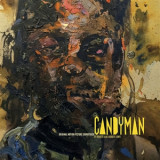
The Complete Film Music Composed by Robert Aiki Aubrey Lowe - 2xLP 180 Gram Colored Vinyl - Old-Style Tip-On Gatefold Jackets with Satin Coating and a Built-In Booklet Page - Composer Liner Notes - 12 Page Art Gallery Exhibit Catalogue // In partnership with Universal Pictures, Metro Goldwyn Mayer (MGM) and Monkeypaw Productions, Waxwork Records is thrilled to present CANDYMAN Original Motion Picture Soundtrack by Robert Aiki Aubrey Lowe. Directed by Nia DaCosta (next year's The Marvels) from a screenplay by Oscarr winner Jordan Peele, Win Rosenfeld and DaCosta, Candyman, currently in theaters nationwide, is a fresh take on the blood-chilling urban legend and a contemporary incarnation of the 1992 cult horror classic. About Robert Aiki Aubrey Lowe: Robert Aiki Aubrey Lowe (b.1975) is an artist, curator and composer who works primarily with, but not limited to, voice and modular synthesizer for sound in the realm of spontaneous music. Along with analog video synthesis works, he has brought forth an A/V proposal that has been a focus of live performance and installation / exhibition. The marriage of synthesis and the voice has allowed for a heightened physicality in the way of ecstatic music, both in a live setting and recorded. The sensitivity of analogue modular synthesis echoes the organic nature of vocal expression, which in this case is meant to put forth a trancelike state. Lowe's works on paper tend towards human relations to the natural/magical world and the repetition of motifs. The deluxe 2xLP vinyl release features 180-gram colored vinyl, old-style tip-on gatefold jackets with satin coating and a built-in booklet page, liner notes by composer Robert Aiki Aubrey Lowe, a 12-page art gallery exhibition catalogue, artwork by Sherwin Ovid and Julian Williams and puppetry art by Manual Cinema.
erscheint voraussichtlich am 21.02.2025

‘4th DIMENSION’ is the last and probably greatest album ever recorded by Italian piano Maestro Mario Rusca. This monumental music produc"on features tracks in Nonet, Quintet and Trio. Along with the faithful rhythm sec"on composed by Riccardo Fioravan" on bass and Maxx Furian on drums, on this slamming cinema"c jazz album Mario Rusca teamed up with two extraordinary wind players: legendary Flavio Boltro (of Michel Petrucciani Quintet fame) on trumpet and Gabriele Comeglio on sax alto.
As far as the choruses are concerned, Nicole4a Tiberini, Mar"na Rossi and Alice Macchi, from Maestro Rusca’s ensemble music courses at the Civica di Jazz School, provide inspired and swinging backing vocals. The cherry on the cake, the element that gives to ‘4th DIMENSION’ a pulsa"ng and swinging’ drive, is the par"cipa"on on the album of Marco Fadda, one of Italy’s leading percussion players.
This heterogeneous ensemble has shaped, during 5 days of intense studio recordings, an absolute masterpiece full of swinging rhythms along with a few magical in"mate moments. In his 65 years career, Italian piano legend Mario Rusca has shared the stage and recording studios with luminaries such as Chet Baker, Cur"s Fuller, Gerry Mulligan, Lou Donaldson, Art Farmer, Lee Konitz, Dusko Gojkovic, Enrico Rava, Tullio De Piscopo, Kenny Clarke, Stan Getz, Toots Thielemans, Gianni Basso, Pepper Adams, Steve Lacy and Tony Sco4 (with whom he formed an indissoluble partnership).
Being accompanied in this album by extraordinary musicians, Rusca chooses to flow in a repertoire that, like in his most recent records for Mono Jazz, bridges between original pieces and revisited standards from the American Jazz Songbook, approached with unprecedented sensi"vity and depth.
The journey of ‘4th DIMENSION’ is an extraordinary cinema"c musical voyage across various styles ranging from Bop, Hard Bop, Cool, Funk and La"n Jazz. ‘4th DIMENSION’ is a perfect follow up to the interna"onally acclaimed Easy Tempo legacy! In these 13 tracks, “il Maestro” embraces and enhances a ‘cinema"c’ component in his music - an a4ribute he has long cul"vated through original soundtracks and library albums recorded for diverse cult Italian labels.
This, as we were saying, is achieved through the addi"on of percussionist Marco Fadda, who introduces a series of rhythmic nuances across several tracks, and of the extraordinary female vocal trio reminiscent of I Cantori Moderni of Alessandro Alessandroni & Edda Dell'Orso, used in the tradi"on of Italian composers of ‘60s and ‘70s film music.
This natural progression reflects Italy's history, where jazz musicians have long been involved in soundtracks and film scoring since the late ‘50s. Italian jazz has integrated this approach into its composi"on and arranging styles, as demonstrated in the first 10 volumes of the Easy Tempo series. A spirit and tradi"on that Rusca's ‘4th DIMENSION’ record con"nues. Listening to some of the tracks on the record evokes the legendary works created for cinema by Piero Umiliani, Piero Piccioni, Lelio Lu4azzi, Armando Trovajoli, Gianni Ferrio and others.
erscheint voraussichtlich am 21.02.2025

In a trajectory full of about-faces, Music for Four Guitars splices the formal innovations of Bill Orcutt's software-based music into the lobe-frying, blown-out Fender hyperdrive of his most frenetic workouts with Corsano or Hoyos. And while the guitar tone here is resolutely treble-kicked—or, as Orcutt puts it, 'a bridge pickup rather than a neck pickup record'—it still wades the same melodic streams as his previous LPs (yet, as Heraclitus taught us, that stream is utterly different the second time around). Although it's a true left-field listen, Music for Four Guitars is bizarrely meditative, a Bill Orcutt Buddha Machine, a glimpse of the world of icy beauty haunting the latitudes high above the Delta (down where the climate suits your clothes)..."—Tom Carter
erscheint voraussichtlich am 21.02.2025

Max Richter, der gefeierte Komponist, der dafür bekannt ist, traditionelle Orchestrierung nahtlos mit modernen elektronischen Elementen zu verbinden, bereitet sich darauf vor, sein mit Spannung erwartetes Album
zu veröffentlichen. Dieses Album markiert eine bedeutende Entwicklung in Richters musikalischem Werdegang, da er sich intensiver mit Themen wie Optimismus und der Polarität des Lebens und menschlicher
Emotionen auseinandersetzt, begleitet von einer tieferen Erkundung elektronischer Klänge und Feldaufnahmen.
Mit seiner jahrzehntelangen Karriere und prägenden Projekten wie SLEEP oder Vivaldi Recomposed kann
Max Richters Einfluss auf Musik und Kultur gar nicht hoch genug eingeschätzt werden. Seine unvergleichliche Fähigkeit, tiefgreifende menschliche Erfahrungen in musikalische Kompositionen zu übersetzen, hat
ihm weltweit eine treue Anhängerschaft eingebracht.
Seither begeisterte Max Richter weltweit ein Millionenpublikum und berührte damit nicht nur bewährte
Kenner, sondern auch völlig neue Generationen von Hörern, sei es in Filmen wie Ad Astra, oder Serien, wie
zuletzt in den Netflix-Erfolgsformaten Bridgerton oder The Crown.
Bestelle jetzt und wir bestellen den Artikel für dich beim Lieferanten.

Nach ihrem Debüt und den zwei EPs "In Theory Depression" und "twotwentytwo" veröffentlicht Thala nun ihr bemerkenswertes zweites Full Length Album ,Avalanche" auf Fire Records. Diese Songs, die sich an die zerebralen Emotionen des Shoegaze und Indie-Rock der frühen 90er Jahre anlehnen, sind musikalische Manifeste von tiefen und verwirrenden Gefühlszuständen. "Avalanche" zeigt Thala in dem Moment, in dem der Indie selbstbewusst in einen rauschenden Panorama-Rock ausbricht, ein Statement zum Erwachsenwerden und eine deutliche Weiterentwicklung ihrer bisherigen Arbeit. Das Eröffnungsstück ,1st of the year" ist ein berauschendes Stück der Erkenntnis, dass nicht alles so laufen wird wie geplant, und ist ein Gefühlsausbruch, der eine dunklere Seite ihrer Musik offenbart. Thala ist eine Performerin, die das Leben mit all seinen Abenteuern lebt und mit den Rückchlägen umzugehen weiß. "i don't want u to die" ist eine ehrliche Parabel voller moderner Melancholie, ein befreiendes Stück Indie-Rock, das mit dramatischer Wucht und punktgenauer Präzision daherkommt; "spit it out" ist eine flüchtige Chronik der Rache, die kalt serviert wird, während "tongue-tied & starry-eyed" (featuring Communion-Künstler Sfven) die Einsicht vermittelt, dass man manchmal einfach weiterziehen muss. Thala nimmt uns mit auf ihre persönliche Reise, wenn "drive song" in ein schlafwandlerisches Plädoyer mit Vintage Cure-ähnlich klingenden Gitarren gleitet, während 'body to you' mit einem herrlich triumphalen Refrain von "it's alright, it's alright" den Einsatz erhöht. Das ist Popmusik, Emo-Pop vielleicht, welche von Strophe zu Refrain aufblüht, ähnlich wie Sharon Van Etten oder hymnische Phoebe Bridgers, mit einem Klangbild, welches zu Weilen an Ethal Cain oder Wolf Alice erinnert. Für Fans von beabadoobee, boygenius, Sharon Van Etten, Wolf Alice und Phoebe Bridgers Ltd 'Avalanche White' Vinyl-LP mit DLC
erscheint voraussichtlich am 14.02.2025

The New Duo Album by Piers Faccini & Ballaké Sissoko: Our Calling Two decades after their very first collaboration, British-Italian folk songwriter Piers Faccini and Malian kora virtuoso, Ballaké Sissoko return with a mesmerizing album: Our Calling. Set for release in February 2025, this fascinating dialogue between a virtuoso instrumentalist at the peak of his powers and an inspired songwriter and wordsmith, succeeds in creating new song forms with a lightness of touch that bridges continents and plays with tradition.Through ten exquisitely crafted tracks, Our Calling is a sonic and narrative praise song for migration in all its forms. The two friends"s entirely acoustic dialogue was recorded in Paris side by side and live in the studio over five days. The album"s originality is that it feels deeply Malian at i s musical core, all the while being seamlessly infused with an essence of folk songwriting, sung in the English language. Recorded by Frédéric Soulard (Shapes of the Fall), the album unites an extraordinary cast of musicians, including Vincent Segal, Badjé Tounkara, and Malik Ziad.
erscheint voraussichtlich am 14.02.2025

2023 was a whirlwind year for Oracle Sisters. The trio—Julia Johansen, Chris Willatt, and Lewis Lazar—followed the release of their debut album Hydranism with a globe-spanning tour that captivated fans and critics alike. From the highways between Knoxville and Nashville to sold-out clubs in rain-soaked Seattle, and festival stages across the UK, they logged countless hours on the road. Their journey was a tapestry of exhaustion and exhilaration, falling apart, brawls and disputes, love and acceptance. By the year’s end, just two days before Christmas, they found themselves in Tokyo, reflecting on the fleeting nature of time and the fragments of inspiration gathered along the way. It was there the seeds for their next album, Divinations, began to sprout. Composing as a true trio for the first time, Oracle Sisters pieced together sketches formed during stolen moments on tour. These fragments coalesced into Divinations, an album shaped by the band’s nomadic existence. The recording sessions spanned cozy Parisian studios, a barn in northern France, and the storied Valentine Studios in Los Angeles. Their creative process embraced experimentation—swapping primary instruments, playing with toy drum machines, and crafting melodies on quirky tools like the OP-1 and a baby Casio keyboard. This spirit of discovery lent the album a sense of spontaneity and wonder. At its core, Divinations channels mysticism and timeless storytelling. The band’s songwriting draws on diverse influences, from the surrealist poetry of Baudelaire and Rimbaud to the introspective philosophies of Carl Jung. Musically, echoes of Talking Heads, Air, and Leonard Cohen resonate throughout the album and tracks like “Riverside” delve into existential questions— “How far are you going? Is it more than money can buy?” Elsewhere on the album “Marseille,” born in the city that gave the song its name, kicks off as a trance with lyrics that play between the sincere and desperate self-help affirmations, we give ourselves while trying to find a bridge between our individual lives and a universal feeling. Lead-single “Alouette” is Oracle Sisters at their most direct; propelled by a driving bassline and exuberant strings, the track summons the sound of 80’s, 90’s, and early 2000’s rock n roll as they sing about “getting out of dodge, finding a pirate ship and sailing home.” Inspired by the book Caliban and the Witch, “Blue Left Hand” is a lyrical tapestry weaving together history, philosophy, and cultural critique. The lyrics, “It’s in the harbor of every page / It’s in the corner of the playwright’s stage / And every player and every fake / And every witch that we burned at the stake,” reflect on the forces that shaped the capitalist society we know today. Across Divinations’ 11 tracks it’s not only geographic boundaries that were crossed but also the boundaries of time and circumstance. While their work may not consciously reflect specific worldly events, they seek to embrace the universal and offer a space for healing. “Good music would make sense to a farmer in 17th century France as it would to a pastry chef in Slovenia in the 21st century,” shares Lazar. “It’s not written for any temporal powers that be. It’s about expressing our common humanity and taking it from there.” This intuitive approach fuels Oracle Sisters creative process - whether composing in a frozen French farmhouse or performing live with an ever-expanding lineup of collaborators, the band remains committed to exploring the unknown. Through Divinations, they hope to leave listeners feeling transcendent, levitating on waves of intuition and discovery.
erscheint voraussichtlich am 14.02.2025

MPO is thrilled to announce the release of Jazz Sexiest Ladies, a two-LP compilation that masterfully blends the elegance of jazz with the charm of iconic pop hits from the last five decades. This unique collection features a selec- tion of sultry, jazz-inspired renditions of beloved songs, all brought to life by some of the most evocative female voca- lists in the genre. Each track offers a fresh, soulful interpretation, transforming these well-known hits into intimate, lounge-style performances.
Highlighting this compilation are stellar contributions from renowned artists such as Sarah Menescal, Karen Souza, Eve St. Jones, and Cassandra Beck. Their distinct voices and captivating styles infuse each song with warmth and sophistication, creating an experience that bridges the worlds of jazz and pop. These talented performers bring depth and allure to classics, offering listeners a new way to appreciate the enduring appeal of these hits.
Available on vinyl, Jazz Sexiest Ladies is a must-have for collectors, jazz aficionados, and anyone looking to experien- ce pop classics through a new, refined lens. This double LP promises to be a captivating addition to any music collec- tion, ideal for setting a relaxing ambiance or enhancing a lively gathering with its rich, evocative soundscapes.
erscheint voraussichtlich am 14.02.2025

In Todmorden, the oddly-named market border town in West Yorkshire with a habit for embracing the weird and wonderful, a burst of sunshine is a precious thing. Through the thick of Winter, through every season in fact, the town’s folk are used to the wind and rain, fog and mist. As much a part of the town as the trademark deep valley it sits in, here the lay of the land invites the weather in, just as it does the many musicians, artists, and unique characters that have come to call the place home over the centuries.
Bridget Hayden is one such soul who found a home among these hills. The experimental musician, who invites the ghosts in for the classic folk songs that make up her stunning new album, knows only too well about such weather, how rare and treasured the breaks from it are. Her favourite thing to do in the valley, she says, is “to make the most of every tiny minute of sunshine.”
Such aspirations nearly derailed the recording of Cold Blows the Rain, her new eight-song collection released via the Todmorden- based label Basin Rock. Having hired the town’s Oddfellow’s Hall to record these new songs in the late summer of 2022, Hayden says the weather was so good she ended up basking in every second of it, only moving inside to begin recording when the sun was setting, working deep into the night to make up the time.
There’s a good chance, however, that it had to be this way. The songs that make up Cold Blows the Rain are not made for the sunlight. They come, instead, wrapped in mist and coated with drizzle, those elements shaping the album as much as the voice and the instruments held within, as real but ambiguous as the ghosts that linger in the shadows. The sound of the dark valley floor.
Mostly centred around meditative and experimental improvisation, Bridget’s work to-date has seen her spend more than two decades recording and performing on the underground music scene. She’s also toured internationally both as a solo artist and as part of bands such as Schisms and The Telescopes, while working on various side-projects with the likes of Folklore Tapes.
For all of this sonic exploration, so much of her work has been formed around elements of traditional folk aesthetics and, over time, she began to piece together a collection of reinterpreted traditional songs that she absorbed as a child from her mother: through The Dubliners and Muddy Waters, to Bessie Smith and The Leadbelly Songbook. Harvesting her love for Nina Simone, Karen Dalton, Margaret Barry, and more, Bridget takes these traditional songs and transforms them into something uniquely evocative
"It goes back to the womb,” Bridget says of that connection. “I would not call it a memory as it is so deep within my blood and bones. My mum was the source, she sang all the time, as part of life. So it was a very lulling and natural introduction. It seemed common to hear her singing – unbeknownst to her – in time with a raindrop dripping at the window,” Bridget continues. “I’ve always wanted to do a folk record as I love these songs so much. It comes much more naturally to me to sing other people’s words, especially when they’re as beautiful as these old verses.”
Underpinned by waves of analogue reverb, and led by Bridget’s stirring and weather-beaten voice, the songs on Cold Blows the Rain drift and crawl like low heavy clouds on flat-top hills, shaped by the land. The backdrop is equally as arresting, all subtle gloom cast in shadow, a gentle but pronounced swirling of textures, crafted from harmonium and violin courtesy of The Apparitions (Sam Mcloughlin and Dan Bridgewood-Hill).
“The weather speaks the most eloquently about human loss,” Bridget says, articulating such sentiments. “It’s good to feel enveloped by something so much vaster than ourselves. The rain and the tears all become one.”
Bestelle jetzt und wir bestellen den Artikel für dich beim Lieferanten.

Vol 2[28,99 €]
Volume 1 of this expertly curated project of 90s Italian House - put together by Don Carlos.
If Paradise was half as nice… by Fabio De Luca.
Googling “paradise house”, the first results to pop up are an endless list of European b&b’s with whitewashed lime façades, all of them promising “…an unmatched travel experience a few steps from the sea”. Next, a little further down, are the institutional websites of a few select semi-luxury retirement homes (no photos shown, but lots of stock images of smiling nurses with reassuring looks). To find the “paradise house” we’re after, we have to scroll even further down. Much further down.
It feels like yesterday, and at the same time it seems like a million years ago. The Eighties had just ended, and it was still unclear what to expect from the Nineties. Mobile phones that were not the size of a briefcase and did not cost as much as a car? A frightening economic crisis? The guitar-rock revival?! Certainly, the best place to observe that moment of transition was the dancefloor. Truly epochal transformations were happening there. From America, within a short distance one from the other, two revolutionary new musical styles had arrived: the first one sounded a bit like an “on a budget” version of the best Seventies disco-music – Philly sound made with a set of piano-bar keyboards! – the other was even more sparse, futuristic and extraterrestrial. It was a music with a quite distinct “physical” component, which at the same time, to be fully grasped, seemed to call for the knotty theories of certain French post-modern philosophers: Gilles Deleuze, Félix Guattari, Paul Virilio... Both those genres – we would learn shortly after – were born in the black communities of Chicago and Detroit, although listening to those vinyl 12” (often wrapped in generic white covers, and with little indication in the label) you could not easily guess whether behind them there was a black boy from somewhere in the Usa, or a girl from Berlin, or a pale kid from a Cornish coastal town.
Quickly, similar sounds began to show up from all corners of Europe. A thousand variations of the same intuition: leaner, less lean, happier, slightly less intoxicated, more broken, slower, faster, much faster... Boom! From the dancefloors – the London ones at least, whose chronicles we eagerly read every month in the pages of The Face and i-D – came tales of a new generation of clubbers who had completely stopped “dressing up” to go dancing; of hot tempered hooligans bursting into tears and hugging everyone under the strobe lights as the notes of Strings of Life rose up through the fumes of dry ice (certain “smiling” pills were also involved, sure). At this point, however, we must move on to Switzerland.
In Switzerland, in the quiet and diligent town of Lugano, between the 1980s and 1990s there was a club called “Morandi”. Its hot night was on Wednesdays, when the audience also came from Milan, Como, Varese and Zurich. Legend goes that, one night, none less than Prince and Sheila E were spotted hiding among the sofas, on a day-off of the Italian dates of the Nude Tour… The Wednesday resident and superstar was an Italian dj with an exotic name: Don Carlos. The soundtrack he devised was a mixture of Chicago, Detroit, the most progressive R&B and certain forgotten classics of old disco music: practically, what the Paradise Garage in New York might have sounded like had it not closed in 1987. In between, Don Carlos also managed to squeeze in some tracks he had worked on in his studio on Lago Maggiore. One in particular: a track that was rather slow compared to the BPM in fashion at the time, but which was a perfect bridge between house and R&B. The title was Alone: Don Carlos would explain years later that it had to be intended both in the English meaning of “by itself” and like the Italian word meaning “halo”. That wasn’t the only double entendre about the song, anyway. Its own very deep nature was, indeed, double. On the one hand, Alone was built around an angelic keyboard pattern and a romantic piano riff that took you straight to heaven; on the other, it showcased enough electronic squelches (plus a sax part that sounded like it had been dissolved by acid rain) to pigeonhole the tune into the “junk modernity” section, aka the hallmark of all the most innovative sounds of the time: music that sounded like it was hand-crafted from the scraps of glittering overground pop.
No one knows who was the first to call it “paradise house”, nor when it happened. Alternative definitions on the same topic one happened to hear included “ambient house”, “dream house”, “Mediterranean progressive”… but of course none were as good (and alluring) as “paradise house”. What is certain is that such inclination for sounds that were in equal measure angelic and neurotic, romantic and unaffective, quickly became the trademark of the second generation of Italian house. Music that seemed shyly equidistant from all the rhythmic and electronic revolutions that had happened up to that moment (“Music perfectly adept at going nowhere slowly” as noted by English journalist Craig McLean in a legendary field report for Blah Blah Blah magazine). Music that to a inattentive ear might have sounded as anonymous as a snapshot of a random group of passers-by at 10AM in the centre of any major city, but perfectly described the (slow) awakening in the real world after the universal love binge of the so-called Second Summer of Love.
For a brief but unforgettable season, in Italy “paradise house” was the official soundtrack of interminable weekends spent inside the car, darting from one club to another, cutting the peninsula from North to centre, from East to West coast in pursuit of the latest after-hours disco, trading kilometres per hour with beats per minute: practically, a new New Year’s Eve every Friday and Saturday night. This too was no small transformation, as well as a shock for an adult Italy that was encountering for the first time – thanks to its sons and daughters – the wild side of industrial modernity. The clubbers of the so-called “fuoriorario” scene were the balls gone mad in the pinball machine most feared by newspapers, magazines and TV pundits. What they did each and every weekend, apart from going crazy to the sound of the current white labels, was linking distant geographical points and non-places (thank you Marc Augé!) – old dance halls, farmhouses and business centres – transformed for one night into house music heaven. As Marco D’Eramo wrote in his 1995 essay on Chicago, Il maiale e il grattacielo: “Four-wheeled capitalism distorts our age-old image of the city, it allows the suburbs to be connected to each other, whereas before they were connected only by the centre (…) It makes possible a metropolitan area without a metropolis, without a city centre, without downtown. The periphery is no longer a periphery of any centre, but is self-centred”.
“Paradise house” perfectly understood all of this and turned it into a sort of cyber-blues that didn’t even need words, and unexpectedly brought back a drop of melancholic (post?)-humanity within a world that by then – as we would wholly realise in the decades to come – was fully inhuman and heartless. A world where we were all alone, and surrounded by a sinister yellowish halo, like a neon at the end of its life cycle. But, for one night at least, happy.
Bestelle jetzt und wir bestellen den Artikel für dich beim Lieferanten.
