Following his debut on Phantasy earlier in 2019, Joshua James returns to the label with ‘Journeys In Love’, complimented by a propulsive remix from Joe Goddard. Flipping the ruthless sleaze and hi-NRG of ‘Coarse’ on its head, the XOYO and Rinse FM resident presents a release that soundtracks the deeper, more vulnerable and always joyous aspects of London’s queer nightlife culture. ‘Journeys In Love’ lands with immediate effect, building steadily and confidently around a trippy sample and the hugely pleasurable push-and-pull of James’ synths. Breathing deeply and suspended in red-light, James’ new production tastefully recalls the late-hour, sensual attitude classic NYC deep house, while transmissions of a bottom-heavy bass weight anchor the track in the capital’s defiant after-hours scene. As a digital exclusive, the Super Drama remix utilises skittering percussion and cymbal rushes to drive things forward, dissolving with a playful acid coda.
Needing little introduction, Hot Chip and Two Bears co-founder Joe Goddard delivers a soaring and complementary reinterpretation of ‘Journeys In Love’, one built on halcyon, analogue sounds and further bathed in ecstasy and melancholy.
Cerca:d culture
rRoxymore's long-anticipated debut album, Face To Phase, was born of her annual creative hibernation practice. Whereas her previous appearances for Don't Be Afraid - Thoughts Of An Introvert, Parts 1 & 2 - revealed inner worlds of saturated colour and natural expressiveness, she retreated into her studio at the turn of winter 2018 occupied with the idea of dismantling the dancefloor-centric pressure paradigm.
The resulting album, Face to Phase, finds rRoxymore methodically and mindfully stripping back to fundamentals: rumbling minimalist dub, sparse polymetric drums, boldy unpredictable melodic narratives and subtleties which hover out-of-reach or disappear into vapour. Forged by the spirit of club music cultures, Face To Phase favours deep listening; resisting the temptation to reflect on the past or project towards the future, it's an album that is firmly rooted in the contemporary.
Sparked by her own archive of field recordings, and produced primarily but not exclusively in the box, Face To Phase adds several facets to rRoxymore's already wide repertoire. The pensive and beatless opener "Home Is Where The Music Is" was inspired by her longtime friend Planningtorock, while "Forward Flamingo" is a spiraling dream-state of house music dissociation; elsewhere "Energy Points" remains anchored to the ocean floor, radiating heavy dub waves, "Passages" is a ghoulish skeleton of UK break beats, "What's The Plan" closes the album in a blissfully blunted fashion, while twisting, shape-shifting rhythms push and pulse "PPS21" into series of ever-evolving shapes and forms.
Through and in between the eight songs of Face To Phase, rRoxymore fortifies her status as a seasoned artist, grounded by over a decade of live performance and touring, collaboration, composition and experimentation. With a new live performance collaboration with a percussionist set to debut the LP at Atonal on 1st September, rRoxymore is primed to expand her reputation even further as one of the most vital and distinctive artists on the fringes of contemporary club culture.
Will Saul is a key figure in UK dance music. Approaching his twentieth anniversary as a DJ, producer and label founder, Saul has helped break the career of key artists such as Leon Vynehall, Midland and Dusky via his Aus Music label, has himself played some of the world’s finest nightclubs and contributed to !K7’s storied ‘DJ Kicks’ mix series, which he also curates.
Finally returning to the production fold himself with his first full-length album in thirteen years, ‘Open Too Close’ is a condensed trip through the influences, discovery and sense of history that have helped shape his career and drive a forward-facing, unblinking passion for new music. The record’s concept reflects Will’s enormous skill and knowledge as a DJ, and as it’s title suggests, “"represents what I play in a club if an 8 hour set was condensed into 10 tracks.”
Having held residencies and made regular appearances at some of the world’s finest clubs including The End and Fabric in London, Panorama Bar in Berlin, Trouw in Amsterdam and Robert Johnson in Offenbach, Saul is uniquely qualified but this refreshingly straightforward approach. Eschewing the lingering, almost cliched expectations for a dance artist to create an album “that sounds good at home, as well as in the club”, ‘Open Too Close’ instead draws on the timeless futurism at the heart of the music that drew Saul into electronic music culture. Simply put, futuristic, melancholic sci-fi soundscapes meets stripped back raw sample driven house music, all executed with the precision and panache of an artist who truly understands how to move a dancefloor.
- A1: Reanimation Music
- A2: War Music, 1St Perspective
- A3: Fairytale Music, 1St Perspective
- A4: Dance Music, 1St Perspective
- A5: Death Music, 1St Perspective
- A6: Dance Music, 2Nd Perspective
- B1: War Music, 2Nd Perspective
- B2: Festivity Music
- B3: Art Music
- B4: Fairytale Music, 2Nd Perspective
- B5: Consolation Music
- B6: War Music, 3Rd Perspective
- B7: Death Music, 2Nd Perspective
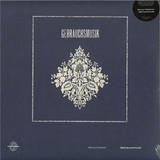
Marcus Fjellström's second album Gebrauchsmusik, initially released a decade and a half ago, is a bizarre sound document that deserves a closer look. Listening back to it now only re-confirms the unique mind of the Swedish composer, who sadly died in September 2017, only 37 years old.
"Gebrauchsmusik" is German for 'Utility Music', and his second excursion into post-classical experimentation is exactly that; thirteen tracks with each one written to suit a certain theme. War, art, festivity, sadness, death and resurrection are all interpreted by Fjellström in his unique style, taking a classical framework and distorting, confusing and manipulating them into far fetching scenarios that is only limited by ones own imagination.
Marcus worked with the Swedish Royal Ballet, the Scottish Chamber Orchestra and Sinfonietta Cracovia as well as numerous other orchestras, ensembles and soloists, artists and filmmakers. He spent the last half year of his life scoring the AMC series The Terror. In his works, Marcus often aimed to combine opposites so that they don’t contradict each other, but rather fuse into a natural, third element - “High” and “low” culture, the naïve and the sophisticated, good and bad taste. These are all elements that comfortably blend together in his works. Musical influences range from electronic acts such as Aphex Twin and Autechre to 20th century composers such as György Ligeti and John Cage. Further influences include impressionist composers Maurice Ravel and Claude Debussy as well as film music composers Bernard Herrmann, Angelo Badalamenti and Zdeněk Liška.
Vinyl edition ltd. to 300 copies, incl. 8-page 12" booklet with drawings by Marcus Fjellström.
Wanubalé - nine guys from Berlin, inspired by the city's fresh Jazz scene and distinct club culture. Wanubalé met at school. Five of the nine in the band went to the same musical high school in Berlin.
Heavy influences from Jazz, Neo Soul and Funk shape their compositions. However, electronic sounds are just as important to Wanubalé. All of the nine are in their early twenties. All of them are into Dub, Bass Music and Broken Beats. And several members are DJs, as well. The Wanubalés are first rate musicians. They tend to take their time writing arrangements, yet they are careful not to overly emphasize their Jazz skills. Songwriting is a collaborative affaire, everything is developed organically.
Just like the band name, which dates back to the days of fooling around in the schoolyard, playing with syllables ("nuba" came first). Sound was crucial. Some say "Wanubalé" means "brother" in Swahili. Wanubalé: four horns, two drummers, guitar, bass, keyboards. Nine musicians with a knack for funky breaks, mighty brass sounds and great melodies. The musicians don't hide their influences: Snarky Puppy, Fat Freddy's Drop, plus younger acts like Hiatus Kaiyote. But Wanubalé do their own thing.
Wanubalé: four horns, two drummers, guitar, bass, keyboards. Nine musicians with a knack for funky breaks, mighty brass sounds and great melodies. All songs are written, produced and arranged by Wanubalé. Recorded at Jazzanova Studio, Berlin.
Strangelove’s latest release turns left somewhere near the edge of the Atlantic, with Electricidade Estética” documenting a vibrant window into the musical landscape of 1980’s counter-culture Portugal. Compiling early un-issued works, DWART’s organic Ash-Ra Balearics meld with spikey Iberian electronics, coalescing around the floating beauty of ‘Mate’, reissued for the first time on vinyl. With emergent music technologies of the era enthusiastically adopted by Lisbon’s avante-garde, there was a collective desire by DWART and their contemporaries to push existing sonic boundaries;- Post new wave sounds melded with distinctive local sensibilities. Vítor Rua & Jorge Lima Barreto of the legendary Telectu (whom Antoñio currently tours with) were regular collaborators while composer/ guitarist Nuno Rebelo and guitarist/singer Bernardo Devlin feature throughout. Antoñio & Manuela Duarte’s search for an artistic language melded a continuing curiosity with aural and physical dualities: experimental pop integrated with performance art, mathematics sound-tracked on canvas, organic found sounds at ease alongside synthetic drum machines. The 9 songs found here document the early emergence of their own ‘Electricidade Estética’ (Big shouts to Invisible Cities & Steele Bonus- early champions of ‘Mate’) Vital Sales Points: Follow up to the labels previous releases - Frank Harris & Maria Marquez ‘Echoes’ and previous Portuguese release Lena d’Água ?- Jardim Zoológico
For the first time this massive tune by Esnard Boisdur is pressed on record..One of the standouts in the Gwo-Ka genre.. Comes with a rework on the flip by Africaine 808 (Hans Reuschl & Dirk Leyers) - they used the original stems and added drumcomputer and extra live percussion, synthlines, little dub effects.. Not the ''usual standard threatment'' here!! This is class!
“You don’t need to be a fan of Gwoka or even Antillean music in general to fall in love with the deep, expressive voices of the singers of the genre. Artists like COSACK, ANZALA and ESNARD BOISDUR have fascinated music lovers around the globe for decades. It’s not only the drumming style accompanied by their beautiful melodic intonation, but also the revolutionary spirit of these songs that make them a unique and powerful document of the culture and the history of the Antilles and the Caribbean.
Will Saul is a key figure in UK dance music. Approaching his twentieth anniversary as a DJ, producer and label founder, Saul has helped break the career of key artists such as Leon Vynehall, Midland and Dusky via his Aus Music label, has himself played some of the world’s finest nightclubs and contributed to !K7’s storied ‘DJ Kicks’ mix series, which he also curates. Finally returning to the production fold himself with his first full-length album in thirteen years, ‘Open Too Close’ is a condensed trip through the influences, discovery and sense of history that have helped shape his career and drive a forward-facing, unblinking passion for new music. The record’s concept reflects Will’s enormous skill and knowledge as a DJ, and as it’s title suggests, “"represents what I play in a club if an 8 hour set was condensed into 10 tracks.” Having held residencies and made regular appearances at some of the world’s finest clubs including The End and Fabric in London, Panorama Bar in Berlin, Trouw in Amsterdam and Robert Johnson in Offenbach, Saul is uniquely qualified but this refreshingly straightforward approach. Eschewing the lingering, almost cliched expectations for a dance artist to create an album “that sounds good at home, as well as in the club”, ‘Open Too Close’ instead draws on the timeless futurism at the heart of the music that drew Saul into electronic music culture. Simply put, futuristic, melancholic sci-fi soundscapes meets stripped back raw sample driven house music, all executed with the precision and panache of an artist who truly understands how to move a dancefloor.
"Frisina meets Toco" is the result of the artistic union of two main Schema Records' characters, Gerardo Frisina and Toco, spontaneously born from many listening sessions of Brazilian music LP's. The music contained in this 12" record stands in the middle between Rio and Bahia, merging together the Brazilian rhythmic culture and groove (Toco) with the modern sound of clubbing latin jazz (Frisina), and it's also enriched by the presence of the young pianist and composer Vitor Araújo and his peculiar signature style, particularly apparent in the instrumental version of the song "Craque".
Few albums have treated human voice and drone as a whole entity like ABoneCroneDrone, the third in a trilogy for Real World Records that this record closed back in 1996. In Sheila Chandra’s own words “it was about the gateways between vocal techniques from different cultures and how it was possible to cross between them within a single word or phrase.”
Indipop Recordings founder Steve Coe, probably best known for helping to popularise the term World Music in the early eighties, produced and worked with extreme accuracy along with Chandra on all drones and set a new industry standard of what was possible in the treatment of voice. With the help of bagpipes, didgeridoos and guitars, ABoneCroneDrone puts drones under the microscope and encourages listeners to retrain their ears to hear the nuances that musicians have always heard in them. Emitting low, chantlike waves, Chandra sings deep spaced atonal words while haunting chord sounds flow and drones slowly interact with listener.
This is the first vinyl pressing. It includes a fold-out insert with a new Sheila Chandra interview, original sleeve notes edited by Chandra herself and unseen pictures taken from the 1996 sessions. Limited to 500 copies, no digital release this time.
“The artistry of ABoneCroneDrone is in the attention to detail. The album is beautifully performed, mixed and compiled with intelligence and strong sense of structure. It makes good use of a listener’s valuable time while issuing a challenge to hear in a fresh way.” John L. Walters, The Wire issue 150.
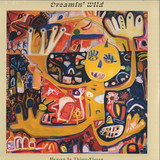
Dreamin' Wild's second album Heaven in Thirty Eleven owes a lot to Footscray. The inner-western suburb of Melbourne features not only in the album title (its postcode is 3011) but goes deeper to form a central part of the record's narrative and reflection.
For all six members - Chris Jennings (Swazi Gold, Sagamore, Sledgehammer), Sam Cooper (Crepes, Swazi Gold, Sagamore, Sledgehammer), Tim Karmouche (Crepes, Swazi Gold, The Murlocs), Sarah Quirk, Monty Hartnett (Sleep Decade, Miris, Sagamore) and James Guida (Laguna, Environments) - Footscray buoyed periods of music exploration and discovery. After more than six year of writing, rehearsing and recording in the suburb, there's no doubt that Footscray is home for the band.
Jennings adds that the album is, "a bit of a recap of the last three years for Dreamin' Wild," drawing attention to the change and growth many of the eight songs have undergone since creation.
"I Don't Disagree" is an album highlight; an almost seven-minute track that struts along calmly, taking life as it is. Quirk's soulful refrain soars atop Jennings' laconic vocals, carrying the song to its end. "Dynon Life" is another album gem, reminiscent of summer in the city, and happy seeking excess.
Heaven in Thirty Eleven is an ode to a Melbourne suburb brimming with culture and stories, made by artists who are proud to call it home.
- A1: Jean Kely Et Basth – Andosy Mora
- A2: Soymanga – Moramora Zoky
- A3: Roger Georges – Mama
- A4: Ny Anjarasoa – Mahonena
- B1: Charles Maurin Poty – Amboliako Fary
- B2: Mahaleo – Izahay Mpamita
- B3: Papa James – Ngôma Hoe
- B4: Los Pépitos Et Leur Ensemble – B B. Gasy
- B5: Jeanot Rabeson Et Son Orchestre – Jazz Sega
- C1: Feon’ala – Farahy
- C2: Terak’ Anosy Group – Soaliza
- C3: Saka Dit The King – Ody Ody (Tsy Mentsy Mandroso)
- C4: Michael – Razana Tsy Ho Meloko
- D1: Falafa – Rapela
- D2: Los Matadores – Andeha Hanarato
- D3: Nino Rafah – Oa Niny Ê
- D4: Kaiamba Orchestra – Tokatoka
- D5: Atrefy Andriana – Zaka Tiako Mamolaka Keriko
Strut continues its essential compilation series of Indian Ocean sounds with 'Alefa Madagascar', the first compilation to document the unique culture of salegy, soukous and soul on the island during the '70s and '80s.
'Alefa Madagascar' showcases the rich variety of sounds during this heyday of Malagasy music: Roger Georges' 'Mama' and Jean Kely et Basth's 'Andosy Mora' bring the raw energy of salegy, influential band Los Matadores drop military drums and Hammond soul in the classic 'Andeha Hanarato'; Mahaleo's 'Izahay Mpamita' showcases the band's powerful folk sound, a crucial voice emerging from the Rotaka farmer and student protests of 1972, while Terak'Anosy Group work around a stomping Congolese guitar groove. The era paved the way for many of the household names of Malagasy music today including Jaojoby, D'Gary and Lego.
Wah Wah 45s are very proud to announce the release of Kalba, the first album from Ghanaian xylophone master Isaac Birituro and Leeds-based producer and singer- songwriter Sonny Johns AKA The Rail Abandon. The boundary crossing duo were introduced to the world via the first two singles released in early 2019, Yesu Yan Yan and Für Svenja, and the reactions to the project have been overwhelmingly warm.
There are many differences between Isaac and Sonny, but a powerful similarity -- which gives Kalba its element of relatability -- is that desire to hear the usual done unusually and play with the shared influence of the music from afar. Named after the town in North Ghana where Isaac resides, the album is a combination of differences; a magnifying glass over the Venn diagram of our lives, the unfathomable meeting of parallel lines.
“It was clear to me that, though he played a traditional instrument in a traditional way, Isaac was influenced by the Western tinged music that filled the streets of Accra - in fact his father, Edmund, introduced him with “He plays the modern way!” Partly dismissive, mostly proud,” said Sonny. “And as this Viking sat before him played the guitar, it sounded too much like the stringed instruments of Mali for it to be just a coincidence.”
There are so many stories behind each track on this album, but the common denominators are clearly the importance of community, of preserving and presenting local cultures, the ardent desire to contribute to changing the world around us, and, of course, the love and power of music created from a genuine place.
"Timeless", Goldie's first album in 1995, changed the face of the musical culture in England by democratizing the drum & bass scene, conscripting Goldie as a local star. But not only: with the
enthusiastic support from artists such as David Bowie, he crossed the Channel and the Atlantic.
However, while everyone was waiting impatiently the following of "Timeless", Goldie had other plans: with "Saturnz Return" (1998) he came back with a concept album of 150 minutes (in its CD version), innovative, experimental and cleavable.
21 years later, his radical and innovative vision was taken up and adapted by many artists, from Carl Craig to Pete Tong. For the first time, thanks to London Music Stream label, "Saturnz Return" is finally ready to receive the critical reception it should have received when it was released. The avant-garde has become a reference.
Repress
The fourth output on the imprint GEN X is a various artists EP featuring Remy-X, AADJA, Dave Simon and label owners Deep Dimension.
Featuring four hard-hitting old school ravey cuts with new age soundscapes. Bringing back the energy of the early nineties raves.
Supporting artists:
Marcel Dettmann, Pan-Pot, Ramiro Lopez, VII Circle, Dubfire, Ilario Alicante, Noir, Paco Osuna, Richie Hawtin, Marco Bailey, Endlec, Joseph Capriati, Rebekah, Marco Carola
Formed in Bradford in 1980, New Model Army's beginnings were inspired by Northern Soul, Punk Rock and the incendiary atmosphere of the times. Since then, they have had a long, creative and eventful journey. They have been massively influential in 'post-punk', 'folkrock', 'political-rock', 'goth', 'metal' and all kinds of musical sub-cultures but they have steadfastly refused to belong to any club or style. Members have changed over the years and musical styles have evolved but at the heart of the band Justin has remained, along with a distinct and sincere belief in the power of music to inspire and effect change on both a personal and political scale, locally and globally. 'From Here' was recorded earlier on the tiny Norwegian island of Giske at the beautiful Ocean Sound Recordings studio and reflects the spectacular isolation of that environment yet has profound messages for the world we all live in and the times we are experiencing. The album was mostly written in just two months and recorded in only nine days and is the follow up on the two hugely acclaimed albums Between Dog And Wolf (2013) and Winter (2016). New Model Army decided to work again with Lee Smith and Jamie Lockhart, with whom they have developed a productive relationship over a few years and who persuaded them to leave a lot of the details of the music to spontaneity. “This album has a feel that is different to our other albums, but it still contains all the elements that characterise our peculiarly unidentifiable music – perhaps even more than ever. And “From Here” was an obvious title. The record belongs to a very special place and a particular time – what is happening in the world, where we are as a band and where we are as people.” Print ads:Vive Le Rock, Classic Rock, Record Collector, Classic Pop). Artist undertaking promotion/interviews/press (Classic Rock, Record Collector, Vive le Rock, Louder than War, Long Live Vinyl). Extensive UK live tour Oct 8th - Dec 21st.
The "Duets" double cassette by Kristoffer Eikrem & Bendik Baksaas was awarded the Oslo-prize for "album of the year 2018" by Natt & Dag, Norway's biggest culture magazine. Due to many requests from our listeners we decided to pick the duo's 40 most precious minutes of music from the project and press a limited run of 300 copies on vinyl.
Concentric Circles presents ''For the Moment'', which features tracks from some of Di Stefano's early cassette releases, as well as a number of unheard explorations of Indian polyrhythms from the early 90s. Di Stefano’s prescient and unique work will appeal to fans of Cybe, Joel Graham, UnknownmiX, Zru Vogue, and provides a fascinating view of the 80s US electronic underground.
American-born, Japan-based composer John Di Stefano self-released a number of cassettes as part of the 80s DIY underground on his own imprint Oktron Produktions, including Klang's Drift, a collaboration with Joel Graham.
Living in San Francisco, Di Stefano had access to multiple University electronic music studios, where he had an impressive array of synthesizers at his fingertips, including both Buchla and Serge modular systems. Combining his knowledge of modular synthesis with a background in percussion, his early releases were a uniquely human approach to electroacoustic music, with flourishes of post punk in the mix. Di Stefano developed an interest in world music, studying Indian music theory and tabla, and after an extended trip to Indonesia in the mid 80s, he was particularly drawn to Javanese gamelan music. Future recordings would forever be indebted to the sounds he heard during those travels.
All producers on this timeless EP known for their contribution to NuDisco/Deep House Music. 1 Life records has enlisted the services of top talents. U.S deep house veteran Vincent Floyd wrap drifting deep spheres, lilting electronics & warm synth rhodes chords around a chunky groove on his fine beat interpretation for a brighter & breezier deep house vibe on a remix that benefits greatly from a squeezable synth bassline & some undulating TB-303 style acid motifs, while Rico De Almenda deliver a driving chunk of dub-disco/deep house fusion rich in sparkling synthesizer lines, sun-kissed chords & his own rubbery post-punk bass. Studio don Vincent Inc always bring unforgettable impressions & inspiration for mind, body & soul. 4 tracks came together to tell music stories about hypnotic deepest stuff, depression, happiness, loneliness, love, miracles & magical experiences. And now we're asking other's to join the sound conversation
In the early eighties, Edmond Mondésir, professor of philosophy and Léon Bertide, trade unionist, founded the Bèlènou group. They were actors of the great agricultural strike of 1974, which resulted in the death of two workers (Ilmany and Marie-Louise) and left many wounded. Activists of the patriotic movement Asé Pléré An Nou Lité (Stop crying, Fight), they were part of the identity and the cultural affirmation la revendication identitaire et culturelle of the time. Like the Guadeloupean musician Gérard Lockel and his work on the Gwo Ka, they put the Bèlè, in its traditional form, back in the spotlight during Swaré Bèlè (Bèlè nights).Minimalist and spiritual, a true rural ancestral art from Martinique, the Bèlè combines dance and music from responsorial monodies, which is a choir that responds to the lead singer (Respondè / La vwa dèyè), on codified drum rhythms and ti-bwa (2 sticks that hit the back of the drum or a piece of bamboo). It comes in a series of collective choreographies, working up into the trance. The texts are simple, short and tell the story of everyday life and struggle. While preserving the emotion and the drum’s central place, the fundamental contribution of Bèlènou is to keep the traditional form of Bèlè while adding a modern instrumentation: bass, guitar, saxophone, drums...
Emosyon Tambou-a (Emotion of the Drum) was released in 1990. This third opus of the band expands the musical spectrum in harmonies, arrangements and influences to create a contemporary music anchored in the Bèlè matrix, while keeping the beat, the energy and ancestral roots of music. Bèlènou adapts some classic rhythms: Bélya, Gran Bèlè, Bèlè Pitjé or Ting-Bang rewritten here for an orchestra.With the appearance of long couplets and a complex harmonization of the choruses, Bèlènou's music brings a form of modernity, it opens notably to jazz territory as well as to other forms of music and grooves. Also, Bèlènou leaves the musicians with space for improvisation: not only on the saxophone or the guitar, but also with the drums (cleverly adaptating traditional rhythms to the drums).
The texts sung in Creole are of a social nature, appealing to the solidarity and self-denial of the people (Bélya pou péyi-a, Tout pèp-la sanblé), to the struggle for political emancipation towards a new democracy (Wi ny ké rivé, Ni dé jou, Démokrasi); land protection (Sové tè-a); finally, to the vitality of the Bèlè culture ... (Emosyon Tambou-a, Dansé Ting-Bang)...Culture participates, according to the expression of Aimé Césaire, as "Miraculous Weapons". Bèlènou sings a project of a new and united society. A precursor group, experimental in the its early years, Bèlènou reconciles with talent tradition, modernity and cultural identity.
Lovely crafted tip-on sleeve. Remastered. 700 copies