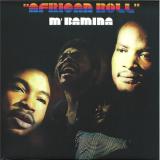
Gatefold Sleeve
M’Bamina – African Roll (1975)
The story of an album born between Africa, Italy, and the nightclub culture of the 1970s
In the heart of 1970s Italy — a country undergoing profound social change and a music scene just beginning to open itself to distant sounds and cultures — an extraordinary, almost improbable story took shape. It is the story of a group of young African musicians who found their way to Europe, of a Turin nightclub that became a crossroads for communities and experimenters, and of an album which, released in small numbers and largely unnoticed at the time, is now considered a rare jewel of Afro-fusion.
The band called themselves M’Bamina — an ensemble of musicians from Congo, Cameroon, and Benin, who arrived in Italy in the early Seventies. Settling between northern Italy and the Pavia area, they began performing in small clubs and community events, bringing with them a vibrant rhythmic heritage: African polyrhythms, call-and-response vocals, funk-infused bass lines, and Caribbean or Afro-Latin colours absorbed along their musical journeys. Their raw, contagious energy on stage quickly drew attention.
Meanwhile, in Turin, another story was unfolding. There was a venue becoming almost legendary: Voom Voom, one of the city’s liveliest nightclubs, run by Ivo Lunardi. The club attracted an eclectic crowd — students, artists, foreigners, night owls — and Lunardi quickly understood that the dancefloor wasn’t just a place for music, but a melting pot for a new kind of cultural energy. Out of this vibrant atmosphere came his idea: to turn the club’s name into a small independent record label, Voom Voom Music, capable of capturing the spirit of those years and giving voice to unconventional projects.
When Lunardi heard M’Bamina, he immediately sensed that this was the sound he had been searching for: fresh, different from anything circulating in Italy at the time, and capable of blending African tradition with funk and European sensibility. He brought them into the studio.
Production was handled by Lunardi along with Christian Carbaza Michel, while the engineering was entrusted to Danilo Pennone, a young sound technician with a sharp, intuitive ear.
The recording sessions — held in Turin in 1975 — produced a remarkably warm and direct sound. The music feels almost live: grooves rooted in African tradition, but open to funk-rock structures and modern arrangements. It is a natural fusion, never forced. Tracks move between tribal rhythms, funk basslines, light electric guitars, congas and Afro-Latin percussion, with call-and-response vocals and melodies that echo both Congolese tradition and the lineage of Latin jazz. Not by chance, one of the album’s most striking tracks, Watchiwara, reinterprets a Latin standard through M’Bamina’s own rhythmic language.
The album was titled African Roll — a name that was already a statement of intention. It is African music that “rolls,” that moves, adapts, transforms within a new geographic and cultural setting. It is not strictly Afrobeat, nor Congolese rumba, nor Western funk: it is a spontaneous, hybrid blend, shaped more by lived experience than by any calculated aesthetic program.
When African Roll was released, the world around it barely noticed. Distribution was limited, and 1970s Italy had yet to develop a cultural framework for receiving such music. The national music press rarely paid attention to African or “world” productions. The album slipped into silence — though the band’s own story did not.
M’Bamina continued performing across Europe and Africa, even sharing a stage in Cameroon with none other than Manu Dibango. By the late Seventies, they moved to Paris, signed with Fiesta/Decca, and recorded a second LP, Experimental (1978). Meanwhile, the peculiar record they had made in Turin began to resurface quietly among vinyl collectors, Afro-funk enthusiasts, and DJs hunting for forgotten grooves.
That is when the album’s fate began to shift.
Over the decades, African Roll emerged as an almost unique document: a snapshot of an intercultural Italy before the word “intercultural” even existed, a fragment of migrant history, a spontaneous experiment in musical fusion born far from major industry circuits but rich in authenticity. Original copies began commanding high prices on the collector’s market, and the album became recognized as one of the hidden classics of European Afro-fusion from the 1970s.
Today, more than fifty years later, this reissue finally restores visibility and dignity to a project that deserves to be heard, studied, and celebrated. It is not simply an album: it is the testimony of a rare cultural encounter, born in an Italy unaware of how fertile such exchanges would one day become.
It is the story of a visionary producer, an extraordinary band, and a fleeting moment in which music, migration, and nightlife came together to create something genuinely new.
African Roll is — now more than ever — the sound of a bridge: between continents, between eras, between cultures. A record that, after rolling far and wide, has finally come home.
Suche:d culture
- A1: Fatboy Slim - Retox - Tino Remix
- A2: Fatboy Slim - Retox - Sweely Remix
- B1: Fatboy Slim - Gangster Trippin - Make A Dance Remix (Jackin Mix)
- B2: Fatboy Slim - Gangster Trippin - Lockey Remix
One of the UK’s most iconic DJs Fatboy Slim celebrates 40 years in the industry with a blockbuster tour - Acid Ballroom. Alongside the tour comes the 12” single squarely aimed at what’s actually happening in the clubs right now. Enlisting the talents of Tino, Sweely, Make A Dance and Lockey (all with great vinyl culture followings and making big waves in the house music scene). This 12” will has light up dance floors in iconic venues and festivals around the world.
2026 Repress
Portuguese techno mainstay Dextro drops cultured EP 'Covil Dos Abutres' for his label debut on Mutual Rytm.
Dextro has been immersed in electronic music and DJing since the early 90s. In the decades since, he has become synonymous with a sound deeply rooted in simplicity and authenticity. Fuelled by a passion for his craft, his production process is guided by intuition and spans a diverse range of styles, from tunnelling grooves to more potent techno with deep and hypnotic layers. He has held several key residencies and released on top labels like CLR and Missile Records, and he adds to those with a first outing on SHDW's Mutual Rytm with 'Covil Dos Abutres'.
The five-track 12" and eight-track digital EP has a sleek, stripped-back style, with wide-spanning corners of the techno realm explored. 'Covil Dos Abutres' is a deep space transmission with journeying, frictionless beats and deft sci-fi motifs that recall classic touches synonymous with the genre's pioneers. 'Correct Incorrect' keeps the pressure on with more rubbery, dubbed-out groves beautifully decorated with delicate melodies. 'Vida E Morte' is another sublime and hypotonic minimal techno sound with funk in the kicks and a freaky late-night spirit. 'Element One' again combines perfectly reduced drum groves with atmospheric pads and curious samples that keep you intrigued, and 'Beautiful Day' closes out with sonar-like synth pulses over the most skeletal but captivating rhythms. Digital cuts 'Time Line', 'Savana Urbana', and 'Diferencas' further explore the intersection of minimalism with cosmic synth designs that take you off into distant astral worlds.
Consistent funk operator Ralo is back with a brace of tunes that will shake your bones loose. First up is 'Broken Way', a magnificently jumbled rhythm made from languid bass and kicks, peppered with organic percussion and heated through with soft synths. It's atmospheric and real, like the overheard soundtrack to a party happening in your kitchen. 'Djembe' then brings out some brassy horns to take things to the next level. They jump out of the low-slung drums and add jazz, soul and colour that cannot be ignored. Gledd and Monsieur Van Pratt step up on the flip with cultured reworks that turn things up to 11.
uper Deception dives into the uncanny beauty within the everyday, drawing inspiration from M.C. Escher’s idea of “super deception”: the art of creating the impossible without illusion. Nelson of the East translates that concept into sound: deep, tactile basslines and intricate percussion twist familiar rhythms into hypnotic new forms. Textures and samples are lifted from their origins and reimagined, creating tracks that feel both ancient and futuristic, physical and dreamlike. The result is an electronic landscape where sound folds in on itself: a timeless, shape-shifting exploration of rhythm, resonance and perception.
Nelson of the East is a Berlin-based sound artist, producer and educator. He operates at the intersection of experimental composition and club culture, shaping his craft both as a music teacher and behind the scenes as an experienced ghost producer.
Artwork & Layout by Alicia Carrera
Y-3, the pioneering sports-fashion collaboration between adidas and Yohji Yamamoto, has for three decades dwelled calmly within the ''tensions of existence''. In conceiving the brand's long-awaited return to runway format at Paris Fashion Week, these codes laid the groundwork leading up to the Spring/Summer 2025 season. Whilst the focus for runway is traditionally placed on garments, models, styling, environment, and the pageantry in between, it was crucial that music play an integral role in the conversation. Three seasons later, sound has informed creative direction from the very earliest phases of ideation. Commissioning all-original compositions has become a natural part of this ideology. The return to runway has invited the opportunity to define a new sonic palette for the brand, and beyond that, to usher in a new era of sound for Y-3 that echoes across music & culture. Following this ethos, and with a mandate to support obscure talent, Montreal duo Solitary Dancer have emerged as the first collaborators in shaping the intimate brand architecture of noise & feeling. With a body of work now spanning over a trilogy of seasons, the genre-defying Y-3000 imprint provides an outlet to disseminate & recontexualize the original compositions beyond the traditional runway. The label embodies Y-3's enduring commitment to explore innovation within opposing cultural forces. The works, originally released on Y-3000 as a series of white labels, are now being featured as a 6x 12'' vinyl compilation. Designed by Trevor Jackson and limited to just 99 examples, the recordings will also be made available both digitally and on streaming services for the very first time.
- 01: Steve
- 02: Jam Jarre
- 03: Hardcore Raver
- 04: Plenger
- 05: Here We Gowowowo
- 06: Toxico Gang
- 07: Texaco Gang
- 08: Tx Highway
- 09: Tx Jammer
- 10: Dreamer
- 11: Last Exit To Fambridge
- 12: Summer Frosby
- 13: Lw Traveller
- 14: Snifters Acid
- 15: Scary Pollution
- 16: Acid Schroeder
- 17: Acid Breezer
- 18: Vulcan Venture
- 19: Cold War Acid
- 20: Ice Rink Acid
- 21: Tx Ogre
- 22: Loner D B
- 23: Ravenscar
A reissue of Volumes 1 and 2, originally released on the Rephlex label in 2007. This time, both volumes are brought together in a superb gatefold sleeve 4LP, taking you on a journey through the very best of Andy Jenkinson's work: Cool music, a blend of such quintessentially British culture that swings from gabba to IDM, from rough techno to electro to acid and analogue sounds - all packed into over two hours of madness. Here we go again!
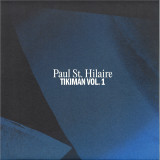
For the first time in more than a decade, Paul St. Hilaire (AKA Tikiman) presents a solo album – 100% Tiki.
Over his 30-plus year career, St. Hilaire has become one of dance music’s quietly legendary figures. Born and raised in Dominica, he moved to Berlin in 1994 and has lent both his voice and his musicianship to some of the most iconic electronic music from the German capital – and beyond. Renowned for his collaborations with Moritz von Oswald and Mark Ernestus (AKA Rhythm & Sound), he has also appeared on records with Deadbeat, Rhauder, Larry Heard aka Mr. Fingers and Stereotyp (G-Stone Recordings), amongst others.
However, few know the extent of St. Hilaire’s compositional and technical mastery. From his home studio in Kreuzberg, which includes an extensive collection of vintage hardware, self-built instruments and notebooks scribbled with endless lyrics, he has created a vast archive of material spanning ambient dub, avant-jazz, lush techno and lovers rock.
Tikiman Vol. 1 is a heady, downtempo tour de force of patois metaphors on education, displacement and personal vs. global histories, as is evident on slippy album opener “Bedroom in My Bag”: Mister, mister / Where are you going? / I’m heading for a faraway land / What are you having in the bag in your hand? / Help us to understand / He said, I’ve got my bedroom in my bag.
Overall, the album’s lyrics reflect on life between Berlin and Dominica, specifically St. Hilaire’s hometown of Grand Bay, where he has worked with various musicians famous for the island’s different genres of carnival music. St. Hilaire himself always favoured the island’s more “discrete” music, developing a sonic synergy between two different geographical strains of groove and minimalism, and combining them with foundational Caribbean mixing techniques, which provide the basis for his songwriting and distinct
baritone.
Tikiman Vol.1 offers a rare insight into St. Hilaire’s complex artistry, from the eyes-down grooves of “Little Way” and the guitar-heavy digi dancehall experiment “Keep Safe,” to the subtle hypnosis of “Ten to One” and the softly crashing synth waves of closer “Three And A Half”, evoking not only beaches but also coasts and borders. It’s a fitting expression of both the breadth of St. Hilaire’s work, as well as his history as one of the few black, Berlin-based artists who, despite remaining largely overlooked, has influenced the city’s electronic music culture since its beginnings.
Credits
Written & Produced by Paul St. Hilaire
Mastered by Stefan Betke
Artwork by Grant Gibson
Kynant Records was founded in 2015 by Richard Akingbehin, a British-Nigerian radio programmer (Refuge Worldwide), music writer and DJ. Originally specialising in deep techno and featuring artists such as Cio D’Or, Terrence Dixon and Donato Dozzy, Kynant has since launched a sub-label Kynant EX which focuses on ambient, dub and experimental electronics.
This is another big moment for us, and if you have read the story on how the Psychology EP came to be, you will know that we spent a long time trying to track Dimension with the Fozbee & Cooz brothers.
This is my era of music, these are the tunes that I was raving to once I first got my driving license in 90/91. Its a style of music that has influenced pretty much my whole musical career. I find it fascinating that this music was basically by hip hop heads who only a year or two before would of discovered rave. A truly unique musical style and culture that could of only come out of the UK.
Check the soundfiles below and take yourself back to an illegal rave in a secret woodland in Wiltshire in 1991 where ravers, b-boys, hippies and new age travellers all partied together.
"Murk Patterns" is eighth album by Mexican producer Rainforest featuring three talented collaborators - Homemade Weapons (Samurai Music, Weaponry), David Louis (Repertoire) and Heatwave (Onset Audio, AGN7).
Rooted in jungle pressure and expanding into halftime and atmospheric drum & bass, the release unfolds as a dynamic exploration of rhythm, weight, and space. Side A presents Rainforest’s solo work, including material released under his second alias Bwoykah, while side B is dedicated to showcasing collaborative tracks.
Daskal debuts on DJ Tennis’s Life and Death label today with the release of “Changes,” the first single from his forthcoming album OD, out March 6. The release marks a defining moment for the producer and composer, whose work moves fluidly between contemporary dance, film, and electronic music, and represents his first full-length statement reconnecting his compositional practice with the dancefloor.
“Changes” arrives alongside a striking accompanying video directed by award-winning filmmaker Tamir Faingold, featuring dancers from the world-renowned Batsheva Dance Company. Rather than functioning as a traditional music video, the piece uses contemporary dance as its primary language, translating the emotional charge and magnetism of nightlife into movement. Together, the single and visual introduction frame OD as a bridge between club culture and the expressive traditions of modern dance and composition.
A classically trained composer with deep ties to the world of choreography, Daskal has spent recent years creating original scores for institutions including Los Angeles Dance Project and the Royal Danish Ballet, while simultaneously developing a parallel body of work across ambient and experimental electronic music. OD emerges as a convergence of those paths: a ten-track album shaped as much by physical movement and spatial awareness as by club tradition, positioning Daskal between concert hall, black box theater, and late-night club environments.
Recorded and mixed primarily using vintage hardware — including a rare 1980s German mixer in a high-end Tel Aviv jazz studio — OD reflects a deliberate shift away from purely atmospheric writing toward rhythm, repetition, and physicality, while retaining the precision and restraint of his compositional background.
House and techno mainstay Steve Bug returns to Nu Groove with four-track EP ‘Let’s Work’, showcasing the sound of a true electronic pioneer on vinyl. Up first is title track ‘Let’s Work’, a bouncy club record with a cool, metropolitan feel. What follows are ‘Mr Wonders’ and ‘Not The First Time’, two tracks that highlight Steve Bug’s rhythmic expertise and mastery of tension. Closing out this vinyl collection of fresh house music is a collaboration with Los Angeles native and dance culture expert Juliet Mendoza; ‘Whispers In The Dark’ features Juliet’s magnetic spoken word over Steve’s brooding electronic groove.
- 1: Wild Geese Arrive
- 2: Awaken The Insects
- 3: Mantis Vs Horse
- 4: Grain Rain
- 5: Tiger Sex
- 6: Feed The Fireflies
- 7: Offerings To The Beast
- 8: Limit Of Heat
- 9: Thunder Begins To Soften
'The Endless Dance' is the first collaborative album from Northern Irish producer and composer Hannah Peel and Chinese percussionist Beibei Wang. The record is grounded in the strength of ancient concepts, but comes alive with the joy and freedom of play as together, Peel and Wang travel through the 24 solar terms of the Chinese calendar with a cornucopia of sound in tow – synths and prepared piano alongside traditional and unconventional percussion.
The album is collaged together from recordings made over five days at legendary rural studio Real World, a setting which aligned with the duo’s inspiration from the natural world creating a permanent record of their shared musical landscape, informed by the flora and fauna that emerge and retreat through the seasons.
Both genre-defying, storied artists in their own right, Peel and Wang met while working on Manchester Collective’s 2023 album NEON and 'The Endless Dance' certainly represents a step-change from the duo’s shared classical backgrounds – but their knowledge and training is also the foundation of its freewheeling audacity, giving them the confidence to trust their instincts.
The album is produced by Mike Lindsay LUMP, Tunng, Guy Garvey, Jon Hopkins who, with free rein, brings added energy and creativity to the album, whilst Peel & Wang are also joined by Hyelim Kim on Daegeum, a Korean flute with “colourful overtones on every note”.
Track to track, 'The Endless Dance' is unpredictable and unexpected, which is in part due to the genuine curiosity and outside perspectives that each player brought to the sessions. “I am so familiar with Chinese heritage, but I don't see how it can present in electronics, for instance,” says Wang. “Hannah comes in with that direction, to imagine what the sounds could be together.” The characterful richness of the album stems from the commonalities they found in the sessions. “We both come from cultures where story is really important,” explains Peel. “The attention to detail comes from telling a story, and one note can set that off in a different direction.”
'The Endless Dance' is a major work from two accomplished, singular artists - but it’s also the sound of mutual curiosity and shared fun, or as Wang puts it: “Two women talking in totally different language that had a wonderful chat.”
Big Bombs EP marks the debut release on Bertie Bassett’s self-titled label, introducing a collection of groove-led house cuts rooted in classic influences and underground club culture.
Already gaining global support from DJs like Marco Carola and, Shaka Loves You and featured on Traxsource’s Essential Afro chart.
Across four tracks, Bertie Bassett delivers a mix of DJ-focused tools and edits, blending raw house rhythms, funk-driven elements and stripped-back arrangements designed for dancefloor use.
From the driving energy of Get House and Back To Underground to the reworked grooves of Man In Black (Edit Mix) and Finga Loop (Bertie Bassett Rumba Remix), the EP offers a versatile selection suited to both peak-time and deeper club sets.
With a long-standing background in house music and production, Bertie Bassett brings a seasoned approach to this first release, combining classic influences with a modern underground edge.
As the first release on the label, this EP sets the tone for the project moving forward, offering strong appeal for DJs looking for fresh, playable house cuts with a raw, groove-led feel.
A natural fit for fans of labels such as Razor-N-Tape, Toy Tonics, Bed Edits and Disco Express.
A DJ-friendly and versatile release for stores supporting underground house and edit-driven sounds.
Time To Get On Board A New Black Universal Express.
With each new recording Anthony Joseph presents an imaginative, personal vision of contemporary black culture, and The Ark is yet another compelling album by the award-winning Trinidadian poet and musician. This second part of a sequence of two albums launched with last year’s Rowing Up River To Get Our Names Back, finds Joseph giving full vent to his desire to explore many thought-provoking themes. However, there is a specific thread running through the glorious offering of sounds.
”I was especially interested in the idea of using Afrofuturism as a means of using the future in order to correct the wrongs of the past,” explains Joseph. “And so a lot of lyrics reimage or imagine an alternate black history. At the same time there are elements of autobiography.” The aforesaid cultural phenomenon, a view of the black experience through the prism of science fiction and ancient Egypt and Africa, as mapped out by visionaries from music and literature such as Sun Ra, Parliament-Funkadelic and Octavia E. Butler, has previously inspired Joseph. His 2006 novel The African Origins Of UFOs was a multi-hued work, and the new music shows how Joseph
has, much like all significant artists, gone on to broaden his conceptual palette, creating beguiling new stories and images set to startling rhythms and tones. Tracks such as ‘James’, with its taut, crisp bass and dubbed-up brass, and ‘Transposition Of Space (Glissant)’, a potent evocation of the influential Martiniquan theorist set in a haze of jazz guitar and ambient synthesizers, are marvels of text-sound painting.
As for ‘Baron Samedi’, shaped by a languid, almost wounded guitar line and slow rise of horns that frame Joseph’s journey to the ‘mountain of fire, almost touching the sky’ it is an epic blend of commanding vocal delivery and dramatic sonic tapestry.
Joseph led the Spasm band in the early 2000s and recorded well-received albums such as Bird Head Son and Time, in which songs were largely based on spirituals or chants enhanced by improvisation. But his musical curiosity has naturally led to collaborations, and the new work is produced by Dave Okumu, the prodigiously talented guitarist-vocalist-composer known as the leader of Mercury Music Prize-nominated The Invisible, and who was also a member of the seminal band Jade Fox.
Having first performed together at a show curated by influential saxophonist-flautist Shabaka Hutchings at the storied Total Refreshment Centre In London during lockdown, Joseph and Okumu struck up a rapport that further developed when the former guested on he latter’s album. With the connection made Joseph knew Okumu was the ideal producer for this latest project, which has a freewheeling, almost black psychedelic thing. After sifting through demos and loops the guitarist made on pro-tools the poet started to live with the music. Many months later words began to take shape. Joseph then went into the studio with Okumu’s band and set about creating a magnum opus. Boasting a stellar cast such as vocalist Eska Mtungwazi, trumpeter Byron Wallen and keyboardist Nick Ramm, The Ark is a highly intricate musical mosaic framed by simmering funk grooves, wily jazz improvisation and haunting dub effects. Through the use of many genres the music has simply become its own genre.
The Ark can be perceived as a vessel or means of transport to new worlds, along the lines of Sun Ra’s Ark or Funkadelic’s Mothership, and the material it contains is a unique blend of who Anthony Joseph is and how he sees the world and society in these stimulating, challenging times. “It balances the personal with the universal in a much more vulnerable, accessible way than on previous albums,” Joseph explains.
“It has become less about a personal experience and more about a collective, communal experience in which the artist is conduit, messenger, urban griot.”
Ataxia return to Planet E with two club-optimized cuts that capture their rolling, characterful approach to the authentic roots of Detroit's electronic culture. Marking the duo's return to Planet E following 2020's Oblivion EP, both tracks deliver energy tapped from a fundamental understanding of house and techno, equally charged with their punk and DIY background.
Immediately establishing a deep, hypnotic beat, 'The Whistles' expands into a collage of unruly samples that tour the club, the street and the true characters between. Playfully hinting at the tension between Detroit's party people and those who would like the music turned down, the track is a steamrolling club cut that finds Ataxia going wild with their most psychedelic studio trickery.
'Hocus On Pocus' is a tightly wound, punchy psychedelic wormhole of analogue FX and rubbery basslines, adding layers of pressure and surprising sonic twists. The result is an offbeat banger in the spirit of Planet E's wildest moments; primed for the dancefloor but with personality to spare.
Peach Discs' first release of 2026 comes from fast-rising star of the Manchester scene PACH. (pronounced "pack"). Five slippery rollers built for dark rooms, wafty terraces and the most locked-in of afters.
"The Wake-Up Call" EP represents the full spectrum of the PACH. sound, one rooted in the minimal tunes coming out of Romania but with a cheeky playfulness that can only come from a life spent in the trenches of UK club culture. The A1 "Keep It Bubblin’" is a prime example, as Todd Edwards-style vocal chops flirt back and forth with dub-inspired feedback lines, or "5am Wake-Up Call's" skipping, UKG-adjascent hats. Things get a little rowdier with "Complex Waveform's" scuzzy bassline that wouldn't sound out of place coming from the Clone Records ecosystem. Here it's bolted to a chassis of tough, techy drums and trippy vox that tickle at your peripheries. Flip to the B-side for something a little deeper – the dubbed-out percussion and disembodied voices of "Not That Kinda Party" contrasting with the moody, low-key synthetic tones of "Book The Dungeon", both sharing a mutual concept of smartly stripped-back, hypnotic jams that focus on heads-down grooves and rolling energy.
For more than two decades, Eamon Harkin has helped shape New York’s communal pulse. As a founder of Mister Saturday Night, Mister Sunday, Planetarium, and Nowadays, he’s created and DJed in spaces where dance, listening, and connection blur into something deeper — places where people come together to make sense of the world through sound.
On his new album, The Place Where We Live, Harkin turns that lens inward. Drawing on 25 years as a DJ and curator, he moves between house, techno, and ambient currents with a sense of stillness and searching. The result is a record that feels both physical and introspective — the sound of the dance floor seen through memory.
The title comes from psychoanalyst D.W. Winnicott’s idea of “the place where we live,” the psychic space between the inner and outer world — where play, art, and culture help us build meaning. For Harkin, an Irish immigrant long settled in another land, that idea resonates both philosophically and personally. The Place Where We Live captures the tension and beauty of the pulse of the club and the quiet of reflection — an album about belonging, transition, and the quiet resonance of finding home somewhere in between.
Mutant Volt emerges from the depths of the underworld with Bona Vista, a six track EP built from unreleased DAT recordings made during the early 90s. Drawn from a vast archive, much of the material had been long forgotten, written at a time when electronic music moved fast and rarely looked back.
Mutant Volt is one of several aliases used by Dan Piu, whose roots sit firmly in early European rave and club culture. The name was originally used to explore a stripped, machine driven sound shaped by early trance structures and bleep influence. Aside from a single release on Superluminal in 2020, much of this material has remained unheard. Recorded on a hardware setup that has changed little since 1991, the tracks were made instinctively and left behind to gather dust.
Today the tracks carry a different kind of weight. What was once made quickly and left behind now feels immediate, proof that some music does not belong to the past, it simply arrives there first.
Dreamweavers II sees Mark de Clive-Lowe reunited with Italian rhythm masters Andrea Lombardini and Tommaso Cappellato for the next chapter in their electro-acoustic trio journey.
Recorded at Sotto il Mare Recording Studios in Verona, Italy in summer 2024, the album builds on the cosmic, hypnotic language established on Dreamweavers (2020) while pushing deeper into groove-driven terrain, dancefloor jazz and textural improvisation. Across eight tracks, the trio explore the elastic space between jazz tradition, beat culture, and club-influenced momentum – without samples or looping – relying purely on live interaction, feel and shared intuition.Opening with the Azymuth-inspired “Terra de Luz,” the album immediately signals its global outlook. “Kaze no Michi” follows with late-night Tokyo energy – dancefloor jazz that feels equally at home in jazz clubs or after-hours rooms. Two intentional reinterpretations bridge jazz and beat culture: J Dilla’s “Raise It Up” (from Slum Village – Fantastic Vol. 2) is reimagined with its original groove and bass line as the launch pad, while “The Bass That Don’t Stop” becomes a lush house-jazz tribute to the late Phil Asher, originally co-created by Asher and de Clive-Lowe in 2002 under the moniker musiclovelife.Bassist Andrea Lombardini’s “Pam” brings the album inward – introspective, spacious, and deeply melodic; while “Lucid Dreams” draws on the trio’s shared love of jungle, drum’n’bass and the exploratory spirit of greats like Chick Corea, amplifying the journey with forward motion and harmonic curiosity.Dreamweavers II is a concisely intentional sound narrative: a trio record rooted in jazz lineage, shaped by beat culture and guided by a collective curiosity for texture, rhythm, and movement.