Multi-talented, Ghana-born, UK-based sonic shaman K.O.G (Kweku of Ghana - the professional name of vocalist, composer and visionary Kweku Sackey) presents his third album on Pura Vida, the imprint of respected French label Heavenly Sweetness spearheaded by much-loved French DJ and producer GUTS.
Born and raised in Ghana, but having spent much of his adult life in the UK, for K.O.G this record can be seen as the culmination of a lifetime spent absorbing, combining and refining the diverse influences that have shaped his music and his character.
Kweku explains: This album is a very personal journey. I speak about three things: the soul of my community, where I found my inspiration. The roots, highlife, soul, going to church, being around traditional ceremonial setups. Taking people to the very origin of my voice, my soul, my impulses, my community, my culture.
And the next phase is cross-culture: living half of my life in UK and half of my life in Ghana. Putting myself at this crossroads to see the effect of the sonic consciousness, how awake I am with the music from Ghana, and also how living here, having children and family here has also influenced my music.
And thirdly, it’s mirroring my personal journey. Starting in Ghana, with my band in Ghana, and my roots, then moving up to UK, Going from Zone 6 all the way to Europe. Highlife - the syncopated fusion of local music and jazz which is at the core of Ghanaian music, and which from the 1930s spread like wildfire across anglophone West Africa - is one of the core building blocks of this album. But don’t be fooled by the catchy melodies and bright sonics. K.O.G is using it to speak about some topics that are anything but bright.
Highlife is absolutely dark. Most of the places you hear real highlife music, it’s funerals! And it’s part of the culture. Death is part of life. Seeds die for life to germinate. Art is just an emotive expression, when you can cause an emotion in somebody, and it’s not always happiness.
This theme of self-expression and vulnerability is a consistent one throughout the record. With special guests Pat Thomas, Dizraeli, Fameye, Ogunskele.
Cerca:d culture
Uruguayan Label as it is characterized, introduces the third conceptual 12” album that brings deep roots from Uruguayan culture once again. Unveiling truth bringing to light the hidden past known historical fact of Carlos Gardel "El Mago“ the most prominent figure in the history of Tango genre. One of the trailblazers of the video clip long before this term existed, promoter of the Radio broadcasting in Uruguay, and the first Movie shorts with sound from “el Río de la Plata”.
Gardel was one of the first artists to use “Lunfardo” and show it to the world in his lyrics, and long has been the debate of his nationality, but this time all is left clear.
This is how Lunfardo, brings 4 artists to represent this unique story divided into three nationalities Charlou from France with his track Les infernes tranquilleus, Fakk from Argentina with “Murmullo del chanta”, and the two Uruguayans “Cabanelas - Marivo” and Arturo with “ Bohemio”, the mystery will be unveiled...
- A1: Vertigogo
- A2: Junglero
- A3: Four Rooms Swing
- A4: Bewitched
- A5: Tea & Eva In The Elevator
- A6: Invocation
- A7: Breakfast At Denny's
- A8: Strange Brew
- A9: Coven Of Witches
- A10: The Earthly Diana
- A11: Eva Seduces Ted
- B1: Hallway Ted
- B2: Headshake Rhumba
- B3: Skippen, Pukin, Sigfried
- B4: Angela
- B5: Punch Drunk
- B6: Male Bonding
- C1: Mariachi
- C2: Antes De Medianoche
- C3: Sentimental Journey
- C4: Kids Watch Tv
- C5: Champagne & Needles
- C6: Bullseye
- C7: Harlem Nocturne
- D4: Torchy
- C8: The Millionaire's Holiday
- D1: Ted-O-Vater
- D2: Vertigogo
- D3: D In The Hallway
Influenced by ‘50s/’60s cocktail culture, the exotica of Martin Denny and a passel of other mid-century thrift-store denizens, Combustible Edison’s music already seemed like the lost soundtrack to some early-’60s Hollywood farce. With its woozy beatnik jazz and seductive bongo beat, this hip-swiveling score gets a first ever vinyl release!
"LATZFONSER KREUZ / FELTUNER HÜTTE scheduled for release on September 20th 2024 is the third single to be lifted from Ulrich Troyer's TRANSIT TRIBE due later this year.
Mamadou Diabate, originally from Burkina-Faso and now resident in Vienna, who is also a world-famous virtuoso balaphon player, collaborates on "Latzfonser Kreuz" with fellow countryman Hamidou Koita to produce a remarkable percussion track, both singing and employing talking drum and djembe to come up with a sound that can only be described as dubbed-out Nyahbinghi-style electro-beats! The track references the little church at Latzfonser Kreuz, which is the highest pilgrimage spot in South Tyrol, one of the highest in Europe; every year in June, the Black Lord, a black carved Gothic wooden cross, is brought from the village church in Latzfons to thepilgrimage church, where it remains throughout the summer.
On the flip for "Feltuner Hütte" Ulrich Troyer is joined by co-producer Osman Murat Ertel, founding member of the electro-psych-folk group Baba Zula from Istanbul, who has worked internationally for many years collaborating with the likes of Jaki Liebezeit, Fred Frith and Mad Professor. But here Murat takes us on a dub psych-out trip with his favoured electric saz, with wha wha FX, delay and echo, like Link Wray meeting King Tubby on the old streets of Istanbul."
Steve Barker (DJ, Radio Presenter - On the Wire, BBC 1984 – 2023, now Slack City Radio & reggae/dub columnist and contributor to The Wire)
Credits:
Mamadou Diabate: vocals (A) & talking drum (A)
Osman Murat Ertel: electric saz (B)
Hamidou Koita: vocals (A), djembe (A)
Didi Kern: percussion (A), drums (B)
Flip Philipp: percussion (B)
Ulrich Troyer: analog synthesizers & drum-machines, sampler, field recordings, dub effects (A+B)
A written by Mamadou Diabate, Hamidou Koita & Ulrich Troyer
B written by Osman Murat Ertel & Ulrich Troyer
Recorded by Ulrich Troyer at 4Bit Studio & 4Bit Bungalow, Vienna - except electro saz on track B recorded by Osman Murat Ertel at Saniki Studio, Istanbul
Mixed & arranged by Ulrich Troyer at 4Bit Bungalow, Vienna
Produced by Osman Murat Ertel & Ulrich Troyer
Mastering & Lacquer Cut by Kassian Troyer at Dubplates & Mastering, Berlin
Cover Drawing by Ulrich Troyer
Special thanks to Steve Barker, Mamadou Diabate, Osman Murat Ertel, Diggory Kenrick, Eva Kelety, Didi Kern, Hamidou Koita and Flip Philipp
Kindly supported by the City of Vienna (MA7 - Kultur), Federal Ministry Republic of Austria (Arts, Culture, Civil Service & Sport), SKE-FONDS (AT) & Amt für Kultur, Bozen (IT
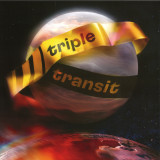
Full of bounce and experimentation in equal measure, ‘Triple Transit,’ Braille’s new album for Hotflush is about leaving his Sepalcure project (with Machinedrum) in the rear mirror, moving back to New York and using its energy to fuel new moves, confronting our hyper layered world and overcoming personal difficulties by being creative.
Focused squarely on utilising modular synthesis in sprawling studio sessions, the album covers a wide stylistic range and draws on the artist’s formidable battery of experience to craft a body of work that packs real emotional punch as well as a dancefloor sensibility.
We had a quick chat with him to wet your appetite…
Praveen Sharma aka Braille:
Moving on from Sepalcure
“That period of time when Sepalcure was at its peak was really inspiring. I’m still really in awe and humbled by the fans. It’s always amazing to hear about how music you’ve made has brightened up other people’s lives in some way, but ‘Triple Transit’ is really about transitioning from that period to something new. I’m intentionally not using many vocal samples on this album. That became quite a crutch for Sepalcure and I wanted to try and find ways to evoke those emotions and connect with the audience in other ways.”
The roots of his Bounce
‘Sour Patch Kiss’ and ‘While We’re Free’ are inspired by classic house and some early Detroit stuff. Songs like ‘Big Fun’ (Inner City), ‘I Wanna Be there’ (Model 500) and slowed down ‘Sex on The Beach’ (DJ Assault) have stuck with me since the beginning. I used to listen to this slowed down and doubled version of ‘Sex on The Beach’ on an early Juan Atkins mix cd on REPEAT when I was in high school.
Getting ambient
Triple Transit slows down and transitions through a bit of sadness and eventually acceptance at the end of the album. A lot of the music I’m making these days is trying to recreate that manic feeling so many of us have in 2024. Between social media, ridiculous hustle culture expectations and depressing global and national political events, it’s hard to not feel overwhelmed. I feel like Triple Transit is kind of a parabolic curve from mania to joy to a sober realization that yeah, actually the world is just fucked but somehow we carry on.
The first contact is a common science fiction theme about the first meeting between humans and extraterrestrial life. The theme allows authors to explore a variety of philosophical concepts by adapting the anthropological topic of the first contact with extraterrestrial cultures. But then what are the Topics of a possible “Second Contact”? What would have happened to civilization if the extraterrestrial life force returns. Are they ready to greet it?
In this case, the second contact comes in the form of SEELEN. Label head and part-time intergalactic traveller Janein’s second full EP on the Imprint. And he hasn’t returned to take prisoners.
The Title track takes you for a wild ride from the second one. A warbling, acidic texture marks the foundation of what is an absolutely destructive and fiery cut. One of Janein’s heaviest percussion tracks to date takes the mood to an absolute frenzy while the acid-textures and metallic Chords can almost singe your eyebrows off if you get too close to the speaker.
In comparison, Gaja tones it down somewhat with mellower synths and an absolutely funky Bassline. But do not underestimate this track in comparison to Kobald M. This track will ensnare you into its hypnotic chokehold. It is the kind of cut you can play in any situation and not a single person will leave the dancefloor.
Meeting the Alien for a Parlay, translating its transmissions on this record are musical linguists Somewhen and Peryl.
While Somewhen has leaned into Kobald M’s destructive potential, adding a chaotic, out-for-madness kind of energy, that is sure to bring insanity to any warehouse, Peryl, known for his cathartic breakbeat excursions, has absolutely deconstructed Gaja making it into a track that sounds like the moment an unknown flying object enters the atmosphere of the earth.
Benny Howell (aka DJ Subaru) is a UK based producer, DJ and overall promoter of good times who's undoubtedly propelling a new generation of music appreciation with an honourable respect for the earlier beginnings of club culture. Benny Howell might also be the pioneer of a new post-Brexit Eurodance genre, with "Surrender", a catchy Pop oriented production with strong influences from Italodisco and HiNRG, written and produced entirely from scratch with best friend Bella Quirin who co-wrote the lyrics after a break up with her ex. Innocent and charming lyrics over 120's BPM drum machine and a simple melody that you'll be humming in the back of your mind for days to come. Equipped with a Yamaha TX81Z, a few guitar pedals and a makeshift bedroom studio, "Surrender" is the product of a dear friendship between the two music lovers, as per Benny's recount: "Bella came and sung on the track in my bedroom during one of the gaps between Covid lockdowns after I asked her at the pub if she knew any singers and said me of course, and we went from just friends to best friends."
The remix on the B-side by Castro takes a darker turn into what almost sounds like a Techno version with heavy dubbed out effects taking the "Surrender" theme through an unhinged Ketamine flanger vortex. Full cover artwork and mastered at Manmade mastering in Berlin.
Bristol's cultured Innate label is back with a first outing of the year and it returns to their various artists format with a mix of talents all making their mark. UK veteran Tom Churchill opens up with 'Unknown Unknowns (Edit)', which brings plenty of fuzzy and lo-fi aesthetic to jacked up drums and spaced-out pads. Rai Scott then shows her class with 'Suasion' that sinks down deep into immersive drums and is subtly lit up with simmering strings. Innate co-founders Owain K and Gilbert then hook-up under their brand new alias Curved Space and showcase their love of electro with 'Reverie,' a dreamy cut that glows with nice celestial melodies and will have dance floors in a zoned-out state. Last of all it's Lisbon mainstay Jorge Caiado who debuts with the chord-laced 'Floating Without Lifting,' a sophisticated and serene jazz-techno cut that takes you to the stars.
DJ Feedback
Richard Sen:
"Lliking the Tom Churchill and Curved Space tracks. Will try and fit them into the show and in the club."
Laurent Garnier:
"A lovely EP indeed!"
Jayson Wynters:
"This is a great release. Nice varied tracks for different moods. Will certainly be playing this."
Anna Wall:
"Lovely VA! Thanks so much for sharing :) Faves are Jorges track and Rai Scott. Really beautiful music!"
Ewan Jansen:
"Great listen mate - a good gang assembled too."
DJ Guy:
"The EP is gonna be incredible..."
Orlando Voorn:
"I like em all!"
Moy:
"This is another really wikid V/A!"
Hizou:
"Thanks a lot, so good music here!"
Appleblim:
"I love the Tom Churchill - very detroity and deep, beautiful!"
Baldo:
"Thanks for this release, I love your track with Gilbert and also Jorge's! pure class!"
Alex Attias:
"Sounding dope! I’m feeling this great ep, thank you so much."
Chris Duckenfield:
"Many thanks for sharing, it’s a strong EP for sure. B2 probably my immediate fave."
Adam Shelton:
"Wicked release! Love all tracks, thanks so much."
Alien Communications:
"Love the EP, really like all the tracks but your own, Reverie, is definitely the strongest for me."
Dan Curtin:
"Sounding so lush...really really great. "
Vine Watson:
"Sounding great!!!"
Accomplished NYC singer-songwriter Kelli Sae unveils joyful new single Good Feeling on 21st June 2024, the first fruit of her fourth solo artist album due early next year. Good Feeling swings, sways and shimmies with playful Latino spirit; a summer-fun delight all about seizing the day and embracing love and life. Sae’s sizzling vocals dance in and around deft keys, layered horns, tight guitar parts and, of course, that infectious percussion. Verses switch up to agile scat solos and down to emotive breakdowns – it’s the very best of feelings….
Good Feeling is produced by Chris Franck, co-founder of Da Lata, chief instigator behind Zeep, Smoke City and Batu, and long-standing mastermind for a wealth of other studio projects and remixes. The record features a talented cast of musicians including award-winning Brazilian composer Rafael Martini, who arranged and conducted the horn sections in one of Latin music’s truest heartlands Belo Horizonte.
Kelli Sae’s story has it all. An internationally acclaimed artist, she previously shone as lead vocalist for renowned jazz-funk collectives Incognito, Count Basic and Defunkt, and worked with Tina Turner, Chaka Khan, Patti LaBelle, Ashford & Simpson and Me’shell Ndegéocello among others. Born of Puerto Rican, African and French descent, Sae has soulful eclecticism in her blood. The exciting mix of sounds, cultures and influences across her three, independently-released solo albums to date is testament to this, as well as her respected forays into composing, playwrighting and stage performance.
Good Feeling is Kelli Sae’s latest impactful outing for Reel People Music, following singles Good Love, Right Now and Believe In A Brighter Day earlier this decade. The special relationship is set to blossom further over the coming months. We. Can’t. Wait.
"Following on from May's "ECHOES Part 1 & 2" this is the second single of three to be released as an introduction to the next album project of Ulrich Troyer - TRANSIT TRIBE - to be released later this year.
This time it's one for the reggae fans and dubheads with contributions from Diggory Kenrick who has been busy over the last few years adding the distinctive sound of his flute to many new reggae productions. He is also an associate of the U.K. reggae label Pressure Sounds that specialises in reviving classic sounds from the roots and dancehall eras of the genre. Also joining the production is Takafumi Noda aka Mystica Tribe, a Japanese producer and musician who has specialised in a new form of dub techno and is known for adding the signature sound of his melodica to productions of dub friends from around the world.
The subject of travel, especially along modern, fast routes has long been subject to fascinate musicians, from the days of Kraftwerk's "Autobahn" and now the whole genre of dub techno seems to be one built for listening on long journeys. The Autostrada Del Brennero / Brennerautobahn is one of the most important motorways in Italy, as it connects the Po Valley with Austria through the Brenner Pass and features many modern bridges and overpasses that are ready built illustrations for the covers of dub techno albums! On this release this major European truck route is celebrated musically by Ulrich Troyer with inputs from Diggory and Taka to create two modern dub classics."
Steve Barker (DJ, Radio Presenter - On the Wire, BBC 1984 – 2023,
now Slack City Radio & reggae/dub columnist and contributor to The Wire)
Credits:
Diggory Kenrick: flute
Taka Noda: melodica
Didi Kern: drums
Ulrich Troyer: analog synthesizers, analog drum-machines, sampler, dub effects
A written by Diggory Kenrick & Ulrich Troyer
B written by Taka Noda & Ulrich Troyer
Recorded by Ulrich Troyer at 4Bit Studio & 4Bit Bungalow, Vienna - except flute recorded by Diggory Kenrick at Holloway Studio, London / melodica recorded by Taka Noda at Mystica Sound Studio, Tokio
Mixed & arranged by Ulrich Troyer at 4Bit Bungalow, Vienna
Produced by Osman Murat Ertel & Ulrich Troyer
Mastering & Lacquer Cut by Kassian Troyer at Dubplates & Mastering, Berlin
Cover Drawing by Ulrich Troyer
Special thanks to Steve Barker, Osman Murat Ertel, Diggory Kenrick, Eva Kelety and Takafumi Noda
Kindly supported by the City of Vienna (MA7 - Kultur), Federal Ministry Republic of Austria (Arts, Culture, Civil Service & Sport), SKE-FONDS (AT) & Amt für Kultur, Bozen (IT)
"I am in shock of what you are saying and don’t you go anywhere else and spread such false information”
Inspired by the underground night life in Iran, where Salar Ansari’s journey as a selector started in the mid-2000s, each cut on 'Chi Gofti? Nagi Jayi!" touches on a specific mood & scenario.
"Dorehami Melo دورهمی ملو", referring to a mellow get together after the last rave being raided;
"Tu Jaddeh Savaarkaar تو جاده (سوارکار)" is the rush of driving through the mountains listening to driving beats, heading to a party on the outskirts of Tehran through mountains
"Raghs e Ghalamou رقص قلمو" touches on the artist's commitment to painting sonically to unify with his people through creativity and resonance
"Long before discovering house music as a teenager I was bred as a dancer, a slave to the rhythm, in my parents vibrant house parties of dancing the night away till you drop. This is my culture, to surrender, to give in, to react to the rhythm, every corner of it. PGS is family to me and I am so happy to have this music that is very dear to me, come out through this imprint. PGS is about community, Hamtramck is about community, Detroit is about community, Iran is about community, this music is about community." - Salar
Written, produced, recorded by Salar Ansari
Design by Salar Ansari & Ben Saginaw
Thanks for: Ahang Ahmadi, Sina Matinsefat
"Tu Jaddeh Savaarkaar تو جاده (سوارکار)" music video by Vinnie Massimino, shot by friends in Iran
[a] A1. Dorehami Melo [دورهمی ملو]
[b] B1. Tu Jaddeh (Savaarkaar) [تو جاده (سوارکار)]
[رقص قلمو]
Situated at the heart of the Mediterranean Sea, Corsica and its inhabitants are surrounded by the abundance and cultural diversity of the region. In celebrating this richness, we have curated a collection that embraces the eclectic musical styles and creative spirit that characterize this historic geographic area. With 6 producers hailing from Aiacciu, Bastia, and Sicilia, prepare yourself for a journey full of surprises.
Discover the spacey and epic electro beats from Jimmy Batt's secret mind, then delve into the medieval chiptune-infused vibes of Human_Aventura, before being carried away by the romantic dark disco of Pasqua.
Explore the B-side of the EP and be enchanted by the schizophrenic and haunting house of Blinkduus Dischetto, Monica Venturella's acidic electro with special triple-blade effect, before finally getting lost in the powerful and sensory anarchy of Ørsø. The choice is yours: unleash the Mediterranean power on the dancefloor or immerse yourself in our underground culture with ease at home. Oh yeah, as Aiaccini, we put our name big in the title. That's why we're Bastardi.
For an aesthetic of (dis)obedience. The impressions Richard Siegal and his company Ballet of Difference gathered on a trip to Japan in September 2022 now find their way into a full-length dance evening. Siegal and his team had set off for Tokyo to learn the practice of Shuudan Koudou, also known as "Japanese Precision Walking". The strictly synchronised group choreographies are astonishing in their radical stringency and have become a secret YouTube hit, not least because of their peculiar subtle humour. Siegal recognises in the extreme disciplining of the bodies an analogy to the training practice of classical ballet. In the mutual exchange of these movement cultures, questions are raised about individual and collective thinking, about personal decision-making power and social responsibility. For this extraordinary project, Richard Siegal has invited a special guest: Nazareth Panadero, long-time companion of Pina Bausch, who has long since become an icon of Wuppertal dance theatre and will be on stage with the BoD ensemble.
The production BALLET OF (DIS)OBEDIENCE is sponsored by Goethe Institut, with the kind support of Sissel GmbH.
CHOREOGRAPHY & STAGE: RICHARD SIEGAL
COSTUME: FLORA MIRANDA
LIGHT & VIDEO: MATTHIAS SINGER
MUSIC: ALVA NOTO
DRAMATURGY: TOBIAS STAAB
more info to: Shuudan koudou
'Shuudan koudou' Shuudan Koudou Is the Japanese #art of Synchronized Precision ...YouTube · Boson TV: Tech Marvels & Cool Discoveries22 Dec 2022
Kottke.org https://kottke.org › shuudan-koud...Shuudan Koudou Is the Japanese Art of Synchronized Precision Walking
On the other hand, hybrid 3 is inspired by Noh Play - Japanese performances and deals with the refusal of rules musically, hybrid three continues the two previous albums and weaves both rhythmic and beatless musical pieces into a holistic work.
The idea for me has always been that these albums are not only perceived as individual tracks, but as a whole piece, which is why I find the possibility of experiencing and listening to these albums in the right order and as a whole particularly important. For me, the pieces are not only closely related to the ballet that was created for them, but also function as individual pieces as pure, musical pieces and mark a new quality for me, which is very strongly focussed on producing electronic sounds and structures in such a way that they can develop a sculptural quality.
- A1: World Standard - Fellini & Rota
- A2: Masumi Hara - Your Dream
- A3: Normal Brain - M.u.s.i.c
- A4: Hiroyuki Namba - Who Done It? (Part 2)
- B1: Yasuaki Shimizu - Crow
- B2: Hiroyuki Namba - Tropical Exposition
- B3: Imitation - Exotic Dance
- B4: Pecker - Sha La La
- C1: Ep-4 - Db
- C2: Earthling - You Go On Natural
- C3: Masumi Hara - Camera
- D1: Geinoh Yamashirogumi - Rinne Kohkyogaku Meikei
- D2: D-Day - Ki·ra·i
- D3: Ryuichi Sakamoto - A Wongga Dance Song
Ever since he made his first trip to Japan to DJ, Optimo Music founder JD Twitch has been bewitched by Japanese music, and particularly the vibrant, imaginative, and often far-sighted sounds which emerged from the island nation during the 1980s. Now he’s put years of digging in Japanese record shops to good use on Polyphonic Cosmos, the latest release on his compilation-focused Cease & Desist imprint.
Subtitled ‘A Beginners Guide to Japan In The ‘80s’, the collection offers a personal selection of Japanese gems recorded and released between 1981 and ’86 – a period when advances in recording and musical technology offered the nation’s artists and producers a whole new tool kit to employ. When combined with the unique musical culture of Japan, where local traditions are frequently fused with Western styles to create timeless, off-kilter aural fusions, this embrace of locally pioneered music technology had spectacular, often unusual results.
Eight years in the making, Polyphonic Cosmos provides an endlessly entertaining musical snapshot of Japanese music of the early-to-mid ‘80s with all of the open-minded eclecticism and sonic twists that you would expect from the Glasgow-based DJ.
Compare and contrast, for example, the gently breezy, morning-fresh folk-plus-electronics bliss of ‘ばら二曲 Baranikyoku (Fellini&Rota)’ by World Standard – the most familiar alias of long-serving musician/producer Sohichiro Suzuki – and the hallucinatory, slow-motion tribal rhythms, post-punk rhythms and tape delay-laden electronics of Imitation’s ‘Exotic Dance’. Or, for that matter, the tipsy mid-‘80s electronic reggae of Pecker’s ‘Sha La La’, the grungy but melodic post-punk strut of ‘You Go On Natural’ by Earthling (a track Twitch accurately describes as “sheer unrelenting groove”), and the unearthly, swirling sonics, new age instrumentation and flotation tank vocals of prolific (and seemingly mysterious) act Geinoh Yamashirogumi’s ‘Rimme Kohkyogaku Meiki’.
It’s a credit to JD Twitch’s curatorial skills that the quality never dips, and sonic surprises lurk around every corner. Consider for a moment the hard to describe, far-sighted audio immersion of D-Day’s ‘Ki-Ra’ – all languid post-pop guitar, enveloping chords, spoken word vocals, shuffling 808 beats and marimba melodies – and the two contributions from video games soundtrack specialist (and driving instrumental synth-pop specialist) Hiroyuki Namba.
The collection naturally includes some selections that have long been favourites in Twitch’s DJ sets – see Masumi Hara’s ‘Your Dream’ – as well as a handful of tracks from artists who may be more recognisable to those with only rudimentary knowledge of Japanese musical culture. The great Yasuaki Shimizu, whose work as Mariah has become far better known in recent years thanks to reissues of some of his most magical albums, is represented via ‘The Crow’, a picturesque chunk of horizontal, hard-to-define jazz-not-jazz smokiness, while the collection fittingly concludes with a sublimely funky, oddball electronic workout from Yellow Magic Orchestra legend Ryuichi Sakamoto (the frankly incredible ‘Wongga Dance Song’).
Matt Anniss
Chamber music masterpiece with electronics
Albert Alan Owen was born in Wales in 1948 to parents of Welsh and Latvian heritage. His family later moved to Zimbabwe, where his father took up a teaching position. There, Owen was deeply influenced by local music and culture, while also exploring American RnB and jazz. It was during this period that he became acutely aware of the harsh inequalities under British colonial rule, which instilled in him a lifelong aversion to discrimination and racism.
In 1967, Owen returned to Europe to pursue his studies and enrolled at the Royal Academy of Music in London. He went on to spend time in Paris, studying composition with the eminent Nadia Boulanger and piano under Jacques Février, a favorite pianist of Ravel’s and Poulenc’s. Owen's focus shifted almost entirely to composition, and the acquisition of a Fender Rhodes electric piano marked the beginning of a divorce from his classical Western training. This transition allowed him to merge his passion for African and African-American music with the impressionistic styles of Ravel and Debussy while exploring the innovative realm of electroacoustic composition.
These formative experiences framed Owen’s career as a composer and educator at the Royal Academy of Music and London’s Working Men’s College. He eventually returned to Wales, where he continues to reside.
In 1979, 29-year-old Albert Alan Owen released Keyboards & Strings, a light magical chamber music masterpiece.
Transcending the formal conventions of its era, Keyboard & Strings is an acoustic and electric piano piece, where the violin is met by synths and electronics.
As is often the case in Albert Alan Owen’s most intimate works, there is a sense of ethereal beauty that emerges from the music, akin to the emotional state one might experience while contemplating a Félix Vallotton landscape or the unfathomable mystery of dawn’s first light.
Quiet, profound, and immersive, Keyboard & Strings stands out as an electronic-age tone poem, a rare gem that transcends time and place.
Nomadico's "Shards" remembers the future of Techno beginning with restlessness and urgency. A time where disco, funk, hip-hop and electro rocked hood parties via boomboxes, DIY recordings and sound systems.
Our culture has since been shattered into shards that must be reconstructed, reshaped, remixed and reconnected. The A-side launches with the broken techno of “Somos Cosmos” then onto the hi-tech funk of “Antivenom” and “Volcanismo” followed by the b-boy breaks of “Radiotron”.
The B-side explores UR inspired electro on “Disconnected” and “Electroreceptor” followed by dark and moody “Hyper Cypher” and “Tlalocan”.
THE TWO CLASSIC AND HIGHLY COLLECTABLE INEVITABLE SINGES PLUS RELATED PEEL SESSION RECORDINGS. CAPTURING THE FIRST TWO YEARS OF DEAD OR ALIVE’S CAREER. ON BERRY-RED VINYL! A SEQUEL AND COMPANION RELEASE TO 2023’S CRITICALLY AND COMMERCIALLY SUCCESSFUL ‘LET THEM DRAG MY SOUL AWAY’.
Having been ‘discovered’ working in Liverpool’s Probe Records during the punk rock explosion of the late 1970s, Pete Burns quickly found himself fronting his very own band, Nightmares In Wax, who quickly mutated into the more familiar Dead Or Alive.
A star was born. But prior to pop superstardom, tabloid-tantalising celebrity and his later revival and recognition as an icon of gay punk and pop culture, Pete led Dead Or Alive into far darker waters, as one of the earliest explorers of the post-punk Goth scene.
Captured on two remarkable 7” singles originally released on Liverpool label Inevitable, the band also caught the attention of the
ever-reliable John Peel, and recorded material for his seminal BBC Radio One programme. ‘Running Wild’ compiles those early
singles and related Peel Session highlights, bringing the latter to vinyl for the first time. Pressed on berry red vinyl,and housed in
a cover photograph by Dead Or Alive’s then manager Francesco Mellina, ‘Running Wild presents an early glimpse at the
phenomenon Pete would become, and a long overdue back story accompaniment for fans and collectors alike.
This is Mulatu Astatke’s protege and Ethiopian saxophonist and composer Jorga Mesfin’s debut album. It’s a long foray into Ethio-jazz that takes this courageous syncretism further by fusing spiritual experimentation with bits from all kinds of situations in Ethiopian music, jazz music, and specifically Ethiopian jazz music that precedes it.
Jorga Mesfin is widely regarded as one of the most talented contemporary musicians and composers in Ethiopia. He started his professional career at the young age of 17 and has since collaborated with numerous renowned artists, including Tsegaye Gebremedhin, Carolyn Beard Withlow, The Last Poets, Vijay Iyer, Wayna Wondossen, Kirk Whalum, Takana Miyamoto, Gizze Reggae band, Dionne Farris, Aster Aweke, Mahmoud Ahmed, and Mulatu Astatke. Additionally, Mesfin was a resident at Astatke's legendary African Jazz Village in Addis Ababa every Thursday.
Jorga Mesfin is the founder of the Ethio-jazz group called Wudasse. He composed the music for the epic Ethiopian film "Teza" directed by Haile Gerima. His work on the film earned him the Best Music Award at the 22nd Carthage Film Festival and Best Composition at the 5th Dubai International Film Festival.
Muzikawi is a record label, music publisher, studio, artist management, and event organizer based in Addis Ababa and Stockholm. With extensive experience in curating and representing artists from all regions, Muzikawi has a deep understanding and appreciation of Ethiopia's culture.
The Mental Groove Classic series returns with a treasure trove of rare and hard to find tracks plucked from the personal collection of label founder Olivier Ducret, a pivotal figure in Switzerland's acid house and rave-era party scene.
On Volumes Two and Three of the series - the first installment hit stores in 2017 - the Mental Groove and Musique Pour La Danse label founder takes us back to the turn of the '90s, a time he spent promoting parties in fields, squats, forests, warehouses and former factories in and around Geneva and behind the counter of a record shopof the same name. While others in Switzerland's emerging dance music scene gravitated towards US house and garage, Olivier and his crew opted for a bass, breaks and techno-focused sound inspired by regular trips to clubs, raves and record shops in the UK.
Drawing directly from his own record box and a memory bank full of snapshots of euphoric dancefloor moments, Mental Groove Classics volumes Two and Three sees Olivier reaching for cuts of near-mythical rarity, genuinely overlooked gems, and undeniably brilliant tracks that have left a long-lasting impression on the local raving landscape. It's an autobiographical audio document, historical archive and personal musical statement all rolled into one, inspired by a moment in time where musical boundaries were being redrawn in a wave of carefree optimism and freedom inspired new rave scenes across Europe and far beyond.
Matt Anniss
Original artwork by Soho's Brain Club co-owner and artist of early British club culture Mark Wigan.
File under house, breakbeat, techno and warehouse rave music