Das CULK-Debutalbum zum zweiten Mal nachgepresst! Alternatives Cover-Artwork, farbiges Fucsia Vinyl! Die junge Wiener Formation überrascht mit unerwartet schönen Spannungsmomenten und Melodiebrüchen - hin- und hergerissen zwischen meditativer Trance, aufgewühltem Sein und purer Ekstase. Verzerrte, kantige Gitarren, Rhythmuswiederholungen aus dem Hause Psychedelic Rock, 60er Jahre Nonchalance à la Velvet Underground treffen Spuren von Shoegaze und Post-Punk. Das Resultat: von einer kalten Decke eingewickelt zu werden - wohlig und trotzdem unbequem, einladend und trotzdem herausfordernd, zugänglich und trotzdem komplex. Ein ausgeklügeltes Album zum immer wieder Hören.
Поиск:d deck
Все
Propulsive tabla percussion and meditative drones collide in deep instrumental conversation on Shruti Dances, the debut collaborative album between UK heavyweights Auntie Flo and Sarathy Korwar, forthcoming on the newly relaunched, Make Music imprint.
Across six exchanges of dynamic electronic production and richly layered Indian classical percussion, Shruti Dances discovers two architects of rhythm and movement on an explorative journey through South Asian tonality and diasporic identity.
One an elemental force on drums, the other on the decks, London-based, Indian-raised drummer/composer, Sarathy Korwar and Scottish-Goan producer/DJ, Auntie Flo first connected back in 2019, unaware both were navigating opposite ends of the beat equilibrium. Where Auntie Flo (aka Brian D’Souza) was new to Korwar’s reimagining of jazz, Indian classical music, electronics and spoken word, Korwar was already a big admirer of Auntie Flo’s intl-facing club output, having first discovered D’Souza’s Rainfall On Red Earth off his Soniferous Garden 12” and 2019 SAY award-winning (Scottish Album of The Year), Radio Highlife. Once properly acquainted, Korwar invited Auntie Flo to remix a track off his landmark 2019 album, More Arriving, described by The Guardian as “a stylistic leap from jazz to hip-hop to spoken word…a protest record encompassing the breadth of immigrant experiences”.
The seeds of an unlikely yet powerful musical bond had been sown and when mutual friend, co-founder of Mixcloud, and Make Music label organiser, Nikhil Shah, asked the duo to inaugurate the label’s new live/electronic direction (previously home to Leon Vynehall, U and George Fitzgerald), Korwar and D’Souza hit the studio. Expanding on early conversations around traditional Indian instrumentation, practicing meditation and improvisation, Shruti Dances (a riff on free dance movement, Ecstatic Dance) was born. Meaning 'that which is heard' in Sanskrit, shruti refers to a note in musical terms, but in this case also references the album’s most prominent influence and instrument, the shruti box.
“The shruti box formed the basis of the sound of the project. It’s a drone instrument, similar to a harmonium, and it makes an amazing sound. I’ve spent the last two years studying sound therapy, and immersing myself in ambient and drone through the Ambient Flo project, and am particularly interested in how they can induce meditative states of consciousness. I was really excited to hear what the Shruti box could do with this EP.” Auntie Flo
Across six tracks, (each named after 6 of the 7 main musical notes in the Indian solfege system), Shruti Dances draws on a celestial mix of traditional percussion and processed digital effects. On opening track Dha, Korwar’s sparse tabla rhythms hop across D’Souza’s scattered, arpeggiated synths, where as on Pa, a Balearic shuffle channels Moroccan Gnawa music and Senegalese sabar meets Mark Ernestus’s Ndagga Rhythm Force. Harmonic speed tabla and roaming drones provide a sense of the ethereal and fourth-worldly on Ma, a track that’s resplendent, curious atmosphere would fit snug into the deep listening-focused programming of Auntie Flo’s Ambient Flo online radio station, a curatorial platform and avenue exploring his interest/promotion of mental health, launched over the UK’s first lockdown. Ni sees Korwar pick up the sticks, thrashing toms in a spirited frenzy, whilst downtempo album closer Sa offers some room for reflection, its slow, swirling chords cloud our focus, leaving us with all but the distant sound of birdsong.
- A1: Jazz T Intro
- A2: Tomorrow People
- A3: Weldon Hi-Score
- A4: Axel Foley Is Tchaikovsky
- A5: Steve Davis Vs Tom Browne Feat. Deeflux
- A6: Mark B Feat. Mcm & Lewis Parker - A Certain Special Skill Remix
- A7: King Kashmere - Man In A Suitcase (Exclusive Unreleased)
- A8: Nobody Beats The Beats
- A9: Jazz T Feat Ramson Badbonez - Legends Of The Decks (Original Cut)
- A10: Oh No Rip Doom
- A11: Mr Barnes
- A12: Micall Parknsun Feat. Jehst - Movements (Jazz T Remix)
- A13: You’re Ugly Beat Juggle
- A14: Fuck 45S?
- A15: The Cantina
- A16: Talking Loud And Saying Fuck All
- A17: Tim Dog - Bronx N*!?A (Dj Shame Remix)
- A18: Tim Dog - Run Run Run B!*?H
- B1: Pianos From Hell
- B2: The Greatest Dj
- B3: First Man In The Moon
- B4: Peaceful Planet
- B5: The Earth Rotates
- B6: Block Party Feat Kool Herc
- B9: Pure Innocence
- B10: Resident Van Man
- B11: Break One
- B12: Bak To Skool Feat Joker Starr
- B13: Now That’s Fusion
- B14: Piercings
- B15: Mink Corporation
- B16: Ralphy Sleeze
- B17: Mel Jones
- B18: Planted
- B19: Fresh Mess
- B20: The Birth Of Dumile
- B21: Finest Herb
- B22: Are You Gonna Take The Weight?
- B23: Floating Galleons
- B24: Memories
- B7: Put Your Hands Together Fool
- B8: Y Chromosome Feat Micall Parknsun
Certain Sound Records and DJ Jazz T announce the second in a series of DJ mixtapes from the World-Famous Steel Devils Turntablist Crew.
When he is not touring the world with Jehst or High Focus Records artists or running his own legendary label Boot Records. You will find Jazz T laying down cuts or mastering some of the UK’s finest hip hop releases. So, it was an honour that he wanted to drop a brand-new mixtape for us. Spurred on by his counterparts in the Steel Devil’s crew, Jazz put together this outstanding collection of rarely or never heard beats and collaborations and distilled it into 60 mins of mixtape glory. The track listing says it all.
180g vinyl pressing.
During the late 2010s, music lovers around the world began obsessively listening to increasingly esoteric albums on Youtube. More often than not, they’d leave the browser on autoplay. This was how Facundo Arena, the composer and producer behind The Kyoto Connection, discovered the technonaturalistic pleasures of Kankyō Ongaku (environmental music), a distinctly Japanese interpretation of European, British and American minimalist composition and ambient music. “It was a kind of algorithmic magic,” he says.
Upload by upload, the utopian music of Hiroshi Yoshimura and his 80s Japanese contemporaries transported Facundo back to his childhood. When he was five, his father placed him in karate lessons and began watching martial arts movies with him. From those early experiences, Facundo became fascinated Japanese history, tradition, and culture, particularly that of Kyoto - the cultural capital of Japan. Kankyō Ongaku reminded him of hearing the sounds of Japanese folkloric instruments as a young boy, and suddenly, the way the influence of Japan had manifested in his music made sense. “I had the sensation that for many years, I’d been doing something similar to the style,” he explains.
Inspired, Facundo used an iPad and an old Akai cassette deck to record Postcards, his homage to Japanese minimalism and Kankyō Ongaku. By this stage, he was twelve years deep with The Kyoto Connection, the musical project he launched in 2005 in his hometown of Buenos Aires, Argentina. Over that late 2000s and 2010s, Facundo, later on joined by collaborators Rodrigo Trado (drums), Jesica Rubino (violin) and Marian Benitez (vocals, now his wife), released numerous D.I.Y albums. Project by project, they followed the threads between 80s synth-pop, ambient, new age, house, techno and acoustic composition.
Postcards introduced The Kyoto Connection to listeners around the world and brought Facundo into our orbit. During Argentina’s covid lockdown, Facundo received a set of soundscapes recorded in Kyoto by the Japanese musician and sound designer Masafumi Komatsu. Over several insular months, he decorated them with synthesisers, samples and subtle rhythms, creating The Kyoto Connection’s next album, The Flower, The Bird and the Mountain to be released via Isle Of Jura offshoot Temples Of Jura.
Ostensibly made up of twelve distinct tracks, listening to The Flower, The Bird and the Mountain feels more akin to spending calm, meditative time in twelve specific environments. Although the foundations they rest on are recordings made in geographic locations around Kyoto, Facundo has yet to visit Japan. As a result, the landscapes he paints sit somewhere between fiction and fact, richly pictorial sonic imagination juxtaposed with echoes of reality. Regardless, as his bubbling melodies and glistening synthesisers glide against Masafumi Komatsu's recordings, Facundo guides us into a blissful zone of tranquillity well worth spending time within.
For Richard Dorfmeister and Rupert Huber, the idea of rebirth is a creative driving force – an artistic device which not only informs their work, but anchors it. As the avant-garde electronic group Tosca, the two artists have lived many musical lives, from their early electronic experiments with tape decks to the blissed-out dub compositions with which they have made their name.
Jackie Mittoo, organ and piano maestro, was not only a founding member of the legendary Jamaican Ska group The Skatalites, but through the course of Jamaican music’s long history has produced a body of work under his own name and of that with his various group incarnations, The Soul Brothers, Soul Vendors and the Sound Dimension. His distinctive organ and piano sound and musical arrangements have all played a major part in Jamaica's musical history.
Jackie Mittoo (born 1948, Kingston, Jamaica) began playing musical instruments at a very early age. Taught piano by his grandmother he was performing live by the age of 10 and recording by the age of 15. Two Kingston bands that he played with the Rivals and the Sheiks brought him to the attention of Studio 1's founder Coxsone Dodd. Who at the time was putting a group of musicians together to be his studio band. Impressed by his skills on both the organ and the piano, Jackie was asked to join in what would become Jamaica's foremost band The Skatalites. The fellow band members were Lloyd Brevett (bass), Lloyd Knibbs (drums), Don Drummond (trombone), Tommy McCook, Roland Alphonso and Lester Sterling (Sax), Johnny Moore (trumpet), Jah Jerry(guitar) and Mr Mittoo (piano). This line up ruled the Jamaican scene between 1964 - 1965 as well as inventing the Ska sound, they also performed the backing duties for the other top labels of the time including Duke Reid's Treasure Isle and Justin Yap's Top Deck label.
1965 saw The Skatalites disband, and Jackie Mittoo move on to his next musical project The Soul Brothers. Formed with fellow Skatalite Roland Alphonso,this band would back all the hits coming out of Studio 1 for the next three years with Jackie Mittoo working as band leader and musical arranger. Around this time Jackie also had his own single released, a Ska underground classic called 'Got My Bugaloo'. Rare, as it also features Jackie in the unusual role for him, as lead singer!!!!. 1966 saw the Ska sound evolve into Rocksteady, again with Jackie's band at the helm, and his first hit single the Rocksteady cut 'Ram Jam'. The success of which would lead to a solo career and album releases under his own name such as 'Now', 'Macka Fat', 'Evening Time', 'In London' and 'Keep on Dancing', to name but a few. In 1967 the hits at Studio 1 were still flowing when The Soul Brothers morphed into The Soul Venders and began backing such luminaries as Ken Boothe, Alton Ellis, Delroy Wilson, The Heptones, The Cables, The Wailers and many other of the label’s solo artists.
By 1968 Jamaican music was ready for another change and Rocksteady rolled into a slower groove soon to be called Reggae. Jackie Mittoo would be at the forefront with his latest band The Sound Dimension. A line-up that included Leroy Sibbles (bass),Roland Alphonso and Cedric Brooks (saxophone),Eric Frater and Ernest Ranglin (guitar) and Bunny Williams (drums). Being the house band at Studio 1 they backed all the leading names of the time, John Holt, Horace Andy and Alton Ellis, all of Studio 1's output carried his sound. Jackie Mittoo emigrated in the late 60's to Canada but travelled to Jamaica and London to record with many of the big new names, who were trying to redress Studio 1's supremacy and needed his magic touch. Such producers as Bunny Lee used Jackie Mittoo on many of his sessions,Sugar Minott among others were always glad of his services.
For this release we have put together a selection of some of his finest recordings done with legendary reggae producer Bunny Lee. 1970’s cuts that feature Jackie’s numerous talents, showing his ability to embellish tracks with a feel few could better. Musical arranger, band leader and all around studio ace.
We hope you enjoy this great set with Jackie Mittoo in fine style and his organ super powered indeed…
For Richard Dorfmeister and Rupert Huber, the idea of rebirth is a creative driving force - an artistic device which not only informs their work, but anchors it. As the avant-garde electronic group Tosca, the two artists have lived many musical lives, from their early electronic experiments with tape decks to the blissed-out dub compositions with which they have made their name. Their latest project, OSAM, takes this idea of renewal even further. A meditative journey through rhythm and texture, the album represents a new chapter for the Austrian duo. It's as much an instrument for change as it is a source of inspiration. 'Osam' is a direct translation of the number eight in Serbian, but it also acts as the mediaeval symbol for a fresh start - a renaissance. This is their ninth studio album but in true Tosca style when they started working on the concept for the record, they thought it was their eighth.
Marking over 16 years as an artist, Robert James unveils his debut album Battle of The Planets. A milestone in any musician’s career, the LP illustrates the breadth of Rob’s tastes and influences, exploring the rugged terrain of planet electronica. Ranging from breaks and electro to house and techno, Battle of The Planets was made during lockdown, a period of creativity and isolation for many artists around the world. Across 10 skillfully produced cuts Rob takes us on an intrepid adventure into the cosmos, where mysterious atmospheres and uplifting melodies sit side by side with captivating dance floor rhythms. Many shades of his personality come through on this album, all tied together by his unique sonic identity; informed by his years spent on the dance floor, behind the decks and in the studio. On Battle of The Planets Robert James presents a distillation of his extensive knowledge and experience into one succinct, highly engaging body of work.
First album by this duo, known separately for their work in Mouse on Mars
and Gastr del Sol.
Two long-form pieces, utterly different from one another: one hyper-detailed
electronic music and sound poetry, and the other live-in-the-studio electric
guitar and laptop paint-peeling.
The exciting first chapter in a long-anticipated collaboration
David Grubbs and Jan St. Werner met in the mid-1990s when Grubbs was
playing with Gastr del Sol and The Red Krayola and St. Werner in Mouse on
Mars and Microstoria. After years of exchanging ideas, ‘Translation from
Unspecified’ marks their first time locking horns as a duo, and it’s clear this
deck-clearing collaboration was long overdue.
In January 2020 Grubbs arrived at Mouse on Mars’ Berlin studio Paraverse
with a guitar and ‘Translation from Unspecified’, an open-ended, seemingly
self-generating poem suggesting AI, one of the themes in St. Werner’s recent
work. This became the side-length title track, a winding corridor of electronic
fanfares and spontaneous musical miniatures urging Grubbs’s slow and
steady recitation to grow wings and graduate into song.
Who knows where this idiosyncratic mise-en-scène - day-glo, extrovert
electronics and task-oriented human - came from? Reference points - distant
ones - might include Robert Ashley and Paul De Marinis’s ‘In Sara, Mencken,
Christ and Beethoven...’ and the sound poetry of Anton Bruhin.
Flip the record and you have ‘Soixante Ooze’, a live-in-the-studio duo for
guitar and computer more recognizably St. Wernerian and Grubbs-like that
reconfigures elements of the title track before finally morphing into needlepinning monoliths of sound.
David Grubbs has released fourteen solo albums and appeared on more
than 200 releases. He was a member of the groups Gastr del Sol, Bastro,
and Squirrel Bait and has performed with Tony Conrad, Pauline Oliveros,
Luc Ferrari, Will Oldham, Loren Connors, the Red Krayola, Royal Trux, and
many others. His newest book is ‘Good night the pleasure was ours’ (Duke
University Press, 2022).
Jan St. Werner is an artist and electronic music composer best known as
one half of the group Mouse on Mars. He has collaborated with Oval’s
Markus Popp as Microstoria and written music for installations and films by
visual artist Rosa Barba. In 2013, St. Werner released ‘Blaze Colour Burn’,
the first of a series of experimental recordings called ‘the Fiepblatter
Catalogue’. Recently his work has prioritized installation and interventions
with spatialized sound, including a number of collaborations under the name
Dynamische Akustische Forschung (DAF).
Don’t ya know it’s hard to be a god. No reason to sugar coat it, what you’re getting is peak Whitney K, poetry in motion and masterful writing where words, harmony, arrangements all dance in the same direction, free flowing through songs about change and memory. A voice as an instrument.
Hard To Be A God is the new mini-album by Whitney K and follows 2021’s acclaimed ‘Two Years’. Now based in Montreal, once again Konner Whitney is accompanied by friend, musician and all-hands-on-deck collaborator Joshua Boguski and by multi-instrumentalist Avalon Tassonyi.
Impossibly rare and extremely obscure 45 that almost never turns up. A monstrous modern soul dancer with a funky edge on the a-side and a great boogie banger on the flip side now available to soul and funk fans around the globe at the price of a pizza for one. This version comes out of a fortunate demo on a 1/4” reel tape which is the only recording that survived a car crash Mr. Horton was involved in many years back. Johnny kindly allowed us to license this beautiful piece of music and we are very proud to bring to your decks such a testament to the Alabama sound of the seventies.
Repress!
R.A. The Rugged Man is one of the most fascinating figures in hip-hop history. His career spans decades, and defies simple narratives. The Rugged Man has been an up-and-coming star, an industry outcast banished and forgotten, an underground cult hero, an independent success story, and an influential master of the art form.
Now, R.A. The Rugged Man is back with ""All My Heroes Are Dead"", a brand new album that stands as his best work to date. “So many of the greats are gone, and the legends who made it out alive are cast aside,” R.A. explains. “Society left our heroes and their culture for dead. We have to dig that greatness out of its grave, and bring it back with an angry vengeance.” "All My Heroes Are Dead" features an all-star lineup of hip-hop heavyweights, including Atmosphere, Chuck D, Ghostface Killah, Immortal Technique, Vinnie Paz, Ice T, M.O.P., Kool G Rap, Brand Nubian, DJ Jazzy Jeff, Chris Rivers, Onyx, Inspectah Deck, A-F-R-O, Masta Killa, and more.
The Carpi-Chicago connection is back to work. Sometimes it just takes a simple riff of a funk guitar to wreak havoc in Soul People minds and that's exactly what happened here. A riff you hear your mate playing one night while having the very last drink and the next day a project is born. Deep vocals, strings stabs, subtle motherf... Fender Rhodes and driving basslines. A Philly inspired dancer you'll can't wait to throw on your decks.
As many of you will probably know, on the flip side of our releases we are use to place the plain instrumental version of the main side. This time it's different. We have worked on "Open Up" with a different approach. Synths, special effects, a pinch of electro claps all marching on a groovy breakbeat inspired by the great James Gadson and backed by an 808 kick. Listen from the Youtube link below and judge by yourself.
- A1: Nankyoku, Decky & Imocky - The Battle
- A10: Nankyoku, Decky & Imocky - Showdown
- A11: Nankyoku, Decky & Imocky - Conclusion
- A12: Nankyoku, Decky & Imocky - Sutakora, Sassa!
- A13: Nankyoku, Decky & Imocky - Game Over
- A2: Nankyoku, Decky & Imocky - Wilderness
- A3: Nankyoku, Decky & Imocky - Battlefield
- A4: Nankyoku, Decky & Imocky - Thief's Theme
- A5: Nankyoku, Decky & Imocky - Old Map
- A6: Nankyoku, Decky & Imocky - Turtle Village I
- A7: Nankyoku, Decky & Imocky - Fiend's Path
- A8: Nankyoku, Decky & Imocky - Turtle Village Ii
- A9: Nankyoku, Decky & Imocky - Death Adder
- B1: Naofumi Hataya - Chapter Select
- B10: Naofumi Hataya - The Castle Gate
- B11: Naofumi Hataya - Castle Of Dark Guld
- B12: Naofumi Hataya - Death Adder Ii
- B13: Naofumi Hataya - All Clear
- B14: Naofumi Hataya - Staff Roll
- B15: Naofumi Hataya - Result
- B16: Naofumi Hataya - Game Over
- B2: Naofumi Hataya - Ravaged Village
- B3: Naofumi Hataya - Boss
- B4: Naofumi Hataya - Magician Stage
- B5: Naofumi Hataya - Crystal
- B6: Naofumi Hataya - Ancient Ruins
- B7: Naofumi Hataya - Enemy’s Headquarters
- B8: Naofumi Hataya - Dragon's Throat
- B9: Naofumi Hataya - Boss
For their seventh release in partnership with SEGA of Japan, Data Discs is delighted to bring together the complete music from the classic Mega Drive games, Golden Axe (1989) and Golden Axe II (1991), in one special package. This release features the unforgettable artwork from both games, supplied on two thick lithographic prints, with the record itself pressed on heavyweight translucent gold vinyl. The outer sleeve features rare artwork from the 1989 Japanese edition, sourced from the SEGA archives and presented on 425gsm cardstock with gold flood printing. As always, the audio has been carefully restored and mastered using the original console as the source, ensuring these memorable soundtracks are preserved for many quests to come!
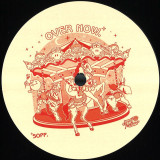
Three fun, disco sample lead tracks from ex Southsea resident Sopp and a slammin’ remix by Inverness producer Mark Mackenzie
Sopp has been building his way into the scene since 2015. His sets blend a mix of highly energetic, bass heavy rhythms with disco inflections and odes to classic 90’s and 00’s rave scene. So far having released on Chequered Wax, QRUK, Moodygurl and TheBasement Discos. Each of his productions showing a different aspect of his behind the decks personality.
Radio play from the likes of Jamie Jones, Sarah Story, Shadow Child & Jaguar.
Selected DJ Feedback:
Jamie Jones - Digging it.
PEZNT - Whole EP is dope but I think Take Me will work for every true underground head. Great job!
Piem - Dope!!!!
Hifi Sean - This E.P is hotness !
Nathalie Capello - groooooveeeeeyy. Nice!
The Magician - I like "Living" a lot as well
Robert Owens - Cool tracks
Inland Knights - great versions....
Chrissy - nice one!
Raphael Hofman - just awesome!
Ramon Tapia - Dope pack right hurrrr!!
Ammo Avenue - wicked cuts! Take me is my fav
Mirko Paoloni - super bomb!
Round Table knights – Coolio
Oliver Dollar - nice one!
Another collaboration is on deck as 017 from Hakim Murphy and HEAR. Dream Scoring is up with a three track 12” titled Cinematic Panoramas. These tunes create different feels; two that are more straight up dance tunes and one with a flipped out disco vibe. This is the second 12”, following up the psychedelic Image of a Myth on Naissance Music as they continue with their moments of time scoring theme.
Equal parts Sheffield bleep, fractal IDM and interstellar ambience, Hyper Nu Age Tekno sees Taro Nohara (aka Yakenohara) plotting a star map on a faded rave flyer. Let the billionaires blast into orbit while you explore your inner space with Growing Bin.
From the LP's earliest moments, the whomping subs and crystalline chimes of "Space Debris", it's clear that we're a long way from Hamburg. Taro pilots this craft on a deep space exploration way beyond the run out groove, to a place where heartening chords herald a twin sunrise and any broadcasts are lost in translation. The polyrhythmic pulse of "Ill Ell" follows, its concentric chimes and rapid fire kicks summoning the teknoguild to a watery altar in the engineering department. Sticking with interstellar mysticism but taking a turn for the transcendent, "Baker Baker Paradox" spins Reich-ian repetition into a graphene gossamer embellished with chrome, crystal and shoegaze shimmer.
The B-side begins on the observation deck, bathing in the beauty of "Celestial Harmonia"'s sci-fi exotica, before the entheogenic "Use Your Head" prompts a delirious dash to the holodeck. Laying serene pads over a techy 4/4, Taro turns out the most danceable and dreamy track on the LP. As ambient chords ring out into the aether and rhythmic pulses shift out of phase, "Airplane Without People" is the loading screen for your virtual fantasy, soon rendered through the woody percussion and spheric bass of "Music For Psychic Liberation". Leave your body behind as you pick mushrooms in a CGI forest.
Studio Electrophonique is James Leesley: a young songwriter and musician from Sheffield.
Since the critical acclaim accompanying his sought-after debut 10" album "Buxton Palace Hotel" in 2019, James has captivated audiences performing at his own curated events in Sheffield, Liverpool, London and Paris as well as at The Green Man and End Of The Road festivals.
In 2020 Studio Electrophonique performed at L'Olympia in Paris at the personal invite of the legendary Étienne Daho as well as across the UK and Ireland with Richard Hawley - both are long-time supporters and admirers of James's work.
James is currently putting the finishing touches to a film featuring Jarvis Cocker and Sean Bean which retraces the fascinating history of Ken Patton's original Studio Electrophonique home recording studio in Sheffield.
Songs come to James Leesley in airless attics, dinner time chippies and late afternoon bookies shops; on long walks through town with a sandwich in each pocket, on morning runs through the park in lost-property trainers or on the top deck of the 52A with rain-laced windows and wet toe-ends.
He records on an old four-track machine using deadstock Metal Maxima cassettes sourced from an unnamed charity shop close to Bramall Lane. This machine kills flashiness. There is no room for garnish. Choice is minimised to serve the song, intimacy is maximised to serve the ache.
Studio Electrophonique is a semi-fictional collective of analogue romantics sent to reassure us that art is not some far off place, that sadness can be enjoyed like happiness and that glamour can descend like a minor key melody on the shoulders of anyone willing to pay their subs and the price of a day-return to Ballifield shops.
Studio Electrophonique's latest 5- song record is a plaintive symphony of love and hope, yearning and hopelessness.
- A1: Opening Titles
- A2: The Painting
- A3: High King And Queen Of Narnia
- A4: Reepicheep
- A5: Land Ahoy
- A6: The Lone Island
- A7: Lord Bern
- A8: The Green Mist
- A9: Market Forces
- A10: 1St Sword
- A11: Eustace On Deck
- B1: Duel
- B2: The Magician’s Island
- B3: Lucy And The Invisible
- B4: Coriakin And The Map
- B5: Temptation Of Lucy
- B6: Aslan Appears
- B7: The Golden Cavern
- C1: Temptation Of Edmund
- C2: Dragon’s Treasure
- C3: Dragon Attack
- C4: Under The Stars
- C5: Blue Star
- C6: Aslan’s Table
- D1: Into Battle
- D2: Sweet Water
- D3: Ship To Shore
- D4: Time To Go Home
- C7: Liliandil And Dark Island
- C8: The Calm Before The Storm
The Chronicles of Narnia: The Voyage of the Dawn Treader is a 2010 fantasy-adventure film based on The Voyage of the Dawn Treader (1952), the third novel in C. S. Lewis’ fantasy series The Chronicles of Narnia. It is also the third and final installment in the original Chronicles of Narnia film series. Set three years after the events of Prince Caspian, the film follows the two youngest Pevensie children, Edmund and Lucy, as they return to Narnia to join the new king Caspian in his quest to rescue seven lost lords and to save Narnia from a corrupting evil that resides on a dark island.
Composer David Arnold scored the film, with themes composed by Harry Gregson-Williams (who scored the first two films). It was Arnold’s fourth collaboration with director Michael Apted. He created specific themes for the characters The Dawn Treader and Reepicheep, and used themes from the previous films for the opening and closing scenes as well as recurring characters, to ensure that the film is consistent with the franchise. The score was performed by an 87-piece orchestra and a 40-piece choir, resulting in an epic soundtrack with just the right magical touch to compliment this film.
The Original Soundtrack to The Chronicles of Narnia: The Voyage Of The Dawn Treader is available on black vinyl and includes an insert.
It's pressed on red transparent recycled vinyl.
The feel good song "Everytime" from the album "Serendipity" by Lisa Decker & Japanese Jazz trio Nautilus gets the Pat Van Dyke treatment plus a special appearance by South Bronx born emcee John Robinson aka Lil Sci of the legendary east coast group ScienZ of Life who performed with the likes of The Roots, Common, Talib Kweli, Mos Def, Run DMC and MF DOOM to name a few.
Multi-instrumentalist, composer and producer Pat Van Dyke from New Jersey is giving the song a totally new direction with playful horns and heavy bassline to get the soundsystems bumping.