Emotional Especial returns to the music of Peter Reilly aka Persian, with a second EP diving into his extensive catalogue to celebrate this cult artist and evaluate his recent decision to retire from music production.
For over 20 years Reilly has been an exemplary electronic producer, a producer’s producer, a DJs producer, releasing over 50 EPs that crossed genres, from Breaks to Digidub, Electro to Garage, House to Jungle and on and on.
If this release is to act as an epitaph, then its exploration of Reilly’s wonderful programming, sampling and understanding of emotions is laid bare. Spread across a series of self-released edits hidden within limited run EPs, Questions appeared as something akin to beats interludes, across numerous releases over the last 10 years.
Bringing the best versions together on one EP, Questions 1, 2, 5, 3 and 7 have been re-edited, extended and sequenced into a continuous mix especially for this finale. Starting with the ambient breaks of Questions 1, this is a Balearic beginning where bubbling acid meets haunting refrain, before segueing effortlessly into the sunrise breaks of Questions 2. A nod to Carl Craig’s classic Incognito remix, the solo keys add a touch of jazz to a glide by shooting melody.
Side 2 rises. Question 5 heralds a half stepper Dub bassline riding the Amen breaks, the now familiar Brando sample, a wormhole in your brain that ties the EP together, joining the dots as strings float skywards, allowing Questions 3 break it all back down. Herbie Handcock inspired Funk Boogie beat, shouts out to his own Existence To Resistance label, leads to the pure ambient closing of Questions 7. A showcase again of Persian’s multi-genre dexterity and maybe, just maybe brings an influential music chapter to a close.
Search:d dub
The story of So-Do is both familiar and completely unique. A classically trained multi-instrumentalist with a poet’s sensibility and a passion for folk music meets a worldly bar owner with a love for psychedelia, post-punk and dub in the small town neither could bring themselves to leave. Over two years, they play dozens of shows in independent live houses across Japan, cut and self-release three singles – two 7”s and a 12” – and leave behind just eight tracks, all of which are set to be reissued for the first time forty years on.
So-Do’s Studio Works ’83-’85 collects the full output of this iconoclastic post-punk phenomenon, whose sparse, syncopated arrangements were infused with a dubbed-out flair that owed more to Dennis Bovell’s productions of Orange Juice, the Jah Wobble basslines of Public Image Limited or Adrian Sherwood’s live dubs of Mark Stewart than even they knew at the time.
Because for lead songwriter Hideshi Akuta, music offered an escape from the existential malaise of small-town life, folding a melancholy nihilism into tracks like ‘Kakashi’ and ‘Hashiru’ (which translates as ‘run’), or taking aim at the inequalities and creeping apathies of the middle classes, as he does on ‘Get Away’ and ‘Nothing’.
And if Talking Heads had CBGBs, Sex Pistols had the Roxy, then So-Do had Buddha. Influenced by Buddha venue owner and amateur producer Atsuo Takeuchi, Akuta turned So-Do’s sound towards dub, crafting playful, ironic and funky compositions that crackle with live energy at the vanguard of Japan’s nascent independent music scene.“So-Do is hard to explain,” Takeuchi says. “It’s been a struggle for years to try to find the words for our music.” The answer perhaps, is just to listen.
Both familiar and completely unique, So-Do extend Time Capsule’s genre-defining exposition of Japan’s reggae-inspired music of the ‘70s and ‘80s, as collected on the label’s two critically acclaimed Tokyo Riddim compilations, and London-based live outfit Tokyo Riddim Band.
Embracing the rip-it-up-and-start-again ethos of the early ‘80s, So-Do burned bright for a short time and then burned out. Their legacy is about to be reignited. Expect it to catch alight once more.
All songs are written & composed by Hideshi Akuta
Produced by Atsuo Takeuchi
Artwork by Ben Arfur
Liner Notes by Anton Spice, Ayana Honma, Kay Suzuki
Curated by Kay Suzuki
Licensed from Atsuo Takeuchi (Oregano Cafe)
Tape Restoration and Mastered by Mike Hillier at Metropolis Studios, London, UK
Time Capsule | TIME023 | 1983-1985 → 2025
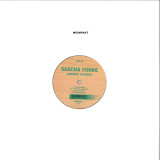
ascha Funke is creating a long overdue monument to an almost forgotten cultural artefact of the GDR: the ‘Germina Speeder’ was the only skateboard made in East Germany before reunification and was launched in 1986. It was produced by VEB Schokoladen-Verarbeitungsmaschinen (a state-owned chocolate processing machine factory) in Wernigerode and was therefore affectionately known as the ‘chocolate board’. However, it was hardly suitable for actual skateboarding due to technical inadequacies. It is not known whether Sascha himself owned such a board, but the tracks on the ‘Germina Speeder’ EP definitely roll better than the original. The opener ‘Blaupunkt’ breathes the euphoric spirit of the legendary Berlin club ‘E-Werk’, while the title track would have been more at home at the ‘Dubmission’ parties in the Turbine. Sascha leaves the 90s behind with radiant positivism; ‘Bo Knows’ sounds more like a 2000s open air at Café Schönbrunn. The EP closes with ‘Mastermind’, a high-octane psy-proghouse banger that, like all four tracks, quotes the past but still has both feet on today’s dance floors. Or rather, is dancing. 4:1 for love!
Sascha Funke setzt einem nahezu vergessenen Kulturgut der DDR ein längst überfälliges Denkmal: Der “Germina Speeder” war vor der Wende das einzige in Ostdeutschland hergestellte Skateboard und kam im Jahre 1986 auf den Markt. Es war ein Erzeugnis des VEB Schokoladen-Verarbeitungsmaschinen aus Wernigerode und wurde daher liebevoll auch als “Schoko-Board” bezeichnet. Zum eigentlichen Skateboardfahren war es allerdings aufgrund von technischen Unzulänglichkeiten kaum zu gebrauchen. Ob Sascha selbst ein solches Board besaß ist nicht überliefert, aber die Tracks auf der “Germina Speeder” EP rollen allemal besser als das Original. Der Opener “Blaupunkt” atmet den euphorischen Geist des legendären Berliner Clubs “E-Werk”, während der Titeltrack eher bei den “Dubmission” Parties in der Turbine gelaufen wäre. Mit strahlendem Positivismus verlässt Sascha die 90er; “Bo Knows” klingt eher nach einem 2000er Open Air am Café Schönbrunn im Volkspark Friedrichshain. Die EP schließt mit “Mastermind”, einem hochoktanigen Psy-Proghouse Knaller, der wie alle vier Tracks zwar das Vergangene zitiert, aber dennoch mit beiden Füßen auf den Tanzflächen von heute steht. Beziehungsweise tanzt. 4:1 für die Liebe!
2025 Repress
Running Back’s Double Copy subsidiary for house music history returns with four musical masterpieces from Chicago, London and an international cast from Italy on its first various artist sampler.
Originally released on Roy Davis Jr.’s Undaground Therapy outlet, Destination Heaven by the enigmatic Earth Boys project delivers a piece of cloud-nine-deep-house that was a staple at Frankfurt’s Wild Pitch Club and during the early days of its successor Robert Johnson. Produced by Cloudy Eyes and Cole Brooks, we unfortunately have never heard from the duo again. Luckily, Family of Few have been a little bit more productive. Also known as Mind Readers, Kevin Elliot and Billy ‚Jack“ Williams produced some of the more tender moments on Detroits 430 West label. Intervoles is amongst the most peculiar and catchy tracks that slow-burning dance floors can hope for.
The flip side turns the attention to the conclusions that Europe drew from its US-role-models. Released in 1992 on Rena Records with the involvement of New York’s JoVonn (a distinct genius of deep grooves himself), the keyboard skills of Pierre Audetat and the production work of I. Betti, M. Clemente and W. Brown, Dummy Head is one of a kind. Swirly echoes, dubby textures and a heavy bass line mate on the Edit Mix of I Have Been Wanting You to create one of the very first examples of fully formed dub-house.
Similar pioneering properties can be ascribed to the work of Rob Mello. We don’t have enough room here to list all his merits, but rest assured that the UK’s house scene wouldn’t be the same without him (Luxury Service Records, Classic et al). Under the Karim guise, Mello delivered a unique stroke of genius. Distilling the essence of deep house, while looking far into the future, In My Mind is many things at once: broken beat, electro, house with embracing chords, and – if you will – a warm-up banger. and does, what all the tracks in here do: turning heads then, turning heads now. Hardcore Deep House!
The Magic Movement proudly presents Bosquemar's new EP "Manco"
The title track is a remarkable showcase of Bosquemar’s distinctive sound, combining field recordings as the main ingredient, acoustic instruments, electronic rhythms, and dub influences. Rodrigo Gallardo, a key figure in the South American downtempo scene and ex-member of the renowned band Matanza, adds his well known vocal presence to the track. His contribution infuses Manco with authenticity and depth, creating a rich, multi-layered listening experience.
On his new EP, Bosquemar invites listeners on a profound sonic journey, transcending typical boho aesthetics to explore deeper psychedelic territories. This single reflects his mastery of folktronica, blending traditional and electronic elements to craft a transformative sound that resonates deeply with the listener.
With Manco, The Magic Movement continues its tradition of curating innovative music that pushes the boundaries of organic and electronic fusion. By merging traditional instruments with modern production techniques, the label showcases the soulful depth and creative vision that define its releases.
Will You joins the roster of Philipp Priebe’s Stólar this February with his ‘Is It 2 Late?’ EP accompanied by remixes from Lb Honne and Orion. Producer, DJ and Oleeva Records label boss Will You has been slowly unveiling his take on contemporary deep house and dub-tinged techno over the past few years via solo material and remixes on his own imprint and most recently a remix of Philipp Priebe’s ‘Movements In An Empty Department Store’ on Stólar. Here we see Will You returning to the latter aforementioned imprint with his latest EP.
Leading the release is ‘Santé’, a six and a half minute excursion through snaking sub bass tones, a crisp, shu®ed rhythm section, dreamy synth chimes, squelchy 303 licks and spoken word vocal lines. Title-cut ‘Is It 2 Late’ follows next and deviates into more dubbed out territory via expansive, unfurling echoes, cinematic atmospherics and robust, intricate percussion. Opening the ¬ip-side is Zurich’s Lb Honne’s interpretation of ‘Is It 2 Late’, the Project Indigo artist extracts the essence of the original and reshapes it into a subtly nuanced, loop-led and hypnotic workout. Italian duo Orion then conclude the package with their take on ‘Santé’, reshaping the original with their signature deep techno style, fuelled by grainy textural components and bumpy saturated drums.
Some of Stay True Sounds most celebrated hits of 2024 assemble on Stay True Cutz Vol. 8, the eighth vinyl edition of the label’s compilation series featuring standout sonics that defined a year. Opening with a record that fuses deep house and neo-soul, Jimpster’s remix of ‘Say Yes’ by SA torchbearer beatsbyhand, featuring Rona Ray on vocal duty, was the bestselling release of 2024 on the Traxsource Deep House chart. What follows is the compelling collaboration from two leaders of the Afro scene, China Charmeleon and Hypaphonik with ‘We R 1’ - plus jazz and house maestro Crackazat’s 3-step release ‘Can’t Blame A Soul’ (Mana’s Dub). Closing out this curation of four tracks that capture Stay True Sounds’ unique aesthetic is ‘SARS’, an original also from the mind of talented DJ and producer beatsbyhand.
Zongamin and Mytron reunite on Multi Culti with an album of collaborations. Exploring the depths of leftfield outer nationalism these two mainstays of our global family serve up a colorful array of mind-altering disco and interdimensional dub. Tribal motifs merge with field recordings while synthesized animals call out over exotic hand percussion. Jams on vintage synths meet 8-bit sampling bounced onto spring reverbs and digital delays from the 80s. Started mid-pandemic, this collaboration ignored the surrounding havoc and social distancing, instead focusing on Good Vibes TM and positivity with a genre-defying approach belying trans-continental origins. The result is a playful symbiosis that is Phatter than the sum of its elements. Mytron is Jacek Janiszewski, a pan-European multi-instrumentalist, producer and DJ, born in Poland, raised in Holland and Germany, and now living in London for the best part of a decade, his releases, for labels including XXX, Codek, Bordello A Parigi, Multi Culti, Nein and Les Yeux Orange, herald a similar nomadic spirit. Zongamin, Susumu Mukai is a composer, producer, and illustrator based in London. He has released records on Multi Culti, Flesh Records, XL recordings, Ed Banger, ESP Institute, and AD93, and has remixed for Air, John Cale, Trevor Jackson, Sandro Perri, and others. He is a member of groups Vanishing Twin, V/Z, Holy Tongue, and Stalactite.
- A1: Tyler (5:51)
- A2: Burden Of Shame (6:29)
- A3: I Think It's Going To Rain Today (3:41)
- A4: Food For Thought (4:09)
- A5: Don't Do The Crime (4:10)
- B1: One In Ten (4:33)
- B2: Sardonicus (4:26)
- B3: Please Don't Make Me Cry (3:22)
- B4: Cherry Oh Baby (3:16)
- B5: Red Red Wine (3:01)
- B6: If It Happens Again (3:40)
- B7: Don't Slow Down (4:31)
- C1: I Got You Babe (Feat Chrissie Hynde) (3:08)
- C2: Don't Break My Heart (3:45)
- C3: Sing Our Own Song (3:57)
- C4: Rat In Mi Kitchen (3:03)
- C5: All I Want To Do (5:27)
- C6: Maybe Tomorrow (3:21)
- C7: Afrika Bambaataa & Family - Reckless (Feat Ub40) (3:51)
- D1: Breakfast In Bed (Feat Chrissie Hynde) (3:13)
- D2: Homely Girl (3:22)
- D3: Kingston Town (3:46)
- D4: Robert Palmer - I'll Be Your Baby Tonight (Feat Ub40) (3:23)
- D5: Tears From My Eyes (3:44)
- D6: Here I Am (Come & Take Me) (4:17)
- D7: (I Can't Help) Falling In Love With You (3:26)
Early 1980, UB40 scored their first success with Food For Thought', reaching high in the charts. By the time they released their first album they were already so successful that they had signed off on unemployment benefit, leading to the stamped Signing Off featured on form 40, for the sleeve of their debut album. The first dub album ever to reach the album charts in the U.K. included One In Ten' and Don't Slow Down'.
In 1983 the band put on a new project, boasting ten cover versions of Jamaican hits and, contrary to low expectations, it became a huge hit and the band's first number one album. Tracks included are Cherry Oh Baby' and Please Don't Make Me Cry' and Red Red Wine'. The latter was a rather poppy song and became the band's biggest selling single ever, entailing their definitive worldwide break through.
There have been lots of collaborations through the years and most of these became huge hit songs. Together with Chrissie Hynde UB40 recorded two singles: I Got You Babe' (1985) and Breakfast In Bed' (1988). They teamed up with Afrika Bambaataa for Reckless' (1988) and with Robert Palmer the band released I'll Be Your Baby Tonight' (1990), just to name a few.
UB40 - COLLECTED has captured all the different phases of the band in one complete album, from classic hits combined with the new!
Dennis Brown was a Jamaican reggae singer and one of the most popular artists in the history of Jamaican recorded music.
Bob Marley cited Brown as his favourite singer, dubbing him “The Crown Prince of Reggae”, and Brown would prove influential on future generations of reggae
singers. In 2023, Rolling Stone ranked Brown at number 67 on its list of the 200 Greatest Singers of All Time.
This album includes the classic tracks “Silhouettes “, “Lips of Wine”, “Changing Times” and “I Didn’t Know”.
Super Reggae & Soul Hits is available as a numbered limited edition of 500 copies on orange coloured vinyl
Oversized custom cut LP jackets (13” / 33.02 cm width)
Silkscreened with bespoke iridescent citrus green ink by Mark Rice
Short story by Natalia Zuluaga
Flexi 7”:
steaming mescaline (extended mix by bad lsd trips)
Citrus green metallic foil stamp
Pressed in full stereo
Edition of 150
I.
bad lsd trips is the collaborative duo of makers doris dana and domingo castillo flores. Respectively the two have fostered practices that have sprawled out through various approaches and, whether in the lanes of the musical or the contemporary arts, the phenomenology of the social and inclusive prevails. On ultrafest, this motif continues through the psychedelia of its eight time-defying recordings, welcoming the listener into an open temporal architecture of the stereo field as a signifier of environment. It is worth noting that the group began collaborating in Miami, Florida with longer form improvisations recorded to a stereo cassette deck. In these recordings, the paved geographical sprawl and oceanic view permeated the approach to amassing long swaths of sound material. Listening back on that work at the time of this writing, each track feels as though one is walking into an active space, arriving to an event already in full swing and finding your place inside of it. On ultrafest (this album) something different occurs. The space and events are built around you as you move through the record.
II.
The name of the album is ultrafest, which should effectively provoke your mind's eye the imagery of young people dancing, salivating, grinding, and imbibing chemical compounds to the perversely formalized musical genres of “Electronic Dance Music” and latter-era Dubstep often heard in European Uber rides and energy drink commercials. A far distance from the icy and machinic reverie of Techno’s finest rave eras or the notable historical contributions of Miami’s cerebral producers to IDM’s global output, ultrafest is a libidinal catharsis as festival scaled to a multinational corporation of hedonistic excess. The festival has been a hallmark of Miami cultural industry production and optical enticement for tourism, purportedly bringing in nearly a billion dollars in revenue to the city since 2012. Scores of documentation exist wherein this decadent escapism leaves the concertgoer, usually in some neon garment on a near nude body potentially adorned with fluffy faux fur leg warmers, facing a comedown from the combination of volume, sun, dehydration, and methylenedioxy-methylamphetamine. This MDMA experience characterizes an aspect of the way bad lsd trips employs vocals and pitch on this album. The detached, high octaved longing of a high pitched vocal is decoupled from its typical auditory body of song. High-pass clicks and pops touch the (h)air on the back of the neck, promising goosebumps and teasing towards euphoric rushes of dopamine, yet also exist decoupled from the body of song. As the dopamine depletes and the sun imposes itself, Miami’s downtown of skeleton real estate is your company as you meander towards your parked vehicle to rest your fatigued senses, elevated heart rate, and quench the need for air conditioning on your skin. The immediacy of bombastic social immersion to architectural alienation palpable here.
III...
- Nick Klein
LA-based band ASHRR picked up plenty of new fans with their recent Sunshine Low album and now they're back with the sixth single from it and it comes with some seriously heavyweight names on the remix. Chicago house pioneer Ron Trent does his thing to 'Please Don't Stop The Rain' by going super deep, spine tingling and heady with some lush arps and distant guitar twangs adding a Balearic feel. Dub treatments come from the Prescription boss himself, while ASHRR's alter ego, ASHRR Soundsystem, offer up an instrumental and a remix that lay down dubby house drums and lush chord work. This one keeps the summer vibes going well into winter.
Still sniffing out the gnarliest bassweight swerves on his rounds in the underground, Dogpatrol makes his way back to Sneaker Social Club for another four cuts of irreverent, misfit rave damage.
Hailing from Offenbach (DE) but with a sound more indebted to UK styles like breakbeat hardcore, dubstep and garage, DogPatrol has been a natural fit on Sneaker. The slanted approach he takes to his influences results in a mutant style that shuffles and slams in all the right places without sounding like anything else out there.
‘1200kcal’ rides jagged, dusty drums that come on like drunken UKG, offset by rubbery bass arps that add a cosmic lick to proceedings. ‘Baby Flame’ has a nastier outlook hinging on a bludgeoning synth splat that calls back to the Control Tower brand of warehouse electro from the early 00s. Making sure no-one is second guessing the scent Dogpatrol is tracking, ‘Ya Playin Yaself’ dips into a dubstep-minded half-step roller with naive keys run through a giddy signal chain. ‘Offgenbach HBF Riddim’ completes the set with a breakbeat cut n’ paste job which tracks back to the source with strong echoes of The Blapps Posse’s raw and funky approach.
The reference points are just slight hints of familiarity, but Dogpatrol comes across as inspired as ever digging up the bones of cult rave signifiers and chewing them into his own unique shapes.
The Birgan project is all about melding diverse musical words - ambient, techno and Afro-inspired polyrhythms - into something that is utterly unique. Many artists set out with this intention but few achieve it as successfully as this one, as this sensational EP shows. It is an immersive and escapist five-track work of stunning sound designs and inventive rhythm that feels both organic and natural yet synthetic and futuristic. The tracks explore deep, mysterious sonic landscapes that are both tranquil yet complex and make for an immersive, thought-provoking listen from the dubscapes of 'Beats Of The Congo Cosmos' to the more psychedelic realms of 'Subaquatic Sonic Voyage'.
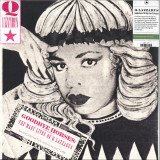
Der Einstieg in die Musik von Q Lazzarus erfolgte für fast alle über „Goodbye Horses“. Der Song tauchte erstmals 1988 in Jonathan Demmes „Married to the Mob“ auf, aber er sollte sich erst dann vollständig im Bewusstsein der Menschen verankern, als er 1991 in Demmes „The Silence of the Lambs“ wieder auftauchte. „Goodbye Horses“ fühlte sich an wie ein in sich geschlossenes Universum - traumhaft und völlig ungewöhnlich, ein sofortiger Klassiker, der die Zuhörer fesselte und neugierig auf die geheimnisvolle Stimme dahinter machte. Diese Stimme gehörte Diane Luckey, einer einzigartig talentierten Künstlerin, deren Musik ihrer Zeit voraus war und die letztlich zu Lebzeiten weitgehend unerkannt bleiben sollte. In Verbindung mit der Veröffentlichung des Dokumentarfilms „Goodbye Horses: The Many Lives of Q Lazzarus“ von Aridjis Fuentes veröffentlicht Sacred Bones eine Sammlung von Songs, die die gesamte Karriere von Q abdecken und die verschiedenen Epochen ihres Schaffens und die ganze Bandbreite ihrer Persönlichkeit zeigen. „Goodbye Horses“ ist die erste Musiksammlung, die den Segen von Qs verbliebener Familie erhalten hat, und hat die Besonderheit, ihre erste und einzige Albumveröffentlichung in voller Länge zu sein. Aufgenommen zwischen 1985 und 1995, spiegelt diese Fundgrube bisher unveröffentlichter Musik einige der interessantesten Facetten der Popmusik der letzten vier Jahrzehnte auf eine Weise wider, die sowohl versiert als auch wild eklektisch wirkt Das titelgebende „Goodbye Horses“ bleibt ein einzigartiges Stück gespenstischer New-Wave-Perfektion, und man könnte sich ein ganzes Q-Lazzarus-Album vorstellen, das sich um diese Ästhetik dreht, aber ähnlich den Gesangsikonen Alison Moyet, Annie Lennox oder Lisa Gerrard eignet sich Qs chamäleonhafte Stimme perfekt für eine Vielzahl von Stilen und Settings. Ihre Coverversion von Talking aHeads' „Heaven“ verwandelt den Song in eine aus voller Kehle gesungene Power-Ballade mit klimpernden Klavierverzierungen, während ihre Interpretation von Gershwins „Summertime“ wie eine dubbige Club-Reduktion klingt, die zu einem Grace Jones Stück der Nightclubbing-Ära hätte passen können. Tracks wie „My Mistake“ und „Hellfire“ flirten mit House-Musik und zeigen, wie frech und glockig Qs Stimme sein kann, wenn sie sich richtig austobt, während „Don't Let Go“ wie eine bombastische Radiosingle klingt, die Cher vor einigen Jahrzehnten hätte veröffentlichen können. Andere Songs wie „Bang Bang“ und „I See Your Eyes“ sind von einer gitarrenbetonten Alt-Rock-Sensibilität, die in einem Paralleluniversum auch auf MTVs 120 Minutes Show hätte laufen können. „Goodbye Horses“ verkörpert das Potenzial für so viele verschiedene Arten von Karrieren, die, aus welchen Gründen auch immer, nie vollständig verwirklicht wurden. Dass wir jetzt diese Songs in der Welt haben und ein klareres Bild von der Person dahinter, ist nichts weniger als ein Segen.