This is the debut release from Laguna Seca, a new project from Porto based Mike Jefford. It foreshadows a new body of work, steeped in 70s nostalgia, refracted though sounds that could belong to krautrock, disco, electronica, noisy alt rock and everything in between. Mike has previously recorded as Positive Centre releasing textural, experimental techno on such labels as Stroboscopic Artefacts, SNTS and Leyla. (seek out if you you’re a fan of Vatican Shadow or the ghostlier wing of Black Dog)
After mastering his forthcoming 2026 debut album ‘O Tempo’, Mike Jefford caught a second wind of inspiration. In just seven frantic days he recorded the heap of tracks that formed the basis of 'Live from Müsli Mountain’. It soon became clear that these tracks foreshadowed the album perfectly and the EP was born.
Named after the California raceway, this project fuses 1970s recording techniques, modern electronics and psychedelic retrofuturism, it’s a pyramid of sonic adventure that will be explored deeper on the album next year.
Cerca:d formed
In the humid static of early-’80s Tel Aviv, Chromosome emerged like a wiretap from the future. Formed in 1981 by provocateur Rami Fortis and sonic instigator Doron “Shultz” Eyal, the group fused punk abrasion, new wave architecture, avant-garde dissonance, and Middle Eastern textures. Joined by David Gervai and Rona Vered, they produced a singular 12" EP on their DIY imprint TOV Production - now a collector’s treasure.
This reissue of the Chromosome EP resurrects a raw, percussive artifact that slips between English, Arabic, and indecipherable phonetics like a busted shortwave signal. Anchored by “Makhtub” and backed with incendiary tracks such as “Show of Terrorism” and “Gazolina,” it is a vital document of Tel Aviv’s underground, mapping out a borderless, feral lineage for Israeli music.
- Pure Comedy
- Total Entertainment Forever
- Things It Would Have Been Helpful To Know Before The Revolution
- Ballad Of The Dying Man
- Birdie
- Leaving La
- A Bigger Paper Bag
- When The God Of Love Returns There'll Be Hell To Pay
- Smoochie
- Two Wildly Different Perspectives
- The Memo
- So I'm Growing Old On Magic Mountain
- In Twenty Years Or So
Blue & White Corona Vinyl[32,35 €]
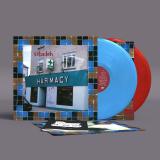
Schwarzes Vinyl! Doppel-LP im Klappcover. Ursprünglich 2017 rausgebracht und jetzt zum ersten Mal in Europa über Sub Pop erhältlich! Pure Comedy, das dritte Album von Father John Misty, ist eine komplexe, oft sarkastische und ebenso oft berührende Reflexion über die verwirrende Torheit der modernen Menschheit. Father John Misty ist das Projekt von Singer-Songwriter Josh Tillman. Wir könnten viel über Pure Comedy sagen, zum Beispiel, dass es ein mutiges, wichtiges Album in der Tradition amerikanischer Songwriting-Größen wie Harry Nilsson, Randy Newman und Leonard Cohen ist, aber wir denken, es ist am besten, wenn sein Schöpfer es selbst beschreibt. Los geht's, Mr. Tillman: Pure Comedy ist die Geschichte einer Spezies, die mit einem unvollständig entwickelten Gehirn geboren wurde. Die einzige Überlebenschance dieser Spezies, die sich auf einem grausamen, unberechenbaren Felsen wiederfindet, umgeben von anderen Spezies, die in dieser ganzen Sache viel geschickter zu sein scheinen (und für die sie eine Delikatesse sind), besteht darin, sich auf andere, etwas ältere, halb ausgebildete Gehirne zu verlassen. Diese Abhängigkeit bekommt im Laufe der Geschichte verschiedene Namen, wie ,Liebe", ,Kultur", ,Familie" usw. Mit der Zeit und da sich ihre Gehirne als bemerkenswert gut darin erweisen, Bedeutung zu erfinden, wo keine ist, wird die Spezies zum Lieferanten immer bizarrerer und raffinierterer Ironien. Diese Ironien sollen helfen, mit der abscheulichen Verletzlichkeit der Spezies fertig zu werden und zu versuchen, ihre Fantasie mit der Monotonie ihrer Existenz in Einklang zu bringen. So in etwa. Pure Comedy wurde 2016 in den legendären United Studios (Frank Sinatra, Ray Charles, Beck) in Hollywood, Kalifornien, aufgenommen. Produziert wurde es von Father John Misty und Jonathan Wilson, die Tonarbeit übernahm Mistys langjähriger Tontechniker Trevor Spencer und die Orchesterarrangements stammen vom bekannten Komponisten und Kontrabassisten Gavin Bryars (bekannt für seine umfangreichen Soloarbeiten und seine Zusammenarbeit mit Brian Eno, Tom Waits und Derek Bailey). Black Vinyl. Originally released in 2017 & now available for the first time in Europe via Sub Pop! Pure Comedy, Father John Misty's third album, is a complex, often-sardonic, and, equally often, touching meditation on the confounding folly of modern humanity. Father John Misty is the brainchild of singer-songwriter Josh Tillman. While we could say a lot about Pure Comedy including that it is a bold, important album in the tradition of American songwriting greats like Harry Nilsson, Randy Newman, and Leonard Cohen we think it's best to let its creator describe it himself. Take it away, Mr. Tillman: Pure Comedy is the story of a species born with a half-formed brain. The species' only hope for survival, nding itself on a cruel, unpredictable rock surrounded by other species who seem far more adept at this whole thing (and to whom they are delicious), is the reliance on other, slightly older, half-formed brains. This reliance takes on a few different names as their story unfolds, like "love," "culture," "family," etc. Over time, and as their brains prove to be remarkably good at inventing meaning where there is none, the species becomes the purveyor of increasingly bizarre and sophisticated ironies. These ironies are designed to help cope with the species' loathsome vulnerability and to try and reconcile how disproportionate their imagination is to the monotony of their existence. Something like that. Pure Comedy was recorded in 2016 at the legendary United Studios (Frank Sinatra, Ray Charles, Beck) in Hollywood, CA. It was produced by Father John Misty and Jonathan Wilson, with engineering by Misty's longtime sound-person Trevor Spencer and orchestral arrangements by renowned composer/double-bassist Gavin Bryars (known for extensive solo work, and work with Brian Eno, Tom Waits, Derek Bailey).
- 77: Blackout
- Bust The Bust Stop
- Never Give Up
- Voodoo Gates
- Come Back 4 Real Love
- Shameless
- Life During Wartime
- The Girl From Outer Space
- Black Butterfly
‘Black Butterfly’ is Brooklyn Funk Essentials eighth studio album and includes the bands recent hits ‘Never Give Up’, ‘Bust The Bus Stop’ and ‘Life During Wartime’. Playlisted on BBC Radio 2 and Jazz FM and supported by Craig Charles and Cerys Matthews at 6 Music as well as many stations across Europe and the Americas. The album was produced and co-written by bassist Lati Kronlund and features Alison Limerick, Ebba Åsman and Desmond Foster on vocals.
Kronlund and Limerick have been enjoying the recent renewed interest in ‘Where Love Lives’. Kronlund wrote and produced it for Limerick in 1990, it was remixed by Frankie Knuckles and David Morales and became a club classic and was featured in this year’s John Lewis Christmas TV Ad. Arthur Baker heard the original in a club in 1991 that he contacted Kronlund about working together and they then formed Brooklyn Funk Essentials.
Since then, Brooklyn Funk Essentials have built a devoted international following and notched up over 100 million streams. Fusing Soul, Hip Hop, Spoken Word, Jazz, Latin, and, of course,
Funk, the band’s journey began experimenting with drum machines and loops in Baker’s Shakedown Sound Studio in Jersey City—hunting for that perfect beat. The early recordings featured greats such as Maceo Parker, Lenny Pickett, Tower of Power Horns, Michigan & Smiley, and Dizzy Gillespie, leading to the acclaimed debut ‘Cool & Steady & Easy’ (1994). Fast-forward to April 2024, when Kronlund reunited with Baker in Miami, rediscovering recordings featuring percussion prodigy Bashiri Johnson, which inspired new creative sparks for the next chapter of Brooklyn Funk Essentials.
Convergence is an ambient album formed through a series of morning rituals during rehabilitation following a severe medical event and an extended hospital stay. After weeks immersed in the constant alarms, beeps, and environmental signals of medical equipment, the act of listening itself became recalibrated. The music was performed and assembled using glass marimba, flute, and analog synthesizers, with each instrument treated as a source of resonance and gradually dissected through spectral analysis—allowing melody to emerge from fragments through repetition, attention, and daily practice, where synthesis functions not as traditional composition but as an exchange of signals.
Working slowly and intuitively, Stardust Multiplier approaches sound as a communicative medium between humans, the natural environment, and non-ordinary states of perception. Motifs evolve through repetition and subtle variation, informed by ceremonial music, mythic structures, and speculative communication frameworks associated with non-human intelligence—not as narrative devices, but as metaphors for attuned listening and pattern recognition.
Rather than moving toward resolution, Convergence documents moments of alignment—instances where intention, system, and environment briefly synchronize. The result is a restrained, deeply focused record, less concerned with atmosphere than attention, where synthesis functions as both a grounding practice and a method of inquiry.
Indiana Jones never dug this deep.
Church – the brainchild of Joe Washington – were a band both lucky and cursed to come up in the seventies. Lucky, because they rode a wave of community activism, uplifting messages and a moment when music truly mattered. Cursed, because those same times meant their tight, heartfelt output went overlooked.
Mid-sixties to circa 1980 soul and funk were extraordinarily rich. The era’s big releases have aged like fine wine, yet countless hidden gems remain buried. Church’s only single was one of them. Their hypnotic 1976 release “How Long” b/w “Da Da Song” arrived the same year as Stevie Wonder’s Songs in the Key of Life, Marvin Gaye’s I Want You, Diana Ross’s Diana, and at a time when Black mainstream music was shifting toward disco. Church, however, sounded like Sly & The Family Stone in an alternate timeline — gritty, focused, stripped of additives.
“Da Da Song” is pure grits and gravy: furious, tight drums and lyrics that sound like both a plea to DJs to play their record and an insistence to keep the party alive, noticed or not. It cooks from start to finish in just two and a half minutes.
“How Long” is its own universe. Where “Da Da Song” is skeletal, “How Long” blends key strands of Black music in under three minutes: touches of spiritual jazz with a Gary Bartz-like sax, gospel-blues undertones, and echoes of the era’s flower-power-tinged Black creativity — The Undisputed Truth, The Family Stone, even the poetic freedom of Nikki Giovanni. The lyrics are a timeless plea for love.
Church formed in the Bay Area in the early seventies, shaped by the movement, culture and activism of the time. Joseph Washington, based in San Jose, never chased a music career — for him, music was a way to bring people together. Before Church, he led a backing band called Wash, then added gospel singer Linda Williams (née Stephens) and New York–born Joel Como on xylophone to complete the group.
They rehearsed in Joe’s garage, spread through word of mouth and played every gig they could: Black colleges, opening slots for The Whispers, neighbourhood house parties. Some members studied at Nairobi Junior College in East Palo Alto, then a hotbed of Black community activism, with revolution in the air and messages woven naturally into the music.
This single is a message from that era, resurfacing at last — ready to be sampled just as another Joe Washington track, “Look Me in the Eyes”, was on Drake and J. Cole’s “First Person Shooter”. These rare, spirited tunes are begging for new life through samplers, again and again.
Originally formed in the early 1990s, Tadpoles earned a reputation as a neo-psychedelic rock band known for their impressionistic textures and adventurous sound.
After a 25-year hiatus, the band has reunited, now working across Sacramento, New York City, and Basel. They collaborate remotely to create new music that expands into unexpected genres, including jazz, ambient, country noir, and ambient shoegazer rock, all while maintaining their core psychedelic essence.
In this new chapter, the Tadpoles have teamed up with legendary producer and mixer Sonic Boom, known for his work with Spacemen 3, Panda Bear, MGMT and Beach House, to sculpt their evolving sound. His influence helps weave those new layers of psychedelia, ambient, and even jazz into the band’s signature adventurous spirit.”
This release reflects the band’s evolution and continues their legacy of blending noise, melody, introspection, and a bit of sly humor.
Epicentre was an R&B/funk group formed in Seattle, Washington by keyboardist Ric Ulsky. The band developed a loyal following, playing the extensive NW club, concert and dance venues throughout the mid-to-late 1970s. Their sound was a blend of melodic R&B and powerhouse funk that dependably filled music venues throughout the Western US. Bernadette Bascom was the lead vocalist, who captivated audiences with her powerful yet velvet-smooth voice and commanding, magnetic stage presence.
In 1978, Epicentre worked with Seattle producer Don McKinney to record their music in Seattle's now legendary Kaye-Smith studios. The result was seven strong, fully -produced R&B songs, with occasional horn and string orchestrations tastefully added to the final versions.
Their music quite literally sat on a shelf for decades until McKinney decided that all the hard work and talent should no longer remain undiscovered and it needed to find its audience. He restored and digitized his copies of the master tapes and looked for an opportunity. A chance call to the former leader of the group, Kell Houston, led to a serendipitous introduction to UK boutique/funk/R&B label founder Russell Paine. The result was an agreement to release their music, starting with two songs, "When You Were In Love With Me", and "Magic Carpet."
Footnotes: Lead singer Bernadette Bascom became a protegé of Stevie Wonder, and was the first artist to be signed to his label Black Bull , starting a period of collaboration between the two. Bermadette is the daughter of Reverend Dr. Marion C. Bascomb (1925-2012), one of Baltimore's major civil rights voices and pastor emeritus of Baltimore's Douglas Memorial Community Church. Ric Ulsky eventually left the group to play keyboards and tour extensively with The Association. You can also find Epicentre's music on the compilation album "Seattle Funk, Modern Soul & Boogie: Volume II 1972-1987." In addition to Bernadette, the musicians on the 1978 sessions are Kell Houston, keyboards, Michael Cox, bass, John Carmondy, guitar, and Ricky Lynn Johnson, drums and vocals. While their recorded material is primarily original, Stacy Christensen from Seattle's Gabriel contributed two of his compositions. Label credits: Epicentre featuring Bernadette Bascom. Recorded at Kaye-Smith Studios, Seattle, Washington, August 1978"When You Were in Love With Me" and "Magic Carpet" written by Bernadette Bascom. Produced for Epicentre by Don McKinney
- A1: Hurts And Noises
- A2: Wake Up
- A3: I Don't Wanna Be A Rich
- A4: Terrorist Bad Heart
- A5: Provocate
- A6: Lucifer Sam (Pink Floyd)
- B1: Happy!?
- B2: So Lazy
- B3: I Feel Down
- B4: Stupido
- B5: Guilty
- B6: Caroline Says (Loo Reed)
UILTY RAZORS, BONA FIDE PUNKS.
Writings on the topic that go off in all directions, mind-numbing lectures given by academics, and testimonies, most of them heavily doctored, from those who “lived through that era”: so many people today fantasize about the early days of punk in our country… This blessed moment when no one had yet thought of flaunting a ridiculous green mohawk, taking Sid Vicious as a hero, or – even worse – making the so-called alternative scene both festive and boorish. There was no such thing in 1976 or 1977, when it wasn’t easy to get hold of the first 45s by the Pistols or the Clash. Few people were aware of what was happening on the fringes of the fringes at the time. Malcolm McLaren was virtually unknown, and having short hair made you seem strange. Who knew then that rock music, which had taken a very bad turn since the early 1970s, would once again become an essential element of liberation? That, thanks to short and fast songs, it would once again rediscover that primitive, social side that was so hated by older generations? Who knew that, besides a few loners who read the music press (it was even better if they read it in English) and frequented the right record stores? Many of these formed bands, because it was impossible to do otherwise. We quickly went from listening to the Velvet Underground to trying to play the Stooges’ intros. It’s a somewhat collective story, even though there weren’t many people to start it.
The Guilty Razors were among those who took part in this initial upheaval in Paris. They were far from being the worst. They had something special and even released a single that was well above the national average. They also had enough songs to fill an album, the one you’re holding. In everyone’s opinion, they were definitely not among the punk impostors that followed in their wake. They were, at least, genuine and credible.
Guilty Razors, Parisian punk band (1975-1978). To understand something about their somewhat linear but very energetic sound, we might need to talk about the context in which it was born and, more broadly, recall the boredom (a theme that would become capital in punk songs) coupled with the desire to blow everything off, which were the basis for the formation of bands playing a rejuvenated rock music ; about the passion for a few records by the Kinks or the early Who, by the Stooges, by the Velvet mostly, which set you apart from the crowd.
And of course, we should remember this new wave, which was promoted by a few articles in the specialized press and some cutting-edge record stores, coming from New York or London, whose small but powerful influence could be felt in Paris and in a handful of isolated places in the provinces, lulled to sleep by so many appalling things, from Tangerine Dream to President Giscard d’Estaing...
In 1975-76, French music was, as almost always, in a sorry state ; it was still dominated by Johnny Hallyday and Sylvie Vartan. Local rock music was also rather bleak, apart from Bijou and Little Bob who tried to revive this small scene with poorly sound-engineered gigs played to almost no one.
In the working class suburbs at the time, it was mainly hard rock music played to 11 that helped people forget about their gruelling shifts at the factory. Here and there, on the outskirts of major cities, you still could find a few rockers with sideburns wearing black armbands since the death of Gene Vincent, but it wasn’t a proper mass movement, just a source of real danger to anyone they came across who wasn't like them. In August 1976, a festival unlike any other took place in Mont-de-Marsan – the First European Punk Festival as the poster said – with almost as many people on stage as in the audience. Yet, on that day, a quasi historical event happened, when, under the blazing afternoon sun, a band of unknowns called The Damned made an unprecedented noise in the arena, reminiscent of the chaotic Stooges in their early adolescence. They were the first genuine punk band to perform in our country: from then on, anything was possible, almost anything seemed permissible.
It makes sense that the four+1 members of Guilty Razors, who initially amplified acoustic guitars with crappy tape recorder microphones, would adopt punk music (pronounced paink in French) naturally and instinctively, since it combines liberating noise with speed of execution and – crucially – a very healthy sense of rebellion (the protesters of May 1968 proclaimed, and it was even a slogan, that they weren’t against old people, but against what had made them grow old. In the mid-1970s, it seemed normal and obvious that old people should now ALSO be targeted!!!).
At the time, the desire to fight back, and break down authority and apathy, was either red or black, often taking the form of leafleting, tumultuous general assemblies in the schoolyard, and massive or shabby demonstrations, most of the time overflowing with an exciting vitality that sometimes turned into fights with the riot police. Indeed, soon after the end of the Vietnam War and following Pinochet’s coup in Chile, all over France, Trotskyist and anarcho-libertarian fervour was firmly entrenched among parts of the educated youth population, who were equally rebellious and troublemakers whenever they had the chance. It should also be noted that when the single "Anarchy in the UK" was first heard, even though not many of us had access to it, both the title and its explosive sound immediately resonated with some of those troublemakers crying out for ANARCHY!!! Meanwhile, the left-wing majority still equated punks with reckless young neo-Nazis. Of course, the widely circulated photos in the mainstream press of Siouxsie Sioux with her swastikas didn’t necessarily help to win over the theorists of the Great Revolution. It took Joe Strummer to introduce The Clash as an anti-racist, anti-fascist and anti-ignorance band for the rejection of old-school revolutionaries to fade a little.
The Lycée Jean-Baptiste Say at Porte d’Auteuil, despite being located in the very posh and very exclusive 16th arrondissement of Paris, didn’t escape these "committed" upheavals, which doubled as the perfect outlet for the less timid members of this generation.
“Back then, politics were fun,” says Tristam Nada, who studied there and went on to become Guilty Razors’ frontman. “Jean-Baptiste was the leftist high-school in the neighbourhood. When the far right guys from the GUD came down there, the Communist League guys from elsewhere helped us fight them off.”
Anything that could challenge authority was fair game and of course, strikes for just about any reason would lead to increasingly frequent truancy (with a definitive farewell to education that would soon follow). Tristam Nada spent his 10th and 11th unfinished grades with José Perez, who had come from Spain, where his father, a janitor, had been sentenced to death by Franco. “José steered my tastes towards solid acts such as The Who. Like most teenagers, I had previously absorbed just about everything that came my way, from Yes to Led Zeppelin to Genesis. I was exploring… And then one day, he told me that he and his brother Carlos wanted to start a rock band.” The Perez brothers already played guitar. “Of course, they were Spanish!”, jokes their singer. “Then, somewhat reluctantly, José took up the bass and we were soon joined by Jano – who called himself Jano Homicid – who took up the rhythm guitar.” Several drummers would later join this core of not easily intimidated young guys who didn’t let adversity get the better of them.
The first rehearsals of the newly named Guilty Razors took place in the bedroom of a Perez aunt. There, the three rookies tried to cover a few standards, songs that often were an integral part of their lives. During a first, short gig, in front of a bewildered audience of tough old-school rockers, they launched into a clunky version of the Velvet Underground's “Heroin”. Challenge or recklessness? A bit of both, probably… And then, step by step, their limited repertoire expanded as they decided to write their own songs, sung in a not always very accurate or academic English, but who cared about proper grammar or the right vocabulary, since what truly mattered was to make the words sound as good as possible while playing very, very fast music? And spitting out those words in a language that left no doubt as to what it conveyed mattered as well.
Trying their hand a the kind of rock music disliked by most of the neighbourhood, making noise, being fiercely provocative: they still belonged to a tiny clique who, at this very moment, had chosen to impose this difference. And there were very few places in France or elsewhere, where one could witness the first stirrings of something that wasn’t a trend yet, let alone a movement.
In the provinces, in late 1976 or early 1977, there couldn’t be more than thirty record stores that were a bit more discerning than average, where you could hear this new kind of short-haired rock music called “punk”. The old clientele, who previously had no problem coming in to buy the latest McCartney or Aerosmith LP, now felt a little less comfortable there…
In Paris, these enlightened places were quite rare and often located nex to what would become the Forum des Halles, a big shopping mall. Between three aging sex workers, a couple of second-hand clothes shops, sellers of hippie paraphernalia and small fashion designers, the good word was loudly spread in two pioneering places – propagators of what was still only a new underground movement. Historically, the first one was the Open Market, a kind of poorly, but tastefully stocked cave. Speakers blasted out the sound of sixties garage bands from the Nuggets compilation (a crucial reference for José Perez) or the badly dressed English kids of Eddie and the Hot Rods. This black-painted den was opened a few years earlier by Marc Zermati, a character who wasn’t always in a sunny disposition, but always quite radical in his (good) choices and his opinions. He founded the independent label Skydog and was one of the promoters of the Mont-de-Marsan punk festivals. Not far from there was Harry Cover, another store more in tune with the new New York scene, which was amply covered in the house fanzine, Rock News (even though it was in it that the photos of the Sex Pistols were first published in France).
It was a favorite hang-out of the Perez brothers and Tristam Nada, as the latter explained. “It’s at Harry Cover’s that we first heard the Pistols and Clash’s 45s, and after that, we decided to start writing our first songs. If they could do it, so could we!”
The sonic shocks that were “Anarchy in the UK”, “White Riot” or the Buzzcocks’s EP, “Spiral Scratch” – which Guilty Razors' sound is reminiscent of – were soon to be amplified by an unparalleled visual shock. In April 1977, right after the release of their first LP, The Clash performed at the Palais des Glaces in Paris, during a punk night organised by Marc Zermati. For many who were there, it was the gig of a lifetime…
Of course, Guilty Razors and Tristam were in the audience: “That concert was fabulous… We Parisian punks were almost all dressed in black and white, with white shirts, skinny leather ties, bikers jackets or light jackets, etc. The Clash, on the other hand, wore colourful clothes. Well, the next day, at the Gibus, you’d spot everyone who had been at this concert, but they weren’t wearing anything black, they were all wearing colours.”
It makes sense to mention the Gibus club, as Guilty Razors often played there (sometimes in front of a hostile audience). It was also the only place in Paris that regularly scheduled new Parisian or Anglo-Saxon acts, such as Generation X, Siouxsie and the Banshees, the Slits, and Johnny Thunders who would become a kind of messed-up mascot for the venue. A little later, in 1978, the Rose Bonbon – formerly the Nashville – also attracted nightly owls in search of electric thrills… In 1977, the iconic but not necessarily excellent Asphalt Jungle often played at the Gibus, sometimes sharing the bill with Metal Urbain, the only band whose aura would later transcend the French borders (“I saw them as the French Sex Pistols,” said Geoff Travis, head of their British label Rough Trade). Already established in this small scene, Metal Urbain helped the young and restless Guilty Razors who had just arrived. Guitarist for Metal Urbain Hermann Schwartz remembers it: “They were younger than us, we were a bit like their mentors even if it’s too strong a word… At least they were credible. We thought they were good, and they had good songs which reminded of the Buzzcocks that I liked a lot. But at some point, they started hanging out with the Hells Angels. That’s when we stopped following them.”
The break-up was mutual, since, Guilty Razors, for their part, were shocked when they saw a fringe element of the audience at Metal Urbain concerts who repeatedly shouted “Sieg Heil” and gave Nazi salutes. These provocations, even still minor (the bulk of the skinhead crowd would later make their presence felt during concerts), weren’t really to the liking of the Perez brothers, whose anti-fascist convictions were firmly rooted. Some things are non-negotiable.
A few months earlier (in July 1978), Guilty Razors had nevertheless opened very successfully for Metal Urbain at the Bus Palladium, a more traditonally old-school rock night-club. But, as was sometimes the case back then, the night turned into a mass brawl when suburban rockers came to “beat up punks”.
Back then, Parisian nights weren’t always sweet and serene.
So, after opening as best as they could for The Jam (their sound having been ruined by the PA system), our local heroes were – once again – met outside by a horde of greasers out to get them. “Thankfully,” says Tristam, “we were with our roadies, motorless bikers who acted as a protective barrier. We were chased in the neighbouring streets and the whole thing ended in front of a bar, with the owner coming out with a rifle…”
Although Tristam and the Perez brothers narrowly escaped various, potentially bloody, incidents, they weren’t completely innocent of wrongdoing either. They still find amusing their mugging of two strangers in the street for example (“We were broke and we simply wanted to buy tickets for the Heartbreakers concert that night,” says Tristam). It so happened that their victims were two key figures in the rock business at the time: radio presenter Alain Manneval and music publisher Philippe Constantin. They filed a complaint and sought monetary compensation, but somehow the band’s manager, the skilful but very controversial Alexis, managed to get the complaint withdrawn and Guilty Razors ended up signing with Constantin with a substantial advance.
They also signed with Polydor and the label released in 1978 their only three-track 45, featuring “I Don't Wanna be A Rich”, “Hurts and Noises” and “Provocate” (songs that exuded perpetual rebellion and an unquenchable desire for “class” confrontation). It was a very good record, but due to a lack of promotion (radio stations didn’t play French artists singing in English), it didn’t sell very well. Only 800 copies were allegedly sold and the rest of the stock was pulped… Initially, the three tracks were to be included on a LP that never came to be, since they were dropped by Polydor (“Let’s say we sometimes caused a ruckus in their offices!” laughs Tristam.) In order to perfect the long-awaited LP, the band recorded demos of other tracks. There was a cover of Pink Floyd's “Lucifer Sam” from the Syd Barrett era – proof of an enduring love for the sixties’ greats –, “Wake Up” a hangover tale and “Bad Heart” about the Baader-Meinhof gang, whose actions had a profound impact on the era and on a generation seeking extreme dissent... On the album you’re now discovering, you can also hear five previously unreleased tracks recorded a bit later during an extended and freezing stay in Madrid, in a makeshift studio with the invaluable help of a drummer also acting as sound engineer. He was both an enthusiastic old hippie and a proper whizz at sound engineering. Here too, certain influences from the fifties and sixties (Link Wray, the Troggs) are more than obvious in the band’s music.
Shortly after a final stormy and rather barbaric (on the audience’s side) “Punk night” at the Olympia in June 1978, Tristam left the band ; his bandmates continued without him for a short while.
But like most pioneering punk bands of the era, Guilty Razors eventually split up for good after three years (besides once in Spain, they’d only played in Paris). The reason for ceasing business activities were more or less the same for everyone: there were no venues outside one’s small circuit to play this kind of rock music, which was still frightening, unknown, or of little interest to most people. The chances of recording an LP were virtually null, since major labels were only signing unoriginal but reassuring sub-Téléphone clones, and the smaller ones were only interested in progressive rock or French chanson for youth clubs. And what about self-production? No one in our small safety-pinned world had thought about it yet. There wasn’t enough money to embark on that sort of venture anyway.
So yes, the early days of punk in France were truly No Future!
Ninja was a niche Italo disco project formed by Cristina Peri (vocalist, composer and producer) and Enzo Benetti (DJ and producer). Together they managed to compose and produce only a handful of tracks, three of which were released under the Ninja moniker. Their collaboration resulted in a highly distinctive synth-pop sound, marked by a rock-leaning drum approach with a strong, metal-sounding snare, and melodic lines that deliberately avoided obvious, immediate catchiness.
The unique and “super obscure Italo treasure” reissued by Vintage Pleasure Boutique, titled “Mad About Love,” carries an additional point of interest: Pier Michele Bozzetti, better known as Miko Mission, was also involved in the production. “Mad About Love” is a rare and collector-sought track that has never been reissued before. With this new vinyl release, Vintage Pleasure Boutique once again steps forward with an archival initiative, hoping to bring genuine excitement to underground Italo fans and collectors alike.
W.R.F. was formed in 2015 by Nina and late studio partner Andrew Weatherall to help wrangle the vast output recorded together beyond his solo releases.
Spotlighting nine tracks from the Apparently Solo series of EPs recorded between 2016- 2019 and released on Bandcamp in 2023, this lustrous time capsule marks the culmination of Walsh and Weatherall’s creative relationship born after they clicked at London’s earliest acid house clubs, becoming partners then managers of their Sabres Of Paradise/Sabrettes labels before taking different paths by the late '90s.
An accomplished musician, Nina had learned the art of studio technology by the time they reunited and started working together in 2012. Created at her Facility 4 Studio situated in the dangerous, gang-ridden no man’s land between Streatham and Mitcham, Anamchara captures the super-prolific creative stretch starting in 2015 that produced Weatherall’s Convenanza and Qualia solo sets, W.R.F.’s The Phoenix Suburb (And Other Stories) plus a whole lot more. According to Nina, Andrew envisioned the spectacular ‘Borderland’ as natural successor to ‘Smokebelch’, his most revered track. When it came to his remix, Nina enlisted renowned viola virtuoso Sarah Sarhandi and composed new harmonies with Pachelbel’s Canon in D Minor in mind.
The set also catches the breakthrough period when, through Nina’s careful coaxing, Andrew started using the computer system she’d set up to better express his musical visions by arranging the elements, grooves and melodies she sent him. Still considered the UK’s greatest DJ-producer, Andrew’s arrangements were inspired by his club-igniting sets. “This allowed me to mix the colours for his palette whilst he was painting the picture,” says Nina. Anamchara straddles the gamut of musical styles explored by W.R.F. at this time, from slower paced psychedelic “drug chug” outings ‘We Two’. ‘Heat To Meat Ratio’, ‘Hidden Watchers Part 1’ to banging acid house and techno sometimes inspired by the violence outside the studio door, including ‘SCHLAP’, ‘Crack-Ed’ and churning acid juggernaut ‘Yacidik’ (“After much dangling of the acid carrot, Andrew took a bite and, after one familiar raised eyebrow, never looked back,” says Nina).
Many tracks fly elements from the enormous sonic library Nina inherited from late partner Erick Legrand that she called The Akashic Library of Sound. Marking Andrew’s 2016 admission into the vault, ‘Rattly Old Puffin’ boasts Erick’s psychedelic guitar and tumbling drum loop Weatherall would run with, including on ‘Borderland’. “Erick was like our third member,” says Nina.
Bringing down the curtain, ‘Alma’’s exquisitely poignant melody that unfolds over thirteen time-stopping minutes was composed by Nina while navigating Erick’s birth and departure date anniversaries to accompany Andrew’s reading from Gordon Burn’s 1991 same-named novel at 2018’s Durham Literary Festival. Burn’s novel imagines early 60s popstrel Alma Cogan, who succumbed to cancer in 1966 surviving to reflect on fame. “Now it just makes me think of Erick. And every time I hear those well-placed cymbal crashes I can only think of the Captain himself.”
A beautiful grand finale for this astonishing selection of pure gold from the vaults.
Kris Needs / 2026
Deconstructed techno-dub classical piano, by exploratory composer Richard Pike. A suite of pieces for piano and texture loops, focused on real-time composition & an exploration of cassette sound sources, minimalism, harmony and the ghostly acoustic ephemera that emerges from the loop material. Intimate, granular and dust-covered.
After the passing of the late great Ryuchi Sakamoto during winter in early 2023 Richard Pike gravitated towards the piano as a daily ritual of improvisation, or what he prefers to call ‘real-time composition’.
Pike’s initial approach was an interest in a repeated practice, finding earthly textural tape loops against a daily commune with the piano. Very quickly a suite of pieces formed.
The process of collecting loops and beds in his studio the morning, then moving downstairs to a 1950s Eavestaff Minipiano in the living room, to record melodic and harmonic expressions over the bed of textures, with and against the flow. This process was pure and impulsive, leaving editing and scrutiny until later.
The textures are inspired by the likes of Romeo Poirier, Deepchord, early music concrete and a nostalgia for the ‘clicks and pops’ era that inspired Pike’s early experiments in his Warp Records-affiliated band PVT.
Emotional Rescue returns after a much-needed year hiatus, refreshed and ready, as it moves into its 15th year, to further explore the environs of oft-forgotten musical secrets and present them to new heads and minds.
To celebrate, the label looks back to one of its favourite collaborations, the music of French ‘Ethno-Industrialists’ Vox Populi! in presenting a truly unique EP of “In Dub”, inspired remixes by 4 fellow Paris based artists of today in Full Circle, Froid Dub, Krikor and Shelter.
“In Dub” takes a selection of songs from the series of albums reissued or compiled on Emotional Rescue and sister label, Platform 23, and gives the Master tapes to this talented ensemble to offer their own, unique dub reworks. The project explores the on-going advances in technology offered, mixed with pure talent and a respectful homage.
Formed by Axel Kyrou and including wife Mitra, as well as long-term music and art partners Pierre Jolivet aka Pacific 231 and Francis Lafont aka FR6 Man, they forged a path from obscure, drum and drum-based cassette releases on to fully realized albums and compilations on their now cult Vox Man Records.
Alexis Le Tan and Joakim’s Full Circle project starts, with their electronic dub remake of Soleyman Dub from the ‘Alternatif Réalisme’ compilation (ERC079). With releases on Good Morning Tapes, Offen and their own “Released” label, their plaudits as master diggers and producers of dubby tripped-out inspired electronics – releasing slowed Trance some 10 years before anyone else – is inspired. Tuning in and turning on the original dub into a mantra style slow-breaks (Digi)dub is the perfect experimental flavour.
Jube Man is next, a twisted, psychedelic dub out by rising stars Froid Dub. The stand-out from the ‘Magiques Creations’ release (ERC052), an album that explored Vox Populi’s furtive post-industrial period of 1984 to 1988, Jube Man was the perfect selection by the duo of François Marché and Stéphane Bodin.
Froid Dub have steadily developed their “cold” Digidub style to acclaim –
releasing a steady flow of dub inspired electronics on their own label Delodio, as well as recently appearing on sister label Emotional Response’s 10th year anniversary collection, ‘All Trades’. Their haunting, shuffling and murky acid / piano dub, with the drifting “Space Echoing” of Mitra’s vocals from the live desk mix, creates a ghostly version to effect.
Next, master mixer, producer and engineer Krikor serves a steppers remake with his “OverDub” of Zen-Dub. With a career that spans releases on Tigersushi, LIES and Soul Jazz, his sound has developed from Electro, House and Techno, to Acid, Bleep, Dancehall, Dub and touches of Gabba.
Taken from Vox Populi!’s master-opus Aither (ERC030), the first of our reissues dating back to 2016, Zen-Dub’s pacey, lo-fi dub experience is transformed and overdubbed into an incessant sound system throb, a true bass quaking “steppa”.
To close, Micro Climax is put through Shelter’s increasing avant dub exposition. Appearing on the likes of Growing Bin, Emotional Response and his own Protopost, as well for – and being in-house designer – on the much-missed Séance Centre, Alan Briand aka Shelter productions have developed from Balearic, Edits and House to explore Avant, Raga and live Dub productions.
Appearing on the recent ‘Ethniques Pyschedeliques’ compilation on Platform 23 (PLA032), in original form Micro Climax is a sprawling 10-minute ethno-dub of whispered vocals, drone and sub bass. Shelter strips it back, keeping background effects, adding live bass and percussion to create a wonky, slow, shuffling ska-lite excursion to complete a true “In Dub”.
"Next up in Mr Bongo's Groove Merchant Records reissue series, we present the only solo album saxophonist Ramon Morris recorded as a bandleader. Having cut his teeth playing with the iconic band Art Blakey & The Jazz Messengers and working with other jazz greats, including Reuben Wilson, Shirley Scott, Rashied Ali Quintet, and Woody Shaw, 1973 saw Ramon take the step into solo territory. The resulting album Sweet Sister Funk became a certified classic and a landmark showcase of the cherished ‘70s jazz-funk sound, later sampled by the likes of DJ Premier, The Alchemist and DJ Shadow.
Originally released on Sonny Lester's iconic Groove Merchant record label and produced by Lester himself, Sweet Sister Funk is a jazz-funk masterclass. It features a slick line-up including Cecil Bridgewater on trumpet, Mickey Roker on drums, and Albert Dailey on electric piano. Rich and beautiful, the seven songs ebb and flow in energy, fusing jazz funk and soul jazz with style and swagger. There are bags of groove with Ramon and Cecil trading off on sax and trumpet in an effortless conversation throughout the LP, supplemented by brilliant solos from the rest of the players.
A gold mine of sampling material, the album includes a sublime cover version of The Stylistics' much-loved 'People Make The World Go Round', which was sampled by DJ Shadow on Blackalicious's 'Swan Lake' in 1994. Elsewhere, the percussion and bass intro of the opening track 'First Come, First Serve' is a sampler's delight - a deep, heavy groove with a fine saxophone workout by Ramon. Head to 'Don't Ask Me' and you’ll find the swinging horn intro that formed the basis of 'You Came Up' by Big Pun featuring Noreaga from 1998, whilst 'Wijinia' has echoes of ‘70s indie jazz by labels such as Strata East & Black Jazz.
Here at Mr Bongo, we are proud to be delving into the vaults of Groove Merchant Records once again, reissuing this iconic LP from Ramon Morris."
Motor city royalty Floorplan, aka Detroit techno pioneer and creator of minimal techno Robert Hood and his DJ/producer daughter Lyric Hood, announce their forthcoming inclusion in the deeply respected ‘fabric presents’ mix series with the release of their new single ‘You’re A Shining Star’, out now. The full mix drops on digital/vinyl/CD via fabric records on 28th November.
Robert has been a long-standing fabric favourite since the institution's earliest years, clocking up over 20 sets in Room 2, including a live session on New Year's Eve, 2012. In 2008, he'd turn in Fabric 39 which is among the most revered contributions to the fabric mix canon. Now, with the forthcoming ‘fabric presents Floorplan’ mix, the story comes full circle - marking both the duo’s debut on the iconic mix series and a monumental moment for the family project.
About Floorplan: Emerging from a musically rich Detroit upbringing steeped in Motown and vinyl culture, Robert Hood became an early member of the seminal ’90s collective Underground Resistance, helping to spearhead the rise of techno. Going solo, Hood created minimal techno with his Minimal Nation LP. Groundbreaking productions, acclaimed performances, and his own M-plant label followed, until in ’96 he formed Floorplan - an alter ego to expand beyond minimal techno into gospel, soul and house-infused techno. Immersed in music from an early age, Lyric eventually caught the same electronic spark that’s driven her father for decades. In 2014, after the release of Hood’s debut Floorplan album Paradise, the project evolved as the then-16-year-old Lyric joined him to perform as Floorplan, including a supreme closing set at Dekmantel’s Boiler Room stage. Two years later, Lyric officially became a full member of Floorplan, cementing their father–daughter collaboration, and they’d release their co-produced album Victorious on M-Plant that same year.
Repress
R&S proudly presents brand new signing Felix Manuel AKA Djrum.
Djrum is a perennially acclaimed underground artist, since his first release in 2010 who's quietly built a list of fans that reads like a who's who of contemporary dance music.
As an artist, Djrum has formed a reputation for his unique fusion of a range of genres ranging from jazz, hip hop and dubstep to ambient and techno. His music swells with oceanic bass laded beats, cavernous atmospherics and deeply emotive melodies. An accomplished DJ his compositional approach feels like a natural collage of his influences which has seen him release for the likes of the Zenker Brothers Ilian Tape imprint as well as the influential 2nd Drop label, plus remixes for Ninja Tune and Domino.
Felix now steps up to the plate at R&S with one of his most visionary releases to date. Deeply meditative melodies twist and turn through stuttering rhythms and pulsing low bass, hypnotic pads and woozy atmospherics. Manuel's music somehow manages to retains the urgency and dynamic pressure of the dance floor with the intimacy and elegant detailing of the best headphone music.
A natural fit for R&S, there is a full length Djrum album in the pipeline in 2018 - looks like it's going to be an exciting year ahead.
- 1: Lake Walk
- 2: Lazy Daisy
- 3: Ups & Downs
- 4: Silently
- 5: There Was A Nice Sunset
- 6: Somewhere Good
- 7: Slow Island
- 8: Movin’ On
If – in some parallel universe (or perhaps a not-so-distant-future version of the one we’re already sentenced to living in) – the evil overloads of artificial intelligence were actually successful in their attempts to create convincingly enjoyable “original music,” more specifically tasked with wholly encapsulating my own personal tastes by data-chugging some cocktail of – oh, I don’t know – the posters on my wall, the records in my “most listened to” pile, the mixtapes I made for others, intensive physical scans of my auditory cortex, amygdala, hippocampus, heart strings, whatever else they have splayed out on their autopsy table with the intention of generating one all-encompassing “perfect band” based on the fruitful sum of their findings – that band, for me, would be (or would at least sound exactly like) the Tara Clerkin Trio. It is, quite simply, without exception, the music I wish to hear.
Formed in Bristol UK (where none of them are from yet all of whom are deeply engrained) in 2020, the Tara Clerkin Trio – as it somewhat democratically exists today, despite the singular authority implied by its name – consists of the titular Tara Clerkin, her partner Sunny Joe Paradisos, and Sunny’s brother, Patrick Benjamin. I’ll confess, I don’t know what their respective roles are within the operation and there’s only a very small part of me that cares to learn, as one of my favorite qualities in an objective listening experience is the mystery of who is playing what, which sounds are “authentic” versus synthesized, which chunks are performed “live” in a room together versus meticulously Frankenstein’ed from measure to measure, or how exactly the overall sound is so (seemingly) effortlessly achieved. Though, I suspect, if and when I do witness a live performance by this band at any point, my enjoyment of the music will not be lost in my better understanding of it.
With two extraordinary mini-albums – In Spring (2021) and On The Turning Ground (2023) – making a splash on London’s formidable World of Echo label in wake of their self-titled 2020 debut, this upcoming Somewhere Good LP is, in many ways, the band’s most realised work. In running their usual gauntlet of idiosyncratic (*an overused adjective for which here there is regrettably no sufficient alternative) approaches, Clerkin & co. colour in and outside of compositional lines over the course of 40+ celebratory minutes - never wallowing, despite inherently somber subject matters of self-defeat, disease, displacement, restlessness, gentrification - allowing their arrangements and improvisations ample space and time to situate, stretch out, breathe, cross-pollinate, and ultimately take deeper hold on the listener’s imagination – all while somehow sounding more like themselves than ever before.
Of course, there are traceable influences herein, if one felt that such comparisons were necessary to properly examine and enjoy this music (they aren’t)… Being the big dumb American from the small boring town that I am, cornfed on ‘90s alternative radio with the enchantingly exotic sounds of Maxinquaye and Mezzanine emanating from my chunky tube television, I can’t help but to make a blatantly obvious reference to a “Bristol sound”, ie the whole trip-hop trip, the pastoral crooning over the suggestive urban grime of cracked electro/piano treatments, the digitally-yet-primitively reconstructed James Bond soundtrack string-beats, etc.. But the Tara Clerkin Trio is so infinitely much more than that. There are elements of avant-pop, modern classical, kraut-folk, audio verité, dare I say indie rock (and not of the beer guzzling, masturbatory fuzz-flex variety but perhaps more like a Trish Keenan-fronted Faust, Adrian Sherwood at the mixing desk of If You’re Feeling Sinister, or – in expanding on our alternate reality – a world in which High Llamas cut a full-length for Warp Records with Andrew Weatherall on coffee duty).
The hazy, unmappable skyline-mirage of droning harmonium, upright bass, peculiarly accentuated wind instruments, acoustic guitar, hushed yet literally mighty keys combine to hypnotizing effect. The band may make underlying nods to jazz, sure, but it’s not appropriation, it’s that they have the actual chops to build it out. Beneath the janky samples and oddball percussive embellishment lies actually great drumming. Beyond the manipulated vocal witchery and woefully reflective plain-spoke moments are Tara’s subtly inspired melodies, sung with what might honestly be the glue to the whole crazy equation. A calming consistency throughout the otherwise unpredictably dynamic, boldly intuitive, uniquely British exploration of this (their own) universe in song. – Ryan Davis (Chicago, February 2026)
- A1: Chaos Cosmos (01:25)
- A2: Land Of The Sun (03 56)
- A3: Evolution (02 18)
- A4: Il Canto Della Luce (04 31)
- A5: Chandranandan (10 22)
- B1: Luna Mia Domina (02 48)
- B2: Pizzica Lunatica/Votata Cosmica (04 56)
- B3: The Prophecy (02 52)
- B4: Cosmic Melodies (07 32)
- C1: Cosa Dicono Gli Uccelli? Parte I (10 58)
- D1: Cosa Dicono Gli Uccelli? Parte Ii (12 28)
- D2: Epilogue (03 00)
Color Vinyl[31,51 €]
"The Land of the Sun, the Moon and Cosmic Melodies" is a conceptual Opera of III movements, inspired by a cosmogony that features the planets of the sun and the moon. These two characters guides us on a journey of light and shadow, rising and setting in a cycle of unexplored musical territories.
The Collective Move presents its debut album with a broad palette of sounds, ranging from jazz to opera, from southern Italian folk music to northern Indian classical music, orchestrating a 60-minute "sonic narration" that ends with the fable "What do the birds tell?".
The Collective Move is an international group of young musicians formed in the Amsterdam Conservatory in 2022. The Collective's vision is to unite diverse artistic expressions and musical genres, inviting diverse artists and musicians from diverse cultures and countries to collaborate in flexible and interdisciplinary formations.
2026 Repress
Soma500 is a very special release that sees label heads Slam visit two memorable tracks for them over this past anniversary year. The duo of Stuart McMillan & Orde Meikle rework Robert Hoods, The Bond We Formed - taken exclusively from the Soma25 compilation and a track that has featured highly in countless sets, a unique Slam rework of Carl Craig s interpretation of Delia Gonzalez & Gavin Russom s, Relevee.
B A2 | Robert Hood - The Bond We Formed (Slam S25 Retro Fit)
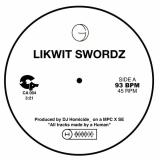
American DJ Homicide aka Craig Anthony Bullock is best known as the former DJ for Sugar Ray but also does a fine line in club-ready hip-hop jams and remixes. 'Likwit Swordz' kicks off his latest on the small but well-formed CA label out of the USA. It's got nimble drums that have a clipped bounce and vamping chords, vocal grit that echoes Cypress Hill and an infectious roll. On the flip, 'Day Coastin'' is more deep and smooth - the bars as silky as BIG and the drums rolling with crisp boom-bap style. Both have been made on an MPC and that sampler's famous textures elevate the final jams no end.
We keep the fire burning with PAN009, a scorching slice of Latin soul from Puerto Rico’s own Nacho Sanabria, better known as El Sabor De Nacho. Originally released in 1973, his version of “Que Se Sepa” takes the Roberto Roena classic and injects it with a new energy — fiery brass, driving percussion, and that unmistakable swagger that defines the golden age of salsa.
Born in Cataño, Puerto Rico in 1929, Nacho Sanabria grew up surrounded by the rhythms of bomba and plena, performing on stage as early as age nine. After relocating to New York in the late 1940s, he became a key figure in the Latin dance scene, performing with groups like Sonora Boricua, Orquesta Panamericana, and later Rafael Cortijo’s Combo. By the mid-1960s, Sanabria formed his own band, El Sabor De Nacho, combining tight horn arrangements, sharp percussion, and his signature charismatic delivery. His 1970s recordings — including Alma Primitiva and Salsa Caliente — stand as shining examples of Puerto Rican salsa at its peak.
Sanabria’s version isn’t a straight cover — it’s his own Puerto Rican interpretation, full of character and swing. The rhythm section stays tight and earthy, the horns punch with intent, and his vocal delivery brings that effortless charm only a seasoned bandleader could deliver. A proper Latin soul mover that sits somewhere between the barrio and the dancefloor, perfect for warm evenings and deeper DJ sets.
Rescued from obscurity and lovingly restored for today’s floors, PANORAMA Records continues its mission to reintroduce rare and essential music to new generations. From deep funk, jazz and global grooves to Latin dancefloor heat, the label’s 45s series shines a light on overlooked gems that still sound fresh today. Supported by tastemakers like Gilles Peterson, Patrick Forge, and the Mr Bongo DJs, this one’s destined to move both hips and feet.
2026's Brightest Hope Confirmed: “Kabutomushi”!
In their 7th year since debut, an unprecedented best album is released on CD, Cassette Tape, and LP!
Formed in 2019 as a music production team or conceptual four-piece rock band comprising a pianist, avant-garde composer, painter, and percussionist.
J-POP, hip-hop, new wave, prog rock, techno, house, free jazz, contemporary classical, folk music-all sublimated into an elusive avant-pop.
It could be called the 2020s reimagined version of Yura Yura Teikoku.
The third chapter of Vesuvius Soul Records connects distant corners of the underground — from Canada to the UK, passing through Barcelona and Naples — building a sonic bridge between different energies and creative visions.
Void Fill, a supergroup formed by members of Gad Whip, Everything Is Geometry, and King Pong Dub System, deliver two tracks that merge new wave and post-punk tension with synth-pop sensibility, each paired with its instrumental version. Their sound blends analog drive and emotional depth, echoing the label’s exploratory spirit.
On remix duty, the A-side features Lvca, one of the most influential names in today’s European underground scene. The B-side comes from Computer Rage, the Neapolitan duo behind VSR002.
Two years after he first appeared on Balmat with 1977, Mike Paradinas returns with 1979. The sense of continuity between the two records is clear, and not just from their titles. Both capture the Planet Mu head venturing into the wilderness, seeking something—half-formed memories, thoughts caught in midair—in some of the most abstract, searching music he has released.
Just like 1977, 1979 surveys a synth-heavy array of ethereal soundscapes, ominous crevasses, and strange, psychedelic fugues. Like its predecessor, the new album’s atmospheric cast sets it apart from much of the work Paradinas has released as μ-Ziq on Planet Mu. It’s not strictly an ambient record, but it’s close, as close as this famously mutable artist ever comes to inhabiting a particular genre.
Paradinas’ inspiration for the record began on visits to the Spanish cities of Ávila and Majadahona, where his family hails from. That might account for the sense that there are spirits flitting through this music, presences you can intuit if not quite grasp. But 1979 is also a record to meet on your own terms, and to find your own meanings in.
It’s a stunning record, every track a world unto itself: the mysterious contours of “Majadahonda at Dawn”; the playful melodic fillips of “Clari”; the airy melancholy of “Galletas”; the full-scale breakbeat abandon (yes, you read that right) of “Houzz 14,” the rarest of dancefloor detours for Balmat. There are echoes of classic braindance and isolationist ambient and golden-age IDM; there are easter eggs and recurring themes and hidden symmetries. Every time we listen, we discover something new. Despite what the title might suggest, it’s less a trip back in time than a portal to another universe, a destination for(to?) which only Mike Paradinas knows the exact coordinates. – Philip Sherburne, Balmat
- A1: Intro
- A2: Young Boy
- A3: Virginia
- A4: Grindin’
- B1: Cot Damn (Feat Ab-Liva & Roscoe P. Coldchain)
- B2: Ma
- B3: I Don’t Love Her (Feat Faith Evans)
- B4: Famlay Freestyle (Feat Famlay)
- B5: When The Last Time
- C1: Ego
- C2: Comedy Central (Feat Fabolous)
- C3: Let’s Talk About It (Feat Jermaine Dupri)
- C4: Gangsta Lean
- D1: I’m Not You (Feat Jadakiss, Styles P & Roscoe P. Coldchain)
- D2: Grindin’ (Bonus Remix Feat N.o.r.e., Baby & Lil’ Wayne)
- D3: Grindin’ (Bonus Selector Remix Feat Sean Paul, Bless & Kardinal Offishall)
The first act signed to The Neptunes' newly formed Star Trak label was a Virginia based duo known as the Clipse. The first single “Grindin’” impacted the streets with its bare boned but infectious drum beat in the same way that “Sucker MC’s” did almost 20 years earlier. These brothers - Pusha T and Malice combined with The Neptunes groundbreaking production sent a clear message to the rap world – “we are not the same” (as rapped by Malice on his opening verse on “Cot’ Dam”). Clipse brings an authentic Virginia sound into the game and created a movement, with not only their darkly layered raps but The Neptunes as well. Pharrell Williams and Chad Hugo were able to combine their cyberpunk production with just the right group to create a street masterpiece. Following in the footsteps of such rap criminologists as Kool G Rap, Nas, Jay-Z, and Mobb Deep, the Clipse offer the Virginia hustler's viewpoint with clever, hard-hitting lyrics that is sprinkled throughout the entire album. With so many standout tracks on Lord Willin’ the album starts pulling no punches. On Track 1 simply (or maybe not) titled “Intro” you get a very personal and deep testament of crack and the drug game, a theme that is throughout this album…HEAVY. Songs like “Virginia” or “I’m Not You” (featuring Jadakiss, Styles P and Roscoe P Coldchain), have lyrics that play as a musical notes alongside The Neptunes tailored beats. “Young Boy”, “Comedy Central”… all fit perfectly alongside “When the Last Time” and “Cot Dam” as each song plays its part as chapters to the Lord Wilin’ masterpiece. “Gangsta Lean” (another one of the albums standout tracks) features a slightly lighter feel while paired with Pharrell's trademark falsetto hook. The truth of it is, it’s hard to just pick one track, or point out which is the albums star. Each song on Lord Willin’ is essential to making it the classic that it is. The Neptunes (who were busy turning out every other Pop hit on the radio) crafted an album that was deemed an instant classic, and cemented Clipse as Rap’s newest superstars.
Sedan is an obscure Soul group from Cincinnati, Ohio that was formed in the 80's.They released only one record, and little info is known about them.Craig E. Robinson was a one of the members (he later went on to form Dayton and became a producer) The record celebrates it's 40 year anniversary and features the singles “Snake Dancin’ & “You Ain’t Got Nothin’ To Do”. This hidden gem is widely seen among disco boogie electro funk fans as a rough diamond. Sedan is now available as a limited numbered edition of 500 copies on red coloured vinyl.
DJ Support: Raresh, Marco Corola, Jamie Jones, Joseph Capriati, Chris Stussy, DJ Seinfeld, D'Julz, Djebali, Voigtmann, Arapu
For Amsterdam’s Julian Anthony, club culture has always been about movement - between sounds, between scenes, and increasingly, across continents. Rooted in the Dutch underground, his path has taken him from intimate local spaces to international stages, with appearances at institutions such as Berlin’s Hoppetosse, Ibiza’s DC10, and London’s fabric. Along the way, he’s formed close ties with crews such as Slapfunk, VBX, Half Baked, and S.A.S.H, while recent tours across South America and Australia have further widened his reach. His connection with Enzo Siragusa and the FUSE family is longstanding, having previously dropped his track ‘It’s Showtime’ on sister label LOCUS while making appearances at both FUSE and LOCUS events across Europe, including this year at FUSE Malta, during ADE, and November’s fabric takeover. Now, his ‘Missing Pieces’ EP extends that relationship further, marking his fi rst release on FUSE and off ering a natural progression while showcasing his versatility as a producer.
In his productions and his sets, Julian threads together house, techno, and electro infl uences with a playful touch, resulting in a style that feels fl uid yet sharply defi ned. Title track, ‘Missing Pieces’, sets the tone with a heavyweight bassline at its core, coupled with a hypnotic groove and percussive drive, while ‘Endless Echoes’ stretches into more atmospheric territory, weaving rolling rhythms with cosmic textures. On the fl ip, ‘No Sleep’ ups the intensity with zipping synths and sharp drum programming built for peak-time play, before ‘TTS’ closes the record on a captivating note, fusing deeper house nuances and playful rhythms into a late-night trip.
With a growing catalogue across respected imprints such as Dungeon Meat, X-Kalay, and Bee You, and a touring schedule that continues to expand globally, Julian’s first outing for the London favourites highlights his talent for crafting tracks that are simultaneously precise, playful, and built for the club.
The productions of producer Bunny'Striker'Lee were so extensive in the early to mid 1970's that labels were created just to handle his ever expanding output...
Three labels that came about during this time when Dub was King,were Jackpot,Justice and Attack.
Here we look at the Jackpot label and have compiled a collection of some of its finest dub cuts..
Jackpot records was formed in the early 70's as a subsidiary of Trojan Records to handle the Hitmaker from Jamaica Bunny'Striker'Lee
We have gathered here what we think are some of the best dubcuts from this label and era..
Hope you enjoy the set......
With CAPTAIN, BNXN takes the wheel. The Nigerian singer-songwriter has always blurred the lines between afrobeats, R&B, and soulful introspection—but this time, he’s driving with full control, no co-pilot. The album marks a defining moment for BNXN (pronounced "Benson"): a confident, fully-formed statement from an artist who’s learned to trust his instincts, sharpen his pen, and follow his own creative compass.
From the cinematic opener to the late-night confessionals tucked between glossy hooks, CAPTAIN feels like a diary written at cruising altitude. BNXN threads personal stories through rich instrumentation—balancing Yoruba and English lyrics, weaving between amapiano pulses, stripped-down ballads, and smoky alt-R&B. Standout moments find him unpacking fame’s isolations, questioning loyalty, and wrestling with what it means to lead without losing yourself. There’s growth in every verse, not just in what he says, but how he says it: sharper, more intentional, and wholly unafraid to take risks. This is BNXN unfiltered—charting new territory without ever losing sight of home.
Welcome to the first release on Acid Lamour
A sub label for Lamour Records started in 2018 with a focus on techno and acid dedicated DJs. Releases are limited to 303 vinyls, no re-press.
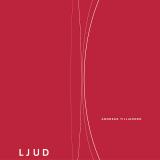
Anders Ilar and John H are no newcomers to the electronic music scene.
Born in 1973, Anders Ilar began his explorations of electronic music in the mid 80s. Growing up in the small town of Ludvika in Sweden, Ilar spent all of his spare time playing with synthesizers, drum machines, keyboards and sequencers, learning the ins and outs of analogue and digital sound and music creation. Inspired by the early industrial and EBM wave he formed several bands with friends, started playing live shows
at smaller local parties, and released several demo tapes in very limited quantities. In the 90's he gradually shifted his creative influences towards ambient techno and acid and also started to DJ. He started using computer software to produce his music around 1999 and his first vinyl EP was released in 2001 on the german label Plong!, soon to be followed by
many more releases on labels such as Shitkatapult, Audio.nl and Echocord.
Developing his own flavor of deep minimal dub techno and ambient he gained critical acclaim with his album Nightwidth (2006) for Narita Records in the USA. Followed by highly appraised album Sworn on the german label Level Records in 2008. Ilar has also made remixes for celebrated artists such as Apparat, Mikkel Metal and Ripperton and has
appeared on numerous compilations and DJ-mixes. He's performed live on stage through-out most European countries and Japan, as well as doing a small tour with Notch Festival in China in 2008.
Up to 2018 Anders Ilar has produced 13 albums and 25 vinyl EP's and performed in over 15 countries.
Born in 1984 and based in Gothenburg. John H has been DJing, as well as producing tracks, since the late 90s, with Anders as his mentor and teacher, giving John early musical influences spanning across a wide range of genres, from Swedish techno to IDM, Cologne acid craziness and
the sound of Chicago house tracks. The musical output of his DJ-sets usually varies between techno, house, acid, electro and everything in between, depending on the time and location. John has performed on several locations all around Sweden, but also done appreciated gigs in other European countries at clubs like Tresor and Culture Box, and his music has been featured in sets by DJs such as Sven Väth, Adam Beyer,
Joris Voorn, Dense & Pika, Cari Lekebusch, Alan Fitzpatrick, Karotte,
Gregor Tresher, The Hacker and many more.
Coming For Your Tongue EP is Anders and John's 4th collab release, after
acclaimed releases on Flight Recorder and New York Haunted, recorded
during a jam session at John's studio in Bergsjön outside of Gothenburg,
Sweden, using a small setup of analogue synths and drum machines such as
the Roland TR-606, TR-808, a Devil Fish modified TB-303, Minimoog Voyager
and the Arturia Microbrute. After recording Anders spiced things up by
cutting and puzzling loops as well as adding extra effects and drums.
Limited edition of 303, no repress. Vinyl exklusive for 3 months
12” vinyl, full sleeve artwork with Mordançage front cover artwork by artist Jo Torres, design & centre labels by Ciaran birch. Limited run of 300.
“Singing Vessels” draws inspiration from the sonorities and aesthetics of Amazonian medicine ceremonies and traditional Andean music. At its heart is a collection of clay whistles from ancient South America, whose timbres conjure the vibrant soundworld of the Andes. The piece also incorporates shamanic instruments from the Amazon, such as the shacapa — a bundle of dry leaves whose rustling produces a deep, soothing texture with remarkable sensory resonance.
Interwoven with generative electronics, live looping and synthesisers, these organic timbres create evolving psychoacoustic spaces where the mystery of nature meets inner realms of perception and consciousness. The piece unfolds as a ceremonial passage through a shamanic ritual: beginning in a dense jungle of sounding entities, rising into moments of cathartic purging, dissolving into states of blessing and communion, and finally returning to the here and now with renewed awareness.
Nervio Cosmico is an electroacoustic experimental duo based in Bristol, formed by Chilean composer Daniel Linker and Italian sound artist Matteo Amadio. Blending acoustic instruments from ancient South American shamanic traditions with live looping, generative sound design, and live electronics, they craft sonic journeys that explore perception, consciousness, and a spiritual connection with nature.
2025 Repress
"Cake" was a New York band formed in 1973, following a line-up tweak and a change from their previous name "Mixed Company» (referring to the racially mixed personell). At Arabellum Studios in Colony, Albany, NY, the band recorded their only 7-inch single. "Make Up Your Mind" / "Let Your Body Go» was released on Key Records in 1979.
Half a life time later, after appearing in DJ mixes and online auctions in the late 2000s, the single started gaining notoriety among DJs and diggers. Working its way up to "holy grail" status on the modern soul and disco collector scene, original copies of the sought after record would eventually sell for as high as $1000.
In 2012, Hans Jørgen Wærner (Mutual Intentions Co-Founder and notorious disco collector) got in touch with Arabellum studio owner Art Snay who produced the record. This lead him to lead singer Bob Treffiletti who had a cassette tape with unreleased long versions of the songs. The sound quality of the tape was not adequate for what Hans had in mind, and so the hunt for the original master tapes began! Unfortunately, Art Snay later passed away. At one point chances of finding the original recordings seemed so slim, the project was all but abandoned….
Luckily, Bob managed to get hold of the master tapes via Art's wife and they were sent away to legendary disco mixer / remixer John Morales, who transferred the tape to digital format. After several rounds in one of Norway's best mastering studios (Strype Audio), noise reduction and sound surgery were done while retaining the soul of the original recordings. The songs were finally ready to be pressed on the format they have always deserved: the 12-inch disco single!
The 12-inch comes with four 5 min + long songs and can be pre-ordered now. The high-quality lacquer cut pressing is produced at Optimal Media in Germany and limited to 300 copies worldwide.
For its debut release, Echoform presents a sonic palette of the shapes and colors that define its events.
The journey begins with Circles, a tension-packed peaktime driver. Built around a deep bassline, layered leads, and emotional pads, all tied together by a vocal that calls for love.
Next is Squares, a raw, heads-down groover made for sweaty dancefloors. Dreamy FX meet stripped-back rhythms in a hypnotic blend.
The EP closes with Another Shape, a 90s-inspired tech house cut with a deep emotional core. Subtle pads and a rolling groove carry you through the early hours.
Echoform is a newly formed record label based in Amsterdam and Berlin. Formerly known as boshuis, the label has been refreshed with a new mission: to unravel the mysteries of visualising sound. Have a look at their artworks and take some time. “Do you hear what you see?”
The second instalment of SCHNRZ formed by LI & ZOL gathers resources from the thermal baths of Budapest. Exquisite blend of field recordings, floating dub athmospheres and fullfilling bass-adventures balanced out on mid-tempo minimalism. Shapeshifting series of releases by the two local heroes under the flag of Budapest-based SCHNRZ, that refers to Schonherz, the name of the neighbour dormitory of their basement studio - forged by Berlin-like mid-tempo minimalism with a pinch of Balkan, developed to the next level by dub carpets of the north.
- A1: No Future
- A2: Twisted
- A3: Til I Beg For Mercy
- A4: Wake Up
- A5: Scene One
- B1: From Nothing To Nothing
- B2: Some Time
- B3: Your Product
- B4: Watch You Bleed
- B5: No Answers No Solutions
- C1: Lies
- C2: I Am The Labyrinth
- C3: Force Majeure
- C4: Flesh
- C5: Denial (Excerpt)
- D1: Pretender ('94 Mix)
- D2: Life Before Death ('94 Mix)
- D3: I Am The Labyrinth (A_Maze Mix)
- D4: From Nothing To Nothing (Edit)
- D5: No Answers, No Solutions (No Time)
Advanced Art was formed in Tampere, Finland, in 1985 by Jana, Pete, and Vince. Too young to be part of the first wave of Finnish groups inspired by German synth pioneers and New Romantics, they instead forged their own path and soon became pioneers themselves. For the next ten years, Advanced Art defined and dominated Finland’s small but growing electronic underground. They inspired a new generation of Finns to experiment with synthesizers, built an international cult following, and were deeply involved in the local scene—running clubs, organizing events, and performing at some of the very first warehouse parties in the country.
Although the line-up shifted over time, the group’s creative drive consistently came from the partnership between Jana, who supplied the voice and words, and Vince, who shaped the music with his machines. Together they defined the band’s distinctive blend of sharp electronics and lyrical vision.
After several cassette demos and two 7-inch singles, Advanced Art signed to Poko Rekords in 1991. The EPs Scar and Time raised their profile both at home and abroad, especially thanks to valuable exposure on MTV Europe’s 120 Minutes. Known for their perfectionism, they finally released their debut album Product in January 1993. On Product the line-up was Jana (lyrics, vocals), Vince (music, production), and Factor (percussion, studio work). Having moved through phases of synth pop, EBM, and industrial, the album showcased Vince’s vision of a unified sound and style more clearly than ever before.
Force followed in 1994, conceived as a multi-part concept album (Update / Live / Retro). Recorded with live percussionist PW joining Jana and Vince, it expanded on the groundwork of Product with new beats, ideas, and a sharper, more defined identity.
By 1995, exactly ten years after their founding, Jana and Vince decided to bring Advanced Art to a close on the band’s birthday, 13 October. Their run had been precise: one decade of creative output, ending with a legacy that laid foundations for Finland’s electronic scene.
Now, conveniently coinciding with the band’s 40th anniversary, Advanced Art present Forced Product. This double-LP set, fully remastered, features Product in its entirety, alongside the Update and Retro sections of Force, plus additional EP tracks and remixes recorded between 1991 and 1994 at “Audible Art” – less a studio than a concept, existing wherever machines and people met.
Limited to 450 copies, Forced Product comes in a gatefold sleeve with poster and sticker, offering a definitive document of Finland’s pioneering electronic cult heroes — a band that helped invent their country’s scene and left a lasting influence far beyond it.
For our ninth offering we have ventured out of our small but fertile swamp in search of another source of magick. Meandering across boggy pastures new, we crossed paths with Steevio, who sat hovering serenely in the fern covered shade of a nearby valley. Instantly recognising the singular vision of this fabled artist, we hastily gathered our nets and cast them under Steevio’s branches, capturing four beautiful offerings as they wriggled towards us. Upon the return to our mulch, it became clear that we could not contain Steevio’s creations, so willful was their vitality. It was therefore all we could do to release them back to the universal dance from whence they came.
The dance germinates with the writhing polyrhythmic ‘Apricity’. Hearing the crunch of frost laden grass beneath our webbed toes, we look above us to search for the sun. Angular beams of light escape over the horizon, as the warmth of Steevio’s machines coalesce. A glistening hi hat breaks through the membrane to bind his creation and anchor its ever shifting arms.
‘Octopus’ glides gracefully through a sun-dappled kelp forest. Sub frequencies rumble up from the shadowy darkness below, rippling along the fronds as they ascend. As the ocean begins to churn, a wriggling melodic tentacle parts the foliage, gleaming with primordial energy. Its joyful visit to the surface realm leaves us with a brief yet powerful reminder of the mystery beneath.
The glow of the midwinter sun warms our bones on ‘Apricity (Sunrise Mix)’. Percussive elements bubble out of the depths, forming intricate cascading patterns as they grow over the perfectly formed kicks. The moog filter tames the brew with Steevio’s intuitive restraint , until he releases its mighty power upon the gleeful forest dwellers, to their rapturous gratitude.
With ‘Adref’ we return home. The sedate tempo provides oceanic space for a melody which inhales and exhales over a familiar landscape of perfectly tuned percussion. With each breath the melody seems to increase its reach, until it’s buried deep within our bones, its memory resonating on long after it’s gone.
Steevio’s music reflects the universal moments where seemingly chaotic and disparate elements are suddenly revealed to be perfectly harmonious. Of course examples of this are always universally present in nature, and have been eternally, but we have to be reminded to appreciate them. In the same way that a wave deposits a perfect line of shells on a beach, dew freezes on grass, or individual strands of mycelial hyphae bind together to form incredible patterns, Steevio’s music is likewise; effortlessly considered. For us, it has more in common with the unrelenting flow of a river than it does with dance music. It is psychedelic music in the same sense that nature is intuitively psychedelic; without ever leaning into any tried tropes of what is culturally considered ‘psychedelic’ music.
Great Vacation! are just that: a momentary escape from a crazy world. Sunshine permeates every note, with good times abound when the band throws down. Both “Yellow Gold Diamond Fire” and “You Make It Look Easy” were recorded old school style with the whole band live in the studio to capture that special magic.
Artist Bio:
Great Vacation! was formed by Riley Geare in 2023. The lineup has rotated a bit but always includes Riley and guitarist Topher Mohr. Currently the group includes drummer Sheldon Reed (who appears on Yellow Gold Diamond Fire). Dedicated to an old school aesthetic, the band performs together live in the studio and has only ever done 2 takes of a song. Every track is recorded to tape for maximum stank. We thrive in the Southern California climate- lots of sunshine, classic cars, palm trees and love vibrations pervade the vibe.
A Place In My Memory Is All I Have To Claim is the new album by Australian atmospheric pop trio Hydroplane, the storied 'offshoot' formed by three quarters of independent pop group, The Cat's Miaow. On this, their first music after two decades plus of radio silence, Andrew Withycombe, Kerrie Bolton and Bart Cummings return to the gentle, close-quarters musical world they shared around the turn of the century.
Recorded during 2024 in Melbourne and Ballarat, A Place In My Memory… picks up the thread Hydroplane set down with its precursor, 2001's The Sound Of Changing Places, though you can hear echoes of their other releases, too, with Withycombe noting a through-line from the group's 1998 "Failed Adventure" single. There's little quite like A Place In My Memory…, then or now, though. Maybe you can draw some connections between Hydroplane and their sister group, The Cat's Miaow, while fellow travellers might include Empress, The Ah Club, and further back, Young Marble Giants, Veronique Vincent (the muffled, ticking drum machine also makes me think of Robin Gibb's Robin's Reign).
There's also an umbilical to the bedroom-crafted electronica doing the rounds in the late nineties and early noughties. Hydroplane hint at this through their approach to songwriting, which often builds creatively around loops as structural devices. Through all this, the trio achieve an effortless, organic weightlessness across these nine lovely songs. Many feature Bolton's clear singing voice, drifting along, while guitars, keyboards, drum machines and loops tickertape away. The constituent parts fit together, but they also have a curiously detached quality - think of abstract cloud formations sharing the same sky.
Hydroplane and The Cat's Miaow often dealt in emotional ambiguity and uncertainty, and the uncertainty of the nostalgic. This was always one of the most appealing facets of their music, and A Place In My Memory… is thus named perfectly. I couldn't dream up a better title for the album and its reflections on history, lived experience, and the inevitable tangle between these two phenomena. These reflections variously address such concerns as human cruelty, flight, space travel, adventurism and spiritualism. There's also "To the Lighthouse", not a direct reference to the Virginia Woolf book, but a great title, nonetheless. (They've always had excellent titles, often borrowed, for songs and albums.)
A beautiful collection of drowsy, sleepy pop, humble and quiet, but resolute in its craft, A Place In My Memory Is All I Have To Claim is dream work in practice; a lovely reintroduction. Welcome back, then.
Sunny Crypt reaches double digits on their release catalogue with a fully remastered new edition of the now sought after debut EP from Most Significant Beat. M.S.B. is an electronic music project active since the early 90s, formed by Maurizio Martinucci and Saverio Evangelista; their first record - originally released by Marco Passarani’s Nature Records in 1994 - is a masterclass in hypnotic patterns, pulsating rhythms and mind-bending leftfield techno. While “Heart Thinks Wide” and “A Flux To Follow” on A side give more breath to lushy textures and classy, dreamy pads, B side
reflects more carefully another aspect of the duo’s background with a rawer, electro leaning, percussion driven sound palette; in fact, both Martinucci and Evangelista have deep roots in the industrial and experimental music scenes. Martinucci has been a member of Clock DVA since 2010, while also working on a wide array of projects including The Anti Group and his solo Pragma alias. Evangelista, on the other hand, has been a core member of the cult industrial outfit Esplendor Geométrico since 1990.
Belgian pop superstar Max Colombie, aka Oscar and the Wolf, announces new
album ‘The Shimmr’, on PIAS Recordings.
Enter Colombie’s world and you’ll discover a uniquely dazzling and shimmering
fusion of contemporary R&B and a more European electro-pop sensibility, uniting
shivery melody, shifting beats and vocals steeped in drama, sensuality and yearning.
Colombie hears, “a twilight zone where it doesn’t sound dark nor happy. It’s like the
name Oscar and the Wolf; it’s a balance between light and dark, this perfect
combination between the sun and the moon. It’s beautiful and scary at the same
time.”
Oscar and the Wolf’s official debut, the 2012 EP ‘Summer Skin’, showed his gifts
arrived virtually fully formed, but he truly came of age in 2014 with his debut album
‘Entity’. Balanced between dancefloor anthems and slow jams, ‘Entity’ went 4 times
Platinum in his native Belgium and quickly jettisoned Colombie to superstar status.
He sold out arenas in Belgium and the Netherlands, taking the penultimate
headlining slot (behind Muse) at 2016’s Lowlands festival before headlining
Belgium’s Pukkelpop festival, sharing the bill with Rihanna and LCD Soundsystem.
Released in 2017, the second Oscar and the Wolf album, ‘Infinity’, went Platinum at
home, whilst amassing a huge Middle Eastern fanbase across Turkey (where his
2018 tour sold out in minutes), Egypt, Israel and Iran. On stage, Colombie cut a
commanding and lithe performer, often garbed in shimmering outfits that interacted
with the dynamic lighting.
The new Oscar and the Wolf album, ‘The Shimmer’, distils the essence of Colombie’s
sound and vision in its title and the image of Colombie on the album cover, bathed in
starry light. The album is a benchmark of his transformation on record; whereas
‘Entity’ was recorded in a barn, “very lo-fi with no access to gear,” he recalls.
‘The Shimmer’’s bold, rich and layered dynamics were captured at ICP Studios in
Brussels, home to, “one of the best live rooms in Europe, with all this vintage gear.”
More intimate moments were added at Colombie’s house outside the city, “those
magic takes we made just after we’d written something, which are so hard to capture
again.”
By ‘we’, Colombie includes producer Jeroen De Pessemier and multi-instrumentalist
Ozan Bozdag, who had both worked on ‘Infinity’ (and Bozdag on ‘Entity’ too). “It’s a
magical trio,” Colombie says. “Everyone is allowed to be themselves, and to explore
themselves. I’m really happy with ‘The Shimmer’ because I hear a more mature
version of myself. I always want things to grow, and I’m proud that I allowed myself to
not follow people’s expectations and reproduce what had been successful before.
There are no four-to-the-floor clubby pop songs this time.”
Instead, ‘The Shimmer’ more accurately reflects Colombie’s personality. “My
emotions run from super-happy to super-melancholic in a split second,” he says. “To
me, ‘The Shimmer’ feels like the soundtrack to a blockbuster, with many types of
tracks and themes. It’s always changing."