
7
pas en stock
Commandez maintenant et nous commanderons l'article pour vous chez notre fournisseur.
Last In: 6 years ago
19,96 €
Commandez maintenant et nous commanderons l'article pour vous chez notre fournisseur.

Commandez maintenant et nous commanderons l'article pour vous chez notre fournisseur.
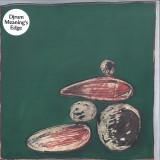
Djrum's first release since 2019, the Meaning’s Edge EP is an introduction to a whole new world. For the artist also known as Felix Manuel, it was created in the final stretches of six rather traumatic years work. Having carefully honed his techniques and aesthetics, and learned some hard-won emotional lessons over this time, finally he began to work in a quicker, lighter fashion – and to cleanse his palate a little by bringing in a fresh ingredient: his own flute playing. For listeners, though, it will serve as an appetiser, a way into the delights and complexities of this new phase of his creativity.
It’s a serious work in its own right, mind. The use of flutes – including Bansuri, Shakuhatchi, Western Classical, and synthesised all blending and blurring into one another – gives it a coherence and a sense of airiness that unites the five tracks over half an hour, however divergent their beats get. And as in all his music, Felix’s whole life is in here. Ethnomusicology studies, untold hours of DJing everywhere from the gnarliest squat raves to the most rarefied deep house clubs, explorations of his own neurological and emotional makeup, and the technical finesse of someone who is never not creating music or art, all roll into an experience that’s dazzling, delightful and keeps on giving.
Just the opening track ‘Codex’ alone touches on OG dubstep, Aphex Twin-like braindance, post-classical exploration, movie themes and more. The gentle tones and melodies that rise up out of it perfectly conjure Felix’s running theme of a protective bubble that provides a sense of safety and tranquillity even as the beats and acid gurgles and spurts all around it conjure up the slings and arrows of life’s difficulties.
The tone set, the EP moves through ultra-rarefied glass-like percussion in an almost ambient setting, hints of grime’s counterintuitive patterns, and even more hectic patterns influenced by Tanzania’s hyperspeed singeli style of dance music – but always with that perfect balance of chaos and control, unpredictability and protection. It rewards playing and replaying endlessly, it’s a profound and often joyous experience… and it’s only just the beginning. This is the return of a master craftsperson more focused than ever on his vision and vocation and ready to blow your mind all over again.
Mastered and cut on 140g black vinyl by legendary mastering engineer Matt Colton at Metropolis Studios, London. Pressed at optimal media, Germany.
il devrait être publié sur 05.10.2026

Between Tides marks the next chapter for Deep Steppe—a various artists cut balancing forward motion with the deeper foundation the label’s built on. The A-side leans into a newer lane. Mungo Sound Machine opens with a direct, no-frills party starter. Ballan follows, bringing an overseas touch that stretches the palette—loose, rolling, and just off-center in the right way. On the flip, things return to deeper territory. Kerouac kicks off the B-side with a funky, stripped-back groover—effective across a range of settings. Closing the record, Adam Rose, Miro, & JJ Selects come together on a collaborative tune. Subtle, patient, and dialed in. Two sides, one current.
Commandez maintenant et nous commanderons l'article pour vous chez notre fournisseur.

Synthesizer Evolution: From Analogue to Digital (and Back) author Oli Freke returns with a new volume in his Synthesizer Evolution A6 zine series. The modular resurgence of the past 25 years has been a wonder to behold. Where musicians were once chained to their DAWs, we are now liberated once again to wire, patch, and modulate in the real world, choosing from a mind-boggling array of options.
Modular Greats celebrates the fusion of art, logic, science, and serendipity in modular synthesis, highlighting some of the best-selling, most creative, and most impactful modules of the 21st century. Featured manufacturers include Make Noise, Mutable Instruments, TipTop Audio, Intellijel, Rossum Electro-Music, Doepfer—and many more!
il devrait être publié sur 05.03.2025

Synthesizer Evolution: From Analogue to Digital (and Back) author Oli Freke returns with a new volume in his Synthesizer Evolution A6 zine series. The first two volumes (Vintage Synths and Drum Machines & Samplers) focused on vintage electronic instruments from the 1970s and 1980s. Volume three moves into the 21st century, showcasing a selection of the most interesting, impactful, and—arguably—best synthesizers of the past two decades.
The synths in this book celebrate the vast range of sonic possibilities now available to musicians and producers. From analogue wonders to extraordinary digital creations, from tightly designed monosynths to open-ended polyphonic beasts, each one is more marvellous than the last!
il devrait être publié sur 05.03.2025

Commandez maintenant et nous commanderons l'article pour vous chez notre fournisseur.

Hört her, hört her! Aus den mystischen Gefilden der Neo-Norse-Lehre stürmt EIHWAR auf die Bühne wie ein Berserkerangriff auf ein ruhiges Fjorddorf. Mark und Asrunn haben sich den Weg des Kriegers nicht ausgesucht, sondern er hat sie gewählt. Aus dem ursprünglichen und doch unerforschten Terrain ihrer Seelen entsprungen, haben sie einen klanglichen Moloch geboren, der uralte Götter mit dem unverschämten Chaos des modernen Zeitalters vermischt.
Man stelle sich ein Paralleluniversum vor, in dem Wikinger Synthesizer entdeckten und zu Techno headbangten. Dies ist das Debütalbum von EIHWAR, Viking War Trance. Eine wilde Platte, die nicht nur den Rahmen sprengt, sondern ihn mit der Grausamkeit von Thors Hammer zerschmettert. Hemmungslos und reuelos ist dieses Album ein elektrisches Met-Hallenfest zum Soundtrack der Apokalypse. Es hat alles: technoide Beats, die im Herzen eines sterbenden Sterns geschmiedet wurden, tranceartige Stimmen, die Odin von den Toten auferstehen lassen könnten, und schamanische Trommeln, die einen Sturm in Walhalla auslösen könnten. Stelle dir vor, du stehst in einem Moshpit mit Wikingerkriegern, berauscht von der Magie des Nordlichts, und würdest die Wut von Fenrir und die Trauer von Baldr kanalisieren, mit allem Schwung und Schweiß. Mit Tracks wie "Völva's Chant", "Viking War Trance" und "Mjölnir" ist es eine in der Tonart des Chaos gesungene Saga, die dazu bestimmt ist, die wildeste Trance auf jeder Tanzfläche oder jedem Schlachtfeld zu provozieren.
- Ein elektrisierendes Debütalbum, das traditionelle nordische Klänge mit modernen elektronischen Beats vermischt und so ein einzigartiges, festliches und chaotisches Musikerlebnis schafft, das man am besten als eine Mischung aus Heilung und Carpenter Brut bezeichnen kann.
- Nach ihrer viralen Explosion auf YouTube werden Eihwar das Publikum in ganz Europa in ihren Bann ziehen und haben Auftritte auf großen Festivals wie Hellfest, Leyendas del Rock und Trolls & Légendes im Jahr 2024 bestätigt.
- Das Album enthält sorgfältig selbst produzierte Tracks und visuell überzeugende Cover und Videos, die ein kohärentes und immersives Erlebnis garantieren.
Commandez maintenant et nous commanderons l'article pour vous chez notre fournisseur.

Following on from his 2021 book, Synthesizer Evolution: From Analogue to Digital (and Back), Oli Freke returns with a Synthesizer Evolution A6 zine series.
The invention of the synthesizer in the 1960s changed musical culture and music production forever, giving musicians whole new worlds of sound to play with. Vintage Synths celebrates that invention and its subsequent history by picking out 46 of the most influential, important or most interesting synths from 1939 – 1998. They represent the introduction of a new technology, had a particular impact, or maybe even formed the basis of entirely new genres.
Explore the most legendary synthesizers ever created, including the Minimoog, ARP 2600, Yamaha DX7, Roland Jupiter 8 and more, with detailed descriptions and the stories behind their developmen
Commandez maintenant et nous commanderons l'article pour vous chez notre fournisseur.

Following on from his 2021 book, Synthesizer Evolution: From Analogue to Digital (and Back), Oli Freke returns with a Synthesizer Evolution A6 zine series.
Drum machines and samplers have something of a shared history and this zine celebrates their invention and by picking out 46 of the most influential, important or most interesting synths from 1949 – 1996. Explore the most legendary drum machines and samplers ever created, including the Roland TR-808, Roland TR-909, Akai S1000, Fairlight CMI, Akai MPC60 and more, with detailed descriptions and the stories behind their development.
Commandez maintenant et nous commanderons l'article pour vous chez notre fournisseur.

On our latest Mojuba sublabel Frekoba, we welcome JJ, a friend of ours who we love for his unique approach to a truly diverse colorful palette of club tracks on his debut for us called OOPS! So what do these four tracks sound like?
Imagine a night at a club like Panorama Bar where Soundstream, Lil Silva & Errorsmith are having a blast. Now you are in the right zone to have fun with JJ's debut 12". House, Disco, UK funky and off-kilter cut-up grooves for your enjoyment, have fun!
Commandez maintenant et nous commanderons l'article pour vous chez notre fournisseur.

Minimal Synth, Darkwave, EBM, Synthwave and New Wave from Sweden.
Commandez maintenant et nous commanderons l'article pour vous chez notre fournisseur.

After the Bend is the second album from Louisville based Flanger Magazine, and the follow up to FM’s 2018 debut, Breslin. Whereas Breslin was the solo creation of Christopher Bush, an album noted for “an astute synthesis of ‘library music’ and solo acoustic guitar,” and “a seamless blend into the uncluttered and airier side of classic 1970’s giallo,” After the Bend is an ensemble affair. An ecosystem, a perfect mutualism bodies forth—of strings, outdoor recordings, electronics, reeds, and percussion—featuring new FM players Anna Krippenstapel (Frekons (Freakwater + Mekons), The Other Years), Jim Marlowe (Equipment Pointed Ankh, Tropical Trash, Sapat), Eric Lanham and Benjamin Zoeller (both from Caboladies). The various combos perform with both a distinguished efficacy and unhurried Sunday drift—charged and beautiful, pulsating and pleasing. The production is subtle and tasteful. Mutating past the old saws of bounded individualism, a strange form of tentacular life accrues, cyborgian-fungral-tangles of the more-than-human variety.
Robert Beatty’s cover art of otherworldly and interconnected river-scape gradients, coupled with song titles like “Reservoir,” “Falls Fountain Removed,” and “Sympathies for the River,” cue and clue the listener toward a river as a singular multitude analogue for the album. Interstitial gaps, clearings and openings give rise and merge into an accumulated flow from the tributaries of spirited improvisational performance, palimpsestic song cycles, and high fidelity studio production. The composite sound-image of After the Bend refuses to put both oars down into any one of the eddies of the folk, sound, chamber, electronic, or jazz idioms, and instead glides along the currents found within the slipstreams between.
Gathering samples, a River Doctor Limnologist inspecting the properties of After the Bend might note the specter of Leroy Jenkin’s free-violin heat-light deepin the water’s thermal stratification. Or mortgage the late-Maestro’s time with Gruppo di Improvvisazione Nuova Consonanza to pay down the growing river heat budget. Or take one’s dirty buckets to the banks of the 19th laundromat where Walt Dickerson plays his vibraphone parts from Divine Gemini with dowsing rods. Or excavate the bedrock in the drainage basin, noting skeletal remains of a Shostakovich string quartet attempting to tune up a Kentucky Fiddle’s subsequent influence on the chemical composition of the water. Or consult the historical revisionist reenactment troupe’s episode of Fishing with John (Fahey) in which Codona, The Sea Ensemble and Nuno Canavarro guest host as their fleet of paddle boats churn river water into a regal lager, and all the fish get drunk in their quest for the leaner enamel Hosianna Mantra GPS coordinates of the Fattened Herb.
Bush and Marlowe recorded and produced the album at End of an Ear Studios, located in the Portland neighborhood, in the west end of the city of Louisville, bordering the Ohio River, between Kentucky’s Upper South and the Indiana’s Midwest, during the first year of the global pandemic, amidst the planet’s sixth great extinction event. As good a time to be alive as any other. (by Kris Abplanalp)
il devrait être publié sur 13.05.2022

Commandez maintenant et nous commanderons l'article pour vous chez notre fournisseur.
