Prolific producer Stu Bangas is back with a new collection of hard-hitting collaborations on Death Wish (Part II), the much anticipated sequel to the 2021 original. The project finds the Boston beatsmith rocking with some of his favorite emcees of all time as well as familiar names who always seem to bring their best work to his instrumentals.
For Stu, it’s an honor to work with the likes of Ras Kass and Psycho Les (of the Beatnuts). He made the connections while creating the phenomenal Empires LP with Eric Bobo (of Cypress Hill), and it led to the bangers you hear on Death Wish (Part II). The track with Ras, “Sus,” is an equally hilarious and hardcore takedown of weak-willed phonies, while Psycho Les teams with Celph Titled for the gangster-but-lighthearted “Y’all Clowns.”
“I grew up on all the Beatnuts albums, my whole group of friends loved them,” Stu says. “And Soul on Ice by Ras Kass? That’s a certified classic for any hip-hop head.”
quête:d j bobo
Jan Erik Vold and Jan Garbarek, two of Norway's most prominent figures in jazz teamed up with
bassist Arild Andersen, drummer Jon Christensen, guitarist Terje Rypdal and Bobo Stenson on
keyboards and these two September days in 1970 and made a formidable jazz album. Two poems
from Violence ("Det alle vet" from the collection of poems Mor Godhjertas glade version. Ja (1968) and
"Dikt" from Kykelipi (1969)) and long tenacious instrumental parts.
- A1: Sure Shot
- A2: Tough Guy
- A3: B-Boys Makin' With The Freak Freak
- A4: Bobo On The Corner
- A5: Root Down
- B1: Sabotage
- B2: Get It Together
- B3: Sabrosa
- B4: The Update
- B5: Futterman's Rule
- C1: Alright Hear This
- C2: Eugene's Lament
- C3: Flute Loop
- C4: Do It
- C5: Ricky's Theme
- D1: Heart Attack Man
- D2: The Scoop
- D3: Shambala
- D4: Bodhisattva Vow
- D5: Transistion
deluxe 3x12"[96,64 €]
- A1: Freddie Mercury - Living On My Own (No More Brothers Radio Mix)
- A2: U2 - Discotheque
- A3: Robbie Williams - Let Me Entertain You
- A4: Roxette - Joyride
- A5: Spin Doctors - Two Princes
- B1: Spice Girls - Wannabe
- B2: Britney Spears - …Baby One More Time
- B3: Christina Aguilera - Genie In A Bottle
- B4: N Sync - Tearin' Up My Heart
- B5: Backstreet Boys - Everybody (Backstreet's Back)
- B6: Take That & Lulu - Relight My Fire
- C1: Snap! - Rhythm Is A Dancer 7" Edit
- C2: La Bouche - Be My Lover
- C3: Culture Beat - Mr Vain (Radio Edit)
- C4: Haddaway - What Is Love
- C5: Dr Alban - It's My Life
- D1: Prince Ital Joe, Marky Mark - Happy People
- D2: Lou Bega - Mambo No 5 (A Little Bit…)
- D3: Eiffel 65 - Blue (Da Ba Dee)
- D4: Gigi D'agostino - The Riddle (Single Cut)
- D5: U96 - Das Boot
- E1: Tlc - Waterfalls (Single Edit)
- E2: Blackstreet Feat Dr. Dre - No Diggity (Radio Version)
- E3: Fugees, Ms Lauryn Hill, Wyclef Jean, Pras - Fu-Gee-La
- F3: Vanilla Ice - Ice Ice Baby
- F4: Jennifer Lopez - If You Had My Love
- F5: Salt-N-Pepa - Let's Talk About Sex
- G1: Faithless - Insomnia (Radio Edit)
- G2: Everything But The Girl - Missing (Todd Terry Remix / Radio Edit)
- G3: Dna Feat Suzanne Vega - Tom's Diner
- G4: Lisa Stansfield - Change (Radio Edit)
- G5: Cher - Believe
- H1: Bloodhound Gang - The Bad Touch
- H2: Crazy Town - Butterfly
- H3: Run-D M.c., Jason Nevins - It's Like That
- H4: Fingers, Gilette - Short Dick Man (Radio Mix)
- H5: Marky Mark & The Funky Bunch, Loleatta Holloway - Good Vibrations
- E4: Snow - Informer
- E5: Stereo Mc's - Connected - Edit (Aus 25 Years)
- F1: Ini Komoze - Here Comes The Hotstepper
- F2: Heavy D & The Boyz, Aaron Hall - Now That We Found Love
„The 90’s are back!“ – 30 Jahre später ist das beliebte Jahrzehnt musikalisch wieder voll im Trend! Auf der „FETENHITS - The Real 90’s“ sind die Originale der größten Party-Hymnen der Dekade vereint.
Ob die groovigen Sounds von „No Diggity“, der absolute Ohrwurm „Wannabe“ oder die Kult-Nummer „Mambo No. 5“ - Der bunte Mix der besten Party-Songs und Klassiker der 90‘s ist voller „Good Vibrations“!
Mit dabei sind u.a. U2, Britney Spears, Salt-N-Pepa, 20 Fingers & Gillette, Freddie Mercury, La Bouche, DJ Bobo, TLC, Backstreet Boys und viele mehr.
„We Bring It All Back“ mit den größten Party-Hits der 90er! Erhältlich als 4LP, 4CD und eAlbum ab dem 29. September 2023!
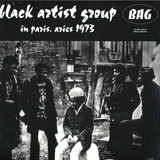
'In 1972, trumpeter Baikida Carroll and some of his colleagues from the Black Artists Group (more precisely saxophonist/flutist Oliver Lake, trombonist Joseph Bowie, drummer Charles "Bobo" Shaw and trumpeter Floyd LeFlore) took the advice of their friends in the Art Ensemble Of Chicago and left their native Missouri to come and discover the bright lights of Paris for themselves. The following year they would even get the chance to record their only album which would rapidly attain mythical status and a collector’s item: “In Paris, Aries 1973”.
Therefore, it was not surprising that they crossed paths with Jef Gilson in the capital. He was always on the lookout for new artists for his recently formed Palm label and had been active on many fronts in jazz since the end of the 50s. The French bandleader / pianist / composer / sound engineer had already recorded, in the preceding months other American musicians who would go on to have great careers: Byard Lancaster, Keno Speller, Clint Jackson III, Khan Jamal... Gilson therefore offered Baikida Carroll the chance to record his first album under his own name, which would be the 13th release on the label. Carroll logically asked Oliver Lake to join him. He also recruited Manuel Villaroel, a young Franco-Chilien pianist from the group Matchi-Oul, who had already released an album on Futura in 1971 and would release another on Palm in 1976. The group was completed with the addition of Brazilian percussionist Naná Vasconcelos, who had just released a well-received album on the Saravah label. They were ready to enter the studio for the 3rd, 4th and 5th June 1974.
The first side of the album is divided into two long tracks which send free jazz back to its long-lost African roots. The opener “Orange Fish Tears” indeed rolls out a jungle of percussion of all sorts and sizes -the whole group is involved- which weave and mix together reaching a point where all bearings are lost, lending a sense of wonder to the majestic entry of the brass and woodwinds, flying suddenly out from the undergrowth. “Forest Scorpion” (sic) is a real voodoo ceremony where a venomous percussive groove backs the fiery solos from keyboards and saxophone in a furious trance. A warning; after these two tracks listeners are physically and emotionally wiped out!
The other side is more introspective. Deliberately using dissonance and repetition, “Rue Roger” -the only composition by Oliver Lake- in a long dialogue between trumpet and saxophone, could almost remind us of Terry Riley in his favourite ballpark. “Porte D'Orléans”, the fourth and final track on the album, has the group back to their old tricks in a long hallucinatory jam which owes as much to the contemporary music of György Ligeti as to the most angst-ridden Jerry Goldsmith soundtrack music (remember the heavy chords which beat through “Planet of the Apes»).
With these two sides, and in under 45m, Baikida Carroll and his musicians show just what they can do, from cerebral to charnel without ever simplifying things. This is an essential album if you are a fan of free-wheeling avant-garde music from the Art Ensemble of Chicago to Sonic Youth and including Shabaka Hutchings and Rob Mazurek. For those with good taste, in other words.'
Miles Davis is regarded to be one of the most influential and acclaimed figures in the history of jazz and 20th-century music. Quiet Nights is the fourth and last studio album that Davis collaborated on with Gil Evans. The 1963 release took inspiration from the bossa nova genre that rose to popularity during the time.
Quiet Nights is a mix of situations and sources: Brazilian folk (“Prenda Minha”, titled “Song #2” on the album), Spanish classical (“Adelita” by guitar pioneer Francisco Tárrega, here called “Song #1”), and a few ballads, including one that stands out from the rest of the big band album: “Summer Night,” a quintet take featuring Miles playing muted then open trumpet and the start of a new band: tenor saxophonist George Coleman, pianist Victor Feldman, bassist Ron Carter, and drummer Frank Butler.
The album was produced by Teo Macero. Some of the additional performers on this album include Paul Chambers, Bill Barber, Steve Lacy, Jimmy Cobb, Willie Bobo, and George Coleman amongst others.
- A1: Pigs
- A2: How I Could Just Kill A Man
- A3: Hand On The Pump
- A4: Hole In The Head
- A5: Ultraviolet Dreams
- A6: Light Another
- A7: The Phuncky Feel One
- A8: Break It Up
- B1: Real Estate
- B2: Stoned Is The Way Of The Walk
- B3: Psycobetabuckdown
- B4: Something For The Blunted
- B5: Latin Lingo
- B6: The Funny Cypress Hill Shit
- B7: Tres Equis
- B8: Born To Get Busy
Cypress Hill’s self-titled debut album was hard as nails, with very few pop concessions. There was humor, but it was laced by cackling, homicidal sneering. Not well known outside of the hardcore hip-hop scene at first, faces of the three group members weren’t usually shown clearly in press photos; they preferred the shadows. As their first singles began hitting the airwaves and record racks, the press and music fans started to take notice.
From the opening notes of the group’s first single, “The Phuncky Feel One,” to deeper album cuts like “Stoned Is The Way Of The Walk” and “Tres Equis,” it was clear that Cypress Hill was something different. And very, very dope. The world Cypress Hill espoused was gang-ridden and far from cheery, but they managed to laugh through the pain. Lead rapper B-Real took each fuzzed-out, rock-hard DJ Muggs beat as a challenge, jumping around it like a spark off a joint as it makes its way to the concrete. MC Sen Dog always had B-Real’s back, to bring intensity and a no-bullshit gruffness that made the group both menacing and unpredictable.
When they introduced percussionist Eric Bobo to the mix in the early 90s, it brought new dimension to the band, making their live performances one of the most unique and accomplished shows in hip-hop. Journalist and author Chris Faraone highlights the group’s relationship in the reissue’s liner notes (which is included only in limited edition Skull) saying, “By the late ‘80s the undisputed Cypress unit finally formed. B and Sen realized that their diametric styles - the latter’s deep wrangle, the former’s inimitable high notes - complemented one another righteously. By then Muggs had bangers in the bag, as well as industry experience from a jaunt with the New York duo 7A3. B and Sen waited while Muggs messed with 7A3, and in that time began to build the blueprint for their raucous and weeded no-holds-barred style. Besides getting schooled on industry pitfalls, Muggs had also grown into hip-hop’s most formidable young producer, while straddling the bi-coastal gap.”
Cypress Hill’s debut went gold by the end of 1991 and has since pushed past double platinum status, making it the first album for a Latino-American hip hop group to do so. The album received raves from the likes of Rolling Stone and the Los Angeles Times, saw a #1 Hot Rap Single with the release of “The Phuncky One” and helped the band win Artist Of The Year at the 1992 Source Awards. After 25 years, it should come as no surprise that Cypress Hill is a cornerstone of the group’s live set to this day.
- A1: Onde Ando O Meu Amor - Bossa Três 02 13:00
- A2: Cochise - Ed Lincoln 02 27:00
- A3: A Felicidade Breno Sauer Quinteto 02 14:00
- A4: Os Grilos - Marcos Valle 02 14:00
- A5: Samba De Uma Nota Só -Lalo Schifrin & Orchestra 03 46:00
- A6: Samblues - Sambalanço Trio 02 16:00
- A7: So Danco Samba (Jazz 'N' Samba) - Wanda De Sah 02 11:00
- B1: Bert's Bossa Nova - Bert Kaempfert & His Orchestra 02 25:00
- B2: Oba-Lá-Lá - Sérgio Mendes 02 28:00
- B3: Lamento - Nelson Riddle 03 03:00
- B4: Chora Tua Tristeza - Geraldo Trio 02 58:00
- B5: Mas Que Nada - Elza Soares 02 25:00
- B6: The Man From T H. R. U. S. H. - Lalo Schifrin 02 55:00
- B7: O Pato - Pedrinho Mattar E Seu Conjunto 01 53:00
- C1: Groovy Samba - Cannonball Adderley And The Bossa Rio Sextet With Sérgio Mendes 05 05:00
- C2: Amanhã -Edgard E Seu Conjunto 02 45:00
- C3: Caminho De Casa - João Donato 02 28:00
- C4: É Bom Assim - Os Cobras 02 47:00
- C5: Você - Roberto Menescal 01 58:00
- C6: Reza - Paul Winter Feat Luiz Bonfá, Roberto Menescal & Luiz Eça 03 19:00
- D1: Tarde Em Itapoã - Amilton Godoy 03 50:00
- D2: Wave - Toots Thieleman & Elis Regina 03 08:00
- D3: Baia - Bill Perkins 03 34:00
- D4: So Nice (Samba De Verão) - Sérgio Mendes & Wanda De Sah Feat Bud Shank 02 11:00
- D5: Mentira - Marcos Valle 03 43:00
- D6: The Bobo ( Bossa Nova ) - Francis Lai 02 13:00
Brazilia Maravilha... A real wonder of selected Brazilian tunes.
You will feel the mood and breeze like you were over there!
28 songs including some great classics as "Lamento" by Nelson Riddle, "Mas Que Nada" by Elza Soares, "Groovy Samba" by Cannonball Adderley and "So Nice (Samba De Verao) by Sérgio Mendes as well as more unique ones.
Kindly remastered tracks from master tapes to keep the dusty roots of the original sound. Double vinyl in a balanced mix of vocals, instrumentals, bossa nova and some jazzy beats tunes.
- A1: Back In The Saddle
- A2: Sweet Emotion
- A3: Lord Of The Thighs
- A4: Toys In The Attic
- B1: Last Child
- B2: Come Together
- B3: Walk This Way
- B4: Sick As A Dog
- C1: Dream On
- C2: Chip Away The Stone
- C3: Sight For Sore Eyes
- C4: Mama Kin
- C5: S.o.s
- D1: I Ain't Got You
- D2: Mother Popcorn
- D3: Train Kept A Rollin' / Strangers In The Night
Am 14. Juli starten Aerosmith eine umfassende Neuauflagen-Reihe ihres Katalogs erstmals über UNIVERSAL MUSIC. Diese umfasst die Jahre 1974-2012 in welchen die Alben ”Aerosmith”, ”Draw The Line”, ”Get Your Wings”, ”Honkin’ On Bobo”, ”Just Push Play”, ”Live! Bootleg”, ”Music From Another Dimension”, ”Nine Lives”, ”Toys In The Attic”, ”Rocks”, ”Night in the Ruts” und ”Rock In A Hard Place”, von den amerikanischen Rocklegenden veröffentlicht wurden.
Aerosmith ist die meistverkaufte amerikanische Hard-Rock-Band aller Zeiten und hat weltweit mehr als 150 Millionen Tonträger verkauft, davon mehr als 85 Millionen in den USA. Mit 25 Gold-, 18 Platin- und 12 Multi-Platin-Alben halten sie den Rekord für die meisten Auszeichnungen einer amerikanischen Band und sind die Band mit den meisten Multi-Platin-Alben einer amerikanischen Band. Sie haben 21 Top 40 Hits in den US Hot 100, neun Nummer 1 Mainstream Rock Hits, vier Grammy Awards, sechs American Music Awards und zehn MTV Video Music Awards gewonnen. Im Jahr 2001 wurden sie in die Rock and Roll Hall of Fame aufgenommen und belegten Platz 57 bzw. Platz 30 auf der Liste der 100 grössten Künstler aller Zeiten des Rolling Stone und von VH1. 2013 wurden Tyler und Perry in die Songwriters Hall of Fame aufgenommen und 2020 erhielten sie den MusiCares Person of the Year Award.
- Nine Lives
- Falling In Love (Is Hard On The Knees)
- Hole In My Soul
- Taste Of India
- Full Circle
- Something's Gotta Give
- Ain't That A Bitch
- The Farm
- Crash
- Kiss Your Past Good-Bye
- Pink
- Attitude Adjustment
- Fallen Angels
Am 14. Juli starten Aerosmith eine umfassende Neuauflagen-Reihe ihres Katalogs erstmals über UNIVERSAL MUSIC. Diese umfasst die Jahre 1974-2012 in welchen die Alben ”Aerosmith”, ”Draw The Line”, ”Get Your Wings”, ”Honkin’ On Bobo”, ”Just Push Play”, ”Live! Bootleg”, ”Music From Another Dimension”, ”Nine Lives”, ”Toys In The Attic”, ”Rocks”, ”Night in the Ruts” und ”Rock In A Hard Place”, von den amerikanischen Rocklegenden veröffentlicht wurden.
Aerosmith ist die meistverkaufte amerikanische Hard-Rock-Band aller Zeiten und hat weltweit mehr als 150 Millionen Tonträger verkauft, davon mehr als 85 Millionen in den USA. Mit 25 Gold-, 18 Platin- und 12 Multi-Platin-Alben halten sie den Rekord für die meisten Auszeichnungen einer amerikanischen Band und sind die Band mit den meisten Multi-Platin-Alben einer amerikanischen Band. Sie haben 21 Top 40 Hits in den US Hot 100, neun Nummer 1 Mainstream Rock Hits, vier Grammy Awards, sechs American Music Awards und zehn MTV Video Music Awards gewonnen. Im Jahr 2001 wurden sie in die Rock and Roll Hall of Fame aufgenommen und belegten Platz 57 bzw. Platz 30 auf der Liste der 100 grössten Künstler aller Zeiten des Rolling Stone und von VH1. 2013 wurden Tyler und Perry in die Songwriters Hall of Fame aufgenommen und 2020 erhielten sie den MusiCares Person of the Year Award.
- A1: Jailbait
- A2: Lightning Strikes
- A3: Bitch's Brew
- A4: Bolivian Ragamuffin
- A5: Cry Me A River
- B1: Prelude To Joanie
- B2: Joanie's Butterfly
- B3: Rock In A Hard Place (Cheshire Cat)
- B4: Jig Is Up
- B5: Push Comes To Shove
Am 14. Juli starten Aerosmith eine umfassende Neuauflagen-Reihe ihres Katalogs erstmals über UNIVERSAL MUSIC. Diese umfasst die Jahre 1974-2012 in welchen die Alben ”Aerosmith”, ”Draw The Line”, ”Get Your Wings”, ”Honkin’ On Bobo”, ”Just Push Play”, ”Live! Bootleg”, ”Music From Another Dimension”, ”Nine Lives”, ”Toys In The Attic”, ”Rocks”, ”Night in the Ruts” und ”Rock In A Hard Place”, von den amerikanischen Rocklegenden veröffentlicht wurden.
Aerosmith ist die meistverkaufte amerikanische Hard-Rock-Band aller Zeiten und hat weltweit mehr als 150 Millionen Tonträger verkauft, davon mehr als 85 Millionen in den USA. Mit 25 Gold-, 18 Platin- und 12 Multi-Platin-Alben halten sie den Rekord für die meisten Auszeichnungen einer amerikanischen Band und sind die Band mit den meisten Multi-Platin-Alben einer amerikanischen Band. Sie haben 21 Top 40 Hits in den US Hot 100, neun Nummer 1 Mainstream Rock Hits, vier Grammy Awards, sechs American Music Awards und zehn MTV Video Music Awards gewonnen. Im Jahr 2001 wurden sie in die Rock and Roll Hall of Fame aufgenommen und belegten Platz 57 bzw. Platz 30 auf der Liste der 100 grössten Künstler aller Zeiten des Rolling Stone und von VH1. 2013 wurden Tyler und Perry in die Songwriters Hall of Fame aufgenommen und 2020 erhielten sie den MusiCares Person of the Year Award.
Das Aufeinandertreffen der zwei großen DeeJays aus dem Jahre 1984 wurde als Vinyl neu aufgelegt. Mit dem Gütesiegel Channel One, Roots Radics und Henry 'Junjo' Lawes hatten beide Künstler die Gelegenheit auf jeweils fünf Tracks und schwergewichtigen Riddims ('Prison Oval Rock', 'Lecturer', 'Fever', 'Stars', 'Rougher Yet') ihre Fähigkeiten nachhaltig zu demonstrieren!
Repress!
Outstanding free jazz session recorded in 1973 in Paris by Chicago outfit BAG.
It was Lester Bowie, trumpeter with the Art Ensemble of Chicago, who suggested that the Black Artists' Group (BAG) should head for Paris. In 1972 several members of BAG took his advice and flew to France for an extended stay. The following year a concert featuring saxophonist Oliver Lake, trumpeters Baikida Carroll and Floyd LeFlore, drummer Charles Bobo Shaw and trombonist Joseph Bowie (Lester's younger brother) was recorded and subsequently issued as In Paris, Aries 1973, a strictly limited edition LP on the group's own label.
Since the formation of Black Artists' Group in 1968, the home of this multidisciplinary arts collective had been St Louis, Missouri, the city where the Bowie brothers had grown up. It was there that Lester Bowie had started to investigate the expanding horizons of jazz before moving, in 1966, to Chicago where he joined the recently established Association for the Advancement of Creative Musicians (AACM). His close friend Oliver Lake visited Bowie, attended AACM concerts and meetings and was inspired not only by their artistic vision and integrity but also by their efficient organisation. In Chicago musicians were making things happen for themselves, taking control of their own destinies and giving shape to their lives as creative artists.
In June 1969, the Art Ensemble of Chicago had taken their music to France. During the preceding decade Paris had established a reputation for audiences that were unusually well-informed and open-minded, receptive to the uncompromising music of black American innovators such as Cecil Taylor, Ornette Coleman, Albert Ayler and Sun Ra. The city that had nurtured not only Cubism and Surrealism, but also Jean-Luc Godard and contemporary cinema's Nouvelle Vague was well prepared for the sonic collage forms and stylistic dislocations of the Art Ensemble. During that same month violinist Leroy Jenkins, trumpeter Leo Smith and saxophonist Anthony Braxton also arrived in Paris, three further emissaries from the AACM.
The adventure of collective improvisation resonated with the Parisian zeitgeist. Enthusiastic audiences attended their concerts and coverage in the media. In Paris, Aries 1973 offers an isolated and fascinating glimpse into that phase of the group's existence. The album is dedicated to the memory of Kada Kayan, a bassist who had hoped to make the trip from St Louis to France but, tragically, had grown ill and died. His absence adds special poignancy to the sound of the bass when it appears on this recording, played by Baikida Carroll. Listeners keen to hear Kayan himself in the company of Lake, Bowie, Shaw, LeFlore and Carroll should seek out Red, Black and Green by the 10-piece Solidarity Unit, Inc. That album, recorded on 18th September 1970 and dedicated to Jimi Hendrix, who died on that day, features an earlier version of Shaw's composition 'Something to Play On.'
In Paris, Aries 1973 reveals BAG's musical affinities with the Art Ensemble of Chicago. Both groups preserved an independently minded approach to the notion of free jazz and a carefully filtered awareness of pan-African musical practices, while their creative interest in space, mobile structure, chance occurrences and simultaneity also suggests parallels with the concerns of leading experimental composers working at that time. These performances in Paris of Shaw's 'Something to Play On' and Lake's 'Re-Cre-A-Tion,' plus two collective compositions/improvisations, display the dedication to structural fluency and sensitivity to coloration that accompanied BAG's unorthodox group dynamics and their unconventional instrumental combinations. In this case the musicians embrace congas, log drums, marimbas, woodblocks, cowbells and gongs. This is not a showcase for solos, but a shape-shifting and multi-centred statement of togetherness, quest and discovery. Removed from BAG's original multidisciplinary context the music still exudes an exhilarating spirit of collaborative exploration and shared excitement.
Die Fähigkeit des Bobo Stenson Trios, weitreichende Idiome und ein breit gefächertes Repertoire im Rahmen seines eigenständigen Ausdrucks zu umfassen, ist inzwischen so etwas wie ein Markenzeichen der Gruppe geworden und brachte The New York Times zu der Aussage, der Pianist mache ”erhabene KlaviertrioPlatten, ohne jemals zu viel zu spielen.
Es pulsiert, bewegt sich in Wellen mit langen improvisierten
Phrasen; es ist lebendig”. Das erfahrene Trio zeigt sich auf Sphere als besonders eingespielte Einheit und bewegt sich auf zugleich subtile und eigenwillige Weise durch eine Reihe von Eigenkompositionen
sowie Melodien, die von diversen skandinavischen Komponisten stammen.
Der schwedische Pianist hat in jahrzehntelanger Zusammenarbeit mit ECM und Manfred Eicher – der, wie Bobo sagt, ”die besten
Qualitäten der Musiker hervorhebt” und die Platte produziert hat – eine einzigartige Mischung aus verschiedenen musikalischen Strömungen entwickelt und verfeinert. Die Mitstreiter des Pianisten, Anders Jormin am Bass und Schlagzeuger Jon Fält, die den Bandleader seit Cantando (2008) begleiten, sind mehr als ideale musikalische Partner für Bobos sanften Anschlag und unendliches Verlangen nach Zusammenspiel. Bobo: ”Wir spielen nie ’von der Stange’. Die Dinge kristallisieren sich aus dem Moment heraus und
wir passen uns dem an. Das ist die Quintessenz.
Das macht die Freude des Zusammenspiels aus; nie das Gleiche zweimal zu machen, und mit Entschlossenheit.”
Sublime Frequencies is honored to release the third LP from Baba Commandant and the Mandingo Band. Sonbonbela was recorded in the beginning of 2022 in the Republic of Burkina Faso. The group continue to hone their trademark fusion of Mandingue and afro-beat styles. The Mandingo Band are a hit machine, sculpting seven new tracks of near Beefheart/Magic Band dynamics, Fela inspired groovers dusted out in the Sahel zone, rather than the humidity and sweat of Lagos, creating one of the most original and propulsive musical statements to come from the contemporary West African cultural juggernaut. As with previous releases, the band features the legendary guitar pyrotechnics of Issouf Diabate, truly one of the greatest West African (or Earth for that matter) guitarists of the last forty years. The band is completed by a near bottomless barrel of artistry from the Ouagadougou and Bobo Dioulasso musical talent pool. On bass guitar, Wendeyida Ouedraogo, on drums Abbas Kabore, and on percussion and balafon, Nickie Dembele. Leading the charge again is the captain himself, Mamadou Sanou on the Doso Ngoni featuring one of the most distinctive voices of the modern era. The opposite of the banal trends of auto-tune that have pervaded most of West African popular music, Baba’s voice still impresses with its gravel and grit, showcasing a range that is ancient and defiant in equal measure. This LP is a non-stop hit parade of afro-beat bangers destined to light dance floors and living rooms ablaze!!! This album is dedicated to the memory of Massimbo Taragna, the bass player extraordinaire who was an integral part of the Mandingo Band’s trance stun musical power. He passed away in early 2022. RIP TRACKLIST: Side A: CHASSER LES SACHETS, KAMELEBA, AFRO MANDINGO, SEMAYALA Sida B: SEREJUGU, SONBANBELA, WARIKO
- A1: The Phunky Feel One
- A2: How I Could Just Kill A Man
- A3: Hand On The Pump
- A4: Real Estate
- A5: Pigs
- A6: We Ain´t Goin´ Out Like That
- B1: I Wanna Get High
- B2: Lick A Shot
- B3: Throw Your Set In The Air (Album
- B4: Throw Your Set In The Air (Club
- B5: Killa Hill
- B6: Illusions (Lp Version)
- C1: Insane In The Brain
- C2: When The Ship Goes Down
- C3: Illusions (Muggs Version)
- C4: Boom Biddy Bye Bye (Lp Version)
- C5: Boom Biddy Bye Bye (Fugees Mix
- D1: Tequila Sunrise
- D2: Dr Greenthumb
- D3: Audio X
- D4: Latin Thugs
- D5: Rap Superstar
- D6: Lowrider
Cypress Hill is widely respected and considered to be amongst the main progenitors of West Coast rap and Hip Hop in the early 1990s. With mega-hits like "Insane in the Brain", "I Wanna Get High" or "Tequila Sunrise" they crossed-over to mainstream breaking all records for a rap band up until that time. Cypress Hill were the first Latino-American hiphop group to have RIAA Certified platinum and multi-platinum albums. As musicians they became famous for the crazy sounds produced by DJ Muggs and Bobo and the stoner sympathetic lyrics of B-Real and Sen Dog. They redefined and shattered the boundaries of hip-hop, crafting gutter-dirty tracks that fused deep bass lines with blissful, stoned-out melodies and aggressive hard rock riffs, creating a unique imprint. This is an esential and powerful weapon for all the Hip Hop creators and djs.
For the first time on CD and LP, an anthology celebrating the work of composer, arranger, producer and pianist Webster Lewis from his time at Epic Records. The era of 1976-1981 is one of polished, luxurious jazz funk and soul, defined by Webster across his four albums at Epic supported by an array of guest musicians, lush string sections and often uncredited singers. This collection contains the artist’s signature tracks “Barbara Ann”, “Give Me Some Emotion”, “El Bobo” and recently uncovered gems from the vaults “Reach Out”, “Boston” and “Japanese Umbrella”. The CD features an exclusive essay written by Will Fox with unique insights from the legendary DJ Patrick Forge. The recently discovered recordings appear on vinyl for the first time on the LP edition.
In summer 1958, João Gilberto -an unknown 28 year-old Brazilian guitarist and singer from Bahia- made his recording debut as a singer with two songs "Chega de Saudade" and "Bim Bom." With a new rhythmic feeling, batida, and rich harmonies he laid the basis of the modern Brazilian samba, now known as Bossa Nova. Underpinned by his insouciantly swinging guitar, Joãos seductive, vibratoless vocals caressed both ear and soul in a mesmerizing, highly addictive combination, refreshing and modern. Chega de Saudade was a hit, launching Gilbertos career and the bossa nova craze. Soon, singers and guitarists were trying to imitate him and composers were all on a Desafinado (the second Gilbertos hit) and Chega de Saudade kick. The longawaited renewal of the Brazilian samba was now a fact. Antonio Carlos Jobim said: Gilberto appeared as a light, as a big star in the firmament, in the heavens. He became a focus, because he was pulling the guitar in one way and singing the other way, which created a third thing that was profound. Yes, the guy who brought the Bossa Nova beat to the world was João Gilberto.
AN EXCLUSIVE NEW LABEL DEDICATED TO JAZZ, HARD BOP, R&B AND SOUL MASTERPIECE IN STRICTLY LIMITED CLEAR VINYL EDITION.
Limited Clear Vinyl edition, 500 copies! “Bossa Nova Soul Samba” came as Ike Quebec’s best contribution to the fruitful marriage between Jazz and Brazilian music. Recorded in 1962 and released on Blue Note in the same year. this was Quebec’s final recording before his death in January 1963. A beautiful studio session dominated by Quebec’s tenor sax warm tone and the light and gentle groove provided by Kenny Burrell - guitar, Wendell Marshall - bass, Willie Bobo - drums and Garvin Masseaux - chekere.
AN EXCLUSIVE NEW LABEL DEDICATED TO JAZZ, HARD BOP, R&B AND SOUL MASTERPIECE IN STRICTLY LIMITED CLEAR VINYL EDITION.
Limited Clear Vinyl edition, 500 copies! “Bossa Nova Soul Samba” came as Ike Quebec’s best contribution to the fruitful marriage between Jazz and Brazilian music. Recorded in 1962 and released on Blue Note in the same year. this was Quebec’s final recording before his death in January 1963. A beautiful studio session dominated by Quebec’s tenor sax warm tone and the light and gentle groove provided by Kenny Burrell - guitar, Wendell Marshall - bass, Willie Bobo - drums and Garvin Masseaux - chekere.
AN EXCLUSIVE NEW LABEL DEDICATED TO JAZZ, HARD BOP, R&B AND SOUL MASTERPIECE IN STRICTLY LIMITED CLEAR VINYL EDITION.
Limited Clear Vinyl edition, 500 copies! “Bossa Nova Soul Samba” came as Ike Quebec’s best contribution to the fruitful marriage between Jazz and Brazilian music. Recorded in 1962 and released on Blue Note in the same year. this was Quebec’s final recording before his death in January 1963. A beautiful studio session dominated by Quebec’s tenor sax warm tone and the light and gentle groove provided by Kenny Burrell - guitar, Wendell Marshall - bass, Willie Bobo - drums and Garvin Masseaux - chekere.
- 1: Manu Dibango - Soul Makossa
- 2: Shina Williams & His African Percussionists - Agboju Lo
- 3: Brigth Engelberts - Tolambo Funk (Cleon & Jazzy Pidjay
- 4: Dj Center Feat. Akoya Afrobeat - Dem Say Ah (Akoya Re-R
- 5: Pat Kalla & Le Super Mojo - Hymne A La Vie
- 6: Ebo Taylor - Atwer Abroba
- 7: Ernesto Djédjé - Zadie Bobo
- 8: Setenta Feat. Orlando Julius - Ijo Soul
- 9: The Wings - Gone With The Sun
- 10: Peter King - Ajo
As a true reference cultural media, Trace completes its musical offer with a first collection of 3 vinyls! Find the cream of Afrobeat selected by Trace and journalist Osman Jr. With Manu Dibango-Ebo Taylor-Shina Williams...
- A1: Op Hotel 4 23
- A2: ぜんぶ、できる- Feat Kanna Sato 5.19
- A3: Moeilijke Tijden - Feat Huub Prins 4.17
- A4: Sexboy - Feat Bobonne & Parrain 3.34
- A5: Rita De Rover - Feat De Witte Kunst 3.46
- B1: +32456393836 - Feat Isolde Van Den Bulcke 4.49
- B2: Geld - Feat Miaux 6.08
- B3: De Grauwe Panter - Feat Elko B, Lotte Vanhamel 4.12
- B4: Grappige Man - Feat Bontridders, Dennis Tyfus 4.50
Two years after their album with the significant title Enkel Duetten (Only Duets), Arne Omloop, Boris Van den Eynden, and Noah Melis have again invited a motley collection of guests. Besides Dutch, you can now also hear Japanese, Slavic pronunciations, English words, and Dutch dialects – wriggled between the beats and melodies
Ask the members of Borokov Borokov to say something about their new album De Verkeerde Fout (The Wrong Mistake), and they will answer you that it is the best record they have ever made. And then something about sliced white bread or dry shampoo. No, you don't get much wiser when the trio has to interpret or analyze themselves and their unconventional, asymmetrically bouncing synthpop.
Two years after their album with the significant title Enkel Duetten (Only Duets), Arne Omloop, Boris Van den Eynden, and Noah Melis have again invited a motley collection of guests. Besides Dutch, you can now also hear Japanese, Slavic pronunciations, English words, and Dutch dialects – wriggled between the beats and melodies. Maybe these participants do have something (un)sensible to say about De Verkeerde Fout and BB's freaky universe?
Born in Juazeiro, Bahia, Brazil on June 10, 1931 (and 87 years .old at this writing), singer/song writer Joao Gilberto is a living legend of bossa nova. While Antonio Carlos Jobim set the standard for the creation of bossa nova in the mid-’50s (with songs like “The Girl from Ipanema” and “Desafinado”), it was Gilberto who brilliantly reimagined (and, arguably, defined) the genre. The first bossa nova song, titled “Bim-Bom”, was written as Gilberto watched passing
laundresses on the banks of the Sao Francisco River balance loads of clothes on their heads. In 1956 he went to Rio de Janeiro and struck up old acquaintances, most significantly Antonio Carlos Jobim, who was by then working as a composer, producer and arranger with Odeon Records. Jobim was impressed with Gilberto’s new style of guitar playing, and set about finding a suitable song to pitch the style to Odeon management. In 1959 Gilberto presented his first LP, Chega de Saudade. The title song turned into a hit, launching Gilberto’s career and the bossa nova craze. Besides a number of Jobim compositions, the album featured older sambas and popular songs from the 1940s and 1950s, all performed in Gilberto’s distinctive style. This album was followed by two more in 1960 and 1961, by which time the singer featured new songs by a younger generation of performer/composers such as Carlos Lyra and Roberto Menescal.
By 1962, bossa nova had been embraced by North American jazz musicians such as Herbie Mann, Charlie Byrd, and Stan Getz, who invited Gilberto and Jobim to collaborate on what became one of the best-selling jazz albums of all time, Getz/Gilberto. Chega de Saudade was issued in the United States as The Warm World of Jo o Gilberto.
Percussionist Frank Ricotti played in the National Youth Orchestra and was rated the UK’s top vibraphonist during the late 1960s. In 1971, with guitarist Mike de Albuquerque, he cut the multifaceted jazz album, First Wind, which alternated between experimental rock-
influenced jazz and thoughtful adaptations of work by James Taylor, John Sebastian and Melanie Safka, with some surprising blues diversions too, such as Albuquerque’s “Go Out And Get It.” However, Albuquerque soon joined ELO as a bassist, putting an end to the duo.
From the landlocked tropical savanna of Upper Volta, an ever-evolving cast of musicians brought the world's rhythms to the streets of their native Bobo-Dioulasso. Combining Congolese rhumba, American R&B, French yé-yé, Cuban son, and regional Senufo and Mandingo traditions, Orchestre Volta Jazz was at the epicenter of the West African musical explosion of the '60s and '70s. Air Volta compiles nine original songs originally issued on the Disques France-Afrique and Sonafric labels, a peerless primer of a group that turned the brutality of colonialism into something beautiful and enduring.
Guitarist Grant Green explored Latin & Brazilian influences on his highly enjoyable 1962 album The Latin Bit featuring Johnny Acea on piano, Wendell Marshall on bass, Willie Bobo on drums, Carlos "Patato" Valdes on conga, and Garvin Masseaux on chekere. Blue Note Records’ Tone Poet Audiophile Vinyl Reissue Series is produced by Joe Harley and features all-analog, mastered-from-the-original-master-tapes, 180g audiophile vinyl reissues in deluxe packaging. Mastering is by Kevin Gray (Cohearent Audio) and vinyl is manufactured at Record Technology Incorporated (RTI).
Blind, Chicago soul singer Willie Williams was first discovered performing in clubs in and around the Windy City. He was signed to ABC records by their A&R Director for the Midwest Johnny Pate a former Jazz bassist, independent producer, arranger and songwriter in his own right. Pate was a friend and colleague of fellow musician, songwriter and founding member of one of ABC’s prolific vocal groups The Trends, Tom Dorsey. Pate and Dorsey would contribute heavily as writers and producer throughout Willie’s recording career, beginning with his first ABC 45 release in 1966 “Have You Ever Been Played For A Fool/With All My Soul”. The release’s b-side became a popular radio play at the time with Willie becoming known as Willie “Soul” Williams for a while. Two further ABC releases were to follow “It Doesn’t Pay/Just Because” (1967) and “I’m Through With You/Strung Out” (1968).
Willie’s next 45 release although recorded in Chicago under Johnny Pate’s supervision found it’s way to another major label, RCA, although credited as a GWP Production (Gerrard W. Purcell). The 45 in question being the excellent Tom Dorsey penned songs “Just To Be Loved By You/Name It” released during 1969.
Two Willie Williams 45 releases did appear on the Gamma label but I’m unsure if one or both of these are by the same Willie Williams in question.
Throughout his recording career Willie continued to work the clubs with his own band which was led by his bass guitarist and confidant Bradley (Brad) Bobo a man who featured as a session musician on many recording sessions including the creation of The Notation’s album of the same name for Curtis Mayfield’s Curtom subsidiary label Gemigo.
On the 22nd of December 1970 a recording session was held in RCA’s Studio B, on North Wacker Drive, Chicago with sound engineer Russ Vestuto. The session was financed by Tom Dorsey who amongst other song writing gratuities had been paid handsomely for the 3 songs “Love Machine”, “My Baby’s Love” and “How Are You Fixed For Love” which he had wrote and contributed to the blue-eyed hit group, The O’Kaysion’s “Girl Watcher” ABC album. The result of this session yielded four Willie Williams tracks. Brad Bobo played bass guitar on the session, the composer of the four songs Tom Dorsey supplied the arrangements and Tom’s wife Carolyn (also a former group members of The Trends) joined both he and Brad on backing vocals.
The four songs were then offered to Eddie Thomas who chose two of them to release on a 45 single. The two songs being “Must Mean Love” which was later renamed “The Baa Baa Song “and “Psyched Out” which Eddie then released on his own Lakeside label, thus leaving the two other songs to remain unissued in the can.
Willie has now sadly passed away but in his later life once the opportunity’s for performing artists began to dwindle he chose a different path in his life, gaining a Doctors degree, he went on to become a College Lecturer. Tom Dorsey too turned his back on the music industry apart from his publishing company to concentrate on his family life as well as founding a very successful business involving one of his other great life passions, photography. Luckily for us he never lost the master tape of Willie’s sessions and after several years of tentative enquiries he graciously relented to my request to put them out. So now before you we have the two excellent previously unissued Willie Williams songs that Eddie Thomas passed on, the delightfully soulful “Give It All I Got” backed with the funky, social conscience themed “Do You Understand”, lost early 1970’s Chicago Soul at its finest.
Back to the roots of one of the most influential south-american songwriter and composer. A pioneer of the musical genre of bossa nova in the late 1950s, Joao was often called "father of bossa ", while in his native Brazil he was referred to as "O Mito" ("The Legend"). This compilation investigates his early career, showing the many sides of his sophisticated art.
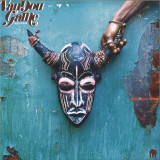
African, funky, sarcastic, bewitching, green, ecstatic: these words collide to describe Vaudou Game and all of them are true.
Noussin is the fourth album of the french Afro Funk band. Forced into lockdown, like much of the planet, Peter Solo and his Vaudou Game had no choice but to retreat into the studio. A reunion to once again invoke the spiritual forces of the Voodoo Deities. A reunion that was Initially imagined for an EP…yet these spiritual forces behind that imagination yearned for something more, and as we all know, these forces are impossible to push away once they have decided to stay.
Under the strain enforced by the current socioeconomic climate, as much as by the environmental peril that faces us all today - they diverted the course of the groove towards daring new vibrations. Without extinguishing or diminishing its highly communicative power, they released Vaudou Game from its origins of pure Afro-Funk to gradually engage into compositions which crystallized themselves into tones resembling more rock than funk.
On this fourth album, with an entirely revisited line-up, Peter Solo separates for the first time in his career from his brassy guard, leaving saxophone, trumpet and trombone outside to invite an arsenal of keyboards to define, with him, this new voodoo sound. A sound, as usual, built on vintage and precise analogical material - grime even on the white side of the tape, a blunt instrument used to blanket anything that strived to shine too much in the mix.
Graced with tapered guitars stringing out rhythmic bumps or withdrawing a few beats to indulge in infectious solos, this album is boisterously alive with vintage 70's Funk, infused with a few digressions into other ethers of the funk timeline, nicking different sounds and frequencies to render the black and white keys of an inspired keyboard to reach new euphoric levels of melodic acidity.
Tearing off the enigmatic mask to reveal his true face: on a few titles, Peter Solo ventures outside of his sacred voodoo range to reconnect with his London years, these titles feature small nods to the time he spent in “The Smoke” where the incantations of British music culture were written within him.
Noussin which means “Stay strong” in Mina, a dialect spoken in the south-west of Togo. Noussin, a message of hope as much as a call to come together to weather the turmoil and to come out better on the other side. Don’t let them grind you down…Noussin!
In 1970 Barney Wilen assembled a team of filmmakers, technicians and musicians to travel to Africa for the purpose of recordi ng the music of the native pygmy tribes. Upon returning to Paris two years later, he created Moshi, a dark, eccentric effort fusing avantjazz sensibilities with African rhythms, ambient sound effects and melodies rootedin American blues traditions. Cut withFrench and African players including guitarist Pierre Chaze, pianist Michel Graillier and percussionist Didier Leon , this is music with few precedents or followers, spanning from extraterrestrial dissonance to earthbound, streetlegal funk. Wilen pays little heed to conventional structure, assembling tracks like "Afrika Freak Out" and "Zombizar" from spare parts of inde terminate origins. (Jason Ankeny, AMG)
Revelatory reissue of Barney Wilen’s ambitious jazz-fusion journey, Moshi (1972), presenting the legendary French jazzman and Miles Davis-sideman’s wildly ambitious effort fusing recordings of Pygmy tribes with African rhythms and stellar avantjazz leanings, sounding little like anything before or since its release. (boomkat)
Super rare and long out of print, the ground-breaking 1972 album from saxophonist Barney Wilen receives a reissue treatment of the highest order. Complete with a 20-page booklet and a never before seen DVD chronicling Wilen’s trip to Africa, this one is sure to be a delight for fans old and new. The deepest spiritual jazz grooves meet field recordings from the Upper Volta and b eyond, whilst psych rock influences collide with hypnotic and shamanistic percussion work. Truly one of the most out -there jazz records we’ve stocked for a long time! (bleep)
Originally issued by the seminal imprint Saravah in 1972, and among the most uncategorizable and sought after artefacts of the French avant-garde, Barney Wilen’s Moshi is nothing short of a masterpiece - long holding a coveted spot in the hearts of adventurous listeners and record collectors alike. A wild unkept cultural collage. A series of sonic experiments. A spiritual, psychedelic pilgrimage into the unknown - darting from one continent to the next, each of its tangents building toward a more optimist world view through ordered sound. Its scope remains as difficult to understand today as it was when it was released. Now brought back into the light by Souffle Continu, this is a moment to be celebrated far and wide. (Soundohm)
Deluxe reissue with additional artwork & remastered audio. 20-page booklet including rare pictures, sheet music & original liner notes. Bonus DVD with exclusive artwork of Caroline de Bendern’s movie « à l’intention de Mlle Issoufou à Bilma » documenting this incredible african journey.
La Fricativa Sonora is the new instrumental project with Jamaican roots formed by members of The Shake It Up’s, The Golden Singles, Begoña Bang-Matu, Mamvt, Ki Sap, Dirty Soul Riders … In November 2020 they release their first LP entitled «Yawina Bobongo». A first album as a presentation letter formed by 10 instrumental themes, where we will find different styles like reggae, ska, dub… with which we will travel to the Jamaica of the 60s and dance like crazy while enjoying the improvisations of Valencian musicians dedicated to the Jamaican-Valencian scene
Great Jamaican sound record that you have to have in your discography.
Limited edition of 250 copies
Recorded in 1959 at the height of the Latin Jazz Era, This is Mongo Santamaria's second album for Fantasy Records. A deep and fascinating investigation of Afro-Cuban roots run by the great percussionist and a
quite large group featuring Paul Horn on flute, Emil Richards on vibraphone, Al McKibbons on bass and of course lots of multicolored percussion and vocals split by a bunch of masters players including
Armando Peraza and Willie Bobo.The album opens with the redolent melody of "Afro-Blue" one of his most beautiful compositions which later became a classic Jazz standards with historical renditions by
the likes of John Coltrane, Abbey Lincoln and Oscar Brown Jr.
Though it’s hard to pick a winner among the estimable Black Jazz catalog, this 1972 release from bassist Henry “The Skipper” Franklin would have to be near the top of the list. Franklin got his start woodshedding with Latin maverick Willie Bobo in the mid-‘60s and went on to play with The Three Sounds, but probably his most notable gig prior to this debut album was his stint in Hugh Masekela’s band (that’s Franklin playing bass with Masekela at the 1967 Monterey Pop Festival). For The Skipper, Franklin assembled a crack outfit that included a horn section of trumpeter/flugelhornist Oscar Brashear (Bobby Hutcherson, Ry Cooder, Donny Hathaway) and tenor & soprano sax man Charles Owens (Buddy Rich, Horace Tapscott, John Mayall) along with a Masekela bandmate in electric pianist Bill Henderson and ace drummer Michael Carvin (Pharoah Sanders, Lonnie Liston Smith, Freddie Hubbard). This is such a unique, organic recording that it’s hard to make comparisons; definitely a little fusion, a little ‘60s Blue Note feel, and the usual Black Jazz journey to the more lyrical, pop-inspired (“Little Miss Laurie”) and funk-infused (“Plastic Creek Stomp”) sides of jazz, but perhaps the best comparison is late-‘60s Miles before he went electric. In any case, The Skipper is just a joy to listen to from start to finish, beautifully recorded by Black Jazz producer Gene Russell and blessed with some really fine writing, most of it by Franklin himself. First-time LP reissue and a must-have!
The seventh (!) volume of high class reworks from rising star Young Pulse is here and it's a banger !.
With a mixed bag of jazz-funk, early 80's boogie and high energy disco there is something for everyone here.
But we really wanna give the A side track 'Bobo's Reason'(Willie Bobo) an extra mention...proper full on summer jazz-funk with a slight disco edge. Feel good material.
Willie Bobo was a Latin jazz percussionist from New York who recorded over 20 albums between 1963 and 1979. During the 70s jazz funk period he recorded a version of Always There' to rival the Ronnie Laws original as the definitive version becoming a dance floor favourite. The album and extended 12' versions have been reissued many times, now here's a first issue of the more compact 7' version which has become more in demand recently. It is coupled with an extremely popular vocal track Comin' Over Me' featuring singer Errol Knowles. It is the first time this song has been released on 7'. Willie's son is Eric Bobo, a member of Cypress Hill.
Following on from an excellent debut in 2019, with ‘Karoussel’, Mow Records unveils its second album. A further exploration of label head Mowgan’s penchant for house music and authentic African sounds, ‘Soya’ features percussion and vocals from Solo Sanou, an artist whose roots lie in Burkina Faso - though he’s based in Toulouse, where the album was recorded.
Comprised seven Afro house cuts that utilise organic instrumentation and Solo’s raw, emotive voice, the album is the second installment in a series of five long-players recorded by Mowgan in the space of a year. This new LP goes deep into the heart of Africa’s rich musical culture, delivering contagious rhythms, rousing atmospherics and a pure, organic, unadulterated sound that has been cultivated through electrifying jam sessions at Mowgan’s studio. Also featured on ‘Soya’ are Yoan Hernandez and Yaya Dembele who play guitar, Gauthier Djalate on bass, alongside Mamadou ‘Madou’ Dembele, a multi-instrumentalist who plays flute and ngoni, while also handling backing vocals with Adama Coulibaly aka Demsi and teaming up for a duet with Solo on ‘Badenya’. Another vocalist, Fanta, was intrinsic to this LP. The granddaughter of renowned Malian performer Kandia Kouyaté, Fanta appears on ‘Fatanya’ and is a crucial component of the album’s conception…
The story goes that Mowgan was making an album with Fanta when he realised he needed a percussionist. Fanta brought in Solo Sanou, who was very timid to begin with. Mowgan liked his style and decided to work on some music with Solo separately. As the relationship blossomed, and they recorded more music, Solo brought more and more instruments to Mowgan’s studio. During those sessions Mowgan gently encouraged Solo to try using his voice, eventually he did and, when he heard how good it sounded, ended up singing across the whole LP. So, the beauty of this album, beyond the wonderful instrumentation, is the fact that you’re hearing Solo Sanou sing for the very first time.
With all the songs recorded in his native languages, Bobo and Bambara, ‘Soya’ is an exhilarating blend of electronic production and African influences that emanates a feeling of authenticity throughout. From the opening cut ‘Adamine’, which is about Solo’s first meeting with Mowgan, to ‘Badenya’ which refers to family bonds - “There may be quarrels, but it will never catch fire,” Solo says.
There is social commentary, such as that featured on ‘Fantaya’, which is about poverty - “While some people worry about what they will eat at night, others have fun without worrying about them,” he says.
A soul-nourishing, vibrant and utterly contagious collection of raw, authentic Afro house, ‘Soya’ marks another step forward for Mow Records and a triumph for all the artists involved. Look out for further installments…
Amazing and unique private soul/jazz-funk fusion LP, 'New York To L.A.: Coasting' is the first release (1980) on Andrew Scott Potter and David Eric Tillman's PO/ET label. Sublime from the beginning to the end, it has become, just like their second and final release '...Space...Rapture...', a sought-after collector's item.
Andrew and Eric both come from Chicago. They met in the early 70's, shortly after Eric's discharge from the U.S. Air Force. They played together on the local jazz scene for several years (among others, with Maulawi). During that period, Andrew also toured with Minnie Riperton and Eric toured with The Dells, Linda Clifford and others. In the late 70's Eric left Chicago for Los Angeles, when he began touring with The Temptations. Since moving to California Eric has played and/or recorded with a variety of artists, including, Willie Bobo, Justo Almario, Alex Acuna, Norman Connors, Billy Paul, GAP Band, Linda Hopkins, Billy Higgins, O.C. Smith, and many others.
- A1: The Phunky Feel One
- A2: How I Could Just Kill A Man
- A3: Hand On The Pump
- A4: Real Estate
- A5: Pigs
- A6: We Ain´t Goin´ Out Like That
- B1: I Wanna Get High
- B2: Lick A Shot
- B3: Throw Your Set In The Air (Album Version)
- B4: Throw Your Set In The Air (Club Version)
- B5: Killa Hill
- B6: Illusions (Lp Version)
- C1: Insane In The Brain
- C2: When The Ship Goes Down
- C3: Illusions (Muggs Version)
- C4: Boom Biddy Bye Bye (Lp Version)
- C5: Boom Biddy Bye Bye (Fugees Mix Version)
- D1: Tequila Sunrise
- D2: Dr Greenthumb
- D3: Audio X
- D4: Latin Thugs
- D5: Rap Superstar
- D6: Lowrider
Cypress Hill is widely respected and considered to be amongst the main progenitors of West Coast rap and Hip Hop in the early 1990s. With megahits like 'Insane in the Brain', 'I Wanna Get High' or 'Tequila Sunrise' they crossed-over to mainstream breaking all records for a rap band up until
that time. Cypress Hill were the first Latino-American hiphop group to have RIAA Certified platinum and multi-platinum albums. As musicians they
became famous for the crazy sounds produced by DJ Muggs and Bobo and the stoner sympathetic lyrics of B-Real and Sen Dog. They redefined
and shattered the boundaries of hip-hop, crafting gutter-dirty tracks that fused deep bass lines with blissful, stoned-out melodies and aggressive
hard rock riffs, creating a unique imprint.