Geoglyph is the new duo project by Alohn and Khey Mysterio, a convergence of two deeply singular practices into a single subterranean signal. Their debut album arrives as the eighth reference on Organic Signs, not as a collection of tracks but as a carved artifact: six inscriptions pressed into vinyl, mapping a sonic territory where time, rhythm and texture are no longer linear, but layered like geological memory.
Through Geoglyph, Alohn and Khey Mysterio convey a message from below, or beyond. A pulse engraved from forgotten times in the basement of reality, reactivated by abyssal basses, vibrating layers and fractured textures. Exhumed from the subterranean strata where psychedelic dub, mineral techno and fractal dubstep fuse into raw energy, their music becomes a point of contact: every beat, every silence, every oscillation acting as a coordinate toward another perception. What unfolds is not simply sound design, but an invocation, rhythms as sigils, timbre as gnosis, signals that seem to arrive already charged with intention.
Across the album, Alohn’s guitar notes fall like cascades through the mix, dissolving at times into controlled feedback and crystallizing into melodic fragments that hover between tension and release. These organic gestures are interwoven with Khey Mysterio’s dense low-end architectures and rhythmic frameworks, creating a constantly shifting terrain: from weightless transmissions and ritualistic voices to moments of overwhelming propulsion where the music suddenly breaks open with tectonic force. The record moves fluidly between meditative suspension and explosive motion, never settling into a single state for long.
A strong undercurrent of what has come to be known as “druidstep” runs through the album, a term coined within the 95 Open Tabs universe to describe a form of dubstep untethered from genre convention, rooted instead in bass as ritual, in groove as invocation. Here it meets dub-techno pulse, psychedelic echoes and high-velocity 4×4 pressure, drawing subtle influence from underground bass cultures without ever becoming referential. The result is a body of work that feels both ancient and forward-leaning, cyclical rather than linear: a living geoglyph that reveals different meanings depending on how (and where) it is read.
As the final movement accelerates into its closing phase, the album releases its energy outward, with frequencies stretched toward their limits, leaving behind the trace of a completed ceremony. In this sense, Geoglyph’s debut stands as a defining moment within the Organic Signs continuum: a record that unfolds rather than explains, offering an experience to be entered, absorbed, and carried. With this release, the label continues to explore new sonic spaces, evolving and expanding while giving deeper meaning to its own essence. A message from beneath the surface, waiting for those willing to tune in.
Más de este género
Cerca:d j sound
Driven by relentless acid lines, ambient layers and grainy textures, Valentin Rocher takes us into his perception of a world that is at once poetic and mundane, dark and radiant. Through electro and techno tracks interspersed with voice samples and intense acid lines, You Do Remember the Future is the soundtrack of a present that parodies the future. A foretold dystopia whose repetition might just ward off its fate.
^°Michigander Music again sets the pace with another future classic, D Send to Asend, a powerful 4-track EP from Canada's Greg Gow and Detroit's Brian Kage. Rooted in Detroit techno at its finest hour, this release is strictly for the true heads combining Gow’s techno sensibilities and driving textures with Kage’s raw, soulful energy. Together, they break down borders and deliver a timeless, late-night sound that feels both refined and uncompromising.
Reframed is Vitess’ third album, released on his own label Retro Futura, and marks a new turning point in his artistic journey. Unlike his previous albums — the first fully exploring the Retro aesthetic, the second embodying the Futura — Reframed brings these two worlds together within a single, coherent yet eclectic body of work. The album opens with sounds inspired by 90s progressive music and gradually moves toward more futuristic textures. This album format gives Vitess complete freedom: the freedom to build a full, living musical experience, introducing for the first time a strong instrumental dimension — most notably through the use of live drums — and allowing each track to interact with others, transform, or mirror one another, while maintaining a clear narrative thread that guides the listener throughout.
The title Reframed directly reflects this approach. The album is built around tracks conceived as Recto / Verso, offering a form of double listening experience. On the one hand, electronic, club-oriented and progressive versions, designed for energy and dancefloor movement; on the other hand, more introspective, pop and instrumental counterparts, created for listening and storytelling. Starting from the same musical foundation — a vocal sample, a percussion element, or a melody — Vitess develops two distinct interpretations of the same track, generating contrasting yet deeply connected sonic worlds. This method, central to his creative process, highlights his ability to explore a single detail in depth and let a micro-element lead him toward radically different sonic dimensions, while ensuring coherence and a strong identity across the album.
For Reframed, Vitess also collaborates for the first time with other artists: Stupid Flash, ATOEM, and Lucile, selected for their ability to enrich his universe and push it toward new aesthetics. These collaborations recreate a sense of collective energy reminiscent of his early days playing in bands, while remaining true to the essence of the Vitess project: a primarily solitary approach rooted in exploration, experimentation, and embracing the unexpected paths each idea can take.
In September 2024, Nacho Piek, Rapha Mundi, Odd Signals and Ibai Machín gathered for four days in a beautiful house in Etxeberri, a small village in Navarre with barely 50 inhabitants. Isolated from everyday rhythm and surrounded by nature, the goal was clear: to create a production camp dedicated exclusively to club music.
The result is Etxeberri EP, the debut of Buenobueno Soundsystem — a work that captures that coexistence in the form of direct and timeless music, designed for the dancefloor. An organic crossing of influences ranging from House, Techno and late-90s Minimal Trance to contemporary UK Bass.
Etxeberri EP will be released on March 13 exclusively on vinyl, in a limited edition of 200 copies. Each record includes an inlay with photographs of the creative process and private access to an audiovisual piece shot by Jesús Iriarte documenting the experience and the spirit behind the project
Osaka's renowned record shop and club, Compufunk Records, proudly announces the relaunch of its label. A.I. Soul released in 2010, featured remixes by Mark Flash (Underground Resistance) and DJ 3000 (Motech). Now the updated Version 2.0 by DJ Compufunk includes four original tracks, pressed on vinyl. The release represents an evolution of DJ Compufunk's signature sound, blending jungle and Detroit techno influences with deep electronic grooves and emotional sequencing. Compufunk Records continues to push forward its vision of evolving Osaka's electronic dance music scene and connecting global audiences through the spirit of sound.
The highly praised, crazed heavy house hitters from Frits Wentink's golden Pearly world finally find their way onto vinyl. What started as a humble love letter to classic house music, in the form of sparse Bandcamp drops, quickly developed into an essential bag-on-sight imprint for house enthusiasts around the world. Four of these previously digital-only gems are now available on vinyl for the first time. Pearly Soundsystem coming in strong.
Tone Dropout Records kick off the new year in emphatic style with a brand-new 6-track vinyl EP that stays true to the label’s unmistakable dancefloor-driven sound.
Packed with heavyweight grooves, acid lines, breaks, and bleeps, this release delivers six high-impact tracks designed for late-night systems and packed floors. The EP also marks an exciting moment for the label, welcoming two new artists into the Tone Dropout family while celebrating the return of long-standing contributors.
Joining the roster for the first time are KWAKE and Harry Light, both making a powerful debut on the label. They sit alongside Tone Dropout regulars SkyWave Transmissions and XOTR, while label co-owners DAWL and SWEEN reunite once again, delivering an acid-fuelled opener and a special bonus breaks track on Side B.
As always, the EP is overflowing with breaks, bleeps, acid, and raw rave energy.
Side A – The Head Side
Side A opens strong with DAWL and SWEEN at the helm, laying down a driving four-to-the-floor acid groover that would warm up any dancefloor with ease. It’s a statement opener — and a sign of much more to come from the duo throughout the year.
Next up, SkyWave Transmissions brings his trademark experience and finesse, delivering a tightly produced acid-bleep track that showcases depth, quality, and character. Following seamlessly is long-time collaborator XOTR, who rounds out the side with a pure slice of northern bleep excellence — unmistakably Sheffield in style and sound.
Side B
Side B introduces the first of the new Tone Dropout members, KWAKE. A long-time friend of the label, this marks his first official appearance, and he doesn’t disappoint. His track is a full-force breaks banger, capturing authentic rave energy and guaranteed to ignite the floor.
Next comes Harry Light, making an immediate impact with a pounding house-and-breaks hybrid. Impeccably produced and relentless in energy, the track lives up to its name perfectly — “POWER HOUSE.” Both newcomers arrive firing on all cylinders, delivering two massive dancefloor weapons back-to-back.
Closing out the EP, DAWL and SWEEN return with Tones Breaks 5, a three-minute breaks workout and the latest installment in the label’s breaks series. This track also serves as a respectful nod to one of their musical heroes, Frankie Bones, rounding off the release on a high.
Six tracks. All killers. No fillers.
In challenging times, this EP delivers exceptional value — a complete package of club-ready music pressed to vinyl and built for real dancefloors.
Another quality release from Tone Dropout Records.
After delivering a killer track on our Diffraction EP compilation and a series of highlighted projects on Hiver Discs, Iro Aka returns to Polychrome Audio with club-ready 4-tracker Dimensions. We are really proud to release the music of friends who create such quality electronic music. On the A side, Dimensions and Direction 0 original mixes bring a driving and bleepy techno sound shaped by the duo’s characteristic psychedelic design. The B side is a strictly remix affair: Human Space Machine turns Dimensions into deeper techno territory while French duo Atomic Moog presents a slow-burning downtempo take on Direction 0 for early or late into the night. We hope you enjoy this record as much as we do!
Return of the Blastromen! OEra marks the comeback of the Finnish Electro duo, 7 long years after their last album Cyberia. The new EP on German label Dominance Electricity features 4 powerful, polished productions, with melodic synths and Vocoder vocals somewhere between Kraftwerk, Anthony Rother, TRON soundtrack, a pinch of Psytrance and Jackal & Hyde / Dynamix II / Code Rising style Electrobass.
Fides Records continues its 10-year anniversary journey with X5. This instalment widens the emotional spectrum while staying locked to the club: dub-soaked pressure, sunrise euphoria, cinematic tension, and leftfield elegance: six tracks that underline the label’s taste for both functionality and narrative depth.
Side A opens with Jon Hester’s “Oblique”, a timeless cut where dubby undertones meet crisp percussion, crowned by a high-pitched saturated motif that results warm, powerful, and sharply functional. “Caballo Azul (Z.I.P.P.O Rework)” follows, reshaping Franzizca’s original through Z.I.P.P.O’s lens into a dub-infused, precise reinterpretation, layered with meticulous sound design and understated force. Closing the side, Pink Concrete’s “Now We Are” keeps the emotional momentum alive with euphoric tones and introspective energy that feel built for sunrise closings.
Flipping to Side B, Tal Fussman’s “Ghost” adds cinematic weight, driven by an organ-inspired chord progression and dynamic percussion showing his bold, colorful, and razor-precise creative process. Aasthma is the project of Swedish heavyweights Peder Mannerfelt and Pär Grindvik and land on FIDES with “The Love Bees”, a genre-defying anthem where disco and house flair shine through a peak-time techno skeleton. The record closes with Hiver’s “Restless”, an IDM-infused finale rich in harmonic complexity and breaky elegance, perfectly capturing the Milan-based duo’s distinctive, emotionally charged signature
Karkossyn returns to the shadows with Undergrowth, a harrowing descent into the Bristolian void that pushes dark drum and bass into its most predatory forms. The EP opens with a cold, eerie prologue. A warning that constructs a menacing world before the listener is dragged into the sonic abyss.
Drawing from dnb, trip-hop, and jungle, the soundscapes are characterized by a visceral dread birthed from the dampest corners of the South West. These tracks are built on distorted bass, gritty drums, and raw percussion, layered with atmospheric drones that heighten the feeling of suspense throughout.
Adding to the murk, Bristol’s own Pessimist provides a remix that results in a skeletal, rhythmic haunting. It is a definitive statement of UK dread, solidifying Karkossyn’s place as an uncompromising architect of industrial-tinged carnage.
Marking a milestone for the imprint, this serves as Erosion’s first physical release.
Discover the next release on Fantastic Friends, by Chris Llopis, a track tailor-made for the dancefloor. This minimal track, both punchy and hypnotic, embodies a streamlined aesthetic where every element is precisely in its place. Driven by a sharp rhythm and a subtly evolving energy, it instantly captures the attention of fans of cutting-edge sounds.
Complementing this, a remix by Nicolas Duvoisin enriches the release with a minimal house-oriented approach. True to his signature style, he offers a rhythmic and immersive reinterpretation, blending delicate textures with a driving groove, ideal for high-energy club moments.
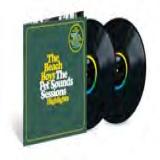
Zum 60. Jubiläum des legendären Meisterwerks der Beach Boys enthält The Pet Sounds Sessions Highlights
2CD Auszüge aus dem 1997 für den Grammy nominierten 4CD-Boxset The Pet Sounds Sessions. Sie enthält
25 A-cappella-Aufnahmen von „Pet Sounds“, alternative Versionen und Aufnahmesessions sowie neue Liner
Notes. Pet Sounds wurde am 16. Mai 1966 veröffentlicht und hauptsächlich von Brian Wilson produziert
und komponiert und gilt als Meisterwerk der Popmusik sowie als eines der einflussreichsten Alben der
Geschichte. Es enthält die klassischen Singles ”God Only Knows”, ”Sloop John B” und ”Wouldn’t It Be
Nice”.
Auch erhältlich erstmals auf Vinyl als 2LP (180g) erhältlich.
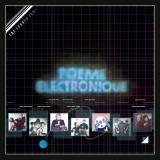
POEME ELECTRONIQUE was Dave Hewson (synthesisers, production), Sharon Abbott (lyrics, lead and backing vocals), Julie Ruler (backing vocals) and Les Hewson (bass), formed in 1980 by Dave Hewson in South London, UK, in 1980. Dave was studying music and as a rare kind of student species he had a deep fascination for New Wave and electronic music thus also playing and recording electronic music ever since like using the Boss DR-55, Cosmo Sound Super Drum, Elka Rhapsody 610, EMS Synthi AKS, Korg MS-20(X2)/Polysix/Polyphonic Ensemble 1000/VC-10 Vocoder, Linn Electronics LM-1, Octave Kitten, Roland RS-09/VP-330 Vocoder Plus, Simmons SDS-V Kit and Yamaha CS-80 on this retrospective POEME ELECTRONIQUE album with original material from 1981/82 only. Over the period of more than two years, Dave has remastered these tracks using the latest high-end tools making them sound better than ever before. The deluxe 2LP vinyl album comprises 16 tracks of which 14 have never been published before. “The Echoes Fade” and “Voice” are the original versions taken off their original 7” from 1982. The album “The Echoes Fade” cannot be described other than being a masterpiece and one of the best-ever early 80’s electropop records ever, and it surely has to be lined up with Rational Youth or Experimental Products’ cult albums (in terms of being minimal synth/wave scene reference albums), but to be frank, Anna thinks that POEME ELECTRONIQUE were even above their level.
Truly, they had deserved to go on the successful path like Depeche Mode, OMD or Soft Cell, but fate was against them as it seems. The main difference to other electropop groups of the time was definitely that Dave did not only master his synths technically-wise, no, he also knew how to actually play, and when you hear his amazing multi-track ‘manual sequencing’, programming skills, great harmonies and melodies throughout the tracks, along with the two girls’ performances – well they can really sing! – you will agree there is some something remarkably extraordinary in these tracks. You will find minimal electropop super hits like “Rendezvous”, “She’s an Image”, “Fragile”, or “Dilemma”; hauntingly beautiful melancholic tracks like “A Mourner’s Lament”, “This Night” or “It’s in the Atmosphere”; darkest minimal electronics on “Inside his Head”; and even more poppier tracks like “Follow”. This record will hopefully be loved by any electronic music lover and most probably marks the highlight in the growing Anna Logue Records catalogue – therefore Anna did not shy away from any costs and the album is truly an outstanding release in every single aspect including sound and artwork presentation. Apart from the bonus tracks you will find in the 2LP deluxe vinyl edition glossy inner sleeves with lyrics to all songs, as well as individual mini 7” sleeves for each song designed by our dear graphic designer Steve Lippert plus many additional group photos on the gatefold sleeves’ inner. After so many efforts and more than two years passing by, Anna is so over the moon to see this release being ready now and we have done all we could to make this an outstanding release, so now it’s up to you to give the band their final glory, but Anna is in no doubt that – at least after hearing the sound samples – you will.
Deep, deep stuff on the debut album from K Wata. Long and dubwise, dark and detailed. With bass that fills and warms a space.
All noir. Cast shadows against the wall. Weight being shifted and distributed with singularly delicate poise, like a knife being balanced on the end of a finger.
There’s a silvery, loose flow state to this record that maybe reveals the way some tracks were first written to be deployed live at Sustain Release 2025. Then taken back to the lab and tightened up further into the album’s final form, with beautiful mixing work between Kenzo and Chris Botta.
With that in mind, Give U Space unfolds slowly and fluidly, giving the listener the chance to access and open up to the deepness of the sound, being led down a path. It rolls and builds momentum and groove, and ratchets tensions up toward peaks of energy "Whisper Dub" and "There Will Be Love".
The tunes feel architectural. Rooms to be in and settle into. Simultaneously stripped back and then etched with neat little details and characterful or atmospheric sound choices. The silhouette of slo mo Memphis and Houston trap is a leading influence, especially with the drums. Mixing with bits of click’n’cut sampling and psychoacoustic tricks, the penumbra of dub techno and drowsier dubstep, and SG’s soft vocals rising in the ether.
The presence and inspiration of the sound system is obvious in all of Kenzo’s work, the music can rattle when spun up louder or blended into the club. But K Wata’s uniqueness and signature comes from an often equally inward facing quality, touched by distance and longing and a sort of chiaroscuro incandescent light set up.
Written and produced by K Wata.
Mixed by K Wata and Christopher Botta at Fer Sound Studio.
Vocals on “Give You Space” and “Go” by SG.
Clarinet on “Radio Embrace” by Eugene Lai.
Mastered and cut by Mike Grinser at Manmade.
Art by S. Gong
The collaborative project of Lawrence English and Werner Dafeldecker has consistently been concerned with processes of transformation. This is all the more true for »Fathom Tides,« the duo’s second album for Hallow Ground following up on »Tropic of Capricorn« from 2023. Using field recordings collected from diverse coastal environments made by English and later treated extensively by Dafeldecker, the two sound artists explore cyclical changes in nature across these seven pieces. Through its abstracted soundscapes, »Fathom Tides« poses concrete questions: What impact do we have on the world we inhabit?
»Tropic of Capricorn« was based on material English had recorded around Australia to highlight the country’s colonial past. On »Fathom Tides,« water and tides provided a conceptual framework for the duo’s remote working process—notions of states of action and tidal dynamics becoming guiding principles in their work with the source material. English and Dafeldecker were led by the question how the morphing of solid forms into more liquid states might be captured and used as compositional guides for their respective preparations treatments and the addition of electronics to the source material.
While eroding coastlines, river systems, and glacial transformation served as inspiration, the seven pieces resulted out of the two sound artists paying close attention to seemingly minute details through which immediate and distant histories peek through often in the most unexpected and rewarding ways. Hence, »Fathom Tides« does not provide a macro view on the catastrophic changes humans have facilitated on Earth. It is its own sound world guided by both the pace of its subjects and a recognition that time is fluid—a reminder that our clocks are not those of the world around us.
- A1: Yede Aba
- A2: Mene Menua Mienu
- A3: Sabarima
- A4: Ebia Nie
- A5: Amintiminim
- A6: Siakwaa
- A7: Nana Agyei
- B1: Efie Ne Fie
- B2: Nyankonton Nko Nyaa
- B3: Kwankwaasem Nti
- B4: Egya Ananse Yi Wonan Baako
- B5: Kwaadede Meyare Merewu
- B6: Eda A Mewu
Strut proudly presents the first-ever reissue of a landmark 1974 Ghanaian highlife classic Sikyi Highlife by Dr K. Gyasi & His Noble Kings, originally released on Essiebons.
A defining recording of the era, Sikyi Highlife bridges tradition and innovation at a pivotal moment in Ghanaian music. Deeply rooted in the classic 1950s–’60s highlife sound, K. Gyasi drew inspiration from the ancient sikyi drum-dance of the Akan people of southern Ghana, shaping the album’s rhythms around its distinctive pulse.
The vocal arrangements echo the traditional Akan modal style, grounding the music firmly in Ghana’s cultural heritage. Yet Sikyi Highlife is equally forward-thinking. As electric guitars became standard in highlife during the 1960s, the 1970s ushered in further experimentation. The Noble Kings broke new ground as the first highlife guitar band to incorporate keyboards and a full horn section into their sound, expanding the genre’s sonic possibilities while retaining its rootsy spirit.
Gyasi’s approach was part of a broader indigenisation movement among Ghana’s electric highlife bands in the post-independence era. Inspired by the nation’s ‘African Personality’ ethos and reinforced by Afrocentric messages arriving from American soul and funk, artists began reclaiming traditional forms within modern arrangements. Contemporaries included Koo Nimo, who revived the older palmwine style, and drummer Nii Ashitey, whose Wulomei band pioneered a folklorised Ga highlife sound from 1973.
Like many musicians of his generation, Gyasi was a passionate supporter of Ghana’s independence movement. In 1963, he travelled as a musical ambassador alongside Ghana’s first president, Kwame Nkrumah, performing across North Africa and the USSR and carrying Ghanaian culture onto the world stage.
The Noble Kings’ mid-’70s line-up featured some of the country’s finest musicians, including guitarist Eric Agyeman (who led the band at the time), Thomas Frimpong on drums and vocals, Ernest Honny on organ, and bassist Ralph Karikari - who was renowned for his innovative technique of translating the rhythms and tonal language of the traditional talking drum onto electric bass.
Upon its original release, Sikyi Highlife became one of the biggest-selling albums of the 1970s for Essiebons, earning Gyasi the affectionate honorary title of “Dr” from his devoted fans. Today, the album remains an evergreen classic, still cherished across Ghana and beyond.
In a patchwork of IRL sound fragments, humming ambience and sub bass brushstrokes, Bobby Ingham debuts on Sneaker Social Club with a social-realist inversion of soundsystem music that relishes negative space while telling a street-level story.
Bobby Ingham is a 24-year-old multidisciplinary artist whose creative practice across film, music and sculpture was shaped by formative experiences in his native Leeds. Having started to experiment with spoken word, poetry and electronic sound production, he sharpened his focus after moving to London. Homesickness moved him to recreate the sensory impression of his hometown through sound, using snippets of his every day experience with his friends and family as well as archival recordings online related to Leeds. The particular lilt of regional dialect became central to the character of his work — a direct portal into a personal world that could only be rendered by someone who has lived it.
Ingham’s work chimes with that of SSC’s own Low End Activist. Where LEA has repeatedly taken us around the Oxford council estate he calls home, on Angel of the North Ingham lets us stay a while on the streets and in the houses that made him. It’s intimate from the very start — opening track ‘Lynne’ features Ingham’s own grandmother, while ‘I Feel So Good I Swear I Could Fly’ finds Ingham voicing his own poem as he retells personal experiences in a disarmingly mythological manner.
‘1st Memory Of Love For DRXSJKFL ft. Pretty V’ invites Wakefield, West Yorkshire-based artist Voldy Moyo to lay down a spoken word piece that evokes the dehumanising nature of military service and those left behind by it. Where there are no words, Ingham instead speaks with brittle machine rhythms and blocks of texture, swooning synthesised beauty and any emotional shade you care to mention in between. It’s a work that takes you right into the heart of the artist — someone committed to telling an honest story from a viewpoint that seldom gets a second thought.