KOU is the new project by Apolline Schöser (half of Nina Harker) & Thomas Coquelet.
Apolline & Thomas have been performing since 2022 under the KOU guise with 24 electronic harmoniums. Producing dense layers of tones & overtones. On their debut album KOU steers in another direction. The harmonium appears occasionally, but more prominent are delicate guitar pluckings, distant vocal effects, synths, flutes, piano strokes, a touch of musical magic and Apolline’s jazz not jazz vocals.
As soon as the needle drops it’s clear we are jump-cutting straight to the other side of the mirror. Cats purr, a woman sings as if asleep, drum machines stutter and warp and Alvin Lucier is not 'sitting in a room that is not different to the one you are not in now’. If you’re already confused, join the club. But, it’s the good kind of confused, a bewildering experience akin to the first time hearing the Faust Tapes or watching Inland Empire. Wait though, as pigeons coo and the tape machine clunk-clicks a gorgeous weirdo version of Roger's and Hart’s Blue Moon emerges to let you know this isn’t just dada splurge, there’s a genius pop sensibility at work here too. Side two takes us further into the murk with mournful detuned brass, stoned Joan La Barbara-esque vocalese and a droning Farfisa hymn, before ending with another too-tempting snatch of DIY pop. Some of the references are recognisable. All kinds of 70s/80s European art prog - think early Battiato, Pierot Lunaire’s Gudrun, Lucia Bosè and Gregorio Paniagua's Io Pomodoro etc etc. There’s a strong whiff of 90s us goof-off surrealism too- Bongwater, Siltbreeze, Royal Trux’s Twin infinitives, the damaged folkier side of Alastair Galbraith, Half-Japanese, early Beck even all feel relevant.
Like an oddball group of friends you might meet by chance and end up weirding-out with for days, the minds behind this deliciously odd music allow you to stay for a while in their strange subcultural world. You might not want to live here forever but a short trip, while it lasts, rewires your brain for the better.

Поиск:d lay
Все
"Musik für animierten Tonspurfilm", the twelfth album by Die Anarchistische Abendunterhaltung (or DAAU, as they are commonly known), is the soundtrack to a series of short, abstract animation films by Rudy Trouvé, who also acted as a creative director during the recording process.
The music originates from acoustic improvisation sessions by accordionist Roel Van Camp, clarinetist Han Stubbe, double bass player Hannes D'Hoine and percussionist Jeroen Stevens. These took place according to conceptual guidelines set by Trouvé. Sometimes the starting point was a play on words or a random chord sequence, sometimes a specific atmosphere, but the playing field was always kept deliberately limited. Hence, the musicians were forced to build a musical structure with minimal means. The result was cut on cassette, after which the Antwerp enfant terrible - Rudy Trouvé-, known from his work with dEUS, Kiss My Jazz, Gore Slut and I H8 Camera among others, happily hit the tracks with a virtual sledge hammer. DAAU's pieces were cut up, sampled, drastically restructured and pasted together again, a method that had been applies earlier on the retrospective album 'Hineininterpretierung' (2017). On top of that audio collage, the musicians added new electronic layers, using a digital accordion, synths, digital bass and marimba. DAAU says: 'On the soundtrack, like on the older record, we were looking for a symbiosis between an acoustic and electronic sound. And there too we messed around with dub and Krautrock references'.
They're baaaack_.. While Brainstory is in the studio finishing their sophomore full-length, they treat us to this bombshell of a 7" as a taste of what's to come. They teamed back up with El Michels Affair who is handling production on the whole album and everything about this is leveled up. This show stopping plug & ballad two-sider is clear evidence of that. Side A is an uplifting, dance floor burning, smash hit that shows what years of touring and backing Lady Wray have brought out of Brainstory. "Nobody But You" is built on drummer Eric Hagstrom's crushing back beat that lays the foundation for this inspirational feel good banger that manages to take the uncomfortable truth that "nobody will save you but you" and turn it into pure blissful motivation. Then they drop a ballad on the flip side that is going to cause an entire scene to reconsider how they are doing it. The B side "Gift Of Life" is drop dead gorgeous, haunting, and profound all at once. An homage to the mysteries of life and the intangible truths that the human experience is built on.
The earth rotates, seasons change_there is but one long day_ Time is a beguiling, indistinct entity_sometimes standing still, sometimes bending back upon itself with premonitions or memories of the future. Growing out of a pen pal style correspondence that took place over the course of a year, separated by the Atlantic Ocean, Gloria de Oliveira and Dean Hurley passed thoughts and music back and forth that would eventually form their collaborative album, Oceans of Time. The result is an aural tapestry of that exchange: woven from conceptual threads of the celestial within, mortality and the realm beyond stars. The duo's partnership is an effortless merge, yet it's the steady presence of de Oliveira's vocals that endows the record with its sense of potency. Throughout the album, there is an innate understanding of how a lyric across a chordal color can sharpen an emotional truth. Much like a sunbeam that pierces a spiderweb to reveal its intricacy, her lyric and melody are purposely aimed in order to illuminate the truths deep within oneself_a process that ties us all to the universal. The Danish philosopher Soren Kierkegaard, a professed influence, wrote about the truth as something that was inherently subjective, less about the concrete reality of what is believed and more about how it is experienced by the believer. Frequent David Lynch collaborator Dean Hurley sets the tonal and sonic landscape of each track on the album, lending a layered ether that envelops, frames and holds de Oliveira's vocals. With its impressionistic synths, shimmering guitars, and ethereal sonics, Oceans of Time at moments recalls the foundational dreampop of 4AD acts like Cocteau Twins and Lush. The album feels especially attuned to the connections between the physical and transcendental realms, and the best dreampop has a way of making the veil between two worlds feel just a little bit thinner. Oceans of Time is a key that has the power to release its listener from the handcuffs of reality, however briefly_
Keyboardist Hilton Felton's 'The Power Of Love (It's In My Heart)' has never been available on standalone 7", until now. It has been newly remastered for the occasion and finds the talented Felton at his best as he lays down his signature mellow grooves. For proof look no further than the groovy soul of 'The Power Of Love (It's In My Heart)' has Angela Winbush as a youth on vocals and features great musical depth, while s 'The Power Of Love (It's In My Heart)', which has never been released as a single, and 'Spreading Fever (Part 1)' is as smooth as they come with its silky and seductive lead sax.
Hilary Woods' artistry is one of rare emotive reach. Her minimalist and compositional finesse combine with densely layered atmospheric instrumentation and dreamlike vocals to create music rich with both delicacy and intensity. The Sunday Times hailed her early solo recordings as "a revelation."After the release of two critically acclaimed EPs, Woods spent 2017 writing and recording songs on an eight-track in an abandoned flat she was living in at the time. Layering piano, synth, tape machine, field recordings, vocals, drone, unadorned beats, and old string instruments, these songs culminate in her debut solo LP Colt. Straddling the acoustic and electronic worlds, Colt is an intensely personal journey through grief, abandonment, and mutating love. Woods navigates this journey with a lyrical potency that cuts through stark piano, sensuous synth work, and textural acoustics. Somewhere between Marissa Nadler, Grouper and Julee Cruise, these songs evoke both the anguish of their content and the ecstasy of their craft.
‘Double Pink’ is the debut album by And Is Phi (Andrea Isabelle Phillips), a multidisciplinary artist from Norway and the Philippines now based in South East London. ‘Double Pink’ is a nuanced world that draws on colours and texture; with influences of Joni Mitchell and Frank Zappa, 90's R&B and Madlib’s ‘Shades Of Blue’ blending languidly to produce a base for uncovering layers of self, a deep release, and fragile new form.
Written by Andrea and co-produced with Fiona Roberts and Lorenz Okello over a nine month period; ‘Double Pink’ thematically explores the many movements of internal change, speaking from a deep inner voice inside the body. The title track is an invitation to be as unapologetically hungry as you please after a long absence of life giving passion and trust in oneself. ‘White Noise’ is a recovery song playing in your soul the first time you made it back out to the dance floor after a heart break so massive it laid rest to the person you used to be. Songs like ‘Working’ and ‘Staaar’ come from a candid and contemplative aspect. Stages of grief and resilience and wonder and wisdom are all touched upon.
“The album explores metamorphosis, liminal spaces, and the multiple faces of love”, says Andrea. “I mention love as a key ingredient, because anyone who has had to push and pull and hold and yield themselves through great loss and transformation knows it ain’t gonna happen without love. Tough times ask for double love, a stronger heart, something like a double pink”.
Andrea’s story dots between periods spent living in Norway, the Philippines and England - experiencing joy and beauty battling corruption and violence in Manila, DJing in Oslo, losing her sizable record collection in a warehouse fire before making friends and family in the jazz scene in London. Every story needs a scene, a landscape, an environment; all things Andrea visualises when writing songs.
“At my heart I am emotional and imaginative, searching for freedom for my spirit. What grounds it all is coming from a family of storytellers. My father played drums and percussion, he was a great dancer and a true collector and connoisseur of music from everywhere. My wise mother instilled in me a sense of faith and grace”.
Andrea is far from new to the scene, having performed with Steamdown, Emma Jean Thackray, Hector Plimmer, Scrimshire, William Florelle and many more as a valuable and inspiring creative force within the South London music scene. Andrea also created the album’s artwork and music videos: musicality and painting evolved from her initial creative languages of drawing and dance. All aspects are dialects of her common language: singing what can’t be painted and painting what can’t be sung.
New Robohands LP 'Palms' is the fifth album from the London based instrumentalist and producer Andy Baxter. Moving towards different genres and arrangements from his previous albums, 'Palms' features duelling harp parts, tape echo, double bass and draws inspiration from artists such as Dorothy Ashby, Azimuth, Alice Coltrane and Toquinho.
In parts tropical and synth drenched, and in others stripped back and acoustic, 'Palms' is a journey back to saturated analog recordings of the late 60s and 70s, with a subtle modern layer of glitch FX and pitch control experimentation in places. The album makes also reference to classic releases from jazz fusion that feature the legendary Arp Odyssey synthesiser, used by artists such as Herbie Hancock and George Duke.
The seventeen track album features performances from multiple session musicians including Jim Piela on saxophone and Marco Cremaschini on Rhodes, with Baxter taking on drums, guitar, bass, keys and also mixing duties. 'Palms' is a new direction for his project and a record that thematically journeys into modern reinterpretations of jazz, downtempo, acoustic and ambient music.
Underground house and disco maestro Mark E makes a welcome return to Delusions following hot on the heels of last years Leaning Into The Light EP. The revered producer has been steadily doing his thing for almost two
decades now, racking up releases on Running Back, Golf Channel and Spectral Sound to name just a few. His sound is a unique, sublime vision of US deep house which transcends the dance floor and he proves his salt once again on the four new tracks that make up this stunning EP.
Title track Enchantment Under The Sea sets the mood with a minimal, low slung drum machine groove laying the foundation for layers of Rhodes and synth chords conjuring up images of a sub-aquatic vision of depth and beauty. Up next we have Zone Tonight, the epitome of a late night city scape driving track utilising heavily saturated drums, subtle acid line, distant piano melody and moody Detroit pads to draw you into its deep confines.
Flipping over we have Vertigo which treads a similar sonic path as Mark effortlessly fuses rich harmonies and entrancing melodies, inviting listeners to lose themselves in its depths. Closing out this blissful journey we have Bodymap which drops the BPM a little more with simple understated drums, melancholic string line and pulsating bassline.
The Zone Tonight EP is a testament to Mark E's unparalleled prowess in crafting immersive, uncompromising and emotive soundscapes for your aural pleasure. He also created the original artwork for this release.
New Robohands LP 'Palms' is the fifth album from the London based instrumentalist and producer Andy Baxter. Moving towards different genres and arrangements from his previous albums, 'Palms' features duelling harp parts, tape echo, double bass and draws inspiration from artists such as Dorothy Ashby, Azimuth, Alice Coltrane and Toquinho.
In parts tropical and synth drenched, and in others stripped back and acoustic, 'Palms' is a journey back to saturated analog recordings of the late 60s and 70s, with a subtle modern layer of glitch FX and pitch control experimentation in places. The album makes also reference to classic releases from jazz fusion that feature the legendary Arp Odyssey synthesiser, used by artists such as Herbie Hancock and George Duke.
The seventeen track album features performances from multiple session musicians including Jim Piela on saxophone and Marco Cremaschini on Rhodes, with Baxter taking on drums, guitar, bass, keys and also mixing duties. 'Palms' is a new direction for his project and a record that thematically journeys into modern reinterpretations of jazz, downtempo, acoustic and ambient music.
12" / Vinyl made with 100% CO2 Reduced / 100% recycable / ISCC PLUS-certified "BioVinyl"
Two accomplished house mainstays come together on Get Physical Music as James Curd joins forces with the legendary Osunlade for superb new single 'Chocolate Puddin'' while FNX Omar and Kai Alcé step up with their own remixes.
Curd came up as a DJ in Chicago and has gone on to become a mainstay of the scene. He is also credited with inventing G-Swing, a house sound infused with swing. He has run various labels over the years while releasing on some of the world's finest imprints and serving up his magical sets everywhere from fabric in London to The Avalon in Los Angeles and The Arches in Glasgow. American Osunlade meanwhile has deep spiritual roots in Yoruba traditions that are also reflected in the name of his record label. He makes music with a rare spirituality as proven once again here.
The superb 'Chocolate Puddin'' is silky smooth deep and Afro-tinged house with gorgeous percussive melodies and soft shakers. It's full of soul and warmth with meaningful leads that bring plenty of uplifting emotions next to a bluesy vocal.
Atlanta's house mainstay and a long-time underground favourite Kai Alcé then remixes. His version is more pacey but no less deep - the jazzy chords are seductively draped over the cuddly deep drums and the vocal has a more soulful edge. Osunlade also offers his own Yoruba Soul mix which is a hi-tek sound with futuristic synth chords and uplifting house drums. Last to remix is Moroccan mainstay and label regular FNX Omar. He flips the track into something that is richly layered with percussion and nimble bass, organic hand claps and hypnotic drum lines that all sink you in deep.
This package is as delicious as its name suggests.
Assiko Golden Band de Grand Yoff is the sprawling drum collective tearing up Dakar's nightlife scene. Senegalese poet Djiby Ly (Wau Wau Collectif) is backed by fourteen different percussive instruments plus horns, winds, balafon, and the occasional accordion, combining Count Ossie's spiritually elevated polyrhythms with Fela Kuti's orchestra and Tony Allen's groove. Based in the impoverished neighborhood of Grand Yoff and operating as a mutual aid group for the larger community, the band builds its songs on ancient rhythms passed on from Senegal, Cameroon and the infamous Gorée Island. In both Wolof and French, Djiby preaches a message of uplift and cooperation rooted in the Sufi teachings of the Mouride Brotherhood, as well as Christianity and animist religions. "Senegal, my life my joy" is the call and response chanted over cascading, infinitely layered drum patterns on opener "La Musique Du Coeur." "We build our own country" the band proclaims in Wolof on "Xarritt." For twenty years and across three generations of band members, Assiko have played raucous all-night jams at weddings, secret parties, and political rallies. Grainy cellphone footage of their live shows have spread online. But this is their first album, the result of a collaboration with Swedish musician and archivist Karl-Jonas Winqvist (Sing A Song Fighter), who met the band in Dakar in 2018 and facilitated recording sessions and overdubs via Whatsapp (no small feat with so many musicians). This is vital, exciting and innovative music, alive with energy and purpose, a band rooted in a very specific community but speaking to the world.
Stepping out of the bedroom and into the Real World, Liverpool’s Strawberry Guy headed down to Peter Gabriel’s idyllic Real World Studios with Manchester’s Northern Session Collective in tow and set about trying to soften and expose the bare bones of his two biggest streaming tracks 'F Song' and 'Mrs Magic'.
Stripped of drums & synths, the music is pared down to piano and romantic new strings arrangements, bringing the careful melodies & indrawn lyrics to the fore.
Having recorded the original tracks in his Liverpool bedroom, swapping the originals’ string samples for their real-life counterparts lends the tracks an even more ethereal quality than the self-produced originals. The trip to Real World marks a first foray into studio recording for Strawberry Guy, and a new high-fidelity direction for the project, as he begins the process of making his sophomore album.
The vinyl edition of these new songs is out November 10, and features the two new strings versions along with the originals of both tracks, meaning fans can finally get their hands on a physical version of early single “F Song.”
While the music of Strawberry Guy favours a hermetic, headphones-forward sound lying somewhere between Bryter Layter-era Nick Drake, The Clientele, Slowdive’s Pygmalion, and the psychedelic 70s output of fellow Liverpudlian Paul McCartney, it’s nonetheless become a smash on TikTok and streaming services with a fanatical young and diverse fan base.
and Sebastian Kokus and the prolific Ulf Schütte, the Hamburg-based trio has tirelessly expanded upon its sound and extended its musical style. After 2022’s »S/T« documented the results of their first jam sessions as a newly-founded group, »V.A.« started even more modestly and became an even bigger undertaking. Originally conceived as a small one-off release, it grew into a full record which sees the group embracing dub music, collaborating with Peaking Lights’ Aaron Coyes and inviting other artists—No UFO’s, Seekers International, Coco Em—who reworked select tracks in true dub style. »V.A.« is marked by inconsistency, openness, and heterogeneity in the best sense of those words: ever-changing, constantly surprising and consistently in motion.
The starting point for »V.A.« was a Hamburg concert in December 2022 together with Coyes, who played a solo set as Peaking Lights. On the request of the event organiser, Cloud Management teamed up with him for a jam session after the gig, laying the foundation for a track that the group took to the studio before sending it to Coyes to record vocals for it. Another song quickly followed and even though the band initially intended to release »PST« and »0rten Pitch« as standalone 7” single, they soon decided to have others create versions of the two tunes to round them off in the form of a 12” EP. Once more though, one thing led to another and now »V.A.« collects five original pieces by Cloud Management as well as three—four on the digital version—remixes by other artists.
Collaborating with Leipzig-based Canadian producer No UFO’s, the Canadian Seekers International collective, and Kenyan multi-disciplinary artist Coco Em came about organically. As fans of their friend Konrad Jandavs’ work for labels such as Spectrum Spools, Root Strata and his own Nice Up International, Korf, Kokus and Schütte asked him for a remix and granted him full creative freedom for his take on »PST«. Jandavs also connected them with the prolific Richmond-based soundsystem worshippers, who present their take on the same track on this record as well as a version of »Electric CD.« Also this track appears three times on the record, having been re-rubbed by Emma Mbeki Nzioka, who was introduced to the the trio by its label Altin Village & Mine.
There isn’t really a common thread running through the rough digi-dub of No UFO’s take on »PST«, Seekers International’s traditionally-minded yet infinitely playful dub-psychedelia and Coco Em’s bass-heavy, percussive, pulsating take on »Electric CD.« However, as a group dedicated to staying in flux at all times, Cloud Management ended up embracing the creative differences between their own work and those of their respective collaborators. In calling it »V.A.,« they paid tribute to their somewhat loose, but conceptually consistent concept of giving various artists full creative licence over their own work. Neither a true album in the strict sense of the world nor just a compilation, »V.A.« is actually the essential Cloud Management record: ever-changing, constantly surprising, consistently in motion.
This is one of Tito Puente’s best original albums released under the label of Tico in the 60s. The album features one of his best hits, “Oye Cómo Va,”. Tito Puente and his orchestra lay down a driving irresistible beat that moves from beginning to end in a pulsating performance and create an added appeal with their ensemble singing which lends an authenticity to the music. Pressed on 180g black vinyl with a tip-on-jacket. US Import.
9Million is a Toronto shoegaze band helmed by the multi instrumentalist, songwriter and producer Matthew Tomasi. Best known for his work with alt pop icons like Ethel Cain and Nicole Dollanganger, Tomasi has gained increased notoriety in recent years for his behind the scenes work as a producer and mix engineer, but he is also a tireless creator and songwriter himself; playing and contributing to the music of countless bands and independent artists. With 6 other members including Ace Mendoza (Lead Guitar, Vocals), Danielle Clark (Vocals), Lia Lepre (Keys), Jamie Fastlane (Bass), Brandon Santi (Drums), and Looch Man (Guitar, Vocals); Tomasi says 9million started out “as a creative outlet for myself to explore new sounds and ideas that I wasn’t touching on with any of my other projects or clients'', but quickly the project took on a collaborative spirit not unlike his hardcore band Friction.
The sound of 9million infuses a shoegaze / alt rock foundation with elements of brooding alternative pop, indie rock, and synthwave - resulting in something that recalls ahead of their time 90s bands like Hum and Failure while connecting that sound from the past to the modern world of post-Lana Del Rey slowcore pop sound that Tomasi traffics in on records like Preacher’s Daughter, Natural Born Losers,
and Married In Mount Airy. Featuring several new original songs and two covers, the mixtape explores more electronic elements and layers of vocal processing that, when paired with the fuzzed out rock sound of Between Us, present an exciting blend of styles the band is pulling from. As a whole, Gush is a loose yet emotionally hefty collection of songs that highlights Tomasi’s distinct approach to shoegaze while also capturing the unique dynamic and possibilities of this band as a whole.
In his “Pulse Music” compositions of the mid-1970s, composer John McGuire forged a unique interpretation of European serialism. A student of Karlheinz Stockhausen, Krzysztof Penderecki and Gottfried Michael Koenig, McGuire moved to Cologne, Germany in 1970, where he become associated with the world-leading Studio for Electronic Music at Westdeutscher Rundfunk (WDR) in Cologne. Like Stockhausen, McGuire found his musical imagination both constrained and inspired by the technology that was available to him.
A conversation with sculptor Hans Karl Burgeff led McGuire to think beyond the horizon and into limitless space. For “Vanishing Points” (1985–1988), McGuire used an entirely digital set-up for the first time: a digital sequencer, eight Yamaha DX-7 synthesizers and a Studer 24-track digital tape recorder. The piece was conceived as a “sequel” to the Pulse Music series, but also a step forward from it. Whereas the Pulse Music pieces had employed steady streams of pulses, with Vanishing Points McGuire employed pulse layers that accelerate or decelerate against one another, vastly increasing the resulting rhythmic complexity.
McGuire's exploration of music technology continued in “A Cappella” (1990–1997), written for his wife, the soprano Beth Griffith, known for her recording of Morton Feldman’s “Three Voices” made in 1983. Using samples, he created a four-voice choir of voice samples and arranged them into interacting parts. The composition faced challenges due to the organic nature of the human voice compared to the precision of synthesized sounds. This process involved extensive editing and a negotiation between the "material" and the "original conception". This sort of negotiation applies as much to the composition of a single piece as it does to the work of two decades.
On For Annette, singer-songwriter ronja summons forth a certain unbridgeable void within our existence and the acceptance of the deafening silence that comes with it. Weaving the strands of her previous release something about us with multiple openings towards more abstract territory, this 5-track EP marks her debut under the forward-thinking Unguarded label, astutely situating her music well beyond the confines of the genre.
The opening track “Nothing Makes Me Feel” beckons the listener into a discreet moment amid the early light of dawn, commencing with an up-close acoustic guitar, soon to be graced by ronja’s hushed voice, softly whispering, as if to avoid waking someone near. “Just Once”, with its weeping waltz, is about losing one’s place in the world, about choosing the imaginary over the real. Behind the strummed chords hides a soft dither of sine tones that attempts to fill the gap that cannot be filled, only to transform into quavering distortion ever after. Where language may falter, ronja turns to choral-like instrumental pieces (“Light” & “Grass from Below”), characterized by her distinctive and multi-layered flute arrangements. The absence of words here allows for a sensible stage of introspection, a fleeting and diaphanous pause, forging a passage to a more hopeful outlook. Yet, these pieces are not isolated; hints of fluttering air and cavernous depths are subtly alluded to in the earlier, more song-based tracks. In just under 18 minutes running time, the theme of loss, or the anticipation of its arrival, lingers solemnly before transcending intermediate states in “Almost There”.
Admirers of the dreamgaze band Roomer, which made waves in and around the Berlin music scene this past year, might detect faint resemblances. Nonetheless, ronja—a pivotal presence in said band—unveils a distinct effort here, striking subdued but enticing tones, a foreshadowing of what is yet to come from this luminary artist. – Luka Aron
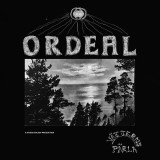
As an important agent of Gothenburg’s underground scene, Dan Johansson has been a member of several experimental harsh noise projects such as Sewer Election, and lo-fi indie folk bands like Enhet För Fri Musik and Amateur Hour. Ordeal is his latest solo output, and might as well be ashes stuck in the blast furnace's edges of his last longing career. Not by means of summing up genres or as a culmination of his musical development, but as a profound music piece weaved in his own household.
With not much more than a synthesizer, Vätterns Pärla is built by trembling, dissonant drones stained in feedback and reverberation, thickly textured by the no-fi quality of the recording, depicting a menacing atmosphere congested with heavy fumes. In Johansson's words, Ordeal "takes inspiration from the early 80’s albums of Maurizio Bianchi, filtered through a Gothenburgian no-fi bleakness. It’s an album for inner voyage, childhood memories, and places that now lost purpose and meaning”.
There's certainly intimacy and nostalgia, yet a claustrophobic, hypnotic ambiance wraps it all up in a contained and narrow space. Emphasis is put on texture rather than on detail, on color rather than on progression, on suspense rather than on conclusion. Tension varies stiffly, sometimes a drone layer dismantles and the mood seems to filter, but ragged edges are never polished. We can feel the walls and the air, which although tarnished, can be breathed in somehow. It's as if waking up in a dark room and having to recognize it with our ears and tact, testing its dimensions and its surface. The stillness in the chamber is like the stillness between gasps of storms.
Without visible stars, an enclosed share of night sky hides a heavy load of industrial debris underwater. These remnants are maybe the pearl regarding the album's title. It all can seem like a dream, a grim mechanical soundscape deafened by hefty, yet sporadic winds. Soil strives to make something grow, but sprouting is kept suspended, held by a dismal presentiment. Long shadows on the ground prove that darkness is about to befall. And as these shadows stretch, almost about to break up in a loud strike, the noise turns white.